12 Hours of Sebring: history, winners, the circuit and visiting
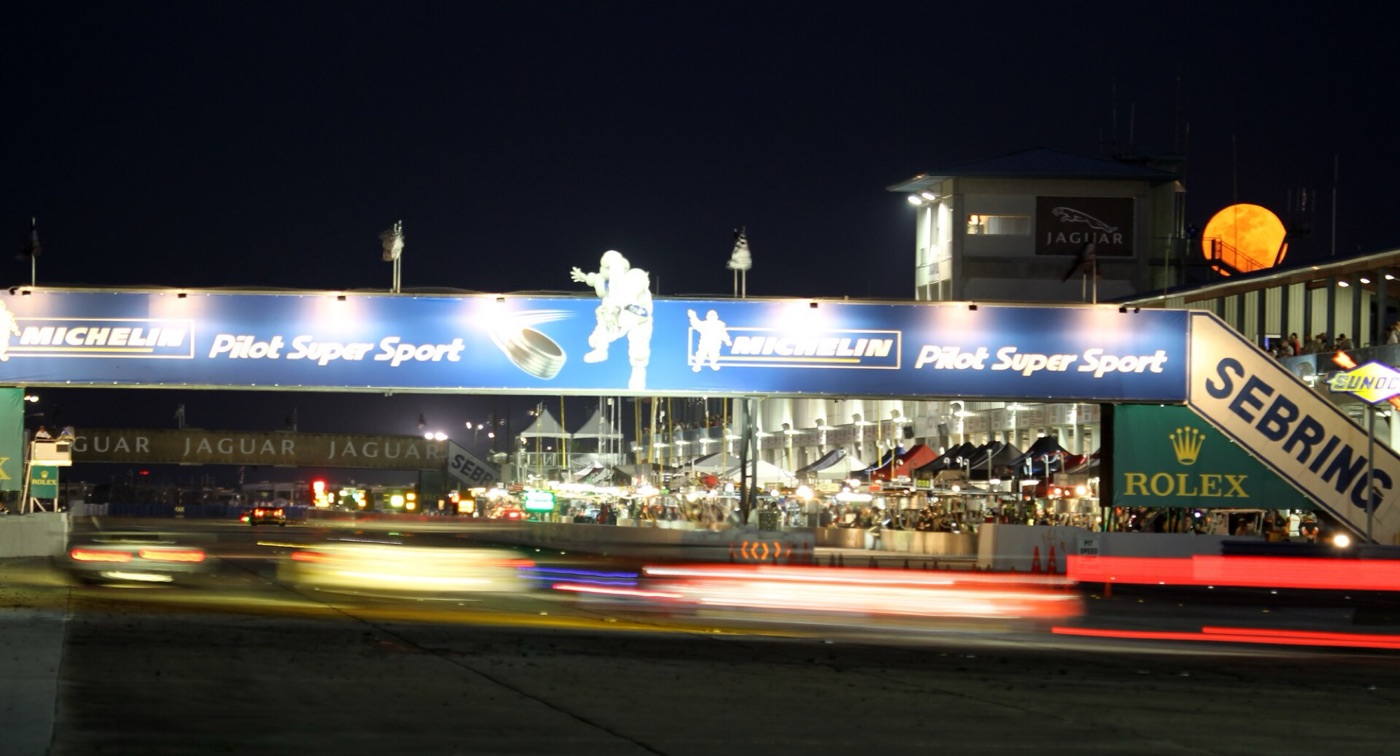
The 12 Hours of Sebring is a sports car endurance race held every March at Sebring International Raceway in central Florida, on the runways and service roads of Hendricks Field, a Second World War Army Air Force training base. It began as a six-hour race on 31 December 1950, became a 12-hour race on 15 March 1952 and has run every year since except 1974; the 2026 race was its 74th running, won by a Porsche 963. People look it up for its history (Fangio, Moss, Andretti and Steve McQueen all raced here), its winners, its notoriously bumpy concrete circuit and its infield, where some fans camp for a week.
SkiddMark’s Tony Braybon spent the 2010 race in the pit lane with the BMW Rahal Letterman team, whose two M3s finished second and third in the GT2 class.
What is the 12 Hours of Sebring?
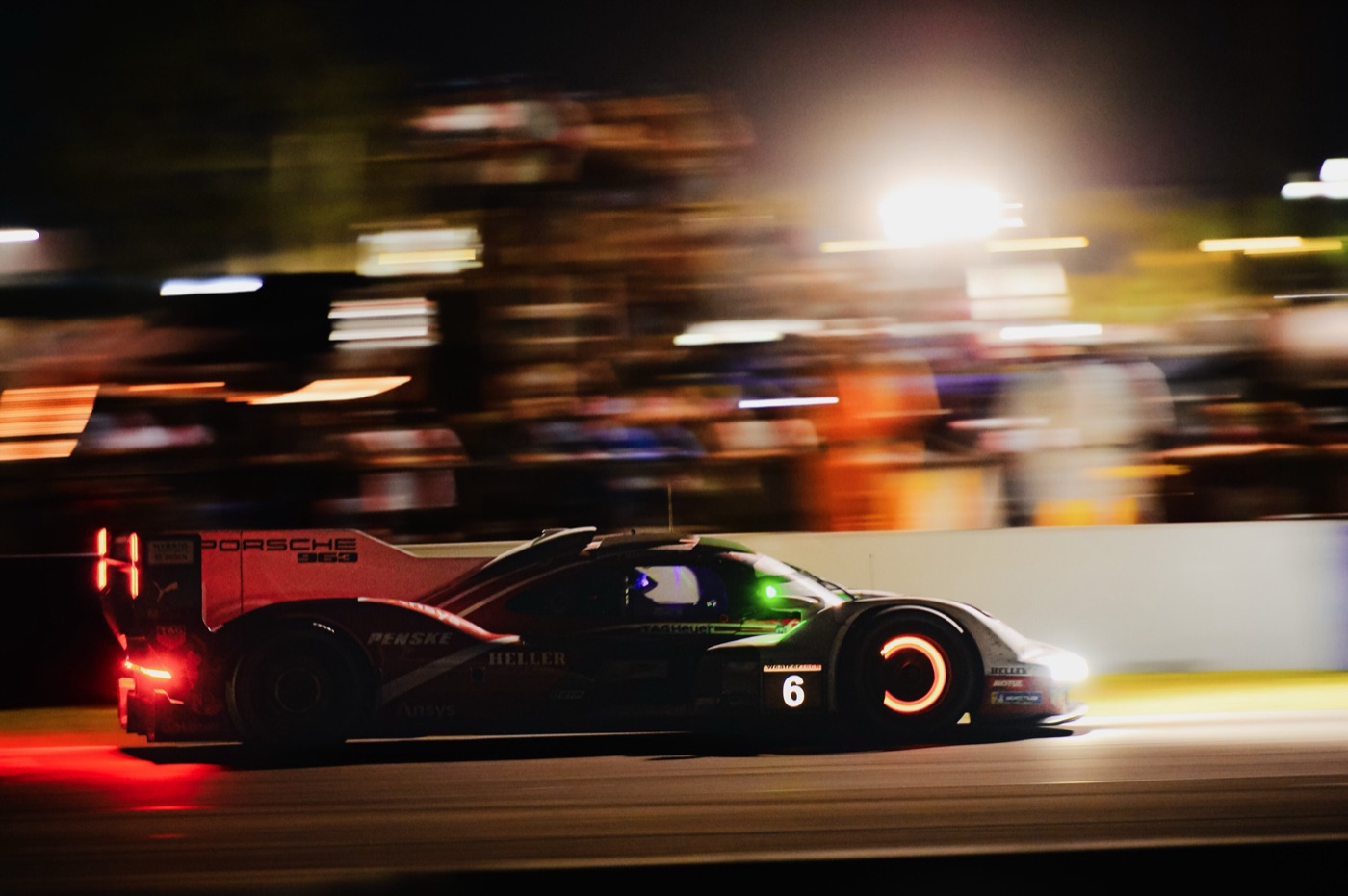
The 12 Hours of Sebring is a 12-hour race for sports prototypes and GT cars, and today it is the second round of the IMSA WeatherTech SportsCar Championship, run a few weeks after the Rolex 24 at Daytona. Porsche’s report of the 2026 race calls the pair of races the “36 Hours of Florida”, and counts the 12 Hours of Sebring in the Michelin Endurance Cup, IMSA’s championship within the championship for the five longest races of the year. The official name carries a sponsor: the Mobil 1 Twelve Hours of Sebring.
Several classes race at once, and the teams share each car between three drivers. On the Racing Sports Cars result sheet for 2026 there were 11 GTP hybrid prototypes, 11 LMP2 prototypes, 13 GTD Pro and 19 GTD cars among the 54 starters, 44 of them running at the finish, each class with its own winner and its own results. The overall winner is the car that has covered the most laps when 12 hours are up; in 2026 that was the Porsche Penske 963 of Felipe Nasr, Julien Andlauer and Laurin Heinrich, 1.515 seconds ahead of the sister car after 343 laps.
Is the 12 Hours of Sebring a 24-hour race?
No. The 12 Hours of Sebring has always been a 12-hour race, apart from the first event, in 1950, which ran for six. The FIA World Endurance Championship’s own list of 12 Hours of Sebring myths puts the 24-hour story down as untrue: the American 24-hour race is the Rolex 24 at Daytona, and the European one is Le Mans.
What time does it start and finish?
The race starts in the late morning and ends at night, so the last hours are run under floodlights. In 2010 the start was at 10:30am, as SkiddMark reported from the pit lane, which put the finish at about 10:30pm. Before 1970 the cars were started Le Mans style, with the drivers running across the track to their cars; the raceway’s own history records 1969 as the last Le Mans start at the 12 Hours of Sebring.
History of the 12 Hours of Sebring
The race was the idea of Alec Ulmann, an aeronautical engineer, who saw the runways of the disused Hendricks Field while looking for places to store war-surplus aircraft. Hendricks Field had opened as an Army Air Force training base in 1942 and became Sebring Airport in 1946, according to the raceway’s history. Ulmann wanted a smaller Le Mans in America, and the race has run on part of the airport ever since.
1950: the six-hour race won by a Crosley
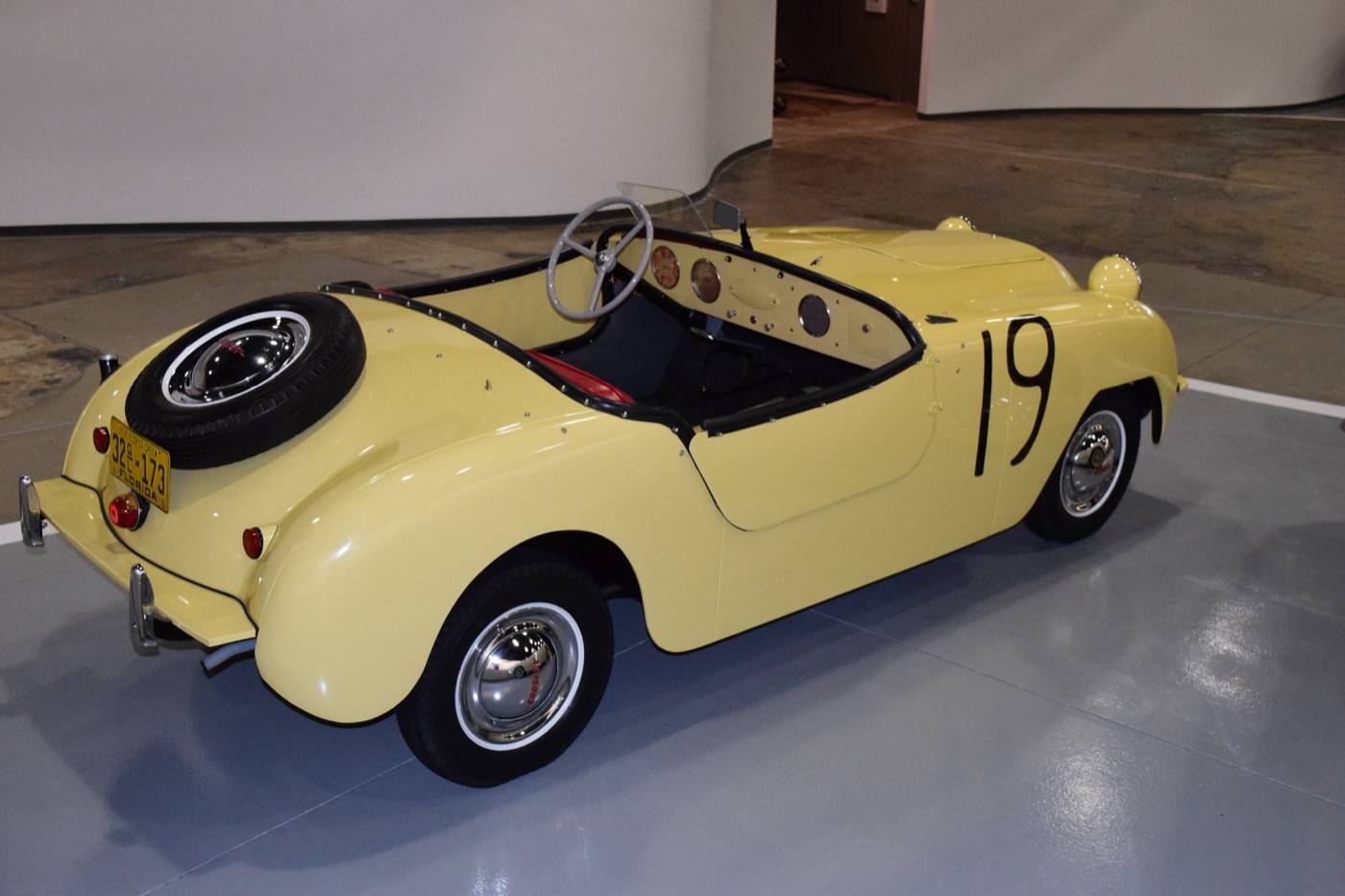
The first race was the Sam Collier Memorial Sebring Grand Prix of Endurance Six Hours, held on New Year’s Eve 1950: the first racing event at Sebring and, the raceway says, the first sports car endurance race held in the United States. It was run on a handicap, the French “Index of Performance”, which set each car a target according to its engine size. The Crosley Auto Club’s history of the race gives the targets as 288.3 miles for the little Crosley Hot Shot and 363.6 miles for the 2-litre Ferrari entries. Twenty-eight cars started from an echelon in front of pits made of folding tables, and the Crosley that the local Crosley dealer, Victor Sharpe, had driven to the track won, with Fritz Koster and Ralph Deshon driving.
The Crosley did not cover the most ground. On the Racing Sports Cars result for the race, Jim Kimberly’s 2-litre Ferrari 166 MM ran 108 laps to the Crosley’s 89 and was classified second; the Allard-Cadillac of Fred Wacker did 109. According to the Crosley club, Koster drove it in top gear without changing down and the engine ran at about 7,500rpm all race; the oil pump gears were found chewed up the following night.
The world championship years, 1952–1972
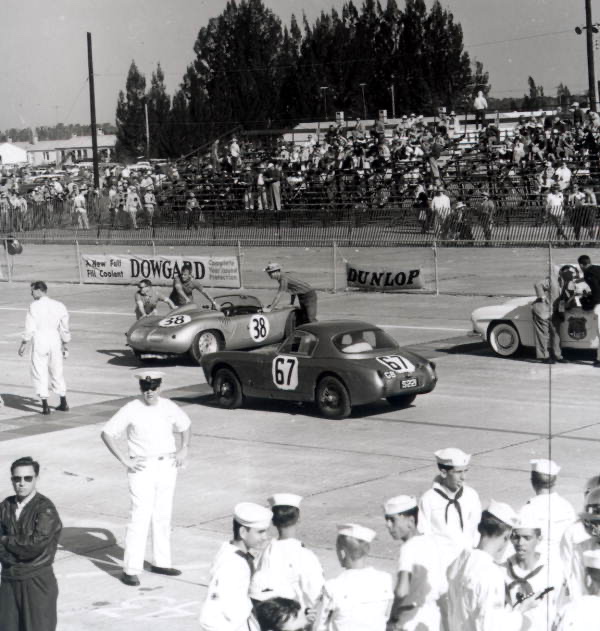
The first 12 Hours of Sebring was held on 15 March 1952 and won by Larry Kulok and Harry Grey in a Frazer Nash Le Mans Replica, which covered 1,213 km (754 miles) of the 5.2-mile circuit. In 1953 the 12 Hours of Sebring was the first round of the new FIA World Sportscar Championship, and a Chrysler-engined Cunningham won it: America’s first international sports car victory, the raceway’s history says. Stirling Moss and Bill Lloyd won in 1954 in a 1,450cc OSCA, in what the raceway calls a stunning upset; Fangio won for Ferrari in 1956 and again for Maserati in 1957.
In December 1959 the circuit also held the United States Grand Prix, which the raceway lists as the first Formula One race in the country. Porsche won its first major endurance race at the 12 Hours of Sebring in 1960, and Ferrari won the race four times in a row from 1961 to 1964, the year Carroll Shelby’s Cobras dominated the GT class. In 1965 Jim Hall and Hap Sharp won in the Chaparral 2A, the first American car to win the 12 Hours of Sebring in more than a decade.
1966: Gurney’s push and the deaths at the Webster Turn
The 1966 race is remembered for its finish and for its deaths. Dan Gurney led on the last lap in the Shelby American Ford he shared with Jerry Grant when the engine failed; he pushed the car across the finish line and was disqualified for it, and the win went to Ken Miles and Lloyd Ruby in the Ford X1 roadster. Four hours into the race the Canadian Bob McLean was killed when his Ford GT40 crashed, rolled and caught fire, and with two hours left Don Wester’s Porsche 906 collided with Mario Andretti’s Ferrari 365 P2 and left the track, killing three spectators outright and injuring another who died three days later, as Goodwood’s account of the race records. For 1967 the Webster Turn was replaced by a chicane, the first major change to the circuit.
Steve McQueen and Mario Andretti in 1970
Andretti won the 12 Hours of Sebring three times, in 1967, 1970 and 1972. The 1970 win was the famous one: the raceway’s history describes a 22-second victory for Ferrari over the Porsche 908 of the actor Steve McQueen and Peter Revson. The FIA WEC adds that Ferrari moved Andretti into a car he had not been due to drive to beat McQueen. After the 1972 race, which Andretti and Jacky Ickx won in a Ferrari 312 PB, Ulmann announced that it would be the last 12 Hours of Sebring.
IMSA, Porsche and the airport years, 1973–1998
John Bishop and Reggie Smith revived the race in 1973 under IMSA sanction. The 1974 race was cancelled because of the energy crisis (several thousand fans turned up anyway to party, the raceway says), and in 1975 BMW won for the first time, with a 3.0 CSL driven by Hans-Joachim Stuck, Brian Redman, Allan Moffat and Sam Posey. Porsche then won 13 races in a row, from 1976 to 1988, most of them with the 935 and the 962; Dick Barbour Racing won three in succession from 1978 to 1980.
The Sebring Airport Authority had taken over the promotion and a new section bypassed an airport runway; 83 cars started, and the race was yellow-flagged to let a fuel truck cross the track to bring more fuel (FIA WEC), and a GT-class Porsche 934 won overall after coming back from 11 laps down. A.J. Foyt won his only 12 Hours of Sebring in 1985, with Bob Wollek; it was the last win of his driving career. The 1986 race was the last to use the airport runways. Nissan ended Porsche’s run in 1989, Toyota won with Juan Manuel Fangio II and Andy Wallace in 1992 and 1993, and Ferrari won again in 1995, its first win in the race for 23 years.
The American Le Mans Series and the diesel Audis, 1999–2013
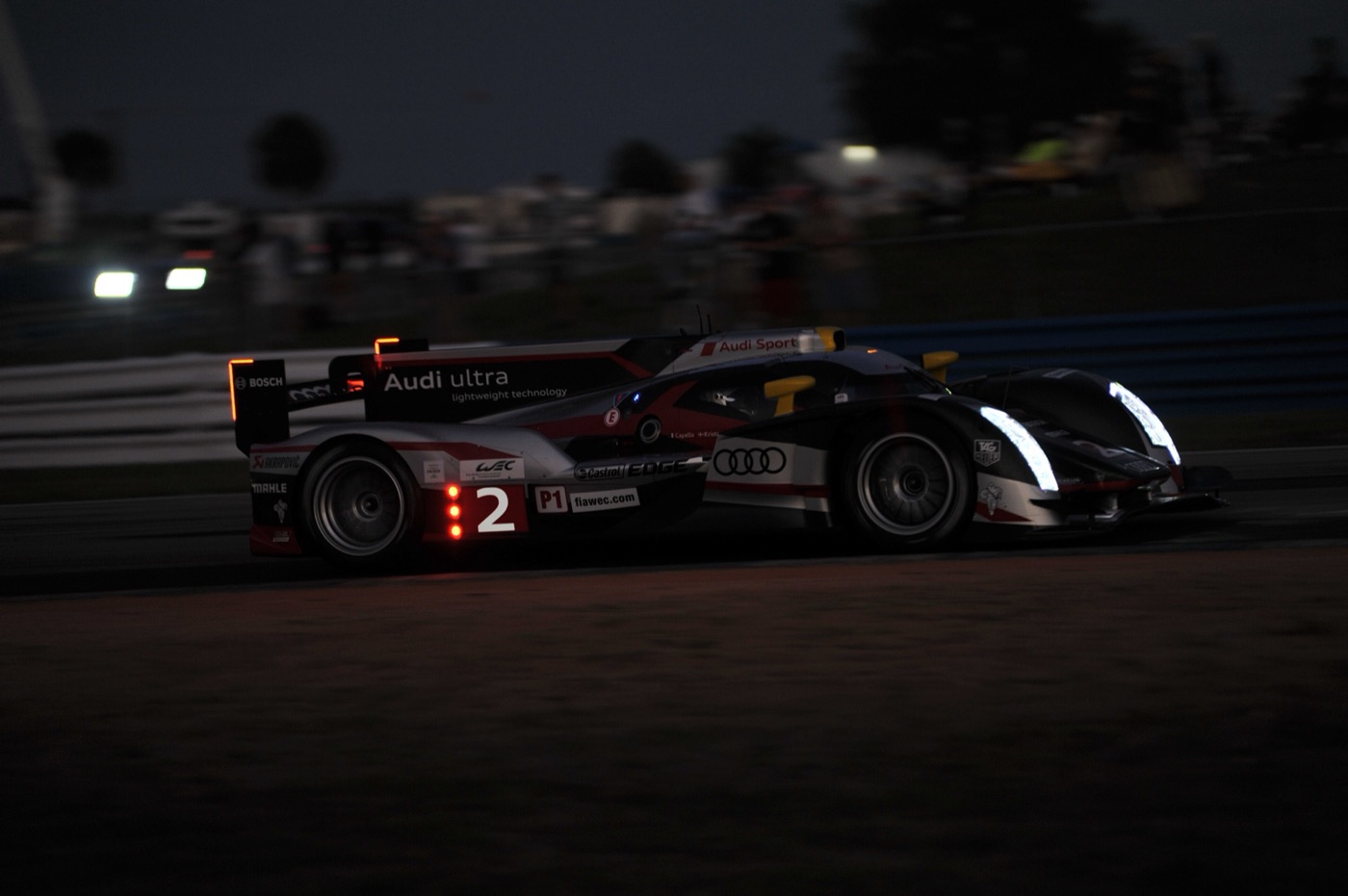
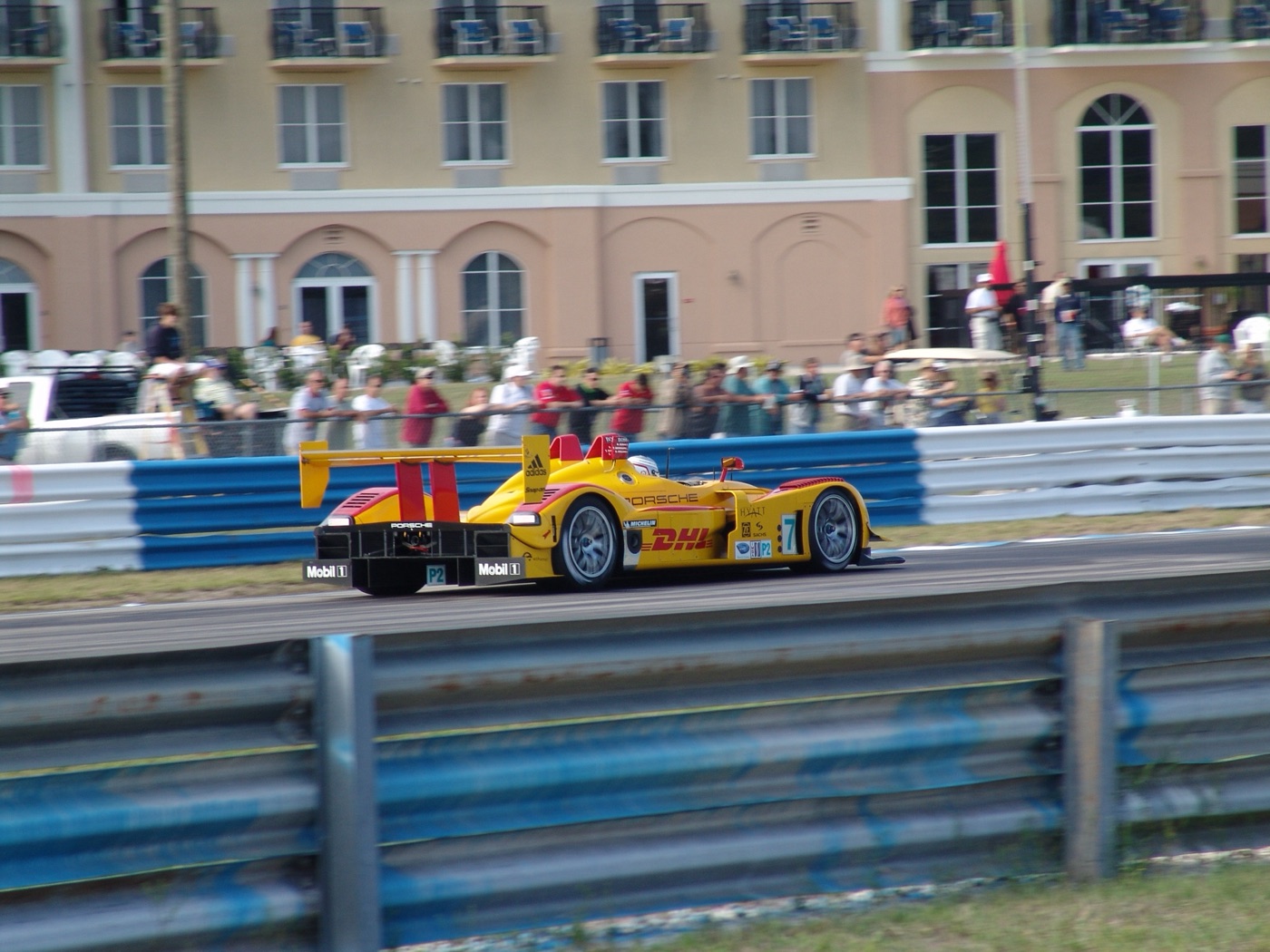
The American Le Mans Series made its debut at the 12 Hours of Sebring in 1999, the year BMW won with the V12 LMR. Audi then won eight races in a row from 2000 to 2007, finishing one-two in 2000 and filling the top four places in 2001, and in 2006 Audi won with its diesel R10 TDI. Porsche’s RS Spyder broke the run in 2008; in 2009 the Audi R15 TDI won the fastest Sebring 12 Hours ever. In 2010 Peugeot became the first French manufacturer to win, with the 908 HDi FAP. The race went to IMSA Holdings, a NASCAR subsidiary, on 5 September 2012, when it bought the assets of the American Le Mans Series, including the circuit; the FIA World Endurance Championship held its first race at Sebring the same year.
The WeatherTech Championship, 2014 on
Grand-Am and the American Le Mans Series merged after the sale, and in 2014 the 12 Hours of Sebring was round two of the new TUDOR United SportsCar Championship, the series now called the IMSA WeatherTech SportsCar Championship. Rain fell during the race in 2016 for the first time in 19 years, and Honda took its first overall win. The DPi prototypes arrived in 2017, and in 2019 the circuit held its “SuperSebring” double-header of the 12 Hours and the WEC race in one week. The 2020 race was moved to November because of the pandemic. In 2023 a Cadillac won the first 12 Hours of Sebring for hybrid prototypes, giving Pipo Derani his fourth win, and in 2025 and 2026 Porsche Penske Motorsport finished first and second.
Sebring International Raceway
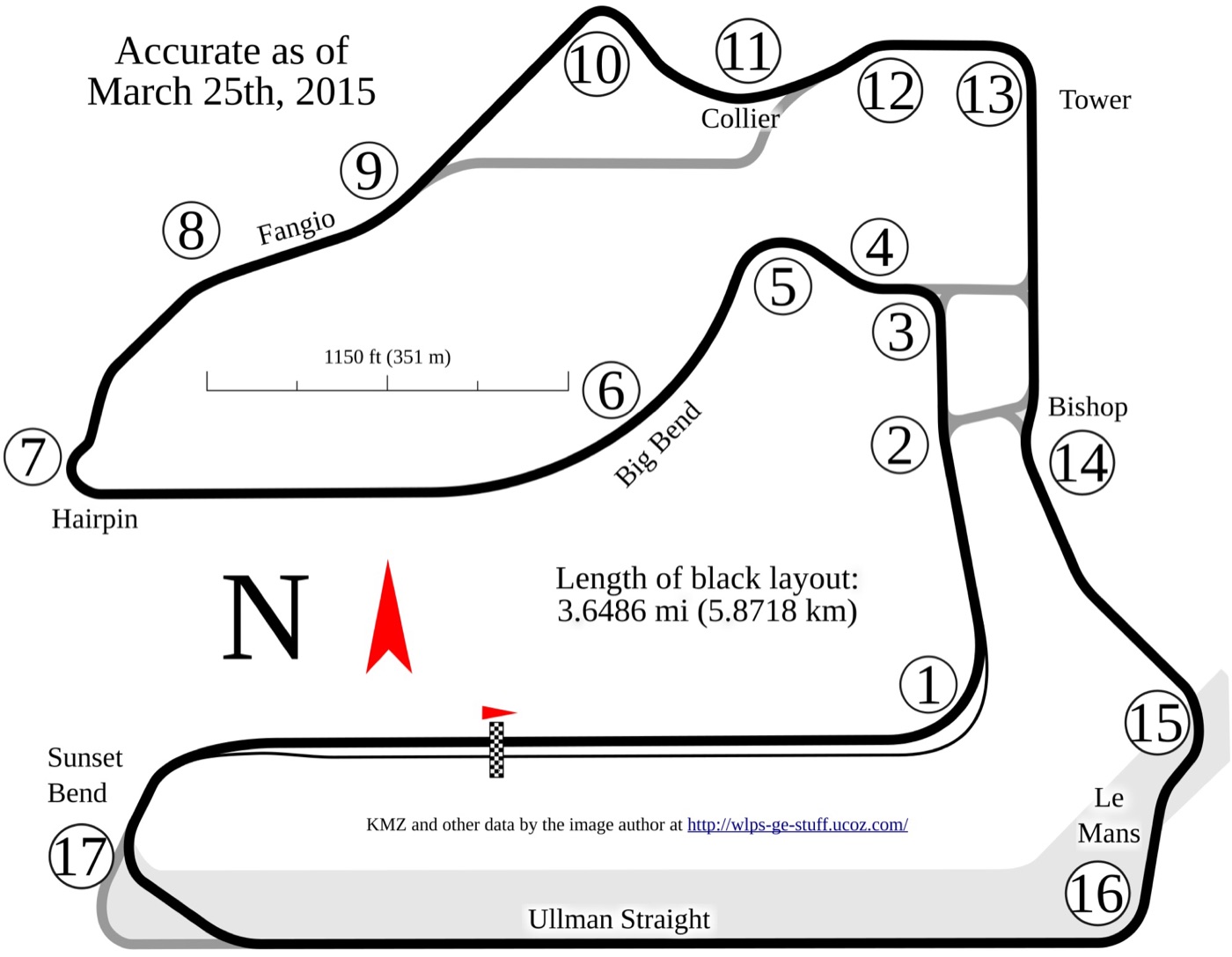
The 12 Hours of Sebring is run on the Sebring International Raceway, a 3.74-mile (6.02 km) road course of 17 turns on part of Sebring Regional Airport, outside the town of Sebring in Highlands County, Florida. The raceway calls itself America’s oldest road racing circuit. Since September 2012 it has belonged to IMSA, and so to NASCAR.
How long is the Sebring track?
The lap used for the 12 Hours has been 3.74 miles (6.019 km) since 2012, on the race results that Racing Sports Cars keeps. It has been rebuilt several times, mostly to move the track off the runways so the airport could work during races, and it is now less than three-quarters of the length of the circuit Fangio and Moss knew.
| Years | Lap length | What changed |
|---|---|---|
| 1950 | 3.5 miles (5.63 km) | The first six-hour race |
| 1952–1982 | 5.2 miles (8.37 km) | Runways and service roads; the Webster Turn replaced by a chicane for 1967 |
| 1983 | 4.75 miles (7.64 km) | A new section bypasses one runway |
| 1984–1986 | 4.86 miles (7.82 km) | Paddock expanded |
| 1987–1990 | 4.11 miles (6.61 km) | The airport runways bypassed |
| 1991–2011 | 3.6–3.75 miles (5.79–6.04 km) | Close to today’s layout; hairpin reconfigured in 1998 |
| 2012–2026 | 3.74 miles (6.02 km) | Today’s Grand Prix circuit |
Source: lap lengths from the Racing Sports Cars result sheet for each year; changes from the raceway’s track history.
Why is Sebring so bumpy?
The 12 Hours of Sebring circuit is bumpy because parts of it are still the concrete slabs of a 1940s airfield, with rippled asphalt between them; SkiddMark described the lap in 2010 as “an intriguing mixture of concrete slabs and often rippled tarmac”. The BMW team told SkiddMark that the rough concrete gave spikes of 4.6g, on top of the more than 2g the M3s pulled in corners, and SkiddMark’s own laps of the circuit in a road-going M3 found it “most definitely very bumpy, not just on the concrete sections, and with plenty of off-camber turns”.
Turn 1, Turn 17 and the corners drivers talk about
Joey Hand, one of BMW’s drivers, told SkiddMark in 2010 that the two corners at either end of the pit straight decide a lap time: Turn 17, the long 180-degree right-hander onto the start-finish straight, taken at more than 80mph, and Turn 1, the 90-degree left at the end of the straight, at more than 110mph. A quick exit from Turn 1 sets up the left-right-left of Turns 3, 4 and 5, which Hand talked SkiddMark through corner by corner, “with its subtle weight transfers”. The circuit has four long straights. The chicane on the back of the lap was moved in 1995 and renamed the Fangio Chicane, and the Hairpin was reconfigured in 1998.
12 Hours of Sebring winners
Porsche has won the 12 Hours of Sebring 20 times, more victories than any other make, and Tom Kristensen has won it six times, more than any other driver. The table lists every overall winner from the 1950 six-hour race to 2026, from the result sheets that Racing Sports Cars keeps for each year; there was no race in 1951 or 1974.
Who has won the 12 Hours of Sebring the most?
Kristensen won in 1999 for BMW and in 2000, 2005, 2006, 2009 and 2012 for Audi; Rinaldo Capello won five times, all for Audi, three of them in the same car as Kristensen and Allan McNish (2006, 2009 and 2012). Among makes, Porsche’s 20th win came in 2026, by its own count. Counted from the table, Ferrari has 12 wins, the last in 1998, and Audi 11, between 2000 and 2013.
| Driver | Wins | Years |
|---|---|---|
| Tom Kristensen | 6 | 1999, 2000, 2005, 2006, 2009, 2012 |
| Rinaldo Capello | 5 | 2001, 2002, 2006, 2009, 2012 |
| Frank Biela | 4 | 2000, 2003, 2004, 2007 |
| Allan McNish | 4 | 2004, 2006, 2009, 2012 |
| Pipo Derani | 4 | 2016, 2018, 2019, 2023 |
| Phil Hill | 3 | 1958, 1959, 1961 |
| Olivier Gendebien | 3 | 1959, 1960, 1961 |
| Mario Andretti | 3 | 1967, 1970, 1972 |
| Hans-Joachim Stuck | 3 | 1975, 1986, 1988 |
| Marco Werner | 3 | 2003, 2005, 2007 |
| Felipe Nasr | 3 | 2019, 2025, 2026 |
Source: counted from the winners table below.
Overall winners by year
The 1950 race was won on handicap; every race since 1952 has been won on distance. The make in brackets is the engine, where it differs from the name of the car.
| Year | Car | Drivers |
|---|---|---|
| 1950 | Crosley Hot Shot | Ralph Deshon, Fritz Koster |
| 1952 | Frazer Nash Le Mans Replica | Larry Kulok, Harry Grey |
| 1953 | Cunningham C-4R (Chrysler) | Phil Walters, John Fitch |
| 1954 | OSCA MT4 1450 | Bill Lloyd, Stirling Moss |
| 1955 | Jaguar D-type | Mike Hawthorn, Phil Walters |
| 1956 | Ferrari 860 Monza | Juan Manuel Fangio, Eugenio Castellotti |
| 1957 | Maserati 450S | Jean Behra, Juan Manuel Fangio |
| 1958 | Ferrari 250 TR | Phil Hill, Peter Collins |
| 1959 | Ferrari 250 TR | Dan Gurney, Chuck Daigh, Phil Hill, Olivier Gendebien |
| 1960 | Porsche 718 RS 60 | Hans Herrmann, Olivier Gendebien |
| 1961 | Ferrari 250 TRI/61 | Phil Hill, Olivier Gendebien |
| 1962 | Ferrari 250 TRI/61 | Joakim Bonnier, Lucien Bianchi |
| 1963 | Ferrari 250 P | John Surtees, Ludovico Scarfiotti |
| 1964 | Ferrari 275 P | Mike Parkes, Umberto Maglioli |
| 1965 | Chaparral 2A (Chevrolet) | Jim Hall, Hap Sharp |
| 1966 | Ford X1 Roadster | Ken Miles, Lloyd Ruby |
| 1967 | Ford Mk IV | Bruce McLaren, Mario Andretti |
| 1968 | Porsche 907 | Jo Siffert, Hans Herrmann |
| 1969 | Ford GT40 | Jacky Ickx, Jackie Oliver |
| 1970 | Ferrari 512 S | Ignazio Giunti, Nino Vaccarella, Mario Andretti |
| 1971 | Porsche 917 K | Vic Elford, Gérard Larrousse |
| 1972 | Ferrari 312 PB | Jacky Ickx, Mario Andretti |
| 1973 | Porsche Carrera RSR | Peter Gregg, Hurley Haywood, Dave Helmick |
| 1975 | BMW 3.0 CSL | Hans-Joachim Stuck, Brian Redman, Allan Moffat, Sam Posey |
| 1976 | Porsche 911 Carrera RSR | Al Holbert, Mike Keyser |
| 1977 | Porsche 911 Carrera RSR | George Dyer, Brad Frisselle |
| 1978 | Porsche 935 | Brian Redman, Charles Mendez, Bob Garretson |
| 1979 | Porsche 935 | Bob Akin, Rob McFarlin, Roy Woods |
| 1980 | Porsche 935 K3 | John Fitzpatrick, Dick Barbour |
| 1981 | Porsche 935 | Hurley Haywood, Al Holbert, Bruce Leven |
| 1982 | Porsche 935 JLP-3 | John Paul Jr, John Paul Sr |
| 1983 | Porsche 934 | Wayne Baker, Jim Mullen, Kees Nierop |
| 1984 | Porsche 935J | Mauricio de Narváez, Hans Heyer, Stefan Johansson |
| 1985 | Porsche 962 | A.J. Foyt, Bob Wollek |
| 1986 | Porsche 962 | Bob Akin, Hans-Joachim Stuck, Jo Gartner |
| 1987 | Porsche 962 | Jochen Mass, Bobby Rahal |
| 1988 | Porsche 962 | Hans-Joachim Stuck, Klaus Ludwig |
| 1989 | Nissan GTP ZX-T | Chip Robinson, Geoff Brabham, Arie Luyendyk |
| 1990 | Nissan GTP ZX-T | Derek Daly, Bob Earl |
| 1991 | Nissan NPT-90 | Geoff Brabham, Derek Daly, Gary Brabham |
| 1992 | Eagle Mk III (Toyota) | Juan Manuel Fangio II, Andy Wallace |
| 1993 | Eagle Mk III (Toyota) | Juan Manuel Fangio II, Andy Wallace |
| 1994 | Nissan 300ZX | John Morton, Johnny O'Connell, Steve Millen |
| 1995 | Ferrari 333 SP | Fermín Vélez, Andy Evans, Eric van de Poele |
| 1996 | Riley & Scott Mk III (Oldsmobile) | Wayne Taylor, Eric van de Poele, Jim Pace |
| 1997 | Ferrari 333 SP | Yannick Dalmas, Stefan Johansson, Fermín Vélez, Andy Evans |
| 1998 | Ferrari 333 SP | Didier Theys, Mauro Baldi, Gianpiero Moretti |
| 1999 | BMW V12 LMR | JJ Lehto, Tom Kristensen, Jörg Müller |
| 2000 | Audi R8 | Frank Biela, Emanuele Pirro, Tom Kristensen |
| 2001 | Audi R8 | Rinaldo Capello, Michele Alboreto, Laurent Aïello |
| 2002 | Audi R8 | Rinaldo Capello, Christian Pescatori, Johnny Herbert |
| 2003 | Audi R8 | Frank Biela, Marco Werner, Philipp Peter |
| 2004 | Audi R8 | Pierre Kaffer, Allan McNish, Frank Biela |
| 2005 | Audi R8 | JJ Lehto, Marco Werner, Tom Kristensen |
| 2006 | Audi R10 TDI | Rinaldo Capello, Tom Kristensen, Allan McNish |
| 2007 | Audi R10 TDI | Frank Biela, Emanuele Pirro, Marco Werner |
| 2008 | Porsche RS Spyder | Timo Bernhard, Romain Dumas, Emmanuel Collard |
| 2009 | Audi R15 TDI | Allan McNish, Tom Kristensen, Rinaldo Capello |
| 2010 | Peugeot 908 HDi FAP | Alexander Wurz, Anthony Davidson, Marc Gené |
| 2011 | Peugeot 908 HDi FAP | Loïc Duval, Nicolas Lapierre, Olivier Panis |
| 2012 | Audi R18 TDI | Allan McNish, Tom Kristensen, Rinaldo Capello |
| 2013 | Audi R18 e-tron quattro | Benoît Tréluyer, Marcel Fässler, Oliver Jarvis |
| 2014 | Riley Mk XXVI (Ford) | Scott Pruett, Memo Rojas, Marino Franchitti |
| 2015 | Chevrolet Corvette DP | João Barbosa, Christian Fittipaldi, Sébastien Bourdais |
| 2016 | Ligier JS P2 (Honda) | Pipo Derani, Scott Sharp, Ed Brown, Johannes van Overbeek |
| 2017 | Cadillac DPi-V.R | Ricky Taylor, Jordan Taylor, Alex Lynn |
| 2018 | Nissan Onroak DPi | Pipo Derani, Nicolas Lapierre, Johannes van Overbeek |
| 2019 | Cadillac DPi-V.R | Pipo Derani, Felipe Nasr, Eric Curran |
| 2020 | Mazda RT24-P | Jonathan Bomarito, Harry Tincknell, Ryan Hunter-Reay |
| 2021 | Cadillac DPi-V.R | Tristan Vautier, Loïc Duval, Sébastien Bourdais |
| 2022 | Cadillac DPi-V.R | Earl Bamber, Alex Lynn, Neel Jani |
| 2023 | Cadillac V-Series.R | Pipo Derani, Jack Aitken, Alexander Sims |
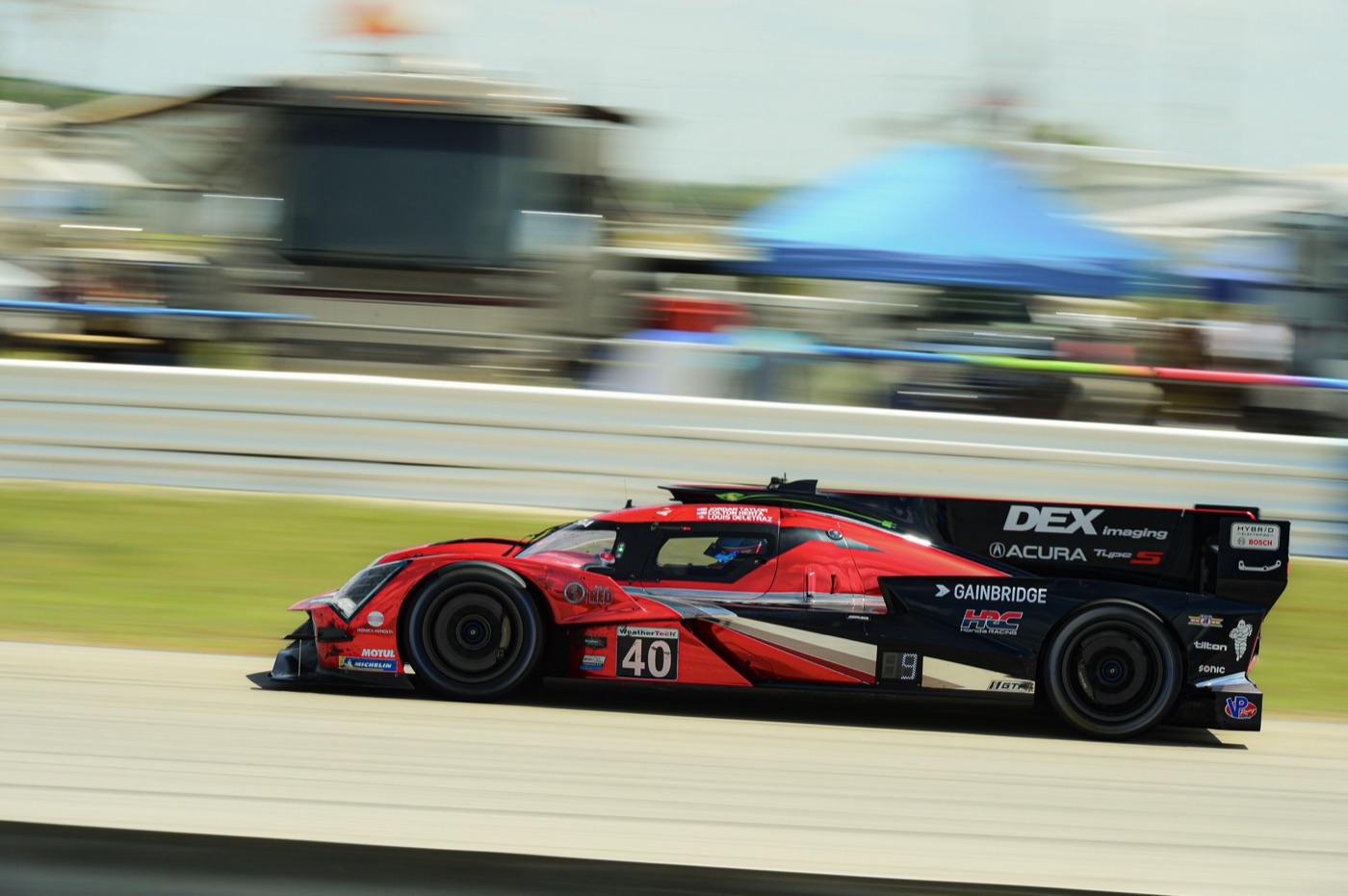
| 2024 | Acura ARX-06 | Louis Delétraz, Colton Herta, Jordan Taylor |
| 2025 | Porsche 963 | Felipe Nasr, Nick Tandy, Laurens Vanthoor |
| 2026 | Porsche 963 | Felipe Nasr, Julien Andlauer, Laurin Heinrich |
Source: Racing Sports Cars, Sebring race archive, the result sheet for each race (1950 is the six-hour race).
How far do the cars go in 12 hours?
The 2026 winner covered 343 laps, 2,063 km (1,282 miles). The longest distance on the result sheets is the 2009 winner’s: 383 laps of the 3.7-mile circuit, 2,281 km (1,417 miles), at an average of 189.9 km/h (118 mph), in the race the raceway calls the fastest Sebring 12 Hours ever. The 1952 winners did 754 miles.
SkiddMark at the 2010 race with BMW Rahal Letterman
In March 2010 SkiddMark’s Tony Braybon spent the 58th 12 Hours of Sebring with the BMW Rahal Letterman Racing team, the outfit co-owned by Bobby Rahal and David Letterman, which was starting its season in the American Le Mans Series with two BMW M3 GT2 cars. The race, on 20 March 2010, was won overall by Peugeot; SkiddMark’s story was the GT2 class, where the BMWs finished second and third.
BMW had come because, as SkiddMark put it, GT endurance racing sells cars and the United States was BMW’s biggest market; with its Formula One team gone, GT racing was now its main programme. Car 90 was driven by Joey Hand, Dirk Müller and Andy Priaulx (his first 12 Hours of Sebring), and car 92 by Bill Auberlen, Tommy Milner and Dirk Werner. Before the race, Mario Theissen, BMW’s director of motorsport, told SkiddMark he was hoping for a podium.
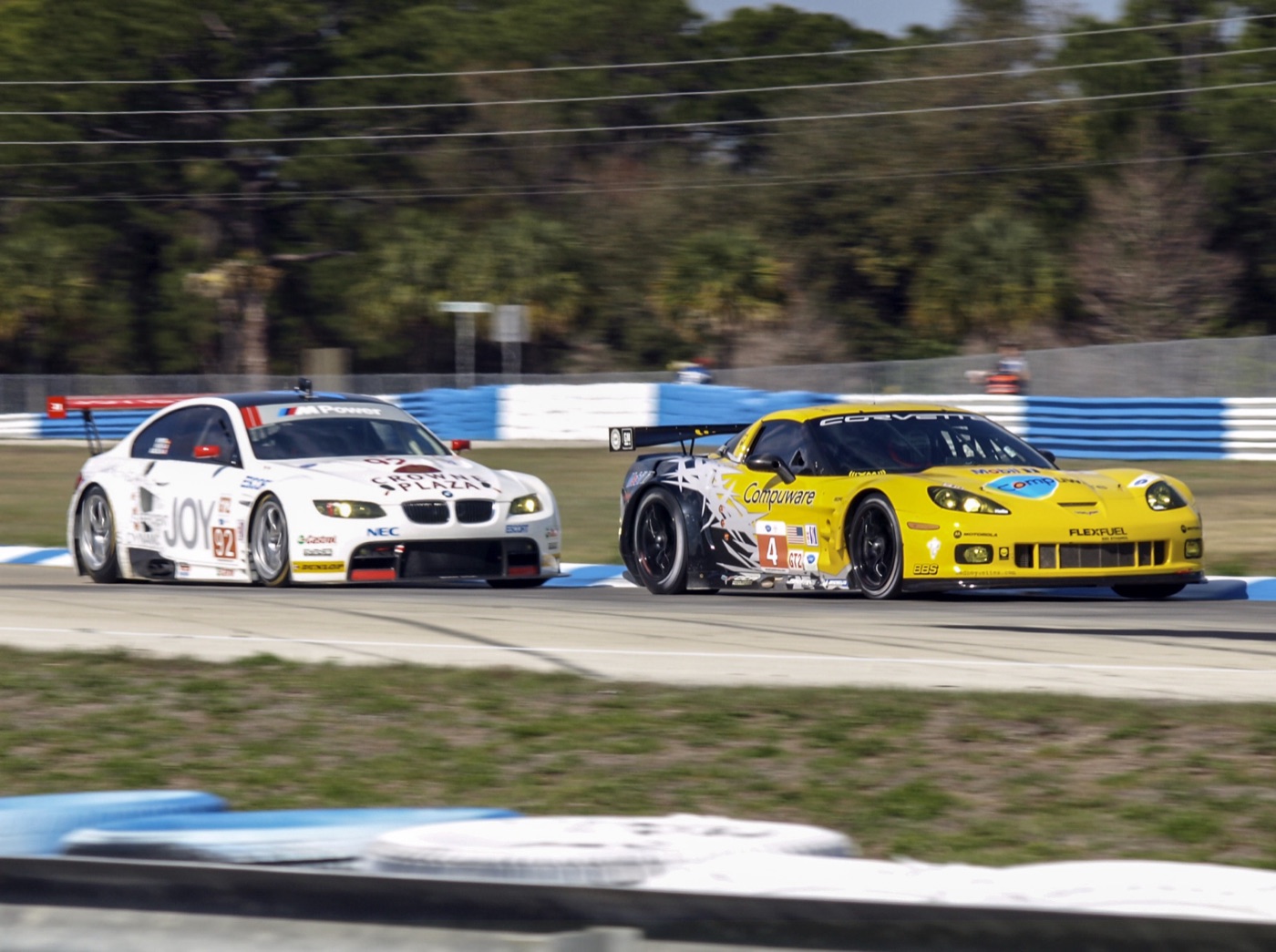
The GT2 class in 2010
GT2 was the production-based class, with 450 to 500 horsepower and a minimum weight of 1,145 kg, and the 2010 grid had the BMW M3, Corvette C6.R, Ferrari F430 GT, Ford GT-R, Jaguar XKRS, Panoz Abruzzi and Porsche 911 GT3 RSR. The racing M3’s 4-litre V8 was close to road-car specification, apart from the mandatory intake restrictors, but the car moved the gearbox to a rear transaxle for weight distribution, fed with cooling air through carbon-fibre ducts that filled the inside of the shell. Air conditioning was compulsory.
Pole position and the stall test
Dirk Müller put car 90 on provisional GT2 pole with a lap of 2:00.782, a class qualifying record. It did not last. At scrutineering the car failed the stall test, in which the restrictors are blocked and the engine should stall; the cause was probably an air leak from a badly assembled air box, which could be worth 10 horsepower. The team’s qualifying release called it “a mechanical issue” that “caused a technical infraction”, and car 90 had to start from the back of the class; BMW’s mid-race release says it started from the pit lane after an off in the morning warm-up. Car 92 started seventh in GT2, Auberlen having lapped in 2:01.922.
Pit stops in 12 seconds
Each M3 could run for about an hour on a tank, and the circuit’s bumps wore the inside edges of the tyres, so every stop was usually fuel, tyres and a driver change. The stops SkiddMark timed took about 30 seconds, against 40 for the Ferrari team in the next pit. Once the fuel nozzle came out, the car’s own pneumatic jacks lifted it, and the wheels were off, replaced and back on the ground in under 12 seconds; the team reckoned it gained at least five seconds a stop on its GT2 rivals, a minute over the race. In the fourth hour the two Corvette Racing cars collided with each other in the pit lane, and neither recovered the time.
The result: second and third in GT2
Hand set the fastest GT2 lap of the race in car 90, 2:00.985, more than half a second quicker than the best Ferrari; the time is on the race results. Safety-car periods cost the BMWs most of a lap more than once. In the last hour cars 90 and 92 were seconds apart, fighting each other, and on the last bend Müller lost his brakes and spun, letting Werner through. Müller still finished third, ahead of the Flying Lizard Porsche of Jörg Bergmeister, Patrick Long and Marc Lieb. The GT2 win went to the Risi Competizione Ferrari F430 of Pierre Kaffer, Jaime Melo and Gianmaria Bruni, sixth overall; the two BMWs, seventh and eighth, both completed 330 laps.
BMW at Sebring in 1975 and 2010
The 2010 race fell 35 years after BMW’s first win in North America, at the 1975 12 Hours of Sebring. The BMW Car Club of America marked the anniversary in the team’s preparation tent with a cake and with parade laps of the circuit, which SkiddMark joined in its road car, a Le Mans Blue E92 M3 coupé with the DCT gearbox, lent by BMW North America, which SkiddMark had driven from Key West the night before in just over seven hours.
Visiting the 12 Hours of Sebring
The 12 Hours of Sebring is held in March, a four-day event with the race on the Saturday after three days of practice, qualifying and support events; the 2027 race, the 75th, is on 20 March, at a meeting running from 17 to 20 March, as IMSA announced on 19 March 2026. The town of Sebring is in the middle of Florida: the raceway gives Orlando, Tampa, West Palm Beach and Fort Myers airports as about two hours away, Sarasota-Bradenton about 90 minutes and Miami about three hours, with Punta Gorda (Allegiant flights only) the closest commercial airport.
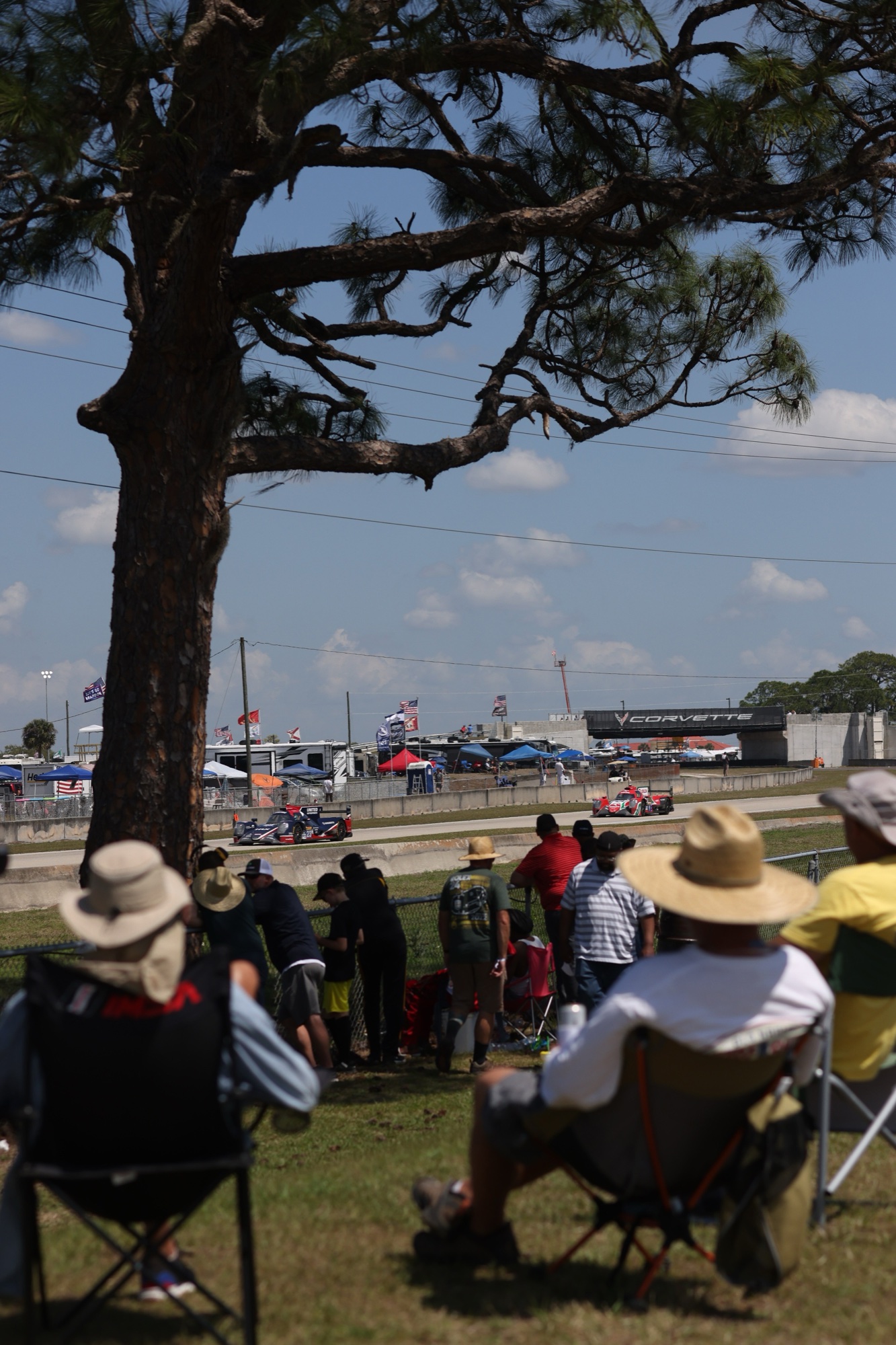
Tickets for the 12 Hours of Sebring
There are three kinds of general admission ticket, according to the raceway’s visitor questions: four days (Wednesday to Saturday), two days (Friday and Saturday) or Saturday only. No single-day tickets are sold for the other days, because a ticket lets you stay on the property until Sunday morning, after the race. Tickets are digital only, there are no refunds, and children aged 12 and under get in free with a paying adult. Hospitality packages with suites, food and parking are sold separately.
Camping, Green Park and the RVs
Most of the crowd camps. Tent camping inside the circuit is included in the ticket; RV parking passes are extra and do not include admission, and every vehicle, trailer or towed bike needs its own pass. Two reserved RV areas, Crosley Valley and Flightline, have power and water, and a camping lot outside the gates, at the corner of Carroll Shelby Road and Madrid, costs $50. Viewing platforms may be no more than six feet high, charcoal and gas grills are allowed but wood fires are not, there are showers in Green Park, on the Midway and in the paddock, and pets are not allowed.
In 2010 SkiddMark found that the RV was the way to see the 12 Hours of Sebring: the keenest fans queued for three weeks before the gates opened to claim their spots at favourite corners, hundreds of RVs stood side by side around the track with chairs on their roofs, and in Green Park (“The Zoo”, SkiddMark was told) a group who had first come in the 1970s ran a bar in an old school bus. The paddock was open to fans the day before the race, when every driver had to sign autographs.
Where to watch the race
There are grandstands at Turn 3, at Turn 7 (on both sides of the track) and at Turn 17, and viewing mounds near most corners; only the grandstands in the Corvette and Porsche corrals are reserved, the raceway says. A walking trail runs around much of the circuit. The race can be heard on WWOJ 99.1 FM and on the raceway’s own frequency, 88.7 FM. There is no spectator Wi-Fi.
Where to stay for the 12 Hours of Sebring
Hotels within 60 miles of Sebring are usually booked far in advance, and the raceway suggests Winter Haven, Lake Wales or Okeechobee, each a little over an hour away, or a rental home. The Seven Hotel at Sebring Raceway, built beside the Hairpin in 1999, is on the circuit. In 2010 SkiddMark found rooms in the area at $250 to $300 a night, with a minimum stay of five nights.
Questions
Who won the 2026 12 Hours of Sebring?
The Porsche Penske Motorsport Porsche 963 of Felipe Nasr, Julien Andlauer and Laurin Heinrich won the 74th race on 21 March 2026, 1.515 seconds ahead of the sister car of Kévin Estre, Laurens Vanthoor and Matt Campbell after 343 laps. It was Porsche’s 20th Sebring win.
Why was there no 12 Hours of Sebring in 1974?
The 1974 race was cancelled because of the energy crisis. Several thousand fans came to the circuit anyway, the raceway records, and the race returned in 1975.
Was the 2020 12 Hours of Sebring held?
Yes, but in November. The pandemic moved it from March to 14 November 2020, and it was won by the Mazda RT24-P of Jonathan Bomarito, Harry Tincknell and Ryan Hunter-Reay.
Which film stars have raced in the 12 Hours of Sebring?
Gene Hackman, James Brolin, Paul Newman, Steve McQueen and Patrick Dempsey have all driven in the race, according to the FIA World Endurance Championship. McQueen finished second overall in 1970 with Peter Revson.
Can you bring children to the 12 Hours of Sebring?
Yes. Children aged 12 and under get in free with general admission when they are with a paying adult; they need a ticket of their own for suites and other hospitality areas.
How early do fans arrive for the 12 Hours of Sebring?
Weeks early, for the best camping spots. SkiddMark found fans who had queued for three weeks in 2010, and the FIA WEC gives the record as Patrick Taylor of Palm Bay, Florida, who arrived on 26 December 2003, nearly three months before the race.
Has the World Endurance Championship raced at Sebring?
Yes. The FIA World Endurance Championship held its first race at Sebring in 2012, and in 2019 the circuit ran its “SuperSebring” double-header of the WEC race and the 12 Hours in the same week.
Sources
- Sebring International Raceway, “Track history” (read in the September 2025 copy): Hendricks Field, the 1950 and 1952 races, milestones year by year to 2025, circuit changes, promoters and owners.
- Sebring International Raceway, visitor questions (read in the 1 October 2026 copy): tickets, camping, RV areas, grandstands, radio, airports and hotels.
- Racing Sports Cars, Sebring race archive and result sheets, 1950–2026: every overall winner, laps, distances, lap lengths and the 2010 and 2026 class results.
- Crosley Auto Club, “Forgotten History: The First Sebring Race 12/31/1950”: Ulmann, the Index of Performance, the Crosley’s win.
- FIA World Endurance Championship, “Only at Sebring: a dive into the history books”, 2019: the 1983 fuel truck, McQueen in 1970, the actors, the earliest arrival, the 24-hour myth.
- Goodwood Road & Racing, “Re-live the dramatic 1966 12 Hours of Sebring”: Gurney’s disqualification, the deaths of Bob McLean and four spectators.
- Porsche Newsroom USA, “Porsche scores 20th outright victory at the 12 Hours of Sebring”, March 2026: the 2026 race, Porsche’s 20 wins, the Michelin Endurance Cup.
- IMSA, “2027 schedules revealed”, 19 March 2026: the 75th race, 17–20 March 2027.
- BMW Rahal Letterman Racing qualifying release, published by BMWBlog, 20 March 2010: the technical infraction, grid positions, Auberlen’s lap.
- BMW Rahal Letterman Racing mid-race release, published by Bimmerfile, 20 March 2010: the pit-lane start of car 90.
- SkiddMark, “SkiddMark joins Team BMW Rahal Letterman at the Sebring 12Hrs”, Tony Braybon, 4 April 2010: the 2010 race, the GT2 class, the circuit as the drivers described it, pit stops, the infield and the BMW Car Club of America’s anniversary.
This article was written in October 2026 to replace SkiddMark’s report of 4 April 2010 from the 2010 race with BMW Rahal Letterman, whose first-hand material it keeps.