1993 European Grand Prix: Senna’s lap of the gods at Donington
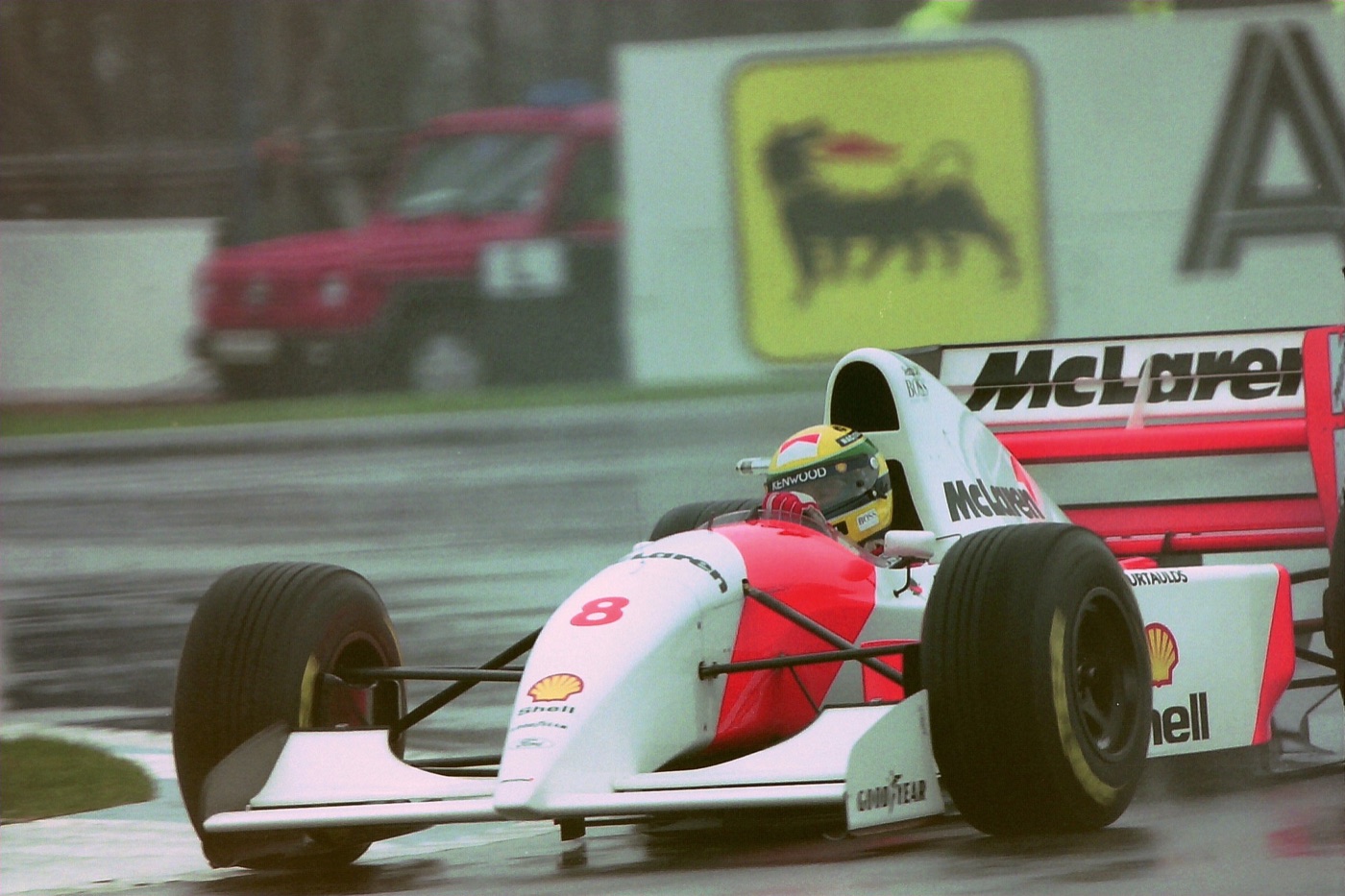
The 1993 European Grand Prix was the third round of the 1993 Formula One World Championship, run in rain on Easter Sunday, 11 April 1993, at Donington Park in Leicestershire. Ayrton Senna won it in a McLaren-Ford from the two Williams-Renaults of Damon Hill and Alain Prost. The 1993 European Grand Prix is the only world championship race Donington has held, and people look it up for one lap: Senna started fourth, dropped to fifth at the first corner and led by the end of the opening lap, having passed Michael Schumacher, Karl Wendlinger, Hill and Prost in the wet.
What happened at the 1993 European Grand Prix?
Senna won the 76-lap 1993 European Grand Prix by 83.199 seconds from Hill, with Prost a lap down in third, according to the official Formula 1 race result. The track was wet at the start, dried, and was soaked again several times during the afternoon, so the race turned on tyre choice. Senna took the lead on the first lap and lost it only during pit stops; by the finish he had lapped every car except Hill’s.
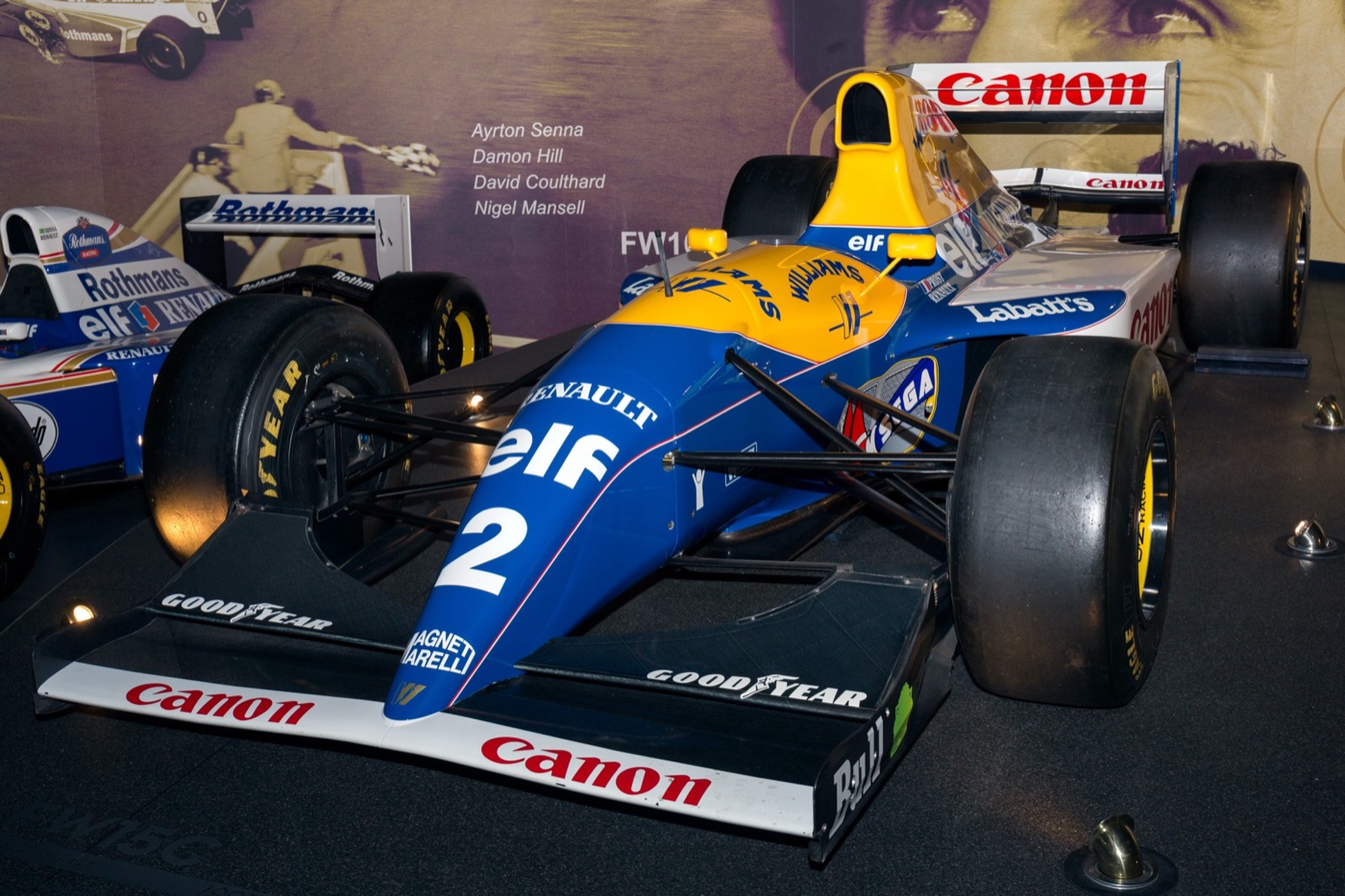
The cars against him were faster. Williams had locked out the front row in dry qualifying, and its FW15C had active suspension, traction control, anti-lock brakes and a Renault V10. Senna’s McLaren MP4/8 ran a customer Ford HB V8 that gave away at least 80bhp to the Renault, by Matt Bishop’s count in Motor Sport on the race’s 30th anniversary.
When and where was the 1993 European Grand Prix held?
The race was held on Sunday 11 April 1993 at Donington Park in Leicestershire. It was the third round of the season, after South Africa and Brazil, and the first race since 1985 to carry the European Grand Prix title. The circuit used the 2.5-mile Grand Prix layout, so the 76 laps came to 190 miles (305.7km).
Why was it called the Sega European Grand Prix?
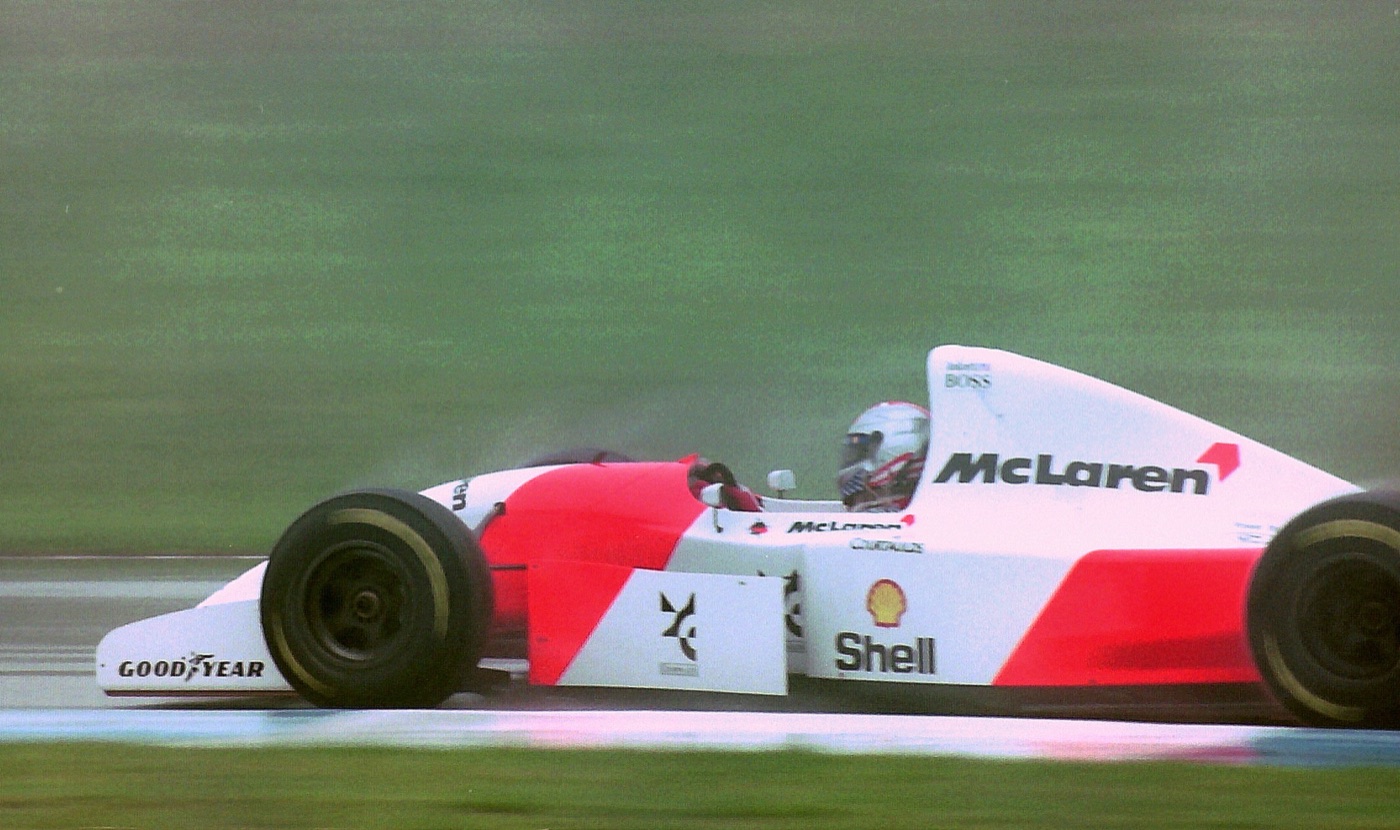
Sega, the video game company, bought the naming rights for the weekend, so the race’s official title was the Sega European Grand Prix. Kotaku’s 2011 history of the trophy gives the full form as the XXXVIII Sega European Grand Prix and notes Sega’s branding on the starting grid and the podium. Sega’s logo was on the Williams cars too: it is on the sidepod of the FW15C below.
Why Donington Park got the 1993 European Grand Prix
Donington got the 1993 European Grand Prix because a planned round in Japan fell through and its owner, Tom Wheatcroft, had spent two decades asking for one. The circuit had hosted the Donington Grands Prix of the 1930s, the last of them won by Tazio Nuvolari for Auto Union in 1938, and then closed when it became a military transport base in the Second World War. The 1993 race was the first Grand Prix there since Nuvolari’s.
Tom Wheatcroft’s twenty-year campaign
Wheatcroft, a Leicester builder, bought the freehold of Donington Park in 1971; the British Racing Drivers’ Club’s notice of his death records that he had cycled there as a boy to watch the 1937 and 1938 races, and that racing restarted in 1977. ESPN’s 2011 account of the race puts the price at about £100,000 and dates the Melbourne loop, which took the lap to 2.5 miles and made it fit for Grand Prix racing, to 1985.
Getting a race took far longer. Speaking to Motor Sport for its May 1993 issue, Wheatcroft said he had been promised a Grand Prix five times. In 1983 he was given a date for 1988, which the RAC then withdrew, at a time when the British Grand Prix alternated between Silverstone and Brands Hatch. “I would imagine it was the old pals’ act,” he said.
Autopolis and the Easter date
The opening came when the Asian Grand Prix planned for the Autopolis circuit in Japan collapsed. Wheatcroft told Motor Sport that the race was “given to me solely as a one-off to replace Autopolis, which had gone bankrupt”. Bernie Ecclestone first offered 3–4 April; Wheatcroft asked for the following weekend, Easter, and got it. The early date meant an obvious risk of bad weather, as McLaren’s own history of the race puts it.
Senna, McLaren and Williams before the race
Senna arrived at Donington leading the championship in a car few expected to win. Honda had left Formula One at the end of 1992, and McLaren could get only a customer deal for Ford’s HB V8: Benetton, Ford’s works team, had the more advanced Series VIII engine with pneumatic valves. Matthew Jeffreys, project leader on the MP4/8’s chassis, told Motor Sport in 2023 that the Renault V10 had about 750–780bhp, the works Ford 700–730bhp and McLaren’s customer engine 680–700bhp.
Prost had returned to Formula One with Williams after a year out, and ESPN reports that the one clause he insisted on was that Senna could not be his team-mate. Senna would sign with McLaren only race by race, for $1m a Grand Prix according to Motor Sport. Prost had won the opening round at Kyalami; Senna won the wet Brazilian Grand Prix after Prost crashed out.
Donington was familiar ground for Senna. He had raced there in Formula Ford, Formula Ford 2000 and Formula Three, and he said that weekend, as McLaren records, that his first ever drive in a Formula One car had been at Donington, “just a couple of days after the British GP back in 1983. It was a Williams then!”
Qualifying for the 1993 European Grand Prix
Prost took pole position for the 1993 European Grand Prix with 1:10.458, 0.304 seconds faster than Hill, on Formula 1’s qualifying classification. Schumacher’s Benetton was third on 1:12.008 and Senna fourth on 1:12.107, 1.649 seconds off pole. Wendlinger’s Sauber and Michael Andretti in the second McLaren made up the third row. Friday’s first qualifying session was wet, and Senna was fastest in it with 1:23.976, 0.038 seconds ahead of Hill, on Formula 1’s Friday classification; Saturday was dry, ESPN notes, and the dry times set the grid.
The day before the race, Senna said: “There is no long straight here and passing is difficult. Because of this there may be some controversy on overtaking.” Motor Sport’s May 1993 race report read that as a warning to his rivals: “Move over, because I’m coming through whether you do or not.”
Before the race, McLaren’s history records, Senna told the BBC what he needed: “If conditions are stable or predictable, Williams is well ahead. And no hope, basically. … If you’re looking not only for a podium but also victory, you need uncertainty, and hope you make better decisions than the competition.”
Senna’s first lap at Donington
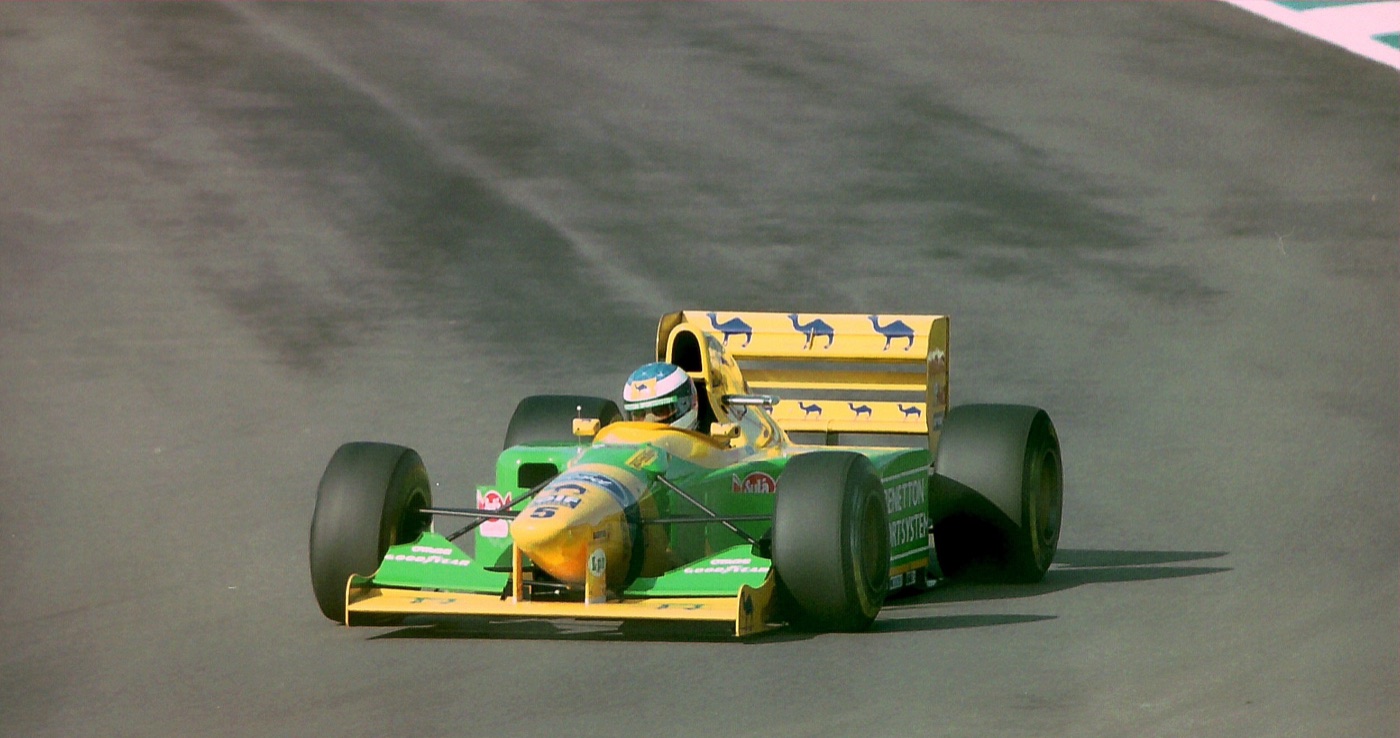
Senna went from fifth to first in the first lap, in about 75 seconds, by Bishop’s count. Prost and Hill got away cleanly from the front row. Schumacher moved left to block Senna, and Wendlinger dived down the inside of both of them into Redgate, the first corner, to take third. Senna was fifth.
How many cars did Senna overtake on the first lap?
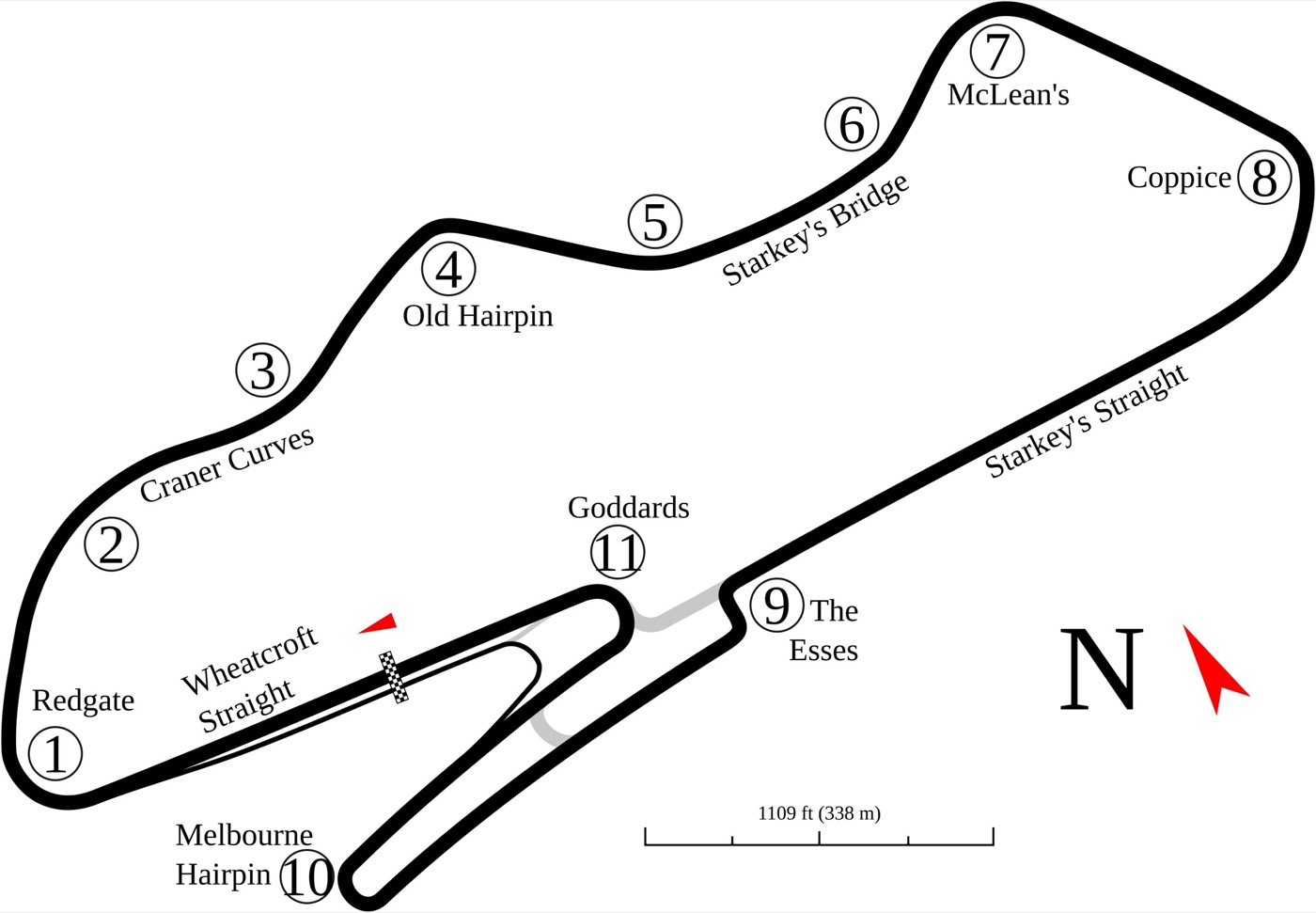
Senna overtook four cars on the opening lap: Schumacher’s Benetton, Wendlinger’s Sauber, Hill’s Williams and Prost’s Williams, in that order. He had lost one place at the start, so passing four took him from fifth to the lead. The sources agree on the order; they differ on where Senna passed Schumacher and Hill.
Schumacher at Redgate
Senna jinked back to the inside and beat Schumacher on the exit of Redgate. Motor Sport’s 1993 report places the pass a little further on, “in Hollywood”, and says Senna was “aided in part by the traction control which he had but which Schumacher hadn’t”.
Wendlinger round the outside of the Craner Curves
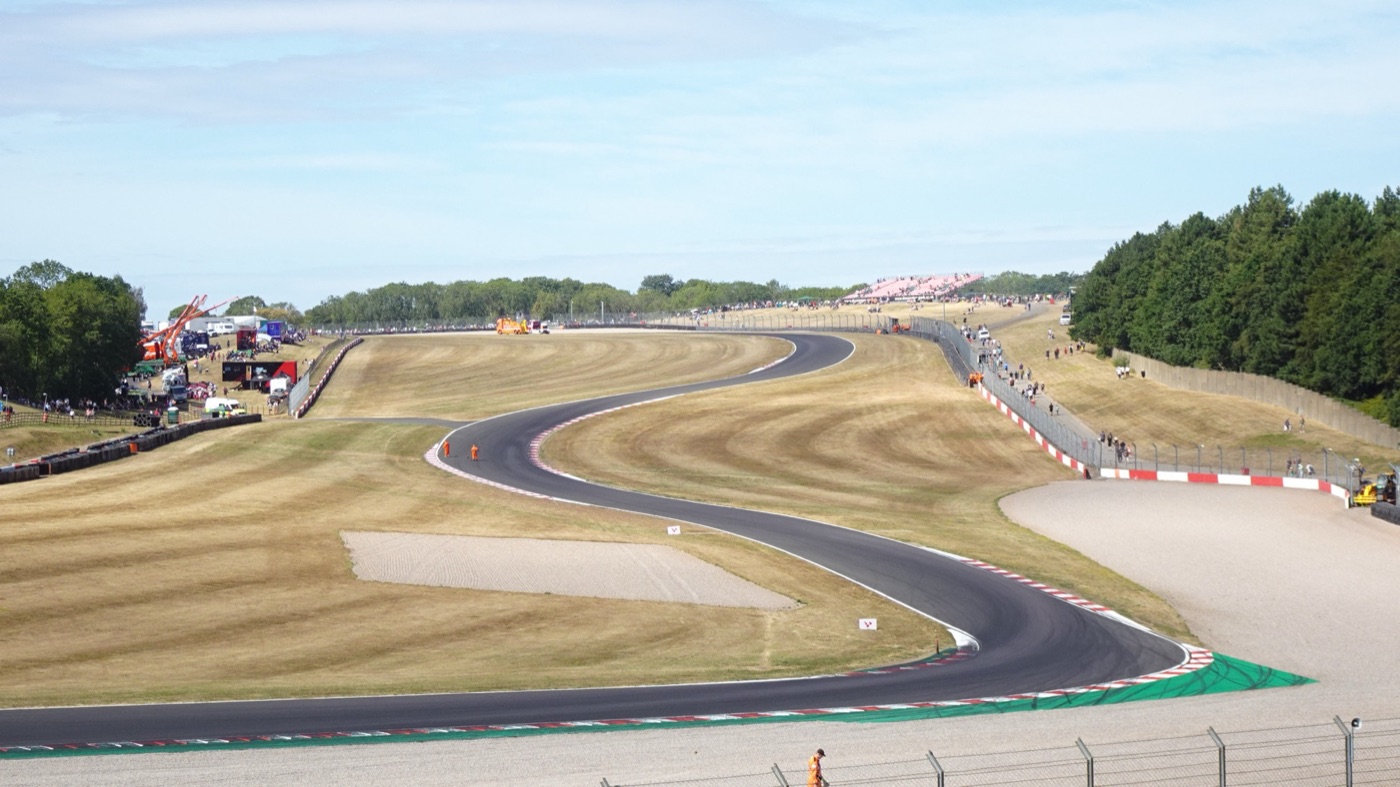
The pass people remember is the next one. Down the hill through the Craner Curves, Senna drove round the outside of Wendlinger and was ahead by Old Hairpin. Shaun Campbell, writing in Motor Sport in June 1997, described the McLaren as “well off the racing line and on the wrong side of the track for the approaching bend”, and wrote that Senna “simply put his foot on the gas, out-accelerated Schumacher and just drove around the outside of Wendlinger”. A 2009 SkiddMark post on the race said the move “beggars belief”.
Hill at McLean’s, or at Coppice
Most accounts put the pass on Hill at McLean’s, the corner after Starkey’s Bridge: Motor Sport’s race report (“at McLeans he shouldered neatly inside an understandably cautious Hill”), Simon Arron, who stood trackside in 1993 and is quoted in Motor Sport’s May 2023 retrospective, ESPN, and Murray Walker. McLaren’s 2018 history, Campbell in 1997 and the Nottingham Post in 2011 put it at Coppice, the next corner. Campbell has the McLaren “right up under the gearbox of Hill’s Williams” through McLean’s and pulling out to pass as they approached Coppice.
Prost at the Melbourne Hairpin
Senna closed on Prost along Starkey’s Straight and through the Esses, then braked later than him into the Melbourne Hairpin, the penultimate corner, and came out in the lead. Prost later said his gearbox had dropped into neutral twice on the lap, once in “the third or fourth corner” and again at the end of a straight. Arron wrote that Senna was six-tenths clear at the end of the lap; by the end of lap two the gap was more than four seconds, according to ESPN.
Why is it called the lap of the gods?
“Lap of the gods” is the name Motor Sport gave Senna’s opening lap in the headline of Campbell’s June 1997 feature, the first in a series on great single laps, and the magazine has used it since. Motor Sport’s May 2023 piece calls it “Senna’s circuit of the gods”.
Did traction control help Senna at Donington?
Yes, by Senna’s own account. Both the McLaren and the Williams had traction control, which was legal in 1993; Schumacher’s Benetton, Motor Sport noted, did not. At the post-race press conference Senna was asked how he had done it; the Nottingham Post, recalling it in 2011, gives his answer: “It was easy, thanks to traction control.” When it was put to him in 1993 that Donington was his greatest drive, Classic Team Lotus records, he dismissed the idea: “No way! I had traction control. O.K., I didn’t make any real mistakes, but the car was so much easier to drive. It was a good win, but compared to Estoril ’85, it was nothing.” His 1985 Portuguese Grand Prix win came in a turbocharged Lotus with no traction control.
The race after the first lap: pit stops in the rain
After lap one the 1993 European Grand Prix was decided in the pit lane. The track dried, the rain came back, it dried again, and the leaders swapped between slick and wet tyres again and again. Murray Walker counted 63 pit stops for tyres in his 2013 BBC Sport column on the race.
How many pit stops did Senna make?
Senna made four pit stops for tyres, against six for Hill and seven for Prost, by Walker’s count; Motor Sport’s race report says he called at the pits five times, but on one of those he drove straight through. McLaren’s history gives the sequence: slicks at the end of lap 18; wets about ten laps later; slicks again six laps after that, a stop on lap 34 in which a cross-threaded right-rear wheel nut cost him the lead to Prost; the drive-through on lap 57; and wets for the last time on lap 66. He was back in front by lap 39 and stayed there.
Williams got it wrong. Prost changed at the first sign of every shower, and Hill followed his team leader. “We messed it up,” a senior Williams team member told Motor Sport, “although he put it a little more earthily than that.” Prost stalled the engine at his lap 48 stop and again on lap 53, when he came in for what he thought was a puncture; his slicks had been set to pressures for a dry track. Hill called the race “like a nightmare! The worst conditions you ever wanted to race in.”
The fastest lap through the pit lane
Senna set the fastest lap of the race, 1:18.029, on lap 57, by driving through the pit lane without stopping, according to Formula 1’s fastest-lap table. That is an average of about 115mph over the 2.5-mile lap. He had come in for wets, found the team not ready for him, and kept going. By a quirk of design, McLaren notes, the Donington pit lane was a short cut relative to the track; Motor Sport’s report wondered whether it was a coincidence that the drive-through “was also his fastest lap and the race’s”. Senna blamed a radio problem. Hill’s best lap was 1:19.379 and Prost’s 1:19.756, both on lap 55.
Barrichello, Herbert and the rest of the field
Rubens Barrichello, from 12th on the grid in a Jordan-Hart, was fourth at the end of lap one, passed Hill for third on lap 32 and ran second between laps 49 and 54. A fuel pressure failure stopped him on lap 71; he was still classified tenth. “It was all going really well and then the fuel pressure light came on and the next lap the car just stopped,” he said. Eddie Jordan, his team owner, was “too choked to speak”, Motor Sport reported.
Johnny Herbert took fourth for Lotus from 11th on the grid. He switched to slicks early and stayed out on them, and his team director Peter Collins said: “We kept our nerve when many others were panicked into making too many tyre stops.” Riccardo Patrese was fifth for Benetton, and Fabrizio Barbazza scored his first world championship point in sixth for Minardi, despite a front wing endplate broken, he thought, at the start.
Who retired from the 1993 European Grand Prix?
Andretti hit Wendlinger on the first lap and both were out; Andretti told Motor Sport: “When I tried to overtake him I suddenly realised he probably hadn’t seen me, so I braked hard but couldn’t avoid hitting him.” Schumacher locked the rear wheels on a downshift and slid off. JJ Lehto started from the pit lane in a spare Sauber set up for the taller Wendlinger and gave up after 13 laps. Both Ferraris retired with active suspension trouble, and Derek Warwick’s Footwork, sixth at the time, broke a driveshaft on its 67th lap. Of the 25 starters, 11 were classified.
1993 European Grand Prix results
Senna won the 1993 European Grand Prix from fourth on the grid in 1 hour 50 minutes 46.570 seconds, an average of about 103mph (166km/h). Every finisher except Hill was lapped at least once. The table gives every starter; the retirement reasons are those given in Motor Sport’s May 1993 report.
| Pos | No | Driver | Car | Laps | Time or reason | Grid | Points |
|---|---|---|---|---|---|---|---|
| 1 | 8 | Ayrton Senna | McLaren-Ford | 76 | 1:50:46.570 | 4 | 10 |
| 2 | 0 | Damon Hill | Williams-Renault | 76 | +83.199s | 2 | 6 |
| 3 | 2 | Alain Prost | Williams-Renault | 75 | +1 lap | 1 | 4 |
| 4 | 12 | Johnny Herbert | Lotus-Ford | 75 | +1 lap | 11 | 3 |
| 5 | 6 | Riccardo Patrese | Benetton-Ford | 74 | +2 laps | 10 | 2 |
| 6 | 24 | Fabrizio Barbazza | Minardi-Ford | 74 | +2 laps | 20 | 1 |
| 7 | 23 | Christian Fittipaldi | Minardi-Ford | 73 | +3 laps | 16 | 0 |
| 8 | 11 | Alessandro Zanardi | Lotus-Ford | 72 | +4 laps | 13 | 0 |
| 9 | 20 | Érik Comas | Larrousse-Lamborghini | 72 | +4 laps | 17 | 0 |
| 10 | 14 | Rubens Barrichello | Jordan-Hart | 70 | Fuel pressure | 12 | 0 |
| 11 | 21 | Michele Alboreto | Lola-Ferrari | 70 | +6 laps | 24 | 0 |
| Ret | 9 | Derek Warwick | Footwork-Mugen Honda | 66 | Driveshaft | 14 | 0 |
| Ret | 15 | Thierry Boutsen | Jordan-Hart | 61 | Retired | 19 | 0 |
| Ret | 4 | Andrea de Cesaris | Tyrrell-Yamaha | 55 | Retired | 25 | 0 |
| Ret | 27 | Jean Alesi | Ferrari | 36 | Active suspension hydraulics | 9 | 0 |
| Ret | 10 | Aguri Suzuki | Footwork-Mugen Honda | 29 | Retired | 23 | 0 |
| Ret | 19 | Philippe Alliot | Larrousse-Lamborghini | 27 | Retired | 15 | 0 |
| Ret | 5 | Michael Schumacher | Benetton-Ford | 22 | Slid off | 3 | 0 |
| Ret | 26 | Mark Blundell | Ligier-Renault | 20 | Gravel trap | 21 | 0 |
| Ret | 28 | Gerhard Berger | Ferrari | 19 | Active suspension actuator | 8 | 0 |
| Ret | 30 | JJ Lehto | Sauber | 13 | Spare car set up for another driver | 7 (started from pit lane) | 0 |
| Ret | 3 | Ukyo Katayama | Tyrrell-Yamaha | 11 | Retired | 18 | 0 |
| Ret | 25 | Martin Brundle | Ligier-Renault | 7 | Spun off | 22 | 0 |
| Ret | 29 | Karl Wendlinger | Sauber | 0 | Collision | 5 | 0 |
| Ret | 7 | Michael Andretti | McLaren-Ford | 0 | Collision | 6 | 0 |
Luca Badoer, in the second Lola-Ferrari, was the 26th entry and did not qualify. Formula 1’s classification lists Lehto under his full name, Jyrki Järvilehto, and leaves out Wendlinger and Andretti, who did not complete a lap; their rows come from the qualifying classification and Motor Sport’s report. Where the table says “Retired”, the 1993 report gives no cause.
The championship after Donington
The win put Senna on 26 points to Prost’s 14 after three rounds: second place in South Africa and wins in Brazil and at Donington, against Prost’s win at Kyalami and third place here. Motor Sport noted that McLaren had beaten Williams two races to one, and that Senna’s car left for San Marino with a second squashed Sonic the Hedgehog sticker on its cockpit side to count them. Prost won the 1993 title with 99 points to Senna’s 73 and Hill’s 69, according to Formula 1’s 1993 drivers’ standings.
The podium, the Sonic trophy and the crowd
On the podium Senna stood with Hill, Prost and Wheatcroft, who handed out the trophies in a top hat. Senna had stopped on his slowing-down lap to pick up a Brazilian flag.
Did Senna win a Sonic the Hedgehog trophy?
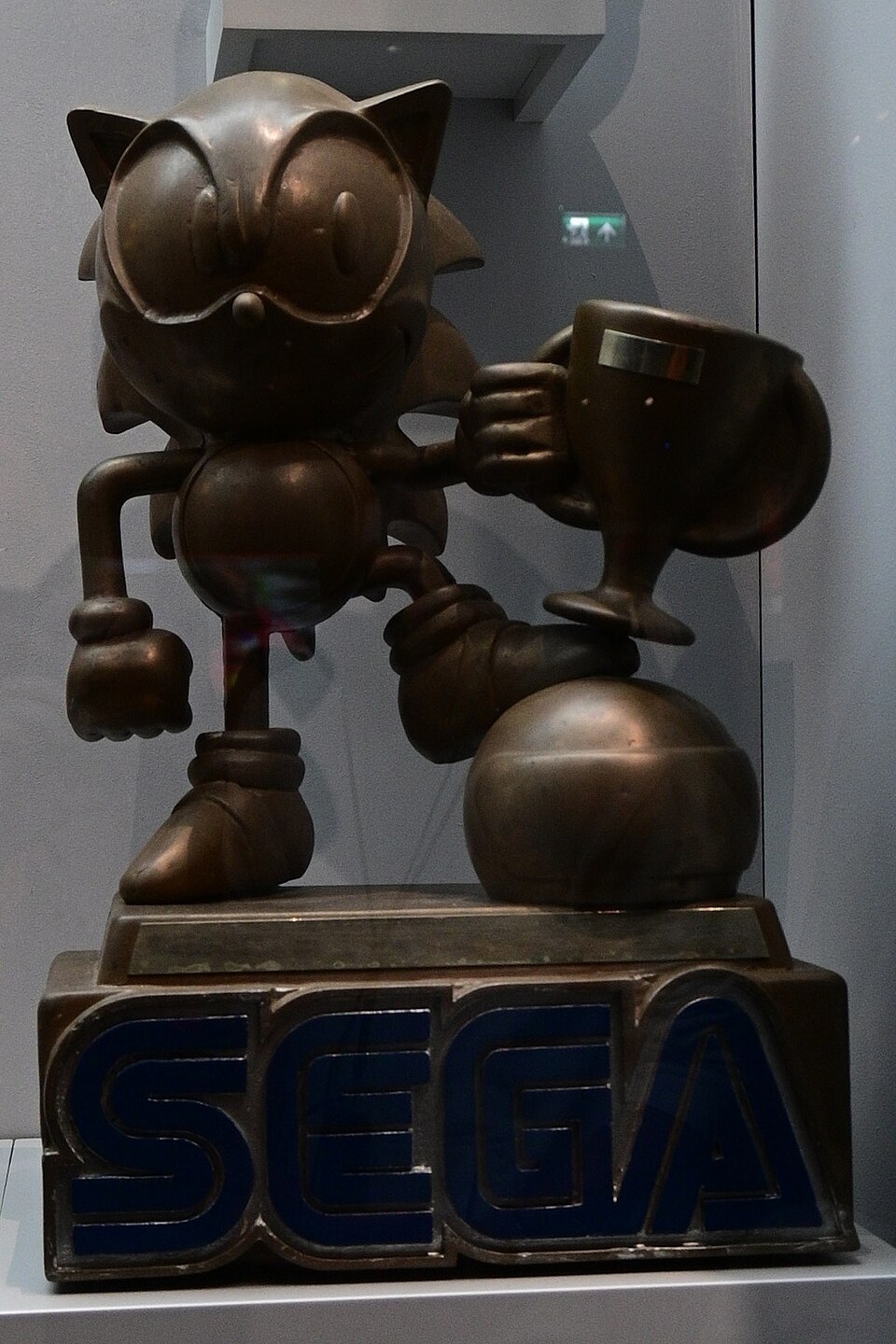
Yes. As the sponsor, Sega gave the winner a statue of its mascot Sonic the Hedgehog holding a cup, on a base carrying the Sega logo. Kotaku records that Senna held it up for photographs and was then given the official cup, which did not show Sonic. The Sonic statue survives: it was on display at the Formula 1 Exhibition in London in February 2025, when the photograph below was taken.
“Perhaps you should change cars with me”
In the press conference Prost listed his problems: a gearbox that would not engage, rear wheels that locked under braking, the wrong tyre pressures and a stall in the pits. Senna listened, then said: “Perhaps you should change cars with me…” Motor Sport printed the exchange in its May 1993 report.
Who was at the 1993 European Grand Prix?
Diana, Princess of Wales, came with her sons William and Harry and visited the McLaren garage, McLaren records. Estimates of the crowd differ: McLaren’s history says 50,000, ESPN’s “a little over 30,000”. Wheatcroft was there against medical advice. Motor Sport’s July 2002 profile of him says he had a heart attack at lunchtime while demonstrating a Mercedes-Benz W154 in the rain, and checked himself out of hospital for the podium. The magazine’s August 2005 note on his top hat tells it differently: recently out of heart surgery, he demonstrated and spun a Mercedes-Benz W125, and was taken ill again after the race.
How Senna’s Donington win has been judged
Motor Sport’s May 1993 report called Senna’s 1993 European Grand Prix “quite possibly the best drive of Senna’s career, the best of his 38 GP wins”. He won 41 Grands Prix in all, according to StatsF1’s record of his career, so Donington was his 38th. Walker, who commentated on it for the BBC, called it “by common consent the most amazing opening lap in the history of Formula 1”.
Bishop asked two former drivers who had watched it on television. Carlos Reutemann, winner of 12 Grands Prix, told him in 2006: “Donington… fantastic… he know where to look for grip… he know how to feel for grip… he know what to do with grip when he find it.” Emerson Fittipaldi said in 2013: “I watch Donington on TV in my house in Miami. The first lap? Pure genius. The next day I call him. ‘Ayrton, that lap is impossible,’ I tell him.”
The people who built the car gave the car some of the credit. Ron Dennis told McLaren’s historians: “We contributed a lot to that race, because the car did a lot of thinking for the driver. All the driver had to do was drive it, and of course that’s something that Ayrton did very well!” Neil Oatley, McLaren’s engineer, recalled in Motor Sport’s May 2023 retrospective: “I remember being staggered at the size of Ayrton’s lead. I thought the Williams had spun.” Senna himself ranked it below his Estoril win of 1985.
Why Formula One never went back to Donington
Formula One never returned because the 1993 European Grand Prix lost Wheatcroft a great deal of money and a later attempt to bring the British Grand Prix to Donington collapsed. “It poured down. He made a huge loss,” Motor Sport’s 2002 profile records. The Nottingham Post reported that the race was voted the best-organised event of the season, and that Wheatcroft “was not prepared to risk a similar financial disaster”.
The British Grand Prix deal of 2008
On the eve of the 2008 British Grand Prix, Ecclestone announced that the race would move from Silverstone to Donington from 2010. Wheatcroft had by then sold the lease of the circuit to Donington Ventures Leisure (DVL), which, Motor Sport reported in December 2009, needed to raise £135m to rebuild the circuit and had agreed a race fee of $25m a year. Ecclestone extended the contract to 17 years in June 2009, but DVL missed its funding deadlines that autumn. On 7 December 2009 Silverstone signed a 17-year deal of its own, with DVL by then in administration, Al Jazeera reported. Wheatcroft had died on 31 October 2009, the BRDC records.
Visiting Donington Park and the 1993 cars today
Donington Park is still a working race circuit, owned by Motor Sport Vision, and its Grand Prix layout keeps the corners of Senna’s first lap, from Redgate and the Craner Curves to the Melbourne Hairpin.
The circuit marked the 30th anniversary at the Donington Historic Festival on 29–30 April 2023. Motor Sport’s preview of the festival lists Senna’s Toleman TG184 on track, Prost’s Williams FW15C, the same chassis that raced at Donington in 1993, a recreation of the Sega Sonic podium, and a question-and-answer session with Oatley, Senna’s former Formula Three team boss Dick Bennetts, and David Scott, clerk of the course on the day.
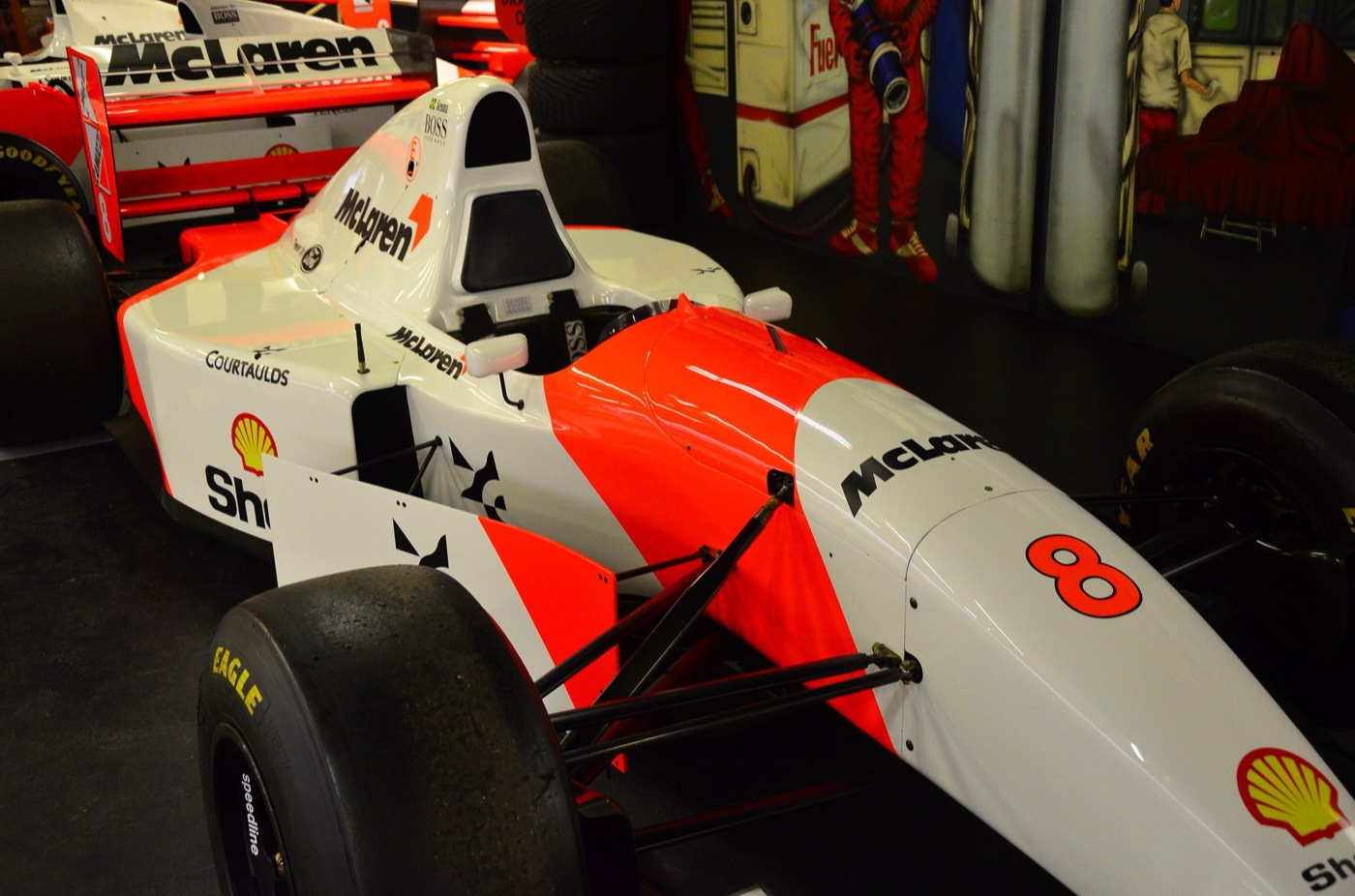
Senna’s spare McLaren from the race weekend, the T-car, was in the Donington Grand Prix Collection, Wheatcroft’s museum beside the circuit, when it was photographed in July 2014.
Questions
Who won the 1993 European Grand Prix?
Ayrton Senna won it for McLaren-Ford, ahead of Damon Hill and Alain Prost in the two Williams-Renaults. Johnny Herbert was fourth for Lotus, Riccardo Patrese fifth and Fabrizio Barbazza sixth.
By how much did Senna win at Donington?
Formula 1’s official result gives Senna’s winning margin over Hill as 83.199 seconds. Prost, in third, was a lap behind, and every other finisher was lapped at least once.
What car did Senna drive at Donington in 1993?
Senna drove the McLaren MP4/8, number 8, with a customer Ford HB V8 engine. It had active suspension and traction control, but its engine gave away at least 80bhp to the Renault V10 in the Williams.
Who was on pole for the 1993 European Grand Prix?
Alain Prost took pole position in his Williams-Renault with 1:10.458, ahead of Damon Hill, Michael Schumacher and Senna. Senna was 1.649 seconds slower than Prost.
Was the 1993 European Grand Prix held on Easter Sunday?
Yes. The race was run on Easter Sunday, 11 April 1993. Tom Wheatcroft, the circuit’s owner, chose the Easter weekend when Bernie Ecclestone offered him 3–4 April.
How long was the 1993 European Grand Prix?
It was 76 laps of the 2.5-mile Donington Park Grand Prix circuit, about 190 miles (305.7km). Senna took 1 hour 50 minutes 46.570 seconds.
Has Formula One raced at Donington since 1993?
No. The 1993 European Grand Prix is the only world championship race Donington Park has held. A deal to move the British Grand Prix there from 2010 collapsed in 2009 when the circuit’s leaseholder could not raise the money.
Sources
- Formula 1, official race result, 1993 European Grand Prix: positions, laps, times, points.
- Formula 1, official qualifying classification, 1993 European Grand Prix: grid positions and times.
- Formula 1, official Friday qualifying classification, 1993 European Grand Prix: Senna fastest in the wet first session.
- Formula 1, official fastest laps, 1993 European Grand Prix: Senna’s 1:18.029 on lap 57, Hill’s and Prost’s best laps.
- Formula 1, “1993 drivers’ standings”: final points of Prost, Senna and Hill.
- Motor Sport, “1993 European Grand Prix: Opportunity knocked for Senna”, May 1993: the race report; the passes, pit stops, retirements, drivers’ quotes, the press conference and the Sonic sticker.
- Motor Sport, “Delirium tremens”, May 1993: Tom Wheatcroft on his campaign for the race, the withdrawn 1988 date and the Easter date.
- Shaun Campbell, “Lap of the gods”, Motor Sport, June 1997: the first lap corner by corner, Nuvolari’s 1938 win.
- Motor Sport, “Tough guy with a soft touch”, July 2002: Wheatcroft’s heart attack while demonstrating the W154, and his loss on the race.
- Motor Sport, “30-second board”, August 2005: Wheatcroft’s top hat, the W125 demonstration.
- Motor Sport, “Donington and the British GP: digging for the truth”, December 2009: the 2008 announcement, DVL, the £135m and the 17-year contract.
- Matt Bishop, “‘Pure genius’: Senna, Donington and the best opening lap in F1 history”, Motor Sport, 11 April 2023: the 75 seconds, the power gap, Reutemann and Fittipaldi.
- Motor Sport, “Senna’s East Midlands masterclass”, May 2023: Simon Arron’s trackside account of the first lap, Neil Oatley.
- Motor Sport, “McLaren MP4/8: the underrated 1993 F1 car Senna still ‘loved’”, 11 April 2023: Matthew Jeffreys on the engines and the race-by-race deal.
- Motor Sport, “Donington Fest to pay homage to ‘amazing’ Senna win this weekend”, 27 April 2023: the 30th-anniversary festival.
- McLaren, “Senna’s gamble pays off”, 2018: the Ford engine deal, Senna’s quotes, the pit-stop sequence, the Princess of Wales, the 50,000 crowd, Ron Dennis.
- Murray Walker, “Murray’s memories: European GP 1993”, BBC Sport, 11 April 2013 (archived copy): 63 tyre stops, each driver’s stops.
- Chris Medland, “Senna reigns supreme”, ESPN, 24 June 2011 (archived copy): Wheatcroft’s purchase, the Melbourne loop, Prost’s veto, qualifying weather, the crowd.
- Nottingham Post, “Greatest single lap in F1 history was driven at Donington’s first and last grand prix”, 10 June 2011 (archived copy): the press conference, the best-organised award, Wheatcroft’s decision.
- Luke Plunkett, “The day a sporting legend became an unwitting Sonic the Hedgehog icon”, Kotaku, 23 December 2011: Sega’s naming rights and the Sonic trophy.
- Classic Team Lotus, “Senna’s greatest race was in a Lotus”, 2019: Senna comparing Donington with Estoril 1985.
- British Racing Drivers’ Club, “Notice of death: Tom Wheatcroft”, 2009: his purchase of Donington in 1971, the 1977 reopening, his death on 31 October 2009.
- Al Jazeera, “Silverstone secures British GP deal”, 7 December 2009: Silverstone’s 17-year contract, DVL in administration.
- StatsF1, “Ayrton Senna”: his 41 wins and his death on 1 May 1994.
- SkiddMark, “Ayrton Senna at Donington Park (1993 F1)”, March 2009: the Craner Curves pass.