Alain Prost and Renault: works driver, champion and adviser
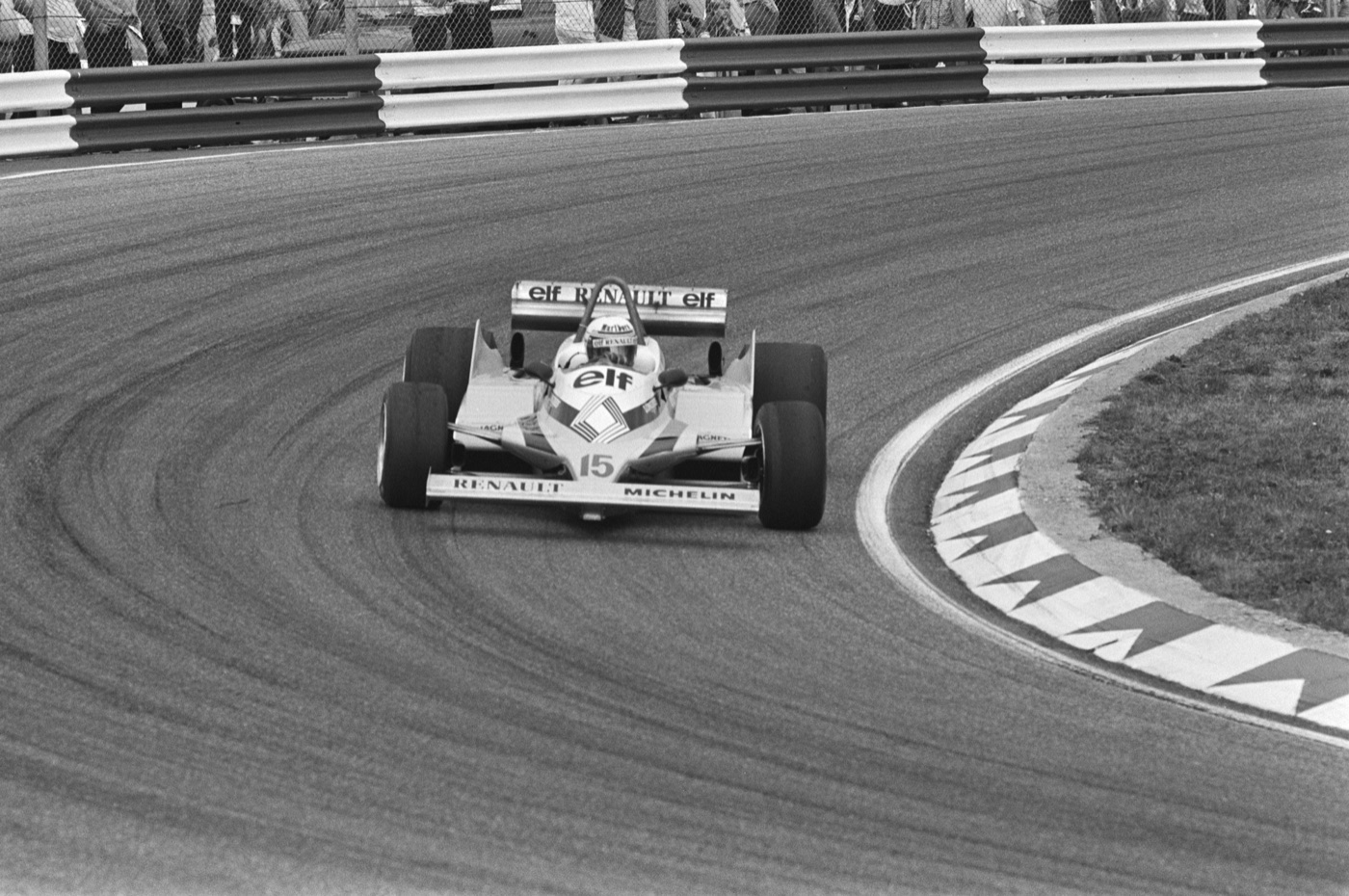
Alain Prost raced Renault’s turbocharged Formula One cars from 1981 to 1983, winning nine Grands Prix and losing the 1983 title to Nelson Piquet by two points, and Renault sacked him within days of that defeat. Ten years later he won the last of his four world titles in a Williams with a Renault V10, then worked for the French company again from 2009 to 2022: brand ambassador from 2012, co-owner of the Renault e.dams Formula E team, and adviser and non-executive director of its Formula One team until Alpine let his contract lapse in January 2022.
His first link with Renault came earlier still, in Formula Renault in the 1970s, and in December 2025, after Renault’s last season as a Formula One engine maker, he told Motor Sport: “If I’m here today, it’s because of them.”
Formula Renault before Formula One
Prost’s racing career started in Renault’s junior single-seater series. Motor Sport’s December 2025 report records that he won two Formula Renault championships, the French in 1976 and the European in 1977, and had Renault engines in the French and European Formula 3 campaigns that followed. “I was involved with Renault when it was the [racing] school and then Formula Renault – it’s about 50 years ago,” Prost said at the magazine’s gala celebrating his 1985 title.
He reached Formula One with McLaren in 1980 and moved to Renault for 1981, after what the same report calls “a tricky first year”. The Frenchman’s nickname in F1 was “the Professor”, and Autocar has described his “cool, calculating driving style”; a SkiddMark report of October 2012 called him « Le Professeur » at the wheel of a Red Bull at Paul Ricard.
Did Alain Prost drive for Renault?
Yes: he drove for the works Équipe Renault Elf for three seasons, 1981 to 1983, in the yellow, white and black cars that carried his number 15. Renault had brought the turbocharged engine to Grand Prix racing in 1977 with Jean-Pierre Jabouille (Motor Sport, December 2025), and Prost’s turbo V6 cars ran on Michelin tyres. He retired from nine of the 15 Grands Prix of his first season.
First Grand Prix win, at home in France
He won three of the six races he finished in 1981. The first victory of his career came at home. Formula 1’s official results list his first podium as third place in Argentina in April, his first win at the French Grand Prix at Dijon on 5 July, and further wins in the Netherlands on 30 August and Italy on 13 September. His first pole position came at Hockenheim in August, and he took a second at Zandvoort. He finished fifth in the championship with 43 points, seven behind the champion Piquet; his team-mate René Arnoux scored 11.
The French win came by 2.29 seconds from John Watson’s McLaren after 80 laps, according to StatsF1’s classification, which adds together the times of the two parts of a race stopped by rain.
Two wins and the Paul Ricard team orders
Prost won the first two races of 1982, in South Africa in January and Brazil in March. He started the Brazilian race from pole, and the win came to him afterwards: Piquet and Keke Rosberg, first and second on the road, were disqualified for running their cars under the weight limit, and Prost, third across the line, was given the win (StatsF1, 1982 Brazilian Grand Prix). He then scored one point in the next eight races, although he started from pole position at Zolder and Detroit. Later in the year he took pole and second place in the Swiss Grand Prix, which Formula 1 lists under Switzerland but which was held at Dijon-Prenois in France, and a fifth pole at Caesars Palace.
The French Grand Prix at Paul Ricard on 25 July gave Renault a one-two, with Arnoux 17.3 seconds ahead of Prost. Motor Sport’s race report of September 1982 describes what happened in the closing laps: “With Prost being Renault’s only real hope of creating a World Champion on points, the team-manager signalled to Arnoux to slow down and let Prost win, but as seems fashionable in the nineteen-eighties team orders were ignored and Arnoux led his team-mate home.” The same report notes that a damaged rubbing strip on a side-pod had upset the handling of Prost’s car. Prost finished the year fourth on 34 points; Arnoux, sixth on 28, left for Ferrari.
The title lost at Kyalami
The 1983 season was the closest Renault came to a drivers’ title in its first Formula One era. Prost started in the old RE30C and switched to the new RE40 for its race debut in the second round at Long Beach, a car that Motor Sport’s February 1984 analysis says arrived late and “far from ready”. He won in France, Belgium, Britain and Austria, the last on 14 August, and came second in the San Marino Grand Prix and in the European Grand Prix at Brands Hatch. He started from pole in France, Monaco and Belgium.
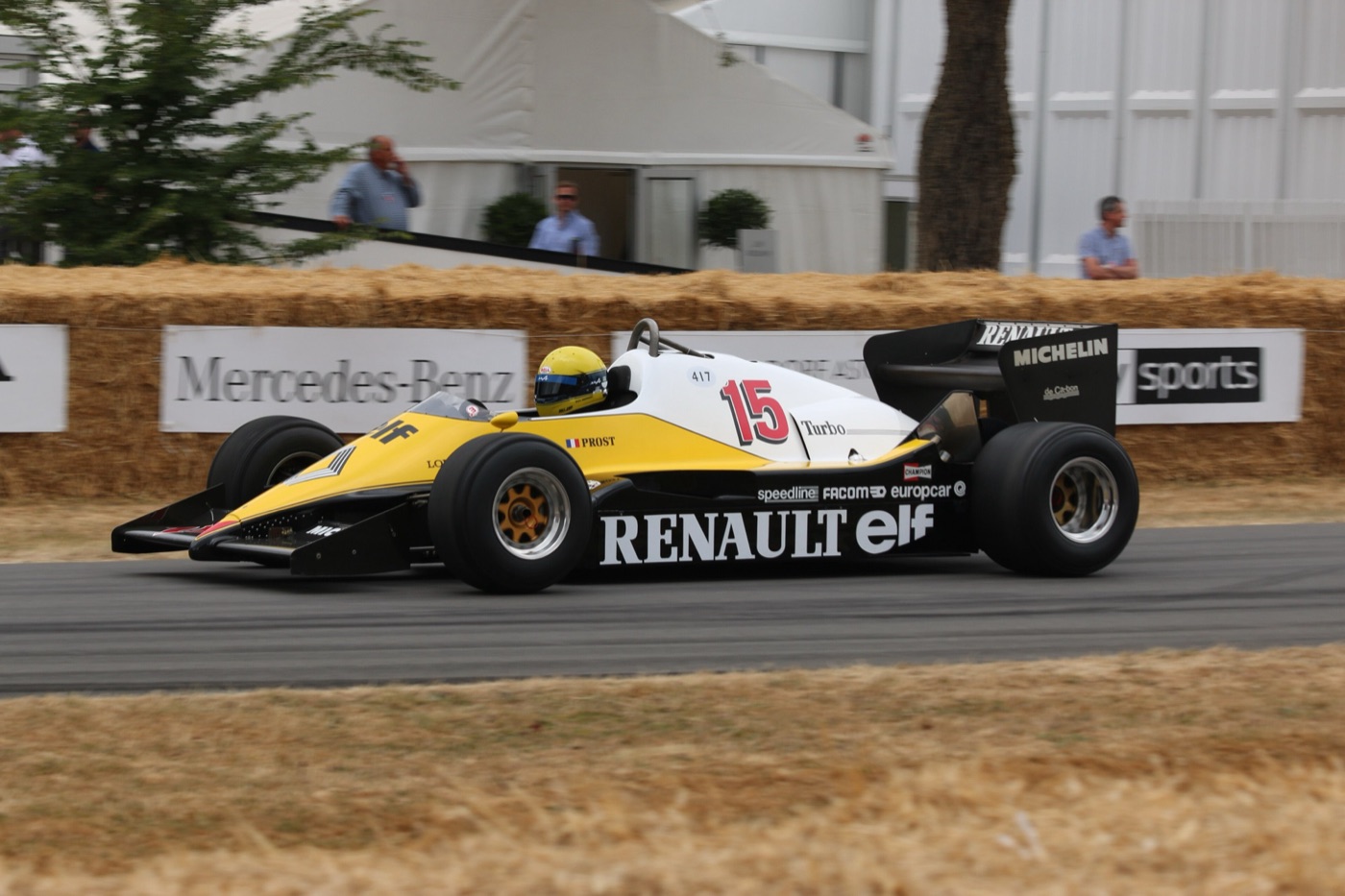
He retired at Zandvoort and Monza, and the last race, the South African Grand Prix at Kyalami on 15 October, began with Prost two points ahead of Piquet. Prost’s turbo failed after 35 of the 77 laps, a “mechanical failure” that, in Motor Sport’s February 1984 analysis, also showed the French car “had reached a performance plateau”. Piquet finished third behind the winner, his Brabham-BMW team-mate Riccardo Patrese, enough to win the championship 59 points to 57 (Formula 1, 1983 drivers’ standings). Ferrari also beat Renault to the constructors’ title, 89 points to 79.
Why was Prost sacked by Renault?
Renault dropped Prost within days of the Kyalami defeat, and the decision was made by its competitions director Gérard Larrousse after talks with Renault’s president Bernard Hanon. Motor Sport’s February 1984 analysis put it this way: Prost was “the victim of a pre-emptive strike by Gerard Larrousse who, after debating the matter at length with Renault President Bernard Hanon, felt that Prost had better be made an example of before there were calls for his own head to be put on the block.”
The same article says Prost “was not unduly disappointed”. He had felt increasingly uncomfortable in the team since the middle of the season, a position made “somewhat precarious by his very public negotiations with Ferrari about 1984”, and the magazine judged that “the Renault / Prost relationship had run its course”. Renault, it added, was a nationalised manufacturer whose racing team answered to the whole company, which made its internal politics “infinitely more complex and delicate” than a specialist team’s.
Prost signed for McLaren. Renault replaced him with Patrick Tambay and replaced his team-mate Eddie Cheever with Derek Warwick; Motor Sport noted that Cheever’s car had a “miserable reliability record” compared with Prost’s, which Renault put down to Cheever having to abuse it to keep up. In 1984 Prost won seven races for McLaren (Formula 1, Prost’s 1984 results) and lost the title to his team-mate Niki Lauda by half a point, 72 to 71.5 (Formula 1, 1984 standings).
How Prost won the 1993 title with Williams-Renault
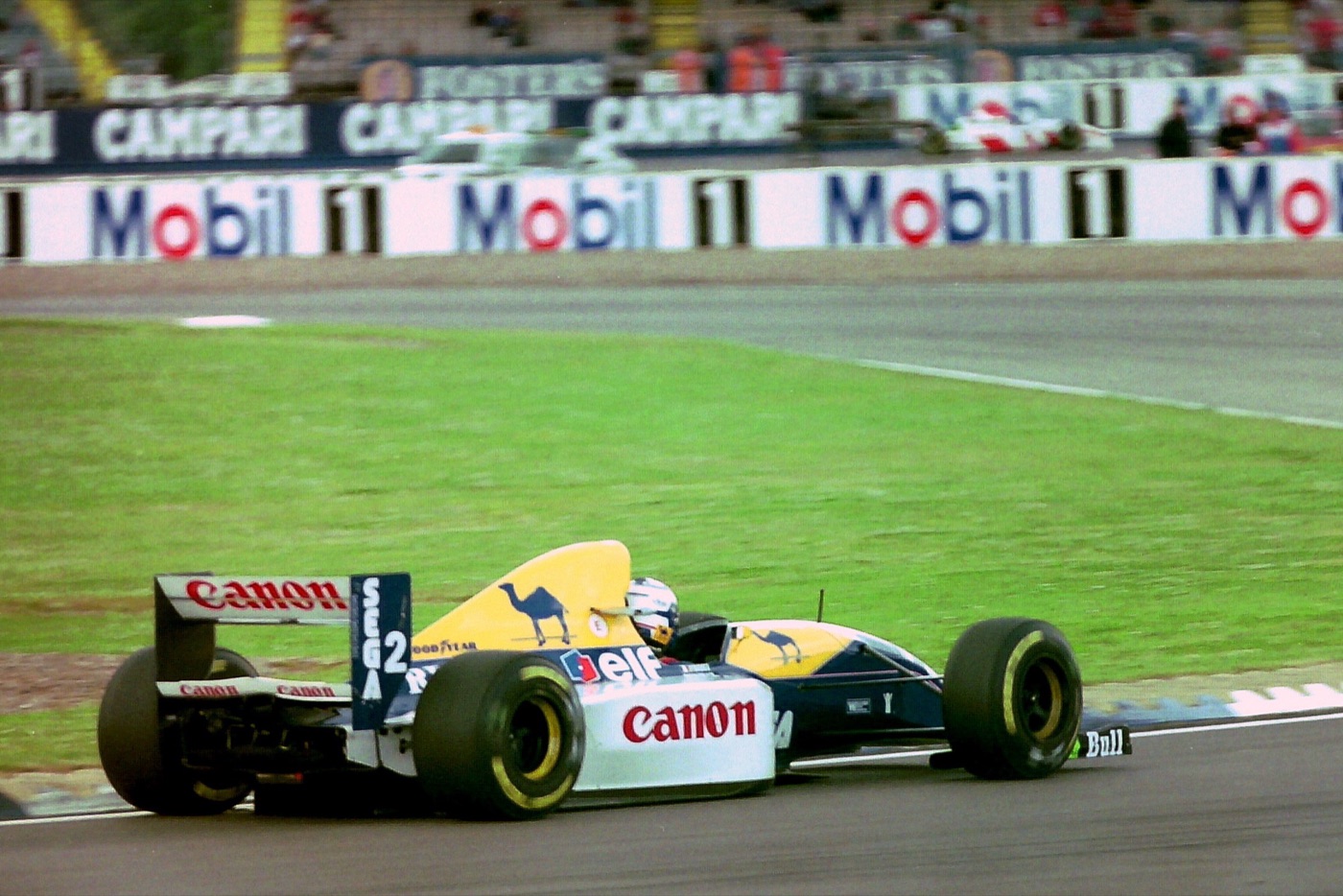
Prost’s second spell with Renault power came in 1993, in the Williams FW15C, and it brought seven wins and his fourth World Championship. He took the place of Nigel Mansell, who had won the 1992 title in the Williams-Renault.
A year out, the Ligier test and the Williams contract
Ferrari fired Prost at the end of 1991, and he did not race in 1992, the only season between 1980 and 1993 he missed. Early that year he tested for Ligier, which ran Renault V10 engines that season (Formula 1, 1992 constructors’ standings), with a view to buying the team and driving for it. Motor Sport records that he drove the 1992 Ligier in Érik Comas’s helmet to keep the test quiet, lapped competitively, and was offered a seat; Ferrari then paid him to stay out for the year. The magazine notes that Michael Schumacher’s own Ligier test two years later was, like Prost’s, made “at the behest of Renault’s political machinations”.
By the autumn he had a Williams contract for 1993. Motor Sport’s November 1992 issue reported that Frank Williams announced him as lead driver on the Sunday morning of the Portuguese Grand Prix, after Williams and McLaren’s Ron Dennis had met at Estoril to discuss Ayrton Senna’s future, and that Senna, in the magazine’s words denied a seat “by a man he detests”, called Prost a coward for having a clause that kept the Brazilian out of the second Williams. When Senna hinted that “things could get very physical” in 1993, the magazine wrote, “we remembered Suzuka 1990”.
Seven wins and a fourth title
Prost began the 1993 campaign by winning in South Africa on 14 March and took six of the next nine: San Marino, Spain, Canada, France, Britain and Germany. Motor Sport’s 1993 season record notes that he qualified on the front row for every race; Formula 1’s starting grids give him 13 pole positions from 16 races. Second place at Estoril on 26 September settled the championship, and he finished with 99 points to Senna’s 73 in a McLaren-Ford, with his team-mate Damon Hill third on 69 (Formula 1, 1993 standings). Williams-Renault won the constructors’ title with 168 points, twice McLaren’s 84.
Retirement at Estoril
He announced his retirement at the Portuguese Grand Prix, a day before clinching the title, once it was clear Senna would join Williams for 1994 (Motor Sport, 1993 season record). Autocar reported a “calm and dignified press conference” at which Prost said he wanted to stop while on top; asked about regrets, he answered: “None at all. The time is right. I will not be driving an F1 car again.” Autocar speculated at the time that he would have stayed beside Damon Hill, with whom he got on well, and that the rivalry with Senna led him to use the break clause in his contract. His last race was the Australian Grand Prix at Adelaide on 7 November, where he finished second, after second places at Estoril and Suzuka.
Alain Prost’s Renault results, season by season
One of Prost’s four titles came with a Renault engine. He won 16 World Championship Grands Prix and started 23 from pole position with Renault engines: nine victories and ten poles for the works team, seven victories and 13 poles for Williams.
| Season | Team | Rounds | Wins | Poles | Podiums | Points | Championship | Team-mate |
|---|---|---|---|---|---|---|---|---|
| 1981 | Renault | 15 | 3 | 2 | 6 | 43 | 5th | René Arnoux |
| 1982 | Renault | 16 | 2 | 5 | 4 | 34 | 4th | René Arnoux |
| 1983 | Renault | 15 | 4 | 3 | 7 | 57 | 2nd | Eddie Cheever |
| 1993 | Williams-Renault | 16 | 7 | 13 | 12 | 99 | 1st | Damon Hill |
Source: Formula 1’s official results for each season (race results, starting grids and drivers’ standings). Rounds counts every race on the calendar; Formula 1 lists Prost’s 1982 Detroit result as DNC, though he started that race from pole.
His wins with Renault power were France 1981, the Netherlands 1981, Italy 1981, South Africa 1982, Brazil 1982, France 1983, Belgium 1983, Britain 1983, Austria 1983, and in 1993 South Africa, San Marino, Spain, Canada, France, Britain and Germany.
Prost’s role as Renault brand ambassador
Renault made Prost its brand ambassador in February 2012, more than 30 years after he first drove for the works team. Its announcement said he would drive for Renault in demonstrations and represent it at events. “Renault’s history is intimately linked to that of motorsport and I have a deep attachment to the brand, with which I achieved some of the greatest successes in my sporting career,” Prost said. Carlos Tavares, then Renault’s chief operating officer, called him “without a doubt one of the most demanding ‘customers’ that Renault has ever had”.
His first outing as ambassador was the Race Stars event in Moscow on 23 February 2012, in a Renault Duster (Renault’s French release, via Caradisiac).
Ice racing with Dacia in the Trophée Andros
Prost had already been racing Renault Group cars on ice. Renault’s 2012 release lists his first Trophée Andros race in a Dacia Duster in 2009, and before the 2011–12 season Renault Sport described him as the series’ two-time champion and two-time runner-up. For that season Dacia built the Lodgy Glace, the first MPV entered in the French ice-racing championship, on the chassis developed for the Duster, and ran a second Lodgy Glace shared by his son Nicolas and Evens Stievenart.
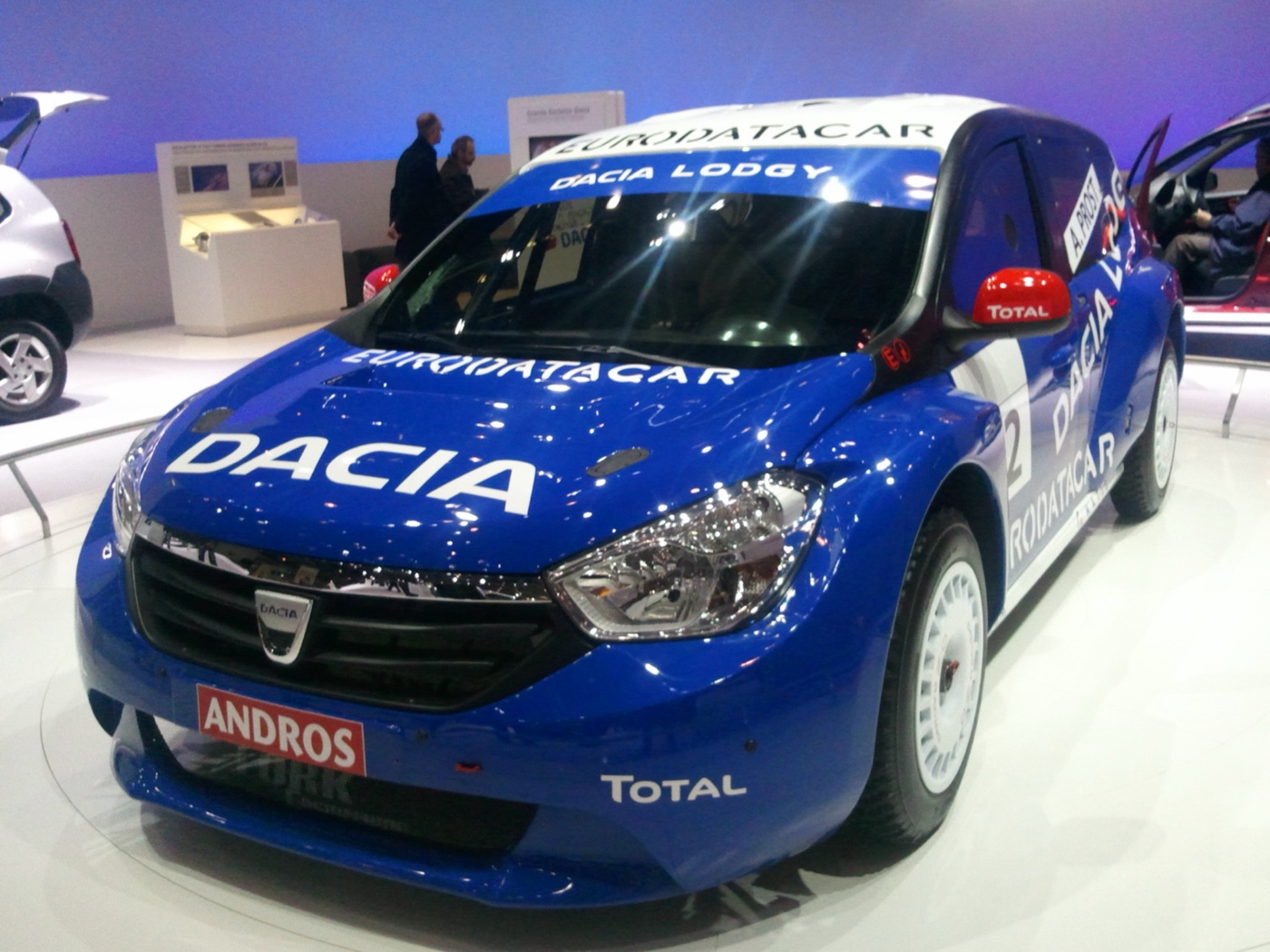
The two opening races at Val Thorens in December 2011, on a circuit named after Prost, left him eighth in the standings; SkiddMark’s report of the weekend has him saying “The car clearly has potential.” He went into the last round at Super Besse level on 813 points with Benjamin Rivière’s Skoda Fabia (Renault Sport, January 2012) and won the title; Renault’s February release lists the 2012 Trophée Andros as his.
Adviser to Renault Sport F1
The role soon reached into Formula One. In October 2012 Prost drove a Red Bull RB6, a Renault-engined car, at the World Series by Renault meeting at Paul Ricard, and SkiddMark reported then that he had agreed to help develop Renault’s 1.6-litre V6 turbo for 2014: “I am already thinking about the new technology coming in Formula 1 with the new engines. I am going to work very hard with Renault on that; it is our new target.”
In March 2013 Renault extended the deal and gave him an advisory seat on the Renault Sport F1 executive committee, attending races, World Series by Renault rounds and other events (Renault’s release of 21 March 2013). Jean-Michel Jalinier, president of Renault Sport F1, said Renault would draw on him “as we prepare for the technical challenges of the 2014 engine regulations”, as it consolidated its position as engine supplier to four teams. At the Monaco Grand Prix that May, Prost told the FIA’s Thursday press conference that he was “advisor for the strategy, being part of the executive committee”, and that Renault Sport F1’s budget was 150 million euros a year. Asked about engine prices, he recalled paying 28 million dollars for a season of Ferrari engines at his own team, Prost Grand Prix, which raced from 1997 to 2001.
That summer Prost was down to drive a Renault RE40 and the TwinRun concept car at the Goodwood Festival of Speed, and when Renault named its 2014 power unit Energy F1 he said of the new engine rules: “An engine is the heart of a car, from next year it returns to the heart of our sport” (both reported by SkiddMark in June 2013).
Renault e.dams in Formula E
In October 2013 Prost and Jean-Paul Driot, founder of the DAMS racing team, set up e.dams to enter the new FIA Formula E Championship, which began in September 2014 with Spark-Renault cars. “Being able to actively participate in the development of this new technology, which is 100% electric is extremely motivating,” Prost said at the time, in a statement SkiddMark carried.
Renault e.dams won the teams’ title in each of the series’ first three seasons, 2014–15 to 2016–17, and Sébastien Buemi won the 2015–16 drivers’ title for the team (Autosport, April 2018). Buemi’s team-mate was Nicolas Prost, Alain’s son, and Renault’s May 2016 release naming the pair for 2016–17 quoted Alain Prost as senior team manager (Renault Sport, 19 May 2016).
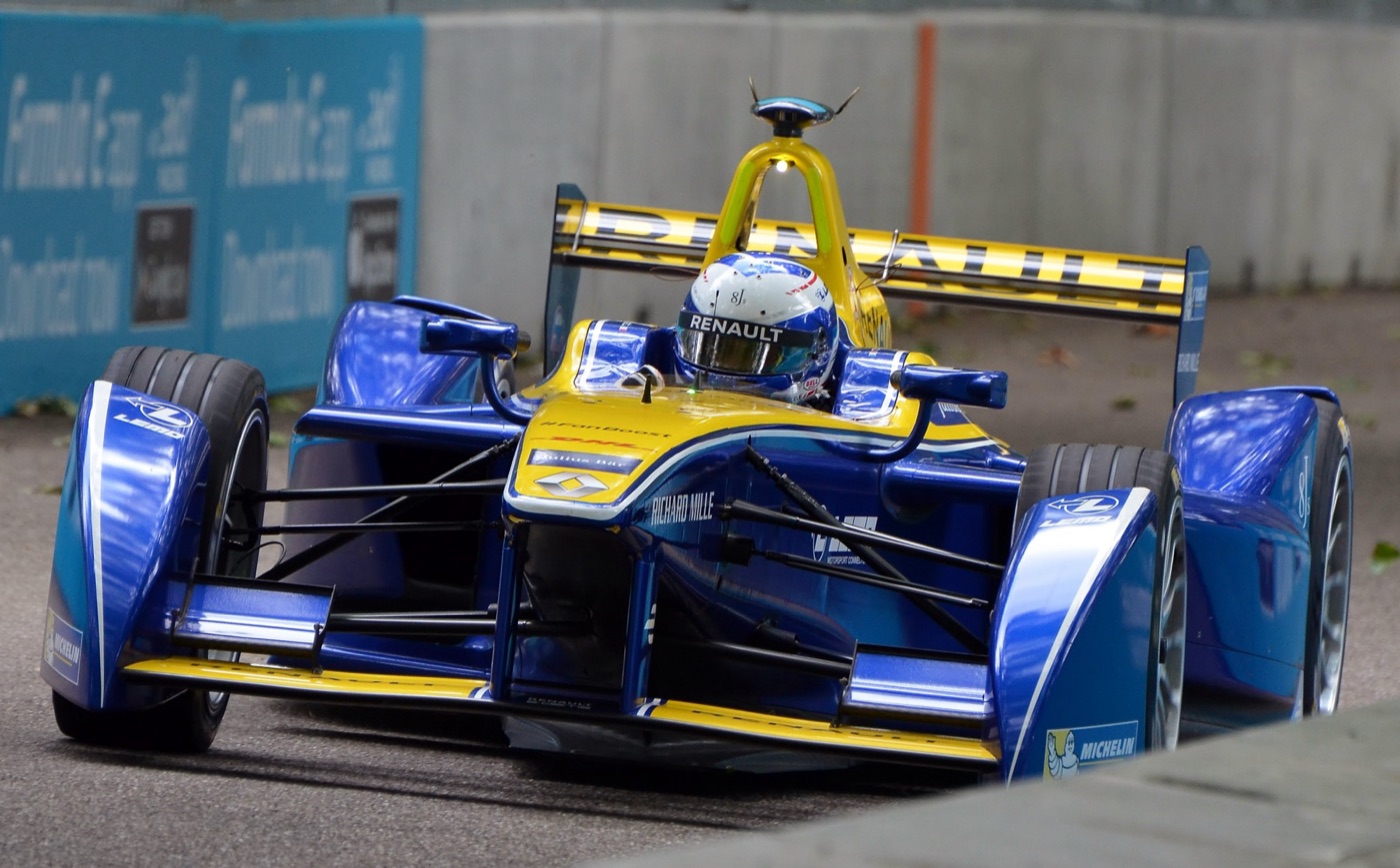
Prost left in April 2018, before Nissan, Renault’s sister brand, took over the programme for 2018–19. Driot told Autosport he had bought Prost’s shares and owned 100% of e.dams, and that Prost was leaving to travel more with Formula One.
Special adviser and director at Renault and Alpine
Renault returned to Formula One as a works team in 2016, and on 21 February 2017, at the London launch of its 2017 car, Renault Sport Racing president Jérôme Stoll named Prost special adviser and a member of Renault Sport’s executive committee (Autosport, 21 February 2017). Stoll said Prost would bring “his great experience, great network, and also an ability to talk with the drivers”. Prost said the job would not be “day-to-day”: “it will be more behind [the scenes].”
Two years later he became a non-executive director of the team, and he stayed on when it was renamed Alpine for 2021 (Formula1.com, 17 January 2022). Alpine finished fifth in the 2021 constructors’ championship, and Esteban Ocon won the Hungarian Grand Prix, the team’s first win as Alpine.
Why did Prost leave Alpine?
Alpine did not renew Prost’s annual contract for 2022, and he blamed the team’s chief executive, Laurent Rossi. Formula1.com reported the departure on 17 January 2022, a few days after Alpine parted with executive director Marcin Budkowski, as part of Rossi’s review of the team’s management.
How the exit was announced
Prost answered on Instagram the same day: “I am very disappointed how this new has been annnouced [sic] today! It was agreed that we would announce together with @alpinef1team! No respect sorry! I have refused the offer made to me in abudhabi [sic] for the 2022 season because of a personal relationship and I was right! To the enstone [sic] and Viry team I will miss you.” Enstone is the team’s chassis base in England, Viry-Châtillon its engine base in France.
He then told L’Équipe that his relationship with Rossi was behind it, according to Motor Sport’s March 2022 issue: “Rossi’s desire is to be alone, not to be polluted by anyone. He told me he no longer needed advice. There is a real desire to put a lot of people on the sidelines.”
Prost on Laurent Rossi after the exit
Renault’s chief executive Luca de Meo moved Rossi aside in July 2023, and team principal Otmar Szafnauer and sporting director Alan Permane left the team soon after. Prost went back to L’Équipe: “Laurent Rossi is the finest example of the Dunning-Kruger Effect, that of an incapable leader who thinks he can overcome his incompetence by his arrogance and his lack of humanity towards his troops.” He added, “I love this team and seeing it in this state today saddens and distresses me” (Crash.net, 31 July 2023).
Does Prost still work with Renault?
He says he does. At a Motor Sport gala reported on 12 December 2025, after Renault’s exit as an engine supplier (its Viry-Châtillon base now works on the power units of the Alpine WEC Hypercar), Prost said: “I always follow, I always work for them – even today I still do things with them.”
He called the decision a shame he understood “in terms of the financial aspect, especially when you’re running a team based in France”, and doubted Renault could return as an engine maker: “It’s going to be very difficult for them to come back. Maybe in a long time, but it’s too difficult – maybe in another way.”
| Years | Role | Source |
|---|---|---|
| 2009–2012 | Trophée Andros driver for Dacia (Duster, then Lodgy Glace); champion 2011–12 | Renault releases, 2011–12 |
| From February 2012 | Renault brand ambassador | Renault release, February 2012 |
| From March 2013 | Adviser on the Renault Sport F1 executive committee | Renault release, 21 March 2013 |
| 2013–April 2018 | Co-founder and co-owner, (Renault) e.dams, Formula E | Autosport, April 2018 |
| 2017–2019 | Special adviser, Renault F1 team, and member of Renault Sport’s executive committee | Autosport, February 2017 |
| 2019–January 2022 | Non-executive director, Renault F1 team (Alpine from 2021) | Formula1.com, January 2022 |
Questions
How many Grands Prix did Alain Prost win with Renault?
Nine for the works Renault team between 1981 and 1983, and seven more with Renault engines in the 1993 Williams FW15C: 16 in all.
Who were Prost’s team-mates at Renault?
René Arnoux in 1981 and 1982, and Eddie Cheever in 1983. At Williams-Renault in 1993 his team-mate was Damon Hill.
What car did Prost drive for Renault in 1983?
The Renault RE30C at the opening race in Brazil, then the RE40 from the second round at Long Beach. He won four races in the RE40.
Who replaced Prost at Renault for 1984?
Patrick Tambay. Renault also replaced Eddie Cheever with Derek Warwick, and Prost moved to McLaren.
Which engine won Prost his 1993 title?
A Renault V10, in the Williams FW15C. Williams-Renault also won the 1993 constructors’ championship with 168 points.
Did Alain Prost win a title for Dacia?
Yes. He won the 2011–12 Trophée Andros ice-racing championship in a Dacia Lodgy Glace, his third Andros title.
Is Nicolas Prost related to Alain Prost?
Nicolas is Alain Prost’s son. He drove for Renault e.dams in Formula E alongside Sébastien Buemi, and shared Dacia’s second car in the 2011–12 Trophée Andros.
Sources
- Formula 1, official results: Prost’s race-by-race results for 1981, 1982, 1983 and 1993, and the drivers’ standings for 1981, 1982, 1983, 1984 and 1993 and constructors’ standings for 1983, 1992 and 1993, plus the race result and starting grid page of every round of 1981, 1982, 1983 and 1993 (the results table, circuits, poles and every result and points total).
- StatsF1, 1981 French Grand Prix classification, with its 1982 Brazilian, 1982 French and 1983 South African Grand Prix classifications: winning margins, the Brazil disqualifications, the Kyalami retirement lap.
- Motor Sport, French Grand Prix race report, September 1982: the Paul Ricard team orders.
- Motor Sport, “Renault’s F1 challenge: re-grouping to rebuild credibility”, February 1984: the RE40’s late arrival, Prost’s sacking, Tambay and Warwick.
- Motor Sport, “Contractual chess”, November 1992: the Williams announcement and Senna’s reaction.
- Motor Sport, “Schumacher in a Ligier? F1’s most unlikely testing stories”, February 2026: the 1992 Ligier test.
- Motor Sport database, 1993 F1 World Championship: front-row starts and the retirement announcement.
- Autocar, “From the motorsport archive: on this day in 1993”: Prost’s retirement press conference.
- Renault Sport release, “Prost appointed Renault brand ambassador”, February 2012, via GrandPrix247: the ambassador role, quotes and career list.
- Renault release, “Alain Prost devient ambassadeur Renault”, February 2012, via Caradisiac: the Moscow Race Stars outing.
- Renault Sport release, “Dacia Lodgy Glace poised for race debut”, December 2011 and “Alain Prost and Dacia lead 2011/2012 Trophee Andros title chase”, January 2012: the Lodgy Glace and the title fight.
- Renault release, “Renault and Prost extend partnership”, 21 March 2013, via GrandPrix247: the executive committee role.
- FIA, 2013 Monaco Grand Prix Thursday press conference: Prost on his role, Renault Sport F1’s budget and Prost Grand Prix’s engine bill.
- Autosport, “Formula 1 legend Alain Prost leaves Renault e.dams Formula E team”, 27 April 2018: e.dams titles, Prost’s exit and the share sale.
- Renault Sport release, “Renault e.dams confirm Buemi and Prost for 2016-17 season”, 19 May 2016: Prost’s team role.
- Autosport, “Four-time F1 world champion Prost gets new role with Renault team”, 21 February 2017: the special adviser role.
- Formula1.com, “Alpine part ways with Non-Executive Director and four-time world champion Alain Prost”, 17 January 2022: the director role, the exit and Prost’s Instagram post.
- Motor Sport, “Prost hits out at Alpine F1 team after exit”, March 2022: Prost’s L’Équipe comments on Rossi.
- Crash.net, “Alain Prost launches scathing attack on ‘incapable’ Laurent Rossi amid Alpine F1 turmoil”, 31 July 2023: the 2023 comments.
- Motor Sport, “Prost laments Renault’s ‘sad’ F1 exit”, 12 December 2025: Formula Renault titles, Renault’s engine exit and Prost’s comments.
- SkiddMark reports: “Formula 1 seems a long time ago for Alain Prost (Trophée Andros round 1)”, December 2011; “Alain Prost becomes an ambassador for Renault”, February 2012; “First pictures of the new Renault Clio Cup”, October 2012; “Goodwood confirm the drivers and riders at this year’s Festival of Speed” and “Renault’s 2014 Energy F1 engine sounds good”, June 2013; “Alain Prost enters the Formula E Championship with Dams”, October 2013.