Alex Zanardi: F1, CART titles, the Lausitz crash and Paralympic gold
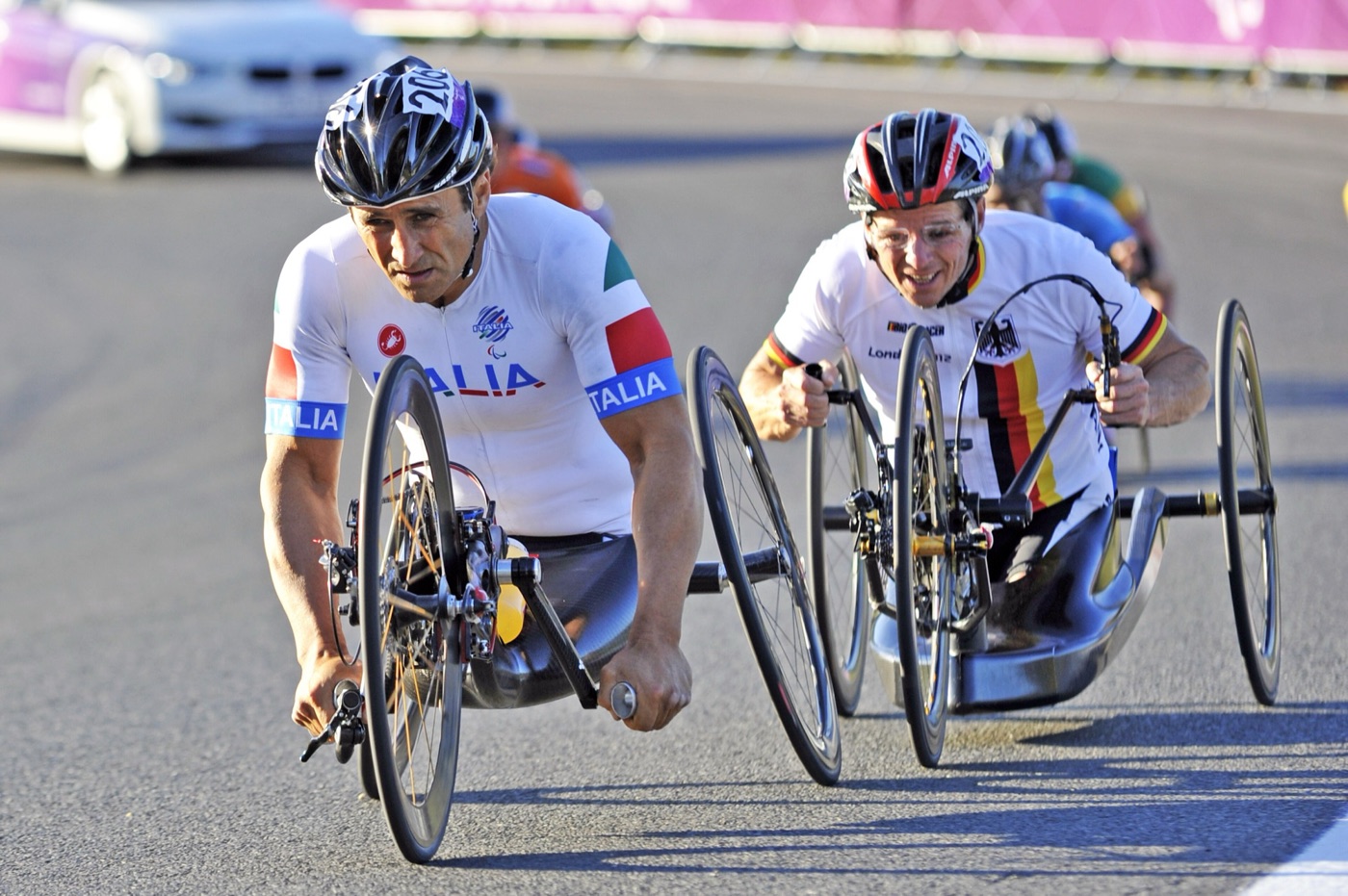
Alex Zanardi (Alessandro Leone Zanardi, born in Bologna on 23 October 1966, died 1 May 2026) was a racing driver from Italy who started 41 Formula One Grands Prix, won the CART title in the United States in 1997 and 1998, and lost both legs in a crash at the Lausitzring in Germany on 15 September 2001. He went back to racing with hand controls, won four World Touring Car Championship races for BMW, then took up the handbike and won four Paralympic gold medals for Italy, at the London 2012 and Rio 2016 Paralympics. He was seriously injured in a handbike crash in Tuscany in June 2020, and his family announced on 2 May 2026 that he had died the evening before, aged 59, as Reuters reported.
SkiddMark reported on his motorsport between 2009 and 2015, including the day in November 2012 when BMW put him in a gold-painted M3 DTM at the Nürburgring, three months after his first Paralympic golds.
Early life and karting in Bologna
Zanardi was born in Bologna, Italy. In 1979 his father, Dino, saw a kart for sale in the garage where he had taken his scooter for repair and bought it for his son, according to StatsF1’s biography. Father and son spent their weekends at the track. Zanardi won a national karting title in Italy in 1985 and another in 1987, the year he was also second in the European championship (StatsF1).
Formula 3 and Formula 3000
Zanardi moved to Formula 3 in Italy in 1988 and was runner-up in 1990, then finished second in International Formula 3000 in 1991, his only season there.
Formula 3 in Italy
He drove a Dallara-Alfa Romeo in 1988 and finished 15th. In 1989, in a Ralt-Toyota, he started from pole at Vallelunga and finished second there, and ended the year seventh. Back in a Dallara-Alfa Romeo in 1990 he won at Varano and was second in the championship. At the end of 1990 he won the European Formula 3 Cup at Le Mans after Michael Schumacher was disqualified (StatsF1).
Formula 3000 with Il Barone Rampante
For 1991 Zanardi joined Il Barone Rampante, a new Italian team, with a Reynard 91D and a Mugen-Honda engine. He took pole and won the first round at Vallelunga, won again at Mugello and finished the season second to Christian Fittipaldi (StatsF1). At Brands Hatch that year he started from pole and finished second, which he recalled 21 years later after winning Paralympic gold on the same circuit.
Formula One with Jordan, Minardi and Lotus
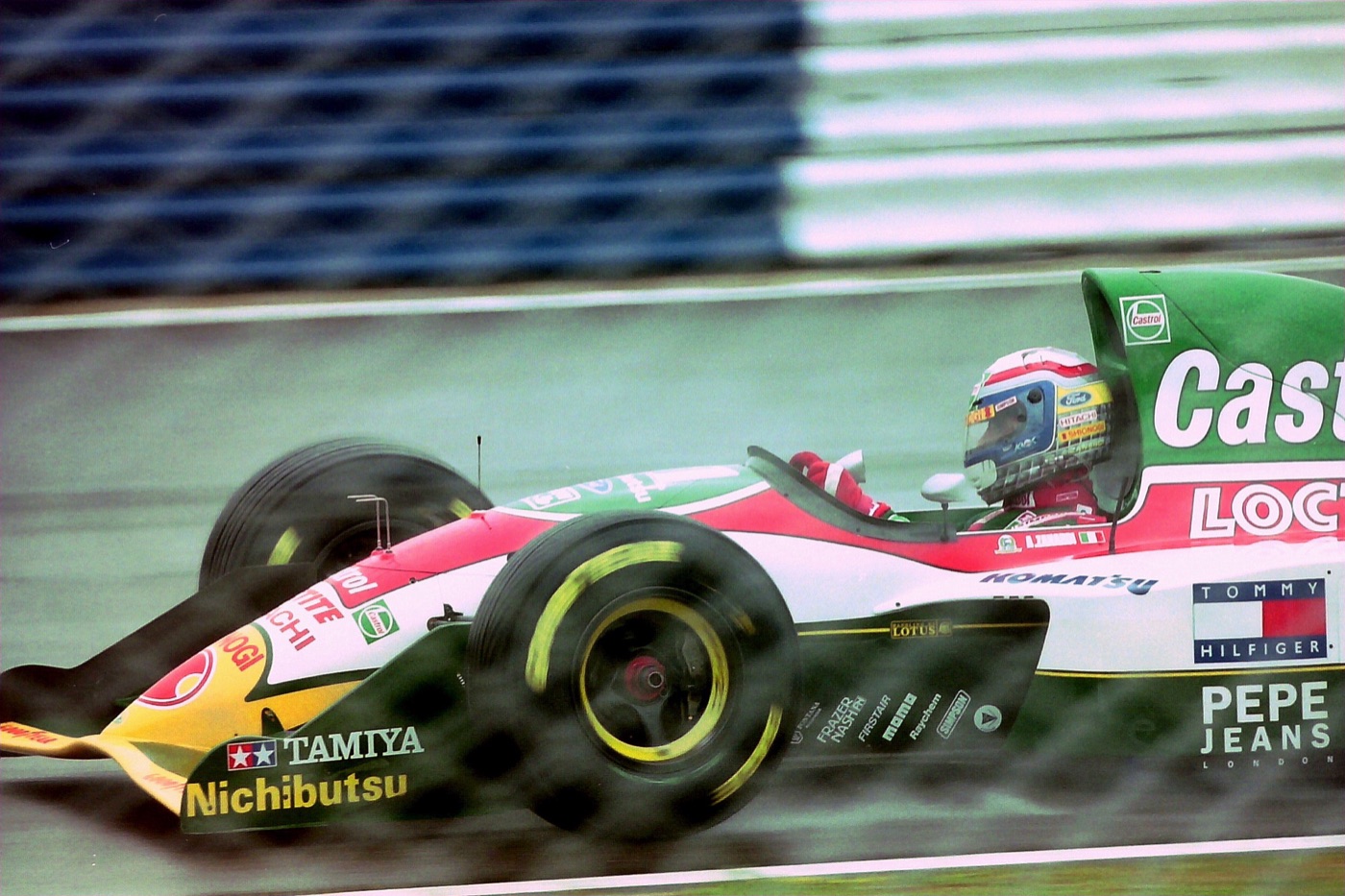
The first part of Zanardi’s Formula One career ran from late 1991 to the end of 1994 and brought one championship point, for sixth place at the 1993 Brazilian Grand Prix. Over that spell and his 1999 season he had 44 entries, 41 starts and a best grid position of fourth, according to StatsF1.
Jordan debut
Jordan gave him the last three races of 1991 in its Ford-engined 191. He qualified 20th for the Spanish Grand Prix and finished ninth, retired from the Japanese Grand Prix with a gearbox failure, and was ninth again in Australia, where the race was stopped after 14 laps in torrential rain (StatsF1). Eddie Jordan could not afford to keep him for 1992, Grandprix.com wrote in 2001.
Minardi stand-in
A Tyrrell deal for 1992 fell through when Ken Tyrrell chose Andrea de Cesaris, who brought a bigger budget, and Zanardi tested for Benetton instead. In July Minardi called him in as a replacement driver for the injured Christian Fittipaldi. In three weekends with the Lamborghini V12 M192 he failed to qualify at Silverstone and the Hungaroring and retired on the first lap in Germany with a broken clutch (StatsF1).
Team Lotus and the Spa crash
Team Lotus signed him for 1993 to drive the Ford-engined 107B. He was sixth in Brazil, scoring his only point, and seventh at Monaco. In practice for the Belgian Grand Prix the car’s active suspension failed at Raidillon and he hit the barriers at close to 280 km/h; concussion and neck injuries ended his season (StatsF1). He came back at the 1994 Spanish Grand Prix in place of Pedro Lamy, who had been badly hurt in a testing crash, and finished ninth. Team Lotus had no money left to develop the car, and it closed after the final race of the season, at Adelaide.
CART champion with Chip Ganassi Racing
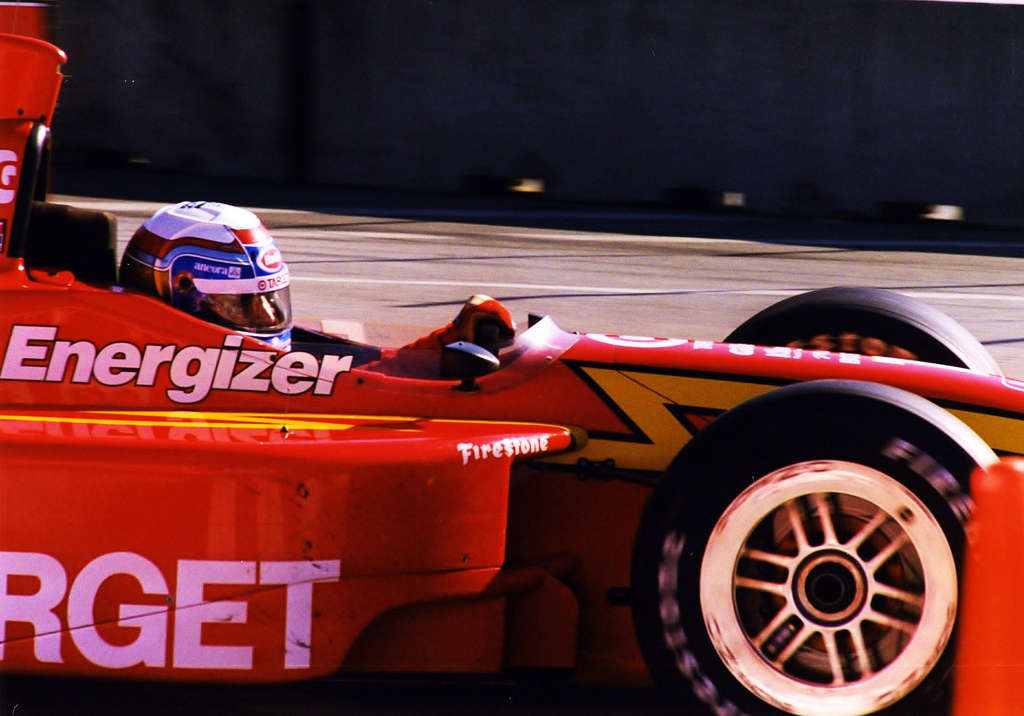
Zanardi won 15 CART races and the 1997 and 1998 championships for Chip Ganassi Racing, with 10 pole positions and 28 podium finishes, as IndyCar’s obituary records. In 1995 he raced almost nothing apart from a Porsche Supercup round at Imola and a few events in a Lotus Esprit (StatsF1). He then tested for the team owner Chip Ganassi and signed late that year to drive the team’s Target Reynard-Honda in 1996.
Rookie season and the pass at Laguna Seca
In 1996 he won three races, took six poles and finished third in the standings behind his team-mate Jimmy Vasser and Michael Andretti (IndyCar). His first pole came at the second round, in Rio de Janeiro, and his first win at Portland in June, from pole (StatsF1). On 8 September 1996, on the last lap of the season finale at Laguna Seca, he dived inside Bryan Herta at the Corkscrew, cut through the dirt on the inside of the corner and took the win, as the circuit’s 2026 announcement describes it. Fans still call the move “The Pass” (IndyCar).
Back-to-back CART titles
Zanardi won five of his 16 starts in 1997, missing the Fontana finale after a practice crash (ChampCarStats), and took the title ahead of Gil de Ferran (StatsF1). In 1998 he won seven of 19 races and finished on the podium 15 times; he clinched the championship at Vancouver with four races to go and ended the season on 285 points, more than 100 clear of Vasser (StatsF1). His wins were followed by doughnuts, the car spun in tight circles on the track, a celebration other drivers copied (IndyCar). The Motorsports Hall of Fame of America inducted him in 2013.
Williams and the return to Formula One
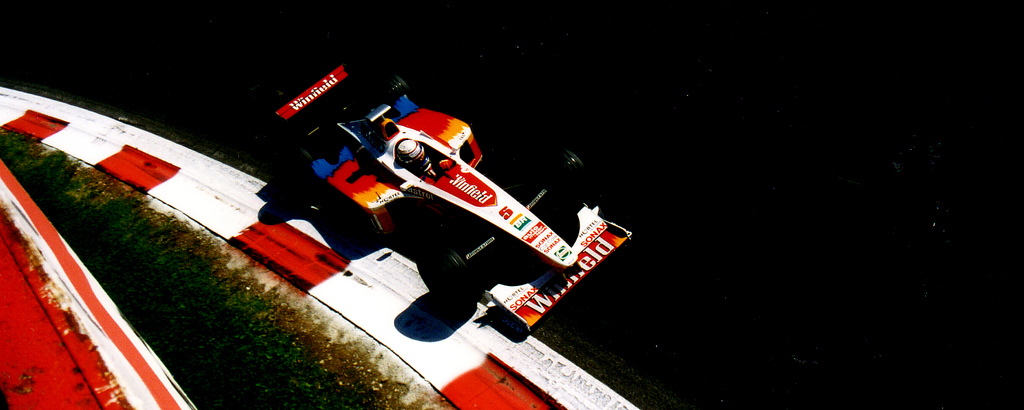
Williams brought Zanardi back to Formula One in 1999 in the Supertec-engined FW21, and he scored no points in 16 starts. The team announced on 22 September 1998 that he and Ralf Schumacher would replace Jacques Villeneuve and Heinz-Harald Frentzen, and the team owner Frank Williams said he was “excited at the prospect of welcoming a second ‘transatlantic’ champion to the team” (Atlas F1). Zanardi thanked “my friends at Target/Chip Ganassi Racing” for three years with the team. In 1999 he retired in Australia and Brazil, went off the track at Imola and was eighth at Monaco. At Monza he qualified fourth, ahead of his team-mate Ralf Schumacher, but damage to the car’s floor slowed him and he finished seventh (StatsF1). The team and Zanardi ended his contract after one season and Jenson Button took the seat for 2000 (Grandprix.com).
How did Alex Zanardi lose his legs?
Zanardi lost both legs in an accident on 15 September 2001, in the American Memorial at the Lausitzring in Germany, when Alex Tagliani’s car hit his at about 200 mph. He had returned to CART that year with Mo Nunn’s team, Mo Nunn Racing; his best result before Germany was fourth at Toronto in July (ChampCarStats).
The crash at the Lausitzring
He started 22nd and was a contender for the win all afternoon, as Autosport’s 2003 feature put it. Leaving the pits near the end on cold tyres, his Reynard snapped sideways and spun onto the track. Patrick Carpentier just missed him; Tagliani could not, and the impact tore the front off Zanardi’s car (Grandprix.com). He had completed 142 laps and was classified 20th (ChampCarStats). The race was run the weekend after the 11 September attacks in the United States.
Injuries and surgery in Berlin
Zanardi was flown to the Marzahn hospital in Berlin. That evening Mo Nunn Racing confirmed he had lost part of both legs, one above the knee and one below it, and might have a broken pelvis; he was breathing on his own, Crash.net reported. He was in a coma for three days and his heart stopped at least once, the Associated Press recalled in 2026. He then designed his own prosthetic legs and learned to walk on them (AP).
Back at the Lausitzring for 13 laps
In May 2003 Zanardi went back to the Lausitzring and drove 13 laps, the number he had left to run in 2001, in a Reynard Champ Car adapted with hand-operated throttle and brake (IndyCar). His fastest lap would have put him fifth on the grid for that weekend’s race (Autosport). The first plan was for him to lead the field as a pace car; it changed when he said he would not be able to peel off into the pits and would want to start the race (Autosport).
Racing with hand controls: BMW touring cars and GTs
From 2004 Zanardi’s racing career continued in BMWs with hand controls, and he took four victories in the World Touring Car Championship between 2005 and 2009. He drove for Roberto Ravaglia’s BMW Team Italy-Spain, which SkiddMark covered when he left the series at the end of 2009. He won the Laureus World Sports Award for Comeback of the Year in 2005.
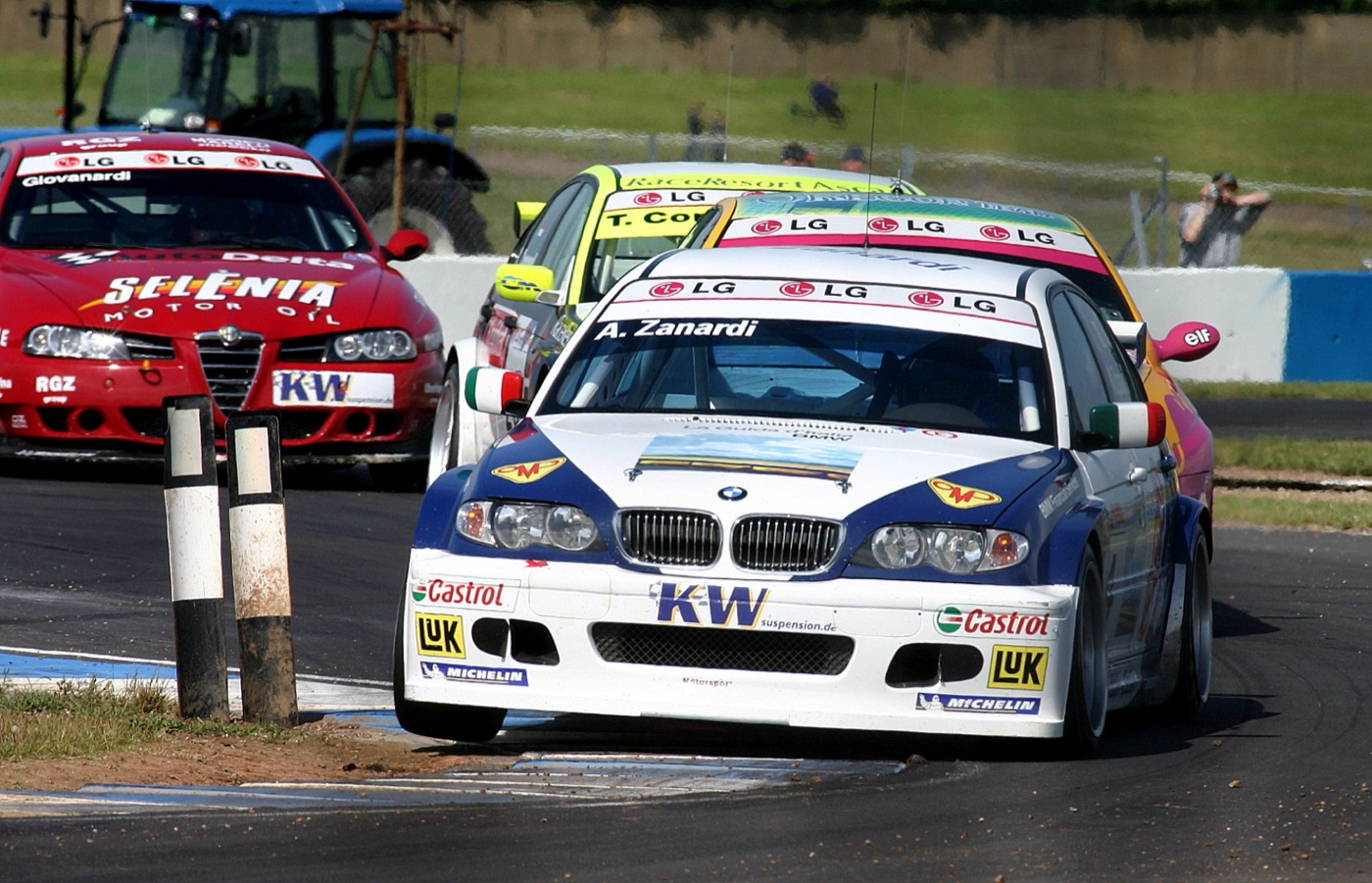
European and World Touring Car Championship
His return to motor racing after the loss of both legs came in October 2003 (Laureus): his first competition was a round of the European Touring Car Championship at Monza (StatsF1). He raced a full ETCC season in 2004 and finished 15th (StatsF1). The series became the World Touring Car Championship in 2005. His first win came in race two at Oschersleben on 28 August 2005, from a reverse-grid pole: he led every lap and beat Andy Priaulx by 0.232 seconds, his first victory in a world-class event since the CART race at Surfers Paradise in October 1998, Autosport reported. BMW called him the first amputee driver to win a World Championship race.
| Date | Circuit | Race | Car |
|---|---|---|---|
| 28 August 2005 | Oschersleben, Germany | Race 2 | BMW 320i |
| 24 September 2006 | Istanbul Park, Turkey | Race 1 | BMW 320si |
| 15 June 2008 | Brno, Czech Republic | Race 1 | BMW 320si |
| 21 June 2009 | Brno, Czech Republic | Race 1 | BMW 320si |
At Istanbul he beat Rickard Rydell’s SEAT to the first corner and won (Autosport). At Brno in 2008 he took his first WTCC pole and led Félix Porteiro home in a team one-two (BMW). When he retired from the WTCC at the end of 2009, aged 43, he told Autosport: “I will not be back in the WTCC. It’s a shame, but when one door closes a bigger one may open.”
Testing a BMW Sauber Formula One car
In late November 2006 Zanardi tested a BMW Sauber Formula One car at Valencia, fitted with hand controls on the steering wheel (IndyCar). He said afterwards that the hardest part was steering through corners with only his right hand, as his left worked the throttle. “Of course, I know that I won’t get a contract with a Formula One team,” he said, “but having the chance to drive an F1 racer again is just incredible.”
The golden BMW M3 DTM at the Nürburgring
In November 2012 BMW Motorsport gave Zanardi, in recognition of what it called his “outstanding sporting achievements”, 32 laps of the Nürburgring Grand Prix circuit in a BMW M3 DTM painted gold, at the three-day celebration of 40 years of BMW M. The car was the model that had won the 2012 DTM drivers’, teams’ and manufacturers’ titles at Hockenheim in BMW’s first season back in the series after 20 years. The gold paint honoured his two gold medals and one silver on the handbike at London 2012, BMW’s release of 9 November 2012 said, and the three medals were painted on the roof, SkiddMark reported. SkiddMark’s Steve Davies wrote that within a few laps the 46-year-old looked more at home in the car on each of his 32.
How BMW adapted the M3 DTM
BMW’s engineers removed the accelerator and clutch pedals and moved the brake pedal to the right, so Zanardi could brake with his prosthetic right leg. He worked the throttle with his left hand on the steering wheel and changed gear by pushing and pulling the shift paddle; the control for the pneumatic-hydraulic clutch sat on the shift panel. BMW said the changes would not be suitable for racing.
What Zanardi and BMW said
“It was a challenge to modify the car to meet my requirements and I am surprised just how quickly the BMW Motorsport engineers managed to complete the necessary modifications,” Zanardi said. “… When I first saw the golden car I was overwhelmed. I still have a passion for racing. However, I’m not sure whether our demonstration drive will be anything more than just that, as the level in the DTM may possibly prove to be too high for someone of my age.” BMW Motorsport Director Jens Marquardt called his London medals and his four WTCC wins for BMW “fine examples” of how he “passes every test with flying colours”.
Blancpain, Spa, the DTM and Daytona
In 2014 he raced a ROAL Motorsport BMW Z4 GT3 in the Blancpain Sprint Series, with a gold livery for the fifth round at Portimão (BMW, September 2014). At the 2015 Spa 24 Hours, SkiddMark reported, the ROAL BMW he shared with Timo Glock and Bruno Spengler was running in the top ten when it stopped in smoke at the side of the track close to the finish. In August 2018 he made a guest start in the DTM at Misano in a BMW M4 DTM and finished fifth in the Sunday race; “At first I thought it was a joke when my engineer told me,” he said of the result (BMW interview). In January 2019 he raced the Rolex 24 at Daytona in BMW Team RLL’s number 24 BMW M8 GTE with Jesse Krohn, John Edwards and Chaz Mostert: the car was damaged when it was dropped off its air jacks as he fitted his hand-control steering wheel, and it finished ninth and last in GTLM, 18 laps down (Motorsport.com).
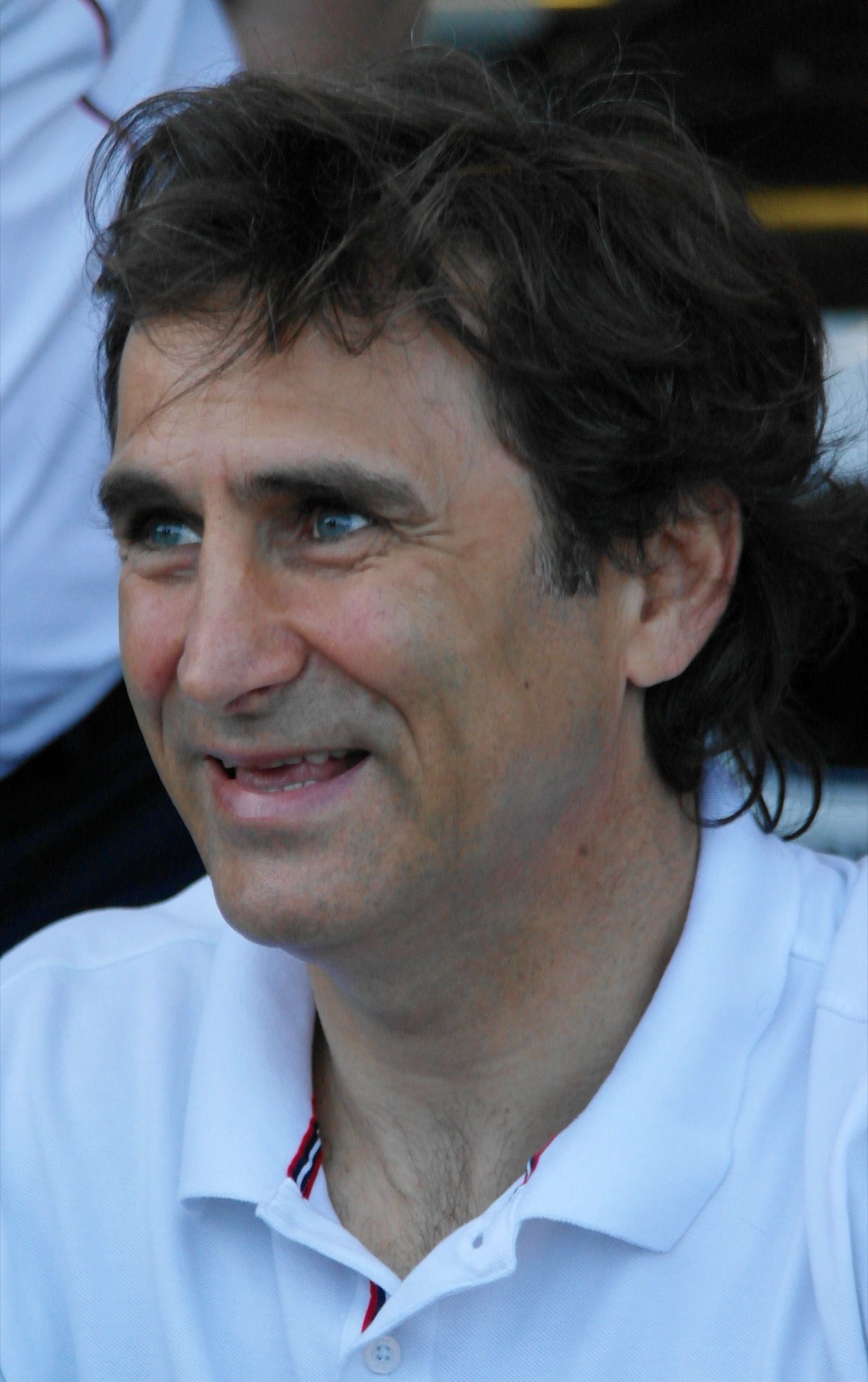
Handcycling and Paralympic gold
Zanardi won four Paralympic gold medals and two silvers on the handbike, at London 2012 and Rio 2016, and 12 titles at the UCI para-cycling road world championships (IndyCar). He took up the sport aiming to race for Italy at the Paralympics in London (Grandprix.com, 2011), and came to it through marathons: he was fourth in the handcycle class of the 2007 New York City Marathon after a month of training, Cycling Weekly noted.
Marathons and the first world medal
He won the Venice Marathon in 2009 and the Rome Marathon in 2010 (Laureus). On his fourth attempt at New York, in November 2011, he won the hand bicycle class in 1hr 13min 58sec, two seconds ahead of the next rider (Grandprix.com). He won silver at the 2011 UCI Para-Cycling Road World Championships, his first medal in the sport (Autosport, 2012).
The London Paralympics at Brands Hatch
The London 2012 road events were held at Brands Hatch. On 5 September 2012 Zanardi won the 16 km H4 time trial in 24:50, 27 seconds ahead of Germany’s Norbert Mosandl (International Paralympic Committee), with Oscar Sanchez of the United States third (Autosport). “In two days we have the road race, on the day of my son Niccolò’s birthday, so I’ll try to win him a nice present,” he said. He did: on 7 September he won the 64 km H4 road race, beating South Africa’s Ernst van Dyk in a sprint, with Belgium’s Wim Decleir third, and lifted his handbike above his head with one arm at the finish (road.cc). Italy’s team took silver in the mixed H1–4 team relay (IPC).
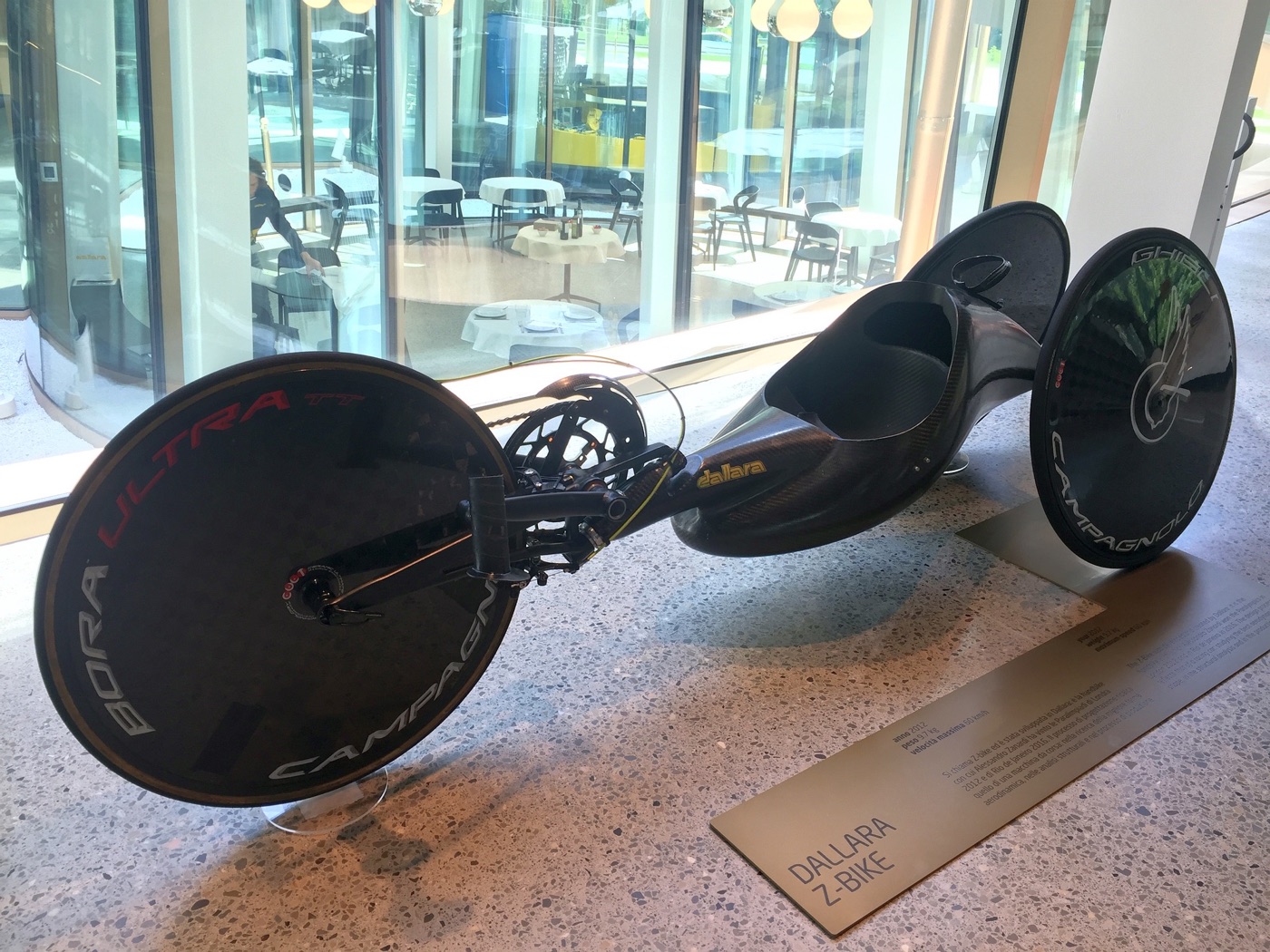
The Rio de Janeiro Paralympics
At Rio he raced in the H5 class. On 14 September 2016, aged 49, he won the 20 km time trial in 28:36.81, 2.7 seconds ahead of Australia’s Stuart Tripp (BMW). The next day, the 15th anniversary of the Lausitzring crash, he was second to Ernst van Dyk in the road race (NBC Sports). On 16 September he, Vittorio Podestà and Luca Mazzone won the mixed team relay for Italy in 32 minutes 34 seconds, 47 seconds ahead of the United States (BMW).
Ironman triathlons
An Ironman is a 3.8 km swim, a 180 km ride and a 42.2 km run (Sky Sport Italia). Zanardi finished the Ironman World Championship in Hawaii on 11 October 2014 in 9:47:14, using a buoyancy vest for the swim, the handbike for the 180 km ride and a racing wheelchair for the marathon. The IPC placed him 273rd of 2,187 finishers and IndyCar 272nd. At Ironman Italy in Cervia on 22 September 2018 he finished fifth overall in 8h 26min 06sec (Sky Sport Italia), more than half an hour inside his own world best for an athlete with a disability, 8h 58min 59sec at Barcelona in 2017.
Alex Zanardi’s results
Zanardi’s record across his four main careers: no Formula One win and one point, 15 CART wins and two titles, four WTCC wins (above) and six Paralympic medals.
Formula One results by season
| Season | Team and car | Starts | Best finish | Points |
|---|---|---|---|---|
| 1991 | Jordan 191 Ford | 3 | 9th (Spain, Australia) | 0 |
| 1992 | Minardi M192 Lamborghini | 1 | Retired (Germany) | 0 |
| 1993 | Lotus 107B Ford | 11 | 6th (Brazil) | 1 |
| 1994 | Lotus 107C and 109 Mugen-Honda | 10 | 9th (Spain) | 0 |
| 1999 | Williams FW21 Supertec | 16 | 7th (Italy) | 0 |
CART results by season
| Season | Team | Starts | Wins | Poles | Points | Position |
|---|---|---|---|---|---|---|
| 1996 | Chip Ganassi Racing | 16 | 3 | 6 | 132 | 3rd |
| 1997 | Chip Ganassi Racing | 16 | 5 | 4 | 195 | Champion |
| 1998 | Chip Ganassi Racing | 19 | 7 | 0 | 285 | Champion |
| 2001 | Mo Nunn Racing | 15 | 0 | 0 | 24 | 23rd |
His 15 wins came at Portland, Mid-Ohio and Laguna Seca in 1996; Long Beach, Cleveland, Michigan, Mid-Ohio and Road America (Elkhart Lake) in 1997; and Long Beach, Gateway, Detroit, Portland, Cleveland, Toronto and Surfers Paradise in 1998 (ChampCarStats).
Paralympic medals
| Games | Event | Date | Medal |
|---|---|---|---|
| London 2012 | H4 time trial | 5 September 2012 | Gold |
| London 2012 | H4 road race | 7 September 2012 | Gold |
| London 2012 | Mixed H1–4 team relay | September 2012 | Silver |
| Rio 2016 | H5 time trial | 14 September 2016 | Gold |
| Rio 2016 | H5 road race | 15 September 2016 | Silver |
| Rio 2016 | Mixed team relay | 16 September 2016 | Gold |
What happened to Alex Zanardi in the handbike accident?
On 19 June 2020 Zanardi’s handbike crossed into the path of an oncoming lorry on a road in Tuscany, and he suffered serious facial and cranial trauma (AP, May 2026). He was riding a stage of the Obiettivo Tricolore, a relay for Paralympic athletes, on the SP146 between Pienza and San Quirico d’Orcia (Motorsport.com).
The crash near Pienza
“It happened on a slightly downhill straightaway just before a slight curve in the road,” Italy’s national team coach Mario Valentini told La Repubblica. “Alex veered slightly into the oncoming lane just when a truck came.” The riders were 20 km from the finish at Montalcino, Valentini said, and “The truck didn’t make a mistake” (AP, via NBC Sports). Prosecutors in Siena opened an investigation into the crash and into how the race was organised (AP).
Hospital and recovery
A helicopter took him to the Santa Maria alle Scotte hospital in Siena, which said he had arrived at 6pm in very serious condition with a severe head injury and was undergoing neurosurgery (Motorsport.com). He was kept in a medically induced coma (AP) and had several surgeries (Formula1.com). After a spell at the San Raffaele hospital in Milan he was moved in November 2020 to a hospital in Padua, nearer his family’s home (Formula1.com). In December 2021 his wife, Daniela, said in an interview published by BMW that he had left hospital a few weeks earlier and was continuing his rehabilitation partly at home, with temporary stays in specialist clinics still to come (BMW Group).
How did Alex Zanardi die?
Zanardi died suddenly on the evening of 1 May 2026, aged 59, nearly six years after the 2020 crash; his family’s statement gave no cause. “It is with deep sorrow that the family announces the passing of Alessandro Zanardi, which occurred suddenly yesterday evening, May 1,” it said, adding that he “passed away peacefully, surrounded by the love of his family and friends” (Reuters). The family issued it through Obiettivo3, the handcycling charity he founded (Al Jazeera). The family asked “that their grief and privacy be respected during this period of mourning” (Reuters). He left his wife, Daniela, and their son, Niccolò.
The funeral in Padua
About 2,000 people filled the Basilica of Santa Giustina in Padua for his funeral on 5 May 2026, with his handbike placed beneath the altar. The Formula 1 Group chief executive Stefano Domenicali, the skier Alberto Tomba and the Paralympic fencer Bebe Vio were among the mourners. The funeral was held in Padua because Zanardi had lived in the province for more than 20 years, and Bologna and the Veneto region declared the day one of mourning (ANSA).
Tributes from racing and Italy
A minute’s silence was held before the Formula One sprint race in Miami on 2 May, and the Italian Olympic Committee called for one at every sporting event in Italy that weekend (AP). Domenicali said he was “deeply saddened by the passing of my dear friend”, “truly an inspirational person, as a human and as an athlete” (AP). Italy’s prime minister, Giorgia Meloni, said he had faced “even the toughest challenges with determination, clarity, and a strength of spirit that was truly exceptional” and that “he gave hope, pride, and the strength to never give up” (AP); she called him “a great champion and an extraordinary man, capable of turning every trial of life into a lesson in courage, strength and dignity” (Al Jazeera). IndyCar’s president, Doug Boles, called him “a magnificent INDYCAR SERIES champion” (IndyCar). He had been made a Knight Grand Cross of the Order of Merit of the Italian Republic in 2014 and joined the Long Beach Motorsports Walk of Fame in 2022 (IndyCar).
The Zanardi Corkscrew at Laguna Seca
On 4 September 2026, 30 years after The Pass, WeatherTech Raceway Laguna Seca renamed the Corkscrew, its Turns 8 and 8A, the Zanardi Corkscrew at a dedication ceremony (Performance Racing Industry). As a tribute at the IndyCar finale that weekend, Alex Palou’s Ganassi car ran a throwback of the team’s Lightning Bolt livery (Chip Ganassi Racing).
Questions
How old was Alex Zanardi when he died?
He was 59. Born in Bologna on 23 October 1966, he died on the evening of 1 May 2026, and his family announced his death the next day.
Did Alex Zanardi ever win a Formula One race?
No. In 41 Grands Prix for Jordan, Minardi, Lotus and Williams his best finish was sixth, at the 1993 Brazilian Grand Prix for Lotus, which earned his only championship point.
Who hit Alex Zanardi at the Lausitzring?
Alex Tagliani, whose car struck Zanardi’s at about 200 mph after Zanardi spun on rejoining from the pits on 15 September 2001. Patrick Carpentier, just ahead of Tagliani, had missed him.
How many Paralympic medals did Alex Zanardi win?
Six: gold in the H4 time trial and road race and silver in the team relay at London 2012, then gold in the H5 time trial and team relay and silver in the H5 road race at Rio 2016.
What car did Alex Zanardi race in CART?
A Reynard with a Honda engine, run by Chip Ganassi Racing in Target colours, numbered 4 in 1996 and 1997 and 1 in 1998. In 2001 he drove Mo Nunn Racing’s number 66 Reynard-Honda.
Who was Alex Zanardi’s wife?
Daniela Zanardi. She gave updates on his recovery after the 2020 crash, and she and their son, Niccolò, followed his coffin into the Basilica of Santa Giustina in Padua at his funeral on 5 May 2026.
Sources
- StatsF1, Alessandro Zanardi driver record and biography and race-by-race results: birth, karting, junior seasons, every Formula One race, the 1993 Spa crash, CART seasons.
- ChampCarStats, Alex Zanardi: CART starts, wins, poles, points and positions by season; the 2001 Lausitz result.
- IndyCar, “Two-Time INDYCAR SERIES Champion Alex Zanardi Dies at 59”, May 2026: CART totals, 1996–98 seasons, the 2003 laps, the 2006 BMW Sauber test, world titles, honours, Boles quote.
- Grandprix.com, “Zanardi loses legs in Lausitz crash”, 15 September 2001: the crash, Jordan in 1991, Williams and Button.
- Crash.net, “Zanardi loses legs in accident”, September 2001: the team’s statement on his injuries.
- Autosport, “Zanardi’s CART comeback”, 2003: the crash sequence and the 13 laps in May 2003.
- Laureus, “How a Laureus Comeback Award Winner is making a new return”, 2012: the 2005 award, Venice and Rome marathons.
- Autosport, “Zanardi takes first WTCC win”, August 2005 and “Zanardi defeats Rydell for win”, September 2006: the Oschersleben and Istanbul wins.
- BMW Group, “100th World Touring Car Championship race for BMW since 2005”, 1 July 2009: the 2008 and 2009 Brno wins and the 2008 pole.
- BMW release on the golden M3 DTM drive, via BMWBlog, 9 November 2012: the Nürburgring drive.
- BMW Group, Zanardi at Portimão, 6 September 2014: the 2014 Blancpain Sprint Series.
- BMW Group, “Fifth place feels like a gold medal”, August 2018: the Misano DTM guest start.
- Atlas F1, “Williams confirms signing Ralf and Zanardi”, 22 September 1998: the Williams signing and both quotes.
- Motorsport.com, “Zanardi’s Rolex 24 experience ‘more sweet than bitter’”, January 2019: the Daytona result.
- Cycling Weekly, “Zanardi’s personal triumph at Brands Hatch”, September 2012: the 2007 New York Marathon.
- Grandprix.com, “Zanardi triumphs in New York Marathon”, 7 November 2011: the 2011 win and time.
- Autosport, Zanardi wins Paralympic gold, 5 September 2012: the time trial podium, the 2011 world silver, his quotes.
- International Paralympic Committee, “No. 1: Alex Zanardi wins hearts in pole position”: the 2012 time, margin and relay silver, his 1991 Brands Hatch result.
- road.cc, Paralympics road cycling day 3, 7 September 2012: the H4 road race.
- BMW Group, Rio time trial gold, 14 September 2016 and Rio team relay gold, 17 September 2016: times, margins, team-mates.
- NBC Sports, road race silver, 15 September 2016: the Rio road race.
- IPC, “Alex Zanardi completes Ironman”, October 2014 and IndyCar, 13 October 2014: the Kona time and the two placings.
- Sky Sport Italia, Ironman Italy, 22 September 2018: the Cervia time, place and previous best.
- Motorsport.com, “Hospital confirms Zanardi undergoing surgery for head injury”, 19 June 2020: the road, the race, the hospital bulletin.
- Associated Press, via NBC Sports, June 2020: Valentini’s account and the investigation.
- Formula1.com, Zanardi transferred to hospital closer to home, November 2020: the move from Milan to Padua.
- BMW Group, “Back home”, interview with Daniela Zanardi, December 2021: his return home.
- Reuters, via BusinessDay, 2 May 2026: the family statement.
- Al Jazeera, 2 May 2026: Obiettivo3, Meloni’s tribute, his family.
- Associated Press, via Fox 9, 2 May 2026: the 2001 coma, Domenicali’s tribute, the minutes of silence.
- Associated Press, via KSL, “Thousands at funeral for Italian auto champ and Paralympic gold medalist Alex Zanardi”, 5 May 2026: the 2020 injuries.
- ANSA, “Thousands attend Alex Zanardi’s funeral in Padua”, 5 May 2026: the funeral.
- Performance Racing Industry, Laguna Seca renames the Corkscrew, 1 September 2026 and Chip Ganassi Racing, September 2026: The Pass and the Zanardi Corkscrew.
- SkiddMark, “Alex Zanardi quits FIA WTCC” (Steve, 2009) and “Race Report: 2015 Spa 24 Hours” (28 July 2015): his WTCC retirement, the 2006 test quotes and the Spa result.
This article was written in October 2026 to replace SkiddMark’s report “Paralympic champion Alex Zanardi drives a golden BMW M3 DTM at the 40th anniversary of BMW M event” by Steve Davies, of 9 November 2012, whose account of the drive and its quotes it keeps.