Alfa Romeo 4C: history, specs, Spider, values and buying guide
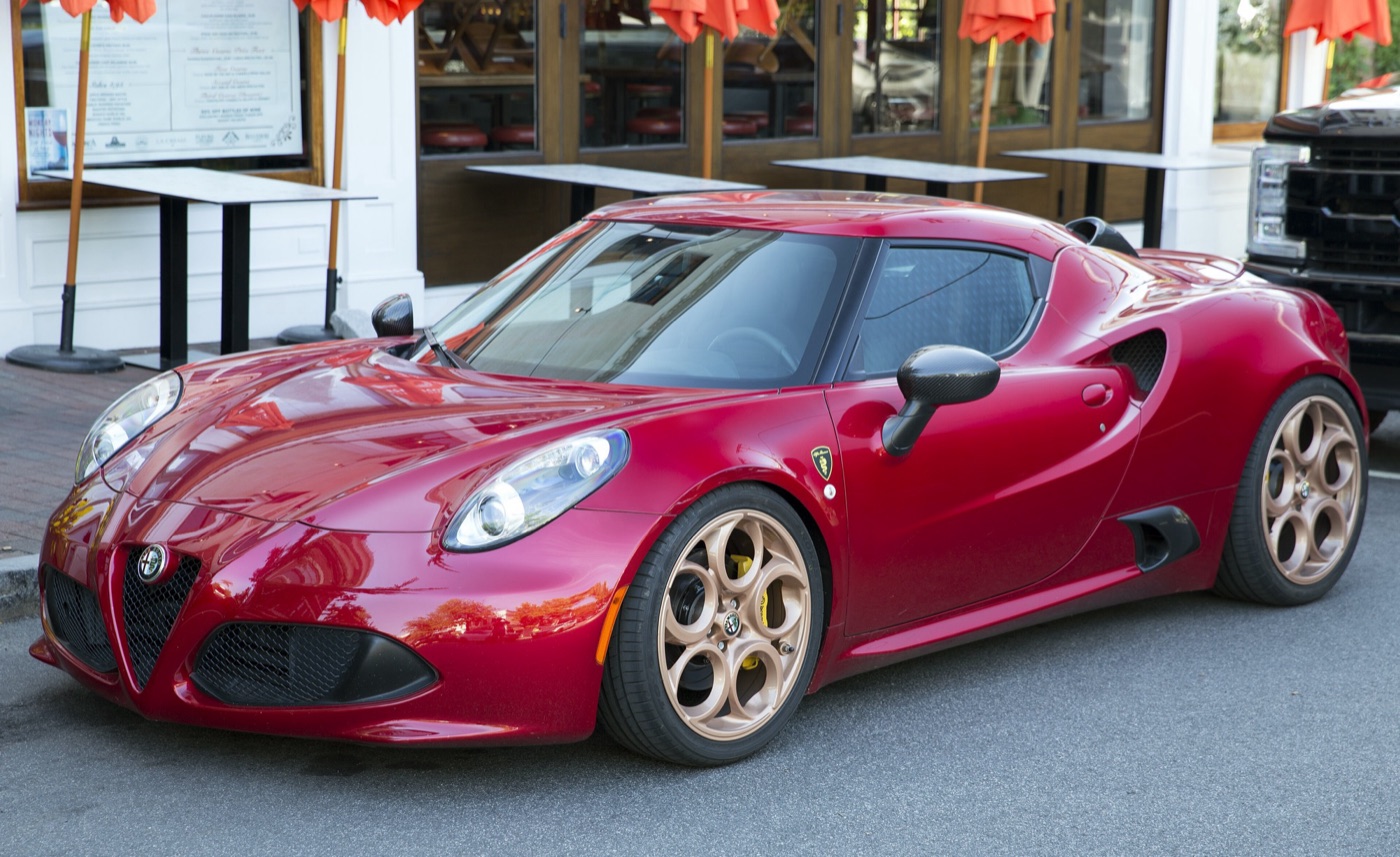
The Alfa Romeo 4C is a two-seat, mid-engined sports car with a carbon fibre monocoque, built for Alfa Romeo at the Maserati factory in Modena from 2013 to 2020 as a coupé and, from 2015, as the open 4C Spider. Its 240hp 1.75-litre turbocharged four-cylinder engine drives the rear wheels through a six-speed twin-clutch gearbox, and Alfa quoted a dry weight of 895kg, 0–62mph in 4.5 seconds and 160mph. It went on sale in Britain in October 2013 at £45,000, and 482 were on the DVLA's books in Great Britain in mid-2026.
People look it up for its carbon tub, its unassisted steering and its likeness to the 1967 33 Stradale, and for what one costs now that the cheapest sell for about £30,000. SkiddMark was at the Geneva motor show when Alfa Romeo unveiled the 4C Concept in March 2011. It reported on the car until the UK launch in 2013.
History of the Alfa Romeo 4C
The 4C went from a show car in March 2011 to a production car in March 2013. The name follows Alfa's 8C and 6C of the 1930s and 1940s, which were named for their eight- and six-cylinder engines. Alfa Romeo's February 2013 world première release says the 4C aimed for "the power/weight ratio of an authentic supercar, less than 4 kg/HP", by limiting weight more than by adding power.
The 4C Concept at Geneva, 2011
Alfa Romeo showed the 4C Concept at the 81st Geneva motor show in March 2011. Reporting from the show for SkiddMark, Steve wrote that the unveiling drew "one of the biggest scrums of the day as photographers fought to capture those all important first images". He noted that the 8C Competizione cost more than £100,000 and that the 4C was likely to be "much more affordable", and he was "pretty sure" it would reach production.
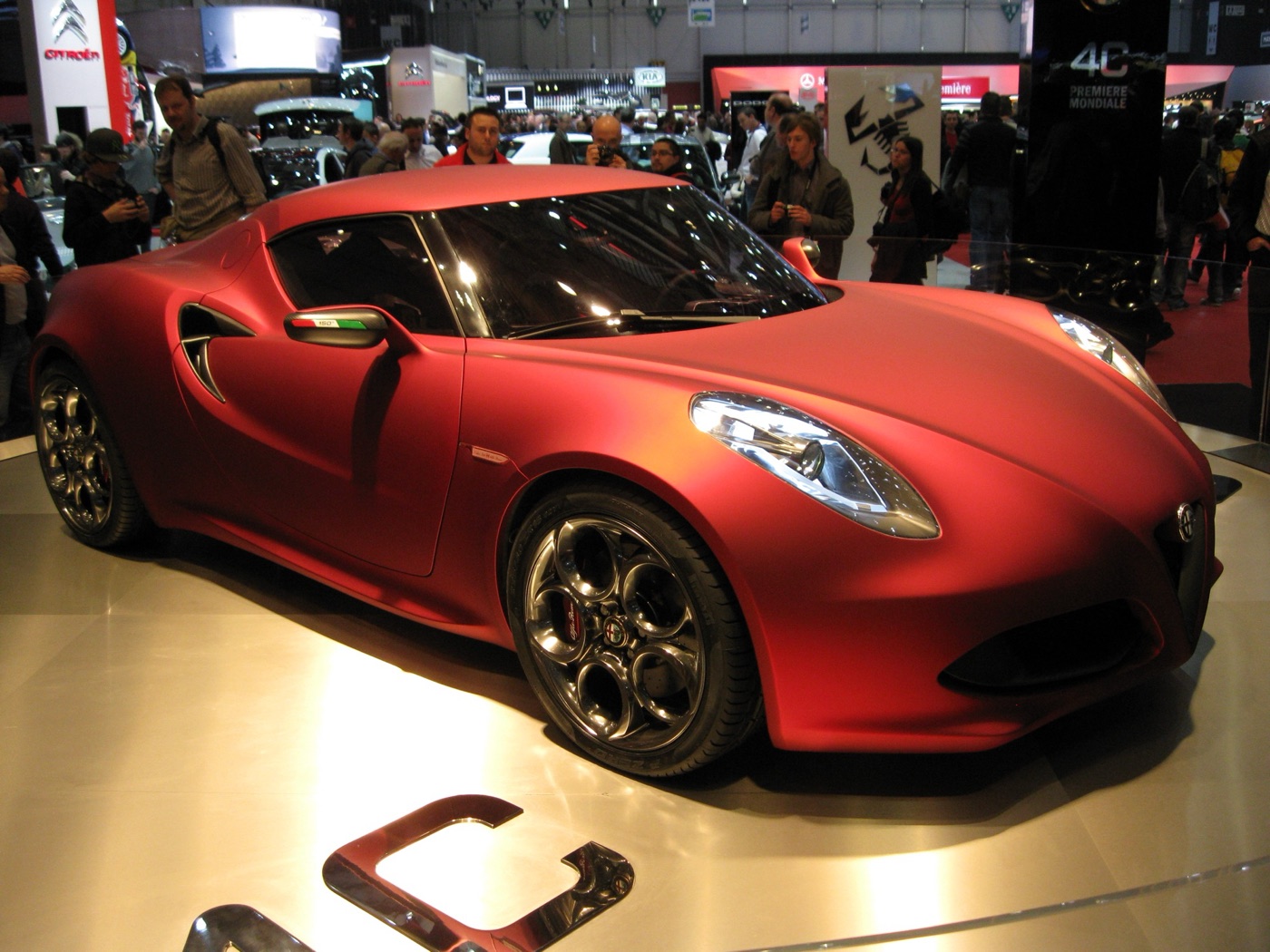
Alfa's release for the concept gave a length of about 4 metres, a wheelbase under 2.4 metres, a carbon body on a carbon chassis with aluminium rear frame and crash boxes, and a weight under 850kg. The engine was the 1750 turbo from the Giulietta Quadrifoglio Verde with "over 200 HP", mounted behind the cabin and paired with the Alfa TCT twin dry clutch gearbox. Alfa claimed more than 250km/h, 0–100km/h in under 5 seconds and a 40:60 front-to-rear weight split. It said the car would "be on sale in 2012"; orders opened in March 2013.
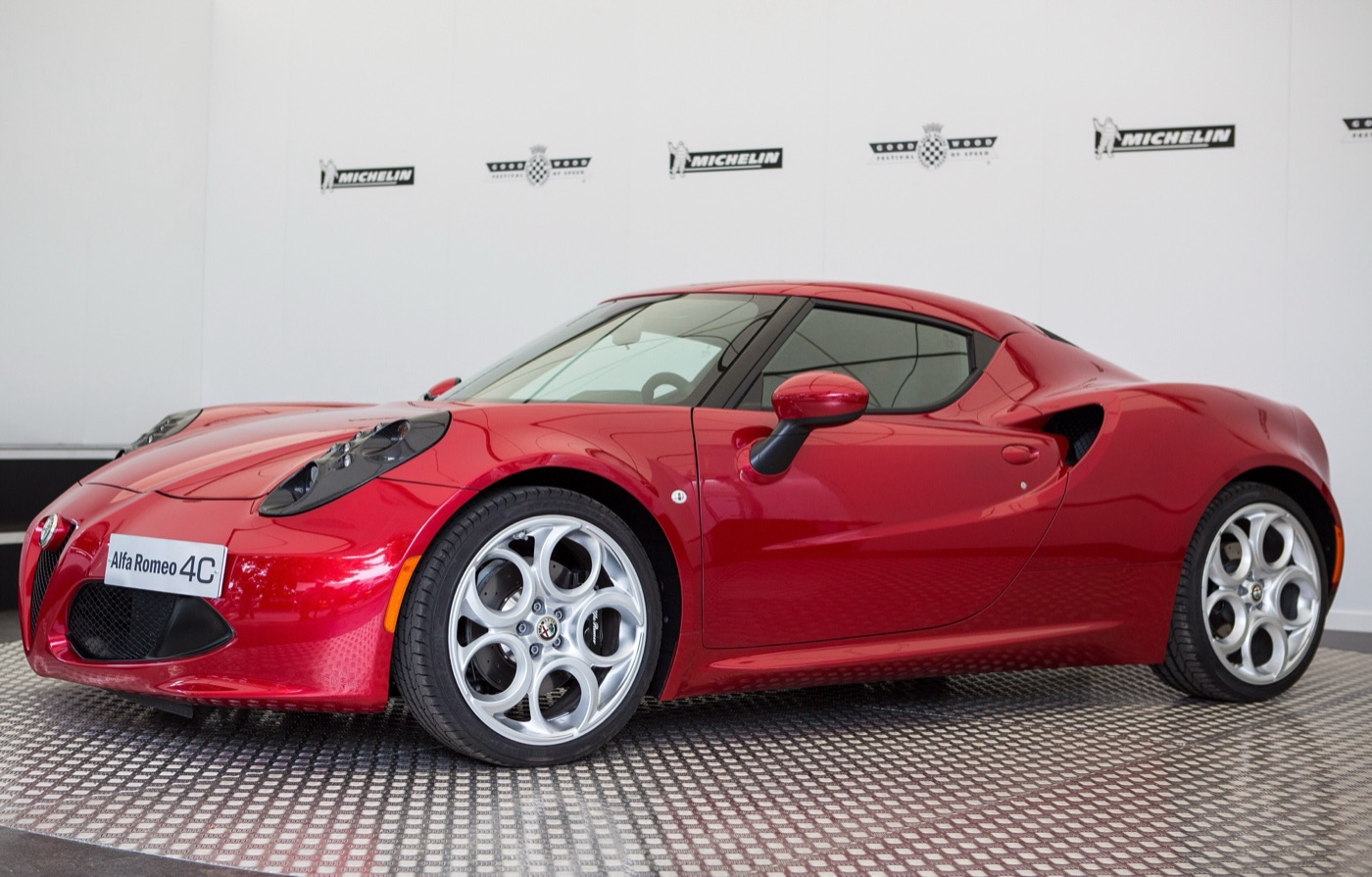
The concept made its UK public debut at the Goodwood Festival of Speed on 1–3 July 2011, as SkiddMark reported that June. German readers of Auto Bild voted it the most beautiful concept car of the year. That gave it the Auto Bild Design Award 2011. The public at the Concorso d'Eleganza Villa d'Este then gave it the Design Award for Concept Cars & Prototypes in May 2012.
Why Maserati built the 4C
Fiat, the Italian group that owned both Alfa Romeo and Maserati, decided the car would be built by Maserati. In a statement dated 12 April 2012, Fiat said Maserati's Modena plant would keep the GranTurismo and GranCabrio and, "from May 2013, a new Alfa Romeo model with expected production of up to 2,500 units per year". SkiddMark's report of the same week added that 60 to 70 prototypes would be built during 2012. It expected the car to cost about £38,000 (€45,000), against the £45,000 Alfa Romeo UK eventually asked.
Carbon tubs were also made outside Fiat. Tecno Tessile Adler (TTA) opened a €23 million plant at Airola, near Benevento, to make the tub for 4Cs bound for the US market. That is Adler's own account of the opening, which says the plant would take on 108 former textile workers in its first phase. Chris Harris, driving the car for PistonHeads in 2013, wrote that the tub had first been designed with help from Dallara.
Launch in 2013 and the UK on-sale date
The production 4C was unveiled at the 83rd Geneva motor show in March 2013, alongside a numbered Launch Edition that could be ordered the same day at €60,000 including VAT in most of Europe (Alfa Romeo, March 2013). Alfa Romeo UK announced in June 2013 that a Launch Edition would make the car's first public run in Britain, up the hill at the Goodwood Festival of Speed on 12–14 July.
The first five European Launch Editions were handed to customers from Switzerland, France, Germany, the Netherlands and Italy at Balocco, Alfa Romeo's Italian test track, in October 2013. The 1993 DTM champion Nicola Larini took each owner round the track. Alfa's release on the handover said orders taken at Geneva had passed twice the number of cars available within ten days.
In the UK, Alfa Romeo UK announced on 17 September 2013 that the 4C would go on sale in October at £45,000 on the road, with first deliveries early in 2014.
The 4C in the United States
The 4C was Alfa Romeo's way back into the United States, which it had left in 1995 (SkiddMark, April 2013). Alfa's American promotional film for the Launch Edition, which SkiddMark watched that month, was set in the American West to country music. Near the end the 4C drives past a 1968 33 Stradale, a 1967 Duetto Spider of the kind Dustin Hoffman drove in The Graduate, a 1963 Giulia TZ and a 1960 Giulietta SZ.
US sales were small. Autoblog reported in June 2018 that the best month had been January 2015, with 97 cars, and that no month had reached 100. An Alfa spokesman told The Drive that the coupé was "no longer in production for North American market" after the 2018 model year but "remains in production for all other markets". The 2018 coupé cost from $55,900 and the 2019 Spider from $66,900. Autoblog added that the Track Package of firmer anti-roll bars, dampers, wheels and tyres was dropped after 2018.
In late 2019 a spokesman told The Drive that the US Spider "is not canceled and is still available for order". In December 2020 the brand's global head, Tim Kuniskis, said the 4C had been "spearheading the relaunch of the brand in North America" since its introduction in 2014.
The end of production, 2020
Production ended in 2020. Stellantis's Heritage department said so in 2023, when it built a one-off "4C Designer's Cut" for the car's tenth anniversary. Alfa Romeo's North American arm called the 4C Spider 33 Stradale Tributo, announced on 14 December 2020, "the final production run of the 4C Spider for North America". The British magazine RUSH notes that the 4C has no direct successor.
Design and engineering
Alfa Romeo called the 4C a "compact supercar". It is built around a carbon fibre passenger cell with aluminium frames bolted to each end, and its materials were chosen to save weight. Alfa's 2013 releases name the 1967 33 Stradale as the car it took its layout and proportions from.
Who designed the Alfa Romeo 4C?
Alfa Romeo's Style Centre (Centro Stile) designed the 4C. Alfa named Alessandro Maccolini as "Alfa Romeo 4C Chief Designer" in October 2013, and Stellantis described him in 2023 as "the head of design for the 4C" at the time. Inside Line reported from Geneva in March 2011 that the car was partly a pet project of Lorenzo Ramaciotti, then Fiat Group's design chief. At Pininfarina, Ramaciotti had led the 1992 Ethos concepts that inspired the Lotus Elise.
The carbon fibre monocoque
The monocoque is made from pre-impregnated ("pre-preg") carbon fibre, a technology Alfa described as derived from Formula 1, and weighs 65kg (Alfa Romeo UK, June 2013). Alfa's February 2015 Spider release gave 107kg for "the carbon fibre monocoque". The front and rear frames and the roof reinforcement are aluminium, with sections made by the Cobapress process, which combines casting and forging. Alfa said carbon fibre made up 10% of the car and 25% of its volume.
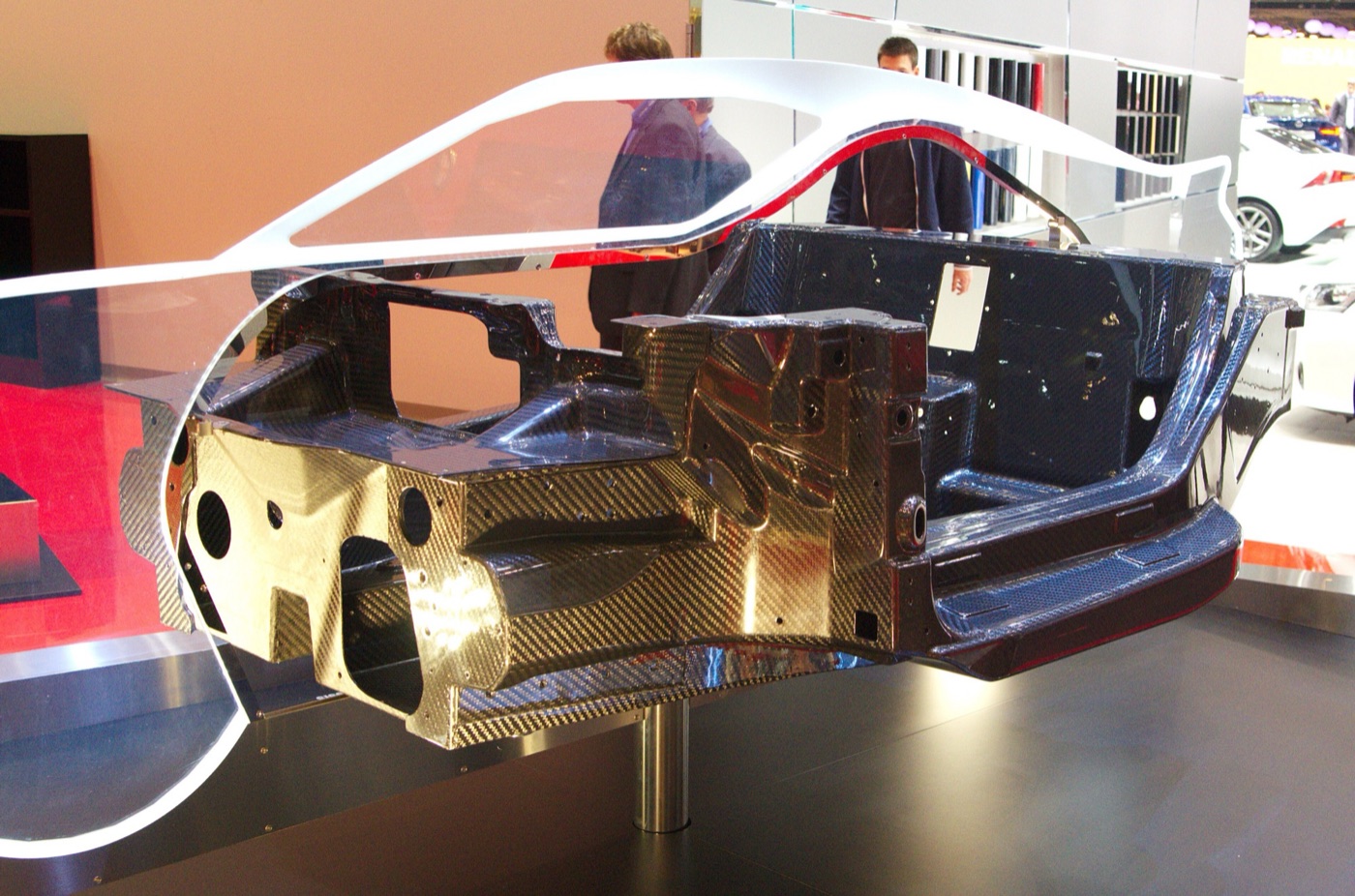
In Modena the 4C had its own workshops, sharing only the testing and finishing areas with Maserati's cars. Sample bodies were checked every day at more than 400 measuring points, and each finished car was road-tested for 40km by a test driver.
Body panels and glass
The outer panels are sheet moulding compound (SMC), a composite with a density of 1.5g/cm³ against about 7.8 for steel and 2.7 for aluminium. Alfa said it saved 20% of the weight of steel panels. It also said the 4C was the first production car to use so much low-density SMC. The bumpers and wings are injected polyurethane (PUR-RIM). The windows are on average about 10% thinner than usual, and the windscreen is 4mm thick.
Suspension, steering and brakes
The front suspension is by double wishbones mounted directly to the monocoque, and the rear by MacPherson struts. Harris wrote that packaging ruled out wishbones at the rear. The steering has no power assistance and a ratio of 16.2:1. The brakes are cross-drilled ventilated discs, 305mm at the front and 292mm at the rear, with calipers from the Italian brake maker Brembo. The front discs have aluminium bells that save up to 2kg each.
David Twohig, chief engineer of the Alpine A110, has explained why the steering behaves as it does, as RUSH reports. The 4C was meant to weigh under 800kg. When it grew heavier, Alfa had neither the time nor the budget to add power assistance, so it reduced the front caster angle to near zero to keep the steering light at low speeds. With almost no trail, the front wheels follow ruts and cambers.
Engine and gearbox
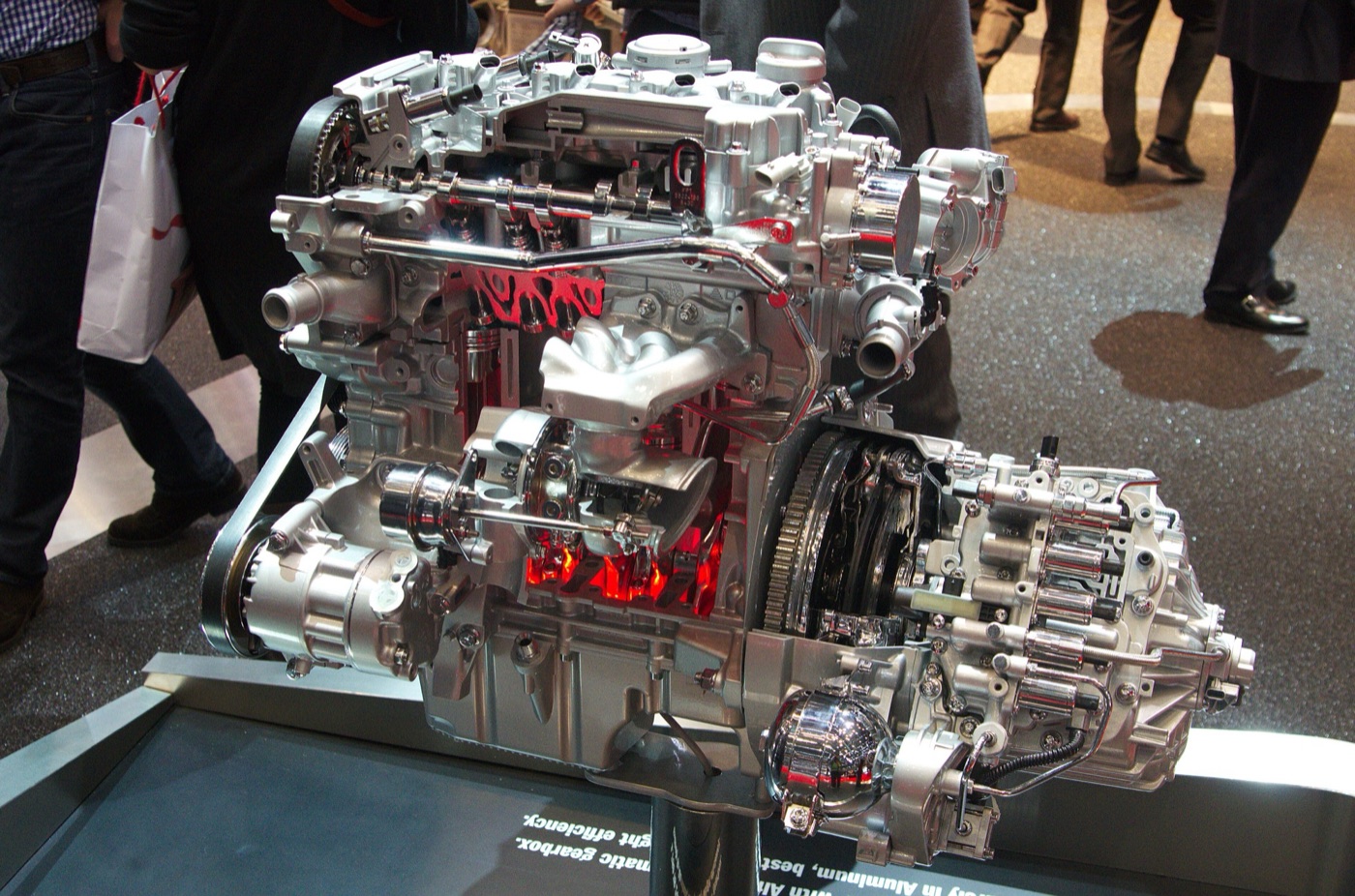
The engine is a 1750 TBi four-cylinder with direct injection, twin variable valve timing and a turbocharger with scavenging control, developed from the engine of the Giulietta hatchback in Quadrifoglio Verde form. Its aluminium block makes it 22kg lighter. It produces 240hp (237bhp) at 6,000rpm and 350Nm (258lb ft) from 2,100 to 4,000rpm. The transmission is Alfa's six-speed TCT twin dry clutch gearbox with steering-wheel paddles and launch control. The Alfa DNA selector gained a fourth mode, Race, which switches off the stability control.
Interior and equipment
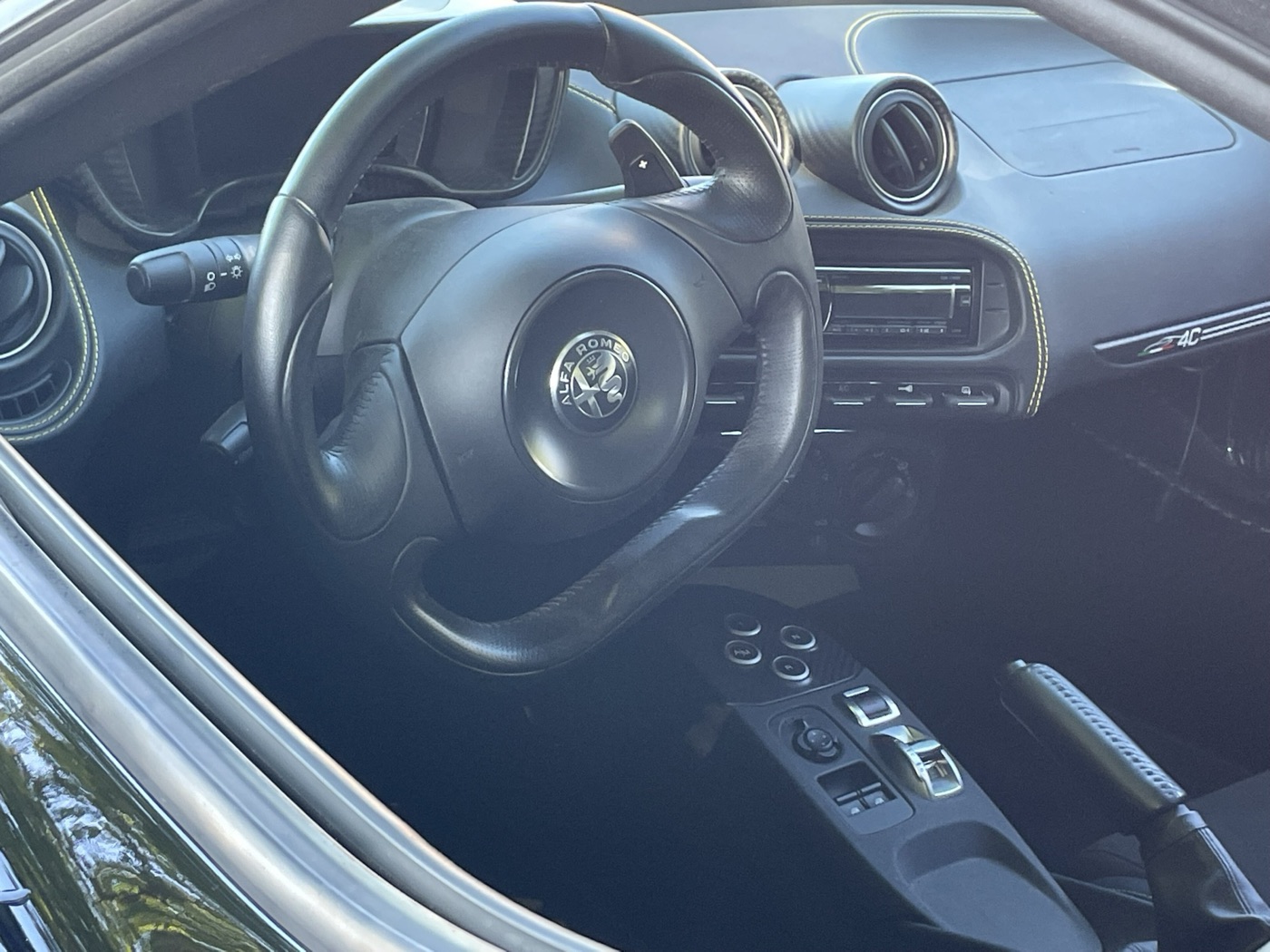
Inside, the carbon tub is left in full view. Alfa Romeo's 2013 releases describe a digital TFT instrument display that changes colour with the DNA mode: yellow for Race, red for Dynamic, grey for Natural and blue for All Weather. The steering wheel is a flat-bottomed two-spoke design carrying the gearchange paddles, the pedals are aluminium and the dashboard and doors have an "asphalt" finish. There is no gear lever. Harris noted that drive, neutral and reverse are selected with a paddle or a button by the driver's knee. He found that the carbon-composite seats weighed 12kg and the passenger seat had no runners. Boot space is 110 litres, behind the engine (CAR, 2014), and RUSH notes there is no glovebox. In the Spider the boot also takes the roof panel.
Changes in 2015 and 2016
The coupé changed twice after launch. When the Spider arrived in 2015, Alfa Romeo UK made the hi-fi, bi-LED headlamps with carbon surrounds and a car cover standard on the coupé, with parking sensors and cruise control as free options. RUSH describes a mid-life update in 2016: new dampers, revised spring rates, more sound insulation, and an optional touchscreen and rear parking sensors. It adds that small camber and toe changes after 2016 reduced the tramlining, without curing it.
Alfa Romeo 4C specifications and performance
The table gives Alfa Romeo's figures for the European coupé at launch. US cars and the Spider carried extra equipment and weight.
| Item | Figure |
|---|---|
| Layout | Mid-engined, rear-wheel drive, two seats |
| Engine | 1750 TBi, 1.75-litre turbocharged four-cylinder, aluminium block, direct injection |
| Power | 240hp (237bhp) at 6,000rpm |
| Torque | 350Nm (258lb ft) at 2,100–4,000rpm |
| Gearbox | Six-speed Alfa TCT twin dry clutch, paddle shift |
| Dry weight | 895kg |
| Weight distribution | 40% front, 60% rear |
| 0–62mph | 4.5 seconds |
| Top speed | 160mph |
| Lateral acceleration | 1.1g |
| Braking deceleration | more than 1.2g |
| Length, width, height | 3,990mm, 2,000mm, 1,180mm |
| Wheelbase | 2,380mm |
| Wheels | 17in front, 18in rear (18in and 19in optional) |
| Brakes | 305mm front, 292mm rear, ventilated and cross-drilled, Brembo calipers |
| Combined economy, CO2 | 41.5mpg, 157g/km (Euro 6) |
Sources: Alfa Romeo UK, 17 September 2013; dimensions from Alfa Romeo's Launch Edition release of March 2013, which gives 399cm, 200cm and 118cm.
How fast is the Alfa Romeo 4C?
Alfa Romeo quotes 0–62mph in 4.5 seconds and a top speed of 160mph for the coupé and the European Spider. For the US Spider it estimated 0–60mph in 4.1 seconds, the same figure it gave for the 2020 Tributo.
How much does the 4C weigh?
Alfa's 895kg is a dry weight, without fluids. With fluids, Harris gave 925kg in his 2013 PistonHeads review, and SkiddMark estimated about 930kg in September 2013. RUSH, quoting David Twohig, says the kerb weight of the finished car "crept beyond 1,000kg". Alfa said the US-market Spider weighed only 10kg more than the US coupé. RUSH puts the extra weight of a European Spider at 45kg, from its structural changes and fuller equipment.
Options: Racing pack and racing suspension
The main chassis option was the firmer racing suspension. CAR described the "racing" specification of the first press cars in 2014: 18in front and 19in rear wheels, stiffer springs and dampers, a rear anti-roll bar, a thicker front anti-roll bar and sharper front geometry. The standard car had 17in and 18in wheels, softer springs and dampers and no rear anti-roll bar. Alfa Romeo UK's 2017 price list charged £1,250 for the racing suspension, £2,000 for Racing pack 1 (racing suspension, racing exhaust, AR Racing tyres and a leather sports steering wheel) and £1,750 for Racing pack 2 without the wheel. The Akrapovič exhaust cost £3,150, the 18in and 19in five-hole wheels £1,250 and stone-chip protective film £1,200.
4C Spider and special editions
Besides the coupé and the Spider, Alfa sold five numbered or limited editions of the 4C between 2013 and 2020. All used the same 240hp engine and TCT gearbox.
The Alfa Romeo 4C Spider
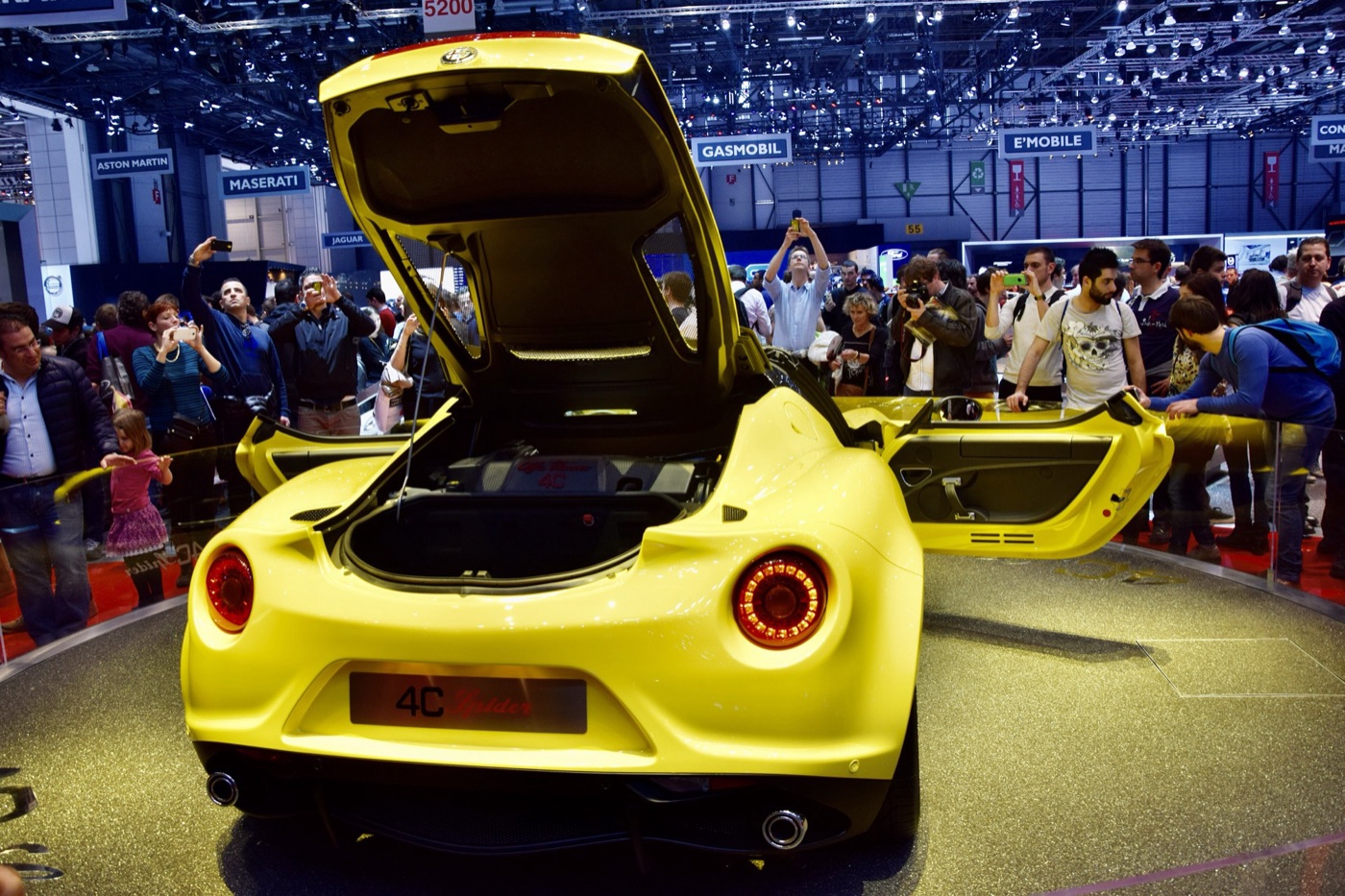
Alfa previewed the Spider at Geneva in March 2014 as a styling study in three-layer white, with production planned for early 2015. The production car was shown in Detroit in January 2015 and in Europe at Geneva on 3 March 2015. Alfa Romeo UK's release of 25 February 2015 listed the structural changes. There is a new aluminium rollover structure under a black (or optional carbon) "halo", a carbon fibre windscreen frame and a high-strength steel cross-member in the engine bay. The roof is a removable cloth panel that stows in the car, with an optional carbon hardtop.
The Spider also brought covered projector xenon headlamps and a body-coloured engine cover with three heat extractors. New options were a dual-mode Akrapovič titanium exhaust, yellow (Giallo) paint and, for the first time, tan leather.
Alfa Romeo UK's February 2015 release priced the Spider at £59,500 and the coupé at £51,500. By August 2017 the UK price list showed £52,820 for the coupé, £59,820 for the Spider and £67,820 for the 50th Anniversary Spider, all on the road.
4C Launch Edition
The Launch Edition was the first 4C on sale. Alfa's March 2013 release listed matt Carrara White or Alfa Red paint, carbon spoiler and mirror caps, a dark rear aluminium diffuser, bi-LED headlamps and 18in front and 19in rear wheels. Mechanically it had coloured calipers, a racing exhaust with a BMC air filter, specially calibrated dampers and a rear anti-roll bar. Inside were leather and fabric seats with Alcantara and a numbered carbon badge. Every buyer was offered a driving course in Italy.
The March release gave 400 cars for Europe, Africa and the Middle East, 500 for North America and 100 for the rest of the world. Alfa's October 2013 handover release called it "this European numbered limited edition of 500 supercars". SkiddMark reported a UK price of £52,000 on the road in March and September 2013; Harris gave £53,000.
50th Anniversary Spider (UK only)
In 2016 Alfa Romeo UK sold a run of 50th Anniversary Spiders, marking 50 years since the Duetto Spider first arrived in Britain. RUSH says 50 were built, all for Britain, in Rosso Competizione, Madreperla White or Giallo Prototipo, with a carbon rollover bar, carbon side intakes and dash pod, a race exhaust, dark 18in and 19in wheels and an anniversary engine cover. The DVLA's statistics list 40 of them in Great Britain in mid-2026.
4C Competizione and 4C Spider Italia
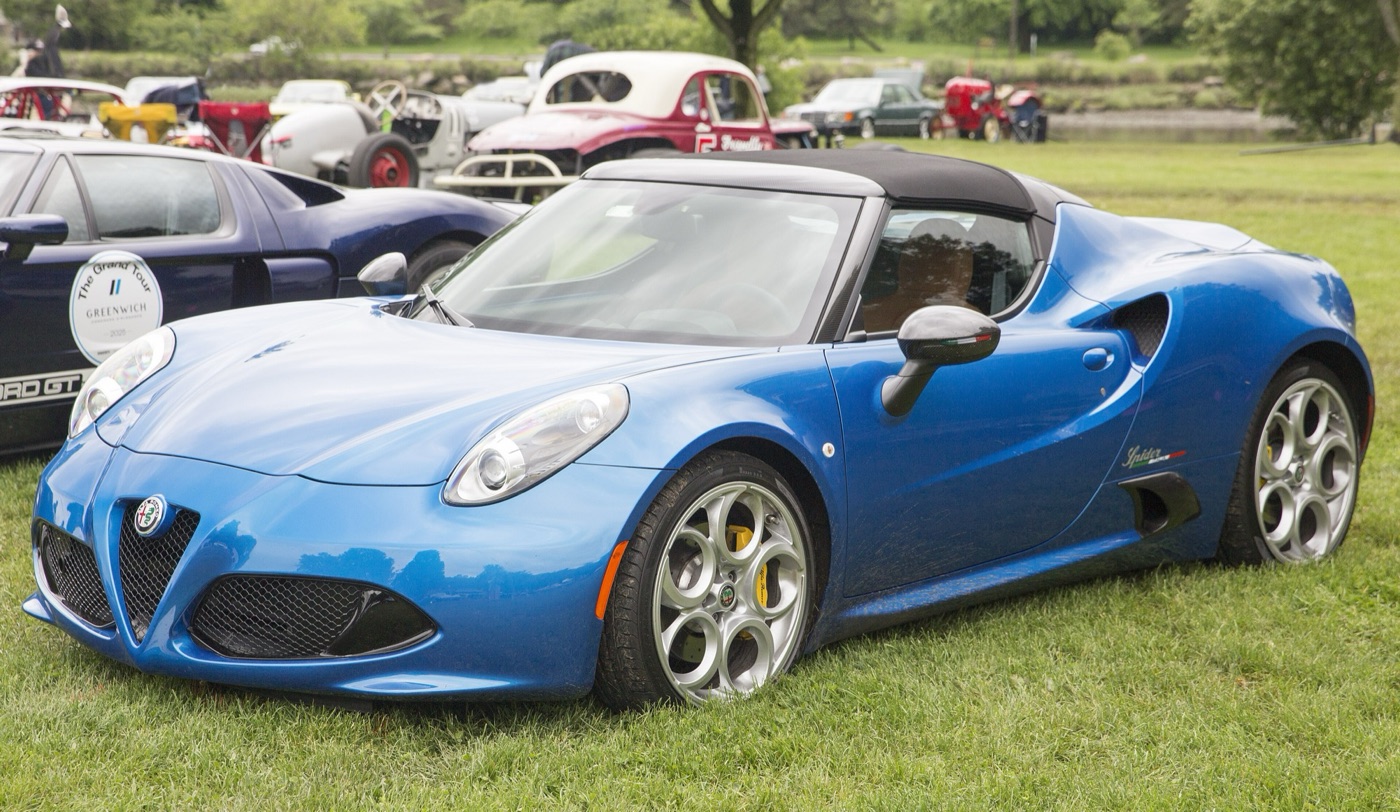
Alfa showed both at the 2018 Geneva motor show. AutoGuide reported 108 of each for Europe. The Competizione coupé had Vesuvio Grey paint with twin racing stripes, a carbon roof, spoiler, mirror caps, side vents and headlamp surrounds, red calipers and a carbon-trimmed Akrapovič exhaust. The Spider Italia had Misano Blue paint, yellow calipers, an Italian-flag "Spider Italia" decal, an Alpine hi-fi with subwoofer and a numbered badge on the tunnel.
4C Spider 33 Stradale Tributo
The last edition honoured the 33 Stradale, of which 18 were built. Alfa built 33 Tributos for North America, priced from $79,995 in the US. Each had Rosso Villa d'Este three-coat paint, grey-gold wheels, black and tobacco seats, and, for the first time on a 4C Spider, a carbon tub with a red transparent finish. Options such as the Akrapovič exhaust, race-tuned suspension and carbon halo came as standard, with a numbered book on the 4C and the 33 Stradale.
Alfa Romeo 4C production numbers
Fiat's April 2012 plan for the 4C was up to 2,500 cars a year. In June 2013 Alfa said the tub could be made at a rate of more than 1,000 a year. In its "just drive" launch release it limited annual availability to 3,500, of which 1,000 were for Europe. Alfa Romeo UK's September 2013 release gave 3,500 both as a total and as a yearly figure.
| Edition | Year | Body | Number announced | Source |
|---|---|---|---|---|
| Launch Edition | 2013 | Coupé | 400 Europe, Africa and Middle East; 500 North America; 100 rest of world (500 for Europe in October 2013) | Alfa Romeo, March and October 2013 |
| 50th Anniversary Spider | 2016 | Spider | 50, UK only | RUSH, 2025 |
| 4C Competizione | 2018 | Coupé | 108 for Europe | AutoGuide, March 2018 |
| 4C Spider Italia | 2018 | Spider | 108 for Europe | AutoGuide, March 2018 |
| 4C Spider 33 Stradale Tributo | 2020 | Spider | 33 for North America | Alfa Romeo, December 2020 |
How many Alfa Romeo 4Cs are there in the UK?
The Department for Transport's vehicle licensing statistics (table VEH0120) counted 482 4Cs in Great Britain at the end of June 2026: 390 licensed for the road and 92 declared off the road (SORN). The total was 484 in mid-2018 and 475 in mid-2024.
| DVLA model description | Licensed | SORN | Total |
|---|---|---|---|
| 4C TBI S-A (coupé) | 204 | 51 | 255 |
| 4C TBI Launch Edition S-A | 43 | 12 | 55 |
| 4C TBI Spider S-A | 109 | 23 | 132 |
| 4C TBI 50th Anniversary Spider S-A | 34 | 6 | 40 |
| All 4Cs | 390 | 92 | 482 |
Source: Department for Transport and DVLA, table VEH0120 (GB), 2026 Q2, downloaded 27 October 2026.
The 4C on track
On 12 September 2013 the journalist Horst von Saurma lapped the Nürburgring Nordschleife in a 4C in 8 minutes 4 seconds, on Pirelli P Zero Trofeo tyres approved for road use. Alfa Romeo's release of October 2013 called it the fastest time for a car with less than 250hp.
SkiddMark was not convinced. Its report of 18 October 2013, using lap times from fastestlaps.com, set the 8:04 against the 230bhp Caterham R500's 7:55 in 1999 and the 345bhp Lotus Exige S's 7:53. Walter Röhrl had lapped in 7:55 in a Porsche Cayman S, and the front-wheel-drive Renault Mégane RS 265 Trophy in 8:07.97 in 2011. SkiddMark said the under-250hp claim "sounds a little like they're clutching at straws".
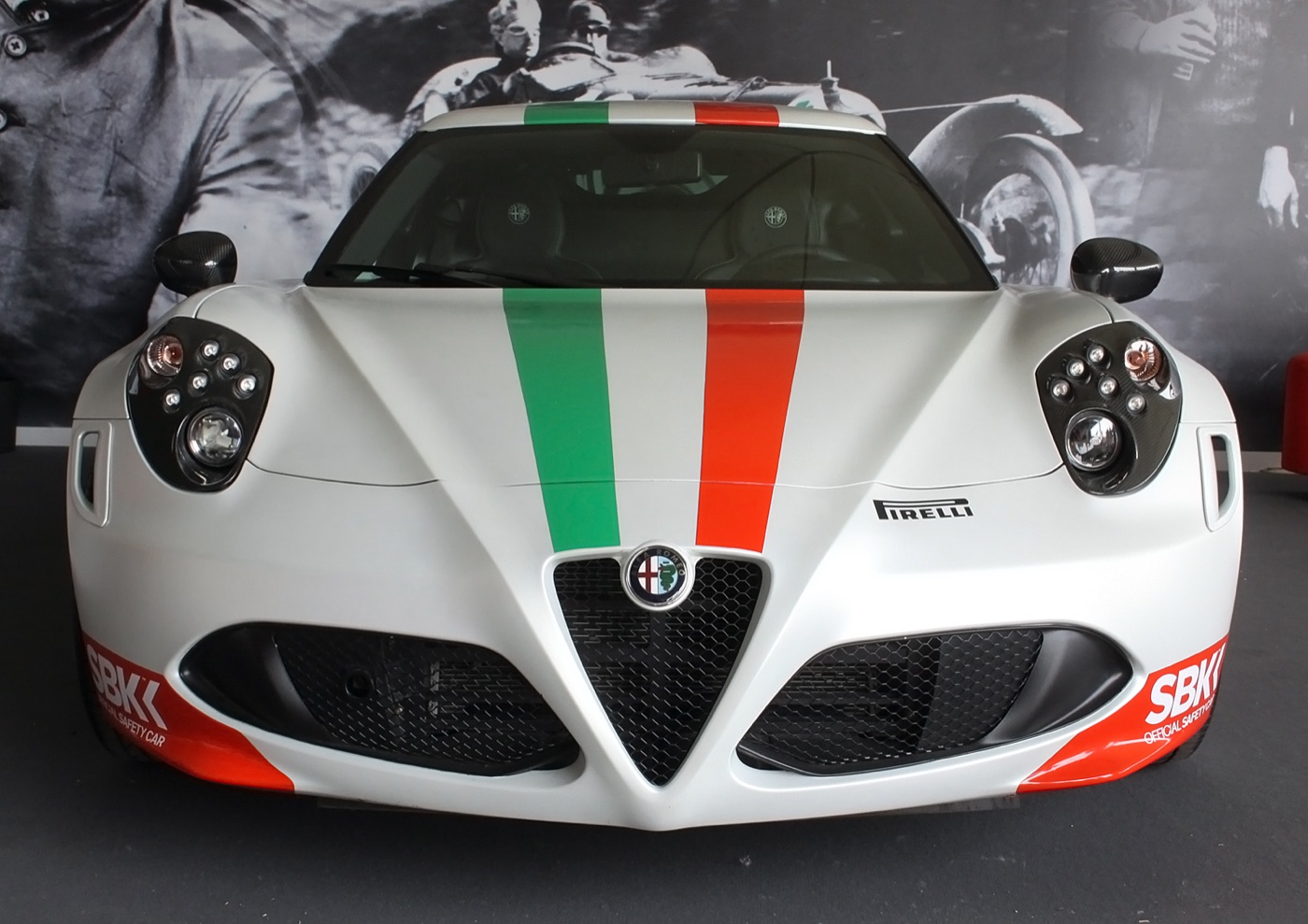
The 4C was also the World Superbike Championship's safety car. Alfa Romeo had supplied safety cars to the series since 2007, and the 4C first did the job at Moscow Raceway in July 2013, according to Alfa's October 2013 release, which renewed the deal for three years.
Alfa Romeo 4C prices and values today
A used 4C in Britain costs from about £30,000, with the best Spiders and limited editions above £60,000. RUSH's guide of May 2025 put higher-mileage coupés at about £30,000 and cleaner ones from about £35,000. Well-equipped Spiders and Launch Editions were £42,000 to £50,000. Exceptional cars, above all in rare colours or with the Akrapovič exhaust, went beyond £60,000, and RUSH named the 50th Anniversary Spider as the most sought-after.
The Classic Valuer, which tracks auction sales worldwide, had recorded 90 4Cs sold out of 108 offered when we checked on 27 October 2026, with a median of £43,027. Its highest is £129,851, at Bring a Trailer in the US on 26 March 2023, and its lowest £22,037, at Mecum in the US on 4 October 2025.
Buying and owning an Alfa Romeo 4C
The 4C's engine and carbon structure have a good record; most problems are in the steering geometry, the gearbox software, the battery and the cabin trim.
Is the Alfa Romeo 4C right-hand drive?
Yes, UK cars are right-hand drive, but the first cars in Britain were not. CJ Hubbard of CAR magazine wrote in 2014 that every 4C press car driven in the UK until then had been on Italian plates, left-hand drive and in "racing" specification, before he drove one of the first right-hand-drive UK cars. RUSH's buying guide says right-hand-drive UK cars arrived in 2014 as Launch Editions, with the standard coupé shortly after.
Is the Alfa Romeo 4C reliable?
On reliability, RUSH found the powertrain "tough", with most known issues in heat management and the gearbox software, and no pattern of failures in the carbon tub. The DVSA's vehicle recalls file lists no safety recall for the 4C in Britain (checked 27 October 2026).
Known faults to check
RUSH's buying guide of May 2025 lists the known faults by area.
Chassis, steering and tyres
RUSH reports that the front and rear subframe bolts can work loose, and Alfa recommends a torque check every two years. The car is sensitive to tyre pressures and alignment: a specialist geometry set-up costs about £300 and a bush and ball-joint refresh £600 to £1,000. Front ball joints were redesigned after problems on early cars. Many owners have moved from the original Pirelli P Zeros to Michelin Pilot Sport 4S or Cup 2 tyres.
Engine, turbo and cambelt
Early cars could leak oil at the turbocharger oil feed, a repair of under £500, according to RUSH. It gives Alfa's cambelt interval as 72,000 miles or five years, but specialists change it every four years. The Bournemouth specialist Alfamotive charges £650 for a cambelt service. Hard track use can push intake temperatures up until the ECU retards the timing.
TCT gearbox
RUSH says most gearbox faults are calibration problems cured by a software update of about £100 to £150. A failed gearbox control module costs more than £4,000, and Alfamotive quotes £2,395 for a clutch replacement.
Body, cabin and electrics
The SMC panels resist small knocks, but RUSH warns that the paint chips easily, so protective film on the nose is common. Dashboard inserts can delaminate, boot struts fail and Spider roof seals leak (£200 to £300 to replace). A flat battery is the most common complaint on a car left standing, and owners fit a CTEK conditioner or an isolator.
Running costs
Alfa Romeo UK quoted combined fuel economy of 41.5mpg and 157g/km of CO2. Alfa's service interval was 12,000 miles or 12 months, and RUSH quotes £250 to £400 for an annual service and £600 to £900 for a major one.
Vehicle tax depends on the registration date. A coupé (157g/km) first registered before 1 April 2017 is in band G (151 to 165g/km) and pays £275 a year. A 4C registered from 1 April 2017 pays the standard £200, plus £440 a year because its list price was above £40,000 (gov.uk rates, checked 27 October 2026). The £440 applies for five years from the second tax payment, so cars registered in 2020 reach the end of it during 2026.
Upgrades
RUSH lists coilovers from Bilstein, KW and Nitron at £2,000 to £4,000 fitted, electric power steering conversions at about £4,000 before labour, and a first-stage remap from the specialist AlfaWorks at £1,025 plus VAT for about 40bhp more.
Alfa Romeo 4C rivals
In 2013 the 4C's rivals were the Lotus Exige S and the Porsche Cayman, and from 2017 the Alpine A110. SkiddMark called it "Alfa's answer to the Lotus Exige and Porsche Cayman" in 2012. CAR's verdict in 2014 was that it was "in no way a rival to the Porsche Cayman".
Harris called the Cayman "a much more complete car" but preferred the 4C's steering, and found the Alfa closer to a Lotus Elise than a Cayman in the way it changed direction. RUSH's 2025 guide sets the Porsche Boxster and Cayman of the 981 generation and the Alpine A110 against it as more usable cars. For the purest handling, it sends buyers to Lotus and its Exige.
| Car | Shown | Power | Weight (basis) | Price reported |
|---|---|---|---|---|
| Alfa Romeo 4C coupé | 2013 | 240hp | 895kg (dry) | £45,000 on the road, UK, September 2013 |
| Lotus Exige S | 2011 | 345bhp | 1,080kg (basis not stated) | tipped above £40,000, UK, before launch (September 2011) |
| Alpine A110 Première Edition | 2017 | 252hp | 1,103kg (kerb, "poids à vide") | €58,500, France, orders from December 2016 |
Sources: Alfa Romeo UK, September 2013; Autocar on the Exige S at the 2011 Frankfurt show; L'argus on the A110 Première Edition, whose 1,955 cars sold out in five days.
Reception and reviews
Reviewers liked the 4C's looks, carbon structure, brakes and pace. They criticised its steering on bumpy roads, its steering wheel and its cabin. Before it went on sale, readers of What Car? voted it the most exciting car of 2013, ahead of the BMW i3, McLaren P1 and Mercedes-Benz CLA, with voting closing on 8 January 2013 (Alfa Romeo UK, January 2013).
Chris Harris drove the car at Balocco for PistonHeads in 2013. He found the brakes "just magnificent on the road" and wrote that the 4C "still demolishes the Cayman for steering weight and feel". He called its steering wheel "truly dreadful": too thick and oddly shaped. On track it was easier to slide than he expected, though he missed an engine that wanted to rev harder.
British roads were harder on it. CAR magazine's 2014 test of a right-hand-drive car on the standard suspension explained that the racing-specification press cars twitched and chased cambers under braking. The standard car was "much, much better to drive". Hubbard still found "the cabin is sparse, the plastics are coarse and the stereo is a joke", and told buyers to choose the standard chassis.
SkiddMark objected to the word Alfa used for it. Its report of 12 February 2013 said "Alfa made its first mistake in today's press release by describing the light-weight 4C as a 'supercar'". In September 2013 it still could not "stomach the continued use of the word 'supercar'". It worked out about 255bhp per ton for a 4C at about 930kg with fluids, against 242bhp per ton for the Porsche Cayman.
Questions
Does the Alfa Romeo 4C have power steering?
No. The steering is unassisted, with a ratio of 16.2:1. Some owners have since fitted electric power steering conversions, which RUSH puts at about £4,000 before labour.
Is there a manual Alfa Romeo 4C?
No. Every 4C has the six-speed Alfa TCT twin dry clutch gearbox, changed with paddles behind the steering wheel or buttons on the centre console.
What does 4C stand for?
Four cylinders. Alfa Romeo named it after its 8C and 6C models of the 1930s and 1940s, which were named for their eight- and six-cylinder engines.
Is the Alfa Romeo 4C a Maserati?
No, it is an Alfa Romeo, designed by Alfa Romeo's Style Centre, but Maserati built it at its factory in Modena from 2013 to 2020.
How big is the boot on an Alfa Romeo 4C?
The boot behind the engine holds 110 litres, according to CAR magazine. In the Spider it also has to take the removable roof panel, RUSH notes.
Alfa Romeo 4C coupe or Spider: what is the difference?
The Spider has a removable cloth roof, an aluminium rollover hoop, a carbon fibre windscreen frame, covered xenon headlamps and a body-coloured engine cover in place of the coupé's glass one. In the UK it cost £59,500 in 2015 against £51,500 for the coupé, and the DVLA counted 255 standard coupés and 132 standard Spiders in Great Britain in mid-2026.
What engine does the Alfa Romeo 4C have?
A 1750 TBi 1.75-litre turbocharged four-cylinder with direct injection and an aluminium block, 22kg lighter than the Giulietta Quadrifoglio Verde's version. It gives 240hp and 350Nm.
Sources
- Alfa Romeo, "World Premiere: the Alfa Romeo 4C Concept", March 2011 (archived copy): concept dimensions, weight, engine, performance, planned on-sale year.
- Alfa Romeo, "Alfa Romeo wins prestigious awards in Germany and Italy", May 2011: Auto Bild Design Award.
- Alfa Romeo, "Alfa Romeo enjoys success in Villa d'Este with the 4C and the 1933 6C 1750 GS", May 2012: Villa d'Este design award.
- Fiat S.p.A., "New organizational and industrial structure for Maserati", 12 April 2012: Modena production from May 2013, up to 2,500 a year.
- Adler group, opening of the TTA plant at Airola (in Italian): carbon tub supplier, €23 million plant, 108 workers.
- Alfa Romeo, "World première: Alfa Romeo 4C", February 2013: name, 33 Stradale link, Maserati production, US return.
- Alfa Romeo, "World première: Alfa Romeo 4C Launch Edition", March 2013: Launch Edition numbers, price and equipment, dimensions, suspension, brakes, steering.
- Alfa Romeo UK, "Alfa Romeo 4C: excellence made in Italy", 14 June 2013: tub weight, materials, glass, production checks.
- Alfa Romeo UK, "Alfa Romeo 4C makes dynamic debut at 2013 Goodwood Festival of Speed", June 2013.
- Alfa Romeo, "Alfa Romeo 4C: just drive", 2013: 3,500 a year, 1,000 for Europe.
- Alfa Romeo UK, "Alfa Romeo 4C details announced", 17 September 2013: UK price and dates, engine, performance, economy, specification table.
- Alfa Romeo UK, "Alfa Romeo 4C completes 'the Green Hell' of the Nürburgring in just 8'04''", 17 October 2013.
- Alfa Romeo, "Alfa Romeo still key player in the Superbike World Championship", October 2013: safety car.
- Alfa Romeo, "The first European Alfa Romeo 4C 'Launch Edition' units are delivered at Balocco", October 2013: first deliveries, chief designer, orders.
- Alfa Romeo, "Alfa Romeo 4C Spider preview to debut at Geneva 2014", March 2014.
- Alfa Romeo UK, "Alfa Romeo 4C Spider to make its European debut at the 2015 Geneva Motor Show", 25 February 2015: Spider changes, 2015 UK prices and coupé equipment; and Alfa Romeo UK, "Alfa Romeo 4C Spider revealed at the 2015 North American International Auto Show", 12 January 2015: US Spider weight and 0–60mph estimate.
- Stellantis Heritage, "Alfa Romeo 4C Designer's Cut: a Heritage one-off on the 10th anniversary of the 4C", 2023: production until 2020, Maccolini as head of design.
- Inside Line (Edmunds), "How the Alfa Romeo 4C came together", March 2011: Ramaciotti and the Ethos concepts.
- Alfa Romeo UK, "Alfa Romeo 4C and 4C Spider price list", 2017 (archived August 2017): UK prices and option prices.
- Autoblog, "Alfa Romeo 4C coupe discontinued", 28 June 2018: US monthly sales, prices, Track Package; The Drive, "The Alfa Romeo 4C coupe is dead in North America", June 2018, and "Alfa Romeo 4C Spider lives on in the US despite cancellation rumors", late 2019: Alfa spokesman quotes.
- GOV.UK, vehicle tax rate tables, checked 27 October 2026: band G and post-2017 rates.
- Alfa Romeo (Stellantis North America), "Alfa Romeo Announces 4C Spider 33 Stradale Tributo", 14 December 2020: Tributo details, end of North American production, Kuniskis quote.
- AutoGuide, "Alfa Romeo 4C Competizione and Italia editions debut", March 2018.
- Department for Transport and DVLA, vehicle licensing statistics, table VEH0120 (GB), 2026 Q2: 4Cs licensed and SORN by model.
- DVSA, vehicle recalls data file, downloaded 27 October 2026: no recall listed for the 4C.
- Chris Harris, PistonHeads, "Alfa Romeo 4C: review", 2013: Dallara, wet weight, Launch Edition price, driving impressions.
- CJ Hubbard, CAR, "Alfa Romeo 4C RHD comfort spec (2014) review": UK press cars, suspension specifications, boot.
- RUSH, "Alfa Romeo 4C buyer's guide", 23 May 2025: right-hand drive, 50th Anniversary Spider, faults, costs, values, the Twohig explanation.
- The Classic Valuer, Alfa Romeo 4C buyer's guide and price data, read 27 October 2026: auction median, highest and lowest sales.
- Autocar, Lotus Exige S at the Frankfurt show, 13 September 2011; L'argus, "Alpine A110 Première Edition : les prix et la fiche technique": rival figures.
- SkiddMark's own reports: Geneva Watch, the 4C Concept (March 2011); Alfa Romeo 4C makes its world debut (12 February 2013); the Launch Edition (6 March 2013); Alfa 4C goes on sale next month (17 September 2013); Alfa confirms 4C's Nürburgring lap time (18 October 2013); Alfa 4C Concept will debut at Goodwood (June 2011); Alfa Romeo 4C will be built by Maserati, first prototypes later this year (April 2012); 4 cars which are way ahead of Alfa's 4C (April 2013).
This article was written in October 2026 to replace SkiddMark's original report of March 2011, "Geneva Watch: Alfa's 4C Concept makes a stunning entrance", with every figure checked against Alfa Romeo's and Fiat's own releases and the DVLA's statistics. Values and registration figures checked 27 October 2026.