Alfa Romeo GTV (916) and Spider: history, V6, faults and values
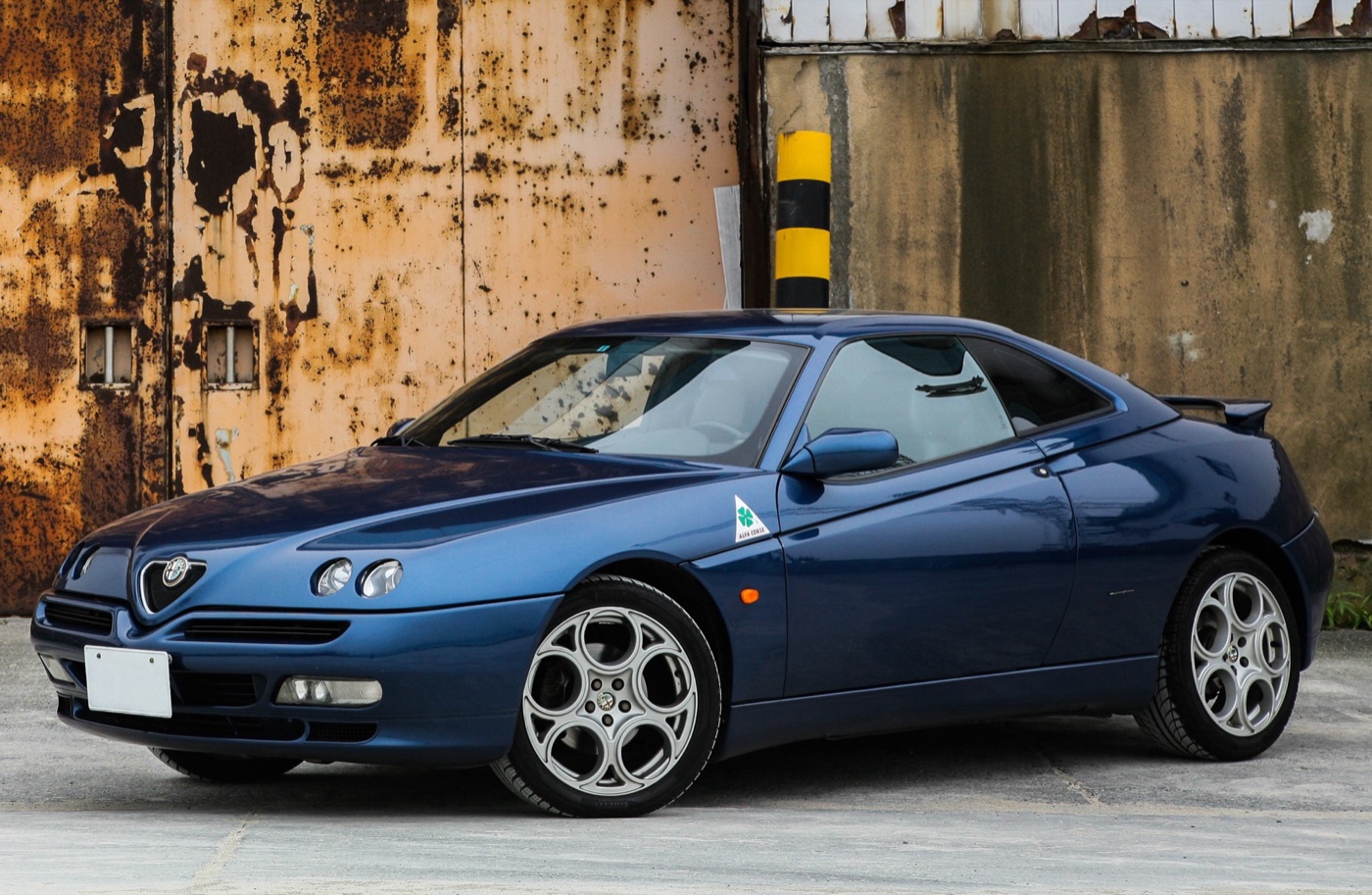
The Alfa Romeo GTV is the front-wheel-drive 2+2 coupé that Alfa Romeo built from 1994 to 2004 under the project code Tipo 916, alongside an open two-seater twin, the Spider. Styled by Enrico Fumia at Pininfarina, it was sold with Twin Spark four-cylinder engines or the Busso V6, and about 42,900 GTVs and 38,900 Spiders were made. Half the GTVs sold at the auctions The Classic Valuer tracks since 2020 made less than £4,650, and the cambelt, the rear suspension and rust decide which ones are worth buying.
GTV stands for Gran Turismo Veloce, the name Alfa Romeo had last used on the Alfetta GTV and GTV6 coupé that left production in 1987.
History of the Alfa Romeo GTV
The Alfa Romeo GTV began in 1987, after Fiat bought Alfa Romeo and asked Pininfarina and Bertone for proposals for a new Spider and a coupé to replace the Alfetta GTV, according to Yaroslav Bozhdynsky’s register of the 916. Pininfarina won. The chief engineer was Bruno Cena. Its predecessors were the Alfetta GTV coupé and the 105-series Spider.
Who designed the Alfa Romeo GTV?
Enrico Fumia of Pininfarina drew the outside of the Alfa Romeo GTV and its open twin. “I did my original renderings on Sept. ’87. The final model was approved by Mr. Ghidella (CEO Fiat) on July ’88,” he told Bozhdynsky in an interview. The interior was the work of Alfa Romeo’s own Centro Stile under Walter de Silva, and Fumia said Pininfarina’s own cabin proposal was “absolutely innovative … if it had been developed”.
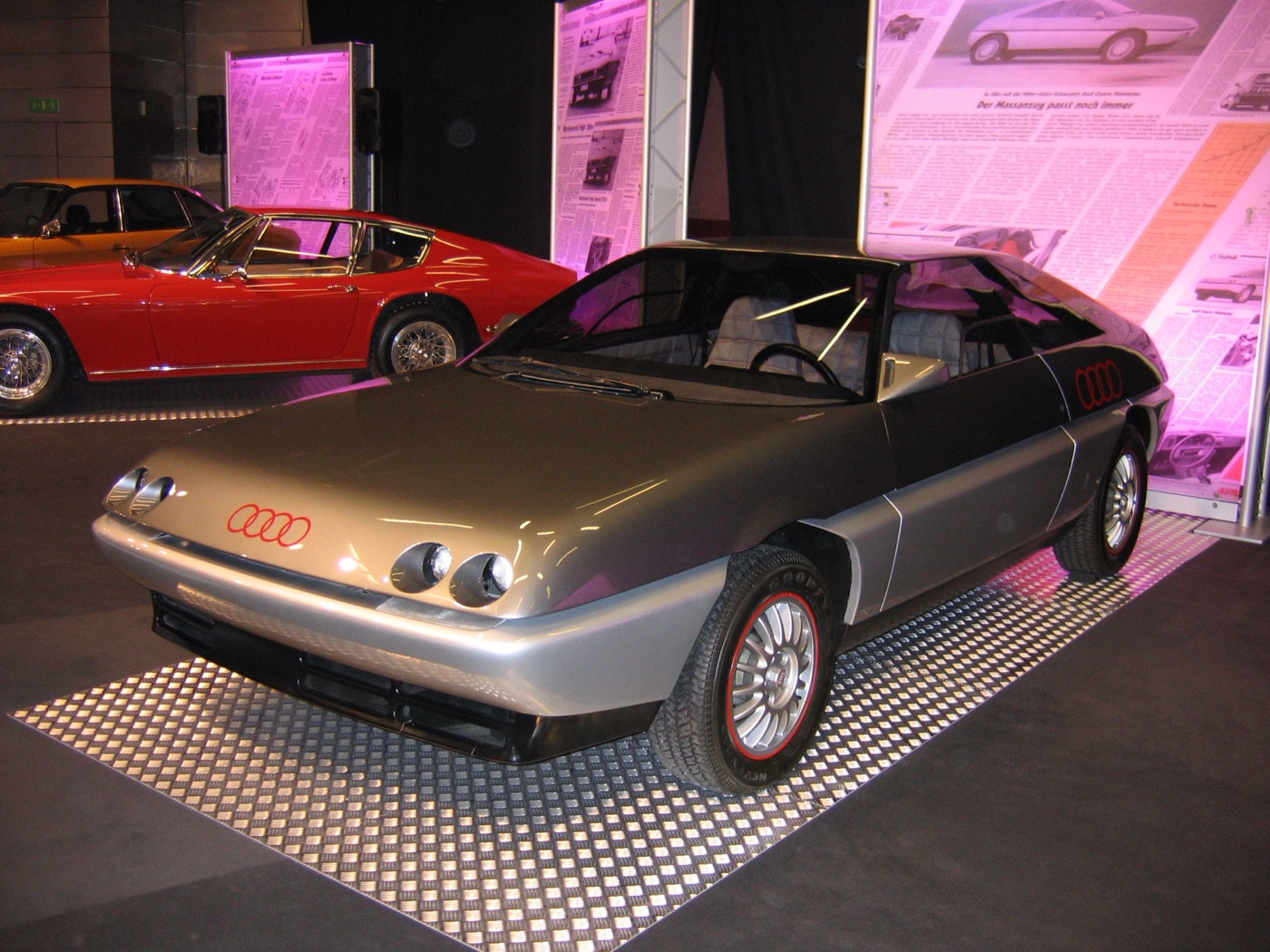
Fumia also said the 1:1 model was “partially inspired” by the Audi Quartz, the concept he had drawn at Pininfarina in 1980 and shown at Geneva in 1981, and that the two cars look alike “just because of the front lamps”. Alfa Romeo’s Proteo show car of 1991 shared the GTV’s small round headlamps and clamshell bonnet, but Fumia was firm about the order: the Proteo “was influenced by my design and not viceversa as everybody think”. The Thinker’s Garage traces the Quartz’s quad lamps, full-width tail-lamp strip and rising belt-line groove into the production car.
Launch: Paris 1994, Geneva 1995 and the UK in 1996
The register records the first four production cars, all 3.0 V6 Spiders, at Alfa Romeo’s Arese plant in Milan in late 1993, and the first GTV, a 2.0 Twin Spark, in early 1994. The two cars were first shown at the Paris motor show in the autumn of 1994. The Geneva motor show’s own list of premieres gives the GTV coupé and Spider roadster their debut there in March 1995, when sales began.
Right-hand-drive cars reached Britain in 1996. Britain started with the 2.0 Twin Spark, and the 3.0 V6 24V GTV followed in 1998, according to Exchange and Mart’s used-car guide. In October 2001 The Car Enthusiast noted that the design had “been on sale in the UK since 1996”.
From Arese to Pininfarina
Arese built the 916 until the end of July 2000; they were the last Alfa Romeos made there. Production moved to Pininfarina’s plant at San Giorgio Canavese near Turin in October 2000, the register says. Pininfarina’s production record lists 1,489 “Alfa Romeo Spider GTV” in 2000, 6,060 in 2001, 2,916 in 2002, 3,615 in 2003 and 1,708 in 2004, then the Alfa Brera from 2005. The Brera coupé replaced the GTV in 2005, and a Brera-based Spider replaced the 916 Spider in 2006.
Design and engineering
The Alfa Romeo GTV is a wedge: a low nose, a crease that climbs from the front wheel arch to the tail, a short cut-off rear and one red light strip across the full width of the back. The Spider shares the front half and has a rounded tail that slopes down over its folding roof.
The clamshell bonnet and the fixed headlamps
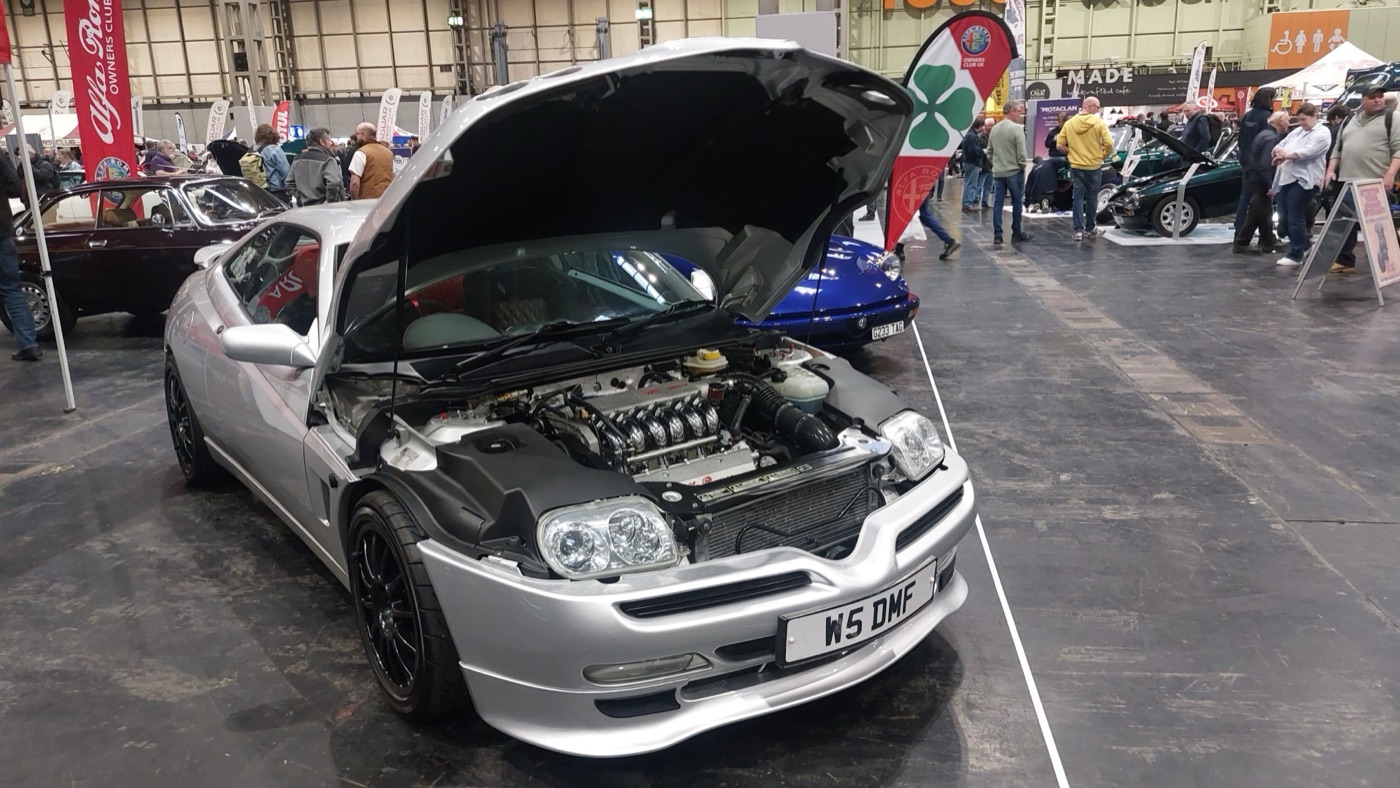
The bonnet is plastic, one large moulding that wraps into the tops of the wings, with two round openings for the lamps on each side. Motor1’s 30th-anniversary history of the car notes that the headlamps do not lift with it: they stay fixed on the body, so an open bonnet leaves two bare pairs of lamps. There are no conventional door handles either. A button in the door unlocks it and a finger recess in the side crease pulls it open.
Platform and suspension
Underneath is a heavily modified version of Fiat’s Tipo Due platform, the base of the Fiat Tipo and the Alfa Romeo 155, with the engine mounted across the car and driving the front wheels. PistonHeads records that the chassis was benchmarked against the Lotus Elan M100 for its handling. Alfa Romeo’s technical specifications of 14 April 2003 describe MacPherson struts with lower wishbones at the front and, at the back, independent multilink arms on an aluminium-alloy frame. That rear end was new for the 916. It lets the rear wheels steer very slightly as cornering loads build; The Car Enthusiast found that near the limit “the rear end shifts around slightly to help turn the front in more”.
The turning circle is wide: 11.2 metres between kerbs, and 12.0 metres on the 3.2 V6, in the factory figures.
Interior
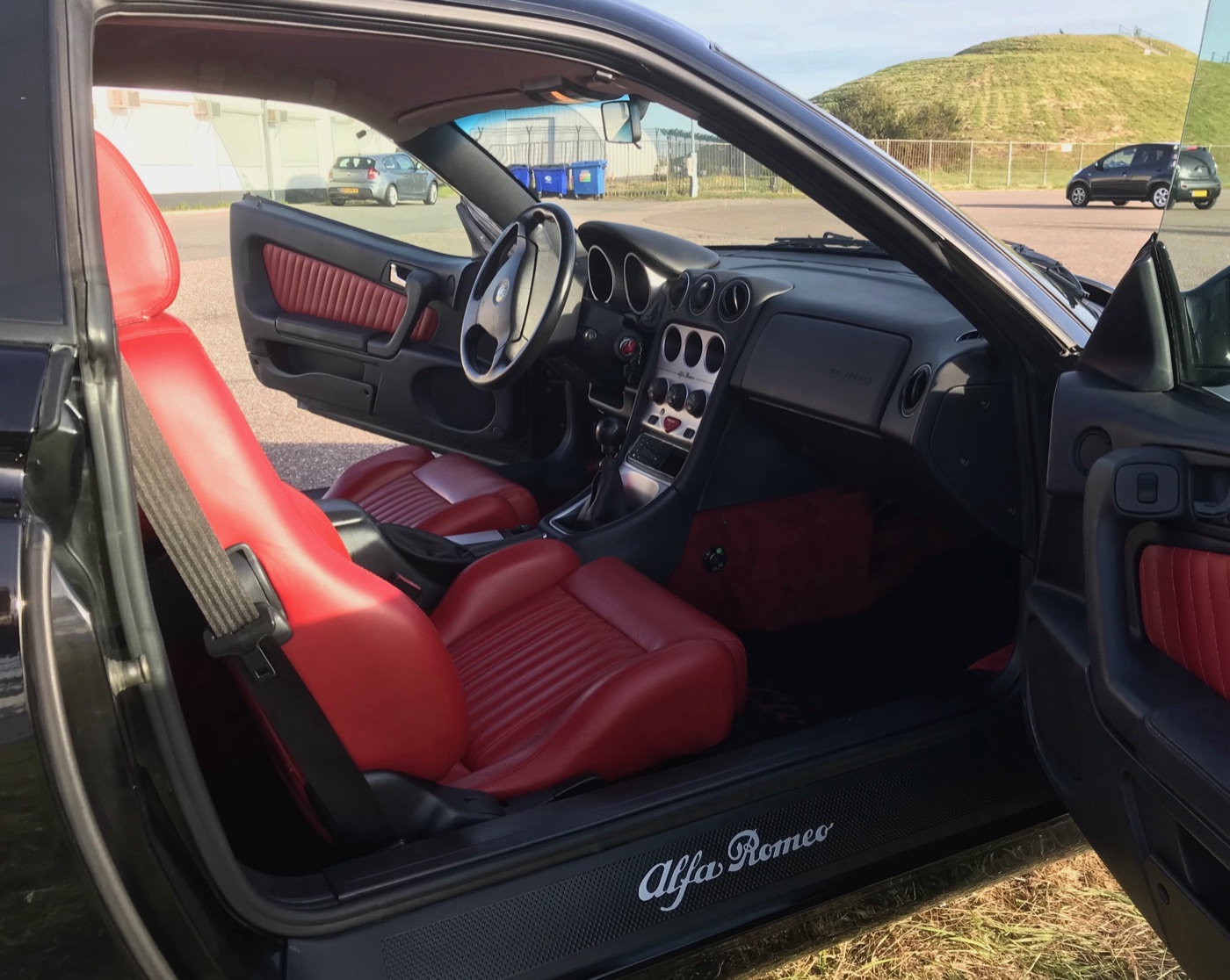
The Centro Stile cabin has deeply hooded main dials, three small gauges in the centre console and, as an option with Lusso trim, Momo leather seats. The GTV’s rear seats are small; the 2003 specification lists four seats and two doors. The boot holds 110 litres with the space-saver spare or 155 litres with the tyre repair kit.
Alfa Romeo GTV engines: Twin Spark, JTS and Busso V6
The Alfa Romeo GTV had seven engines in ten years: three four-cylinders and four versions of the Busso, Alfa Romeo’s 60-degree V6 engine, which was built at Arese. Not every engine went into both bodies, and the 2.0 V6 Turbo was never sold in Britain.
| Engine | Capacity | Power | Torque | Built | Bodies |
|---|---|---|---|---|---|
| 1.8 Twin Spark | 1,747cc | 144 CV at 6,500rpm | 169Nm at 3,500rpm | 5/1998–7/2000 | GTV, Spider |
| 2.0 Twin Spark (AR 16201) | 1,970cc | 150 CV at 6,200rpm | 186Nm at 4,000rpm | 3/1994–5/1998 | GTV, Spider |
| 2.0 Twin Spark (AR 32301) | 1,970cc | 155 CV at 6,400rpm | 187Nm at 3,500rpm | 5/1998–7/2000 | GTV, Spider |
| 2.0 Twin Spark (AR 32310, Euro 3) | 1,970cc | 150 CV at 6,300rpm | 181Nm at 3,800rpm | 10/2000–12/2004 | GTV, Spider |
| 2.0 JTS | 1,970cc | 165 CV at 6,400rpm | 206Nm at 3,250rpm | 11/2002–12/2004 | GTV, Spider |
| 2.0 V6 Turbo | 1,996cc | 200 CV at 6,000rpm | 271Nm (280Nm on overboost) at 2,400rpm | 12/1994–7/2000 | GTV; Spider from 1998 |
| 3.0 V6 12V | 2,959cc | 192 CV at 5,600rpm | 260Nm at 4,400rpm | 11/1993–7/2000 | Spider only |
| 3.0 V6 24V (AR 16102) | 2,959cc | 220 CV at 6,300rpm | 270Nm at 5,000rpm | 7/1996–7/2000 | GTV only |
| 3.0 V6 24V (AR 16105, Euro 3) | 2,959cc | 218 CV at 6,300rpm | 265Nm at 5,000rpm | 8/2000–4/2003 | GTV, Spider |
| 3.2 V6 24V | 3,179cc | 240 CV at 6,200rpm | 289Nm at 4,800rpm | 7/2002–10/2004 | GTV, Spider |
Source: the engine pages of the GTV and Spider register (bozhdynsky.com), which list Alfa Romeo’s figures and engine codes.
Twin Spark and JTS four-cylinders
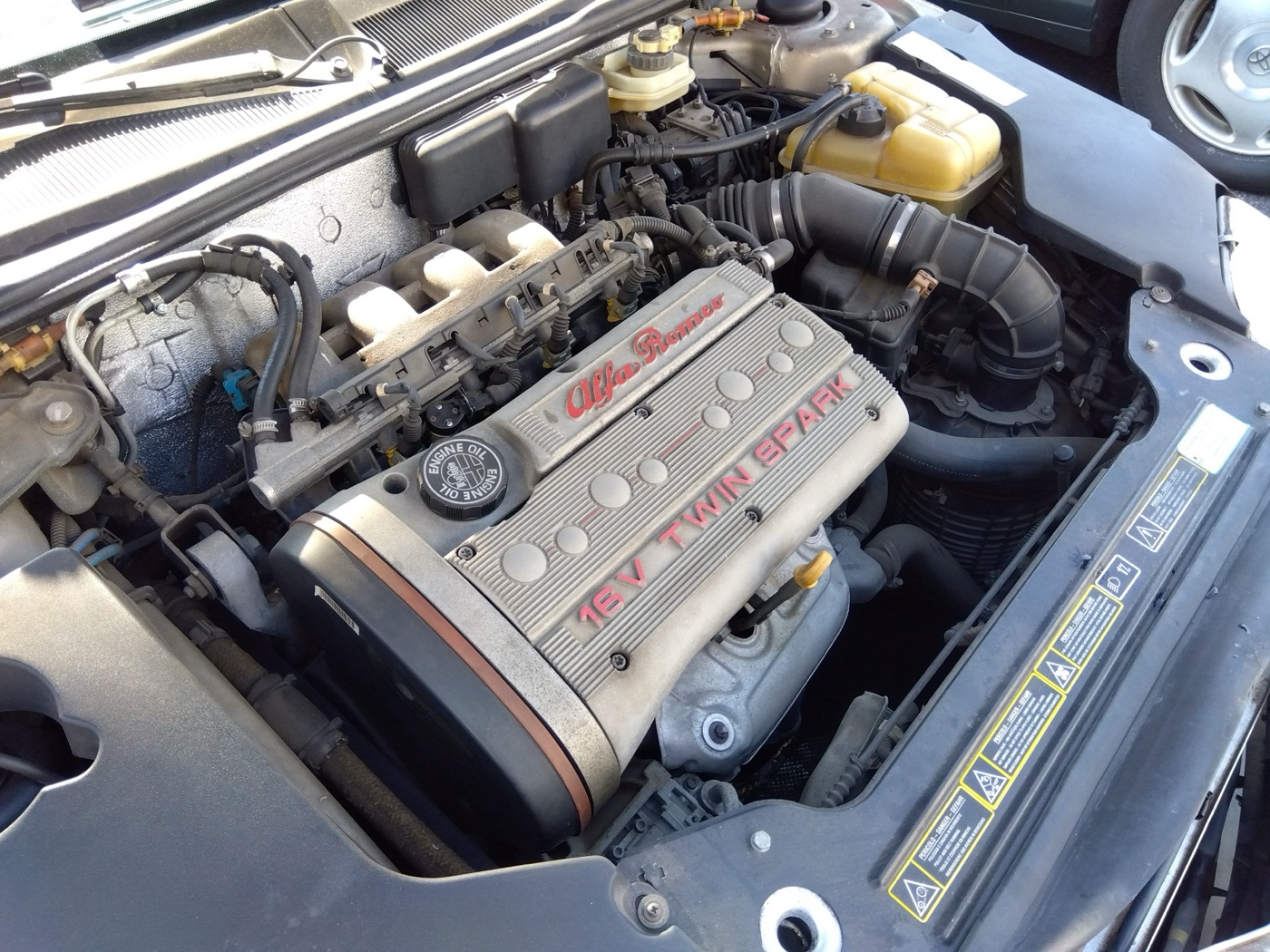
The 2.0 Twin Spark has a Fiat cast-iron block, an Alfa Romeo cylinder head with two spark plugs per cylinder, variable inlet cam timing and two balance shafts, says the register’s engines page; the 1.8 has no balance shafts. All the four-cylinders came from Fiat’s Pratola Serra plant, and the V6 engines from Arese. The 2.0 Twin Spark was the commonest engine of all. The 2.0 JTS of 2003 keeps the block but has one plug per cylinder and petrol direct injection.
From May 1998 the four-cylinders have a plastic cam cover and a variable-length intake manifold. The engine generations are known as CF1, CF2 and CF3: Alfa Workshop’s identification guide gives CF2 four-cylinders one catalytic converter and a throttle cable, and CF3 cars three catalysts and an electronic throttle.
The Busso V6
The 2.0 V6 Turbo exists because of tax. Italy charged a higher sales tax on cars over two litres, so Alfa Romeo cut the V6’s displacement to 1,996cc and added a turbocharger, as the register explains. It was sold in Italy and other left-hand-drive markets.
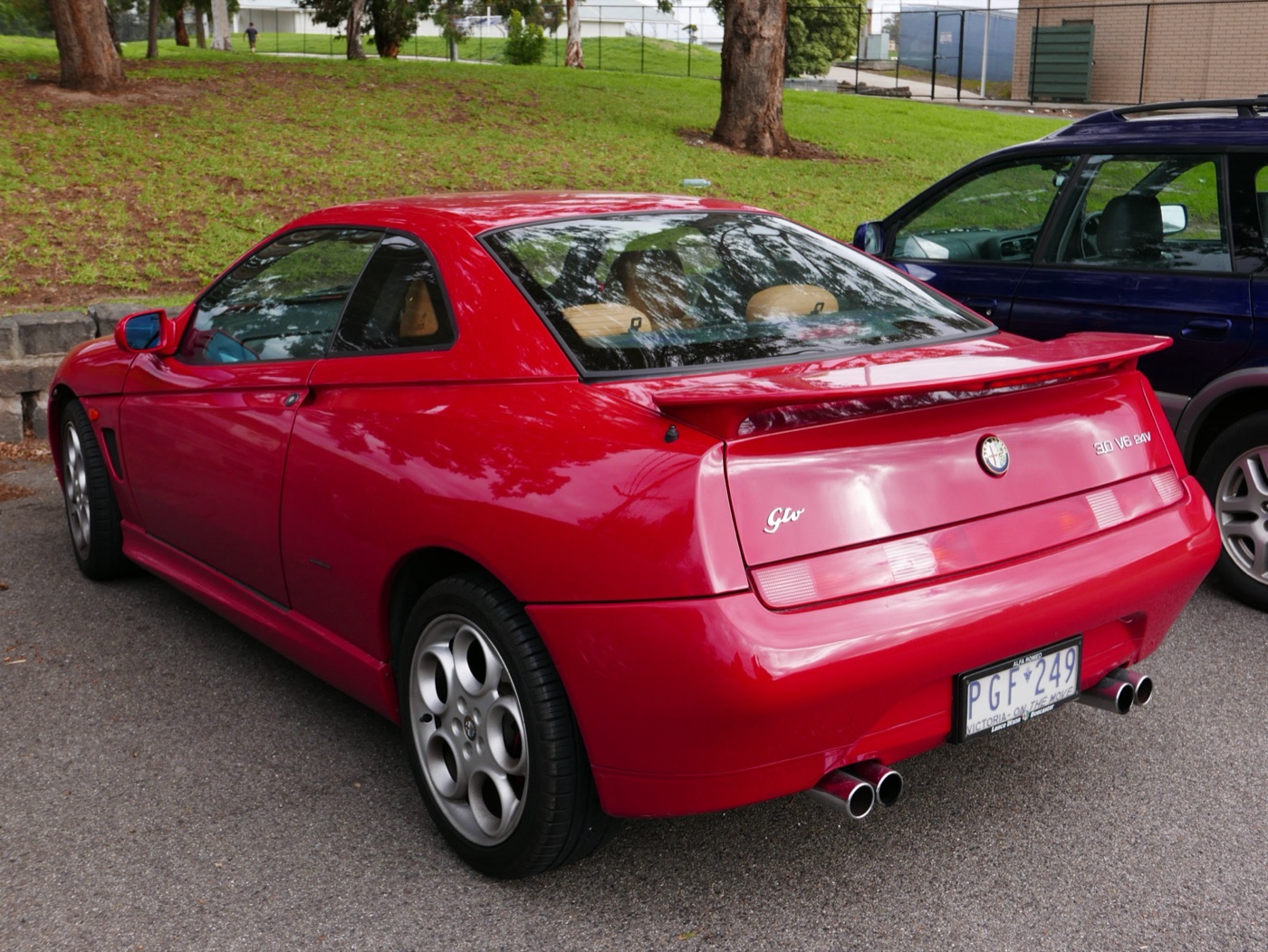
The 3.0 V6 12V came first, in the Spider only. The 24-valve 3.0 arrived in the GTV in 1996 with 305mm front discs and red four-piston Brembo calipers; from the Euro 3 change of 2000 it went into the Spider too, now with six speeds only. The 3.2 replaced it in 2003. When new, the 24-valve 3.0 was the fastest production Alfa Romeo at 240km/h (150mph), and the 3.2 GTV raised that to 255km/h (158mph), according to the register.
How fast is the Alfa Romeo GTV?
The fastest Alfa Romeo GTV, the 3.2 V6, has a factory top speed of 255km/h, about 158mph; a Twin Spark GTV does 215km/h, about 134mph. Alfa Romeo’s 2003 specifications give standing-kilometre times and fuel figures for the final cars, but no 0–100km/h times:
| 2.0 Twin Spark | 2.0 JTS | 3.2 V6 24V | |
|---|---|---|---|
| Power | 110kW (150bhp) at 6,300rpm | 121kW (165bhp) at 6,400rpm | 176kW (240bhp) at 6,200rpm |
| Torque | 181Nm at 3,800rpm | 206Nm at 3,250rpm | 289Nm at 4,800rpm |
| Gearbox | 5-speed manual | 5-speed manual | 6-speed manual |
| Top speed | 215km/h | 220km/h | 255km/h |
| 0–1,000m | 29.4sec | 29.2sec | 25.8sec |
| Kerb weight (DIN) | 1,370kg | 1,370kg | 1,445kg |
| Combined fuel (EC 1999/100) | 9.2 l/100km | 9.2 l/100km | 13.2 l/100km |
| CO2 | 220g/km | 220g/km | 315g/km |
| Wheels and tyres | 7J x 16, 205/50 R16 | 7J x 16, 205/50 R16 | 7.5J x 17, 225/45 ZR17 |
| Front discs | 284mm | 284mm | 305mm |
Source: Alfa Romeo technical specifications, 14 April 2003. All three share a 2,540mm wheelbase, a length of 4,299mm, a width of 1,776mm, a height of 1,318mm and a 70-litre fuel tank.
On the road the 3.0 V6 was “a genuinely quick car … 0-60 in around 6.5sec and over 150mph all-out”, wrote evo in its 2001 test of the GTV Cup. The Car Enthusiast noted that the 218bhp V6 already gave 160lb ft at 1,500rpm.
Phase 1, Phase 2 and Phase 3: what changed
Owners divide the Alfa Romeo GTV into three phases: Phase 1, the original cars; Phase 2, the 1998 update; and Phase 3, the 2003 facelift. The names are unofficial.
Phase 1 (1994–1998)
Early cars have round console knobs (squared off in 1996), no chrome around the grille, and sills and lower bumpers that are not body-coloured. In 1996 the 24-valve V6 joined the GTV, with the larger brakes and the five-hole teledial alloys. Cars built from mid-1996 to 1997 are sometimes called Phase 1b.
Phase 2 (1998–2003)
The May 1998 update brought a new centre console and switch layout, a new instrument cluster with chrome-ringed dials, a chrome frame around the grille and body-coloured sills and bumpers. The 1.8 Twin Spark was added and the 2.0 went to 155 CV. Red Style and Blue Style dashboards were offered, with matching upholstery and carpets. In 2000 the engines were reworked for Euro 3 emissions and slightly detuned (the CF3 engines); the 1.8 Twin Spark and 2.0 V6 Turbo were dropped, and from the 2001 model year only the 2.0 Twin Spark and 3.0 V6 24V were left.
Phase 3 (2003–2004)
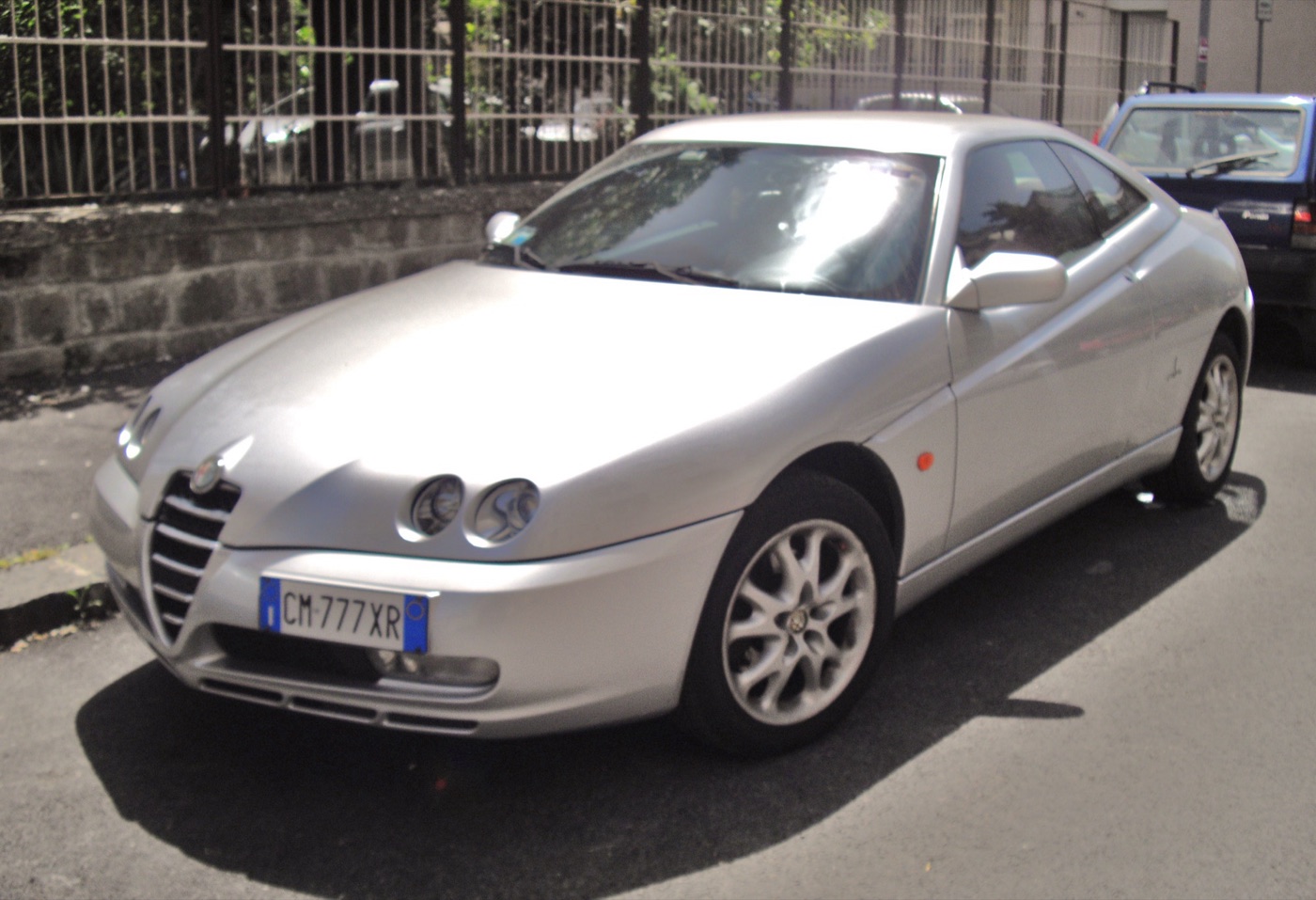
Pininfarina restyled the front for 2003 without Fumia: a larger grille in the style of the 147, a new bumper with the number plate moved to one side, a new console, red instrument lighting and ASR traction control (not on the base 2.0 Twin Spark). The JTS and the 3.2 V6 arrived at the same time. The register dates the Phase 3 debut to the Geneva motor show in March 2003, with European sales from May.
Trim in Britain came down to Turismo and Lusso, and V6 cars were Lusso only, Autocar’s buying guide says.
Alfa Romeo Spider (916): how it differs from the GTV
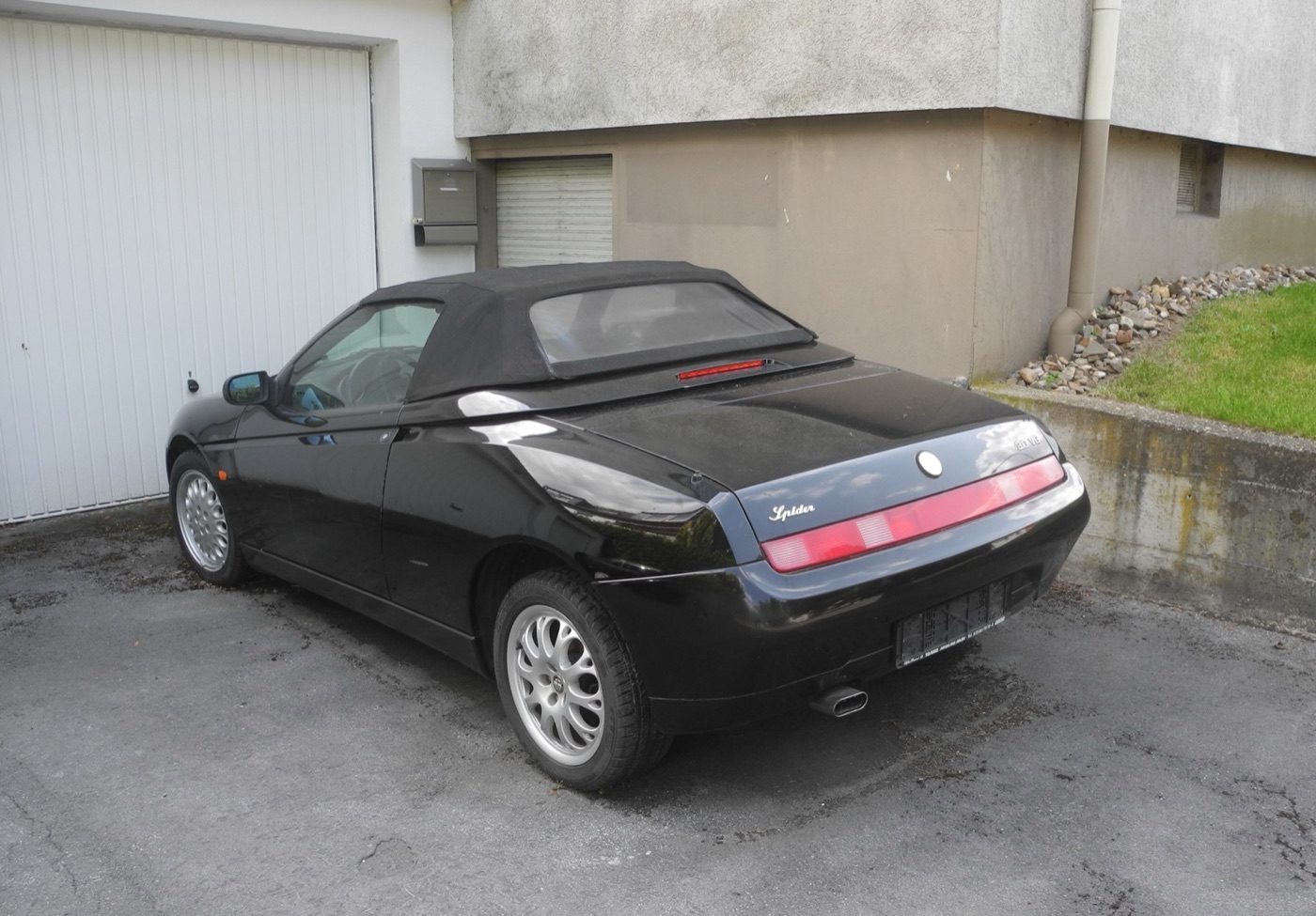
The Spider is a two-seater with a rounded, sloping tail where the GTV has a cut-off one, and a cloth hood that folds away under a plastic lid behind the seats. Fiat’s press release for the Spider Lux lists its electric roof as standard. It replaced the 105-series Spider, the Pininfarina design launched at Geneva in 1966; Pininfarina’s records show it building the last 1,956 of those in 1993.
The Spider’s engine choices were different at first. It had the 2.0 Twin Spark and the 3.0 V6 12V, which the GTV was never offered with (the register lists five early GTVs with it), and the 2.0 V6 Turbo only from 1998. The 3.0 V6 24V reached it with the Euro 3 change in 2000. From 2003 the Spider is 25–35kg heavier than the equivalent GTV, the register notes.
GTV Cup and other limited editions
Alfa Romeo kept the GTV selling with a stream of limited editions late in its life. The register counts them at about 22% of 2001 production, 40% of 2002 and more than 31% of 2004.
The Alfa GTV Cup race series
In 1999 and 2000 Alfa Romeo ran a one-make series in Italy for novice drivers. According to Italicar, the Norwich Alfa Romeo specialist, 160 drivers with no professional track experience paid about £4,000 each for a masterclass with the former Alfa Romeo Formula 1 driver Andrea de Adamich at Varano de’ Melegari and a race in one of 16 identical GTV 3.0s. Fiat Auto Racing in Chivasso built the cars to Group N rules, with an aero kit, brake-cooling vents in the front wings, a remapped ECU, no catalytic converter, a central oil cooler and 200kg less weight.
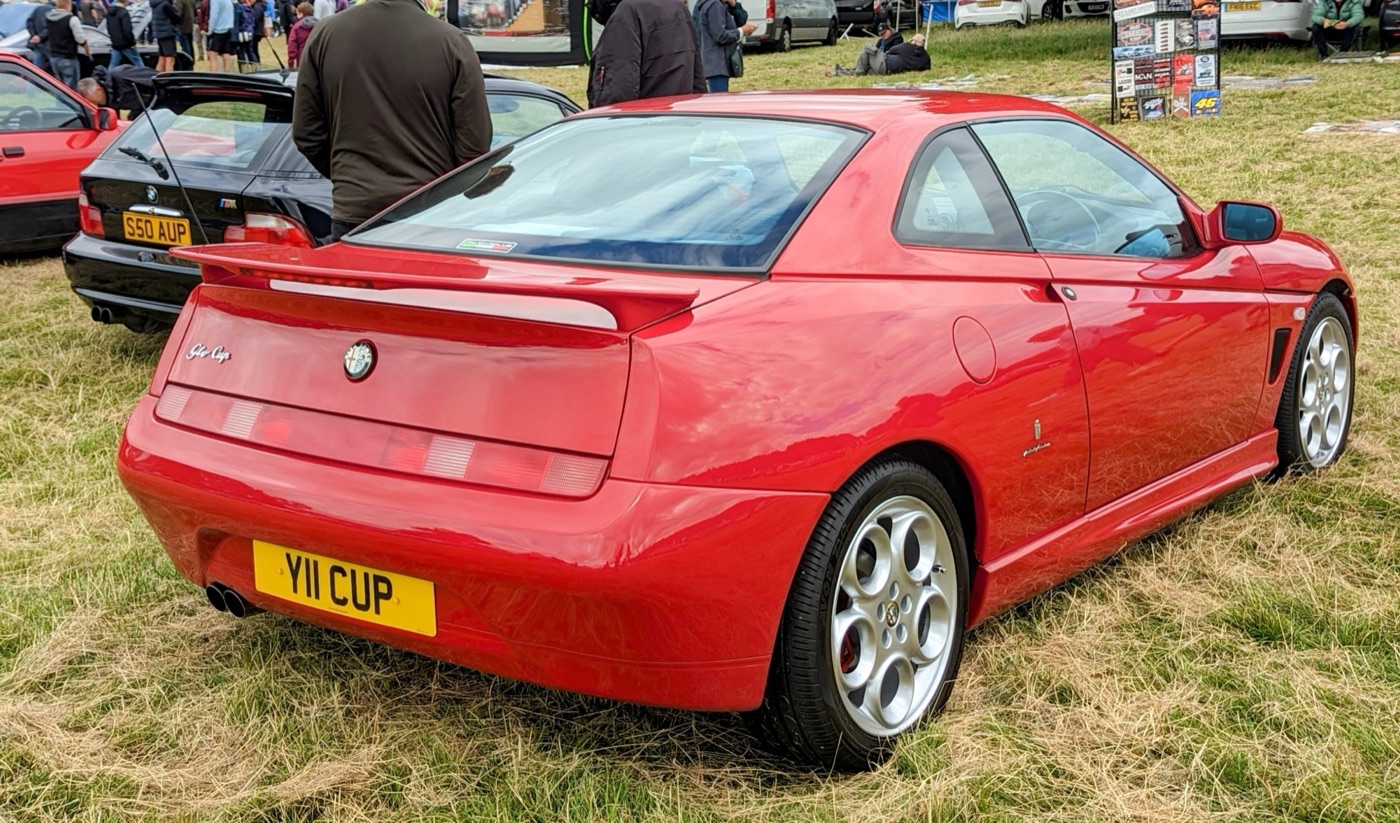
GTV Cup road car
The road-going GTV Cup of 2001 carried the race cars’ aero kit and wing vents, 17-inch teledial wheels with a chrome-like finish, half-leather seats and a numbered plaque. The register’s production rows count 419: 180 with the 3.0 V6 and 239 with the 2.0 Twin Spark. Every UK car was a red 3.0 V6, and the UK plaques were engraved in red. Italicar puts the UK allocation at 155; evo, testing car number 100 in 2001, gave it as 150, at £26,995 each.
Mechanically the Cup is a standard GTV. evo found that it still had “a good deal of wind roar from the frameless side windows”, and Italicar notes that the chrome-like wheel finish is very hard to reproduce.
Other special editions
The rest were mostly colour and trim packages. Fiat’s Italian press release for the Lux and Motus, published on alfaromeopress.com, priced the 150 CV 2.0 Twin Spark GTV Lux at €33,435 on the road, the GTV Motus with its Zender skirts and wing vents at €33,935 and the Spider Lux with an electric roof at €36,935. Other runs included the GTV Elegant and Edizione Sportiva of 2001 and, in 2004, the JTS-engined Spider Edizione.
How many Alfa Romeo GTVs were made?
Alfa Romeo made about 42,900 GTVs and 38,900 Spiders, 81,828 cars in all by the register’s count, which corrects the figures of Alfa Romeo’s Centro Documentazione version by version. The rows of its table add up to 42,934 GTVs and 38,893 Spiders.
| Engine | GTV | Spider |
|---|---|---|
| 1.8 Twin Spark | 2,873 | 2,851 |
| 2.0 Twin Spark | 24,578 | 28,015 |
| 2.0 JTS | 1,182 | 2,120 |
| 2.0 V6 Turbo | 7,284 | 170 |
| 3.0 V6 12V | 5 | 3,864 |
| 3.0 V6 24V | 6,500 | 1,322 |
| 3.2 V6 24V | 512 | 551 |
| Total | 42,934 | 38,893 |
Source: sums of the version-by-version rows in the register’s production numbers, 1993–2004. The five 3.0 V6 12V GTVs are early Medio cars.
The 3.2 is the rare one. Ned Kirkham of the specialist Autolusso told Autocar that only 54 were sold in the UK.
How many Alfa Romeo GTVs are left in the UK?
The Department for Transport’s vehicle licensing table VEH0120 counted up to 2,493 GTVs on the UK record in the second quarter of 2026: 938 taxed and 1,555 declared off the road (SORN). In the third quarter of 2014, the earliest in the table, there were 3,510, of which 2,421 were taxed.
| Quarter | GTV licensed | GTV SORN | Spider licensed | Spider SORN |
|---|---|---|---|---|
| 2014 Q3 | 2,421 | 1,089 | 1,510 | 561 |
| 2016 Q2 | 1,948 | 1,284 | 1,310 | 648 |
| 2026 Q2 | 938 | 1,555 | 619 | 951 |
Source: DfT/DVLA table VEH0120 (UK). GTV: every row under the model ‘ALFA ROMEO GTV’. The earlier Alfetta GTV6 has no row of its own in the table, so some of those may be counted here, and the GTV figures are an upper count. Spider: the Twin Spark and V6 24V rows only, since the later Brera-based Spider also used the JTS name; the Spider figures are therefore a floor.
The same table lists 128 cars as ‘GTV CUP’ in 2026, 71 taxed and 57 off the road.
Alfa Romeo GTV prices and values
In the UK market, the median Alfa Romeo GTV sale price that The Classic Valuer records since 2020 is £4,650, when checked on 28 October 2026. The site tracks auction and classified results; its lowest sale is £430 and its highest £36,867, and the British auction results it lists for 2025–26 run from £1,590 to £7,312.
That top figure was a GTV owned for 26 years, sold on Bring a Trailer in the Netherlands on 28 February 2025. Recent British results run from £1,590 for a 1999 car at Brightwells in September 2025 and £1,600 for a 2005 JTS at Mathewsons in July 2026, through £3,542 for a 1999 Lusso at WB & Sons and £4,850 for a 1999 3.0 at Hampson Auctions, to £7,312 at Iconic Auctioneers on 29 August 2026. That car was a 1998 3.0 V6 Phase 2 with 103,414 miles, KW coilover suspension, a Quaife limited-slip differential and more than £6,100 of recent work by Autolusso. A 1998 GTV 3.0 24V made £6,129 on Bring a Trailer in the US in September 2025.
Asking prices in October 2026 ran from £995 for a Twin Spark on eBay to £24,950 for a 2002 3.0 V6 at Bicester Sports & Classics. A SkiddMark column in 2010 put the price of a decent V6 at about £5,000.
Autocar says the V6 commands the highest prices, and Italicar calls the Cup the 916 that every Alfa Romeo specialist wants. Kirkham’s advice to Autocar was to buy a Phase 2 3.0 V6 with the CF2 engine, which he called “a useful improvement on the CF1 … but not as complicated as the later CF3”, and to avoid the JTS.
How much was an Alfa Romeo GTV new?
A UK GTV 3.0 Lusso cost £30,001 on the road until Alfa Romeo cut the GTV and Spider range by 15% from 1 September 2000, just-auto reported on 25 August 2000. The cut took it to £24,994.
| Model | Before 1 September 2000 | From 1 September 2000 |
|---|---|---|
| GTV 2.0 | £22,188 | £19,493 |
| GTV 2.0 Lusso | £24,884 | £20,494 |
| GTV 3.0 Lusso | £30,001 | £24,994 |
| Spider 2.0 | £23,589 | £19,992 |
| Spider 2.0 Lusso | £26,194 | £22,042 |
Source: just-auto, 25 August 2000, rounded to the nearest pound. The GTV Cup of 2001 cost £26,995, and evo put that at “a couple of grand over the regular V6”.
Alfa Romeo GTV known problems and running costs
The cambelt is the first thing to check on any Alfa Romeo GTV, followed by rust in the rear floor and suspension, worn front wishbones and seized rear brakes. In Motor Warranty Direct’s 2001 survey Alfa Romeo came bottom of 22 makes, PistonHeads’ buying guide records, and the 2010 SkiddMark column named “the cam-belt and electrical maladies” as the worries.
Cambelt and engine
Alfa Romeo first quoted 72,000 miles for the Twin Spark’s cambelt and had cut that to 36,000 miles or three years by 2006, PistonHeads says, adding that owners change it at 24,000 miles, with the water pump and cam variator. A diesel-like rattle at start-up is the variator failing. For a Busso belt change, Italicar budgets about £1,000 every three years or 36,000 miles. Twin Sparks use oil and should be checked weekly. Kirkham warned Autocar that the JTS “suffers oil dilution caused by its direct fuel injection”, which wears the bores, camshafts and big-end bearings, and builds up carbon in the intakes.
Suspension, brakes and steering
The front lower wishbones wear at both ends and scrub the inner shoulders of the front tyres. The rear spring pans rust from the top down, where they cannot be seen, and Italicar says replacement rear spring pan arms are very hard to find. Bushes wear in the rear suspension as well. Rear calipers seize, above all in cold weather, and PistonHeads notes that new rear brake compensators no longer exist. No GTV left the factory with a limited-slip differential; Kirkham recommends fitting a Quaife ATB to a V6 because without one “it can understeer horribly”.
Body, rust and electrics
The bonnet, front wings and nose are composite and do not rust, and the rest of the body is galvanised. The floor still rots, usually at the back, along with the inner arches and the metal behind the side skirts. Fuel gauges, central locking, the immobiliser, the electric windows and the electric radio aerial give trouble; PistonHeads says original aerials can no longer be bought. Autocar advises checking that the windows work and, on later cars, that the glass drops 10mm. Cars from 2000 need their red and blue-topped keys.
Recalls
The DVSA recall file lists three UK recalls. In March 1996, 12 GTVs and 12 Spiders built up to 30 November 1995 were recalled for TRW seat belts whose mountings might not hold and for rear brake hoses that could chafe on the anti-roll bar mounts. In March 2000, 122 GTVs built between June 1996 and March 1998 were recalled because the radiator fan supply cables could overheat and short-circuit.
Running costs
The 3.2 V6 averages 13.2 l/100km (about 21mpg) on the EC combined cycle and the 2.0 Twin Spark 9.2 l/100km (about 31mpg). In the UK, a GTV registered before 1 March 2001 is taxed on engine size: every 916 engine is over 1,549cc, so it pays £375 a year at the rates on GOV.UK’s vehicle tax tables (checked 28 October 2026). A GTV registered on or after 1 March 2001 is taxed on CO2: the Twin Spark and JTS (220g/km) fall in band K, and so does the 3.2 (315g/km), since band K also takes cars over 225g/km registered before 23 March 2006. Band K is £445 a year.
Rivals and successor
When new, the Alfa Romeo GTV was priced against German coupés. In 2001 evo set the £26,995 GTV Cup against the BMW 330Ci, “which offers almost identical performance and all the bulletproof build/residuals that anyone with any sense could possibly crave”. Italpassion notes that the GTV shares its technical base with the Fiat Coupé, which Pininfarina also built, from 1993 to 2000, and whose 72,762 cars outnumbered the GTV by about 30,000.
The Brera replaced the GTV. It was shown as a concept at the 2002 Geneva motor show, and Pininfarina built the first 1,643 production Breras in 2005.
Reception
The Alfa Romeo GTV won Autocar’s Car of the Year and Best Sports Car awards in 1995, the magazine’s later buying guide recalls, and PistonHeads records that the chief engineer, Bruno Cena, was named Engineer of the Year. The Car Enthusiast’s testers in 2001 found the steering “very direct, and full of feel” but the turning circle “appalling”, rear visibility “laughable” and, in the wet, “terminal understeer”.
evo called the V6 GTV “one of our favourite cars” in 2001, praised its “wonderful, soulful, brass-laden noise” and the way it put its power down without “trick diffs or traction control”, and marked it down for the driving position, the “loose and long-winded” six-speed shift and wind noise. A SkiddMark writer in 2010 saw a GTV Cup arrive at a supercar morning at the Goodwood Breakfast Club, among a field of prestige marques, and wrote that he could barely contain himself.
Questions
Is the Alfa Romeo GTV front-wheel drive?
Yes. Every Alfa Romeo GTV and Spider of the 916 series has its engine mounted across the front, driving the front wheels through a five- or six-speed manual gearbox. No version had four-wheel drive or an automatic.
What does GTV stand for?
Gran Turismo Veloce. Alfa Romeo used the name before on the Alfetta GTV and GTV6 coupés, which the 916 GTV replaced.
Is the Alfa Romeo GTV a four-seater?
It is a 2+2. Alfa Romeo’s specifications list four seats, but the rear seats are small; the Spider has two seats.
How big is the boot on an Alfa Romeo GTV?
110 litres with the space-saver spare wheel in place, or 155 litres with the tyre repair kit instead, according to Alfa Romeo’s 2003 specifications.
Does the Alfa Romeo GTV have a limited-slip differential?
No GTV had one from the factory. Specialists often fit a Quaife ATB or Q2 differential to V6 cars to cut understeer.
What replaced the Alfa Romeo GTV?
The Alfa Romeo Brera coupé, shown as a concept at Geneva in 2002 and built by Pininfarina from 2005. The 916 Spider was replaced by a Brera-based Spider in 2006.
How much does it cost to tax an Alfa Romeo GTV?
A GTV registered before 1 March 2001 is taxed on engine size and pays £375 a year, since every 916 engine is over 1,549cc. One registered on or after 1 March 2001 is in CO2 band K and pays £445 a year, at the GOV.UK rates checked in October 2026.
Sources
- Pininfarina, “Produzione complessiva”, group production 1970–2005 (PDF, archived June 2011): GTV and Spider built by Pininfarina 2000–2004, the last 105 Spiders, Fiat Coupé and Brera production.
- Geneva International Motor Show, “The biggest worldwide premieres launched in Geneva since 1905: Alfa Romeo GTV et Spider 1995” (archived December 2010): Geneva debut, March 1995.
- Alfa Romeo, GTV and Spider technical specifications, 14 April 2003, reproduced by Yaroslav Bozhdynsky: Phase 3 dimensions, weights, performance, fuel figures, suspension and turning circle.
- Fiat Auto, “Motus, Lux e Plug-In le nuove versioni di Alfa Gtv, Spider e 147”, alfaromeopress.com (archived March 2016): Lux and Motus equipment and Italian prices.
- Yaroslav Bozhdynsky, interview with Enrico Fumia: design dates, the Quartz and the Proteo, the interior.
- Yaroslav Bozhdynsky, Alfa Romeo GTV and Spider timeline: project history, launch, phases, the move to Pininfarina, limited-edition shares.
- Yaroslav Bozhdynsky, GTV and Spider engines and the pages for each engine code: capacities, outputs, years built, the V6 Turbo’s tax origin.
- Yaroslav Bozhdynsky, GTV and Spider production numbers, from Centro Documentazione Alfa Romeo data: production by version and year, GTV Cup totals.
- The Thinker’s Garage, “The development of Alfa’s 916 GTV & Spider”, 27 December 2013: the Quartz, Vivace and Proteo.
- Alfa Workshop, CF1, CF2 and CF3 engine identification (archived October 2012).
- evo, “Alfa Romeo GTV” (GTV Cup road test), 2001 (archived December 2010): UK Cup allocation and price, performance, BMW 330Ci comparison.
- The Car Enthusiast, “Road Test: 2001 Alfa Romeo GTV Cup”, Shane O’Donoghue and Adam Jefferson, October 2001.
- Italicar, “Storm in a GTV Cup”, 7 June 2018: the Cup race series and road car, UK allocation, maintenance.
- Department for Transport and DVLA, table VEH0120 (UK), licensed and SORN vehicles by model, to 2026 Q2.
- DVSA, vehicle recalls file, recalls R/1996/020, R/1996/026 and R/2000/022.
- GOV.UK, vehicle tax rates for cars registered before 1 March 2001 and for cars registered between 1 March 2001 and 31 March 2017, checked 28 October 2026.
- just-auto, “100% Alfa Romeo style and power for 15% less”, 25 August 2000: UK GTV and Spider prices before and after the 1 September 2000 cut.
- The Classic Valuer, Alfa Romeo (916) GTV price guide and Iconic Auctioneers lot 580, 29 August 2026, checked 28 October 2026: sale prices and asking prices.
- Autocar, “Used car buying guide: Alfa Romeo GTV”: 1995 awards, Ned Kirkham of Autolusso on the CF2, the JTS and UK 3.2 sales.
- PistonHeads, “Alfa Romeo GTV: PH used buying guide”: cambelt intervals, faults, Motor Warranty Direct 2001, Bruno Cena’s award.
- Exchange and Mart, “Alfa Romeo GTV (1996–2006) used car model guide”: UK engine availability.
- Motor1, history of the Spider and GTV at 30: the bonnet and fixed headlamps, the door releases.
- SkiddMark, “The Italian temptress: some people call it passione, others ossessione”, 2010: UK prices and the Goodwood Breakfast Club GTV Cup.