Aston Martin DB5: history, production, Bond cars and values
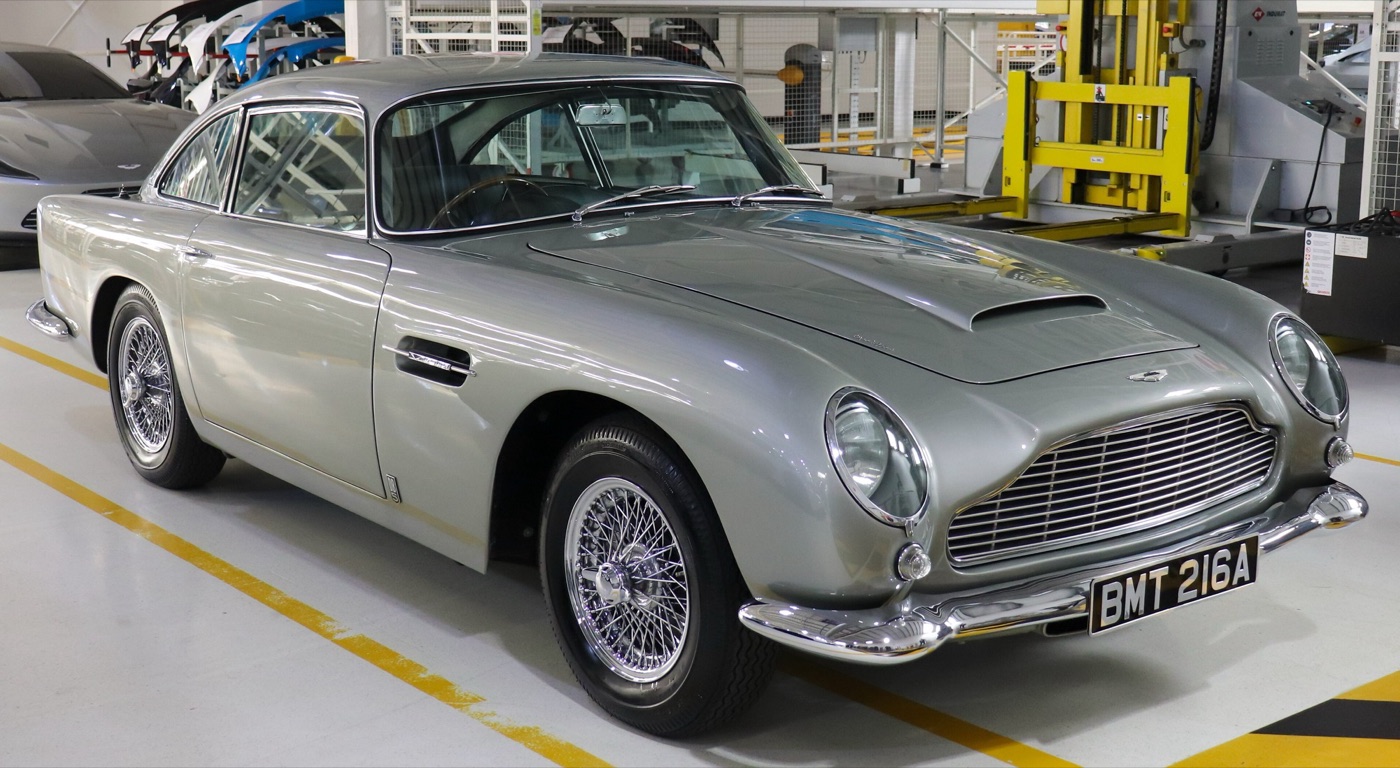
The Aston Martin DB5 is the four-seat grand tourer that Aston Martin built at Newport Pagnell, Buckinghamshire, from September 1963 to the end of 1965: 1,022 cars on the maker's count, with a 282bhp 4-litre straight six under a Touring Superleggera aluminium body. It is the car James Bond first drove in Goldfinger in 1964, which is why most people look it up, and a good saloon now sells for between about £430,000 and £800,000 at auction.
The other questions people ask are how many were made, how fast it was, which Bond films it appeared in, what became of the original film cars, and the 25 new Goldfinger cars Aston Martin built from 2020. In June 2013 SkiddMark reported the sale of a restored 1965 DB5 at the Silverstone Classic, estimated at £275,000 to £325,000; it made £373,750 on 27 July.
History and development of the Aston Martin DB5
The DB5 was the last version of the DB4 with a bigger engine and a list of detail changes, and Aston Martin gave it a new name. Its own heritage page calls it "virtually identical in appearance to the Series 5 DB4". RM Sotheby's 2026 catalogue for a 1965 saloon counts about 170 changes, the most visible being the faired-in headlamps first used on the DB4 GT. The letters DB are the initials of David Brown, the industrialist who bought Aston Martin in 1947.
From the DB4 to the DB5
By 1963 the DB4 had been on sale for five years. In its release for the car's 60th birthday, Aston Martin says the DB4 "had been selling consistently well since it was unveiled as an entirely new car for the marque in 1958", but that "something new was needed" against rivals at home and on the continent. Motor Sport, reviewing the 1963 Earls Court show, put it more briefly: "The DB4 gave way to the DB5 before the Show but only detail changes have been made."
Launch at Frankfurt and Earls Court
The DB5 made its public debut at the Frankfurt Motor Show in September 1963 and its British debut at Earls Court in London the following month. On press day at Earls Court, Honor Blackman, who played Pussy Galore in Goldfinger, posed at the wheel of a pearl-coloured DB5 convertible on the Aston Martin stand, according to Aston Martin's heritage page on the convertible.
Replaced by the DB6
Production ran for a little over two years. The DB6 replaced it in October 1965, built on a longer wheelbase with a higher roof and a cut-off Kamm tail; Aston Martin's DB6 history notes that it also ended the Superleggera construction, apart from a small area around the radiator intake. Motor Sport in November 1965 found its "Mechanical specification is largely the same as that of the DB5", at £4,998 with either the 282bhp engine or the Vantage. The 37 DB5 chassis left unused when DB6 production began became the short-chassis Volante convertibles of 1965 and 1966.
Design and engineering
Under the skin the DB5 is a Harold Beech platform chassis carrying a frame of small steel tubes, with hand-formed aluminium panels over it: the Superleggera ("super light") system of Carrozzeria Touring of Milan, which Aston Martin built under licence at Newport Pagnell. The front suspension is by wishbones and coil springs; at the back is a live axle located by radius arms and a Watt linkage. Girling disc brakes with servo assistance are fitted all round.
Tadek Marek's 4-litre six
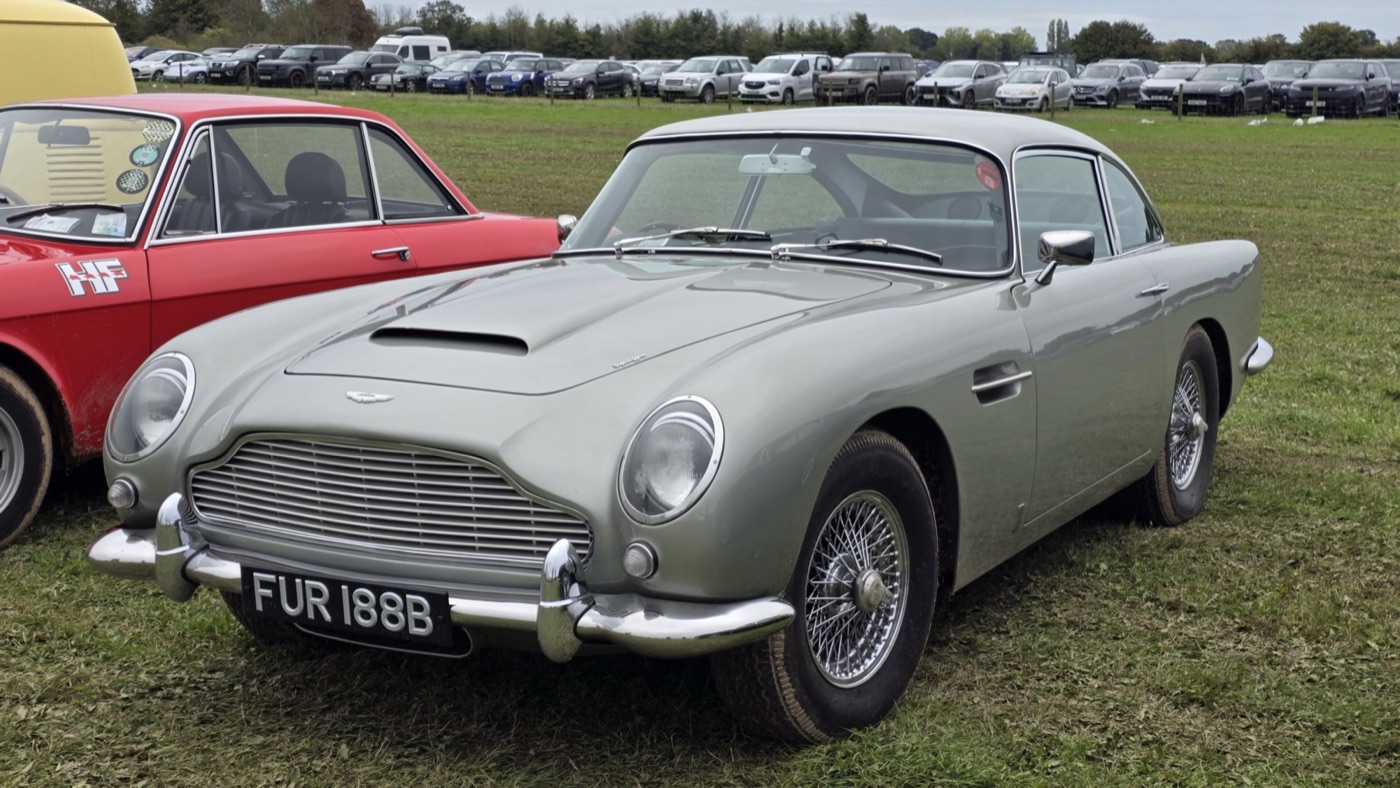
The engine is Tadek Marek's all-aluminium twin-cam straight six, enlarged from the DB4's 3.7 litres to 3,995cc by a wider bore of 96mm. Aston Martin says the 4-litre version was first seen in the Lagonda Rapide and the DP215 racing car, and the DB5 was the first road Aston to use it. With three SU carburettors it gave 282bhp at 5,500rpm, 42bhp more than the DB4. The DB5 was, said Motor Sport at its launch, "one of the first British cars to fit an alternator in place of the dynamo".
Gearboxes: David Brown, ZF and automatic
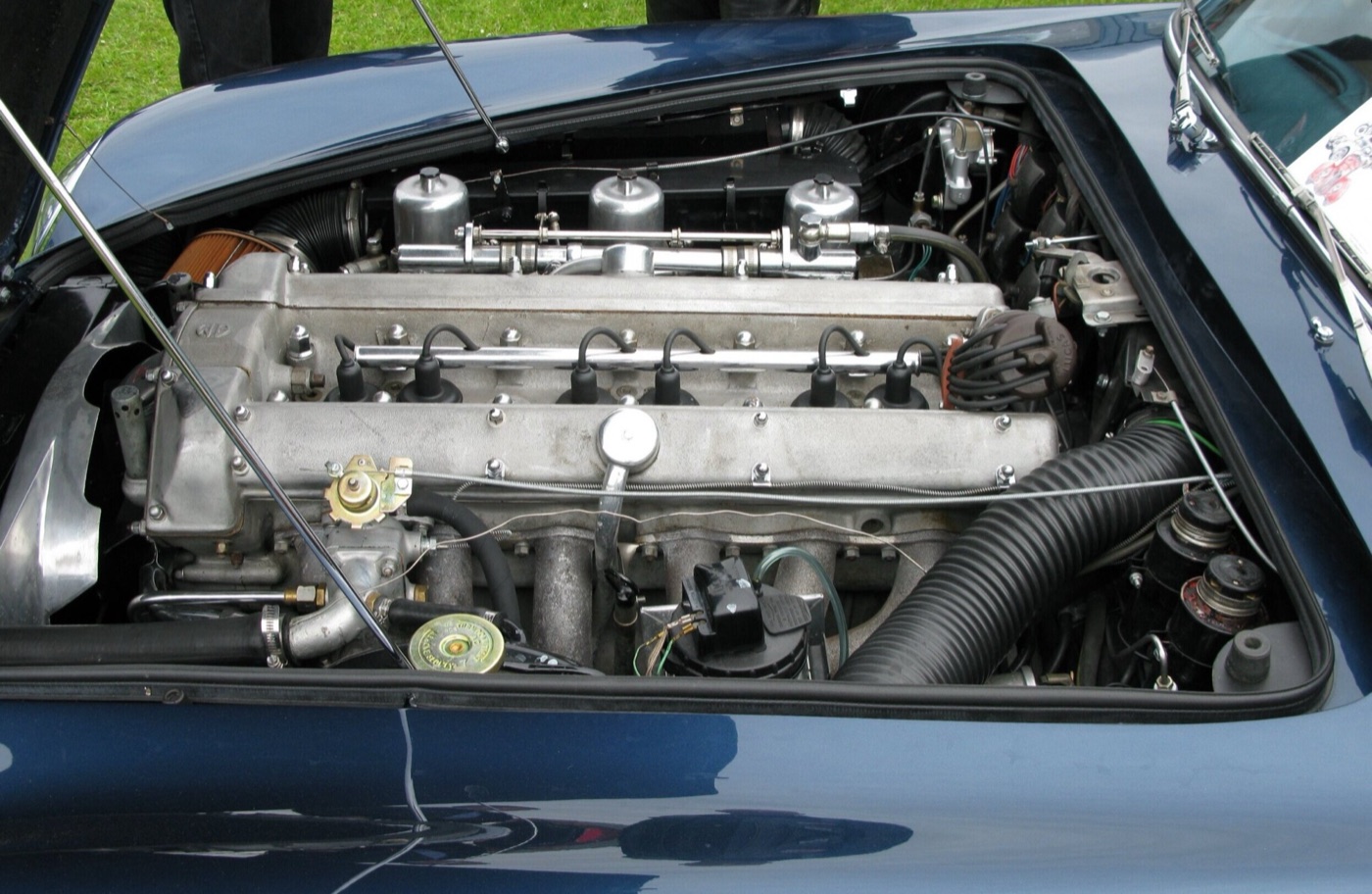
Three gearboxes were offered. At the 1963 show Motor Sport listed the ZF five-speed as an alternative to the David Brown four-speed. RM Sotheby's 2015 catalogue for a DB5 Vantage says the David Brown box or a three-speed automatic came first, and that "in mid-1964, a synchromesh ZF five-speed manual gearbox became standard on all DB5s". The automatic transmission was a Borg-Warner. Most surviving cars have the ZF.
Equipment and interior
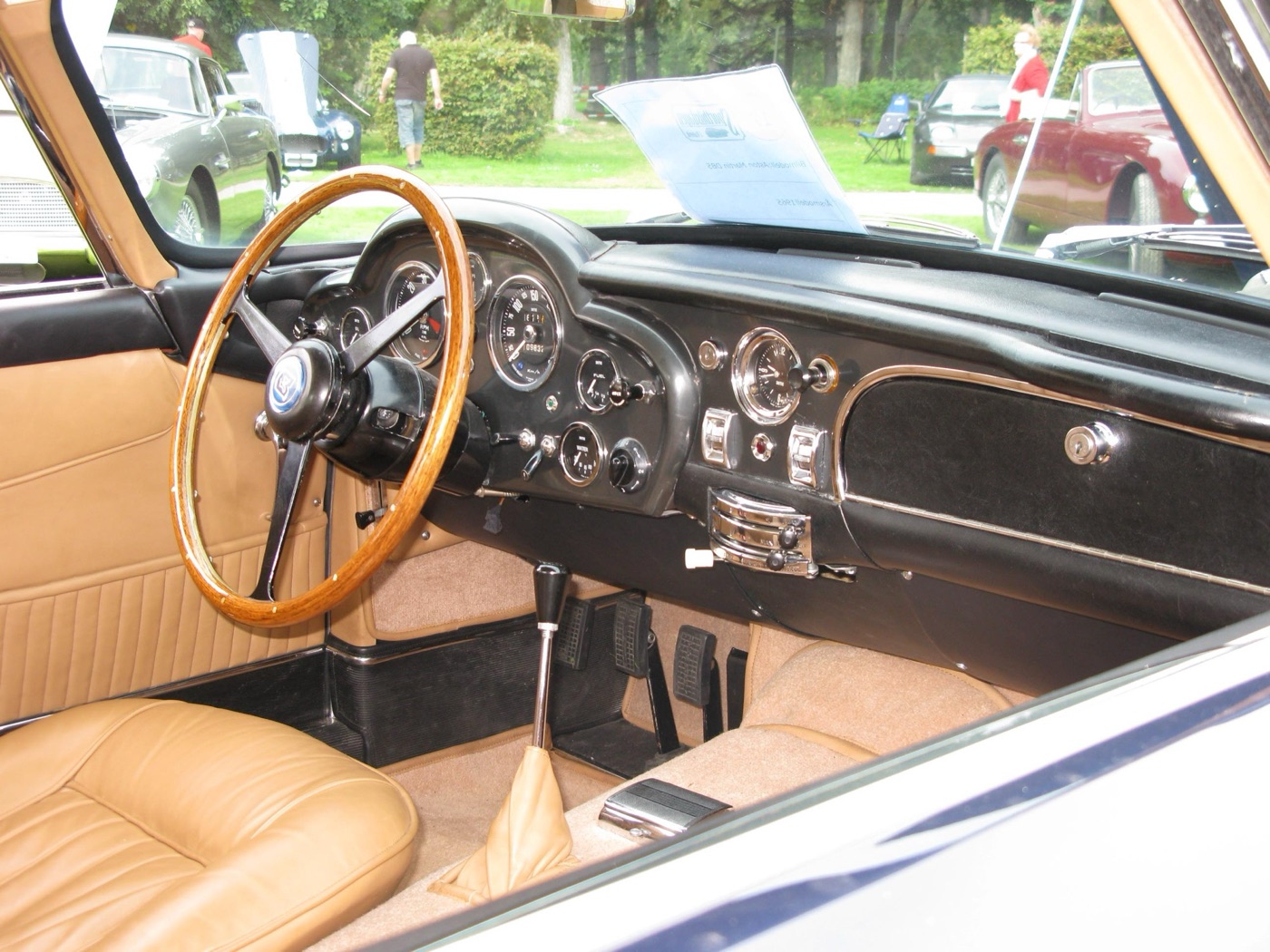
Electric windows made their debut on the DB5 and air conditioning was an option. RM's catalogues add tinted glass, reclining front seats, Connolly leather, wool-pile carpets and four exhaust silencers, and say the extra equipment added 113kg over the DB4. Motor, quoted on Aston Martin's DB5 heritage page, said: "Only an aeroplane could have a facia panel more liberally spattered with switches and instruments."
Aston Martin DB5 specification and performance
A standard DB5 has 282bhp and 280lb ft from 3,995cc, weighs a little over 1.5 tons, and in Autocar's 1964 road test reached 60mph in 8.1 seconds and more than 140mph.
| Item | Standard DB5 | DB5 Vantage |
|---|---|---|
| Engine | Straight six, twin overhead camshafts, aluminium block and head | As standard, with a large-port head and modified valve timing |
| Capacity, bore | 3,995cc, 96mm bore | 3,995cc, 96mm bore |
| Carburettors | Three SU | Three twin-choke Weber 45DCOE |
| Power | 282bhp at 5,500rpm | 325bhp at 5,750rpm (314bhp in some sources) |
| Torque | 280lb ft | Not published in the sources read |
| Gearbox | David Brown four-speed (early cars), ZF five-speed, or Borg-Warner three-speed automatic | ZF five-speed |
| Brakes | Girling discs all round, servo assisted | As standard |
| Wheelbase | 2,490mm | 2,490mm |
| Weight | A little over 1.5 tons (Autocar) | Not published in the sources read |
| 0–60mph | 8.1sec (Autocar, 1964) | 6.5sec (RM Sotheby's) |
| Top speed | More than 140mph (Autocar); 141mph (RM Sotheby's); over 150mph (Aston Martin) | Not published in the sources read |
| Price new (UK, with tax) | £4,248 (Autocar, 1964) | Option |
Sources: Motor Sport, November 1963 and November 1964; Autocar road test, 1964; Aston Martin; RM Sotheby's catalogues, 2015 and 2024.
How fast is an Aston Martin DB5?
The maker and the magazines disagree by about ten miles an hour. Aston Martin's 2023 release says "a top speed exceeding 150 mph prompted the Aston Martin brochure of the day to claim: 'The DB5 is the fastest regular 4-seat GT car in the world.'" Autocar's 1964 road test, as quoted by the magazine in 2016, gives "more than 140mph" and 0–60mph in 8.1 seconds. RM Sotheby's 2015 catalogue gives 141mph.
DB5 variants: saloon, convertible, Vantage and shooting brake
The DB5 came as a saloon, a convertible and, to special order, a shooting brake; the Vantage was an engine option that could be had in either of the first two.
Saloon
The four-seat saloon (Aston Martin's word for the coupé) was the main model: 887 were built. Its owners in the 1960s included Paul McCartney, George Harrison, Mick Jagger and Peter Sellers, according to Aston Martin.
Convertible and the Volante name
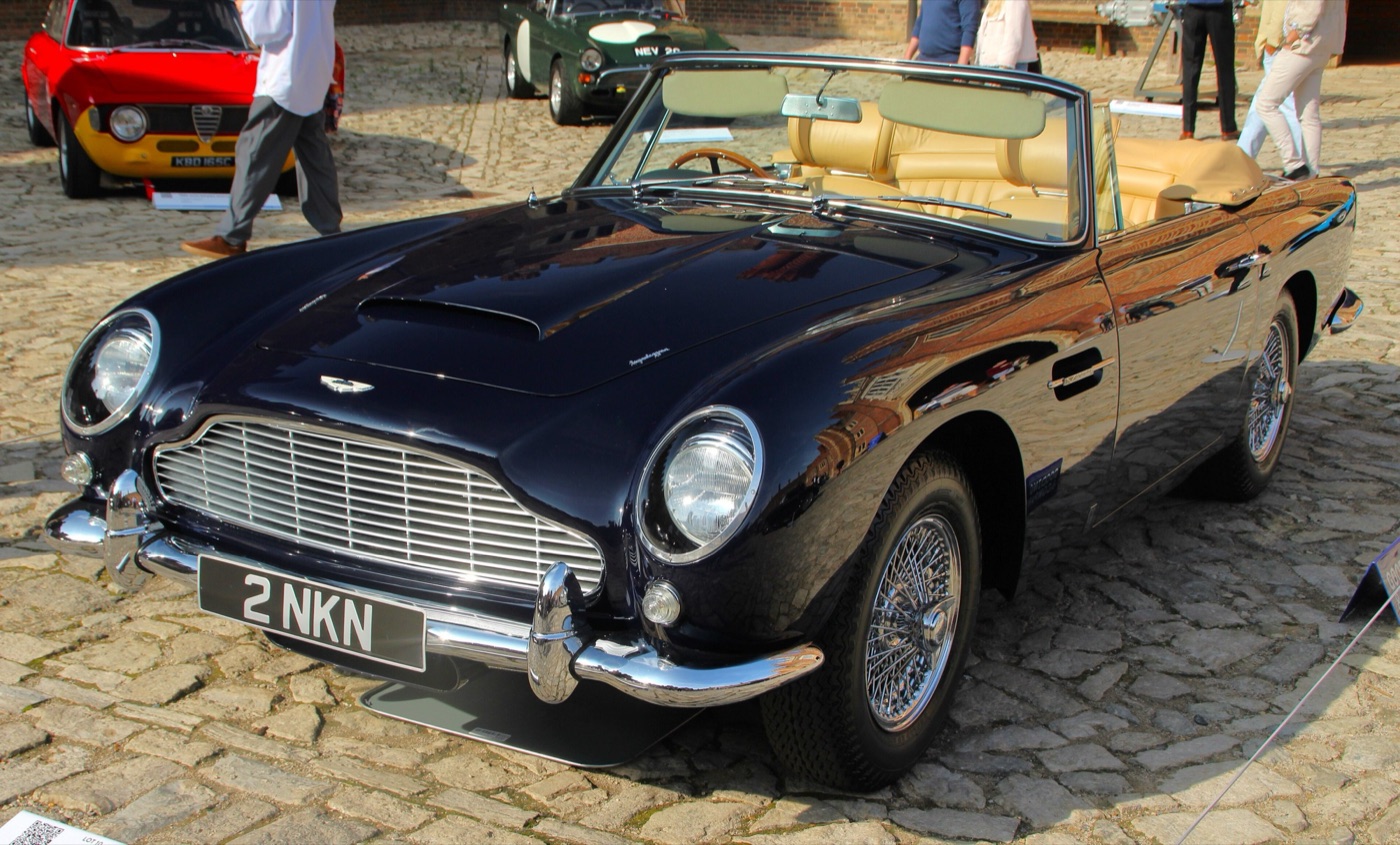
Aston Martin built 123 DB5 convertibles, with bodies by Touring and a steel hardtop available as an extra. They were not called Volantes: Aston Martin says the word "entered the Aston Martin lexicon at the 1965 London Motor Show". It named the short-chassis convertible that followed: RM Sotheby's 2019 catalogue for one says 37 were built on DB5 chassis left over when DB6 production began, and that they can be told from the DB5 convertible by their DB6-style quarter bumpers.
DB5 Vantage
The Vantage engine was announced in the autumn of 1964 as "a new engine option" for 1965. Motor Sport reported that "This 4-litre engine gives 325 b.h.p. at 5,750 r.p.m. and has three Weber carburetters, a large-port alloy head, and modified valve timing." A year earlier, at the launch, the same magazine had quoted 314bhp "in G.T. form", and its 1989 history of the DB4, 5 and 6 also gives 314bhp. RM Sotheby's, citing Aston Martin's Roger Stowers, says 65 DB5 Vantages were made, about 40 of them with right-hand drive. Aston Martin Works says only 39 of the 887 saloons were right-hand-drive Vantages in Silver Birch paint.
Shooting brake by Radford
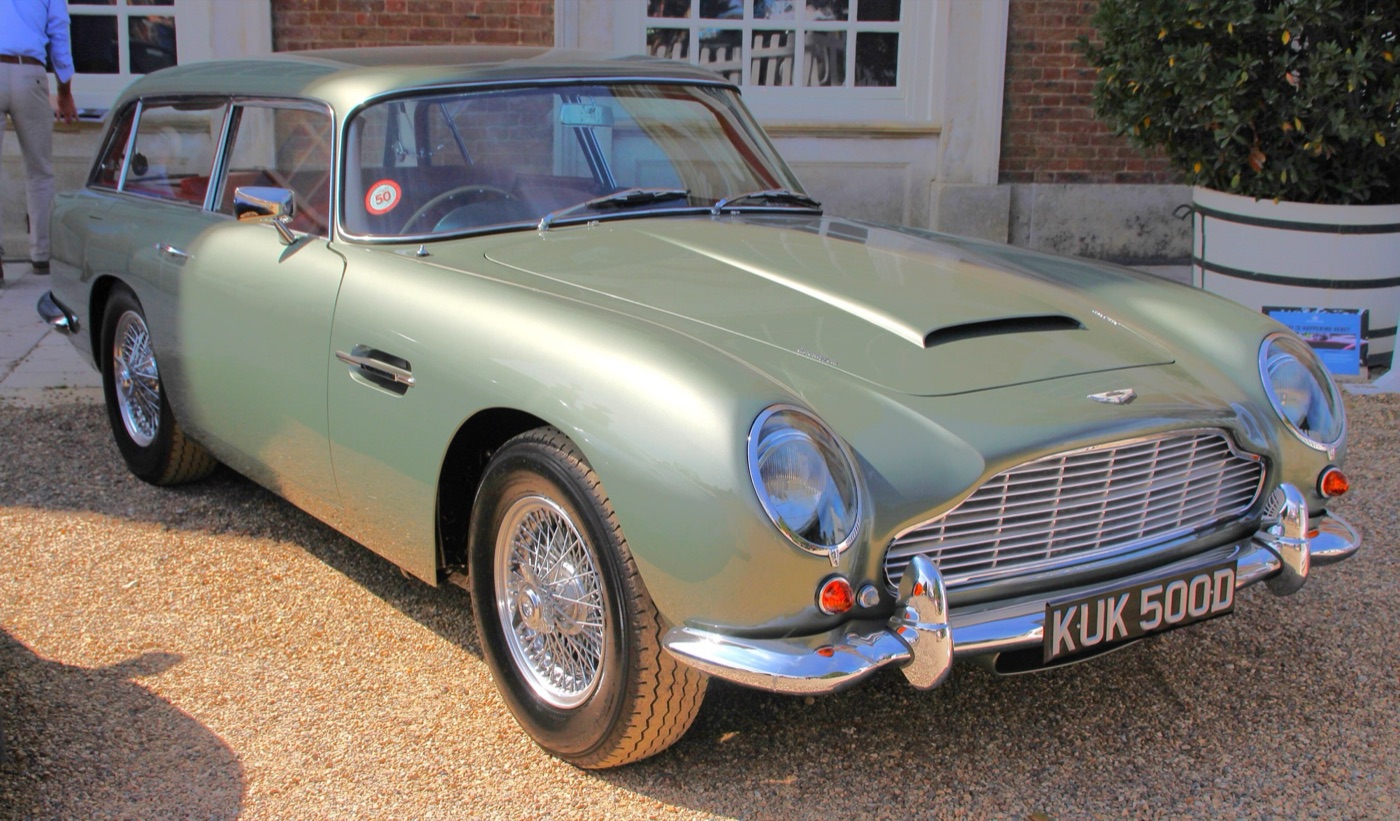
David Brown had a shooting brake built for himself, and when customers asked for copies, the factory sent the work to the coachbuilder Harold Radford. RM Sotheby's 2019 catalogue for one of them says twelve DB5 shooting brakes were built, four with left-hand drive. Radford rebuilt the car from the windscreen back, extending the roof frame in steel and fitting a one-piece tailgate; with the rear seats folded there was more than 40 cubic feet of space, and Radford still claimed 150mph. RM says the conversion cost "about twice the average price of an English house". The catalogue also tells the story that Brown put his hunting dog on the boardroom table and said: "Build me something for him to sit in."
How many Aston Martin DB5s were made?
Aston Martin built 1,022 DB5s from September 1963 to the end of 1965: 887 saloons, 123 convertibles and 12 shooting brakes. That is the maker's count in its 2023 and 2025 releases, and RM Sotheby's uses it too.
| Body style | Built | Notes |
|---|---|---|
| Saloon | 887 | 39 right-hand-drive Silver Birch Vantage saloons |
| Convertible | 123 | Steel hardtop an extra |
| Shooting brake (Radford) | 12 | Four with left-hand drive |
| Total | 1,022 | September 1963 to the end of 1965 |
| Vantage engine (any body) | 65 | RM Sotheby's, 2015; Goodwood says "60-odd" |
| Short-chassis Volante | 37 | Built 1965–66 on the last DB5 chassis; sold as a separate model |
| Goldfinger Continuation | 25 + 3 | Built from 2020; not road legal |
Sources: Aston Martin releases of 13 September 2023, 20 August 2018 and 2 December 2025; RM Sotheby's catalogues, 2015, 2019 and 2024.
Other totals circulate. Aston Martin's own heritage page and Motor Sport's 1989 history say 1,021. The 1,059 often quoted equals the 1,022 plus the 37 short-chassis Volantes. For scale, Aston Martin points out that more than 1.8 million cars were built in Britain in 1963.
The DB5 in the James Bond films
The DB5 has appeared in eight Bond films, starting with Goldfinger in 1964, and it is the car most people mean by "the Bond car". Aston Martin's Marco Mattiacci called the Aston Martin and Bond partnership, in a 2024 release for the film's 60th anniversary, "cinema's longest running and most successful product placement".
Goldfinger and the four 1964 cars
For the film, production designer Ken Adam and special-effects man John Stears visited Newport Pagnell in late 1963 to find two of the latest cars. RM Sotheby's history of the Bond cars says David Brown insisted the producers buy them, and the compromise was a loan of two cars for the length of filming. Shooting began at Pinewood on 16 March 1964 and the film had its London premiere at the Odeon, Leicester Square, on 17 September 1964, according to the American Film Institute catalogue.
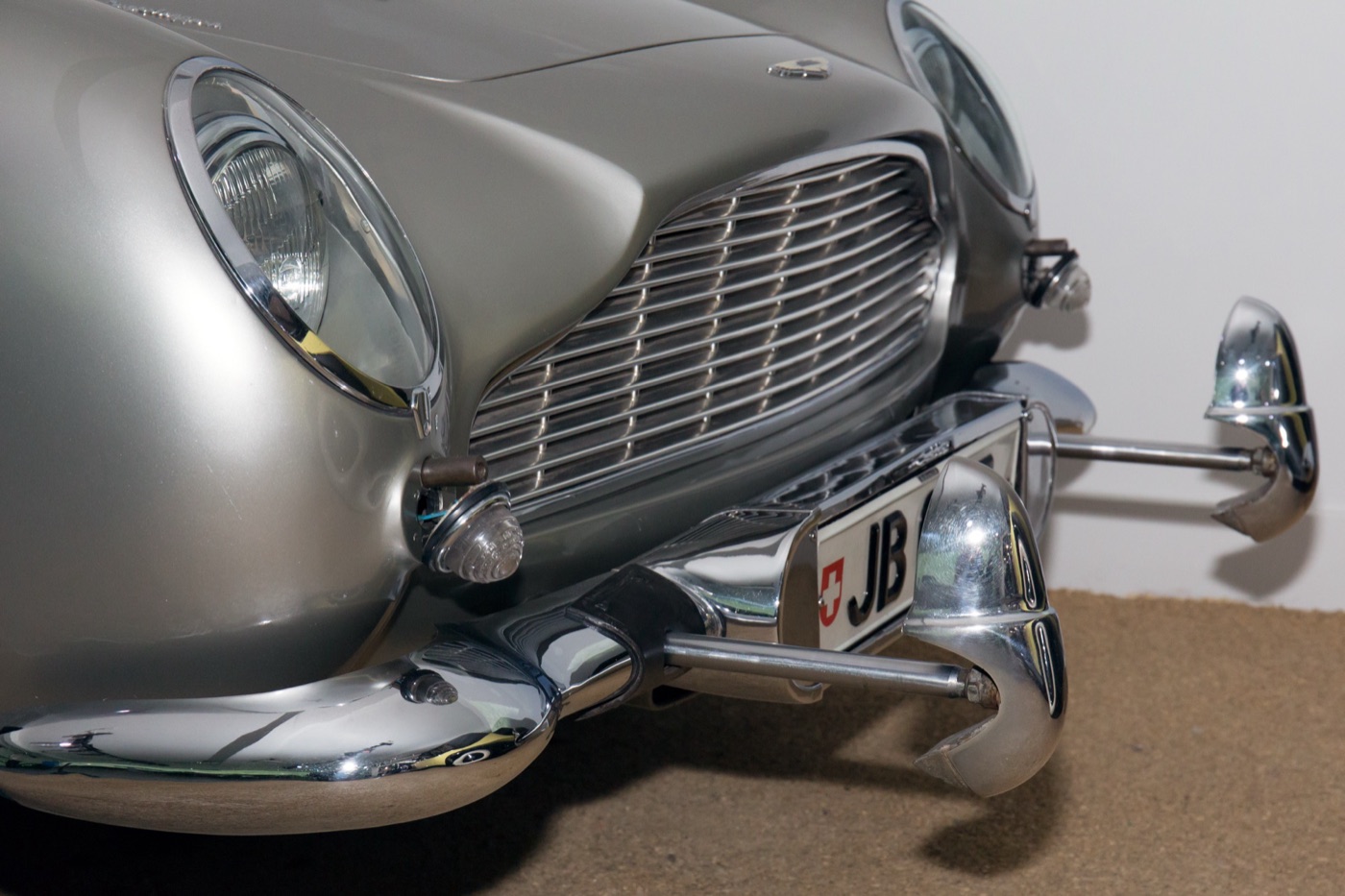
The gadget car was the DB5 prototype, chassis DP/216/1. In the film Q, played by Desmond Llewelyn, explains its equipment to Bond. Stears gave it hydraulic rams in the over-riders, a Browning .30-calibre machine gun in each front wing, tyre slashers in the wheel hubs, a bulletproof screen that rose behind the rear window, a radar tracking screen, oil-slick, caltrop and smoke dispensers, revolving number plates and the passenger ejector seat. The second car, DB5/1486/R, did the driving and was fitted with gadgets only later. Hagerty UK's 2021 guide gives the roles the other way round, with DP/216/1 as the driving car and DB5/1486/R as the effects car. After the film's success, Eon Productions ordered two more, DB5/2008/R and DB5/2017/R, with the gadgets fitted by Aston Martin, and shipped them to the United States to publicise Thunderball; the one sent to the West Coast appeared at Laguna Seca as a pace car, driven by Jackie Stewart. In 1969 Eon's Swiss-based parent sold both to Anthony Bamford, now Lord Bamford.
What happened to the original Goldfinger DB5?
DP/216/1, the car with Stears's gadgets, was stolen from a hangar at Boca Raton airport in Florida in 1997 and has not been seen since. Andrew Frankel of Motor Sport wrote in 2018 that it "has not been seen since"; Hagerty UK reported in 2021 that an art-recovery investigator was following sightings in the Middle East, with a $100,000 reward offered and the car estimated at $25m. The other three survive. DB5/1486/R sold at RM's London auction on 27 October 2010 for £2,912,000; DB5/2008/R sold in Monterey in August 2019 for $6,385,000; and DB5/2017/R is in the Louwman Museum in the Netherlands, according to Hagerty.
Thunderball and the later films
Connery drove the DB5 again in Thunderball (1965). Aston Martin lists its later films as GoldenEye (1995) and Tomorrow Never Dies (1997) with Pierce Brosnan, then Casino Royale (2006), Skyfall (2012) and Spectre (2015) with Daniel Craig. For No Time To Die (2021) Aston Martin built eight DB5 replica stunt cars; one, with working machine guns and a rotating number plate, raised £2,922,000 for charity at Christie's in London on 29 September 2022, Aston Martin reported.
The Corgi model
Aston Martin says 2.5 million of Corgi's die-cast DB5 were sold in its first year of production, 1965. Silverstone Auctions' 2013 catalogue calls it the best-selling toy of 1964.
The DB5 Goldfinger Continuation
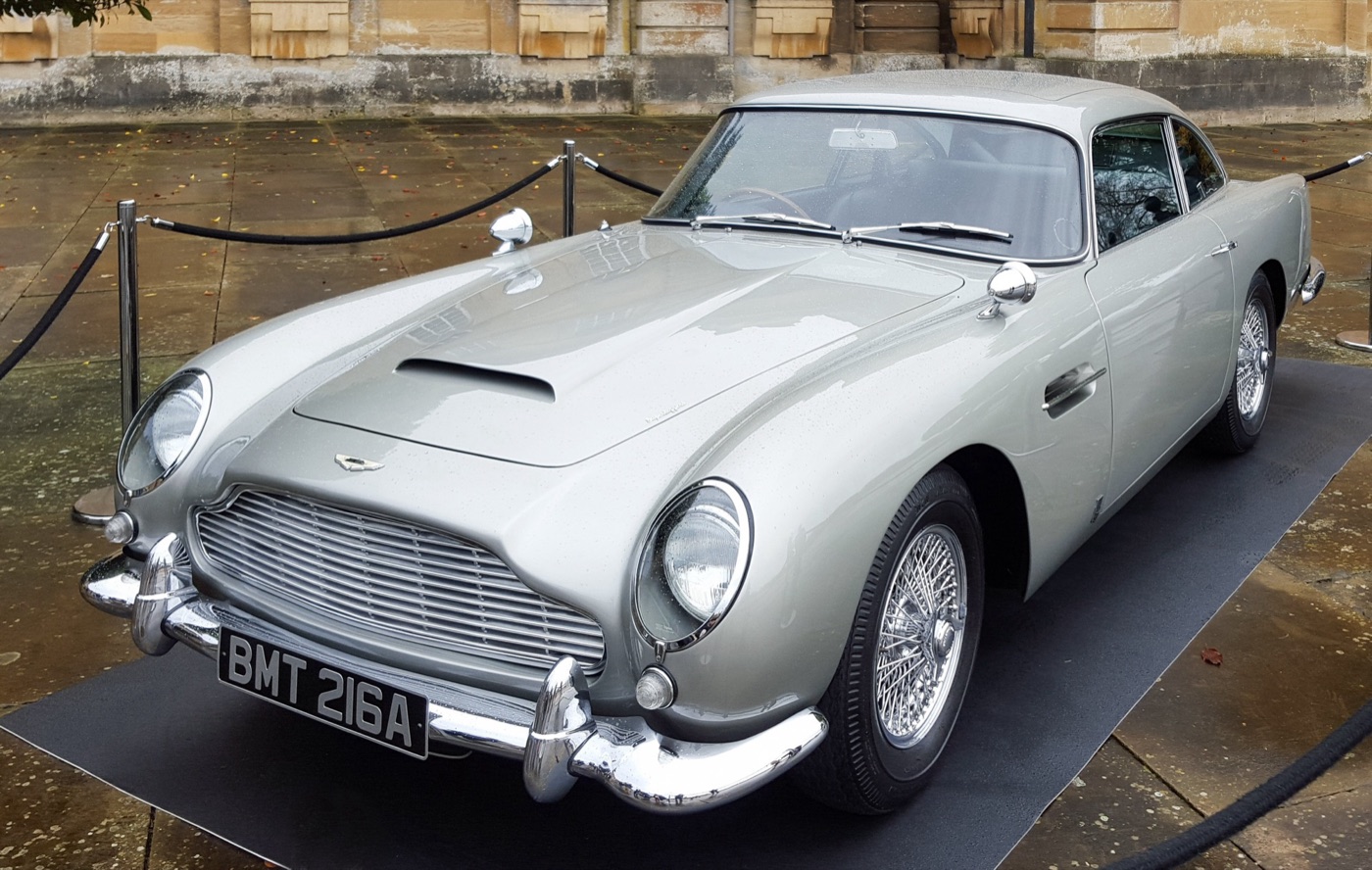
The Goldfinger Continuation is a run of 25 new DB5s that Aston Martin and Eon Productions announced on 20 August 2018, built at Aston Martin Works in Newport Pagnell at £2.75m each plus taxes. The announcement said three more would be built, one each for Eon and Aston Martin and one to be auctioned for charity, all in Silver Birch, with gadgets developed by Chris Corbould, the special-effects supervisor on later Bond films.
Work on the first car began in 2020, 55 years after the last original DB5 was built. Aston Martin's release of 28 May 2020 says each takes about 4,500 hours, with aluminium panels on a mild steel chassis and a 4-litre six with three SU carburettors making "in the order of 290 bhp", a ZF five-speed gearbox and a limited-slip differential. The gadgets include revolving number plates, simulated machine guns, a smoke screen, a simulated oil slick, a bulletproof rear shield, battering rams, a radar screen and a telephone in the driver's door. The release adds: "this car is not road legal". Deliveries were due to begin in the second half of 2020.
How much is an Aston Martin DB5 worth?
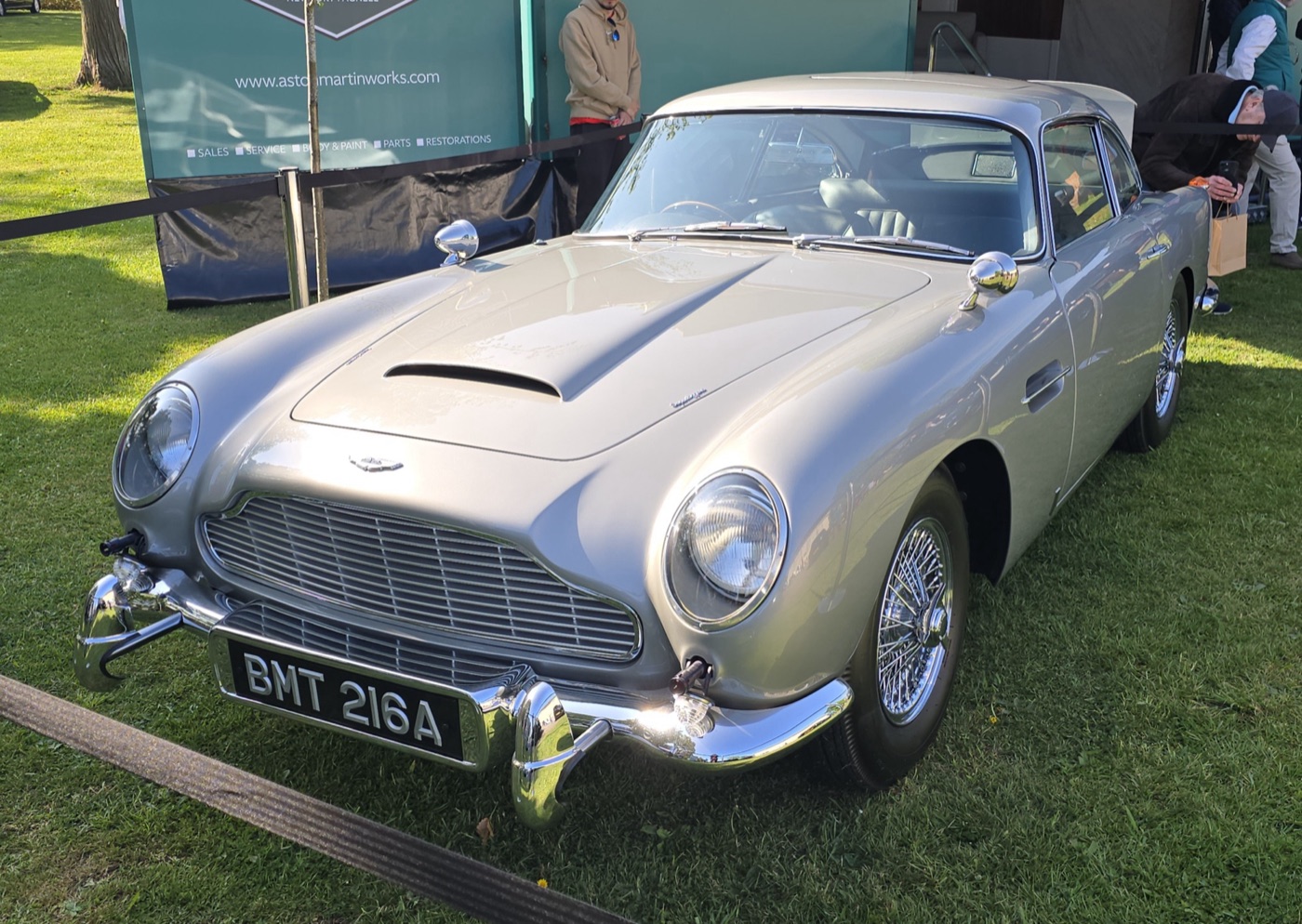
Standard DB5 saloons sold at auction for between £432,500 and £792,500 in 2024–26; convertibles, Vantages, shooting brakes and cars with film or celebrity history sell for more.
| Date | Car | Sale | Price with premium |
|---|---|---|---|
| 27 October 2010 | 1964 saloon DB5/1486/R, one of the two Goldfinger film cars | RM, London | £2,912,000 |
| 31 October 2012 | 1964 convertible | RM, London | £632,800 |
| 27 July 2013 | 1965 saloon DB5/2090/R | Silverstone Auctions, Silverstone Classic | £373,750 |
| 7 September 2015 | 1965 Vantage saloon DB5/2016/R | RM Sotheby's, London | £784,000 |
| 15 August 2019 | 1965 saloon DB5/2008/R, Thunderball publicity car | RM Sotheby's, Monterey | $6,385,000 |
| 15 August 2019 | 1965 shooting brake DB5/2273/L | RM Sotheby's, Monterey | $1,765,000 |
| August 2022 | 1964 saloon owned by Sean Connery | Broad Arrow, Monterey | $2,425,000 |
| 12 June 2024 | 1964 saloon DB5/1756/R | RM Sotheby's, Cliveden House | £432,500 |
| 2 November 2024 | 1964 saloon DB5/1787/R | RM Sotheby's, London | £567,500 |
| 23 November 2024 | 1965 saloon DB5/2072/L | RM Sotheby's, Munich | €702,500 |
| 8 July 2026 | 1965 saloon, sold with the registration DB 5 | RM Sotheby's, Woodcote Park | £792,500 |
Sources: the auction houses' lot pages and results; Classic & Sports Car, July 2013; Aston Martin, 15 August 2019; Motor1, August 2022. Prices checked 27 October 2026.
The 2013 Silverstone Classic sale
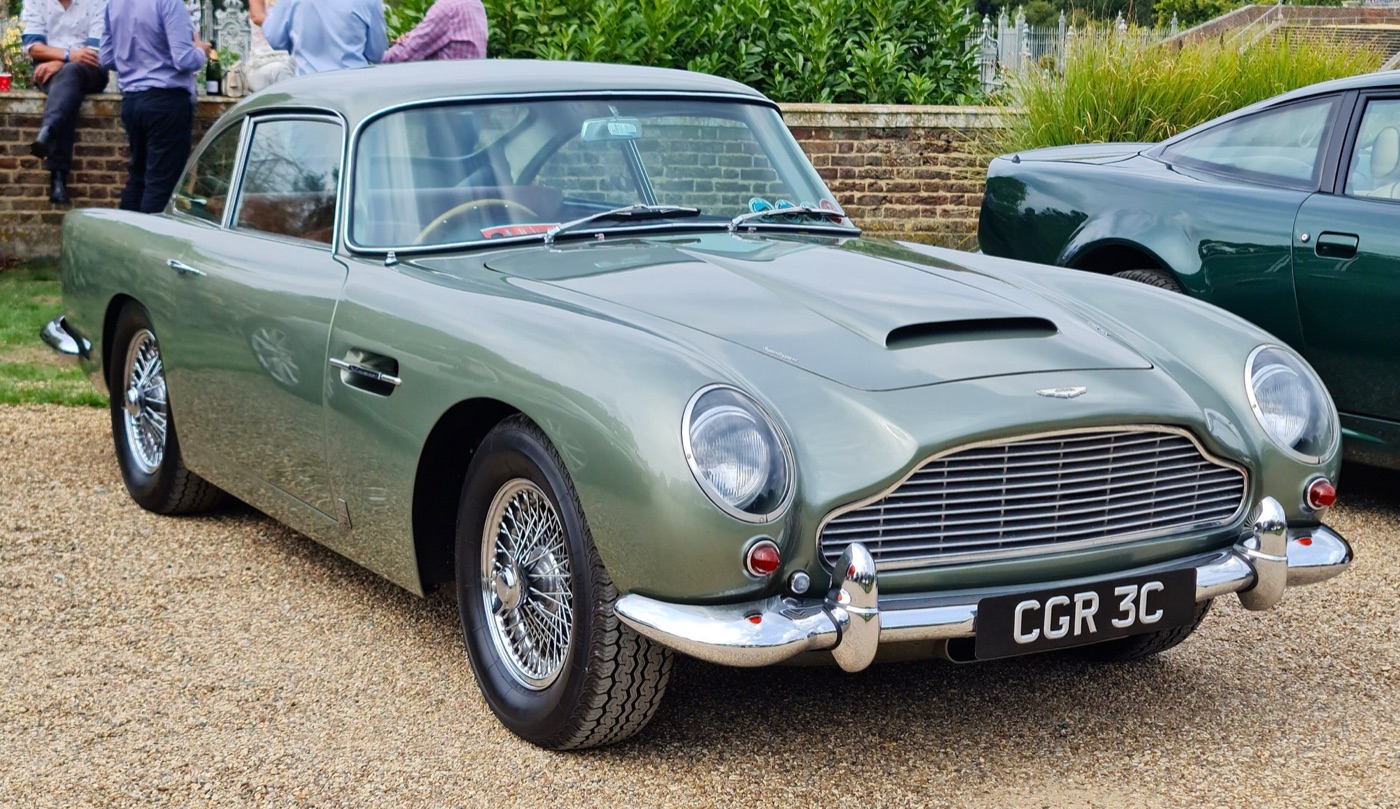
SkiddMark's report of 7 June 2013 covered a 1965 DB5 entered in Silverstone Auctions' sale at the Silverstone Classic, held on the weekend of 27 July, with an estimate of £275,000 to £325,000. The catalogue identifies it as DB5/2090/R, ordered new by A&B Motors of Newton-le-Willows, Lancashire, in Platinum with black leather, delivered in April 1965 with its engine, 400/2092, which it kept. It had covered 46,000 miles by 1968 and later spent years in a collection in Dublin.
Before the sale it had an 18-month restoration with parts from Aston Service Dorset, Aston Workshop and HWM. Specialised Paintwork of Reading stripped and repainted it in Royal Blue metallic in March 2013, the interior was retrimmed in Mink Bridge of Weir leather with a new headlining, and Britwell Autos converted the cylinder head to run on unleaded fuel and overhauled the water pump. SkiddMark noted that it was one year younger than the Goldfinger car. On the day it beat its estimate and made £373,750, the top price of a sale that took more than £2 million, Classic & Sports Car reported.
What a DB5 cost new, and since
The price in Autocar's 1964 test was £4,248 including tax, which the magazine's 2016 article called "not far off the value of a semi-detached house". In 1973 a Welsh welder, John Williams, bought a run-down 1965 Vantage for £900 from an advert in Motor Sport; after a restoration of more than 2,500 hours at Aston Martin Works, finished in 2025, the head of the Works, Paul Spires, put its value at "up to £1m" in Aston Martin's release of 2 December 2025. In January 2018 Motor Sport priced the DB5 at £700,000 to £900,000, and JD Classics' Aston specialist Stuart Batchelor told the magazine that "everyone wants the Vantages".
Owning a DB5: known faults and what to check
Corrosion of the steel structure under the aluminium skin is the main fault, and most cars have been restored at least once. Goodwood's buyer's guide warns that rust starts on the inside and works out, that bubbling paint can mean electrolytic corrosion where aluminium meets steel, and lists the footwells where the bulkhead meets the floor, the sills, the jacking points, the suspension mounts and the spare-wheel well. Corroded mounts can, in extreme cases, let a suspension arm come adrift.
Motor Sport's 1989 account of a DB5 restoration at Middlebridge Racing adds the rear valance, which corrodes against the body once its protective cloth tape has rotted ("Almost all Aston Martins of this age suffer from corrosion in this area"), and cracked cylinder blocks, "a common enough problem with this model". Goodwood's guide also says coolant channels at the back of the block can clog and cause overheating, that the engine needs frequent oil changes and a new timing chain every 60,000 miles, and that a car sold as a Vantage should have the history to prove it, since some standard cars have been upgraded.
The factory's heritage division, Aston Martin Works, still restores DB5s at Newport Pagnell, and RM Sotheby's said in 2019 that Aston Martin had appointed 13 official Heritage Specialists. Build records survive: RM's catalogues quote factory build sheets, and the 2013 Silverstone car came with a British Motor Industry Heritage Trust certificate.
Rivals of the Aston Martin DB5
In period the DB5's rivals were the Jaguar E-Type, the Maserati 3500 GT and the Ferrari 250 GT. Autocar, looking back at its 1964 road test in 2016, put the DB5's "more than 140mph" above the Maserati 3500 GTI's and nearly 10mph below the E-Type's. Motor Sport, testing a Corvette Sting Ray in April 1964, set the DB5 apart from both: "One could cite the Aston Martin DB5 or the Ferrari 250GT but these sell in such minute quantities and cost so much that they are not really comparable."
Within Aston Martin, the DB4 before it has the 3.7-litre engine and the same Superleggera body; the DB6 has the DB5's mechanical parts on a longer wheelbase with more room in the back. Motor Sport counted 1,185 DB4s in 2018 against "just over a thousand" DB5s.
Reception
The magazines of the day liked it, with reservations about its gearbox. Autocar's 1964 test ended: "this is a car which cries out to be driven, to be driven well, and to be driven far." It praised the ZF gearbox's "powerful synchromesh cones" but said the box "felt stiff in the left hand", and wrote of the car on a closed circuit: "Initially, the car under-steered, but as we got faster and put the power on earlier there was a progressive change to oversteer."
Motor wrote: "We can confirm the makers' implication that the DB5 is an acquired taste, perhaps even disappointing at first to some people, but once savoured to the full, never forgotten and almost impossible to replace." The owner's handbook asked that the car "be driven with extra care until the owner has become thoroughly attuned to its high level of performance". In January 1965 Motor Sport's editorial put it among the best: "So far as GT cars are concerned, a Ferrari may be the ultimate but other discerning people besides James Bond are buying Aston Martin DB5s."
Goodwood's guide, written for today's buyers, finds the steering heavy, the ride firm and the body roll considerable, and says the DB5 is "a more physical car to drive than the later DB6 with its option of power steering".
Questions
What engine does the Aston Martin DB5 have?
A 3,995cc all-aluminium twin-cam straight six designed by Tadek Marek, with three SU carburettors and 282bhp at 5,500rpm. The Vantage version had three Weber carburettors and 325bhp.
What is the difference between the Aston Martin DB4 and DB5?
The DB5 has a 4-litre engine in place of the DB4's 3.7 litres, covered headlamps as standard, electric windows, an alternator and, from 1964, a ZF five-speed gearbox. Aston Martin calls it "virtually identical in appearance to the Series 5 DB4".
What colour is James Bond's Aston Martin DB5?
Silver Birch, according to Aston Martin, which painted all 25 Goldfinger Continuation cars in that colour "just like the original". RM Sotheby's catalogue describes the original gadget car as Snow Shadow Gray.
Where was the Aston Martin DB5 built?
At Aston Martin's factory in Newport Pagnell, Buckinghamshire, which is now Aston Martin Works, the heritage division where the Goldfinger Continuation cars were built from 2020.
How many original Goldfinger DB5s survive?
Three of the four. The gadget car, DP/216/1, was stolen in Florida in 1997; the driving car, DB5/1486/R, and the two Thunderball publicity cars, DB5/2008/R and DB5/2017/R, survive.
Is the Goldfinger Continuation DB5 road legal?
No. Aston Martin sold the 25 cars, at £2.75m plus taxes each, with the note "this car is not road legal".
Which famous people owned an Aston Martin DB5?
Aston Martin names Paul McCartney, George Harrison, Mick Jagger and Peter Sellers among its 1960s owners. Sean Connery owned one when he died in 2020; it sold for $2,425,000 in 2022.
Sources
- Aston Martin, "The Aston Martin DB5 at 60", 13 September 2023: Frankfurt debut, production by body style, engine, equipment, brochure and Autocar quotes, celebrity owners.
- Aston Martin heritage pages: "DB5" (engine origin, Motor and handbook quotes), "DB5 Volante" (1,021, convertibles, the Volante name, Honor Blackman) and "DB6" (DB6 launch, end of Superleggera).
- Aston Martin, "Aston Martin and EON Productions to create 25 Goldfinger DB5 continuation cars", 20 August 2018: Continuation, list of films, Corgi, Earls Court, 42bhp.
- Aston Martin, "Aston Martin DB5 production resumes after 55 years", 28 May 2020: Continuation build, specification, gadgets, deliveries.
- Aston Martin, "Records shattered as classic Aston Martin sports cars change hands for millions at RM Sotheby's sale", 15 August 2019: DB5/2008/R and shooting brake prices.
- Aston Martin, "Aston Martin celebrates 60th anniversary of Goldfinger", 18 July 2024: Mattiacci quote.
- Aston Martin, "Aston Martin DB5 stunt car raises £2.9 million", 29 September 2022: No Time To Die stunt cars.
- Aston Martin, "Aston Martin Works completes restoration of one family's dream DB5", 2 December 2025: 1,022 and 887, 39 Silver Birch right-hand-drive Vantage saloons, the Williams car and its value.
- Motor Sport archive: "Earls Court 1963", November 1963, p15 (launch, 282 and 314bhp, gearboxes, alternator); "New cars", November 1964, p13 (325bhp Vantage); "Road Test", April 1964, p37 (Ferrari 250GT quote); "Matters of moment", January 1965, p9; "New for 1966", November 1965, p62 (DB6); "The Aston Martin DB 4, 5 & 6", April 1989, p71 (1,021, corrosion, cracked blocks); "Now, pay attention James", January 2018, p147 (prices, DB4 total, Stuart Batchelor).
- Andrew Frankel, Motor Sport, "What you should know about the Goldfinger Aston Martins", 20 August 2018: the four cars, the theft.
- Autocar, "Aston Martin DB5: the original road test", a 2016 article quoting its 1964 road test: price, weight, torque, 0–60mph, top speed, handling and gearbox quotes.
- RM Sotheby's lot pages: DB5/2008/R "Bond Car", Monterey 2019 (the film cars, gadgets, Heritage Specialists); shooting brake DB5/2273/L, Monterey 2019; Vantage DB5/2016/R, London 2015; DB5/1486/R, London 2010; convertible, London 2012; DB5/1756/R, Cliveden House 2024 (1,022, bore, automatic); DB5/1787/R, London 2024; DB5/2072/L, Munich 2024; 1965 saloon, Woodcote Park 2026 (170 changes, wheels and brakes). All read 27 October 2026.
- Silverstone Auctions (now Iconic Auctioneers), lot page for DB5/2090/R, July 2013: the car's history, restoration and price; and Classic & Sports Car, "Celebrity Aston surpasses estimate at Silverstone Classic sale", July 2013: the result.
- Hagerty UK, "Now pay attention, 007", 18 August 2021: the missing car, the reward, DB5/2017/R in the Louwman Museum.
- Motor1, "Sean Connery's 1964 Aston Martin DB5 sells for $2.4M at auction", August 2022.
- American Film Institute, AFI Catalog, "Goldfinger (1964)": production dates and premiere.
- Goodwood Classic Solutions, "Aston Martin DB5 buyer's guide": faults, checks and driving.
This article was written in October 2026 to replace SkiddMark's original report of 7 June 2013, "Stunning Aston Martin DB5 goes on sale", with every figure checked against Aston Martin's releases, the period magazines and the auction houses' own records. Values checked 27 October 2026.