Aston Martin Virage: history, specs, production numbers and values
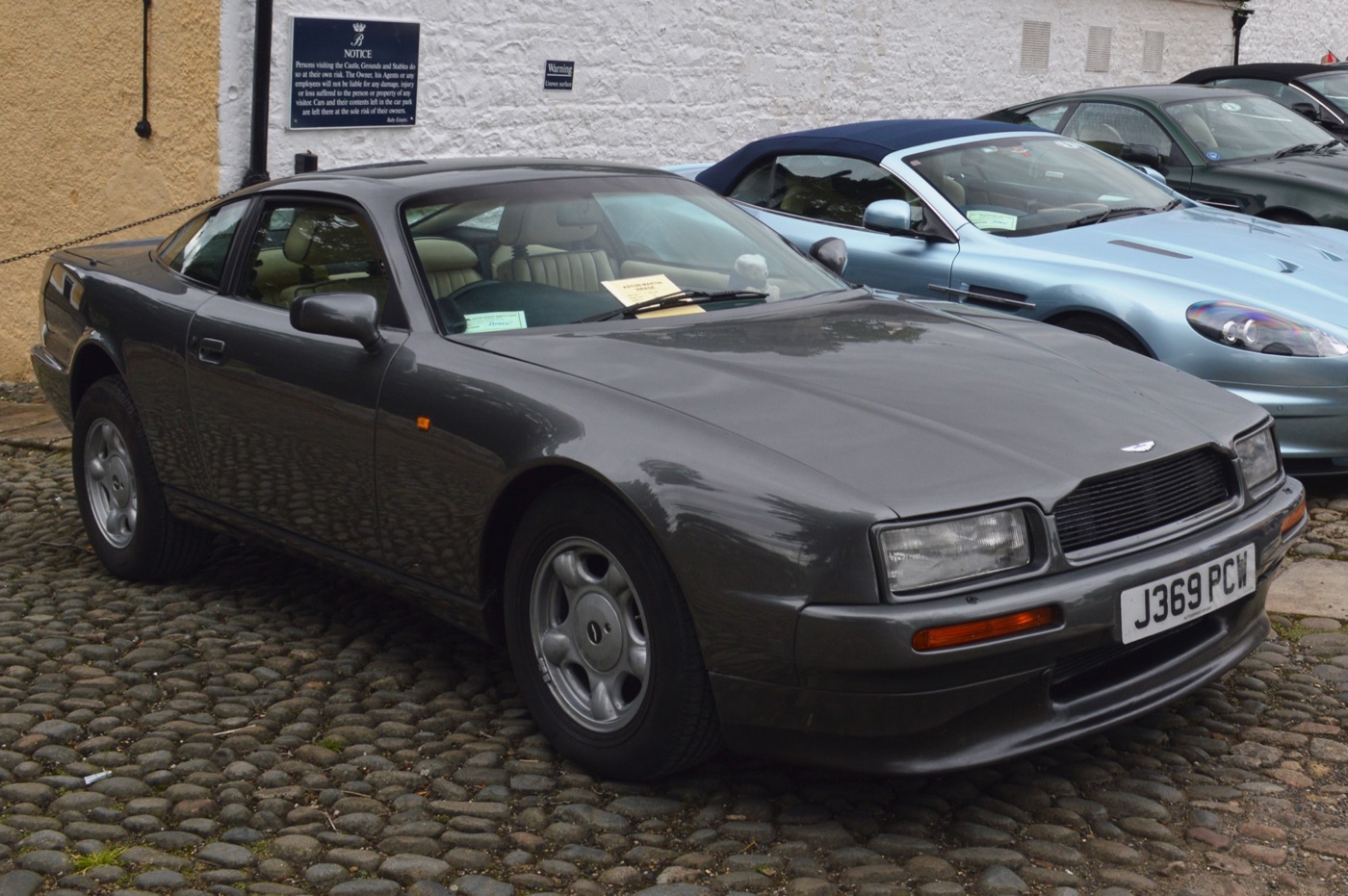
The Aston Martin Virage is the name of two different cars. The first is the hand-built V8 grand tourer that Aston Martin showed at the Birmingham Motor Show in October 1988 and built at Newport Pagnell from 1989 as the replacement for its old V8. That Aston Martin Virage is a 330bhp, 32-valve 5.3-litre coupe that grew into the Volante, the supercharged Vantage, the V8 Coupe and the V8 Volante, about 1,050 cars in all by 2000. The second is the 490bhp V12 coupe and Volante that Aston Martin built at Gaydon from March 2011 until 2012, between the DB9 and the DBS.
The 1989 car has a 32-valve V8 engine with cylinder heads by Callaway and a de Dion rear axle, and tops out at 155mph; the 2011 car shares its V12 engine and bonded aluminium platform with the DB9 and reaches 186mph. About 1,044 of the V12 cars were built.
History and development of the Aston Martin Virage
The Aston Martin Virage was the company's first all-new car in about two decades, ordered by its chairman Victor Gauntlett in 1985 and unveiled on 18 October 1988. Motor Sport's January 1991 test dates Gauntlett's green light to 1985; the car it replaced, the V8 saloon, had been on sale in one form or another since the DBS V8 of 1968.
Replacing the old V8
By the late 1980s the V8 was selling slowly and the company was building about five cars a week. Ford agreed to buy 75% of Aston Martin in 1987, with Gauntlett staying on as chairman and chief executive, Motor Sport reported in October 1987; the range then ran from £65,000 to £87,500. The Virage, in development since 1985, was the first new Aston launched after the deal. The full story of who held the company, and when, is on our page on who owns Aston Martin.
The styling was settled by a competition. In Aston Martin's own history of the Virage, entrants had three months to produce a design and a quarter-scale model The winners were two young British designers, John Heffernan and Ken Greenley, with a notchback that had pop-up headlamps. The production car lost the pop-ups. PistonHeads' 2020 history says five design teams were invited and that the pop-up lamps proved too costly to engineer.
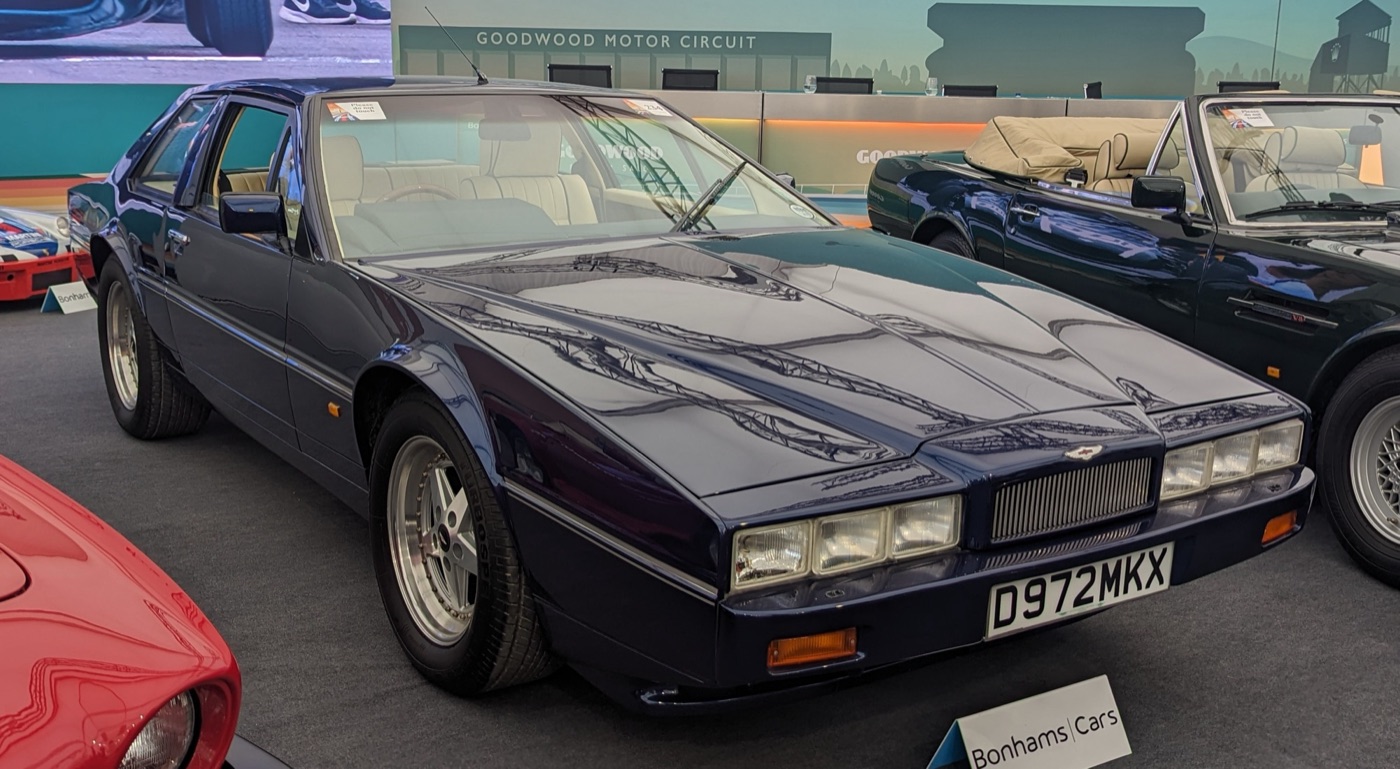
The project was known as Design Project 2034 (DP2034) and ran for three years in secret. Aston Martin says the first DP2034 mule was so well disguised that it was taken for a two-door Lagonda. A DP2034 mule in Lagonda-style bodywork sold at Bonhams in 2023 (see values below).
The launch at the Birmingham Motor Show
The Virage was unveiled at the British International Motor Show at the NEC, Birmingham, on 18 October 1988, the same show at which Jaguar surprised everyone with the XJ220. Within weeks of the unveiling, PistonHeads says, the first two years of supply had been sold at the factory's maximum rate of six cars a week. At the Geneva show in March 1989 Motor Sport's Geneva report still recorded the car as "sold out until 1992". Customer cars followed in 1989, and the recession of the early 1990s then thinned the order book.
Why is it called the Virage?
Virage is French for a bend or corner. Gauntlett and his fellow directors chose it from names suggested by Aston Martin employees and members of the Aston Martin Owners Club, and it was picked to sit with Vantage and Volante, so the 1990s V8 cars became known as the "V range".
How long was the Virage made?
The Virage coupe was built from 1989 to 1994 and the Virage Volante from 1990 to 1997, by RM Sotheby's 2024 catalogue for a 1998 V8 Volante. The supercharged Vantage followed in 1993, and the developed car of 1996 took the plain V8 name, as the V8 Coupe. Its production ended when the Vanquish arrived in 2000, The Market's catalogue for a 2000 V8 Coupe notes. Aston Martin revived the Virage name in 2011 for a different car.
Design and engineering of the 1989 Virage
The Virage had a new body, chassis, cabin, suspension and brakes and a heavily revised version of the old V8, as Autocar's used-car guide lists them. Motor Sport's 1991 tester found the designers had kept the old car's track and wheelbase and that Heffernan and Greenley "were inspired by the DB4GT".
Body, chassis and suspension
The body is aluminium, shaped by hand. At the back is a de Dion axle set in a cast alloy frame and located by a triangulated link and a Watts linkage; at the front are unequal-length wishbones with an anti-roll bar, and there are coil-over dampers all round, as Motor Sport described in January 1991. Aston Martin's heritage specification gives ventilated discs at the front and solid discs at the back, a length of 4,737mm, a width of 1,854mm, a height of 1,321mm and a weight of 1,790kg.
The 32-valve V8 and Callaway Engineering
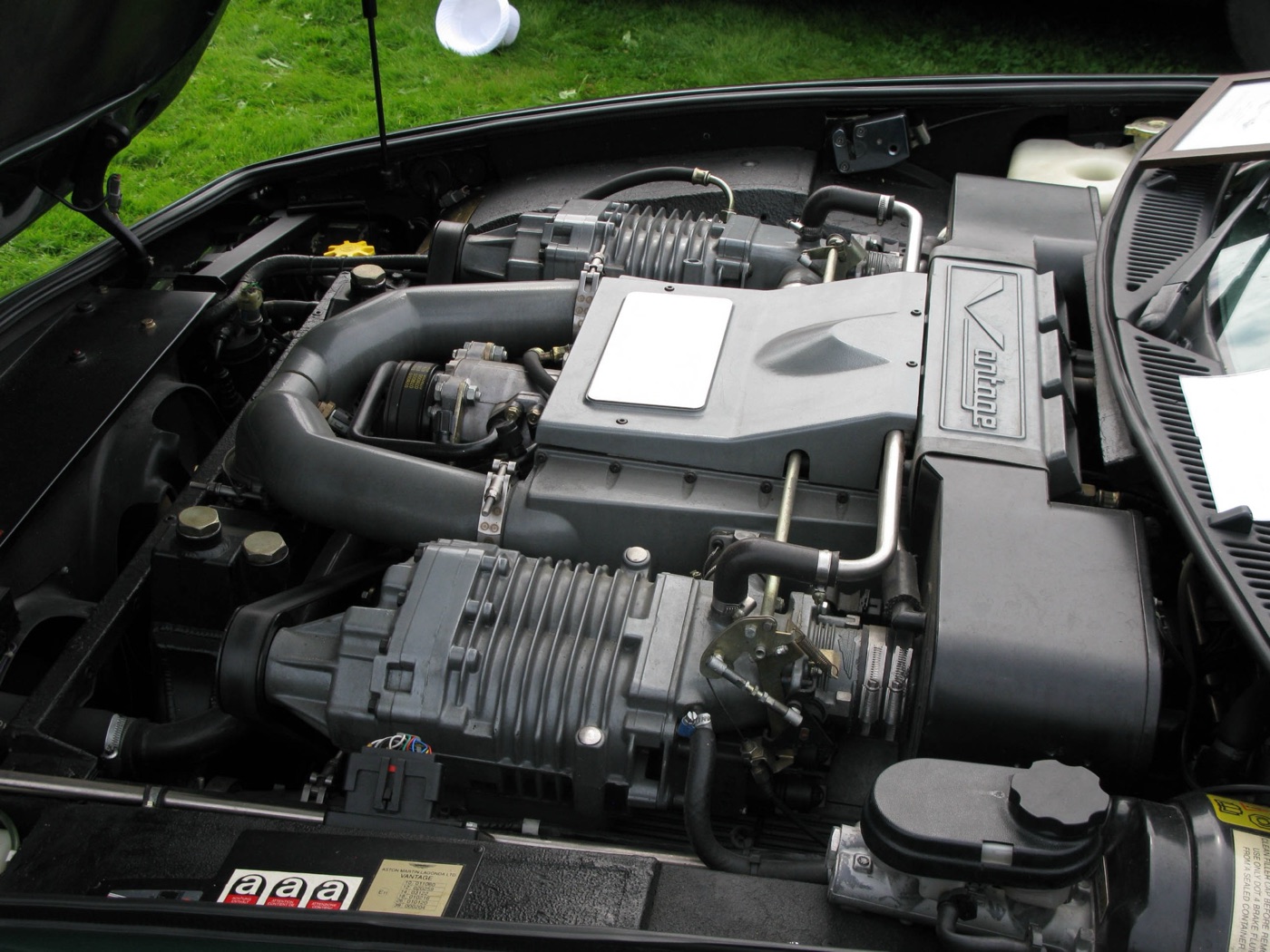
The engine is Tadek Marek's 5,340cc V8 with new four-valve cylinder heads designed by Callaway Engineering of Connecticut and Weber-Marelli fuel injection. Motor Sport's October 1995 history of the Aston V8 gives 335bhp; Aston Martin's heritage page gives 330bhp at 6,000rpm and 350lb ft at 3,700rpm. The extra valves let the engine pass emissions rules with a catalytic converter and still make more power than before: Motor Sport's 1991 test put the gain at about 24bhp and said the Virage was the first Aston built to meet emissions standards worldwide. PistonHeads says the engine was benchmarked against the Porsche 928 S4, and beat it.
The heritage page lists the transmission as a five-speed manual or a three-speed automatic, with a four-speed automatic in the 1993 updates. The manual is a ZF, which Motor Sport's 1991 tester called "idiosyncratic", and the automatic is Chrysler's Torqueflite, Iconic's 2018 catalogue records.
Interior and borrowed parts
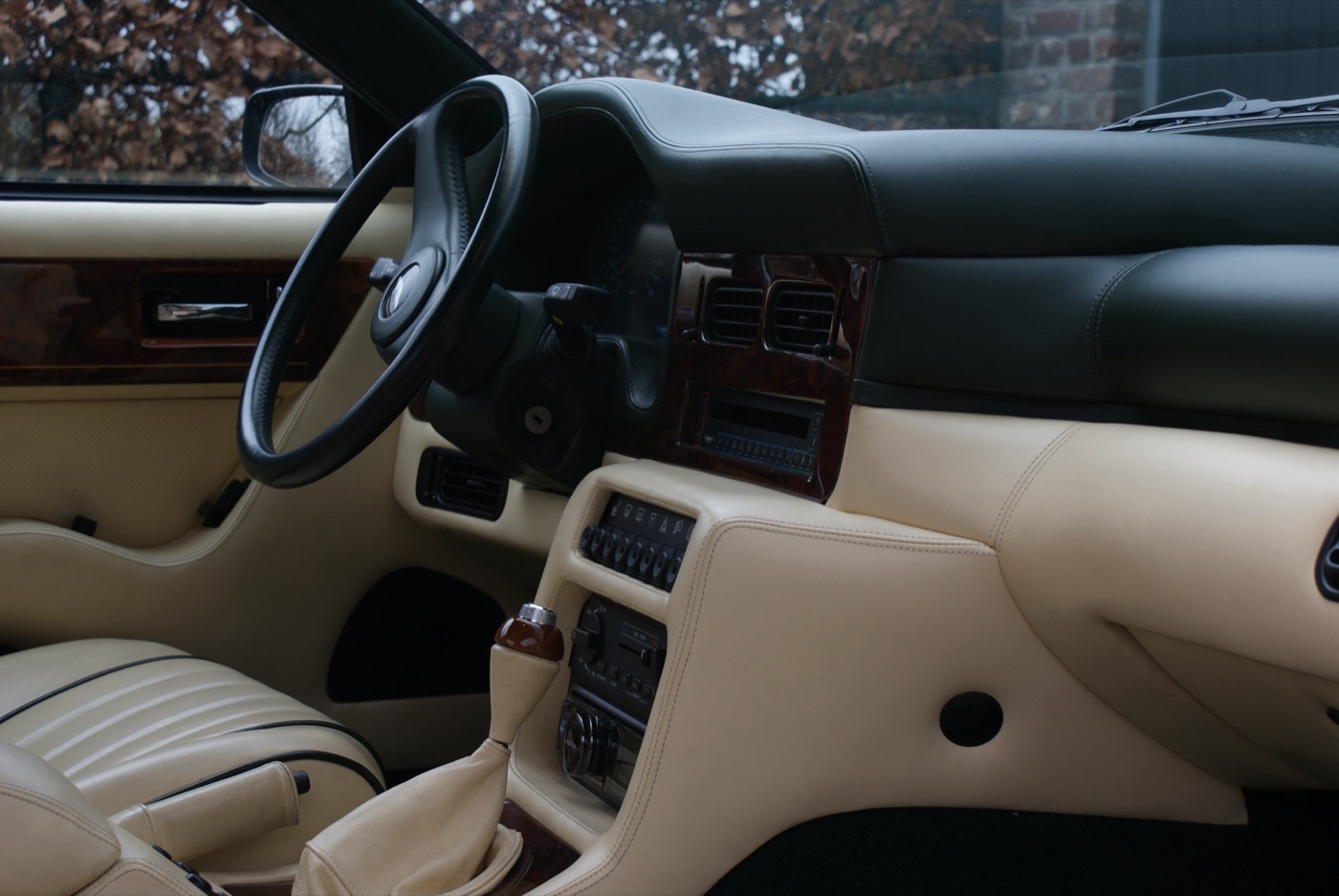
Like Astons before it, the Virage used parts from bigger makers to keep costs down. The headlights came from the Audi 200 and the taillights from the Volkswagen Scirocco, with GM and Ford switchgear. Motor Sport's tester wanted the Ford washer and indicator stalks put "straight back in the bin" and found some of the control switches, and the cigar lighter, "incongruously out of place". He wrote that the single instrument panel behind Perspex "lacks the romance of previous Aston dashboards", and found the on-board computer, with its average speed and estimated time of arrival, hard to read on the move. "The rest of the interior is faultless", he wrote: a green suede headlining, beige Connolly hide upholstery with green piping, and veneer in the doors and around the instruments.
Aston Martin Virage specification and performance
The 1989 Aston Martin Virage has a 330bhp 5.3-litre V8 and a top speed of 155mph; the fastest car of the family, the Vantage Le Mans V600, has 600bhp and reaches 200mph. The 2011 Virage has a 490bhp 5.9-litre V12.
| Model | Years | Engine | Power | Torque | 0–60mph | Top speed |
|---|---|---|---|---|---|---|
| Virage coupe and Volante | 1989–1994 (coupe), 1990–1997 (Volante) | 5,340cc V8, 32 valves | 330bhp at 6,000rpm | 350lb ft at 3,700rpm | 6.0sec | 155mph |
| Virage 6.3 (Works Service) | from 1992 | 6.3-litre V8 | 507bhp | n/a | n/a | n/a |
| Vantage V550 | 1993–2000 | 5,340cc V8, twin superchargers | 550bhp | n/a | 4.6sec | 186mph |
| Vantage Le Mans V600 | 1999–2000 | 5,340cc V8, twin superchargers | 600bhp | n/a | n/a | 200mph |
| V8 Coupe | 1996–2000 | 5,340cc V8, 32 valves | 24bhp more than the Virage | n/a | 5.8sec | n/a |
| V8 Volante (long wheelbase) | 1997–1999 | 5,340cc V8, 32 valves | n/a | n/a | n/a | n/a |
| Virage (V12) coupe and Volante | 2011–2012 | 5,935cc V12, 48 valves | 490bhp at 6,500rpm | 420lb ft at 5,750rpm | 4.6sec (0–62mph) | 186mph |
"n/a" means the source does not give the figure. The 1995 Motor Sport article gives the Vantage as 557bhp.
How fast is an Aston Martin Virage?
The 1989 Virage tops out at 155mph: Motor Sport's 1991 tester gave that figure at 6,300rpm in top, with 120mph at 4,500rpm. When a later Motor Sport test claimed 168mph, Aston Martin's press consultant Geoff Courtney wrote to the magazine (letters, July 1992) that the company had only ever quoted 155mph and that "one leading motoring weekly has timed it at 157". The supercharged Vantage V550 reaches 186mph and 60mph in 4.6 seconds, by RM Sotheby's catalogue for a 1998 V8 Vantage, and the 2011 V12 Virage reaches 186mph with 0–62mph in 4.6 seconds, by evo's February 2011 launch report. Autocar timed a 2011 Volante at 4.9 seconds to 60mph.
Aston Martin Virage variants and special versions
The Aston Martin Virage family covers the coupe, the Volante convertible, the Works Service 6.3, the shooting brake, the four-door Lagonda Virage, the supercharged Vantage and its V600 and Le Mans versions, and the V8 Coupe and V8 Volante that followed it.
Virage Volante
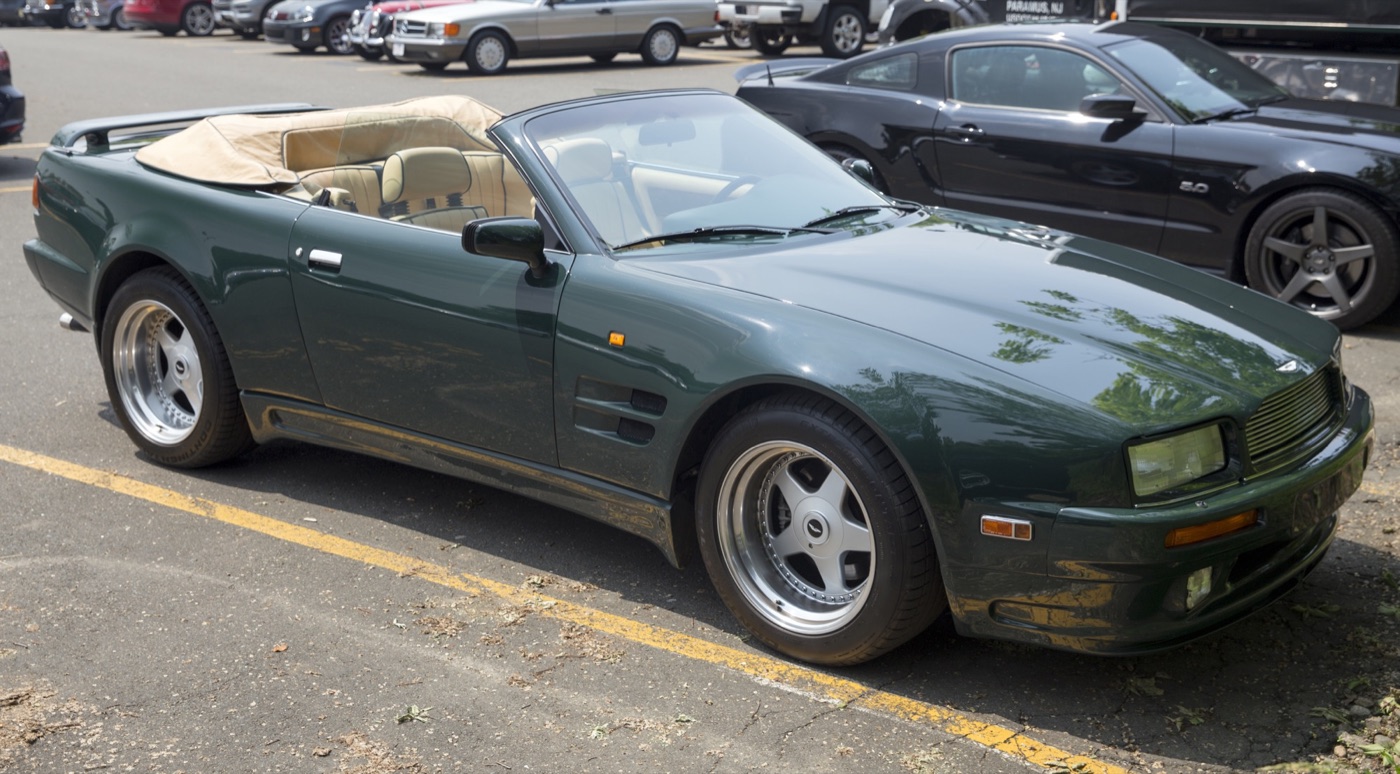
The Aston Martin Virage Volante convertible was first shown at the Birmingham Motor Show in 1990 as a full four-seater with a powered mohair hood and leather seats, according to Aston Martin's heritage page. RM Sotheby's 2025 catalogue for a 1995 Virage Volante says "reportedly only 233" were made, 121 of them with right-hand drive. The last ten dropped the Virage name, were sold simply as Volantes and had the V8 Coupe's engine (349bhp) and automatic gearboxes, The Market's 2023 catalogue for a 1997 Volante records.
Virage 6.3
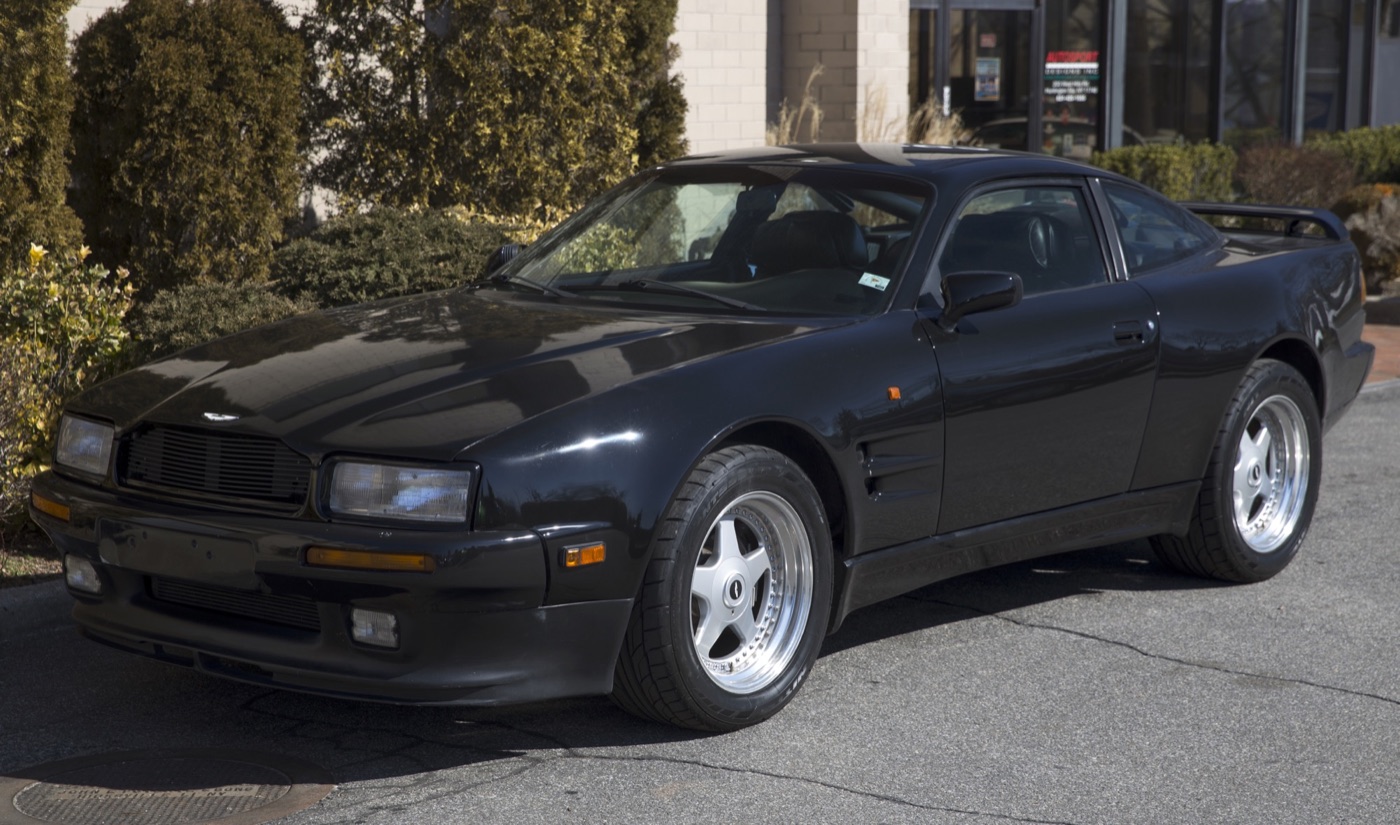
The Virage 6.3 was revealed in March 1992 with more power, better brakes and handling, flared wheel arches and a revised front spoiler, with a rear spoiler as an option, and Aston Martin's heritage page says it brought ABS to an Aston Martin for the first time. It was sold as a conversion, with the modifications made in-house by Aston Martin Works Service at Newport Pagnell on new or existing cars: the engine conversion cost £28,000 in December 1993, by Motor Sport's report "Lagonda revived", which quoted 500 horsepower. Customers could also have the wider bodywork, deeper air dam and side skirts without the bigger engine.
Shooting brake and Lagonda Virage saloon
A Virage shooting brake (an estate) was listed at £165,000 in December 1994, the top of a Virage range that started at £133,500, in Motor Sport's DB7 road test. In 1993 Works Service revived the Lagonda name for four-door Virage saloons and five-door shooting brakes, engineered by the former Aston engineer Mike Loasby. They were badged as Lagondas and built as conversions of customers' Virages: the Lagonda saloon cost £115,000 and the shooting brake £121,000, plus VAT; two were finished and three under way in December 1993, and the first two also had the 6.3-litre engine, Motor Sport reported. It found the Lagonda saloon a genuine four-seater, with room for adults in the back "at least comparable with that in a medium size family model".
V8 Vantage, V600 and Vantage Le Mans
The V8 Vantage, made from 1993, is the twin-supercharged 550bhp version of the Virage, sometimes called the Virage Vantage. RM Sotheby's catalogue for a 1998 car calls it number 225 of about 240 Vantages, 97 of them with left-hand drive, and records 18-inch alloy wheels and front disc brakes of 14.25 inches, said to be the largest on any production car at the time. Works Service later offered the V600 upgrade, with another 50bhp and stronger wheels, suspension and brakes, as Goodwood's preview of a Bonhams sale describes it.
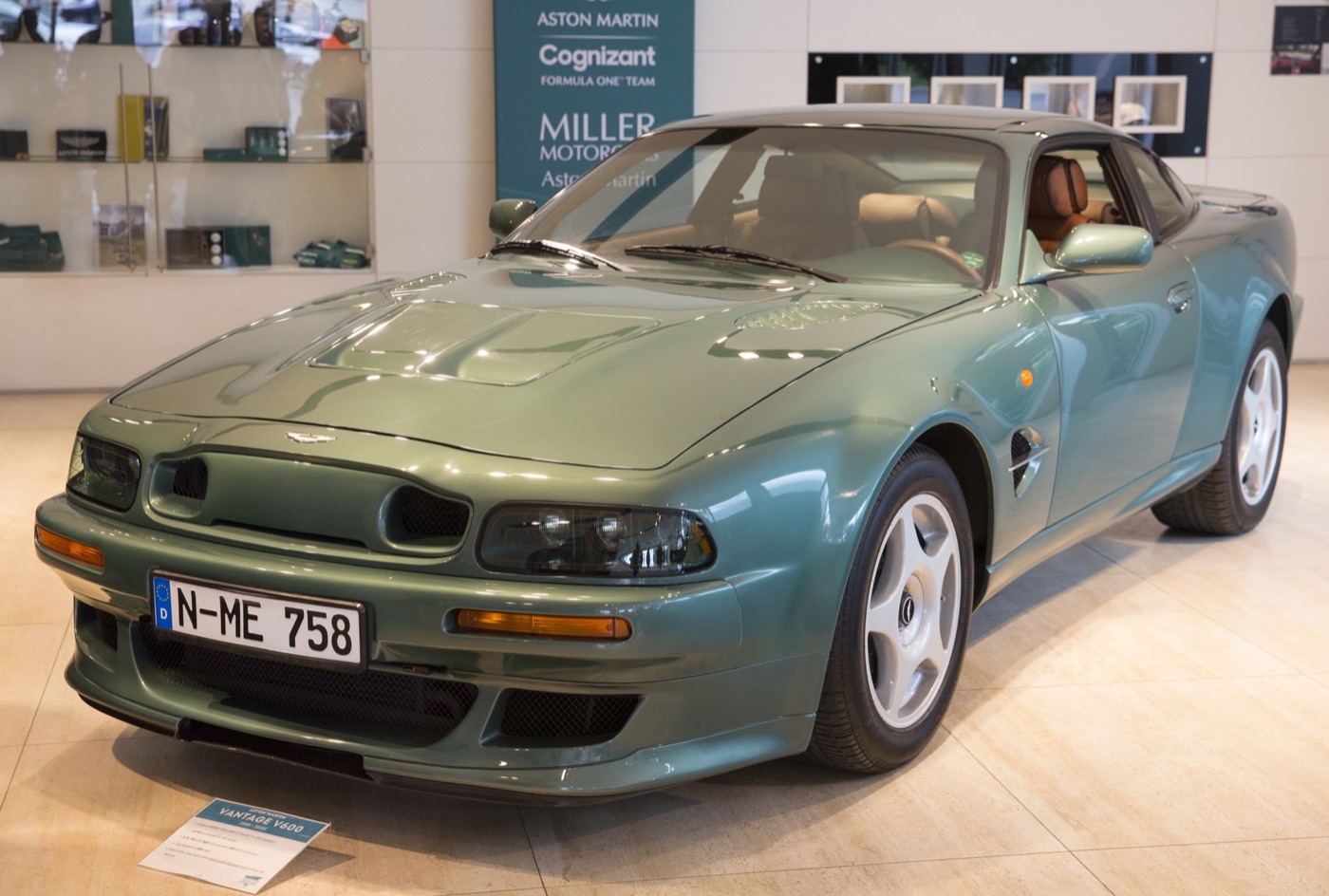
The last of the line was the Vantage Le Mans, a limited edition of the Aston Martin V8 Vantage: 40 cars, unveiled next to the race-winning DBR1/2 at the 1999 Geneva show to mark 40 years since Aston Martin's 1959 Le Mans win, according to RM Sotheby's 2020 catalogue for car 38 of 40. RM Sotheby's lists reshaped side vents and brushed metal in place of wood inside, and in V600 form 600bhp and a genuine 200mph; Goodwood's 2016 preview adds a "'nostril' front grille" and air vents in the front wings that recall the DBR1's. RM Sotheby's calls it the most powerful Aston Martin road-car engine until the One-77.
V8 Coupe
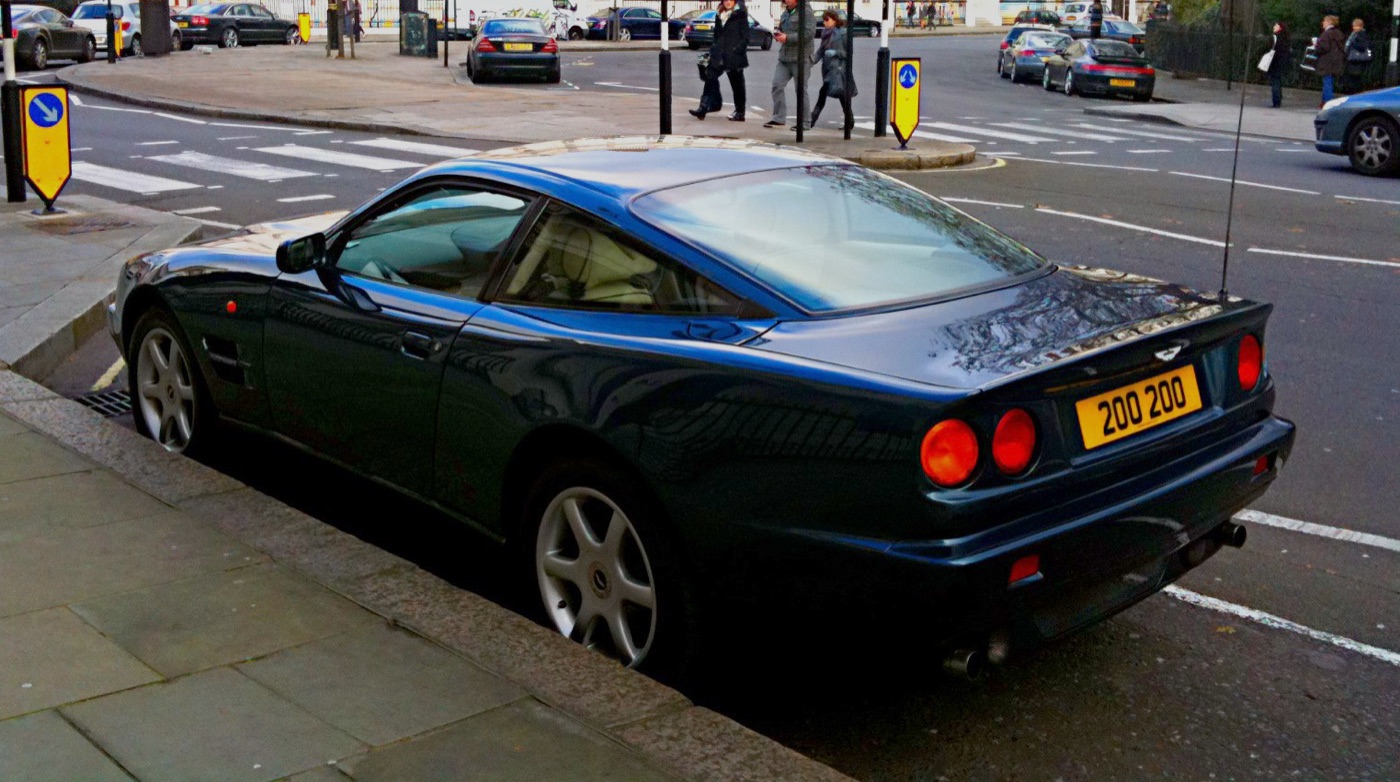
In 1996 the Virage gave way to the V8 Coupe, a development of it with a revised V8 that gained 24bhp and, like the Vantage, many detail improvements made under Ford. The Market's catalogue gives 0–60mph in 5.8 seconds and counts 101 built, 71 of them with right-hand drive. More than half were ordered as automatics, Autoweek says.
V8 Volante
The V8 Volante is the open companion to the V8 Coupe, built from 1997 to 1999 with a wheelbase 200mm longer than the Virage Volante's, which makes it a true 2+2, and a "vent style indent" on the rear arches. Showrooms sold it as the "Long Wheel Base Volante". RM Sotheby's counts 63 built, most with left-hand drive for export, and calls it the last production Volante made at Newport Pagnell; the dealer Aston Workshop puts the batch at 62. RM Sotheby's compares it with the Rolls-Royce Corniche, with more rear legroom and more performance.
How many Aston Martin Virages were made?
About 1,050 cars of the 1989 Virage family were built by the end of the 2000 model year, according to Iconic Auctioneers' 2018 catalogue for a 1990 Virage, and just over 400 of those were Virage coupes, by PistonHeads' count. The 2011 V12 Virage reached 1,044 cars in 2011 and 2012, according to an independent Aston Martin database quoted by PistonHeads' 2024 buying guide.
| Model | Years | Built | Source |
|---|---|---|---|
| Virage coupe | 1989–1994 | 427 | The Market, factory records quoted for a 1990 car (2023) |
| Virage Volante | 1990–1997 | reportedly 233 (121 right-hand drive) | RM Sotheby's (2025) |
| Vantage (V550, V600) | 1993–2000 | about 240 (97 left-hand drive) | RM Sotheby's (2021) |
| Vantage Le Mans | 1999–2000 | 40 | RM Sotheby's (2020), Goodwood |
| V8 Coupe | 1996–2000 | 101 (71 right-hand drive) | The Market (2022) |
| V8 Volante (long wheelbase) | 1997–1999 | 63 (62 by Aston Workshop's count) | RM Sotheby's (2024) |
| Whole 1989 family | 1989–2000 | about 1,050 | Iconic Auctioneers (2018) |
| Virage (V12) coupe | 2011–2012 | 656 | PistonHeads (2024) |
| Virage (V12) Volante | 2011–2012 | 388 | PistonHeads (2024) |
The figures for the production run differ between sources. The Market's catalogue for a 1990 car, citing the factory records, calls it "the 24th production car out of the 427 built" and records that its first owner ordered it in April 1988, six months before the public debut, while PistonHeads says "just over 400 coupes"; for the V12 car, PistonHeads also reports a claim of only 114 right-hand-drive cars (22 coupes and 92 Volantes) and calls the numbers conflicting. Output in the early 1990s was very small: Aston Martin built 46 vehicles in total in 1992, Autoweek noted in 2019, adding that Virage-era cars are seldom seen in the United States.
The 2011 Aston Martin Virage
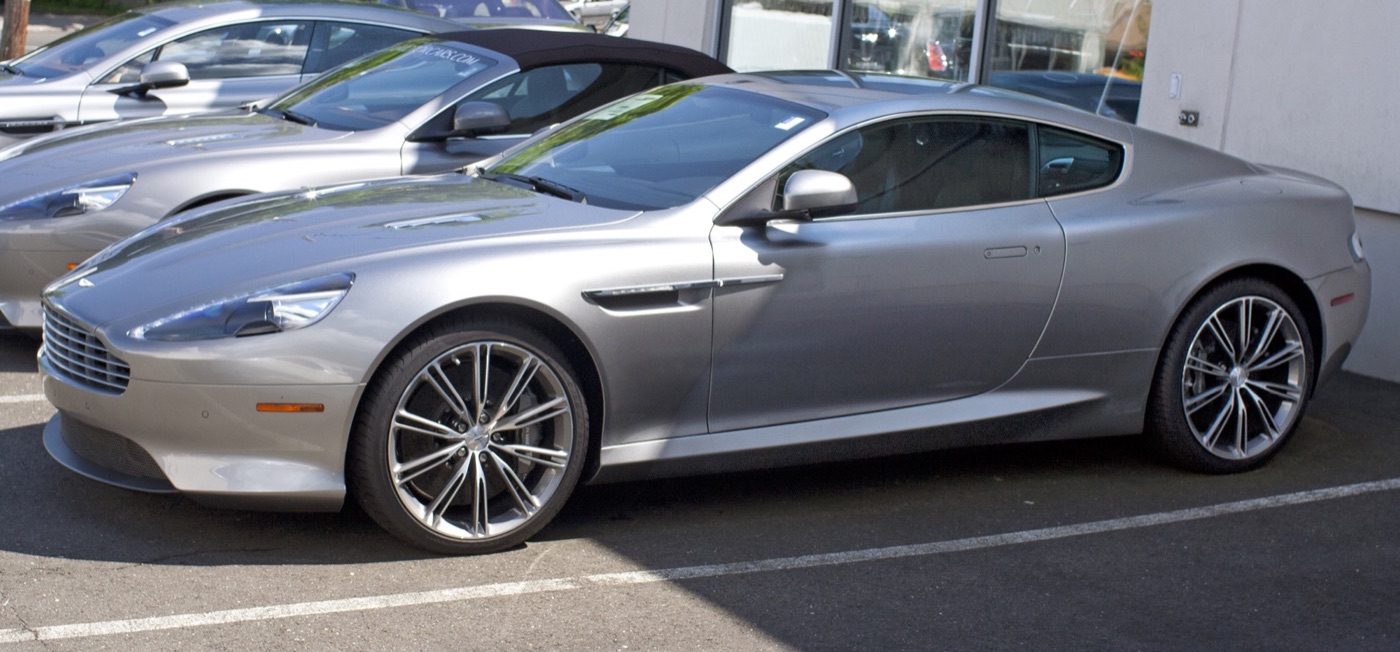
The 2011 Aston Martin Virage is a V12 coupe and Volante convertible that Aston Martin announced on 23 February 2011, showed at the Geneva motor show the next month and built at Gaydon, Warwickshire, until 2012.
Between the DB9 and the DBS
The new Virage was placed between the 470bhp DB9 and the 510bhp DBS, at about £150,000 against £125,000 and £175,000, in Autocar's Geneva 2011 report. Its chief designer was Marek Reichman, who gave it new wings, sills, grille and front bumper. Aston Martin's chief executive Ulrich Bez told Autocar: "The Virage is the next evolution for Aston Martin. We have set new benchmarks, and now we move on again. There is no need for a revolution." In the launch release, as a SkiddMark report of February 2011 recorded, he said that "100 years of automotive history has demonstrated that evolution delivers the best solutions in time" and called the car "the perfect balance of opposites".
The same 2011 SkiddMark report, written from Aston Martin's launch material, recorded seven hides of Bridge of Weir leather in each car, 70 hours of work on the interior and more than 200 hours on each car in all at Gaydon, a new Garmin satellite navigation system with a 6.5-inch screen, and a 700W stereo. It called the Virage the tenth major production car built at Gaydon in less than eight years; evo's report of the same release said the 12th.
Engine, gearbox and chassis
The engine is Aston Martin's 5,935cc 48-valve V12 with 490bhp at 6,500rpm and 420lb ft at 5,750rpm, driving the rear wheels through a six-speed ZF automatic mounted at the back, which Aston Martin calls Touchtronic II. A shorter final drive (3.46:1) brought 0–60mph under five seconds, and the top speed is 186mph, Autocar reported. The bonded aluminium VH platform carries a new shear panel under the rear of the chassis, Bilstein adaptive dampers set softer than the DBS's, and carbon-ceramic brakes as standard, which save 12.5kg. The car rides on 20-inch wheels.
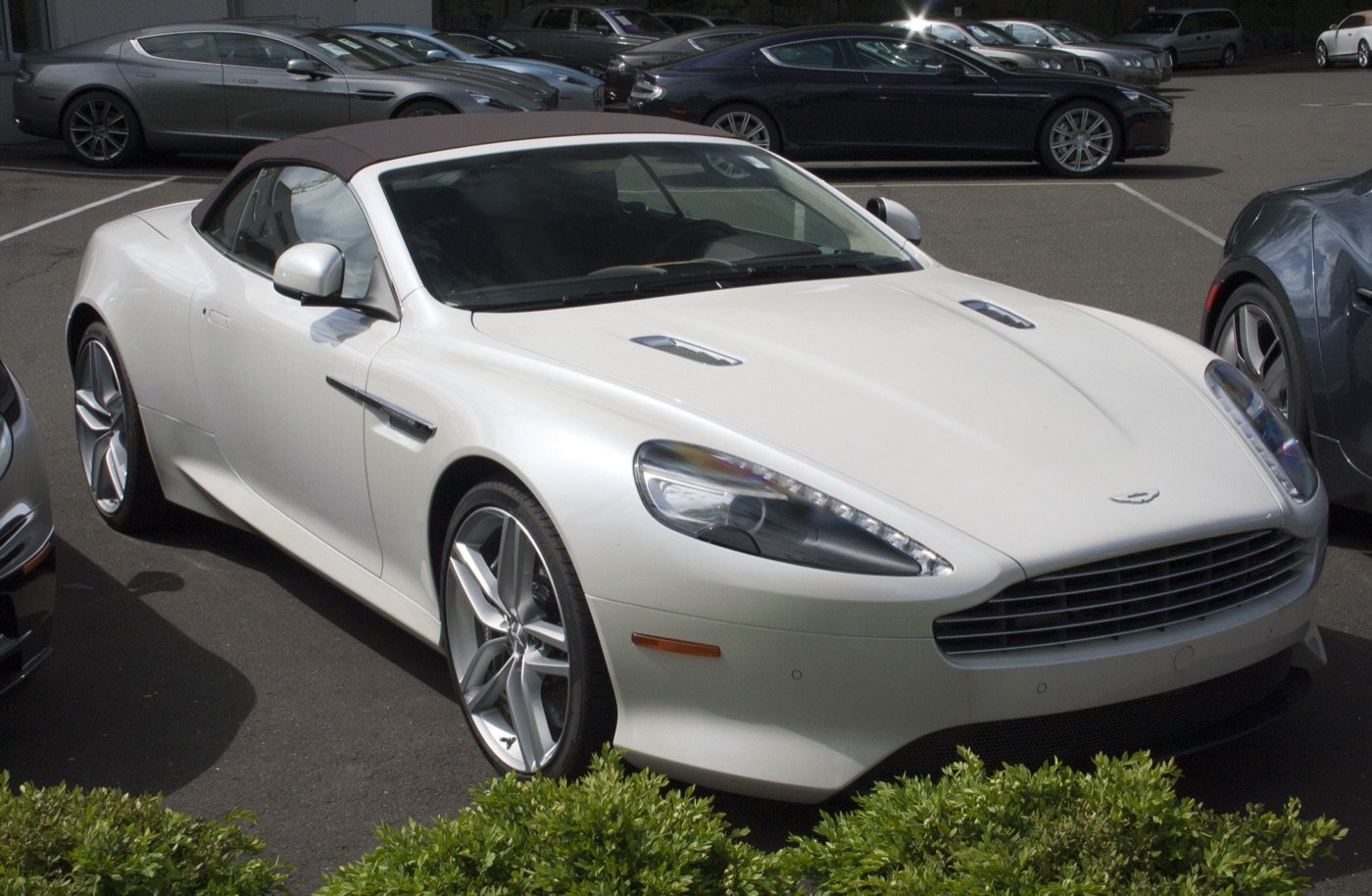
The 2011 Virage Volante
The Virage Volante costs about £10,000 more than the coupe, at £160,000, and has a fabric roof with a new layer of Thinsulate that opens and closes more quickly. Aston Martin called it a gentleman's GT car, Autocar reported. The coupe could be ordered as a two-seater, without the rear seats, which Autocar found "pretty unusable anyway"; the Volante came only with 2+2 seating. Autocar's road test found "noticeable flexing" in the Volante because it lacks a fixed roof.
Why was the 2011 Virage discontinued?
Aston Martin dropped the Virage after a little more than a year on sale, Car and Driver reported on 5 September 2012, adding that the next DB9 would take Virage-like styling and power. PistonHeads gives the reason: the supposed gap between the DB9 and the DBS "didn't really exist", and the Virage may have been taking sales from both. Production ended in mid-2012, PistonHeads says.
How much is an Aston Martin Virage worth?
A 1989–94 Virage coupe has sold for between £28,125 and £37,366 at UK auctions since 2018, a V8 Coupe made £49,250 in 2022, and the 2011–12 V12 Virage could be bought privately from about £40,000 in 2024. The rare versions cost far more: a Vantage Le Mans V600 made $379,000 in 2020.
| Car | Sale | Date | Price |
|---|---|---|---|
| 1990 Virage, automatic, 33,000 miles | Iconic Auctioneers, NEC Birmingham | 11 November 2018 | £35,438 |
| 2000 Vantage Le Mans V600, car 38 of 40 | RM Sotheby's, Amelia Island | March 2020 | $379,000 |
| 2000 V8 Coupe, 55,768 miles | The Market (online) | 24 January 2022 | £49,250 |
| 1990 Virage, automatic, the 24th production car | The Market (online) | 8 February 2023 | £37,366 |
| 1986 DP2034 prototype mule | Bonhams, Goodwood Revival | 9 September 2023 | £287,500 |
| Virage 6.3 | Bonhams, Goodwood Revival | 9 September 2023 | Not sold at £60,000 |
| 1990 Virage, 8,395 miles, no reserve | Iconic Auctioneers, Sywell | 18 May 2024 | £28,125 |
| 1998 V8 Volante (long wheelbase), 17,097 miles | RM Sotheby's, Cliveden House | 2024 | £80,500 |
| 1995 Virage Volante, right-hand drive | RM Sotheby's, Cliveden House | 2025 | £43,700 |
Prices include the buyer's premium where the source gives it. The prototype figure is £250,000 on the hammer plus premium, from All Aston Martin's report on the sale. The Iconic results come from the lot pages for the 2024 Sywell car and the 2018 NEC car, and the February 2023 result from The Market's listing for the 1990 car.
For the V12 car, PistonHeads' 2024 guide found private sellers asking about £40,000 to £50,000 in autumn 2024, with a 2012 coupe with 25,000 miles at £49,950 and a 2012 Volante at just under £72,500. Some cars had sat in the classifieds for more than six months.
What did a Virage cost new?
The Virage cost £120,000 when Motor Sport tested one in January 1991. PistonHeads gives £110,000 at launch, which made it dearer than a Ferrari 412, and The Market and Iconic catalogues give £135,000. By December 1994 the range started at £133,500, with the shooting brake at £165,000 and the Vantage at £177,600. The 2011 Virage cost £150,000 as a coupe and £160,000 as a Volante.
Aston Martin Virage ownership: faults and running costs
The 1989–2000 cars are simple mechanically but expensive to repair, and the main checks are corrosion, crash damage, the 32-valve engine and the electronics; the 2011–12 V12 cars missed most of the older V12 problems, and the checks there are the screen, the paint and recall work.
The 1989–2000 V8 cars
Buyers should look for corrosion and crash damage and check the condition of the 32-valve V8, says Autocar's used Aston Martin buying guide, which said in 2013 that a usable Virage with about 60,000 miles could be found for £20,000, far from concours. PistonHeads warns that the electronic "Vehicle Information Centre" can fail expensively, that even simple faults cost a lot to put right and that parts prices are high, and advises an inspection by a marque specialist. Motor Sport's 1991 tester averaged 12.5mpg over two days, with about 8mpg driven hard and 20mpg gently. Iconic's 2018 catalogue records £10,000 of recommissioning by the specialist Oselli on a car that had been stored since 2009.
The 2011–12 V12 cars
PistonHeads' buying guide says that by 2011 Aston Martin had cured the older V12 engine's "engine tick" (piston-to-liner noise at idle) and its incorrectly marked dipsticks, and that a ticking engine on an older car costs £15,000 to £20,000 to rebuild at the specialist Bamford Rose. The official fuel figure is 18.8mpg; Autocar's test Volante returned 15.6mpg overall, 24.4mpg on a touring route and 7.0mpg on track, and its 78-litre tank gives a touring range of about 268 miles. Some owners thought the standard exhaust too quiet, PistonHeads says, and Bamford Rose offered an exhaust upgrade.
The same guide lists the checks: the Garmin screen and satellite navigation, which did not always work; stone chips, since the paint is vulnerable; the hood on a Volante; and wheel cleaner, which attacks the carbon-ceramic discs. The Virage was included in recalls for a software fault that could let the car roll away (3,800 cars, late 2017), a seat that could crush the battery cable (6,500 cars, late 2017) and front seat heaters that would not switch off (8,300 cars, December 2014). In 2024 the dealer HR Owen charged £825 for a basic service, £860 for the intermediate service with a brake-fluid change and £945 for the five-year service.
Rivals of the Aston Martin Virage
The 1989 Virage was benchmarked against the Porsche 928 S4 and cost more than a Ferrari 412 at launch. Motor Sport's 1991 tester wrote: "There are machines that will do the same sort of job, at the same sort of speed, and in the same sort of comfort for about a third of the price". The 2011 Virage's closest rivals were its own siblings, the DB9 and the DBS; Autocar compared it with the Ferrari California, which was substantially cheaper to buy than the Virage Volante and lost value more slowly, and PistonHeads found in 2024 that a used California started at about £50,000, above the Virage.
Reception
In the contemporary reviews, Motor Sport liked the 1989 Aston Martin Virage's engine, steering and cabin and disliked its gearbox, its Ford stalks and some of its switches. Its January 1991 tester called the steering "just about the best I have ever come across", found the ZF manual "unnecessarily awkward", and wrote: "The Aston Martin Virage is the epitome of British sang froid; I want one but I'm not rich enough." Sports Car International's first test, quoted in Iconic's catalogue, said "Acceleration just never seems to run out" and that "The new car outperforms the old in every respect", adding: "The factory's craftsmanship is legendary, but now it is allied to 1990s standards of quality and reliability." Chris Nixon's 1990 book on the car's development, Aston Martin Virage, cost £80. Motor Sport's reviewer wrote that it could be read two ways: "on the one hand it is a punctilious account of the conception, development and birth of Aston Martin's new model, or else it is a glorified sales brochure which costs the customer a bomb". Because Nixon was "that respected historian", the reviewer settled on the first, while noting passages that read "as if the author is writing to please a member of the company".
The 2011 Virage was judged good but hard to place. Autocar's review concluded that it "is a very good car, but it could have been a great one", praising the ride in Normal mode, which it said shaded the DBS's, and criticising the slow gearbox and cheap switchgear. Car and Driver called it a niche-filler between the DB9 and the DBS. PistonHeads summed it up in 2024 as "a poor buy new, but potentially a very good one secondhand".
Questions
Is the Aston Martin Virage a V8 or a V12?
Both, in different cars. The 1989–2000 Virage has a 5.3-litre V8 (330bhp in standard form, 550bhp supercharged in the Vantage); the 2011–12 Virage has a 5.9-litre V12 of 490bhp.
Who designed the Aston Martin Virage?
John Heffernan and Ken Greenley won the design competition for the 1989 car, according to Aston Martin. The 2011 Virage was styled under Aston Martin's chief designer Marek Reichman.
What replaced the Aston Martin Virage?
The V8 Coupe, the last of the 1989 family, went out of production when the Vanquish arrived in 2000. The 2011 Virage was dropped in 2012 and its place went to a revised DB9 with Virage-like styling and power.
What is the difference between the Aston Martin Virage and the Vantage?
The Vantage of 1993 is the high-performance version of the Virage, with two superchargers on the 5.3-litre V8 and 550bhp against 330bhp. It reaches 186mph against the Virage's 155mph.
Where was the Aston Martin Virage built?
The 1989–2000 cars were built by hand at Newport Pagnell, Buckinghamshire. The 2011–12 Virage was built at Aston Martin's factory at Gaydon, Warwickshire, with more than 200 hours of work on each car.
Is the 2011 Aston Martin Virage a DB9?
No, though it shares the DB9's bonded aluminium VH platform and V12. It has new wings, sills, grille and front bumper, 20bhp more than the DB9, carbon-ceramic brakes as standard and its own adaptive damper settings.
Sources
- Aston Martin, "Virage", 20 July 2018: launch date and show, the design competition, DP2034, the name.
- Aston Martin, heritage page "Virage" (archived 2019): specification, 6.3 and ABS, Volante, gearboxes.
- Motor Sport, "Ford takes over Aston Martin", October 1987: Ford's 75%, production and prices.
- Motor Sport, Geneva show report, April 1989: "sold out until 1992".
- Motor Sport, review of Chris Nixon's Aston Martin Virage, May 1990: the book, DP2034.
- Motor Sport, "Excelsior", January 1991: road impressions, engineering, price, fuel use.
- Motor Sport, letters, July 1992: Geoff Courtney on the 155mph top speed and the single fuel tank.
- Motor Sport, "Lagonda revived", December 1993: Lagonda Virage saloon and shooting brake, 6.3 conversion price.
- Motor Sport, "Road test: Aston Martin DB7", December 1994, p. 48: Virage, shooting brake and Vantage prices.
- Motor Sport, "Aston Martin V8", October 1995, p. 84: the engine's history, 6.3 and Vantage outputs.
- Autocar, "Geneva motor show 2011: Aston Martin Virage", March 2011: positioning, prices, engine, chassis, Bez.
- evo, "New Aston Martin Virage news and pictures", February 2011: performance, damping, build hours.
- Autocar, "Aston Martin Virage 2011-2012 review": road test, fuel use, verdict.
- Car and Driver, "Aston Martin dropping Virage from lineup", 5 September 2012.
- PistonHeads, "Aston Martin Virage: The Brave Pill", 2020: design, borrowed parts, price, build rate, faults.
- PistonHeads, "Aston Martin Virage V12: PH Used Buying Guide", 14 September 2024: production, faults, recalls, servicing, prices.
- Autocar, "Buying guide: used Aston Martin special": what to check, price.
- Autoweek, "Rare Aston Martin V8 Coupe heads to auction", May 2019: 1992 output.
- Goodwood, "Bonhams to auction one of just 40 Aston Martin V600s at Revival", 7 September 2016: the Le Mans run and the V600 upgrade.
- RM Sotheby's, 1998 Aston Martin V8 Vantage (2021): Vantage numbers and performance; 2000 Vantage Le Mans V600, Amelia Island 2020: the Le Mans and its price; 1995 Virage Volante, Cliveden House 2025: Volante numbers and price.
- RM Sotheby's, 1998 Aston Martin V8 LWB Volante, Cliveden House 2024: Virage coupe and Volante years, the V8 Volante's wheelbase, count and price.
- The Market, 1997 Aston Martin Volante, 11 September 2023: the last ten Volantes.
- Aston Workshop, "LWB V8 Volante": the V8 Volante batch of 62.
- Iconic Auctioneers, 1990 Aston Martin Virage, 11 November 2018, and 1990 Aston Martin Virage, 18 May 2024: total production, Sports Car International, prices.
- The Market, 1990 Aston Martin Virage, 8 February 2023, and 2000 Aston Martin V8 Coupe, 24 January 2022: coupe and V8 Coupe numbers, V8 Coupe 0–60mph, prices.
- All Aston Martin, "Bonhams at the Revival 2023", 12 September 2023: the prototype and 6.3 results.
- SkiddMark, "Geneva Watch: Aston Martin revives the Virage name", February 2011: the 2011 launch details and Bez's words.