Aston Martin Zagato: every car from the DB4 GT Zagato to the DBS GT
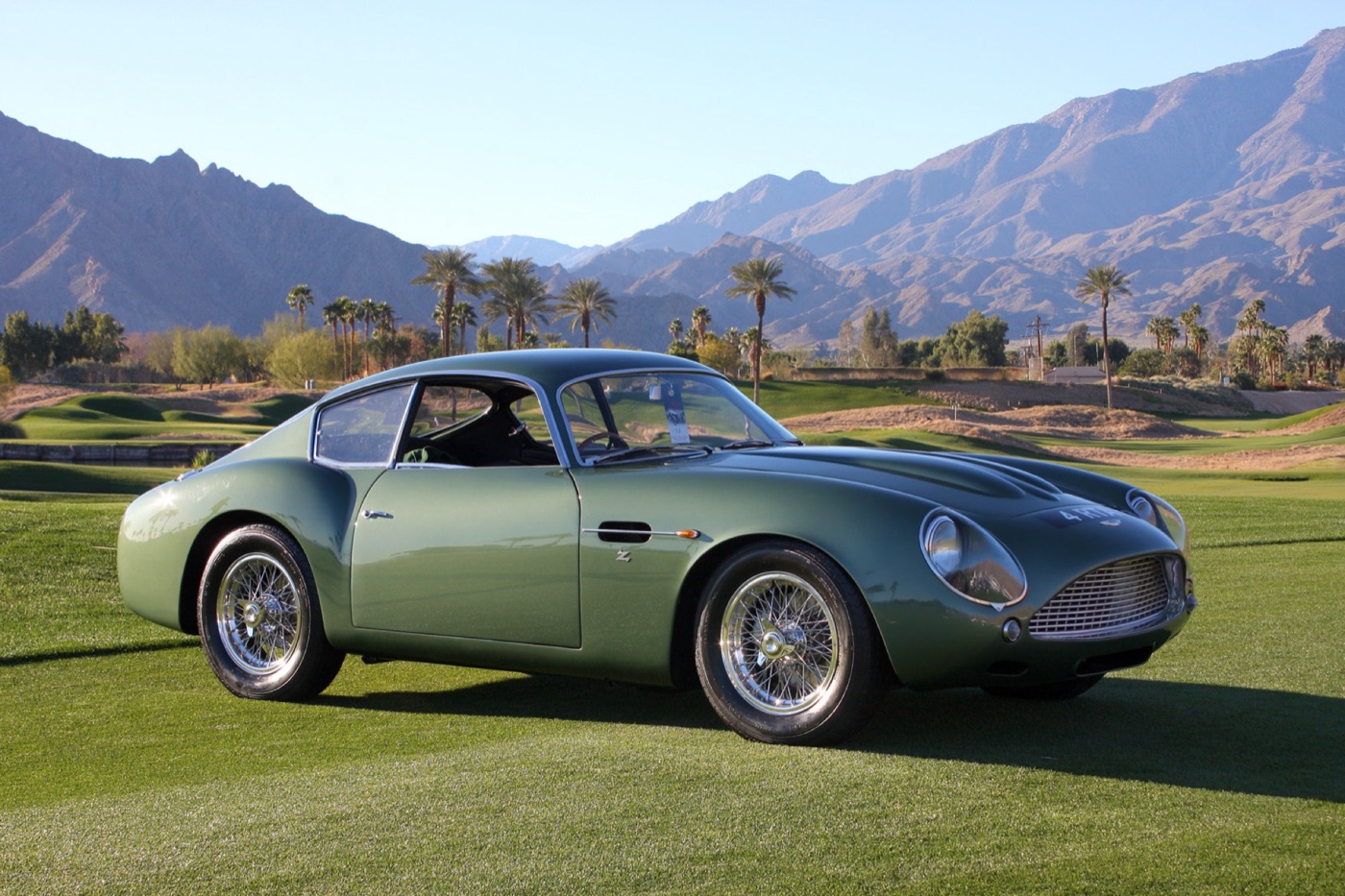
An Aston Martin Zagato is an Aston Martin bodied or restyled by Zagato, the Milan coachbuilder that Ugo Zagato founded in 1919. The line began with the DB4 GT Zagato at the London Motor Show in October 1960, of which 19 were made, and runs through the V8 Vantage Zagato of 1986, the DB7 Zagato of 2002, the V12 Zagato that raced at the Nürburgring 24 Hours in 2011, the four Vanquish Zagatos and the DBS GT Zagato of 2019.
Every series has been small. No single Aston Martin Zagato model has run to more than 100 cars, and the whole family, one-offs included, comes to fewer than 800. A DB4 GT Zagato sold for $14.3 million at RM Sotheby’s in New York in December 2015, then a record for a British car at auction; V12 Zagatos that listed at £330,000 before taxes in 2011 sold for €455,000 and $632,000 in 2024.
What is an Aston Martin Zagato?
It is an Aston Martin with a body designed with, and usually built by, Zagato, made in a short run or as a one-off and sold under both names. Who does what in the partnership has changed with each car. For the DB4 GT Zagato the chassis were built at Newport Pagnell, shipped to Italy for their bodies and returned to Britain to be trimmed and finished, according to Aston Martin’s history of the DB4 GT Zagato; perhaps five were finished at Zagato. The DB7 Zagato’s hand-beaten steel and aluminium body was made in Zagato’s Milan coachworks. The Vanquish Zagato was built to order at Aston Martin’s Gaydon factory, and the V12 Zagato Heritage Twins of 2020 at R-Reforged’s works in Warwick.
Zagato was founded in Milan by Ugo Zagato, who had worked for the Ansaldo aircraft company during the First World War, and in the 1920s and 1930s it built the bodies of Alfa Romeo’s racing cars, Sotheby’s recounted in 2026. Andrea Zagato was its chief executive in 2017.
The double-bubble roof and other Zagato signatures
The double-bubble roof, two raised humps over the seats with a dip between them, is the first of the Zagato elements that Aston Martin’s history of the V12 Zagato lists, with short body overhangs. On the DB7 Zagato it came with a larger version of the traditional Aston Martin grille, a sculpted rear window and a drop-down bootlid between single round tail lamps. On the V12 Zagato the roof was formed from five separate pieces of aluminium. The DBS GT Zagato’s is one carbonfibre canopy with no rear window at all, so the driver uses a camera mirror, and on the roofless Vanquish Zagato Speedster the shape became two carbonfibre “Speed Humps” behind the seats.
Aston Martin’s stake in Zagato
In the mid-1980s Aston Martin, whose owners are set out in who owns Aston Martin, bought half of its coachbuilder. Just as production of the Vantage Zagato got under way, Aston Martin Lagonda took a 50 per cent share in the Milanese carrozzeria, its history of the V8 Zagato Volante records, and the two companies developed the open Volante together.
Aston Martin DB4 GT Zagato (1960–1963)
The Aston Martin DB4 GT Zagato is a lighter two-seat DB4 GT with an aluminium body by Zagato, first shown at the London Motor Show in October 1960. Its 3.7-litre twin-plug six had a higher compression ratio than the GT’s and a claimed 314bhp. Aston Martin planned 25 at a British price of £5,157 including tax and made 19. Motor Sport’s 1989 survey of the DB4, DB5 and DB6 put the compression at 9.7:1, noted that no two of the 19 were identical, and that all were still known and accounted for. The DB4 was the car the Aston Martin DB5 grew from.
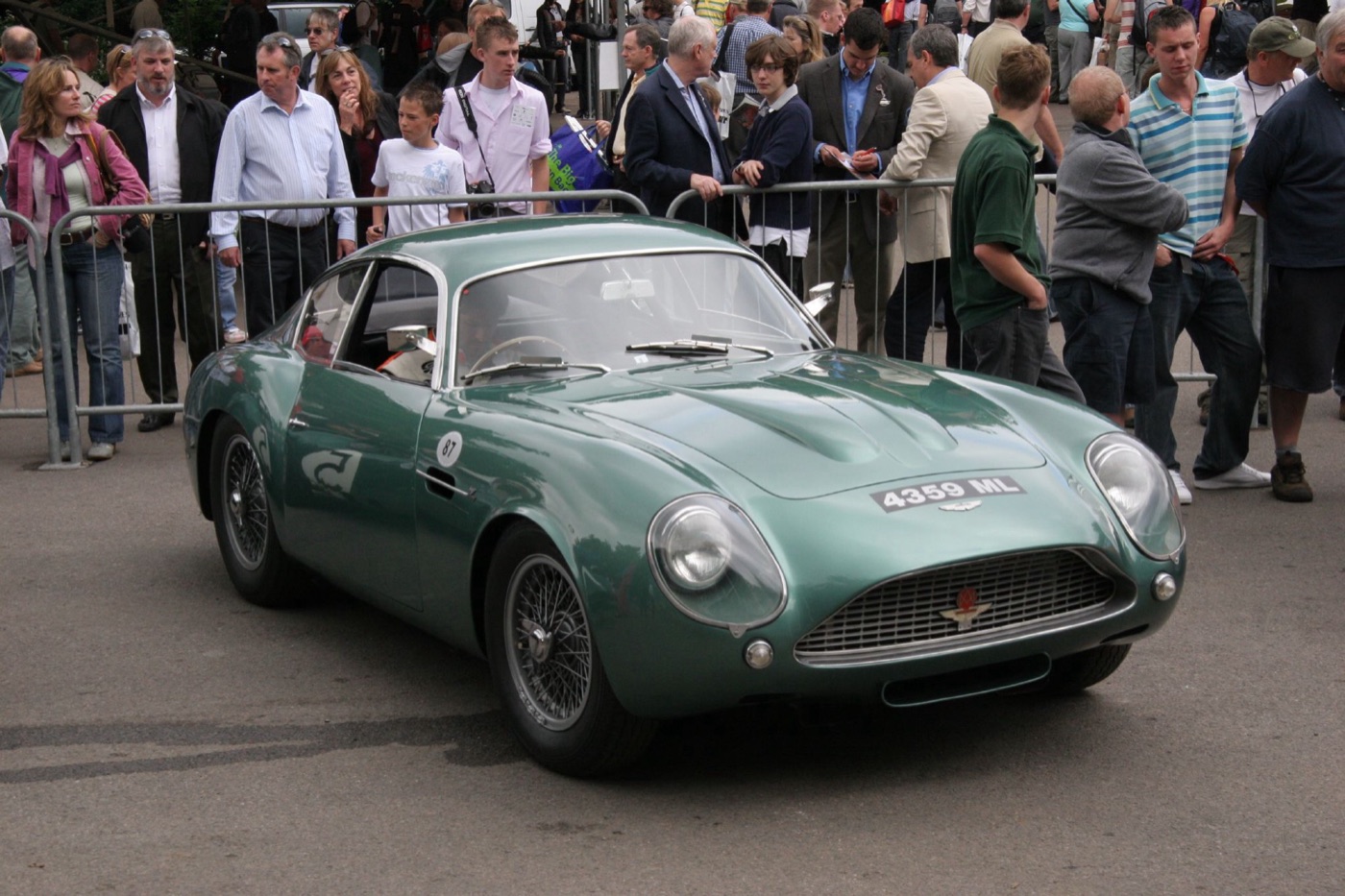
Who designed the DB4 GT Zagato?
Ercole Spada did. He was 23, newly qualified, and had joined Zagato as an apprentice in February 1960, eight months before the car was shown. In Aston Martin’s account of the project, as a 2011 SkiddMark report recorded it, managing director Elio Zagato and technical director Gianni Zagato worked with their team to draft the main design in a week. Sotheby’s quoted Spada in 2026 as saying the body was “like a skin over bones”.
How the DB4 GT Zagato was built
Two DB4 GT Zagatos were built for John Ogier’s Essex Racing Stable, and these and two others were lightweight cars about 150lb lighter than the rest. Three went further. The Bonhams catalogue for the 2018 sale of 2 VEV describes the 1962 “MP209” or “Super Lightweight” cars: a redesigned box-section ladder frame, a 3.8-litre engine with many cast magnesium parts, and a weight 507lb under a standard DB4 GT and 300lb under a standard Zagato. Bonhams says the MP209 frame was the prototype for the DP214 coupés with which the works team returned to racing in 1963.
Sanction II and Sanction III cars
In 1987 Aston Martin and Zagato agreed to build four more works-approved DB4 GT Zagatos, which were finished in 1991, and in 1992 the company’s chairman Walter Hayes approved two more, called Sanction III. evo in 2019 dated the two batches to 1988 and 2000. With them, Motoring Research wrote in 2018, Aston Martin “arguably kicked off the continuation trend three decades ago”.
Aston Martin V8 Vantage Zagato and Volante (1986–1991)
The V8 Vantage Zagato is a shorter, two-seat Aston Martin V8 Vantage with a new aluminium body by Zagato, announced at the 1985 Geneva Motor Show and unveiled a year later, by which time every one of the 50 production cars had been sold. It has a shorter wheelbase than the Vantage, no rear seats, a retuned engine and flush glass, Aston Martin’s history of the Vantage Zagato says. Its V8 had four Weber 48 IDA carburettors bored out to 50mm, and the bulge in the bonnet covered their airbox: a flat bonnet over fuel injection had been the plan, but would probably not have made enough power for the promised 300km/h. Aston Martin gave 0–60mph in 4.8 seconds and 186mph, SkiddMark reported in 2011.
The last coupé was delivered in July 1991. Chassis 20043 was ordered by Sheikh Abdul al Thani in 1986, completed in September 1987 and crashed in Spain in 1989; it was then built again as a new car, with a new chassis carrying the old number, its rebuilt engine, a new Zagato body and the more luxurious interior of the last cars, RM Sotheby’s 2019 catalogue records.
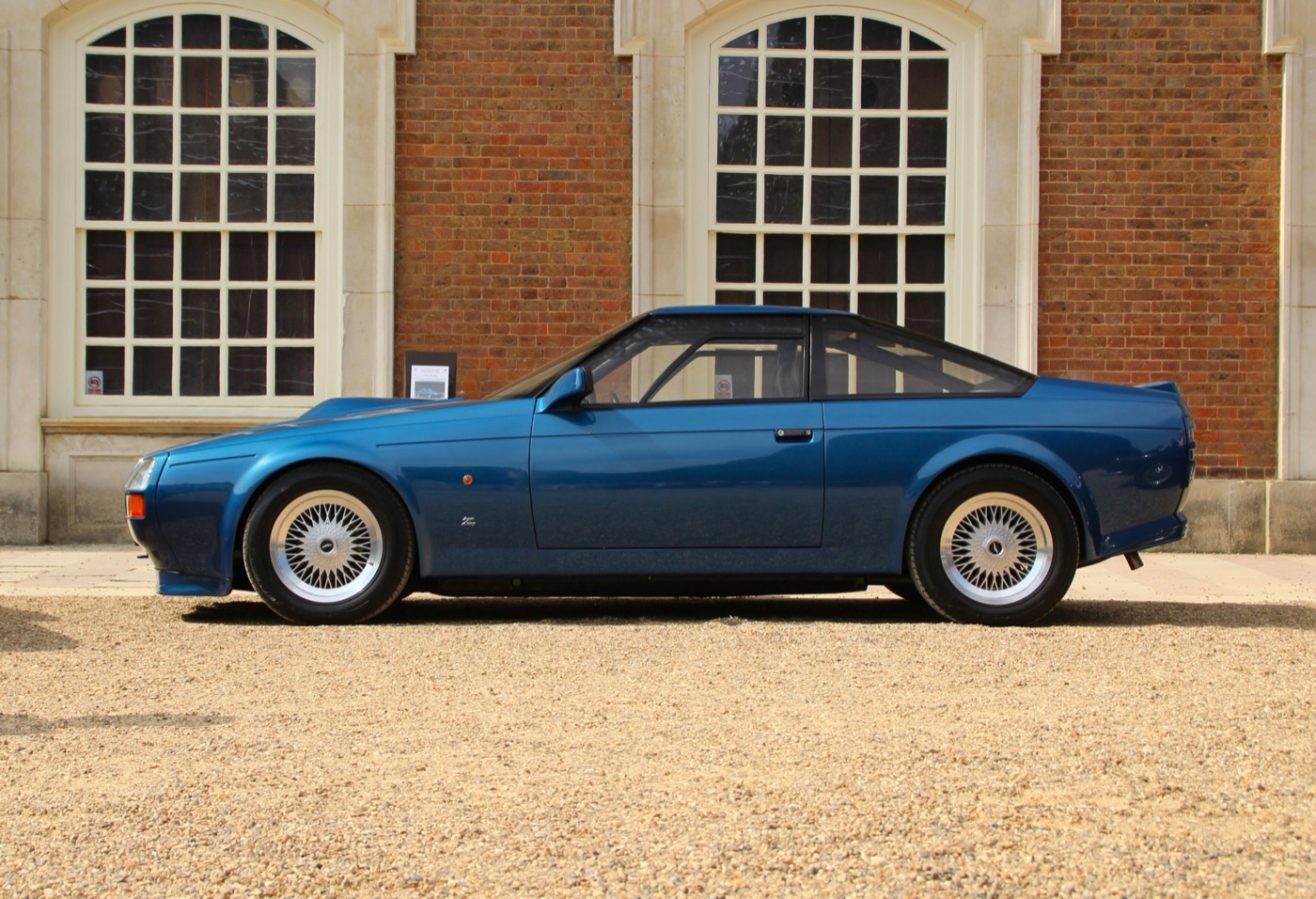
The V8 Zagato Volante convertible
The convertible was shown as a prototype at the Geneva Motor Show in 1987 with a planned run of 25. Aston Martin had sold 25 before production began the next year and built 37 in the end. The Volante has no front grille and covered headlamps, and it used the fuel-injected V8, which needed no bonnet bulge but made more than 100bhp less than the coupé’s carburettor engine. Some owners had the carburettor Vantage engine fitted later, and some had the coupé’s front end too.
Aston Martin DB7 Zagato and DB AR1 (2002–2004)
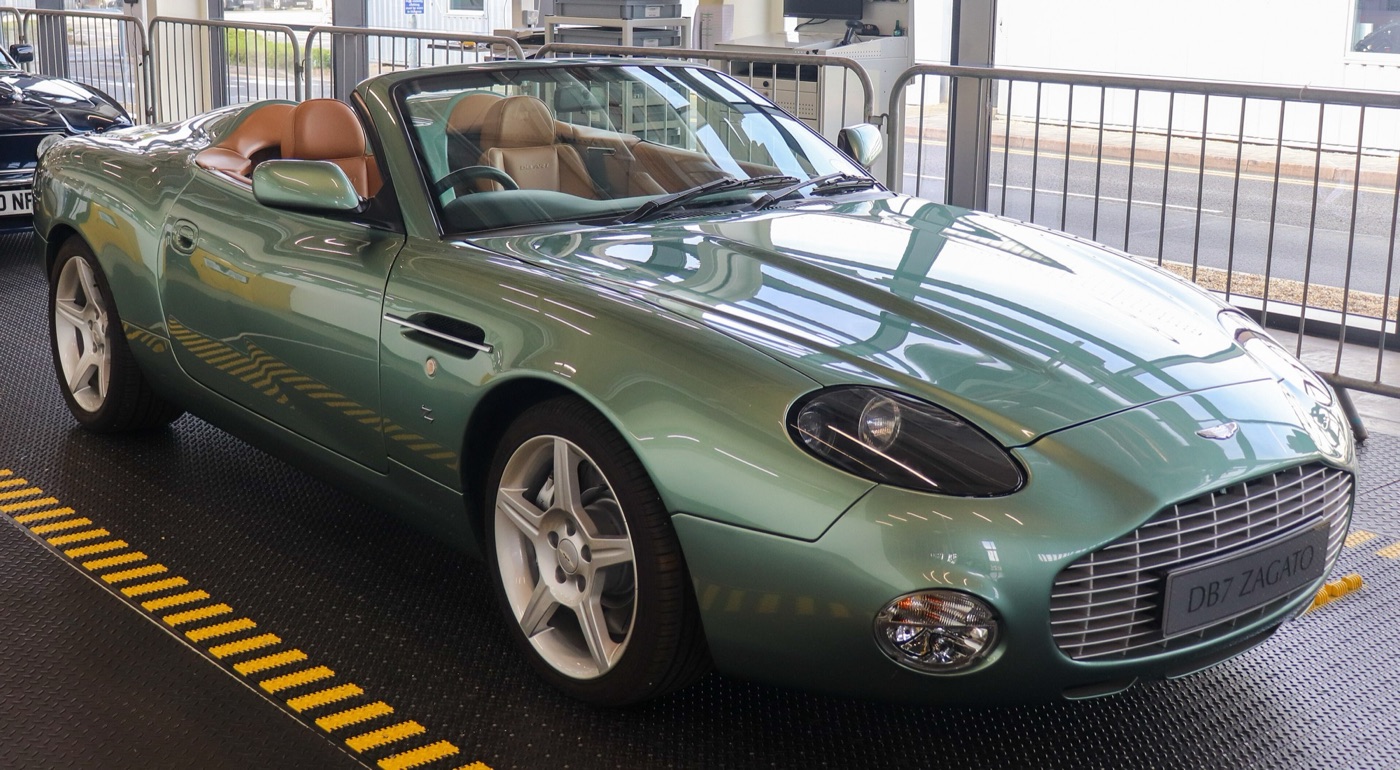
The DB7 Zagato is a shortened Aston Martin DB7 Vantage with a Zagato body, conceived over dinner at the 2001 Pebble Beach Concours by Ulrich Bez and Andrea Zagato and announced at the 2002 Geneva Motor Show. Zagato’s chief designer Nori Harada drew it, and Aston Martin’s new director of design, Henrik Fisker, reviewed the designs, Aston Martin’s history of the DB7 Zagato says. The prototype, “Georgia”, was converted from an early left-hand-drive DB7 Vantage Volante. Aston Martin needed 75 orders to make the run of 99 viable; it showed the car to customers at Gieves & Hawkes, 1 Savile Row, in July 2002, and all 99 were taken before the press launch later that month, with more than 100 people on the waiting list.
The chassis is 151mm shorter than a DB7’s, which trimmed the overhangs and nearly 130lb, and the V12 was paired with a six-speed manual gearbox, RM Sotheby’s 2017 catalogue records. The cars were sold in Europe, Asia and the UK only. Production followed in 2003, with 99 cars for sale and number 100 kept by Aston Martin, SkiddMark’s 2011 report recorded.
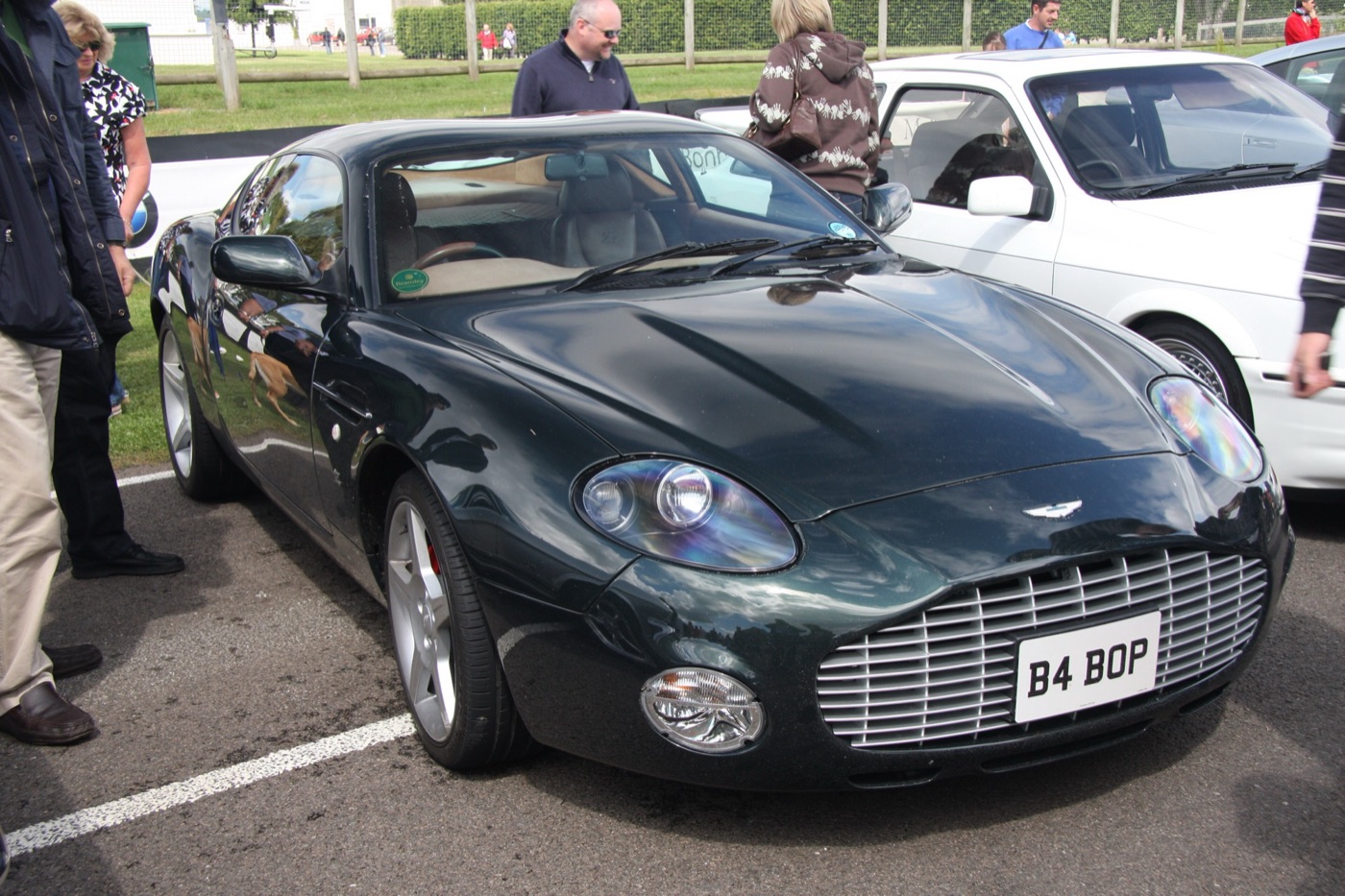
Is the DB AR1 a Zagato?
It was built by Zagato and wears its “Z” badges, but Aston Martin never marketed it as one. The name stands for American Roadster 1, and it is the only DB7 derivative without “DB7” in its name, Aston Martin’s history of the DB AR1 says. The prototype was made in six months from a 1999 DB7 Vantage Volante press car and unveiled at the Los Angeles Auto Show in January 2003; before the show closed, orders had guaranteed a run of 100. It was meant for North America only, so it had no hood. RM Sotheby’s catalogued one in 2022 as a “DB AR1 Zagato”, number 47 of 99, with a rain cover and a claimed 0–60mph time of 4.9 seconds.
Aston Martin V12 Zagato (2011–2013)
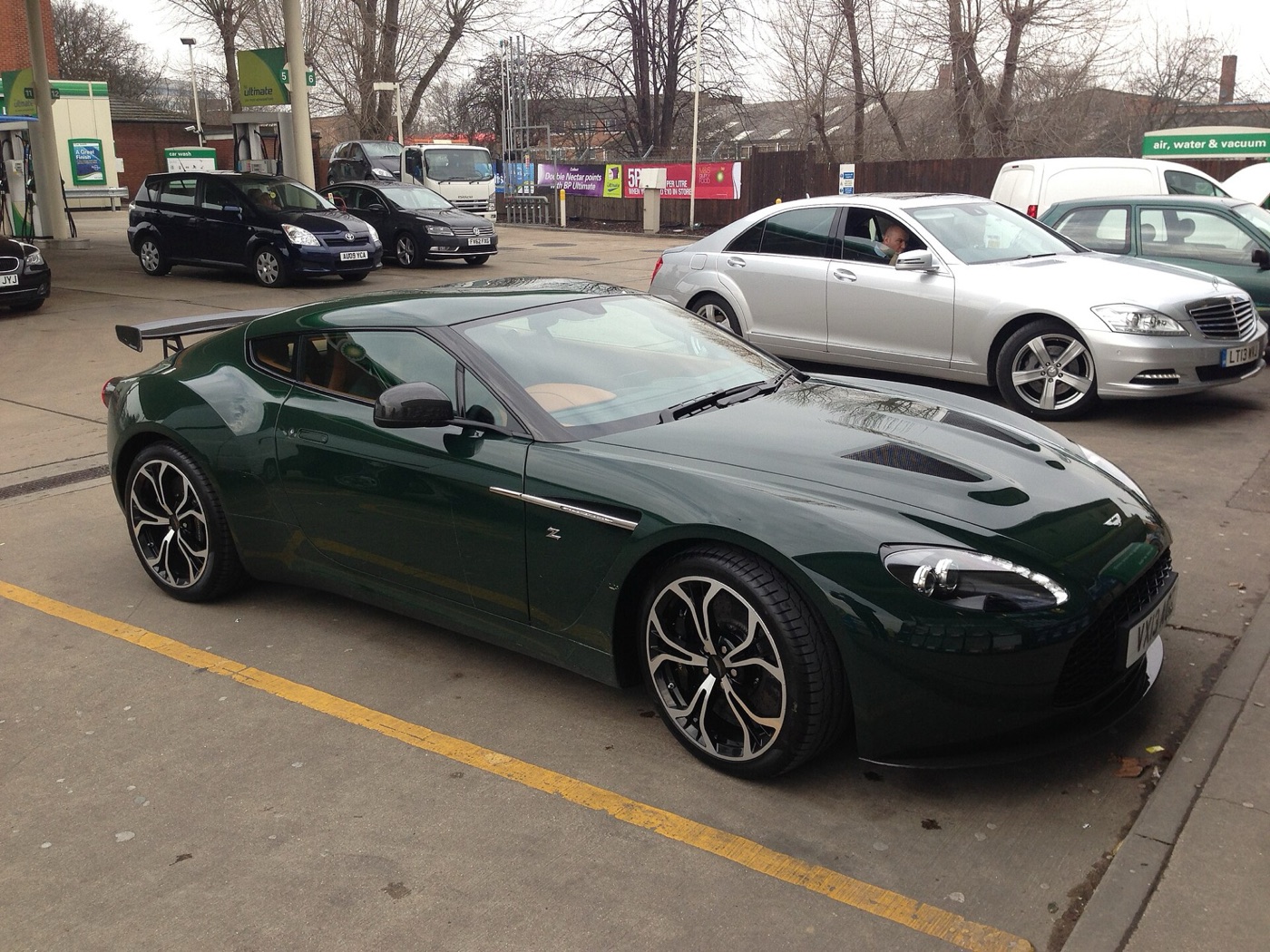
The V12 Zagato is a V12 Vantage with a hand-made aluminium and carbonfibre body, shown at the Concorso d’Eleganza Villa d’Este on Lake Como on 21 May 2011 for the 50th anniversary of the DB4 GT Zagato, where it won the design award for concept cars and prototypes. Design work began in mid-2010 and engineering in January 2011, SkiddMark reported that July; every aluminium panel was shaped on an English wheel over traditionally made body bucks. Its 6.0-litre V12 engine and bonded aluminium platform came from the V12 Vantage. It went on sale at £330,000 before local taxes, with first deliveries due in the second half of 2012.
Ulrich Bez said at its announcement in May 2011: “Now is the right time for a new Aston Martin Zagato and in combining our design intelligence I think we can create something fitting of the iconic DB4GT Zagato that has gone before.” After the reaction at Villa d’Este and the Nürburgring, he was confident enough in demand to approve a limited production run, SkiddMark reported that July. Each road car took 2,000 man-hours and had a six-speed manual gearbox, and Aston Martin did not offer it in North America, according to RM Sotheby’s 2024 Monterey catalogue.
How many V12 Zagatos were made?
Sixty-one road cars were made against 150 planned. RM Sotheby’s gives that figure in two 2024 catalogues: its Paris sale of serial number one, finished in Alloro Green, and its Monterey sale of number 037, one of four believed to be in the United States. Two race cars were built before the road cars.
V12 Zagato Heritage Twins
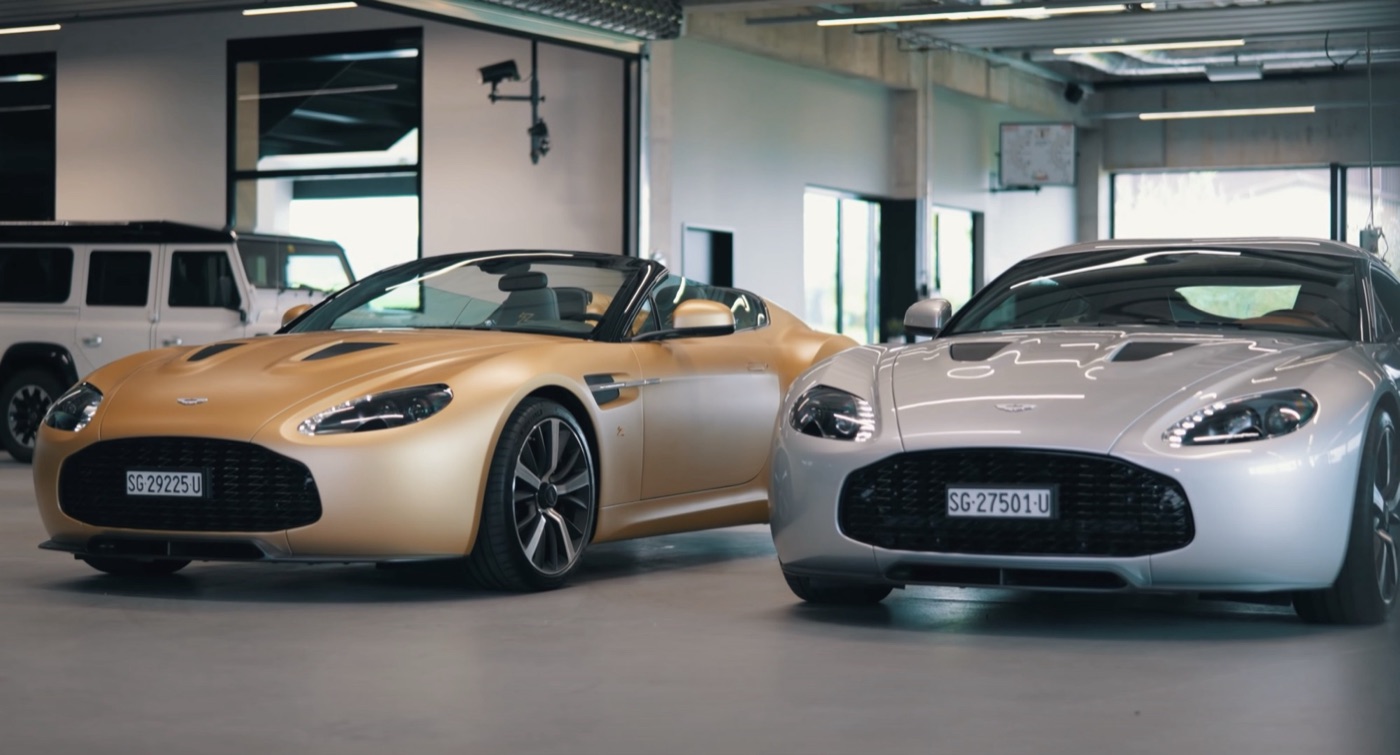
In April 2020 Aston Martin and R-Reforged announced 19 pairs of V12 Zagatos, a coupé and a new Speedster sold together for £1.75 million, Auto Express reported. The bodies are carbonfibre, the reworked 6.0-litre V12 makes 600bhp, 80bhp more than the original’s, and the suspension sits 10mm lower on a track 20mm wider. Each pair takes 16 weeks to assemble; the first was finished in December 2020.
One-off Aston Martin Zagatos
Four Zagato Aston Martins are one-offs. The first was the V12 Vanquish Roadster Zagato of 2004, an open car on the 460bhp V12 Vanquish with a six-speed manual gearbox, which Gooding offered at Scottsdale in 2010 as a one-owner concept car, its lot listing shows.
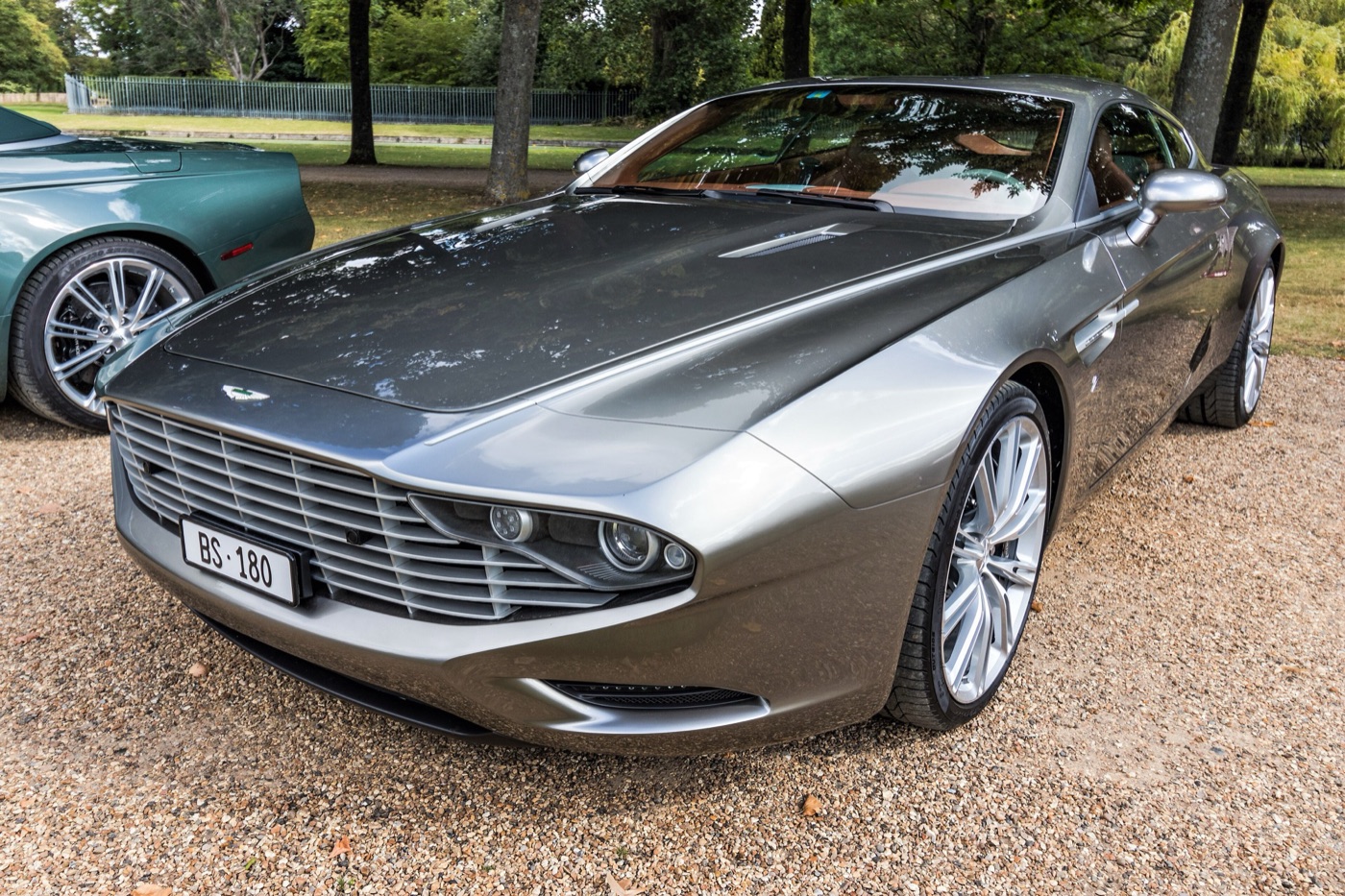
The other three marked Aston Martin’s centenary in 2013. The DBS Coupé Zagato and the DB9 Spyder Zagato were unveiled together at the Aston Martin centenary celebration in Kensington Gardens, London, in July 2013 and then shown at Pebble Beach; the third, a Virage Shooting Brake, appeared at the Chantilly Arts & Elegance Concours in September 2014, according to RM Sotheby’s 2015 catalogue for the DB9 Spyder. The Spyder began as a new US-specification DB9 Volante that its owner shipped to Zagato, and its snub nose and squared tail were meant to recall the DBS, V8 Vantage and V8 Virage of the 1970s and 1980s. The Shooting Brake is built on the Aston Martin Virage of 2011–12.
Aston Martin Vanquish Zagato: the four versions
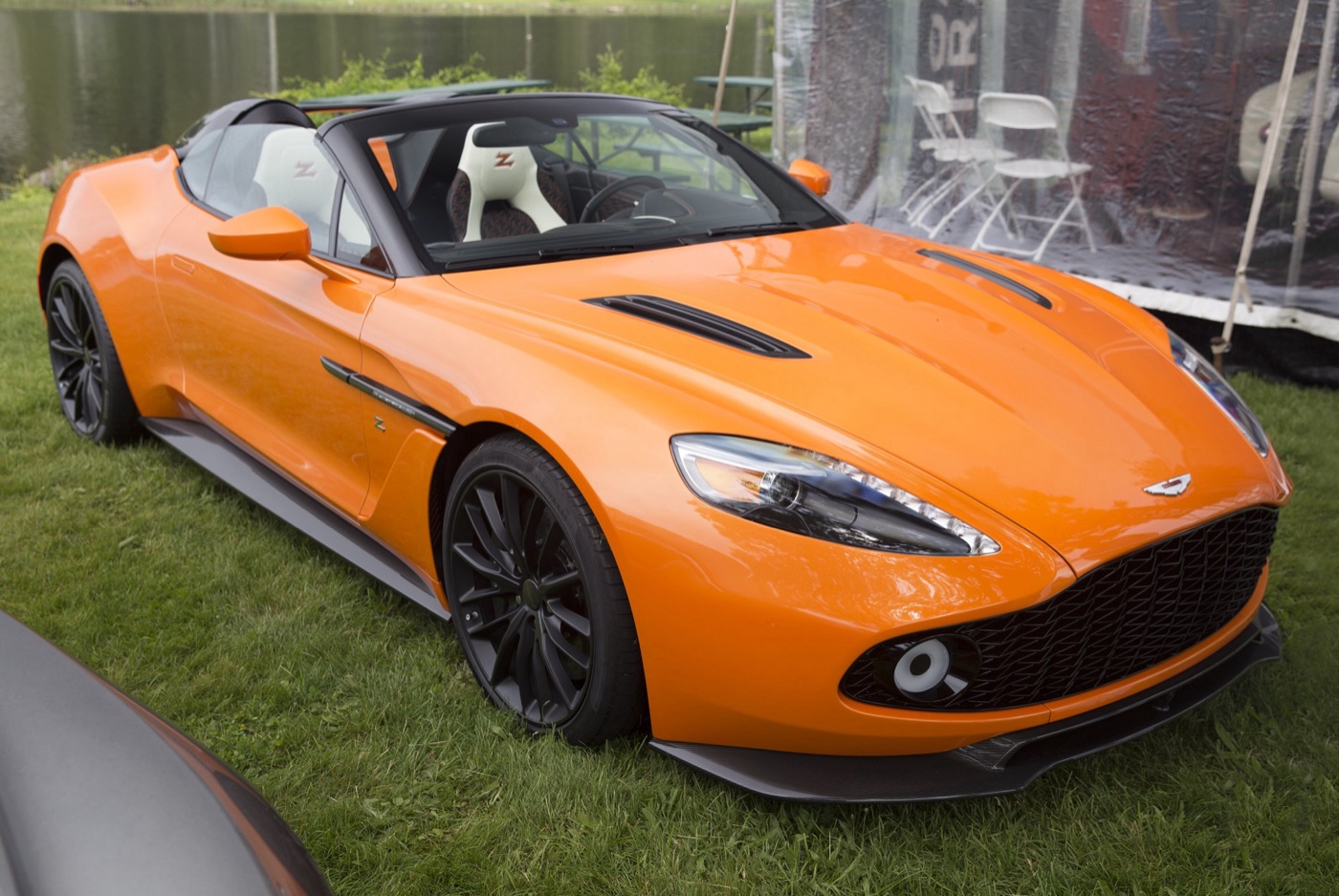
The Vanquish Zagato is a family of four carbonfibre-bodied cars on the Vanquish S, 325 in all: 99 Coupés, 99 Volantes, 99 Shooting Brakes and 28 Speedsters. Aston Martin confirmed the Coupé for production in June 2016 after showing it as a concept at Villa d’Este, with its 5.9-litre V12 tuned to 592bhp, its own suspension settings and a body made mostly of large one-piece panels, CAR reported.
The Speedster was shown at Pebble Beach in August 2017, and the Shooting Brake was announced at the same time for production in 2018, Motoring Research reported. The Speedster has two carbonfibre humps behind the seats with pop-up roll hoops; the Shooting Brake is still a two-seater, with glass let into its long double-bubble roof and fitted luggage behind its tailgate. Aston Martin’s design chief Marek Reichman called it the first time the company had revealed a whole family of Zagato models, and Andrea Zagato said: “To have a creative ‘marriage’ thrive for three generations is something unique as the cars themselves.”
DBS GT Zagato and the DB4 GT Zagato Continuation
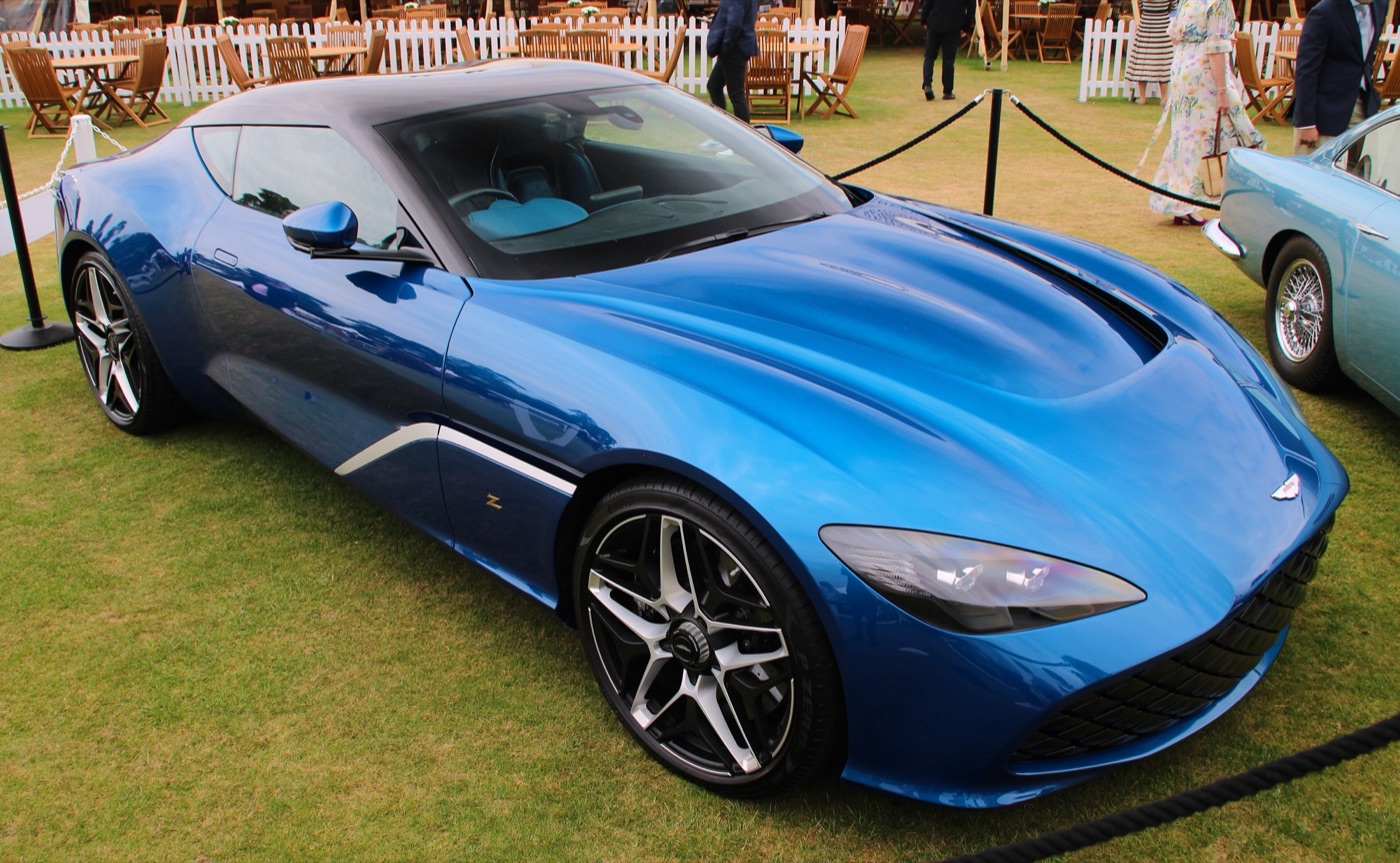
The DBS GT Zagato and the DB4 GT Zagato Continuation are a pair, one new car and one re-creation of the first Zagato, sold together as the DBZ Centenary Collection for £6 million plus taxes to mark Zagato’s centenary in 2019. Aston Martin announced it in September 2018 and limited it to 19 pairs, after the year of Zagato’s founding, 1919, Motoring Research reported.
The DB4 GT Zagato Continuation is built at Aston Martin Works in Newport Pagnell to the 1960s template, with thin aluminium panels over a tubular spaceframe, a four-speed manual gearbox and a six-cylinder engine making over 390bhp, which evo described in July 2019 as a larger version of the DB4 GT Continuation’s 4.7-litre unit. It is not homologated for the road, so it is for track use only. The DBS GT Zagato, built at Gaydon on the DBS Superleggera, has 760bhp, 45bhp more than the car it is based on, and a grille of 108 carbonfibre diamonds that stay closed until the engine starts. Its badges are solid 18-carat gold. The first production DBS GT Zagato was shown at Audrain’s Newport Concours in the United States in July 2019; the Continuations were due to reach owners at the end of 2019 and the DBS GT Zagatos about a year later.
How many Aston Martin Zagatos were made?
About 780 cars, counting every series and one-off in the table below from 1960 to the Heritage Twins. The largest single runs are the 99-car series of the DB7 Zagato, the DB AR1 and three of the four Vanquish Zagatos; the smallest are the later works-approved DB4 GT Zagatos: four Sanction II cars and two Sanction III cars.
| Model | First shown | Number built | Price new |
|---|---|---|---|
| DB4 GT Zagato | London Motor Show, October 1960 | 19 (25 planned) | £5,157 with tax |
| DB4 GT Zagato, Sanction II | Agreed 1987, finished 1991 | 4 | Not published |
| DB4 GT Zagato, Sanction III | Approved 1992 | 2 | Not published |
| V8 Vantage Zagato | Announced Geneva 1985, shown 1986 | 50 production cars; 52 in all | Not published |
| V8 Zagato Volante | Geneva 1987 | 37 (25 planned) | Not published |
| DB7 Zagato | Announced Geneva 2002; Paris 2002 | 99, plus one kept by Aston Martin | Not published |
| DB AR1 | Los Angeles, January 2003 | 99 (a run of 100 guaranteed) | Not published |
| V12 Vanquish Roadster Zagato | 2004 | 1 | One-off |
| V12 Zagato | Villa d’Este, 21 May 2011 | 61 road cars (150 planned), plus the race cars | £330,000 before taxes |
| DBS Coupé Zagato Centennial | Kensington Gardens, July 2013 | 1 | One-off |
| DB9 Spyder Zagato Centennial | Kensington Gardens, July 2013 | 1 | One-off |
| Virage Shooting Brake Zagato | Chantilly, September 2014 | 1 | One-off |
| Vanquish Zagato Coupé | Villa d’Este, 2016 | 99 | About £500,000 (reported) |
| Vanquish Zagato Volante | 2016 | 99 | About £500,000 (reported) |
| Vanquish Zagato Speedster | Pebble Beach, August 2017 | 28 | Over £1 million (reported) |
| Vanquish Zagato Shooting Brake | Announced August 2017 | 99 | About £500,000 (reported) |
| DB4 GT Zagato Continuation | Announced September 2018 | 19 | £6 million a pair with the DBS GT Zagato, before taxes |
| DBS GT Zagato | Audrain’s Newport Concours, July 2019 | 19 | Sold only with the Continuation |
| V12 Zagato Heritage Twins (coupé and Speedster) | April 2020 | 19 pairs (38 cars) | £1.75 million a pair |
Sources: Aston Martin’s model histories; RM Sotheby’s, Gooding and Bonhams catalogues; CAR, Motoring Research, evo and Auto Express; SkiddMark (2011). Each is listed under Sources.
Several counts are disputed. Aston Martin and most catalogues give 19 DB4 GT Zagatos, but the 2018 Bonhams catalogue for 2 VEV calls it “notionally only 19 (actually 20)”, and a Palawan book by Stephen Archer and Simon Harries, reviewed by Motor Sport in January 1999, gave the histories of “all 20”. Aston Martin counts 50 production V8 Vantage Zagatos, all pre-sold, while Gooding’s 2023 catalogue gives 52, of which 21 had left-hand drive. For the DB AR1, Aston Martin says orders guaranteed a run of 100 and RM Sotheby’s numbers its cars out of 99.
Aston Martin Zagatos in racing
Two Aston Martin Zagatos have raced with factory backing: the DB4 GT Zagato in 1961 and 1962, against Ferrari’s 250 GTs, and the V12 Zagato in the Nürburgring 24 Hours of 2011 and 2012.
DB4 GT Zagato: 1 VEV, 2 VEV and the Essex Racing Stable
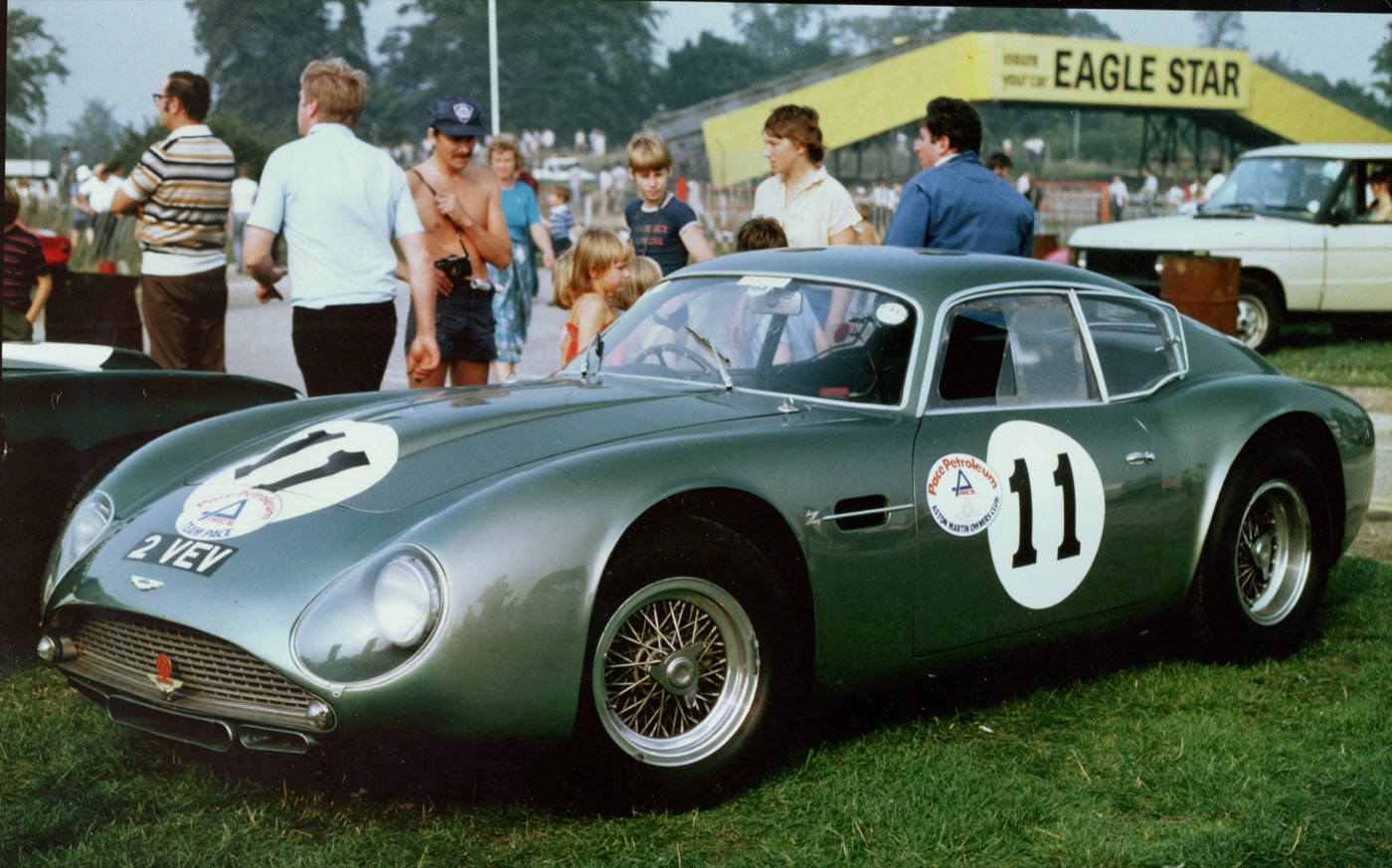
David Brown, who owned Aston Martin, had withdrawn the works team from sports car racing for 1961 and 1962, so Ogier’s Essex Racing Stable ran factory-prepared cars on its behalf. He paid £8,762 for the two new Zagatos, at a 20 per cent discount, and registered them 1 VEV and 2 VEV. At Le Mans in 1961, 1 VEV was shared by Jack Fairman and Bernard Consten and 2 VEV by the Australians Lex Davison and Bib Stilwell; both overheated and retired within the first 90 minutes, because the cylinder heads had not been torqued down after the engines’ first running. The French-entered Zagato of Jean Kerguen and “Franc” ran for 23 hours before its starter motor failed.
On 15 July 1961 Davison won the GT race at the British Grand Prix meeting at Aintree in 2 VEV, passing Jack Sears’ Jaguar E-Type on the last lap. In the RAC Tourist Trophy at Goodwood on 19 August, Roy Salvadori in 1 VEV and Jim Clark in 2 VEV finished third and fourth behind the Ferraris of Stirling Moss and Michael Parkes; the Zagatos needed four tyre changes in the three hours to the Ferraris’ three.
In May 1962 Lucien Bianchi took 2 VEV to the Spa Grand Prix, started from pole, led, and then crashed at Les Combes and landed upside down in a roadside quarry. The car was written off and replaced in July 1962 by a new MP209 car with the same registration. At the Tourist Trophy on 18 August 1962 Clark, fresh from a tyre stop, spun it at Madgwick in front of the race leader, John Surtees, and both cars went into the bank. In the Paris 1,000km at Montlhéry that October Clark had 2 VEV in second place when he handed over to John Whitmore, and two laps later the engine holed a piston.
In Australia the only DB4 GT Zagato sold new there, chassis 0186/R, won its first race, the GT Handicap at Calder in February 1962, with Doug Whiteford driving. A week later he won the GT Scratch race and the South Pacific GT Championship at Longford, where the car was timed at 141mph, RM Sotheby’s 2026 catalogue records.
V12 Zagato at the Nürburgring 24 Hours
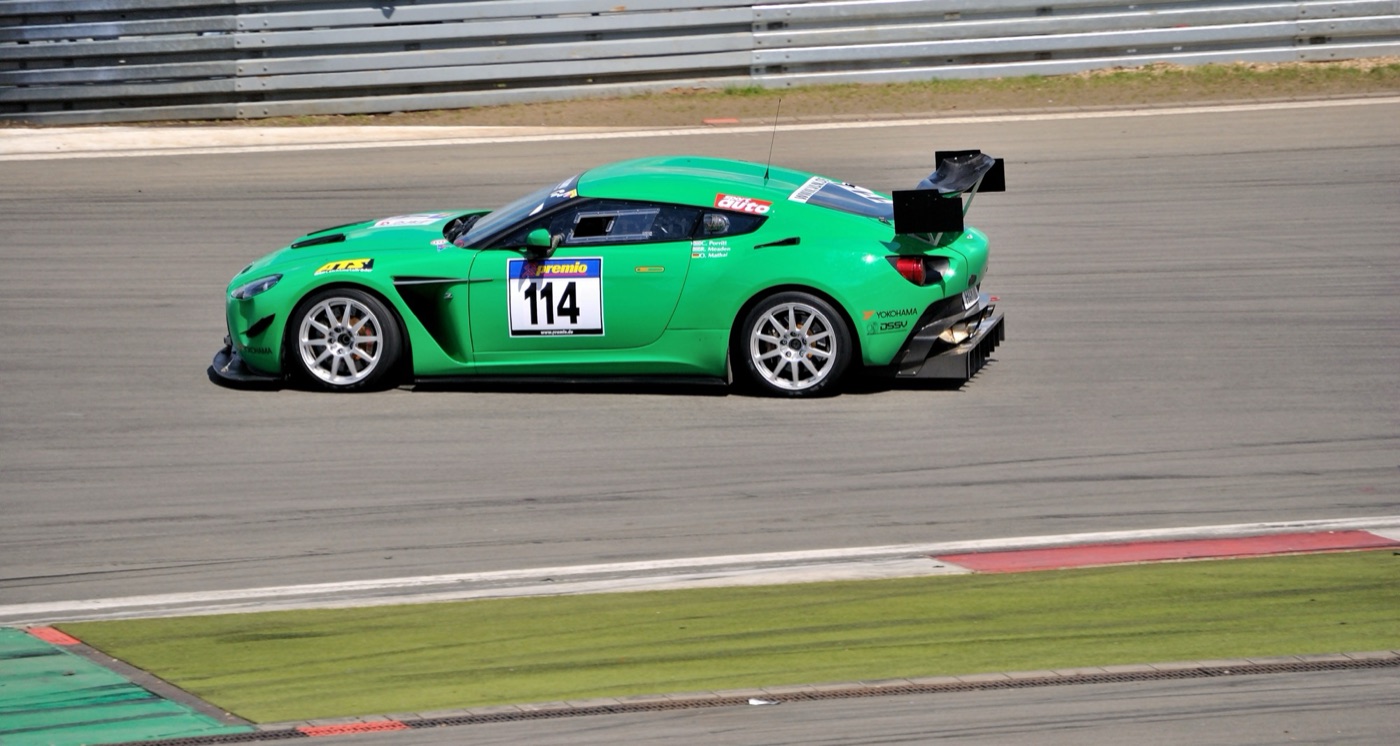
From 2006 Aston Martin signed off each new model by racing a near-standard example in the Nürburgring 24 Hours: the V8 Vantage in 2006, the Sportshift gearbox in 2007, the 4.7-litre V8 Vantage in 2008, the V12 Vantage in 2009 and the Rapide in 2010, a SkiddMark report of June 2011 recorded. In 2011 it entered a prototype. The Villa d’Este show car became race car number 3, “Zag”, in red, and a green sister car, number 5, “Zig”, was built at Gaydon.
The V12 Zagato’s first race, a VLN four-hour round at the Nürburgring on 28 May 2011, lasted five laps before teething problems stopped it, CAR reported. Both cars ran the VLN race on 11 June. At the 24 Hours on 25 and 26 June, Zag was driven by Aston Martin’s chief executive Ulrich Bez, its Nürburgring test centre director Wolfgang Schuhbauer and the journalists Horst von Saurma and Matthew Marsh, and Zig by One-77 chief engineer Chris Porritt, Oliver Mathai, Richard Meaden and Peter Cate. Both roofs carried a “Heart for Japan” dedication after the tsunami that March.
Both cars finished. Zag, number 3, was fifth in SP8 and 89th overall with 119 laps, and Zig, number 5, sixth in class and 111th overall with 113 laps, of 135 cars classified, according to the ADAC’s official class results. Their 232 laps of the 25.378km circuit come to about 5,890km (3,660 miles). Aston Martin’s race-day release of 26 June 2011 has the two cars the wrong way round, with number 5 fifth and number 3 sixth.
In 2012 one V12 Zagato, number 005, returned to the Nürburgring 24 Hours in the livery of Aston Martin’s V12 Vantage GT3s, driven by Bez, Porritt, Schuhbauer and Meaden. It lapped 137 times without a technical fault and finished second in SP8 and 26th overall, Aston Martin’s 2012 race report said; Bez drove it across the line.
Aston Martin Zagato specifications compared
Power has risen from the DB4 GT Zagato’s claimed 314bhp to the DBS GT Zagato’s 760bhp. The table gives each series’ engine and the makers’ figures where a source states them.
| Model | Engine | Power | Claimed performance |
|---|---|---|---|
| DB4 GT Zagato | 3.7-litre twin-plug straight six | 314bhp | Not stated |
| DB4 GT Zagato MP209 | 3.8-litre straight six | Not stated | Not stated |
| V8 Vantage Zagato | 5,340cc V8, four Weber carburettors | 432bhp at 6,200rpm | 0–60mph 4.8sec, 186mph |
| V8 Zagato Volante | 5,340cc V8, fuel injection | Over 100bhp less than the coupé | Not stated |
| DB7 Zagato | 5,935cc V12 | 435bhp | Not stated |
| DB AR1 | 6.0-litre V12 | 435bhp | 0–60mph 4.9sec, 186mph |
| V12 Vanquish Roadster Zagato | 5,935cc V12 | 460bhp | Not stated |
| V12 Zagato | 6.0-litre V12 | 510bhp, 570Nm | 0–62mph 4.2sec, 190mph |
| DB9 Spyder Zagato Centennial | 5,935cc V12 | 510bhp | Not stated |
| Vanquish Zagato (all four) | 5.9-litre V12 | 592bhp | 0–60mph 3.5sec (Coupé, projected) |
| DB4 GT Zagato Continuation | Straight six, from the DB4 GT Continuation’s 4.7-litre unit | Over 390bhp | Not stated |
| DBS GT Zagato | Twin-turbo V12 | 760bhp | Not stated |
| V12 Zagato Heritage Twins | 6.0-litre V12 | 600bhp | Not stated |
Sources: Aston Martin; Bonhams (MP209); Gooding (V8 coupé); RM Sotheby’s (DB7 Zagato, DB AR1, DB9 Spyder); Gooding (Vanquish Roadster); SkiddMark 2011 (V8 performance, V12 Zagato); CAR (Vanquish Zagato); evo (Continuation, DBS GT Zagato); Auto Express (Heritage Twins).
How much is an Aston Martin Zagato worth?
As of October 2026, the last two DB4 GT Zagatos sold at auction made $14.3 million (2015) and £10.1 million (2018), a V12 Zagato sells for at roughly $500,000 to $650,000, and a V8 Vantage Zagato, DB7 Zagato or DB AR1 for roughly $200,000 to $370,000. The original Zagatos are the costly ones: in 2019 evo noted that the £6 million DBZ pair still cost £3 million to £4 million less than an original DB4 GT Zagato.
| Car | Sale | Result |
|---|---|---|
| DB4 GT Zagato, chassis 0186/R | RM Sotheby’s, New York, December 2015 | $14,300,000 |
| DB4 GT Zagato 2 VEV, chassis 0183/R | Bonhams, Goodwood Festival of Speed, 13 July 2018 | £10,081,500 |
| DB4 GT Zagato, chassis 0186/R | RM Sotheby’s, Monterey, August 2026 | Not sold (estimate $12m–$15m) |
| V8 Vantage Zagato, 1988 | Gooding, Pebble Beach, 2019 | $368,000 |
| V8 Vantage Zagato, chassis 20043 | RM Sotheby’s, Monterey, 2019 | Not sold (estimate $475,000–$575,000) |
| V8 Vantage Zagato, 1986 | Gooding, Pebble Beach, 2023 | $212,800 |
| DB7 Zagato, number 40 | RM Sotheby’s, Amelia Island, 2017 | $357,500 |
| DB AR1, number 47 | RM Sotheby’s, Monterey, 2022 | $346,000 |
| DB9 Spyder Zagato Centennial | RM Sotheby’s, Monterey, 2015 | $693,000 |
| V12 Zagato, serial number one | RM Sotheby’s, Paris, 2024 | €455,000 |
| V12 Zagato, number 037 | RM Sotheby’s, Monterey, 2024 | $632,000 |
Sources: the auction houses’ own lot pages and Sotheby’s (the 2015 sale), listed under Sources.
When 0186/R made $14.3 million in 2015 it was the most valuable British car sold at auction. It returned to RM Sotheby’s at Monterey in August 2026 after a Pebble Beach class win in 2019 and did not sell against an estimate of $12 million to $15 million. 2 VEV’s £10,081,500 in 2018 followed 47 years in one family’s ownership, according to Bonhams. The 1986 V8 coupé that made $212,800 in 2023 had been estimated at $300,000 to $400,000, Gooding’s results show.
What critics and designers said
The Autocar wrote in October 1960 that “Zagato bodies are functional, wind-cheating and attractive in line, rather than luxurious or beautiful. That on the Aston is almost austere, as is appropriate to a road-cum-racing car.” Nearly 40 years later LJK Setright’s foreword to a Palawan Press book on the Zagato-bodied DB4s said “It was not, I suspect, a very good car at all”, and found “frightful bodges” in Zagato’s bodywork, Motor Sport’s January 1999 review reported; the reviewer added that the cars were “still wonderful to look on”.
Aston Martin’s own history of the V8 Vantage Zagato admits that “many were not overly impressed by the final styling”, and names the bonnet bulge as one of the most controversial parts. On performance, RM Sotheby’s 2019 catalogue says the car was compared in its day with the Ferrari F40. Of the V12 Zagato, Marek Reichman said in July 2011, SkiddMark reported, that it was “an elegant yet brutal design which reflects the great balance between race performance and pure Aston Martin style”, and that the DB4 GT Zagato was “a true icon, powerful and graceful”.
Questions
What does Zagato mean on an Aston Martin?
It is the name of the Italian coachbuilder that bodied or restyled the car. Ugo Zagato founded the firm in Milan in 1919, and its first Aston Martin was the DB4 GT Zagato of 1960.
Is Zagato owned by Aston Martin?
No. Zagato is a separate Italian company, and Andrea Zagato was its chief executive in 2017. Aston Martin Lagonda did buy a 50 per cent share in it in the mid-1980s, as production of the V8 Vantage Zagato began.
What is the most expensive Aston Martin Zagato?
The DB4 GT Zagato. Chassis 0186/R sold for $14.3 million at RM Sotheby’s in New York in December 2015, then the highest price paid at auction for a British car.
How fast is the Aston Martin V12 Zagato?
Aston Martin gave 0–62mph in 4.2 seconds and a top speed of 190mph for the 510bhp road car in 2011.
Is the DB4 GT Zagato Continuation road legal?
No. It is not homologated for the road and is sold for track use only, as part of the £6 million DBZ Centenary Collection with a road-going DBS GT Zagato.
Did Jim Clark race a DB4 GT Zagato?
Yes. He drove the Essex Racing Stable’s 2 VEV to fourth place in the 1961 RAC Tourist Trophy at Goodwood, and raced it again in the 1962 Tourist Trophy and the 1962 Paris 1,000km at Montlhéry.
Where are Aston Martin Zagatos built?
It depends on the car. The DB4 GT Zagato’s chassis were made at Newport Pagnell and bodied in Milan, the DB7 Zagato’s body was made in Zagato’s Milan coachworks, the Vanquish Zagato and DBS GT Zagato were built at Gaydon, and the Heritage Twins at R-Reforged in Warwick.
Sources
- Aston Martin, historic model pages: “DB4 GT Zagato” (London 1960, 314bhp, 25 planned at £5,157, 19 made, Spada, build route, lightweight cars, Sanction II and III); “Vantage Zagato” (Geneva 1985, 50 pre-sold, Weber carburettors, 300km/h, styling); “V8 Zagato Volante” (50 per cent of Zagato, Geneva 1987, 25 planned, 37 built, injected engine); “DB7 Zagato” (Pebble Beach 2001, Harada, Fisker, Georgia, 99, Savile Row); “DB AR1” (never marketed as a Zagato, Los Angeles 2003, run of 100); “V12 Zagato” (double-bubble roof). Read October 2026.
- Aston Martin, race release, 26 June 2011, reproduced by Endurance-Info: V12 Zagatos complete the Nürburgring 24 Hours (the cars’ numbers and nicknames; it reverses their finishing order).
- ADAC, 39th ADAC Zurich 24h-Rennen, 23–26 June 2011, official results printed 14 July 2011: class results and overall results, via the Internet Archive (V12 Zagato class and overall places, laps, drivers, 25,378m lap, 135 classified).
- Aston Martin, race release, 20 May 2012, reproduced by Endurance-Info: “Triple-podium for Aston Martin at the Nürburgring 24 Hours” (number 005, drivers, 137 laps, second in SP8, 26th overall).
- Bonhams, Goodwood Festival of Speed Sale, 13 July 2018, lot 335, “2 VEV”, 1961 DB4GT Zagato, chassis 0183/R (Essex Racing Stable, £8,762, Le Mans, Aintree and Tourist Trophy results, Spa crash, MP209, 19 or 20 cars, £10,081,500).
- RM Sotheby’s, The Monterey Auction 2026, lot 338, 1962 DB4 GT Zagato, chassis 0186/R (Australian racing, 2015 sale, estimate, not sold).
- Sotheby’s, “One of the World’s Most Coveted Aston Martins Comes to Auction”, 2026 (Zagato’s founding, Spada’s words, The Autocar 1960, $14,300,000 in 2015).
- Motor Sport, April 1989, p. 71, “The Aston Martin DB 4, 5 & 6” (compression ratio, no two of the 19 identical, all surviving; the DB5 as a development of the DB4).
- Motor Sport, January 1999, p. 86, “Aston Martin Zagato”, book review (all 20 cars, Setright’s foreword).
- Gooding & Company: Pebble Beach 2023, lot 108, 1986 V8 Vantage Zagato (52 coupés, 21 left-hand drive, 5,340cc, 432bhp, $212,800); Pebble Beach 2019, lot 22, 1988 V8 Vantage Zagato ($368,000); Scottsdale 2010, lot 169, 2004 Zagato Vanquish Roadster (one-off, 460bhp, six-speed manual).
- RM Sotheby’s: Monterey 2019, lot 109, V8 Vantage Zagato chassis 20043 (rebuild, last coupé, July 1991, F40 comparison, estimate); Amelia Island 2017, lot 113, DB7 Zagato no. 40 (Paris 2002, double-bubble roof, 151mm, 435bhp, markets, $357,500); Monterey 2022, lot 306, DB AR1 no. 47 of 99 (435hp, 0–60mph, 186mph, rain cover, $346,000); Monterey 2015, lot 229, DB9 Spyder Zagato Centennial (the three centenary cars, Kensington Gardens, Chantilly, $693,000); Paris 2024, lot 135, V12 Zagato serial number one (61 of 150, €455,000); Monterey 2024, lot 318, V12 Zagato no. 037 (61 road cars, 2,000 man-hours, North America excluded, two race cars, $632,000).
- CAR: “Aston Martin V12 Zagato (2011) makes its racing debut”, 31 May 2011 (VLN, five laps); Vanquish Zagato enters limited production, 22 June 2016 (99 at Gaydon, 592bhp, carbonfibre, 3.5sec).
- Motoring Research: Vanquish Zagato Speedster and Shooting Brake revealed, 16 August 2017 (325 cars, prices, Reichman and Andrea Zagato); “Aston Martin DBZ Centenary Collection: the £6 million ‘old and new’ duo”, 19 September 2018 (19 pairs, £6 million, Sanction cars).
- evo, “760bhp Aston Martin DBS GT Zagato revealed with 3D-printed gold”, 9 July 2019 (DBS GT Zagato and Continuation specification, build sites, deliveries, Sanction dates, original’s value).
- Auto Express, Vantage V12 Zagato Heritage Twins, 21 April 2020, updated 3 December 2020 (19 pairs, £1.75 million, R-Reforged, 600bhp).
- SkiddMark, “Aston Martin celebrates 50th anniversary year of the DB4GT Zagato”, May 2011 (Bez, Elio and Gianni Zagato, V8 Vantage Zagato performance, DB7 Zagato production); “Aston Martin’s V12 Zagato prepares itself for the Nürburgring 24H” and “Aston Martin V12 Zagatos debut at the Nürburgring 24H”, June 2011 (VLN of 11 June, cars, drivers, earlier Nürburgring entries); “Aston Martin confirms production of the V12 Zagato”, July 2011 (price, specification, build, Reichman).