Audi RS2: the Porsche-built Avant, its specs, numbers made and values
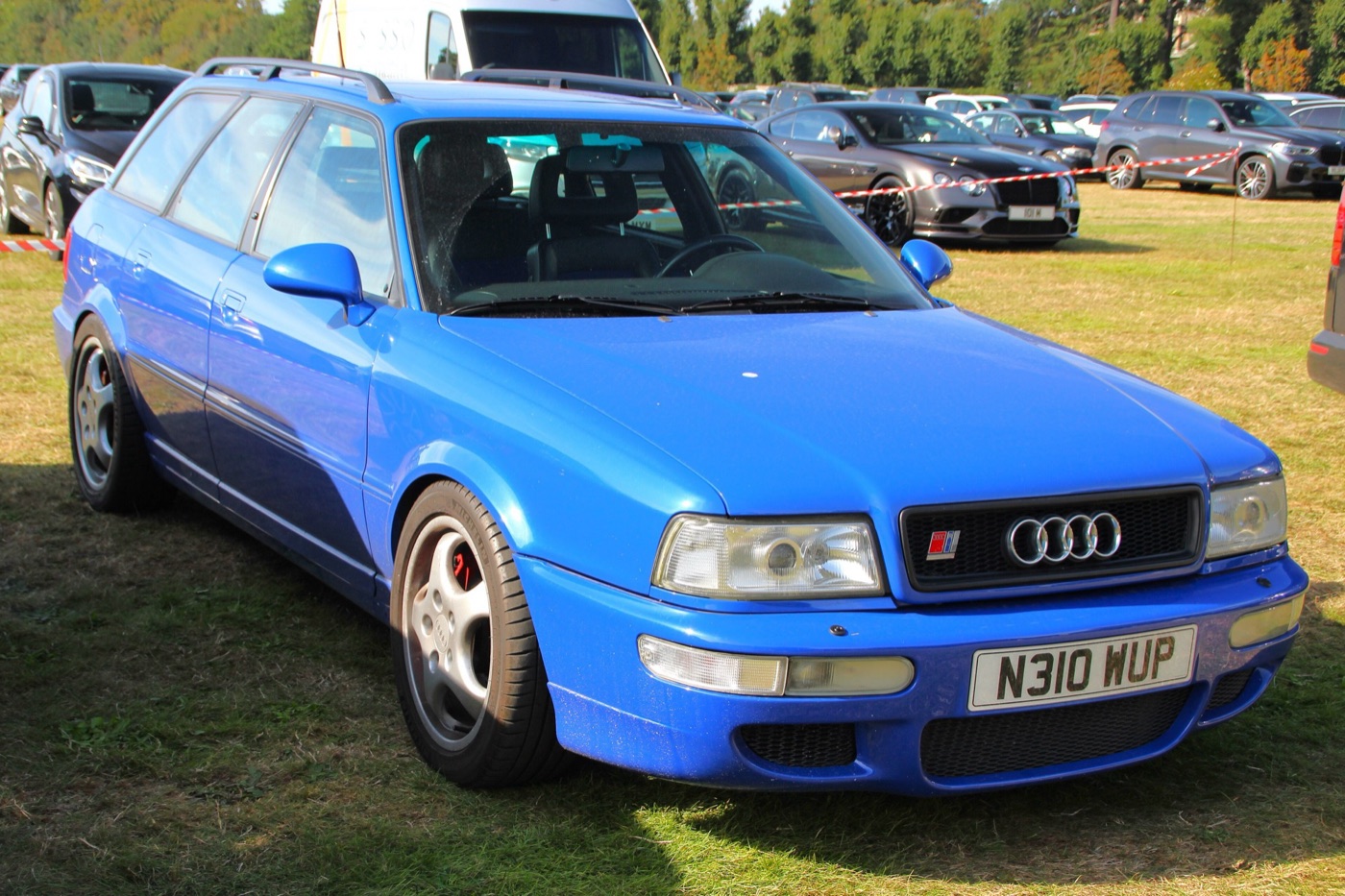
The Audi RS2 is the high-performance Audi 80 Avant estate that Porsche developed for Audi and assembled in Zuffenhausen from March 1994 to July 1995: a 2.2-litre turbocharged five-cylinder with 315 PS (311 bhp), quattro four-wheel drive and a six-speed manual gearbox. It was Audi’s first RS model and, by Porsche’s 2021 account of the project, the world’s fastest estate car when it went on sale, with a top speed of 262 km/h (163 mph) and no electronic limiter.
Porsche puts production at 2,891 cars, where Audi had planned 2,200. In the second quarter of 2026, 127 RS2s were on UK records, 31 of them licensed for the road, and from January 2021 to October 2026 the car sold at auction for between about $38,000 and $105,000. Autocar’s road test of 1994 timed one from rest to 30 mph in 1.5 seconds, quicker than the McLaren F1 it had measured over the same distance.
History of the Audi RS2
The first Audi RS was a commission: Audi wanted a car that would lift its image and keep up with the BMW M3, and it asked Porsche to develop and build it (Porsche, 2021). Audi announced the car at the Frankfurt motor show (IAA) in 1993, and it went on sale the following March, on time despite a tight schedule and budget.
Why did Porsche build the Audi RS2?
Porsche had the capacity and the record. Customer development projects kept its engineers busy in what Porsche calls the economically difficult 1990s, and Michael Hölscher, who led the RS2 project at Porsche, told the Porsche Newsroom that the Mercedes-Benz 500 E, developed with Mercedes a few years earlier, had made Porsche’s name as a development partner that delivered fast, high-quality results. evo reports that the RS2 was known internally as P1, the P for Porsche, and that Ferdinand Piëch, who had worked at Porsche in the 1960s and early 1970s, sent the job to Zuffenhausen because Audi’s own engineers were busy with the new A4, A6 and A8.
The demand was for more than 300 PS from the five-cylinder, which Audi’s S2 already ran at 230 PS. “At first we were horrified at the level of power asked of us,” Hölscher said, as quoted by auto motor und sport, which names Audi’s technical director Herbert Demel, who became head of Audi in 1994, as his opposite number in Ingolstadt. The magazine adds that the 80 Avant had been on sale only since 1992, and by 1994 one Audi 80 in three was an Avant.
Built in the Rössle building at Zuffenhausen
Audi supplied the painted shells of the Audi 80 and the components carried over from its other models; Porsche supplied the new parts and the development work, and assembled the cars in the Rössle building (Rössle-Bau) of its Zuffenhausen works in Stuttgart, where the Mercedes-Benz 500 E had been built (Porsche, 2021). The same building had turned out all 284 Porsche 959s from 1986, according to auto motor und sport. “Around 20 per cent of the RS2 stems from Porsche,” Hölscher estimated.
The RS2 arrived as production of the Audi 80 was ending. Audi’s press release of July 2026 for its five-cylinder exhibition places it “toward the end of the Audi 80 (B4) production run”, and the A4 (B5) that replaced the 80 in 1994 had no five-cylinder engines at all. Its engine belongs to the five-cylinder family of the Audi Quattro; auto motor und sport notes that the same in-line design was the basis of the rally engine Audi used in the world championship from 1981 to 1986.
Audi RS2 engineering: what Porsche changed
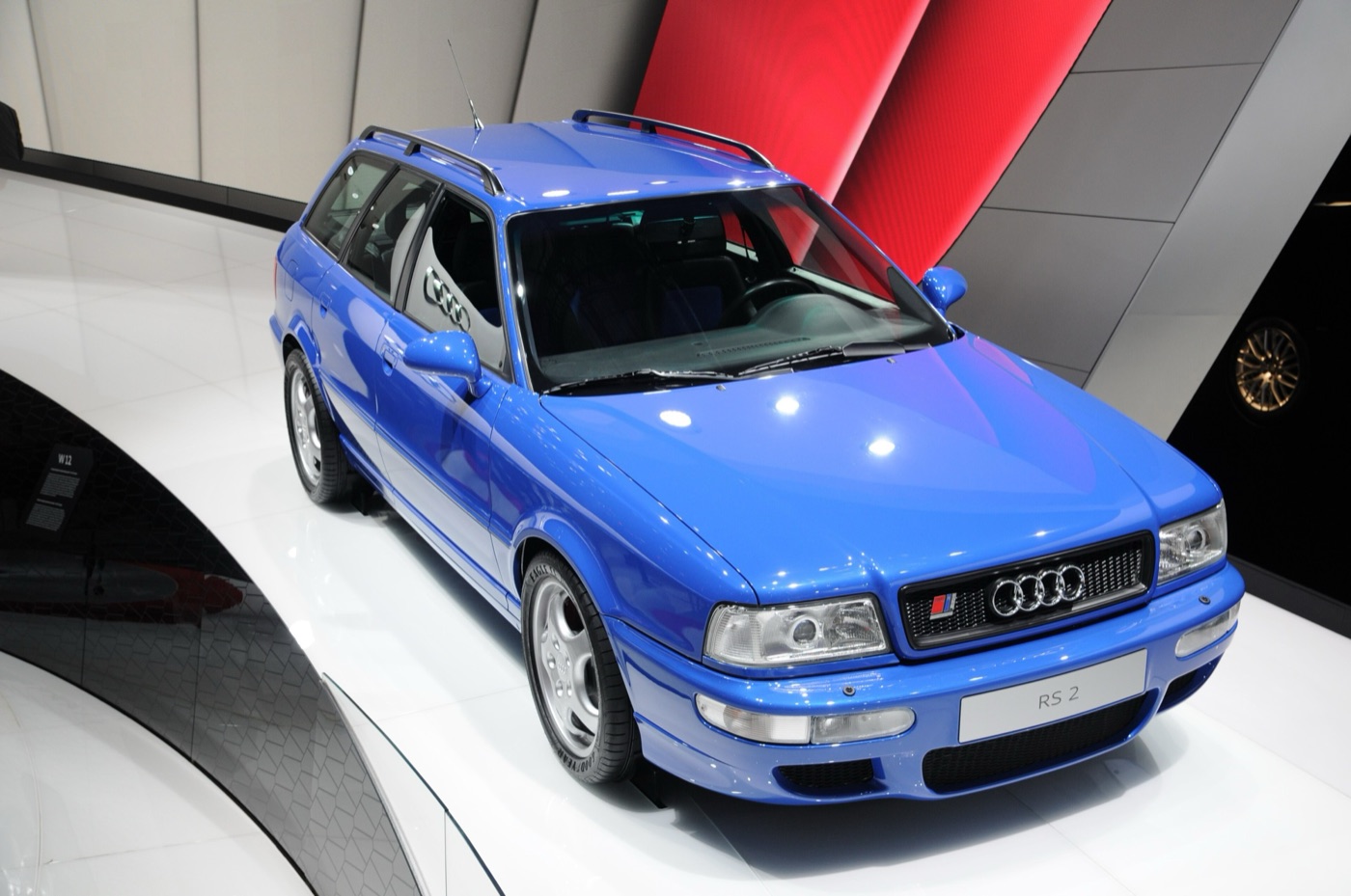
Porsche reworked the engine, gearbox, brakes and suspension of the Audi 80 Avant and fitted parts from its own sports cars, leaving the body shell and most of the cabin as Audi built them.
The engine
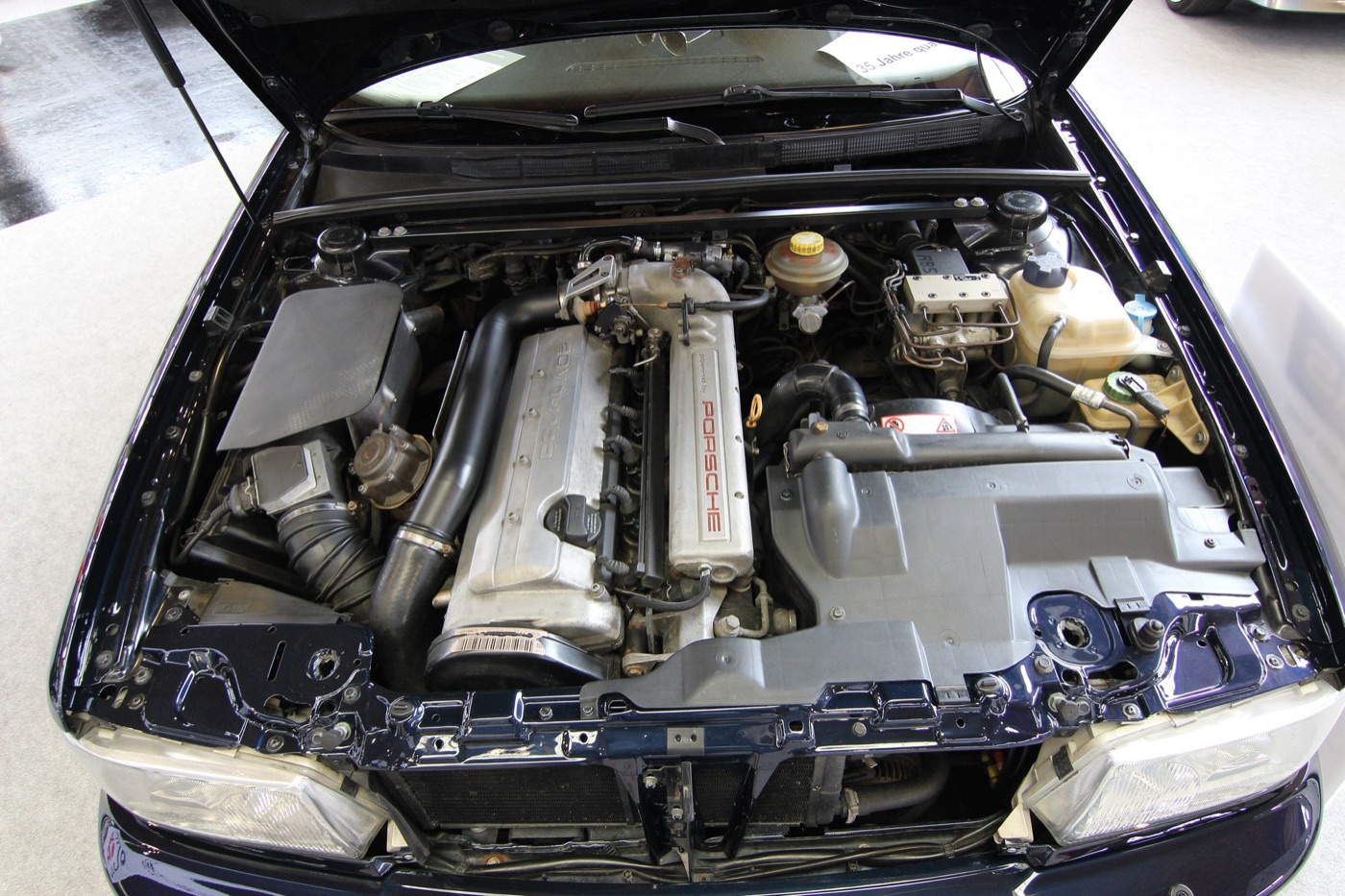
The engine is Audi’s 2,226 cc in-line five with four valves per cylinder, which in the RS2 produces 232 kW (315 PS) at 6,500 rpm and 410 Nm at 3,000 rpm: the most powerful five-cylinder production engine Audi had built, in Audi MediaCenter’s description of the RS 2. Porsche fitted a bigger KKK turbocharger (Kühnle, Kopp und Kausch was a Daimler-Benz subsidiary at the time) and raised the boost to 1.4 bar, with better charge-air cooling, new intake passages and a larger exhaust (auto motor und sport); evo adds a new Bosch engine management system. Hagerty puts the turbo at 30 per cent bigger than the S2’s and lists a new camshaft, new injectors and a modified engine control unit.
Compression is 9.0:1. The engine was set up for super plus fuel but, according to Auto Zeitung’s buying guide, knock control on each cylinder let it run on ordinary super with little loss of power, and Porsche lettering on the cylinder head marks the changes. Hölscher still talks about the turbo lag: “Quite a few drivers were not terribly fond of the sudden push, while proud RS2 owners have always loved the turbocharger” (Porsche, 2021).
Gearbox and quattro four-wheel drive
The only gearbox is a six-speed manual, which Auto Zeitung notes was still unusual at the time. The quattro four-wheel drive system is permanent, with a Torsen centre differential, and a lock for the rear axle’s differential can be switched in by hand for pulling away on a poor surface (Auto Zeitung). evo describes the button on the transmission tunnel, marked Diff, and notes that the diff lock lets go by itself above about 15 mph.
Brakes, wheels and suspension
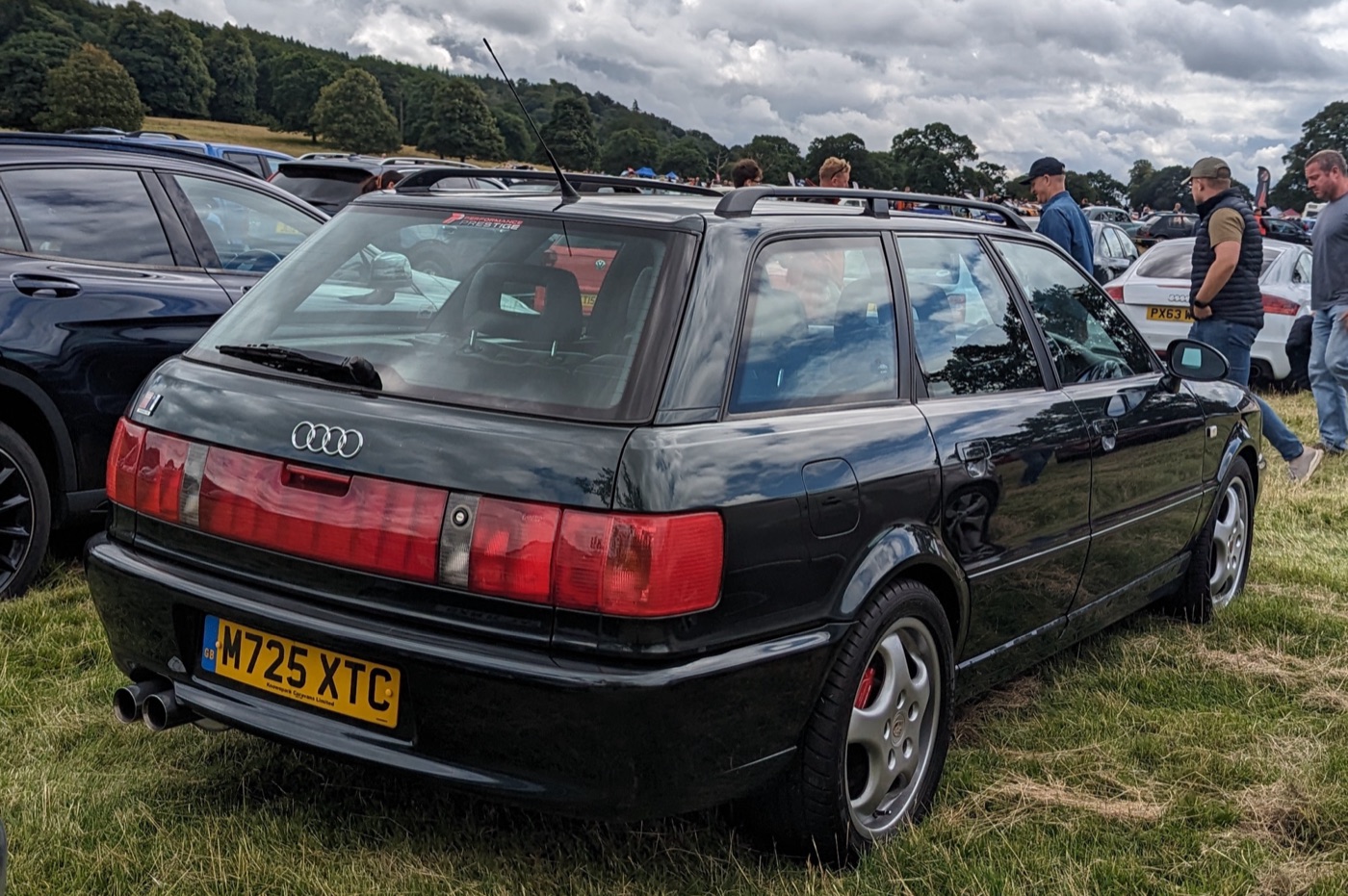
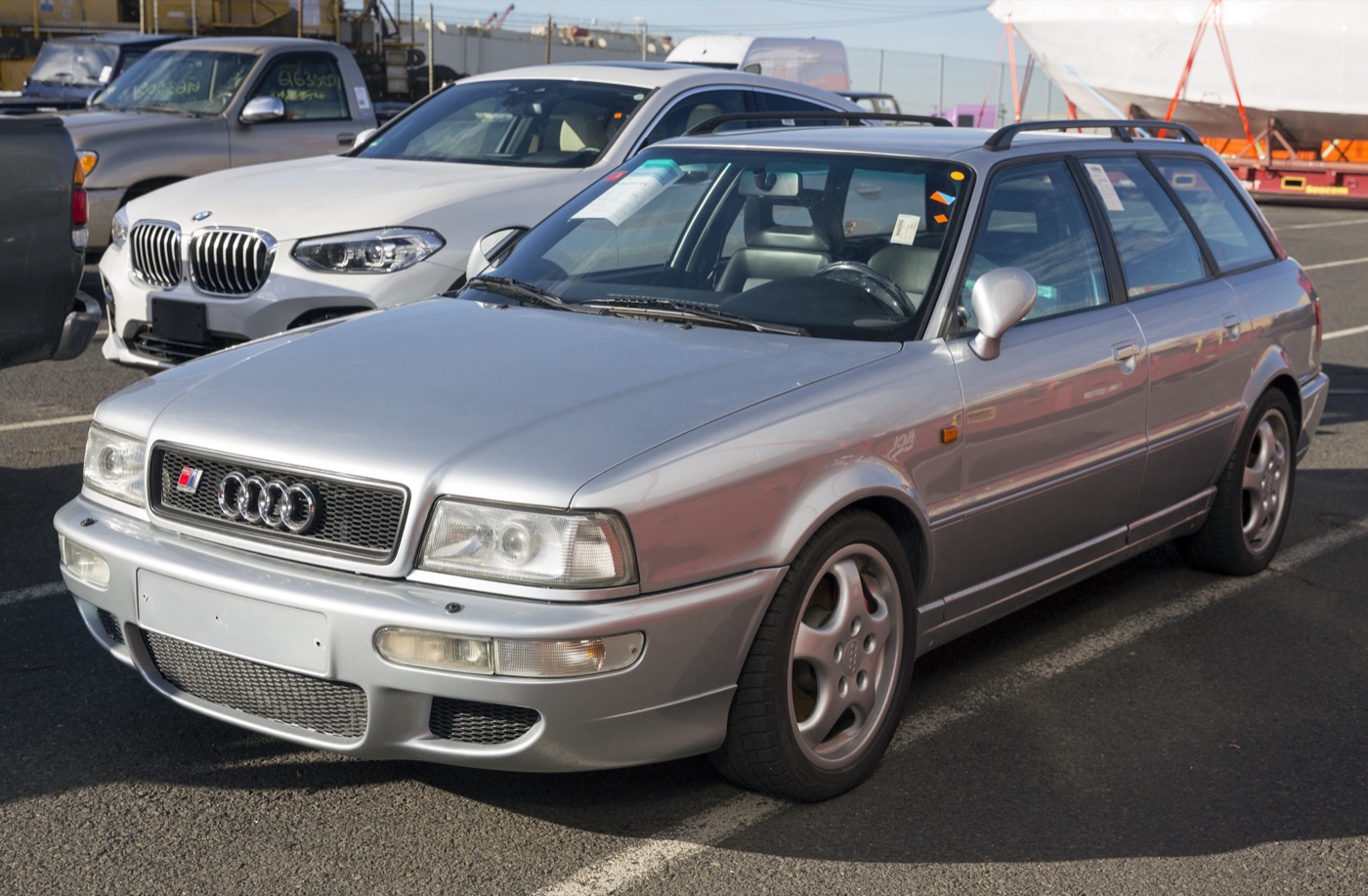
The brakes came from the Porsche 968 (the 968 Club Sport, according to evo and Classic & Sports Car), with red calipers carrying white Porsche lettering. The disc sizes are given two ways: Auto Zeitung says the 304 mm front discs were replaced by 322 mm discs soon after production began, while Classic & Sports Car lists 304 mm front and 299 mm rear ventilated discs as standard, with 322 mm front and 299 mm rear cross-drilled discs as an option. The 17-inch alloy wheels are Porsche Cup designs (Porsche, 2021) on 245/40 tyres. Porsche fitted different dampers, lowered the car and replaced the pressed-steel wishbones with cast ones; Auto Zeitung adds that the ABS was set to intervene only under heavy pedal pressure close to locking.
Body, badges and cabin
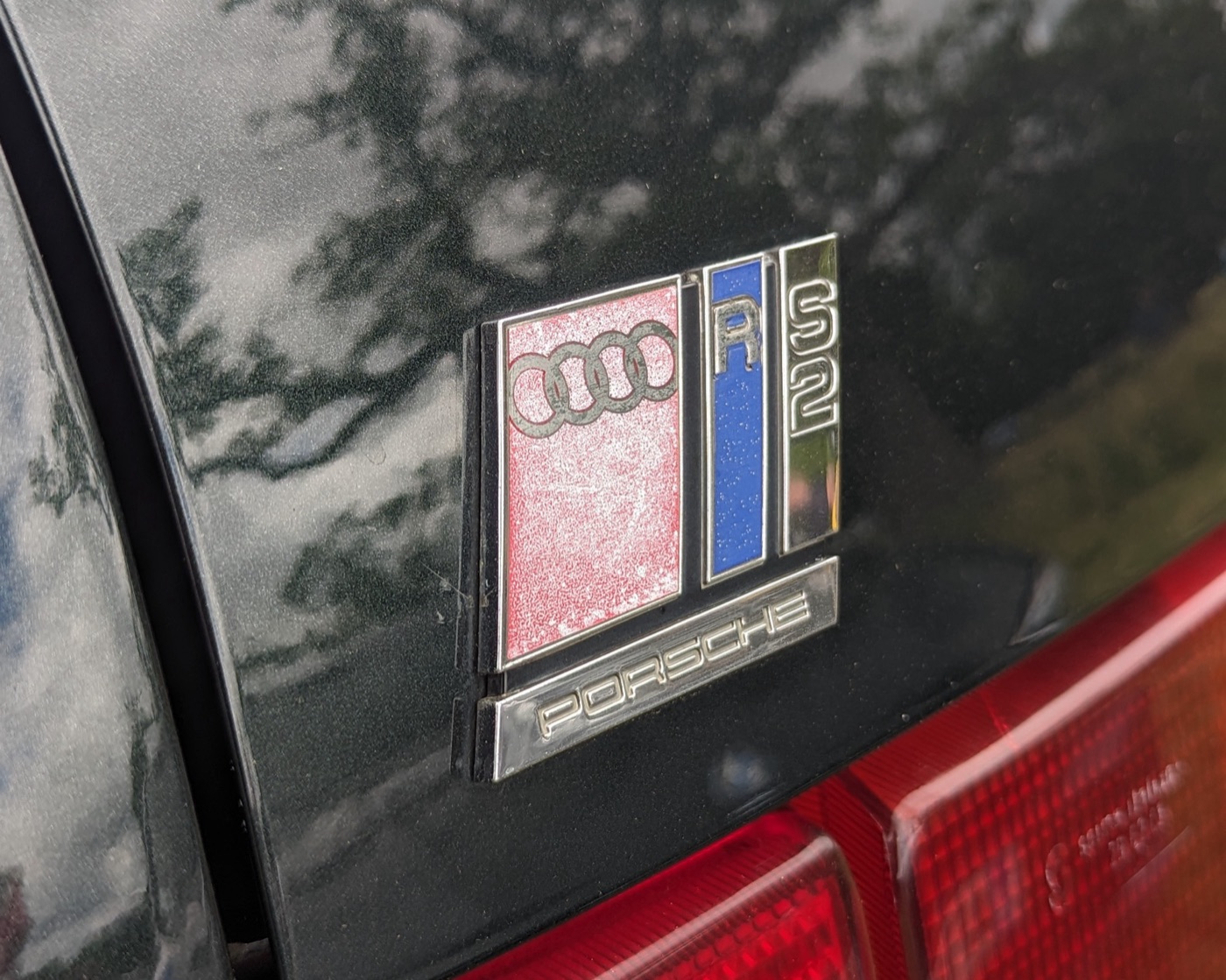
The visible Porsche parts are the indicators, fog lights and a light bar from the 964 and 993 generations of the 911, plus the door mirrors, the front and rear bumpers, the dials and the door handles (Porsche, 2021). The front bumper has three air intakes, for the intercooler and the brakes, like the 993 Carrera 4S and Turbo (Auto Zeitung), and the rear number plate moved down into the bumper (auto motor und sport). The word Porsche sits under the RS 2 badge on the grille and the tailgate.
Inside, the RS2 has a three-spoke leather steering wheel of its own and Recaro sports seats (Hagerty), and buyers chose Alcantara seat centres, some in bold colours, or leather, with carbon or wood trim (auto motor und sport); climate control was an option (Auto Zeitung). The speedometer reads to 300 km/h.
Nogaro blue and the other colours
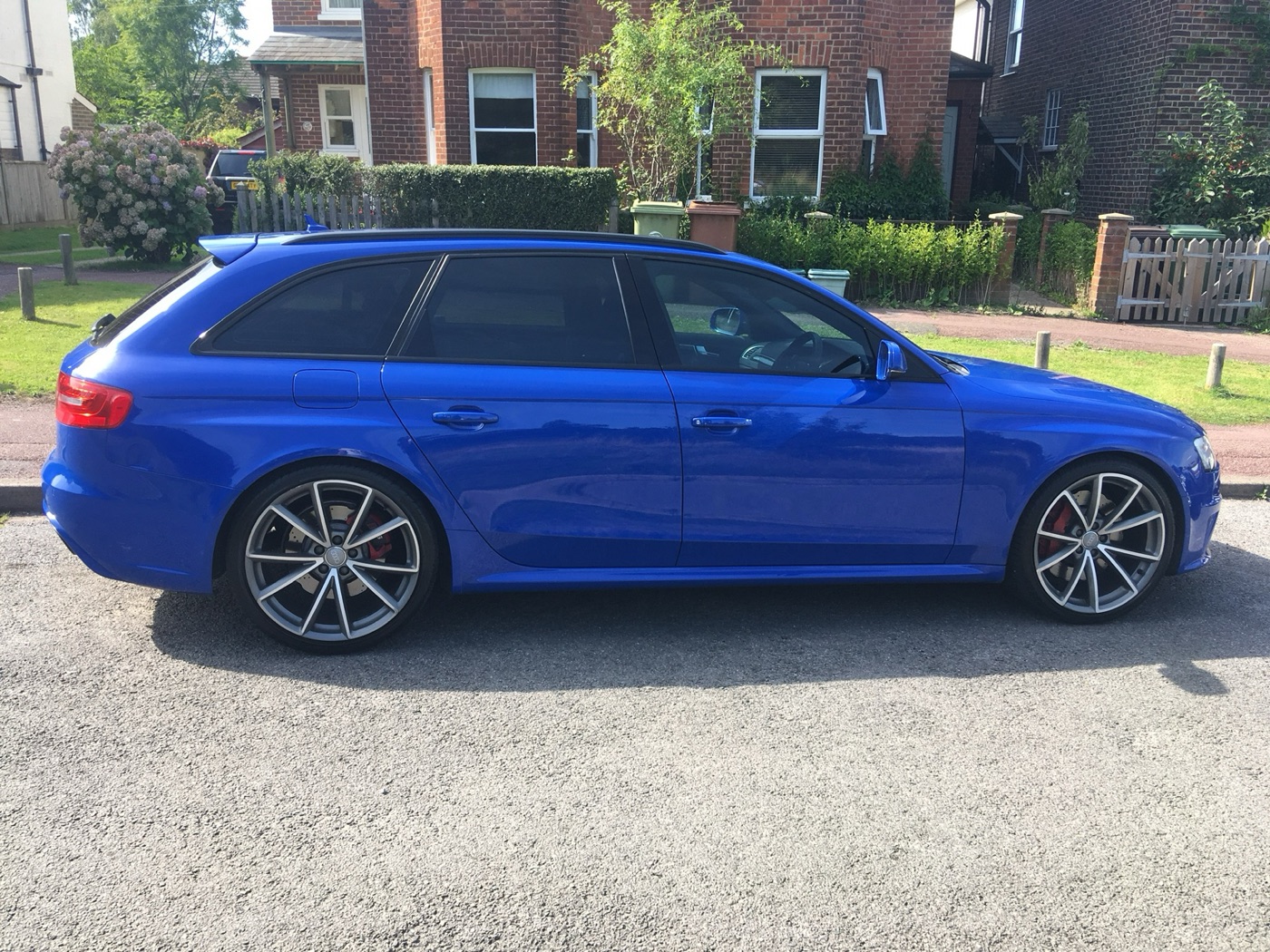
Nogaro blue pearl effect was at first available on the RS2 alone, according to auto motor und sport. The colour is named after the Nogaro circuit near the Pyrenees, where Audi works driver Frank Biela won two rounds of the 1993 French touring car championship on the way to the title in an Audi 80 quattro, and the magazine says the paint itself came from Porsche’s range. Hagerty counts 13 colours in all; the car Audi Tradition brought to Zuffenhausen in 2021 was Tropic green.
Audi RS2 specs and performance
The RS2 has 315 PS from 2.2 litres, reaches 100 km/h in 5.4 seconds by Audi’s figure and has a top speed of 262 km/h (163 mph).
| Figure | Audi RS2 |
|---|---|
| Built | March 1994 to July 1995, Porsche, Zuffenhausen |
| Engine | 2,226 cc in-line five-cylinder, 20 valves, belt-driven camshafts, KKK turbocharger at 1.4 bar, mounted lengthways at the front |
| Compression ratio | 9.0:1 |
| Power | 232 kW (315 PS, 311 bhp) at 6,500 rpm |
| Torque | 410 Nm (302 lb ft) at 3,000 rpm |
| Gearbox | Six-speed manual; ratios 3.50, 1.89, 1.32, 1.03, 0.86, 0.71; final drive 4.11:1 |
| Drive | quattro permanent four-wheel drive, Torsen centre differential, switchable rear differential lock |
| Suspension | MacPherson struts at the front, double wishbones at the rear, anti-roll bars at both ends |
| Brakes | Porsche 968 system; 304 mm front and 299 mm rear ventilated discs, 322 mm front cross-drilled optional (Classic & Sports Car); 322 mm front standard soon after the start of production (Auto Zeitung) |
| Weight | 1,595 kg (auto motor und sport, evo, Classic & Sports Car) |
| Wheels and tyres | 17-inch Porsche Cup alloys, 245/40 tyres |
| Length, width, height | 4,510 mm, 1,695 mm, 1,386 mm |
| Wheelbase | 2,597 mm |
| Boot (VDA) | 370 to 650 litres |
| 0–100 km/h | 5.4 seconds (Audi); 5.2 seconds (auto motor und sport test) |
| Top speed | 262 km/h (163 mph) |
| Fuel consumption | 9.2 litres per 100 km (Audi’s figure) |
| Price new | DM 98,900 in Germany (March 1994); £45,705 in the UK |
How fast is an Audi RS2?
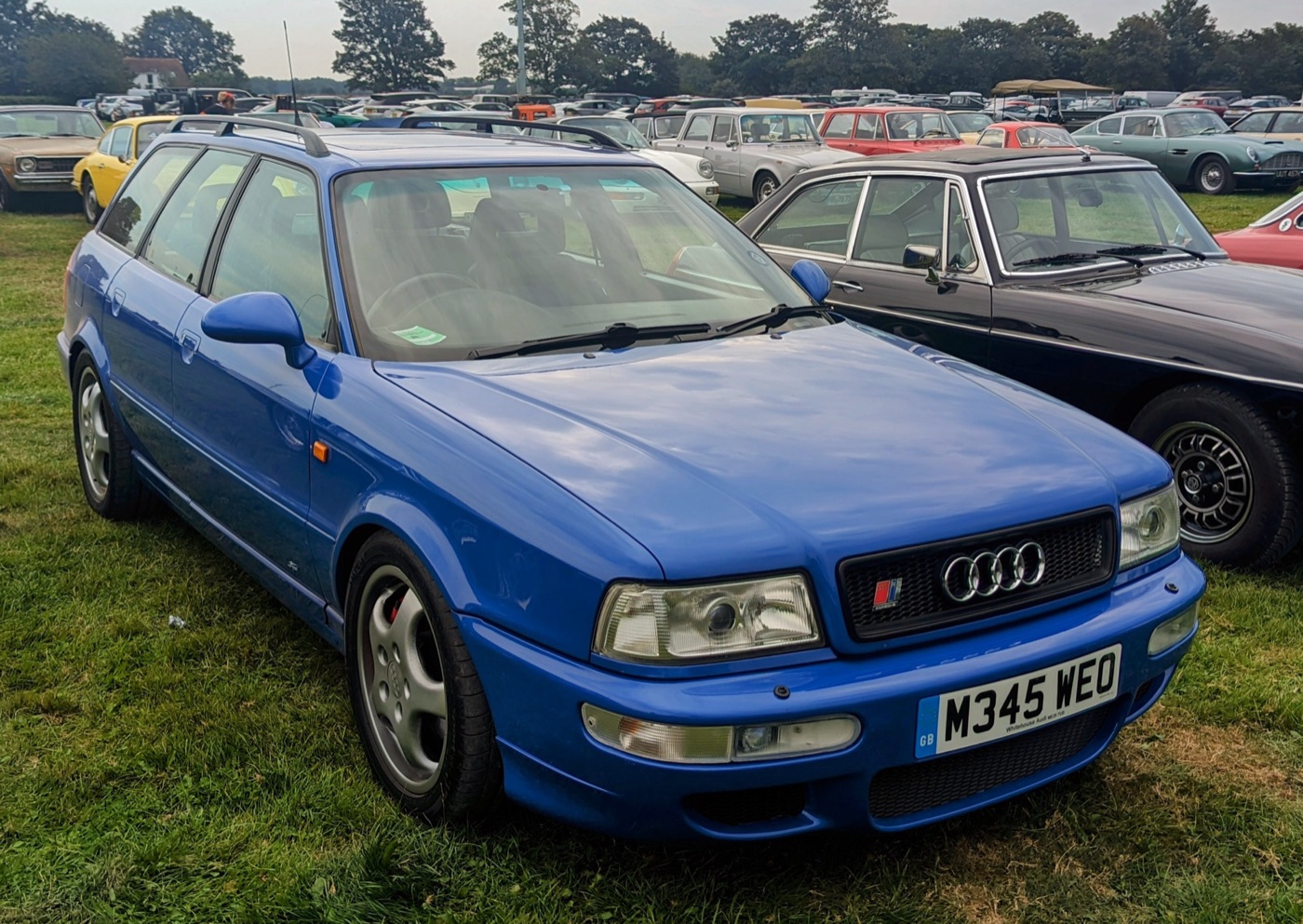
Audi gives 0–100 km/h in 5.4 seconds and a top speed of 262 km/h; auto motor und sport recorded 5.2 seconds in its own test, “on the level of a 993 Carrera”, and Auto Zeitung 5.6 seconds. Autocar’s road test of 1994 timed 0–30 mph in 1.5 seconds, and Car magazine’s 2012 guide gives 0–62 mph in 4.8 seconds.
Autocar’s 1994 test recorded 40–60 mph in third in 2.8 seconds, 60–80 mph in fourth in 3.6 seconds, 80–100 mph in fifth in 5.1 seconds and 100–120 mph in sixth in 7.7 seconds, and said the RS2 would “stay with a Ferrari 456 most of the way past the quarter-mile post on to the kilometre”.
Was the RS2 the fastest estate car in the world?
Yes, at its launch: Porsche calls it the world’s fastest estate in 1994 and the first Audi to go faster than 250 km/h, and Audi describes it as the most powerful production estate in the world at the time. Ralf Friese, a historian at Audi Tradition, told the Porsche Newsroom that it was the first Audi without an electronic limiter, although it was capable of more than 250 km/h.
How many Audi RS2s were made?
Porsche, which built them, puts the total at 2,891 RS2 Avants (“With a relatively low production number of 2,891 units, it is a rare sight nowadays,” Hölscher said in 2021), and Auto Zeitung gives the same figure against an original plan of 2,200. Other published totals differ by a few dozen cars:
| Source | Figure given |
|---|---|
| Porsche Newsroom, Michael Hölscher (2021) | 2,891 |
| Auto Zeitung buying guide | 2,891, of 2,200 planned |
| autorevue (Austria) | 2,891 built by 1996, of 2,200 planned |
| auto motor und sport | 2,896 sold in 18 months from March 1994 |
| SkiddMark (February 2014) | around 2,908 |
| Car magazine (2012) | 2,881 |
autorevue adds that Swiss buyers took a large share of them.
How many right-hand-drive RS2s were built?
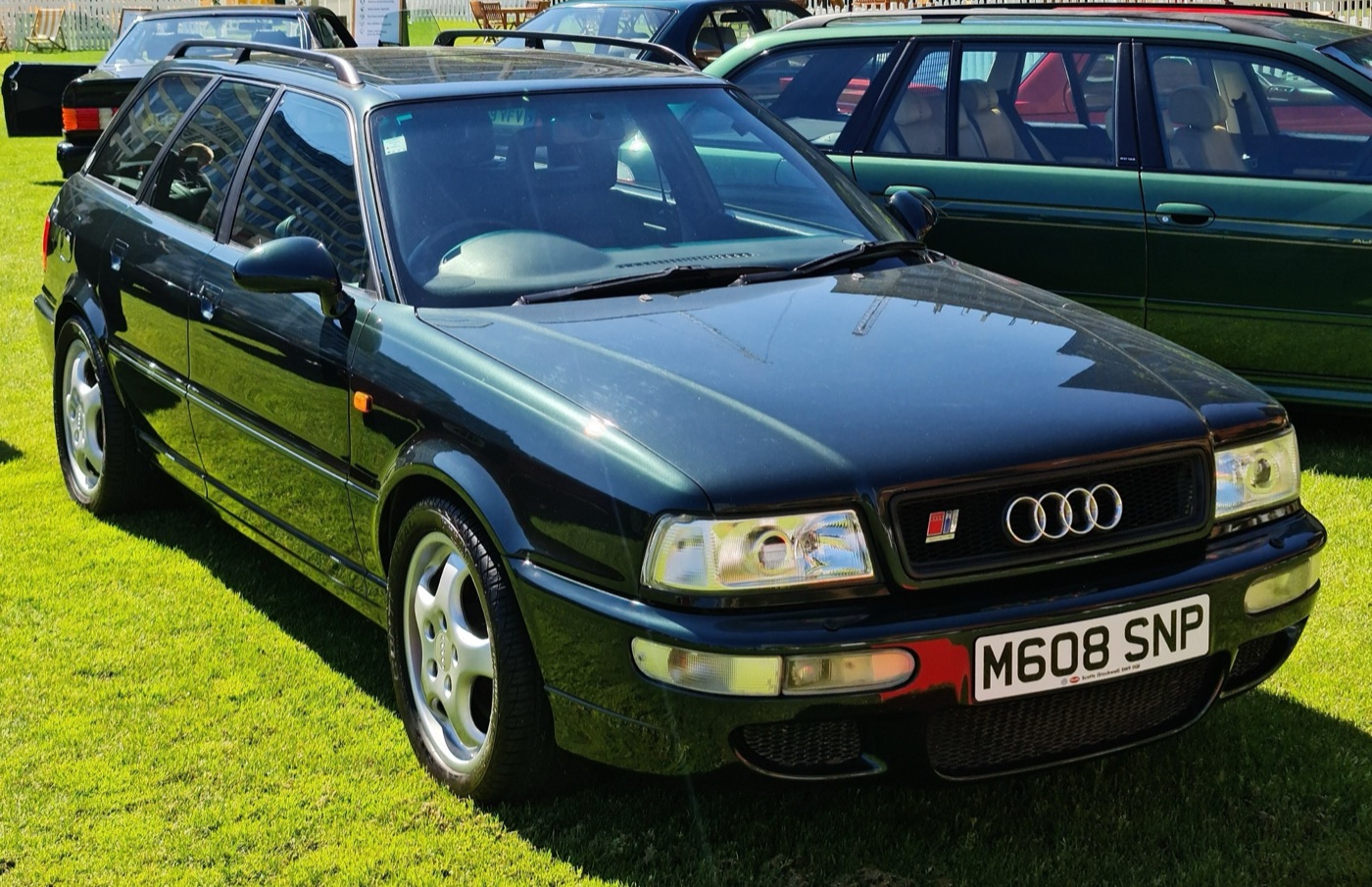
Car magazine’s 2012 guide says 182 RS2s came to the UK officially. Classic & Sports Car gives 180 right-hand-drive cars in all, shared between the UK, Hong Kong, New Zealand and South Africa. Autocar records the car reaching the UK in August 1994.
The RS2 saloons
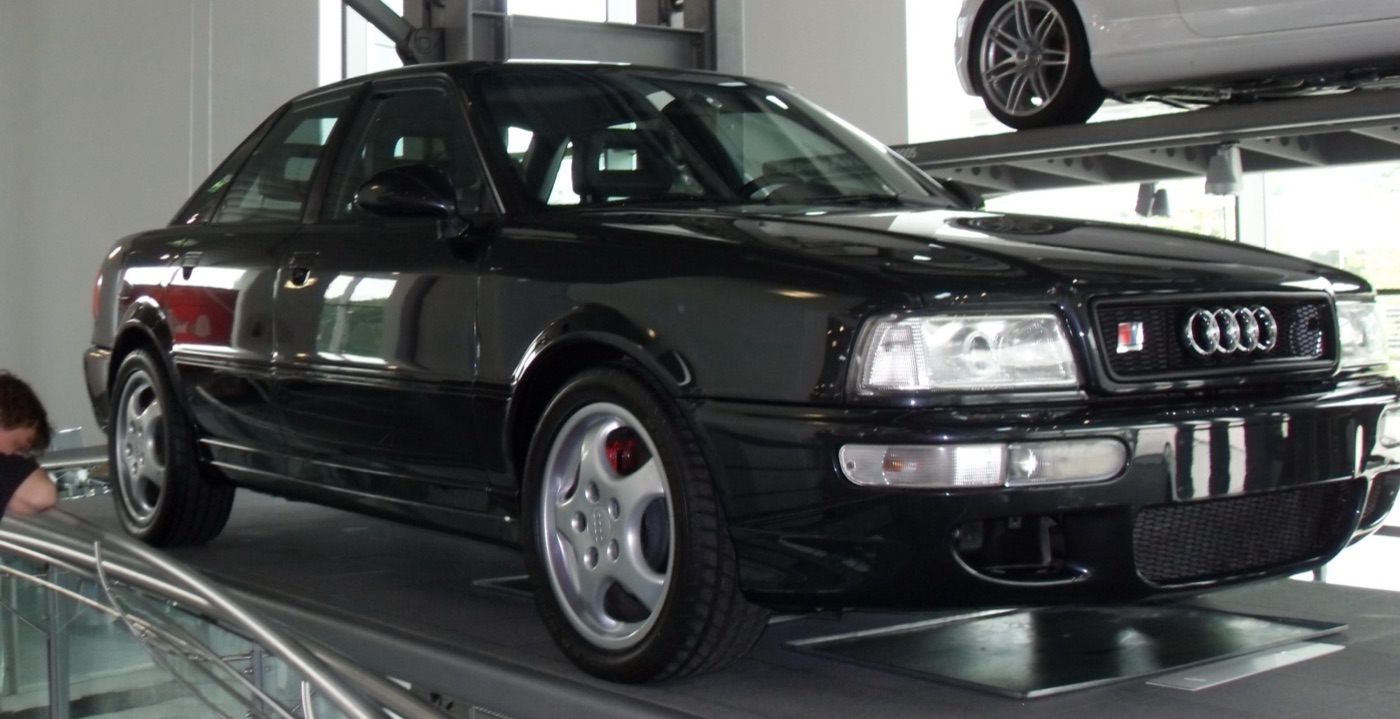
Classic & Sports Car records that four RS2 saloons were built besides the Avants. One, in black, was on display at the Audi Forum in Ingolstadt in June 2010.
How many Audi RS2s are left in the UK?
The Department for Transport’s vehicle licensing table VEH0120 listed 127 Audi RS2s at the end of June 2026: 31 licensed and 96 declared off the road (SORN). The total has stayed between 122 and 130 since 2014, while the number licensed has fallen from 68 to 31.
| Year | Licensed | SORN | Total |
|---|---|---|---|
| 2014 | 68 | 54 | 122 |
| 2016 | 53 | 74 | 127 |
| 2018 | 39 | 91 | 130 |
| 2020 | 39 | 89 | 128 |
| 2022 | 34 | 92 | 126 |
| 2024 | 30 | 93 | 123 |
| 2025 | 32 | 93 | 125 |
| 2026 (June) | 31 | 96 | 127 |
Audi RS2 prices and values
An RS2 cost DM 98,900 in Germany when it went on sale in March 1994 (Auto Zeitung) and £45,705 in the UK (Car magazine, 2012); a 2014 SkiddMark report gave the British price as £39,500. In 2020 Hagerty put the price new at the equivalent of almost $120,000. Owners have included Pink Floyd’s drummer Nick Mason, Phil Collins, the Le Mans winner Derek Bell and King Juan Carlos of Spain, according to Hagerty.
What is an Audi RS2 worth today?
Most RS2s sold at auction since 2021 have made between $40,000 and $70,000. OUTLAW 8’s auction records hold 39 sales from January 2021 to October 2026 on Bring a Trailer, Collecting Cars, Cars & Bids and PCARMARKET: 27 made between $40,000 and $70,000, and six made more than $90,000. Every price is the winning bid, without the buyer’s fee that each of these houses adds on top: Bring a Trailer’s listing for the 1995 car of 25 April 2025, for example, shows a $100,000 bid. Collecting Cars sells in pounds or euros, and its sales, many of them in Britain and Europe, appear here as classic.com’s dollar conversion of the winning bid. Four sales at Silverstone Auctions, Trade Classics, Aguttes and Kickdown, and four Collecting Cars sales recorded only with the fee included, are left out of the table, because their figures include a buyer’s premium or their basis could not be checked.
Two cars were sold twice in the period, and each sale counts. A Polar silver 1995 car (serial 001256), with about 90,000 miles, made $64,257 in March 2022 and $42,825 in February 2023, both on Collecting Cars in Britain; another 1995 car (serial 001328) made $56,166 in Belgium in September 2021 and $47,500 in Germany in October 2023.
| Year | Sales | Of which in the UK | Lowest | Median | Highest |
|---|---|---|---|---|---|
| 2021 | 6 | 2 | $46,378 | $55,411 | $105,076 |
| 2022 | 10 | 5 | $37,960 | $60,965 | $103,000 |
| 2023 | 12 | 5 | $42,046 | $56,118 | $102,001 |
| 2024 | 4 | 1 | $48,366 | $57,649 | $67,180 |
| 2025 | 3 | 0 | $64,270 | $65,500 | $100,000 |
| 2026 (to October) | 4 | 0 | $41,752 | $61,159 | $77,500 |
Sales recorded in pounds or euros are not in the table: two in 2026 in pounds, and one in 2025 in euros (€50,000 for a 1995 car in France). A 1996 car in South Africa made £43,000 on Car & Classic in August, and on 30 August Iconic Auctioneers sold a 1995 Ragusa green car, supplied new by AFN in Isleworth and rebuilt by VRS Performance with a forged engine and nitrous injection for about 580 bhp, for £50,625 at 147,066 miles.
Values were far lower a decade and more ago. Car magazine’s 2012 guide found a 110,000-mile right-hand-drive car in Polar silver for sale privately, with a trade value of £11,500.
Owning an Audi RS2: reliability and known faults
The engine and four-wheel drive are strong; the problems buyers check for are corrosion, a worn gearbox, tired turbo controls, past modifications and Porsche-specific parts that are scarce. Condition and servicing history count for more than mileage, since most cars have covered over 100,000 miles, Octane advises. Sunny Bhamra, service manager at the Audi specialist Fontain Motors, told Car magazine in 2012 that apart from corrosion, an oil change every year or 10,000 miles and the wear expected on an old car, the RS2 held “no surprises”.
Engine and turbo
The cambelt is due every 80,000 miles, evo notes. Classic & Sports Car’s buying guide reports many RS2s past 150,000 miles despite the state of tune; it lists a failing wastegate (stuttering performance), a failed air-mass sensor (dark smoke and misfiring) and a weak fuel pump as the faults that sap power under load.
Gearbox, differential and brakes
Classic & Sports Car advises checking the synchromesh, second gear above all, and warns that too many racing starts can damage first gear; Top Gear found the rear differential lock on its test car reluctant to stay engaged. Calipers seize and the rear discs corrode on cars that are little used (Classic & Sports Car), and evo notes that replacement Porsche brake parts are expensive.
Tyres, suspension and body
The original Dunlop SP Sport 8000 tyres in 245/40 ZR17 are no longer made, and several newer tyres sold in the same size are larger and rub when turning, so many owners fit 235 or 225 tyres instead (Top Gear; Classic & Sports Car). Most cars need a suspension refresh by now, evo notes, and it finds rust on the rear quarter panels and the underbody; Top Gear adds the sills and wheel arches.
Modified cars
Some RS2s have been uprated with bigger turbochargers, intercoolers, exhausts and engine control units, and most have had their suspension changed; Classic & Sports Car warns that modifications seldom add value.
How to tell a genuine RS2
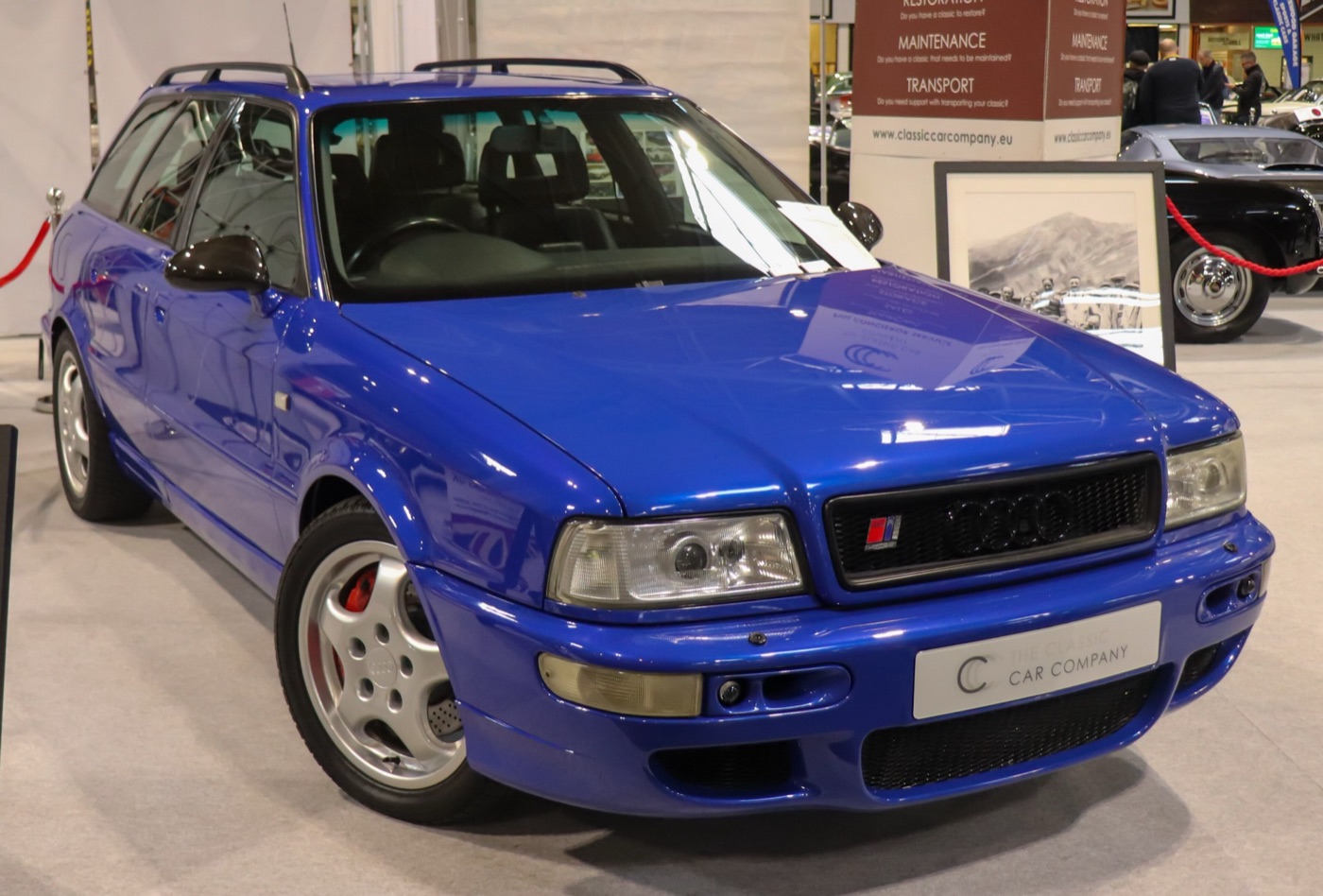
Octane advises checking for the ARGE chassis plate, since an S2 Avant can be dressed up to look like an RS2. The Recaro seats, the Kevlar or wood trim and many plastic parts were specific to the RS2 (Classic & Sports Car).
Can you import an Audi RS2 to the United States?
Yes, now that every RS2 is more than 25 years old. Audi never sold the car in the United States (Hagerty), and US rules let a vehicle that does not meet the federal safety standards be imported once it is “25 or more years old” (49 CFR 591.5), which opened the door to the first RS2s in 2019. Ten of the sales in the values table were on the American sites Bring a Trailer and Cars & Bids.
Audi RS2 reviews and rivals
Testers in 1994 praised the RS2’s acceleration and grip and criticised its turbo lag and lack of steering feel; Autocar and auto motor und sport both preferred a BMW.
What is the Audi RS2 like to drive?
Below 3,000 rpm the engine is “lamb-like and refined”, and then the turbo delivers the 315 PS all at once, auto motor und sport found in its classic-car drive of the RS2. Cold, the clutch is heavier than drivers now expect and the gearchange is stiff; warm, the gearbox shifts quickly and precisely, and the ride, firm at town speeds, suits the car on fast roads, where the four-wheel drive keeps it from slipping in the wet and the Porsche brakes are strong. Auto Zeitung found the steering precise and the handling neutral, with traction to spare and great stability in corners. Autocar, in 1994, found no feel in the steering and no bite in the handling.
What Autocar said
Autocar called the RS2 “a most extraordinary horizon-chaser” but found that it “still drives like an Audi”: “The balance is there, the endless grip is there, and there’s an absence of understeer that Quattro drivers would welcome, but there’s no bite… But above all, no feel.” One of its testers found the boost irritating at times and almost too violent in second gear. The road test concluded that the RS2 “has charisma, even if it lacks character” and that it was, “above all, still an Audi, for better or for worse”; Autocar thought the BMW 540i Touring the better buy.
Against the BMW M3
Early in 1994 auto motor und sport set the RS2 against the six-cylinder BMW M3 (E36), and the RS2 lost. “Only the load space of the estate body speaks for the concentrated Audi package,” the tester wrote.
Walter Röhrl’s verdict
Audi’s 1994 press release quoted Walter Röhrl, world rally champion in 1980 and 1982, as autorevue reproduces it: “The car is very good-natured and wonderfully easy to drive.” In the same release he said it understeered slightly at the limit and came back on line when the driver lifted off. autorevue and Auto Zeitung also quote Röhrl, without naming where he said it, calling the RS2 “a real alternative to a sports car, with plenty of room for people and luggage”.
Rivals in 1994
Fast estate cars were few in 1994. The RS2’s nearest rival was the BMW M5 Touring (E34), which Auto Zeitung says had already staked out the class. Autocar listed the BMW M3, Ford Escort RS Cosworth, Volvo 850 T5 and Lancia Delta Integrale as much cheaper alternatives, and Hagerty says the RS2 was built to rival the Mercedes-Benz C36 AMG.
What replaced the Audi RS2?
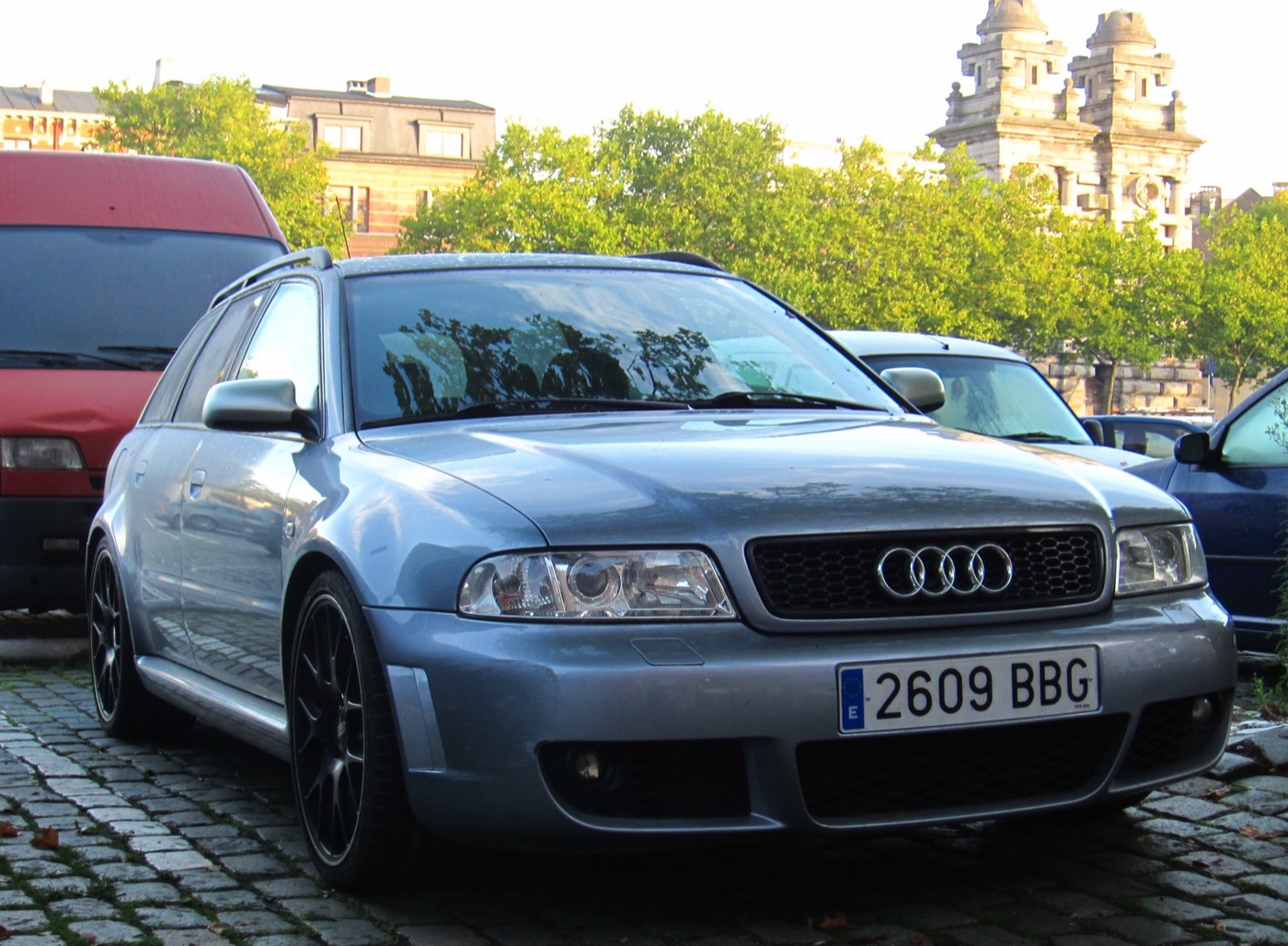
The RS4 Avant (B5) of 1999 was the next RS model and the RS2’s direct successor. Audi’s history of the RS4 says quattro GmbH developed it with Cosworth Technology, which Audi had bought shortly before; its 2.7-litre twin-turbo V6 produced 279 kW (380 PS), and demand was such that Audi doubled the planned production. By July 2019, according to Audi’s release for the 25th anniversary of RS, reproduced by motorspirit, Audi Sport and quattro GmbH had presented 25 RS models.
The Nogaro tribute editions
Audi has marked the RS2’s anniversaries with blue special editions. For the twentieth, it showed the RS4 Avant Nogaro selection at the Geneva Motor Show in March 2014: a standard RS4 in Nogaro blue with a high-gloss black grille frame and window surrounds, matt black roof rails, 20-inch five-V-spoke wheels over red calipers, and black Valcona leather with black or Nogaro blue Alcantara inside, a SkiddMark report recorded in February 2014. Audi had not then decided whether to sell it in Britain.
In February 2018 Autohaus reported 150 RS6 Avant performance Nogaro Editions with 605 PS, or 705 PS with an optional ABT pack, from €124,000. In September 2020 Hagerty reported that Audi had announced 25 RS6 Avant RS Tribute Editions of the 2021 model year, at $109,000. The RS2 itself is among the cars in Audi Tradition’s exhibition for 50 years of the five-cylinder engine at the Audi museum mobile in Ingolstadt, from 1 August 2026 to 28 February 2027.
Questions
Is the Audi RS2 a Porsche?
It is an Audi, badged as one, that Porsche developed and assembled for Audi in Zuffenhausen. Michael Hölscher, who ran the project at Porsche, puts the Porsche share of the car at about 20 per cent: Porsche reworked the engine and supplied the brakes, wheels, mirrors and bumpers, and the word Porsche appears on the badges, the brake calipers and the cylinder head.
What engine is in the Audi RS2?
A 2,226 cc turbocharged in-line five-cylinder with 20 valves, developed from the Audi S2’s engine by Porsche, with a bigger KKK turbocharger at 1.4 bar of boost. It produces 315 PS (311 bhp) at 6,500 rpm and 410 Nm at 3,000 rpm.
Is the Audi RS2 four-wheel drive?
Yes. Every RS2 has quattro permanent four-wheel drive with a Torsen centre differential, a six-speed manual gearbox and a rear differential lock that the driver switches in by hand for pulling away on slippery ground.
Does the Audi RS2 have a speed limiter?
No. Audi Tradition’s historian Ralf Friese says the RS2 was the first Audi without an electronic limiter, although it could exceed 250 km/h; its top speed is 262 km/h (163 mph) and its speedometer reads to 300 km/h.
Why is the colour called Nogaro blue?
It is named after the Nogaro circuit near the Pyrenees, where Frank Biela won two rounds of the 1993 French touring car championship in an Audi 80 quattro on his way to the title. The pearl-effect colour was at first offered on the RS2 alone.
How big is the boot of an Audi RS2?
auto motor und sport gives 370 to 650 litres by the VDA measure.
Was the Audi RS2 a limited edition?
Audi planned 2,200 cars and, because of demand, built 2,891 by Porsche’s count between March 1994 and July 1995.
Sources
- Porsche Newsroom, “A day with the record-breaking Audi Avant”, 7 December 2021: the commission, IAA 1993 and March 1994 launch, the Rössle building and 500 E, the division of work, 2,891 built, about 20 per cent Porsche, the Porsche parts, 262 km/h, no limiter, 0–100 km/h and 410 Nm, Hölscher and Friese.
- Audi MediaCenter, “Audi Avant RS 2 (B4), model year 1994”: 2,226 cc, 232 kW (315 PS) at 6,500 rpm, 410 Nm at 3,000 rpm, the most powerful Audi five-cylinder production engine to date.
- Audi MediaCenter, “On a Different Level: The Audi RS 4 Avant”, history section: the RS2’s 0–100 km/h and top speed, Porsche as development and production partner, the RS 4 B5 of 1999.
- Audi MediaCenter, “1-2-4-5-3: 50 years of Audi five-cylinder engines”, 31 July 2026: the RS2 at the end of the 80 (B4) run, the most powerful production estate, the A4 (B5), the exhibition dates and cars.
- Audi press release, 15 July 2019, “25 years of Audi RS”, reproduced by motorspirit: the RS2 as the first RS model, 25 RS models to date.
- auto motor und sport, “Audi Avant RS2 (1994): Video, Fahrbericht, Preise” and its technical data: Demel and Hölscher, the turbo and boost, the 959 in the Rössle building, the 1994 test against the M3, 5.2 seconds, 2,896 sold, Nogaro blue and Biela, production dates, gear ratios, dimensions and boot.
- Auto Zeitung, “Audi RS2 Avant: Preis & Motor des Porsche-Schrecks”: compression and fuel, the 968 brakes and disc sizes, tyres, suspension, Torsen and rear lock, six-speed gearbox, front intakes, Röhrl’s “sports car alternative”, DM 98,900, 2,200 planned and 2,891 built, the M5 Touring.
- autorevue, “Audi Avant RS2: Der Sportwagen im Schafspelz”: Röhrl’s words in the 1994 press release, 2,891 of 2,200 planned, Swiss buyers.
- Car magazine, “Used cars: how to buy a second-hand Audi RS2 Avant (1994–95)”, 2012: 2,881 built, 182 to the UK, £45,705, 4.8 seconds, Fontain Motors, a 2012 trade price.
- Hagerty, “The RS2 Avant is still Audi’s überwagon”, 24 September 2020: the turbo changes, 13 colours, the RS 6 RS Tribute Edition, never sold in the US, the price new in today’s money, owners.
- Autohaus, “Audi RS 6 Avant Performance Nogaro Edition: Dieser Kombi macht blau”, February 2018: 150 cars, power and prices.
- Electronic Code of Federal Regulations, 49 CFR 591.5: the 25-year exemption for importing non-conforming vehicles into the US.
- Department for Transport, vehicle licensing statistics, table VEH0120: Audi RS2s licensed and SORN, 2014 to June 2026.
- Bring a Trailer, 1995 Audi RS2 Avant, sold 25 April 2025: the $100,000 bid.
- Iconic Auctioneers, 1995 Audi RS2 Avant, August 2026: the modified Ragusa green car and its history.
- OUTLAW 8 auction records, Audi RS2 sales January 2021 to 28 October 2026, checked against Bring a Trailer and Collecting Cars lot pages: the values table and the resold cars.
- Autocar, road test of the Audi RS2 Avant, 1994, as quoted in Autocar’s “History of the Audi RS2” (2014): 0–30 mph, in-gear times, the verdict, the UK arrival and rivals.
- Classic & Sports Car, “Audi RS2 Avant buyer’s guide: what to pay and what to look for”: right-hand-drive numbers, the saloons, disc sizes, weight, faults and RS2-specific parts.
- evo, “Used Audi RS2 (1994) review – an unsung ’90s hero you can own for £40k”: P1, Piëch, weight, the diff button, cambelt, brakes, suspension and rust. Top Gear, “Top Gear’s Bargain Heroes: the Audi RS2”: the rear lock, tyre rub, sills and arches. Octane, “Audi RS2 Avant buying guide”: the ARGE plate.
- SkiddMark, “Audi’s RS 4 Nogaro tribute to the RS 2”, 7 February 2014: the RS 4 Nogaro selection, around 2,908 built, £39,500.