Audi RS6 C7: the 4.0 TFSI V8 estate, performance, faults and values
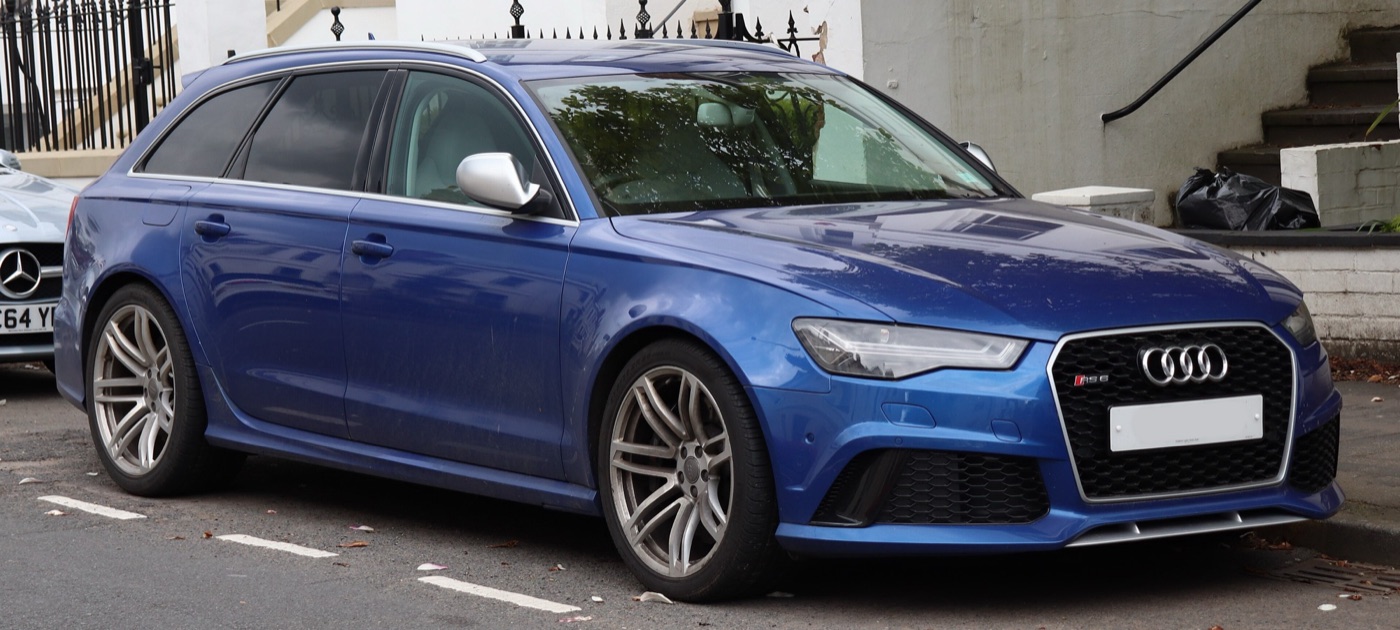
The Audi RS6 C7 is the third-generation RS6 Avant, an estate built from 2013 to 2018 with a 560PS (552bhp) twin-turbo 4.0-litre V8 (Audi calls it the 4.0 TFSI), quattro all-wheel drive and an eight-speed automatic transmission. It reached 62mph in 3.9 seconds and, with the right option pack, 189mph; the 605PS RS6 Avant performance of 2015 cut the sprint to 3.7 seconds. Audi revealed it on 5 December 2012 at about £77,000 in Britain, and in October 2026 the 24 C7s advertised on PistonHeads asked £22,500 to £55,000.
It was an estate only (there was no saloon this time) and Audi did not sell it in the United States, where the same drivetrain came in the RS7 Sportback. It shares its platform with the A6 and with the Audi A7 C7, whose page covers the RS7.
Audi RS6 C7 history
The C7 RS6 replaced a heavier car with a bigger engine, and was quicker than it. The C6 RS6 of 2008 used a 5.0-litre twin-turbo V10 of 572bhp and 479lb ft; the C7 dropped to eight cylinders and 4.0 litres, gave up 20bhp and gained 37lb ft (50Nm).
The reveal and the UK launch
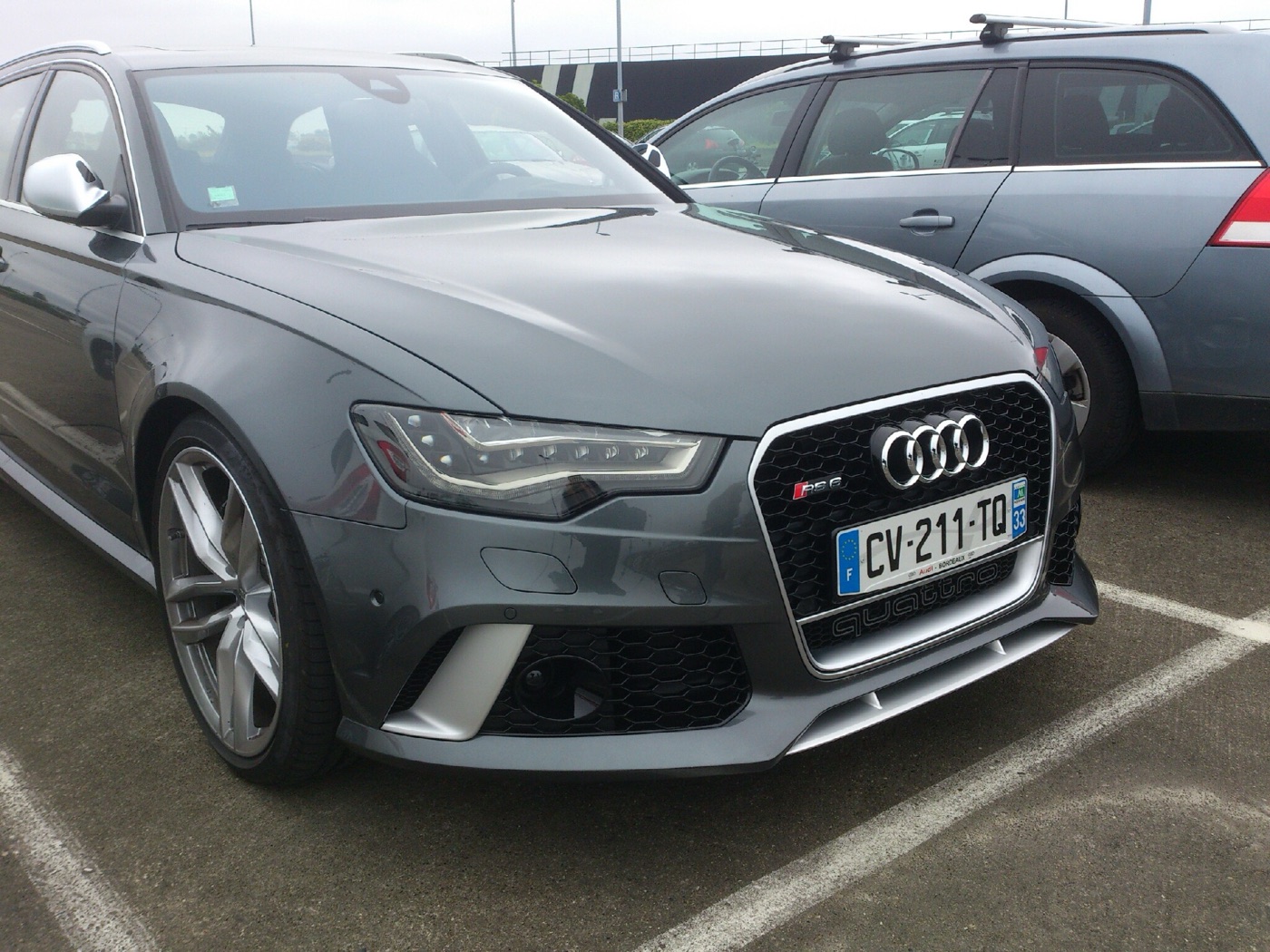
Audi announced the car on 5 December 2012. Audi's launch release credited the car's tuning to quattro GmbH, Audi's wholly owned high-performance subsidiary, and quoted a weight saving of roughly 100kg over the old car and fuel consumption cut by roughly 30 per cent. Audi UK's version of the release, published the same day, set the British price at "approximately £77,000 OTR", with orders from early 2013 and the first UK deliveries in summer 2013. CAR put the weight saving at 90kg.
A December 2012 SkiddMark report worked out that £77,000 was about £800 less than the outgoing V10 car and £3,900 more than the BMW M5, and set the new car's official 28.8mpg and 229g/km of CO2 against the V10's 20.4mpg and 333g/km. The same report recalled Audi UK's answer in June 2012 on why the new RS 4 kept a naturally aspirated V8: "the decision was made for the RS4 to go for 'high revs'". The RS6 kept turbocharging, which every RS6 had used since the twin-turbo 4.2-litre V8 C5 of 2002.
When was the RS6 C7 facelifted?
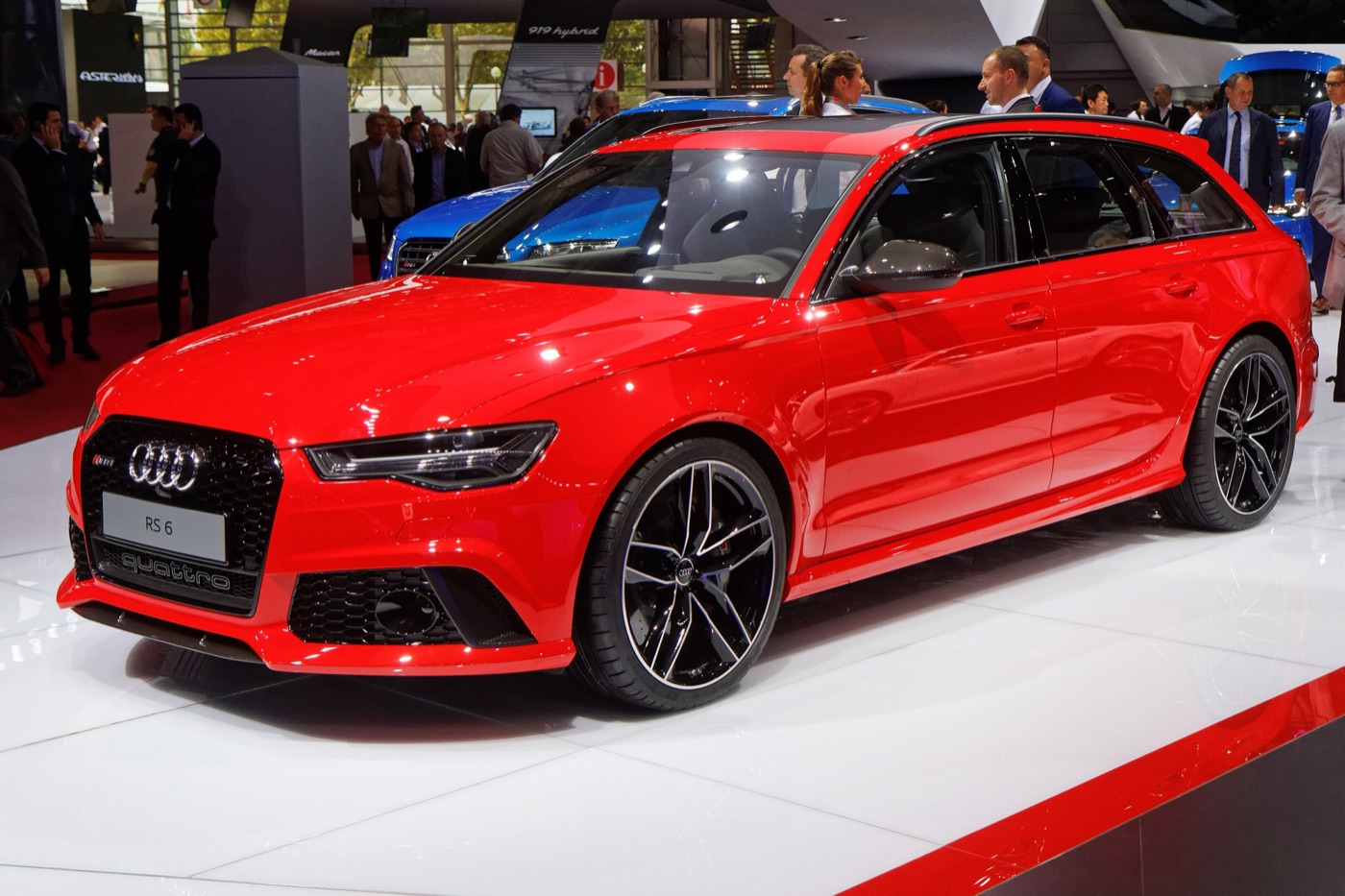
Audi updated the RS6 with the rest of the A6 range in September 2014 and showed it at the Paris motor show that October. Power stayed at 560PS, Paul Tan reported on 5 September 2014, and the visual changes were the A6's. In Audi UK's release of 22 October 2014, Matrix LED headlights were standard on the RS6 Avant, ordering for the RS6 Avant was "TBC, expected in first quarter of 2015", and official economy rose to 29.4mpg with CO2 down to 223g/km. PistonHeads lists the facelift's other changes: a revised front bumper, rear lights with sweeping indicators, upgraded MMI graphics with 4G, and double-glazed front windows.
End of production and the C8 RS6
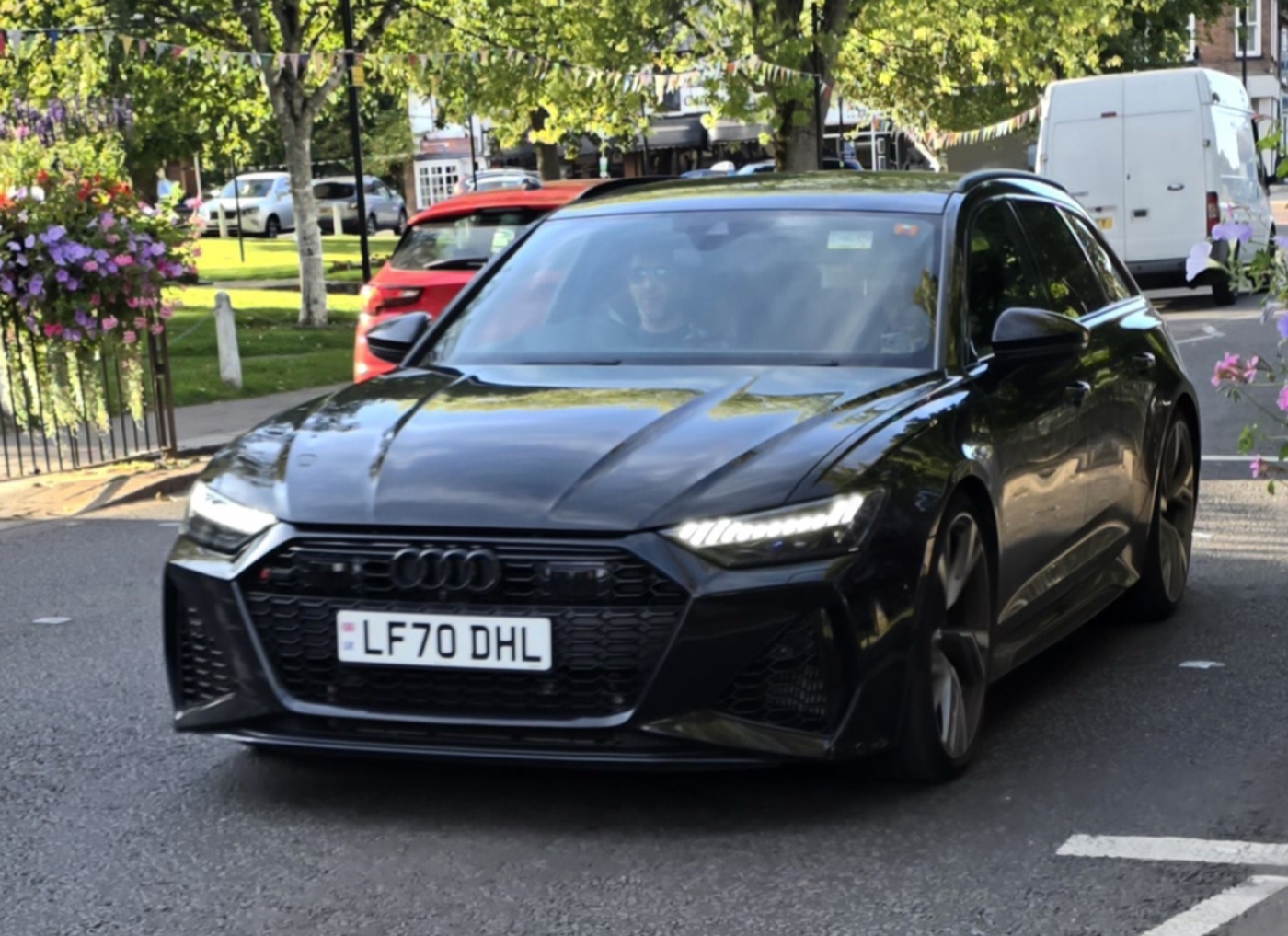
Auto motor und sport gives the C7's build period as April 2013 to May 2018, and in July 2018 it noted that Audi's German website listed the 2018 model year as sold out, with only cars already built still available. The fourth-generation RS6 Avant (C8) was shown at the Frankfurt motor show in September 2019, Audi's IAA release records.
Design and engineering of the RS6 C7
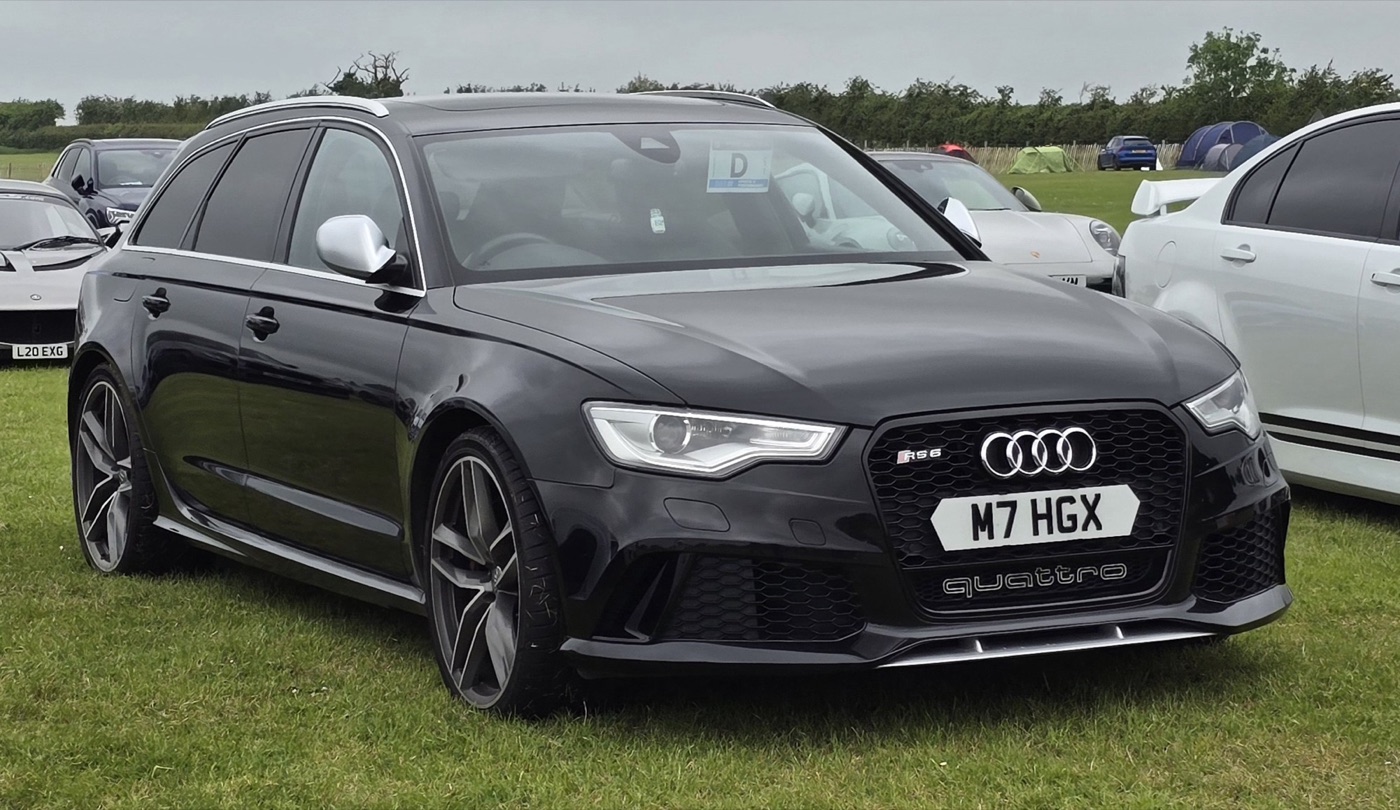
The RS6 C7 is an A6 Avant with its own engine, drivetrain, suspension, brakes and body parts. The launch release lists matt aluminium details, a gloss black honeycomb grille, flared sills, a large roof spoiler, a rear diffuser and two elliptical tailpipes, with Matt Aluminium and Carbon packs as options and Daytona Grey matt among the paint colours. The body is about 20 per cent aluminium.
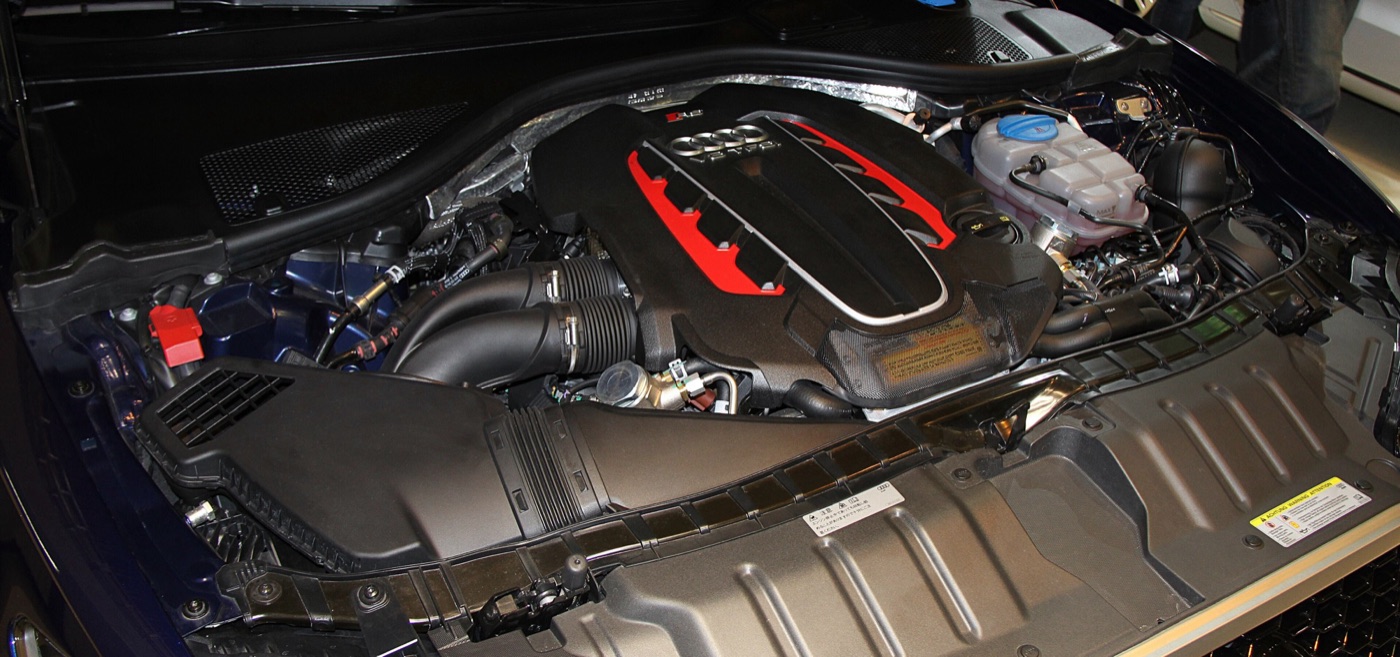
The 4.0 TFSI twin-turbo V8 and cylinder on demand
The 3,993cc V8 makes 560PS between 5,700 and 6,600rpm and 700Nm from 1,750 to 5,500rpm in the launch release (the UK version gives the power band as 5,700 to 6,700rpm). Its two twin-scroll turbochargers and the intercooler sit inside the V, with the exhaust side of the heads on the inside, which the release said kept the gas paths short. Ben Pulman of CAR magazine noted that the same base engine went into the S6, S7, S8 and Bentley's Continental GT V8.
Cylinder on demand technology closes the valves of cylinders 2, 3, 5 and 8 at low and medium loads, so the engine runs on four cylinders. The release claimed a saving of about 5 per cent on the official cycle and about 10 per cent at moderate speeds, with active engine mounts cancelling the extra vibration. Sport auto found the system works up to about 250Nm and 3,500rpm. Start-stop was standard, as were exhaust flaps that open at the press of a button.
Transmission and quattro all-wheel drive
Every C7 RS6 has an eight-speed tiptronic automatic transmission with a torque converter, closely spaced lower gears and a tall eighth for economy. Quattro drive uses a self-locking centre differential with an oil cooler; Audi UK's 2015 release gives its normal split as 40 per cent front and 60 per cent rear. A sport differential, which moves torque between the rear wheels, was an option in the 2012 launch release and standard on the 2015 performance; in Germany it came with the Dynamic package plus.
Air suspension or Dynamic Ride Control
The C7 was the first RS model with air suspension as standard. It lowers the body by 20mm and sets its damping through Audi drive select, whose Comfort, Auto and Dynamic modes also change the engine, transmission, steering and exhaust. The alternative, sports suspension plus with Dynamic Ride Control (DRC), uses steel springs and three-way adjustable dampers linked diagonally by oil lines and a central valve to limit roll and pitch. Dynamic steering, with a variable ratio, was a separate option; evo priced the Dynamic pack, with DRC and dynamic steering, at £2,600 in the UK, and the Dynamic package plus, which added carbon-ceramic brakes, at £11,500.
Brakes, wheels and tyres
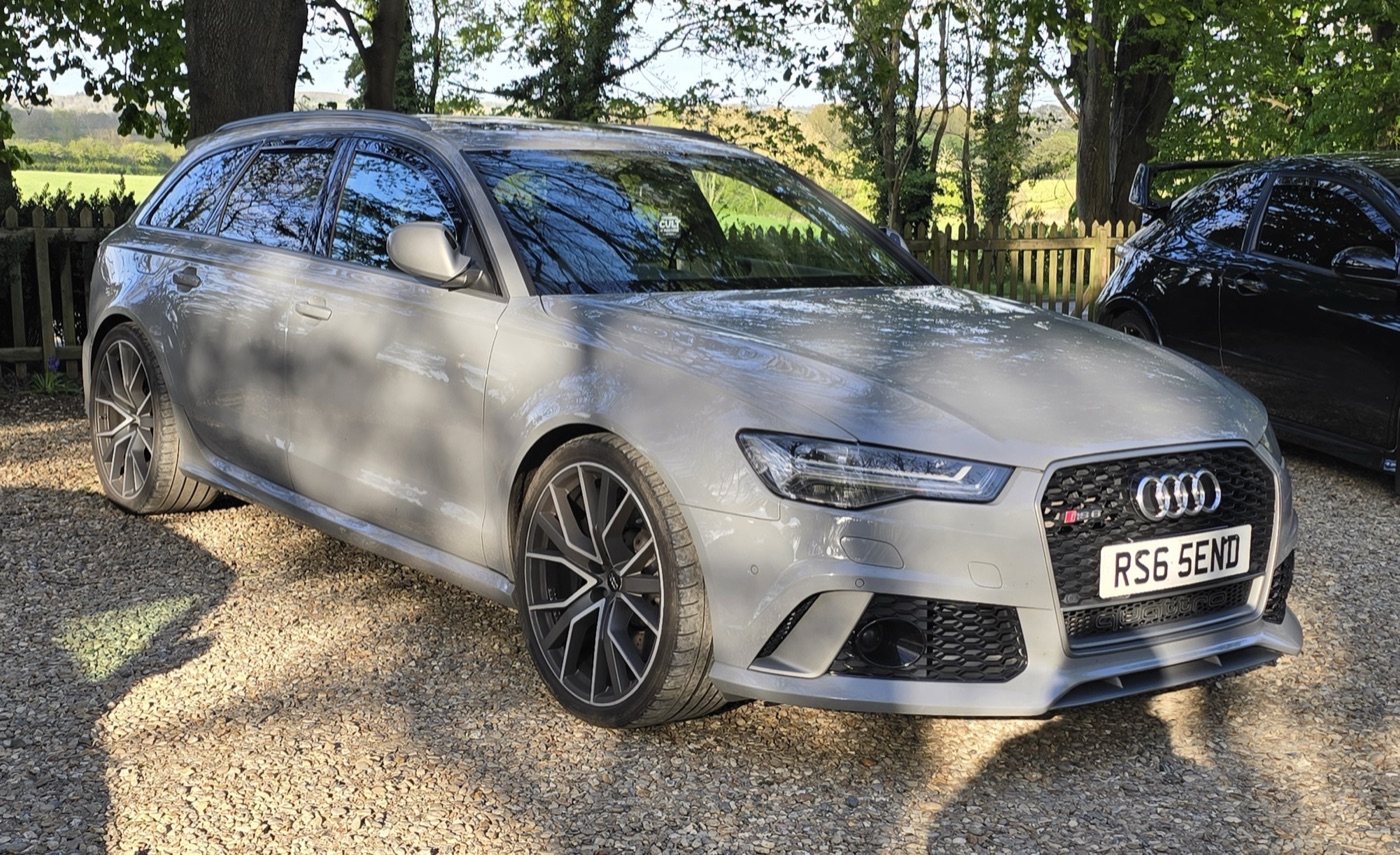
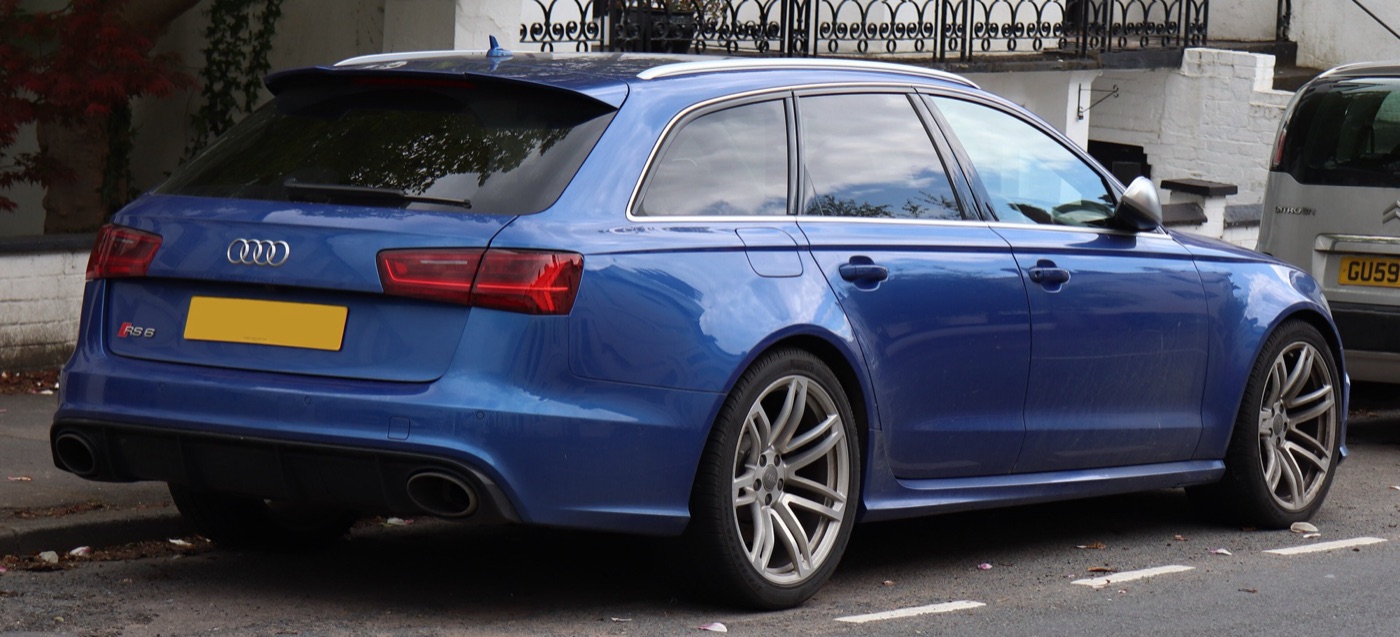
Standard brakes are 390mm wave-design steel discs at the front with six-piston calipers in black or red; 420mm carbon-ceramic discs with anthracite calipers were optional. Standard wheels were forged 20-inch rims in a seven twin-spoke design on 275/35 tyres; three 21-inch cast designs cost extra.
Interior, boot and equipment
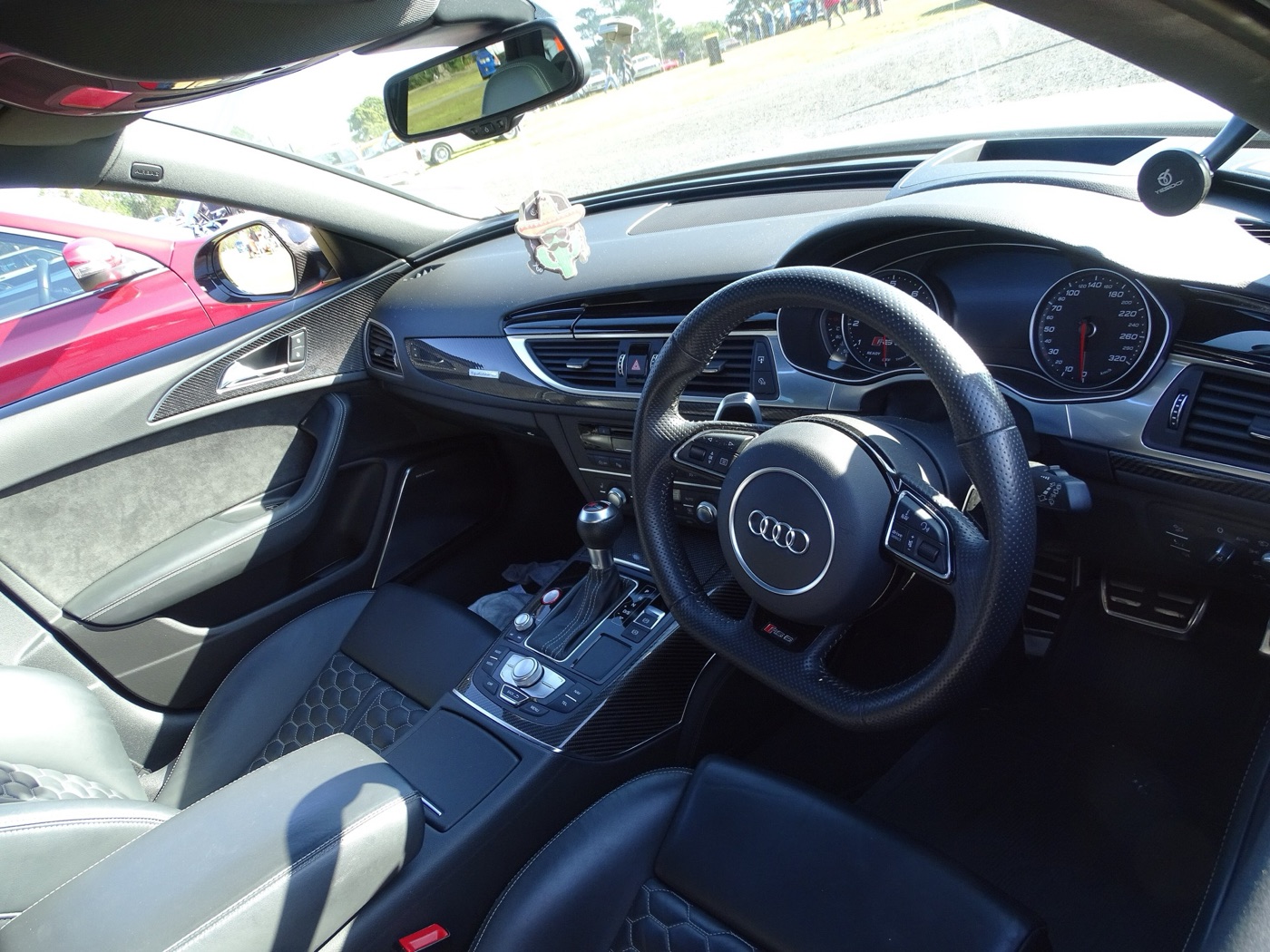
Inside are RS sports seats in honeycomb-quilted Valcona leather, a flat-bottomed steering wheel, carbon inlays and a shift light in the driver information display that turns from green to red and blinks near the limiter. The boot holds 565 litres with the seats up and 1,680 litres with them folded, by auto motor und sport's measure. The UK standard list included MMI navigation plus, xenon headlights, four-zone climate control, cruise control, front and rear parking sensors and a Bose sound system; the options included a head-up display and a 15-speaker Bang & Olufsen system at £6,300 and adaptive cruise control at £2,255 (evo's prices), and PistonHeads lists a £1,200 panoramic roof. Evo adds Audi's phone box, which boosted a mobile phone's reception once it was paired to the car by Bluetooth.
Audi RS6 C7 specs and performance
The standard Audi RS6 C7 has 560PS and 700Nm and its acceleration from 0 to 62mph takes 3.9 seconds; the performance has 605PS, up to 750Nm and does it in 3.7 seconds.
| Item | RS6 Avant | RS6 Avant performance |
|---|---|---|
| Engine | 3,993cc twin-turbo V8 | 3,993cc twin-turbo V8 |
| Power | 560PS (552bhp) at 5,700–6,600rpm | 605PS (597bhp) |
| Torque | 700Nm (516lb ft) at 1,750–5,500rpm | 700Nm, 750Nm on overboost |
| 0–62mph | 3.9sec | 3.7sec |
| 0–124mph | 13.5sec | 12.1sec |
| Top speed | 155mph; 174mph with the Dynamic package; 189mph with the Dynamic package plus | |
| Official fuel economy | 28.8mpg (2012); 29.4mpg after the facelift | 29.4mpg |
| CO2 | 229g/km (2012); 223g/km after the facelift | 223g/km |
| Length x width x height | 4,979 x 1,936 x 1,482mm; wheelbase 2,915mm | |
| Weight | 1,935kg kerb (auto-data.net); 1,950kg (evo); "around 2,025kg" (PistonHeads) | |
| Boot | 565 to 1,680 litres | |
| Fuel tank | 75 litres | |
| UK price new | about £77,000 (2012) | £86,000 (2015) |
Sources: Audi AG and Audi UK releases of 5 December 2012, 22 October 2014 and 22 October 2015; dimensions, boot and tank from auto motor und sport's long-term test data; the weights differ by source, and Audi's releases give only the saving of roughly 100kg over the C6. The standard car's 0–124mph time is the performance's 12.1 seconds plus the 1.4 seconds Audi gave as the gap.
How fast is the Audi RS6 C7?
Audi quoted 3.9 seconds to 62mph and a top speed limited to 155mph, raised to 174mph with the Dynamic package and to 189mph (305km/h) with the Dynamic package plus. Sport auto, auto motor und sport's sister magazine, ran a car with the Dynamic package plus for 67,183km and wrote that it reached a true 305km/h "surprisingly quickly". PistonHeads cites an unnamed UK magazine that timed a standard car at 3.7 seconds to 60mph and 8.7 seconds to 100mph.
Does the RS6 C7 have launch control?
The magazines disagree. CAR's 2013 first drive credited "the latest Launch Control electronics" for the 3.9-second time; evo's used-car review says the C7 has no launch control function, partly because of its torque-converter gearbox, and that some owners hold the car on the brake and raise the revs for a fast start instead.
Audi RS6 Avant performance
The RS6 Avant performance, the performance model announced in October 2015, has 605PS, 45PS more than the standard car, from engine software with more boost and higher revs. Torque stays at 700Nm with an overboost of 750Nm that the driver can call on. Audi's release, reproduced by Conceptcarz, gave 3.7 seconds to 100km/h, 12.1 seconds to 200km/h and unchanged official fuel consumption.
It came with 21-inch wheels on 285/30 tyres, matt titanium-look exterior trim, a quattro logo in the front air inlet and a steering-wheel button for the drive select modes. Ascari blue was a paint offered only on the performance models, and an RS performance design package added black and blue Alcantara and leather with blue carbon inlays. It cost €117,000 in Germany. Audi UK priced it at £86,000, against £91,600 for the RS7 Sportback performance, with orders from November 2015 and first deliveries in February 2016.
What is the difference between the RS6 C7 and the RS6 performance?
The performance has 45PS more, the overboost and a 0.2-second quicker 0–62mph time. Evo adds that it had a sports exhaust, leather and Alcantara seats and 21-inch wheels as standard, where the standard car had 20-inch wheels and the sports exhaust was a £1,000 option. PistonHeads put the price gap at about £7,000.
RS6 C7 special editions and tuned versions
Audi built the Performance Nogaro Edition of 2018 as a limited run of the C7, and the tuner ABT built limited runs of its own.
RS6 Avant performance Nogaro Edition
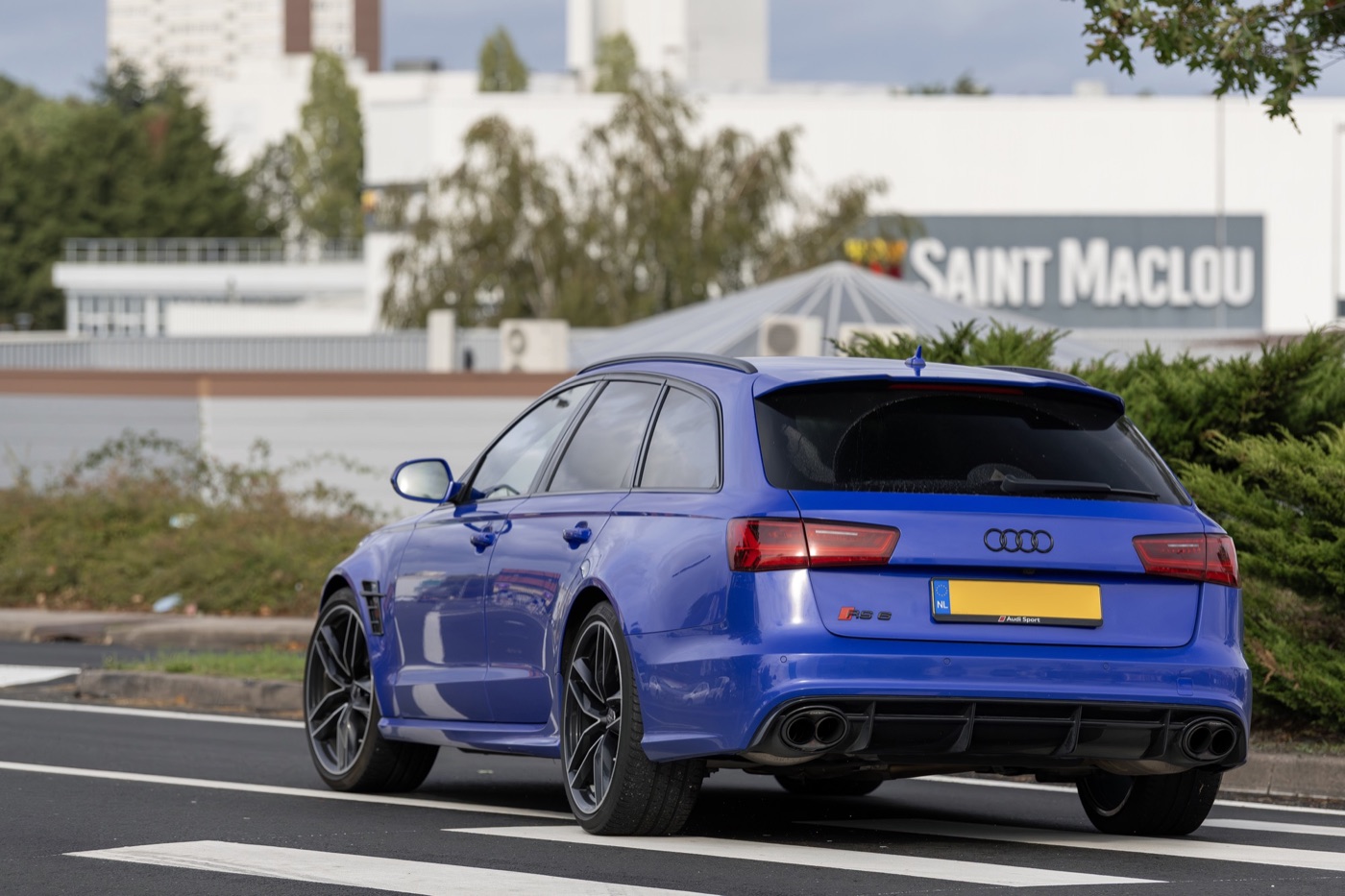
The Nogaro Edition was a run of 150 cars in Nogaro blue, the colour of the RS 2 Avant launched 24 years earlier. Autohaus reported in February 2018 that it had a titanium exhaust, black 21-inch wheels and air suspension as standard, with Nogaro blue Alcantara inside as an option. It had 605PS; with the optional Dynamic package plus, ABT Sportsline raised it to 705PS and 880Nm. Prices in Germany started at €124,000, or €130,000 with the blue interior.
ABT RS6-R and RS6+
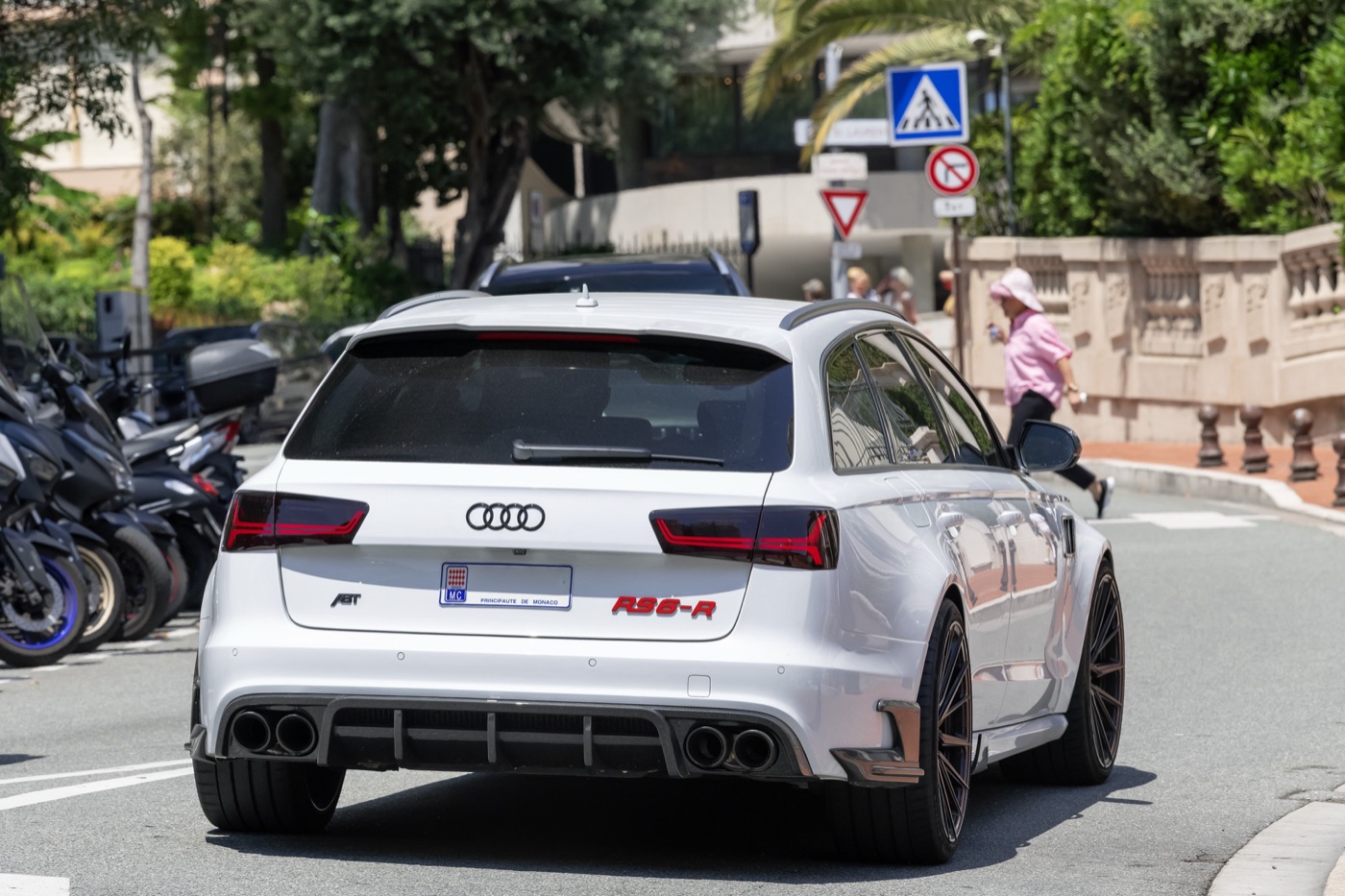
ABT's RS6-R has 730hp and 920Nm, 170hp and 220Nm more than the standard car, and a top speed of 320km/h; it was limited to 25 cars, ABT said in 2015. The ABT RS6+, based on the performance and shown at the 2017 Geneva motor show, has 705hp and 880Nm, 22-inch wheels and carbon body parts, and was built 50 times.
Audi RS6 C7 reviews and reception
CAR's 2013 first drive called the RS6 C7 "a brilliant family car" and "a brilliant performance car", with "peerless traction and grip", but judged Dynamic Ride Control "not worth the money": in Dynamic mode the ride was "far too firm and abrupt" even on smooth German roads. CAR expected it to keep up with an M5 in the dry and leave it behind in the wet.
Evo's used-car review says the interior's quality was "beyond question". Henry Catchpole wrote in evo in 2013 that the RS6 was "deeply impressive" but "not terribly interactive". Mike Duff ran one for six months for evo (issue 194, April 2014) and found that the steering's artificial feel never went away; the car had no scheduled servicing or notable faults in that time, a dealer bid £82,000 for it against an optioned price of £101,020, and economy ranged from over 27mpg to the mid-teens. On track at Bedford Autodrome the handling stayed "distant and aloof", Duff wrote, and after five laps the brakes and tyres were "properly cooked", with one disintegrating tyre costing £375 to replace.
Sport auto's long-term car, taken on in March 2016, needed one unscheduled workshop visit in 67,183km: at 21,633km the automatic wiping of its carbon-ceramic brakes in the rain pulled it to the right, and the workshop re-set the function. The magazine wrote that the RS6 was the most popular long-distance car in its fleet from the first kilometre.
Audi RS6 C7 rivals
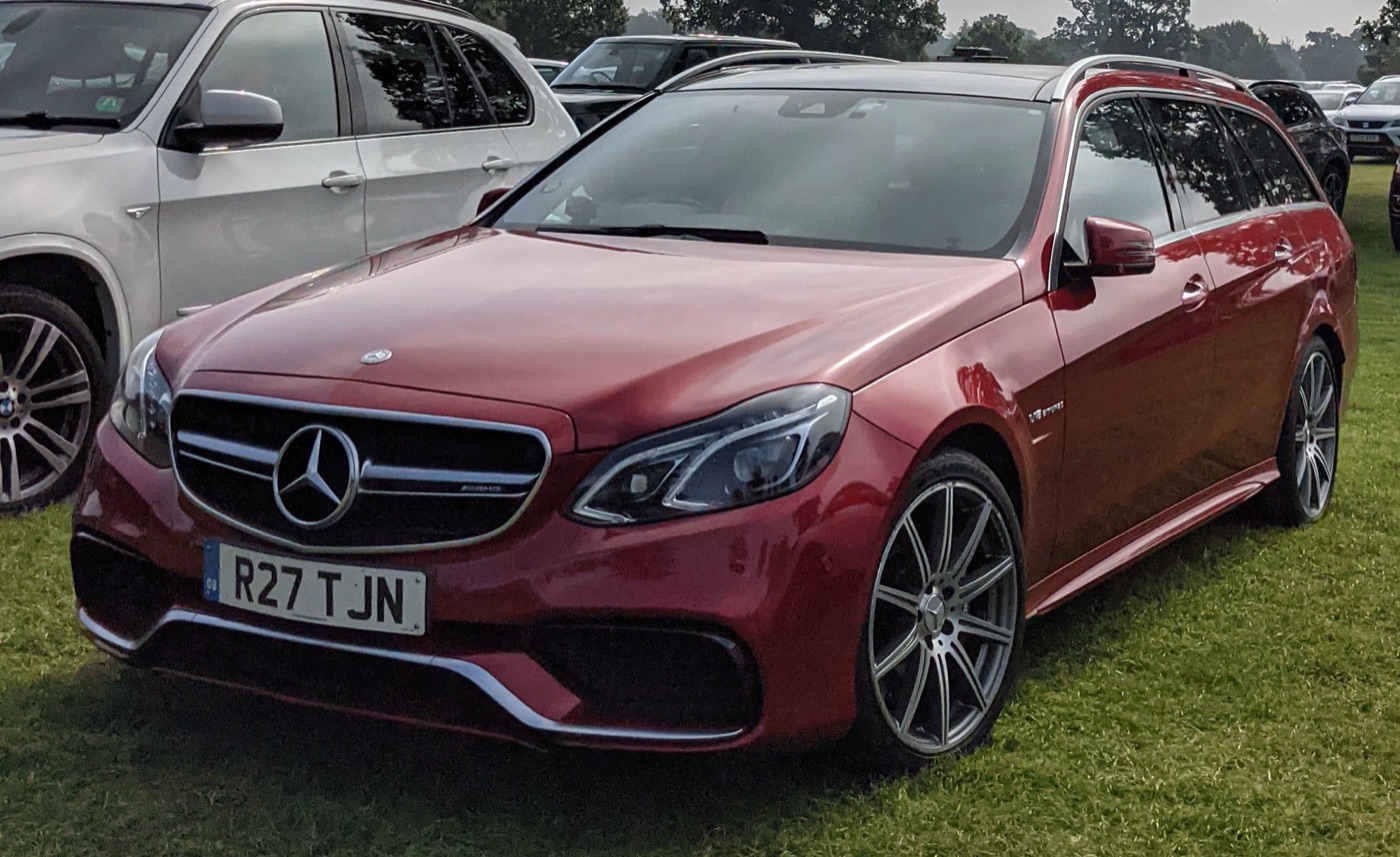
CAR named the BMW M5, the Jaguar XFR-S and the Mercedes E63 AMG as the RS6's rivals in 2013. Mercedes offered the E63 AMG S as an estate with 4MATIC four-wheel drive, but only with left-hand drive: evo's February 2013 test explains that the front propeller shaft runs where a right-hand-drive car's steering column goes, so UK E63 estates, the S included, were rear-wheel drive. The F10 BMW M5 was a saloon only and drove its rear wheels.
| Car | Body and drive | Power | Torque | 0–62mph | UK price |
|---|---|---|---|---|---|
| Audi RS6 Avant | Estate, four-wheel drive | 560PS | 700Nm | 3.9sec | about £77,000 |
| BMW M5 (F10) | Saloon, rear-wheel drive | 560hp | 680Nm | 4.4sec | about £73,100 |
| Mercedes-Benz E63 AMG S | Saloon or estate; 4MATIC four-wheel drive with left-hand drive only, rear-wheel drive in the UK | 585hp | 800Nm | 3.6sec (4MATIC) | n/a |
| Porsche Panamera Turbo S | Hatchback, four-wheel drive | 542bhp | n/a | n/a | £123,776 |
Sources: Audi AG; BMW's 2011 M5 release; Mercedes-AMG's 2013 E63 release, reproduced by Supercars.net; evo for the E63's drive layouts; UK prices for the M5 and Panamera from the December 2012 SkiddMark report. "n/a" means the source gives no figure.
The same SkiddMark report set the RS6's 28.8mpg and 229g/km against 28.5mpg and 232g/km for the M5 and 24.6mpg and 270g/km for the Panamera Turbo S.
Is the Audi RS6 C7 reliable?
The RS6 C7's engine and gearbox have a good record; most of its faults are in the optional suspension, the wheels and the brakes. In auto motor und sport's long-term test the car covered 67,183km with one fault and used 2.0 litres of oil between services. Evo's used-car review calls the 4.0 TFSI "a largely reliable unit" with very few complaints about the powertrain itself, and PistonHeads' April 2020 buying guide found no complaints of turbo failure on the RS6, though the turbos had failed on other 4.0 Audis such as the S6, S7 and RS7.
UK safety recalls
The DVSA's recall file names the RS6 in recall R/2013/112 of October 2013: a fuel line that could be damaged and leak, on 452 RS6, RS7, S6 and S7 cars built from January 2012 to August 2013. Two later recalls in the file carry the A6 model name. R/2019/060 checks the auxiliary heater element in the air conditioning on 4,907 cars built from 8 July to 31 October 2014, which PistonHeads says included RS6s. R/2022/132 (Audi code 21H7) fits a turbocharger oil strainer with a larger mesh on 4,690 A6, A7 and A8 models built from May 2012 to March 2017; in the US, NHTSA recall 22V178 under the same Audi code covers the RS7, which has the RS6's engine, and says a blocked strainer can starve the turbo bearings of oil.
Common RS6 C7 problems, issues and known faults
Leaking and knocking Dynamic Ride Control dampers are the best-known fault. Evo and PistonHeads both say that driving on with a knocking damper can damage the central valves, which cost more than the dampers; PistonHeads adds that the dash shows no warning and that re-pressurising the system needs special equipment. Both also report that the 21-inch alloys buckle on potholes while the forged 20-inch alloys hold up better, that front discs warp from "hot-spotting" (holding the brake at a standstill after hard use), and that a coolant hose at the back of the engine can be chafed by a clip, cured by moving the clip; PistonHeads dates that to 2015-on facelift cars.
PistonHeads also lists failing parking brake control units on early cars, failures of engines remapped to Stage 2, and a 2016 recall for a loose filter in the camshaft adjustment control valve. A 2025 guide by the parts retailer Euro Premium Parts lists oil use from worn valve stem seals on some 2013–2014 cars, carbon on the inlet valves after 50,000 to 70,000 miles, cracked plastic water pump and thermostat housings, failed PCV valves and air suspension leaks, and says MMI screens and reversing cameras can need replacing on older cars; JXL Performance's guide also mentions faults in the MMI and other electronics.
What to check when buying an RS6 C7
The checks follow from the faults above and from the advice in PistonHeads', evo's and Euro Premium Parts' guides:
- A full service history at the 10,000-mile or yearly intervals, with the 40,000-mile spark plug and differential oil services done.
- Knocking from the suspension over bumps on cars with Dynamic Ride Control, and oil on the damper bodies; the dash gives no warning.
- Buckled 21-inch wheels, and judder under braking from warped front discs.
- Where the coolant hose at the back of the engine runs past its clip, on 2015-on cars.
- Whether the engine has been remapped: PistonHeads reports Stage 2 engines that failed.
- Oil leaks around the turbochargers in the V and oil use between services.
- Open recalls, on the DVSA's online recall checker for the car's registration.
- Tyre wear across the tread, and every MMI and electronics function.
Running costs, servicing and road tax
PistonHeads warns that these cars "are not cheap to run". Servicing is due every 10,000 miles or once a year, with spark plugs and differential oil at about 40,000 miles, evo says. PistonHeads suggests setting aside at least £500 a year for servicing and about £2,000 for a set of brakes, with tyres lasting 8,000 to 15,000 miles; carbon-ceramic brakes were an £8,000 option new. PistonHeads also advises a strong warranty, because repairs on these cars are expensive. Sport auto's car averaged 15.9 litres per 100km (17.8mpg) over 67,183km, between 12.1 and 32.6 litres per 100km.
Road tax depends on the registration date, under GOV.UK's rates for cars registered from March 2001 to March 2017, read on 28 October 2026. A pre-facelift car at 229g/km is in band L, at £760 a year; a facelifted car at 223g/km is in band K, at £445. A car first registered from 1 April 2017 pays the standard rate of £200, plus £440 a year for a list price over £40,000 during the five years from its second tax payment.
How much is an Audi RS6 C7 worth?
On 28 October 2026 the 24 C7 RS6s advertised on PistonHeads' classifieds asked £22,500 to £55,000, with a median of about £31,900. The 18 standard cars asked £22,500 to £48,990; the six performance models asked £29,995 to £55,000. None was registered in 2013.
| Year | Version | Adverts | Asking prices | Mileages |
|---|---|---|---|---|
| 2014 | RS6 Avant | 10 | £22,500 to £34,990 | 53,000 to 99,000 |
| 2015 | RS6 Avant | 5 | £28,495 to £37,999 | 42,000 to 87,642 |
| 2016 | RS6 Avant | 2 | £31,245 and £32,000 | 70,800 (one not given) |
| 2016 | performance | 2 | £29,995 and £47,750 | 51,000 and 38,000 |
| 2017 | RS6 Avant | 1 | £48,990 | 48,123 |
| 2017 | performance | 2 | £38,989 and £49,995 | 70,000 and 41,600 |
| 2018 | performance | 2 | £43,995 and £55,000 | 48,000 and 25,000 |
Source: PistonHeads adverts for the Audi RS6, registration years 2013 to 2019, read on 28 October 2026; "performance" means the advert names the 605PS car.
DEKRA valued auto motor und sport's long-term car at €89,000 after 67,183km. It had cost €144,090 in 2016 with €34,090 of options, among them carbon mirror housings at €1,400, so it lost €55,090. PistonHeads put six-year depreciation at "not much more than 50 per cent" in 2020. Evo's review puts good cars at about £30,000 and late performance models with about 50,000 miles at £40,000.
Questions
What years is the Audi RS6 C7?
Audi revealed it on 5 December 2012, UK deliveries began in summer 2013 and production ran to May 2018. It was facelifted in late 2014, and the C8 RS 6 replaced it in 2019.
How much horsepower does the RS6 C7 have?
The standard car has 560PS (552bhp) and 700Nm. The RS 6 Avant performance of 2015 has 605PS (597bhp), with 750Nm on overboost.
Is the RS6 C7 four-wheel drive?
Yes. Every C7 RS 6 has quattro permanent four-wheel drive with a self-locking centre differential, sending 40 per cent of the torque to the front and 60 per cent to the rear in normal driving.
Was the RS6 C7 sold in the US?
No. The C7 RS 6 Avant was not sold in the United States; American buyers got the RS 7 Sportback, which has the same engine and drivetrain.
Is the RS6 C7 a five-seater?
Yes in UK form: Audi UK's 2012 release describes a standard split rear seat and PistonHeads calls it a five-seat estate, though it says the middle seat is "a bit Mickey Mouse" while the two outer rear passengers have plenty of room. Audi AG's release lists two shaped rear seats as standard, with a three-person bench as an option.
What mpg does an RS6 C7 do?
Official figures are 28.8mpg (29.4mpg after the facelift). Sport auto's long-term car averaged 17.8mpg over 67,183km, and evo expects about 20mpg in ordinary use.
How big is the boot on an RS6 C7?
Auto motor und sport measured 565 litres with the rear seats up and 1,680 litres with them folded.
Sources
- Audi AG, "Groundbreaking performance: the new Audi RS 6 Avant", 5 December 2012: engine, cylinder on demand, gearbox, quattro, suspension, brakes, wheels, weight saving, interior, equipment.
- Audi UK, UK launch release for the RS 6 Avant, reproduced by RS246, 5 December 2012: UK price, ordering and deliveries, economy, UK equipment.
- Audi UK, "New A6 and A6 Avant ranges now available to order", 22 October 2014: facelift, Matrix LED headlights, economy and CO2.
- Audi UK, "New versions of Audi RS 6 Avant and RS 7 Sportback bring power and performance even closer to supercar levels", 22 October 2015: performance UK price, deliveries, figures, torque split.
- Audi AG, RS 6 Avant performance and RS 7 Sportback performance release, reproduced by Conceptcarz, October 2015: performance specification, equipment, German price.
- Audi AG, "Audi at the IAA Frankfurt 2019", September 2019: the C8 RS 6 Avant at Frankfurt.
- Paul Tan, "Audi S6 and RS6 Avant updated", 5 September 2014: facelift timing and unchanged power.
- Autohaus, "Audi RS 6 Avant Performance Nogaro Edition: Dieser Kombi macht blau", 10 February 2018: Nogaro Edition numbers, equipment, power and prices.
- ABT Sportsline, "ABT RS6-R is GTSpirit.com Tuning Car of the Year 2015", 2015: RS6-R power, torque, top speed and run of 25.
- ABT Sportsline, "ABT RS6+ with 705 hp only built 50 times", 2017: RS6+ specification and run of 50.
- Ben Pulman, CAR magazine, "Audi RS6 Avant (2013) review", 2013: C6 figures, engine family, weight saving, rivals, launch control, ride verdict.
- Auto motor und sport, "Dauertest Audi RS 6 Avant" and its technical data, 28 July 2018: build period, dimensions, boot, tank, cylinder on demand, long-term fuel and oil use, fault record, prices and valuation.
- Evo, "2013 Mercedes-Benz E63 S 4MATIC AMG", 4 February 2013: the 4MATIC car left-hand drive only, UK cars rear-wheel drive.
- BMW Group, "The new BMW M5", June 2011: M5 power, torque and acceleration.
- Mercedes-AMG, 2013 E 63 AMG release, reproduced by Supercars.net: E63 AMG S power, torque and acceleration.
- DVSA, vehicle recalls file, downloaded 28 October 2026: recalls R/2013/112, R/2019/060 and R/2022/132.
- NHTSA, recall 22V178, March 2022: turbocharger oil strainer on the RS 7.
- GOV.UK, vehicle tax rates for cars registered 1 March 2001 to 31 March 2017 and vehicle tax rate tables, read 28 October 2026: road tax bands and rates.
- PistonHeads, Audi RS6 classified adverts for registration years 2013 to 2019, 28 October 2026: asking prices and mileages.
- PistonHeads, "Audi RS6 (C7) PH Used Buying Guide", 14 April 2020: facelift changes, faults, recalls, running costs, depreciation, performance price gap.
- Evo, "Audi RS6 Avant (C7, 2013–2019) review", with Henry Catchpole's 2013 first drive and Mike Duff's long-term report from evo 194, April 2014: verdicts, options and prices, faults, servicing, used prices, launch control.
- Euro Premium Parts, "Used Audi RS6 C7 reliability", November 2025: engine, cooling and electronics faults.
- JXL Performance, "Audi RS6/RS7 C7 buying guide": electronics faults.
- SkiddMark, "All-new Audi RS 6 Avant storms in", 5 December 2012: UK price comparisons, economy and CO2 against the V10 RS 6, M5 and Panamera Turbo S, Audi UK's 2012 comment on the RS 4.