Audi TT Mk2 (8J): history, specs, TT RS, faults and buying guide
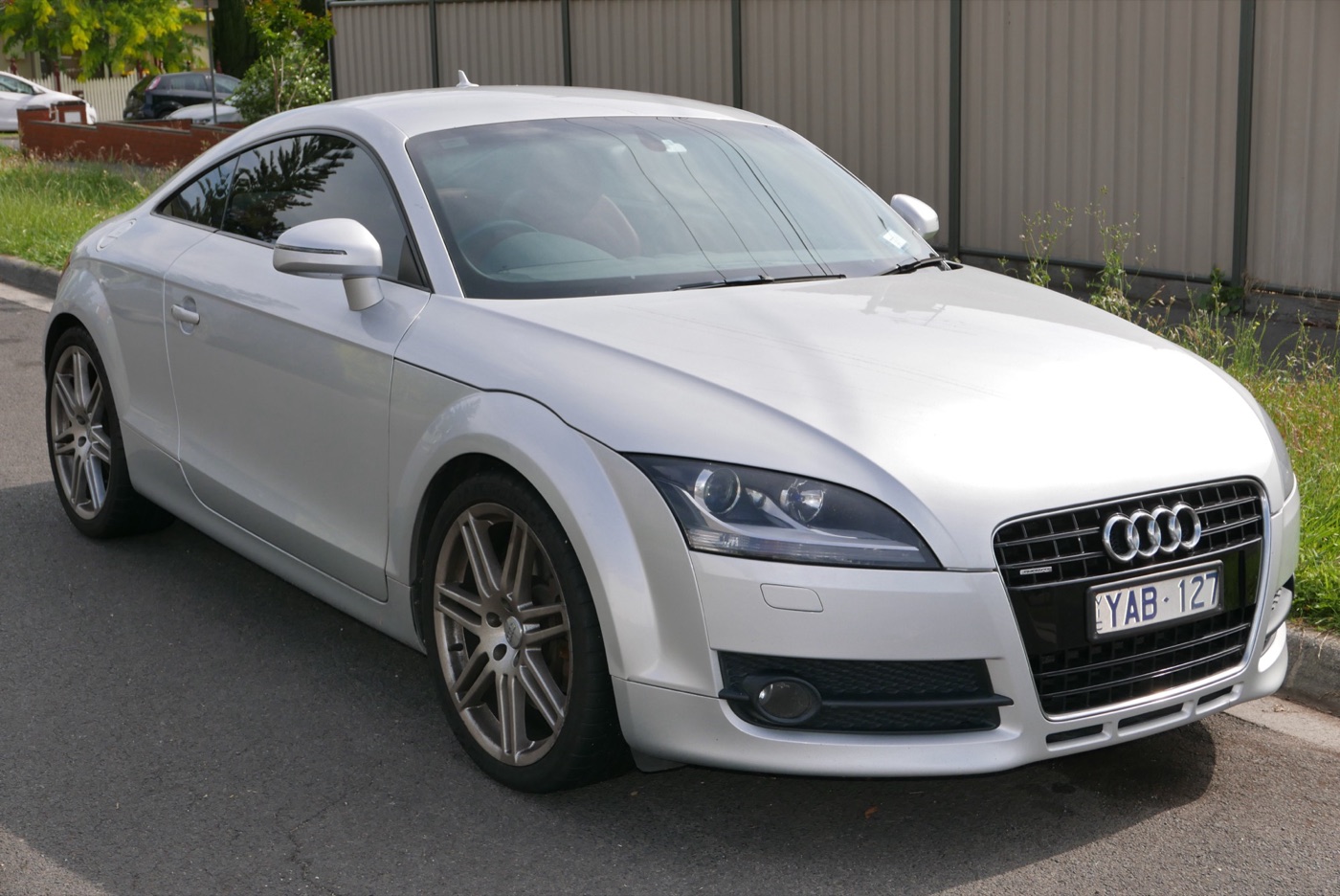
The Audi TT Mk2, type 8J, is the second-generation TT: a 2+2 coupe and two-seat roadster that Audi unveiled in Berlin on 6 April 2006 and built until 2014, with bodies made in Ingolstadt and cars assembled in Győr, Hungary. It ran from a 160PS 1.8 TFSI to the 360PS five-cylinder TT RS plus, and people look it up today as a used buy: at the end of 2025, 41,814 TTs built from 2007 to 2013 were licensed in Great Britain, and on 28 October 2026 the 128 Mk2s on the first page of PistonHeads' listings for each registration year asked a median £5,995.
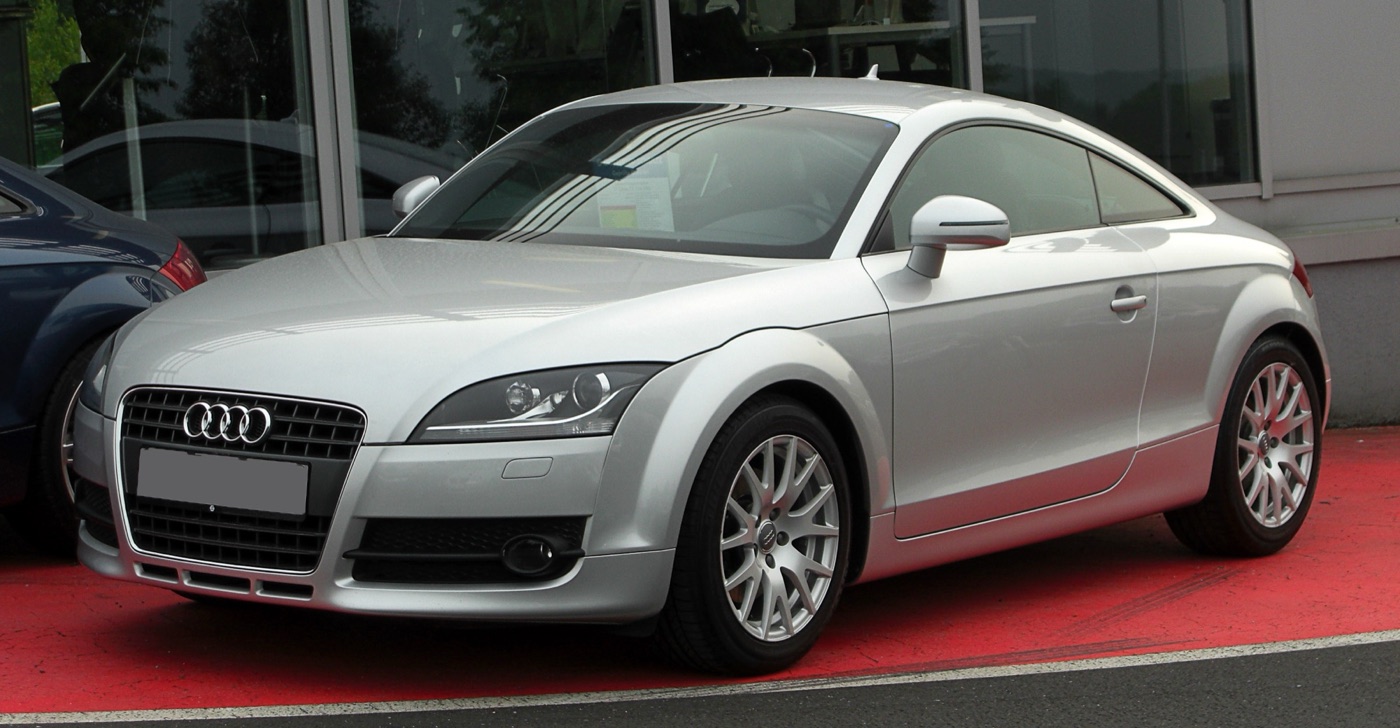
History of the Audi TT Mk2
The Mk2 TT took a year from concept to customer: a disguised preview at Tokyo in October 2005, the production coupe in April 2006 and the first UK deliveries that October. Its replacement, the third-generation TT, was shown at Geneva in March 2014.
The Shooting Brake concept and the 2006 launch
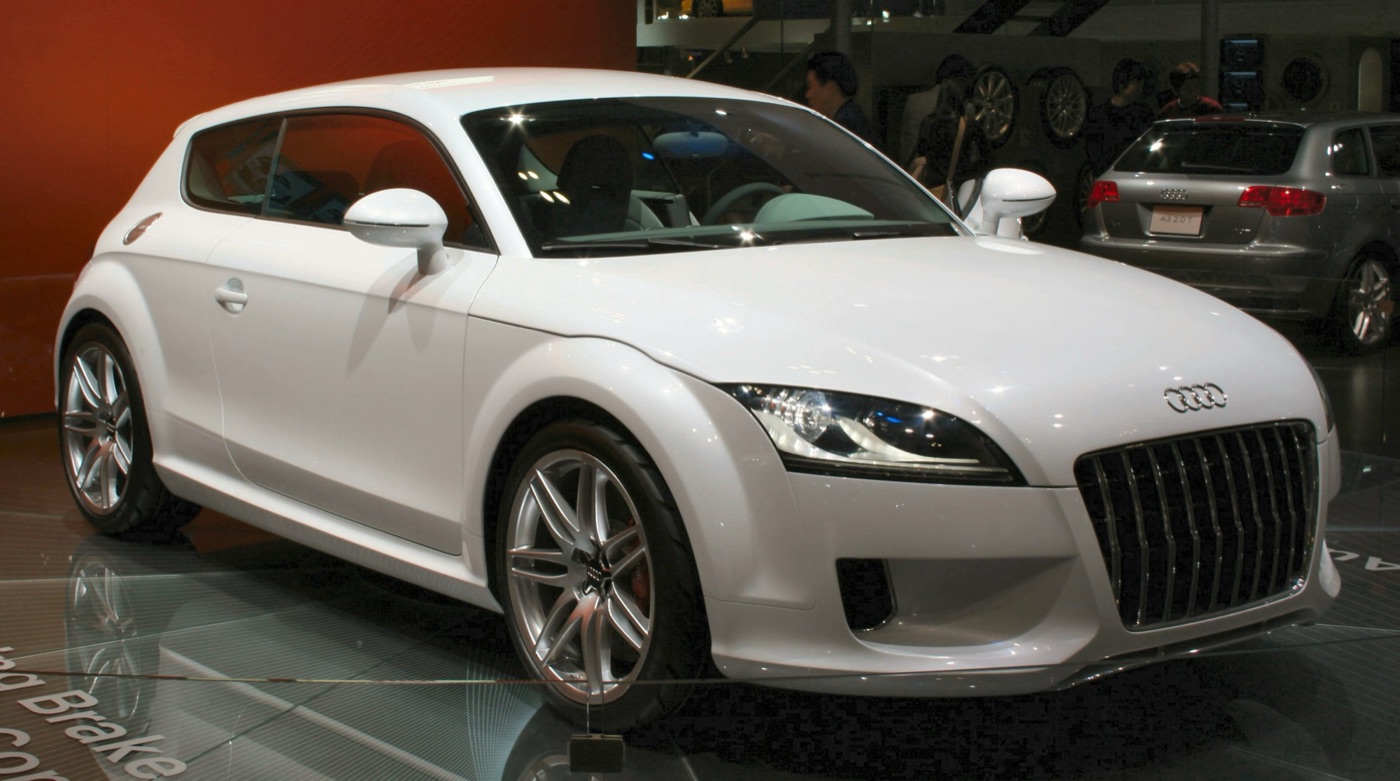
Audi previewed the shape with the Shooting Brake Concept at the 2005 Tokyo motor show. GoAuto's report of 12 October 2005 called it "a loosely disguised TT": 4,180mm long and 1,840mm wide on a 2,470mm wheelbase, against 4,041mm, 1,764mm and 2,429mm for the first TT, with a 3.2-litre V6, quattro drive and magnetic ride dampers.
The production coupe had its world premiere in Berlin on 6 April 2006, as Volkswagen's 2006 annual report records. UK order books opened the same week. Automotive Management reported on 10 April 2006 prices of £24,625 on the road for the front-wheel-drive TT Coupe 2.0 T FSI and £29,285 for the 3.2 quattro, with S tronic a £1,400 option and deliveries from October.
Roadster, TTS, TDI and TT RS: 2006 to 2009
Assembly of the coupe began in Győr in April 2006 and of the roadster in November, according to Audi Hungaria's production history. The range then grew every year:
- January 2008: the 272PS TTS, shown at the Detroit show and priced in the UK from £33,380 for the coupe and £35,380 for the roadster.
- March 2008: the 170PS TT 2.0 TDI quattro, the first diesel TT, from £26,350 at its Geneva debut.
- Spring 2009: a 160PS TT Roadster 1.8 TFSI, front-wheel drive and manual only, at £23,910.
- March 2009: the 340PS TT RS, with a 2.5-litre five-cylinder engine, at £42,980 for the coupe and £44,880 for the roadster, first deliveries in June.
The 2010 facelift
For the 2011 model year Audi revised the styling and replaced the 200PS 2.0 TFSI with a 211PS engine using its valvelift system. Audi UK's release on the 2011 range gave the manual coupe 0–62mph in 6.1 seconds against 6.6, and combined economy of 42.8mpg against 36.7, with CO2 down from 183g/km to 154g/km. The TT RS's Sport button, which changes throttle response, steering assistance and the engine note, became an option across the range.
Final years and the end of production
The 1.8 TFSI reached the coupe for the 2012 model year, priced from £24,070, and S tronic became available on the TDI (Audi UK release). The 360PS TT RS plus followed in May 2012. In October 2013 Audi UK said the TT had been delivered to more than 500,000 customers since 1998 and marked it with a 500-car TTS Limited Edition, reported in The Auto Channel's copy of the release. Audi's own count of cars built was the same: the 500,000th TT left the Győr line in November 2013, fitted with the plant's 25 millionth engine, a 2.0 TFSI. Audi Hungaria dates the start of third-generation production there to July 2014.
Design and engineering
The Mk2 kept the first TT's arched roof and round motifs but grew in every direction. Under the skin it changed more: an aluminium and steel body, a multi-link rear axle in place of a torsion beam, and optional magnetic dampers. Audi's launch release, archived by Audi Canada, put the coupe at 164.5 inches long (4,178mm), 72.5 inches wide (1,842mm) and 53.2 inches high on a 97.2-inch (2,468mm) wheelbase: 5.4 inches longer and 3.1 inches wider than the Mk1.
The aluminium and steel body
The body uses Audi Space Frame construction, the aluminium method Audi first used on the A8 (Goodwood's guide adds the A2), combined with steel for the first time. Fast Car's guide notes that it sits on the Volkswagen Group's PQ35 (A5) platform. Aluminium makes up 69 per cent of the coupe body's weight; the steel sits at the rear of the floor, with steel doors and tailgate, to even out the axle loads. The bodyshell weighs 453lb (about 206kg), of which 308lb is aluminium, and Audi said an all-steel shell would be 48 per cent heavier. Torsional rigidity rose by about 50 per cent over the Mk1. The roadster body is 58 per cent aluminium, and for the TT RS Audi gave the steel share as 31 per cent for the coupe and 42 per cent for the roadster.
Suspension, quattro and magnetic ride
At the front there are MacPherson struts on an aluminium subframe; at the rear, a four-link axle with separate springs and dampers replaced the torsion beam of the front-wheel-drive Mk1. Steering is electromechanical. Four-wheel-drive models use an electronically controlled, hydraulically actuated multi-plate clutch mounted at the back of the car for weight distribution, sending 85 per cent of the torque to the front in normal driving and up to 100 per cent to either axle. Audi magnetic ride, optional on most models, fills the dampers with a magnetorheological fluid whose stiffness changes within milliseconds when a voltage is applied; the driver picks Normal or Sport.
Rear spoiler and aerodynamics
An electric spoiler rises at 75mph and retracts below 50mph. Autocar's review gives the coupe a drag coefficient of 0.30, helped by a mostly flat underbody.
Interior and practicality
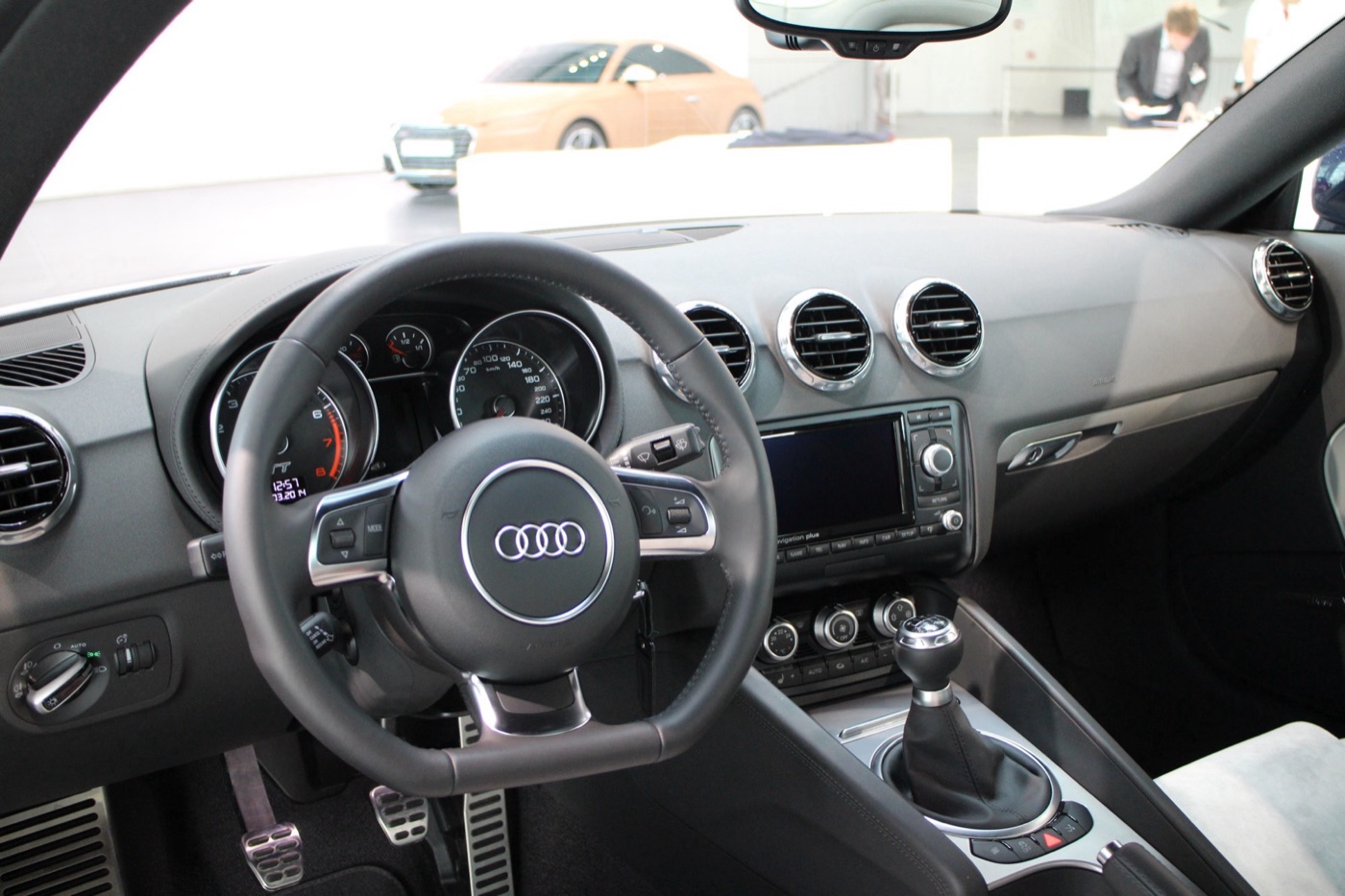
Inside, the seats sit lower than in the Mk1, and a Nappa-trimmed, flat-bottomed steering wheel was standard. Auto Express lists alloy wheels, climate control and electric windows and mirrors on every TT; Sport trim added 17-inch alloy wheels and S line 18-inch wheels, lowered suspension and xenon headlights. Factory-fitted parking sensors are worth having over aftermarket kits, according to Auto Express. Parkers says almost everything except satellite navigation and the Bose stereo was standard, so adverts that list a long string of extras deserve a check against the build specification. Autocar found the build quality hard to fault: "every switch, surface and dial is cleanly styled and perfectly weighted in its operation". The coupe's boot holds about 10.2 cubic feet (290 litres) with the rear seats up and 24.7 cubic feet (700 litres) with them folded, enough for two golf bags across its 66.9-inch length. The rear seats are for children: Autocar calls them "very much for occasional use only". The roadster has two seats.
Where the Audi TT Mk2 was built
The Mk2 was split between two plants. Bodies were built and painted in Ingolstadt, and final assembly took place in a 35,000 square-metre hall at Győr, which had assembled every TT since 1998. Audi Hungaria lists the TT RS, from 2009, among the TTs built there.
Audi TT Mk2 specs and performance
The Mk2 had six engines, all mounted transversely: five petrol and one diesel, all turbocharged apart from the 3.2 VR6 carried over from the Audi TT Mk1. Power runs from 160PS to 360PS. The figures below are Audi's own for the coupe.
| Engine | On sale (UK) | Power | Torque | 0–62mph | Drive |
|---|---|---|---|---|---|
| 1.8 TFSI | 2009 roadster, 2012 model-year coupe | 160PS | 250Nm | 7.2sec | Front |
| 2.0 TFSI | 2006–2010 | 200PS | 280Nm | 6.6sec (6.4 S tronic) | Front or quattro |
| 2.0 TFSI | 2010–2014 | 211PS | 350Nm | 6.1sec | Front or quattro |
| 2.0 TDI | 2008–2014 | 170PS | 350Nm | 7.5sec | quattro |
| 3.2 V6 | 2006–2010 | 250PS | 320Nm | 5.7sec to 60mph (S tronic) | quattro |
| TTS 2.0 TFSI | 2008–2014 | 272PS | 350Nm | 5.2–5.4sec | quattro |
| TT RS 2.5 TFSI | 2009–2014 | 340PS | 450Nm | 4.6sec | quattro |
| TT RS plus 2.5 TFSI | 2012–2014 | 360PS | 465Nm | 4.3sec (4.1 S tronic) | quattro |
Sources: Audi UK releases for each model, Audi's 2006 launch release (V6, 200PS S tronic) and its 2011-range release (200PS manual). Audi quoted the TTS at 5.2 seconds in its January 2008 Detroit release and 5.4 seconds in its UK pricing release; the V6 torque is Audi's 236lb ft converted.
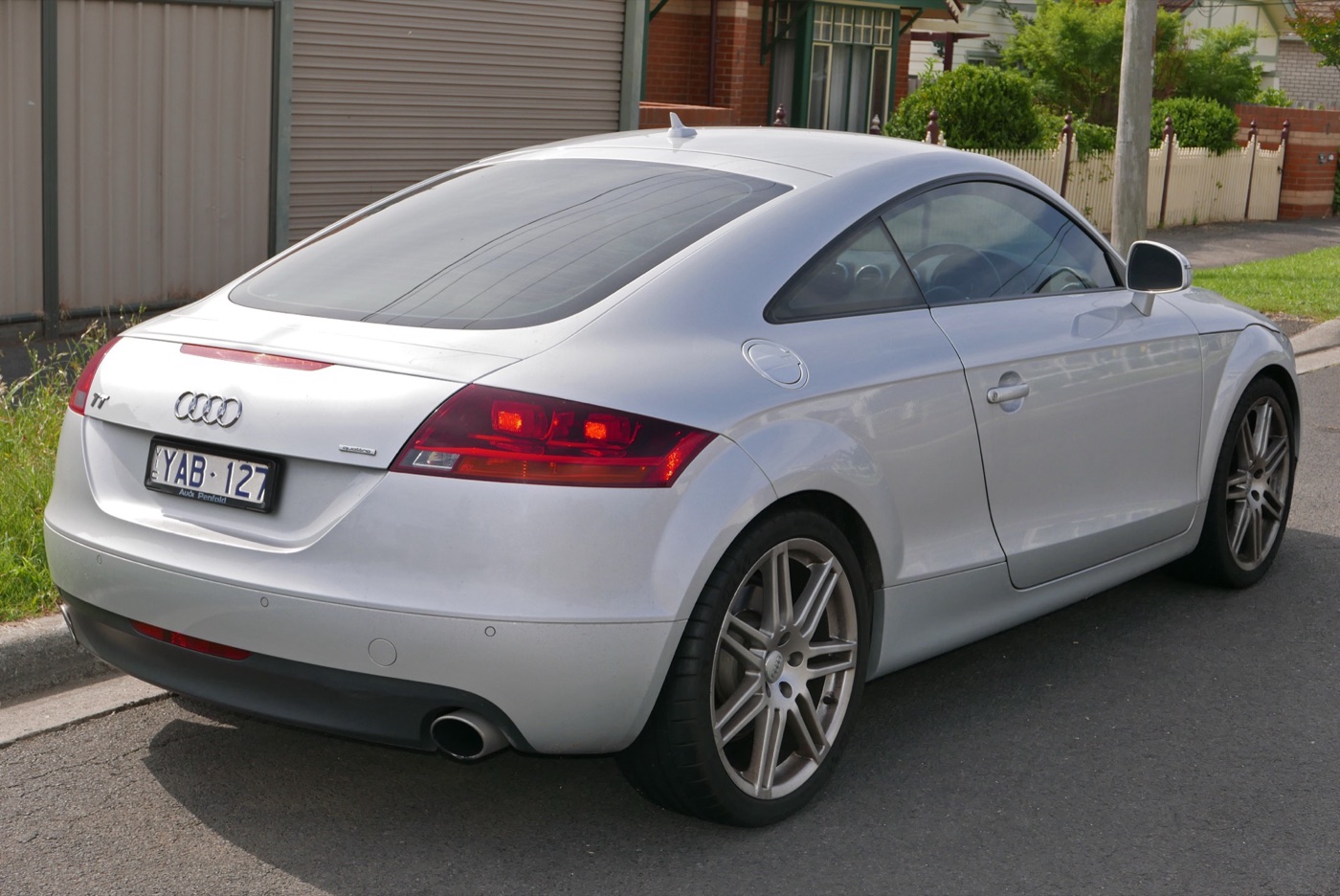
How fast is the Audi TT Mk2?
The quickest is the TT RS plus with S tronic, at 4.1 seconds to 62mph and a 174mph limit. The standard TT RS was limited to 155mph, or 174mph at extra cost; the TTS was limited to 155mph. Audi gave the 211PS 2.0 TFSI a 152mph top speed, the TDI 140mph and the 1.8 TFSI coupe 140mph. In Autocar's own test the TT RS reached 60mph in 4.7 seconds and pulled 0.99g on a dry circuit.
Gearboxes
Every engine came with a six-speed manual transmission as standard, in a magnesium casing at launch. The optional S tronic, Audi's name for the Volkswagen Group's DSG dual-clutch gearbox, which Audi said shifted in 0.2 seconds, was six-speed on the 2.0 TFSI, 3.2 V6, TTS and TDI. A seven-speed S tronic came on the TT RS from later in 2010, according to Audi UK's 2011-range release (the RS was manual only at first), and on the RS plus and the 1.8 TFSI coupe of the 2012 model year.
Audi TT Mk2 variants: TTS, TT RS and Roadster
Beyond the coupe and roadster bodies there were three performance models (TTS, TT RS and TT RS plus), a diesel and a run of trim and special editions; Sport, S line and Black Edition were the main UK trims.
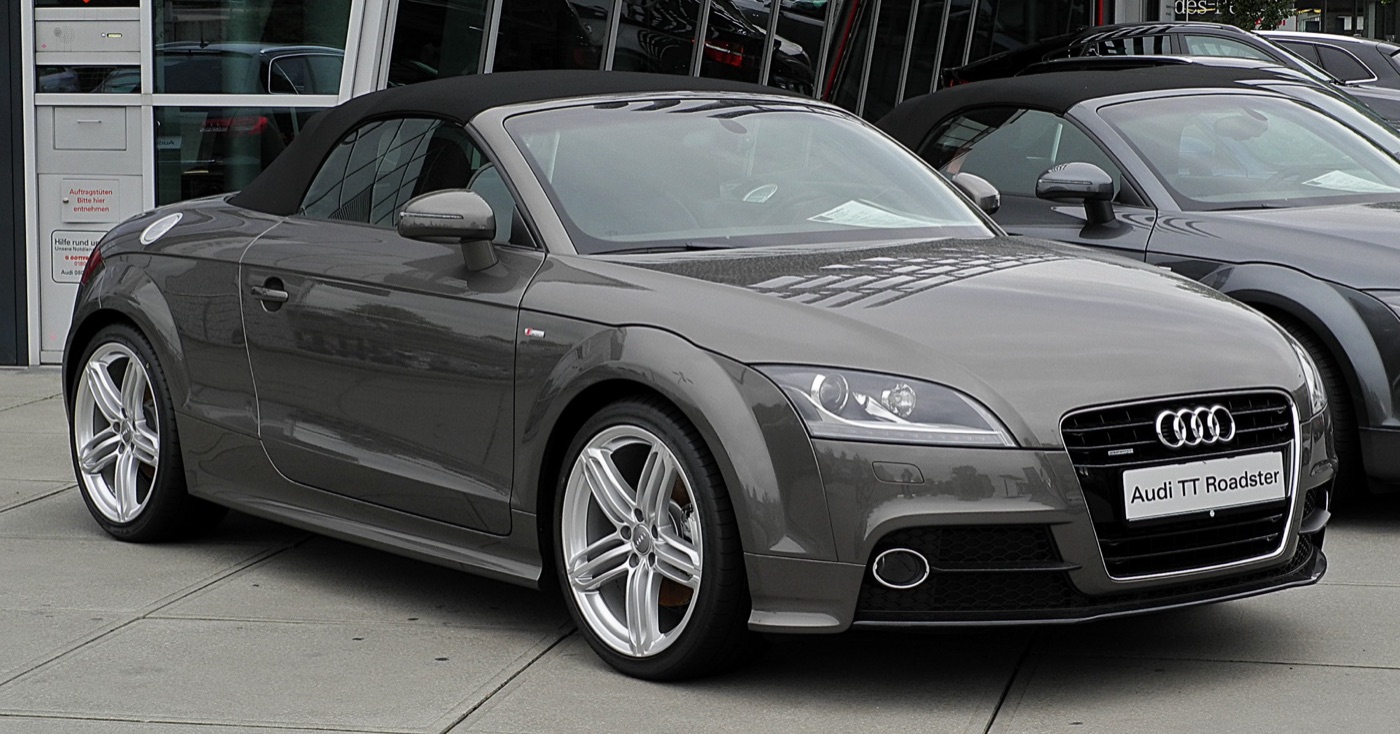
TT Roadster
The roadster is a two-seater with a powered fabric hood. On the 1.8 TFSI the hood, which has a heated glass rear window, opens or closes in 12 seconds and works at up to 19mph, as Audi UK's 1.8 TFSI Roadster release describes. Roadsters took the same engines as the coupe.
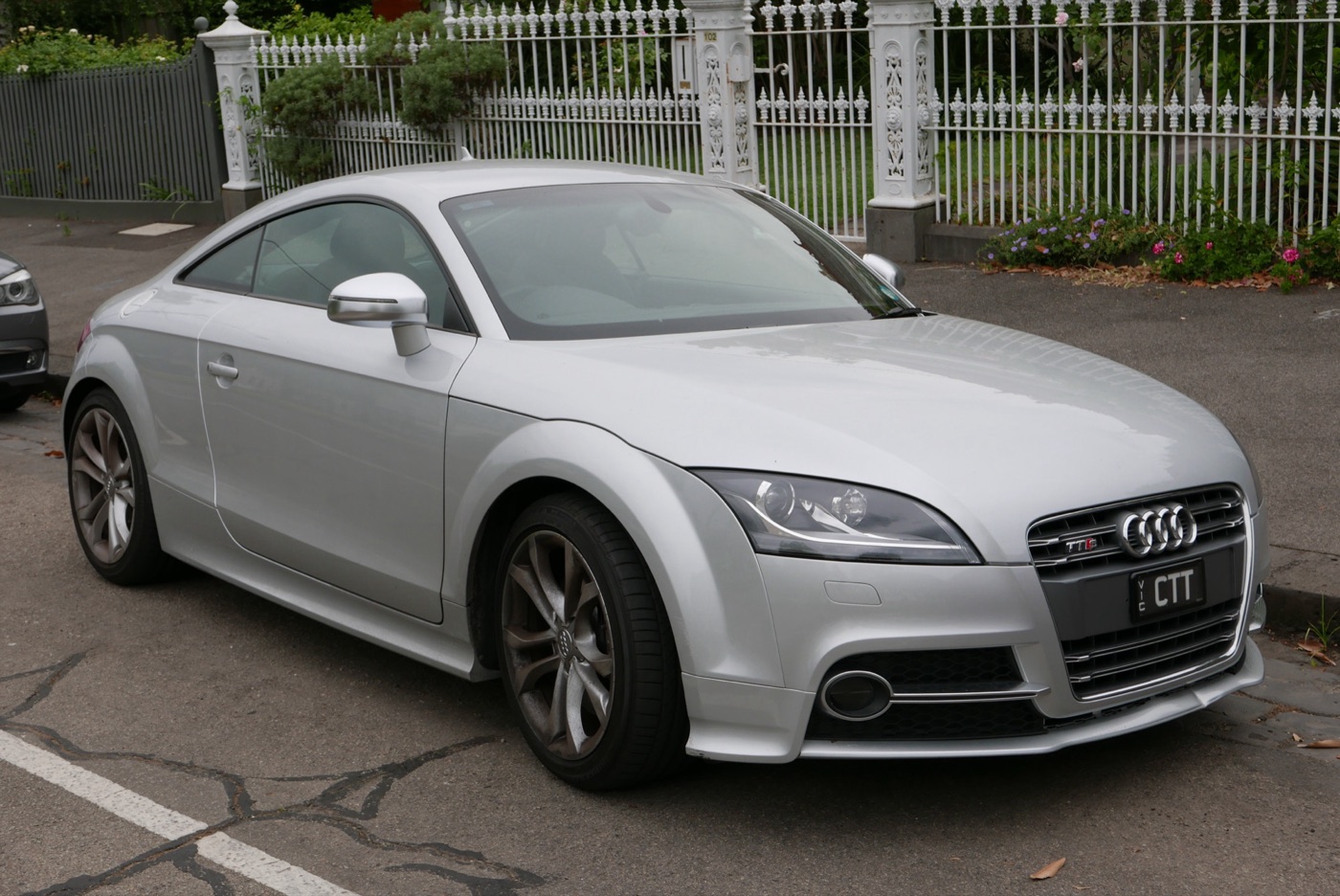
TTS
The TTS was the first TT with Audi's S badge. Audi UK's Detroit release lists its changes: the 2.0 TFSI raised from 200PS and 280Nm to 272PS and 350Nm, quattro and magnetic ride as standard, four tailpipes (a first on a TT), LED daytime running lights and Alcantara and leather seats. The UK pricing release gave the manual coupe 35.3mpg and 191g/km. Audi UK gave the TTS its British public debut at the 2008 Isle of Man TT races, where it supplied eight cars to run the event.
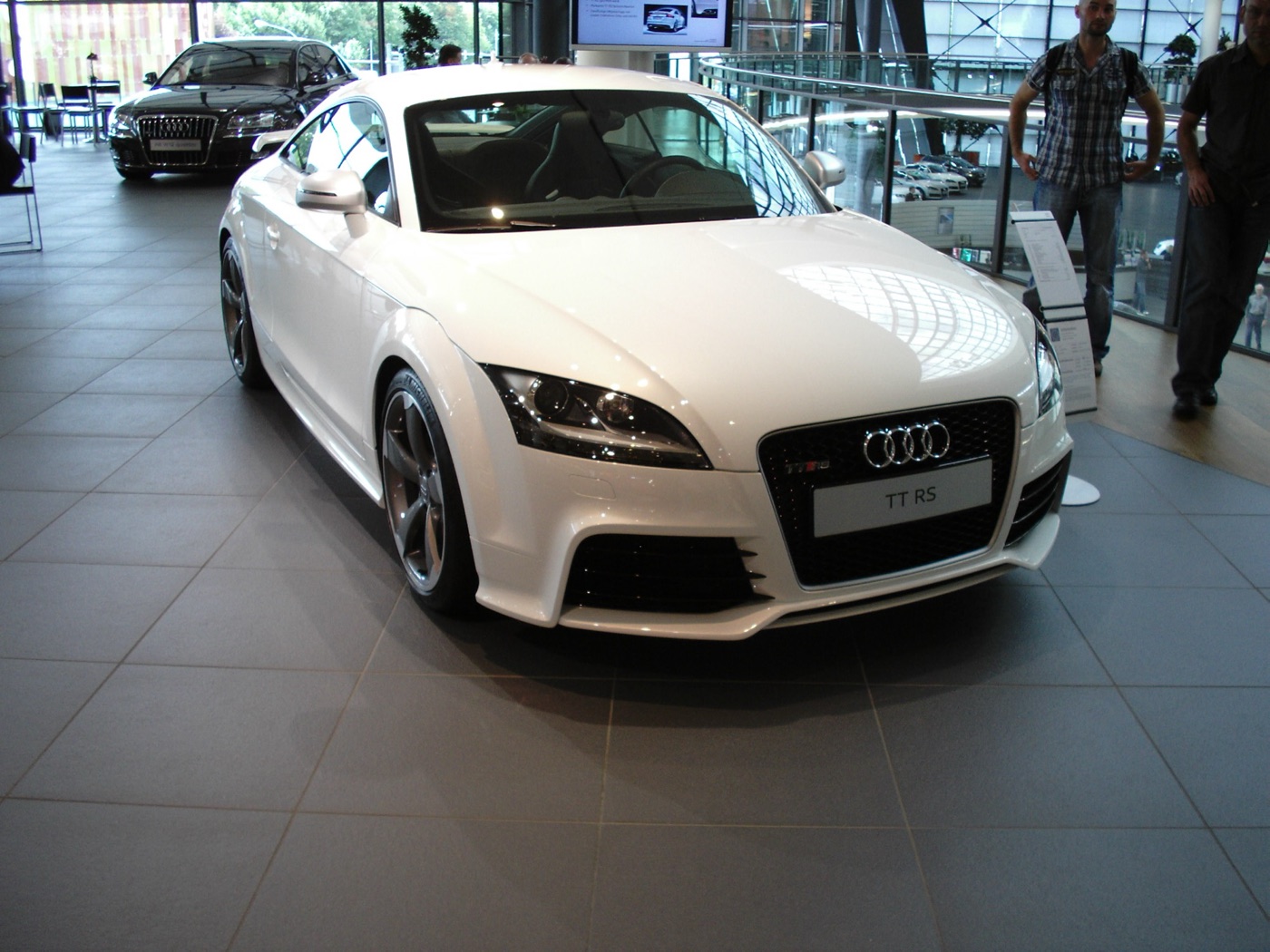
TT RS
The TT RS brought back the five-cylinder turbo of Audi's 1980s quattro coupes. In Audi UK's Geneva release the 2.5-litre engine weighs 183kg and makes 340PS from 5,400rpm to 6,700rpm and 450Nm from 1,600rpm to 5,300rpm. The coupe weighs 1,450kg, rides 10mm lower, has 370mm front discs with four-piston callipers and returns 30.7mpg combined. A Sport button opens a flap in the left tailpipe.
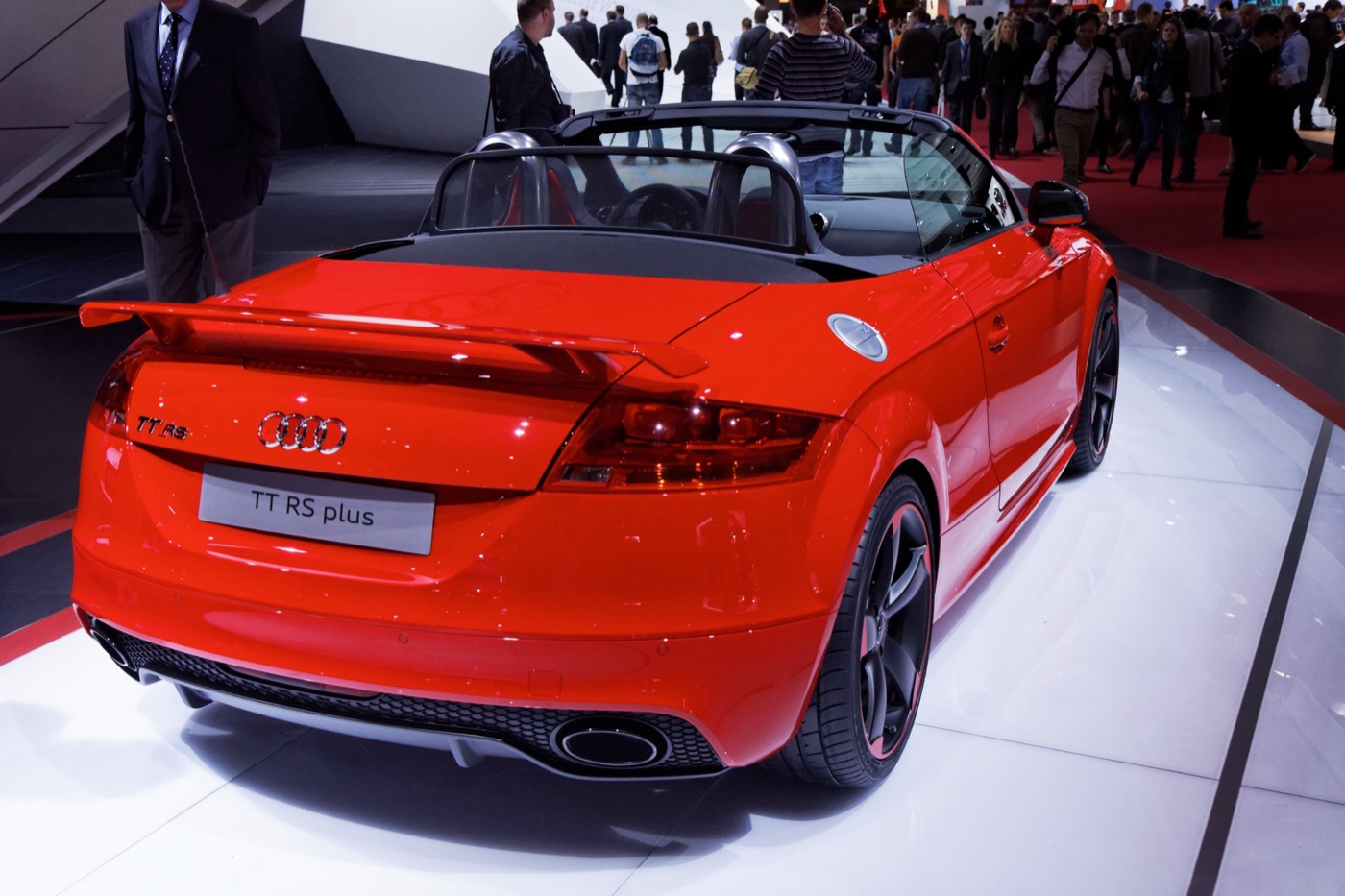
TT RS plus
The RS plus added 20PS and 15Nm, for 360PS and 465Nm, and raised the limiter to 174mph. Audi UK priced it from £48,945 to £52,265 in May 2012, £3,085 more than the TT RS, with 19-inch Rotor wheels, carbon-fibre mirror housings, the sports exhaust and satellite navigation as standard.
TT 2.0 TDI quattro
The diesel was the first TT with a diesel engine in the model's ten years. According to Audi UK's Geneva release of March 2008, its common-rail 2.0 TDI made 170PS and 350Nm (more torque than the V6), and the coupe returned 53.3mpg and 140g/km at a kerb weight of 1,370kg. It came only with quattro.
Special editions and concepts
The TT Clubsport quattro of May 2008, shown at the Wörthersee meeting in Austria, was a hoodless speedster concept with a 2.0 TFSI of more than 300PS (Audi UK release). In production, the Amplified Black pack (Audi UK release) added £700 to a Black Edition for a fixed TT RS-style spoiler, 19-inch Rotor wheels and a choice of Glacier White, Misano Red, Daytona Grey or Samoa Orange. The 2013 TTS Limited Edition, 500 cars worldwide, came in Nimbus Grey (coupe) or Imola Yellow (roadster) with a "1 of 500" plaque, from £38,860.
Audi TT Mk2 in competition
On the Nürburgring Nordschleife, quattro GmbH ran a front-wheel-drive TT RS as a development car. At the 2011 Nürburgring 24 Hours, Audi's report says, Raeder Motorsport's TT RS driven by Michael Ammermüller, Frank Biela, Jens Klingmann and Martin Tomczyk won the SP 4T class and finished 14th overall in a field of 202, the best front-wheel-drive car in the race. The second Raeder car lost 75 minutes early on to a faulty wastegate valve.
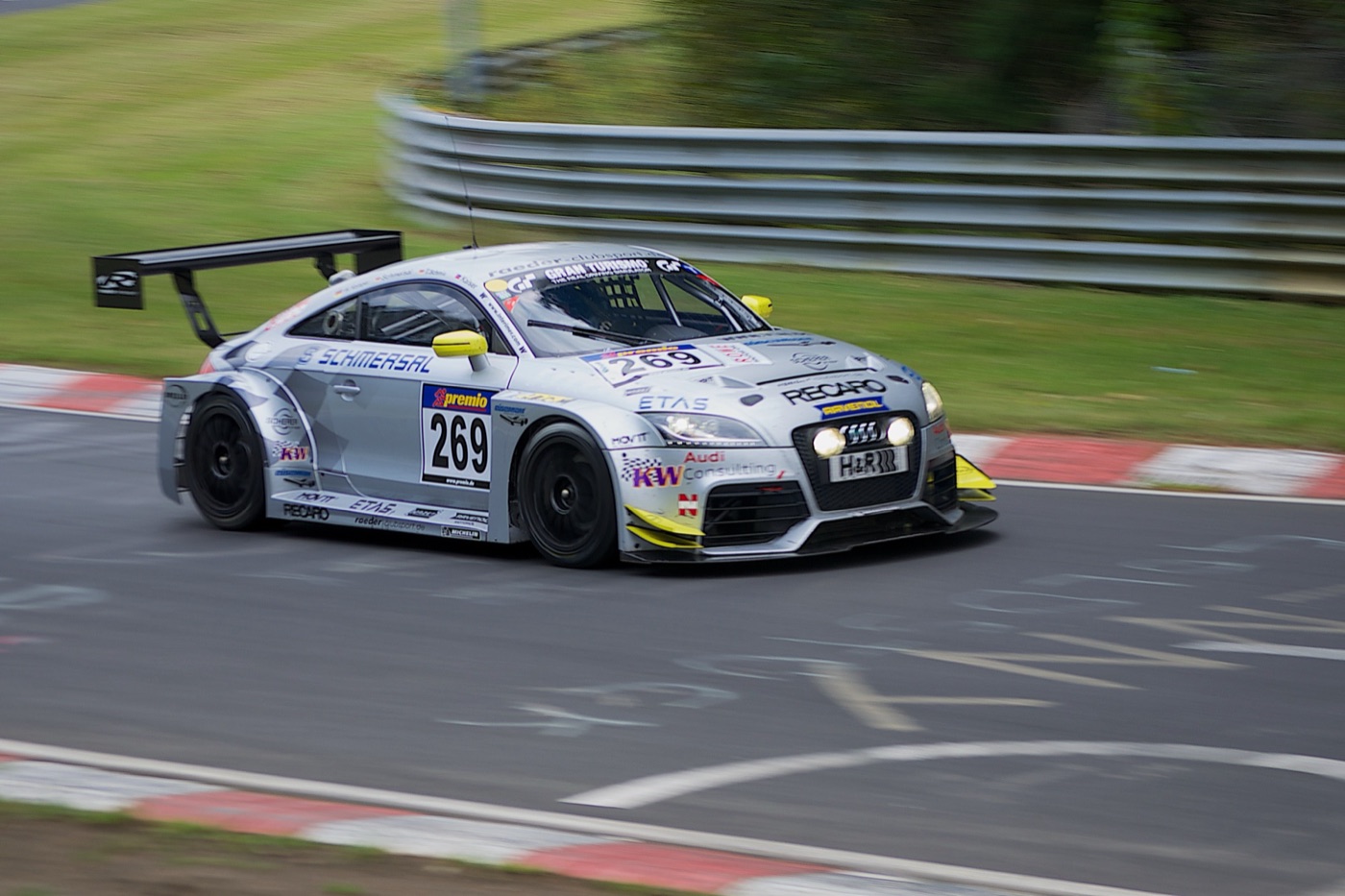
Customer teams carried on. In the Nürburgring endurance series (VLN), the race&event team's TT-RS won the SP4T class, for turbocharged specials up to 2,600cc, for the third race running in July 2012, its sixth podium in a row, as the series reported on 28 July 2012.
How many Audi TT Mk2s were made?
Volkswagen's annual reports put production of the TT from 2007 to 2013, years in which only the Mk2 was built, at 213,339 cars. The reports split coupe and roadster until 2010 and give one TT figure after that; 2006 and 2014 mix the Mk2 with the first and third generations.
| Year | Coupe | Roadster | Total |
|---|---|---|---|
| 2006 (Mk1 and Mk2) | 21,461 | 2,214 | 23,675 |
| 2007 | 40,417 | 16,349 | 56,766 |
| 2008 | 31,101 | 10,688 | 41,789 |
| 2009 | 18,010 | 4,811 | 22,821 |
| 2010 | 20,413 | 5,804 | 26,217 |
| 2011 | not split | 25,508 | |
| 2012 | not split | 21,880 | |
| 2013 | not split | 18,358 | |
Source: Volkswagen AG annual reports for 2006, 2008, 2009, 2010, 2012 and 2013 (each gives that year and the year before).
How many Audi TT Mk2s are left in the UK?
The Department for Transport's VEH0124 licensing table, published in April 2026, counts 41,814 Audi TTs built from 2007 to 2013 as licensed in Great Britain at the end of 2025, and another 4,037 declared off the road (SORN). At the end of 2014 the same build years showed 50,385 licensed. By model name, the 2025 figure includes 3,431 TTSs and 654 TT RSs, 119 of them RS plus. Each build year from 2007 to 2013 still has between 5,342 and 6,704 licensed cars, the 2007 cars the most.
Audi TT Mk2 prices and values today
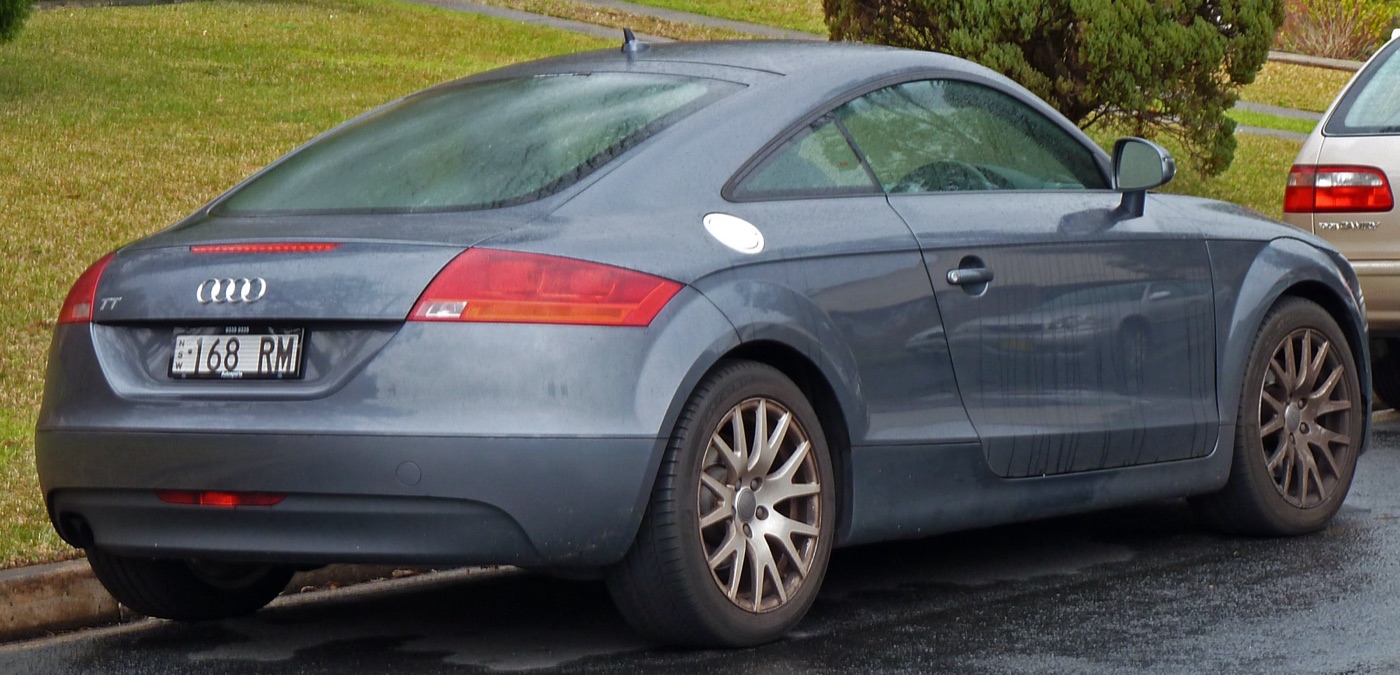
A Mk2 TT costs from about £2,000 for a high-mileage early 2.0 TFSI to about £20,000 for a low-mileage TT RS. These are asking prices from PistonHeads' Mk2 listings and its TTS listings, every advert on the first results page for each registration year, read on 28 October 2026.
| Model | Cars listed | Asking prices | Median price | Median mileage |
|---|---|---|---|---|
| All Mk2s (2007–2014 registrations) | 128 | £1,995–£19,990 | £5,995 | 90,021 |
| 2007–2010 registrations | 61 | £1,995–£13,750 | £3,998 | 98,149 |
| 2011–2014 registrations | 67 | £3,495–£19,990 | £7,295 | 80,380 |
| 1.8 TFSI | 17 | £3,495–£9,489 | £6,190 | 80,000 |
| 2.0 TFSI | 58 | £1,995–£15,995 | £5,288 | 86,018 |
| 2.0 TDI | 31 | £1,995–£9,495 | £5,190 | 98,000 |
| 3.2 V6 | 5 | £2,990–£6,850 | £5,990 | 65,000 |
| TTS | 13 | £5,495–£11,495 | £7,990 | 89,058 |
| TT RS | 4 | £10,998–£19,990 | £14,872 | 78,670 |
Third-generation TTS adverts (2015, 310PS) are left out. The 29 roadsters among the 128 asked a median £4,780.
What to pay for
The cheapest cars are early 2.0 TFSIs and TDIs with high mileages, 100,000 miles or more; on the day, the highest-mileage TDI had covered 197,000. Cars registered from 2011, after the facelift, asked a median £3,297 more than earlier ones. The TT RS is the one Mk2 with a clear premium: the four on sale ran from a 2009 roadster with 100,464 miles at £10,998 to a 2012 roadster with 40,000 miles at £19,990.
Audi TT Mk2 buying guide: common problems
Every used-car guide in this page's sources lists the same Mk2 fault: a front window that sticks part-way, caused by a fraying cable in the window regulator. The S tronic gearbox, coil packs, the Haldex coupling on quattro cars and the roadster's hood mechanism come next; of the engines, Parkers says none has "any major areas of concern".
Window regulator failure
The window regulator is the cable-and-pulley mechanism inside each frameless door that raises and lowers the glass. On the Mk2 the cable frays, catches in a plastic pulley and stops the window, usually part-way up.
Symptoms
SkiddMark's 2012 report found that many owners hear a grinding ("graunching") noise or notice the glass slowing before it fails, and Goodwood's buyer's guide notes that some get no warning. One window usually goes at a time, most often the driver's, though cars with little-used passenger windows have had that side fail too. With the glass stuck down the car can't be locked safely or left in the rain.
What breaks inside the door
A 2012 SkiddMark running report on a 2007 TT 2.0 TFSI manual with 51,187 miles traced its stuck driver's window to a strand of the regulator cable that had frayed and jammed in a pulley. Audi did not sell the cable on its own, so the fix was a complete regulator with its cables, clamps and pulleys: part 8J0837462D for the right-hand (driver's) door, £118 including VAT from a dealer at the time. Fitting it took three hours. The report found the same failure on nearly new cars, some less than a year old, and noted that the A5 and S5 have a similar frameless door. Audi's parts catalogue, as listed by OEM Wolf, shows the left-hand regulator revised from 8J0837461A through B, C and D, with replacements dated from 2007 to 2011.
What Audi said in 2012
Audi UK looked into the problem in spring 2012 after SkiddMark raised it. A report of 30 May 2012 recorded what its customer-service team found: the fault did not show as a significant complaint on the warranty system, but more complaints came from 2007 and 2008 cars, and many more regulators had been ordered than dealers had fitted, which suggested owners and independent garages were doing the work outside warranty. The part had been upgraded twice in three to four years. On 29 May 2012 Jon Zammett, Audi UK's head of public relations, said in a statement:
"We are aware that a number of customers have approached Audi Centres regarding window regulator problems in second generation TT models, and that there is dissatisfaction in some cases with the treatment they have received. We apologise for falling short of meeting your rightfully high expectations in this instance, and ask that owners who have been inconvenienced by this problem, and who feel that it hasn't been resolved to their satisfaction, contact Audi Customer Services for further assistance."
Owners' later reports varied. Some front-line staff still called the failure wear and tear, while others were offered goodwill contributions. Audi did not recall the car for it: no window-regulator recall for the TT appears in the DVSA recalls file.
Repair cost and fixing it yourself
Bills that owners reported in 2012 and 2013 ran from £283 and £290 at Audi dealers in Glasgow and Edinburgh to £300 in Cardiff and £350 at an independent garage; one dealer quoted £580 and came down to £497. In Dublin a dealer took €115 off a €465 bill as goodwill. The job is a door-trim-off repair: the running report used nine spare trim clips and a guide on the owners' forum, and warned against forcing a stuck window, which strains the motor, a further £200 or more to replace. Before buying, run both windows fully up and down several times and listen for grinding.
S tronic gearbox
Juddering or hesitation at low speed on an S tronic car usually points to the mechatronic control unit. Autocar's used-car guide puts a specialist replacement at about £800 and a clutch pack at £1,200; Parkers says about £1,000 for the module. On a test drive, warm the gearbox up, then crawl as if in traffic, and walk away from a car that lurches.
Engines: coil packs, oil use, cambelt or chain
Misfires are often a failed ignition coil, one per cylinder, at about £35 each, according to Autocar. Parkers says the engines typically use quite a bit of oil. Three of the six engines have a cambelt: the 200PS EA113 2.0 TFSI sold until 2010, the TTS engine (Audi describes it as an extensively revised version of that 2.0 TFSI) and the 2.0 TDI. The guides disagree on when to change it: Autocar's 2018 buying guide says five years or 75,000 miles and Fast Car 75,000 miles, while Auto Express's used review says five years or 114,000 miles. The other three have timing chains: the 1.8 TFSI and the 3.2 V6, according to Auto Express; the 211PS EA888 2.0 TFSI from 2010, according to Goodwood's buyer's guide, which warns that its tensioner can fail; and the TT RS's 2.5-litre five-cylinder, whose camshaft drive chains are listed for the 2009–2014 TT in Laser Tools' timing-kit instructions.
Haldex, suspension, brakes and tyres
The used guides add these. Quattro cars use a Haldex clutch that can fail if the car has been launched hard, leaving it front-wheel drive. Wishbone bushes start to wear at about six years, Autocar says the brake fluid should have been changed every two years, and quattro cars get through tyres quickly; cheap or mismatched tyres point to skimped maintenance. Corrosion is rare, so rust usually means accident repair, and the aluminium front panels cost more to repair than steel. There is no spare wheel, only a compressor and sealant kit that is often missing. Check that the rear spoiler rises and falls, and that front seat bases haven't sagged, a common complaint on leather seats.
Roadster hood
On roadsters, check that the hood folds fully under power and that the flaps that cover it close; Autocar's guide reports more cars with failing flap motors or sensors. Damp carpets or a wet boot mean a leaking seal.
Modified cars
Cheap TTs attract tuners. Parkers warns that modifications are "carried out to very variable standards": extra power wears engines and clutches faster, and aftermarket suspension usually rides worse.
Audi TT Mk2 recalls
The DVSA recalls file lists three UK recalls that cover the Mk2, read on 28 October 2026. A fourth, R/2020/087 for fuel-tank protection, starts with cars built on 29 April 2014 and runs to 2019, so it covers the third-generation TT.
| Recall | Launched | Built | Cars | Fault |
|---|---|---|---|---|
| R/2008/027 | 31 March 2008 | 5 January to 20 February 2007 | 286 | Side pillar trim could protrude into the cabin if the rear seat belt tensioners fire |
| R/2009/086 | 31 July 2009 | 20 May to 30 July 2009 | 123 | Vacuum pipe to the brake servo could be damaged |
| R/2009/112 | 14 December 2009 | 1 September 2008 to 31 August 2009 | 1,454 | S tronic could misread clutch temperature and open the clutch, with loss of drive; gearbox control unit reprogrammed |
Running costs: road tax and servicing
Every Mk2 was registered after 23 March 2006, so its annual road tax depends on its CO2 band, from £200 for a TDI to £760 for a manual 3.2 V6 at GOV.UK's current rates.
| Model | CO2 | Band | 12 months |
|---|---|---|---|
| 2.0 TDI quattro | 139–140g/km | E | £200 |
| 2.0 TFSI 211PS (2010 on) | 154g/km | G | £275 |
| 1.8 TFSI Roadster | 159g/km | G | £275 |
| 2.0 TFSI 200PS (2006–2010) | 183g/km | I | £360 |
| TTS | 191g/km | J | £410 |
| TT RS | 214g/km | K | £445 |
| 3.2 V6 quattro S tronic | 224g/km | K | £445 |
| 3.2 V6 quattro manual | 247g/km | L | £760 |
The V6 figures come from Audi UK's 2006 TT Coupe price list and the TT RS figure from Audi UK's 2009 TT RS brochure; the TT RS Roadster is 221g/km, also band K. The V5C registration certificate gives each car's exact CO2 figure. Auto Express gives the variable service intervals as up to 19,000 miles or two years, alternating minor and major services. Parkers says the two-year interval "should ring alarm bells" and that the best cars were serviced more often; the chairman of the Audi TT owners' club told Autocar his Mk2 would be serviced every 10,000 miles.
Reception and rivals
The Mk2 won the 2007 World Car Design of the Year at the New York show, where Autoblog reported it had also been a finalist for World Car of the Year, which went to the Lexus LS460. Autocar wrote that the original TT had been "a triumph of design, but not dynamics", and that Audi launched the Mk2 quoting Nürburgring times against sports cars such as the Porsche Cayman.
What the reviews said
Autocar called it "the difficult second album", longer, wider and taller, and "arguably less beautiful" than the original. Its verdict on the weak point was specific: "its electrically assisted steering. The problem is not accuracy but rather the variability in assistance and the absence of feel." Autocar also recorded that a TT should still be worth more than 50 per cent of its price after three years, where a similarly priced BMW coupe M Sport struggled to reach 45 per cent. Looking back from the third-generation car, evo wrote that the Mk2 TT RS was "competent but numb" and "never delivered on the promises of that glorious engine".
Handling, ride quality and comfort
Autocar found the 2.0 TFSI quattro models stable and the front-wheel-drive cars neat, "even if they are a little short on fun", and said the TDI lacks the agility of the 110kg lighter 2.0 TFSI and the grip of the TTS. On ride quality it was kinder: "The TT rides reasonably well, too, especially the TDI", while the RS's suspension is "capable of rounding off the sharp edges of bumps, but it's a long way from flattening them out altogether". Parkers adds that the lowered S line sports suspension was criticised as harsh when new, and that the optional magnetic ride was better.
Audi TT Mk2 rivals
Autocar's tested TT RS reached 60mph in 4.7 seconds against 5.1 for a Porsche Cayman S. When the concept appeared in 2005, GoAuto set it against BMW's planned Z4 coupe and a possible fixed-roof Mercedes SLK. Used-car guides from Auto Express and Carbuyer add the Volkswagen Scirocco and Peugeot RCZ as cheaper coupes, and the Porsche Boxster, BMW Z4 and Mercedes SLK as roadsters to consider.
Questions
What does 8J mean on an Audi TT?
8J is Audi's type code for the second-generation TT, built from 2006 to 2014. Part numbers for the Mk2 start with 8J, such as 8J0837462D for the right-hand window regulator.
What years is the Audi TT Mk2?
Assembly of the coupe began in Győr in April 2006 and of the roadster that November. UK deliveries started in October 2006, and the third-generation TT replaced it in 2014, with production from July that year.
Is the Audi TT Mk2 four-wheel drive?
Some are. The 1.8 TFSI is front-wheel drive only and the 2.0 TFSI came with front-wheel drive or quattro; the 3.2 V6, 2.0 TDI, TTS, TT RS and TT RS plus all have quattro four-wheel drive as standard.
Does the Audi TT Mk2 have a cambelt or a timing chain?
It depends on the engine. The 200PS 2.0 TFSI sold until 2010, the TTS's 2.0 TFSI and the 2.0 TDI have a cambelt; used-car guides give its change interval as 75,000 miles (Autocar, with five years) or five years or 114,000 miles (Auto Express). The 1.8 TFSI, the 211PS 2.0 TFSI from 2010, the 3.2 V6 and the TT RS's 2.5-litre five-cylinder have timing chains.
Can adults sit in the back of an Audi TT Mk2?
Only for short trips. The coupe is a 2+2 whose rear seats Autocar describes as "very much for occasional use only"; the roadster has two seats. Folding the rear seat backs takes the coupe's boot from about 290 litres to 700 litres.
What is the difference between the Audi TT Mk1 and Mk2?
The Mk2 is 5.4 inches longer and 3.1 inches wider than the Mk1, with a body that is 69 per cent aluminium by weight and a four-link rear axle in place of the torsion beam on front-wheel-drive Mk1s. Audi said its body is about 50 per cent stiffer.
Does the Audi TT Mk2 have a spare wheel?
No. It carries a compressor and tyre sealant kit instead, which used-car guides say is often missing from cars for sale.
How much is an Audi TT RS Mk2 worth?
On 28 October 2026 PistonHeads listed four Mk2 TT RSs at £10,998 to £19,990, a median of £14,872. New in 2009 the coupe cost £42,980.
Sources
- Volkswagen AG, Annual Report 2006, and the annual reports for 2008, 2009, 2010, 2012 and 2013: Berlin premiere of 6 April 2006; production tables for 2005 to 2013.
- GoAuto, "First look: Audi shoots the TT breeze at Tokyo", 12 October 2005: the Shooting Brake Concept and its dimensions.
- Automotive Management, "Order books open for new Audi TT", 10 April 2006 (archived): UK launch prices and delivery date.
- Audi of America via Audi Canada, "The new Audi TT Coupe", 2006 (archived): dimensions, body construction, engines, suspension, spoiler, boot.
- Audi Hungaria, "Győr: production", Audi MediaCenter (archived): assembly dates and the Ingolstadt–Győr split.
- Audi UK press releases (archived): TTS debut, January 2008; TTS UK pricing, 2008; TT 2.0 TDI quattro, March 2008; TT Clubsport quattro, May 2008; TT Roadster 1.8 TFSI, 2009; TT RS, March 2009; 2011 TT range; TT Coupe 1.8 TFSI, 2012 model year; TT RS plus, May 2012; Amplified Black: specifications, prices and dates for each model; the Isle of Man TTS loan.
- Audi UK via The Auto Channel, "Audi TT sales hit half a million marked by new TTS Limited", 11 October 2013: deliveries and the TTS Limited Edition.
- Audi Hungaria via Autoblog, "Audi starts production of new TT in Hungary", 4 August 2014: the 500,000th TT and the start of third-generation production.
- Audi, "Audi celebrates class victories on the Nordschleife", June 2011 (archived): TT RS at the Nürburgring 24 Hours.
- ADAC Nürburgring Langstrecken-Serie, "Hattrick für race&event-Audi TT-RS", 28 July 2012: VLN SP4T results.
- Department for Transport and DVLA, VEH0124: licensed and SORN vehicles by make, model and year of manufacture, April 2026: TTs built 2007 to 2013 on the road at the end of 2014 and 2025.
- PistonHeads, used Audi TT Mk2 and used Audi TTS listings by registration year, 28 October 2026: asking prices.
- DVSA, vehicle recalls file, downloaded 28 October 2026: recalls R/2008/027, R/2009/086 and R/2009/112.
- GOV.UK, "Vehicle tax rates: cars registered between 1 March 2001 and 31 March 2017", read 28 October 2026: road tax bands.
- OEM Wolf, window regulator 8J0837461A and 8J0837461B, read 28 October 2026: regulator part supersessions.
- SkiddMark, "Running Report: 2007 Audi TT 2.0 TFSi", February 2012, and "Putting the Customer First: Audi responds to the TT Window Regulator issue", 30 May 2012, with readers' comments to 2013: the regulator failure, part number and price, Audi UK's findings and statement, repair bills.
- Autocar, Audi TT (2006–2014) review, read 28 October 2026: drag coefficient, test figures, steering, residual values.
- evo, Audi TT RS (2016–2023) review, read 28 October 2026: verdict on the Mk2 TT RS.
- Autoblog, "New York Auto Show: Lexus LS460 wins World Car of the Year", 5 April 2007: World Car Design of the Year.
- Used-car buying guides read 28 October 2026 for fault costs and service advice: Autocar, "Used car buying guide: Audi TT Mk2"; Parkers, Audi TT Coupe (2006–2014) used review; Auto Express, used Audi TT review; Goodwood, Audi TT Mk2 buyer's guide; Fast Car, Audi TT Mk2 buying guide (PQ35 platform, cambelt interval); Carbuyer, used Audi TT buying guide (rivals).
- Audi UK, TT Coupe price list and technical data, 2006, and TT RS Coupe and Roadster brochure, 2009: CO2 figures for the 3.2 V6 and TT RS.
- Laser Tools, 6715 engine timing kit instructions, read 28 October 2026: chain camshaft drive of the TT RS's 2.5 TFSI.