BMW 328: history, specs, Mille Miglia victory and values
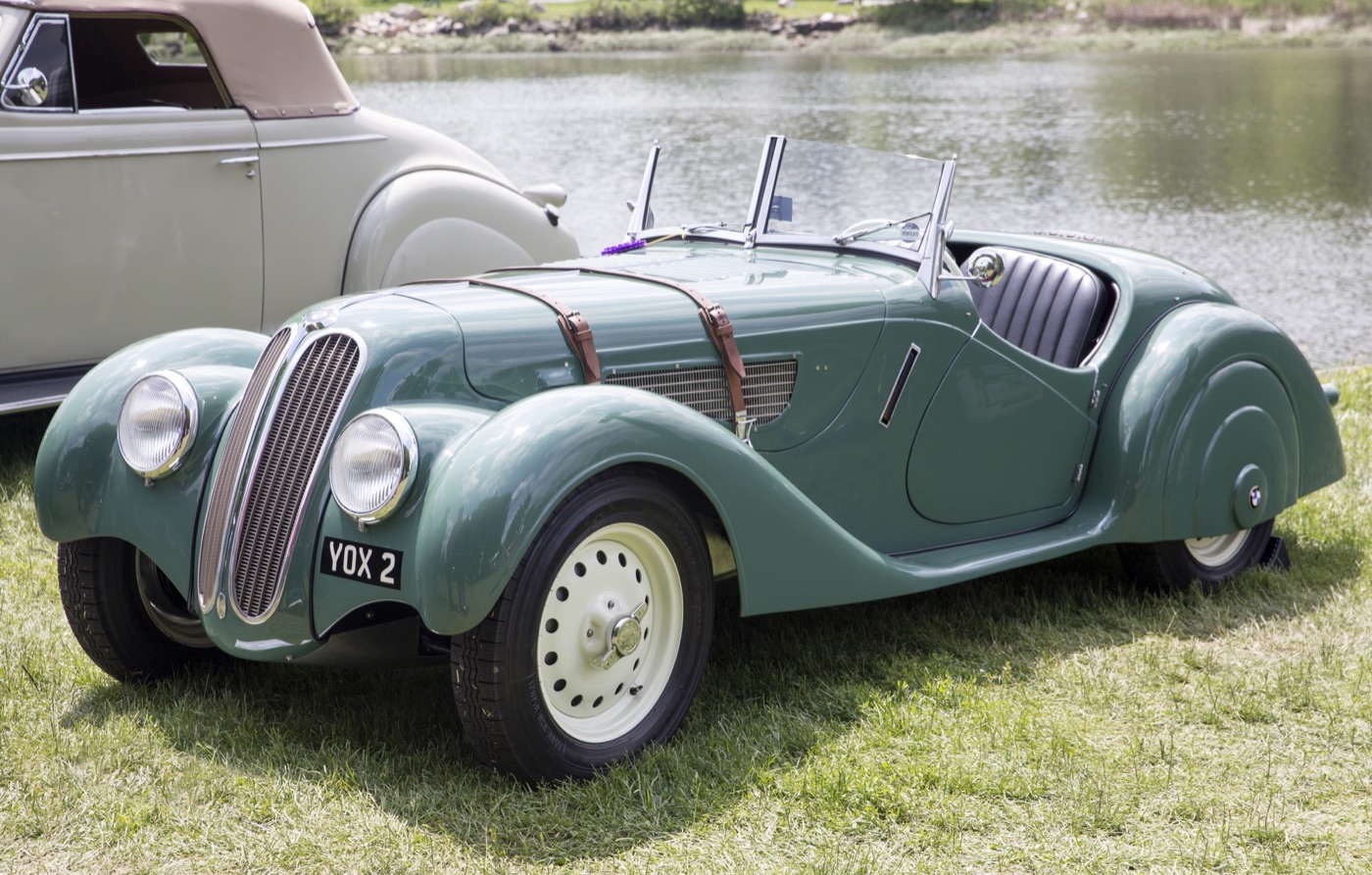
The BMW 328 is the 2-litre six-cylinder sports roadster that BMW built at Eisenach from 1936 to 1940: 464 cars by BMW's count, with 80 PS, a tubular frame and a kerb weight of 780 kg. It won its class on its first outing at the Nürburgring in June 1936, and a streamlined 328 coupé, bodied by Touring of Milan, won the Mille Miglia outright on 28 April 1940, BMW's first overall win in the race.
People look it up for that race, for its numbers (how many were made, how fast it is, what one costs) and for the engine, which Bristol built in England after the war. Standard roadsters sold at auction from 2012 to 2025 for between $406,500 and $874,000.
History of the BMW 328
The 328 was BMW's third sports roadster, after its two earlier sports models, the 315/1 of 1934 and the 319/1, and its first with 2 litres. BMW built its cars at the former Dixi works at Eisenach in Thuringia; the head office, the aero-engine works and, by the account of Denis Jenkinson of Motor Sport, the racing department were in Munich.
From the 315/1 and 319/1
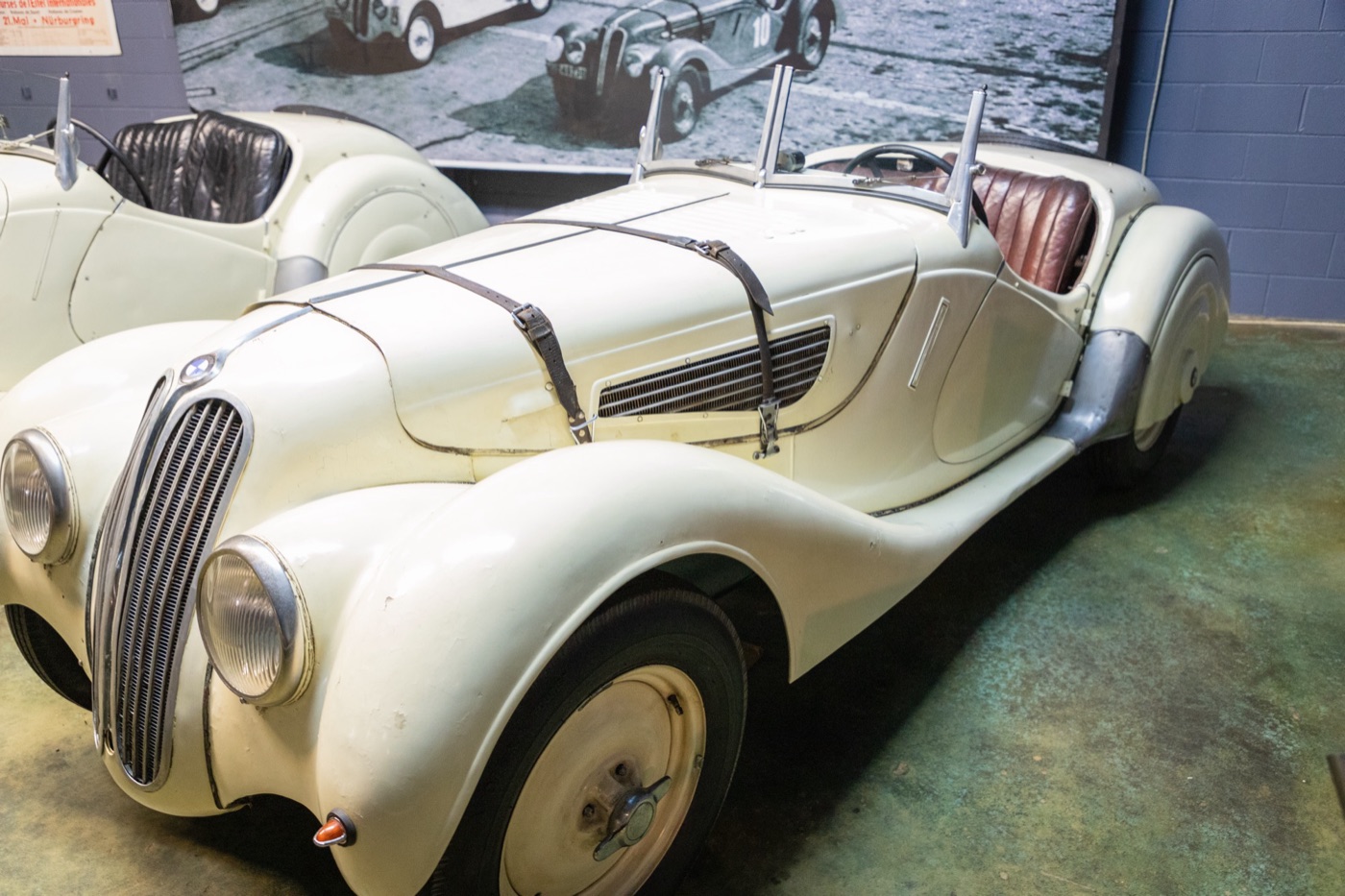
BMW's own history of its roadsters, "75 years of the BMW Roadster" (2009), gives the line. The 1.5-litre 315/1 went on sale in summer 1934 at 5,200 Reichsmark, and a team of three won its class in that year's International Alpine Trial; 230 were built by mid-1935. The 319/1 had the same body with a 1.9-litre engine, cost 5,800 Reichsmark, and 178 were built from 1934 to 1936. BMW says the 328 "was developed on the basis of the BMW 319/1"; it kept the 319's frame layout and took the cylinder block of the BMW 326 saloon.
Who designed the BMW 328?
Rudolf Schleicher designed the engine and Fritz Fiedler the chassis. BMW's 75th-anniversary press kit, "The BMW 328 turns 75" (May 2011), credits the pair, and so does Denis Jenkinson in Motor Sport's fiftieth-anniversary history (June 1986): "Schleicher and his team looked into ways of improving [the breathing], while Fiedler concentrated on the chassis." BMW adds the body engineer Wilhelm Kaiser, who joined at Eisenach on 1 October 1936 and drew the production body from the hand-built prototypes so that it could be assembled from pre-pressed panels. The whole project cost 445,000 marks to start up, against 1.4 million for the 320 and 2.3 million for the 326, by BMW's figures.
The debut at the Nürburgring
BMW told only a few insiders about the car, in a small brochure of late 1935 that gave neither power nor top speed. Its first public appearance was a race: the Eifelrennen (the International Eifel Race) at the Nürburgring on 14 June 1936, where the motorcycle record-breaker Ernst Henne won the category for unsupercharged 2-litre sports cars in the white prototype. The racingsportscars.com results give his time as 1h 07m 28s for five laps (114.1 km), an average of 101.6 km/h. BMW says that the 2-litre class had five BMWs that day, four of them 319/1s.
On sale in Britain first
The first public showing with a price was in London. AFN Ltd of Isleworth, maker of the Frazer Nash and the British BMW importer, put the door-less prototype 85003, painted white, on its stand at the Earls Court Motor Show in October 1936 at £695, with delivery promised early in 1937 (Jenkinson, and his addendum of July 1986). Motor Sport's show report (November 1936) found it "probably the most strikingly displayed" sports car there, with road-test figures "showing a maximum of over 103 m.p.h." The production version's German debut followed at the Berlin Motor Show in February 1937. BMW delivered the first customer cars in late April 1937 and the 200th in spring 1938.
The end of production
Jenkinson wrote that the 328 was built in the Eisenach factory "during 1937, 1938 and up to August 1939, when war caused BMW to make other things"; BMW gives the run as 1936 to 1940. After 1945 Eisenach lay in the Soviet zone, and BMW's next two-seater sports car was the 507 of the mid-1950s.
Design and engineering
The 328's speed came from low weight and a cylinder head that breathed like a twin-cam's on a pushrod engine. BMW's 2011 kit lists what its engineers aimed at as "agility, acceleration, reliability and lightweight construction", with "a modest 80 horsepower in series production form" and "flawless roadholding", and puts it plainly: the car was "neither overly innovative for its time nor particularly powerful", built "with minimal use of materials and manpower".
The tubular frame and suspension
Fiedler's frame, patented by BMW, has two round-section steel tubes that converge in an "A" from the rear wheels to the front, joined by box-section cross-members. At the front is independent suspension by a transverse leaf spring above and wishbones below; the rear is a live axle on semi-elliptic leaf springs, and hydraulic drum brakes work on all four wheels. Steering is by rack and pinion, which Motor Sport's survey of design in February 1938 called "the finest modern steering we have tried". The magazine's 1937 buyers' guide called the Type 328 "a genuine 100 m.p.h. motorcar of great appeal", and praised the Frazer-Nash-B.M.W. range's "remarkable road-clinging qualities" and "very fine steering".
The cross-pushrod engine
Schleicher kept the 326's cast-iron block and its single camshaft low in the crankcase, and gave it a new aluminium-alloy head with the valves inclined at 90 degrees in hemispherical combustion chambers. The inlet valves work through ordinary pushrods and rockers. Each exhaust valve, on the far side of the head, is opened by a second, short pushrod running across the top of the engine. The inlet ports run straight down from three Solex downdraught carburettors. Bore went up from 65 to 66 mm, giving 1,971 cc with the 96 mm stroke, and the output of the production engine rose from the 319 engine's 55 bhp to 80 bhp "at one move", in Jenkinson's words.
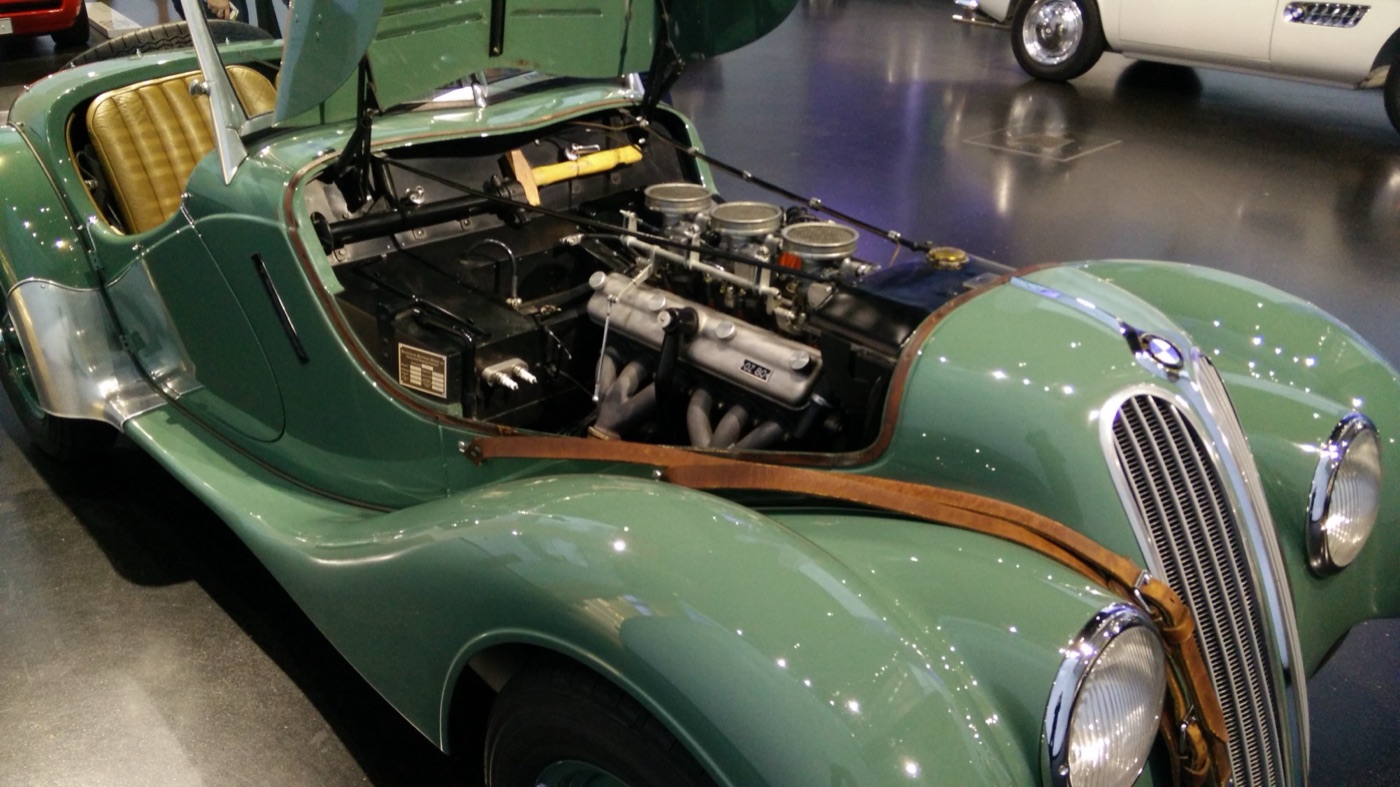
Jenkinson gives 100 bhp "with very little effort", 110 bhp by 1938 and "over 130 bhp" for the factory engines at the end of 1939. BMW's 1940 race engines had reinforced crankshafts with nine counterweights and ran to 6,000 rpm; BMW says "the experience with the race crankshafts" went into the engine of the first post-war BMW, the 501.
The body
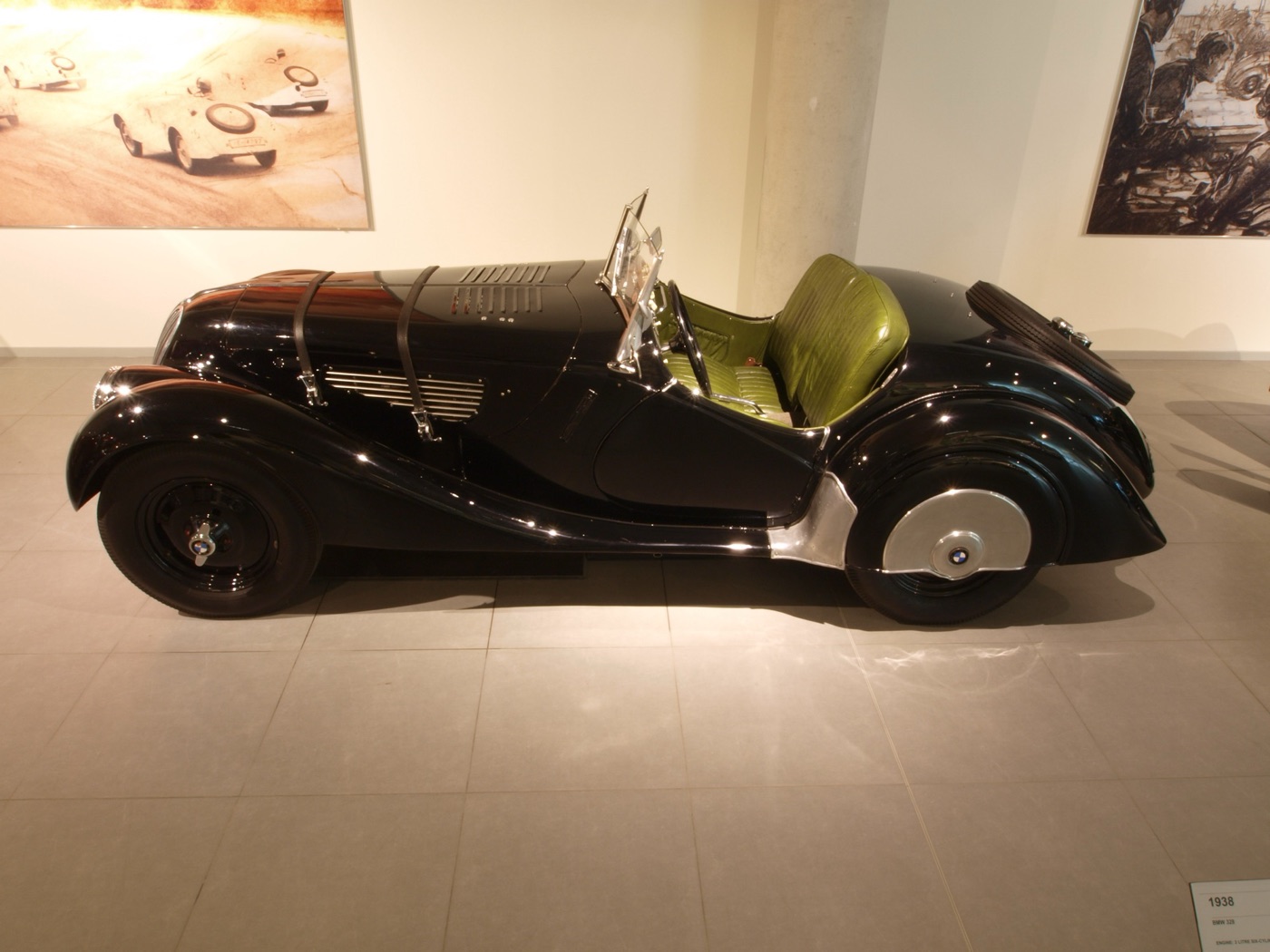
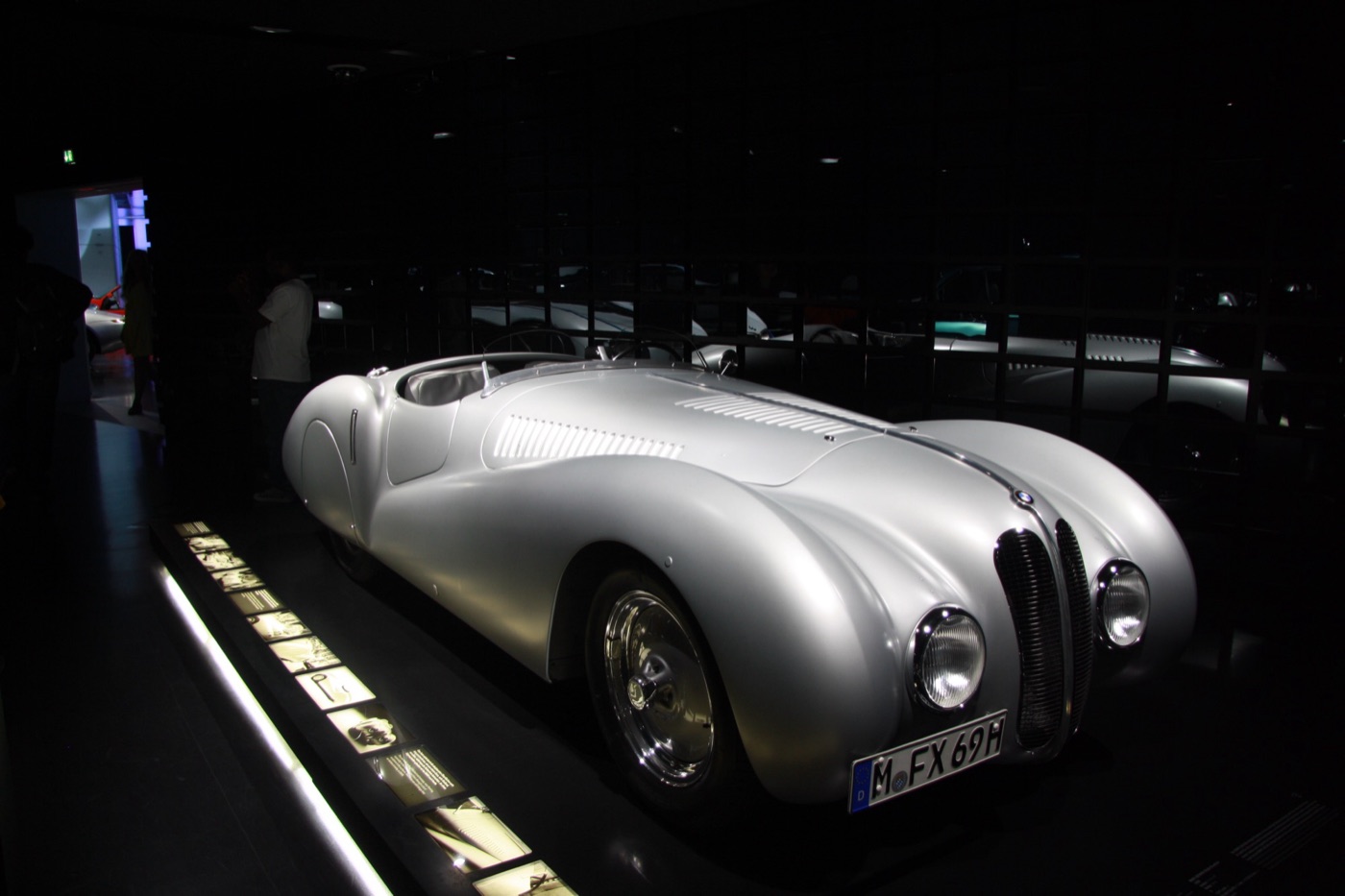
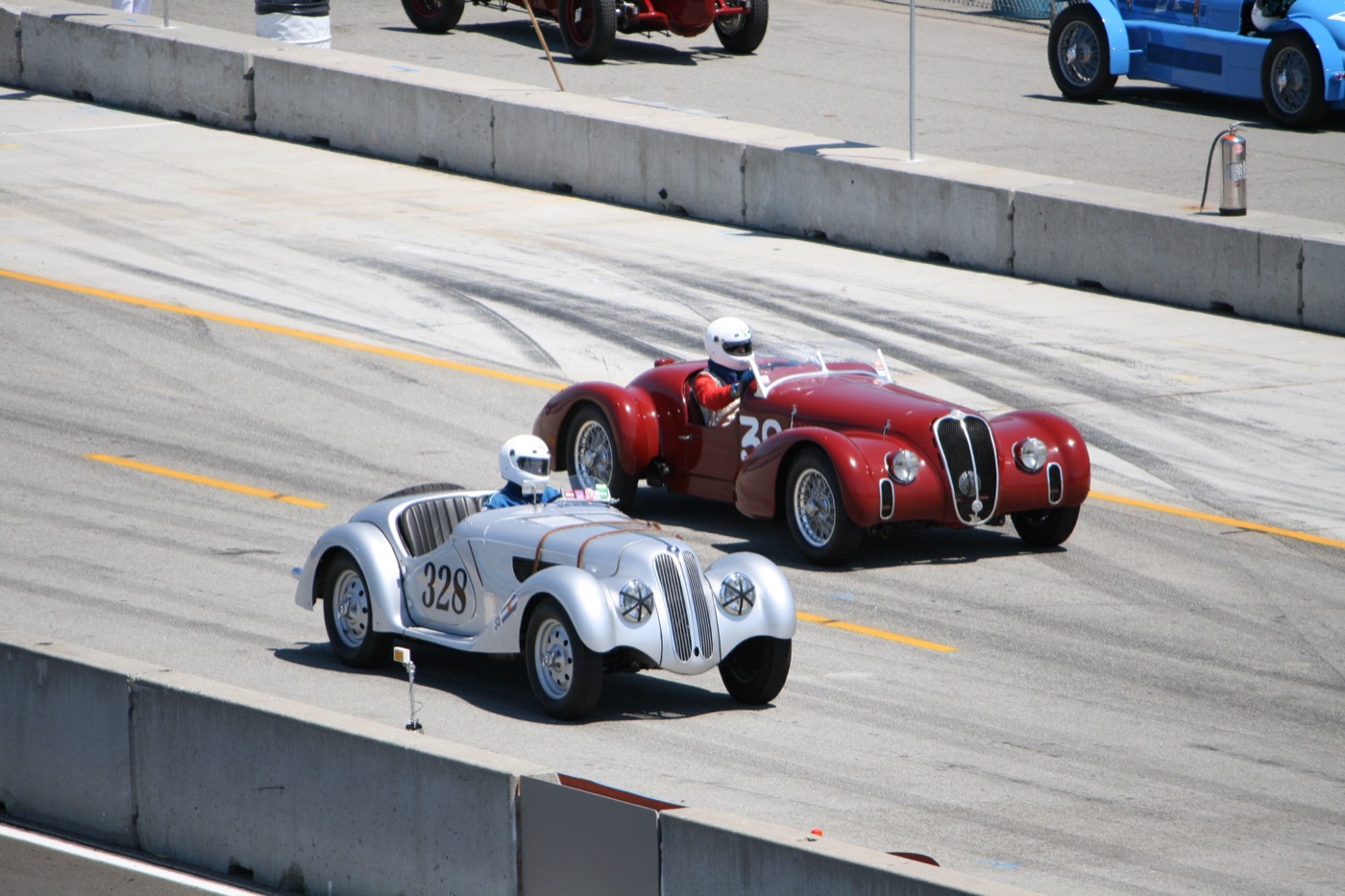
The roadster body has faired-in headlamps, a narrow twin-kidney grille, two leather bonnet straps and the spare wheel set into the tail. The three 1936 prototypes had no doors and a low one-piece screen; production cars had doors without outside handles and a vee windscreen in two halves that fold flat. The centre-lock "Kronprinz" disc wheels carried 5.25 × 16 tyres.
BMW 328 specifications and performance
The figures below are the BMW Group Archive's type record for the production roadster, with the British importer's 1937 listing where it adds detail.
| Item | BMW 328 |
|---|---|
| Engine | Straight six, cast-iron block, aluminium head, pushrod overhead valves in a vee |
| Bore × stroke | 66 × 96 mm |
| Capacity | 1,971 cc |
| Compression ratio | 7.5:1 |
| Carburettors | Three Solex 30 JF downdraught |
| Power | 80 PS at 4,500 rpm |
| Gearbox | Four-speed, central change, third and top synchronised (ZF or Hurth) |
| Final drive | 3.88:1 with the ZF gearbox, 3.70:1 with the Hurth |
| Brakes | Hydraulic drums, 280 mm, all round |
| Wheelbase | 2,400 mm |
| Track, front and rear | 1,153 mm and 1,220 mm |
| Length × width × height | 3,900 × 1,550 × 1,400 mm |
| Kerb weight | 780 kg |
| Top speed | 155 km/h (96 mph) |
| Fuel consumption | 11.5 litres per 100 km |
| Price new | 7,400 Reichsmark (Germany); £695 (Britain) |
Sources: BMW Group Archive, type record "Baumuster BMW 328"; Motor Sport, "A Guide to 1938 High Performance Cars" (October 1937) for the British price.
How fast is a BMW 328?
BMW's figure is 155 km/h (96 mph). The British listing in Motor Sport's October 1937 guide gives "Maximum speed 100 m.p.h.", and the same guide records that a 328 "covered over 102 miles in an hour at Brooklands under R.A.C. observation this year". Jenkinson called it "an honest 95 mph" for the 80 bhp production car. Cecil Clutton, writing in Motor Sport in August 1940, gave 0–50 mph in 7 seconds and 0–60 mph in 9½ seconds, and petrol consumption "around 20 m.p.g."
Where the published figures disagree
BMW itself has printed two weights: 780 kg in its archive record and 2011 kit, and 830 kg in its 2009 roadster history. Clutton gave 14½ cwt, about 737 kg. The power figure is 80 PS at 4,500 rpm in BMW's record and AFN's 1937 listing, but Clutton wrote "80 b.h.p. at 5,000 r.p.m." and many later tables copy that.
How many BMW 328s were made?
The number BMW gives is 464, built from 1936 to 1940, and the BMW Group Archive's type record says the same ("Einheiten 464"). Jenkinson wrote "over 450 cars", the last chassis number being 85464, "some being missed out and some duplicated"; the numbers began at 85001, Henne's debut car. Bonhams's 2015 catalogue prints 426, for 1936 to 1939. Of the total, 48 were sold new in Britain by AFN as Frazer Nash-BMWs, according to the Frazer Nash Archives.
How many BMW 328s survive?
"Of the 464 examples of the BMW 328 ever built, only around 200 have survived, some 120 of which are in Germany," BMW wrote in 2011. The Frazer Nash Archives count 46 of the 48 British cars still in existence.
BMW 328 versions and special bodies
Most 328s carried BMW's roadster body; a few had coachbuilt bodies, and the works built a handful of special racing cars in 1939 and 1940.
Coachbuilt road cars
Some 328s were bodied outside BMW. The BMW Group Archive's type record lists sport cabriolets, "more luxurious than the series cars", built on the 328 by Drauz, Weinberger, Gläser, Wendler (also with a hardtop) and the Vereinigte Werkstätten, and two 328s with closed streamlined bodies made by Wendler in Reutlingen.
Frazer Nash-BMW 328
AFN's right-hand-drive cars carried Frazer Nash-BMW badges and were listed as the "Type 328" at £695 in Motor Sport's guide of October 1937. AFN, the maker of Frazer Nash cars, had become BMW's importer after H. J. Aldington, competing in the 1934 Alpine Trial, saw a BMW beat his own chain-drive Frazer Nash cars to the 1,500 cc class, according to the Frazer Nash Archives. Jenkinson, writing in Motor Sport in February 1988, called £695 in 1938 "slightly more than the price of an average London semidetached house!"
The Touring coupé
For Le Mans in 1939 BMW's racing department went to Carrozzeria Touring in Milan, which built a closed "superleggera" aluminium body on a 328 chassis. A 2010 SkiddMark report, drawn from BMW's heritage department, says Touring needed "just four weeks" for the job. BMW gives its weight as 780 kg and its drag coefficient as about 0.35. On its debut at Le Mans on 17–18 June 1939, Prince Max zu Schaumburg-Lippe and Hans Wencher (spelled Wenscher in some results) drove it to fifth overall and first in the 2-litre class, 236 laps at 132.85 km/h, with the two works roadsters seventh and ninth behind it (racingsportscars.com). Motor Sport's report found "the little streamlined saloon being the faster of the trio and frequently lapping at 87-88 m.p.h."
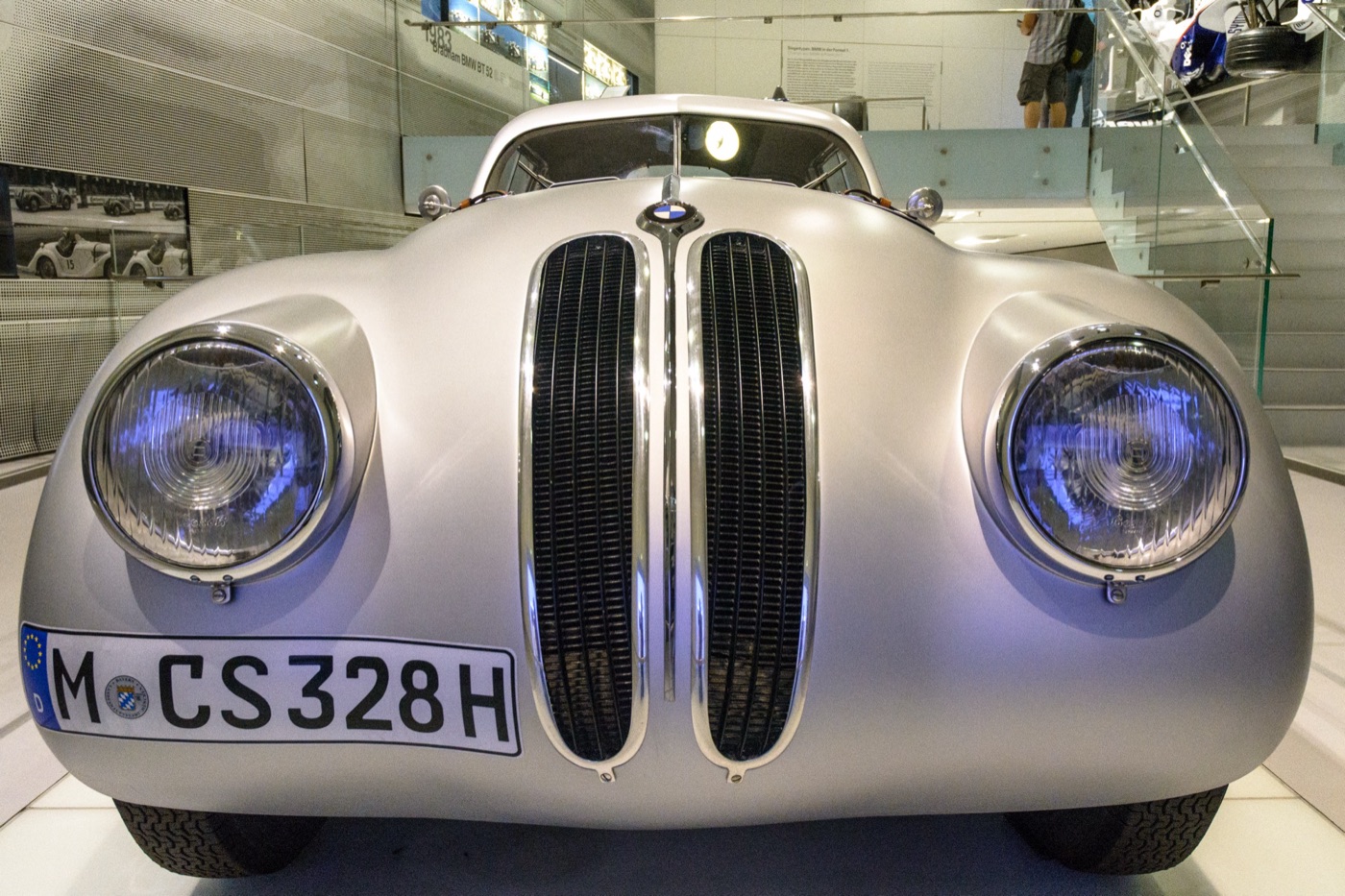
The Kamm coupé
BMW's own answer was a coupé shaped to the wind-tunnel findings of Professor Wunibald Kamm of the Stuttgart research institute FKFS. It was designed in BMW's new styling department under Wilhelm Meyerhuber and built in Munich on a chassis lengthened by 20 cm, with a space frame of Elektron magnesium alloy weighing 30 kg under an aluminium skin. BMW gives a drag coefficient of about 0.25, measured on a model, and a top speed of 230 km/h on the Munich–Salzburg autobahn. The 2010 SkiddMark report says the Kamm coupé had shown "superior handling in testing" before the 1940 race. The car disappeared after an accident in the early 1950s; the car in the BMW Museum is a reconstruction finished in March 2010, by BMW's release on the rebuild (April 2010).
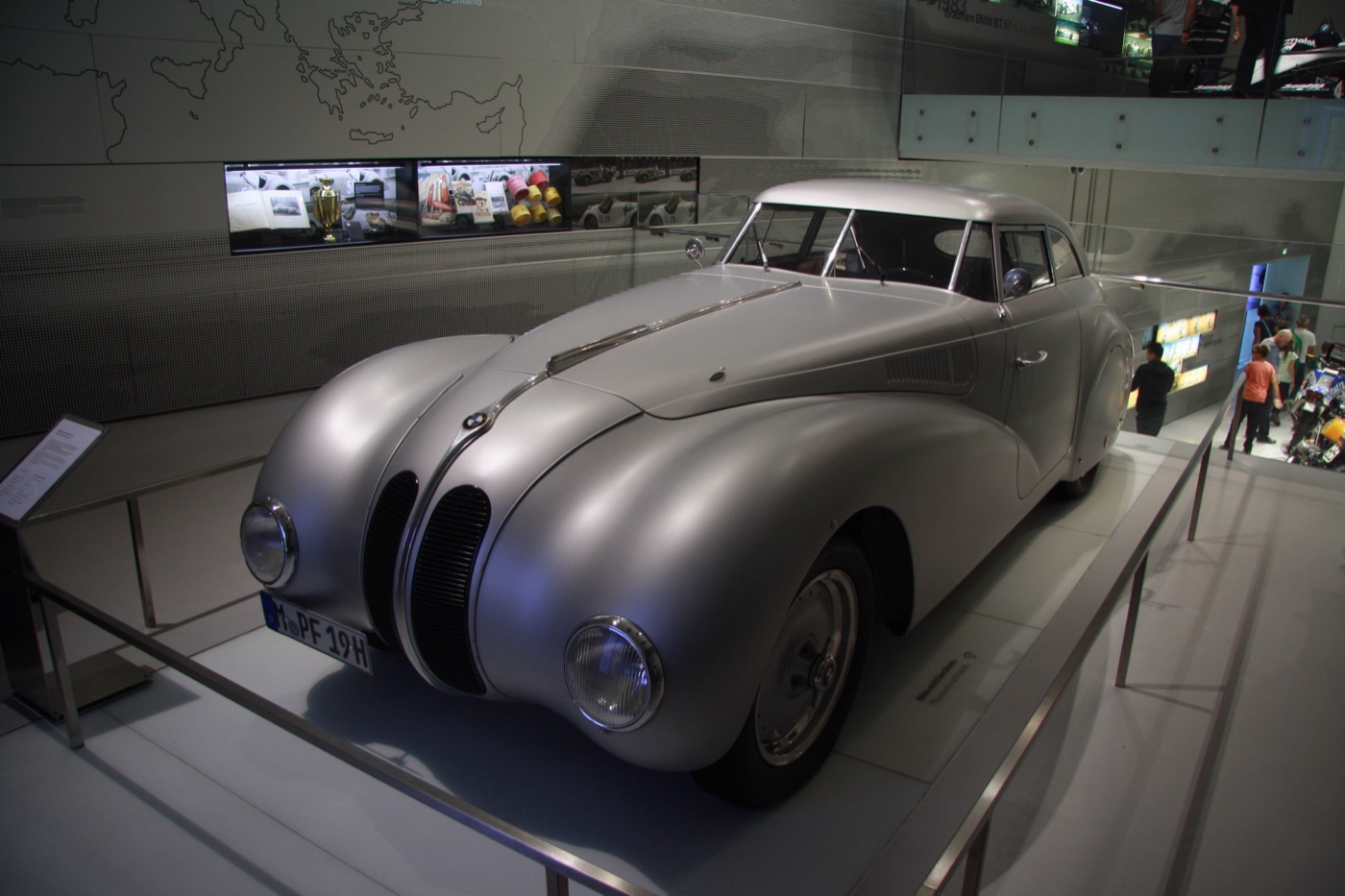
The Mille Miglia roadsters
Three open cars with streamlined bodies were built for the 1940 race. BMW says the first was made in Munich in autumn 1939 on the chassis of the 1938 Mille Miglia class winner; the edging along its front wings gave it the nickname "Bügelfalte" (trouser crease). The other two were framed in Munich and finished by the Milan coachbuilder Touring for lack of time. BMW's 2011 text gives the roadsters 130 hp.
The BMW 328 in racing
The 328 won the 2-litre sports-car class in most of the races it entered from 1936 to 1940, and several times beat bigger cars overall. BMW claims "more than 200" victories over a racing life that ran into the 1950s; racingsportscars.com lists 636 results for the type from 1936 to 1961.
| Race | Date | Crew | Result |
|---|---|---|---|
| Eifelrennen, Nürburgring | 14 June 1936 | Ernst Henne | 1st, 2-litre sports cars |
| RAC Tourist Trophy, Ards | 5 September 1936 | A. F. P. Fane | 3rd overall on handicap, 1st in class; "Bira" 7th, Aldington 9th |
| Eifelrennen, Nürburgring | 13 June 1937 | A. F. P. Fane | 1st, 2-litre sports cars; Uli Richter 2nd |
| Le Mans 24 Hours | 19–20 June 1937 | Three cars | All retired; Pat Fairfield killed in an accident on the eighth lap |
| RAC Tourist Trophy, Donington | 4 September 1937 | "B. Bira" | 3rd overall, 1st in class |
| Mille Miglia | 3 April 1938 | Fane and James | 8th overall, 1st in class; 328s 1st to 4th in class |
| Spa 24 Hours | 9–10 July 1938 | Three works cars | 3rd, 4th and 5th overall, level on distance |
| Le Mans 24 Hours | 17–18 June 1939 | Schaumburg-Lippe and Wencher (Touring coupé) | 5th overall, 1st in class; roadsters 7th and 9th |
| Mille Miglia | 28 April 1940 | von Hanstein and Bäumer (Touring coupé) | 1st overall; roadsters 3rd, 5th and 6th |
| Hockenheim | 11 May 1947 | Karl Kling ("BMW 328 MM", entered by Ernst Loof) | 1st, 2-litre sports cars |
Source: racingsportscars.com results pages for each race (listed under Sources).
The first season and the British cars
The three prototypes did all the racing in 1936; by the 1937 Eifelrennen, BMW says, there were "nine BMW 328 racers on the grid". All three retired from the sports-car French Grand Prix at Montlhéry in France in June. At the Tourist Trophy at Ards in Northern Ireland that September, a handicap race, they took the first three places in the 2-litre class in green Frazer Nash-BMW colours, with Fane third overall. At the 1937 Eifelrennen, Fane won the 2-litre race in a works car, 1h 03m 05.6s for five laps, and Henne retired after an accident on the first lap (racingsportscars.com). In September 1937 "B. Bira" was third overall in the Tourist Trophy at Donington and won the class.
Hillclimbs and the Alpine Rally
The 328 was a hillclimb car as well as a circuit racer: BMW's 2020 release says Huschke von Hanstein became German sports-car hillclimb champion in a 328 in 1938. The BMW Group Archive's picture list for the type has photographs of 328s at the Wartberg hillclimb in 1937 (Paul Greifzu), at the Grossglockner in 1939 (Werneck and von Hanstein), at the La Turbie hillclimb above Monaco in 1939 (Alex von Falkenhausen) and in the French Alpine Rally (Französische Alpenfahrt) of 1939, where it shows three 328s and Roth's car. BMW's sports roadsters had made their name in the Alps earlier: a 315/1 team won its class in the 1934 International Alpine Trial, by BMW's 2009 history.
The RAC Rally
The BMW 328 never won the RAC Rally outright, because the 1939 event gave awards class by class. Motor Sport's report (June 1939) names A. F. P. Fane's 328 Frazer Nash-BMW the outstanding car of its class and H. J. Aldington's closed Frazer Nash-BMW the best of another; Leslie Johnson made the fastest climb of all in the Brighton tests, 22.0 seconds, and "both team prizes went to the Fane, Murray, Johnson team".
Le Mans and Spa
At Le Mans in 1937 two of the three 328s were eliminated in the eighth-lap accident in which Pat Fairfield, driving David Murray's Frazer Nash-BMW, was killed, and Aldington and Fane retired with timing-gear failure after 43 laps. At the Spa 24 Hours of July 1938 the three works cars of Schaumburg-Lippe and Roese, Heinemann and Brudes, and Briem and Scholtz finished level on 180 laps (2,675.5 km), third, fourth and fifth overall. Motor Sport (August 1938) reported that they "were able to cross the line side by side, scoring a triple deadheat in a 24-hour race".
By 1939 the German team ran under the NSKK, the Nazi party's motoring corps. Motor Sport's May 1939 column described the BMWs in that year's Libyan race as entered by "the official N.S.K.K. of Germany", and BMW's 2011 kit calls Schaumburg-Lippe "the NSKK (National Socialist Motoring Corps) team's leading driver" at Le Mans in June 1939.
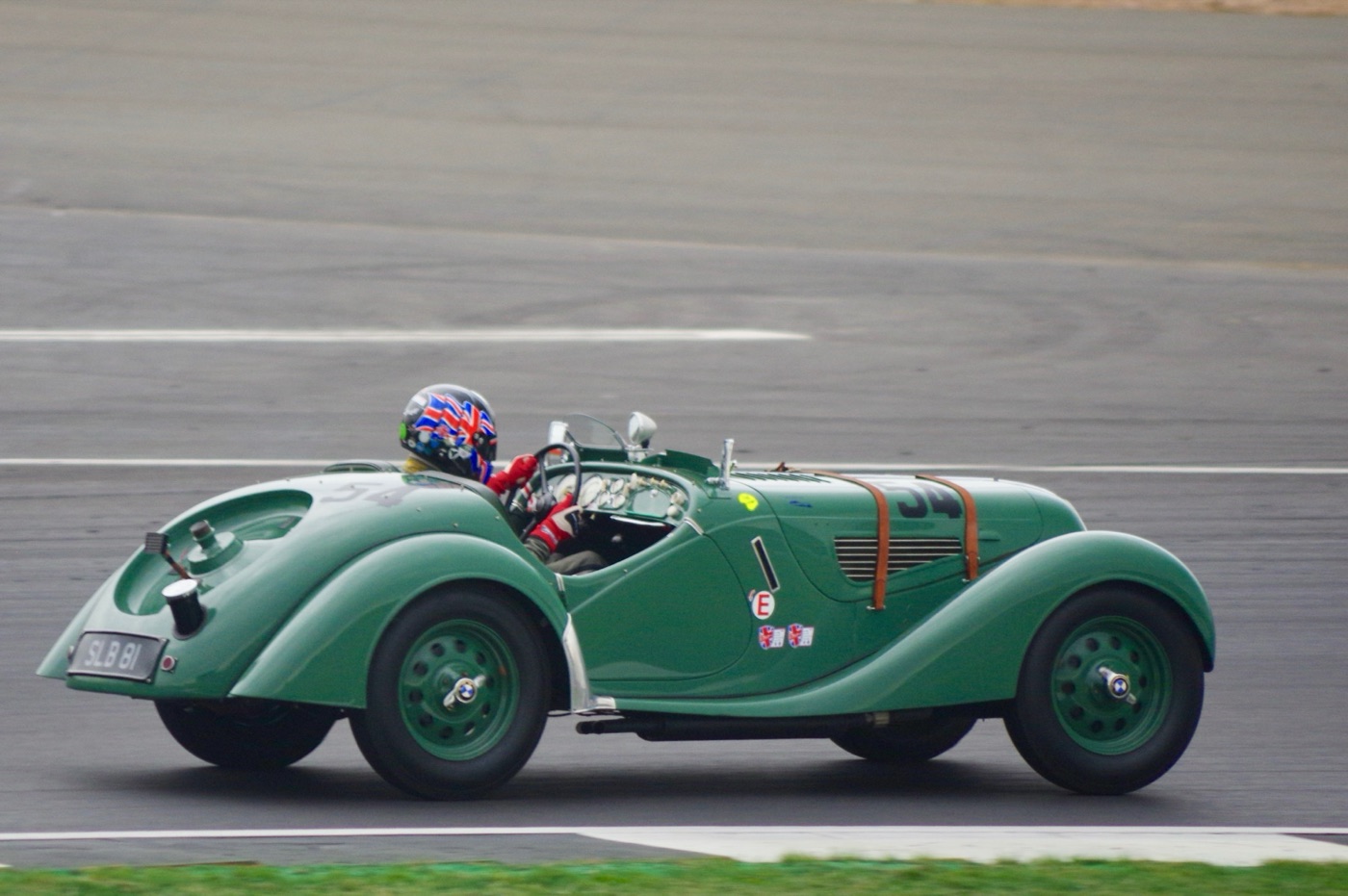
Racing after the war
328s kept winning in Germany after 1945. Karl Kling won the 2-litre sports-car race at Hockenheim on 11 May 1947 in a car listed as a "BMW 328 MM" (a Mille Miglia car), entered by Ernst Loof, BMW's former racing manager, from Alex von Falkenhausen in an AFM, by the racingsportscars.com results. By then, BMW's 2010 release says, Loof had become a manufacturer himself, his Veritas company "supplying speedy Veritas racing sports cars" to German customers.
How BMW won the Mille Miglia
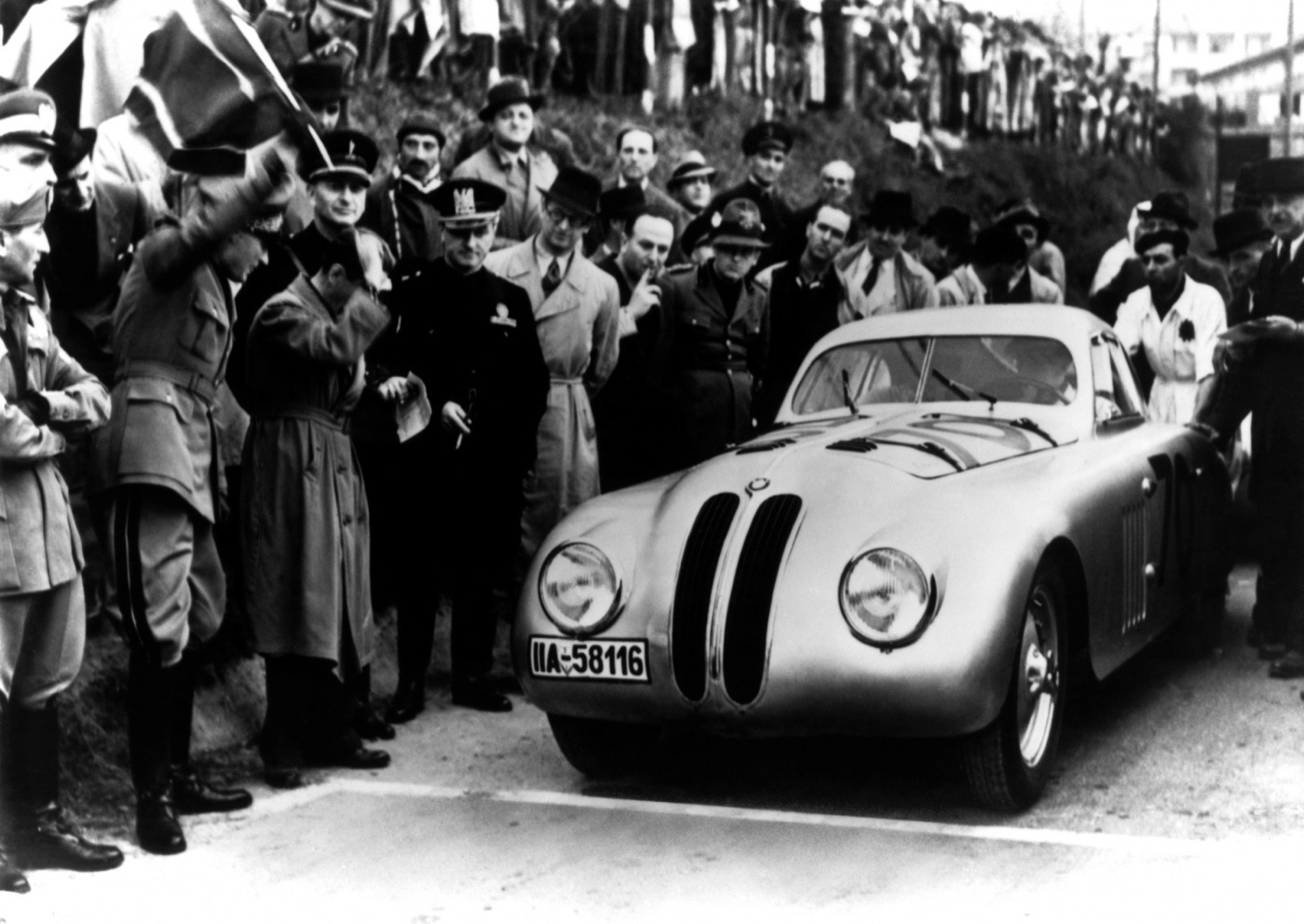
BMW won the Mille Miglia on 28 April 1940 with a five-car team: the Touring coupé of Huschke von Hanstein and Walter Bäumer won outright, three streamlined roadsters took third, fifth and sixth places, and the team took the team prize. It was the second Mille Miglia won by a foreign car, after Rudolf Caracciola's Mercedes-Benz in 1931.
Fane's class win on the open road
On the old open-road route from Brescia to Rome and back, 1,630 km on 3 April 1938, four 328s ran in the 2-litre class and took its first four places, eighth, tenth, eleventh and twelfth overall (racingsportscars.com). The British driver A. F. P. Fane, given a place in the works team, "drove in masterly fashion to win the 2-litre class", Motor Sport reported (April 1938), averaging 74.05 mph and driving single-handed with an English mechanic beside him.
Why the race became a circuit
The 1938 race was the last on the open roads before the war. A Lancia skidded into spectators at Bologna that year, killing nine by Motor Sport's April 1938 report, and "as a result of several accidents involving the deaths of spectators", Motor Sport reported in May 1939, the Italian motoring authority decided "to drop the famous Mille Miglia" and ran a race in Libya instead. In 1940 it returned as the Gran Premio Brescia delle Mille Miglia: nine laps of a triangle of closed public roads from Brescia to Cremona and Mantua and back, for unsupercharged sports cars up to 3 litres. racingsportscars.com gives 1,491.858 km in all; BMW calls the lap "a 167-kilometre triangular course", and Motor Sport gave 922.7 miles. One straight ran "for as much as 18 miles".
BMW's five cars
BMW sent the Touring coupé (No. 70, von Hanstein and Bäumer), the Kamm coupé (No. 73, the Italians Count Giovanni Lurani and Franco Cortese) and three roadsters: No. 71 (Hans Wencher and Scholtz), No. 72 (Willi Briem and Uli Richter) and No. 74 (Adolf Brudes and Ralph Roese). BMW says the five race engines gave between 130 and 136 hp. Motor Sport (June 1940) gave the winner 130 bhp at about 5,500 rpm and noted that the Alfa Romeo 6C 2500s, with 124 bhp, weighed 19.6 cwt, about 5 cwt more than the BMW 328 coupés.
The race and the driver change
The Touring coupé started at 6.40 am, and BMW's two coupés led from the start. The Kamm coupé ran second early on, then retired with fuel-feed and lubrication trouble (after seven laps by BMW's account, on the eighth by Motor Sport's). Von Hanstein, by Motor Sport's account, "managed to drive for nine-tenths of the race", ignoring the agreed change of drivers; BMW's 80th-anniversary release (April 2020) says he stopped on the open road shortly before the finish so that Bäumer could take the wheel across the line. The coupé needed no tyre change, set the fastest lap at 108.18 mph and won by 15 minutes 29.8 seconds.
| Place | Crew | Car | Time |
|---|---|---|---|
| 1 | von Hanstein and Bäumer | BMW 328 Touring coupé | 8h 54m 46.6s |
| 2 | Farina and Mambelli | Alfa Romeo 6C 2500 SS | 9h 10m 16.4s |
| 3 | Brudes and Roese | BMW 328 roadster | 9h 13m 27.6s |
| 4 | Biondetti and Stefani | Alfa Romeo 6C 2500 SS | 9h 13m 37.4s |
| 5 | Briem and Richter | BMW 328 roadster | 9h 16m 08.8s |
| 6 | Wencher and Scholtz | BMW 328 roadster | 9h 17m 15.8s |
| Retired | Lurani and Cortese | BMW 328 Kamm coupé | Engine trouble |
Source: racingsportscars.com, Mille Miglia 1940 results.
Was it the fastest Mille Miglia?
Yes, on average speed: 166.7 km/h (103.59 mph by Motor Sport), which BMW calls a record "never to be equalled in the history of the Mille Miglia". It was also the only Mille Miglia run on a closed circuit with long straights. Motor Sport noted that the best Alfa Romeo lap, at 102.43 mph, was slower than the winning BMW 328's average for the whole race, and that the race was won "at a time when Germany is engaged in fighting a major war." Italy entered the war six weeks later. The Mille Miglia of 1931 had already gone abroad: Motor Sport (May 1931) wrote that Caracciola and Sebastian had won it "for the first time in the history of the event … on a foreign car".
What happened to the Mille Miglia cars?
All five 1940 cars survived the Second World War, hidden by BMW in the countryside outside Munich, but they were scattered afterwards; BMW's 2010 release says the roadsters "resurfaced in Russia, England and America".
The Touring coupé went to North America. The American collector Jim Proffit found and restored it in the mid-1980s and handed it to BMW Group Mobile Tradition in October 2002, by BMW's release on its return. One of the roadsters came to England in 1945 with H. J. Aldington, by the Frazer Nash Archives' account. The Kamm coupé stayed with Loof until money ran short; it was scrapped after an accident in the early 1950s.
The Touring coupé has since won the modern Mille Miglia, a regularity event for historic cars, twice: in 2004 and again in 2010 with Giuliano Cané and Lucia Galliani, BMW says. A SkiddMark report of May 2010 recorded that Enzo Ciravolo and Maria Leitner were third that year in a standard 328, and that BMW's cars drove from Munich to Brescia under their own power. In May 2026 the "Bügelfalte" roadster, now privately owned, won Best of Show at the Concorso d'Eleganza Villa d'Este, where BMW's release called it "the only special roadster produced at the Munich plant".
The engine after the war: Bristol and Frazer Nash
The 328's engine went into production again in England as the Bristol six. Jonathan Wood's history of the Bristol 400 for the Bristol Owners Heritage Trust (2020) sets out how. The Bristol Aeroplane Company took a majority holding in AFN in July 1945; Aldington then flew to Munich in a Stirling bomber and brought back six BMW engines, under a BMW delivery note of 31 August, with blueprints for the 326, 327 and 328. The first Bristol-built engine was running in May 1946, and it went into the Bristol 400 saloon. John Perrett, the chief designer AFN and Bristol shared, drove the Mille Miglia 328 on his journeys between Isleworth and Filton, and the Frazer Nash Archives say that car "provided the inspiration for the post-war Frazer Nash". Bristol went on to supply engines to AFN for its Frazer Nash cars as FNS (Frazer Nash Special) versions, and in 1952 one found its way into the Formula 2 Cooper-Bristol that Mike Hawthorn drove, by Mike Lawrence's account in Motor Sport (June 1986). The Bristol Owners' Club's buyers' guide estimates that about 2,600 Bristol engines were made from 1946 to 1961, "at least 400" of them for AC's Ace, Aceca and Greyhound, and lists its "Bristol Sports" versions in Arnolt-Bristols, Coopers, ERAs, Lotuses, Listers and Tojeiros.
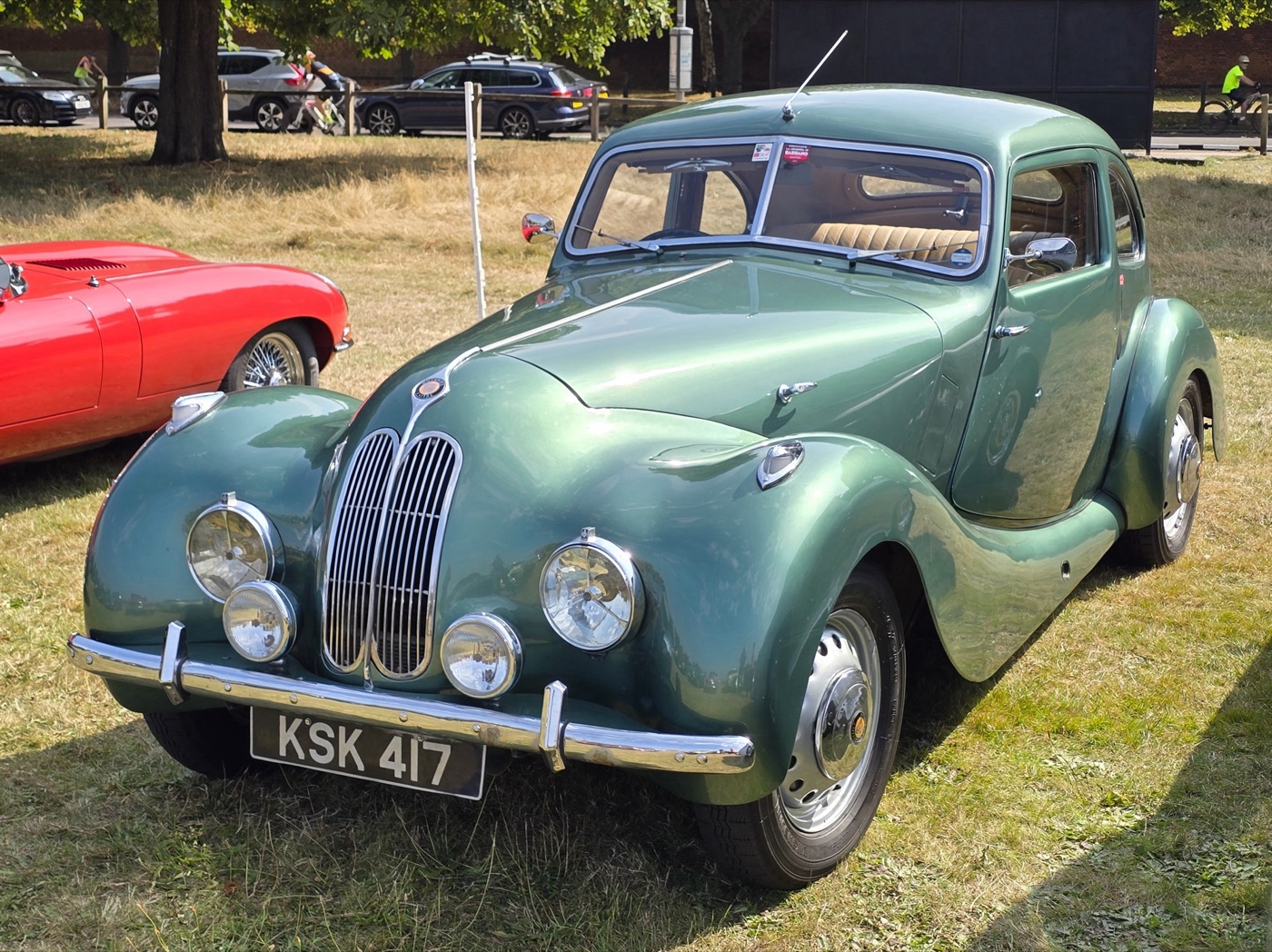
Rivals of the BMW 328
In Britain the Frazer Nash-BMW 328 cost more than the other 100 mph sports cars of 1937 and much less than the Italian 2.3-litre cars. These are the prices in Motor Sport's October 1937 buyers' guide.
| Car | Engine | Price |
|---|---|---|
| H.R.G. two-seater | 1½-litre four | £395 |
| S.S. 100, 2½-litre | 2½-litre six | £395 |
| S.S. 100, 3½-litre | 3½-litre six | £445 |
| Frazer Nash-BMW Type 328 | 1,971 cc six | £695 |
| Alfa Romeo 2.3B, short saloon | 2,309 cc six | £1,070 |
On the track its 2-litre rivals were Adler's streamlined saloons (an Adler Super Trumpf won the class at Le Mans in 1937), and the Aston Martins and Rileys in British races; in 1940 the Alfa Romeo 6C 2500s finished second and fourth at Brescia, behind the Touring coupé.
What the motoring press said
At Earls Court in 1936 Motor Sport found it "food for thought, inasmuch as it does 103 m.p.h., on 2-litres of push-rod engine". In February 1938 the same magazine called the Type 328 "possessed of perhaps the highest allround performance in relation to engine capacity of any push-rod production sports-car". Clutton wrote in 1940, in wartime, that "to Germany it has fallen to build the most advanced of all sports-cars", meaning the BMW 328, though he found the price high "having regard to the not very superior finish". Jenkinson's verdict in 1986: "It set a standard in modern sports cars that was not surpassed until the 1950s and not outmoded until 10 years later."
BMW's 2011 kit calls the 328 "the most successful sports car of the 1930s on the racing scene". A SkiddMark report for the 70th anniversary in April 2010 quoted Dr Klaus Draeger, the BMW board member for development: "The victory in the 1940 Mille Miglia remains a milestone in the history of the BMW brand."
BMW 328 prices and values today
Standard BMW 328 roadsters sold at auction from 2012 to 2025 for between $406,500 (Broad Arrow, August 2025) and $874,000 (Gooding & Company, August 2022), on the results below; the table gives each price in the currency of the sale. A 1937 car with a body by Ludwig Weinberger made $990,000 at Bonhams in 2014. Gooding's $874,000 car was unrestored, with its matching-numbers engine, and described by the auction house as "exceptionally original".
| Sale | Car | Result |
|---|---|---|
| Coys, London, 4 December 2012 | 1938 roadster, restored | £440,000 |
| Bonhams, Quail Lodge, Carmel, 15 August 2014 | 1937, body by Ludwig Weinberger, chassis 85095 | $990,000 |
| Bonhams, Goodwood Revival, 12 September 2015 | 1938 roadster, chassis 85378 | £539,100 |
| RM Sotheby's, Monterey, August 2016 | 1939 roadster, chassis 85351 | $550,000 |
| RM Sotheby's, Monterey, August 2022 | 1938 roadster, chassis 85144 | $698,000 |
| Gooding & Company, Pebble Beach, August 2022 | 1937 roadster, chassis 85138, unrestored | $874,000 |
| Car & Classic, online, May 2023 | 1938 roadster, restored, from Czechia | €410,000 |
| RM Sotheby's, Munich, November 2024 | 1937 roadster, chassis 85065 | €477,500 |
| Broad Arrow, Monterey Jet Center, August 2025 | 1939 roadster, chassis 85377 | $406,500 |
Sources: Classic & Sports Car's report of the Coys sale; Sports Car Digest's report of the 2014 Quail Lodge sale (lot 267, $900,000 hammer plus 10 per cent); Bonhams, lot 368; RM Sotheby's, Monterey 2016; RM Sotheby's, Monterey 2022, lot 357; Gooding & Company, lot 123; Car & Classic's announcement of the sale (June 2023); RM Sotheby's, Munich 2024, lot 165; Broad Arrow, Monterey Jet Center 2025, lot 300. Prices include buyer's premium where the house states it.
Buying and running one
Many survivors no longer have their original gearbox. BMW Group Classic said in April 2013 that complete original gearboxes had been unavailable for decades and that "frequently synchro gearboxes from other manufacturers were used instead"; it then remanufactured the Hurth gearbox with ZF, in consultation with the FIA and FIVA, for sale through the BMW Classic Center. The Bonhams car of 2015, which had had one owner from 1965 to 2013, had a Volvo gearbox fitted, with the original included in the sale. Chassis numbers run from 85001 to 85464, and BMW's two gearbox and axle combinations (ZF with a 3.88 axle, Hurth with 3.70) are both correct for the type.
The 328 Hommage and other tributes
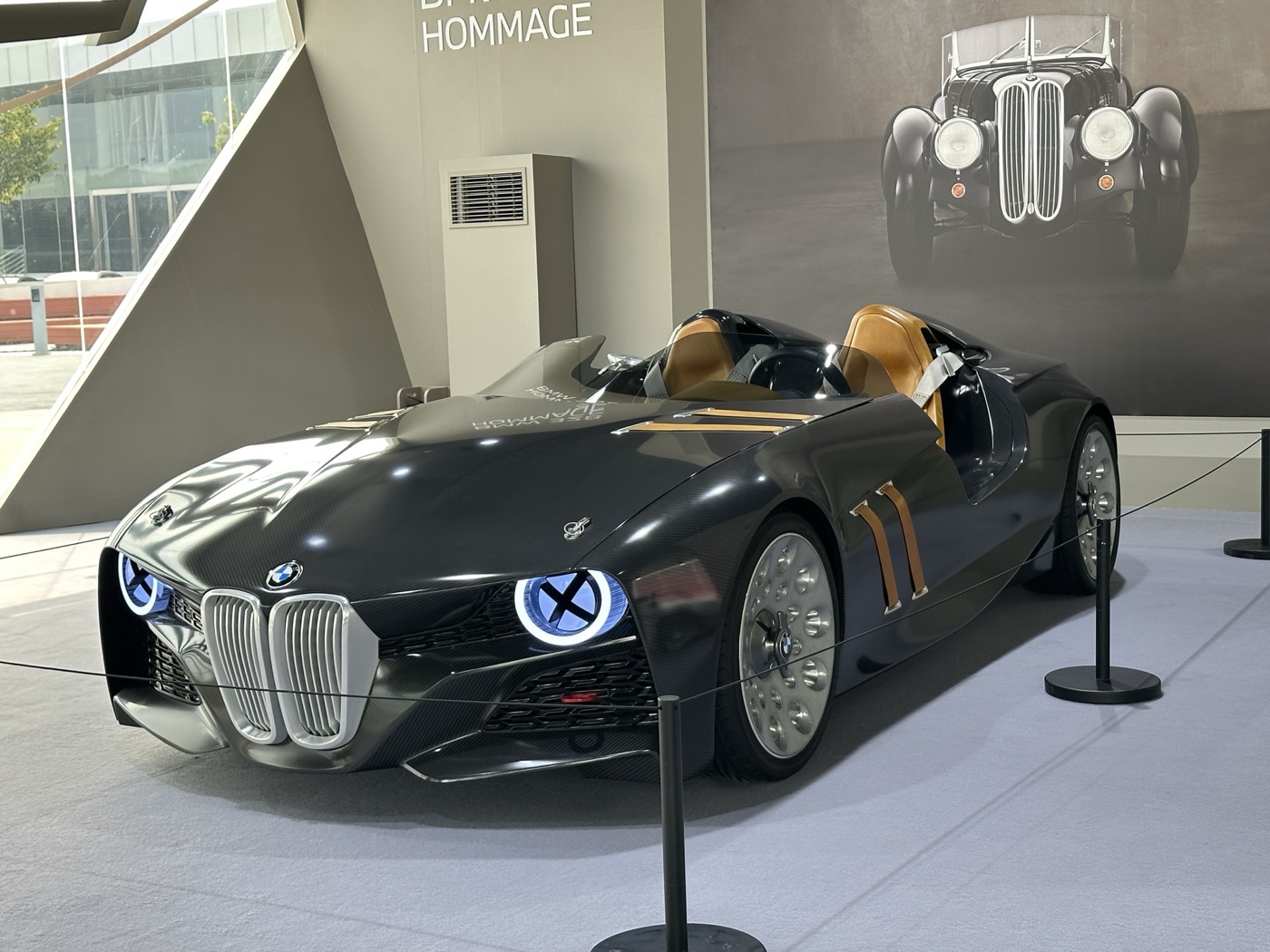
For the car's 75th birthday BMW built a special model, the 328 Hommage, and showed it at the Concorso d'Eleganza Villa d'Este in May 2011, a week after the Mille Miglia. BMW's release on the Hommage noted that the Touring coupé "still holds the record for the highest average speed on the Mille Miglia circuit".
Questions
When was the BMW 328 made?
BMW raced three prototypes from June 1936 and began series production in spring 1937. Denis Jenkinson put the end of production at August 1939; BMW gives the run as 1936 to 1940.
Where was the BMW 328 built?
At BMW's car factory in Eisenach, Thuringia. The special-bodied racing cars of 1939–40 were built in Munich or bodied by Carrozzeria Touring in Milan.
How much did a BMW 328 cost new?
7,400 Reichsmark in Germany, by the BMW Group Archive's type record, and £695 in Britain as a Frazer Nash-BMW, by Motor Sport's 1937 buyers' guide.
What engine does the BMW 328 have?
A 1,971 cc straight six with an aluminium cylinder head, valves in a vee worked by pushrods from a single low camshaft, and three Solex downdraught carburettors: 80 PS at 4,500 rpm in road form.
Who won the 1940 Mille Miglia?
Huschke von Hanstein and Walter Bäumer, in the BMW 328 Touring coupé, in 8h 54m 46.6s at an average of 166.7 km/h. BMW 328 roadsters were third, fifth and sixth.
Did the BMW 328 race at Le Mans?
Yes. All three 328s retired in 1937; in 1939 the Touring coupé finished fifth overall and won the 2-litre class, with two roadsters seventh and ninth.
Who owns the Mille Miglia Touring coupé now?
BMW. The American collector Jim Proffit, who had found and restored it in the mid-1980s, handed it to BMW Group Mobile Tradition in October 2002.
What car replaced the BMW 328?
No direct successor was built; war ended production. BMW's next two-seater sports car was the 507 of the mid-1950s, and in Britain the 328's engine lived on in the Bristol 400 saloon.
Sources
- BMW Group Archive, type record "Baumuster BMW 328" (AD-122-1), archived 12 December 2019: production years, 464 built, RM 7,400, the specification table.
- BMW AG, "The BMW 328 turns 75", press kit, 11 May 2011: designers, Kaiser, start-up costs, the debut, deliveries, the frame, the Touring and Kamm coupés, the 1940 roadsters and engines, survivors, the Mille Miglia Storica.
- BMW AG, "75 years of the BMW Roadster", 28 May 2009: the 315/1 and 319/1, 830 kg, the 507.
- BMW Group, "Back to the future: the BMW 328 Kamm Coupé", 23 April 2010: the Kamm coupé's fate and reconstruction, the cars hidden in the war, "Russia, England and America".
- BMW Group, "80 years ago: victory of BMW at the Mille Miglia", 28 April 2020: the driver change, the Kamm coupé's retirement and von Hanstein's 1938 hillclimb title.
- BMW Group, "Return of a Legend: BMW Group Mobile Tradition acquires the BMW 328 Coupé Touring", 22 October 2002: Jim Proffit and the coupé's return.
- BMW Group, "BMW 328 Hommage", 20 May 2011.
- BMW Group, "Back in stock after decades: BMW Group Classic offers faithful replica of the BMW 328 gearbox", 17 April 2013.
- BMW Group, "Best of Show: BMW 328 'Bügelfalte' wins the Trofeo BMW Group", 18 May 2026.
- Motor Sport: "Continental Notes and News", May 1939 (the Mille Miglia dropped); "On the Earl's Court Show", November 1936; "A Guide to 1938 High Performance Cars", October 1937 (British prices, 100 mph, Brooklands hour); "The Trend of Design", February 1938; "Another Alfa win in the Mille Miglia", April 1938; "Racing in the Rain", August 1938 (Spa); "Les 24 Heures du Mans", July 1939; "The R.A.C. Rally", June 1939; "The Brescia Grand Prix", June 1940; Cecil Clutton, "The vintage-modern Axis", August 1940; "Mercedes Wins '1,000 Miles'", May 1931.
- Denis Jenkinson, "BMW type 328: fifty years ago", Motor Sport, June 1986, p. 40: design, the London show, power, production, the verdict; "328 BMW Addendum", July 1986 (85003 at Earls Court, Berlin in February 1937); "Frazer Nash-BMW type 328", February 1988 (the 1938 price).
- racingsportscars.com, results: Eifelrennen 1936, Tourist Trophy 1936, Eifelrennen 1937, Le Mans 1937, Tourist Trophy 1937, Mille Miglia 1938, Spa 1938, Le Mans 1939, Mille Miglia 1940, Hockenheim 1947; and the BMW 328 results index (636 results).
- The Frazer Nash Archives, "Frazer Nash-BMW": 48 cars imported, 46 surviving, the 1934 Alpine Trial, the Mille Miglia car brought to England.
- Bristol Owners' Club, "Buyers guide", archived 9 January 2015: Bristol engine output 1946–61, the AC and other users.
- Mike Lawrence, "Motor Racing – Bristol Fashion", Motor Sport, June 1986, p. 43: the FNS engines and the Cooper-Bristol.
- Jonathan Wood, "Bristol 400", Bristol Owners Heritage Trust, 10 June 2020: the engines and drawings from Munich, the first Bristol engine.
- Classic & Sports Car, "BMW 328 Roadster makes £440k as barnfind Miura fails to sell", 5 December 2012.
- Sports Car Digest, "Bonhams Quail Lodge 2014 – Auction Report": lot 267, the Weinberger-bodied 85095; RM Sotheby's, Monterey 2022, chassis 85144 and Munich 2024, chassis 85065; Car & Classic, "Rare 1938 BMW 328 sold for €410k", 15 June 2023; Broad Arrow, Monterey Jet Center 2025, lot 300, chassis 85377.
- Bonhams, Goodwood Revival sale, lot 368, 12 September 2015; RM Sotheby's, Monterey 2016, chassis 85351; Gooding & Company, Pebble Beach 2022, lot 123.
- SkiddMark, "Rear View: a look back at the 70th anniversary of BMW's first Mille Miglia win", April 2010 (the Draeger quotation), and "BMW 328 Touring Coupé wins the 2010 Mille Miglia", May 2010 (the 2010 results and the drive to Brescia).