BMW F30: 3 Series history, engines, faults and buying guide
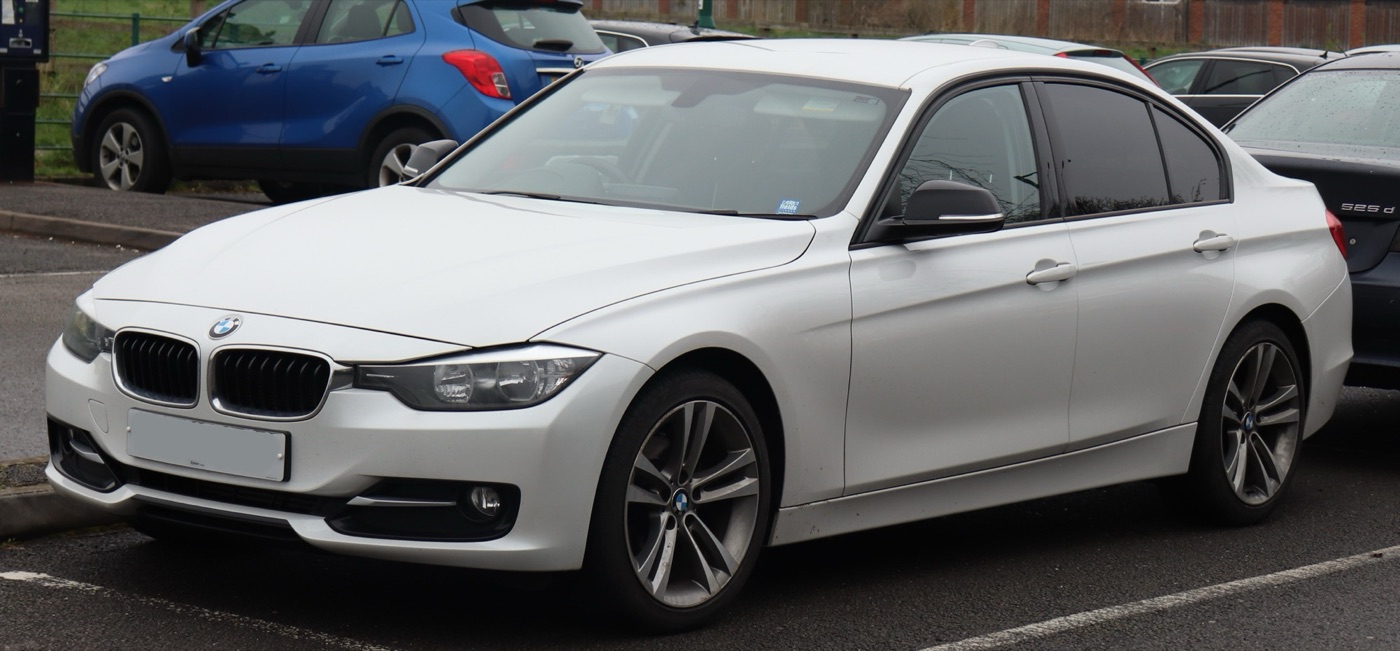
The BMW F30 is the sixth-generation BMW 3 Series, the saloon BMW built from October 2011 and sold in the UK from 11 February 2012 until its G20 replacement arrived on 9 March 2019. "F30" is BMW's code for the saloon; the same generation includes the F31 Touring estate, the F34 Gran Turismo hatchback and a long-wheelbase saloon for China. It was the first 3 Series with only turbocharged engines, from a 1.5-litre three-cylinder 318i to the 326hp 340i, and BMW delivered more than 400,000 3 Series in every year from 2012 to 2017. Most F30s for sale on PistonHeads are diesels: 714 of the 989 F30-generation cars advertised there on 27 October 2026.
History and development of the BMW F30
BMW revealed the F30 at its Munich plant on 14 October 2011, in a launch SkiddMark readers could watch live on BMW's Facebook page, and series production began there two weeks later. The car replaced the E90 saloon at a time when the 3 Series saloon made up one-fifth of all BMW sales worldwide, according to BMW UK's media information of 14 October 2011.
Spy pictures and the 2011 reveal
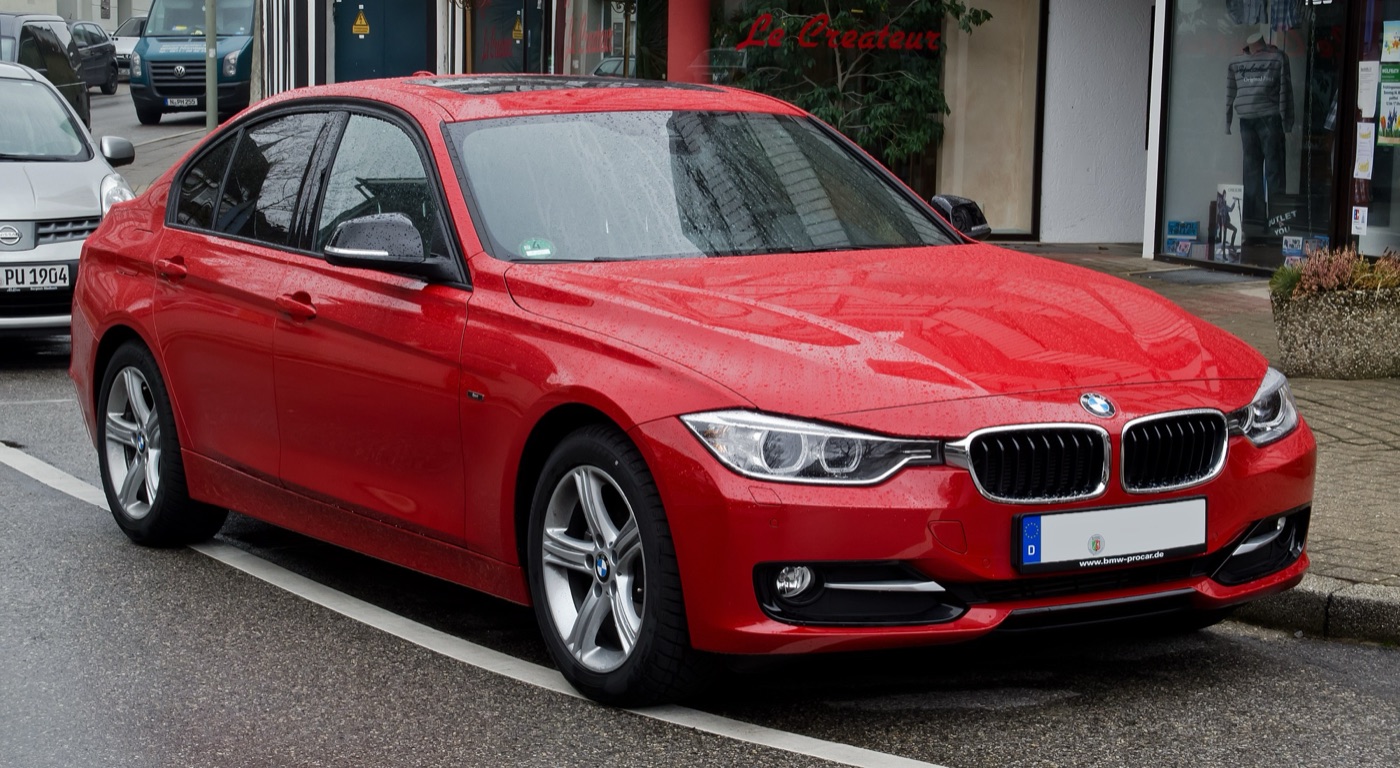
SkiddMark published spy pictures of a disguised F30 in August 2011. Steve Davies wrote that it looked "almost like a scaled-down 5 Series", a sensible-looking saloon, and that BMW tends to alternate between controversial and conservative designs from one generation to the next, so this car should have broader appeal than the E90. The test car wore four-piston front brakes, a first for a 3 Series, which he took as a sign it was a Sport model. He expected the six-speed manual to remain standard with the eight-speed automatic from the new 1 Series as an option, and a debut at the Frankfurt motor show in September or at a separate unveiling in Munich soon after; BMW chose Munich. The trim names he had heard (Urban, Sport and SE) were half right: the UK range launched with ES, SE, Sport, Modern and Luxury, and M Sport followed later in 2012.
Production start and UK launch
Series production started at the Munich plant on 28 October 2011. BMW's production release of that day quoted Frank-Peter Arndt, the board member for production, saying the company had invested about 500 million euros in Munich for the new car, "and that means safeguarding 9,000 workplaces". Munich was named lead plant for the 3 Series worldwide. The car's first public showing was the Detroit motor show in January 2012, and UK sales began on 11 February 2012.
BMW UK's headline price was "from £24,100 OTR", but its own March 2012 price list shows £24,100 was the price of a 316d ES including VAT, and £24,880 the on-the-road figure once £700 for delivery, £25 for number plates and the £55 first registration fee were added. The 328i cost £530 more than the old six-cylinder 325i and £2,935 less than the 330i it outran.
What changed with the 2015 facelift (LCI)?
BMW announced the facelifted F30 and F31, its "Life Cycle Impulse" or LCI, on 7 May 2015, and they went on sale in the UK that July. BMW UK's media information for the facelift lists new engines across most of the range, retuned and slightly stiffer suspension, a 10mm lower ride height on rear-wheel-drive cars, rev-matching on the manual gearbox, Business Navigation as standard and a new Professional Navigation option that made the 3 Series the first car in its segment to support LTE mobile data. By then the 3 Series accounted for about a quarter of all BMWs sold, and 14 million had been sold since 1975.
How to tell an LCI from an early F30
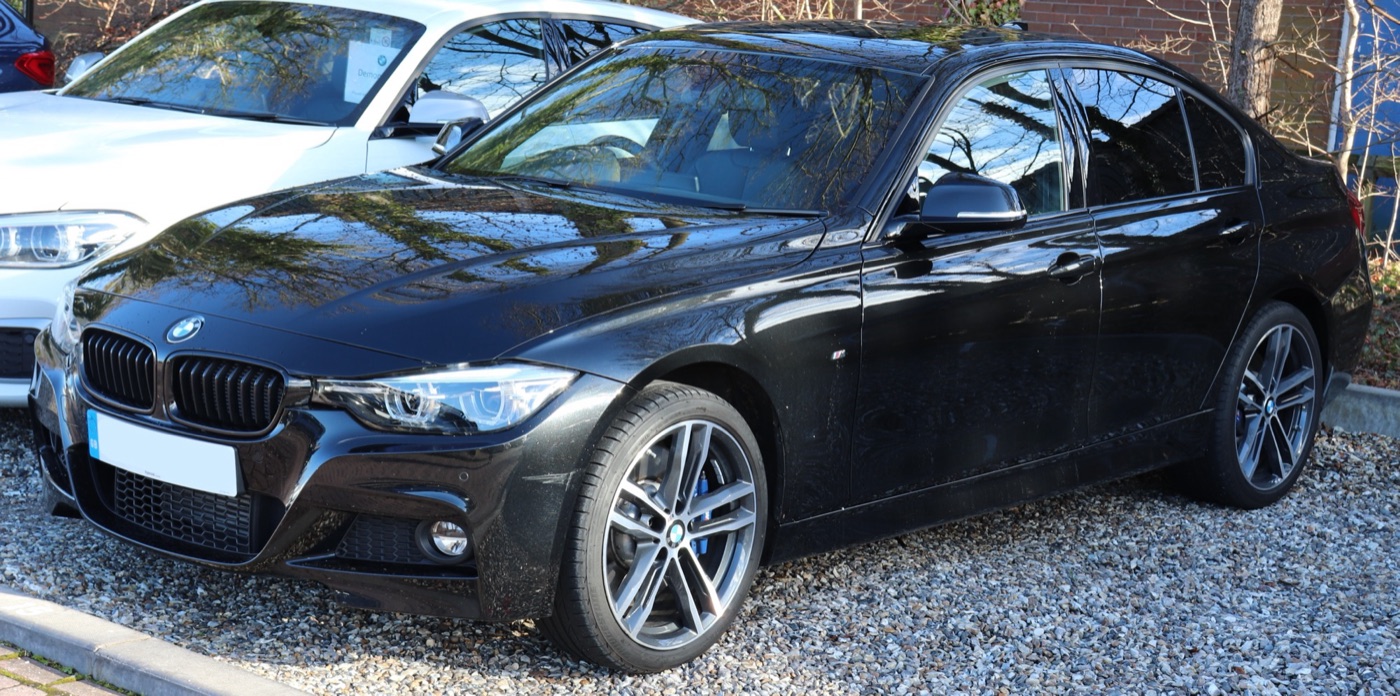
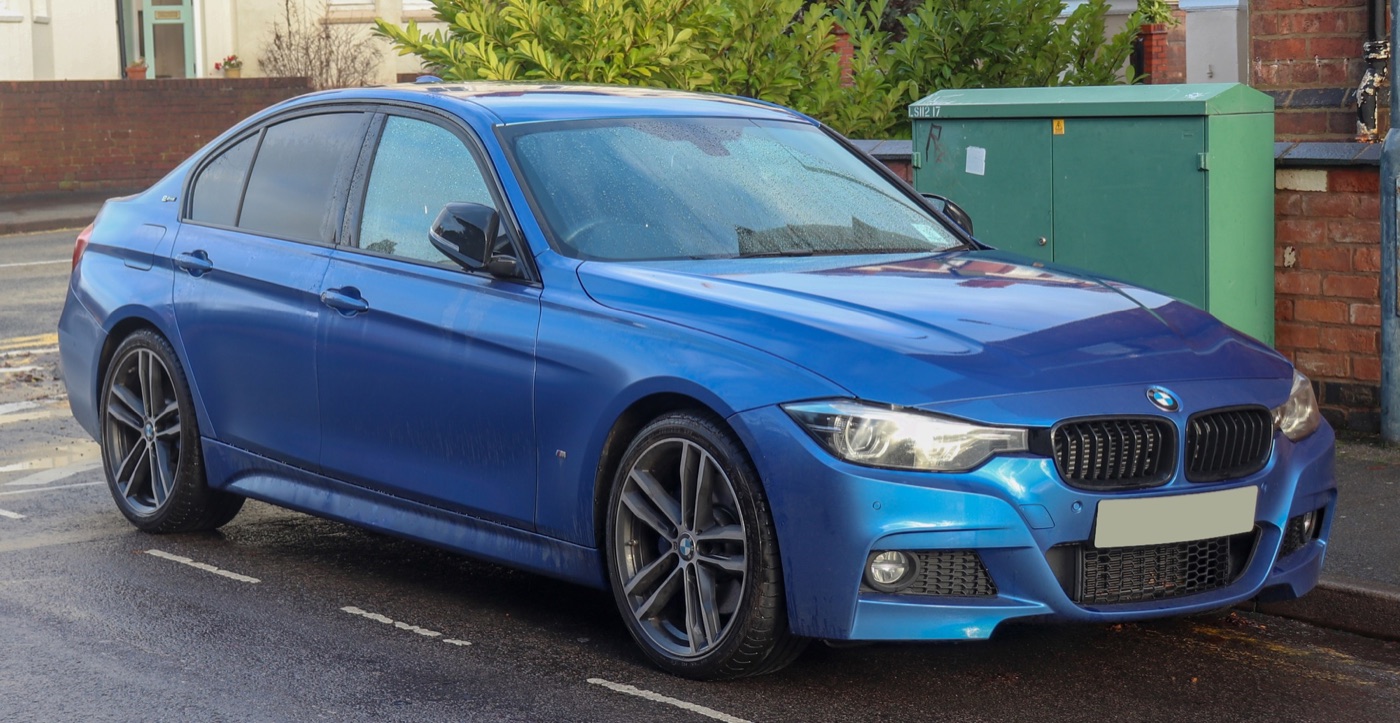
The quickest check is the rear lights: every LCI car has full-LED tail lights, with more sharply curved L-shaped light bars and a two-piece indicator strip that runs into the boot lid. At the front the bumpers have broader side intakes, and cars with the optional full-LED headlights have the indicators as "eyebrows" above the lamps; standard-light cars have two LED daytime running strips on each side. Inside, the centre console has a sliding cover over the cupholders. The engine badge is often enough on its own: among F30s, the 318i, 330i and 340i badges appear only on facelifted cars.
Replaced by the G20 in 2019
The seventh-generation G20 saloon was shown at the Paris motor show in October 2018 and went on sale in the UK on 9 March 2019, from £33,610, said BMW UK's G20 media information. The F31 Touring was sold until its G21 successor reached UK showrooms in June 2019, according to BMW UK's G21 release.
Design and engineering of the BMW F30
The BMW F30 was longer than its predecessor, the E90, but up to 50kg lighter, according to BMW UK; SkiddMark's report of BMW's global release on the same day gave the saving as up to 45kg. Length grew by 93mm, the wheelbase by 50mm to 2,810mm, and the tracks by 37mm at the front and 47mm at the rear, while the body was 6mm narrower. BMW's later M3 release gives the saloon as 4,624mm long, 1,811mm wide and 1,429mm high. Christopher Weil designed the saloon's exterior and Christian Bauer its interior; both spoke in BMW's launch film, which SkiddMark carried with its reveal report in October 2011.
Bigger inside, lighter and more slippery
In the back there was 15mm more knee room, 8mm more headroom and 18mm more foot room at the door, and boot space grew by 20 litres to 480 litres. The drag coefficient fell to as low as 0.26, helped by a smooth underside and "Aero Curtain" ducts in the front bumper that calm the air around the front wheels. Every version had automatic stop-start and brake energy regeneration, and every one but the 320d EfficientDynamics rode on run-flat tyres on 17-inch or larger wheels; the EfficientDynamics had 16-inch alloys and conventional tyres.
Electric power steering and the chassis
The F30 has electromechanical power steering, which uses no energy when the car runs straight or holds a steady cornering line, and Servotronic speed-sensitive assistance was standard on the 328i and 335i. The front suspension uses aluminium struts and wishbones, the rear a refined version of the E90's five-link layout, and BMW kept rear-wheel drive and what it called near-perfect 50:50 weight distribution. Variable Sport steering and Adaptive M Sport suspension with electronically adjustable dampers were options.
Cabin, iDrive and trim levels
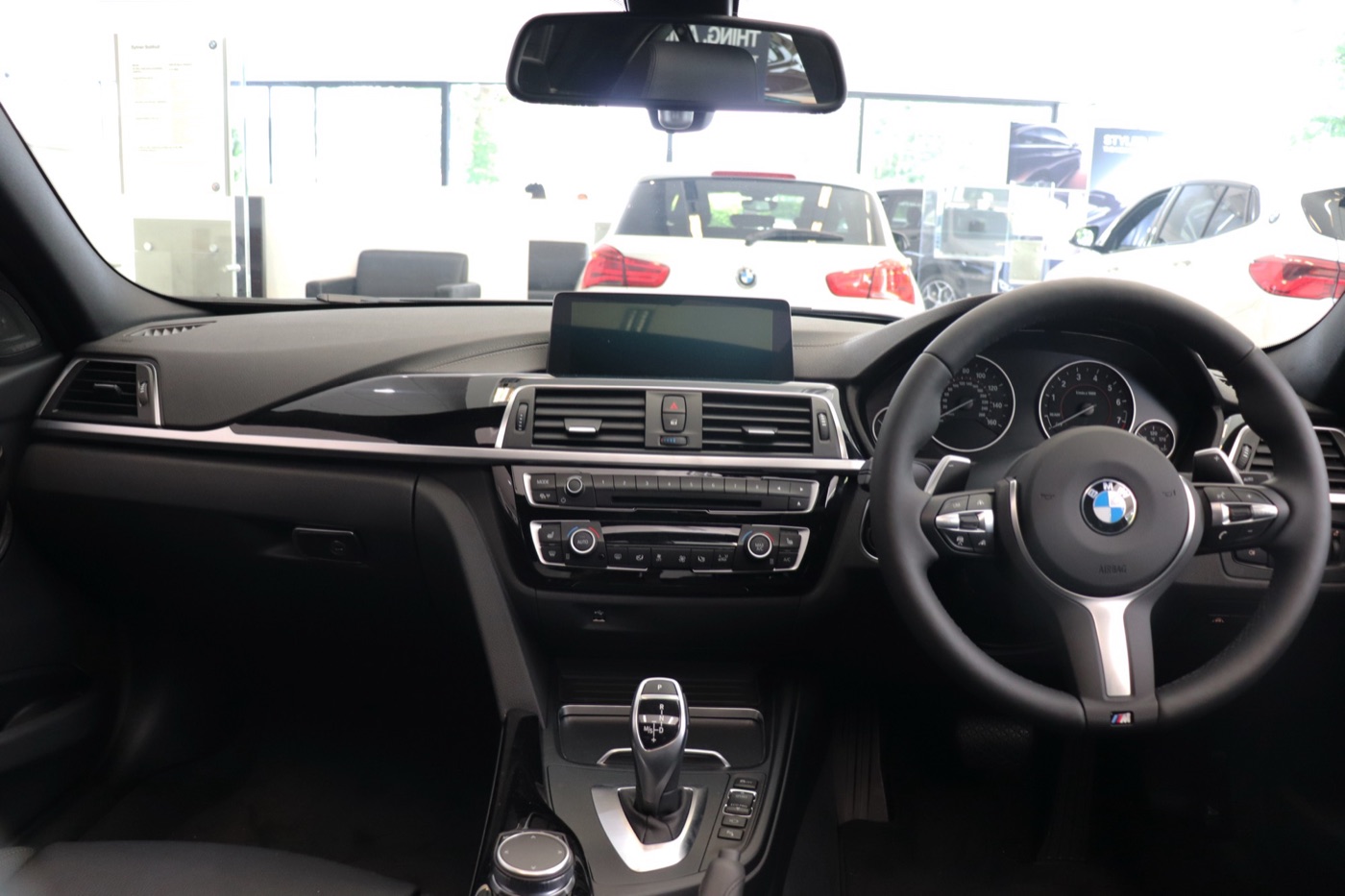
Every UK launch model had iDrive with a 6.5-inch screen, automatic air conditioning, Bluetooth, cruise control, keyless starting and alloy wheels (17-inch on all but the 320d EfficientDynamics), with the centre console angled seven degrees towards the driver. Options new to the 3 Series included a colour head-up display (SkiddMark reported BMW was the first maker to offer one in the premium mid-size class), Park Assist, Surround View cameras and 40:20:40 split rear seats. The Sport Line, Modern Line and Luxury Line trims, copied from the 1 Series, each had their own wheels, bumper trims and interior colours: SE cost £850 more than ES, Sport and Modern £1,000 more than SE, and Luxury £2,500 more. Modern, with matt chrome and a two-tone Oyster dashboard, had gone from the range by the facelift, which BMW UK announced with Sport, Luxury and M Sport models.
How safe is the F30?
Euro NCAP gave the F30 five stars in 2012. Its datasheet for the left-hand-drive 320d it tested scores adult occupant protection at 95 per cent (34 points), child occupant 84 per cent, pedestrian 78 per cent and safety assist 86 per cent. The car took the maximum 8 points in the side barrier test and 7.4 of 8 in the side pole test.
Engines and specifications of the BMW F30
Every F30 engine is turbocharged. Before the 2015 facelift the petrol engines were a 1.6-litre four-cylinder, the 2.0-litre four-cylinder N20 and the 3.0-litre six-cylinder N55; the diesels were 2.0-litre four-cylinders and a 3.0-litre six. The facelift brought BMW's new modular engine family, all-aluminium with 500cc per cylinder, for every petrol engine and the 316d, 318d and 320d; the 330d and 335d kept updated versions of the earlier six-cylinder diesel.
Engines at launch in 2012
Four engines were on sale at launch. The 328i was the surprise: its 2.0-litre four-cylinder replaced the six-cylinder 3.0-litre engines in the old 325i and 330i, and at 5.9 seconds to 62mph with the manual gearbox it was quicker than either. Within weeks BMW added the 316d (116hp), 318d (143hp) and 320i (184hp); BMW UK said xDrive four-wheel drive and the 335bhp ActiveHybrid 3 would follow at the end of 2012, and the Touring arrived that September with a 330d among its launch engines.
| Model | Engine | Power (hp) | Torque (Nm) | 0–62mph (s) | Top speed (mph) | Combined (mpg) | CO2 (g/km) | OTR price |
|---|---|---|---|---|---|---|---|---|
| 320d EfficientDynamics | 2.0 four-cylinder diesel | 163 | 380 | 8.0 (8.1) | 143 (141) | 68.9 (68.9) | 109 (109) | £28,080 |
| 320d | 2.0 four-cylinder diesel | 184 | 380 | 7.5 (7.6) | 146 (143) | 62.8 (64.2) | 120 (118) | £28,080 |
| 328i | 2.0 four-cylinder petrol | 245 | 350 | 5.9 (6.1) | 155 | 44.1 (44.8) | 149 (147) | £29,060 |
| 335i | 3.0 six-cylinder petrol | 306 | 400 | 5.5 (5.5) | 155 | 35.8 (39.2) | 186 (169) | £35,525 |
Figures in brackets are for the eight-speed automatic; 155mph is electronically limited. Source: BMW UK media information, 14 October 2011, whose table and prices SkiddMark published on the day.
BMW's UK release made as much of fuel economy and company-car tax as of performance. By March 2012 it expected eight versions of the saloon at or below 120g/km, against one each from its rivals, and the sub-110g/km 320d EfficientDynamics let a business that bought one outright write off its whole cost against tax in the first year.
Engines after the 2015 facelift
The 318i, which replaced the 316i, was the first 3 Series with a three-cylinder engine, as CAR's launch review noted. The 330i replaced the 328i, and the 340i, the world debut of BMW's new modular straight-six, replaced the 335i with 20hp and 50Nm more. A 320d EfficientDynamics Plus with 163hp dipped to 99g/km with the automatic gearbox.
| Model | Engine | Power (hp) | Torque (Nm) | 0–62mph (s) | Top speed (mph) | Combined (mpg) | CO2 (g/km) |
|---|---|---|---|---|---|---|---|
| 318i | 1.5 three-cylinder petrol | 136 | 220 | 8.9 (9.1) | 131 | 52.3 (54.3) | 124 (122) |
| 320i | 2.0 four-cylinder petrol | 184 | 290 (270) | 7.2 (7.3) | 146 | 48.7 (51.4) | 134 (129) |
| 330i | 2.0 four-cylinder petrol | 252 | 350 | 5.9 (5.8) | 155 | 43.5 (48.7) | 151 (136) |
| 340i | 3.0 six-cylinder petrol | 326 | 450 | 5.2 (5.1) | 155 | 36.7 (41.5) | 179 (159) |
| 316d | 2.0 four-cylinder diesel | 116 | 270 | 10.7 (10.6) | 127 | 68.9 | 109 |
| 318d | 2.0 four-cylinder diesel | 150 | 320 | 8.6 (8.4) | 134 (132) | 67.3 | 111 |
| 320d | 2.0 four-cylinder diesel | 190 | 400 | 7.3 (7.2) | 146 (143) | 67.3 | 111 |
| 320d ED Plus | 2.0 four-cylinder diesel | 163 | 400 | 7.9 (7.8) | 143 (140) | 72.4 (74.3) | 102 (99) |
| 330d | 3.0 six-cylinder diesel | 258 | 560 | 5.6 | 155 | 56.5 | 131 |
| 335d xDrive | 3.0 six-cylinder diesel | 313 | 630 | 4.8 | 155 | 51.4 | 145 |
Figures in brackets are for the eight-speed automatic. Source: BMW UK media information, 7 May 2015. CAR's launch report lists a 325d as well, which BMW's table leaves out.
Gearboxes (transmissions)
A six-speed manual was standard on most models, and the eight-speed automatic was offered with every engine from launch. BMW said the automatic cut the 318d's CO2 by 22g/km against the old six-speed automatic and made automatic versions as economical as the manuals, or more so. After the facelift the automatic was standard on the 330d, 335d and 340i Touring, gained a coasting mode, and could use navigation data to pick gears before roundabouts and junctions.
xDrive four-wheel drive
BMW engineered xDrive for right-hand drive for the F30, and BMW UK planned it for the end of 2012. In May 2013 SkiddMark reported that the 335d, with 309bhp and 630Nm, would get xDrive and an eight-speed sport automatic with launch control for the 2014 model year, priced from £40,650; that put it well above Audi's 242bhp A4 3.0 TDI quattro at £37,490 and close to the 328bhp S4 at £39,020. After the 2015 facelift xDrive was optional on the 320i, 320d and 330d and standard on the 335d.
Body styles of the BMW F30
The sixth-generation 3 Series came in four bodies, each with its own code: the F30 saloon (a sedan in American terms), the F31 Touring estate, the F34 Gran Turismo and the long-wheelbase 3 Series Li for China. The coupe and convertible (BMW spells it coupé) left the 3 Series range to become the 4 Series, which SkiddMark noted in December 2012 was BMW's first departure from using the 3 Series name for every body style.
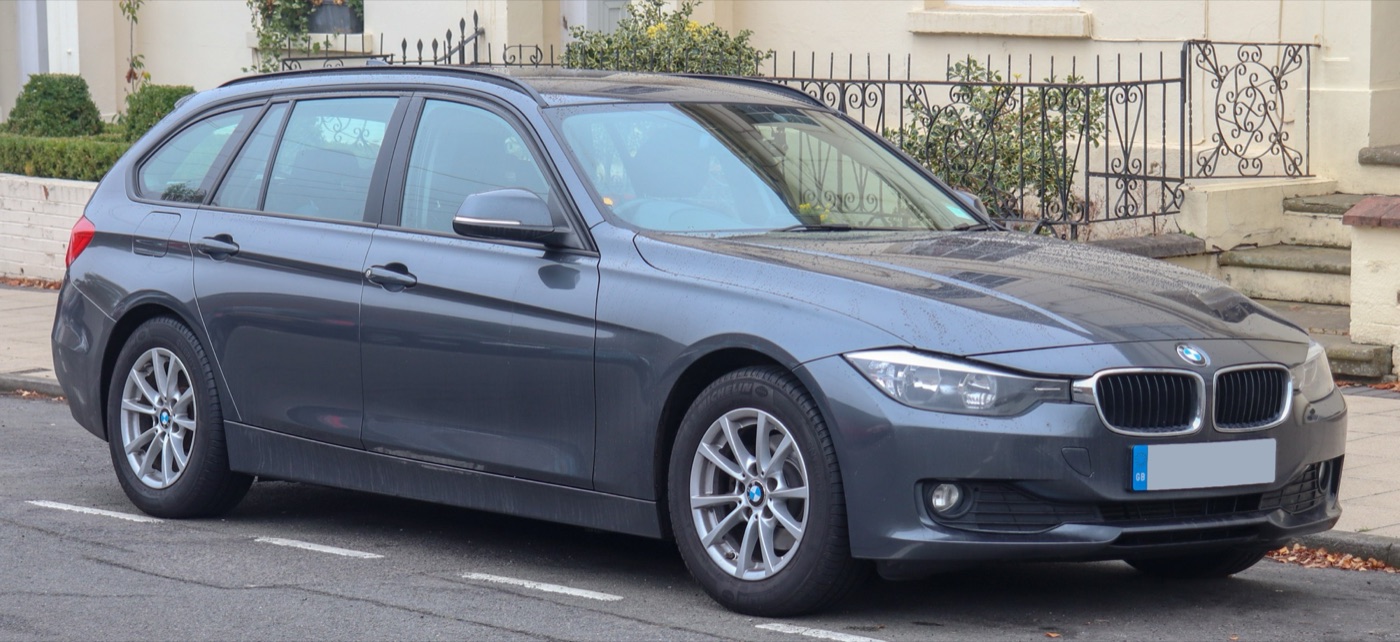
F31 Touring
The Touring went on sale in the UK on 22 September 2012, from £26,180 for a 316d ES to £37,700 for a 330d M Sport, CAR magazine reported. Its boot held 495 litres, 35 more than the E91's; the rear seat split 40:20:40 and the tailgate glass still opened on its own. CAR said Tourings were 6 per cent of 3 Series sales worldwide but 15 per cent in Britain, BMW's third-biggest market for the body after Germany and Italy.
F34 Gran Turismo
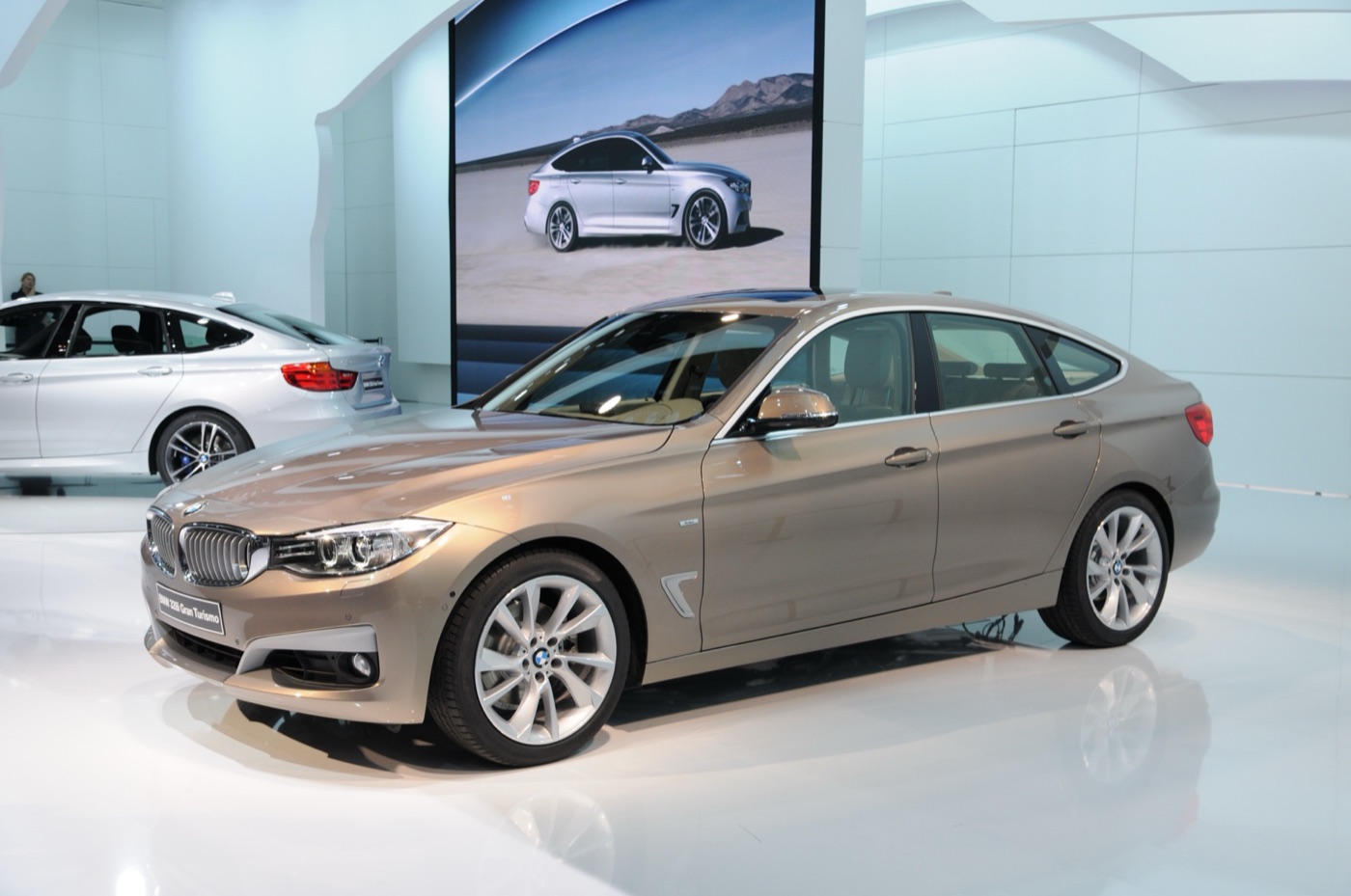
The Gran Turismo, a five-door hatchback with frameless door windows, was shown at the Geneva motor show in March 2013 and went on sale in the UK on 15 June 2013 from £28,830 for a 320i SE. BMW UK's release of 7 February 2013 gives it a 2,920mm wheelbase, 110mm longer than the saloon's, and a body 200mm longer and 81mm taller; it was the first BMW with an active rear spoiler. BMW built it at Dingolfing, the first 3 Series made there for ten years.
SkiddMark's February 2013 report found the spoiler rose at 68mph and dropped at 43mph to cut rear lift by more than 35 per cent, the seats sat 59mm higher than in the saloon, rear legroom was 70mm greater and the boot held 520 litres, 25 more than the Touring's. The cost was weight: 130–140kg more than the equivalent saloon. "In the status-conscious company car park there's a danger of being 'stuck in the middle'," SkiddMark wrote, and it was not sure who the car was aimed at.
3 Series Li: the long-wheelbase saloon for China
A China-only 3 Series Li, with 110mm added to the wheelbase, made its debut at the Beijing motor show in April 2012 as the 320Li, 328Li and 335Li, GoAuto reported from the show. BMW's 2013 annual report records that 3 Series saloon production started at the Tiexi plant in Shenyang at the beginning of that year.
Hybrid and M versions of the BMW F30
The F30 had two hybrids: the ActiveHybrid 3, a full hybrid planned for the end of 2012, and the 330e plug-in of 2016. The M3 saloon followed in 2014 under its own model code, F80.
ActiveHybrid 3
BMW UK planned the ActiveHybrid 3 for the end of 2012, with the powertrain from the ActiveHybrid 5: the 335i's 306hp six-cylinder engine paired with an electric motor of up to 40kW, giving 335bhp in all, as SkiddMark reported at the reveal. BMW's 2011 campaign plan gave it its own integrated launch at the end of 2012, after the print and TV adverts for the rest of the range.
330e iPerformance plug-in hybrid
The 330e joined the range in 2016 with a 184hp 2.0-litre petrol engine and an 80kW electric motor. BMW's provisional figures in the facelift release were 252hp and 420Nm combined, 0–62mph in 6.3 seconds, a 140mph top speed, about 22 miles on electricity alone and 49g/km of CO2 on the official test.
The M3 (F80)
The M3 saloon of this generation went on sale in the UK on 21 June 2014 at £56,175, with a 431hp, 550Nm twin-turbo 3.0-litre straight-six. BMW UK's M3 and M4 media information notes two firsts: a turbocharged engine in the M3, and separate names for the saloon (M3) and coupé (M4). Its tables compare the M3, coded F80, with the F30 it was based on: 47mm longer and 66mm wider.
How many of the BMW F30 were made?
BMW has not published a production total for the F30 generation, but its annual reports give 3 Series deliveries for every year it was on sale: 2,652,485 from 2012 to 2017. That total is not all F30s. The 2012 and 2013 figures include the E92 coupé and E93 convertible (32,658 of them in 2013), 2012 also includes E90 saloons and E91 Tourings sold before the F30 and F31 arrived. 2018, the F30's last full year before the G20 went on sale in March 2019, is not in the table: SkiddMark has not checked BMW's 2018 report.
| Year | Deliveries | Notes |
|---|---|---|
| 2012 | 406,752 | Includes E90, E91, E92 and E93 cars |
| 2013 | 500,332 | Saloon 348,560; Touring 96,173; Gran Turismo 22,941; coupé 15,240; convertible 17,418 |
| 2014 | 480,214 | |
| 2015 | 444,338 | 23.3 per cent of BMW-brand sales |
| 2016 | 411,844 | |
| 2017 | 409,005 | 19.6 per cent of BMW-brand sales |
Sources: BMW Group annual reports for 2013 (page 30), 2015 (page 30) and 2017 (page 55); each figure includes cars built by the BMW Brilliance joint venture in China.
3 Series sales were up 19.9 per cent in the first quarter of 2013, SkiddMark reported that April, when the BMW Group delivered 448,200 cars. More than 500,000 F31 Tourings were built, of the 1.7 million 3 Series Tourings since 1987, BMW UK said in June 2019.
What is a BMW F30 worth today?
Most of the 212 PistonHeads adverts for the BMW F30 that SkiddMark sampled asked between £5,000 and £13,000, and the 2018 cars' median price was about twice the 2012 cars'. On 27 October 2026 PistonHeads listed 989 cars under its F30 3 Series model page, which covers the saloon, Touring and Gran Turismo: 714 diesels, 237 petrols and 37 hybrids. SkiddMark recorded the asking price, year and mileage of a sample of 212 of them, the first page of results for each registration year, fuel and colour. Because each of those pages holds 20 adverts, the sample over-weights the smaller groups: diesels are 59 per cent of it against 72 per cent of all 989 adverts.
| Registered | Adverts on PistonHeads | Sampled | Price range | Median price | Median mileage |
|---|---|---|---|---|---|
| 2012 | 101 | 27 | £2,388–£12,450 | £6,250 | 94,366 |
| 2013 | 133 | 28 | £2,999–£13,490 | £8,242 | 79,850 |
| 2014 | 138 | 25 | £3,599–£12,999 | £7,950 | 92,000 |
| 2015 | 165 | 30 | £5,795–£19,450 | £8,495 | 85,428 |
| 2016 | 168 | 41 | £3,995–£16,988 | £9,999 | 84,000 |
| 2017 | 140 | 26 | £3,995–£21,995 | £10,092 | 87,491 |
| 2018 | 146 | 35 | £6,149–£28,989 | £12,600 | 69,750 |
The advert counts by year are PistonHeads' own filter totals, which add up to 991 against its headline of 989.
The sample's median was £8,995 at 85,800 miles. By model, the 320d (74 cars) had a median of £8,472, the 320i (35) £8,990, the 330e (16) £9,695, the 330d (13) £11,000 and the 335d (22) £16,400; the cheapest group was the 318d, with ten cars at a median of £4,597 and 100,454 miles. Tourings (50 cars) had a median of £9,892 and Gran Turismos (16) £8,990. The most expensive car sampled was a 2018 335d xDrive Touring at £28,989.
Buying a BMW F30: faults, recalls and running costs
John Evans's nearly-new buying guide for Autocar, 14 September 2021, calls the F30 "a cracking car" and says no rival was "such an all-rounder"; the faults it lists to check are timing chains, Vanos solenoids, EGR valves, starter motors, the rear differential, the dual-mass flywheel and brake wear. CAR's 2015 review said company car drivers made up the bulk of 3 Series buyers, and the PistonHeads sample above had a median of 85,800 miles.
Is the BMW F30 reliable?
Several of the F30's known faults follow skipped fluid changes: Autocar ties worn timing-chain tensioners to infrequent oil changes and a noisy rear differential to oil that has never been changed. Six-cylinder engines can suffer failing Vanos timing solenoids, which cause rough idling and a loss of power; a diesel that runs roughly may have a blocked EGR valve or a clogged particulate filter; starter motors fail more often than they should. A rattle or vibration on gearchanges points to the dual-mass flywheel, and a rough automatic may only need fresh fluid and filters.
The same guide warns that the cars get through brake pads and discs quickly, that rear-light seals can let water into the boot and that the paint chips easily on the bonnet and wings. Inside, front seat frames can corrode and squeak, and BMW has a software update for Bluetooth that will not pair. Autocar also advises checking the mileage against old MOT records, because the digital odometer can be wound back.
Timing chains and the N20 engine
Every F30 engine has a timing chain, not a belt. Autocar singles out the N20 four-cylinder petrol, used in the 320i and 328i before the facelift, for chain problems, with a whine or rattle as the warning, and says the best advice for a noisy one is to walk away; it says diesel engines from 2015 onwards suffer fewer chain problems. Owners can check the chain through the oil filler neck. A ticking noise from any F30 engine can be a worn tensioner caused by infrequent oil changes. In the United States the N20's timing and oil-pump chain modules were the subject of a class action, Gelis v. BMW, which ended in a settlement that took effect on 30 June 2021. BMW of North America's service bulletin on it, filed with NHTSA, lists US-specification F30, F31 and F34 cars built up to July 2015 and states that it is not a recall.
UK recalls
DVSA's recalls file lists 18 recalls whose build dates cover F30, F31 or F34 cars. Six of them cover the diesels' exhaust gas recirculation (EGR) coolers, which can leak coolant that, mixed with soot and oil, forms deposits that can catch fire; three cover airbags, and two cover starter motors. Before buying, ask a BMW dealer to check the car's VIN for outstanding recall work.
| Recall | Launched | Problem | Build dates |
|---|---|---|---|
| R/2013/080 | July 2013 | Clutch cover bolt can loosen; loss of drive | Feb–Jun 2013 |
| R/2014/188 | January 2015 | Driver's seat belt may be hard or impossible to pull out | Sep 2014–Mar 2015 |
| R/2015/109 | June 2015 | In-tank fuel pump can fail; no start or stall | Sep 2013–Apr 2014 |
| R/2016/224 | October 2016 | Rear axle support bolts reused after repair | Jan 2015–Sep 2016 |
| R/2016/300 | December 2016 | Power steering control unit contact; assistance can fail | Sep 2011–Dec 2015 |
| R/2018/211 | August 2018 | Crankshaft sensor firmware fault | May–Jun 2018 |
| R/2018/260 | October 2018 | Crankshaft sensor software fault | May–Jun 2018 |
| R/2018/258 | November 2018 | EGR cooler leak; fire risk | Mar 2015–Nov 2017 |
| R/2018/341 | December 2018 | EGR cooler leak; fire risk | Dec 2011–Apr 2017 |
| R/2021/037 | February 2021 | EGR cooler leak; ignitable deposits | Jun 2015–Sep 2018 |
| R/2021/213 | June 2021 | EGR module leak (saloon, Touring, GT) | Mar 2017–Oct 2018 |
| R/2022/206 | August 2022 | EGR cooler leak (saloon, Touring, GT) | Dec 2011–Nov 2019 |
| R/2022/255 | August 2022 | Undetected EGR leaks; heat in the intake manifold | Dec 2014–Mar 2018 (F30 family) |
| R/2022/261 | September 2022 | Starter motor can stay engaged; fire risk | Sep 2015–Jul 2018 |
| R/2023/016 | January 2023 | Driver's airbag propellant can degrade; inflator may rupture | Jun 2012–Jun 2017 |
| R/2024/403 | October 2024 | Check for a replacement Takata driver's airbag fitted later | Nov 2011–Nov 2017 |
| R/2025/349 | December 2025 | Takata airbags on cars imported from other markets | Oct 2011–Nov 2017 |
| R/2025/405 | October 2025 | Starter motor water ingress (incl. 330e); park outdoors until fixed | Oct 2015–Jul 2018 (330e) |
Source: DVSA, vehicle recalls file, downloaded 27 October 2026; build dates are the widest DVSA gives across the F30-family rows, and some recalls also cover other BMW models. Two more may include early F30s: R/2024/191 of May 2024 (Vanos bolts on N51, N52 and N55 engines, eight saloons built from November 2009, no end date given) and R/2014/068 (Vanos housing screws, builds September 2009 to November 2011). Three 3 Series recalls for 2018–19 builds (R/2019/368, R/2020/219 and R/2021/288) are left out because their build dates match G20 production.
What does an F30 cost to tax?
Road tax for an F30 depends on when it was first registered. A car registered before 1 April 2017 pays by CO2 band, on GOV.UK's table for cars registered from March 2001 to March 2017: £20 a year for a 109g/km 320d EfficientDynamics (band B), £35 for a 120g/km launch 320d (band C), £225 for a 149g/km 328i (band F) and £410 for a manual 335i at 186g/km (band J). A car registered from 1 April 2017 pays the standard rate of £200 a year; the £440 supplement for cars with a list price over £40,000 runs for five years from the second tax payment, so a 340i or 335d with a list price over £40,000 first registered in 2019 stopped paying it by the end of 2025, according to GOV.UK's current rates.
Which F30 should you buy?
Autocar's 2021 guide picked a 320d SE, on softer suspension than the Sport and M Sport models, for its 187bhp and up to 57mpg, and a 340i M Sport automatic for its six-cylinder engine. James Taylor, reviewing the 340i for CAR magazine in 2015, called the 330d "the more rational choice" but added: "make sure you don't test-drive a 340i first".
Reception of the BMW F30
What Car? named the F30 its Best Compact Executive Car for 2012, before it was even on sale, giving the 3 Series the title for the seventh year in a row. What Car?'s editor-in-chief, Chas Hallett, said the car was "great to drive, with sharp steering and a well judged chassis. But the biggest gains are in efficiency", quoted in BMW UK's release of 11 January 2012. The F30's rivals were the Audi A4, the Mercedes-Benz C-Class and the Jaguar XE, which by the end of its run "had the measure of it", Autocar's 2021 guide says.
Anthony ffrench-Constant, who drove the £29,060 328i and £28,080 320d for CAR magazine in 2012, found both "largely faultless and utterly peerless" to drive. His complaints were a cabin less elegant than the outside, a slow sat-nav and wood trim "clearly modelled on a supermarket-bought Yule log", and he regretted that the 328i was "no longer a straight-six but merely a 2.0-litre turbo". The car had grown so much that he had to raise the seat to find its corners. By 2015 CAR's James Taylor was calling the facelift "one of the lighter mid-life facelifts you'll see", with a 340i that "sounds like a thoroughbred sports car".
SkiddMark's own view of the launch was cooler. Steve Davies thought BMW's October 2011 "Versus" campaign, by the Munich agency Interone with Billy Idol's 1981 song "Dancing With Myself" on the TV adverts, had lost its idea in translation: "If you can understand more than 1 of these posters I'll be surprised." Its slogans included "Head-Up Display vs. Speeding Ticket. Passion Wins."
Questions
What does F30 mean on a BMW?
F30 is BMW's development code for the sixth-generation 3 Series saloon, built from October 2011. The Touring estate of the same generation is the F31, the Gran Turismo the F34, the M3 the F80; a long-wheelbase 3 Series Li was built for China.
What years is the BMW F30?
Production started in Munich on 28 October 2011 and UK sales on 11 February 2012. The facelifted car went on sale in July 2015, and the G20 replaced the saloon in the UK on 9 March 2019.
Is the BMW F30 rear-wheel drive?
Yes. Most F30s drive their rear wheels; xDrive four-wheel drive was an option on several engines and, after the 2015 facelift, standard on the 335d.
How big is the boot of a BMW F30?
The saloon holds 480 litres, 20 more than the E90. The F31 Touring holds 495 litres and the F34 Gran Turismo 520 litres.
How fast is a BMW 340i F30?
BMW UK quoted 0 to 62mph in 5.1 seconds for the 340i saloon with the eight-speed automatic (5.2 seconds with the manual) and an electronically limited 155mph.
What is the most economical BMW F30?
On the official test, the facelifted 320d EfficientDynamics Plus automatic, at 74.3mpg and 99g/km. The 330e plug-in hybrid was rated at 49g/km, with about 22 miles of electric range.
Is the F30 the same as the 4 Series?
No. For this generation BMW moved the 3 Series coupé and convertible into a new 4 Series range, so the F30 family has only saloon, Touring and Gran Turismo bodies.
Sources
- BMW UK, "The new BMW 3 Series Saloon", media information, 14 October 2011: launch engines, prices, dimensions, equipment, trim lines.
- BMW UK, BMW 3 Series Saloon price list, March 2012: basic and on-the-road prices.
- BMW Group, "A new era begins: production start-up for the new BMW 3 Series at the home plant in Munich", 28 October 2011: production start, investment.
- BMW UK, What Car? Best Compact Executive Car 2012, 11 January 2012: the award and Chas Hallett's words.
- Euro NCAP, BMW 3 Series datasheet, 2012: crash-test scores.
- CAR magazine, Anthony ffrench-Constant, BMW 328i review, 2012; 3 Series Touring first official pictures, 2012; James Taylor, BMW 340i review, 2015: reception, Touring prices and share, 340i price.
- GoAuto, "Beijing show: BMW stretches the 3 Series for China", April 2012: the long-wheelbase 3 Series Li.
- BMW UK, "The new BMW 3 Series Gran Turismo", 7 February 2013: Gran Turismo prices and dimensions.
- BMW Group, annual reports for 2013, 2015 and 2017 (copies held by the Universitat Autònoma de Barcelona): deliveries by model, Dingolfing and Tiexi production.
- BMW UK, "The new BMW M3 Saloon and BMW M4 Coupé", June 2014: the F80 M3.
- BMW UK, "The new BMW 3 Series Saloon and Touring", 7 May 2015: the facelift, its engines and the 330e.
- BMW UK, G20 3 Series Saloon media information, March 2019 and G21 3 Series Touring media information, June 2019: successors, F31 production.
- Autocar, John Evans, "Nearly new buying guide: BMW 3 Series (F30)", 14 September 2021: known faults, rivals, recommended versions.
- BMW of North America, SIB 11 02 21, N20/N26 timing and oil pump drive chain class action settlement, July 2021: the Gelis settlement.
- DVSA, vehicle recalls file, downloaded 27 October 2026: UK recalls.
- PistonHeads, used BMW 3 Series F30 listings, counted and sampled by SkiddMark on 27 October 2026: asking prices.
- GOV.UK, vehicle tax rates for cars registered between 1 March 2001 and 31 March 2017 and vehicle tax rate tables, read 27 October 2026: road tax.
- SkiddMark's own reports: spy pictures (August 2011), the reveal and prices, the launch campaign and the world premiere (October 2011), BMW's 2012 review of the year (December 2012), the 3 Series Gran Turismo (February 2013), first-quarter sales (April 2013) and the 335d xDrive (May 2013).
This article was written in October 2026 to replace SkiddMark's original report of August 2011 on spy pictures of the F30, whose expectations it keeps with their date, with the rest of the car's story checked against BMW's own material.