BMW i8: history, specification and buying guide
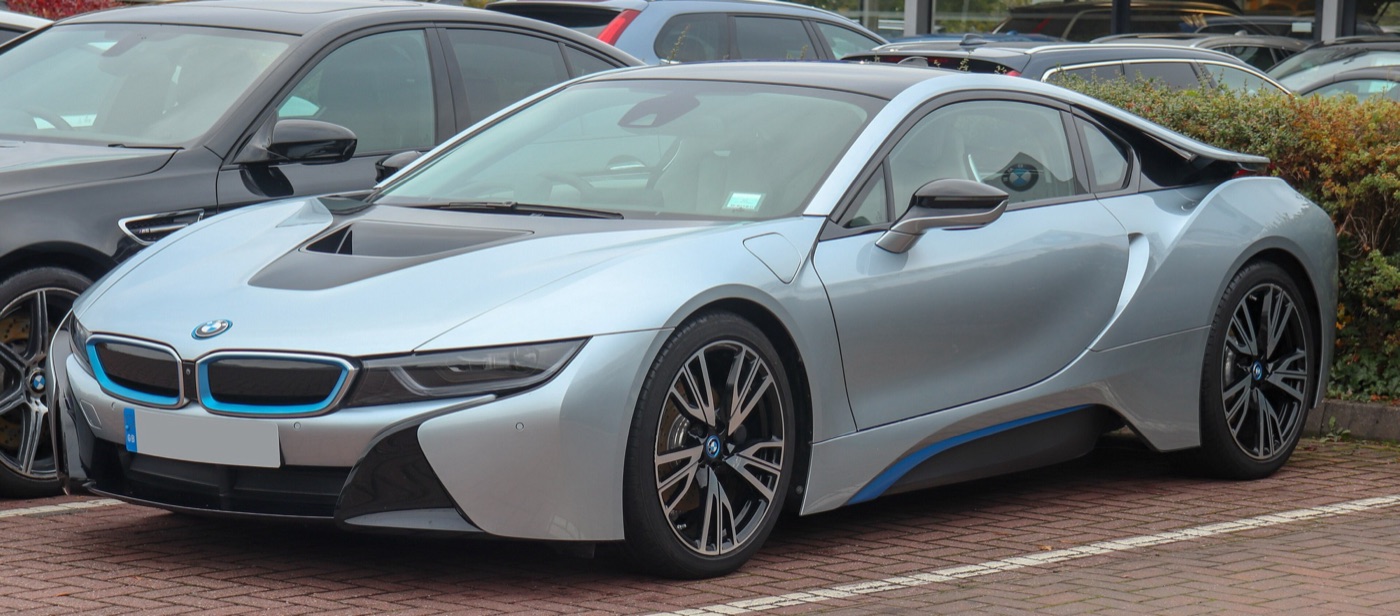
The BMW i8 is a plug-in hybrid sports car that BMW built at Leipzig from 2014 to 2020: a 2+2 coupé with doors that swing up and forwards, joined in 2018 by a two-seat Roadster. A 1.5-litre three-cylinder petrol engine drives the rear wheels and an electric motor the front ones, for 362 PS (357 bhp) at launch and 374 PS from 2018. BMW made 20,465 of them; in Britain it cost £99,845 before the government grant in 2014, and a used one now sells for roughly £20,000 to £70,000.
It was the first production car offered with laser headlights, its passenger cell is made of carbon-fibre-reinforced plastic, and it was the safety car at the first Formula E race in 2014. At the end of June 2026, 2,036 i8s were licensed for the road in the UK and another 236 were declared off the road.
History of the BMW i8
The BMW i8 grew out of the Vision EfficientDynamics, a concept car BMW showed in 2009, and reached its first customers in June 2014 as a model of i, the new sub-brand BMW created for its electrified cars.
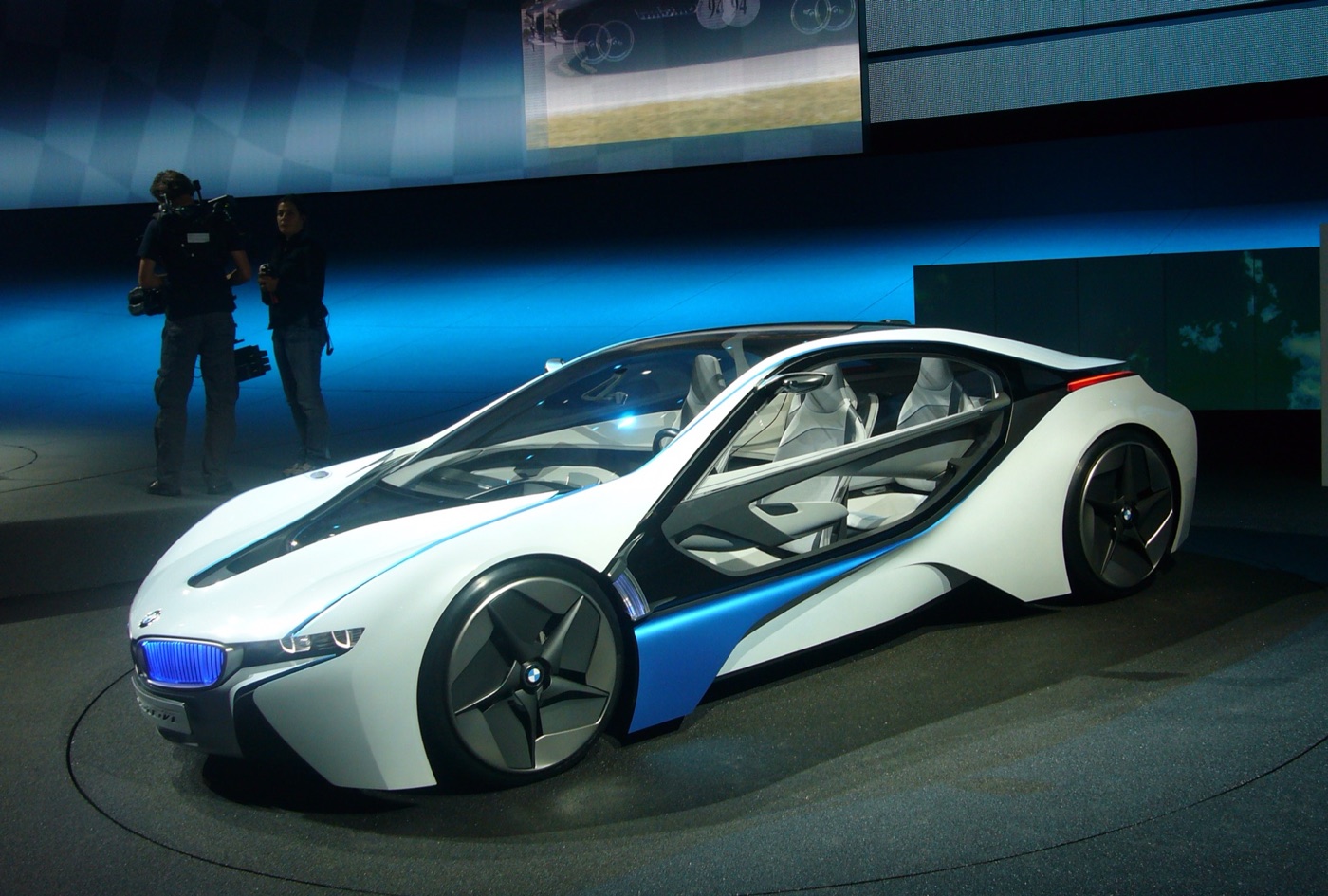
The Vision EfficientDynamics concept, 2009
BMW unveiled the Vision EfficientDynamics at the Frankfurt motor show (IAA) in September 2009. It was a 2+2 only 1.24 metres tall, with wing doors and a drag coefficient of 0.22, and it ran on a three-cylinder turbodiesel and two electric motors, one per axle, for a system output of 241 kW (328 bhp). BMW claimed 0–100 km/h in 4.8 seconds, 75.1 mpg on the EU test cycle and 99 g/km of CO2. On 5 November 2010, at the Leipzig trade fair centre, BMW announced that it would build a production sports car based on the concept.
Before it became the BMW i8, the concept had a film part. In June 2011 BMW said the Vision EfficientDynamics was one of the cars it was supplying for Paramount’s Mission: Impossible – Ghost Protocol, starring Tom Cruise, and that “in a few years the BMW i8, which was inspired by the BMW Vision Efficient Dynamics concept vehicle, will enter series production.”
The i8 Concept, 2011
BMW had used the i8 name in its June 2011 film announcement; the car itself appeared at the next Frankfurt show, in September 2011, where BMW gave the i3 Concept and i8 Concept their world premieres together. The diesel had gone: BMW now described a plug-in hybrid that “combines an internal combustion engine and an electric drive”. The BMW i cars were drawn under Benoit Jacob, a Frenchman who had been head of design for BMW i since 2010.
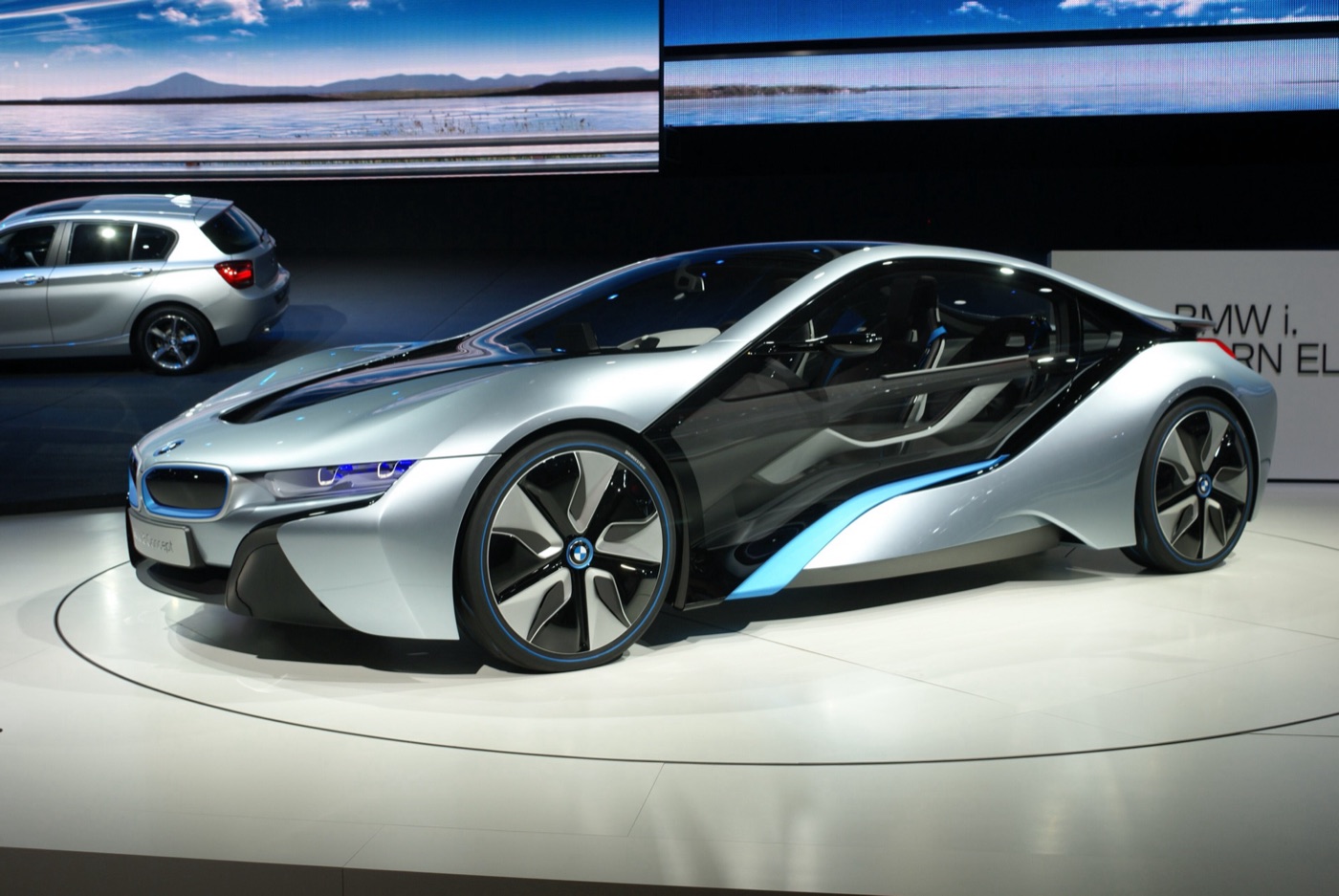
The 2013 reveal, as SkiddMark reported it
SkiddMark covered the run-up to the launch on 3 September 2013. A couple of photographs had leaked, and the day before BMW had released a 30-second teaser video. SkiddMark noted that the concept’s see-through doors were now solid and its mirrors and wheels ordinary production parts, while the silhouette and the “fins” steering air around the rear three-quarters stayed. Inside were BMW’s usual steering wheel, gear selector and most of the switchgear, with blue digital instruments and bare carbon fibre on the door sills.
The same report gave the engine as a 1.5-litre three-cylinder built at BMW’s Hams Hall plant near Birmingham, with 228 bhp and 236 lb ft at the rear wheels, and a 129 bhp electric motor adding 184 lb ft at the front, for 357 bhp and 420 lb ft combined. It expected the car in showrooms in early 2014 at about £100,000, with a 7.2 kWh battery and up to 20 miles of electric running.
BMW unveiled the car at Frankfurt on 10 September 2013 with those power and torque figures. Its other numbers differed: where SkiddMark quoted 0–60 mph in 4.6 seconds, 78 mpg and 99 g/km (the CO2 figure of the 2009 diesel concept), BMW’s US launch release gave 4.2 seconds to 60 mph and 59 g/km, and by the March 2014 type approval the official figures were 4.4 seconds to 62 mph, 134.5 mpg and 49 g/km.
Production at Leipzig
BMW said in March 2014 that series production of customer cars would start at Leipzig in April and deliveries in June, beginning with the main European markets; orders had been open since autumn 2013, and demand already exceeded the planned ramp-up volume. The carbon fibre came from Moses Lake in Washington state; it was made into laminates at Wackersdorf in Germany and pressed into parts at BMW’s Landshut and Leipzig plants, and the engines came only from Hams Hall. Four wind turbines on the Leipzig site supplied the plant’s electricity for i8 assembly.
Why was the BMW i8 discontinued?
BMW stopped making the i8 six years after its launch, at what it called the end of its product life cycle. When it announced the Ultimate Sophisto Edition in September 2019 as the last special edition, it said production would end “as scheduled” in April 2020. The line ran into June: BMWBLOG gives 11 June 2020 as the end of production, and the last 18 cars, all Roadsters, left the factory on 25 June with their owners watching. A year earlier BMW had shown the Vision M Next, a concept that it said “draws its inspiration from the iconic BMW Turbo and groundbreaking BMW i8”.
Design and engineering
The BMW i8 is built on what BMW calls LifeDrive architecture: a carbon-fibre-reinforced plastic (CFRP) passenger cell, the Life module, sits on an aluminium Drive module that carries the engine, motor, battery, suspension and crash structures.
BMW’s final 2014 figure for the weight was 1,485 kg (DIN kerb weight, without driver), with the battery mounted centrally and low and the axle loads close to 50:50. Autocar’s buying guide gives 1,560 kg, the weight first claimed, and puts that “about the same as a contemporary 911 and noticeably less than a Jaguar F-Type”. The doors have a CFRP inner structure and an aluminium outer skin.
What engine is in the BMW i8?
The petrol engine is a 1,499 cc three-cylinder with BMW’s TwinPower Turbo technology (a turbocharger, direct injection and Valvetronic variable valve lift), mounted crosswise behind the cabin, and the i8 was the first BMW production car to use a three-cylinder engine. It makes 170 kW (231 PS, 228 bhp) and 320 Nm (236 lb ft), which works out at 113 kW per litre, a record for a BMW production engine at the time, and drives the rear wheels through a six-speed automatic transmission. Autocar calls it a reworked version of the 1.5-litre triple in the Mini Cooper, with special internals.
The electric motor and battery
At the front, a hybrid synchronous motor that BMW developed and built itself gives 96 kW (131 PS, 129 bhp) and 250 Nm from standstill, through a two-speed automatic gearbox made by GKN Driveline. A high-voltage starter-generator on the petrol engine can also charge the battery on the move. BMW gave the liquid-cooled lithium-ion battery pack’s usable capacity as 5.2 kWh in 2014, and its gross capacity as 7.1 kWh when it announced the larger 11.6 kWh pack in 2017. Together the engine and motor give 266 kW (362 PS) and 570 Nm (420 lb ft), with four-wheel drive whenever both are working.
Doors, aerodynamics and laser lights
BMW’s 2020 retrospective calls its styling an “expressive yet aerodynamically optimised design” and describes the doors as “gull-wing-like doors that swing open to the front”; Autocar calls them butterfly doors and evo dihedral doors. The air is managed by an almost closed kidney grille, air curtains in the front apron, a covered underbody and ducts between the rear lights and the roof frame, which give a drag coefficient of 0.26 without a spoiler. The optional laser headlights, due in autumn 2014 according to BMW’s March 2014 release, made the i8 the first production car sold with them; BMW said they used about 30 per cent less energy than the standard LED units and lit the road up to 600 metres ahead.
Interior, equipment and driving modes
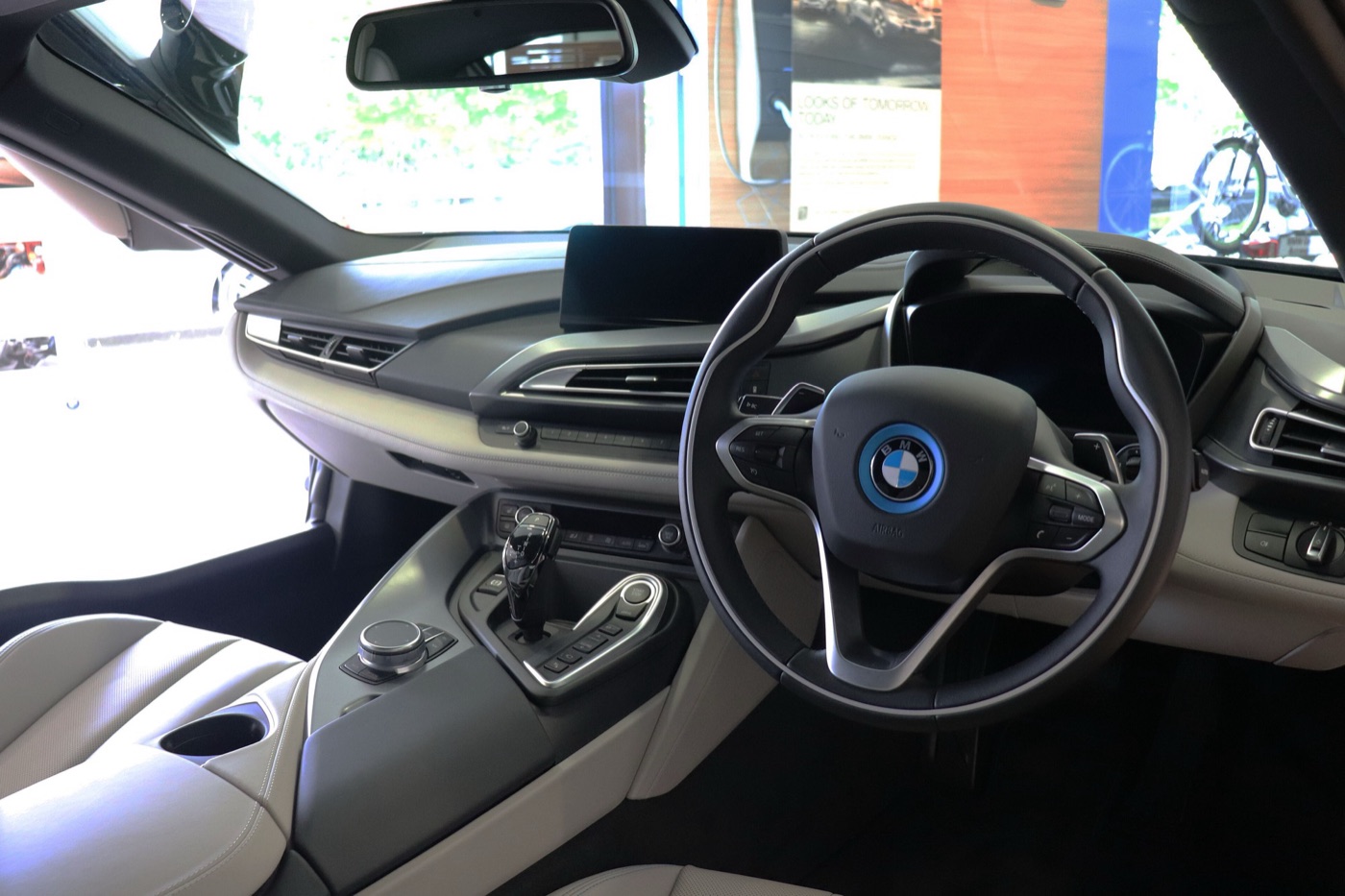
Inside, the BMW i8 has a layered dashboard with a free-standing 8.8-inch screen for the iDrive system, and the centre console carries the gear lever, the iDrive controller, the eDrive button and the Driving Experience Control switch. British cars came with Professional Navigation, cruise control with braking, front and rear parking sensors and a head-up display as standard, BMW UK’s 2014 press pack says. The standard Neso interior combined black surfaces with Carum Grey leather and cloth made from recycled material; Carpo and Halo interiors cost extra. The driver picks COMFORT, SPORT or ECO PRO with the switch, which BMW said let owners adapt “the driving experience to their individual preferences”, and the eDrive button selects pure-electric running (EV mode). In COMFORT mode BMW gave a range of more than 310 miles on a full tank and a full battery, and SPORT mode adds sequential manual gear changes and firmer settings for the drivetrain and suspension.
BMW i8 specs and performance
The BMW i8 coupé reaches 62 mph from rest in 4.4 seconds (the Roadster in 4.6), has an electronically limited top speed of 155 mph (250 km/h) and can run on electricity alone at up to 75 mph (120 km/h).
| Figure | Coupé, 2014–2018 | Coupé, 2018–2020 | Roadster, 2018–2020 |
|---|---|---|---|
| Petrol engine | 1,499 cc three-cylinder turbo, 170 kW (231 PS), 320 Nm | as 2014 | as 2014 |
| Electric motor | 96 kW (131 PS), 250 Nm | 105 kW (143 PS), 250 Nm | 105 kW (143 PS), 250 Nm |
| System output | 266 kW (362 PS) | 275 kW (374 PS) | 275 kW (374 PS) |
| Gearboxes | Six-speed automatic (rear), two-speed automatic (front) | as 2014 | as 2014 |
| Battery, gross | 7.1 kWh (5.2 kWh usable) | 11.6 kWh | 11.6 kWh |
| 0–62 mph | 4.4 sec | 4.4 sec | 4.6 sec |
| Top speed | 155 mph (250 km/h) | 155 mph (250 km/h) | 155 mph (250 km/h) |
| Electric range, NEDC | 37 km (23 miles) | 55 km (34 miles) | 53 km (33 miles) |
| Electric range, US EPA | 15 miles (2015 car) | 18 miles (2019 car) | – |
| Fuel consumption, NEDC | 2.1 l/100 km (134.5 mpg) | 1.8 l/100 km | 2.0 l/100 km |
| CO2 emissions, NEDC | 49 g/km | 42 g/km | 46 g/km |
| Kerb weight (DIN) | 1,485 kg | – | about 60 kg more than the coupé |
| Length, width, height | 4,689 / 1,942 / 1,298 mm | – | – |
| Wheelbase; fuel tank | 2,800 mm; 42 litres | – | – |
The 2018 figures are from BMW’s release on the Roadster and updated coupé; BMW gave the 2018 fuel and CO2 figures as NEDC equivalents calculated from the newer WLTP test.
How fast is the BMW i8?
BMW quoted 4.4 seconds from 0 to 62 mph for the coupé throughout its life, and 4.2 seconds to 60 mph in its US material. In Sport mode the 2014 car went from 50 to 75 mph in 2.6 seconds. Autocar’s guide calls the powertrain “willing and flexible” and says the car covers long distances “at effortlessly high speeds”.
How far can a BMW i8 go on electric power?
Officially 23 miles for the first cars and 34 miles (33 for the Roadster) after 2018, on the European NEDC test. The US Environmental Protection Agency rated the 2015 car at 15 miles and the 2019 coupé at 18. Evo’s Stuart Gallagher got up to 20 miles from a full charge in the coupé the magazine ran for eight months, and an owner told Autocar the range was “realistically only 18 miles”. BMW UK’s 2014 press pack gave 0 to 80 per cent charge in about two hours on the standard 3.7 kW AC charging and in under three hours from a three-pin socket.
Can you drive a BMW i8 without charging it?
Yes: the petrol engine drives the rear wheels on its own, and its starter-generator can top up the battery while driving, though fuel economy is then far from the official figure. The EPA rated the 2015 car at 28 US mpg (about 34 mpg in imperial gallons) on petrol alone, and evo’s long-term car averaged 39.9 mpg over 12,500 miles with regular charging. BMW’s own 2014 claims for everyday use, with a full battery at the start, were more than 56 mpg around town and more than 35 mpg on longer, faster journeys.
BMW i8 Roadster and the 2018 update
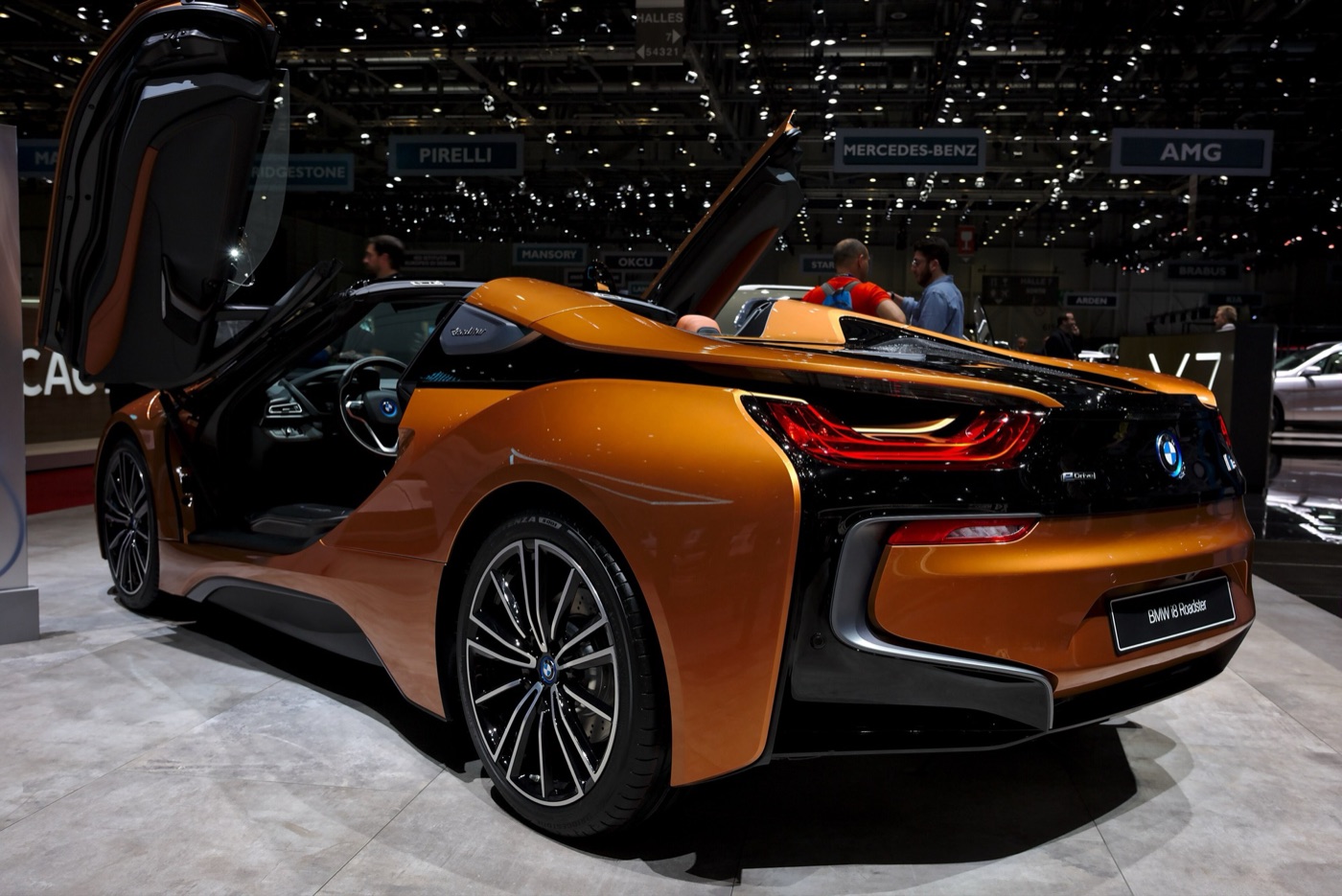
The Roadster, a two-seater with a powered fabric roof, made its debut at the Los Angeles Auto Show at the end of 2017 and went on sale in May 2018; the coupé was updated at the same time with the same bigger battery and stronger motor.
The roof opens or closes in 15 seconds at up to 50 km/h (31 mph) and stows upright behind the seats, which BMW said left about 100 litres of extra storage space. A CFRP windscreen frame and model-specific strengthening held the weight penalty over the coupé to about 60 kg. Both cars got battery cells of 34 Ah in place of 20 Ah, raising the battery pack’s gross capacity from 7.1 to 11.6 kWh, and the motor rose by 9 kW to 105 kW (143 PS), for a system output of 275 kW (374 PS). In normal hybrid driving the car could now run on electricity alone at up to 105 km/h (65 mph), against 70 km/h before; pressing the eDrive button still allowed up to 120 km/h (75 mph). The engine gained a particulate filter.
BMW i8 special editions
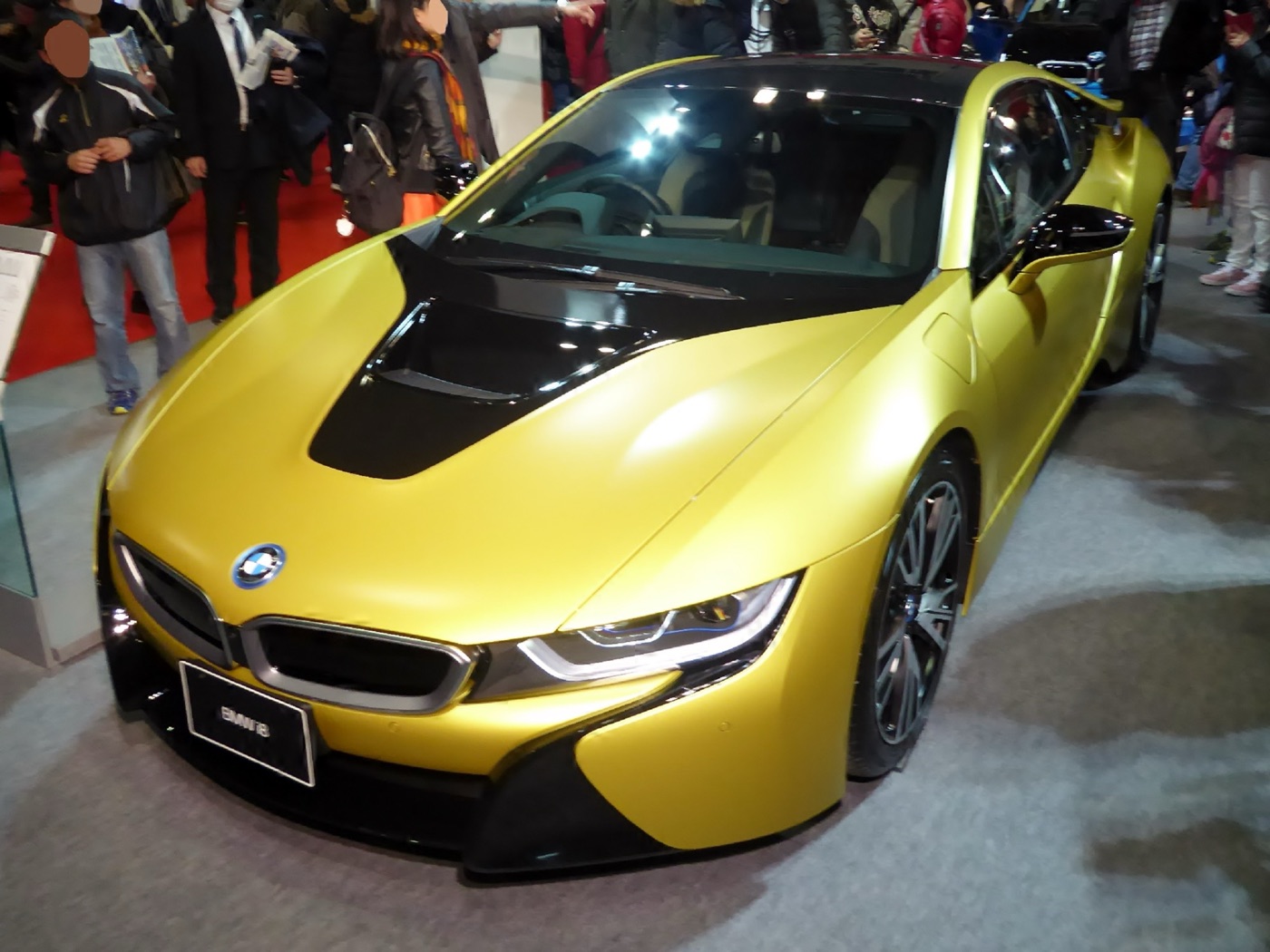
The first was the Protonic Red Edition, shown at Geneva in March 2016 and built from July that year: Protonic Red paint with Frozen Grey metallic accents, W-spoke 470 wheels in Orbit Grey and red double stitching inside. A Protonic Dark Silver Edition followed at the Paris show that autumn, built to order with no fixed number, Carscoops reported. In 2017 came the Protonic Frozen Black and Protonic Frozen Yellow editions, which BMW said would be “the most exclusive edition worldwide with around 100 units”.
The last was the Ultimate Sophisto Edition of 2019, 200 coupés and Roadsters in Sophisto Grey Brilliant Effect with E-Copper accents, black-and-copper 20-inch wheels and clear-glass rear lights; one of them, built in December 2019, was the 20,000th i8. The final 18 Roadsters were each painted in a colour never used on an i8 before, among them Austin Yellow, British Racing Green and Le Mans Blue, and their body panels were painted almost by hand by suppliers and at BMW’s Landshut plant.
The BMW i8 in Formula E
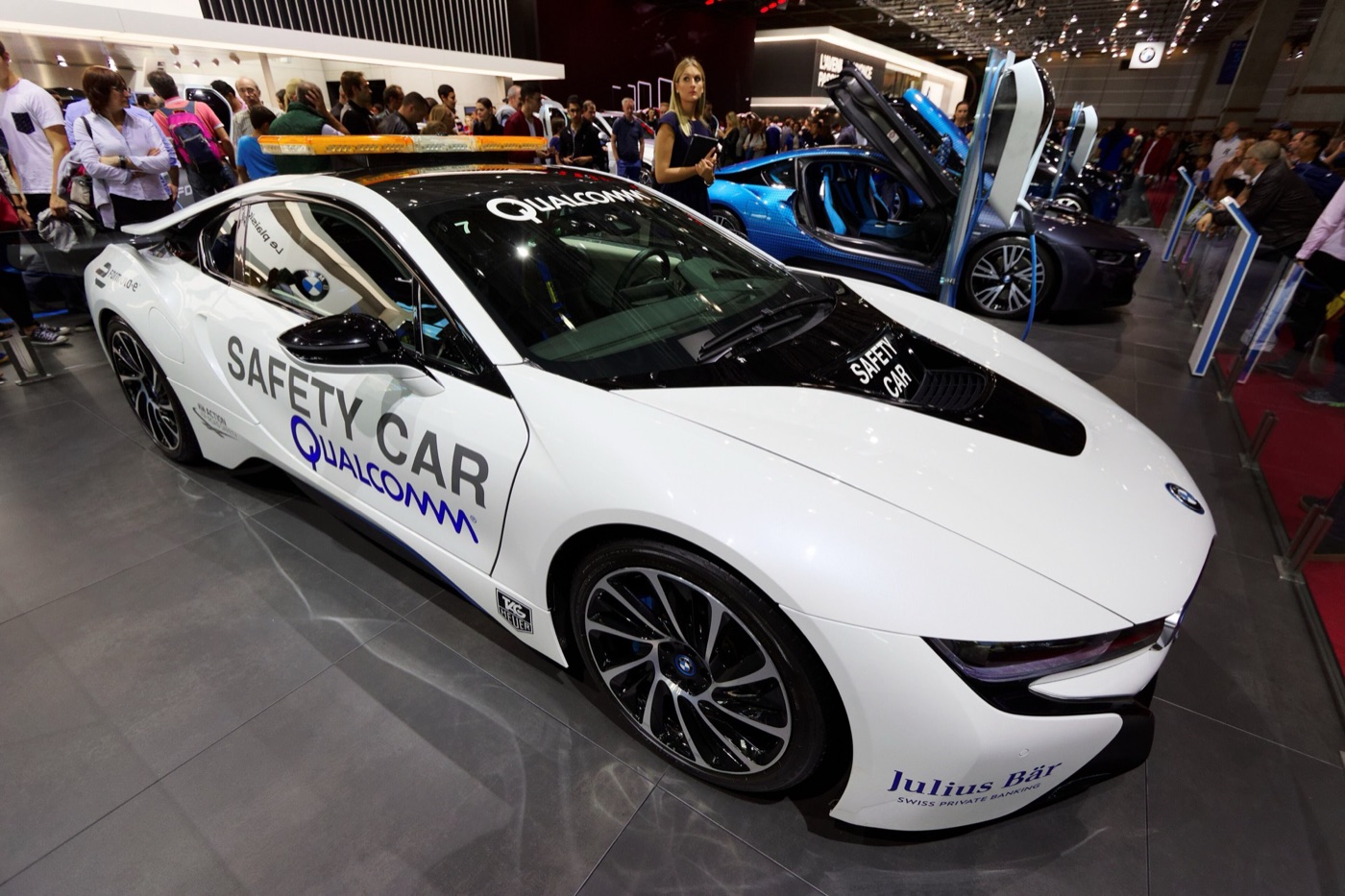
The BMW i8 was the safety car of the FIA Formula E Championship from the series’ first race, in Beijing on 13 September 2014, when BMW became its Official Vehicle Partner and also supplied two electric i3s as the medical car and the extraction car.
Run as the Qualcomm Safety Car, the first i8 was replaced by a second-generation i8 Coupé safety car that made its debut in Santiago, Chile, on 1 February 2018, two days before the season’s fourth race. Its driver said the new seats and roll bar made it a little lighter than the old car, and that both the performance and the battery had been increased.
How many BMW i8 were made?
BMW built 20,465 examples of the BMW i8 at Leipzig: 16,581 coupés from 2014 and 3,884 Roadsters from 2018, according to BMWBLOG’s final count of 29 June 2020.
| Model | Years built | Number |
|---|---|---|
| i8 Coupé | 2014–2020 | 16,581 |
| i8 Roadster | 2018–2020 | 3,884 |
| All i8s | 2014–2020 | 20,465 |
| Of which Ultimate Sophisto Edition, coupé and Roadster | 2019–2020 | 200 |
| Of which final customer-specified Roadsters | 2020 | 18 |
BMW’s own statements fit those totals. In February 2016 it said 5,456 i8s had been sold in 2015, more than the hybrid sports cars of all other manufacturers put together, and in March 2020 that more than 20,000 had been sold since 2014. Its retrospective set that against the BMW M1, built 399 times for the road, and the Z8, built about 5,000 times.
How many BMW i8s are left in the UK?
At the end of June 2026 there were 2,272 cars registered as a BMW i8 in the UK: 2,036 licensed and 236 under a Statutory Off Road Notification (SORN), according to the Department for Transport’s vehicle licensing table VEH0120. That is about one in nine of all the i8s built.
| End of | Licensed | SORN | Total |
|---|---|---|---|
| 2014 | 279 | 0 | 279 |
| 2015 | 1,022 | 35 | 1,057 |
| 2016 | 1,549 | 74 | 1,623 |
| 2017 | 1,763 | 66 | 1,829 |
| 2018 | 2,060 | 130 | 2,190 |
| 2019 | 2,292 | 153 | 2,445 |
| 2020 | 2,241 | 177 | 2,418 |
| 2021 | 2,179 | 180 | 2,359 |
| 2022 | 2,145 | 187 | 2,332 |
| 2023 | 2,122 | 210 | 2,332 |
| 2024 | 2,076 | 218 | 2,294 |
| 2025 | 2,033 | 249 | 2,282 |
| June 2026 | 2,036 | 236 | 2,272 |
The register peaked at 2,445 cars at the end of 2019, the last full year of production; by mid-2026 it was 173 lower, while the share kept off the road had grown from 6 to 10 per cent. The DfT lists four of the special editions under their own names. At the end of June 2026 it counted 32 Protonic Red Editions, 28 Protonic Frozen Black, 10 Protonic Frozen Yellow and 7 Protonic Dark Silver, licensed and SORN together.
BMW i8 price: new and used
New, the BMW i8 cost £99,845 in Britain in 2014, or £94,845 after the £5,000 Plug-in Car Grant; evo’s September 2026 buying guide puts early, high-mileage coupés at £20,000 to £25,000, later low-mileage coupés above £40,000 and Roadsters at £45,000 to £70,000.
UK prices when new
The BMW i8 went on sale in Britain on 19 July 2014, priced from £94,845 on the road after the grant, in BMW UK’s launch press pack. BMW expected to sell about 750 in the first full year, and 47 BMW dealers were appointed BMW i agents, though any BMW dealer could service the car. By February 2015 BMW UK said 450 had been registered, Britain was the biggest i8 market in Europe and the waiting list was nine months. After the 2018 update the coupé cost about £112,000 and the new Roadster about £124,000, Driving Electric reported, and evo lists £127,105 as the price in 2020. In the US, BMW priced the i8 from $135,700 plus destination at its 2013 launch.
What is a BMW i8 worth today?
Evo’s guide of 9 September 2026 says every i8 had lost £5,000 to £10,000 over the previous couple of years, and that a car left unused, with a battery that has not been cycled, can be a worse buy than a well-used one. The fall shows against Autocar’s guide of May 2023, which found that £30,000 to £39,999 bought mostly 2014–16 coupés and that most Roadsters cost £60,000 or more. Evo says Roadsters command a premium because they are rarer: 3,884 were built, against 16,581 coupés.
Owning a BMW i8
Used-car guides rate the BMW i8’s reliability as good, with few serious mechanical failures; the faults they list are mostly sensors, door struts, electrical warnings and software.
Is the BMW i8 reliable?
Autocar’s 2023 guide calls the engine reliable and the six-speed gearbox sturdy, with “one or two” owners reporting engine failure. It lists fuel pressure sensors prone to failure, low-coolant warnings with the coolant at the right level (a sensor fault), some reports of overheating and of central-controller problems, door struts that fail and are expensive to fix, fuel-filler flaps that stick shut and software faults, and it tells buyers to check the service and MOT history. Evo adds air-conditioning compressors, door locks and cracked windscreens; its own car needed a £1,500 windscreen. On the battery, evo says a car that has been looked after and kept plugged in when idle “ought to be fine”, and advises a check of the battery and the car’s fault history, and that the charging cable is present and works.
Autocar counts five recalls: a possible fuel leak on cars built in 2014, a sensor fault on 2015 cars that could affect stability, an airbag fault on late-2016 cars, a printed circuit board replaced in 2019 and impurities in the high-voltage batteries in 2020. Evo tells buyers to make sure every recall has been done.
Servicing and running costs
The BMW i8 is due a service every two years or 18,000 miles; Driving Electric put minor and major services at about £375 and over £1,000 in 2019. Cars were sold with a five-year maintenance package until early 2018; it was then cut to three years and later dropped. Consumables are cheap for the class: Autocar says front brake pads cost no more than a 3 Series’, and evo points to the modest brakes and narrow tyres. Evo also suggests a specialist, since BMW dealer work is expensive and i8 knowledge is thin.
BMW i8 road tax
Vehicle excise duty depends on when the car was first registered. An i8 registered before 1 April 2017 is in band A (up to 100 g/km), which costs £20 a year at the GOV.UK rates in force in October 2026. One registered from 1 April 2017 pays the standard £200 a year plus the £440 supplement for cars with a list price over £40,000, which runs for five years from the second time the car is taxed, so for an i8 first registered in 2020 it ends during 2026.
Seats, boot space and practicality
Practicality is limited: the coupé has two small rear seats and the Roadster none. Evo’s Stuart Gallagher found the luggage space “next to hopeless; a Lotus Elise has more”, and the high, wide sills made entry and exit awkward. In 2014 Louis Vuitton made a set of four carbon-fibre bags for the car, shaped to fit the boot, the rear shelf and the rear seats.
BMW i8 rivals
Evo says the BMW i8 was hard to place in any segment throughout its life; the cars it was set against were the Porsche 911, the Honda NSX and, by Autocar, the Audi R8.
Evo’s closest match was the 991-generation Porsche 911 Carrera 4 GTS, which also cost just over £100,000 and had 430 bhp from a naturally aspirated flat six; evo found it better to drive “in the traditional sense”. The Honda NSX, the other hybrid supercar of the time, cost £30,000 more and was, in evo’s view, a class above in performance. Autocar told readers who wanted a rival for a 911 or an Audi R8 that they were “likely to come away disappointed”, and called the i8 a grand tourer with light, accurate steering and a well-damped chassis.
For buyers who wanted electric running, Driving Electric suggested a Tesla Model S in 2019: very fast in a straight line, with similar running costs, but “nowhere near as exciting to look at or as good to drive”.
BMW i8 reviews and awards
The BMW i8 was Top Gear magazine’s Car of the Year for 2014, UK Car of the Year for 2015 and, at the New York show in April 2015, World Green Car; reviewers praised its engineering, efficiency and finish, and criticised its steering feel and its engine’s character.
Autocar’s road test of 17 September 2014 called it “one of the most compelling cars we’ve tested in years”, for its powertrain, its “unusual but appealing dynamics” and how “exquisitely finished” it was. Evo, after eight months with one, judged the 228 bhp engine “the weakest link”, complained of a lack of steering feel and a rough low-speed ride, and still came away “hugely impressed by its capabilities”. On handling, evo found that the eco-friendly Bridgestone tyres ran out of front-end grip in corners well before the rear let go. The UK Car of the Year jury of 27 motoring journalists named the i8 its performance car and then its overall winner; judge Craig Thomas said it “makes few compromises in the driving department”.
BMW’s 2020 retrospective lists further titles: at least one Engine of the Year award in each year from 2015 to 2019, Auto Zeitung’s Auto Trophy and Green Mobility Trophy, auto motor und sport’s Paul Pietsch Award, and the iF Design and red dot awards. Readers of the German magazine Auto Bild Klassik named it a “classic of the future” in 2014, months after the first cars were delivered.
Questions
Who designed the BMW i8?
The BMW i8 came from BMW i’s design studio, led from 2010 by the Frenchman Benoit Jacob. Its shape goes back to the Vision EfficientDynamics concept that BMW showed at Frankfurt in 2009.
Is the BMW i8 a supercar?
BMW UK’s 2014 press pack called it “the future of the supercar”, and it does 0–62 mph in 4.4 seconds. Evo and Autocar judged it closer to a fast grand tourer than to a Porsche 911 or Audi R8.
Does the BMW i8 have four seats?
The coupé is a 2+2 with two small rear seats, suitable for children. The Roadster of 2018 is a two-seater, with storage space where the rear seats would be.
Where was the BMW i8 made?
BMW assembled every i8 at its plant in Leipzig, Germany. The three-cylinder engines came from BMW’s Hams Hall plant near Birmingham, and the carbon fibre from Moses Lake in Washington state.
What mpg does a BMW i8 really do?
The official figure for the 2014 car was 134.5 mpg, but that assumes regular charging on a short test. Evo’s long-term coupé averaged 39.9 mpg over 12,500 miles.
Was the BMW i8 in Mission: Impossible?
Its forerunner was. BMW supplied the Vision EfficientDynamics concept for Mission: Impossible – Ghost Protocol (2011), saying at the time that the i8 had been inspired by it.
How much did the BMW i8 cost new in America?
BMW priced the 2014 i8 from $135,700 plus destination and handling when it announced the car in September 2013.
Sources
- BMW Group, “A vision becomes reality: BMW announces serial production of sports car with plug-in hybrid technology”, press release, 5 November 2010: Vision EfficientDynamics figures and the production announcement.
- BMW Group, “BMW is back in Hollywood with Mission: Impossible – Ghost Protocol”, press release, 30 June 2011: the concept’s film role and the quote on the i8.
- BMW Group, “BMW at the 64th International Frankfurt Motor Show (IAA 2011)”, press kit, 2 September 2011: the i3 and i8 Concept premieres.
- BMW Group, “Anything but ordinary: a portrait of Benoit Jacob”, press release, 1 March 2012: Jacob as head of BMW i design since 2010.
- BMW of North America, “The BMW i8: ushering in a new era of sustainable performance, priced from $135,700 in the US”, press release, 10 September 2013: the Frankfurt reveal, US price, LifeDrive, carbon-fibre supply chain, provisional figures.
- BMW Group, “BMW i8 deliveries to customers starting in June”, press release, 10 March 2014: production and delivery dates, final 2014 performance, consumption, weight and range, laser lights.
- BMW Group UK, “UK power behind revolutionary new BMW i8 plug-in hybrid sports car”, press kit, 17 July 2014: the engine’s Hams Hall production.
- BMW Group UK, “The new BMW i8: the future of the supercar”, press pack, July 2014: UK price, grant, launch date, dimensions, charging, i agents, Louis Vuitton luggage, fuel tank.
- BMW Group, “BMW is ‘Official Vehicle Partner’ of the FIA Formula E Championship”, press release, 12 September 2014: the Formula E safety car.
- BMW Group UK, “The BMW i8 crowned UK Car of the Year”, press release, 27 February 2015: UK Car of the Year, UK registrations and waiting list.
- BMW Group, “Comfortably exceeding expectations: BMW i8 is the world’s highest-selling hybrid sports car”, press release, February 2016: Protonic Red Edition, 2015 sales.
- Carscoops, “BMW i8 goes dark with new Protonic Silver Edition”, September 2016: Protonic Dark Silver Edition.
- BMW Group, “The new BMW i8 Roadster, the new BMW i8 Coupe”, press release, 29 November 2017: Roadster and 2018 update figures.
- BMW Group, “Debut for the next-generation Qualcomm Safety Car BMW i8 Coupé in Chile”, press release, 2 February 2018: second Formula E safety car.
- BMW Group, “The BMW Vision M NEXT”, press release, 25 June 2019: the concept’s link to the i8.
- BMW Group, “Rare, electrifying and leading the way on the finishing straight”, press release, 2 September 2019: Ultimate Sophisto Edition, planned end of production.
- BMW Group, “The BMW i8: from vision to icon, from bestseller to classic of the future”, press kit, 12 March 2020: design, laser lights, 2018 output, editions, 20,000th car, sales, awards.
- BMW Group, “Final 18 BMW i8 cars leave Plant Leipzig”, press release, 25 June 2020: the last 18 Roadsters.
- BMWBLOG, “BMW i8: final sales numbers of the hybrid coupe and roadster”, 29 June 2020: production totals by body and end date.
- US EPA and Department of Energy, fueleconomy.gov, 2015 BMW i8: EPA electric range and petrol-only economy.
- US EPA and Department of Energy, fueleconomy.gov, 2019 BMW i8 Coupe: EPA electric range after the update.
- Department for Transport, vehicle licensing statistics, table VEH0120 (UK), updated 18 September 2026: i8s licensed and on SORN, 2014–2026.
- GOV.UK, “Vehicle tax rates”, read 27 October 2026: road tax for cars registered from April 2017 and the expensive car supplement.
- GOV.UK, “Vehicle tax rates: cars registered between 1 March 2001 and 31 March 2017”, read 27 October 2026: road tax for earlier cars.
- BMWBLOG, “BMW i8 wins Top Gear Car of the Year”, 5 December 2014: Top Gear magazine’s 2014 award.
- BMWBLOG, “BMW i8 wins the 2015 World Green Car Award”, 2 April 2015: the World Green Car award at the New York show.
- Autocar, “Used car buying guide: BMW i8”, 22 May 2023: faults, recalls, weight, 2014 road test verdict, 2023 prices, rivals.
- Driving Electric, “Used BMW i8 buying guide”, 8 October 2019: 2018 UK prices, servicing costs and maintenance packages.
- evo, “BMW i8 (2014–2020) review: futuristic hybrid sports car now looks a bargain”, 9 September 2026: used values, faults, rivals and Stuart Gallagher’s 12,500-mile test.
- SkiddMark, “BMW i8 revealed in first official photos”, 3 September 2013: the pre-launch report summarised above.
This article was written in October 2026 to replace SkiddMark’s original report of 3 September 2013, with every figure checked against BMW’s own releases and the other sources listed.