BMW M Division: history, cars, bosses and sales of BMW M GmbH
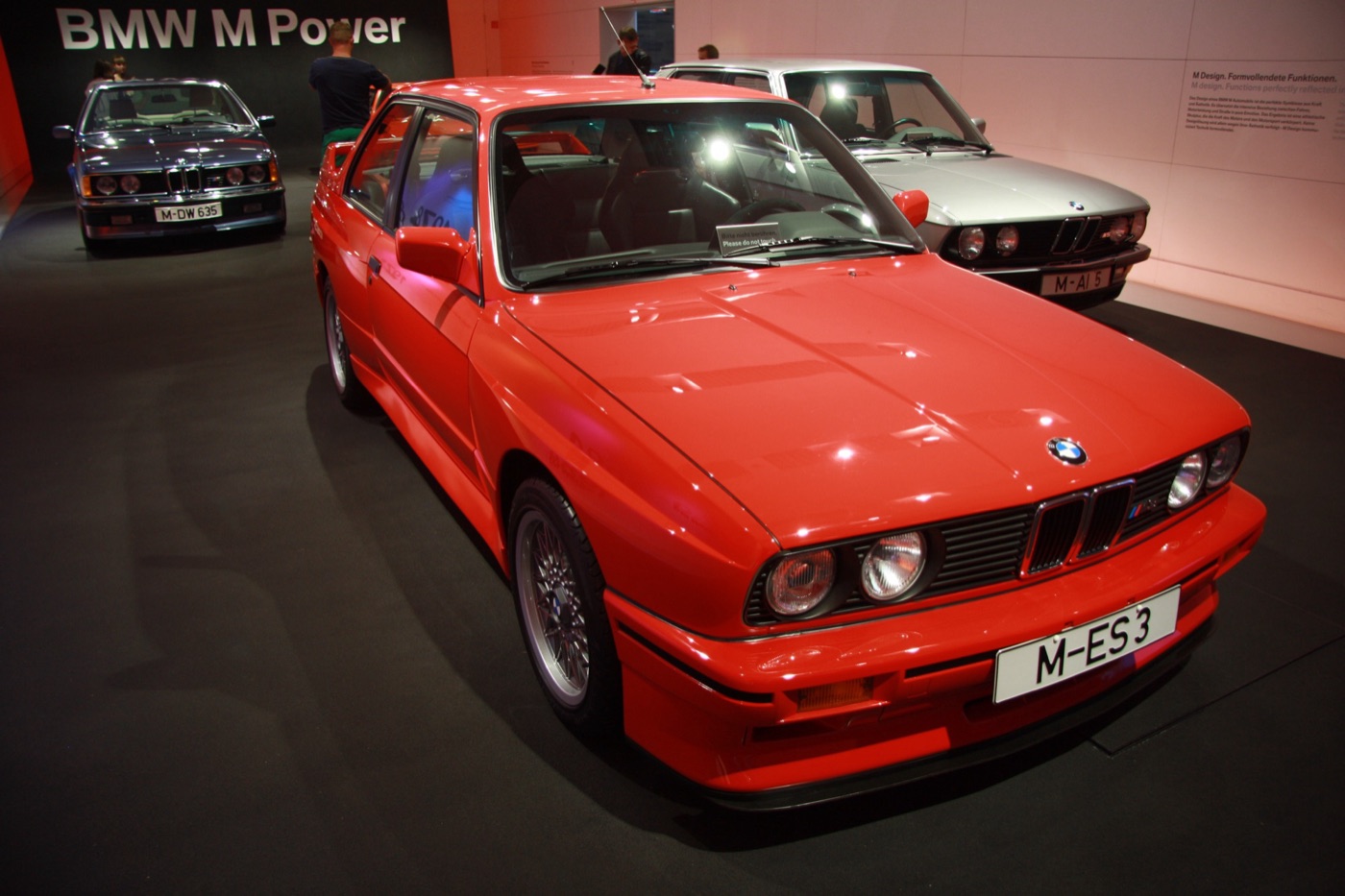
The BMW M Division is BMW M GmbH, the Munich subsidiary of BMW that develops and builds BMW's M cars, from the M2 and M3 to the M5 and XM. It began on 1 May 1972 as BMW Motorsport GmbH, with 35 staff and a brief to run BMW's racing, and took its present name on 1 August 1993. In 2025 it delivered 213,457 cars, nearly one BMW in ten, and on 2 October 2026 it built its one-millionth M car, an M3 in Fire Orange III.
Its history runs from the 3.0 CSL "Batmobile" and the M1 to the first M3 and M5, and on to an electric M3 that BMW will build in Munich; its best-selling car from 2022 to 2024, the i4 M50, was already electric. Franciscus van Meel has run the company since November 2021.
What does the M in BMW M stand for?
The M stands for Motorsport. The company was set up in 1972 as BMW Motorsport GmbH to run all of BMW's racing, and its first cars were racing cars. By the early 1990s it also ran BMW Individual, which builds cars to customers' own colour and trim choices, and BMW Driver Training. According to BMW's 40th-anniversary history of 2012, a customer ordering an Individual car or booking a training course "did not find what he was looking for under the existing name", so the company took the single letter, called inside BMW "the most powerful letter in the world". It has been BMW M GmbH since 1 August 1993.
It is often called the M division, but it is a separate company, and BMW's own releases say BMW M GmbH and call its racing arm BMW M Motorsport.
How BMW Motorsport GmbH began
BMW Motorsport GmbH was formed in 1972 because BMW's small sports department could not meet the demand for racing BMWs. The 1800 TI, 2000 TI and the 02 Series were winning everywhere, but most of the cars were prepared, run and sold by tuning firms, and BMW supplied only a fraction of them. Robert A. Lutz, BMW's board member for sales, christened the new company with a line BMW still quotes: "A company is like a human being. As long as it goes in for sports, it is fit, well-trained, full of enthusiasm and performance."
BMW gives two founding dates. Its 2012 history says the company "took over on 1 May 1972"; its BMW Museum release of May 2022 dates the founding to 24 May 1972, and BMW opened its 50th-anniversary exhibition on 24 May 2022 to match.
Jochen Neerpasch and the first team
The first managing director was Jochen Neerpasch, a former Porsche works driver who had been Ford's racing manager in Cologne. He started with 35 employees and signed the drivers Chris Amon, Toine Hezemans, Hans-Joachim Stuck and Dieter Quester, with Björn Waldegaard and Achim Warmbold for rallies. Within months the company moved into its own building on a site of more than 8,000 square metres in Preussenstrasse, next to BMW's Munich plant, with a racing workshop, an engine shop, toolmaking and an engine test bed. Before the 1973 season Neerpasch took the whole driver squad to St. Moritz to work with a sports instructor and a sports psychologist.
BMW Driver Training
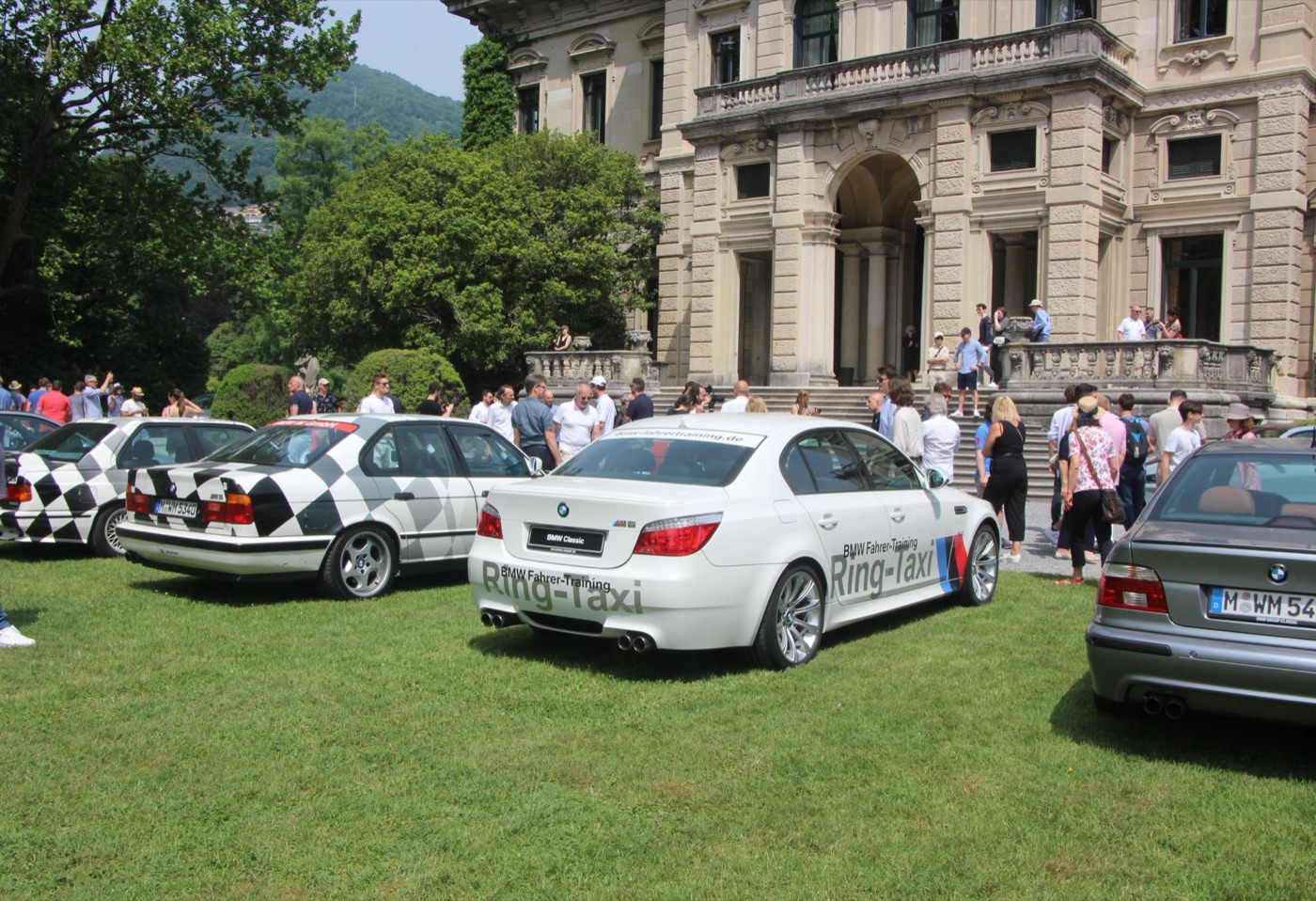
On 3 February 1976 BMW's board gave the company a second job: to turn BMW's "driver's school" into a professional operation. The first brief was 15 courses a year for 20 people each at BMW's test grounds, plus five courses on race tracks for 100 people each, 800 participants a year. Every pupil drove one of the company's own BMW 320is, with 125 hp, stiffer suspension, a 40 per cent limited-slip differential and a bucket seat. After trial courses at the Manching military airfield near Ingolstadt, the rally driver Rauno Aaltonen signed as chief instructor on 13 January 1977, and the courses have been called BMW Driver Training since that year.
From racing team to car maker
In 1983 BMW turned Motorsport GmbH into a development company for performance cars, raised its staff to 380 and gave it its own development centres for engines and suspension. In 1986 the work on the first M3 outgrew Preussenstrasse and the company moved to Garching, on the northern edge of Munich. It set up BMW Individual in 1992. In late 1995 BMW founded BMW Motorsport Ltd in the United Kingdom to take over all of its racing, and from then on M GmbH concentrated on M cars, BMW Individual and Driver Training.
The racing came back. The Race reported on 15 March 2021 that BMW Motorsport GmbH would be merged into the M company from the following month, with Mike Krack as head of racing reporting to the M chief executive, Markus Flasch. BMW's own release of October 2021 says the company's work "as a car manufacturer and in motorsport was recently again more closely interlinked", and it describes BMW M GmbH as having "the status of an independent automobile manufacturer".
What was the first BMW M car?
BMW calls the M1 of 1978 "the first car with the famous letter 'M'", but Motorsport GmbH had been engineering faster road BMWs since 1974, and its first touring car, the 3.0 CSL racer of 1973, was built on a production coupe.
The hot 5 Series of 1974
Until the late 1970s the company built almost nothing but racing cars, yet customers wanted the same performance on the road. From 1974 it engineered the first "hot" 5 Series, the 530, 533i and 535i, with more power than the standard cars and its own work on the suspension and brakes. They were built in small numbers; by 1980, 895 had been sold. In 1980 came the M535i, a 5 Series with the 218 hp six-cylinder of the 635CSi.
The M1
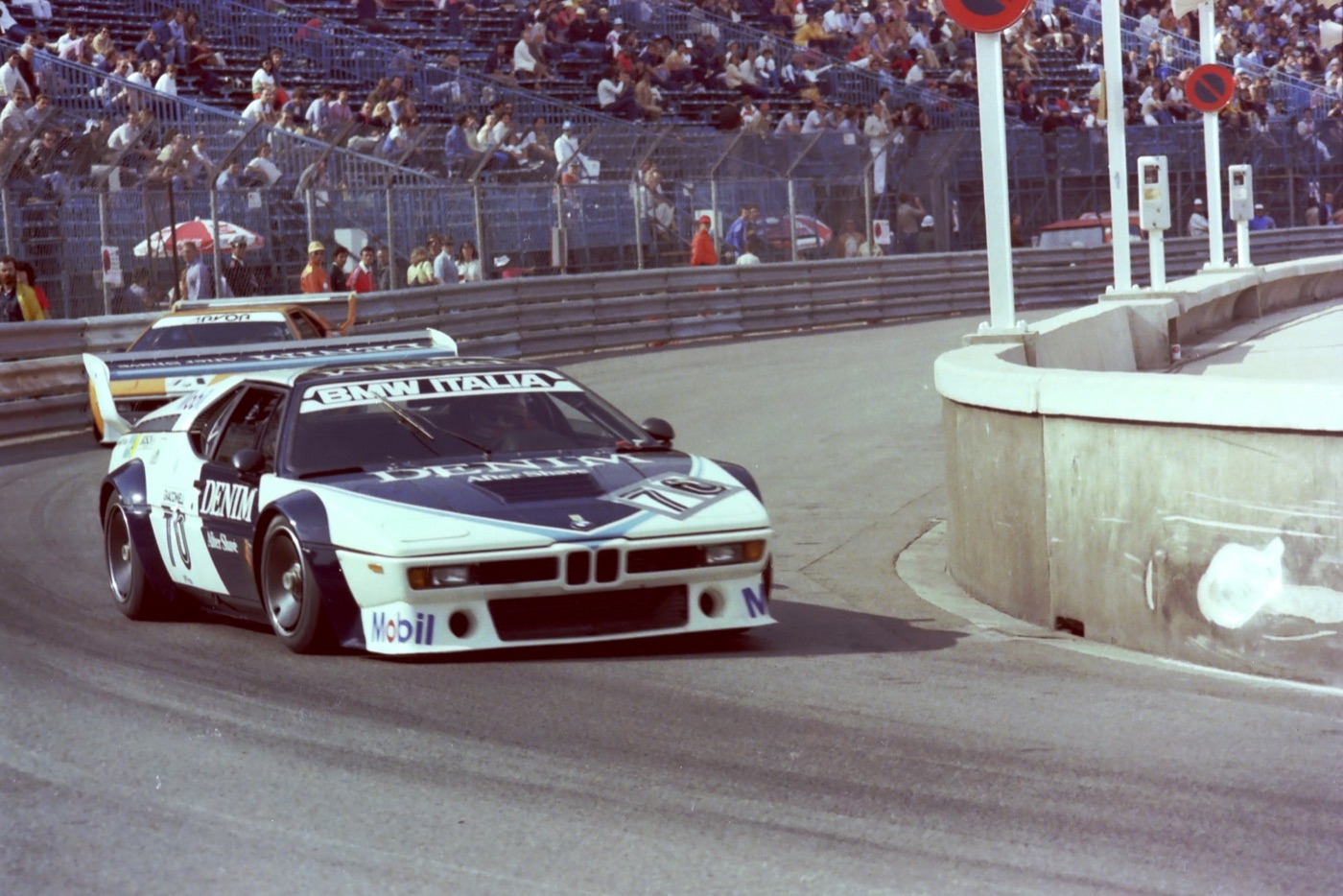
The M1 was Motorsport GmbH's first competition car not based on a production model. In 1976 Neerpasch and his chief design engineer, Martin Braungart, "hatched a scheme to build a limited-edition supercar that would handily double as a competition tool", as Richard Heseltine put it in Motor Sport in March 2008. Group 4 racing needed 400 road cars. BMW supplied the mechanical parts and Lamborghini was to make the body and chassis, but Lamborghini's money troubles held the project up, and BMW set up a new chain instead: Marchesi in Modena made the space frame, T.I.R., also in Modena, the glass-fibre body, Ital Design joined them and fitted the interior, and Baur in Stuttgart put in the mechanical parts.
The M1 was shown at the 1978 Paris Motor Show, where, Heseltine wrote, "the reception bordered on euphoric". The road car was 1.14 metres tall, had 277 hp and cost exactly DM 100,000 in 1978. A year after production began, 130 cars had been built and more than 300 firm orders were waiting; in a 1979 magazine test it reached 264.7 km/h (164.1 mph). Neerpasch also set up the Procar series with Bernie Ecclestone and Max Mosley, a one-make championship of 470 hp M1s run before most European Grands Prix in 1979 and 1980. Niki Lauda won three of the eight Procar races in 1979. Neerpasch left in 1980, and Heseltine's verdict was blunt: "The M1 represented an expensive flirtation with hubris and there were casualties, Neerpasch being among them." Production data compiled by MDataWorks, published by BMWBlog on 5 October 2026, counts 453 M1s.
BMW M road cars from the M2 to the XM
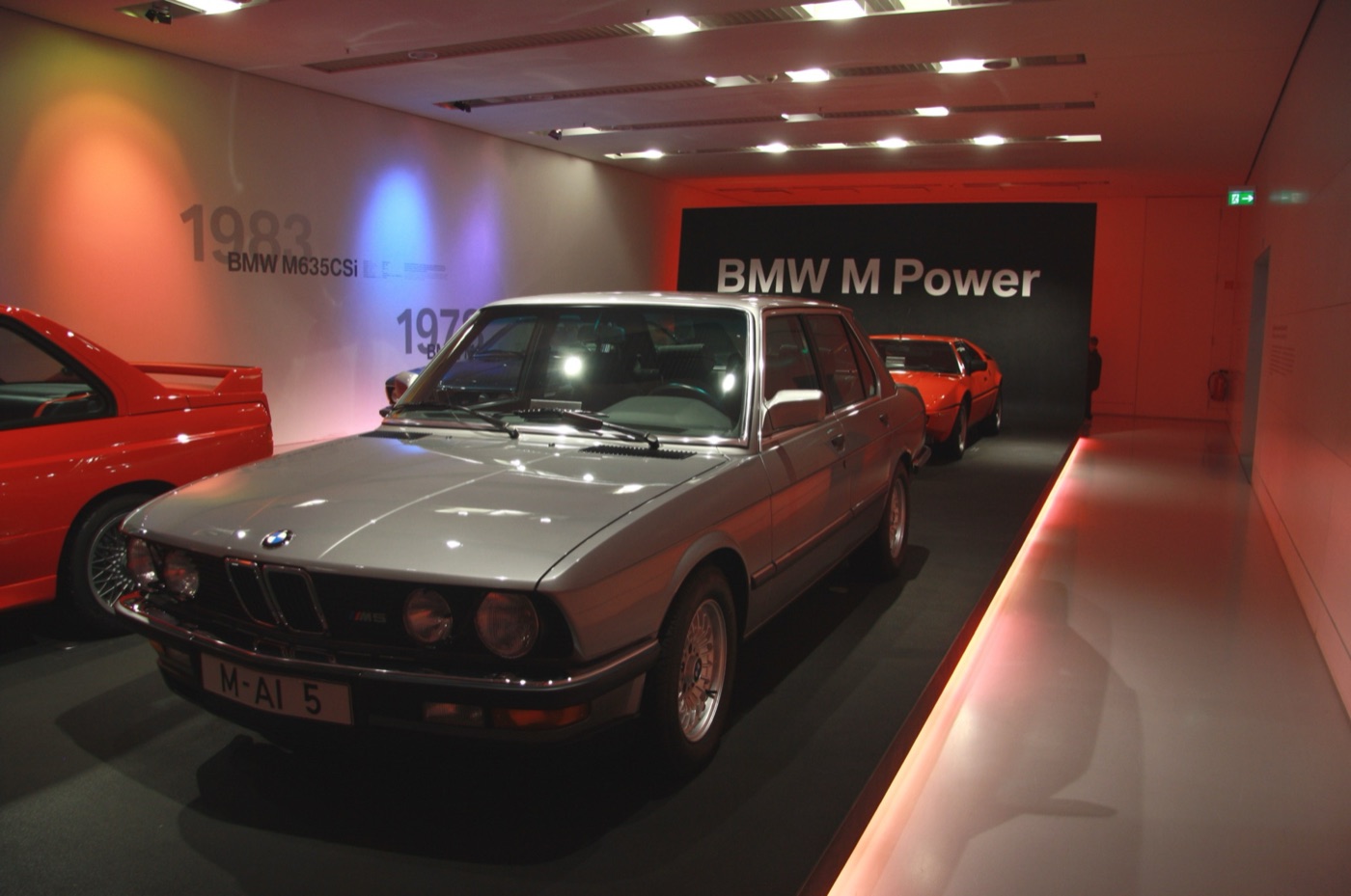
After the M1, M GmbH built its road cars on BMW's production saloons and coupes, and the two lines that have run longest are the M3 and the M5. In 1984 the M1's four-valve straight six went into the M635CSi coupe and the first M5, a 5 Series built by hand in Preussenstrasse with 286 hp, almost three times the power of a 518i, and a top speed of 245 km/h. BMW says it gave rise to the term "Executive Express".
The M3
The E30 M3 of 1986 was BMW's first car developed for the road and for racing at the same time. Group A touring car rules needed 5,000 road cars within a year, and BMW sold more than 17,970 of the first M3, among them 600 Sport Evolution models with 2.5 litres and 765 convertibles built by hand. Its successor, the E36 M3, took a six-cylinder engine in 1992, with BMW's first VANOS variable valve timing, was planned from the start as a coupe, a convertible and a saloon, and was named "Car of the Century" by France's Auto Plus and "Car of the Year" by the American magazine Automobile, the first import to win it. With the E36 M3 BMW M also became the first car maker to offer a Sequential M Gearbox (SMG), a manual transmission with an electro-hydraulic clutch; by the end of production almost every other E36 M3 had one.
The 2003 M3 CSL, with a carbon-fibre roof and 360 hp, lapped the Nordschleife in 7 minutes 50 seconds, and all 1,383 were sold within a few months. In 2007 the M3 took a V8, and in 2014 the M3 saloon and a new M4 coupe took a turbocharged six, covered in our page on the M4 F82 and M3 F80. Two special M3s of this era have pages of their own: the M3 GTS and, below the M3, the 1 Series M Coupé.
The M2
By MDataWorks' count at mid-September 2026, the first M2, the F87, was the most-built single M model, 282 cars ahead of the G80 M3 saloon: 62,146 between November 2014 and June 2021, and both generations together came to 117,173 by mid-September 2026, an estimate for the car still in production. The current M2 Coupé has a 353 kW (480 hp) straight six with M TwinPower Turbo, its sales rose 64 per cent in 2024, and in 2025 it was BMW M's best-selling high-performance car. It is still sold with a manual gearbox, and the track-focused M2 CS, with 390 kW (530 hp), lapped the Nürburgring in 7 minutes 25.5 seconds.
The M5
The M5 moved to a V8 in 1998, a 5.0-litre V10 of 507 hp in 2004 and a turbocharged V8 in 2011. The sixth generation of 2017 had an eight-speed M Steptronic transmission and was the first M5 to drive all four wheels, through an M xDrive system that, in BMW's words, let drivers "switch between 2WD to 4WD", and the seventh, launched in 2024, is a plug-in hybrid with 727 hp.
| Model | Launched | Engine | Power |
|---|---|---|---|
| M3 (E30) | 1986 | Four-cylinder, 16 valves | 195 hp |
| M3 (E36) | 1992 | 3.0-litre six; 3.2 litres from 1995 | 286 hp; 321 hp |
| M3 (E46) | 2000 | Straight six | 343 hp |
| M3 (E90/E92/E93) | 2007 | 3,999 cc V8 | 420 hp |
| M3 (F80) and M4 (F82) | 2014 | Straight six, M TwinPower Turbo | 431 hp |
| M3 (G80) | 2020 | Entry model with six-speed manual (2025) | 480 hp |
| M5 (E28) | 1984 | M1's four-valve straight six | 286 hp |
| M5 (E34) | 1988 | 3.6-litre six; 3.8 litres later | 315 hp; 340 hp |
| M5 (E39) | 1998 | V8 | About 400 hp |
| M5 (E60) | 2004 | 5.0-litre V10 | 507 hp |
| M5 (F10) | 2011 | Turbocharged V8 | 560 hp |
| M5 (F90) | 2017 | 4.4-litre twin-turbo V8, all-wheel drive | 600 hp |
| M5 (G90) | 2024 | V8 with M TwinPower Turbo, plug-in hybrid, all-wheel drive | 727 hp |
Sources: BMW's 2012 history (E30 to F10), BMW's M3 and M4 press kit of December 2013 (F80), BMW USA's M5 release of 29 November 2017 (F90), BMW's sales releases of January 2026 (G80 entry model, G90) and October 2026 (G80 production start in Munich).
Roadsters, SUVs and the XM
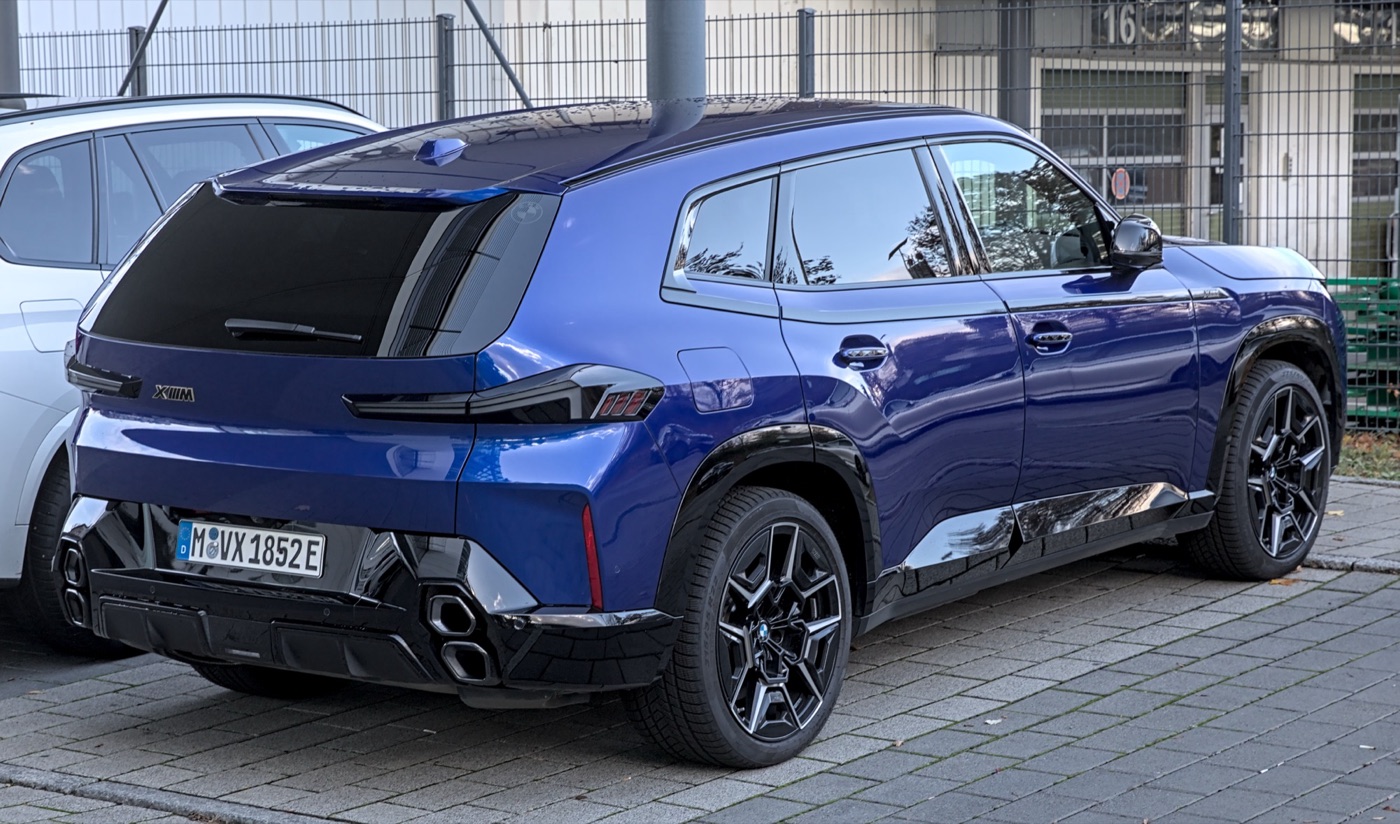
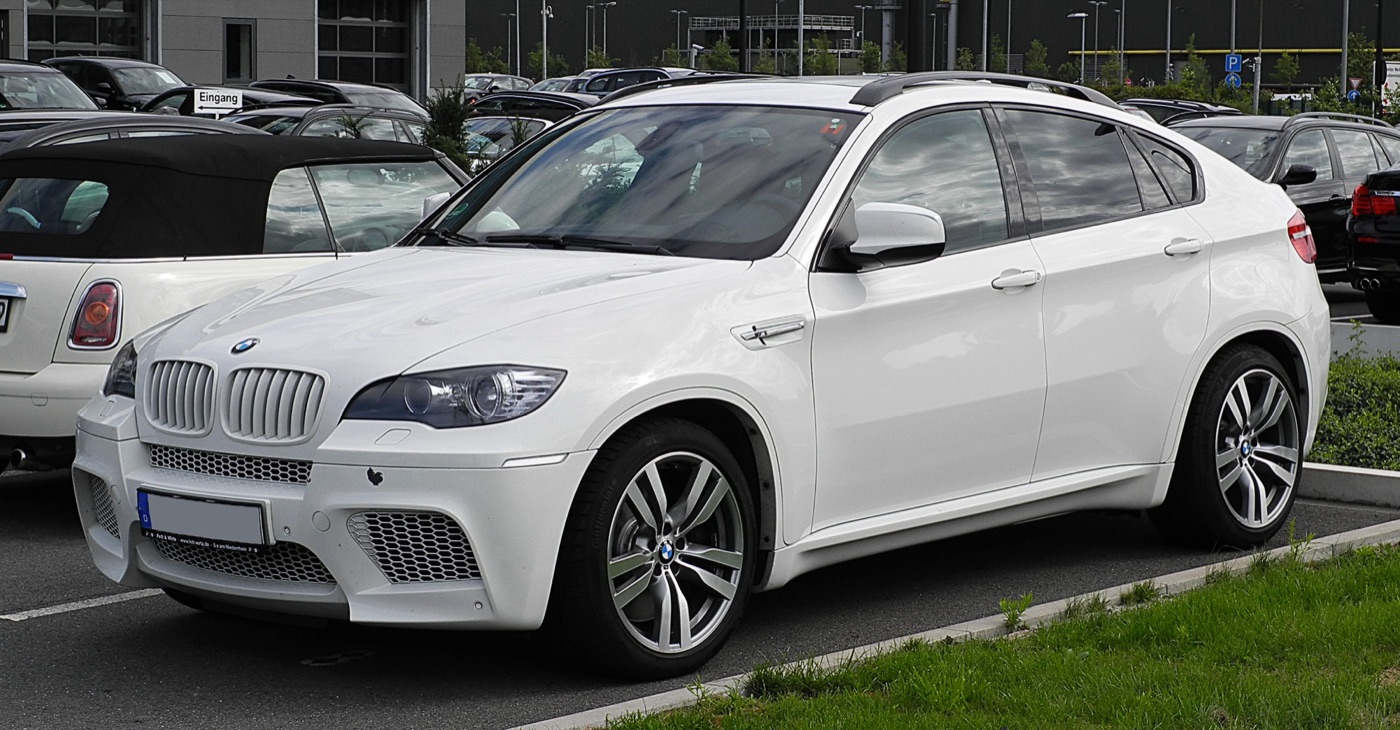
The M roadster of 1997 put the M3's 321 hp engine in the Z3, and the M coupe followed; in 2006 the Z4 M roadster and coupe had the 343 hp six. In 2009 the X5 M and X6 M were the first M SUVs. Their 555 hp twin-turbo V8 was, BMW says, the world's first engine with its exhaust manifold spanning the cylinder banks and its turbochargers in the V between them. The XM, a plug-in hybrid SUV that went into production at BMW's plant in Spartanburg, South Carolina, on 1 December 2022, is described in BMW's production-start release as "the first BMW M original since the BMW M1". It went on sale in spring 2023, with the United States, China and the Middle East as its main markets.
M, M Performance and M Sport: what is the difference?
An M car (BMW now says "high-performance") is a model BMW M develops and badges with a number, such as the M2, M3, M5 or XM; M Performance cars are faster versions of regular BMW models, such as the X3 M50 or i4 M50; and M Sport is an equipment package on a standard BMW. BMW M GmbH is responsible for all three, and it describes its high-performance cars as combining "racetrack capabilities with unrestricted everyday usability". The M3 alone now comes in several variants, from an entry model with a six-speed manual and 480 hp to the M3 CS Touring with 551 hp. Its sales releases count the first two together as "performance and high-performance" cars: of the 206,582 sold in 2024, 66,805 were high-performance models.
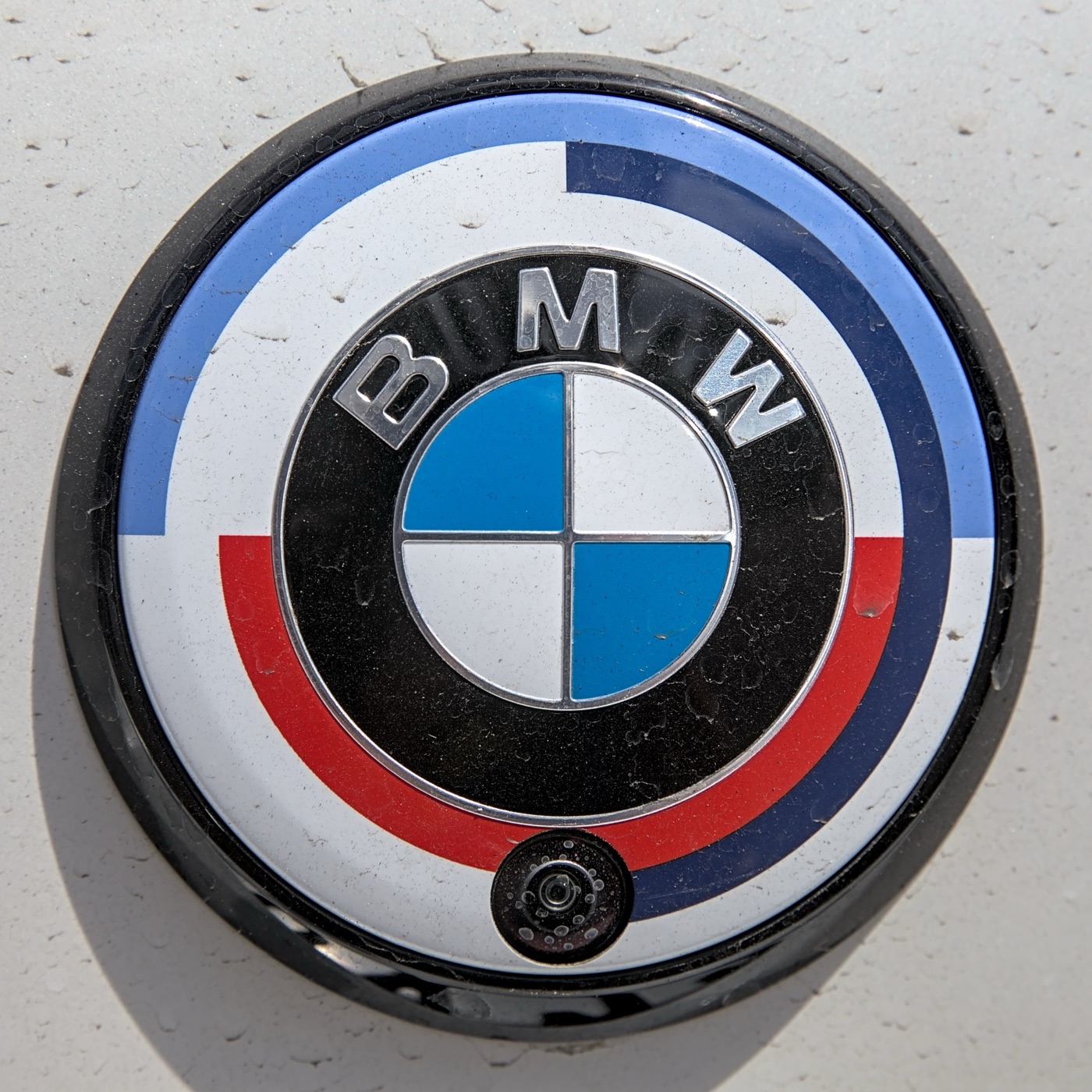
The M Performance category was created under Friedrich Nitschke, who ran M GmbH from 2011 to 2014. It began in 2012 with four diesels, the M550d xDrive saloon and Touring and the X5 M50d and X6 M50d, whose straight six had three turbochargers and 381 hp. M Sport packages go back further: in 2008 BMW counted "significant growth" in sports packages for the 1, 3, 5 and 6 Series, X3 and X5. In 2022 a buyer of an M car or a BMW with an M Sport package could order the classic BMW Motorsport badge in place of the usual BMW roundel on the front, the rear and the wheel hubs.
BMW M in motorsport
BMW M's racing record includes six European Touring Car Championships with the 3.0 CSL, the 1983 Formula 1 drivers' title for Nelson Piquet's BMW-engined Brabham, the 1987 World Touring Car Championship with the M3, and outright wins at the Nürburgring 24 Hours, most recently with the M4 GT3 in 2025.
The 3.0 CSL and Formula 2
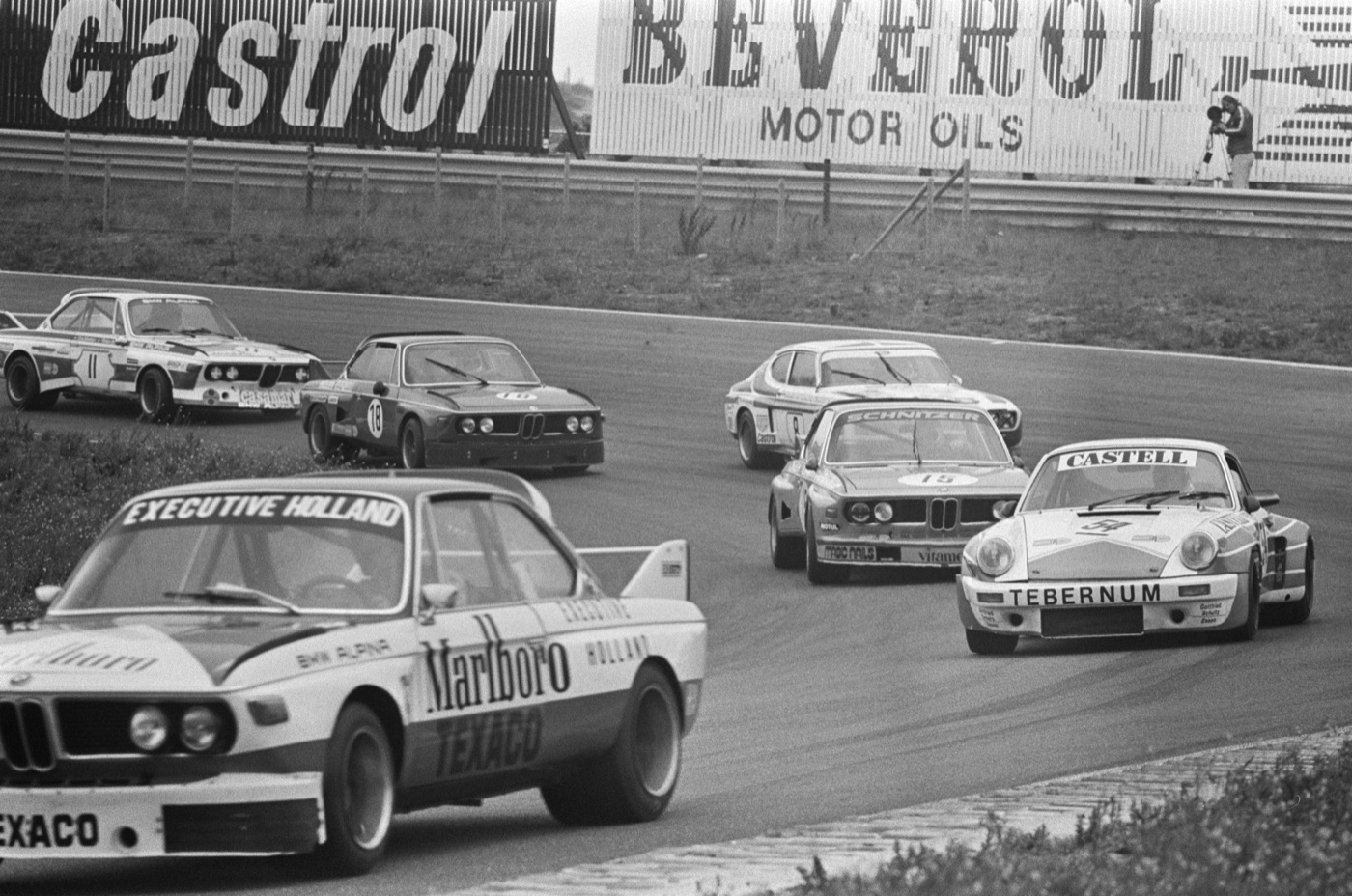
The 3.0 CSL of 1973 weighed 1,092 kg and had a 3,340 cc straight six of 360 hp. Stuck and Amon won the Touring Car Grand Prix at the Nürburgring at their first try, and BMW won the touring car class at Le Mans. The CSL won the European Touring Car Championship six times between 1973 and 1979, and its turbocharged version made up to 800 hp; the 3.2-litre twin-turbo that Ronnie Peterson raced in 1976 was held to 750 hp. The company's two-litre four-valve four-cylinder powered March's Formula 2 cars, and Jean-Pierre Jarier (1973), Patrick Depailler (1974), Bruno Giacomelli (1978), Marc Surer (1979) and Corrado Fabi (1982) all won the European Formula 2 title with it.
The Formula 1 turbo engine
BMW announced its Formula 1 entry in April 1980, and Motorsport GmbH's engine designer Paul Rosche built a 1.5-litre turbocharged four from a production block. Brabham raced it from 1982, and Nelson Piquet won the 1983 world championship with it, 630 days after the engine first appeared. It won nine Grands Prix to 1987, the last with Gerhard Berger's Benetton in Mexico in 1986. Rosche reckoned the four-cylinder made "about 1,400 hp, but we don't know the exact figure since the engine dynamometer didn't go beyond 1280 hp". The same engineer designed the six-litre V12 of the McLaren F1, which won Le Mans in 1995. BMW's own V12 won Le Mans in 1999, but by then racing belonged to BMW Motorsport Ltd.
The M3 in touring car racing
The first M3 was built to race. Roberto Ravaglia won the 1987 World Touring Car Championship in one, and in the next five years the car took two European touring car titles and two in the German DTM. In 2001 the M3 GTR, with a four-litre V8, won the GT class of the American Le Mans Series; banned there after a rule change, it won the Nürburgring 24 Hours one-two in 2004 and again in 2005. By BMW's count, 11 of the 16 VLN endurance races at the Nürburgring in 2009 and 2010 went to Z4 M coupes.
BMW M Motorsport today
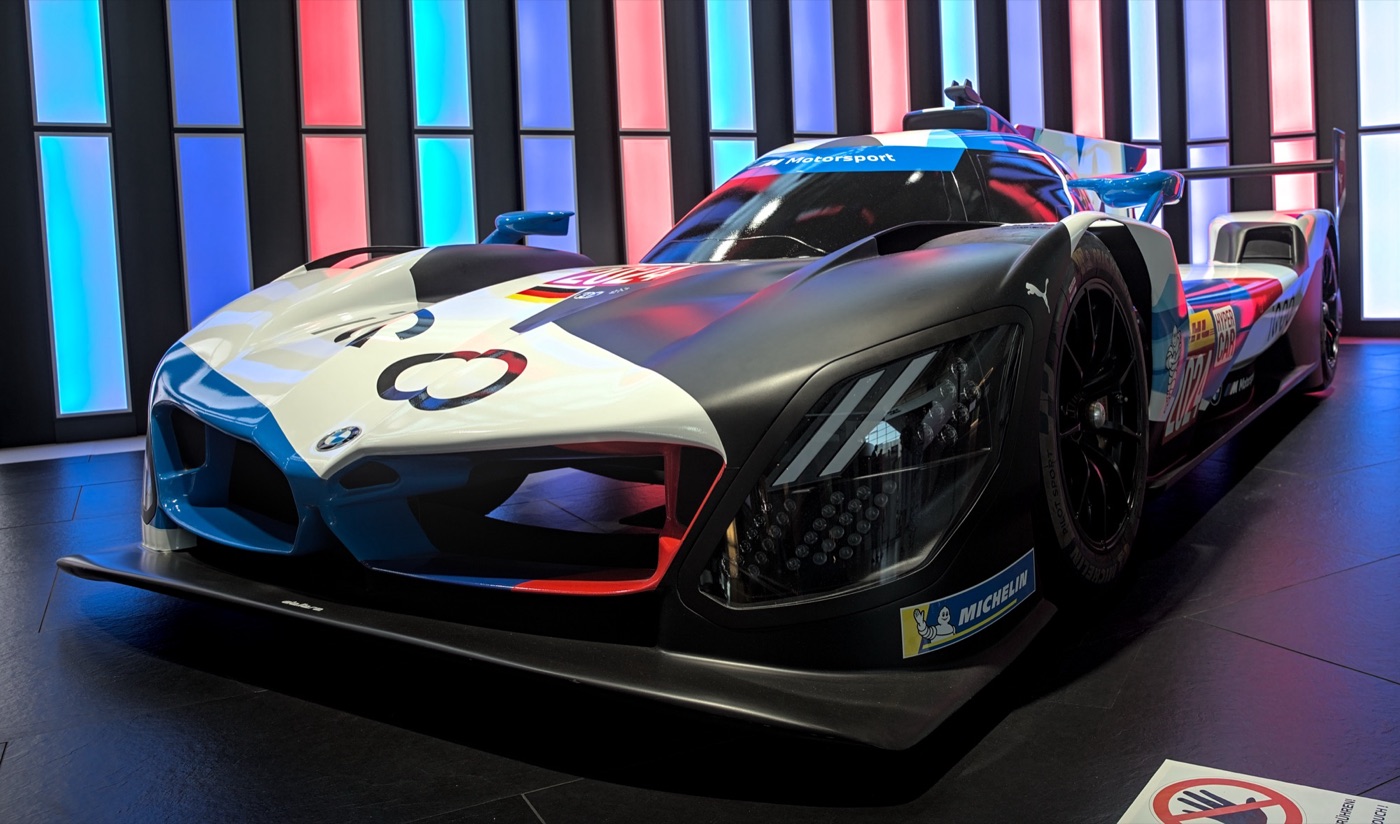
In 2021 BMW decided to return to prototype racing, and its BMW M Hybrid V8 races in the FIA World Endurance Championship and America's IMSA series. In 2024, BMW's January 2025 release says, its M Hybrid V8, M4 GT3 and M4 GT4 won 215 races between them and an M4 GT3 finished on the podium in its class at the Le Mans 24 Hours. In 2025 the three cars won more than 180 races: the M Hybrid V8 finished first and second at Road America, and the M4 GT3 won the Nürburgring 24 Hours, the Suzuka 1000 km, the Indianapolis 8 Hours and the GTD Pro class at Watkins Glen and Petit Le Mans.
How many BMW M cars have been sold?
BMW M GmbH sold 213,457 cars in 2025, its 14th record year in a row, and on 2 October 2026 BMW's Munich plant built its one-millionth M car. The yearly figures include M Performance models such as the X3 M50; BMWBlog's comparison with MDataWorks' production data suggests the one-million count covers M cars only and leaves out the 1 Series M Coupé.
| Year | Cars sold | Share of BMW brand sales | Best-selling model |
|---|---|---|---|
| About 2006 | About 20,000 M cars a year (plus about 20,000 BMW Individual cars), as given in December 2006 | Not given | Not given |
| 2008 | More than 24,000 | Not given | Not given |
| 2022 | 177,257 | Not given | i4 M50 |
| 2023 | 202,530 | Not given | i4 M50 |
| 2024 | 206,582 | 9.4% | i4 M50 |
| 2025 | 213,457 | 9.8% | X3 M50 |
Sources: BMW press releases of 15 December 2006 (2006), 7 May 2009 (2008), 12 January 2023, 11 January 2024, 13 January 2025 and 9 January 2026.
The United States is the largest market, with more than 72,000 M cars in 2025, followed in 2022 and 2023 by Germany and the United Kingdom. In Switzerland nearly one BMW in four ordered in 2025 was an M model. In 2008 BMW delivered its 300,000th M car. MDataWorks' count, published by BMWBlog, splits the first million by family: 510,110 M3s and M4s, 134,685 M5s, 117,173 M2s, 88,675 X5 Ms and X6 Ms, 55,899 M6s and M8s, and 40,366 of the X3 M and X4 M, and BMWBlog's arithmetic suggests that BMW's own million leaves out the 6,342 1 Series M Coupés.
Kay Segler's plans for BMW M
Kay Segler took over BMW M GmbH on 7 May 2009, the year of the first M SUVs, the return of the turbo and BMW's exit from Formula 1. In the year before, sales of M GmbH products had risen by about 50 per cent to more than 24,000 under his predecessor, Ludwig Willisch, and by 2008 the range had nine models. Segler had been at BMW since 1988 and had run the MINI brand from 2004 to 2008.
He set out his plans to SkiddMark at the Frankfurt motor show in September 2009; ten days earlier, the same report recorded, he had been a pupil on a two-day BMW Driver Training course on the Nordschleife in M3s with the double-clutch gearbox. On the stand he showed off the M6 Competition Edition, a run of 100 cars in a semi-matt silver-grey he had been driving on the road to see how it looked dirty: "You must be careful not to polish it, of course." His slogan for the brand was "Childhood automotive dreams realised". Against M3 buyers who found the E9x less engaging than the E46 at first, he put the M button, which changed throttle response, steering weight, damping and traction control at once: "How would you feel after driving from Munich to Frankfurt in a 911? Tired and stressed," he said. In America he named the Corvette as the M3's main rival; the X5 M and X6 M were aimed at the Porsche Cayenne. His strategy had four parts: the M cars, Driver Training (by SkiddMark's figure a two-day Nordschleife course cost EUR 2,400, and courses were to start in China and Malaysia), BMW Individual and the M Sport packages, which he said would be realigned with the BMW Performance parts range or merged into it. His message to M traditionalists who feared four-wheel drive, turbos and automatic gearboxes was "assume nothing and discount nothing".
What followed
BMW had announced on 29 July 2009 that it would leave Formula 1 at the end of the season, in a release thanking Mario Theissen, who had run its motorsport since 1999 (our page on Mario Theissen covers his career). Segler had hinted that something would come of the M3 GT4 racing programme that autumn, and in November 2009 BMW announced the M3 GTS, a 4.4-litre, 450 hp club-sport M3. A smaller M car, which SkiddMark's 2009 report had called unlikely, arrived at the end of 2010 as the 340 hp 1 Series M Coupé. The F10 M5 of 2011 switched to a turbo V8 of 560 hp, and in December 2013 the next M3 took a turbocharged six of 431 hp. On 1 May 2011 Segler handed over to Friedrich Nitschke and moved to MINI.
Who runs BMW M?
Franciscus van Meel, who came to BMW from Audi's quattro GmbH in 2014, has been chairman of the board of management of BMW M GmbH since 1 November 2021, his second spell in the job. The table lists the heads named in BMW's own releases.
| Head | In charge | Came from, went to |
|---|---|---|
| Jochen Neerpasch | 1972 to 1980 | From Ford's racing department in Cologne |
| Dieter Stappert (racing director) and Paul Rosche (technical director) | From 1980 | Rosche had run BMW's racing engines since 1969 |
| Adolf P. Prommesberger | Until 30 November 2003 | Not given |
| Ulrich Bruhnke | 1 December 2003 to 31 January 2007 | From Mercedes-AMG, where he chaired the board; left BMW at his own request |
| Ludwig Willisch | 1 January 2008 to 7 May 2009 | From BMW's Germany sales region, which he had run since August 2003; left to head BMW's European sales region |
| Kay Segler | May 2009 to 30 April 2011 | From BMW's importer markets, earlier MINI brand manager; left for MINI brand management |
| Friedrich Nitschke | 1 May 2011 to 31 December 2014 | From MINI vehicle development; retired |
| Franciscus van Meel | 1 January 2015 to 30 September 2018 | From Audi's quattro GmbH; left to head BMW's Total Vehicle development unit |
| Markus Flasch | 1 October 2018 to 31 October 2021 | From 8 Series development; left to head BMW's luxury and upper-class product lines |
| Franciscus van Meel | From 1 November 2021 | Returned from BMW's Rolls-Royce, luxury and upper-class product lines |
Sources: BMW's 2012 history and Group press releases of 15 December 2006, 7 November 2007, 7 May 2009, 1 April 2011, 23 September 2014, 17 September 2018 and 11 October 2021. Prommesberger's start date is not given in BMW's releases, and they name no managing director between Stappert and Rosche's appointment in 1980 and Prommesberger, nor one for 2007.
What do the BMW M colours mean?
In BMW's own explanation the blue stands for BMW, the red for racing and the middle colour, first violet and now dark blue, for the connection between them. BMW's release of 24 November 2021 dates the colours to 1973, when a BMW roundel ringed by shifted semicircles in blue, violet and red appeared on the company's racing cars, and the three slanted stripes leaning on the letter M to the M1 of 1978. The M1 was the only M production car to carry both the old Motorsport emblem and the striped M. In 2022, for the 50th anniversary, BMW offered the old emblem on new cars and 50 historic paints, among them Dakar Yellow, Fire Orange, Daytona Violet, Macao Blue, Imola Red and Frozen Marina Bay Blue.
BMW's 2012 history adds that in 1973 the whole team, "from the car transport vehicle to the key tag", wore the same blue, violet and red stripes on white, the first time a racing team had dressed everything in one design.
Is BMW M going electric?
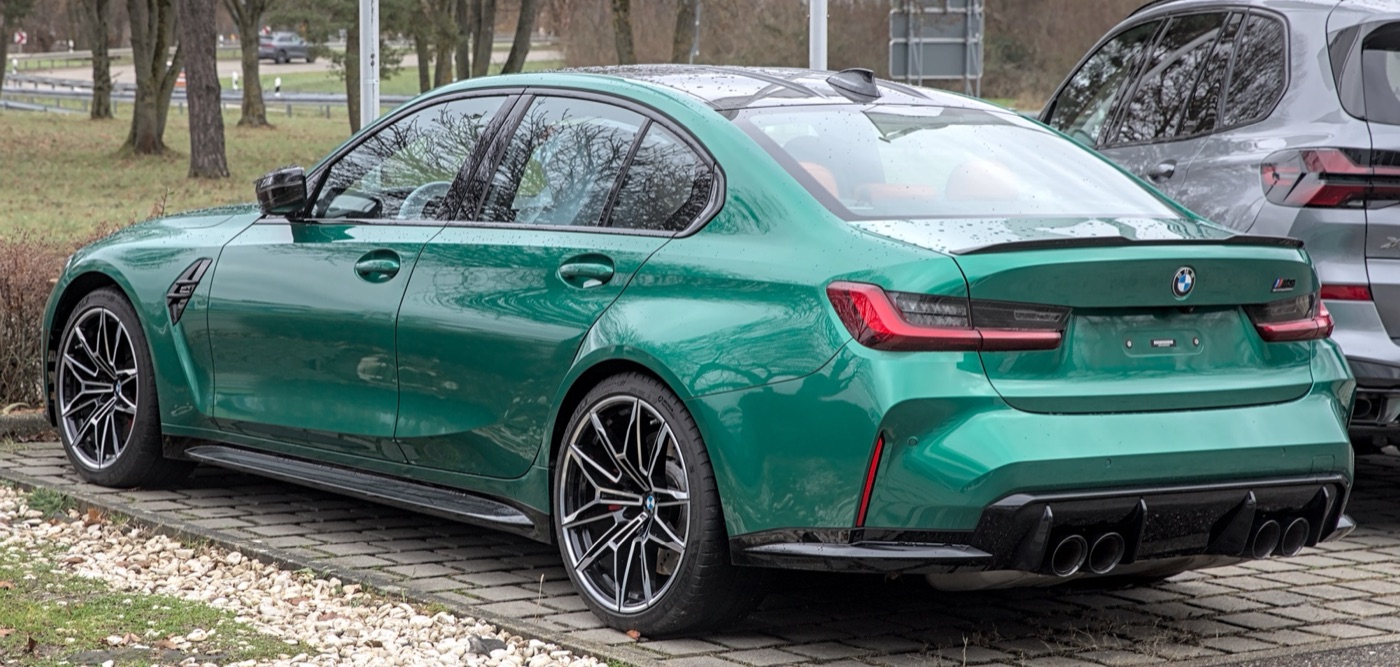
Yes, alongside petrol cars and hybrids. Its best-selling model from 2022 to 2024 was the electric i4 M50, an M Performance car, and BMW's one-millionth-car release of 2 October 2026 says the Munich plant will build a fully electric M3, "the first high-performance model to feature BMW M Neue Klasse technology". From 2027 the Munich plant will build only electric cars, after a conversion BMW puts at about 650 million euros.
The XM of 2022 was the first M high-performance car with an electrified drive; its XM Label version has 748 hp from a V8 and an electric motor. The current M5 and M5 Touring are plug-in hybrids too. In 2023 BMW added the i5 M60 xDrive, with 601 hp, and the i7 M70 xDrive, with 659 hp, which BMW called the most powerful electric M car to that date. Van Meel's line in January 2026 was that M would offer cars "with fully electric, partly electric and all-ICE powertrains".
Questions
Who owns BMW M?
BMW. BMW M GmbH is a subsidiary of BMW, set up in 1972 as BMW Motorsport GmbH; BMW describes it as having the status of an independent car maker.
Where is BMW M based?
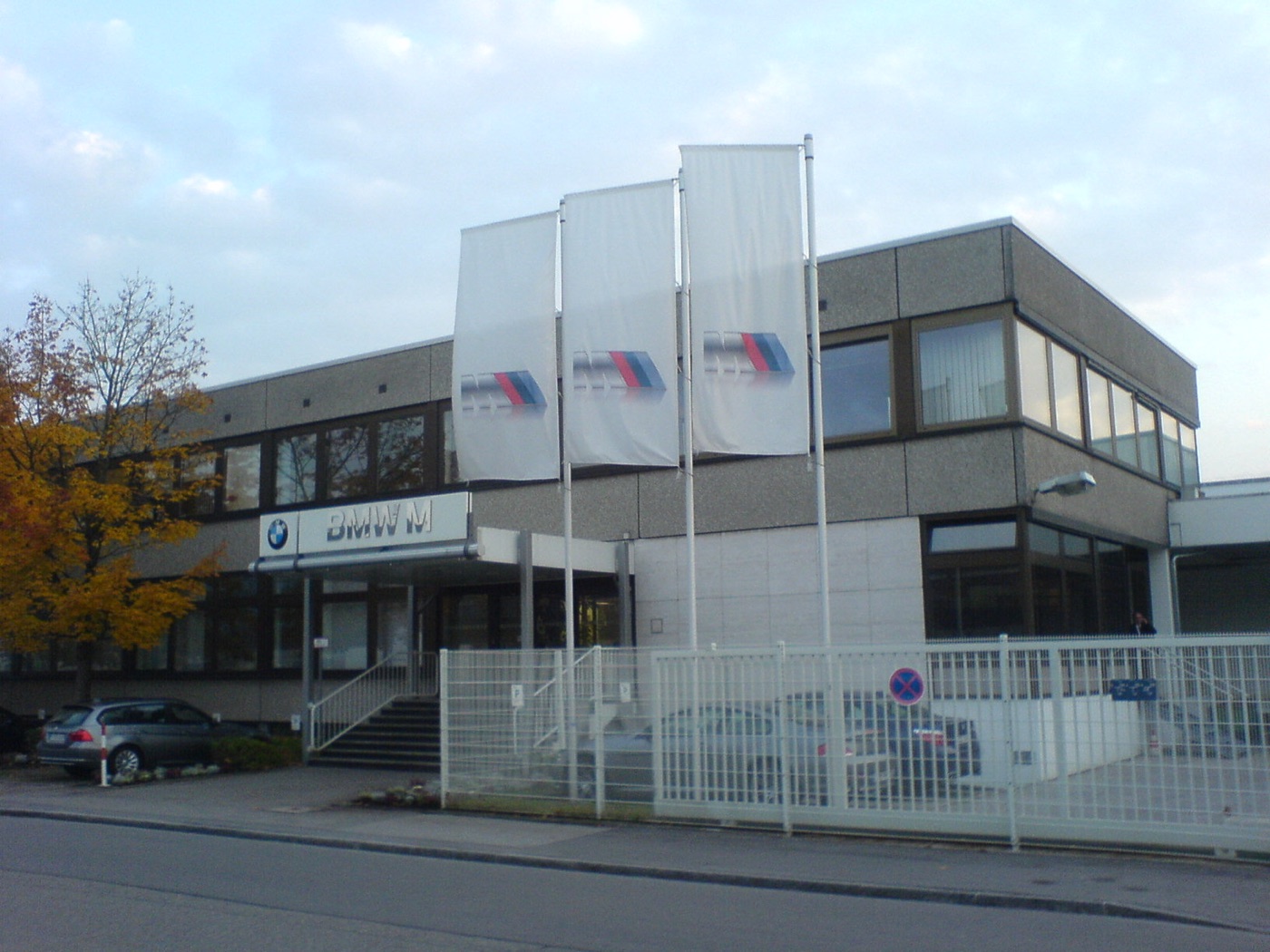
In Munich. It began in 1972 on a site in Preussenstrasse next to BMW's Munich plant and moved its base to Garching, on Munich's northern edge, in 1986. Its building at Daimlerstrasse 19 in Garching-Hochbrück carried the BMW M name in 2009.
What is the best-selling BMW M car?
In 2025 it was the X3 M50, an M Performance model. The electric i4 M50 was the best seller from 2022 to 2024, and the M2 Coupé was the best-selling high-performance M car of 2025.
What is the most powerful BMW M car?
Of the road cars in BMW's 2024 and 2025 releases, the XM Label, a plug-in hybrid with 550 kW (748 hp). The current M5 has 535 kW (727 hp).
How much did the BMW M1 cost new?
Exactly DM 100,000 in 1978, for a 277 hp mid-engined coupé. A year after production began, 130 had been built and more than 300 firm orders were waiting.
When did BMW M start making SUVs?
In 2009, with the X5 M and X6 M. Both had a 555 hp twin-turbo V8 and were aimed, by Kay Segler's account that year, at the Porsche Cayenne.
Did BMW M build the McLaren F1 engine?
Yes. Paul Rosche of BMW Motorsport designed the six-litre V12 of the McLaren F1, based on the 750i's engine, with more than 600 hp; it powered the closed McLaren that won Le Mans in 1995.
Sources
- BMW press release, "The BMW M story: 40 years BMW M GmbH", 16 May 2012: founding, Neerpasch, staff and site, Driver Training, the hot 5 Series, the M1, the F1 engine, M3 and M5 history, the 1993 name, BMW Motorsport Ltd, the 300,000th car, M Performance Automobiles.
- BMW press release, "50 years of BMW M: the BMW Museum is marking this anniversary", 26 May 2022: the founding date of 24 May 1972.
- BMW press release, "BMW M GmbH is setting marks for the start of the anniversary year", 24 November 2021: the meaning of the colours, the 1973 emblem, the anniversary emblem and paints.
- BMW USA press release, "Start of production begins for first-ever BMW XM", 1 December 2022: XM production in Spartanburg.
- BMW press release, "One million times the thrill of M", 2 October 2026: the one-millionth M car, the electric M3, the Munich plant.
- BMW press release, "Continued growth for performance cars: BMW M GmbH marks 14th consecutive record year", 9 January 2026: 2025 sales, markets, M2 and M2 CS, M5 and M3 figures, 2025 racing.
- BMW press release, "Another record year: BMW M GmbH continues on the path to success", 13 January 2025: 2024 sales, M2 output and 2024 growth, XM Label output, 2024 racing.
- BMW press release, "BMW M GmbH continues to grow", 11 January 2024: 2023 sales, i5 M60 and i7 M70.
- BMW Canada press release, "BMW M GmbH closes anniversary year with new sales record", 12 January 2023: 2022 sales and markets.
- BMW USA press release, "Ulrich Bruhnke leaves the BMW Group", 15 December 2006: Bruhnke and Prommesberger, staff and yearly sales.
- BMW Austria press release, "Ludwig Willisch neuer Geschäftsführer der BMW M GmbH", 7 November 2007: Willisch's appointment from 1 January 2008.
- BMW press release, "Ludwig Willisch assumes responsibility for the BMW Group's European sales region", 7 May 2009: Segler's appointment, 2008 sales.
- BMW UK press release, "New management responsibilities at BMW M GmbH and MINI brand", 1 April 2011: Nitschke succeeds Segler.
- BMW press release, "Franciscus van Meel assumes management of BMW M GmbH", 23 September 2014: van Meel's appointment, Nitschke's record.
- BMW France press release on management changes, 17 September 2018: Flasch's appointment.
- BMW press release, "Change of leadership at the top of BMW M GmbH", 11 October 2021: van Meel's return, the company's status, the motorsport tie-up.
- BMW press release on leaving Formula 1, 29 July 2009: BMW's exit from Formula 1.
- BMW press release, "The new BMW M3 Sedan and new BMW M4 Coupe", 12 December 2013: F80 and F82 output.
- BMW USA press release, "BMW announces price for the all-new BMW M5", 29 November 2017: F90 output and all-wheel drive.
- Richard Heseltine, "BMW M1", Motor Sport, March 2008, p. 134: the 1976 scheme, Neerpasch's departure.
- Sam Smith, "BMW restructures its motorsport arm amid championship exits", The Race, 15 March 2021: the merger of BMW Motorsport into the M company.
- Horatiu Boeriu, "BMW M Production Numbers: Every M Car Built Since The 1978 M1", BMWBlog, 5 October 2026: MDataWorks production counts by family, M2 totals, M1 total.
- SkiddMark, interview with Kay Segler at the Frankfurt motor show, September 2009: Segler's plans, rivals, Driver Training prices and the M6 Competition Edition.