BMW M5 F10: history, specs, special editions and buying guide
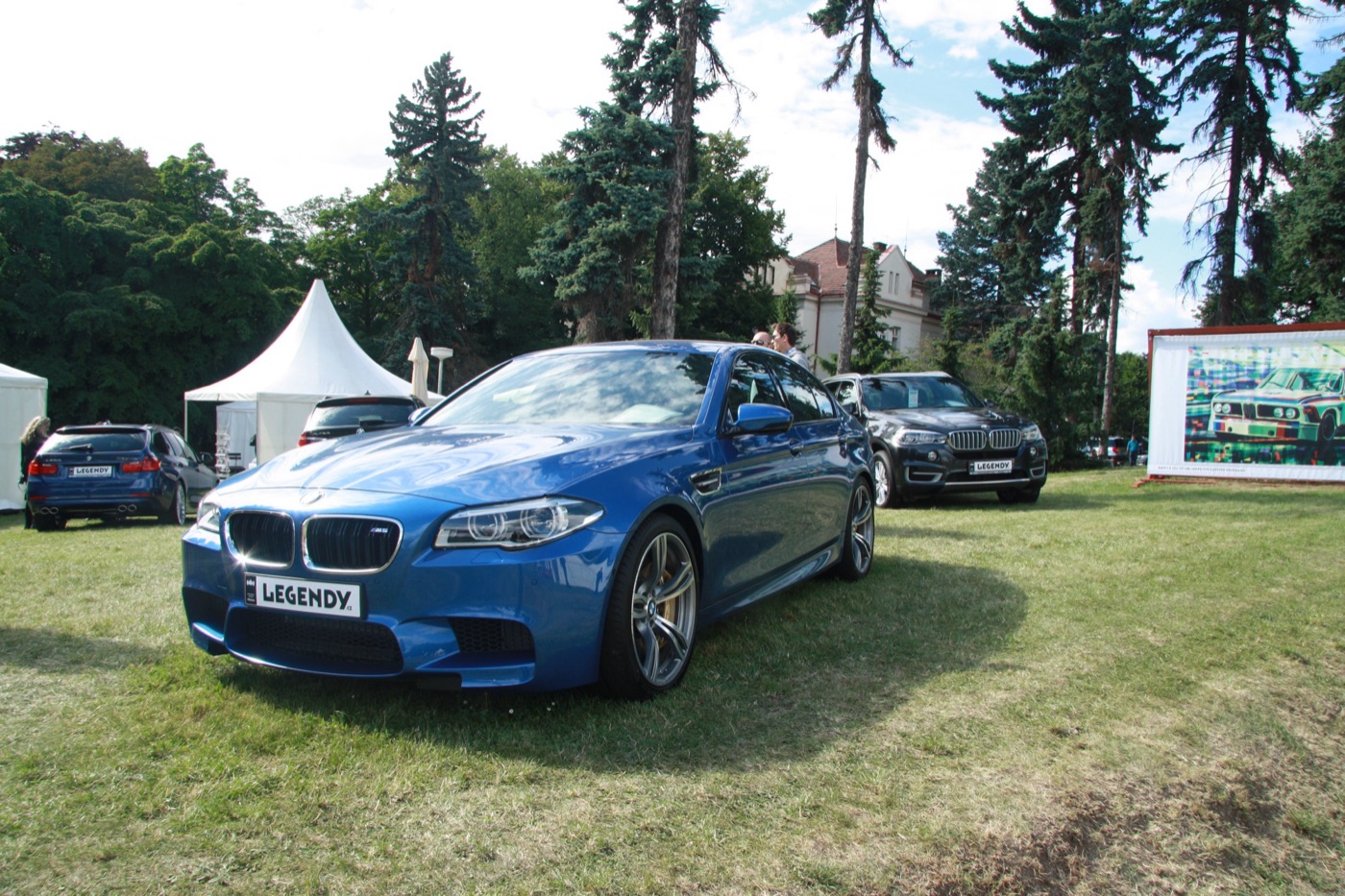
The BMW M5 F10 is the fifth-generation M5, built at Dingolfing from September 2011 to October 2016 and the first M5 with a turbocharged engine: a 4.4-litre twin-turbo V8 of 560hp, 575hp with the Competition Package and 600hp in the last special editions. 19,533 were built, all in Germany and all saloons, according to the BMW M Registry, and it was the last M5 to drive only its rear wheels. In October 2026 the 27 F10 cars advertised on PistonHeads were priced from £15,750 to £33,990, with one outlier at £9,995, and a median of £19,499.
History of the BMW M5 F10
The F10 M5 replaced its predecessor, the V10-engined E60, which BMW stopped selling in summer 2010, and it was shown to the public at the Frankfurt motor show in September 2011. BMW released the full details in its press release of 15 June 2011, which called the car the fifth generation of "the world's most successful high-performance saloon" and announced the "world premiere of a newly developed BMW M high-performance engine". A SkiddMark report on the same day gave the UK price as £73,040 on the road, with sales starting in November 2011.
The four M5 generations before it
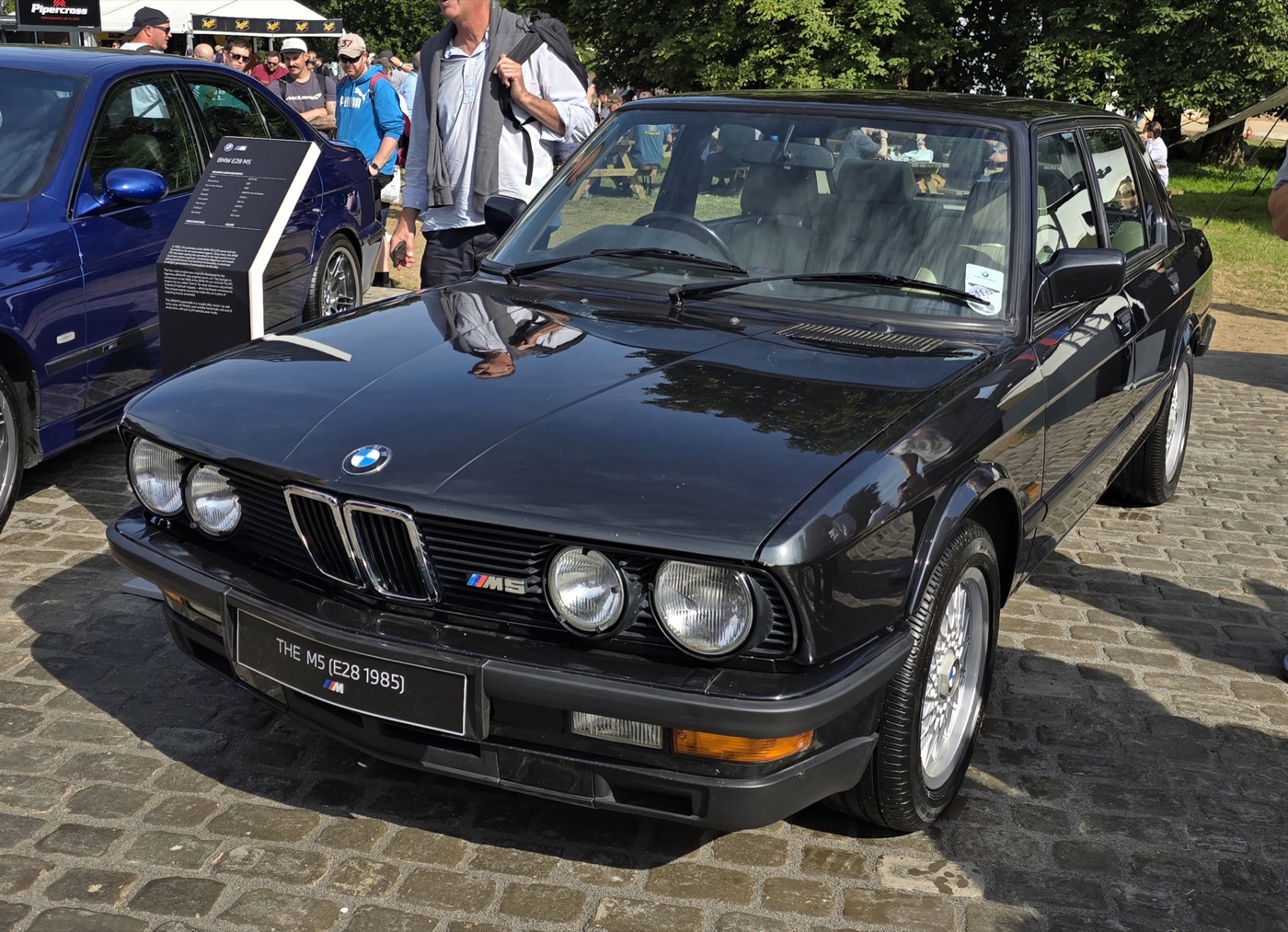
BMW Motorsport GmbH began the M5 in 1984 by putting the 3.5-litre four-valve straight six from the BMW M1 into the E28 5 Series. The car went on sale in summer 1985 with 286hp, and more than 2,200 were hand-built in Munich before production ended in late 1987, according to BMW's "30 years of the BMW M5" press kit of May 2014. The same kit gives the later generations:
- E34 (1988–1995): 3.5-litre six of 315hp, then 3.8 litres and 340hp from late 1991; about 12,000 sold, including just under 900 Tourings.
- E39 (1998–2003): the first V8 M5, 4.9 litres and 400hp; some 20,500 sold by spring 2003.
- E60 (2005–2010): a 5.0-litre V10 of 507hp with a seven-speed SMG single-clutch gearbox; 20,548 sold, 1,025 of them Touring estates.
Concept M5 and the 2011 launch
The car was previewed as the Concept M5 at the Shanghai motor show in April 2011, then revealed in production form in June and shown at Frankfurt in September, the BMW M Registry's F10 M5 records show. European production (model codes FV91 for left-hand drive and FV92 for right-hand drive) began in September 2011. North American cars (FV93) followed from March 2012: about 175 Canadian 2012 model-year cars, then US cars as 2013 models from July 2012. BMW built every F10 M5 on the ordinary 5 Series line at the Dingolfing factory, north-east of Munich in Germany, and offered it only as a saloon; the registry notes internal codes for an F11 M5 Touring (MX91 and MX92), but none was sold.
The 2013 facelift (LCI)
By 2013 BMW called the M5 "BMW M GmbH's most successful model". It announced the mid-life update, its "Life Cycle Impulse" or LCI, on 19 May 2013, for cars built from July 2013. The changes were a kidney grille with double slats and an "M5" badge, optional Adaptive LED headlights, standard LED tail-light strips, a new M steering wheel, an iDrive controller with a touch-sensitive surface, the optional Competition Package and new BMW Individual colours (Pure Metal Silver, Pyrite Brown and Frozen Blue among them). M carbon ceramic brakes had been an option since March 2013, when BMW also revised the steering with smaller torsion bars and new software and stiffened the front suspension bushes, the M Registry records.
End of production and the F90
The M Registry's build records for all three versions end in October 2016, and the 200 Competition Edition cars built in September and October 2016 were the farewell model. BMWBlog reported on 6 March 2017 that the F10 was "ending its production cycle this month", with its successor due to start at the end of 2017. The F90 was the first M5 with four-wheel drive, and BMW built 33,107 of them between January 2016 and June 2023, according to MDataWorks' production statistics.
Design and engineering
The F10 M5 is a 5 Series saloon with an M-developed engine, gearbox, differential, suspension, brakes and body panels. Its bonnet, front wings and doors are aluminium, and BMW quoted a power-to-weight ratio of 3.3kg per horsepower, "a substantial step forwards from its predecessor", in its June 2011 press kit, which supplies the engineering figures below unless another source is named. The car came with Auto Start-Stop and Brake Energy Regeneration as standard.
The S63TU twin-turbo V8
The engine is the S63B44T0, usually called the S63TU: a 4,395cc 90-degree V8 with a bore of 89.0mm and a stroke of 88.3mm, developed from the S63 of the 2009 X5 M and X6 M. Its two twin-scroll turbos and their catalytic converters sit in the vee between the cylinder banks, fed by a cross-bank exhaust manifold that pairs cylinders from opposite banks so each turbo receives evenly spaced pulses. Maximum boost is 1.5 bar. BMW's name for the technology is M TwinPower Turbo. Direct injection runs at up to 200 bar, and the S63TU added Valvetronic variable valve lift, which the earlier engine lacked. A button on the centre console selects one of three modes for the engine: Efficient, Sport or Sport Plus.
BMW gave 560hp (412kW) from 6,000 to 7,000rpm and 680Nm from 1,500 to 5,750rpm, about 10 per cent more power and over 30 per cent more torque than the E60's V10 engine, with fuel consumption cut by more than 30 per cent to 28.5mpg on the EU combined cycle. It promised the "instantaneous power delivery and sustained thrust familiar from M cars". Writing for CAR magazine in 2011, Chris Chilton listed the differences from the X6 M engine: compression raised from 9.3:1 to 10.0:1, boost up by 0.3 bar and the addition of Valvetronic, for 552bhp against the X6 M's 547bhp, with a redline of 7,200rpm. PistonHeads calls the engine "a fabulous unit", reports "general agreement" that the quoted output is conservative and says light tuning takes it to 650hp and beyond; even in the dry, it notes, the traction warning can light up at three-figure speeds. Its list of first-stage upgrades is a panel air filter, a remap, a freer-flowing exhaust and perhaps a lighter flywheel.
M DCT gearbox and the North American manual
Every European and right-hand-drive F10 M5 has a seven-speed M Double Clutch Transmission with Drivelogic: three automatic and three manual shift programmes, Launch Control and a Low Speed Assistance function for creeping in traffic. It was the first dual-clutch gearbox in an M5, and the transmission's control logic follows the E60's sequential gearbox, with no clutch pedal and paddles on the steering wheel. In North America, where the M5 was sold as a sedan, BMW also offered a six-speed ZF manual transmission at no extra cost, and the M Registry counts 577 manual cars, 17 of them pre-production. Only 118 cars had both the manual gearbox and the Competition Package: 105 for the US and 13 for Canada.
Active M Differential, suspension and steering
The F10 was the first M5 with the Active M Differential, an electronically controlled multi-plate limited-slip differential whose locking can be varied from 0 to 100 per cent. Its control unit is linked to the DSC stability system over FlexRay and reads accelerator position, wheel speeds and yaw rate, to stop wheelspin on slippery surfaces and in acceleration out of corners. The car has its own front and rear axle kinematics, a rear subframe bolted directly to the body, adaptive dampers with Comfort, Sport and Sport Plus settings, and hydraulic rack-and-pinion steering with M Servotronic in three settings. The driver can save two complete set-ups on the M Drive buttons of the steering wheel, each covering six parameters: throttle response, steering, the gearbox programme, DSC mode, damper setting and the head-up display.
Brakes, wheels and tyres
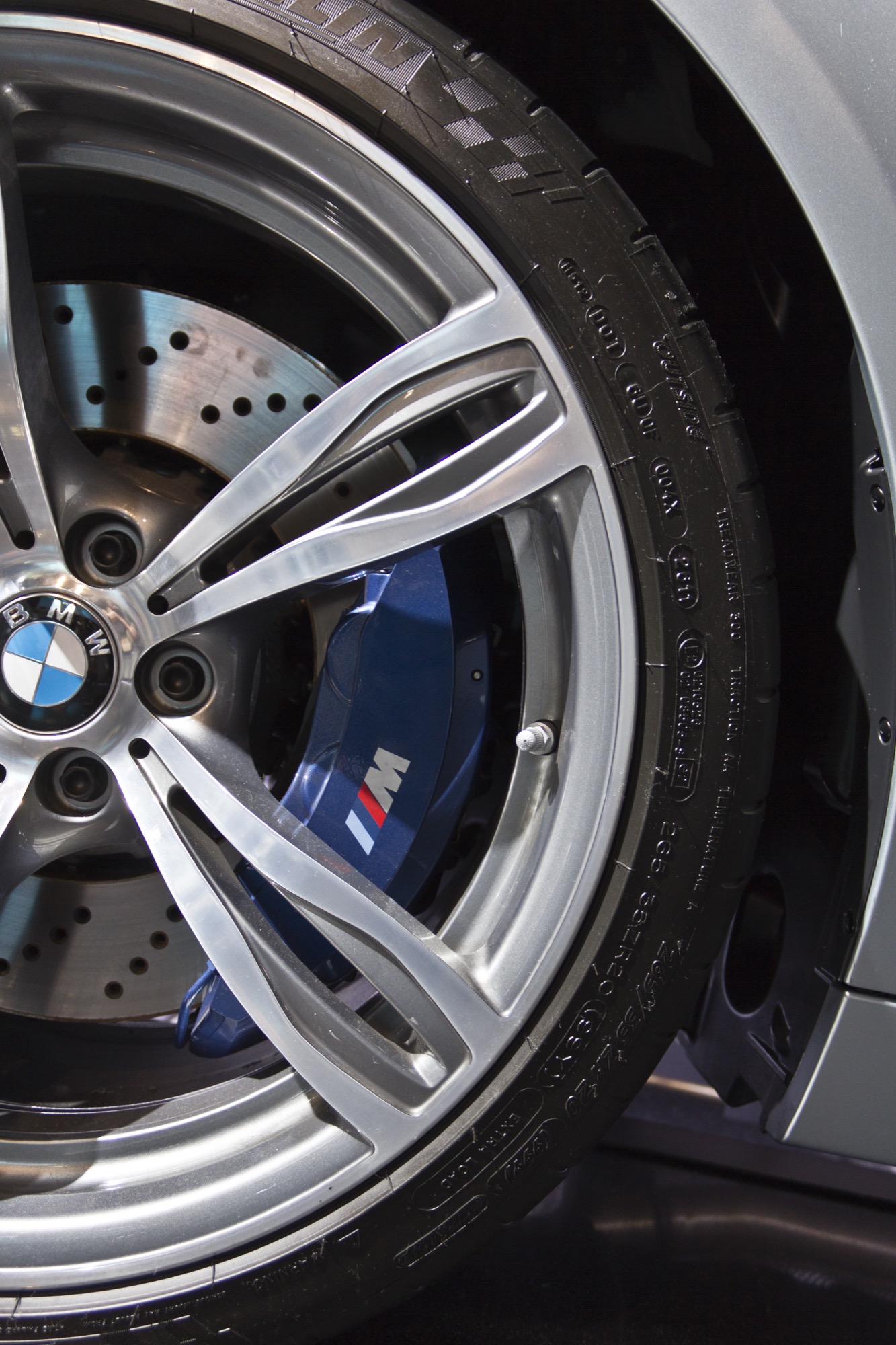
The standard brakes are compound discs, 400mm by 36mm at the front with six-piston fixed calipers and 396mm by 24mm at the rear. The standard wheels are 19-inch, 9J at the front and 10J at the rear, on 265/40 R19 and 295/35 R19 tyres; 20-inch forged wheels with 265/35 and 295/30 tyres were optional. M carbon ceramic brakes, with gold calipers, cut each front disc's weight from 30.6lb to 17.1lb, according to the M Registry, and Autocar found they "couple decent pedal feel with reliable stopping power".
Styling, cabin and equipment
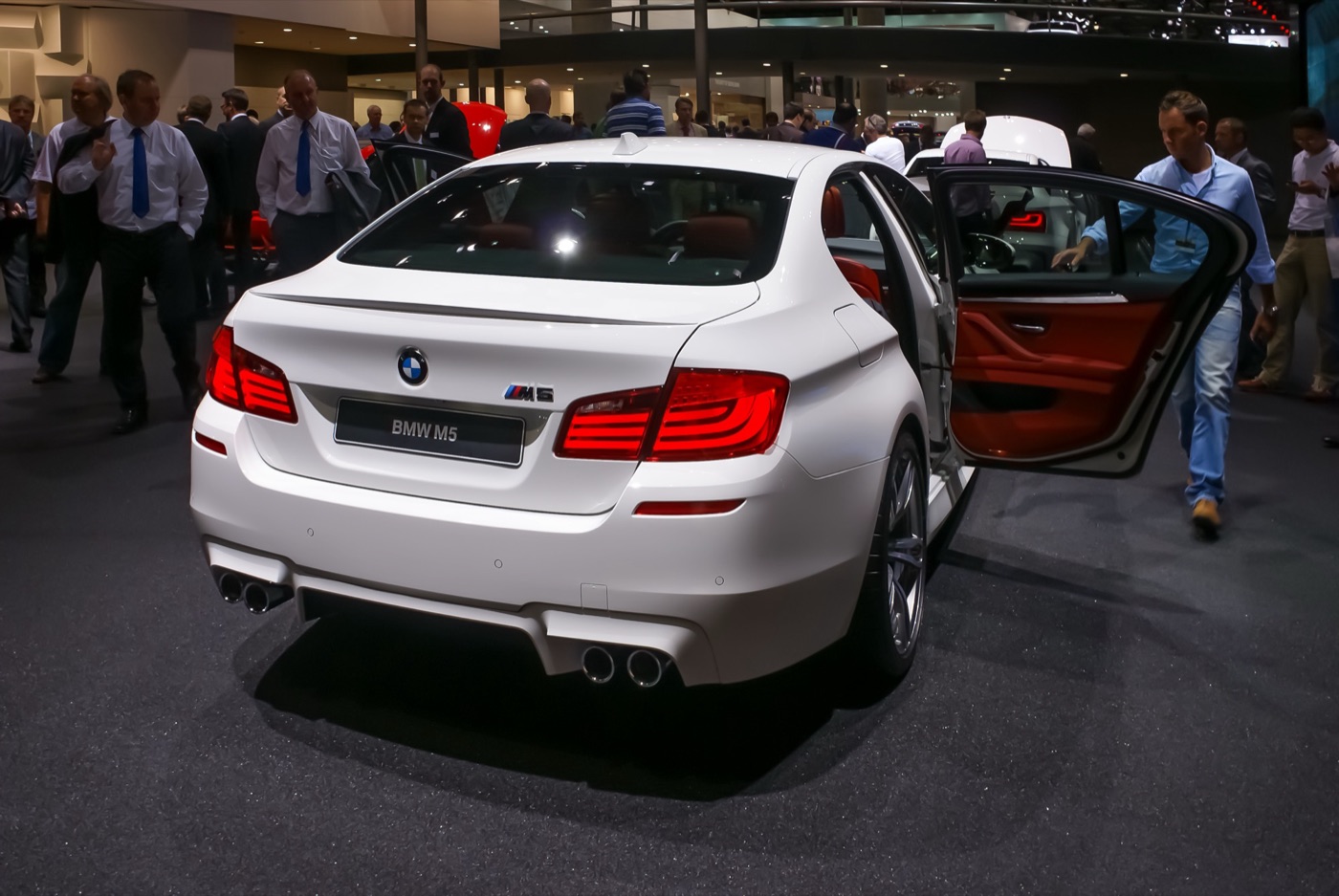
The appearance is restrained: the styling is, in Autocar's words, "anything but overblown". On the exterior, the M5 differs from other 5 Series saloons in its front bumper with three large intakes, flared wheel arches, front wings 0.8in wider with chrome-framed "gills" and LED indicator bars, a rear apron with a diffuser between two pairs of tailpipes, and a small Gurney-style lip on the boot lid. The interior has five seats, with room for three passengers in the back and M sports seats in front as standard (M multifunction seats were optional outside North America), Merino leather, Aluminium Trace trim, an M-specific head-up display and a 10.2-inch iDrive screen among its standard features, and Autocar found legroom and headroom "generous by the standards of its peers". The boot holds 520 litres and the fuel tank 80 litres.
BMW M5 F10 specifications and performance
The standard F10 M5 reaches 62mph in 4.4 seconds and is limited to 155mph, or 190mph with the optional M Driver's Package; the 600hp special editions cut the 0–62mph time to 3.9 seconds. The table gives BMW's figures for each state of tune.
| M5 (2011) | M5 with Competition Package (2013) | 30 Jahre M5 (2014) and Competition Edition (2016) | |
|---|---|---|---|
| Engine | 4,395cc twin-turbo V8 | 4,395cc twin-turbo V8 | 4,395cc twin-turbo V8 |
| Power | 560hp (412kW) at 6,000–7,000rpm | 575hp (423kW) | 600hp (441kW) at 6,250rpm |
| Torque | 680Nm at 1,500–5,750rpm | 680Nm | 700Nm at 1,500–6,000rpm |
| 0–62mph | 4.4sec | 4.3sec | 3.9sec |
| 0–124mph | 13.0sec | 12.8sec | Not published |
| Top speed | 155mph (190mph with M Driver's Package) | 155mph (189mph with M Driver's Package) | 155mph (189mph with M Driver's Package) |
| Weight, unladen (DIN / EU) | 1,870kg / 1,945kg | Not published separately | 1,870kg / 1,945kg |
| Combined economy and CO2 | 28.5mpg, 232g/km | 28.5mpg, 231g/km | 28.5mpg, 231g/km |
| Length / width / height | 4,910 / 1,891 / 1,456mm | 4,910 / 1,891 / 1,457mm | 4,910 / 1,891 / 1,457mm |
Sources: BMW press kits of June 2011, May 2013 and May 2014, and BMW UK's Competition Edition release of 22 July 2016. The Competition Package's 0–124mph time is BMW's 13.0 seconds less the 0.2 seconds it says the package saves. BMW's 2014 kit gives the standard car's height as 1,467mm, against 1,456mm in the 2011 kit.
How fast is the F10 M5 in independent tests?
At least as fast as BMW's figures suggest. Autocar's road test recorded an average of 4.3 seconds to 60mph and 9.0 seconds to 100mph on a slightly damp day without Launch Control, which "refused to engage under test conditions"; it put 100mph more than a second sooner than in the Jaguar XFR it tested in 2009. In its buying guide, PistonHeads reports that one of the big US magazines timed a 2012 M5 at 3.7 seconds to 60mph in its test.
F10 M5 against the E60 M5
BMW's own tables put the F10 at 1,870kg (DIN), 90kg more than the 1,780kg of the 2005 E60 saloon, while the 2011 SkiddMark report gave the E60 as 1,755kg and the gap as 115kg. The new car is 55mm longer, 45mm wider and 13mm lower. The E60's V10 made 507hp at 7,750rpm and 520Nm at 6,100rpm; reading BMW's published curves, the 2011 SkiddMark report found that the F10 already made more torque at 1,000rpm than the E60 did at its peak. The F10's tank is 10 litres larger at 80 litres, and Autocar put its real-world range at more than 300 miles.
Competition Package and special editions
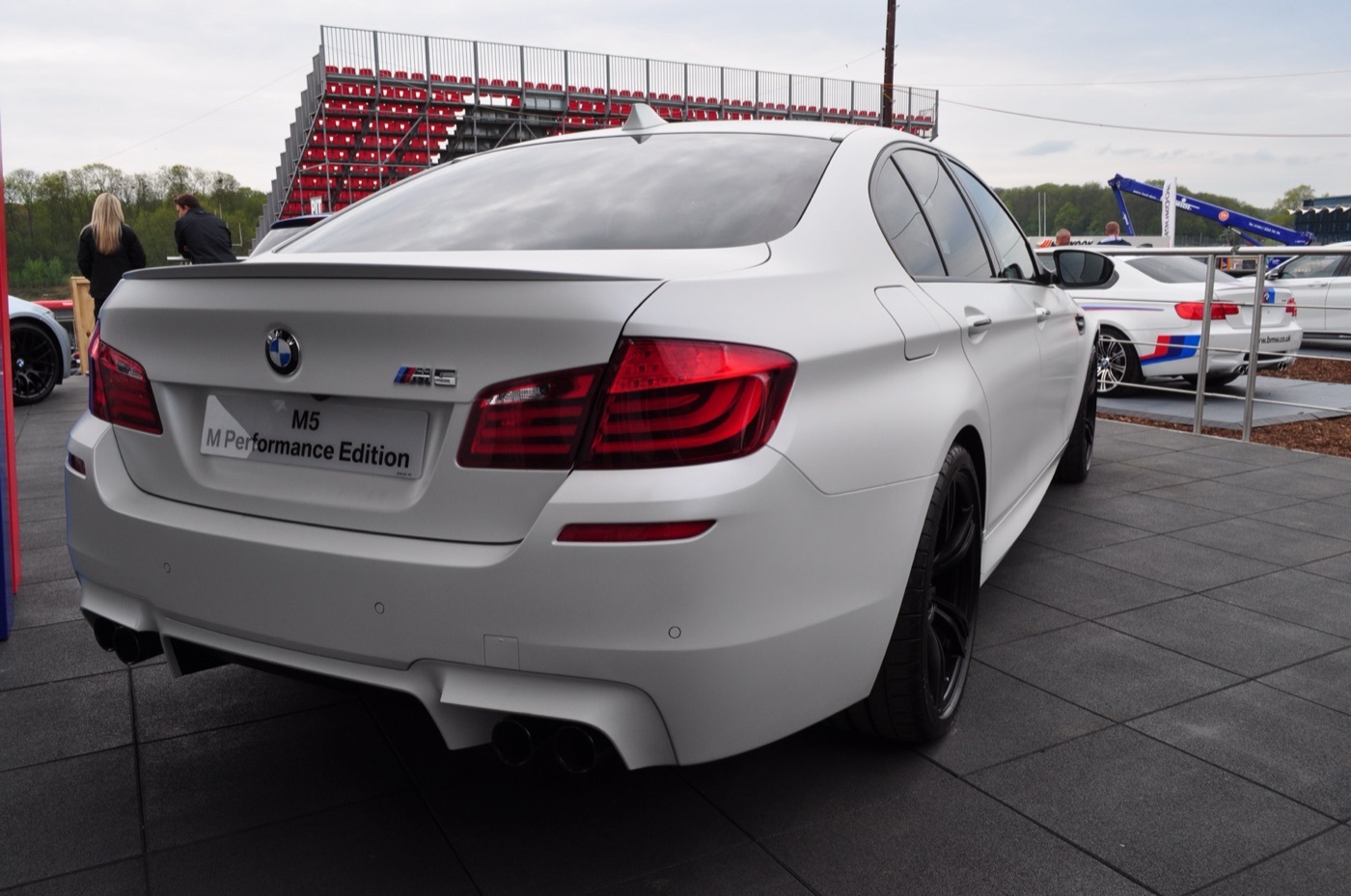
The F10 M5 came in one body and three power outputs: the standard 560hp car, the 575hp Competition Package from July 2013, and 600hp special editions from 2014. The M Registry counts 11 special editions in all, nine of them sold in a single country in very small numbers.
What does the Competition Package change?
The Competition Package (option code 7MA) raised power by 15hp to 575hp on its introduction in July 2013 and retuned the chassis; BMW said it was "specifically devised to boost the handling properties" of the car. BMW's May 2013 announcement lists firmer springs, dampers and anti-roll bars, a ride height about 10mm lower, its own control unit for the Active M Differential, more direct steering, a sportier M Dynamic Mode, 20-inch wheels and a sports exhaust with black chrome tailpipes. The M Registry gives the detail: springs and dampers 20 per cent stiffer, anti-roll bars 15 per cent stiffer and a steering rack 10 per cent quicker. In Britain it cost £6,700 on top of the standard car's £73,505 in May 2013, according to a Eurekar report of 30 May 2013; in the US it was $7,300. Autocar found the result "in practice, marginal" and questioned whether it was worth "its near-£7000 price tag".
30 Jahre M5 (2014)
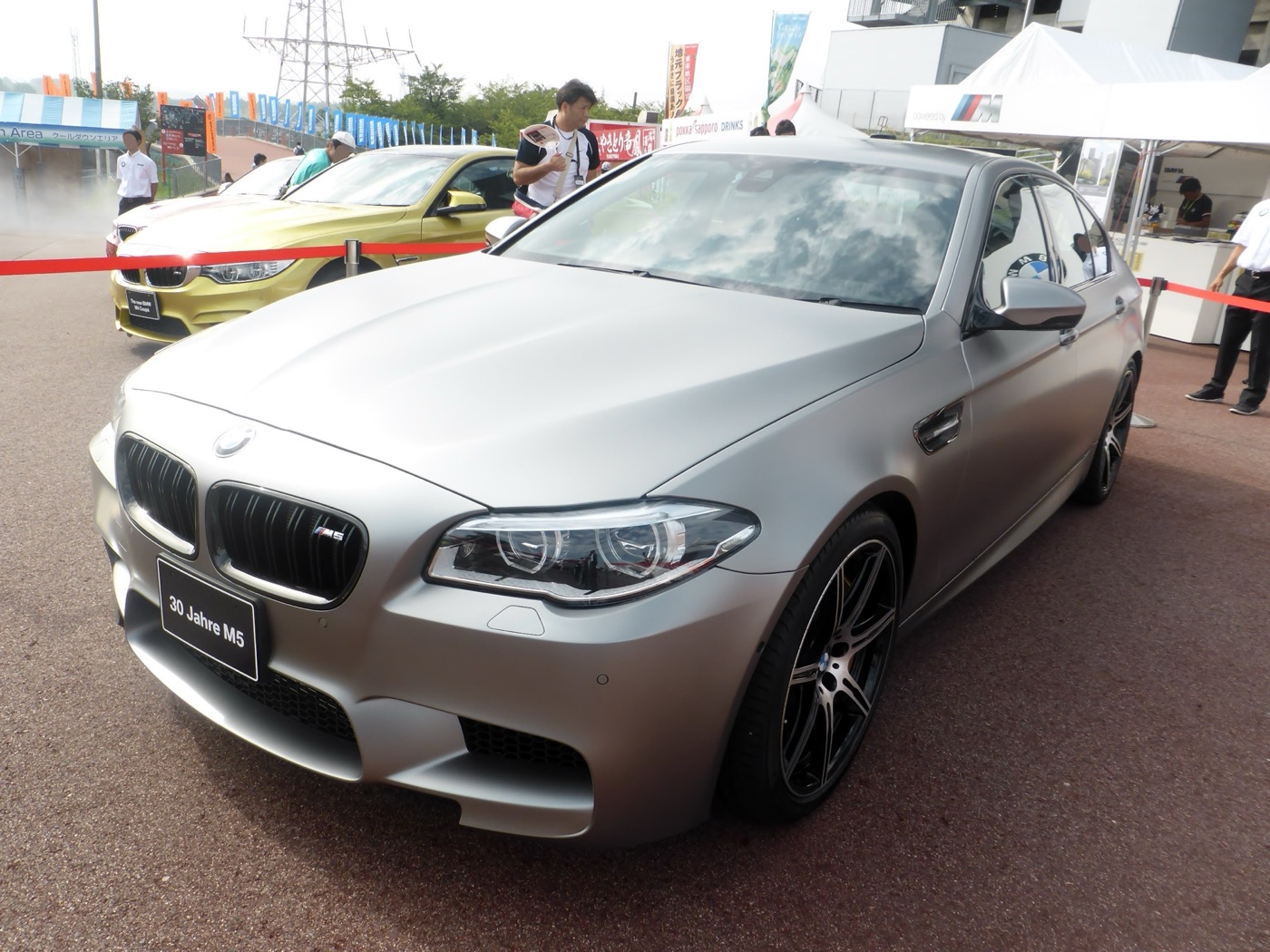
BMW built exactly 300 units of the "30 Jahre M5" between June and November 2014 to mark 30 years of the M5. The special edition has the Competition Package plus higher boost, for 600hp and 700Nm, and the 2014 press kit called it the most powerful car in the brand's history at the time. All 300 are painted BMW Individual Frozen Dark Silver, a matt finish, with black chrome grille surround, gills, door handles and tailpipes, 20-inch bi-colour wheels, black leather with Alcantara, and a "30 Jahre M5, 1/300" plaque on the passenger side of the dashboard. Auto Express reported that 30 came to the UK at £91,890, £10,740 more than an M5 with the Competition Package.
Competition Edition (2016)
The 200-car Competition Edition celebrated the end of F10 production. It had the 30 Jahre car's 600hp and 700Nm, the Competition Package, carbon-fibre M Performance mirror caps, rear spoiler and diffuser, a gloss black grille, Jet Black 20-inch wheels and black Merino leather with Opal White stitching, and a "1/200" plaque. It came only in Mineral White or Carbon Black, 100 of each, and cost £100,995 in Britain. It was sold in Europe, Russia, South Korea, the UK, Australia, New Zealand, South Africa and Canada, but not the US.
Pure Metal Silver Edition (US)
American buyers, who could not order the Competition Edition, had the M5 Pure Metal Silver Limited Edition: 50 cars for the US, announced in BMW of North America's release of 21 July 2016, with the 600hp engine, the Competition Package, carbon ceramic brakes and 20-inch forged wheels, from $130,900. The M Registry lists a South African Pure Metal Silver Edition as one of the national specials.
How many BMW M5 F10s were made?
BMW built 19,533 F10 M5s between September 2011 and October 2016, according to the M Registry's production figures, which split them by specification as below. The E60 had sold 20,548, and the F90 that followed reached 33,107.
| Version (model code) | Built | Total | With Competition Package |
|---|---|---|---|
| European specification, left-hand drive (FV91) | September 2011 to October 2016 | 6,281 | 1,068 |
| European specification, right-hand drive (FV92) | September 2011 to October 2016 | 5,164 | 785 |
| North American specification (FV93) | March 2012 to October 2016 | 8,088 | 2,606 |
| Total | 19,533 | 4,459 |
Source: BMW M Registry, F10 M5 FAQ. The Competition Package total is the sum of its three figures.
How many manual F10 M5s were made?
577, all for North America and 17 of them pre-production cars. That is 7 per cent of the 8,088 North American cars.
F10 M5 prices, new and used
An F10 M5 cost from £73,040 new in Britain in 2011 and is now advertised at about a quarter of that: the 27 cars registered from 2011 to 2016 that were advertised on PistonHeads on 28 October 2026 asked £9,995 to £33,990.
UK prices when new
The 2011 SkiddMark report set the launch price of £73,040 against BMW's X5 M and X6 M, which cost £7,755 and £9,150 more, and against the 517bhp Mercedes E63 AMG, which cost about £400 more. PistonHeads' 2017 Market Watch gives £73,985 for the launch saloons. The price was £73,505 by May 2013 and £81,150 with the Competition Package by May 2014, the latter according to Auto Express. The 30 Jahre M5 cost £91,890 and the Competition Edition £100,995. Autocar's first test car carried £13,695 of options, including £5,000 Merino leather and £1,500 night vision.
What does an F10 M5 cost today?
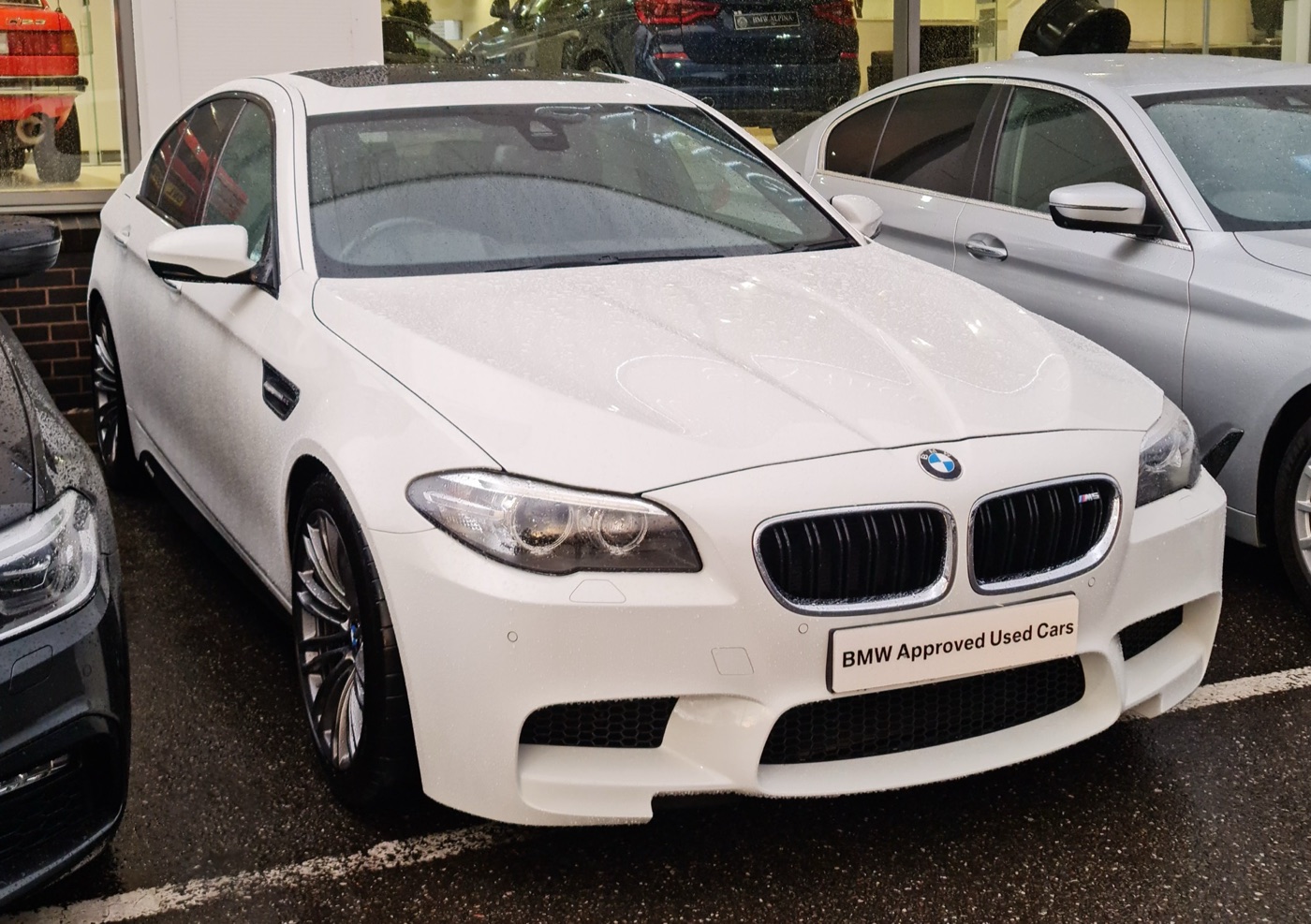
Of the 27 cars on PistonHeads registered in 2011 to 2016, 15 asked £20,000 or less, and the median mileage was 64,000. The ten cars from 2011 to 2013 had a median asking price of £18,970; the 17 from 2014 to 2016 had a median of £20,995. The eight with fewer than 50,000 miles had a median of £24,498, and the 11 with more than 70,000 miles a median of £18,995. The cheapest, at £9,995 for a 2012 car with 50,000 miles, is an outlier; the next cheapest asked £15,750 for a 2015 car with 113,543 miles.
Which F10 M5s are worth more?
Low mileage and later registration. The two most expensive cars in the October 2026 sample were 2016 cars with 27,000 and 9,744 miles, at £31,990 and £33,990. In its F10 M5 buying guide, PistonHeads advised that "anything in the classifieds with 'LCI' in the title" is an updated car from late 2013, and recommended an extended warranty because "the cost of an engine replacement can top £30k".
Reliability, known problems and running costs
PistonHeads' used buying guide considers the F10 M5 more reliable overall than the E60, but calls careful engine maintenance essential and warns that a check-engine light "might not be the once-in-a-lifetime thing you'd want it to be".
Engine problems
Oil use of about a litre every 1,500 miles is normal, PistonHeads says, and the S63TU is "nowhere near as notorious for oil burning" as the N63 V8 in other 5 Series. It reports "rare instances" of connecting-rod bearing failure, most often on 2012–13 cars; failed coil packs and spark plugs; leaking coolant pipes to the turbochargers, fixed with a repair kit; high-pressure fuel pump failure, shown by long starting; and failed exhaust manifolds and air-flow meters. A "Drivetrain. Maximum power not available" warning on the dash, with a shudder above light throttle, has been blamed on fuel, air-intake sensors, power distribution modules and leaking injectors.
The 2012 oil pump recall
BMW recalled 2013 model-year M5s and M6s built between 19 July and 11 September 2012 because the oil pump's drive shaft could separate from its rotor, which "could lead to a sudden loss of oil pressure causing severe engine damage", according to its filing to the US safety regulator, NHTSA (campaign 12V-475). The US recall covered 696 vehicles, and PistonHeads reported in 2012 that 19 British cars had the same pump. On each affected vehicle, BMW dealers replaced the pump under warranty.
Gearbox, differential and suspension
PistonHeads warns that repeated launch starts wear the DCT's clutch packs, recalls a driveshaft recall on cars built between September and December 2014, and advises changing the DCT and differential oil if there is no record of it. The differential can leak and its mounts can crack. Some early cars had steering vibration and knocks from the rear suspension traced to faulty springs. The battery discharged on some cars, possibly because the battery fans or headlamps stayed on after switch-off.
Brakes
The standard iron brakes fade under hard use: Autocar called them "prone to fade after a tough workout". PistonHeads put a rear pad change at about £900 and said carbon ceramic discs last about 100,000 miles on the road, their pads about half that.
Running costs
An F10 M5 registered before April 2017 emits 232g/km of CO2 (231g/km with the Competition Package and in the special editions) and falls in road tax band L, which costs £760 a year on GOV.UK's rates for cars registered 1 March 2001 to 31 March 2017, read on 28 October 2026. Official fuel economy is 28.5mpg combined; PistonHeads says 15 to 20mpg is realistic. The S63TU holds 8.4 litres of oil, and PistonHeads says owners who change it every 4,000 to 5,000 miles follow "not bad practice".
BMW M5 F10 rivals
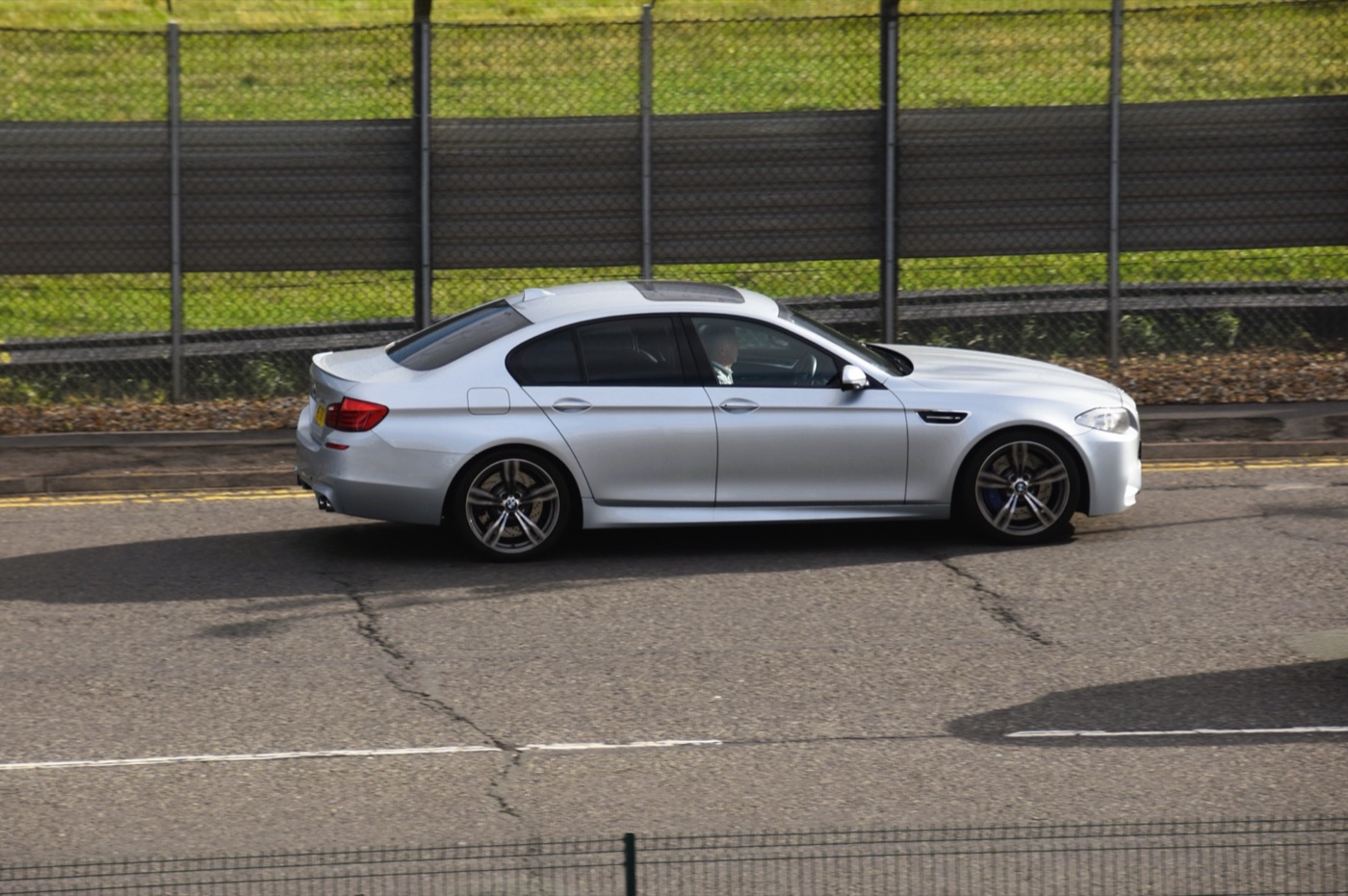
When new, the F10 M5's main rivals were the Mercedes-Benz E63 AMG and the Jaguar XFR. The 2011 SkiddMark report compared CO2 figures: 232g/km for the M5 against 295g/km for the E63 and 292g/km for the 503bhp XFR. Mercedes moved the E63 to a 5.5-litre twin-turbo V8 in 2011, with 525bhp, or 557bhp and 0–62mph in 4.2 seconds with the AMG Performance Pack, Top Gear reported. Autocar judged the E63 to cost more for "almost identical vital statistics" and the XFR to be "substantially cheaper", but expected the BMW to keep more of its value.
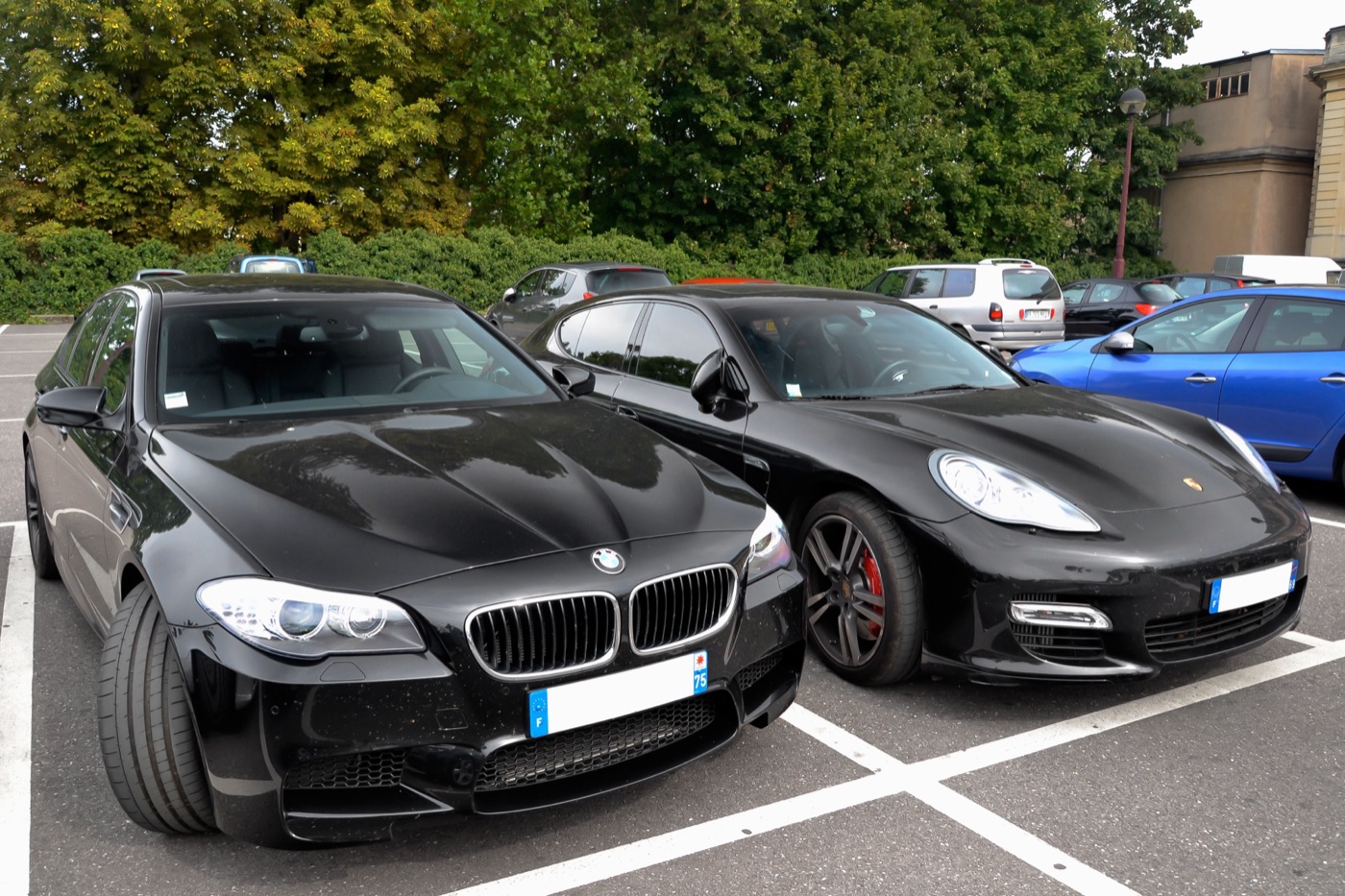
Reviews: what the press said about the BMW M5 F10
CAR and Autocar praised the gearbox, the handling, the engine's torque and the economy; CAR missed the V10's sound and Autocar found the car cold. CAR's Chris Chilton wrote in 2011 that the DCT was "much quicker and infinitely smoother" than the E60's SMG and that the steering was "far more feelsome than the regular saloon's or even the old M5's", but that the engine "neither feels nor sounds anywhere near as special as the old V10"; in the same review he found "incredible ride comfort on all but the stiffest of the three settings" and summed the car up as "one step back, two steps forwards".
Autocar praised its "surprising comfort, refinement and ease of use", found the ride in Comfort mode compliant "without ever putting body control in doubt", wrote that it was "capable of heroics on the track" and fast, "prodigiously so", but found the M5 "just a little too cold and characterless to be our class favourite", and criticised its cabin for lacking "a few outstanding points of differentiation" from a normal 5 Series. It also noted that Active Sound Design played engine noise through the car's speakers.
Questions
Is the BMW M5 F10 four-wheel drive?
No. Every F10 M5 drives its rear wheels only, through the Active M Differential. Its successor, the F90 of 2017, was the first M5 with four-wheel drive.
Was there an F10 M5 Touring estate?
No. BMW M built the F10 M5 only as a saloon. The BMW M Registry records internal model codes for an F11 M5 Touring, MX91 and MX92, but none went on sale; the previous E60 generation had been offered as an E61 Touring.
What engine is in the F10 M5?
The S63B44T0, known as the S63TU: a 4,395cc twin-turbocharged V8 with its turbochargers inside the vee, direct injection and Valvetronic. It makes 560hp and 680Nm as standard, 575hp with the Competition Package and 600hp and 700Nm in the 30 Jahre M5, Competition Edition and Pure Metal Silver Edition.
How can you tell a facelifted (LCI) F10 M5?
Cars built from July 2013 have a kidney grille with double slats and an "M5" badge, LED strips in the tail lights, a redesigned M steering wheel and an iDrive controller with a touch-sensitive top. Adaptive LED headlights were optional.
Where was the F10 M5 built?
At BMW's Dingolfing plant in Bavaria, north-east of Munich, on the same line as other 5 Series saloons.
What is the top speed of the F10 M5?
155mph, limited electronically. With the optional M Driver's Package the limit rose to 190mph (189mph with the Competition Package, by BMW's 2014 figures).
Sources
- BMW Group, "The new BMW M5", press release, 15 June 2011, and its 23-page press kit: engine, gearbox, differential, chassis, brakes, dimensions, weights, performance.
- BMW Group, "In peak form and more innovative than ever: the new BMW M5", 19 May 2013: the facelift.
- BMW Group, "Leading the field: the Competition Package for the BMW M5 …", 19 May 2013, and BMW of North America, "The 2014 BMW M5 and BMW M6 Competition Package", 18 May 2013: Competition Package content, US price, North American manual.
- BMW Group, "30 years of the BMW M5", media information, May 2014: 30 Jahre M5, earlier generations and their sales, E60 specifications.
- BMW Group UK, "The new BMW M5 Competition Edition", 22 July 2016: Competition Edition specification and UK price.
- BMW of North America, "2016 BMW M5 Pure Metal Silver Limited Edition", 21 July 2016: US edition.
- BMW M Registry, "F10 M5" FAQ, read 28 October 2026: production by version, Competition Package and manual numbers, production changes, special editions, wheels and brakes.
- MDataWorks, BMW M production statistics, read 28 October 2026: F90 production.
- Horatiu Boeriu, "BMW F10 M5 ceases production", BMWBlog, 6 March 2017: end of production.
- BMW of North America, defect notice to NHTSA, recall 12V-475, 27 September 2012: oil pump recall.
- PistonHeads, "Oil pump problem hits UK M5, M6", 2012: UK cars in the recall.
- PistonHeads, "BMW M5 (F10) | PH Used Buying Guide": known faults, running costs, buying advice.
- Chris Chilton, "BMW M5 (2011) review", CAR, 2011: engine differences from the X6 M, reception.
- Autocar, "BMW M5 (2011-2016) review": road-test performance figures, options, brakes, rivals, reception.
- Eurekar, "Most powerful production BMWs arrive", 30 May 2013: UK prices of the M5 and Competition Package.
- Auto Express, "BMW M5 30th anniversary edition revealed with 592bhp", 7 May 2014: UK allocation and price of the 30 Jahre M5.
- Top Gear, "Merc E63 AMG now with 557bhp", 2011: rival figures.
- PistonHeads, "BMW M5 (F10): Market Watch", 2017: UK launch price of £73,985.
- SkiddMark, "BMW's new M5: the official details", 15 June 2011: UK launch price and rival comparison, weight and torque against the E60.
- GOV.UK, vehicle tax rates for cars registered 1 March 2001 to 31 March 2017, read 28 October 2026: road tax.
- PistonHeads, used BMW M5 listings, year pages 2011 to 2017; 27 priced adverts registered 2011 to 2016, counted on 28 October 2026: asking prices.