BMW X6 E71: history, specifications, X6 M and buying guide
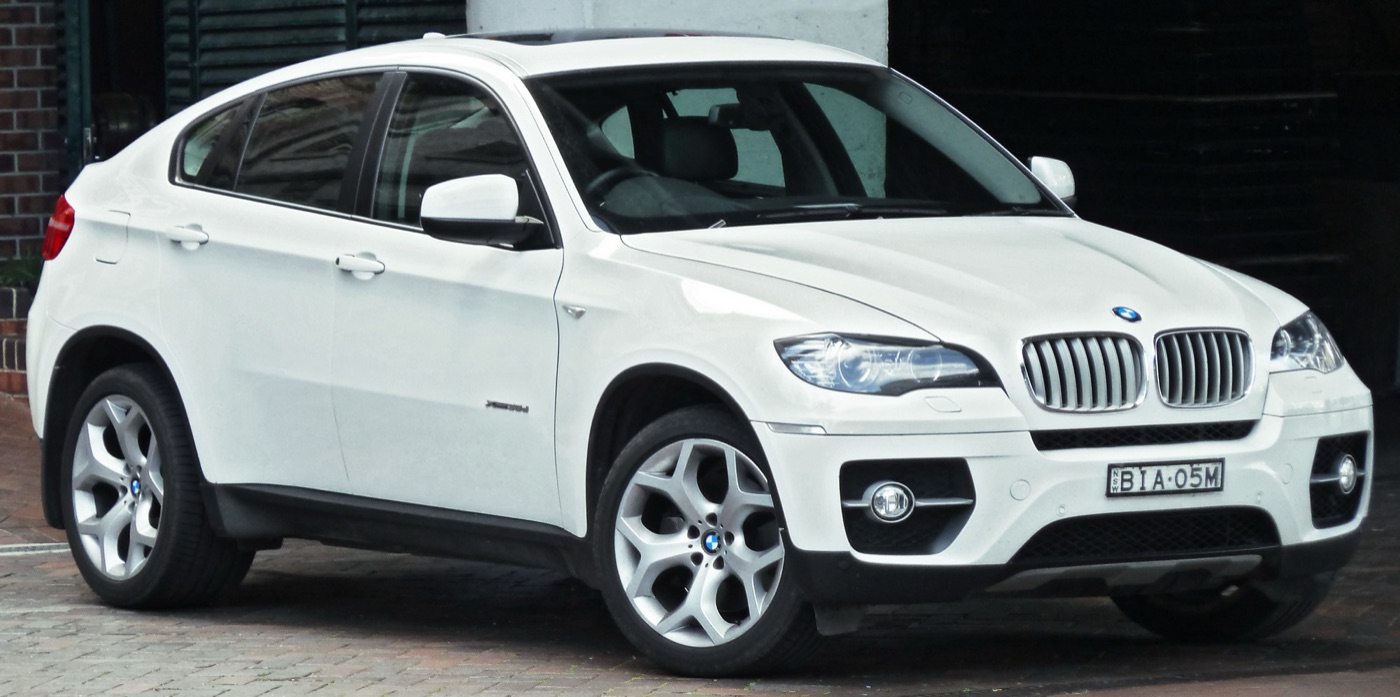
The BMW X6 E71 is the first generation of the BMW X6, the car BMW sold from 2008 to 2014 as the world's first "Sports Activity Coupé": an X5 underneath, with a falling coupé roofline, four seats at launch and a choice of petrol and diesel engines from 235 hp to the 555 hp X6 M. BMW built it at Spartanburg in South Carolina and sold almost 250,000. In October 2026, 23 of them were advertised on PistonHeads in the UK at £4,995 to £25,000, with a median of £8,995.
History of the BMW X6 E71
The X6 began as a show car in 2007, went on sale in May 2008 and ran for six years with one engine update, a five-seat option and a facelift before the second-generation F16 replaced it in 2014. BMW's March 2008 media information called it "the world's first Sports Activity Coupé" and said it was built "exclusively for the world market" at Spartanburg, on a shared line with the X5 and the Z4.
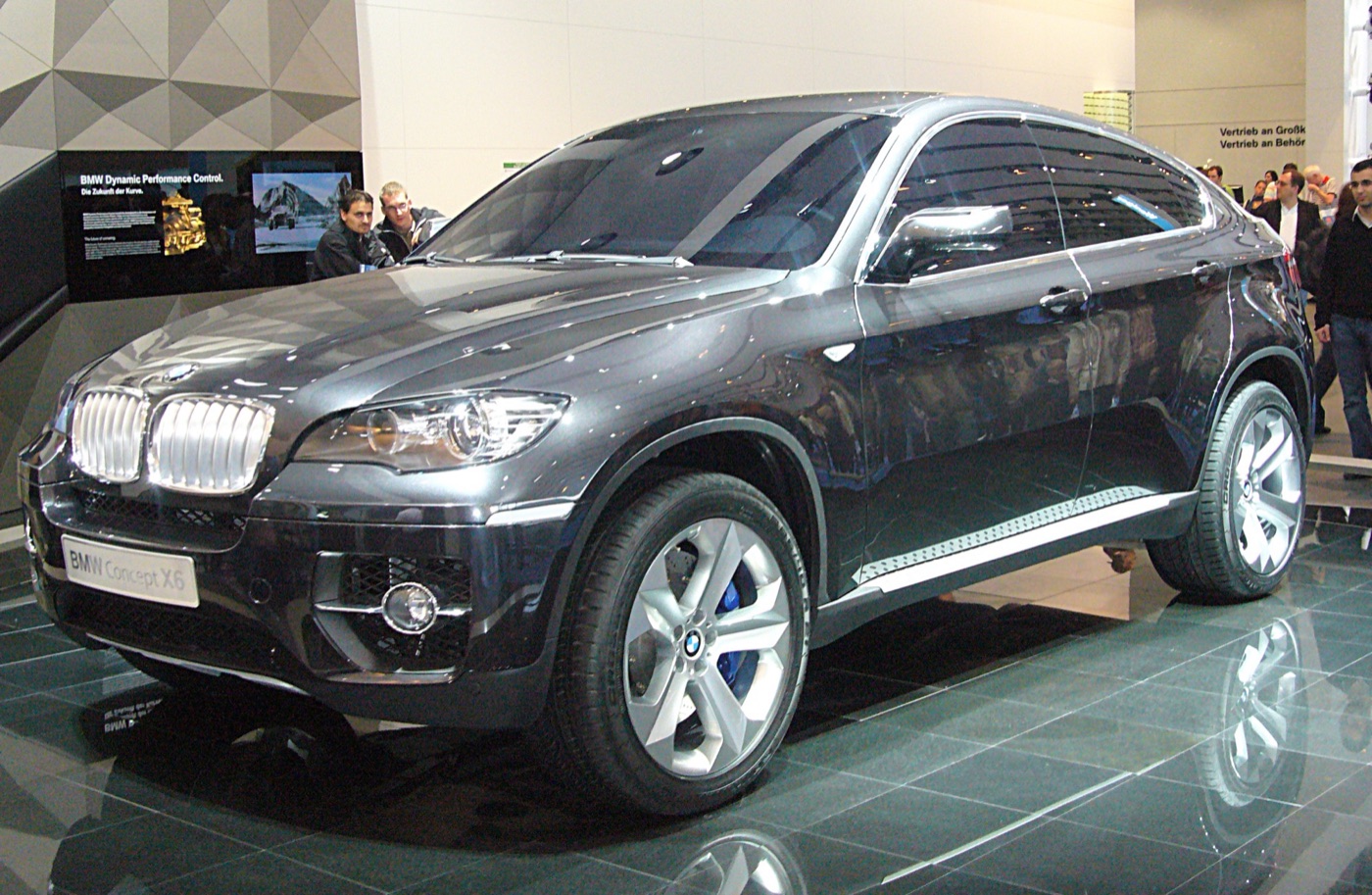
The Concept X6 at Frankfurt, 2007
BMW showed the Concept X6 and the Concept X6 ActiveHybrid at the Frankfurt motor show (IAA) in September 2007. BMW UK's show release of 11 September 2007 said the concept offered "an insight into the possible design of the forthcoming BMW X6" and opened "another untapped market segment, the Sports Activity Coupé". The concept's media information claimed it was the first car in the world with Dynamic Performance Control, the torque-shifting rear axle the production car kept.
Launch in 2008
The production car made its world debut at the Detroit motor show in January 2008, alongside the Concept X6 ActiveHybrid's North American debut. In Britain it went on sale in May 2008 as the xDrive30d, xDrive35d and xDrive35i, with the xDrive50i V8 to follow later that year, according to BMW UK's release of 20 December 2007. Its UK prices were £41,955 for the 30d, £42,625 for the 35i and £44,135 for the 35d. BMW said it was the first time an entire BMW model range was turbocharged.
BMW pitched the car as a niche: a 2011 SkiddMark report recorded that its original target was to sell one X6 for every three X5s, and that the company was criticised at launch for building it only as a four-seater. In 2008, its first year, BMW sold 26,580.
2010: new engines and the eight-speed automatic
From spring 2010 every six-cylinder engine changed and the six-speed automatic gave way to an eight-speed. BMW's January 2010 announcement, published in full by BMWBLOG, listed a new xDrive40d with 306 hp in place of the 286 hp 35d, a 245 hp xDrive30d, and the twin-scroll N55 petrol six with Valvetronic for the 35i, still at 306 hp but using 7 per cent less fuel. The two diesels each used about 10 per cent less fuel than before. Speed-sensitive Servotronic steering became standard, and Active Cruise Control with Stop & Go and Lane Departure Warning joined the options.
From four seats to five in 2011
A three-seat rear bench became an option in April 2011. BMW's release of 9 February 2011 said the extra seat replaced the storage unit between the two rear seats, and that it was available on every X6 except the ActiveHybrid, the X6 M included. The same release reversed the gearshift paddles: the right paddle now changed up and the left changed down, as on BMW's M cars. CAR's Greg Fountain had complained in his 2008 review of the "pull up, push down" paddles, which "made a mess of too many key changes".
The release also gave the sales: more than 110,000 X6s in three years, 46,404 of them in 2010, against 102,178 X5s that year. SkiddMark's report on the five-seat car, written by an owner who had run an X6 since 2008, said passengers most often praised the two individual rear seats, and that the five-seater's third rear headrest "virtually" eliminated the driver's view through the rear window. That report said the four-seat layout would be dropped; BMW's 2012 facelift release still listed the X6 as a four-seater as standard, with the bench as an option.
The 2012 facelift (LCI)
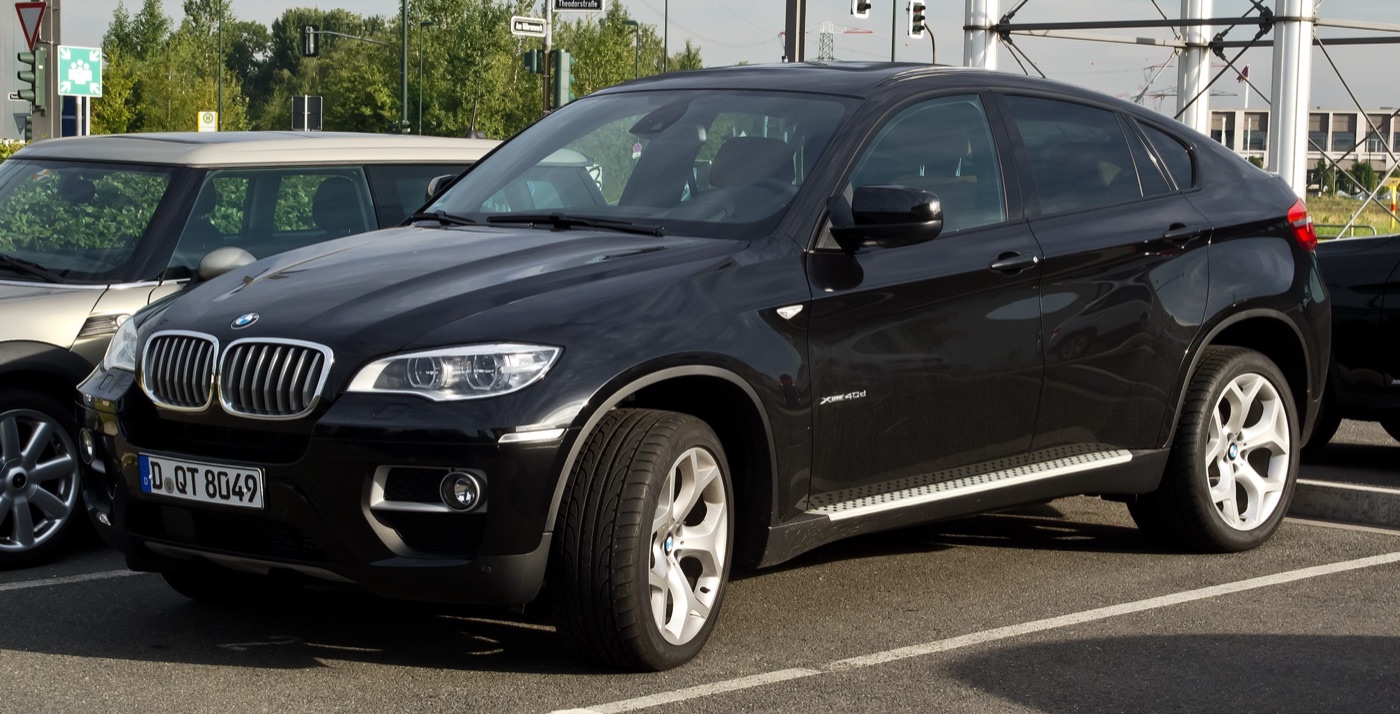
BMW revealed the facelifted X6 on 26 January 2012, for sale from spring 2012. Its release listed a new grille with angled bars, fog lights moved higher and wider, LED rear light bars and optional adaptive LED headlights, which BMW said were the first in the segment and which became standard on the X6 M. The xDrive30d could be ordered with BluePerformance AdBlue exhaust treatment to meet the Euro 6 limit, and the range gained the M50d. BMW said more than 150,000 X6s had been sold in about three years, which "far exceeded the original plans".
When did the X6 E71 end?
The last E71s were built in June 2014: BMW's service bulletins and the DVSA's recall records both give E71 build dates running to that month. BMW revealed the second-generation X6, the F16, in June 2014, and BMW UK's release put it on sale in Britain in December 2014 from £51,150, building on "the near-250,000 sales of the first-generation model".
Was the BMW X6 the first coupé SUV?
BMW claimed it was, and the E71 was the first production car sold under that label: a raised, four-wheel-drive body with a coupé roofline. The idea had a near relation in Renault's Avantime of 2001, a tall three-door coupé, which CAR's Richard Aucock called "the last car to attempt something similar" in his 2008 review of the xDrive35d. Mercedes-Benz did not follow until the GLE Coupé, whose production began at Tuscaloosa, Alabama, in April 2015, ten months after the E71's end, according to Daimler's release; it called the GLE Coupé "a completely new series of Mercedes-Benz".
Design and engineering
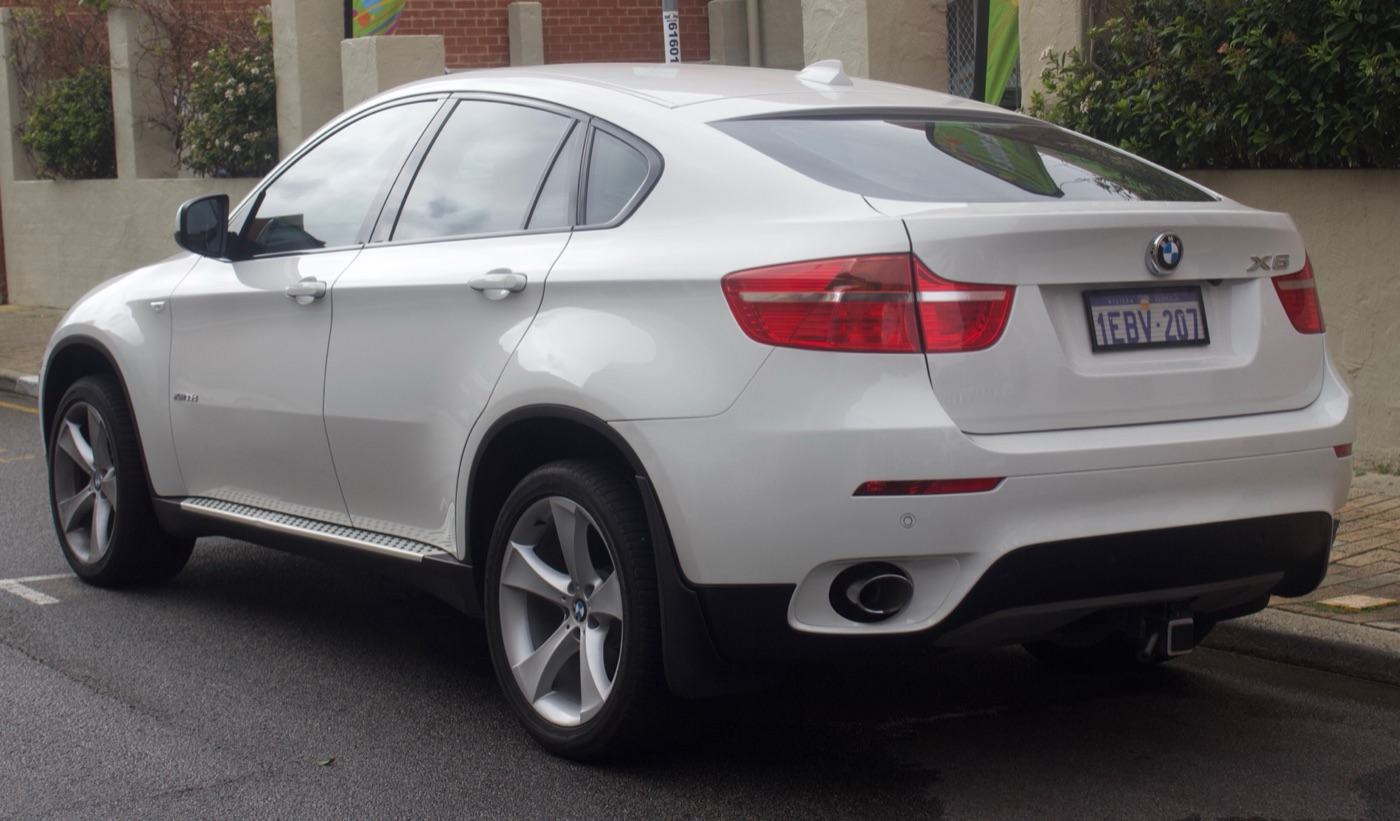
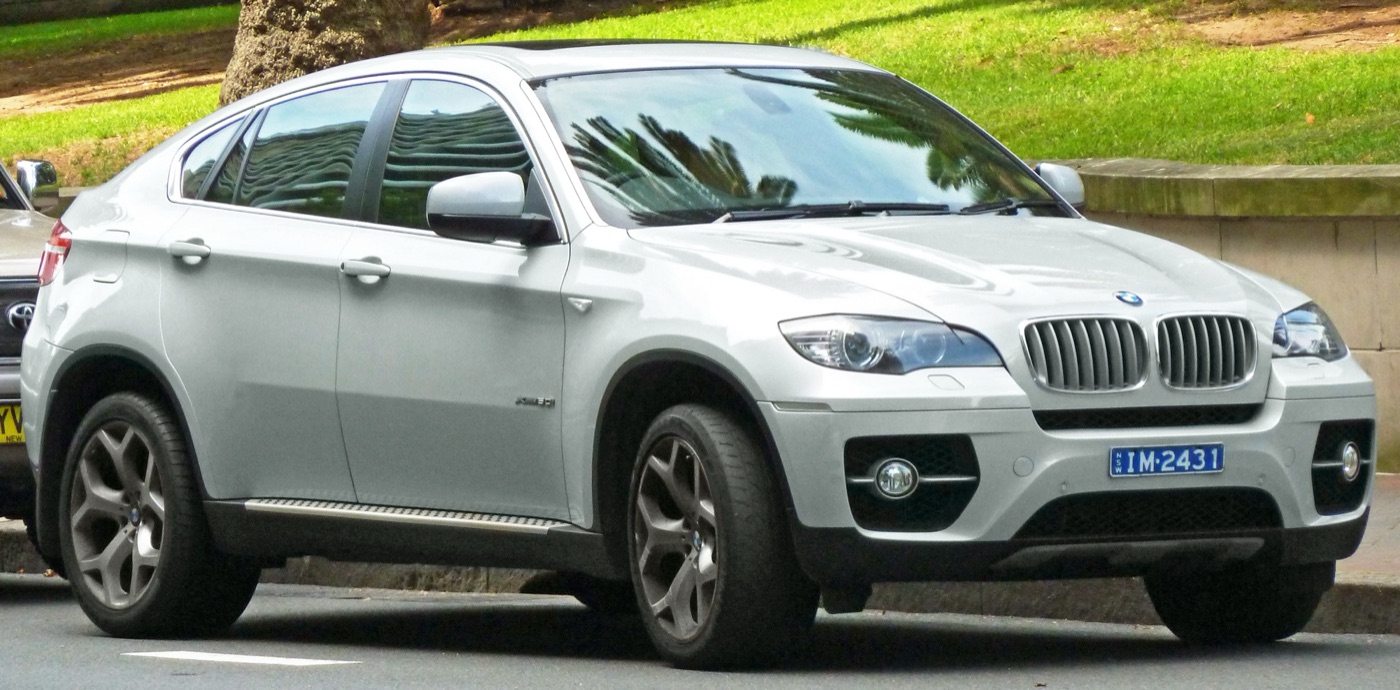
The E71 is a close relation of the X5 E70, with which it shared an assembly line; BMW said it had "a large number of the qualities" of the X5, reworked with a coupé roof and a long rear overhang. BMW's 2008 specification tables give a 2,933 mm wheelbase, a length of 4,877 mm, a width of 1,983 mm and a height of 1,690 mm. Unladen weights to DIN ran from 2,070 kg for the xDrive35i to 2,190 kg for the xDrive50i.
Body and the four-seat cabin
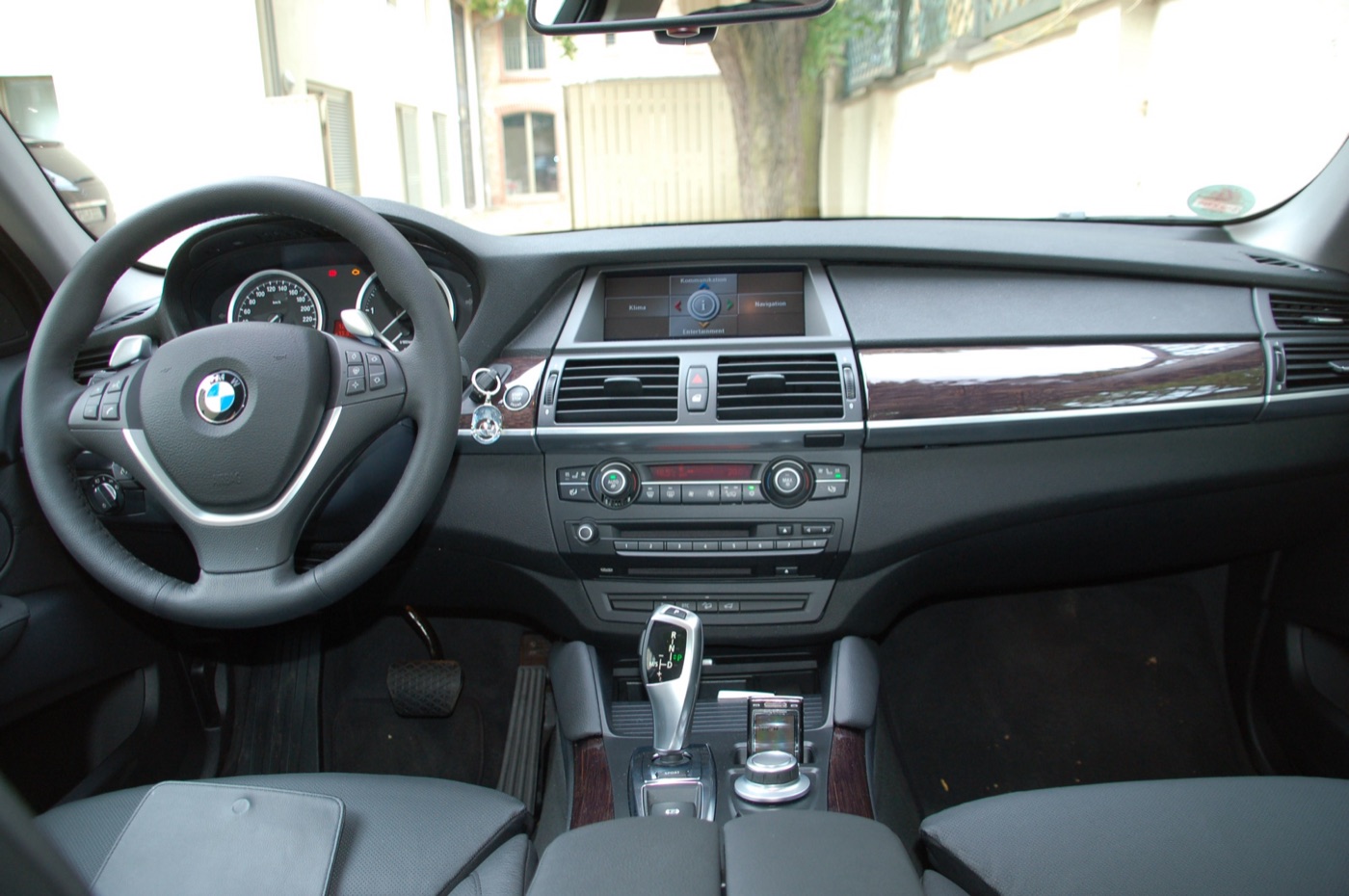
BMW described the car as a "4-door coupé with large tailgate", with a boot of 570 litres that grew to 1,450 litres with the rear backrests folded. The two rear seats had individual contours and built-in headrests, separated by a centre console. Every X6 had 19-inch alloy wheels and run-flat tyres as standard. Richard Aucock found that "tall adults will feel cramped in the back" under the sloping roof.
xDrive and Dynamic Performance Control
Every E71 had xDrive four-wheel drive and Dynamic Performance Control (DPC), which BMW introduced on this car. xDrive split drive between the axles; DPC used electrically controlled clutches and a planetary gear set in the rear differential to send more drive to the outside rear wheel, pushing the car round a bend instead of braking the inside wheel as a stability system does. BMW said it was "the only system of its kind in the world able to provide its stabilising effect both under power and with the engine on overrun". Adaptive Drive (active anti-roll bars and adaptive dampers), air suspension (self-levelling, at the rear), Active Steering and a head-up display were options.
The first V8 with its turbochargers inside the vee
The xDrive50i introduced BMW's N63 4.4-litre twin-turbo V8, which BMW called the world's first eight-cylinder petrol engine with the turbochargers and catalytic converters inside the V between the cylinder banks. BMW UK said the layout let engineers fit the turbos without redesigning the double-wishbone front suspension, and that the 50i was the most powerful production X model it had built. The 35i used the twin-turbo N54 six, International Engine of the Year in 2007; the 35d's twin-turbo diesel weighed 194 kg, which BMW said was about 50 kg less than a comparable V8 diesel.
BMW X6 E71 specifications and performance
The table lists ten engine versions from the car's six years, from the 235 hp xDrive30d to the 555 hp X6 M. All had automatic gearboxes and four-wheel drive. The quickest acceleration came from the X6 M, at 4.7 seconds to 100 km/h, and the M50d, a diesel, at 5.3 seconds.
| Model | Years | Engine | Power | Torque | 0–100 km/h | Top speed |
|---|---|---|---|---|---|---|
| xDrive30d | 2008–2010 | 3.0 litre diesel six, one turbo | 235 hp | 520 Nm | 8.0 s | 210 km/h (220 optional) |
| xDrive30d | 2010–2014 | 3.0 litre diesel six, one turbo, aluminium block | 245 hp | 540 Nm | 7.5 s | 222 km/h |
| xDrive35d | 2008–2010 | 3.0 litre diesel six, two turbos | 286 hp | 580 Nm | 6.9 s | 236 km/h |
| xDrive40d | 2010–2014 | 3.0 litre diesel six, two turbos, aluminium block | 306 hp | 600 Nm | 6.5 s | 236 km/h |
| M50d | 2012–2014 | 3.0 litre diesel six, three turbos | 381 hp | 740 Nm | 5.3 s | not stated |
| xDrive35i | 2008–2010 | 3.0 litre petrol six, two turbos (N54) | 306 hp | 400 Nm | 6.7 s | 240 km/h |
| xDrive35i | 2010–2014 | 3.0 litre petrol six, twin-scroll turbo (N55) | 306 hp | 400 Nm | 6.7 s | not stated |
| xDrive50i | 2008–2014 | 4.4 litre petrol V8, two turbos (N63) | 407 hp | 600 Nm | 5.4 s | 250 km/h (limited) |
| X6 M | 2009–2014 | 4.4 litre petrol V8, two twin-scroll turbos | 555 hp | 680 Nm | 4.7 s | 250 km/h (limited) |
| ActiveHybrid X6 | 2009–2011 | 4.4 litre V8 and two electric motors | 485 hp (system) | 780 Nm (system) | 5.6 s | 236 km/h |
Source: BMW media information of March 2008 (launch models), January 2010 (via BMWBLOG), April 2009 (X6 M), November 2009 (ActiveHybrid), January 2012 (M50d) and the April 2012 specifications sheet (xDrive30d and xDrive40d). "Not stated" means the release gave no figure.
Gearboxes
All launch models had a six-speed automatic with paddles. From spring 2010 the six-cylinder and V8 models had an eight-speed automatic; the X6 M kept a six-speed M Sport automatic, and the ActiveHybrid used its own two-mode transmission with seven fixed ratios. The April 2012 specifications sheet gives the eight-speed's first gear as 4.714:1 and eighth as 0.667:1, with a 3.154:1 final drive on the 30d and 40d.
Dimensions and weight after the facelift
The facelift left the body size unchanged: the April 2012 sheet gives 4,877 mm by 1,983 mm and a height of 1,690 mm without the roof antenna (1,699 mm with it). It also lists 212 mm of ground clearance, an 85-litre fuel tank, and a braked towing limit of 2,700 kg, or 3,500 kg with the optional extended trailer load and air suspension. The 30d and 40d weighed 2,075 kg and 2,110 kg unladen to DIN.
BMW X6 E71 variants: X6 M, ActiveHybrid and M50d
Three variants went beyond the standard range: the X6 M from BMW's M division, the ActiveHybrid X6 (model code E72) and the M50d, a triple-turbo diesel from BMW's M Performance line.
X6 M
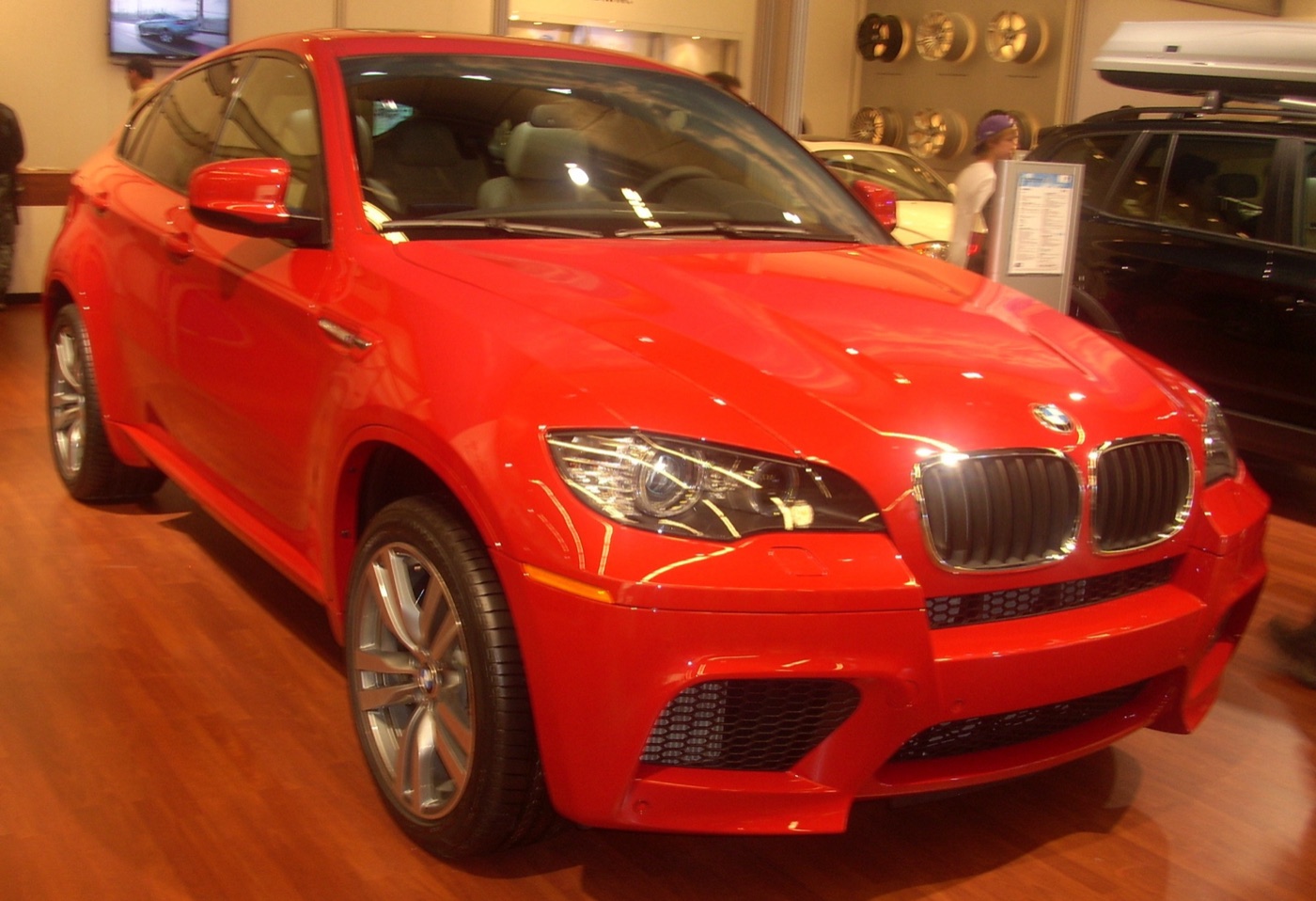
The X6 M was unveiled at the New York motor show on 8 April 2009 and went on sale in the UK on 24 October 2009. BMW UK's release of 9 April 2009 called it and the X5 M BMW's first M cars with xDrive four-wheel drive and "the most powerful road-going M car the company has ever launched". Its 4.4-litre V8 made 555 hp at 6,000 rpm and 680 Nm of torque from 1,500 to 5,650 rpm, with twin-scroll turbochargers and the catalytic converter inside the vee. It sat 10 mm lower than an X6, on stiffer springs, with adaptive dampers, active anti-roll bars and launch control.
BMW of North America priced it at $89,725. CAR's spec panel gave the top speed as 155 mph, or 171 mph with the M Driver's Package. CAR's Tom Bird, testing the £77,425 UK car in 2009, weighed it at 2,380 kg, 115 kg more than the xDrive50i, and wrote: "It's no M3 or M5 that's for sure."
ActiveHybrid X6 (E72)
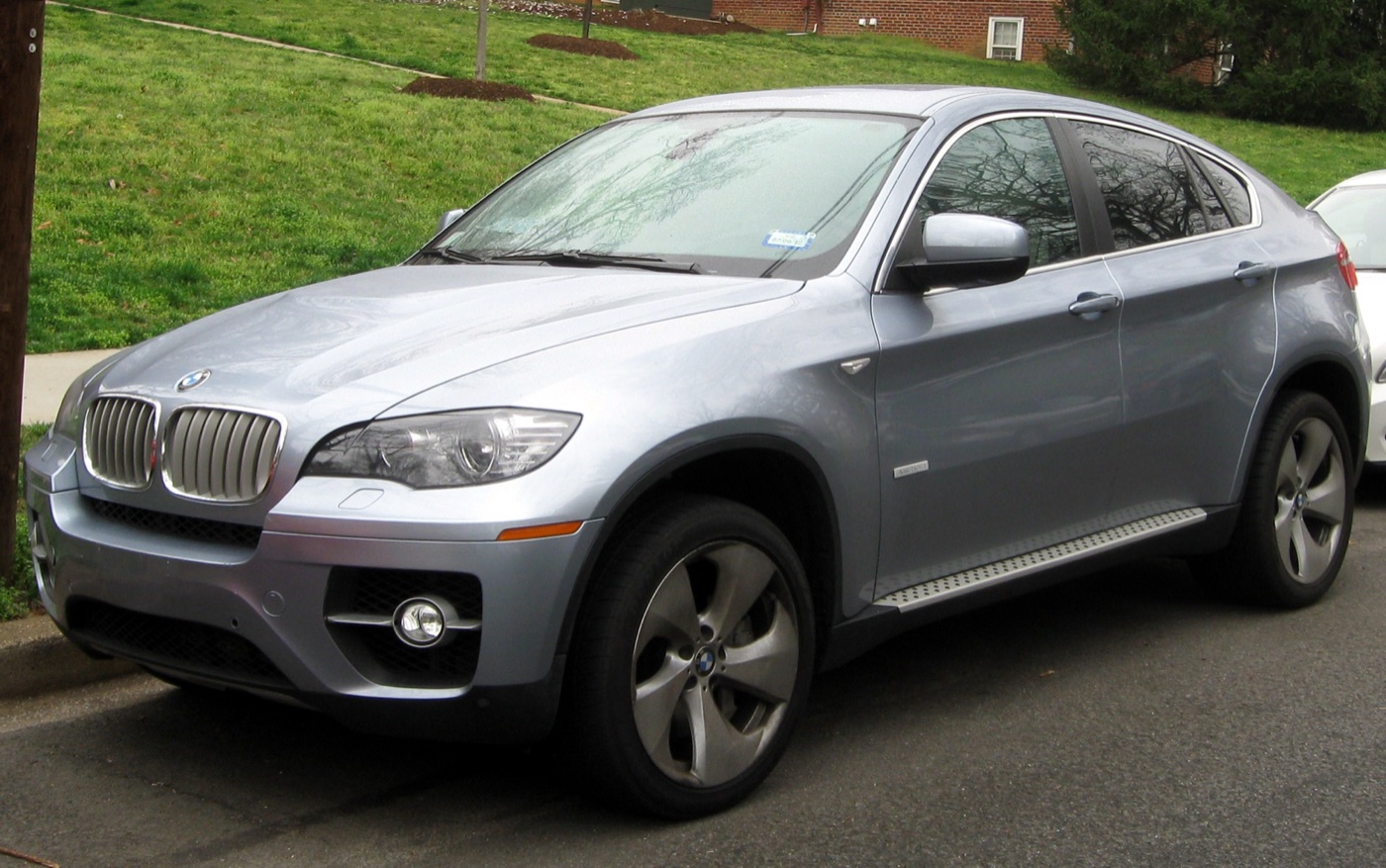
The ActiveHybrid X6 was BMW's first full hybrid, shown in production form at Frankfurt in September 2009. Its media information lists the xDrive50i's 407 hp V8 plus two electric motors of 91 hp and 86 hp inside a two-mode transmission developed with General Motors and DaimlerChrysler, a 2.4 kWh nickel-metal hydride battery under the boot floor, and a combined 485 hp and 780 Nm. BMW called it "the most powerful hybrid vehicle in the world". It could run on electricity alone up to 60 km/h for up to 2.5 km, and its EU figure was 9.9 litres/100 km (28.5 mpg) and 231 g/km of CO2. It weighed 2,450 kg to DIN. BMW of North America said it would reach US dealers in the fourth quarter of 2009, and a 2015 BMW service bulletin dates E72 production from September 2009 to September 2011.
M50d
The M50d arrived with the 2012 facelift. Its 3.0-litre six had three turbochargers and piezo injectors at 2,200 bar, and BMW called it "the world's most powerful standard in-line 6-cylinder diesel engine": 381 hp and 740 Nm, 0–100 km/h in 5.3 seconds and 7.7 litres/100 km (36.7 mpg) in the EU test. Mike Duff of evo drove it in September 2012 and found "lag-free urge from idle speed upwards", but a car that "never feels anything other than big and heavy"; he judged it more sensible than the X6 M, with "a £20K saving on the pricetag".
How many BMW X6 E71s were made?
BMW sold about 250,000 E71 and E72 X6s worldwide between 2008 and mid-2014. Its annual reports give X6 sales of 235,850 from 2008 to 2013, and BMW UK put first-generation sales at "near 250,000" in June 2014, when the F16 was announced. The best year was 2010, with 46,404 sold.
| Year | X6 sold | Change |
|---|---|---|
| 2008 | 26,580 | first year |
| 2009 | 41,667 | +56.8% |
| 2010 | 46,404 | +11.4% |
| 2011 | 40,822 | −12.0% |
| 2012 | 43,689 | +7.0% |
| 2013 | 36,688 | −16.0% |
| 2014 | 30,244 | includes the first F16s |
Source: BMW Group annual reports for 2009 (2008 and 2009), 2011 (2010 and 2011), 2012 and 2014 (2013 and 2014). The 2013 change is worked out from the 2012 and 2013 totals.
BMW does not publish a separate production total for the E71. In the UK, the DVSA's 2023 airbag recall for X6s built from August 2007 to June 2014, R/2023/224, gives a campaign total of 44,407 vehicles, but that figure covers other BMW models as well.
What is a BMW X6 E71 worth today?
Most E71s advertised in the UK ask £5,000 to £11,000. On 28 October 2026, 23 E71s registered from 2008 to 2014 were advertised on PistonHeads' classified listings, from £4,995 for a 2008 xDrive35d with 105,000 miles to £25,000 for a 2008 Hamann-modified V8 with 40,600 miles. The median price was £8,995 and the median mileage 94,000.
Nineteen of the 23 were diesels, priced from £4,995 to £11,250 with a median of £7,991. The six xDrive40ds had a median of £9,243; two xDrive50is were at £12,995 and £14,995 with under 50,000 miles each; the only X6 M, a 2011 car with 71,200 miles, was £15,950, and the only M50d, a 2012 car with 121,000 miles, £9,500. Cars registered from 2012 to 2014 had a median of £9,495, against £7,741 for 2008 to 2011.
Buying a BMW X6 E71: reliability, faults and running costs
The E71's known weak points are recalled parts, several of them fire risks, and the fuel pumps and injectors of the petrol engines.
Common problems: is the BMW X6 E71 reliable?
The petrol V8 has the worst record. In the US, BMW ran an N63 Customer Care Package for X6s with the V8 built from July 2008 to June 2014 and for ActiveHybrids. Its service bulletin, SI B11 06 14, filed with the NHTSA, lists a six-point check and, where needed, new air-mass sensors, piezo injectors, vacuum pump, low-pressure fuel sensor, turbocharger intake seals and crankcase ventilation hoses. BMW stated that the package was "NOT a mandatory Technical Campaign or Recall". The early xDrive35i's N54 engine was part of a 2010 US recall of about 130,000 BMWs for high-pressure fuel pump failure, according to BMW of North America's statement.
BMW X6 E71 recalls in the UK
The DVSA's recall records list these campaigns for X6s built in the E71 years. A car's own history can be checked by its registration on the DVSA's recall checker.
| DVSA reference | Launched | Fault | Built |
|---|---|---|---|
| R/2009/074 | July 2009 | Rear brake discs could crack | May–June 2009 |
| R/2011/123 | October 2011 | Damp in the diesel fuel filter heater; flat battery or fire | August 2008 – June 2009 |
| R/2011/147 | November 2011 | Short circuit in the turbocharger's extra coolant pump | November 2007 – February 2011 |
| R/2012/049 | April 2012 | Turbocharger water pump could crack and overheat | not given |
| R/2012/078 | July 2012 | Steering box could spray oil onto hot engine parts | not given |
| R/2012/150 | December 2012 | Power steering belt tensioner pulley bolt could fail | June 2006 – November 2012 |
| R/2013/095 | September 2013 | Diesel fuel filter heater could stay on and overheat | May–November 2009 |
| R/2019/018 | February 2019 | Power steering idler pulley bolt could loosen | August 2007 – March 2010 |
| R/2019/057 | March 2019 | Auxiliary water pump circuit board could short | October 2008 – October 2011 |
| R/2019/192 | July 2019 | Blower regulator wiring could corrode; fire risk | December 2006 – August 2011 |
| R/2023/224 | August 2023 | Front airbags could deploy with too much force | August 2007 – June 2014 |
| R/2025/349 | December 2025 | Takata driver or passenger airbags | August 2007 – June 2014 |
Source: DVSA recalls file, downloaded 28 October 2026, rows for the BMW X6 whose build dates fall in 2007–2014. Several campaigns also cover the X5 and other models built in the same years. R/2016/300, for an electric power-steering fault on X6s built from September 2011, is left out: the E71 has hydraulic power steering.
Running costs: tax and fuel
Every E71 was registered before April 2017, so it pays vehicle tax by CO2 band, GOV.UK's rate table shows. A post-2010 xDrive30d (195 g/km) or 40d (198 g/km) is in band J at £410 a year; the M50d (204 g/km) and the launch 30d and 35d (217 and 220 g/km) are in band K at £445; the later 35i (236 g/km) is in band L at £760; and the original 35i (262 g/km), the 50i (292 to 299 g/km) and the X6 M (325 g/km) are in band M at £790. The CO2 figures are BMW's, from its 2008 media information and its 2011 annual report.
BMW's EU combined figures run from 38.2 mpg for the post-2010 30d and 37.7 mpg for the 40d to 28.0 mpg (10.1 litres/100 km) for the N55 35i, 22.6 mpg for the 50i and 20.3 mpg (13.9 litres/100 km) for the X6 M.
In London, TfL's ULEZ rules require Euro 6 for diesel cars and Euro 4 for petrol cars, or a daily charge of £12.50. TfL says petrol cars first registered after 2005 generally meet it, which takes in every petrol E71. The only diesel E71 that meets Euro 6 is a 2012-on xDrive30d with the optional BluePerformance system; other diesels pay the charge.
BMW X6 E71 rivals
At launch the X6 had no direct rival with the same shape, so reviewers set it against large performance SUVs. Richard Aucock found the 35d quicker than the V8 Range Rover Sports, compared its CO2 with a manual diesel Volvo XC90, and set its handling against the Porsche Cayenne GTS. For the X6 M, Tom Bird named the Porsche Cayenne Turbo and the Mercedes ML63 AMG, and placed the BMW "square in the middle", ahead of the Mercedes and behind the Porsche. BMW's own X5 E70 was the obvious alternative: the same platform, more rear space and a seven-seat option.
Reception
CAR's two launch reviews both praised the handling. Richard Aucock gave the xDrive35d four stars out of five in CAR, called DPC "a fearsomely clever planetary gearset", and concluded that BMW had "produced one of the most unlikely driver's cars of the year". His colleague Greg Fountain, in CAR's review of the xDrive35i, wrote that "this thing really handles" but found the 306 hp petrol six "flat and uninspiring" in a 2,145 kg car and told readers to buy the diesel.
The X6 M drew a cooler verdict. Tom Bird gave it three stars in CAR's 2009 review, writing that "the lesser X6s are much better to drive" and that the V8 "sounds pretty rubbish". evo called the X6 M "utterly ludicrous" in its 2012 M50d review. BMW sold more X6s in 2010 than in any other year, and its January 2012 release said sales had "far exceeded the original plans".
Questions
What does E71 mean on a BMW X6?
E71 is BMW's model code for the first-generation X6, sold from 2008 to 2014. The ActiveHybrid X6 has its own code, E72, and the second-generation X6 of 2014 is the F16.
How many seats does a BMW X6 E71 have?
Four as built at launch, with two individual rear seats. From April 2011 a three-seat rear bench was an option on every version except the ActiveHybrid, making the car a five-seater.
Where was the BMW X6 E71 built?
At BMW's Spartanburg plant in South Carolina, USA, which BMW said built the X6 for the whole world market on a line shared with the X5 and the Z4.
How big is the boot in a BMW X6 E71?
BMW quotes 570 litres with the rear seats up and 1,450 litres with the backrests folded, for both the four-seat and the five-seat car.
How much can a BMW X6 E71 tow?
BMW's 2012 specifications give a braked trailer limit of 2,700 kg, or 3,500 kg with the optional extended trailer load and air suspension, and an unbraked limit of 750 kg for the xDrive30d and xDrive40d.
How fast is the BMW X6 M E71?
BMW quoted 0 to 62 mph in 4.7 seconds and a top speed limited to 155 mph, or 171 mph with the M Driver's Package, according to CAR's 2009 road-test data. Its V8 made 555 hp.
Which BMW X6 E71 is the most common in the UK?
The diesels. BMW UK expected diesels to be the biggest sellers at launch, and 19 of the 23 E71s advertised on PistonHeads on 28 October 2026 were diesels, six of them xDrive40ds and nine xDrive30ds.
Sources
- BMW, "The BMW X6", media information 03/2008: concept, launch engines, DPC, N63 V8, dimensions, weights, boot, Spartanburg production.
- BMW UK, "The new BMW X6", press release, 20 December 2007: UK prices, UK on-sale date, all-turbo range, V8 layout.
- BMW UK, "BMW at the IAA Frankfurt", press release, 11 September 2007: Concept X6 and Concept X6 ActiveHybrid debut.
- BMW, "BMW Concept X6", media information 9/2007: concept description, first car with DPC.
- BMW, January 2010 announcement of new X6 engines and the eight-speed automatic, reproduced by BMWBLOG, 28 January 2010: xDrive40d, N57 30d, N55 35i, eight-speed from spring 2010.
- BMW, "BMW X5 and BMW X6 present a new range of special options for spring 2011", press release, 9 February 2011: three-seat bench, paddle change, 2010 sales.
- BMW, "Unique, and now more exceptional than ever: the new BMW X6", media information, 26 January 2012: facelift, LED headlights, M50d, BluePerformance, sales over 150,000.
- BMW, "Specifications BMW X6 xDrive30d, xDrive40d", media information 2/2012, valid from 4/2012: post-2012 dimensions, weights, gear ratios, performance, CO2.
- BMW UK, "The new BMW X5 M and X6 M", press release, 9 April 2009: X6 M engine, chassis, UK on-sale date.
- BMW of North America, "BMW X5 M and X6 M U.S. pricing announced", 27 April 2009: US price, New York debut.
- BMW, "The BMW ActiveHybrid X6", media information 11/2009: hybrid drivetrain, battery, performance, consumption, weight.
- BMW of North America, "The 2010 BMW ActiveHybrid X6", 13 August 2009: Frankfurt premiere, US arrival.
- BMW UK, "The new BMW X6", press release, June 2014: F16 UK on-sale date and price, near-250,000 first-generation sales.
- BMW Group, annual reports 2009, 2011, 2012 and 2014: X6 sales by year; 2011 CO2 figures.
- BMW of North America, SI B11 06 14, "N63 Engine: Customer Care Package", April 2015, filed with the NHTSA: V8 parts checked, E71 and E72 build dates.
- BMW of North America, statement on the N54 high-pressure fuel pump recall, via BMWBLOG, 27 October 2010: models and numbers affected.
- DVSA, vehicle recalls file, downloaded 28 October 2026: UK recalls for the X6.
- GOV.UK, "Vehicle tax rates: cars registered between 1 March 2001 and 31 March 2017", checked 27 October 2026: tax bands and rates.
- Transport for London, "Ultra Low Emission Zone: cars", checked 28 October 2026: ULEZ standards and charge.
- PistonHeads, BMW X6 classified listings, 2008–2014 registrations, 28 October 2026: asking prices and mileages.
- Richard Aucock, "BMW X6 xDrive35d (2008) review", CAR: driving impressions, rear space, rivals.
- Greg Fountain, "BMW X6 xDrive35i (2008) review", CAR: petrol six, paddles, handling.
- Tom Bird, "BMW X6 M (2009) review", CAR: UK price, weight, top speed, rivals, verdict.
- Mike Duff, "2012 BMW X6 M50d review", evo, 3 September 2012: M50d engine and verdict.
- Daimler, "Production of Mercedes-Benz GLE Coupé starts in the US", via Automotive World, 9 April 2015: start of GLE Coupé production.
- SkiddMark, "BMW's X6 becomes… a 5-seater", 9 February 2011: BMW's original sales target, owner's view of the four-seat cabin and rear visibility.