BMW Z4 E89: history, specifications, racing and buying guide
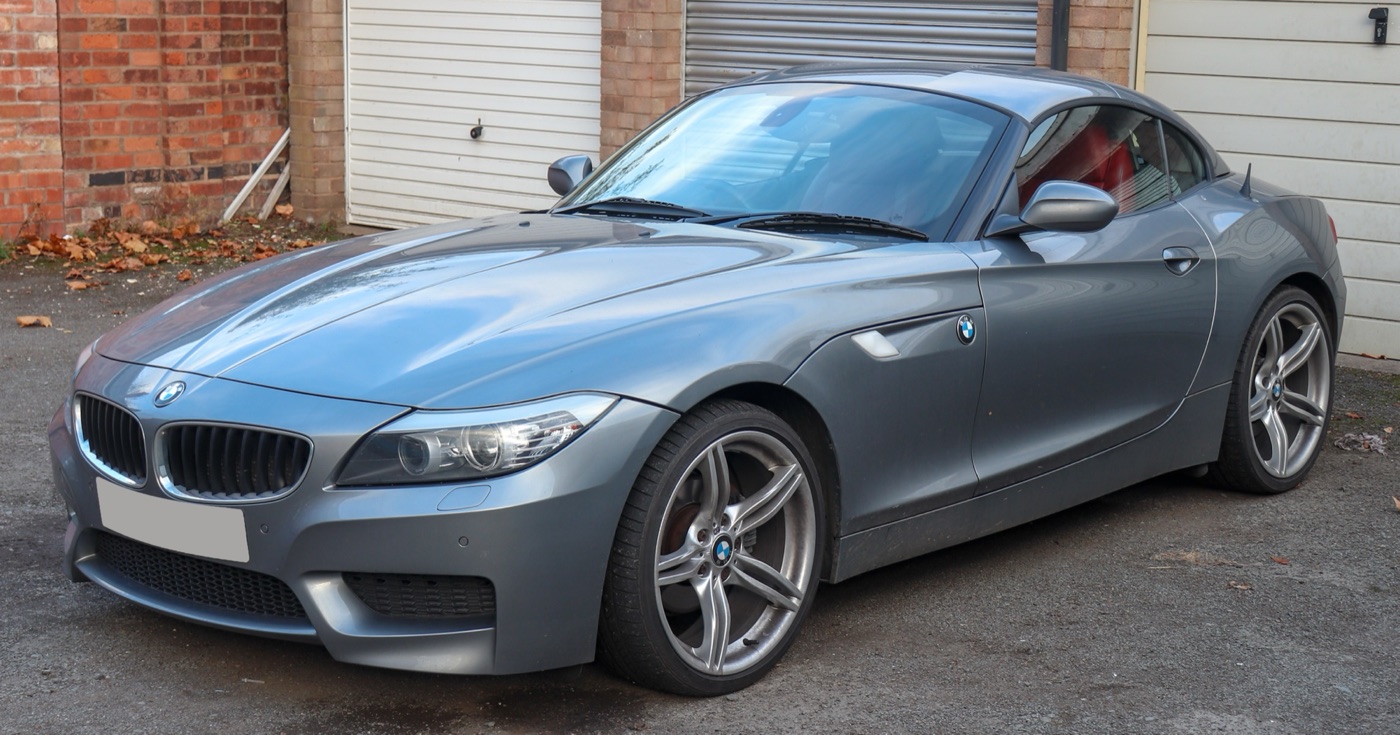
The BMW Z4 E89 is the second-generation Z4, a two-seat roadster with a folding aluminium hard top that BMW built at Regensburg in Germany from 2009 to August 2016. It replaced both the soft-top Z4 Roadster and the Z4 Coupé, came with four- and six-cylinder petrol engines from 156 hp to 340 hp, and more than 115,000 were made. In October 2026, 91 of the E89s advertised on PistonHeads were priced from £3,990 to £23,600, with half of them under £10,000.
History and development of the E89
BMW revealed the E89 in December 2008. The UK media information, embargoed to 14 December 2008, called it the first BMW roadster with a retractable hard top and said it would go on sale in May 2009. The car made its North American debut at the Detroit motor show on 11 January 2009, according to BMW of North America's press kit.
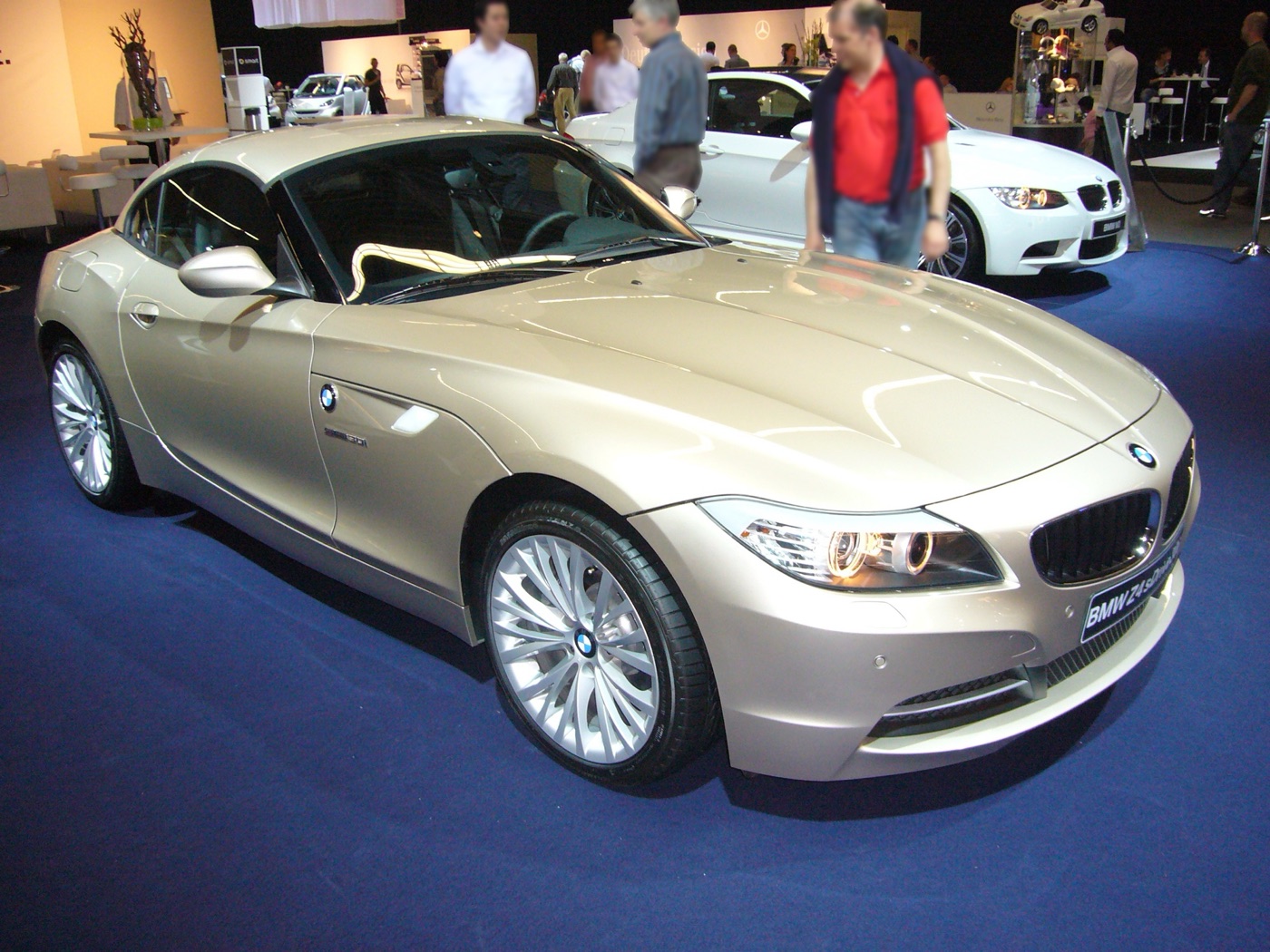
Where the E89 fits among BMW's Z cars
The E89 is the second generation of the Z4 and the fourth of BMW's modern Z roadsters. BMW's own history of the line, in its September 2022 media information, starts with the Z1, unveiled in 1987, of which about 8,000 were delivered between 1988 and 1991; then the Z3 of 1995, the first BMW built only at Spartanburg; then the first-generation Z4 roadster, shown at the Paris motor show in 2002, and the Z4 Coupé four years later. Its predecessor's last car, an E85 roadster or E86 coupé, left Spartanburg on 27 August 2008, Auto123 reported.
Designed by Juliane Blasi and Nadya Arnaout
The shape came out of an internal design competition between BMW's studios in Munich and at Designworks USA in California. Henny Hemmes of The Auto Channel reported from the press launch in Spain in March 2009 that Juliane Blasi, then 31, who had joined BMW as an intern in 2003, drew the exterior, and Nadya Arnaout, 36, of Designworks drew the cabin. The board chose both designs without knowing whose they were, according to Anders Warming, BMW's head of exterior design, who said: "It's really unique in the industry: the first time women designed a complete car." The Z4 was Blasi's first car design.
From Spartanburg to Regensburg
The first Z4 had been built at Spartanburg in South Carolina. BMW's US press kit says the E89 moved to Regensburg, alongside the 1 Series and 3 Series, because Spartanburg was turning over entirely to the X models. BMW spent about €130 million on the Regensburg plant for the new car, BMWBlog reported in December 2010, where plant manager Andreas Wendt said the retractable aluminium roof made the car "very demanding" to build.
Four-cylinder engines arrive in 2011
At launch every E89 had a straight six. BMW showed the four-cylinder sDrive28i at the New York motor show in April 2011, and its July 2011 release, reproduced by BMWBlog, said that from autumn 2011 a turbocharged 2.0-litre four would replace the 2.5-litre sDrive23i and 3.0-litre sDrive30i, in two states of tune: the 184 hp sDrive20i and the 245 hp sDrive28i. BMW's data sheet for the two cars is marked valid from September 2011. evo's road test of the sDrive20i put it at £29,480, with CO2 down from 201 to 159g/km and official economy up from 33.2 to 41.5mpg; an eight-speed automatic joined the options list at the same time.
The 2013 facelift (LCI)
SkiddMark reported the facelift on 18 December 2012, two days before BMW's UK press release. BMW calls a mid-life update a Life Cycle Impulse (LCI), and the changes this time were mild: apart from the new paint colours, SkiddMark wrote, "you'll struggle to spot the difference." The headlamps gained white LED corona rings and a white "eyebrow", the side gills gained chrome trim and LED repeaters, and the air vents and iDrive surround inside every Z4 turned gloss black.
The main news was a new entry-level model, the sDrive18i, with a detuned version of the 2.0-litre turbo: 154bhp (156 hp in BMW's figures) and 177lb ft, 0–62mph in 7.9 seconds, 137mph, 41.5mpg and 159g/km of CO2 with the six-speed manual. SkiddMark listed the rest of the range as the sDrive20i at 181bhp and 199lb ft, the sDrive28i at 242bhp and 258lb ft, and the unchanged 3.0-litre twin-turbo sDrive35i (302bhp) and sDrive35is (335bhp). The M Sport package, with Adaptive M suspension, 18-inch M wheels and an M aerodynamic kit, was now offered in a model-specific version for the sDrive35is. BMW UK's release of 20 December 2012 confirmed the cars would go on sale in March 2013, from £27,610 for the sDrive18i to £45,795 for the sDrive35is, with DAB, xenon headlights and Bluetooth now standard.
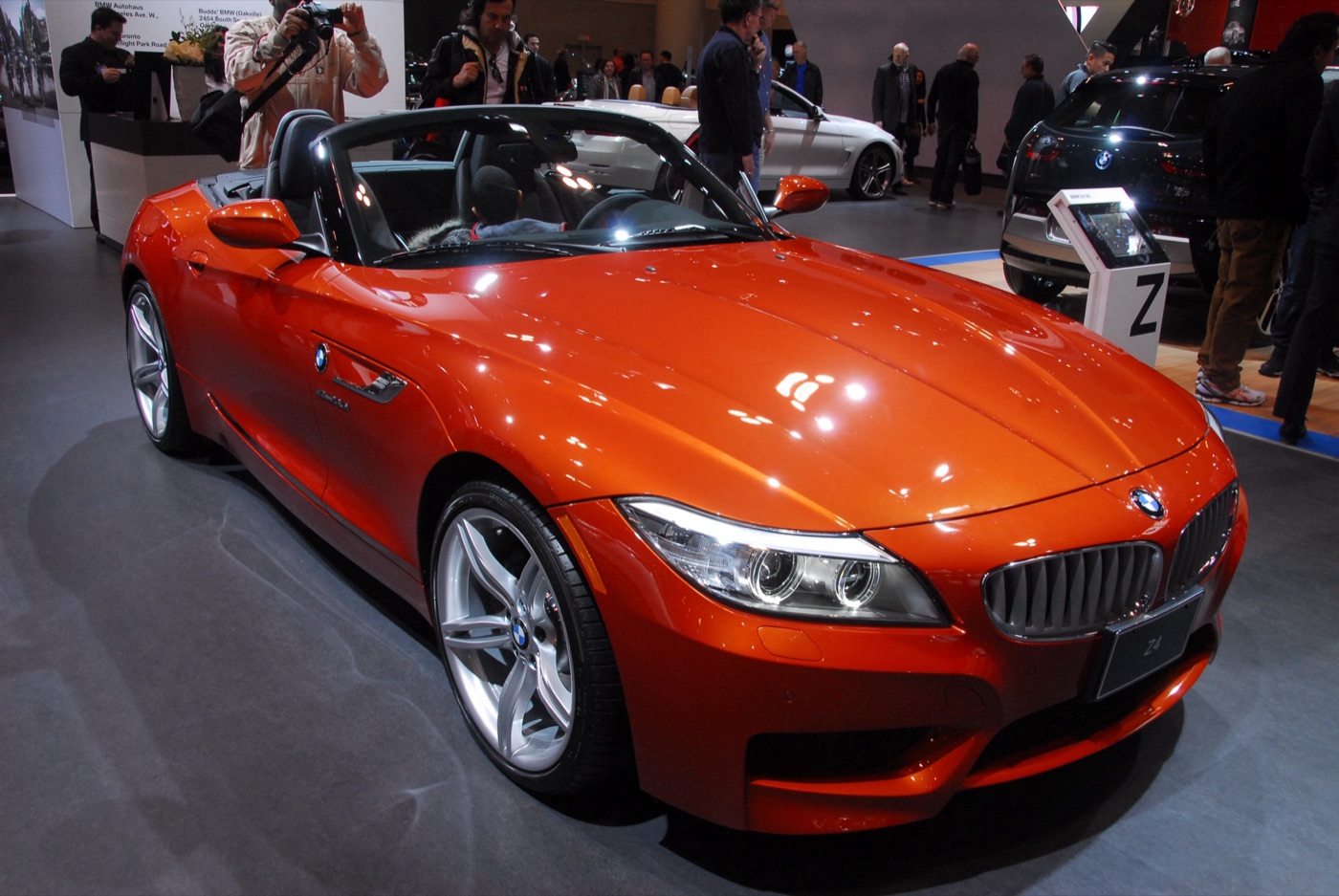
Production ended at Regensburg on 22 August 2016, after more than 115,000 cars, BMWBlog reported on 26 August 2016. The last car was an sDrive35is in Valencia Orange metallic, and it was also the last new BMW to leave a factory with the N54 twin-turbo six.
Design and engineering
The E89 is a front-engined, rear-wheel-drive two-seater built round a folding metal roof. BMW's figures make it 148mm longer than the first Z4 at 4,239mm and 9mm wider at 1,790mm, on a 2,496mm wheelbase, with 44mm more headroom with the roof up.
The folding hard top
The roof is two aluminium panels, moved electro-hydraulically, that open or close in 20 seconds and stack in the boot, BMW's 2008 media information says. Boot space depends on the roof: with it stowed the boot holds 180 litres; with it up, 310 litres, enough for a set of golf clubs, and an optional through-loading hatch between the seats takes a second set. By the time of the 2012 facelift BMW said the roof could be worked at up to 20mph. In CAR's 2009 test of the sDrive23i, Chris Chilton noted that a cycle took twice as long as the cloth roof of the first Z4, that the luggage cover has to be in place before the roof will fold, and that the boot was nearly 30 litres smaller than a Mercedes SLK's.
Chassis and suspension
BMW's US press kit describes a near 50/50 weight distribution, aluminium suspension, electromechanical power steering and, at the rear, what BMW's 2010 data sheet calls a "central arm axle". The front suspension and subframe are largely aluminium. Every car has Drive Dynamic Control, a switch with three settings (Normal, Sport and Sport+) that changes throttle response, steering, the stability control and, on automatic and dual-clutch cars, the shift timing. The optional Adaptive M Suspension, first offered on this car, adds electronically controlled dampers and lowers the car by 10mm. The Z4 was also the first car in its class with an electric parking brake.
Cabin and iDrive
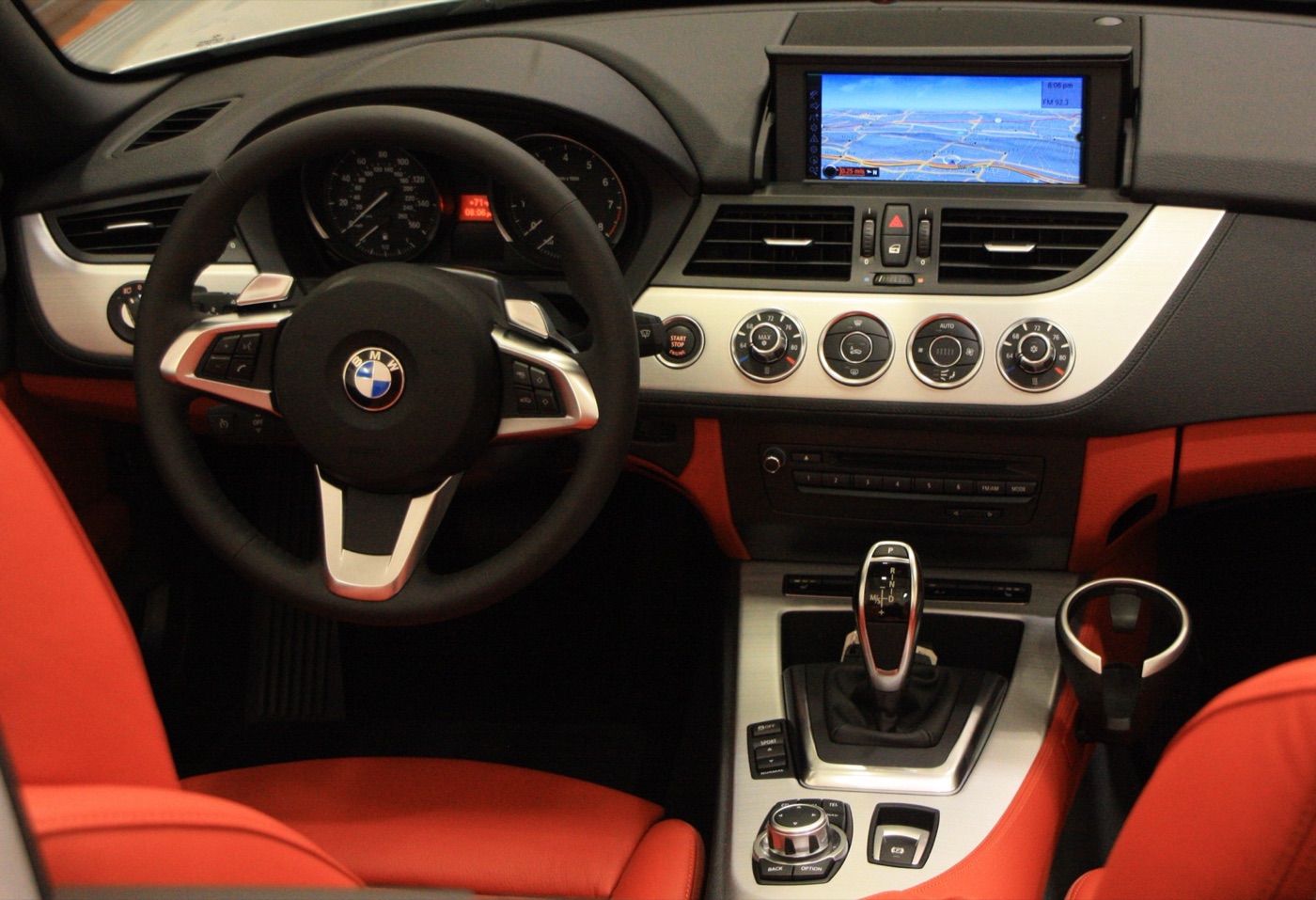
The E89 was the first Z roadster with iDrive: with the optional navigation came a controller on the centre console, eight programmable favourite buttons and an 8.8-inch screen that folds into the dashboard. There is a 15.5-litre storage tray across the car behind the seats. In CAR's view the cabin was "way ahead of the old Z4's cheap-feeling interior", and the four round climate controls mimic the extra gauges of an old sports car.
BMW Z4 E89 specifications and performance
Seven versions were sold in Britain, from the 156 hp sDrive18i to the 340 hp sDrive35is, and the fastest reaches 62mph in 4.8 seconds. The six-speed manual was standard on all but the sDrive35is; automatic and dual-clutch figures are in brackets.
| Model | On sale | Engine | Power | Torque | 0–62mph | Top speed |
|---|---|---|---|---|---|---|
| sDrive18i | From 2013 | 2.0 turbo four (N20) | 156 hp | 240Nm | 7.9s (8.1s) | 137mph |
| sDrive20i | From 2011 | 2.0 turbo four (N20) | 184 hp | 270Nm | 6.9s | 146mph (144mph) |
| sDrive23i | 2009–2011 | 2.5 straight six (N52) | 204 hp at 6,400rpm (6,300rpm in BMW's 2010 data sheet) | 250Nm | 6.6s (7.3s) | 151mph (149mph) |
| sDrive28i | From 2011 | 2.0 turbo four (N20) | 245 hp | 350Nm | 5.7s (5.5s) | 155mph, limited |
| sDrive30i | 2009–2011 | 3.0 straight six (N52) | 258 hp at 6,600rpm | 310Nm | 5.8s (6.1s) | 155mph, limited |
| sDrive35i | From 2009 | 3.0 twin-turbo six (N54) | 306 hp at 5,800rpm | 400Nm | 5.2s (5.1s) | 155mph, limited |
| sDrive35is | From 2010 | 3.0 twin-turbo six (N54) | 340 hp | 450Nm, 500Nm on overboost | (4.8s) | 155mph, limited |
The engine codes are those given by Autocar's buying guide and BMWBlog. Official combined economy was 33.2mpg for the sDrive23i and sDrive30i, 30.1mpg for the manual sDrive35i (31.4mpg with the dual-clutch box) and 41.5mpg for the sDrive18i and sDrive20i. BMW's 2010 data sheet gives unladen weights of 1,405kg for the sDrive23i and 1,415kg for the sDrive30i to the German DIN standard, or 1,480kg and 1,490kg to the EU standard. The September 2011 sheet gives 1,395kg (DIN) and 1,470kg (EU) for the sDrive20i and 1,400kg and 1,475kg for the sDrive28i. CAR quoted 1,600kg for the sDrive35is, the same as the sDrive35i.
What the model names mean
The numbers in the names do not always give the engine size. Chilton pointed out in CAR that the sDrive23i's naturally aspirated straight six displaces 2.5 litres, not 2.3; the sDrive20i, sDrive28i and sDrive18i all share one 2.0-litre turbo, and the 35i and 35is both have the 3.0-litre twin-turbo six, each tuned to a different torque and power output.
Transmissions
The launch cars offered a six-speed manual transmission on all three engines, a six-speed automatic on the sDrive23i and sDrive30i, and a seven-speed dual-clutch transmission (DCT) on the sDrive35i. From 2011 the four-cylinder cars could have an eight-speed automatic, and the sDrive35is had the seven-speed dual-clutch as standard.
Variants, special editions and concepts
Beyond the engine range, the E89 came in SE and M Sport trims, with a series of colour-and-trim packages and two one-off Zagato concepts.
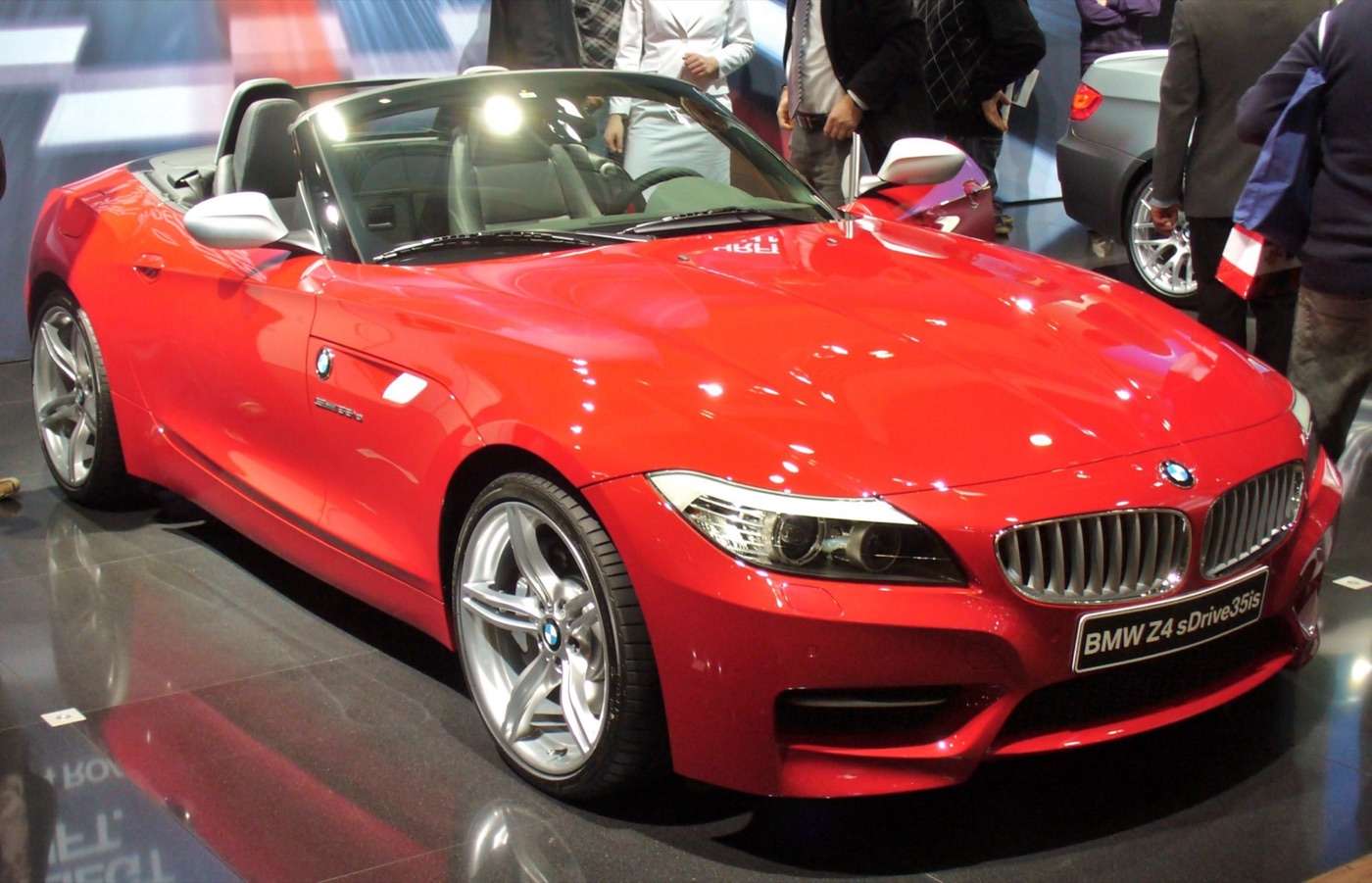
sDrive35is
The sDrive35is was unveiled at the Detroit show in January 2010 and reached US dealers that spring. BMW of North America's release of 12 December 2009 describes more boost and air flow for the twin-turbo six, an overboost that briefly adds 37lb ft under full load, a retuned exhaust, sportier steering, the seven-speed dual-clutch as standard with launch control, and adaptive M Suspension 10mm lower. Outside it has a different front bumper with matt aluminium bars in the intakes, a rear diffuser and 18-inch five-spoke alloy wheels; inside, sports seats, a thick-rimmed M steering wheel and Aluminium Carbon trim.
Is there an E89 Z4 M?
No. BMW built no M version of the E89; instead the sDrive35is engine went into the 1 Series M Coupé, as Ben Pulman of CAR reported in his first drive of the sDrive35is. SkiddMark's Tony Braybon put the question to Mario Theissen, BMW's motorsport director, at BMW Motorsport's headquarters in Munich in February 2010, while the V8 Z4 GT3 racer was being finished. Asked whether the car would get M enthusiasts thinking of a road version, Theissen said: "Yes… this is something that keeps us quite busy right now, because we are working to a very tight timescale – we only decided to go with the project in October and we want the car to be ready for customers in March." Pressed on a road car, he said: "On our side there are no plans for a road version of this car…" A month later, reporting the GT3's launch, SkiddMark still wrote that it would love to see the V8 in an M version of the road car.
Colour and trim packages
With the 2013 facelift BMW UK offered a Pure Traction Design package, in Valencia Orange with an optional black roof, Alcantara and leather sport seats with contrast stitching, an anthracite headlining and a metal-weave trim, at £550 to £2,240 depending on the model. SkiddMark's report of the same update called it the Hyper Orange Design Package, with black leather seats stitched in Valencia Orange, and said it replaced the earlier Citrus Yellow package. The facelift also added Mineral Grey and Glacier Silver metallic, an optional BMW Individual hard top in Jet Black or Titanium Silver, and new 17- and 18-inch wheels.
Zagato Coupé and Zagato Roadster
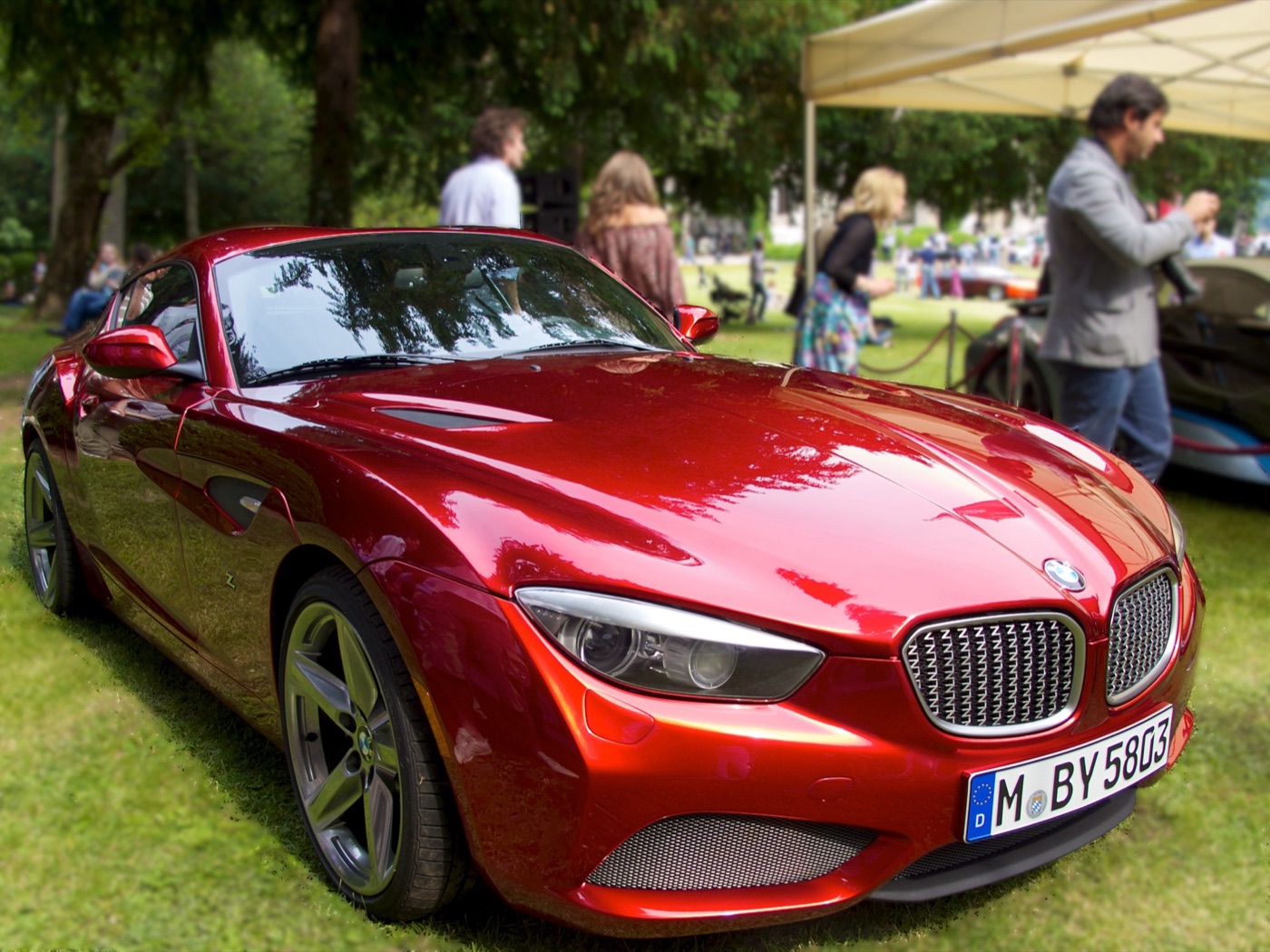
BMW and the Italian coachbuilder Zagato showed a one-off Zagato Coupé at the Concorso d'Eleganza Villa d'Este in May 2012. evo's report described a hand-built aluminium body on what appeared to be a Z4, with Zagato's "double bubble" roof. GoAuto reported in August 2012 that a Z4-based Zagato Roadster followed at the Pebble Beach Concours d'Elegance, built in six weeks from first sketch to finished car, in a silver-grey finish with tan leather and Zagato "Z" embroidery on the head restraints.
The Z4 GT3 and Z4 GTE in competition
BMW Motorsport built the Z4 GT3 for customer teams from 2010, and it won the Dubai and Spa 24-hour races and class titles in Japan and the United States.
The Z4 GT3
SkiddMark covered the GT3 car's launch in March 2010, from BMW's release: it had completed its first test drives at the start of that month and the first cars had gone to private teams. In place of the road car's six it had a 4.0-litre V8 related to the M3 GT2's, with more than 480bhp, a six-speed sequential gearbox, racing ABS and traction control. Wings, bonnet, roof and many other panels were carbon fibre, bringing the weight to 1,200kg, and the price was €298,000 plus VAT. "This sports car rounds off our product range," Theissen said, naming the FIA GT3 European Championship, the International GT Open, the ADAC GT Masters and 24-hour races as its targets.
| Year | Event | Team | Result |
|---|---|---|---|
| 2011 | Dubai 24 Hour | Schubert Motorsport | Overall win, 594 laps (Farfus, Hürtgen, Sandström, Milner) |
| 2011 | Super GT, GT300 class | Goodsmile Racing with Studie and Team Ukyo | Champions (Taniguchi, Bamba) |
| 2014 | Super GT, GT300 class | Goodsmile Racing and Team Ukyo | Champions (Taniguchi, Kataoka) |
| 2014 | IMSA, GT Daytona class | Turner Motorsport | Drivers' champion Dane Cameron |
| 2015 | Daytona 24 Hours, GTLM class (Z4 GTE) | BMW Team RLL | Second, 0.478s behind the winning Corvette |
| 2015 | Spa 24 Hours | Marc VDS | Overall win by a lap (Luhr, Palttala, Catsburg) |
The first big win came in January 2011, when Schubert Motorsport's car won the Dubai 24 Hour after 594 laps, Touring Car Times reported; BMW's own motorsport bulletin of January 2013 refers to Schubert as "the 2011 winners of the Dubai 24 Hours". Goodsmile Racing then bought a Z4 GT3 from Schubert for Japan's Super GT, and Nobuteru Taniguchi and Taku Bamba won the 2011 GT300 title in it, the first for a GT3-specification car, according to DailySportsCar's history of the team. Taniguchi and Tatsuya Kataoka won the class again in 2014, after which the team moved to Mercedes. In America, Dane Cameron won the 2014 GT Daytona title for Turner Motorsport, sharing the car with Markus Palttala for most of the year. "The Z4 really suited me," Cameron told Sportscar365.
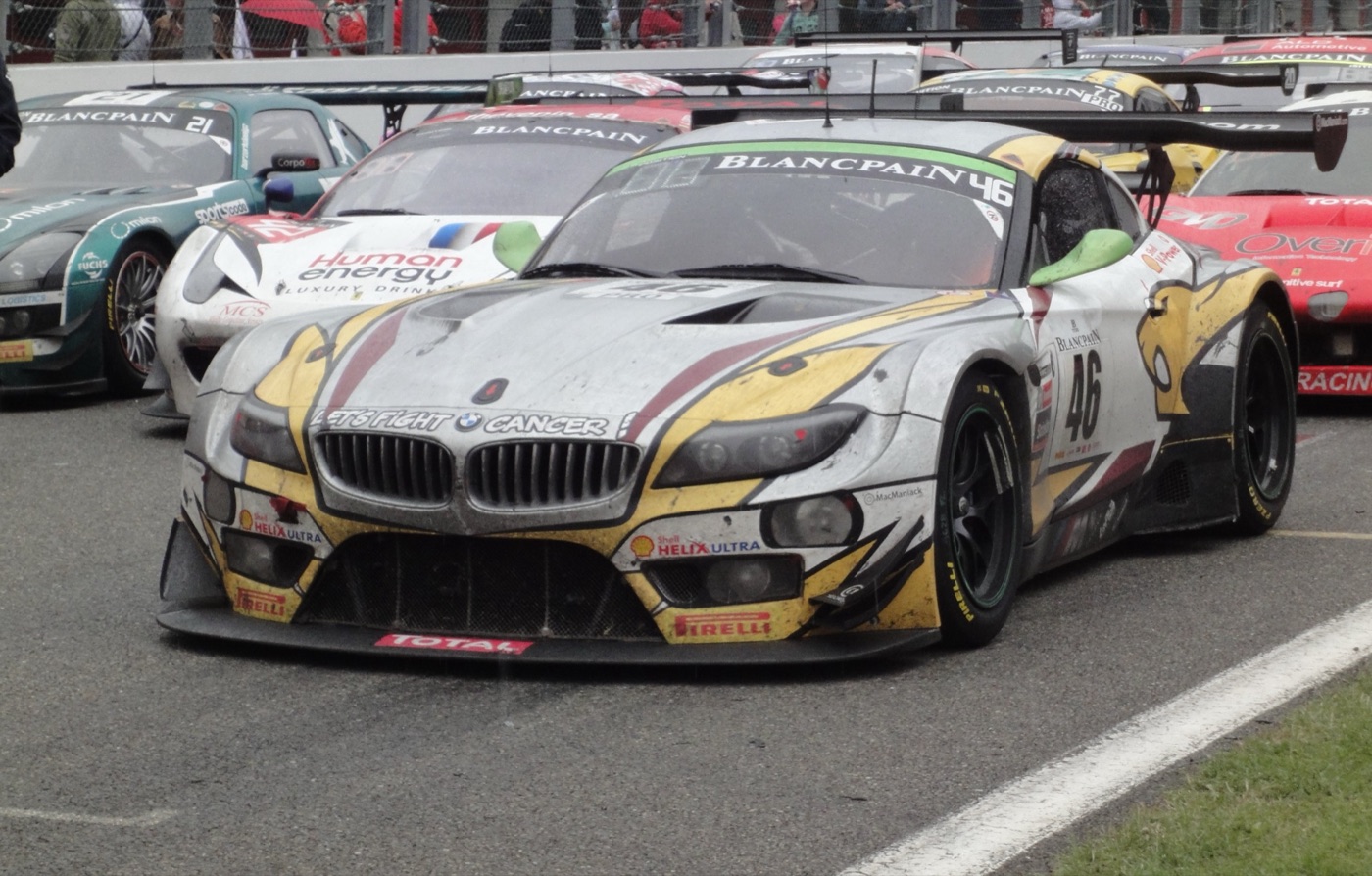
The car's last Spa 24 Hours, in July 2015, was its biggest win. The series organiser's history of that race records that the No. 46 Marc VDS car of Lucas Luhr, Markus Palttala and Nick Catsburg recovered from outside the top 30 after an early switch to slicks, took the lead at La Source with 5hr 24min left and won by a lap. It was BMW's first Spa win for 17 years and its 22nd in all, and Catsburg's fastest lap of 2min 18.751sec stood until 2020.
The Z4 GTE
The Z4 GTE was the version built for the GT Le Mans class in North America, run by Rahal Letterman Lanigan as BMW Team RLL. Its closest call came at Daytona in January 2015: the No. 25 car of Bill Auberlen, Augusto Farfus, Bruno Spengler and Dirk Werner finished second, 0.478 seconds behind the winning Corvette, after 725 laps, the team reported. It had also finished second a year earlier.
How many BMW Z4 E89s were made?
More than 115,000 E89s were built at Regensburg between early 2009 and 22 August 2016, according to BMWBlog's report of the end of production. The 50,000th, a Crimson Red sDrive23i for a customer in China, came off the line in December 2010, less than two years after launch. By then, BMWBlog reported, about a quarter of the cars sold had stayed in Germany, the biggest market, with 16 per cent going to the US, 11 per cent to Britain, 11 per cent to China, 7 per cent to Japan and 6 per cent to Italy.
The sDrive20i was the big seller in Britain: BMW UK said in December 2012 that it made up 80 per cent of Z4 sales.
What is a BMW Z4 E89 worth today?
On 27 October 2026 SkiddMark counted 91 of the E89s with an asking price on PistonHeads' classified listings (those whose advert names the model, sDrive18i to sDrive35is, registered 2009 to 2016; asking prices, not sale prices), and 78 of them were between £6,500 and £17,000. They ran from £3,990 for a 2009 sDrive23i with 161,965 miles to £23,600 for a 2016 sDrive35is, with a median of £9,995 at a median 62,411 miles.
| Cars | Listed | Asking prices | Median price | Median mileage |
|---|---|---|---|---|
| sDrive18i and sDrive20i | 56 | £6,495–£19,495 | £9,920 | 59,338 |
| sDrive23i and sDrive30i | 19 | £3,990–£16,990 | £8,495 | 65,000 |
| sDrive28i | 8 | £9,990–£18,849 | £12,115 | 59,494 |
| sDrive35i | 4 | £9,750–£18,995 | £11,242 | 91,760 |
| sDrive35is | 4 | £15,900–£23,600 | £20,242 | 50,500 |
| All 2009–2012 cars | 40 | £3,990–£18,995 | £8,992 | 69,924 |
| All 2013–2016 cars | 51 | £6,495–£23,600 | £11,995 | 53,623 |
In 2023, when Felix Page last updated Autocar's used buying guide (first published in August 2020), prices started at about £7,500 for early cars with more than 100,000 miles and rose to the high £20,000s for late range-toppers, with £11,000 to £14,999 buying a facelifted car with LED headlights and £15,000 or more a well-specified six-cylinder car, mostly in M Sport trim.
New, the range ran from under £29,000 for the sDrive23i in 2009, by CAR's figure, to £45,280 for the sDrive35is when CAR drove it, and from £27,610 to £45,795 after the facelift.
Buying a BMW Z4 E89: faults, recalls and running costs
Each E89 engine has a documented weak point, Autocar lists checks for the roof, wheels and seals, and BMW has issued several UK recalls that a seller's paperwork should show were done.
Which engine should you buy?
An owner quoted in Autocar's guide, Zhaotong Li, put it this way: "There's no need to avoid any engines: it all depends on what you want the car for." In his account the N54 in the sDrive35i is strong but suffers from injector and fuel pump problems; the N20 four-cylinder is economical and gives up to 270bhp with a remap but has timing chain issues; and the N52 six in the sDrive23i and sDrive30i is "older but more reliable".
What does a BMW Z4 E89 cost to tax and fuel?
An E89 first registered before 1 April 2017, as nearly all were, pays road tax by its CO2 band. At GOV.UK's rates as of October 2026, a four-cylinder car at BMW's 159g/km is in band G at £275 a year; a manual sDrive23i or sDrive30i at 199g/km is in band J at £410; and an sDrive35i or sDrive35is at 210 to 219g/km is in band K at £445. The figure on the car's V5C decides the band, and BMW's own figures differ by gearbox. Autocar puts real economy at about 41mpg for the four-cylinder cars and about 30mpg for the twin-turbo sixes.
Is the BMW Z4 E89 reliable?
The best-documented fault is the N54's high-pressure fuel pump. In October 2010 BMW of North America announced a recall of about 130,000 twin-turbo cars, including 2009 and 2010 Z4 sDrive35i models, after pump failures that showed as long cranking, a warning light and, in some cases, a reduced-power safe mode; about 40,000 were expected to need a new pump. Autocar says the problem also affected British cars, most of which had their pumps replaced early on, and advises checking how long an N54 takes to start, warm and cold.
Autocar's other checks are specific. The roof mechanism was built to last if maintained, but faulty sensors can leave it stuck open. Brake light seals can let water in, and damp around the roof mechanism or the battery is more serious. The 10-spoke 19-inch alloy wheels often crack and slowly lose air. The firm ride makes cabin trim rattle on high-mileage cars, and tall drivers may find seat travel too short for the clutch pedal.
UK recalls
The DVSA's recall records list these campaigns covering Z4s built in the E89's years. Most also covered other BMW models, so the vehicle counts in the DVSA file are not Z4 totals; a car's own history can be checked by registration on the DVSA's recall checker. One campaign, R/2013/129, is filed under "various models" without naming the Z4; its US counterpart, NHTSA recall 14V-627, names 93 Z4 sDrive28i roadsters built between 12 June 2012 and 10 June 2013, for the same seal in the camshaft that feeds oil to the vacuum pump.
| Launched | DVSA reference | Fault | Build dates covered |
|---|---|---|---|
| July 2012 | R/2012/081 | Electric power steering assistance may fail; steering box replaced | Nov–Dec 2011 |
| April 2013 | R/2013/024 | Battery cable connection can overheat, in extreme cases cutting the engine | Not stated |
| July 2013 | R/2013/080 | Clutch pressure plate bolt may loosen | Feb–Jun 2013 |
| July 2014 | R/2014/068 | VANOS housing screws may loosen, putting the engine in emergency mode | Sep 2009–Nov 2011 |
| January 2014 | R/2013/129 | Brake vacuum pump may lose lubrication and seize, so braking needs more pedal pressure (filed under "various models") | Jun 2012–Aug 2013 |
| April 2017 | R/2017/114 | Battery cable connection can overheat | Dec 2009–Oct 2011 |
| April 2017 | R/2017/132 | Propshaft front universal joint may break | Dec 2010–Apr 2011 |
| June 2018 | R/2018/132 | Battery cable to the front distribution box can chafe and corrode | Dec 2008–Nov 2009 |
| May 2024 | R/2024/191 | VANOS bolts on N51, N52 and N55 engines can loosen or break | Sep 2009–Aug 2011 |
Two of those, in 2014 and 2024, concern the bolts of the variable camshaft timing (VANOS). The 2024 campaign names the N52 six, so an sDrive23i or sDrive30i built between September 2009 and August 2011 should have proof that the work was done.
BMW Z4 E89 rivals
The E89's rivals were the Porsche Boxster, the Mercedes-Benz SLK and the Audi TT Roadster. Pulman wrote in CAR that BMW "purposely moved away from the Porsche to create an SLK rival with the current Z4 range". Michael Taylor, testing the sDrive35is for evo, called the Boxster S "everybody's obvious rival because it's the best of them" and said the Z4 had a little more pace but not the chassis, and that for a match on drivetrain the Audi TT RS roadster was the closest.
Reception
Road testers liked the E89's comfort and engines more than its steering, and the design won awards: BMW lists the Eyes On Design Award, the International Design Excellence Award and the red dot award, won soon after its 2009 premiere. Chilton wrote in CAR in 2009 that "the Z4 feels more like a really well sorted saloon than a sports car", with steering that was "meaty and accurate but rather dead", and that the sDrive23i, at under £29,000, "makes the most sense of all the Z4s". Pulman gave the sDrive35is three stars out of five, "good but not great", praising the engine and finding the slurred dual-clutch shifts and BMW's push-pull paddles confusing.
evo's Taylor was kinder to the same car: "The 35iS has turned a solid performer into a very, very good one." He also wrote that the steering was "still short on natural feel and confidence", and that the drivetrain "alone transforms it from a baby GT car into a storming pass-blaster".
Questions
What does E89 mean on a BMW Z4?
E89 is BMW's model code for the second-generation Z4, built from 2009 to 2016. It replaced both the soft-top Z4 Roadster and the Z4 Coupé.
How long does the BMW Z4 E89 roof take to open?
BMW quotes 20 seconds to open or close the two-piece aluminium roof. By the 2012 facelift BMW said it could be worked at up to 20mph.
Will golf clubs fit in a BMW Z4 E89?
Yes. BMW says the boot, 180 litres with the roof down and 310 litres with it up, takes a full set of golf clubs, and the optional through-loading hatch takes a second set.
Can you get a BMW Z4 sDrive35is with a manual gearbox?
No. The sDrive35is came with BMW's seven-speed dual-clutch gearbox as standard; the six-speed manual was offered on the other models.
Where was the BMW Z4 E89 built?
Every E89 was built at BMW's Regensburg plant in Bavaria, where BMW invested about €130 million for it. The first-generation Z4 had been built at Spartanburg in South Carolina.
Is the BMW Z4 E89 rear-wheel drive?
Yes. Every E89 drives its rear wheels, with the engine at the front and close to 50/50 weight distribution, according to BMW.
What was the last BMW Z4 E89 built?
The last car, built at Regensburg on 22 August 2016, was an sDrive35is in Valencia Orange metallic. It was also the last new BMW with the N54 twin-turbo six.
Sources
- BMW UK, "The new BMW Z4", media information, embargo 14 December 2008: launch engines, roof, boot, dimensions, on-sale date.
- BMW of North America, "The new BMW Z4 Roadster", press kit, embargo 13 December 2008: Detroit debut, chassis, iDrive, move to Regensburg.
- BMW, "Specifications BMW Z4 sDrive23i, Z4 sDrive30i", media information 2/2010: wheelbase, weights, boot volume.
- BMW, "Pure driving pleasure, new updates: the BMW Z4 for model year 2023", media information, September 2022: history of the Z roadsters, E89 design awards.
- Auto123, "End of the line for the BMW Z4", 3 September 2008: end of E85 and E86 production.
- BMW of North America, "BMW's Roadster Gets Higher-Performance Model for 2011", 12 December 2009: the sDrive35is.
- BMW UK, "The new BMW Z4", press release, 20 December 2012: facelift range, prices, Pure Traction Design, sales share.
- SkiddMark, "BMW reveals the 2013 Z4 LCI", 18 December 2012, "The new BMW Z4 GT3", March 2010, and Tony Braybon, "Interview with Dr Mario Theissen, Director of BMW Motorsport", February 2010: the facelift range in imperial units; the Z4 GT3 at launch; Theissen on a road version.
- BMW, "BMW Z4 at the New York Motor Show (April 20/21) with new 2-litre TwinPowerTurbo engine for the first time", 19 April 2011; BMW release of July 2011 reproduced by BMWBlog, 1 July 2011; BMW, Medieninformation 8/2011, valid from 9/2011, BMW Z4 sDrive20i and sDrive28i: the four-cylinder cars, their dates and weights.
- Henny Hemmes, "Masculine New 2010 BMW Z4 Designed By Ladies Team", The Auto Channel, March 2009: Blasi, Arnaout and Warming.
- BMWBlog, "Anniversary: BMW's Regensburg plant produces 50,000th BMW Z4 Roadster E89", December 2010: investment, markets, 50,000th car.
- BMWBlog, "Production ended: Last BMW E89 Z4 was an sDrive35is", 26 August 2016: end date, total, last car.
- BMWBlog, BMW of North America N54 fuel pump recall statement, 27 October 2010.
- Chris Chilton, "BMW Z4 sDrive23i (2009) review", CAR: roof, boot, cabin, driving, price.
- Ben Pulman, "BMW Z4 sDrive 35iS (2011) review", CAR: no Z4 M, price, weight, verdict, rivals.
- Michael Taylor, "BMW Z4 sDrive35is review", evo: verdict and rivals.
- evo, "BMW Z4 sDrive20i review": the 2011 four-cylinder change.
- evo, "BMW Zagato Coupe", 28 May 2012; GoAuto, "BMW encores Zagato Coupe with Roadster", 20 August 2012: the Zagato concepts.
- Felix Page, "Used car buying guide: BMW Z4 (2009-2016)", Autocar, 31 August 2020, updated 30 March 2023: engines, faults, prices.
- DVSA, vehicle recalls file, downloaded 27 October 2026: UK recalls.
- NHTSA, Part 573 safety recall report 14V-627: the vacuum pump recall on the Z4 sDrive28i.
- PistonHeads, used BMW Z4 listings, by year of registration 2009 to 2016; 91 priced E89 listings naming the model counted by SkiddMark on 27 October 2026: asking prices.
- GOV.UK, "Vehicle tax rates: cars registered between 1 March 2001 and 31 March 2017", read 27 October 2026: road tax bands.
- Touring Car Times, "Farfus and Schubert Motorsport win Dubai 24hrs", 15 January 2011; BMW, BMW Motorsport News, issue 01/13, 13 January 2013: Dubai.
- DailySportsCar, "Goodsmile Racing: 100 races and counting", 16 July 2021: Super GT titles.
- Sportscar365, "Continental Tire IMSA Reflections: Dane Cameron": 2014 GT Daytona title.
- SRO, "The GT3 Years in Review: 2015", GT World Challenge Europe: Spa 24 Hours 2015.
- Rahal Letterman Lanigan Racing, "BMW Team RLL finishes 2nd and 4th at 53rd Rolex 24 at Daytona", 25 January 2015: the Z4 GTE.
This article was written in October 2026 to replace SkiddMark's original report of 18 December 2012 on the facelifted Z4, whose figures it keeps, with the rest of the car's story checked against BMW's own material.