Bruce McLaren: racing driver, engineer and McLaren team founder
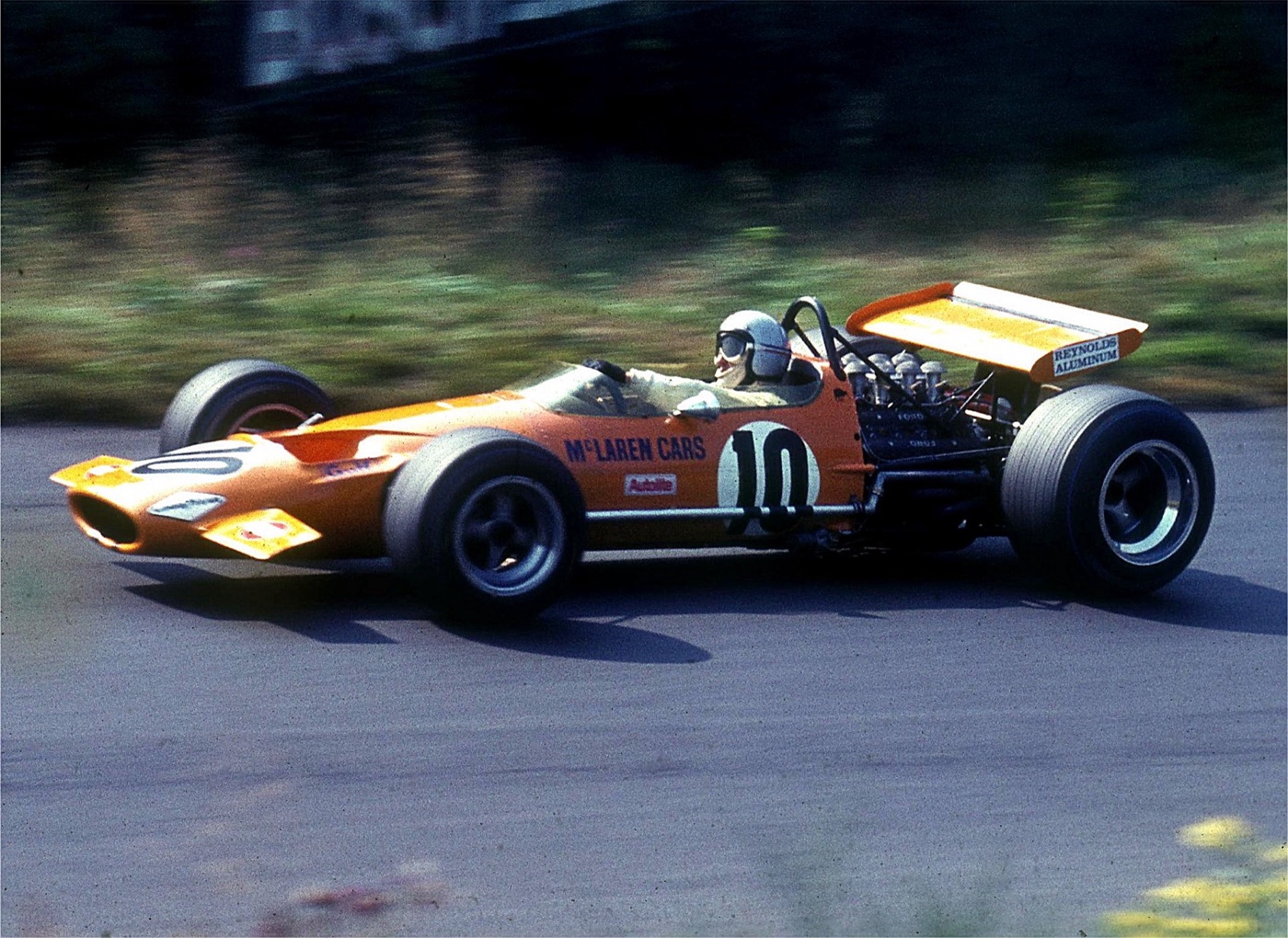
Bruce McLaren (30 August 1937 to 2 June 1970) was a New Zealand racing driver and engineer who won four Formula One Grands Prix, won the 1966 Le Mans 24 Hours with Chris Amon and founded the team that still races as McLaren. At Sebring in December 1959 he became the youngest Grand Prix winner the sport had seen, aged 22 years and 104 days, and he was runner-up in the 1960 World Championship, as New Zealand’s Ministry for Culture and Heritage records. He was killed aged 32 at Goodwood in West Sussex, testing one of his own Can-Am cars.
He was also the second driver, after Jack Brabham, to win a Grand Prix in a car bearing his own name, at Spa in 1968, and he won the Can-Am sports car championship in 1967 and 1969.
Early life in Remuera, Auckland
McLaren grew up above a garage. His father, Les McLaren, bought the business at a service station in Remuera’s Upland Road shopping village, Auckland, in 1936, and Bruce was born while the family lived in one of the three flats upstairs, according to the Heritage New Zealand List entry for the McLaren Garage (Former). The 1926 Spanish Mission building is on the List (number 7656) for its link with him. Les, known as Pop, and his three brothers had raced motorcycles before the war, often on Muriwai Beach west of Auckland, and Pop was involved in the Auckland Car Club, Motor Sport reported in July 2015.
Perthes disease and the Wilson Home
In 1946, aged nine, he developed Perthes disease, which deforms the hip joint. He spent almost three years at the Wilson Home in Takapuna, strapped to a wheeled frame, and left on crutches at the end of 1949 with his left leg an inch and a half shorter than his right, and began engineering studies at Seddon Memorial Technical College a year later (Motor Sport, 2015). He walked with a limp for the rest of his life. Russell Ness, director of the Wilson Home Trust, told Motor Sport the story that Bruce and his friends raced the frames after lights-out.
The Austin 7 Ulster and his first races
By 1950 the family had moved to 8 Upland Road, around the corner from the garage. Pop towed home a tired 1927 Austin Ulster to fix for racing, quickly came to despise it and passed it to his son, who drove it in his first event at 15: a new hillclimb at Muriwai, where he won his class ahead of Phil Kerr, later joint managing director of Bruce McLaren Motor Racing (Motor Sport, 2015). The Ulster now stands in the entrance of the McLaren Technology Centre, Top Gear noted on the 50th anniversary of his death. He went on to his father’s Austin-Healey 100 and, in 1957, to a 1.5-litre Cooper “Bobtail” bought from the Australian driver Jack Brabham; the Cooper carried the number 47, which Bruce kept as his favourite racing number, his sister Jan told Motor Sport.
The Driver to Europe scholarship
In 1958 McLaren became the first winner of the New Zealand International Grand Prix Association’s “Driver to Europe” award, which paid for a promising New Zealander to race abroad (Ministry for Culture and Heritage). Brabham, by then using the Remuera garage as his New Zealand base, sat on the committee. McLaren was due to start his second year at university; he sailed for England in March 1958 with his mechanic, Colin Beanland, and promised his mother it was only for a year (Motor Sport, 2015).
The Cooper years, 1958 to 1965
McLaren drove for the Cooper works team from his first season in Europe until 1965, and won three of his four Grands Prix in its cars. In his first year he nearly beat Brabham, his team-mate and mentor, to the Autocar Formula 2 championship (Motor Sport, 2015).
Formula 2 debut at the Nürburgring
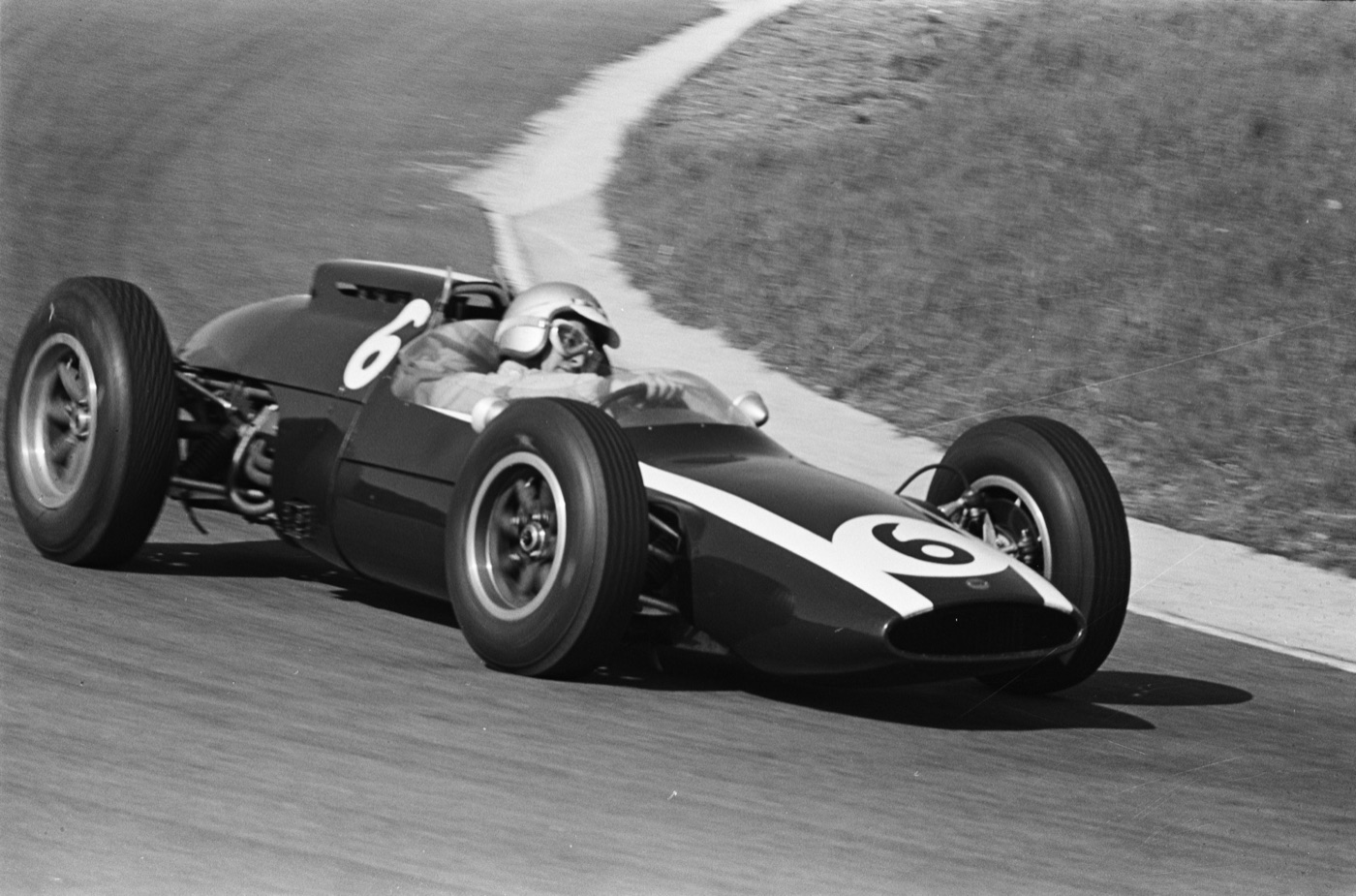
His first World Championship race was the German Grand Prix at the Nürburgring on 3 August 1958, run with a Formula 2 class inside it. Driving a Formula 2 Cooper, he finished fifth overall among the Formula One cars, Formula 1’s official results show, and won the Formula 2 class. He ran in the class again at the Moroccan Grand Prix on 19 October 1958, finishing 13th overall. Cars in that class could not score championship points.
Promoted to Formula One with Cooper in 1959, he was fifth in his first two races that year and third in the British Grand Prix at Aintree, two-tenths of a second behind Moss’s BRM after a race-long duel, sharing fastest lap (Motor Sport; StatsF1’s race-by-race record).
Youngest Grand Prix winner: Sebring, 1959
McLaren won the United States Grand Prix at Sebring, Florida, on 12 December 1959, aged 22 years and 104 days. He was not meant to be there. John Cooper had planned to take two cars, for Brabham and Masten Gregory, but Gregory was ruled unfit after a sports car crash, so McLaren, already in America on his way home, took the drive in a Cooper T51 and qualified 10th, McLaren’s heritage account of the race records.
Stirling Moss retired from the lead on lap five. Brabham, who needed only to finish second for the title, led McLaren until he ran out of fuel about a mile from the end and waved him past. McLaren “was staggered”, he wrote in his 1964 book From the Cockpit. He beat Maurice Trintignant by 0.6 seconds, in Formula 1’s results; Motor Sport’s account of the race puts the margin at nine-tenths. Brabham pushed his car over the line in fourth and was champion.
The record stood until Fernando Alonso won the 2003 Hungarian Grand Prix aged 22 years and 26 days (Motor Sport). Since then Sebastian Vettel and Max Verstappen have also won younger (McLaren heritage).
Argentina 1960 and second in the championship
He won the next Grand Prix too: the Argentine Grand Prix at the Autódromo Juan y Oscar Gálvez in Buenos Aires on 7 February 1960, 26.3 seconds ahead of Cliff Allison’s Ferrari, in the official result. With 34 points he finished the 1960 season second to Brabham, Formula 1’s 1960 standings show.
Monaco 1962
His third win came at Monaco on 3 June 1962, after 100 laps and 2 hours 46 minutes, 1.3 seconds ahead of Phil Hill’s Ferrari (Formula 1 results). He drove a Cooper T60 and was third in the 1962 championship with 27 points.
Cooper team leader, 1963 to 1965
McLaren stayed with Cooper for three more seasons without another win. His best results were second places in the Belgian Grand Prix in 1963 and 1964 and in the 1964 Italian Grand Prix at Monza, in the Cooper T66 and T73, and he ended his Cooper years with the T77 in 1965, eighth in the championship (StatsF1; Formula 1).
Tasman champion, 1964
McLaren won the first Tasman Cup, a series for 2.5-litre cars raced in New Zealand and Australia, in 1964 in a Cooper T70 he had modified himself. He won three New Zealand rounds in a row; Brabham answered with three in Australia, but an extra second place meant McLaren had the title before the last round at Longford, Tasmania, Motor Sport’s 2006 history of the Tasman Series records. In practice at Longford his team-mate, the American Timmy Mayer, crashed at Pub Corner and was killed.
After Mayer’s death McLaren wrote: “To do something well is so worthwhile that to die trying to do it better cannot be foolhardy. It would be a waste of life to do nothing with one’s ability, for I feel that life is measured in achievement, not in years alone.” Motor Sport printed them in full in December 2010.
Founding Bruce McLaren Motor Racing
McLaren founded Bruce McLaren Motor Racing in September 1963, after Cooper refused to support his New Zealand summer racing (Motor Sport, 2015). Teddy Mayer, an American from a wealthy Pennsylvania family, followed him to Surrey in 1964, Autosport’s Damien Smith wrote. On SkiddMark in January 2013, the 50th anniversary year, we described its start as a small lock-up in south London.
The Zerex Special and the first McLaren sports cars
The team’s first winner was the Zerex Special, which McLaren raced to wins at the Aintree 200 and the Silverstone International in April and May 1964, the Player’s 200 at Mosport in June and the Guards Trophy at Brands Hatch in August, the Racing Sports Cars archive of his results shows. The McLaren Elva Mark I followed that autumn and was third first time out, at Mosport in September 1964.
Into Formula One, 1966 and 1967
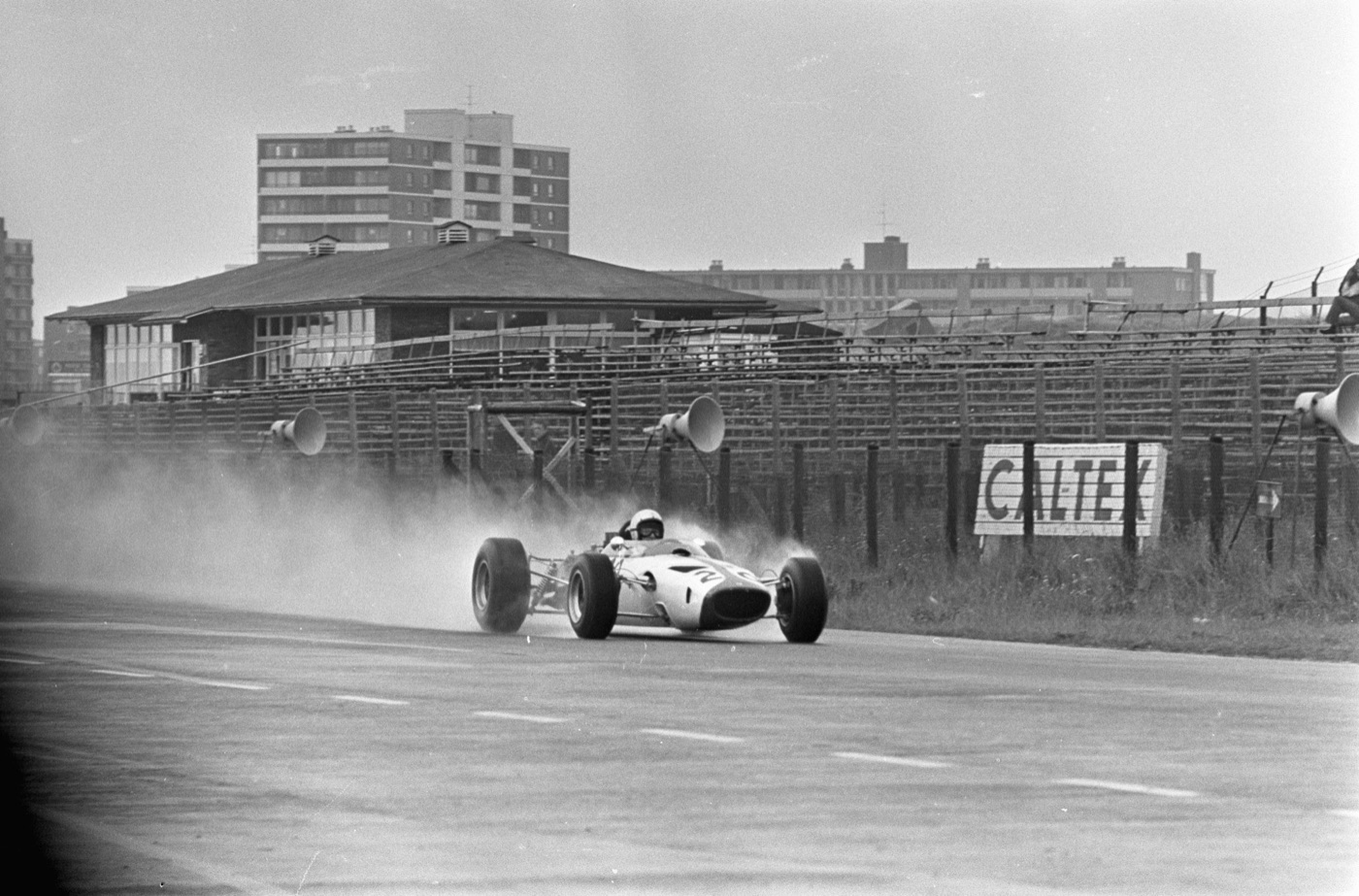
McLaren entered his first World Championship race as a constructor at Monaco on 22 May 1966 with the Ford-engined McLaren M2B, a white car that retired after nine laps with an oil leak, Formula 1 recorded at the team’s 50th Grand Prix anniversary. He started three more races that year, with a Serenissima engine for sixth in Britain and the Ford again for fifth at Watkins Glen (Formula 1 results, 1966).
In 1967 he scored fourth at Monaco in the BRM V8-engined McLaren M4B, then drove Dan Gurney’s Eagle T1G with a Weslake V12 in France, Britain and Germany, and retired in all three races (Formula 1 results, 1967). From Canada he raced the McLaren M5A with BRM’s V12 (StatsF1).
First McLaren win: Spa, 1968
In the Ford-engined M7A, McLaren won the Belgian Grand Prix at Spa-Francorchamps on 9 June 1968, 12.1 seconds ahead of Pedro Rodríguez’s BRM (Formula 1 results). He drove a new car, M7A-3, built up because his Monaco car was too badly bent to repair, Denis Jenkinson wrote in Motor Sport’s report of July 1968. Jackie Stewart’s Matra ran out of petrol at the end of the penultimate lap, and McLaren and Rodríguez, who had duelled all race, finished believing they were second and third. It was “a pleasant surprise for McLaren to find that he had won”, Jenkinson wrote.
He was the second driver after Brabham to win a Grand Prix in a car bearing his own name (Formula 1). It was the first win for the McLaren marque, and Denny Hulme added two more that season, McLaren’s heritage page on its founder notes. Bruce was second in Canada and Mexico and fifth in the 1968 championship.
1969 and 1970
McLaren never won another Grand Prix but was third in the 1969 championship with 26 points in the M7C, from second in Spain, thirds in Britain and Germany and points in five other races (Formula 1 results, 1969). In 1969 he also built three road cars from the M6 Can-Am design, the M6GT, and kept one for himself (Motor Sport, 2015). His last Grand Prix was Monaco on 10 May 1970, where he crashed out of the M14A, three weeks after second place in Spain (StatsF1). At the start of 1970 he told friends he would stop racing at the end of the year to run the business (McLaren heritage).
Le Mans and sports car racing
McLaren raced eight times at the 24 Hours of Le Mans between 1959 and 1967 and won once, in 1966, in a 7-litre Ford Mk II shared with Chris Amon. He was also one of the drivers who developed Ford’s GT40 from 1964. He “was key in making it so supremely drivable above 200mph”, Top Gear wrote in 2020.
How did Bruce McLaren win Le Mans in 1966?
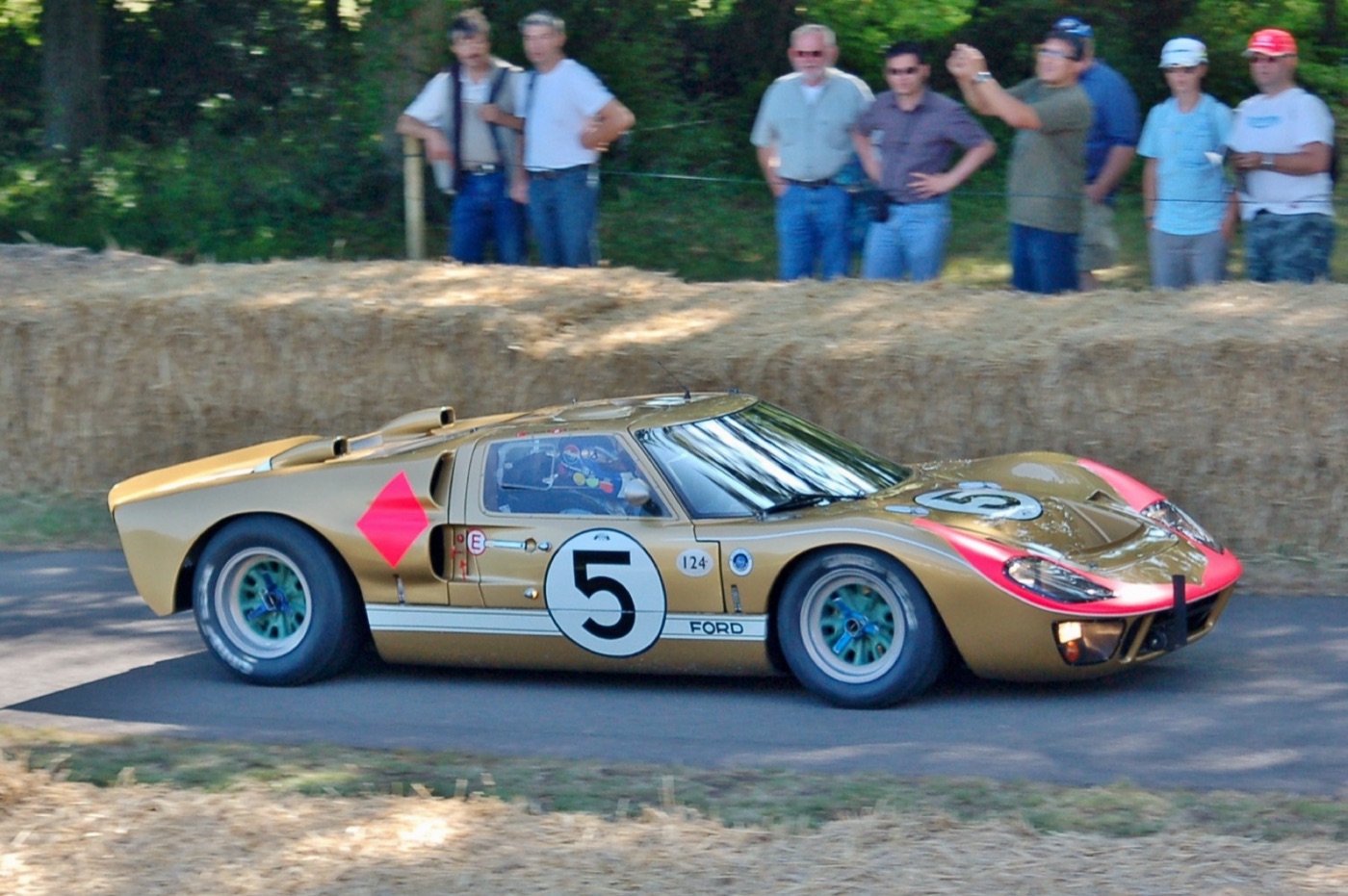
Ford brought eight 7-litre Mk II coupés to Le Mans in June 1966, three each from Shelby American and Holman and Moody and two from Alan Mann Racing, and Henry Ford II dropped the starting flag, Motor Sport’s race report records. McLaren and Amon’s Shelby car, number 2, led for four hours. Going into the last hour Ken Miles and Denny Hulme in number 1 were 34 seconds ahead, the Automobile Club de l’Ouest’s account from its archives says.
Ford’s managers then told all three leading cars to finish together. The two Shelby cars ran side by side from lap 351. Car 2 crossed the line about half a second, or 6 metres, ahead of car 1, and the rules for cars finishing together on the same lap counted where they had started: car 1 had started second and car 2 fourth, 14.28 metres further back. Car 2 had covered a shade over 20 metres more and won, the closest finish in the race’s history (ACO). Both cars completed 360 laps, 4,843 km, at an average of 201.795 km/h, Racing Sports Cars’ result sheet shows. It was Ford’s first Le Mans win.
Sebring 1967 and other sports car results
McLaren also won the 1967 Sebring 12 Hours with Mario Andretti in a Ford Mk IV, and was fourth at Le Mans that June with Mark Donohue. Earlier he had been second at Sebring in 1965 with Miles in a GT40, and second in Peter Berry’s Jaguar E-Type in the British Empire Trophy at Silverstone in July 1961 (Racing Sports Cars).
Can-Am champion, 1967 and 1969
McLaren won the Canadian-American Challenge Cup, the Can-Am sports car series raced in Canada and the United States, in 1967 and 1969, and his cars won it five years running from 1967 to 1971. Rob Widdows, writing in Motor Sport in 2010, called the years when he and Hulme won it between them “the Bruce and Denny Show”.
The M6A and McLaren orange
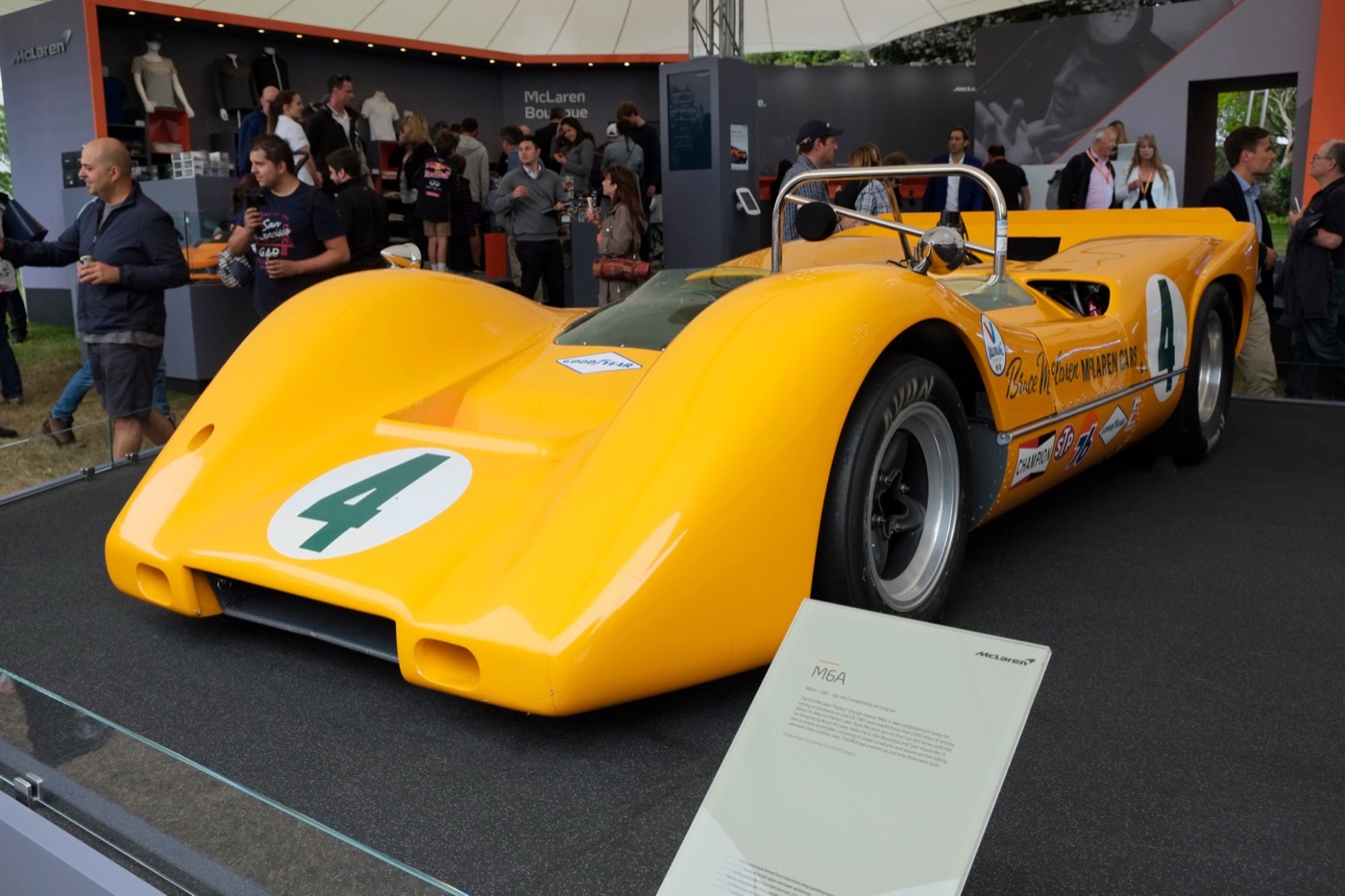
In the first Can-Am season, 1966, McLaren was third in his own car, behind John Surtees and Mark Donohue in Lolas, World Sports Racing Prototypes’ Can-Am tables show. In 1967 the team brought the M6A, painted orange. Bruce wanted visibility, Jan McLaren told Motor Sport, “because they knew they were going to be overtaking the tail-enders”; New Zealand’s black was hard to see. McLaren cars won five of the six races. Hulme won three and Bruce won at Laguna Seca and Riverside to take the title with 30 points to Hulme’s 27.
1968 and the eleven wins of 1969
In 1968, in the M8A, Hulme won the title and McLaren was second with one win, at Riverside. In 1969 the M8B won all eleven races: six for McLaren and five for Hulme. McLaren took the championship with 165 points to Hulme’s 160 (World Sports Racing Prototypes; Racing Sports Cars).
How did Bruce McLaren die?
Bruce McLaren was killed at Goodwood Circuit, near Chichester in West Sussex, at 12.22pm on Tuesday 2 June 1970, when the rear bodywork came off the McLaren M8D Can-Am car he was testing. He was 32. The car was being prepared for the season’s first race, at Mosport two weeks later.
The crash at Goodwood Circuit
He had been given permission for one more run after the circuit’s midday cut-off (Motor Sport, 2015). On the Lavant Straight, at perhaps 170mph by Motor Sport’s estimate, the rear bodywork separated and the car slewed into a concrete-backed earth bank. The Bruce McLaren Trust’s history of the Can-Am cars says a tail securing pin had gone missing, that wind pressure ripped away the bodywork and wing, and that the car slid broadside into a marshal’s post at “well over 100 mph”. He was testing the car Hulme was to race (Trust; Top Gear). Autosport says he died instantly.
“They know today that it was to do with a pip pin in the rear bodywork,” Jan McLaren told Motor Sport in 2015, “but whether that wasn’t put in properly, or it was faulty or just fell out…” “There was never anything formal done,” she said. The car was cut up and destroyed after the accident (Motor Sport, 2010).
Funeral and grave
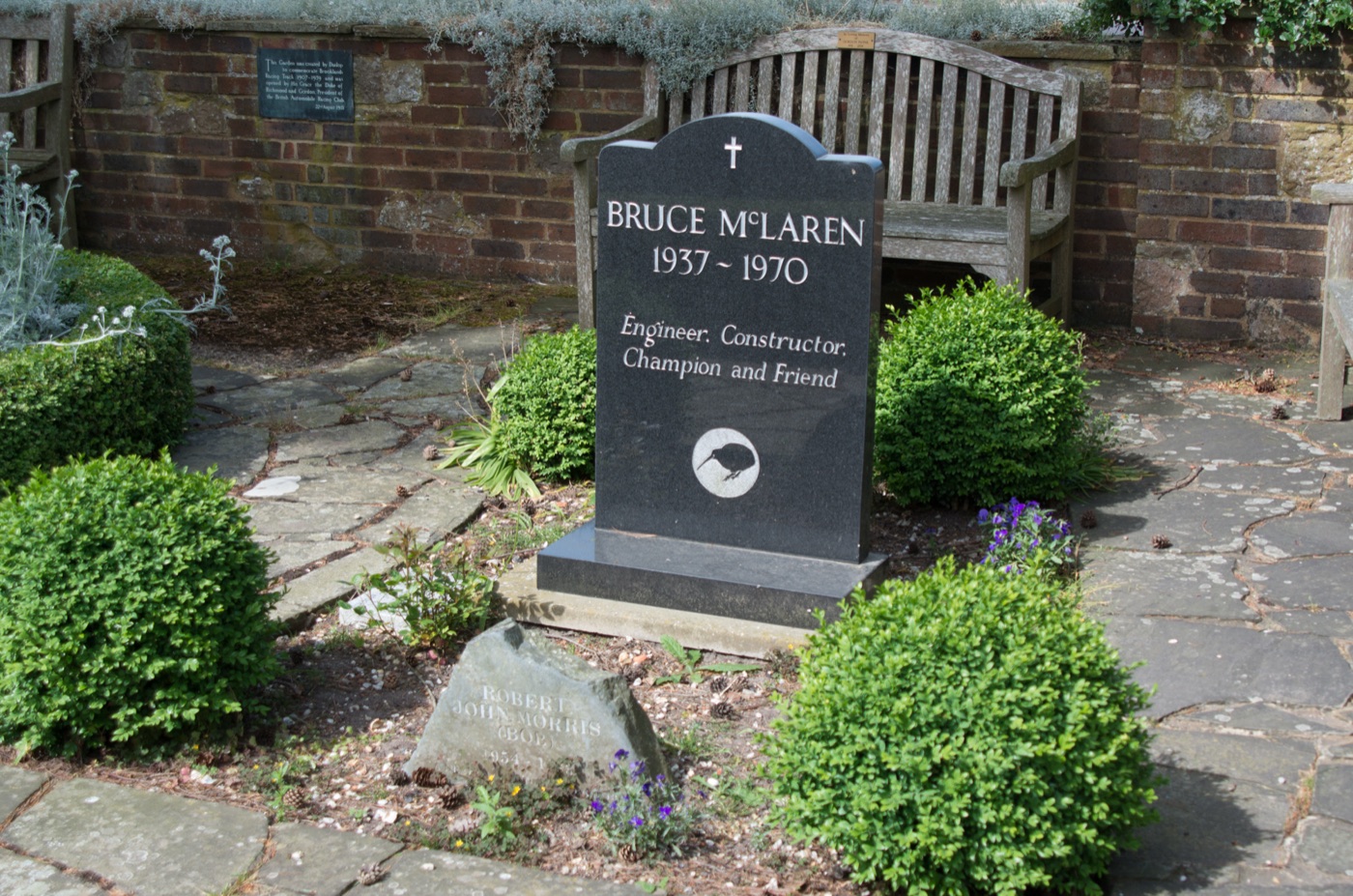
His funeral was held at St Mary’s Cathedral in Auckland on 10 June 1970, with his helmet, goggles and gloves on the coffin, and a memorial service followed at St Paul’s in London (Motor Sport, 2015). He is buried at Waikumete Cemetery in Glen Eden, Auckland, beside his parents. At Goodwood a headstone in the circuit’s memorial garden reads “Bruce McLaren, Engineer, Constructor, Champion and Friend”.
Bruce McLaren’s results and records
McLaren made 104 Grand Prix entries and won four, with 27 podium finishes, three fastest laps and no pole positions (his best grid place was second), StatsF1’s career record shows. Sources count his starts differently: StatsF1 counts from 1959, so its 98 Grands Prix and 104 entries leave out the two 1958 races, in Germany and Morocco, that he ran in the Formula 2 class; the Ministry for Culture and Heritage gives 100, and Motor Sport (2015) 101. He scored 196.5 points, of which 188.5 counted towards his championship totals under the rules of the time.
Formula One results by season
| Season | Team and cars | Wins | Championship | Points |
|---|---|---|---|---|
| 1958 | Cooper (Climax), Formula 2 class, Germany and Morocco | 0 | not classified | 0 |
| 1959 | Cooper T51 (Climax) | 1 | 6th | 16.5 |
| 1960 | Cooper T51 and T53 (Climax) | 1 | 2nd | 34 |
| 1961 | Cooper T55 (Climax) | 0 | 7th | 11 |
| 1962 | Cooper T60 (Climax) | 1 | 3rd | 27 |
| 1963 | Cooper T66 (Climax) | 0 | 6th | 17 |
| 1964 | Cooper T66 and T73 (Climax) | 0 | 7th | 13 |
| 1965 | Cooper T77 (Climax) | 0 | 8th | 10 |
| 1966 | McLaren M2B (Ford or Serenissima) | 0 | 14th | 3 |
| 1967 | McLaren M4B and M5A (BRM), Eagle T1G (Weslake) | 0 | 14th | 3 |
| 1968 | McLaren M7A (Ford) | 1 | 5th | 22 |
| 1969 | McLaren M7A and M7C (Ford) | 0 | 3rd | 26 |
| 1970 | McLaren M14A (Ford) | 0 | 14th | 6 |
StatsF1 places him eighth in 1961, ninth in 1965 and 16th in 1966.
How many Grands Prix did Bruce McLaren win?
Four, two of them by less than two seconds.
| Date | Grand Prix | Circuit | Car | Grid | Second, and margin |
|---|---|---|---|---|---|
| 12 Dec 1959 | United States | Sebring | Cooper T51 (Climax) | 10th | Maurice Trintignant, 0.6s |
| 7 Feb 1960 | Argentina | Autódromo Juan y Oscar Gálvez, Buenos Aires | Cooper T51 (Climax) | 13th | Cliff Allison, 26.3s |
| 3 Jun 1962 | Monaco | Circuit de Monaco | Cooper T60 (Climax) | 3rd | Phil Hill, 1.3s |
| 9 Jun 1968 | Belgium | Spa-Francorchamps | McLaren M7A (Ford) | 6th | Pedro Rodríguez, 12.1s |
Le Mans 24 Hours results
| Year | Car | Co-driver | Entrant | Result |
|---|---|---|---|---|
| 1959 | Cooper Monaco | Jim Russell | Cooper Car Company | Retired |
| 1961 | Maserati Tipo 63 | Walt Hansgen | Briggs Cunningham | Retired |
| 1962 | Maserati Tipo 151 | Walt Hansgen | Briggs Cunningham | Retired |
| 1963 | Aston Martin DP214 | Innes Ireland | David Brown | Retired |
| 1964 | Ford GT40 | Phil Hill | Ford Motor Company | Retired |
| 1965 | Ford Mk II | Ken Miles | Shelby American | Retired |
| 1966 | Ford Mk II | Chris Amon | Shelby American | 1st |
| 1967 | Ford Mk IV | Mark Donohue | Shelby American | 4th |
Can-Am results
| Season | Car | Races won | Position | Points | Champion |
|---|---|---|---|---|---|
| 1966 | McLaren M1B (Elva Mk II) | 0 of 6 | 3rd | 20 | John Surtees |
| 1967 | McLaren M6A | 2 of 6 | 1st | 30 | Bruce McLaren |
| 1968 | McLaren M8A | 1 of 6 | 2nd | 24 | Denny Hulme |
| 1969 | McLaren M8B | 6 of 11 | 1st | 165 | Bruce McLaren |
What happened to McLaren after Bruce died?
The team kept racing. Teddy Mayer took charge, and Dan Gurney stood in for the Mosport Can-Am race on 14 June 1970, alongside a Hulme whose hands were still bandaged from burns at Indianapolis; Gurney took pole and won (Autosport; Bruce McLaren Trust). A week later McLaren ran three cars in the Dutch Grand Prix. Hulme won the 1970 Can-Am title in the M8D, and Peter Revson made it five in a row for McLaren in 1971 (Autosport).
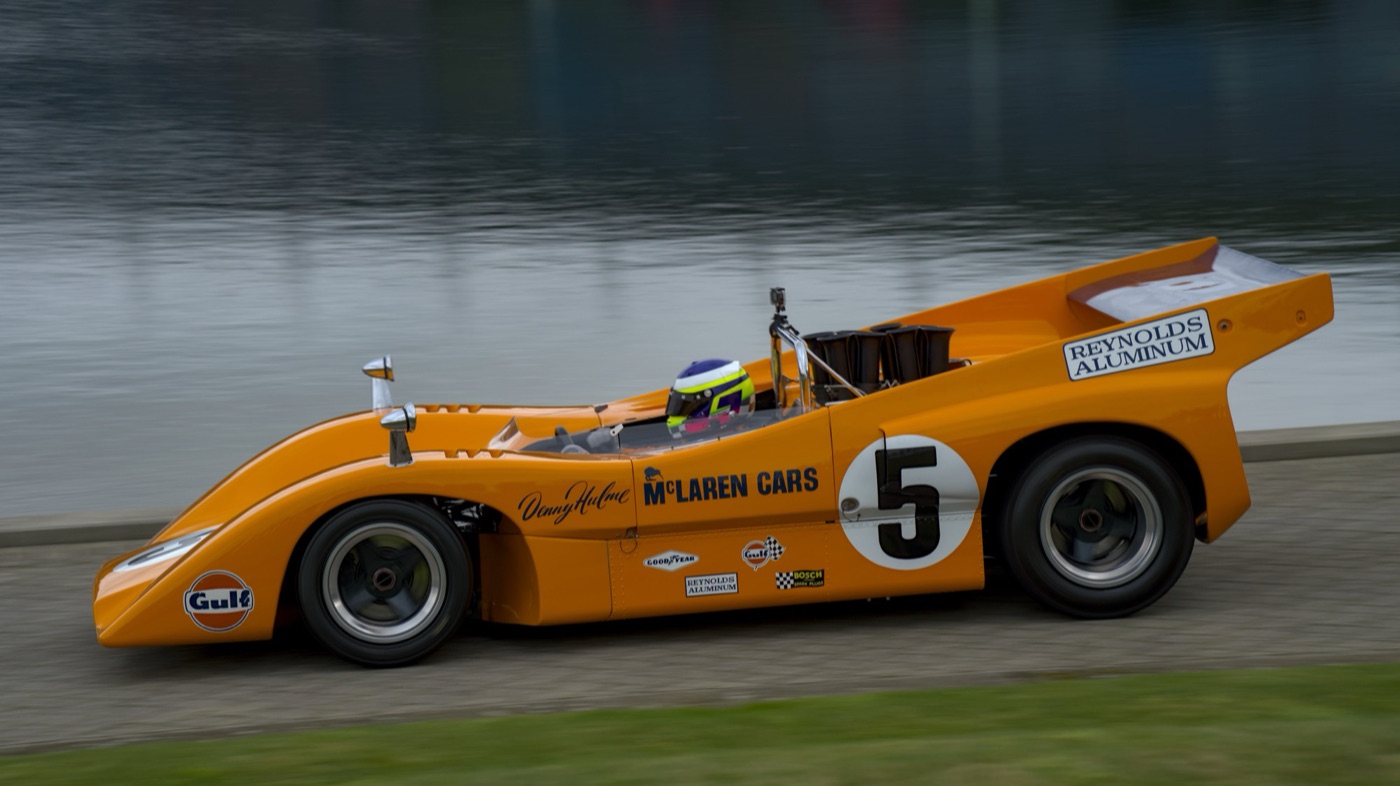
Mark Donohue won the 1972 Indianapolis 500 in a Penske-run McLaren M16, and Johnny Rutherford won it for the works team in 1974 and 1976. Emerson Fittipaldi gave McLaren its first Formula One drivers’ title in 1974, the year of its first constructors’ title (Autosport; Formula 1). In 1980 the team merged with Ron Dennis’s Project 4 (Motor Sport, 2015).
The 50th anniversary and the film “Courage”
McLaren marked its 50th anniversary in 2013 with a trilogy of short films. SkiddMark reported the first, “Courage”, on 1 February 2013, the day after an excerpt was shown at the launch of the MP4-28 Formula One car. Directed by the Swedish music-video maker Marcus Söderlund, the three-and-a-half-minute film shows Bruce McLaren’s ghost retracing the scene of his crash at Goodwood, over a Bruce McLaren monologue whose closing lines include: “What might be seen as a tragic end was in fact a beginning.”
“The script for this film made me shiver and I wanted to recreate that feeling… This is how I imagine that Bruce McLaren looked at the world.”
Marcus Söderlund, quoted by SkiddMark, 1 February 2013
Ron Dennis, then executive chairman of McLaren Group, told the press: “Bruce McLaren wrote the beginning of the story… I’m only a chapter, not the book.” In January 2013 we reported that the group employed more than 2,000 people.
The 12C Can-Am Edition
The road car company named a car for his Can-Am years. In November 2012 SkiddMark reported that McLaren GT would build 30 of the 12C GT Can-Am Edition, a track car with a 621bhp version of the 3.8-litre twin-turbo V8, at £375,000 each, in a “Can-Am Orange” that the report said was inspired by the colour first seen on the 1967 M6A. In April 2013 we reported that it would run up the hill at that summer’s Goodwood Festival of Speed alongside the M8D, the model in which McLaren was killed.
Family, memorials and the Bruce McLaren Trust
McLaren married Patty, and their only child, Amanda, was born in 1965; their house at Walton-on-Thames, Surrey, was named Muriwai, after the beach where he had first raced (Motor Sport, 2015). Patty remarried in 1981; Amanda moved to Britain in 2014 and by 2015 was a brand ambassador for McLaren. Jackie Stewart, who stayed with the McLarens before races, called him “one of the nicest men I’ve ever known” in a 2023 interview for McLaren.
His sister Jan McLaren and the former racer Ross Jensen founded the Bruce McLaren Trust in 1997, and in 2015 it worked from the family flat above the Remuera garage, which holds 14 hours of his reel-to-reel tapes and about 500 pages of his letters home (Motor Sport, 2015). Roger Donaldson’s documentary McLaren, with contributions from Fittipaldi, Gurney, Amon, Andretti and Stewart, was due in New Zealand cinemas in June 2017, its distributor Transmission Films announced in February 2017.
Questions
How old was Bruce McLaren when he died?
He was 32. Born in Auckland on 30 August 1937, he was killed at Goodwood on 2 June 1970, testing a McLaren M8D Can-Am car.
Was Bruce McLaren ever Formula One world champion?
No. His best championship result was second, to Jack Brabham, in 1960; he was third in 1962 and 1969. He did win the Can-Am championship twice, in 1967 and 1969.
Is the McLaren team named after Bruce McLaren?
Yes. He founded Bruce McLaren Motor Racing in September 1963, and the Formula One team, which first raced at Monaco in 1966, still carries his name.
Why are McLaren cars orange?
Bruce chose orange for the 1967 M6A Can-Am car so that it would be easy to see when lapping slower cars, his sister Jan told Motor Sport in 2015. New Zealand’s racing colour, black, was hard to see.
Did Bruce McLaren have children?
One daughter, Amanda, born in 1965. In 2015 she was working as a brand ambassador for McLaren.
Who took over McLaren after Bruce McLaren died?
Teddy Mayer, the American who had followed him to Surrey in 1964, took charge of the team. Ron Dennis’s Project 4 merged with McLaren in 1980.
Where is Bruce McLaren buried?
At Waikumete Cemetery in Glen Eden, Auckland, beside his parents. A memorial headstone stands in the memorial garden at Goodwood circuit.
Sources
- Manatū Taonga, Ministry for Culture and Heritage (NZHistory), “Motor racing driver Bruce McLaren dies”, updated 31 May 2023: Driver to Europe award, starts, championship places, Le Mans, Goodwood.
- Heritage New Zealand Pouhere Taonga, List entry 7656, McLaren Garage (Former): the garage, the flat, Les McLaren, Brabham’s base.
- Motor Sport, “A life measured in achievement”, July 2015: childhood, Perthes disease, the Ulster, Muriwai, the Bobtail and number 47, Driver to Europe, founding date, orange, M6GT, the crash, funeral, family, the Trust.
- Motor Sport, “Bruce McLaren’s first win at Sebring”: the 1959 race, margin, the age record and Alonso.
- McLaren, “Bruce McLaren’s first Grand Prix win”: why he raced at Sebring, grid position, quotes from From the Cockpit.
- McLaren, heritage page on Bruce McLaren: Hulme’s 1968 wins, retirement plan.
- McLaren, “Sir Jackie Stewart on Bruce McLaren”, 2023: Stewart’s words.
- Formula 1, official results archive, 1958 to 1970 (season standings, race results and his race-by-race pages): every table figure for Formula One.
- Formula 1, “McLaren at 50: the essential facts, stats and stand-out moments”, 2016: the M2B debut, second driver to win in his own car, first constructors’ title.
- StatsF1, Bruce McLaren and Grands Prix started: entries, starts, podiums, fastest laps, points, cars and grid places.
- Motor Sport, Tasman Series history, January 2006: the 1964 Tasman Cup and Timmy Mayer.
- Motor Sport, Rob Widdows, “Fitting words for Bruce”, December 2010: the 1964 quotation, the Goodwood memorial, the car destroyed, “the Bruce and Denny Show”.
- Motor Sport, Denis Jenkinson, XXVII Belgian Grand Prix report, July 1968: M7A-3, Stewart’s fuel, the finish.
- Motor Sport, Le Mans 24 Hours report, July 1966: Ford’s entry and the start.
- Automobile Club de l’Ouest, “Le Mans 66: what really happened”: the staged finish and how the winner was decided.
- Racing Sports Cars, Le Mans 1966 results and all results of Bruce McLaren: distance and speed, every sports car and Can-Am result.
- World Sports Racing Prototypes, “Can-Am: final positions and tables”: Can-Am positions and points.
- Bruce McLaren Trust, “McLaren Can-Am cars”: the cause of the crash, Mosport 1970.
- Autosport, Damien Smith, “How McLaren recovered from its greatest tragedy”: Teddy Mayer, Gurney, the 1970s.
- Top Gear, “Remembering Bruce McLaren, 50 years on”, 2020: the Ulster at the McLaren Technology Centre, GT40 development.
- Transmission Films, “McLaren’s untold story coming to NZ cinemas soon”, 23 February 2017: the documentary.
- SkiddMark, reports of 17 November 2012 (12C GT Can-Am Edition), 20 January 2013 (the 50th anniversary), 1 February 2013 (“Courage”) and 29 April 2013 (Goodwood Festival of Speed).
This article was written in October 2026 to replace SkiddMark’s report “Remembering Bruce: McLaren’s 50th Anniversary film trilogy” of 1 February 2013, whose facts and quotes it keeps.