Bugatti Veyron: every version, its speed records and values today
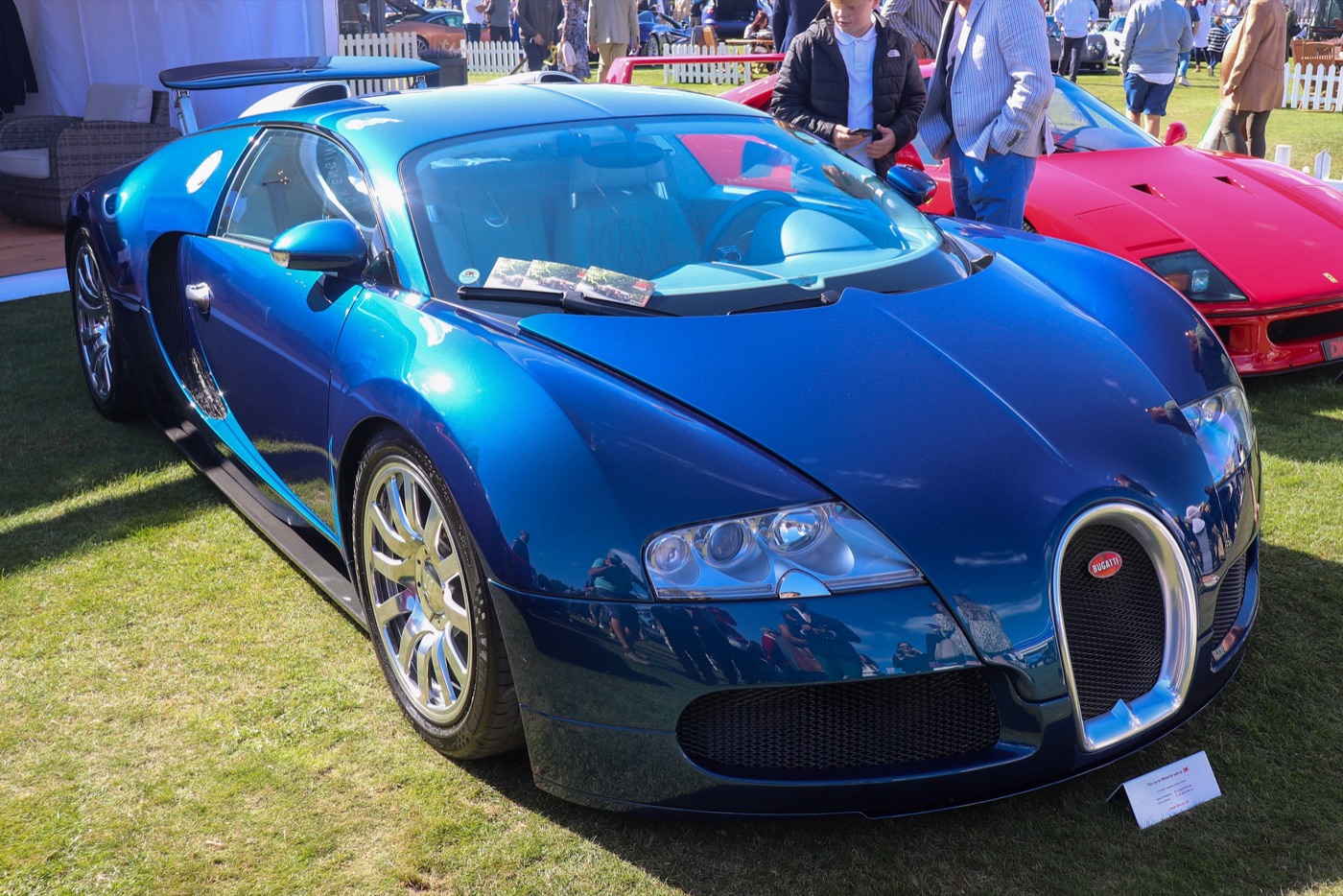
The Bugatti Veyron, built by hand in Molsheim, France, from 2005 to 2015, has a mid-mounted 8.0-litre W16 engine with four turbochargers. It was the first series production car with more than 1,000 PS and the first to pass 400 km/h, and its Super Sport version set a production-car record of 431.072 km/h (267.86 mph) in 2010. Bugatti made 450 of them, in four versions, at prices from €1.16 million before tax.
Twenty years on, people look up the Bugatti Veyron for those records, for how many were made, and for what the supercar costs to buy and to run: a standard coupé sold for $2,205,000 at auction in 2025, and a set of tyres was quoted at £23,500 in 2010.
History and development of the Bugatti Veyron
The Bugatti Veyron began with an engine. In 1997, on a Shinkansen train in Japan, Volkswagen’s chairman Ferdinand Piëch sketched an 18-cylinder engine on an envelope while talking to his head of powertrain development, Karl-Heinz Neumann, and then went looking for a brand to put it in. Bugatti’s own history of the car, published on the Veyron’s 15th anniversary in 2020, says Volkswagen bought the rights to the Bugatti name in 1998 from Romano Artioli, whose EB110 factory near Modena had closed in 1995.
Piëch’s 18-cylinder idea and the four concept cars
Four concept cars followed in little more than a year, all first shown with Piëch’s W18, which in the first three was a 6.25-litre, 555 PS engine with four-wheel drive. Giorgetto Giugiaro of Italdesign drew the first three: the EB 118 coupé (Paris, autumn 1998), the four-door EB 218 (Geneva, March 1999) and the mid-engined EB 18/3 Chiron (Frankfurt, September 1999). The fourth, the EB 18/4 Veyron shown at Tokyo in October 1999, was styled inside Volkswagen under Hartmut Warkuß with the exterior by Jozef Kabaň, and Bugatti’s 2025 account of the concepts calls it the step that fixed the production car’s shape.
The W18 did not survive. Bugatti says the naturally aspirated engine could not reliably make more than 1,000 PS or shed the heat that went with it, so by 2000 the engineers had switched to an 8.0-litre W16 with four turbochargers. The near-production EB 16.4 Veyron was shown in Paris in September 2000, and Volkswagen decided in 2001 to build it.
Piëch set four targets: more than 1,000 PS, more than 400 km/h, 0 to 100 km/h in under three seconds, and a car comfortable enough to drive to the opera. The top-speed figure had a personal reference. Piëch had developed the Porsche 917, which reached 406 km/h on the Mulsanne straight at Le Mans, and the Veyron had to beat it.
Why is it called the Veyron?
Bugatti named the car after its 1930s test driver and development engineer, the French racing driver Pierre Veyron (1903–1970). With Jean-Pierre Wimille he won the 1939 Le Mans 24 Hours in a Bugatti Type 57C Tank, the last Le Mans before the Second World War, as Bugatti’s 2025 profile of the driver recounts. “EB” stands for Ettore Bugatti; “16.4” for sixteen cylinders and four turbochargers.
From prototype to production in Molsheim
Turning the concept into a road car took four more years. The W16 made its target 1,001 PS on its first test-bench run in 2001, but the heat overwhelmed the bench’s ventilation, and Bugatti had to build new test equipment, according to its 2022 history of the W16 engine. Michelin took about five years to develop a tyre that could run at more than 400 km/h. The last of the pre-production cars, a series of six that included Chassis 5.0, was built and driven in early 2005 for testing and type approval.
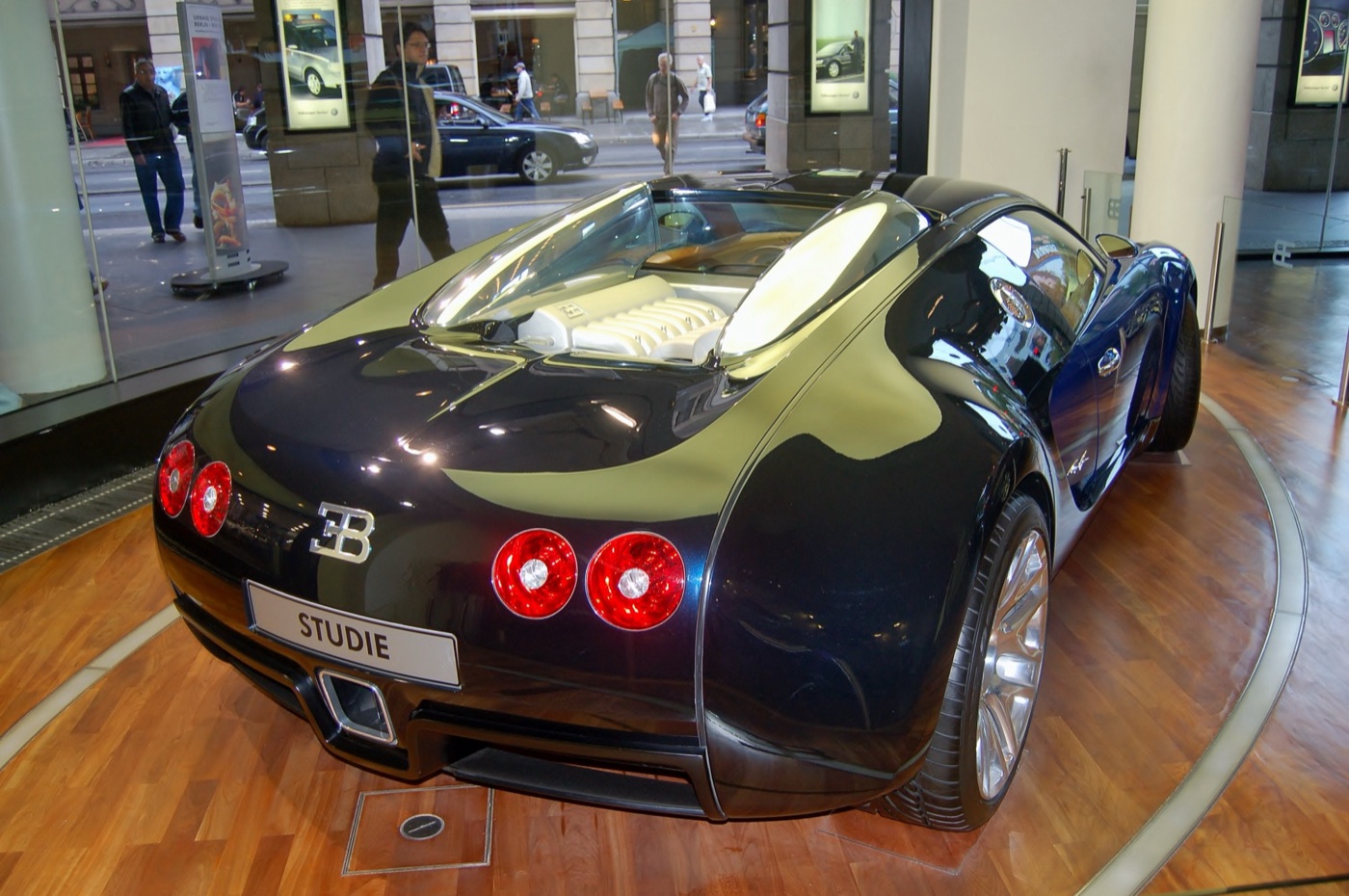
On 19 April 2005 Volkswagen’s chief driving-safety instructor, Uwe Novacki, took a Veyron to Volkswagen’s Ehra-Lessien test track. His first attempt stopped at 380 km/h. A few days later he reached 411 km/h, measured in both directions by the testing body TÜV Süd, and 407 km/h (253 mph) went into the type-approval papers. Production began in September 2005 in a new workshop in Molsheim, the Alsace town where Ettore Bugatti had founded the marque in 1909.
Bugatti Veyron design and engineering
The Bugatti Veyron is built round a carbon-fibre passenger cell with aluminium and carbon frames bolted to each end, with the engine behind the cabin and permanent four-wheel drive. Bugatti’s technical summary for the 2015 Geneva Motor Show gives the monocoque’s torsional rigidity as about 45,000 Nm per degree (Bugatti’s 2011 release gave 60,000) and says the Veyron was the first production car to use titanium bolts to join its three structural sections. The fuel tank holds 100 litres and sits in a cavity at the back of the monocoque.
The W16 engine
The W16 is two narrow-angle VR8 engines on one crankshaft: each has its cylinders in two banks 15 degrees apart, and the two halves sit at 90 degrees to each other. It displaces 8.0 litres (7,993 cc), has 64 valves and four turbochargers, and in its first form made 1,001 PS (987 bhp) at 6,000 rpm and 1,250 Nm (922 lb ft) from 2,200 to 5,000 rpm. Bugatti gives its length as 710 mm, no longer than a conventional V12, and its weight as 490 kg.
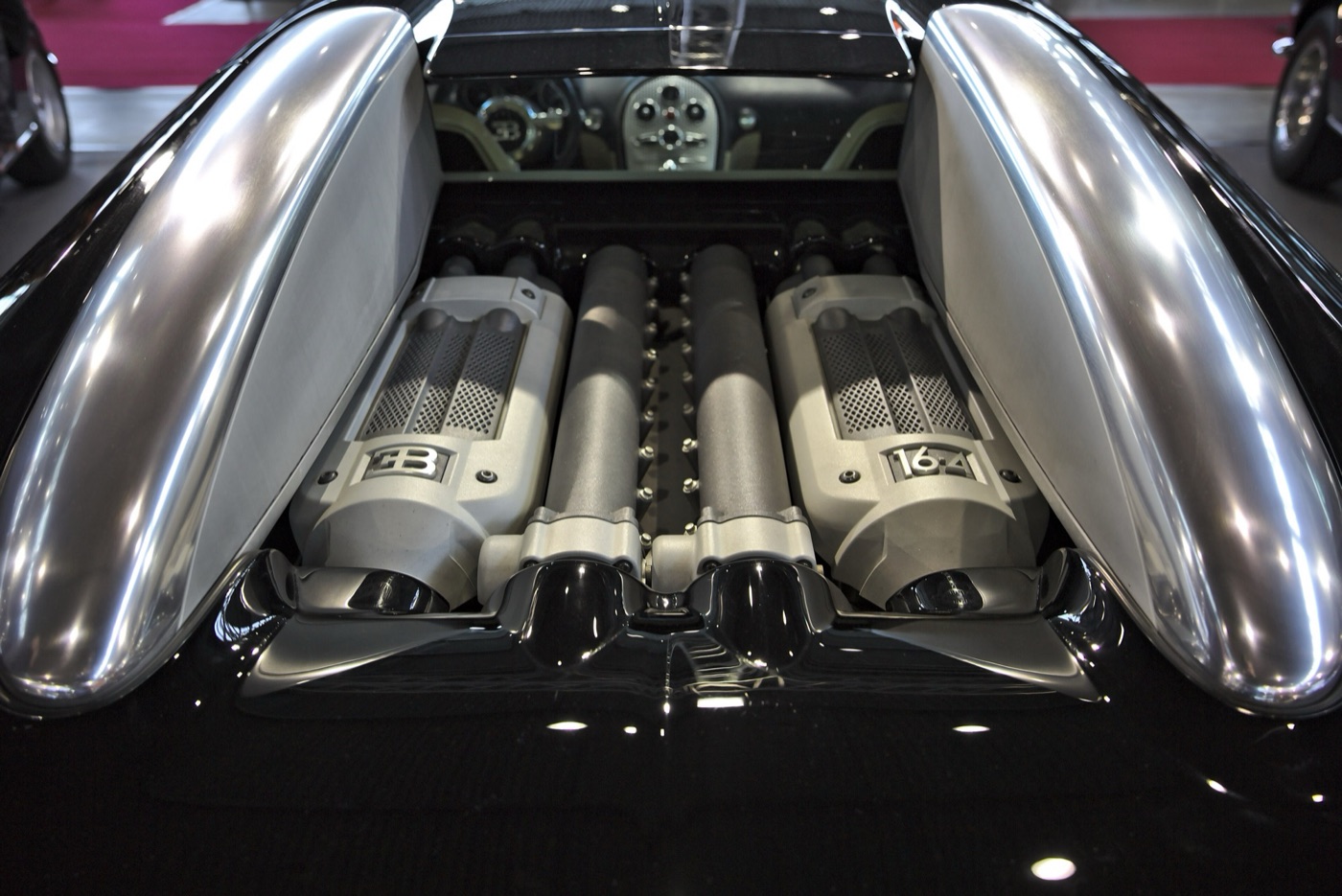
Cooling took as much work as power. Bugatti says the engine makes about 2,400 PS of waste heat for every 1,200 PS it sends to the wheels. The car carries ten radiators and heat exchangers, among them three at the front for the engine’s 40-litre main water circuit, two on the engine in a separate circuit that cools the charge air, and coolers for the engine, gearbox and differential oil.
Gearbox and four-wheel drive
Drive goes through a seven-speed dual-clutch gearbox to all four wheels; Bugatti was the first maker to use a seven-speed DSG. PistonHeads’ 2021 buying guide records that the gearbox was built by the British engineering firm Ricardo and the four-wheel drive used a Haldex coupling, and evo’s guide gives the gearchange time as 150 milliseconds.
Brakes, aerodynamics and the top-speed key
The brakes use carbon-ceramic discs, 400 mm at the front and 380 mm at the rear, with eight-piston calipers at the front. Above 200 km/h the rear wing doubles as an air brake: it tilts to 55 degrees in less than 0.4 seconds and on its own slows the car at up to 0.6 g. Bugatti says the Veyron stops from 400 km/h in under ten seconds.
At 220 km/h a central hydraulic system lowers the car and sets the wing and diffuser flaps for stability. In normal use the car is limited to 343 km/h (213 mph), the figure evo gives. To go faster the driver turns a second key, the Speed Key, which drops the car into a nose-down stance, sets the wing to two degrees and closes the diffuser flaps to cut drag, as Bugatti’s 2020 account of the 407 km/h run describes.
Body and cabin
The shape keeps Bugatti’s horseshoe grille and, on most cars, the two-tone paint of the 1920s and 1930s cars. By 2015 Bugatti offered exposed, clear-lacquered carbon fibre in eight colours and more than 100 paint colours, and buyers had specified porcelain, crystal, gold and platinum trim.
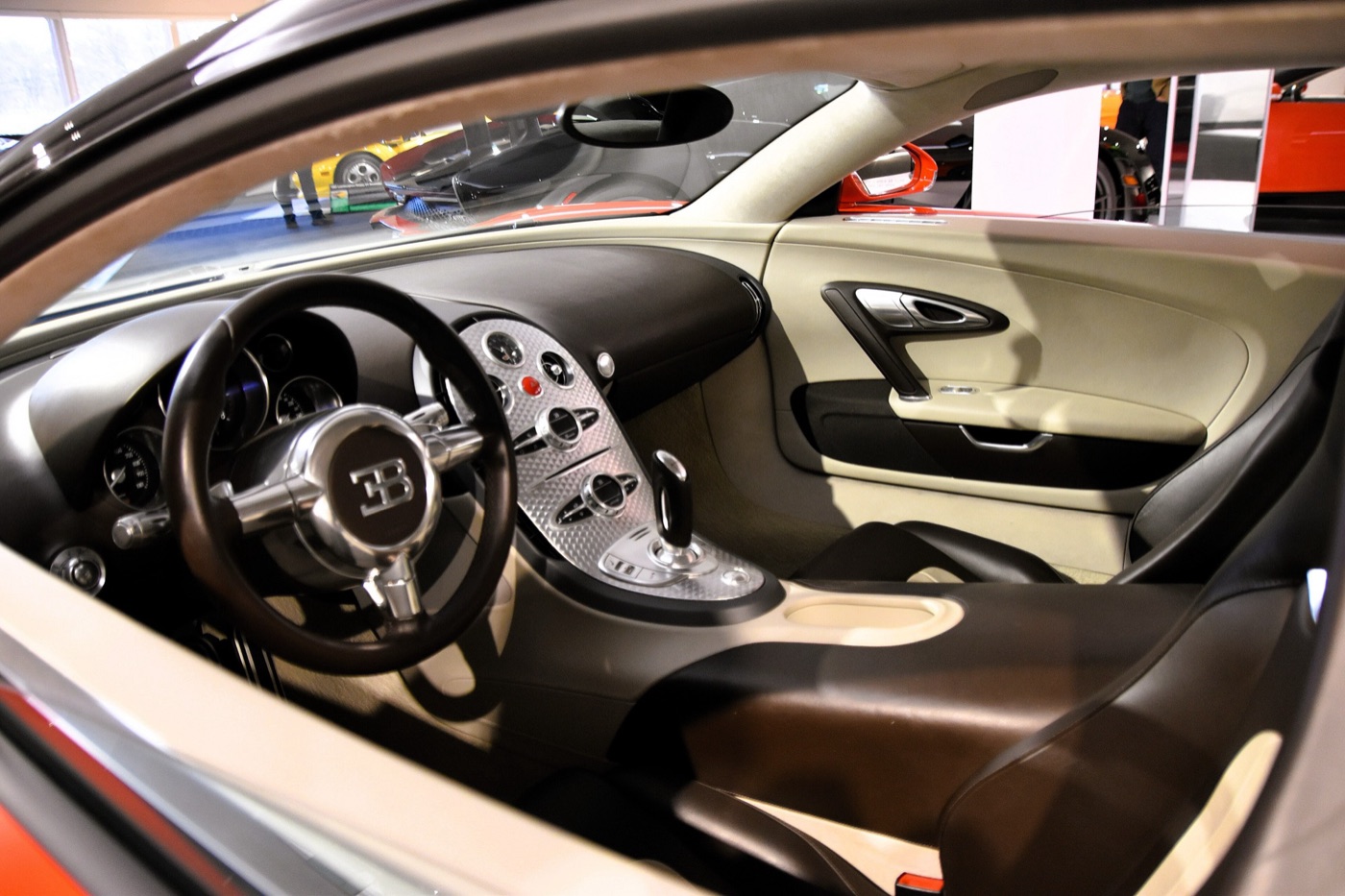
Inside there are two seats, leather everywhere and a centre console machined from aluminium. Evo’s guide to the car notes that the console carries guilloché engine-turning, a finish taken from the engines of the early Bugattis, and that even the indicator stalks are machined from a single piece of aluminium and magnesium alloy.
Bugatti Veyron specs and performance
Every Veyron has the same 8.0-litre W16 and seven-speed gearbox; the four versions differ in power, roof and top speed. The table gives Bugatti’s figures.
| Version | Launched | Body | Power | Torque | Top speed | Built |
|---|---|---|---|---|---|---|
| Veyron 16.4 | 2005 | Coupé | 1,001 PS (987 bhp) | 1,250 Nm | 407 km/h (253 mph) | 252 |
| Veyron 16.4 Grand Sport | 2008 | Roadster (removable roof) | 1,001 PS (987 bhp) | 1,250 Nm | 407 km/h roof on; 360 km/h roof off | 150 roadsters in all |
| Veyron 16.4 Grand Sport Vitesse | 2012 | Roadster (removable roof) | 1,200 PS (1,183 bhp) | 1,500 Nm | 410 km/h roof on; 375 km/h roof off; 408.84 km/h record | |
| Veyron 16.4 Super Sport | 2010 | Coupé | 1,200 PS (1,183 bhp) | 1,500 Nm | 415 km/h (258 mph) limited; 431.072 km/h record | 48 |
Bugatti quotes 0–100 km/h in 2.5 seconds for the 16.4 and the Super Sport and 2.6 seconds for the Vitesse; 0–200 km/h in 7.3 seconds for the 16.4, 7.1 for the Vitesse and 6.7 for the Super Sport; and 0–300 km/h in 16.7 seconds for the 16.4. Evo gives the kerb weight as 1,888 kg for the 16.4 (PistonHeads agrees) and 1,990 kg for the Super Sport. Autocar’s Super Sport test car averaged 11.6 mpg, with a worst of 6.0 mpg.
How fast is a Bugatti Veyron?
A standard Veyron 16.4 reaches 407 km/h (253 mph) with the Speed Key in place, and the Super Sport is limited to 415 km/h (258 mph) to protect its tyres. The fastest single run on record is 434.211 km/h (269.81 mph), one leg of the Super Sport’s record attempt in 2010.
How much horsepower does a Bugatti Veyron have?
The Veyron 16.4 and Grand Sport have 1,001 PS, which is 736 kW or 987 bhp. The Super Sport and Grand Sport Vitesse have 1,200 PS, 882 kW or 1,183 bhp, from four larger turbochargers and new intercoolers, according to Bugatti’s 2022 history of the Vitesse.
Every Bugatti Veyron version
There were four series versions, two coupés and two roadsters, and around 30 special editions built on them, Bugatti said in a 2019 retrospective. Each car was built to its buyer’s specification.
Bugatti Veyron 16.4 (2005–2011)
The original coupé had 1,001 PS and cost at least €1.16 million before tax. Bugatti told the Geneva Motor Show in March 2009 that 250 coupés had been ordered and nearly 200 delivered. In June 2011 it took the final order for the 300 coupés, Veyron 16.4 and Super Sport together. Standard equipment gained LED lights, parking sensors and a reversing camera for 2009.
Bugatti Veyron Grand Sport (2008–2015)
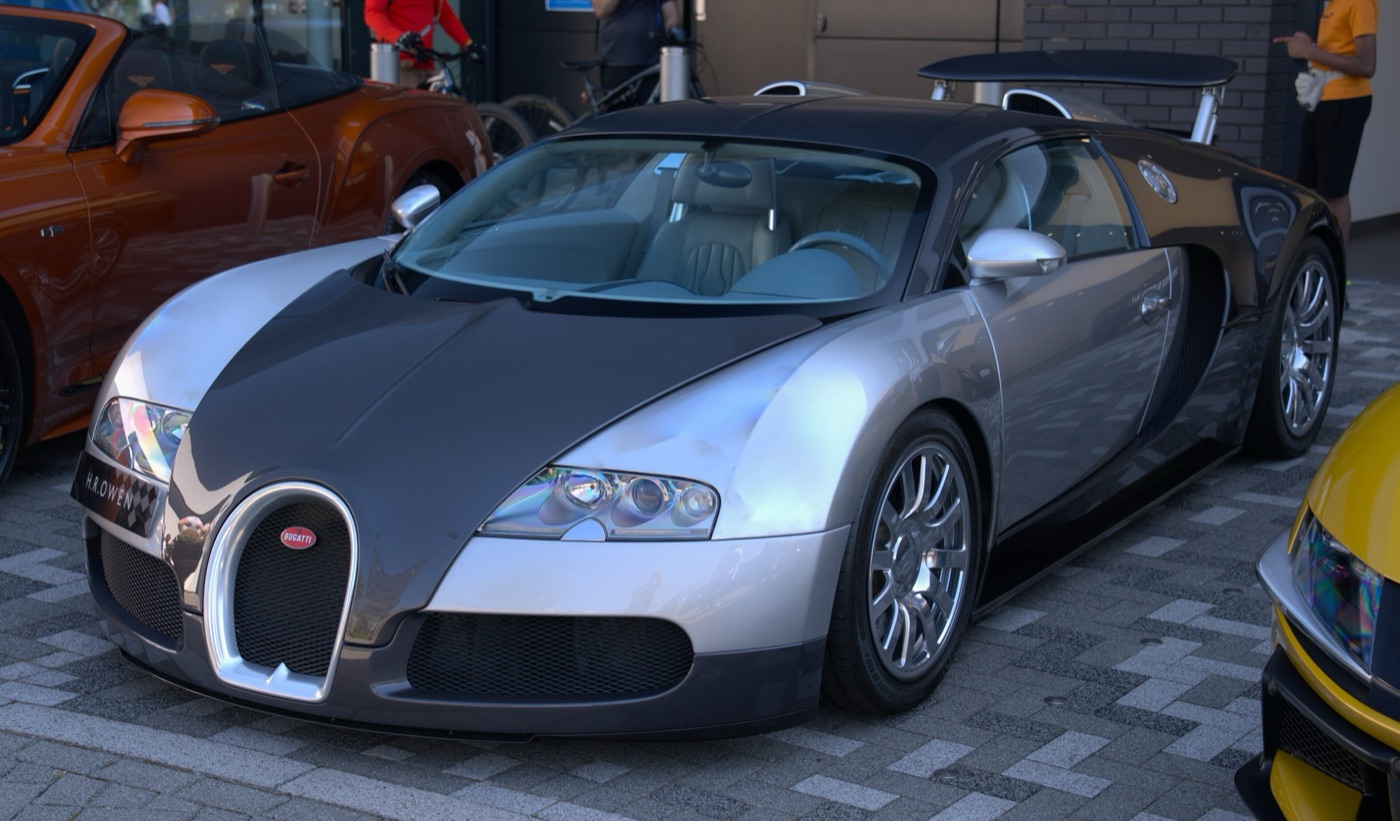
The Grand Sport is the open Veyron, shown at the Pebble Beach Concours d’Elegance in California in August 2008, put into production at the end of April 2009 and limited to 150 cars, with the first chassis numbers offered to existing coupé owners, Bugatti’s Geneva 2009 release said. Its roof is a removable panel, and a temporary soft cover, likened to an umbrella by one buyer’s guide, comes with the car. With the roof on it reaches 407 km/h; with it off, Bugatti limits it to 360 km/h (224 mph).
Bugatti Veyron Super Sport (2010–2011)
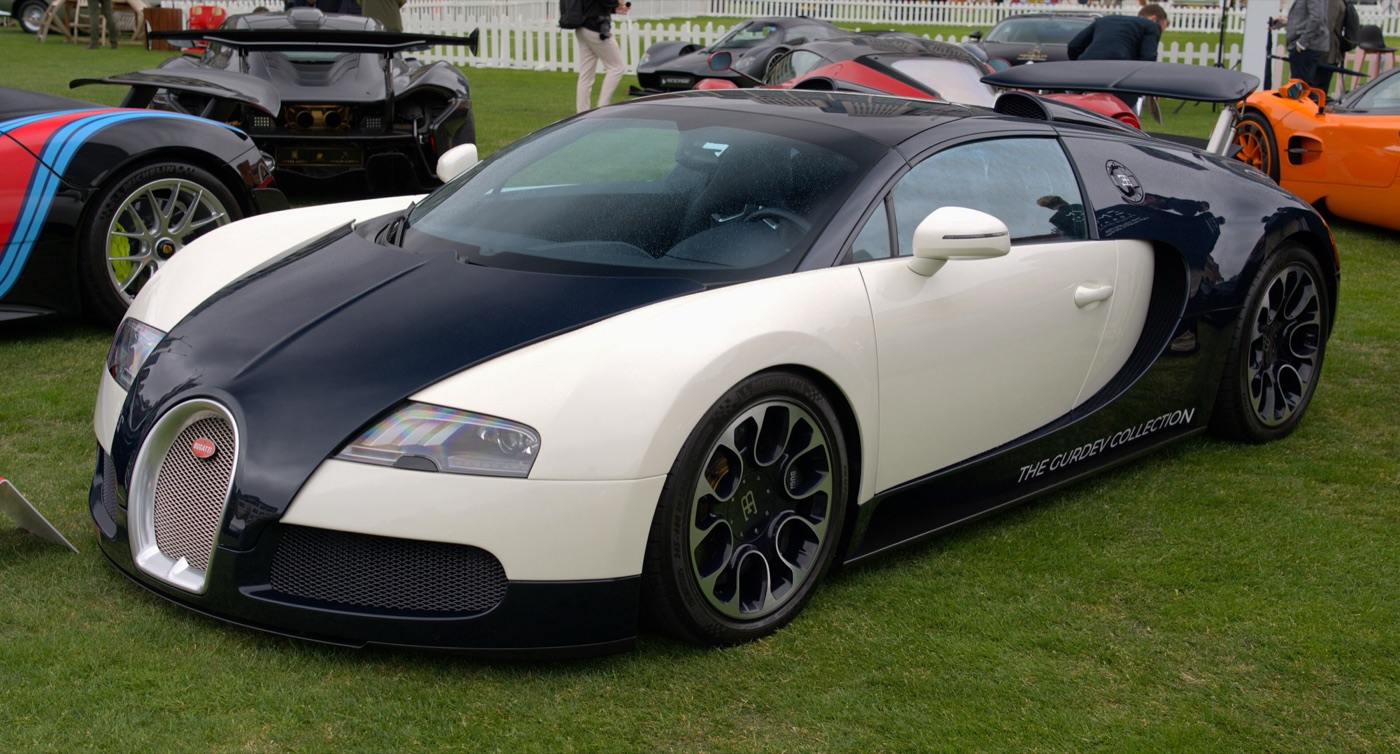
The Super Sport has 1,200 PS from four larger turbochargers and intercoolers, stiffer springs and anti-roll bars, dampers developed from racing, NACA ducts in the roof in place of the usual air scoops, a double diffuser and a central exhaust. Bugatti’s 2015 release on the record car lists those changes and gives 0–100 km/h in 2.5 seconds. Bugatti built 48. Five of them were World Record Edition cars, finished in black carbon with orange details, according to PistonHeads.
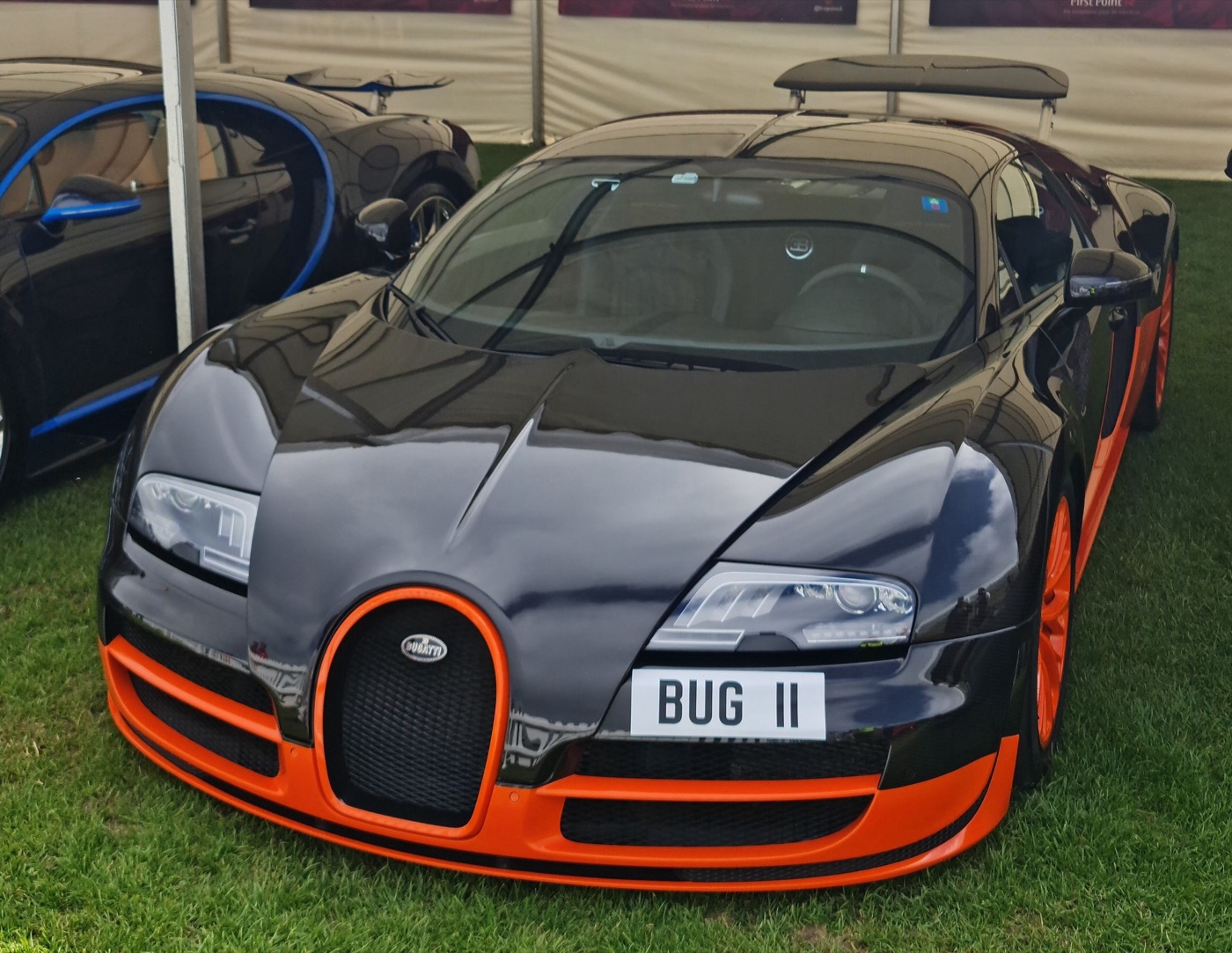
Top Gear’s James May drove a Super Sport at 417 km/h (259.11 mph) at Ehra-Lessien on the day of the record and made it his car of the year for 2010, Bugatti said in January 2011, by which time 38 had been ordered. Evo’s Chris Harris wrote that “when the taps open, there is silence. You can’t talk because your brain is trying to work out if you were propelled at the horizon, or if the horizon was just dragged onto your face.”
Bugatti Veyron Grand Sport Vitesse (2012–2015)
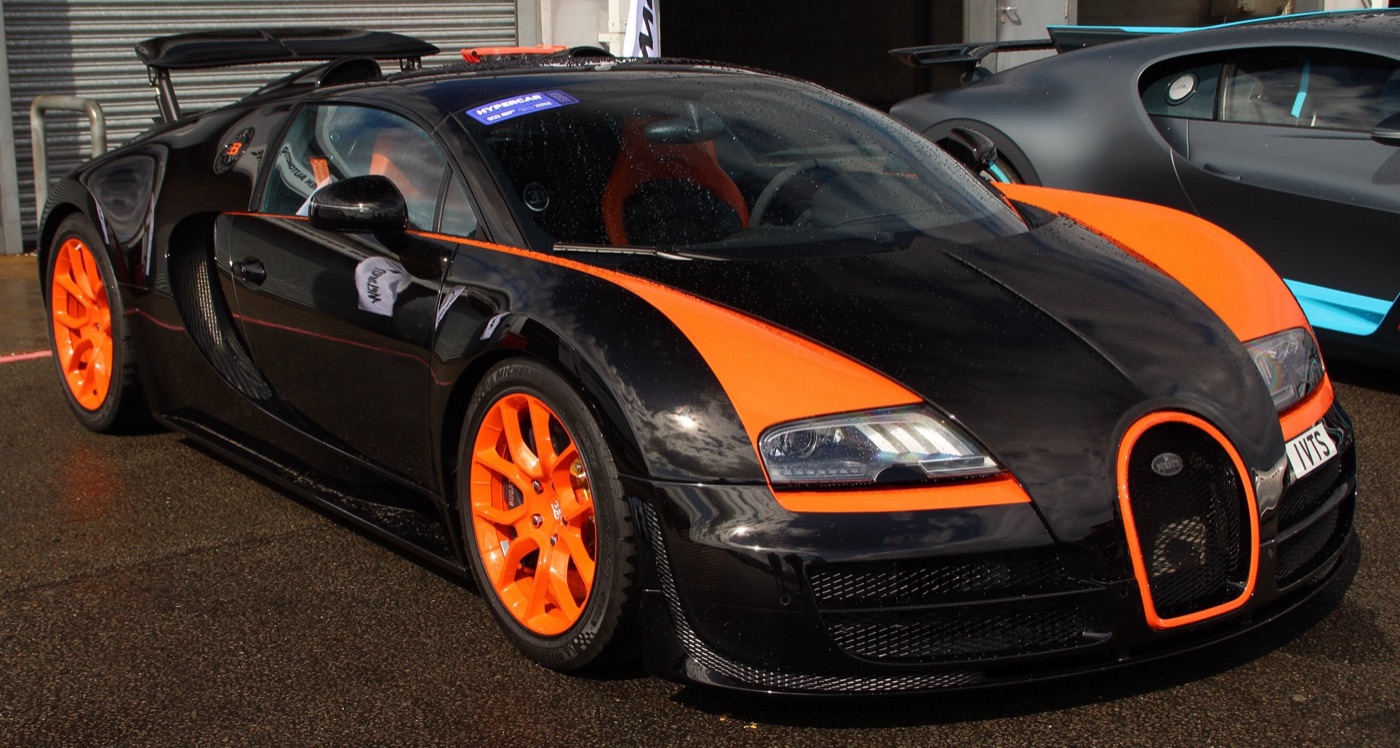
The Vitesse is the Super Sport’s 1,200 PS engine in the Grand Sport’s open body, shown at Geneva in March 2012. Bugatti reinforced the monocoque round the sills and transmission tunnel, stiffened the B-pillars with carbon, made the outer skin entirely of carbon fibre and fitted a roof-edge spoiler and wind deflector so that passengers can talk at more than 200 km/h with the roof off. It reaches 410 km/h with the roof on and is limited to 375 km/h (233 mph) with it off.
A SkiddMark report of 9 April 2013 noted that Bugatti had brought three Veyron roadsters to that year’s Geneva show, two Grand Sport Vitesses and a Grand Sport, and that the new LaFerrari and McLaren P1 had taken most of the attention. The same report quoted a Bugatti Facebook teaser promising “the latest example of exceptional Bugatti performance”; two days later Bugatti announced the Vitesse’s open-car speed record.
Special editions
The special editions change paint, materials and trim; of the Bleu Centenaire, for example, Bugatti said it “shares all performance characteristics of other Veyron models”.
Pur Sang
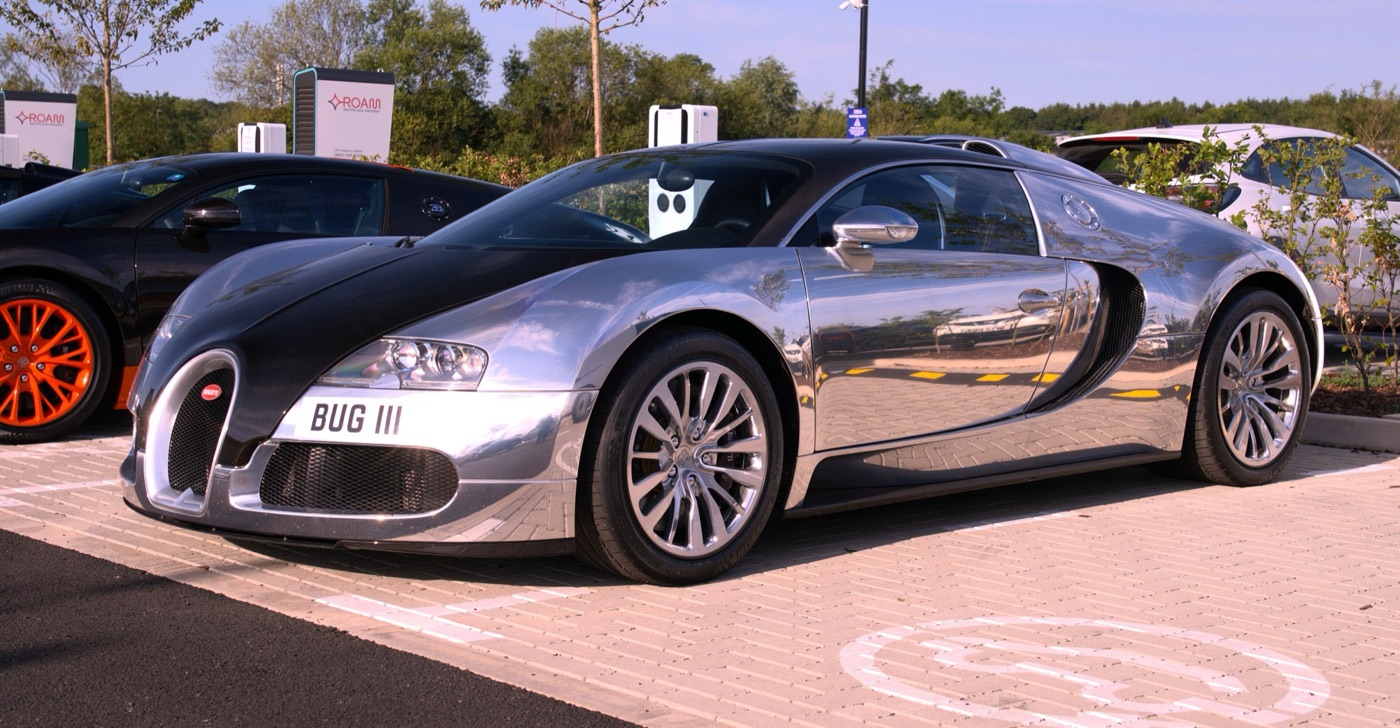
The Pur Sang (“thoroughbred”) has no paint: its body is bare carbon fibre and polished aluminium.
Fbg par Hermès (2008)
Shown at Geneva in March 2008, the Fbg par Hermès was designed by Gabriele Pezzini with the Paris leather house, whose workshops covered the dashboard, seats and engine bulkhead in bull calfskin. Its eight-spoke wheels recall the Type 35, and the launch release gave the price as €1.55 million before tax.
Sang Noir (2008)
An all-black car with a tangerine leather interior and a chrome grille, modelled on the Type 57S Atlantic; Bugatti planned 15.
Bleu Centenaire (2009)
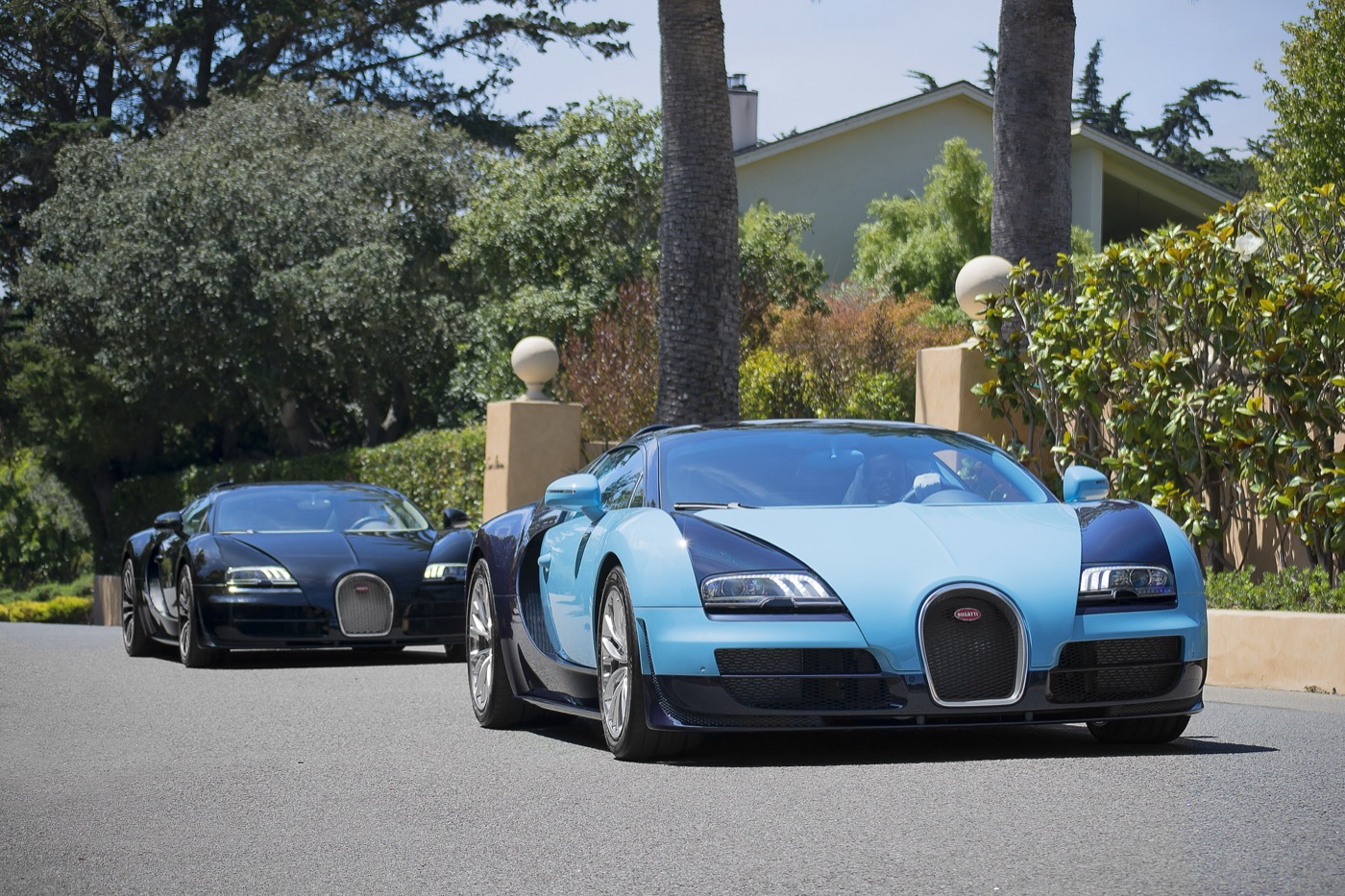
A one-off for Bugatti’s centenary in 2009, in matt and gloss shades of the same light blue, priced at €1.35 million before tax.
Les Légendes de Bugatti (2013–2014)
Six Grand Sport Vitesse editions, three cars each, named after Jean-Pierre Wimille, Jean Bugatti, Meo Costantini, Rembrandt Bugatti, the Type 18 “Black Bess” and Ettore Bugatti. The Wimille edition was shown at Pebble Beach in August 2013 at €2.13 million before tax, and Bugatti said in December 2013 that the third Wimille car had been the 400th Veyron sold. Bugatti said in 2022 that all 18 sold out at once.
Grand Sport Vitesse La Finale (2015)
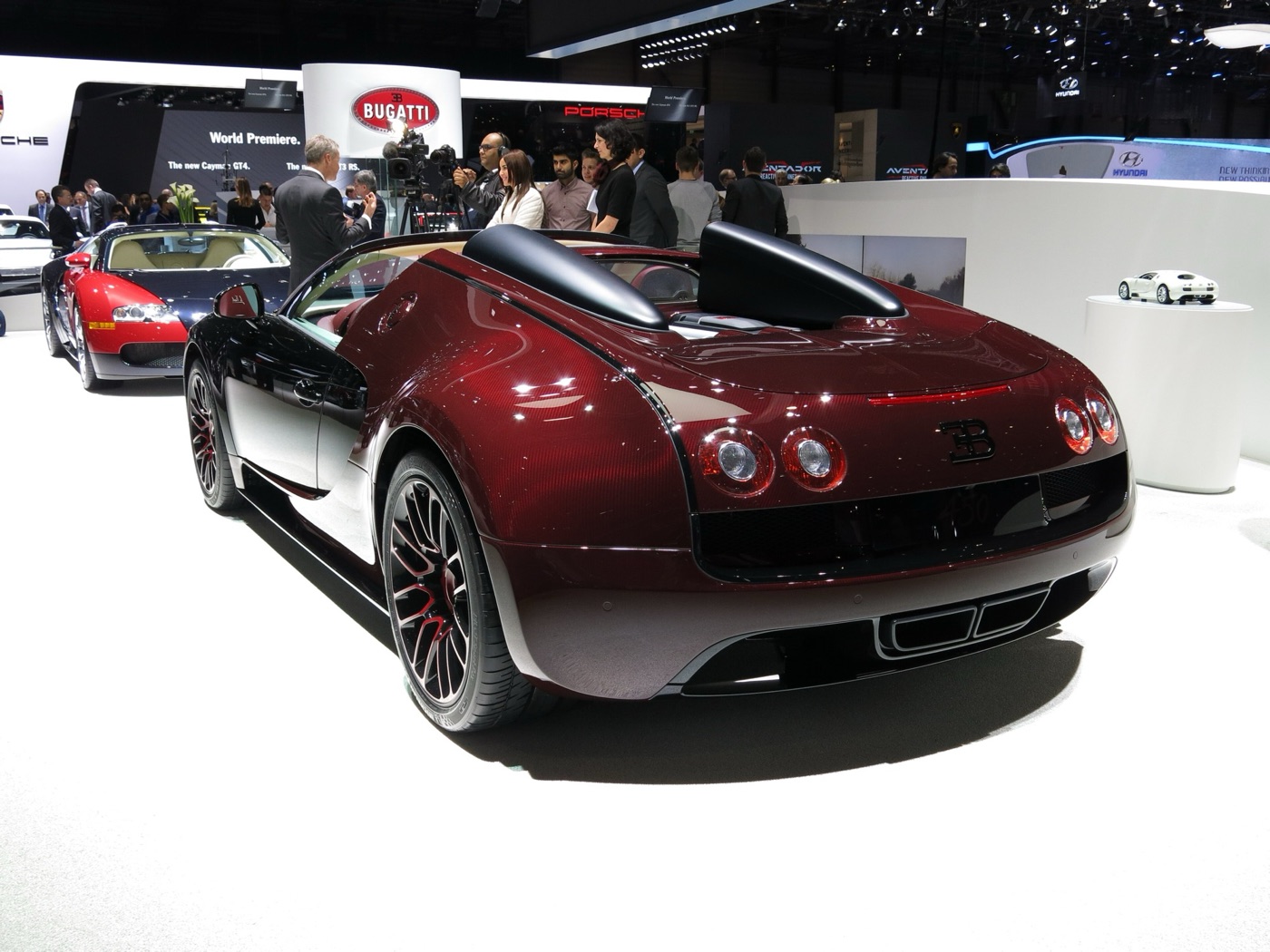
The 450th and last Veyron, a Grand Sport Vitesse in red and black exposed carbon (the first car in red exposed carbon), with “La Finale” lettering under the headlight and “450/450” beneath a bronze elephant between the seats. It was sold to a customer in the Middle East and shown at Geneva in March 2015 beside chassis number one.
How many Bugatti Veyrons were made?
Bugatti made 450 Veyrons from 2005 to 2015: 300 coupés and 150 roadsters, the split it had planned. Bugatti’s February 2015 release announced that the last one had been sold.
| Version | Body | Built |
|---|---|---|
| Veyron 16.4, including its special editions | Coupé | 252 |
| Veyron 16.4 Super Sport, including 5 World Record Editions | Coupé | 48 |
| Veyron 16.4 Grand Sport and Grand Sport Vitesse, including the 18 Legend cars and La Finale | Roadster | 150 |
| Total | 450 |
The roadsters took longer to sell. The final coupé order came in June 2011, the 400th sale in December 2013 and the 450th in February 2015. Including options, the average price of the last cars sold was €2.3 million.
Did Bugatti lose money on the Veyron?
Bugatti has not published the Veyron’s costs. In 2013 the analyst Max Warburton of Bernstein Research estimated that Volkswagen had lost about €1.7 billion on the Veyron, €4,617,500 a car, as reported by CompleteCar, which put it fifth on Bernstein’s list of Europe’s biggest loss-making cars.
Bugatti Veyron speed records
The Veyron set three speed records, each at Volkswagen’s Ehra-Lessien proving ground in Lower Saxony, which has a straight of almost nine kilometres.
| Date | Car | Driver | Speed | Record |
|---|---|---|---|---|
| April 2005 | Veyron 16.4 | Uwe Novacki | 407 km/h (253 mph) type-approved; 411 km/h measured | First series production car over 400 km/h |
| 26 June 2010 | Veyron 16.4 Super Sport | Pierre-Henri Raphanel | 431.072 km/h (267.86 mph), average of 427.933 and 434.211 km/h | Fastest production car (Guinness World Records) |
| April 2013 | Veyron 16.4 Grand Sport Vitesse | Anthony Liu | 408.84 km/h (254.04 mph), roof off | Fastest open-top production car (TÜV) |
The Super Sport’s 431 km/h record
Raphanel, a former Formula 1 and Le Mans driver and Bugatti’s pilote officiel, drove the Super Sport down the straight once in each direction, as the Guinness rules require, and Guinness confirmed the average. The record took the title back from the SSC Ultimate Aero, which had averaged 412.28 km/h (256.18 mph) on a closed highway in Washington State on 13 September 2007, NBC News reported. “At a speed greater than 400 km/h, you are covering 120 metres per second,” Raphanel said.
Why Guinness took the record away in 2013, and gave it back
In April 2013 Guinness World Records withdrew the record because the record car’s speed limiter had been switched off, while customer cars were limited to 415 km/h. Less than a week later it restored it, in a statement reported by Jalopnik: “Guinness World Records is now satisfied that a change to the speed limiter does not alter the fundamental design of the car or its engine.”
The Grand Sport Vitesse roadster record
In April 2013 the Chinese racing driver and businessman Anthony Liu, then 29, drove a Grand Sport Vitesse at 408.84 km/h with the roof off. Bugatti announced the record on 11 April 2013, in a release that also launched eight World Record Car Edition replicas in black and orange at €1.99 million each before tax. Bugatti said in 2022 that the record still stood.
How much is a Bugatti Veyron worth today?
Evo’s guide puts most Veyron 16.4 coupés between £800,000 and £1.3 million, and rare editions sell for far more. The auction record for a standard car is $2,205,000, paid for an original, low-mileage black and blue 2010 coupé at Broad Arrow’s Las Vegas sale in November 2025 against an estimate of $1.5 million to $1.8 million; Broad Arrow’s report said demand for original, unmodified Veyrons had “accelerated over the past year”.
Prices have risen since the early 2020s. In April 2021 the PistonHeads guide found the cheapest Veyron for sale in the UK at £819,900, an early 2006 car with nearly 20,000 miles, and noted that £650,000 had bought one five years earlier.
The most expensive Veyron sold at auction is a Grand Sport Vitesse “Jean-Pierre Wimille”, one of three, which RM Sotheby’s sold in September 2026 for a hammer price of CHF 4,505,000, about $5.4 million. Autoevolution’s report says the previous record was the one-off Grand Sport Sang Bleu, sold in 2024 for a little over $3 million.
Bugatti certifies, restores and services older cars through La Maison Pur Sang, started at Rétromobile in 2020. In August 2026 it showed a one-off restored Veyron with Chiron-size tyres and new colours at Pebble Beach and opened a Veyron configurator for owners, according to its August 2026 release.
How much does it cost to run a Bugatti Veyron?
A Veyron costs tens of thousands of pounds a year to keep, before fuel. In January 2010 Autocar priced a standard service at £12,866 and a set of four Michelin tyres at £23,500, and said that at every fourth tyre change the wheels had to be checked for cracks and replaced at £7,050 each if they failed, as Tyrepress reported.
Servicing, tyres and wheels
Bugatti recommends changing all the fluids every year, which means taking off the rear wheels, brakes and wheel-arch liners to reach the 16 drain plugs. The collector Manny Khoshbin, who owns two Veyrons, put that service at about $25,000, new tyres at $38,000 a set every two to three years and new wheels at $50,000 every 10,000 miles, as The Drive reported. The PistonHeads guide gives the tyre interval as two years or 2,500 miles, whichever comes first, and says the cost of a new set of wheels had fallen from £50,000 to under £30,000 by 2021.
Known faults and recalls
Many parts are ordinary Volkswagen Group items, so the parts themselves can be cheap; the labour is not. The same buying guide quotes about £20,000 of labour to replace a £700 camshaft and about £35,000 to replace the fuel tank. In the United States, recall 16V-200 of April 2016 covered 72 Veyron and Grand Sport cars built from 2006 to 2010 whose fuel gauges could show more fuel than the tank held; dealers replaced the tank control unit and its software, according to the NHTSA recall listing. The guide also records a 2016 recall of 87 cars for corroded jacking plates and a side-airbag recall that needed the seats removed.
Bugatti Veyron rivals
Few supercars of its time were comparable on price or speed. Evo names the Porsche Carrera GT and Pagani Zonda F as the nearest rivals, both lighter and naturally aspirated. On top speed its rival was the SSC Ultimate Aero, which broke the Veyron’s 253 mph with 256.18 mph in 2007 and held the record until the Super Sport’s run in 2010. The hybrid McLaren P1 and Ferrari LaFerrari were unveiled at Geneva in 2013.
Bugatti Veyron vs Bugatti Chiron
The Chiron replaced the Bugatti Veyron in March 2016. It kept the 8.0-litre W16 and four turbochargers but with turbos 69 per cent larger, sequential turbocharging and 1,500 PS, later 1,600 PS. A Chiron Super Sport 300+ driven by Andy Wallace reached 490.484 km/h (304.773 mph) in 2019, the first time, Bugatti says, that a car maker had passed 300 mph.
In January 2026 Bugatti unveiled the F.K.P. Hommage, a one-off on the latest W16 platform with 1,600 hp and a body that recalls the Veyron, made for the Veyron’s 20th anniversary and named after Piëch, according to its release.
Bugatti Veyron reception and famous cars
Road testers praised how easy the Veyron was to drive. Harry Metcalfe wrote in evo in December 2005 that “the steering is outstanding” and that the car was “a very friendly device”; Autocar’s used-car review says it “redefines what’s possible in a road car”. Others disliked its looks: PistonHeads recalls that McLaren’s Ron Dennis called the Bugatti Veyron “pig ugly”.
The Veyron in the lake
In November 2009 a Veyron left the road near Galveston, Texas, and ended up in a saltwater lagoon, ruining the engine. Its owner, Andy Lee House of Lufkin, Texas, had reportedly bought the car for $1 million and insured it for $2.2 million; he blamed a low-flying pelican, then said he had been reaching for his phone. Video of the car going into the water spread online, and a November 2009 SkiddMark report carried it. The insurer, Philadelphia Insurance, refused the claim and sued in 2010, and on 26 August 2014 House pleaded guilty to wire fraud, Insurance Journal reported. In December 2015 he was sentenced to a year and a day in federal prison and three years’ supervised release and ordered to repay a $600,000 settlement, Jalopnik reported. The wreck was later offered for $300,000 as a rebuild project.
Katie Price’s pink Veyron
In July 2011 the model Katie Price tweeted that the customiser Afzal Kahn of Project Kahn in Bradford was painting her newly bought Veyron pink, to match her pink Range Rover, Autoevolution reported. A SkiddMark report that month contrasted it with Ettore Bugatti’s view that “weight was the enemy” and his description of Bentleys as “the world’s fastest lorries”.
Questions
How much did a Bugatti Veyron cost new?
Bugatti says every Veyron cost at least €1.16 million before tax; evo puts a 16.4 at about £925,000 new in the UK before options. Special editions such as the Fbg par Hermès (€1.55 million) and the Jean-Pierre Wimille Legend edition (€2.13 million) cost more, and the average price of the last cars sold in 2015, with options, was €2.3 million.
What is the 0–60 mph time of a Bugatti Veyron?
Bugatti quotes 0–100 km/h (62 mph) in 2.5 seconds for the Veyron 16.4 and the Super Sport, and 2.6 seconds for the Grand Sport Vitesse. The 16.4 reaches 200 km/h (124 mph) in 7.3 seconds.
What engine does the Bugatti Veyron have?
An 8.0-litre (7,993 cc) W16 with four turbochargers and 64 valves, built from two narrow-angle VR8 engines on one crankshaft. It made 1,001 PS in the 16.4 and Grand Sport and 1,200 PS in the Super Sport and Grand Sport Vitesse.
Where was the Bugatti Veyron built?
By hand in Bugatti’s workshop in Molsheim, Alsace, France, the town where Ettore Bugatti founded the company in 1909. Production ran from September 2005 to 2015.
Who designed the Bugatti Veyron?
The shape came from Volkswagen’s design department under Hartmut Warkuß, with the exterior by Jozef Kabaň, first shown as the EB 18/4 Veyron concept at Tokyo in 1999. Ferdinand Piëch, then Volkswagen’s chairman, set the engineering targets.
Is the Bugatti Veyron road legal?
Yes. Every Veyron is a type-approved road car; Bugatti’s brief was a car that could pass 400 km/h and still be driven comfortably to the opera. The 431.072 km/h record car was a Super Sport with its speed limiter switched off.
What was the last Bugatti Veyron?
Chassis 450, a Grand Sport Vitesse called La Finale, finished in red and black exposed carbon and sold to a customer in the Middle East. Bugatti showed it at the Geneva Motor Show in March 2015 beside chassis number one.
Which is faster, the Veyron or the Chiron?
The Chiron. It has 1,500 PS against the Veyron’s 1,001 PS or 1,200 PS, and a Chiron Super Sport 300+ reached 490.484 km/h in 2019, against the Veyron Super Sport’s 431.072 km/h in 2010.
Sources
- Bugatti, “15 years of Bugatti Veyron: how it all began”, 15 April 2020: Piëch’s sketch, the brand purchase, the concept cars, the 2001 production decision.
- Bugatti, “From vision to Veyron”, 14 May 2025: the four concepts, designers, W18 to W16.
- Bugatti, “Bugatti Veyron: the legacy behind a legendary name”, 26 June 2025: Pierre Veyron.
- Bugatti, “Bugatti Veyron legends: the modern-day hyper sports car”, 29 May 2019: Michelin tyre, ten radiators, price from €1.16 million, around 30 special editions.
- Bugatti, “Bugatti W16 engine: the last of its kind”, 29 July 2022: first engine run, cooling, Chiron engine.
- Bugatti, “From dream to reality: how Chassis 5.0 helped shape the legendary Veyron”, 2025: pre-production cars.
- Bugatti, “407 km/h: a milestone in automotive history”, 27 April 2020: the 2005 run, the Speed Key, performance figures.
- Bugatti, “Geneva International Motor Show 2015: Bugatti celebrates the Veyron”, 2 March 2015: engineering, materials, colours, La Finale, average price.
- Bugatti, “Bugatti sells the last Veyron”, 23 February 2015: 450 cars, 300 coupés and 150 roadsters.
- Bugatti, “400th Bugatti Veyron sold”, 5 December 2013: sales, Legend editions, Vitesse figures.
- Bugatti, “Hundred years of Bugatti at the Geneva Autoshow”, 3 March 2009: orders, Grand Sport, Bleu Centenaire.
- Bugatti, “The Bugatti Veyron Fbg par Hermès”, 4 March 2008, and “Bugatti EB 16.4 Veyron Sang Noir”, 3 July 2008.
- Bugatti, “Off to Doha at 431.072 km/h”, 6 January 2015: the Super Sport and its record.
- Bugatti, “Bugatti’s Super Sport legends”, 4 June 2021: Super Sport build number, record runs, Chiron Super Sport 300+.
- Bugatti, “Bugatti Veyron 16.4 Super Sport awarded Top Gear’s Car of the Year”, 27 January 2011.
- Bugatti, “408.84 km/h: Bugatti Veyron 16.4 Grand Sport Vitesse sets world speed record”, 11 April 2013, and “Ten years of the Bugatti Veyron 16.4 Grand Sport Vitesse”, 9 August 2022.
- Bugatti, F.K.P. Hommage release, January 2026, and La Maison Pur Sang Veyron release, 20 August 2026.
- Broad Arrow Auctions, Las Vegas auction results, November 2025: the $2,205,000 coupé.
- Autoevolution, “Record-setting Bugatti Veyron Wimille hammers for $5.4 million”, 30 September 2026, and “Katie Price decides pink looks better on her Veyron”, 28 July 2011.
- Tyrepress, “The world’s priciest tyres”, January 2010, reporting Autocar’s running costs.
- The Drive, “Bugatti Veyron basic maintenance can cost upwards of $50,000 a year”, 2019.
- NHTSA recall 16V-200, April 2016, via Motorverso’s recall listing.
- NBC News, “The world’s fastest street-legal car”, 2008: the SSC Ultimate Aero record.
- Bugatti, “Final Bugatti Veyron 16.4 sold to a customer in Europe”, 24 June 2011: the last coupé order.
- CompleteCar, “Europe’s biggest losers”, 2013: Bernstein Research’s estimate.
- Jalopnik, “Guinness gives ‘world’s fastest’ title back to Bugatti”, April 2013, and “The guy who crashed a Bugatti into a lake has been sentenced”, 15 December 2015.
- Insurance Journal, “Philadelphia Insurance vindicated in YouTube Bugatti crash case”, 29 August 2014.
- PistonHeads, “Bugatti Veyron 16.4 PH used buying guide”, Tony Middlehurst, 4 April 2021: prices, Ricardo gearbox, running costs, recalls, the lake car’s sale, build numbers.
- Evo, Bugatti Veyron guide and review (Harry Metcalfe, evo 86, December 2005; Chris Harris on the Super Sport): rivals, values, quotations. Autocar, Bugatti Veyron 2005–2015 review: Super Sport fuel consumption.
- SkiddMark, November 2009 (the lake crash video), July 2011 (Katie Price’s Veyron) and April 2013 (Geneva and Bugatti’s announcement).