Caterham Cars: the history and owners of the Seven’s maker
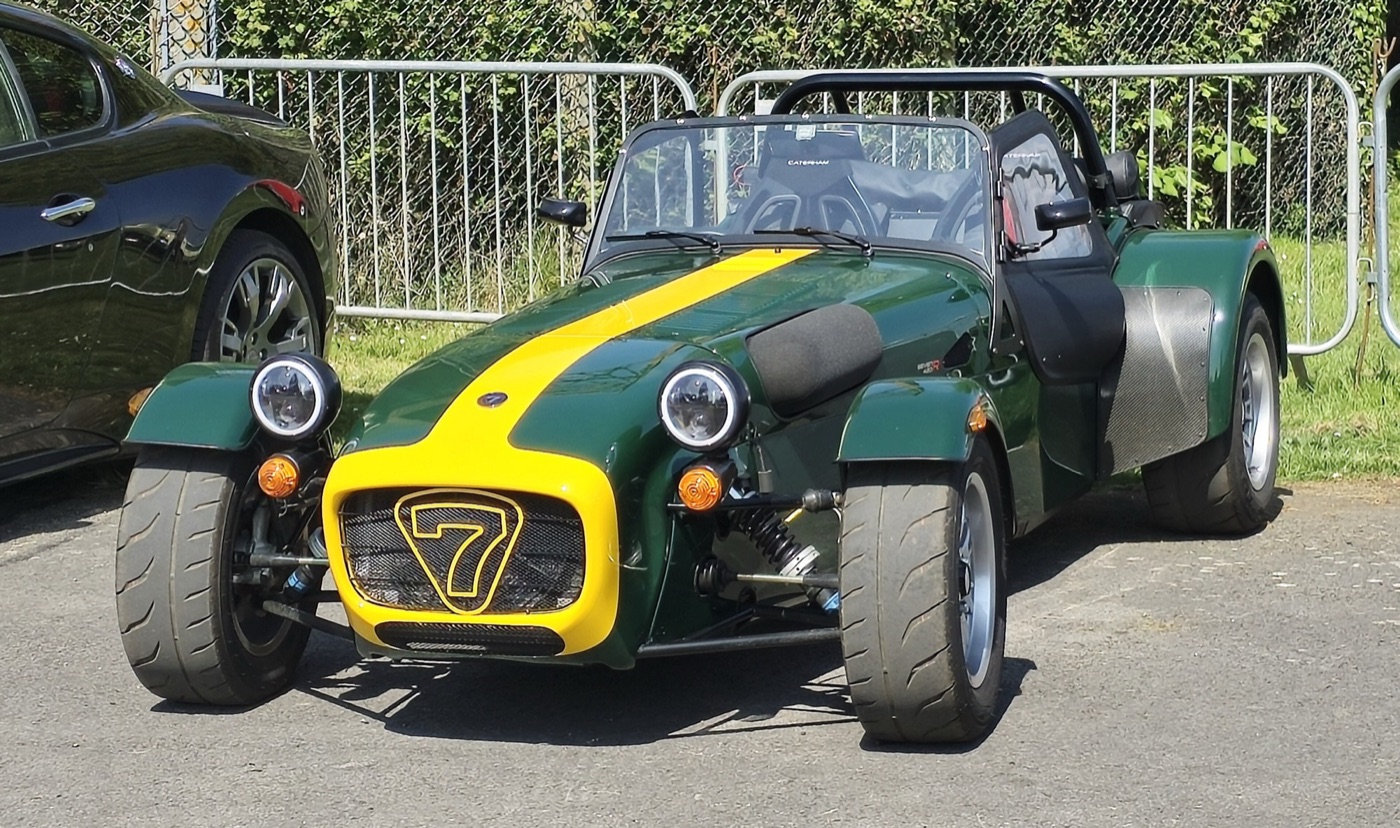
Caterham Cars is the British company that has built the Caterham Seven, the lightweight two-seat sports car Colin Chapman designed for Lotus, since it bought the rights to the car from Lotus in 1973. Caterham Cars began as a Lotus dealer in the Surrey town of Caterham, has built its cars in Dartford, Kent, since 1987, and has been owned since April 2021 by VT Holdings, its Japanese importer. In between it belonged to its founder’s family, a venture capital consortium and the AirAsia founder Tony Fernandes, whose Caterham name raced in Formula One for three seasons.
Caterham Cars history and owners
Caterham Cars has had four owners: the Nearn family until 2005, Corven Ventures until 2011, Team Lotus Enterprises (Tony Fernandes’s group, later Caterham Group) until 2021, and VT Holdings since then, as the company lists them in its “50 at 50” history of October 2023.
| Owner | Years | Who ran the company |
|---|---|---|
| Nearn family | 1973–2005 | Graham Nearn; from the 1980s his son Simon, with Graham as chairman |
| Corven Ventures consortium (management buy-in) | 2005–2011 | Ansar Ali, managing director; Mark Edwards, chief operating officer |
| Team Lotus Enterprises, later Caterham Group (Tony Fernandes, Kamarudin Meranun, SM Nasarudin) | 2011–2021 | Ansar Ali until June 2012, then Graham Macdonald |
| VT Holdings | 2021 to date | Graham Macdonald until mid-2022; Bob Laishley until November 2025; Kazuho Takahashi since |
From Lotus dealer to car maker
Graham Nearn, born in Catford in south-east London, set up Caterham Car Sales and Coachworks in 1959 with his business partner David Wakefield, as one of the original Lotus Centres. Alan Henry’s obituary of Nearn in The Guardian records that he had first seen the Seven on the Lotus stand at the 1957 London Racing Car Show, and that his firm sold and serviced the whole Lotus range.
A Lotus Seven had also been on television. Patrick McGoohan drove one, registration number KAR 120C, in The Prisoner, and Nearn himself makes an appearance in the last episode, returning the car to Number 6’s house in Buckingham Palace Road and running a duster over it. Caterham’s own timeline says it supplied that Series II car in 1965.
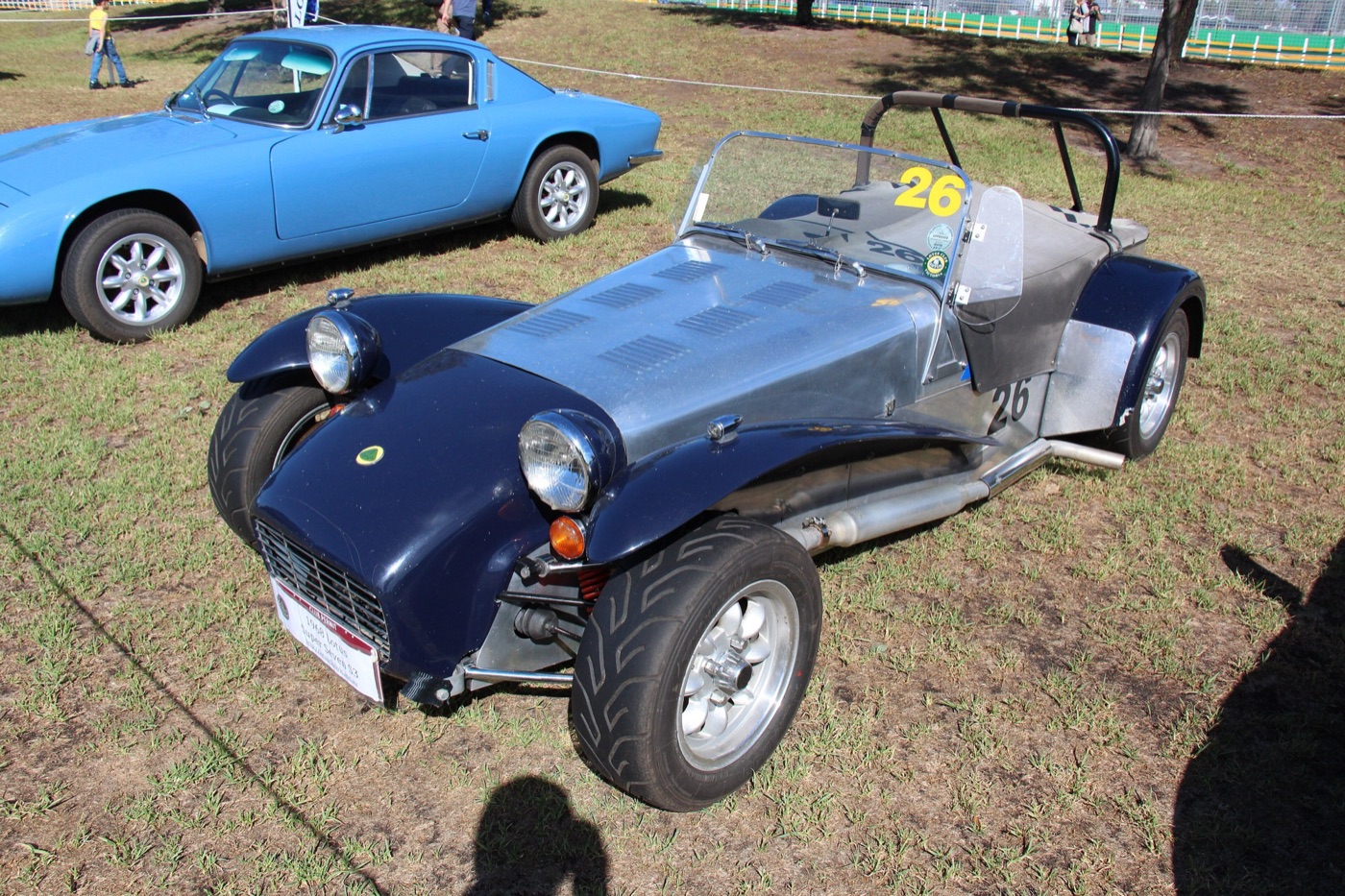
When Chapman decided to drop the Seven in the early 1970s to move Lotus up-market, Nearn talked him into letting Caterham take over its sale and manufacture with Lotus’s blessing. According to Caterham, it bought the tooling, the designs and the exclusive rights in May 1973, and the handshake between Chapman and Nearn took place in the Pub Lotus in Primrose Hill, London.
Caterham Cars under the Nearn family
Caterham started building cars in June 1973 at Town End, Caterham, at about one Series 4 a week. Only 38 Series 4s were made before it went back to the Series 3 shape in 1974, with Lotus Twin Cam and Ford Crossflow engines, and the first 100 of those went abroad, to buyers from the United States and Canada to Japan, Hong Kong, Qatar and Libya. The company itself was incorporated on 23 May 1974 as Seven Cars Limited and renamed Caterham Cars Ltd on 10 May 1989, and is registered as a manufacturer of motor vehicles, according to its Companies House record.
Production moved to a larger unit at Kennet Road, Dartford, in 1987. In 1993 the Seven gained Low Volume Type Approval, so it could be sold as a fully built car in the UK as well as a kit. The Guardian says Nearn handed operational control to a new management team led by his son Simon during the 1980s and became chairman; the family sold the business in 2005, and Graham Nearn died in November 2009, aged 76.
Corven Ventures and the management buy-in
The 2005 sale was a management buy-in led by Ansar Ali, a former general manager of Lotus who had begun his career at Ford in 1991 after an MBA at Manchester Business School. He became managing director, with Mark Edwards, another founding partner of the buy-in, as chief operating officer; the business was owned by a shareholder consortium led by the venture capital firm Corven Ventures.
Under Ali, Caterham launched the Duratec-engined Superlight R500 in 2008, and in January 2011 revealed the SP/300.R sports prototype, its first all-new model in more than 15 years. Graham Macdonald, then finance director, later described the Corven years less kindly. “During the last four years there was no investment in this business at all,” he told SkiddMark in March 2013. “The previous owners, Corven, were desperate to sell the business, so it was all about results to the bottom line, zero investment, sell what you can and get the numbers looking good.”
Tony Fernandes and Caterham Group
On 27 April 2011 Team Lotus, the Formula One team, announced that it had bought Caterham Cars. Formula1.com’s report of the deal names the buyers as Tony Fernandes, Kamarudin Meranun and SM Nasarudin, and the sellers as the Corven Ventures consortium; Ali and his team stayed in charge. SkiddMark’s report from the press conference adds that the purchase had been completed several weeks earlier and that Caterham was the fourth business in the group, after the F1 team, the EQ8 energy drink and Team Lotus merchandising. Caterham’s own online timeline dates the sale to 2012, but its 2023 history and the 2011 reports agree on 2011. A leaked information memorandum, reported by SkiddMark in May 2014, put the price Fernandes paid at £9 million.
Inside the takeover: SkiddMark’s 2011 interview
In September 2011 Steve Davies spoke to Ali for SkiddMark’s “Behind the scenes at Caterham Cars”, the article this page replaces. Davies learned that the deal had been Ali’s own idea, first raised with Fernandes at a meeting shortly before Christmas 2010. Caterham’s 2012 statement on Ali’s departure says the same, with Fernandes adding that “we would almost certainly not be working under the Caterham name if he had not initiated the discussions”.
Davies also reported that Tony Shute, Lotus Cars’ head of product and a 20-year veteran there who had engineered the Elise, Exige and Evora, had resigned and joined Caterham, followed by several other Lotus employees. Caterham Cars, Ali was keen to say, had not poached anyone. SkiddMark had been told that Proton, Lotus’s Malaysian owner, would sell Caterham the Elise and Exige platforms; Davies found that to be untrue, though a Kuala Lumpur source said Proton was still willing to sell the Series 1 Elise design, which Ali had long tried to buy.
The rest of the interview was about selling abroad. Caterham was already selling more than half its cars outside the UK before the takeover, Ali had been flooded with approaches, mostly from overseas, and Fernandes had said he wanted Caterham cars sold wherever his airlines flew. Davies noted that Caterham was “not yet geared up to operate as a global business” and would need new sales and distribution systems. Within months it had opened in China (July 2011) and India (October 2011), where the Burman family of the Dabur Group chaired the new company and the British sports car racer Matt Cummings ran it.
Later in September 2011 Caterham set up Caterham Technology and Innovation (CTI), a separate engineering business in Norfolk with Mark Edwards as chief executive and Shute as head of road cars, to develop “a completely new line of accessible and affordable sportscars”.
The Renault Alpine partnership
On 5 November 2012 Renault and Caterham Group announced Société des Automobiles Alpine Caterham, a company owned 50:50 and based at Alpine’s Dieppe factory, to develop a mid-engined two-seater sports car for both brands. Caterham’s car was the C120, a separate car sharing its architecture and components with the Alpine A110. Macdonald told SkiddMark in 2013 that the two would be co-engineered and then split, with Caterham looking at other engine suppliers to get more power. In June 2014 Renault said it had raised its stake to 100%, ending the partnership; Macdonald later put it down to “differences between Tony and Carlos Ghosn” and said Caterham kept the rights to its own engineering work.
Expansion and retrenchment
Ali left by mutual consent in June 2012, and Macdonald, who had been chief financial officer, became chief executive. Andy Noble, sales and marketing director, followed in November 2012 after 24 years with the company; SkiddMark’s Steve Hindle, a former Caterham employee, wrote that three of the four original managers had now gone. In early 2013 Caterham left the town it is named after: the BBC reported in January that its showroom site had been sold for retirement flats and that sales would move to a temporary unit in Crawley, with production staying in Dartford.
In March 2013 Macdonald counted about 500 staff across the group: 100 at Caterham Cars, 100 at CTI, 20 at Caterham Composites in Germany and 250 at the F1 team. The car business itself, he told SkiddMark, sold “500 Sevens a year, turn[ed] over £20 million and [made] a profit on that”, adding: “that’s not why Tony Fernandes invested his money in Caterham.” The group added a motorcycle division, Caterham Bikes, at the Milan show in November 2013, with the Brutus 750 as its first model.
From 2014 the group shrank. In May 2014 SkiddMark reported, from a leaked memorandum, that Fernandes was seeking about £350 million for the whole group. CTI, which cost up to £10 million a year to run, lost 18 staff in June 2014 and closed in February 2015. When SkiddMark met Macdonald at the new Crawley showroom in April 2015, the group was down to two businesses, Cars and Composites. “If we can turn over 500 Sevens, simply and efficiently, there’s a nice little business there, and for the time being that’s what Tony is happy with,” he said, and he confirmed that at least six people had approached him about buying the company in the previous year.
VT Holdings
VT Holdings, a Japanese car retailer that had imported Caterhams since 2009, bought the company in April 2021. Autocar’s report of 6 April 2021 says that VT, whose Japanese retail network had more than 200 dealerships, sold more than 120 Caterhams a year there, and that Caterham then exported to 20 markets, which took 60% of its sales. Kazuho Takahashi, VT’s founder and a former Le Mans and Japanese GT championship driver, said: “We will protect and develop the Seven to meet the legislative challenges that lie ahead.”
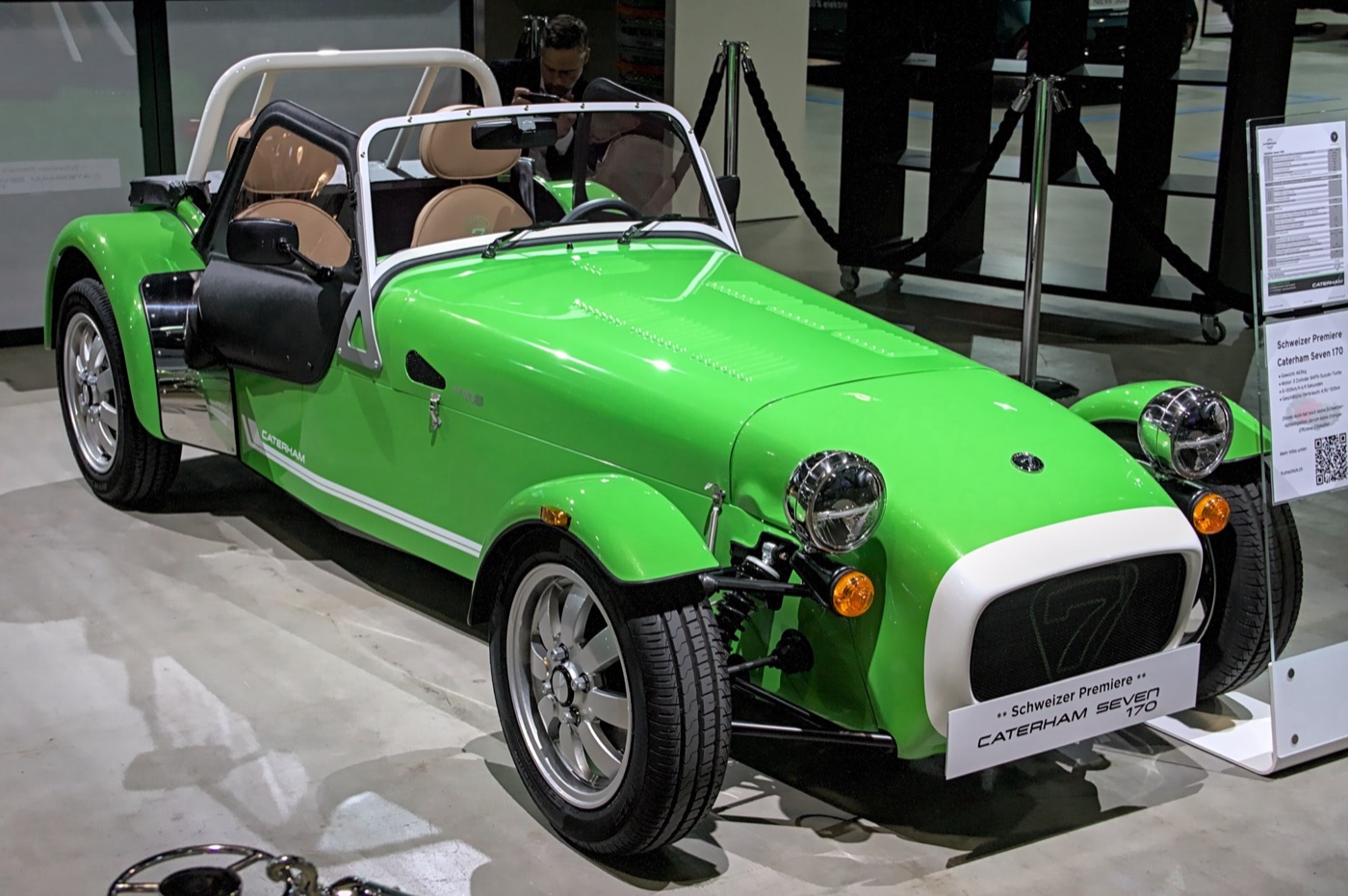
In 2021 Caterham launched the Seven 170, built around a 660cc three-cylinder turbocharged Suzuki engine; at 440 kg the 170R is the lightest model it has made. 2021 was also its best sales year, at 670 cars. Bob Laishley, a former programme director for Nissan’s NISMO road cars, became chief executive in 2022, and VT paid for the new Dartford factory that opened in 2024. Caterham announced on 5 November 2025 that Laishley had stepped down and that Takahashi would run the company himself, with the finance and operations director, Trevor Steel, managing the Dartford site day to day.
Where are Caterham cars made?
Caterham Cars builds every car by hand in Dartford, Kent, in a 54,000 sq ft facility on the new Dartford X industrial park, which opened on 5 June 2024. It has paint booths, an engine shop, a parts warehouse and 33 bays, in each of which one builder assembles a complete Seven. Caterham says the move raised its capacity by 50%, to 750 cars a year, and put production, engineering, motorsport and sales under one roof for the first time.
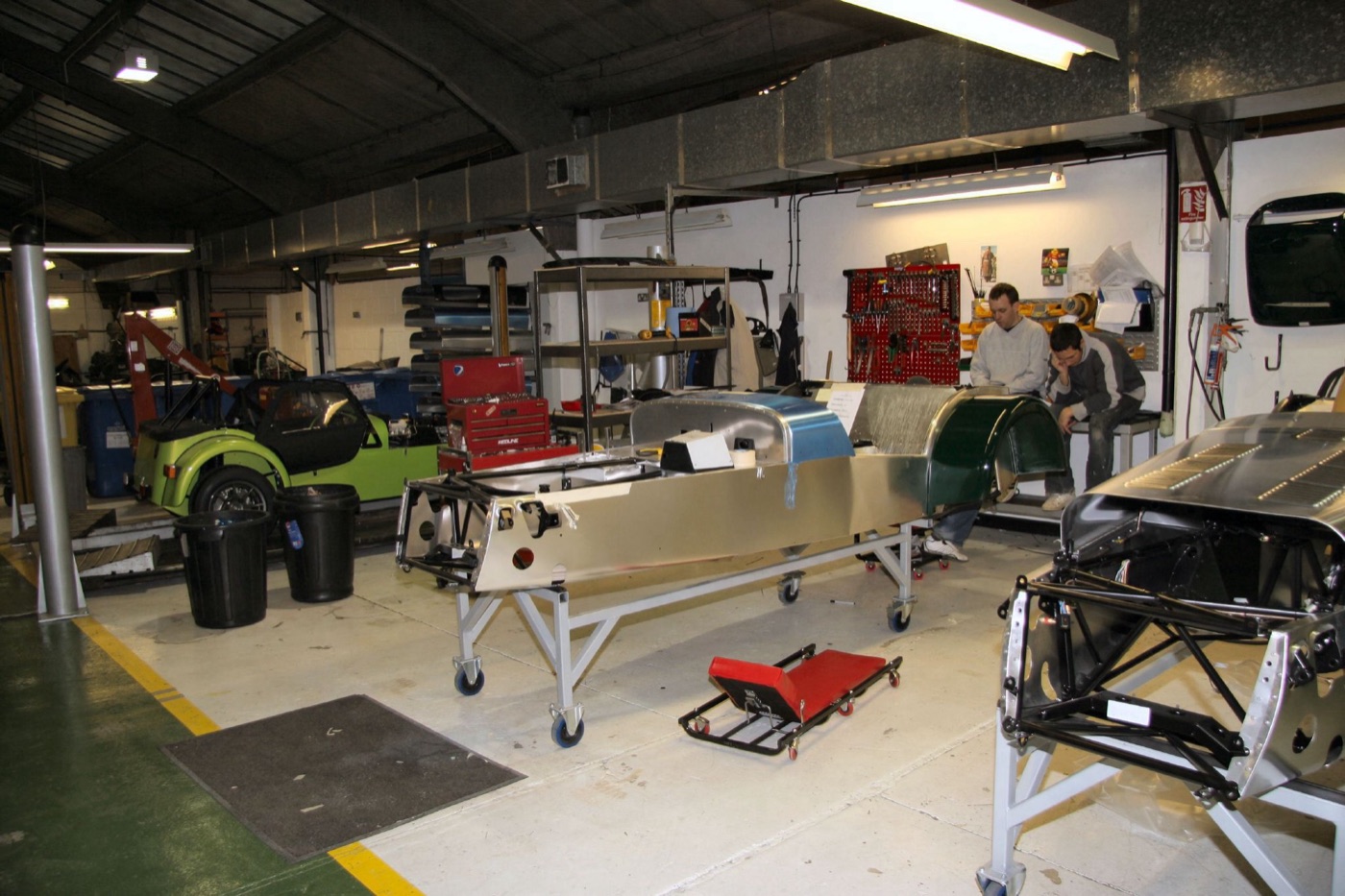
Cars were built in the town of Caterham from 1973 until 1987, then at Kennet Road in Dartford until 2024, close to the new site. The sales and service side stayed in Caterham until 2013 and then moved to Crawley in West Sussex. When SkiddMark visited in April 2015, the new “Caterham South” was a 25,000 sq ft, 40-car showroom opposite Virgin Atlantic’s head office, with two of the former F1 cars, bought from the team’s administrators, on display. Visitors can now book tours of the Dartford factory; the company’s address is Unit 10, Rennie Drive.
Where are Caterhams sold?
Most new Caterhams are sold outside the UK. Autocar reported in April 2021 that Caterham exported to 20 markets, which took 60% of its sales, and that its UK dealers were in Cheshire, Towcester, Bristol, Gatwick and Bury St Edmunds. Caterham’s own count in October 2024 was “over 30 official retailers across 15 key markets”, and its news pages record new retailers since then, among them France and Belgium (2024), the UAE, the Czech Republic and, in the UK, Car Barn Beamish and Caterham Revolutions in Scotland (2025), Walt Grace Vintage in Miami as its newest US dealer (December 2025), Caterham Noville in Switzerland, Caterham Barcelona in Spain and Caterham Colmar in France (28 May 2026) and Caterham Turn 7 in Yorkshire (October 2026).
The export share is not new. Davies reported in 2011 that Caterham was already selling more than half its cars outside the UK, and in 2014 it sold 345 of its just under 500 cars outside the UK. In Japan, where VT Holdings has been the importer since 2009, demand for the 660cc Seven 160 (sold there as the 165) was so high in 2015 that Caterham limited it to 150 cars a year, because its suppliers could not keep up. That year David Ridley, the chief commercial officer, said Germany wanted the 485 at €65,000–70,000 while UK buyers chose the 620, and Macdonald listed one-make Caterham race series in Taiwan (20 cars), Colombia and Turkey (22 each), Malaysia (12) and China (20). Exchange rates cut the other way in 2012, when Hindle noted that a car costing £30,000 in the UK cost almost €50,000 on the continent.
Models built by Caterham Cars
Nearly every car Caterham Cars has sold is a Seven; its other production models have been the 21 roadster of 1994 and the SP/300.R track car, and its concepts run from the AeroSeven of 2013 to the electric Project V. Caterham counted more than 100 variants of the Seven and more than 35 engines in 2023.
The Caterham Seven
The Seven is a two-seat, front-engined, rear-drive open car on a tubular steel spaceframe. Every Caterham Seven built since 1974 is a development of the Lotus Series 3; the first 38 Caterhams of 1973–74 were Series 4s.
Chassis sizes
The original chassis was unchanged until 2000, when the larger SV arrived, 3 inches longer and 4.3 inches wider to give taller drivers more space. The Cosworth-powered CSR200 and CSR260 of 2005 brought the biggest change since 1973: Caterham’s first fully independent rear suspension in a Seven, reshaped front wings and a new curved dashboard. The CSR came back in November 2024 as the CSR Twenty limited edition.
Engines and gearboxes
Caterham’s 2023 history traces the engines in order. The Lotus Twin Cam and Ford Crossflow of 1974 were followed by the Cosworth BDR in 1984, the Cosworth 1700 of the 1986 HPC (sold only to buyers who took Caterham’s two-day High-Performance Course), Vauxhall units from 1990 and the Rover K-Series from 1991. The 250 bhp Vauxhall-engined JPE (Jonathan Palmer Evolution) of 1992 reached 60 mph in 3.4 seconds, then a record for an unmodified production car. The K-Series Superlight R500 of 1999 had 500 bhp per tonne, and the Honda Blackbird of the same year was the first Caterham with a motorcycle engine.
Ford’s Sigma took over from Rover in 2006 (Caterham’s 2025 Encore release says 2007), and the 2.0-litre Ford Duratec arrived with the 2008 R500, which had 263 bhp, offered a six-speed sequential gearbox and launch control for the first time, was Top Gear’s car of the year and lapped its Dunsfold track in 1:17.9. The Ford Duratec still powers every Seven from the 360 up, and the 620R added a six-speed straight-cut sequential transmission and a limited-slip differential. Since the Suzuki-engined Seven 160 and the supercharged 620R of 2013, Caterham has named its models by doubling their power, so the 420 has 210 bhp and the 620 has 310 bhp. The Duratec-engined 360 arrived in 2015 as the replacement for the Roadsport 175, alongside the 270 and 420. The Sigma bowed out in 2025 with the Seven 310 Encore, 25 cars with 152 bhp, and from 2026 the Academy race cars use a 1.3-litre turbocharged HR13 engine from Horse Technologies, part of Renault, Geely and Aramco’s Horse Powertrain.
Caterham 21
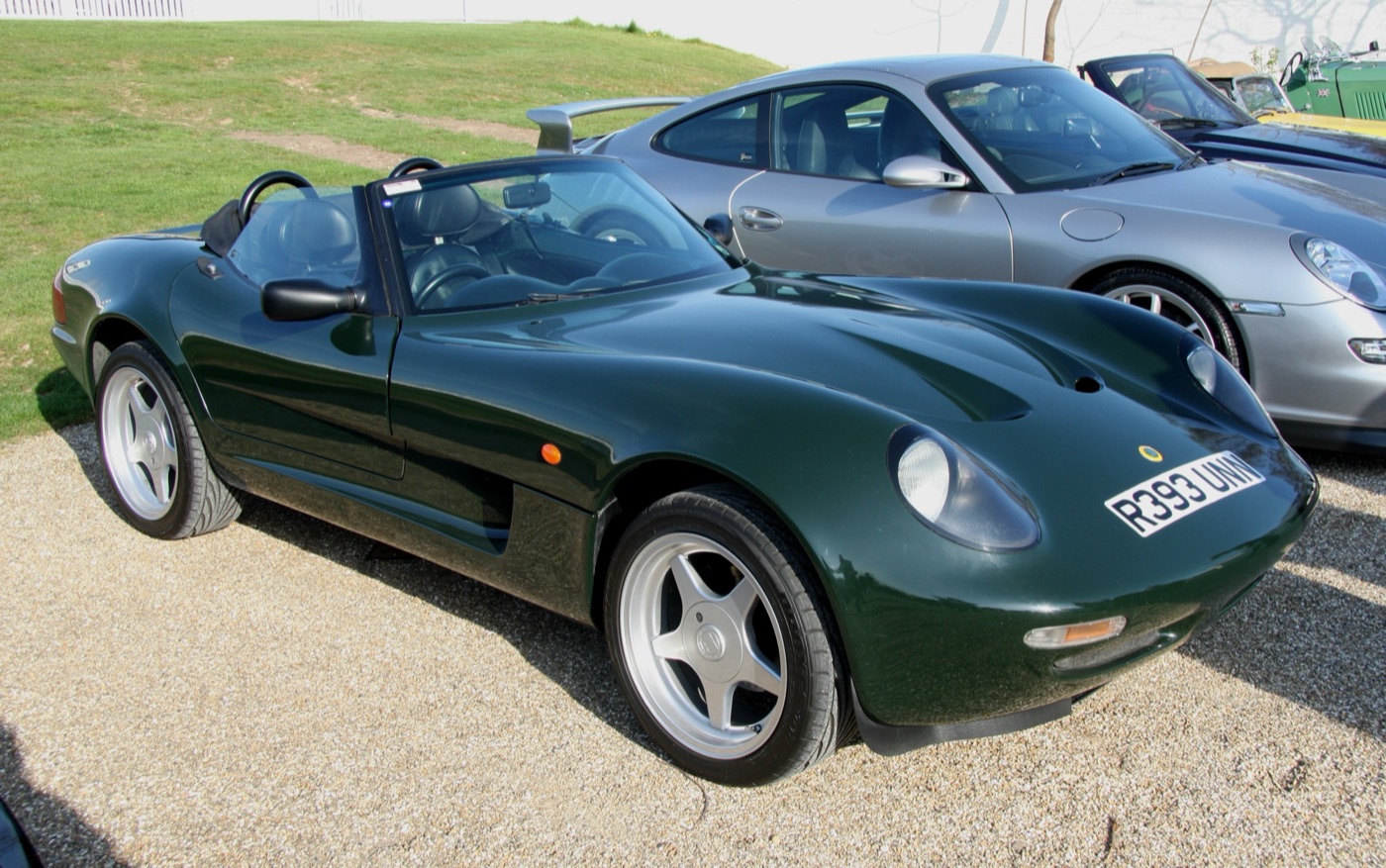
The 21 of 1994 was Caterham’s first car that was not a Seven: a full-bodied convertible built on a modified Seven chassis. Caterham says only 49 were made.
SP/300.R
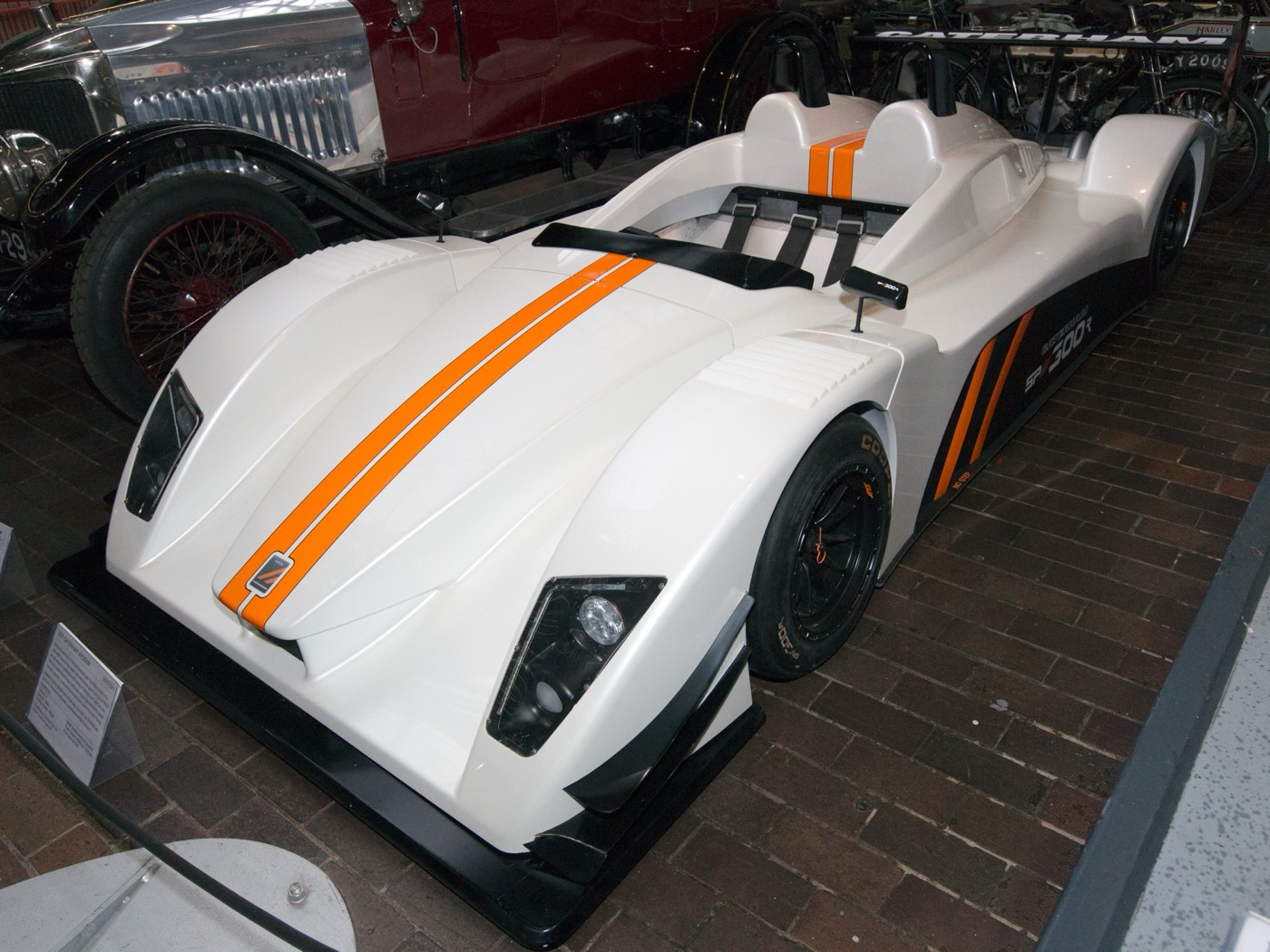
The SP/300.R, developed with Lola, is a closed-wheel sports prototype for track days and racing, revealed at the Autosport International show in January 2011 as Caterham’s first all-new model in more than 15 years. Ali saw it as a step up for drivers from the Seven championships, but by April 2015 Macdonald was showing it in the Crawley showroom as a concept that Caterham had “no plans at this stage to develop”.
AeroSeven concept
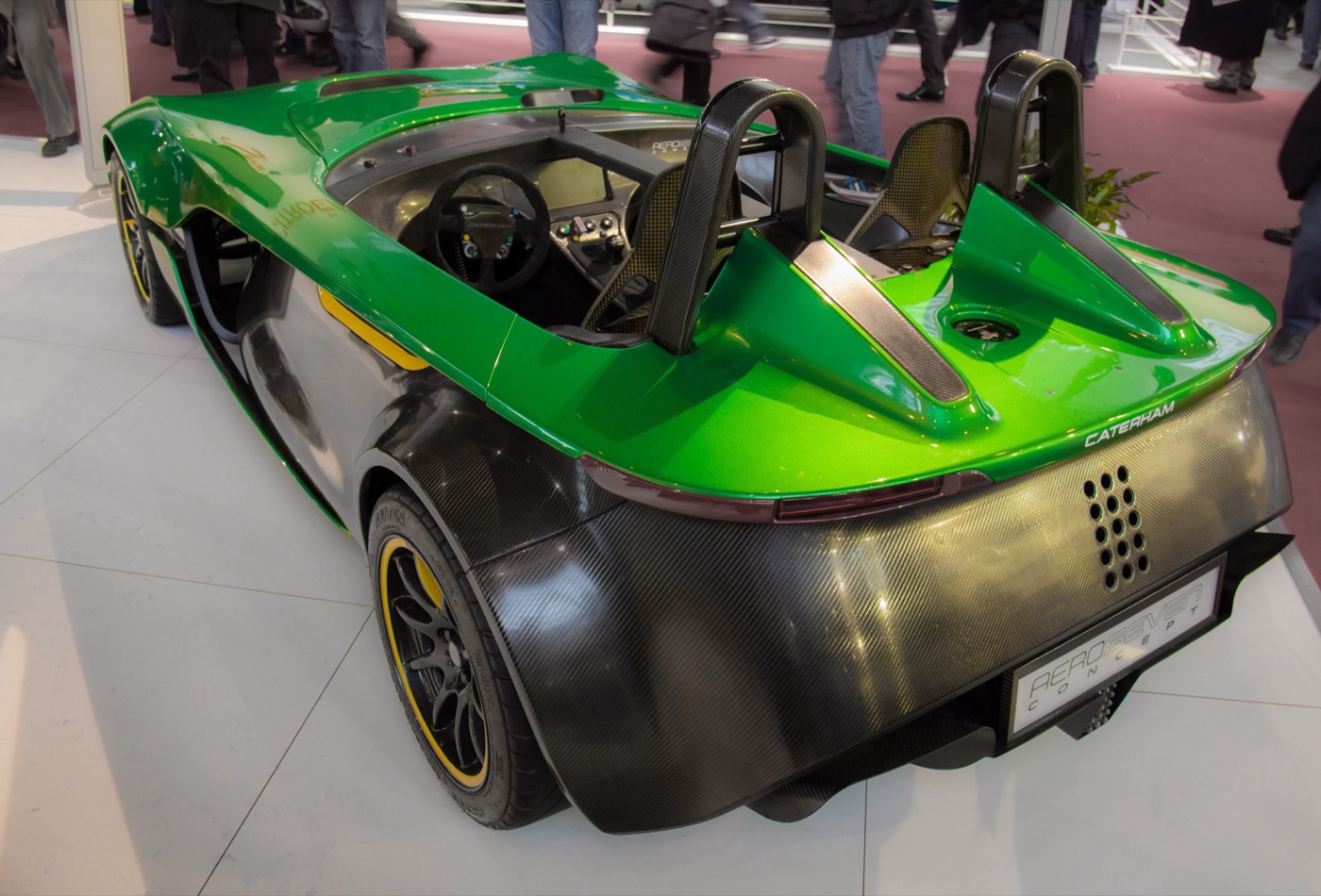
The AeroSeven was shown by Fernandes at the Singapore Grand Prix in September 2013 as “first in line of the next generation of Caterham Cars”. Designed by John Iley and the CTI team, it put a carbon-fibre body over an updated Seven CSR chassis with the 237 bhp Duratec from the Seven 485, on Avon CR500 tyres. SkiddMark learned in June 2014 that it had been shelved: a prototype with gullwing doors and a closed roof suffered noise and vibration problems that better engine mounts could not cure.
Electric Caterhams: EV Seven and Project V
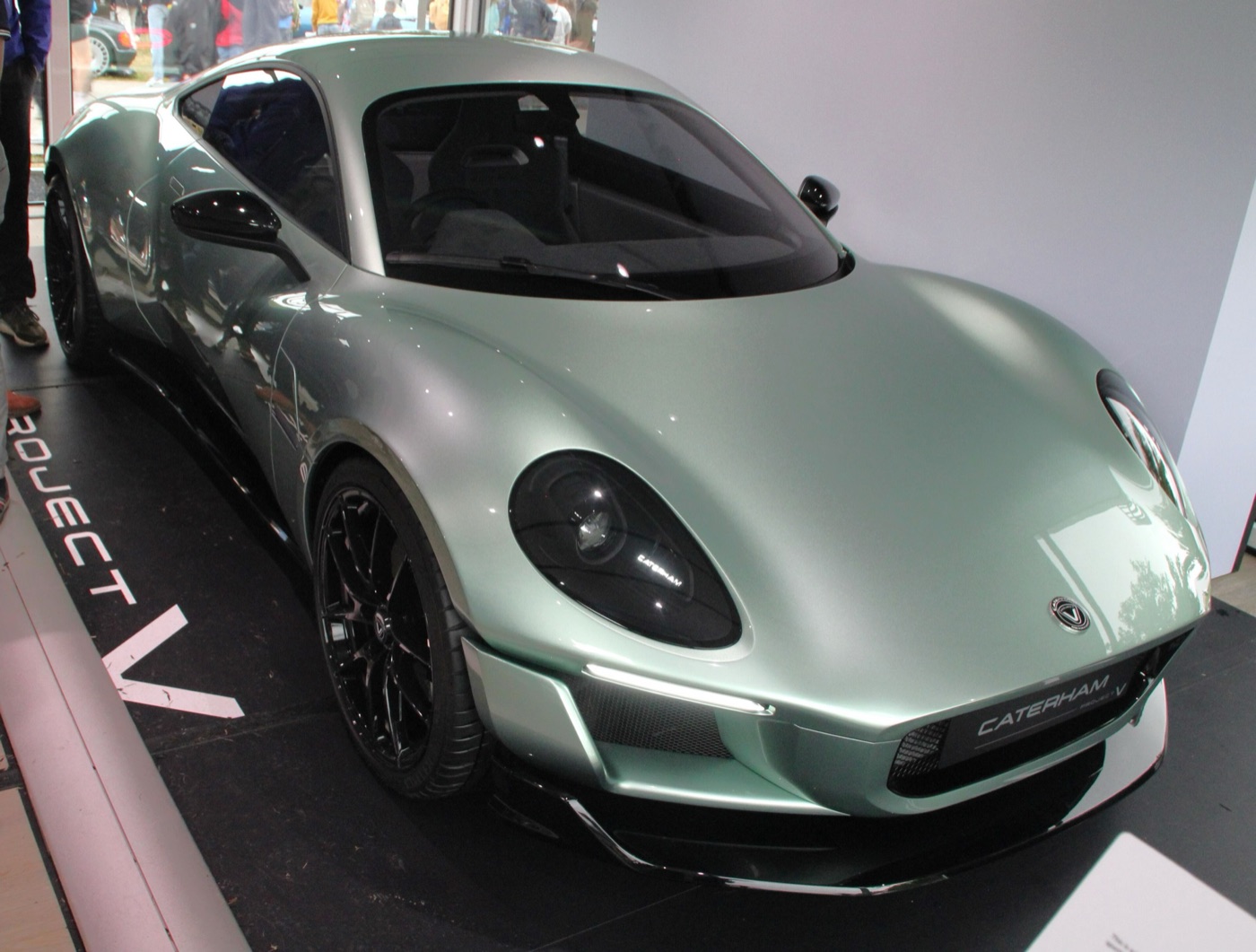
Caterham showed two electric cars in 2023. The EV Seven, built with Swindon Powertrain, is a development car on the larger chassis with a 51 kWh immersion-cooled battery and 240 bhp; it weighs just under 700 kg, less than 70 kg more than the petrol car it is based on. Laishley set the target that it should run on track for 20 minutes, recharge for 15 and run for 20 more. “We’re never going to launch a one-tonne Seven,” he said.
Project V, revealed in July 2023, is a coupé designed by Anthony Jannarelly and built by Italdesign, with a 200 kW rear motor, a 55 kWh battery and a target weight of 1,190 kg. Caterham quoted 0–62 mph in under 4.5 seconds, 143 mph and a target range of 249 miles, and set up a separate company, Caterham EVo, to handle the project’s business and investment. Yamaha joined in October 2024 to supply the electric drive unit, with Tokyo R&D building the prototype. In December 2024 Caterham named Taiwan’s XING Mobility as the supplier of its immersion-cooled battery pack, and the latest prototype was shown at the Tokyo Auto Salon that month with 2+2 seats and a tubular spaceframe.
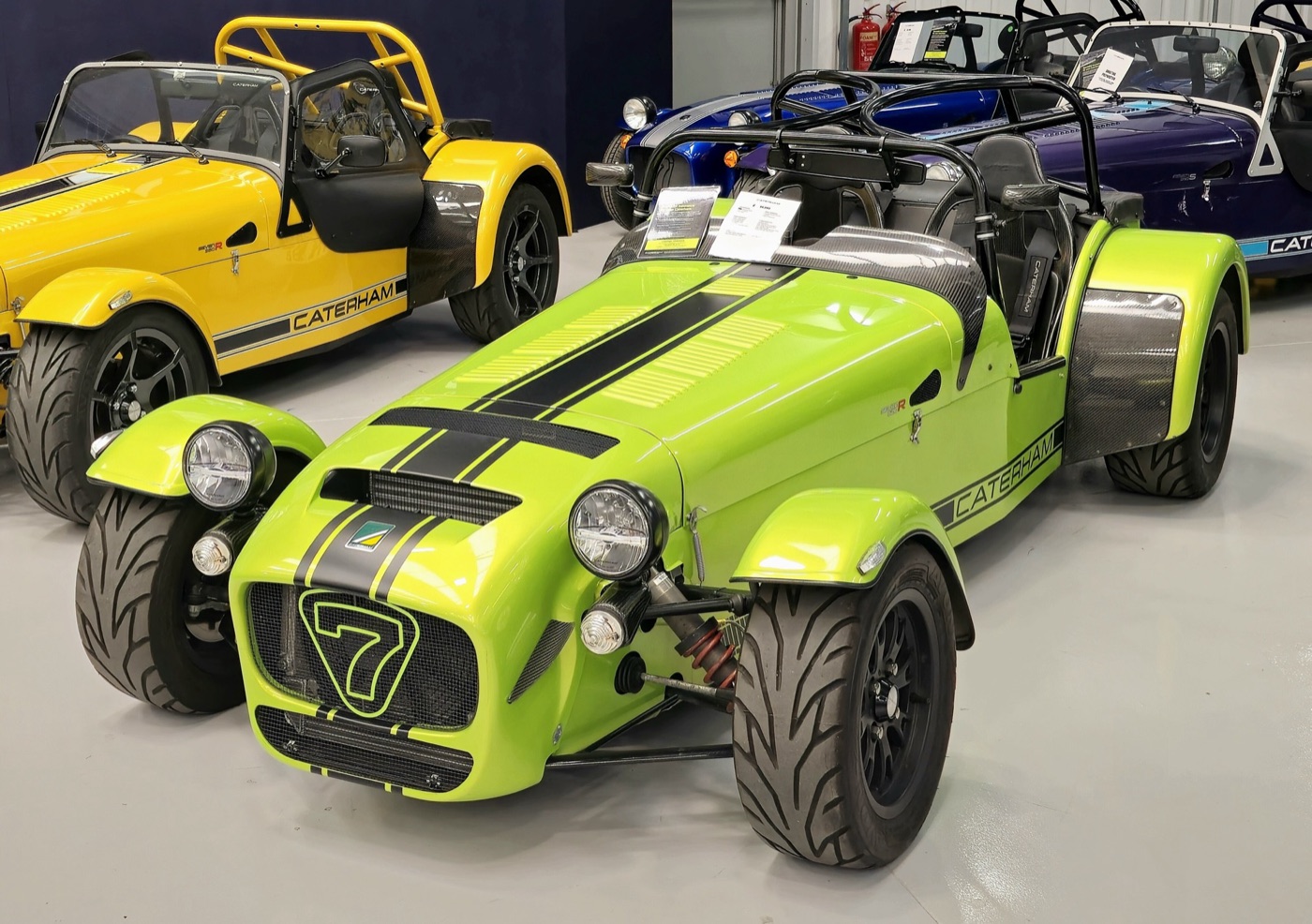
How much is a Caterham? The range and prices
A new Caterham costs from £29,490 in the UK, for a Seven 170 to build yourself, to £58,490 for a factory-built Seven 620, according to Caterham’s range page as read on 27 October 2026.
| Model | Engine | Power | Weight | 0–60 mph | Top speed | UK price from |
|---|---|---|---|---|---|---|
| Seven 170 | Suzuki 660cc turbo, 3 cyl | 84 bhp | 440 kg | 6.9 sec | 105 mph | £29,490* |
| Super Seven 600 | Suzuki 660cc turbo, 3 cyl | 84 bhp | 440 kg | 6.9 sec | 105 mph | £30,490* |
| Seven 360 | Ford Duratec 2.0, 4 cyl | 180 bhp | 560 kg | 4.8 sec | 130 mph | £38,490* |
| Super Seven 2000 | Ford Duratec 2.0, 4 cyl | 180 bhp | 560 kg | 4.8 sec | 130 mph | £40,990* |
| Seven 420 | Ford Duratec 2.0, 4 cyl | 210 bhp | 560 kg | 3.8 sec | 136 mph | £41,990* |
| Seven 420 Cup | Ford Duratec 2.0, 4 cyl | 210 bhp | 560 kg | 3.6 sec | 136 mph | £56,490 |
| Seven 620 | Ford Duratec 2.0, supercharged | 310 bhp | 610 kg | 2.79 sec (620R) | 149 mph | £58,490 |
The Super Seven 600 and 2000 share the engines and figures of the 170 and 360. Three limited editions were also listed: the 310 Encore from £39,995, the 420 Nürburgring Edition from £48,995 and the Seven CSR Twenty from £79,995. Race-ready Academy and 420R packages cost from £44,995 and £53,990. For 2026 Caterham added eight paint colours, including the Ice Forest Green first seen on Project V, and made clear lenses, colour-matched headlight bowls and a painted roll bar standard at no extra cost.
How many cars has Caterham Cars built?
Caterham Cars said in October 2023 that it had sold more than 22,000 cars since 1973, in kit and factory-built form. In the early 2010s it built about 500 a year, the figure SkiddMark heard from its managers in 2013 and 2015.
| Year | Cars | Notes |
|---|---|---|
| 2012–13 | About 500 | Turnover £20 million, in profit |
| 2014 | Just under 500 | 345 sold outside the UK |
| 2015 | 650 (budget) | About 15 a week; Japan limited to 150 Seven 160s (165 in Japan) |
| 2021 | 670 | Caterham’s best year |
| From 2024 | 750 (capacity) | New Dartford factory |
Some runs are small enough to count exactly. Caterham’s records give 38 Series 4 cars in 1973–74, 62 of the 1986 HPC, 49 of the 21, 90 of the 2016 Seven Sprint (30 each for the UK, Japan and Europe) and 60 of the 2018 SuperSprint. The Seven 485, built for the European market, ended in December 2025 after 583 cars, the last of them for Kumschick Sports Cars in Switzerland, which had sold 123.
Can you still buy a Caterham as a kit?
Yes: in the UK Caterham Cars still sells the Seven as a self-assembly kit as well as built, and Caterham’s list prices for the 170, the Super Sevens, the 360 and the 420 are kit prices. The Lotus original sold as a kit for about £500, and Nearn used it for publicity, handing complete kits to motoring writers so they could report on how easily a box of parts became a road car. Since 1993 the Seven has also been sold fully built in the UK.
The kit is not always the bargain it looks. Writing for SkiddMark in May 2013, Steve Hindle priced the entry-level Seven Classic at £14,495 and found it arrived as “a self-assemble, unpainted kit, with no roof or weather gear, all of which comes in a very large cardboard box”; paint, a full windscreen and a hood took it close to £20,000. Caterham’s answer that year was a fully factory-built entry model for under £17,000, which became the Seven 160. At the other extreme, in 2021 Caterham built a Seven 170 in under six hours at the top of Brighton’s 450 ft British Airways i360 tower, while the viewing pod was moving.
Caterham Cars in motorsport
Caterham Cars runs its own one-make racing championships, which Graham Nearn started in 1986, and the Caterham name raced in Formula One from 2012 to 2014.
Caterham one-make racing and the Academy
Super 7 Racing began in 1986; by the time of Nearn’s death The Guardian counted more than 800 active competitors in Caterham racing. The Caterham Academy, first run in 1995 as the Caterham Scholarship, is a series for novices who buy a road-legal Seven as part of the entry, and had taken more than 1,400 new drivers into racing by April 2025, according to Caterham’s announcement of its 2026 engines.
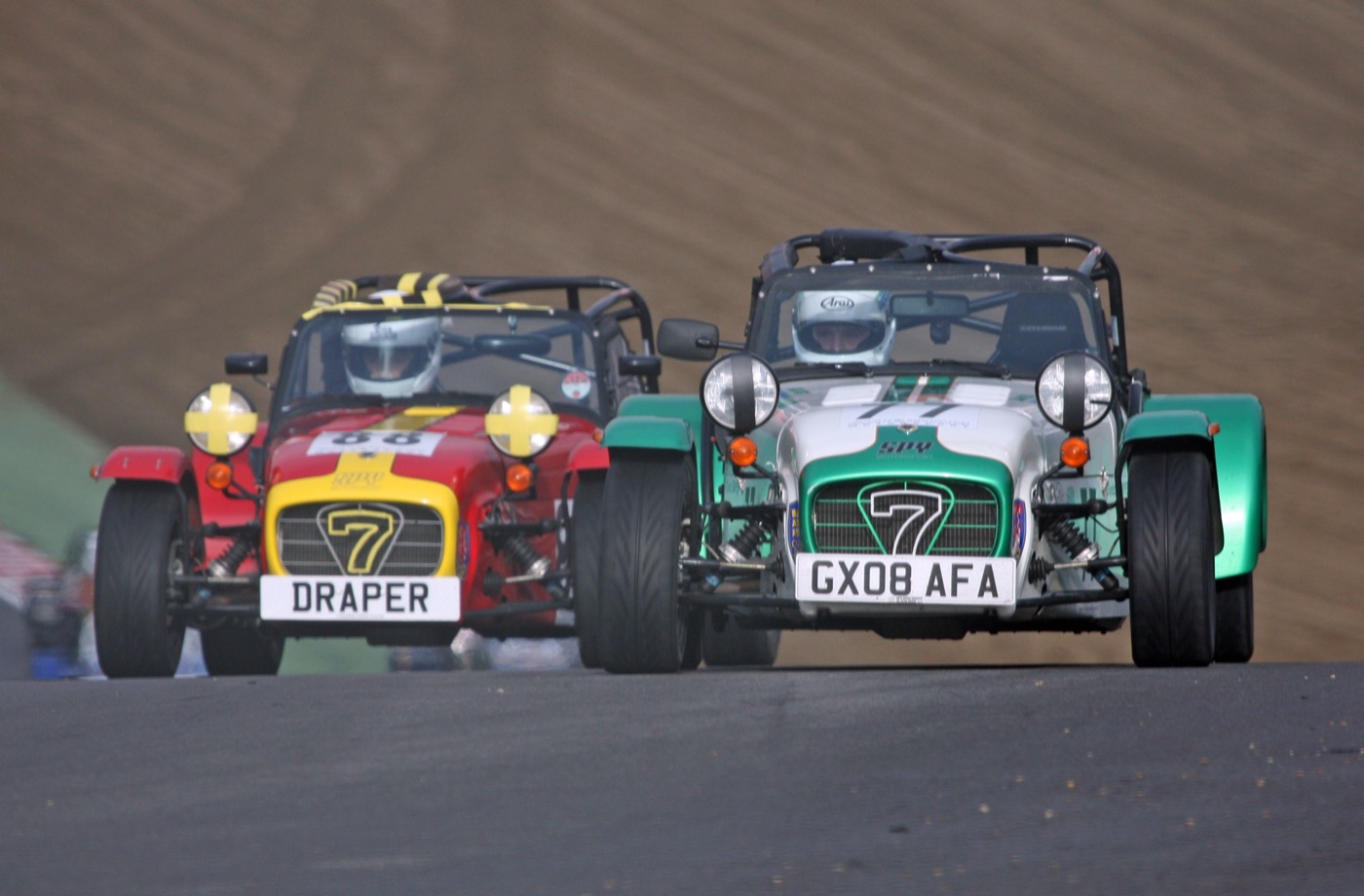
Drivers who carry on climb a ladder of championships: Roadsport, the Seven 270R and 310R series, and the national Caterham Seven Championship UK for the 420R race car, which Caterham says is on the pace of GT4 cars. The series moved from the BRSCC to the BARC for 2023, with nearly 200 drivers across them in 2022. Caterham names the BTCC driver Ollie Jackson, the British GT champions Flick Haigh and Jon Barnes, and Sir Chris Hoy among those who raced its cars.
Endurance racing
A specially built HPC Twin Cam won the “Longest Day of Nelson” 24-hour race at Nelson Ledges, Ohio, in June 1992 by seven laps, covering 990 laps and 1,980 miles. At the 2002 Nürburgring 24 Hours a Superlight R400 driven by Chris Harris, Clive Richards, Chris Cooper and Peter Haynes won its class by ten laps and finished 11th overall from 200 starters.
Caterham F1 Team
Fernandes’s Team Lotus, which entered Formula One in 2010, raced as Caterham F1 Team from 2012 to 2014 with Renault engines and scored no points in any of its three seasons. Its best result was Vitaly Petrov’s 11th place in the 2012 Brazilian Grand Prix, one place ahead of Charles Pic’s Marussia, as Formula1.com’s race result shows; that finish gave Caterham tenth place in the 2012 constructors’ championship.
| Season | Drivers | Points | Constructors’ position |
|---|---|---|---|
| 2012 | Heikki Kovalainen, Vitaly Petrov | 0 | 10th of 12 |
| 2013 | Charles Pic, Giedo van der Garde | 0 | 11th of 11 |
| 2014 | Kamui Kobayashi, Marcus Ericsson, Will Stevens | 0 | 11th of 11 |
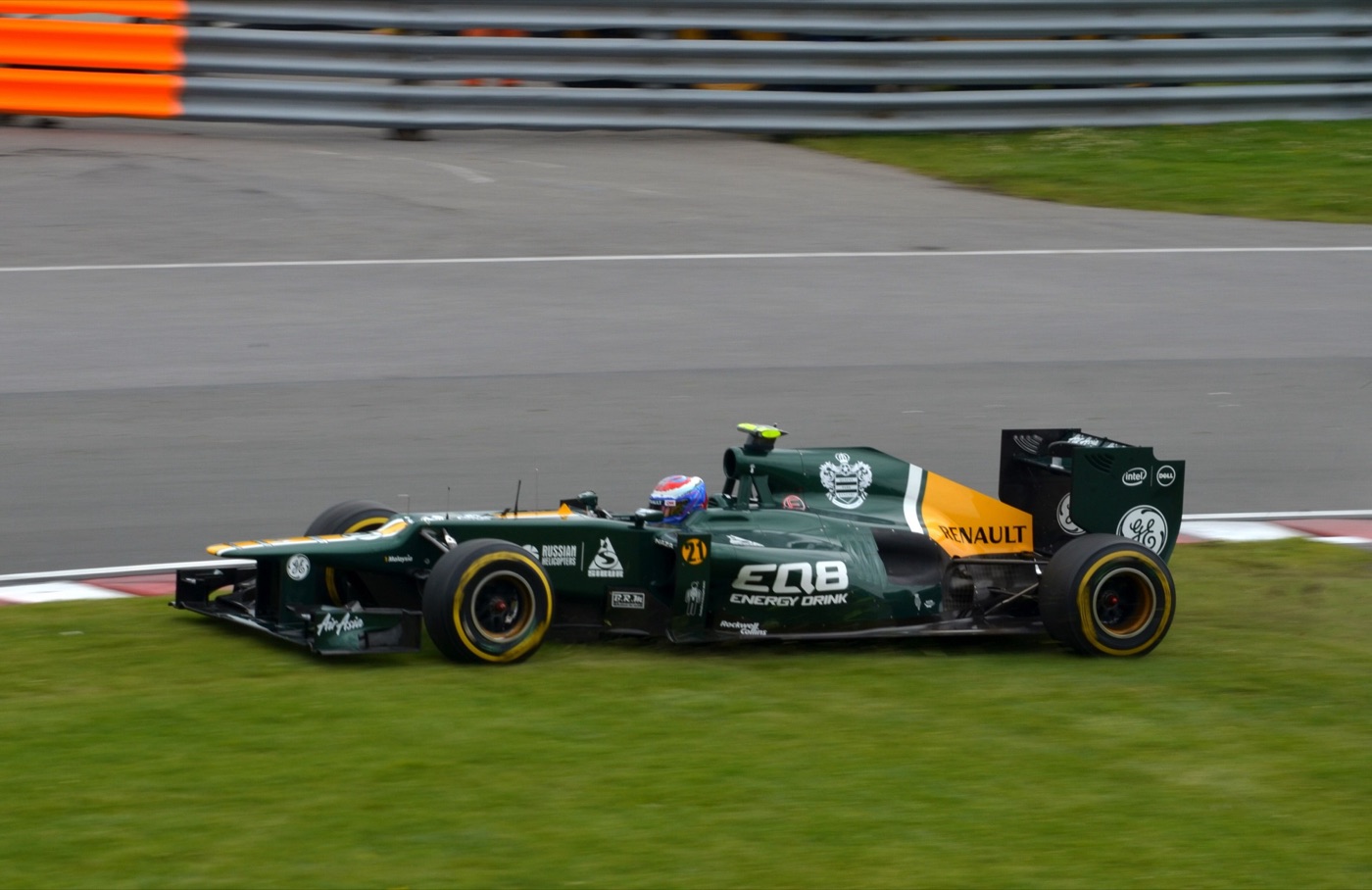
Fernandes sold the team on 2 July 2014 to a consortium of Swiss and Middle Eastern investors advised by Colin Kolles, which kept the Caterham name. In October 2014 its service company, Caterham Sports Limited, went into administration with Smith & Williamson. A crowdfunding appeal raised £2,354,389 from nearly 6,500 supporters so the team could race in the final round in Abu Dhabi, but no buyer was found. The car company had licensed its name to the new owners, and Macdonald told SkiddMark in 2015 that the arrangement “brought us into disrepute”, because Kolles owed Caterham money for the licence and for property he rented. Caterham Group also ran a team in GP2, the F1 feeder series.
Is Caterham Cars part of Lotus?
No: Caterham has never owned Lotus Cars or been owned by it; what it bought from Chapman in 1973 was the right to build the Seven. The link that confuses people came in 2010–11, when Fernandes’s F1 team raced as Team Lotus while Group Lotus, owned by Proton and run by Dany Bahar, sponsored a rival team. Caterham’s own history notes that Team Lotus “was not related to Lotus Cars”.
Davies reported in 2011 the rumour that Fernandes would give up the Team Lotus name to settle the dispute (his team raced as Caterham from 2012), and that Proton, under pressure at home, did not want Lotus and Caterham to build competing products. Proton’s profit had fallen 94.6% to RM4.55 million in the quarter to 30 June 2011, which it blamed on higher costs at Lotus. Ali, Edwards and Shute had all worked at Lotus before joining Caterham.
Caterham’s rivals
Steve Hindle, who left Caterham to work for Westfield, wrote in 2012 that the Ariel Atom and BAC Mono were “sipping from Caterham’s cup”, and that on the race track Caterham faced Ginetta, Radical and Lotus On Track. In 2013 Ali and Edwards founded Zenos Cars, whose E10 went on sale in 2014 from £24,995 as a rival to the Seven. SkiddMark expected the coupé Caterham planned with Renault to compete with the Alfa Romeo 4C and the Porsche Cayman.
Questions
Why is it called Caterham?
The company is named after the town of Caterham in Surrey, where Graham Nearn opened his Lotus dealership in 1959 and where Caterham built its cars until 1987. Its last showroom in the town closed in 2013.
Is Caterham still a British company?
Caterham has been owned by the Japanese retailer VT Holdings since April 2021, but every car is still built by hand at its factory in Dartford, Kent.
Who is the CEO of Caterham Cars?
Kazuho Takahashi, the founder and president of VT Holdings, became chief executive in November 2025 when Bob Laishley stepped down. Trevor Steel, the finance and operations director, runs the Dartford site day to day.
What is the fastest Caterham?
The Seven 620, with a supercharged 2.0-litre Ford Duratec of 310 bhp, is the fastest in the current range: Caterham quotes 0–60 mph in 2.79 seconds for the 620R and a top speed of 149 mph.
What is the lightest Caterham?
The Seven 170, launched in 2021 with an 84 bhp 660cc Suzuki turbo engine, weighs 440 kg in its lightest form, which Caterham says makes it its lightest model ever.
Was the car in The Prisoner a Caterham?
It was a Lotus Seven Series II, registered KAR 120C, which Caterham Car Sales supplied in 1965 when it was a Lotus dealer. Graham Nearn appears in the last episode, delivering the car.
Who designed the Caterham Seven?
Colin Chapman designed the original Lotus Seven, built from 1957. Caterham bought the designs, tooling and rights from Lotus in May 1973 and has developed the car ever since.
Sources
- Caterham Cars, “50 at 50”, 19 October 2023: the 1973 purchase, early production, engines and models, limited-run numbers, motorsport results, owners and the 22,000 sales total.
- Caterham Cars, “About Us: History”, read 27 October 2026: the 1959 founding, the 1965 Prisoner car and the timeline’s 2012 date for the Fernandes purchase.
- The Guardian, Alan Henry, “Graham Nearn obituary”, 10 November 2009: Nearn’s life, the Lotus Centre, the 1973 deal, Simon Nearn, the 2005 sale and the start of Caterham racing.
- Companies House, Caterham Cars Ltd (01171408), read 27 October 2026: incorporation, the Seven Cars Limited name and the registered office.
- Formula1.com, Team Lotus’s purchase of Caterham Cars, 27 April 2011 (archived copy): buyers, sellers and management.
- BBC News, “Surrey-based Caterham Cars move to new home in Sussex”, 29 January 2013: the move from Caterham to Crawley.
- Autocar, Felix Page, “Caterham acquired by Japanese firm VT Holdings”, 6 April 2021: the VT Holdings purchase, Japanese sales and exports.
- Caterham Cars, “Caterham welcomes new CEO Bob Laishley”, 1 July 2022: Macdonald’s career and retirement, Laishley’s appointment.
- Caterham Cars, “Bob Laishley to stand down as CEO/COO of Caterham Cars”, 5 November 2025: Takahashi as chief executive, Trevor Steel.
- Caterham Cars, “Caterham relocates to new global HQ”, 5 June 2024: the Dartford X factory, capacity and earlier sites.
- Caterham Cars, “Caterham Reveals EV Seven”, 24 May 2023: EV Seven figures and Laishley’s comments.
- Caterham Cars, “Caterham unveils Project V”, 12 July 2023: Project V concept figures and Caterham EVo.
- Caterham Cars, Yamaha Motor joins Project V, 2 October 2024: the e-axle and Tokyo R&D.
- Caterham Cars, “Project V Latest Prototype Unveiled at Tokyo Auto Salon”, 9 January 2026: the 2+2 prototype, XING Mobility battery, spaceframe.
- Caterham Cars, “Introducing 310 Encore”, 11 June 2025: the end of the Ford Sigma.
- Caterham Cars, “Over and out from the Seven 485”, 18 December 2025: 583 Seven 485s built.
- Caterham Cars, “Introducing CSR 20”, 12 November 2024: the CSR Twenty.
- Caterham Cars, “The range” and each model’s page, read 27 October 2026: UK prices and specifications in the range table.
- Caterham Cars, “Ever Evolving. Always Seven. What’s new for 2026?”, 9 February 2026: 2026 colours and equipment.
- Caterham Cars, Horse Technologies to supply Academy engines, 9 April 2025: the HR13 engine and Academy driver numbers.
- Caterham Cars, “A new era of Caterham Motorsport”, 7 July 2022: the move to the BARC, the championship ladder and its drivers.
- Caterham Cars, news index, read 27 October 2026: retailer appointments in France and Belgium (2024), the UAE, the Czech Republic, Beamish and Scotland (2025), Miami (17 December 2025) and Yorkshire (13 October 2026).
- Caterham Cars, “Caterham expands European network with three new retailer appointments”, 28 May 2026: Caterham Noville, Caterham Barcelona and Caterham Colmar.
- Caterham Cars, “Caterham to use immersion cooled battery packs in its new EV sports coupé”, 9 December 2024: XING Mobility as Project V’s battery supplier.
- Formula1.com results archive: constructors’ and drivers’ standings for 2012, 2013 and 2014, and the 2012 Brazilian Grand Prix result.
- SkiddMark: Steve Davies, “Team Lotus Enterprise announces its acquisition of Caterham Cars”, 27 April 2011; Steve Davies, “Behind the scenes at Caterham Cars”, 16 September 2011 (the interview with Ansar Ali); “Caterham announces its new road car programme”, September 2011; Steve Davies, “Caterham Cars launches in India”, 27 October 2011; “Caterham CEO Ansar Ali gets replaced by Graham Macdonald”, June 2012; Steve Hindle, “The Importance of Being Caterham”, November 2012; “Renault and Caterham announce partnership”, 5 November 2012; Steve Davies, “Caterham Cars Exclusive: A look to the future”, 28 March 2013 (interview with Graham Macdonald and David Ridley); Steve Hindle, “Caterham sends the clearest message with its most simple entry-level Seven”, 29 May 2013; “Former Caterham Cars CEO Ansar Ali launches Zenos Cars”, 6 September 2013; “This is the Caterham AeroSeven Concept”, 19 September 2013; “Caterham launches a new ‘Bikes’ division”, 5 November 2013; “Zenos E10 available now from just £24,995”, 9 January 2014; “Tony Fernandes calls ‘time out’ for Caterham”, 27 May 2014; Steve Hindle, “Caterham engineers for lightness at Hingham”, 11 June 2014; “Caterham quits F1”, 3 July 2014; “Combined Caterham F1 companies put up for sale by administrators”, 24 October 2014; Steve Davies, “Caterham rebuilds for a new future”, 20 April 2015 (interview with Macdonald and Ridley).
This article was written in October 2026 to replace SkiddMark’s original “Behind the scenes at Caterham Cars” of 16 September 2011, keeping Steve Davies’s interview with Ansar Ali and checking every other figure against Caterham’s own records, Companies House and contemporary reports.