Citroën DS: history, hydropneumatics, models and values
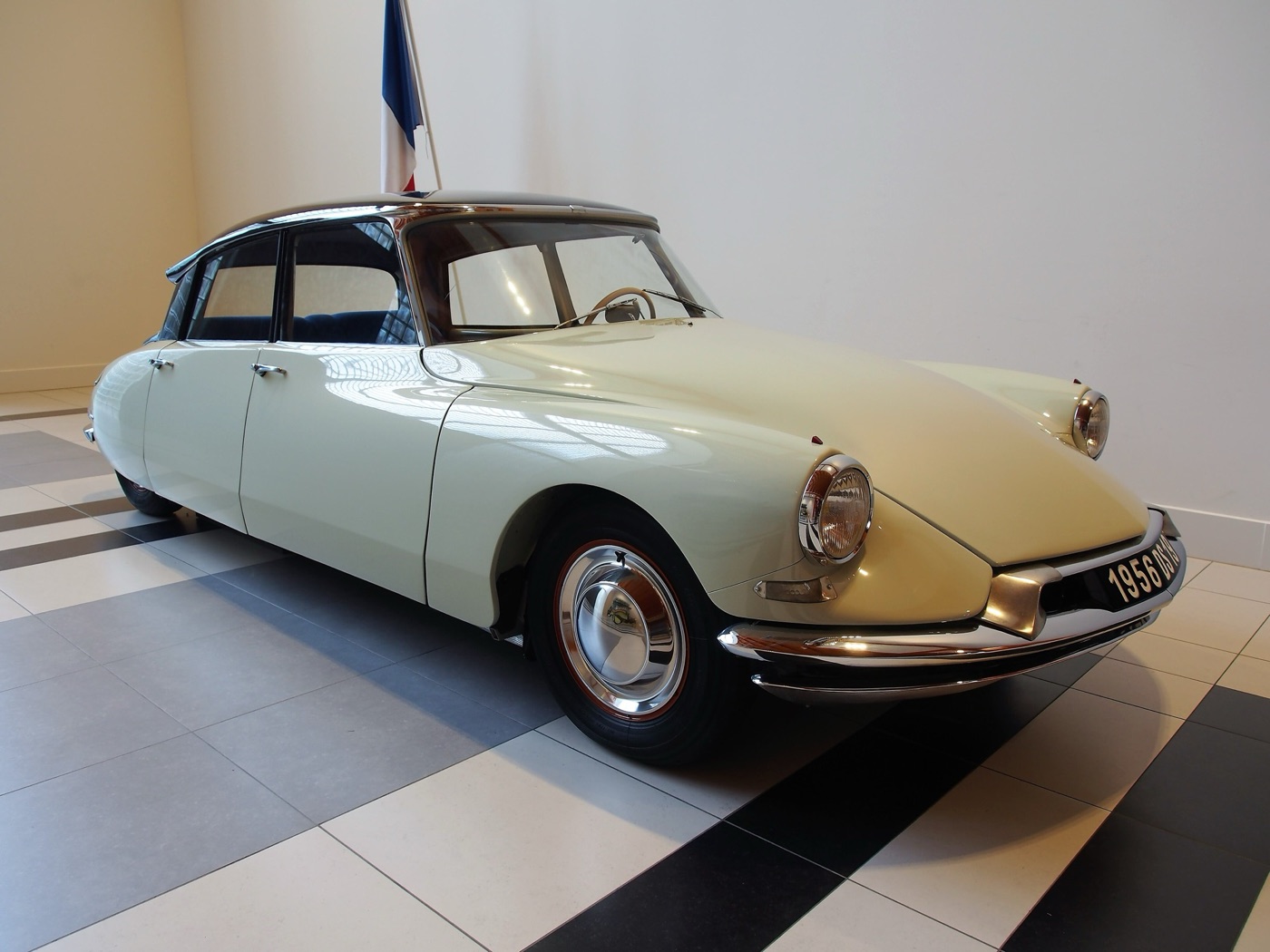
The Citroën DS (often written Citroen DS, without the diaeresis) is the front-wheel-drive saloon Citroën built from 1955 to 1975, with self-levelling hydropneumatic suspension, powered steering and brakes, and, Motor Sport reported in 1955, the first disc brakes on a mass-produced car. Citroën made 1,456,115 of them, saloons, estates and convertibles, most at its Quai de Javel factory in Paris. People look it up for its shape, for the way its suspension works, for the car that carried General de Gaulle through an ambush in 1962, and to find out what one costs now: a usable DS 23 Pallas saloon sold at auction in 2025 for between about £13,000 and £72,000.
The name is a French pun. Said aloud, "DS" sounds like déesse, goddess, and the cheaper ID that followed it sounds like idée, idea.
History of the Citroën DS
The DS took 17 years to reach the showroom. In its history of the car for the 70th anniversary, DS Automobiles dates the project to 1938, when Citroën's chief Pierre Boulanger started the VGD (Véhicule à Grande Diffusion, a car for mass production) as the successor to the Traction Avant. His successor from 1950, Pierre Bercot, carried it through to launch.
Who designed the Citroën DS?
Three men. André Lefèbvre, an aeronautical engineer, set its front-wheel drive, light weight and low drag. Paul Magès, a self-taught engineer, invented the hydropneumatic suspension and the hydraulic steering, clutch and braking that ran from it. The sculptor and painter Flaminio Bertoni, from Varese, who had already shaped the Traction Avant and the 2CV, drew the body. According to DS Automobiles Italy's history of Bertoni, the team considered calling the car Gazelle before it became the DS. Bertoni also beat an outside designer, Robert Michel of the École Boulle, to the dashboard: his was moulded in one piece of nylon, a metre and a half long and lighter than 750 grams.
Launch at the 1955 Paris Motor Show
The DS 19 was unveiled under the glass roof of the Grand Palais on Thursday 6 October 1955, and production began at Quai de Javel the next day. DS Automobiles gives the opening-day figure as "legend": 12,000 orders by the evening and some 80,000 by the time the show closed ten days later. Its Italian office puts the first 45 minutes at 749 orders.
Deliveries were slow at first. Iconic Auctioneers' catalogue for a 1970 Décapotable notes that the hydraulic system worked at the limits of the tooling of the day, that mechanics were baffled when workshop manuals were late, and that many of the show's 80,000 buyers were still waiting for their cars two years later.
British buyers saw it at Earls Court a few weeks after Paris. Motor Sport's first report, in November 1955, priced it at £1,403 12s 6d in England with import duty and purchase tax, and its editor, Bill Boddy (who signed it W. B.), came back from inspecting it at Slough "feeling that British cars are merely vintage vehicles dressed-up in modern shells".
Facelifts in 1962 and 1967
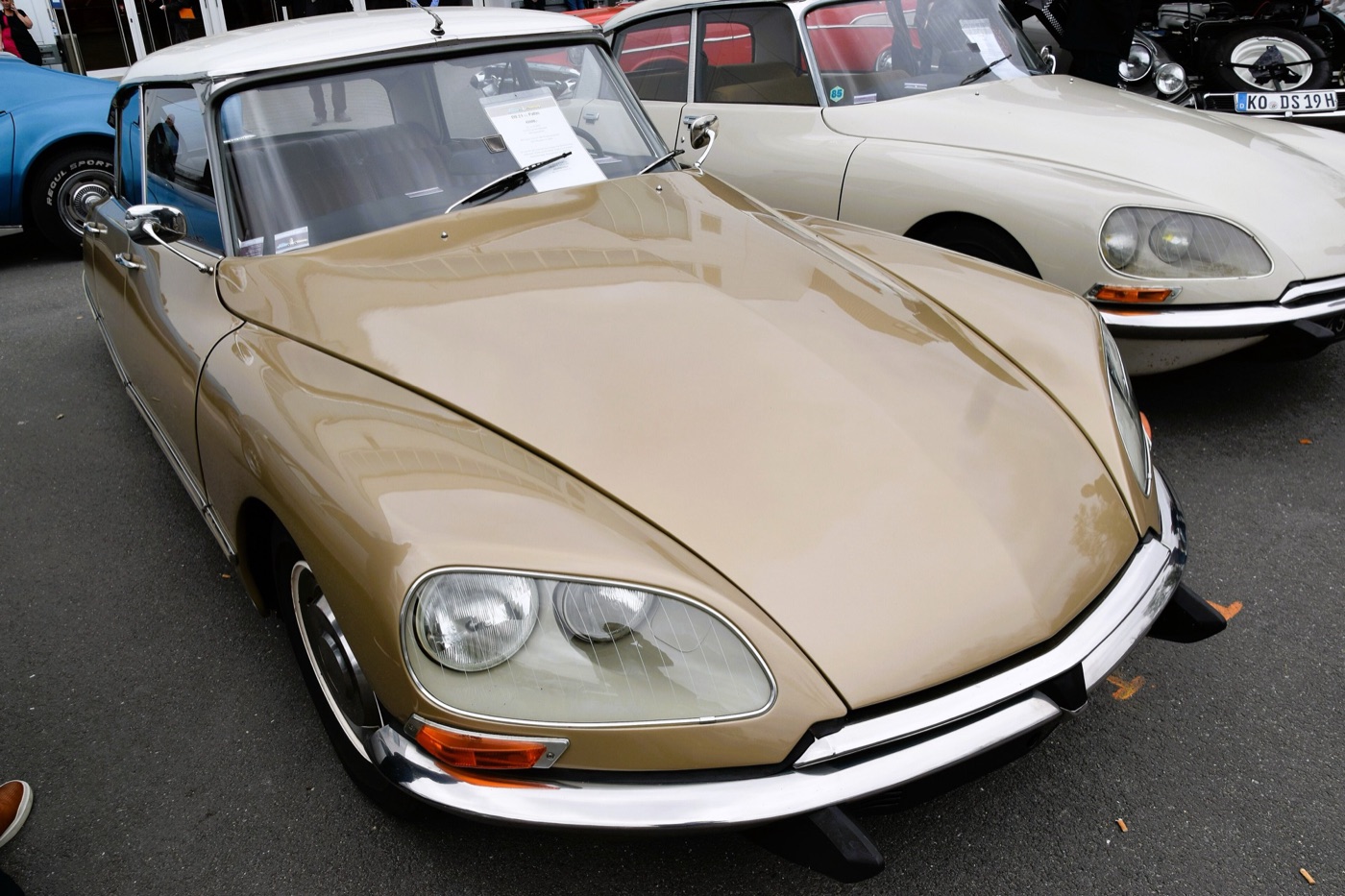
The first change to the nose came in September 1962: the large air vents on the front wings went, two rubber-tipped bumper guards and a new lower bumper arrived, and top speed rose to 160km/h (99mph). The bigger facelift came in September 1967, when every DS got a new front with four headlights under glass covers, new wings, bonnet and bumper, and on the Prestige, Pallas and Cabriolet the inner lamps, fitted as standard, turned with the steering. DS Automobiles' 2025 release on the car's 70th birthday credits the work to the designers of Citroën's office in the rue du Théâtre.
The end of production in 1975
The last DS, number 1,456,115, left the production line at Quai de Javel at 3pm on 24 April 1975. It was a DS 23 Pallas with electronic fuel injection, in Delta Blue, and the 1,330,755th built at that factory. It went to a driver in the Gironde who had owned eight DSs before it; DS Automobiles says his name has been lost.
Design and engineering
The DS put almost every function of the car on one high-pressure hydraulic circuit: suspension, steering, clutch, gear change and brakes. A seven-cylinder pump, belt-driven from the engine, fed it, Motor Sport reported in 1955; its 1958 test gave the main reservoir's pressure as up to 3,000lb per square inch.
The body
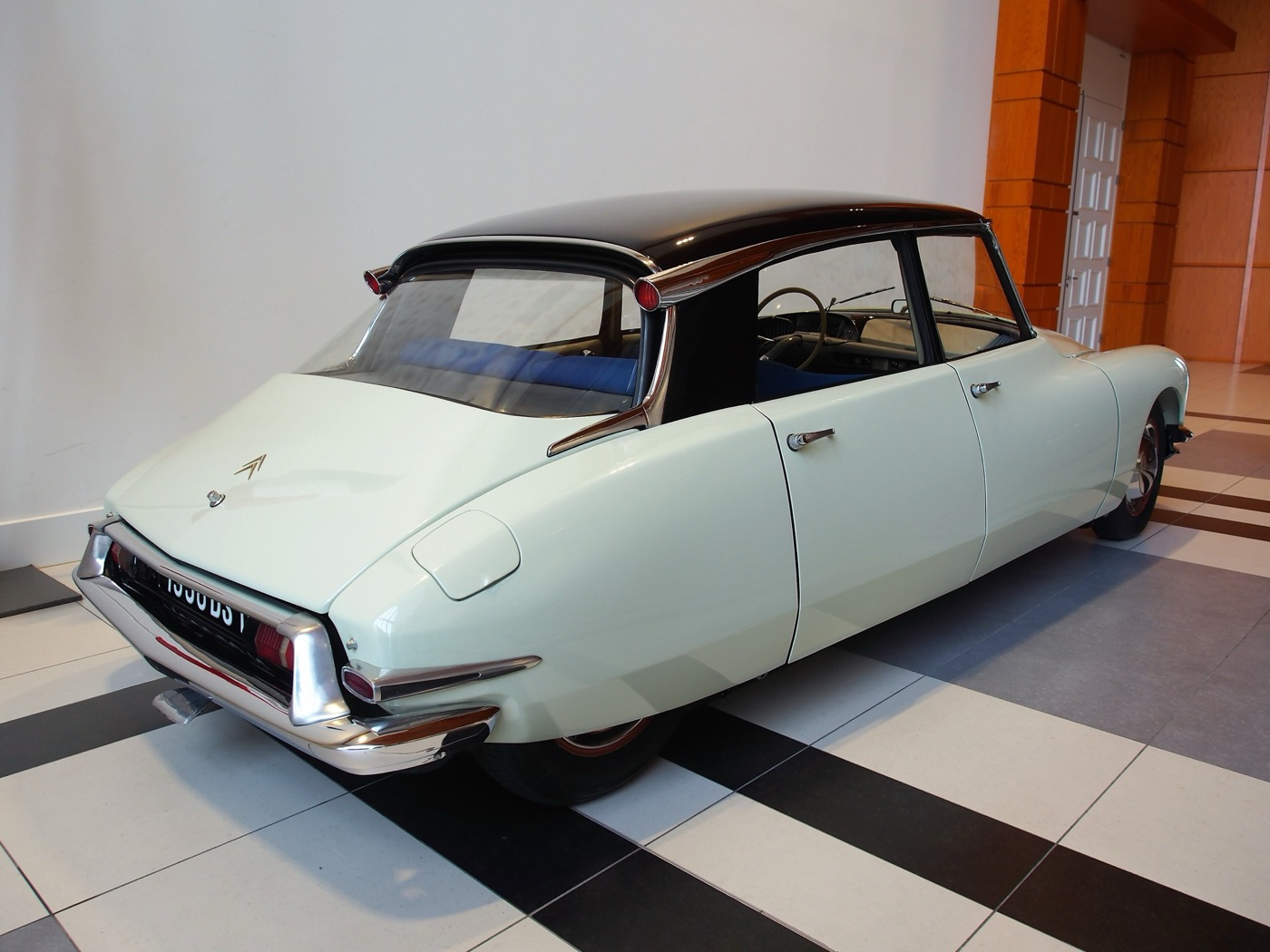
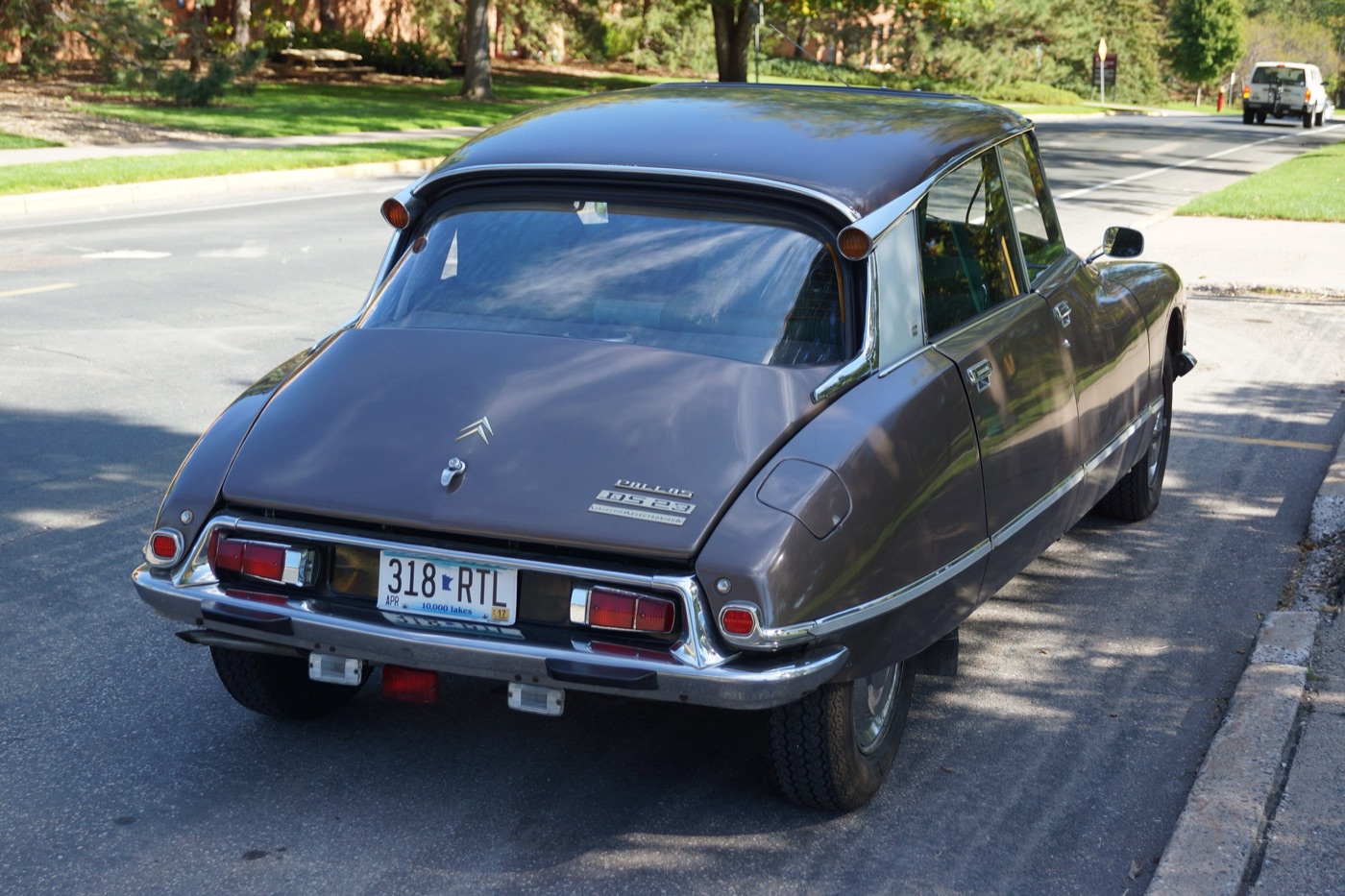
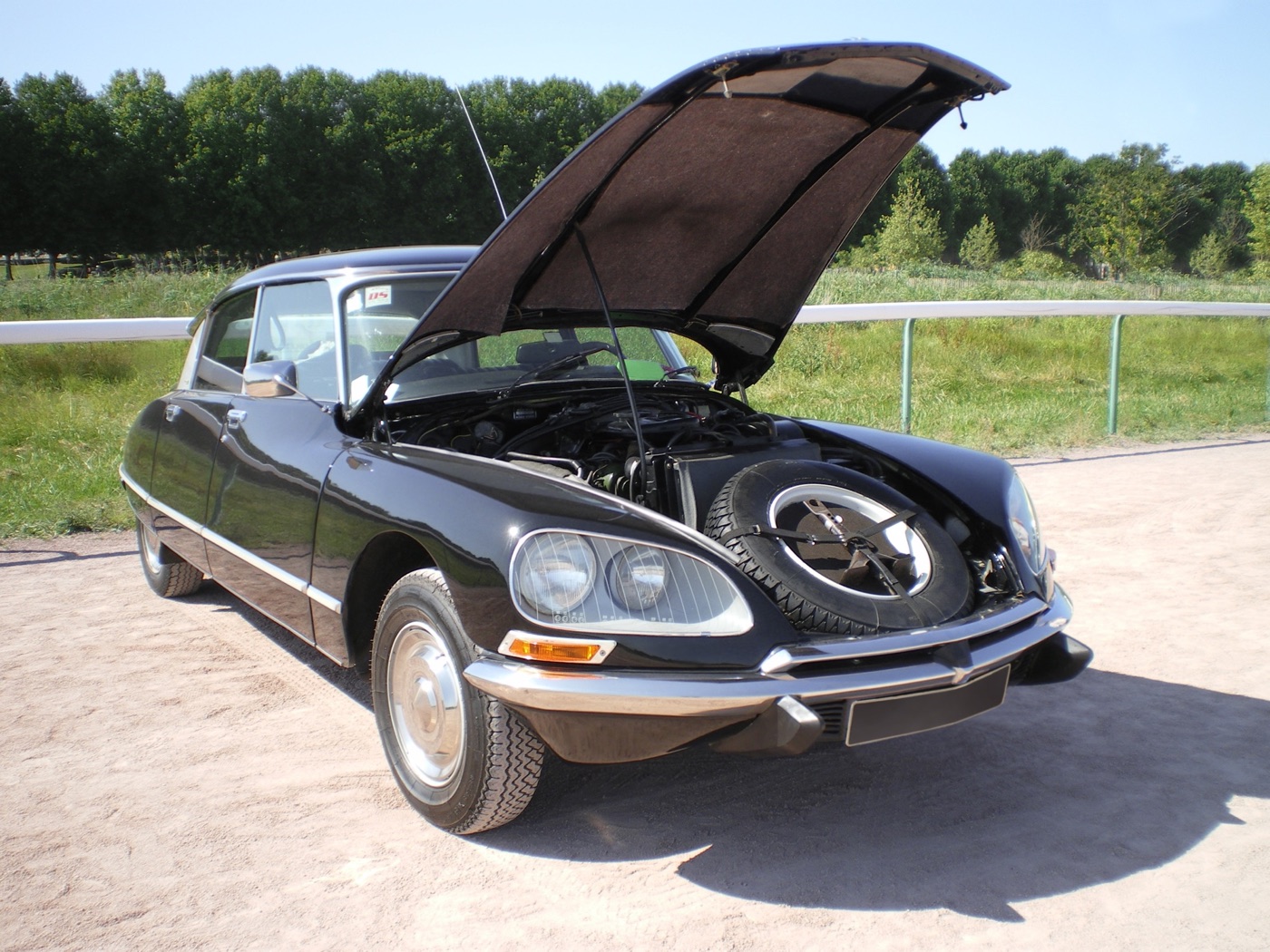
Bertoni's styling served the aerodynamics Lefèbvre wanted. The body has no radiator grille, and air for the radiator and the inboard front brakes comes through a shallow slot under the nose. The roof was of plastic construction, and the bonnet and boot lid were light alloy. The direction indicators sit in trumpets at the rear corners of the roof, and a single nut releases each rear wing for a wheel change. Motor Sport's 1955 report gave a wheelbase of 10ft 3in, a dry weight of 22cwt and a 17 cubic foot boot, and its 1958 test found the deep boot well gave "excellent luggage space". The spare wheel rides under the bonnet, ahead of the engine.
The interior
The cabin was as unusual as the outside. Motor Sport's 1958 test car had wide, deep seats in soft hide (on the Slough-built cars), thick carpets, strip lights 14 inches long down the door pillars, and a wrap-round windscreen and rear window on very thin pillars. The front seat backs folded flat to make a bed with the back seat, and the floor was flat because the front-wheel drive needed no tunnel.
How does Citroën DS suspension work?
Each wheel has a hydropneumatic unit: a metal sphere of nitrogen gas in place of a steel spring. A flexible diaphragm divides the gas from the hydraulic fluid below it. When the wheel rises over a bump, a piston pushes fluid through a small hole into the sphere and the gas compresses; the hole does the work of a damper. That is how Julian Marsh of Citroënet described it in a Practical Classics feature of October 2017. Height correctors let more fluid in, or out, so the car sits at the same height whatever its load. In 1958 Motor Sport drove its test car at 80mph over roads that shook the occupants of other cars at anything over 35mph.
Citroën kept developing the hydropneumatic system after the DS. The same feature records that the XM brought an electronically controlled version, Hydractive, in 1989.
The driver can also choose the height. In Motor Sport's 4,000-mile test of 1958, an aircraft-style lever at the left of the front compartment set normal height and two higher positions for rough ground. Changing a wheel used the same lever: raise the car, fit the jack, then select the lowest setting, and the car lowers itself onto the jack, lifting the two wheels on that side clear of the ground. When the engine starts, the hydraulic reservoir charges and the car rises and levels itself.
Brakes, steering and the hydraulic transmission
The front brakes were inboard discs, "for the first time on a mass-produced car", Motor Sport wrote in 1955; the rears were 10in drums. There was no brake pedal. The driver pressed a rubber button on the floor with almost no travel, and braking force between front and rear changed with the load. The rack-and-pinion steering was power-assisted, and the single-spoke wheel was placed so that column and spoke merged, for a clear view of the instruments and safety in a crash.
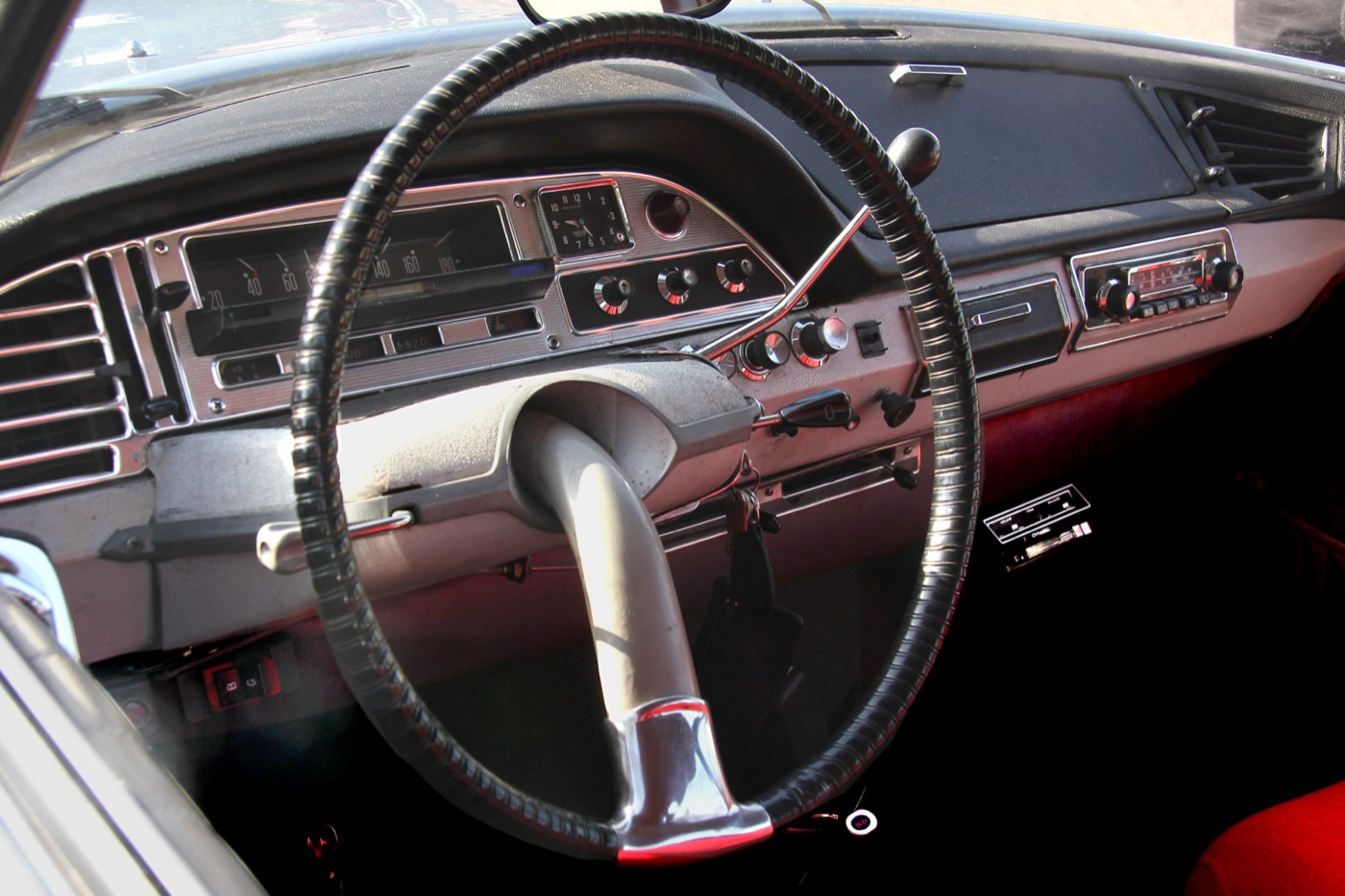
There was no clutch pedal either. A small lever above the steering column told the hydraulics which of the four gears to select; the system worked the clutch and made the change. The same lever worked the starter, so the engine could not be started in gear. Motor Sport found that learning the controls was "rather like learning to read Braille", and that the clutch "refuses to be hurried".
The engine
Under the bonnet was the oldest part of the car: the 1,911cc four-cylinder from the Traction Avant's Light Fifteen, with wet liners, pushrods and three main bearings, given a new light-alloy head with inclined valves. It made 75bhp against the Light Fifteen's 56bhp. The engine sits behind the gearbox, well back from the front wheels, and drives them through a 3.4 to 1 final drive.
Citroën DS specifications and performance
Power rose from 75bhp in 1955 to 141hp for the last fuel-injected DS 23, and top speed from about 90mph to nearly 190km/h (118mph). The figures below are DS Automobiles' own, except where the table says otherwise.
| Model | From | Engine | Power | Top speed |
|---|---|---|---|---|
| DS 19 | Oct 1955 | 1,911cc four | 75hp | about 90mph (Motor Sport test, 1958) |
| DS 19 | Jul 1959 | 1,911cc four, new head | 78hp | not given |
| DS 19 | Mar 1961 | 1,911cc four | 83hp | 150km/h (93mph) |
| DS 19, new nose | Sep 1962 | 1,911cc four | 83hp | 160km/h (99mph) |
| DS 21 | Oct 1965 | 2,175cc four | 109hp | 175km/h (109mph) |
| DS 21 injection | 1969 | 2,175cc four, electronic injection | 139bhp | over 185km/h (115mph) |
| DS 23 injection | Sep 1972 | 2,347cc four, electronic injection | 141hp | nearly 190km/h (118mph) |
Source: DS Automobiles, "DS: a 70-year history" (2025); Motor Sport, April 1958. RM Sotheby's catalogue for a 1970 DS 21 Décapotable gives the injected 2,175cc engine 125bhp, so published outputs for that engine differ by 14bhp.
How fast is a Citroën DS?
An early DS 19 is slow off the line and quick on the open road. Motor Sport's 1958 test car took 23.2 seconds to reach 60mph and 22.5 seconds for the standing quarter-mile, but would cruise at an indicated 90 and reach "fractionally over 90mph". On the magazine's night test route it averaged 62.9mph, and 77.5mph on a winding section, 6.1mph faster than a 1½-litre British sports saloon driven by the same man. It returned 20 to 23½mpg, and the 14-gallon tank gave a range of about 300 miles.
Engines from 1965
The DS 21 arrived in October 1965 with 2,175cc, and in September 1968 the DS 20, with 1,985cc, replaced the DS 19. In 1969 the DS 21 gained Bosch electronic fuel injection. The transmission options grew too: a five-speed manual in September 1970 and a three-speed Borg-Warner automatic a year later. The DS 23 replaced the DS 21 in September 1972.
Citroën DS models and variants
Citroën sold the DS as a saloon, an estate and a factory convertible, with the cheaper ID alongside, and Henri Chapron's workshop built the special bodies.
What is the difference between the Citroën DS and ID?
The ID 19, introduced in October 1956, used the same body and suspension with less power, a conventional clutch and manual gearbox, and no power steering. Motor Sport called it "virtually the same car" in 1958, at £1,498 7s in Britain against £1,726 7s for the DS 19, both with tax and duty.
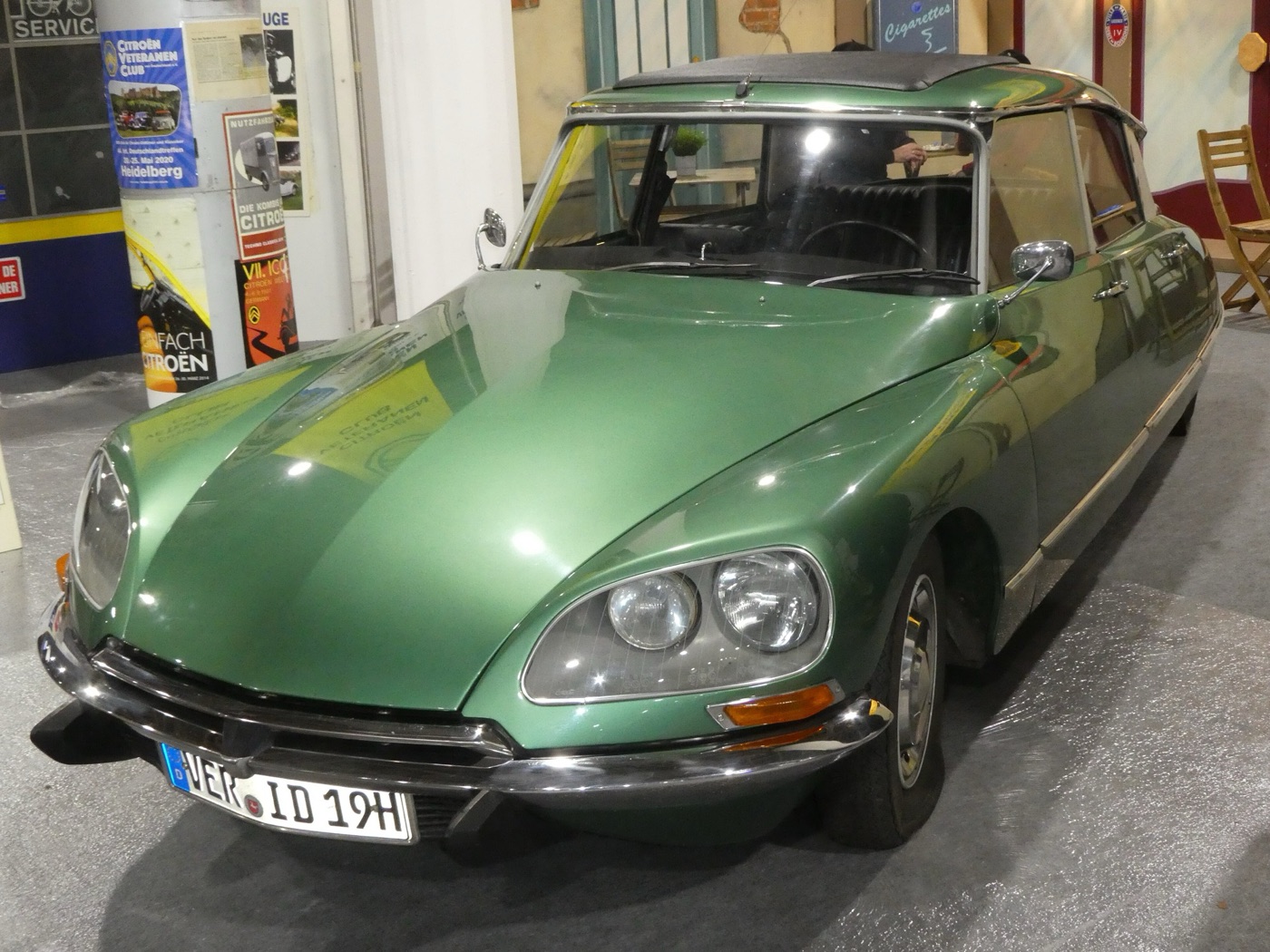
Pallas
The Pallas, shown at the 1964 Paris Motor Show, took the DS to a new level of luxury. It added stainless steel and rubber side strips, special hubcaps, chromed rear lights, extra headlamps, thicker seats with higher backs, optional leather, and metallic paints no other DS could have.
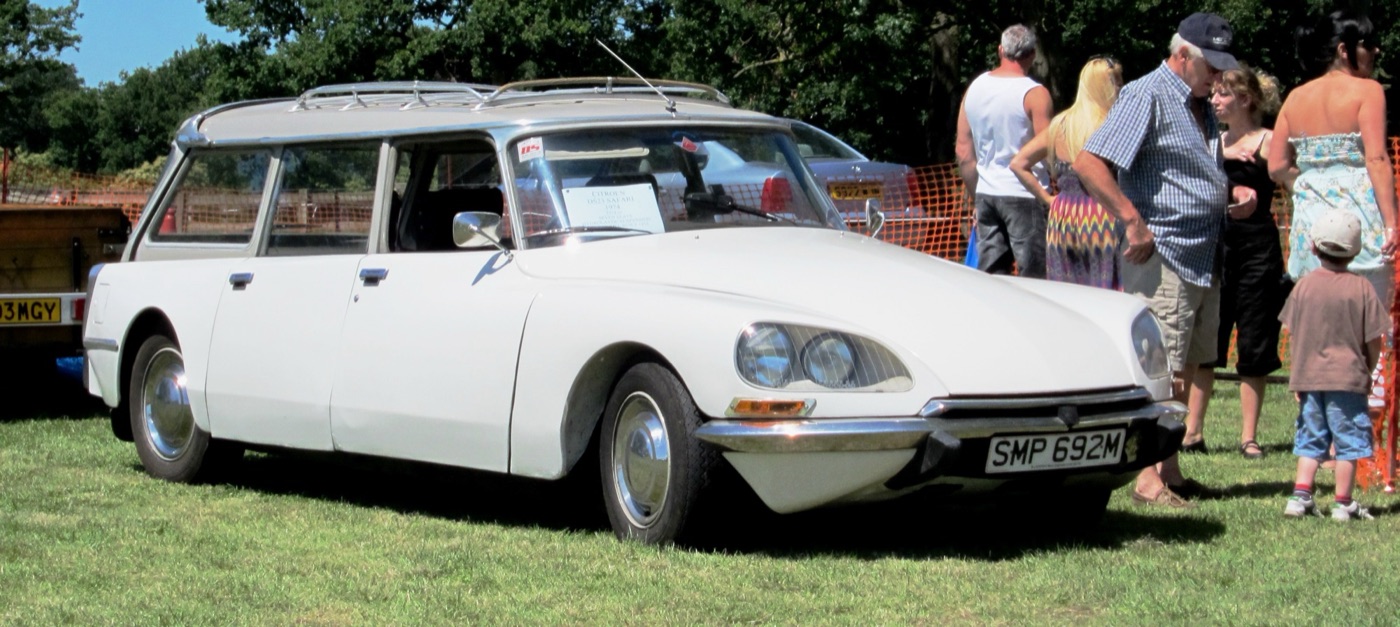
Safari estate
The estate version arrived in 1958, with the Familiale (family) and Commerciale versions alongside it. In Britain it was badged Safari. It had a split tailgate and seats for up to eight, and kept the hydropneumatic suspension of the saloon.
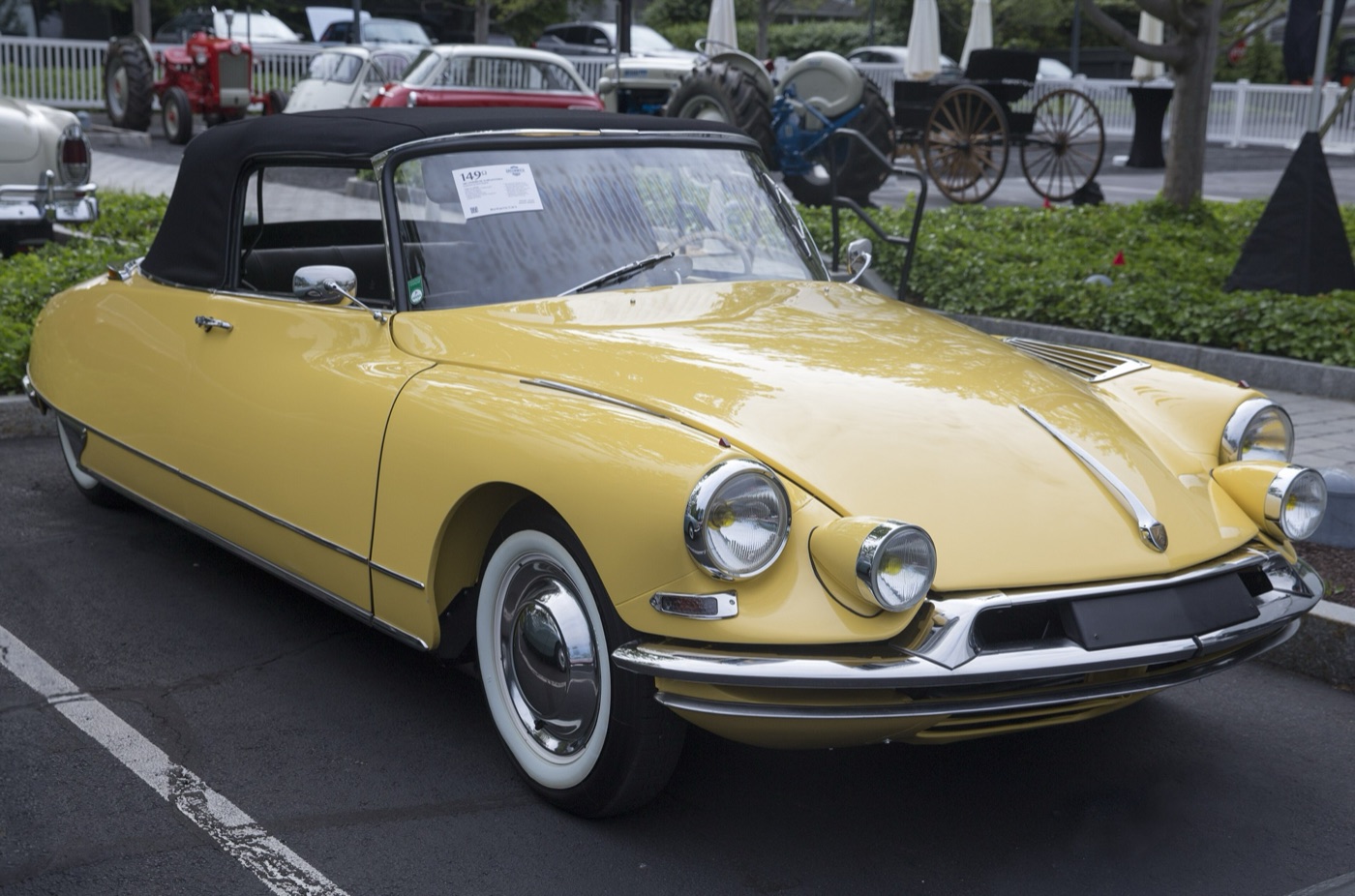
The Chapron Décapotable
Henri Chapron had shown his own DS convertibles from October 1958, and Citroën asked him to build one it could sell through its dealers. After three prototypes, the Décapotable (DS Automobiles calls it the DS 19 Cabriolet) was launched at the Paris Motor Show in October 1960, at almost twice the price of a saloon. Its doors were four inches longer than the saloon's and its frame was strengthened, RM Sotheby's catalogue notes; it counts 1,365 factory cars: 770 DS 19s, 483 DS 21s and 112 ID 19s, and only 40 in 1970.
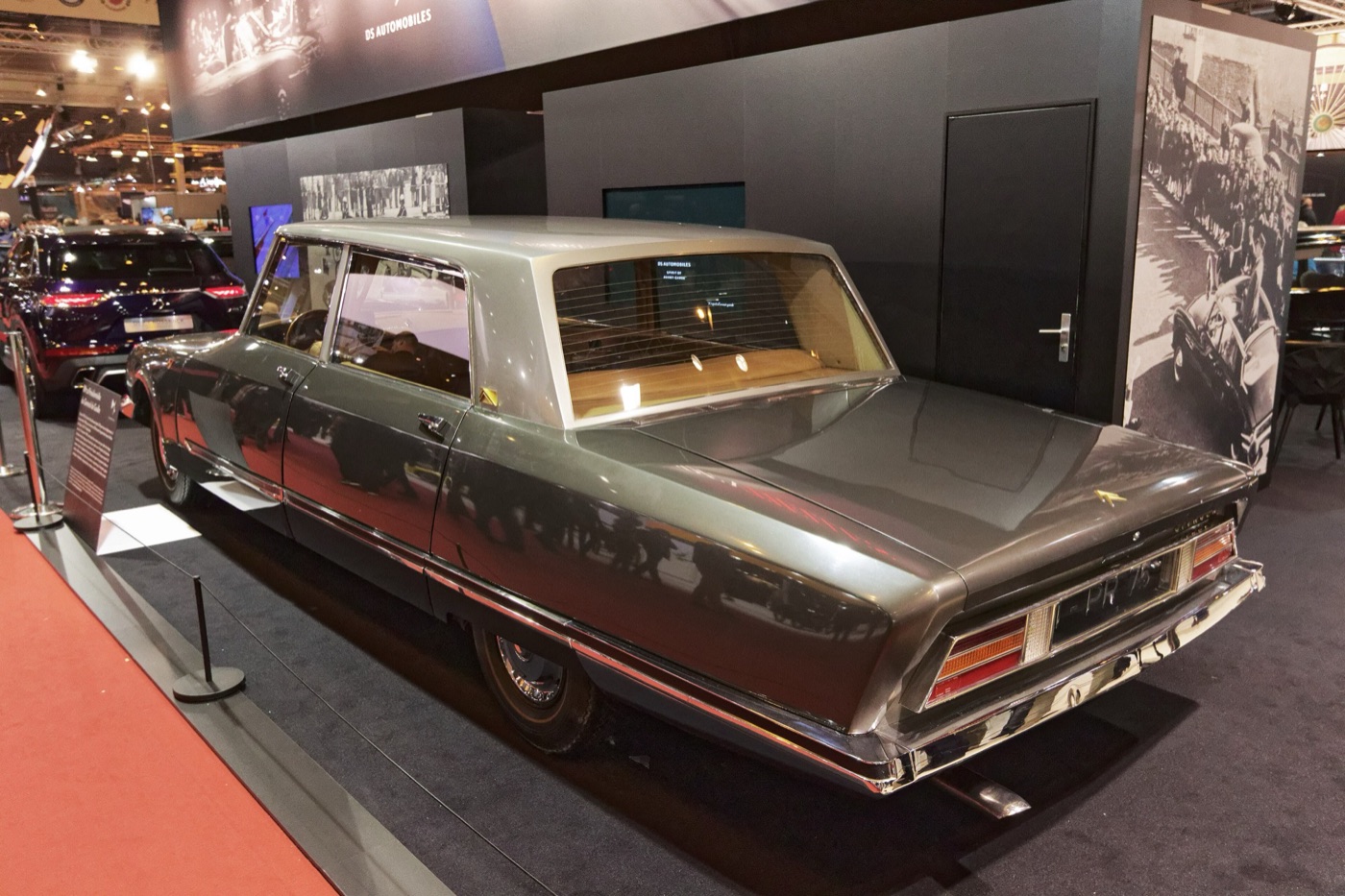
Prestige and the Présidentielle
The DS 19 Prestige, shown in October 1958 and sold from March 1959, was a black chauffeur car with a glass division, leather in front and cloth behind; an intercom and a radiotelephone were options. Its sales ended in January 1975. For the Élysée, Chapron built a single Présidentielle to a Citroën design, delivered on 14 November 1968: 6.53 metres long, so that it was longer than the American president's Lincoln, with air conditioning, a fold-down seat for an interpreter and a minibar.
Exports
The DS sold across Western Europe, in almost every Commonwealth country, including Canada and Australia, and in the United States. Cars for each market differed: the 1959 DS 19 that DS showed at Rétromobile in 2015 had been built for the German market, with an engine temperature gauge and an FM and long-wave radio.
Slough-built cars
Citroën's factory at Slough, west of London, opened in February 1926 and assembled the DS from 1956. Rules on local content gave Slough cars British parts, leather trim and, on the ID, a different front and a more conventional dashboard. In 1958 Slough was assembling about 25 DS 19s a week, against some 200 DS 19s and 100 ID 19s a week in Paris.
The DS, de Gaulle and the Élysée
A DS 19 saved Charles de Gaulle's life on 22 August 1962. That evening the presidential car, driven by the gendarme Francis Marroux, was taking de Gaulle and his wife Yvonne from the Élysée to the airfield at Villacoublay. At the Petit-Clamart crossroads, south of Paris, gunmen from a commando led by Jean Bastien-Thiry opened fire. Caradisiac's account of the attack counts 14 bullets in the unarmoured car out of 187 fired, with the front right and rear left tyres punctured. Marroux kept going on the damaged tyres and reached Villacoublay.
De Gaulle's verdict, as Caradisiac reports it, was "cette fois, c'était tangent" (that was a close one). Bastien-Thiry was caught and sentenced to death. Marroux stayed in the family's service, and in 1978 he drove Yvonne de Gaulle to her retirement home in a DS.
Citroën DS in rallying
The DS rallied from its first winter to its last: it took a class win on the Monte Carlo Rally three months after its launch, and a privately entered DS 23 won the World Cup Rally in 1974.
| Year | Event | Crew | Car | Source |
|---|---|---|---|---|
| 1956 | Monte Carlo Rally, class win | six cars entered, all finished | DS 19 | DS Automobiles |
| 1959 | Monte Carlo Rally | Paul Coltelloni, Alexandre, Desrosiers | ID 19 | DS Automobiles |
| 1961 | Liège–Sofia–Liège | Lucien Bianchi, Harris | DS 19 | Citroënet |
| 1966 | Monte Carlo Rally | Pauli Toivonen, Mikander | DS 21 | DS Automobiles; Michelin |
| 1969 | Rallye du Maroc | Robert Neyret, Terramorsi | shortened DS coupé | Citroënet |
| 1970 | Rallye du Maroc | Robert Neyret, Terramorsi | DS 21 | Citroënet |
| 1974 | London–Sahara–Munich World Cup Rally | Ken Tubman, André Welinski, Jim Reddiex | DS 23 | National Automobile Museum of Tasmania |
The 1966 Monte Carlo Rally
Toivonen's 1966 win came in the stewards' room. Minis finished first, second and third, with Timo Mäkinen, Rauno Aaltonen and Paddy Hopkirk, and Roger Clark's Lotus Cortina fourth; all four were excluded after the finish because their iodine-vapour headlamp bulbs were judged to break French road rules. Michelin's account of the rally records that Toivonen's DS 21, delayed early on by a bent suspension arm, inherited the win ahead of two Lancia Flavias, on Michelin X radials that anyone could buy over the counter.
The 1974 World Cup Rally
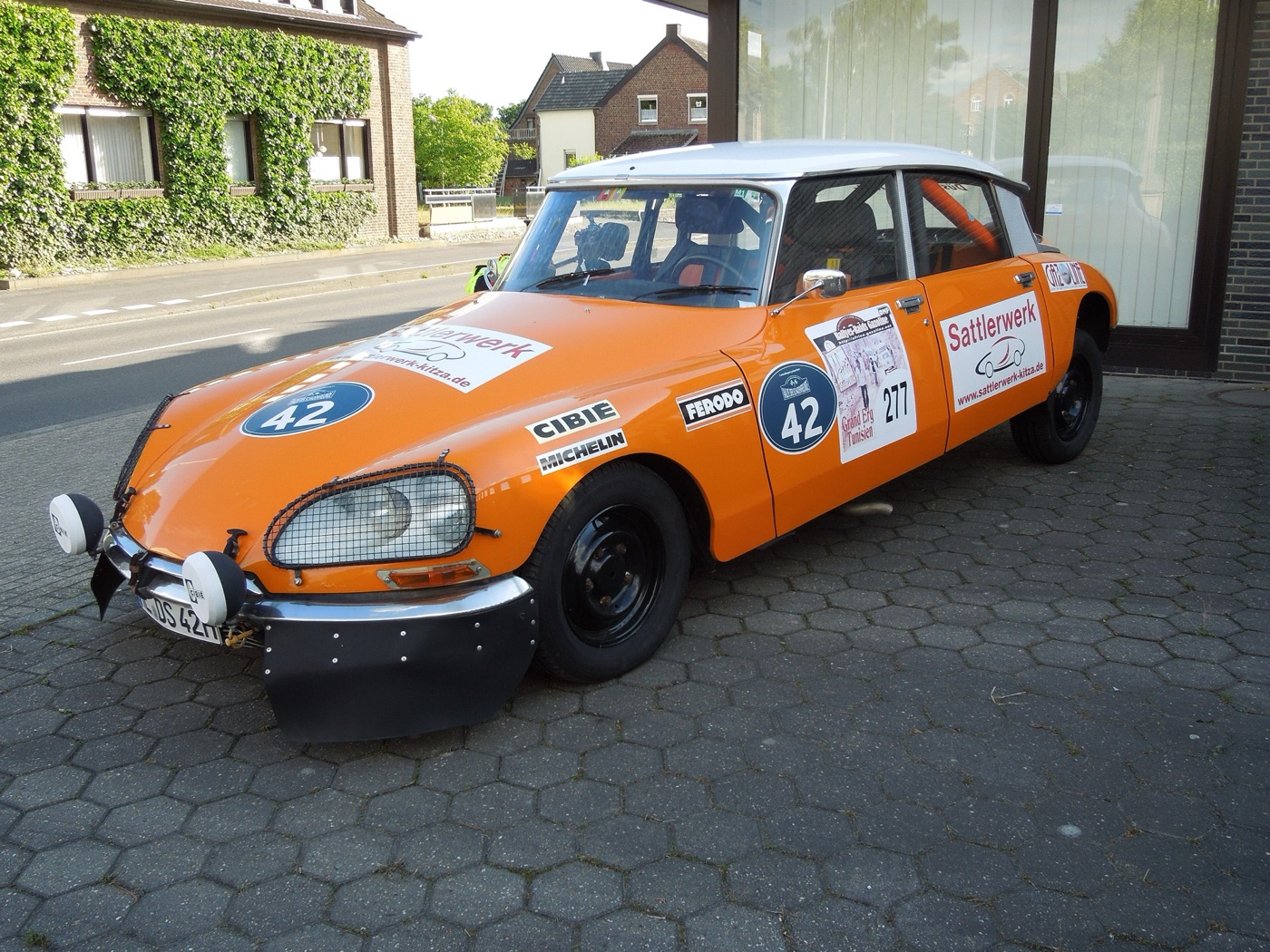
The DS's last big win was a privateer's. The National Automobile Museum of Tasmania, which now shows the car, records that 70 cars entered the 1974 London–Sahara–Munich event, 19 finished and only five covered the full route. The Australian crew of Ken Tubman, André Welinski and Jim Reddiex, a Brisbane Citroën dealer who kept the DS 23 running, led by about 20 hours when the rally reached Tunisia.
How many Citroën DS were made?
Citroën built 1,456,115 DS and ID models between October 1955 and April 1975, the figure given by both L'Aventure, the makers' heritage association, and DS Automobiles.
| Figure | Number | Source |
|---|---|---|
| Total DS and ID, 1955–75 | 1,456,115 | L'Aventure; DS Automobiles |
| Built at Quai de Javel, Paris | 1,330,755 | DS Automobiles |
| Built elsewhere (difference) | 125,360 | calculated from the two rows above |
| Factory Décapotables (DS 19, DS 21, ID 19) | 1,365 | RM Sotheby's |
| Weekly output in Paris, early 1958 | about 200 DS 19 and 100 ID 19 | Motor Sport |
| Weekly output at Slough, early 1958 | about 25 DS 19 | Motor Sport |
The millionth DS, a DS 21 Pallas with injection in Metallic Sable, left Javel on 7 October 1969 and went straight to the Paris Motor Show, where it was drawn as a prize in front of a bailiff. A 22-year-old engineering student at the École Centrale, Gilles Delègue, won it. Outside Paris, DS Automobiles lists assembly in Britain and Belgium from 1956 and in South Africa from 1959.
Citroën DS prices and values today
In pounds, at UK and French sales, a DS 23 Pallas saloon sold at auction for £12,808 to £71,780 in 2025, and Chapron Décapotables have made £135,000 and more. The Classic Valuer, which collects auction results, puts the median DS 23 Pallas sale since 2020 at £30,023, from a low of £4,100.
| Car | Sale | Price |
|---|---|---|
| 1975 DS 23 Pallas, semi-automatic, 100,000 miles showing | WB & Sons, UK, 19 July 2025 | £12,808 |
| 1973 DS 23 Pallas, right-hand drive, five-speed, recently restored | Brightwells, UK, 2 April 2025 | £23,520 |
| 1973 DS 23 Pallas, first registered in Saint-Étienne | Artcurial, France, 28 September 2025 | £32,360 |
| 1974 DS 23 Pallas, restored | Aguttes, France, 16 March 2025 | £40,666 |
| 1973 DS 23 Pallas, air conditioning, restoration over €120,000 | Aguttes, France, 30 November 2025 | £71,780 |
| 1970 DS 21 Décapotable, injection | Iconic Auctioneers, Coventry, 31 July 2020 | £135,000 |
| 1970 DS 21 Décapotable, injection, restored | RM Sotheby's, Monterey, 2021 | $291,000 |
Sources: The Classic Valuer's records of each sale (French results converted to pounds by The Classic Valuer); Iconic Auctioneers and RM Sotheby's lot pages.
What is a Citroën DS worth?
The five 2025 DS 23 Pallas results span more than five times from cheapest to dearest: the dearest had a restoration costing over €120,000 and factory air conditioning, and the cheapest showed 100,000 miles. A Décapotable costs about twice the dearest saloon and ten times the cheapest; new, it cost almost twice as much as a DS saloon.
Owning a Citroën DS: faults and reliability
Structural rust and hydraulics short of maintenance are the issues that cost money on a DS. The engines are simple.
Common problems: rust and the frame
Rust in the frame is the fault that ends a DS's life. The Classic Trader buying guide advises walking away from a car whose frame is corroded, and checking the door frames, sills, footwells and suspension mounts. Frameless rear doors that sag point to a weak structure. Body panels matter less: they can be hard to find, but aftermarket ones exist.
Hydraulic fluid: green LHM and the earlier fluid
From 1967 Citroën changed to a mineral hydraulic fluid, LHM, which it dyed green, and painted the hydraulic parts green to match. The two fluids need different seals, and putting the wrong one in a system damages it, so the colour of the fluid and the parts is the first check on any DS. A car that sags and stays down probably has a leak. The front discs sit under the radiator, hard to reach, and on cars built before 1967 the calipers can stick after a long lay-up.
Engine and gearbox
The four-cylinder engines are simple and last with basic servicing; listen for timing-chain rattle and check for oil leaks. On cars with the hydraulic gear change, an adjuster screw on the bell housing shows how much clutch is left: screwed all the way out, the clutch is nearly worn. Manual gearboxes can have tired synchromesh, and the Borg-Warner automatic can hesitate between gears.
Is a Citroën DS reliable?
Yes, if a specialist looks after it, despite the complexity of the hydraulics. Motor Sport ran a DS 19 for 4,200 miles in under six weeks in 1958, through snow and the RAC Rally, and needed no repair; after 1,400 miles it had used no oil, water or hydraulic fluid. Its writer still warned that the engine bay was "a veritable mechanical maze" that would leave "the average repairer quite impotent", and the same is true now: the Classic Trader guide puts most suspension problems down to neglect or to work by people who do not know the system.
Rivals and reception
Road testers in 1955 and 1958 put the DS's technology a decade or more ahead of other saloons, and its innovations still win it polls. Motor Sport's first report called it "the sensation of the Paris and London Motor Shows". In April 1958 Motor Sport wrote that "technically the DS19 is a decade ahead of other cars" and quoted Citroën's own slogan, "the car of the future, for the roads of today".
Rivals in period
At £1,403 in 1955, Motor Sport wrote, the DS 19 "competes with many medium-sized family cars", and in 1958 the magazine found it faster across country than a 1½-litre British sports saloon. When Rover launched its 2000 at Earls Court in 1963, Motor Sport's show report said "the Rover engineers had a DS Citroën standing beside their drawing boards", and judged the Rover "superior to it in many respects".
Art, polls and film
In Mythologies (1957) Roland Barthes called the new DS "the almost exact equivalent of the great Gothic cathedrals". The same year the DS was the only car at the 11th Milan Triennale, shown without wheels on a tilted plinth, and its body took the exhibition's industrial design prize. At the final in Las Vegas in December 1999, the Car of the Century award placed it third, with 567 points to the Ford Model T's 742 and the Mini's 617, Citroënet's record of the vote shows. In February 2009 a jury of 20 car designers, among them Giorgetto Giugiaro and Ian Callum, voted it the most beautiful car of all time for Classic & Sports Car; its editor, James Elliott, said the magazine was "still astonished that it came out on top when you look at the sexiness – and values – of some of its rivals", as Jalopnik reported.
On screen, DS Automobiles lists Brigitte Bardot's Une Parisienne (1957), Alain Delon's Le Samouraï (1967) and Louis de Funès's Rabbi Jacob (1973). In Fantômas se déchaîne (1965) a DS grows wings and jet engines and flies, and in Back to the Future Part II (1989) one is a flying taxi in the year 2015.
The DS name since 2009
Citroën brought the DS name back in 2009 for a line of more expensive models, and on 1 June 2014 DS Automobiles became a brand of its own. A 2014 SkiddMark road test of the range listed the DS3 from £12,840 to £21,620 for the Ultra Prestige, the DS3 Cabrio at £19,680, the DS4 from £17,580 and the DS5 from £22,960 to £33,360 for the diesel hybrid. In February 2015, for the original car's 60th anniversary, DS showed a 1959 DS 19 beside a DS3 Cabrio at Rétromobile, and said the new brand had sold 500,000 cars since its launch. Its 2025 range was the DS 3, DS 4, DS 7 and the electric N°8.
The old car's anniversaries are still marked in Paris. For the 70th, on 18 and 19 October 2025, Club ParIDS planned a gathering of 200 DS cars in the Parc André Citroën, built on the site of the Javel factory, with more than 70% of them entered from elsewhere in Europe, DS Automobiles announced.
Questions
What does DS stand for on a Citroën?
Nothing officially: it is a pun. Said in French, "DS" sounds like déesse, goddess. The cheaper ID sounds like idée, idea. Gazelle was considered before the DS name was chosen.
When was the Citroën DS made?
From 7 October 1955, the day after its Paris Motor Show debut, until 24 April 1975, when the last car, a Delta Blue DS 23 Pallas injection, left the Quai de Javel factory in Paris.
Was the Citroën DS built in Britain?
Yes. Citroën's factory at Slough assembled the DS from 1956, with British-sourced parts and leather trim. In early 1958 it was building about 25 DS 19s a week.
How much did a Citroën DS cost new in the UK?
Motor Sport gave £1,403 12s 6d with import duty and purchase tax in November 1955. By April 1958 a DS 19 cost £1,726 7s and an ID 19 £1,498 7s.
Why does a Citroën DS rise when you start it?
The engine drives the pump that charges the hydraulic system. As pressure builds, fluid flows into the suspension cylinders and the car lifts to its set height and levels itself, with what Motor Sport called "an audible hiss".
Which car replaced the Traction Avant?
The DS. Citroën began the project in 1938 as the Traction Avant's successor, and launched it as the DS 19 in October 1955.
What flying Citroën DS appears in films?
In Fantômas se déchaîne (1965) a DS sprouts wings, a fin and two jet engines and takes off, and in Back to the Future Part II (1989) a DS is a flying taxi in 2015.
Sources
- DS Automobiles (Stellantis Media UK), "DS: a 70-year history", January 2025 (archived copy): the VGD project, designers, launch and order figures, production start, model changes and outputs, Pallas, Prestige, Décapotable, Présidentielle, rally results, the millionth and last cars, Barthes, the Milan Triennale, films.
- DS Automobiles (Stellantis Media UK), "DS Automobiles and L'Aventure DS join Club ParIDS to celebrate the 70th anniversary of the DS", October 2025: total and Javel production, the 1967 front, Slough assembly, the 2025 gathering.
- DS Automobiles (Stellantis Media UK), "1955–2015: DS celebrates its 60th anniversary at Rétromobile", January 2015: the 2014 brand and its sales.
- DS Automobiles Italia (Stellantis Media), "Storie DS: la DS19, le origini del mito": Bertoni, the Gazelle name, the nylon dashboard, 749 orders in 45 minutes.
- L'Aventure Peugeot Citroën DS, "Citroën DS 1955–1975": production total. Read 28 October 2026.
- Motor Sport, "The revolutionary new Citroën DS19", November 1955: engine, hydraulics, brakes, dimensions, UK price.
- Motor Sport, "4,000-mile test of the Citroën DS19", April 1958: controls, performance, fuel consumption, reliability, prices, weekly output.
- Motor Sport, "Bill Boddy 1913–2011", September 2011: Boddy as editor, and his byline "WB".
- Motor Sport, "Earls Court 1963", November 1963: the Rover 2000 and the DS.
- Practical Classics, October 2017, republished by Citroënet as "Hydraulics": how the spheres and height correctors work.
- Caradisiac, "La DS de l'attentat du Petit-Clamart", August 2022: the 1962 attack.
- Michelin Motorsport, "Monte Carlo 1966: Citroën and Michelin win another 'duel of '66'": the 1966 exclusions and result.
- National Automobile Museum of Tasmania, "1973 Citroën DS23 (1974 WCR winner)": the 1974 World Cup Rally.
- Julian Marsh, Citroënet, "The DS in motor sport, part one": the 1961 Liège–Sofia–Liège and the 1969 and 1970 Rallye du Maroc.
- Julian Marsh, Citroënet, "The Car of the Century": the 1999 points.
- Jalopnik, "Classic & Sports Car magazine names Citroën DS most beautiful car of all time", February 2009: the designers' poll.
- RM Sotheby's, lot 182, 1970 Citroën DS 21 Décapotable by Chapron, Monterey 2021: Décapotable numbers, doors and frame, price.
- Iconic Auctioneers, 1970 Citroën DS21 Décapotable, 31 July 2020: price.
- The Classic Valuer, DS 23 Pallas results: WB & Sons, July 2025; Brightwells, April 2025; Artcurial, September 2025; Aguttes, March 2025; Aguttes, November 2025, with the median and range since 2020. Read 28 October 2026.
- Classic Trader, "The Citroën DS buying guide" (2016, market section updated October 2026): faults and checks.
- SkiddMark, "ROAD 37: Citroën DS Special", 24 March 2014: DS3, DS4 and DS5 prices.