Exclusive interview with John Surtees: The Marques and the Champion
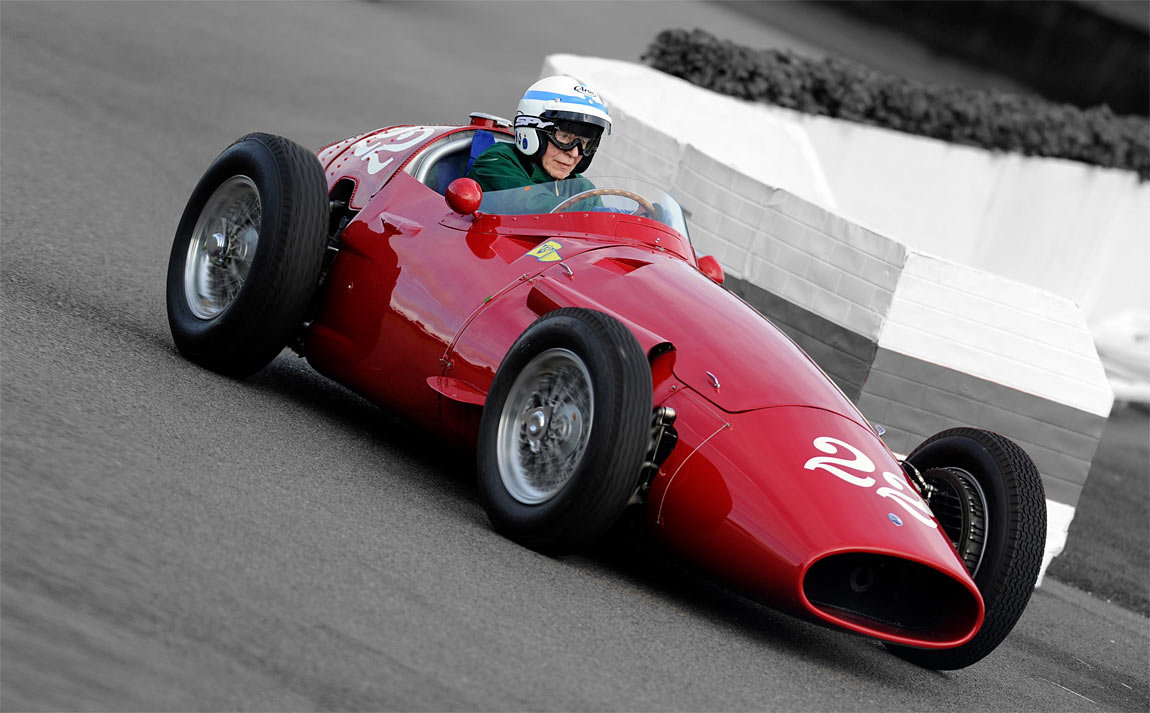
Snetterton’s pit wall can be an inhospitable place. It was late winter and the cold easterly wind battered the faces of those assembled to survey un-liveried machines as they trialled their way up and along the Senna Straight.
My eyes lifted, alerted by the familiar tone of the mighty Cosworth-Caterham, holding its nerve whilst pushing off-line before easing into the caress of the Russell chicane. A second later, a more moderately powered Ginetta arrived at the same point, braking-hard and late in an attempt to hasten out of the dog-leg. As the young racer and his instructor made their way towards another lap, I seized the opportunity to engage the huddled figure beside me.
“He’s creating too much over-steer” I quipped. For an all-too lingering moment, silence prevailed as my neighbour thoughtfully scribbled notes in a worn but trusted book. He paused, and then raised his head. “He has to” came the reply.
This was the extent of my first ever conversation with John Surtees. Seven years later and both our worlds have changed.
In the Beginning
The 1950s will be remembered as a time that a generation broke free from the shackles of war. No longer confined by expectations or tradition, those with ambition found opportunities waiting. For a young man from Surrey, his chance was the offer of an engineering apprenticeship with Vincent, the motorcycle manufacturer. Jack Surtees Sr owned a business in Forest Hill that sold and maintained Vincents. He was also an exceptional sidecar racer. Countless hours spent by his father’s side meant that John was already moulded for this world.
Jack Surtees introduced his son, John, to sidecar racing at a very young age.His first racing success came when he was just 14. Travelling with the family to Cockfosters for the Trent Park speed trials, he was only too eager to stand-in when Jack’s sidecar passenger failed to appear. “Team Surtees” was born that day and it came as no surprise to anyone that they finished ahead of the field. Unfortunately, it was also no surprise that the organisers discovered John’s age; hence the victory was forfeited.
One year later and he would finally compete in his own right, first at grass-tracking, and then on “the road” with a self-modified 500cc Vincent Grey Flash. An outright win in only his second ever tarmac race at Aberdare would set him on his way, and building on this success, it was decided that for 1951, still aged only 17, he should embark on his first season-long campaign of racing. For those who knew him, John Surtees’ talent was obvious. For those who didn’t, they were about to find out.
August of that year saw the family travel to the relatively new circuit at Thruxton in Hampshire. The track was fast and undulating, dirty and unforgiving. Even today, it presents challenges like no other. It was the Bank Holiday weekend, and it was very, very wet; Motor Cycle magazine going so far as to describe conditions as “vile”.
Despite the weather, a substantial crowd had gathered to cheer-on the heroes of the day, and in particular, Geoff Duke, the year’s new 350cc World Champion (who was also well on his way to capturing the 500cc crown as well). At 28, Duke was entering the peak of his career and as the flag fell at the start of each of the two feature races, he soon left the pack trailing . . . all bar young Surtees.
It was Duke’s mighty Norton that always led the way but the Vincent chased hard, calling on both to break through the normal limits of adhesion as they charged towards the line. In the end, the Norton was just too strong, yet later, whilst gathering thoughts at the presentation, it was Duke who stood in awe of the teenager who, he remarked, had made him ride so very fast.
The encounter served well. Surtees now knew that he should never underestimate others, but he also knew they would not underestimate him.
Ten years on and of the senior classifications, Duke would lay claim to 4 Isle of Man TT and 6 World Championship crowns; Surtees could boast 6 and 7.