David Arnold: composer of five James Bond films and their car chases
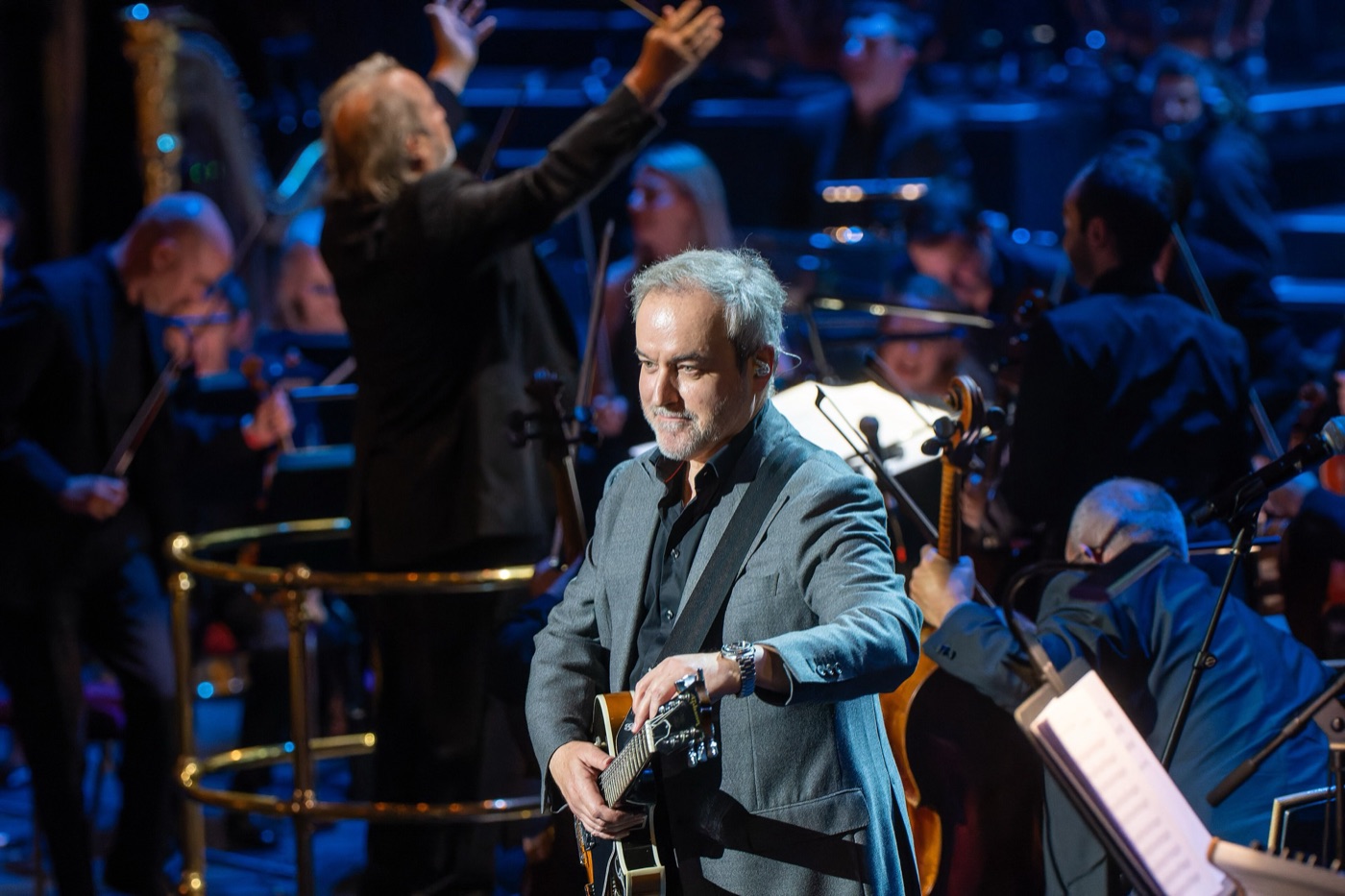
David Arnold is the English film composer who scored five James Bond films in a row, from Tomorrow Never Dies (1997) to Quantum of Solace (2008), the run in which Bond swapped a remote-controlled BMW 750iL for Aston Martin’s Vanquish and DBS. Born in Luton in January 1962 (MI6-HQ, 2014), he also scored Stargate, Independence Day (which won him a Grammy), Godzilla, 2 Fast 2 Furious and Hot Fuzz, co-wrote the music for BBC’s Sherlock (an Emmy in 2014) and was music director of the London 2012 Olympic and Paralympic closing ceremonies. In 2026 he wrote the theme for the game 007 First Light with Lana Del Rey.
Early life in Luton and the first films
David Arnold grew up in Luton, and his first Bond film was You Only Live Twice, shown on a 16mm projector at a children’s Christmas party at the Royal British Legion social club in the town. Introducing the film at the BFI Southbank in January 2014, as MI6-HQ reported, he remembered “bowlfuls of jelly and ice cream”, one portable speaker under the screen, and within five minutes hearing the James Bond Theme, the title song and John Barry’s “Capsule in Space”. “The opening sequence in Japan looked exotic,” he said, “but when you’re from Luton everywhere looks exotic.”
His break came through a friend from college. Arnold scored the student films of the director Danny Cannon in Luton, and when Cannon made his first feature, The Young Americans (1993), Arnold wrote the score and the closing song, “Play Dead”, sung by Björk. He told RTÉ in 2017 that Björk then lived two streets away, came round to see a cut of the film and was in the studio with the orchestra three days later; the orchestra read the song through once, with no click track, in the last minutes of the session. “Play Dead”, credited to Björk with David Arnold, reached number 12 in the Official Singles Chart in October 1993.
Stargate, Independence Day and Hollywood
“Play Dead” led David Arnold to Hollywood. RTÉ’s profile records that the director Roland Emmerich approached Arnold on the strength of one of its tracks, and Arnold scored three Emmerich films in a row: Stargate (1994), Independence Day (1996) and Godzilla (1998), each credited to him in Box Office Mojo’s film credits. Independence Day won him the Grammy for Best Instrumental Composition Written for a Motion Picture or for Television at the 39th Grammy Awards.
Three directors have hired David Arnold at least three times: Roland Emmerich, John Singleton, and Michael Apted, for The World Is Not Enough, Amazing Grace and the third Narnia film. Roger Michell hired him for Changing Lanes and again for Morning Glory (2010).
| Year | Film | Director |
|---|---|---|
| 1993 | The Young Americans | Danny Cannon |
| 1994 | Stargate | Roland Emmerich |
| 1995 | Last of the Dogmen | Tab Murphy |
| 1996 | Independence Day | Roland Emmerich |
| 1997 | A Life Less Ordinary | Danny Boyle |
| 1998 | Godzilla | Roland Emmerich |
| 2000 | Shaft | John Singleton |
| 2001 | Zoolander | Ben Stiller |
| 2002 | Changing Lanes | Roger Michell |
| 2003 | 2 Fast 2 Furious | John Singleton |
| 2004 | The Stepford Wives | Frank Oz |
| 2005 | Four Brothers | John Singleton |
| 2006 | Amazing Grace | Michael Apted |
| 2007 | Hot Fuzz | Edgar Wright |
| 2010 | Made in Dagenham | Nigel Cole |
| 2010 | The Chronicles of Narnia: The Voyage of the Dawn Treader | Michael Apted |
| 2011 | Paul | Greg Mottola |
How David Arnold got the James Bond job
David Arnold got the Bond job in 1997 on the strength of a covers album, a recommendation from John Barry and, if Barbara Broccoli’s account is right, a record-shop assistant. While working on Stargate he had told MGM that if John Barry was ever not going to score a Bond film, “please let me have a crack” (RTÉ, 2017). MGM told him it had already signed Eric Serra for GoldenEye (MI6-HQ, 2014).
So he made a record instead. Shaken and Stirred: The David Arnold James Bond Project began in 1995 with three tracks he paid for himself: “You Only Live Twice” with Björk, “Diamonds Are Forever” with David McAlmont and “On Her Majesty’s Secret Service” with Propellerheads. East West Records took the album on; the finished record added Chrissie Hynde, Iggy Pop, Pulp and Leftfield (NME, 2026) and reached number 11 in the Official Albums Chart in November 1997.
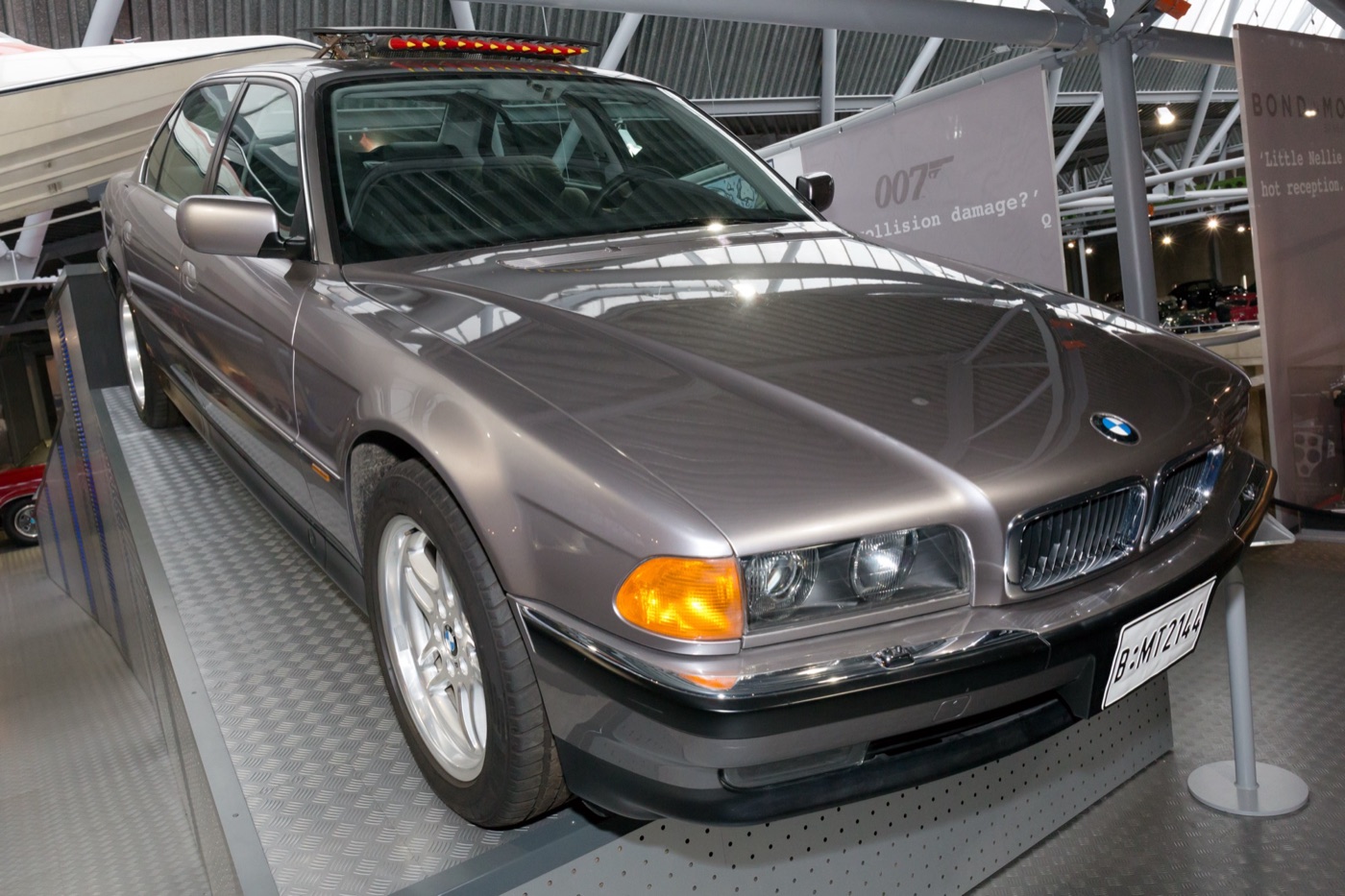
The record was playing in the cutting room before Arnold was hired. At the BFI in 2014 he said Broccoli and Michael G. Wilson were using his Propellerheads version of “On Her Majesty’s Secret Service” as the temporary music for the car-park chase in Tomorrow Never Dies, the sequence in which Bond drives his BMW 750iL from the back seat by mobile phone. EON’s film page says Barry recommended Arnold to the producers.
Speaking to SkiddMark in 2010, Arnold gave Broccoli’s version, which he had heard only six months before: she was in a record shop buying soundtracks to find a new Bond composer, and the man at the till told her, “Oh, you should get that David Arnold to do it.” “So somewhere in the world is a shop assistant who I owe a very large drink to,” he said. He put the hiring down to all of it together: the album, Independence Day and its Grammy, and a lifetime as a Bond fan that let him talk to the producers about where the music “could and should go”.
How many Bond films did David Arnold score?
David Arnold scored five James Bond films, every one from Tomorrow Never Dies in 1997 to Quantum of Solace in 2008: three with Pierce Brosnan and the first two with Daniel Craig. Only John Barry, the “eleven-time 007 composer” in Yahoo Movies UK’s phrase, has scored more. Arnold had a hand in the title songs of two of them by the soundtrack credits, three by 007.com’s (see the table). Together the five films took $2.32 billion at the worldwide box office, by Box Office Mojo’s figures.
| Film (UK release) | Bond | Director | Bond’s car | Title song | Arnold’s part in the song | Worldwide gross |
|---|---|---|---|---|---|---|
| Tomorrow Never Dies (12 Dec 1997) | Pierce Brosnan | Roger Spottiswoode | BMW 750iL; Aston Martin DB5 | “Tomorrow Never Dies”, Sheryl Crow | None; his “Surrender”, sung by k.d. lang, plays over the end credits | $333.0m |
| The World Is Not Enough (26 Nov 1999) | Pierce Brosnan | Michael Apted | BMW Z8; Aston Martin DB5 | “The World Is Not Enough”, Garbage | Music, with lyrics by Don Black | $361.8m |
| Die Another Day (20 Nov 2002) | Pierce Brosnan | Lee Tamahori | Aston Martin V12 Vanquish | “Die Another Day”, Madonna | None | $432.0m |
| Casino Royale (16 Nov 2006) | Daniel Craig | Martin Campbell | Aston Martin DBS and DB5 | “You Know My Name”, Chris Cornell | Co-written with Cornell | $606.4m |
| Quantum of Solace (31 Oct 2008) | Daniel Craig | Marc Forster | Aston Martin DBS | “Another Way to Die”, Jack White and Alicia Keys | Sources differ: 007.com credits Arnold as composer; MusicBrainz credits Jack White as the writer | $589.6m |
Each Bond film’s cars are listed on the James Bond cars page.
Tomorrow Never Dies: the BMW and the techno
Arnold has talked about the car chase in Tomorrow Never Dies (1997) more than once. Bond, lying on the back seat of a BMW 750iL in a Hamburg car park, steers it with a phone while gunmen chase it. Arnold told SkiddMark in 2010 that the car shaped the score: “you had the BMW voice assistant saying ‘the warranty will be void if you machine gun the rear window’… It was very funny, but it was kind of technically driven scenario that he was in and we were also in Germany so it seemed a good point to go down a slightly techno route for it.” The cue on the 1997 A&M soundtrack album is “Backseat Driver”, credited to Arnold and Alex Gifford of Propellerheads, the band whose Bond cover had been the temporary music for the scene; the album also has a track called “Company Car”, according to its MusicBrainz listing.
In a 2021 interview with Yahoo Movies UK he picked the same scene to explain Brosnan’s Bond: “he’s driving the car, the BMW, hiding in the backseat with a remote control on his phone. He’s using all the gadgets and kind of laughing that they’re doing what they’re doing, in the same way that we are.” The same interview recalls that he was halfway through the score when Diana, Princess of Wales, died, and watched her funeral cortège pass the room he was writing in.
The World Is Not Enough and Die Another Day
For The World Is Not Enough (1999) Arnold wrote the title song’s music, sung by Garbage with Don Black’s lyrics (007.com). The MCA soundtrack album’s cues include “Come in 007, Your Time Is Up”, “Ice Bandits” and “Pipeline” (MusicBrainz).
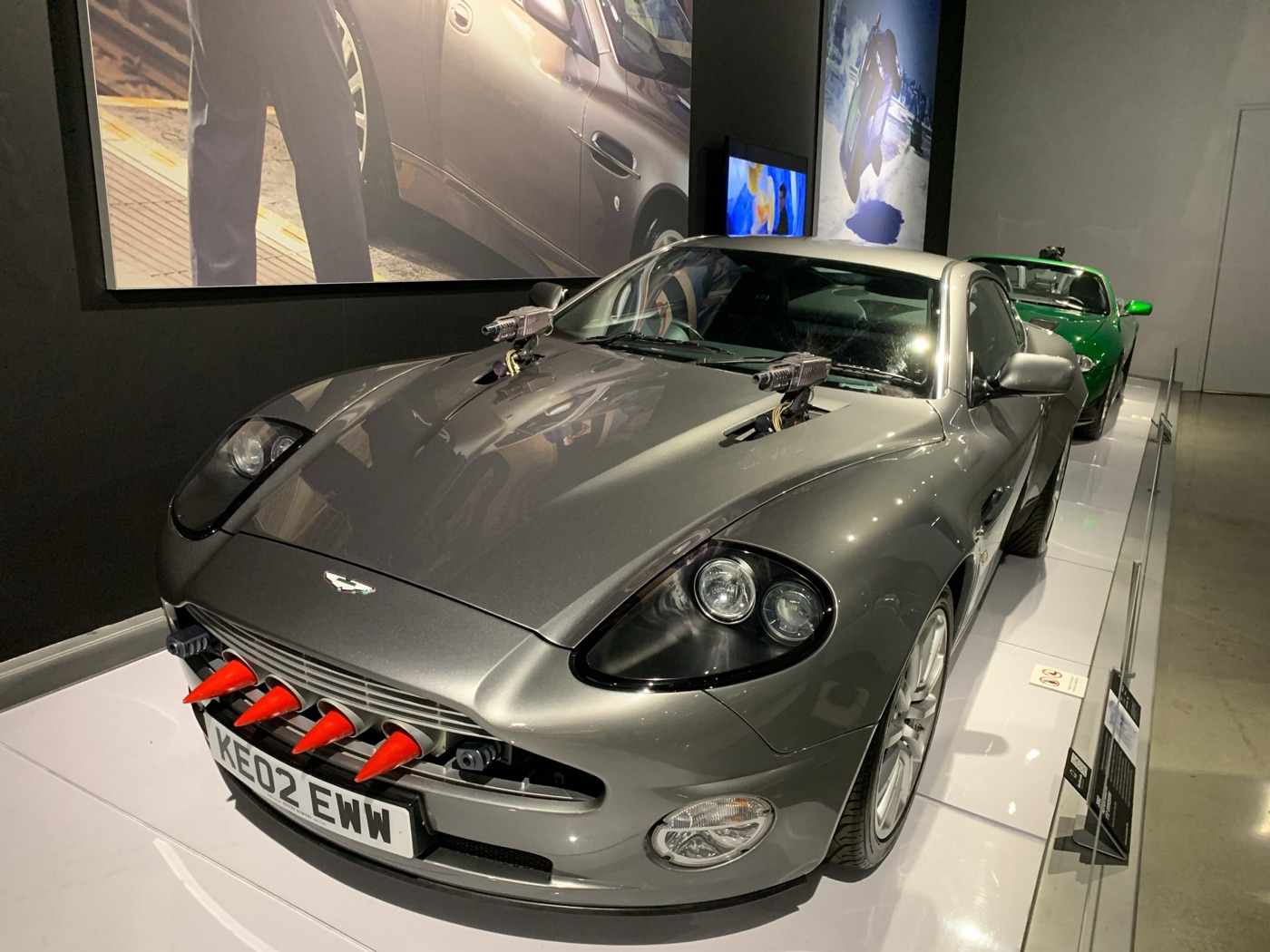
Die Another Day (2002) brought Aston Martin back for Bond. Its centrepiece is the duel on a frozen lake between Bond’s V12 Vanquish and Zao’s green Jaguar XKR, filmed on the Jökulsárlón lagoon in Iceland in March 2002, according to EON’s Vanquish page, which says no one had raced cars there before. Arnold told SkiddMark in 2010 that the film’s excess set the sound: “there were space lasers, melting ice hotels and invisible cars, it felt appropriate to match that with a level of non-traditional orchestral approaches to the music.” The Warner Bros. soundtrack album includes “Hovercraft Chase”, “Whiteout” and “Iced Inc.” (MusicBrainz).
Casino Royale: Daniel Craig and the DBS
With Casino Royale (2006) David Arnold dropped most of the electronics. “Once we got back to Casino Royale, there were very little electronic elements because it felt like it needed to be more organic and earthy and less I guess showy in a way, because the movie and specifically Daniel was like that,” he told SkiddMark in 2010. He read the script before anyone had been cast, he told Yahoo Movies UK in 2021: “for the first time, I’ve read a James Bond script that I was going to be writing music for, not knowing who James Bond looked like.” The full James Bond Theme is held back until the end of the film (NME, 2026), and the album closes on it as “The Name’s Bond… James Bond”.
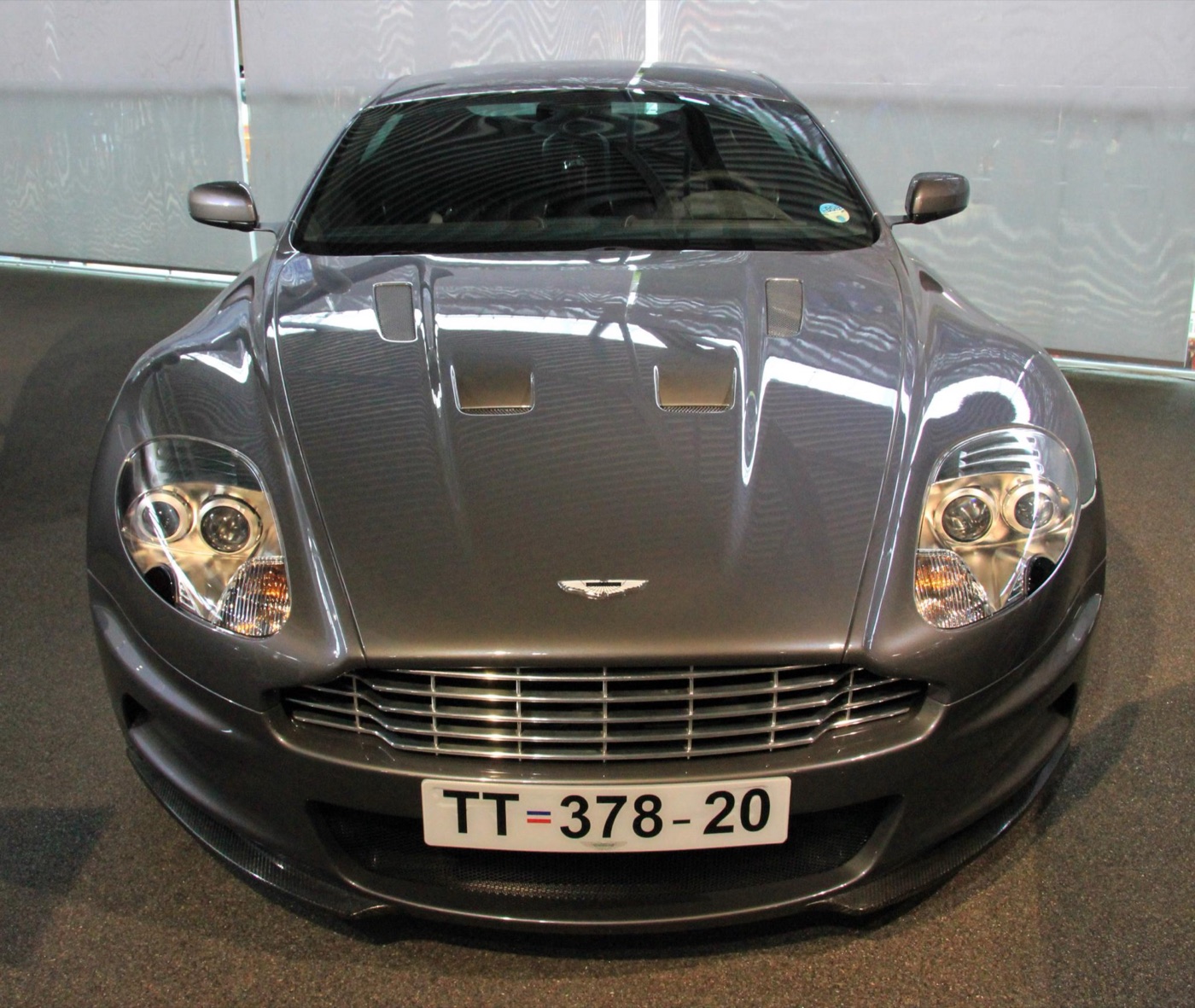
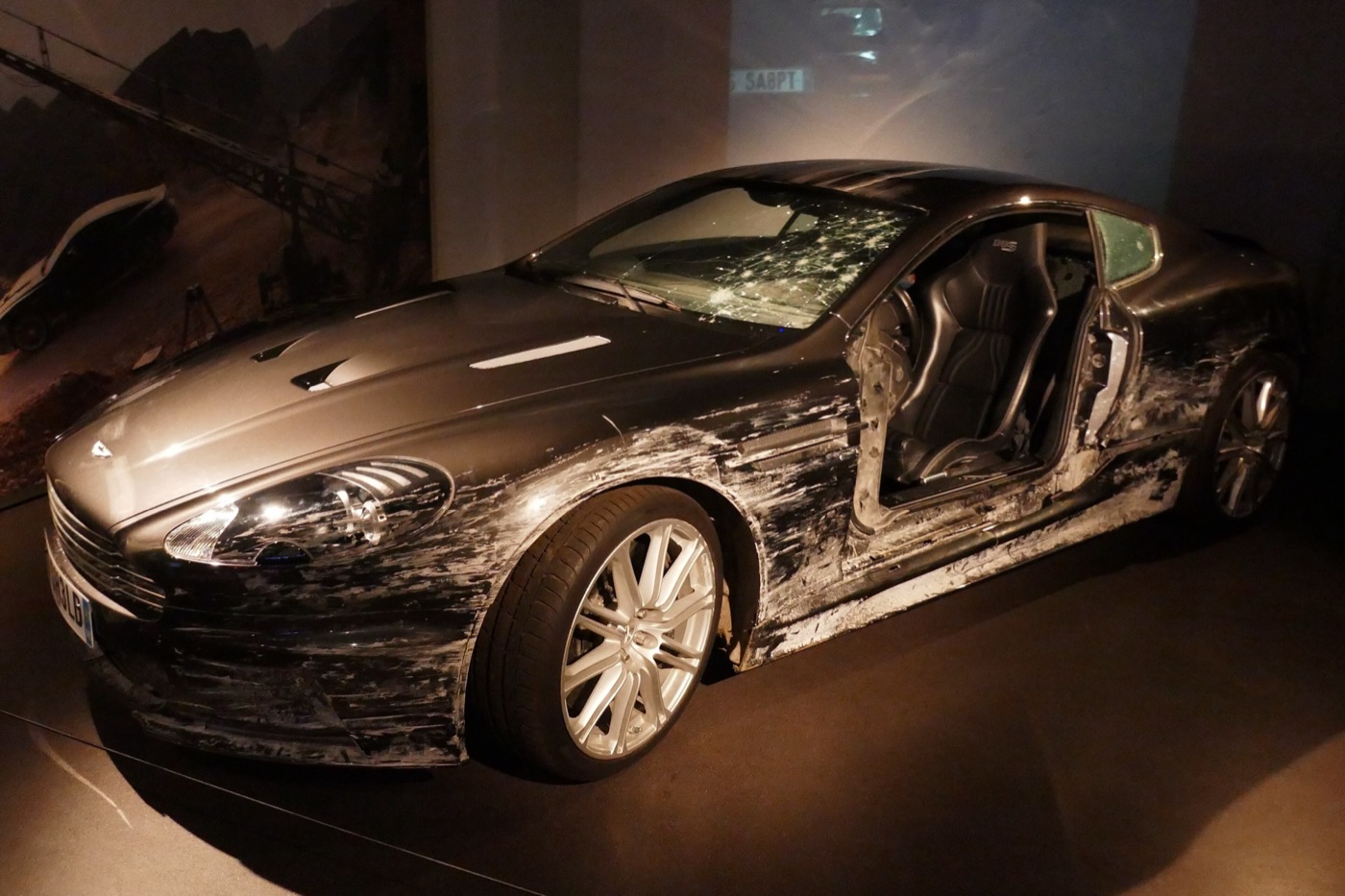
The cars have their own cues on the Sony Classical album: “Aston Montenegro” and “The End of an Aston Martin” (MusicBrainz). The second is the crash in which the DBS rolls seven times, a Guinness World Record for cannon rolls in a car set by the stuntman Adam Kirley at Millbrook Proving Ground, according to EON’s Casino Royale page.
The Lake Garda chase in Quantum of Solace
Quantum of Solace (2008) opens in the middle of a car chase: Bond’s DBS, with Mr White in the boot, running from Lake Garda towards Siena with Alfa Romeo 159s behind it, as Christie’s catalogue for one of the seven DBS cars describes it. Arnold’s cue for it, “Time to Get Out”, is the first track on the J Records soundtrack album (MusicBrainz). For the film’s Bolivian scenes he used traditional Bolivian instruments, as he had used African percussion for the opening chase of Casino Royale (SkiddMark, 2010). Looking back in 2021, David Arnold said that by his fifth Bond film he had “gotten better at leaving some air in the music”.
How David Arnold scores a Bond car chase
David Arnold scores a chase a section at a time, against a tempo map of the edited scene, then rewrites it every time the editors recut. He described the method to SkiddMark in 2010 using the 2008 film’s opening chase, a sequence of three to four minutes. First come the decisions about feeling: where the music starts and ends, which moments should carry dread, anticipation or excitement, and whether the Bond theme should play. “Is this a Bond moment? Do we hear the Bond theme here?”
Then the craft. He loads the scene into a computer, marks out tempo maps (“how fast do we go in order to get to here?”) and writes a synthetic version first, “from the start up to the point where the first bad guy gets dispatched, that kind of thing”. When the cut changes, a little faster at the start or slower at the end, the cue is redone. Scenes can change a great deal: the foot chase that opens Casino Royale was 11 minutes long when he first received it and seven and a half in the finished film. He plays the producers everything before it is recorded, and said Broccoli and Wilson “certainly don’t… tell me what notes to change”.
Asked in the same interview how he would score a car advert for Ferrari, he said the last thing he would talk about was which instruments to use; he would start with how the maker wanted people to feel about the car. He added that he “might also have to ask them to give me one, you know, just so I could get used to it.”
David Arnold’s music and cars away from Bond
David Arnold scored 2 Fast 2 Furious (2003), the second film of the street-racing series, for John Singleton (Box Office Mojo credits), and his Bond cues have turned up on car television. In 2010 he told SkiddMark it was “lovely” to hear “Time to Get Out” used in Top Gear’s Renault Twingo film, Jeremy Clarkson’s road test in series 14, episode 4 (Top Gear’s clip, published March 2010). His explanation: “when you’re driving one of those cars on Top Gear, that’s the person you feel like, James Bond… if you’re trying to say that about a car, then music is usually the best way to do it.”
Made in Dagenham
Made in Dagenham (2010) is the story of the sewing machinists at Ford’s Dagenham plant who walked out for equal treatment, and Arnold scored it the same year as Morning Glory (Film Music Reporter, February 2010). He called it “a car related movie for you” when he spoke to SkiddMark in 2010, and dated the strike to 1969; the strike in fact began on 7 June 1968, when 187 women walked out of the plant, according to The National Archives. The women made seat covers. In 2014 he wrote the music for the stage musical of Made in Dagenham, with lyrics by Richard Thomas and a book by Richard Bean, which played the Adelphi Theatre in London with Gemma Arterton as Rita O’Grady (Official London Theatre).
Did David Arnold write the James Bond theme?
No. The James Bond Theme was written by Monty Norman for Dr. No (1962) and arranged by John Barry, and Arnold uses it in his scores as every Bond composer does. He told Yahoo Movies UK in 2021 that Barry’s arrangement “is the thing that started it all really”, and on the long dispute over who wrote it: “Monty wrote it… In that case, Monty had the ingredients, and John was the chef.” He also said he and Barry, who became a friend after George Martin introduced them at Air Studios during the Shaken and Stirred sessions (MI6-HQ, 2014), never really talked about Bond music: “it’s like sausages: you shouldn’t find out how they’re made.” After Barry’s death in 2011, Arnold produced his memorial concert at the Royal Albert Hall (Classic FM, 2012).
Why didn’t David Arnold score Skyfall?
David Arnold did not score Skyfall (2012) because its director, Sam Mendes, brought his regular composer, Thomas Newman, who had scored four of Mendes’s films. Michael G. Wilson and Barbara Broccoli announced Newman in January 2012, reuniting him with Mendes, as Classic FM reported; the same announcement said Arnold was music director of the London Olympic and Paralympic closing ceremonies and would stay involved with Bond’s 50th anniversary. Arnold said: “I’m a huge fan of Thomas Newman so I am as excited as anyone to see where Sam Mendes and his team take James Bond on his 50th anniversary.”
Two years earlier he had expected to do it. In 2010, with Bond 23 suspended by MGM’s money troubles, he told SkiddMark he would “be surprised if I wasn’t” asked, while reminding the producers he did not expect to be asked every time. Newman also scored Spectre (2015), as Film Music Reporter reported in December 2014, and Hans Zimmer scored No Time to Die (2021). Arnold told Empire in May 2026: “If I got asked, I’d do another one. But the chances of those things lining up are so rare.”
Sherlock, Little Britain and television
David Arnold scored Sherlock with Michael Price. The pair won the 2014 Emmy for Outstanding Music Composition for a Miniseries, Movie or a Special for “His Last Vow”, after nominations for “A Study in Pink” (2011) and “A Scandal in Belgravia” (2012), according to the Television Academy’s records. He also wrote the music for Little Britain; he told RTÉ he had wanted “a national anthem for the people who are in that show”, played by “great musicians but not enough of them for it to sound like it should”. Two further Emmy nominations came for Good Omens in 2019, for its score and its main title theme.
London 2012 and the concert hall
David Arnold was music director of the closing ceremonies of the London 2012 Olympic and Paralympic Games. The Olympic closing ceremony, titled A Symphony of British Music, had more than 4,100 performers, and before it Arnold told the Telegraph it would be “slightly anarchic, slightly mischievous, funny, heart-warming, emotional, inspiring, and uniquely British”, as quoted by the Recording Academy.
David Arnold also produces records: in 2009 he made an album with Shirley Bassey and a show with her for the BBC’s Electric Proms (SkiddMark, 2010).
In 2010 he told SkiddMark he was due to conduct an evening of film music, with pieces from his Bond scores, with the Royal Philharmonic Orchestra at the Royal Albert Hall on 14 May that year. On 4 October 2022 he played guitar at The Sound of 007 at the same hall, the 60th-anniversary concert of Dr. No’s premiere, where Shirley Bassey opened with “Diamonds Are Forever” and “Goldfinger”, Lulu and Garbage sang their Bond songs, and Hans Zimmer joined Arnold and the Royal Philharmonic Concert Orchestra for a No Time to Die suite, as MI6-HQ reported.
007 First Light and Bond music since 2008
David Arnold’s most recent Bond work is “First Light”, the theme song of IO Interactive’s game 007 First Light, released in May 2026, which he co-wrote with Lana Del Rey. Broccoli pitched the game to him, he told NME, and he said yes because “it was the opportunity to write an official Bond theme. I’ve never tired of doing that.” He took the lyric about “running towards the sun” from Ian Fleming’s books, and he and Del Rey, who had pitched a song for Spectre, finished the track over Zoom. To Empire he described the song’s gentle verses breaking into brass: “what is best described as musical violence. When the brass comes in, it’s like something’s kicked off. They call them stabs for a reason.”
Questions
Which James Bond songs did David Arnold write?
He wrote the music of “The World Is Not Enough” (1999), sung by Garbage with lyrics by Don Black, and co-wrote “You Know My Name” (2006) with Chris Cornell. His “Surrender”, sung by k.d. lang, plays over the end credits of Tomorrow Never Dies, and in 2026 he co-wrote “First Light” for the game 007 First Light with Lana Del Rey.
Did David Arnold score No Time to Die?
No. Hans Zimmer scored No Time to Die (2021), and Thomas Newman scored Skyfall and Spectre. Arnold’s last Bond film score is Quantum of Solace (2008).
What did David Arnold win a Grammy for?
For Independence Day (1996): the Grammy for Best Instrumental Composition Written for a Motion Picture or for Television at the 39th Grammy Awards.
Did David Arnold write the music for Sherlock?
Yes, with Michael Price. The pair won the 2014 Emmy for Outstanding Music Composition for a Miniseries, Movie or a Special for the episode “His Last Vow”.
Where is David Arnold from?
Luton, in Bedfordshire, where he was born in January 1962 and scored the student films of Danny Cannon, a friend from college, before Cannon’s first feature, The Young Americans (1993).
Which David Arnold music did Top Gear use?
Among others, “Time to Get Out”, his cue for the Aston Martin DBS chase that opens Quantum of Solace, which played in Jeremy Clarkson’s Renault Twingo road test in series 14 (2010).
Sources
- EON Productions, 007.com film pages for Tomorrow Never Dies, The World Is Not Enough, Die Another Day, Casino Royale and Quantum of Solace: release dates, directors, vehicles, title songs, Barry’s recommendation, the seven-roll DBS record.
- EON Productions, 007.com, Aston Martin V12 Vanquish: the Jökulsárlón ice chase, March 2002.
- Box Office Mojo, worldwide grosses for Tomorrow Never Dies, The World Is Not Enough, Die Another Day, Casino Royale and Quantum of Solace; composer credits for Stargate, Independence Day, Godzilla, 2 Fast 2 Furious, Hot Fuzz and Made in Dagenham.
- MusicBrainz, soundtrack releases: Tomorrow Never Dies (A&M, 1997), The World Is Not Enough (MCA, 1999), Die Another Day (Warner Bros., 2002), Casino Royale (Sony Classical, 2006), Quantum of Solace (J Records, 2008); “Another Way to Die” work record: track titles and song credits.
- SkiddMark, interview with David Arnold, 9 August 2010: how he got the job, the BMW and techno, the chase method, the cut-down foot chase, Top Gear, the Ferrari answer, Bond 23, Made in Dagenham, the planned May 2010 Royal Albert Hall concert, the Bassey record.
- MI6-HQ, report of David Arnold’s BFI Screen Epiphany talk, January 2014: born January 1962 (52nd birthday that month), Luton British Legion screening, Shaken and Stirred history, the car-park temp track, meeting Barry.
- RTÉ, interview with David Arnold, 18 May 2017: Danny Cannon, “Play Dead”, Emmerich, MGM, Little Britain.
- Yahoo Movies UK, “James Bond composer David Arnold shares his favourite 007 music moments”, 17 September 2021: the BMW scene, Diana’s funeral, Casino Royale script, the Norman and Barry theme, Barry’s eleven scores.
- Official Charts Company, “Play Dead” and Shaken and Stirred: chart peaks 12 and 11.
- Recording Academy, 39th Grammy Awards: Independence Day win; “Olympic-sized spectacle”, August 2012: closing ceremony performers and Arnold’s Telegraph quote.
- Television Academy, David Arnold and Michael Price award records: Sherlock and Good Omens.
- Classic FM, “Thomas Newman confirmed as new Bond composer”, January 2012: Skyfall announcement, the closing ceremonies, the Barry memorial concert.
- Christie’s, lot 5601812, Aston Martin DBS from Quantum of Solace, 50 Years of James Bond auction, 2012: the Lake Garda chase.
- Top Gear, “Jeremy Clarkson drives the Twingo, part 3/3 (Series 14, Episode 4)”, 30 March 2010.
- Film Music Reporter, “David Arnold to score Morning Glory”, 26 February 2010; “Thomas Newman to score 24th James Bond film Spectre”, 4 December 2014.
- MI6-HQ, report of The Sound of 007 concert, 4 October 2022: the line-up.
- The National Archives, “Letter by the women workers at Fords of Dagenham”: the strike of 7 June 1968.
- Official London Theatre, Made in Dagenham: the 2014 musical.
- NME, “Inside Lana Del Rey’s era-defining James Bond theme song ‘First Light’”, May 2026; Empire, “James Bond composer David Arnold wanted to bring ‘musical violence’ to Lana Del Rey’s new 007 song”, May 2026.