De Tomaso: the Modena maker of the Pantera, from Vallelunga to P72
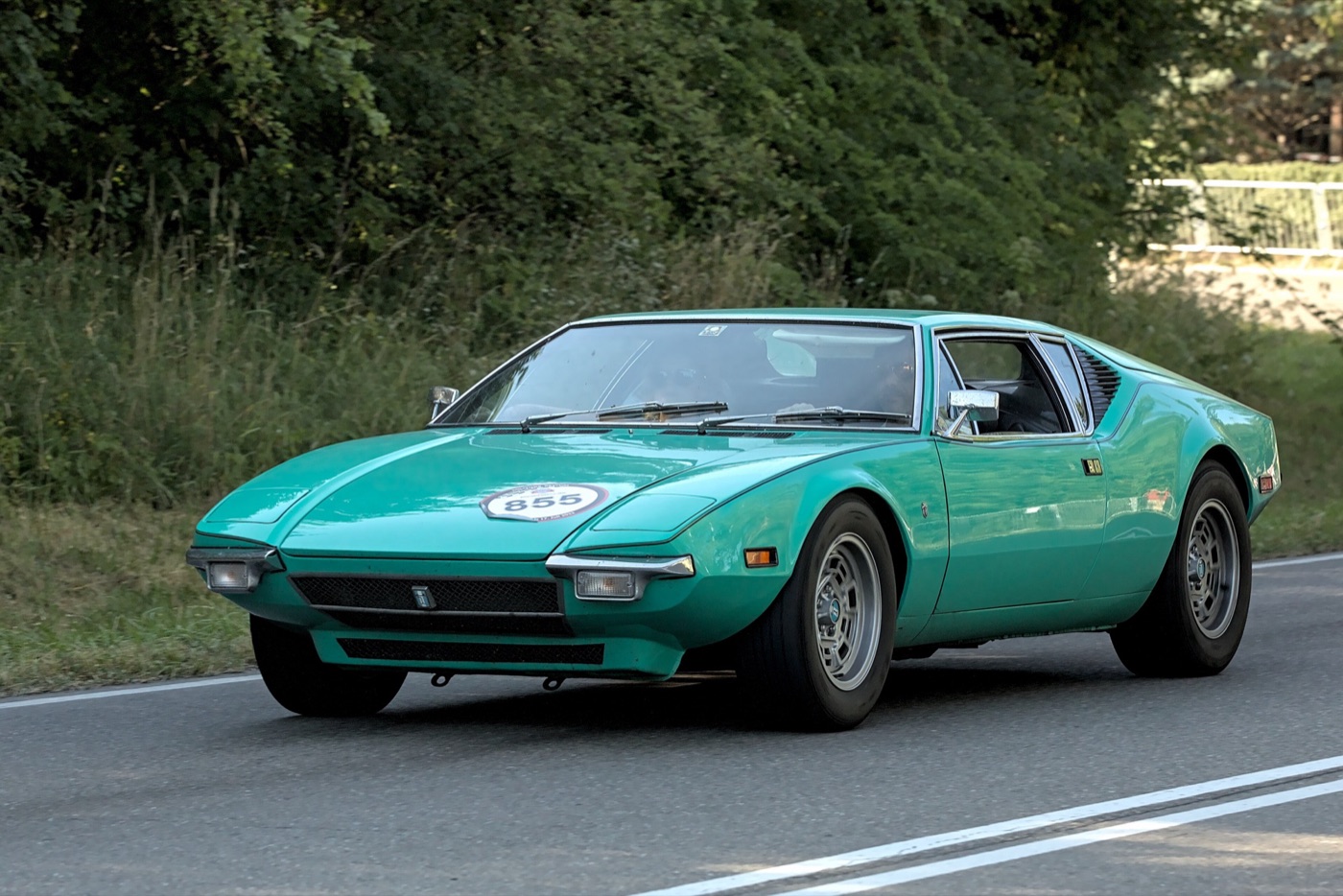
De Tomaso is the Italian sports car maker that the Argentine racing driver Alejandro de Tomaso founded in Modena in 1959. It is best known for the Pantera, a mid-engined coupé with a Ford V8 that Ford’s Lincoln-Mercury dealers sold in the United States from 1971; 7,260 were built. The original company went into liquidation in 2004, a 2009 revival under Gian Mario Rossignolo ended in bankruptcy and criminal convictions, and the name now belongs to a company led by Norman Choi, which delivered the first customer P72 in June 2026.
Who founded De Tomaso?
Alejandro de Tomaso founded the company in Modena in 1959 with his American wife, Isabelle Haskell, after four years racing in Italy. The Independent’s obituary records that he was born in Buenos Aires, Argentina, on 10 July 1928, the son of a socialist politician and landowner who died when Alejandro was five, and that he left school at 15 to run the family estate. He drove a truck, published an anti-Peronist newspaper and raced an old Bugatti, then finished seventh in a Maserati in the 1955 Buenos Aires 1,000km before moving to Italy that year.
He settled first in Bologna, where, by the company’s account, he became a test driver for OSCA, the firm founded by the Maserati brothers, and the Independent says he won the Index of Performance at Le Mans in an OSCA. There he met Isabelle Haskell, a racing driver herself and, the company says, a granddaughter of William C. Durant, one of the founders of General Motors. They married in 1957, and her family’s money later paid for his purchase of the coachbuilder Ghia.
What does the De Tomaso badge mean?
The badge is a blue and white Argentine flag turned on its side with a black mark in front. The factory’s own website in 2001 explained that the mark is the iron used to brand horses on his mother’s estancia near the Andes, and that it “does not really stand for a T”. The Deauville and the Longchamp wore the brand mark without the flag.
Racing cars and Formula One
De Tomaso built racing cars before it built road cars, and it entered Formula One between 1961 and 1970. The factory’s history of its 1960s racing lists a 750cc OSCA-engined car at the 1959 Sebring 12 Hours, Formula Junior cars from 1960, and six 1.5-litre Grand Prix cars in 1961, some with OSCA engines and some with Alfa Romeo engines, for Count Volpi’s Scuderia Serenissima and Scuderia Settecolli of Rome. In 1962 one car at the Italian Grand Prix had De Tomaso’s own flat-eight engine, the F1-801; it failed in practice.
The 1970 car and Piers Courage
For 1970 De Tomaso built a Formula One car for Frank Williams’s team, designed by Giampaolo Dallara and fitted with a bought-in Ford Cosworth DFV V8. The factory’s Formula One history dates its debut to Kyalami on 7 March 1970. At Zandvoort on 21 June, Piers Courage left the track on lap 22 of the Dutch Grand Prix and the car caught fire; he died almost at once, and the factory account blames the magnesium parts that burned. Brian Redman and Tim Schenken drove the car for the rest of the season, and the partnership ended with the year.
| Grand Prix | Driver | Laps | Result |
|---|---|---|---|
| South Africa | Piers Courage | 39 | Retired |
| Monaco | Piers Courage | 58 | Not classified (22 laps down) |
| Belgium | Piers Courage | 4 | Retired |
| Netherlands | Piers Courage | 22 | Fatal accident |
| Austria | Tim Schenken | 25 | Retired |
| Italy | Tim Schenken | 17 | Retired |
| Canada | Tim Schenken | 79 | Not classified (11 laps down) |
| United States | Tim Schenken | 61 | Retired |
Source: Formula1.com race results, 1970. Races where the car did not start or qualify are left out.
Vallelunga: the first De Tomaso road car
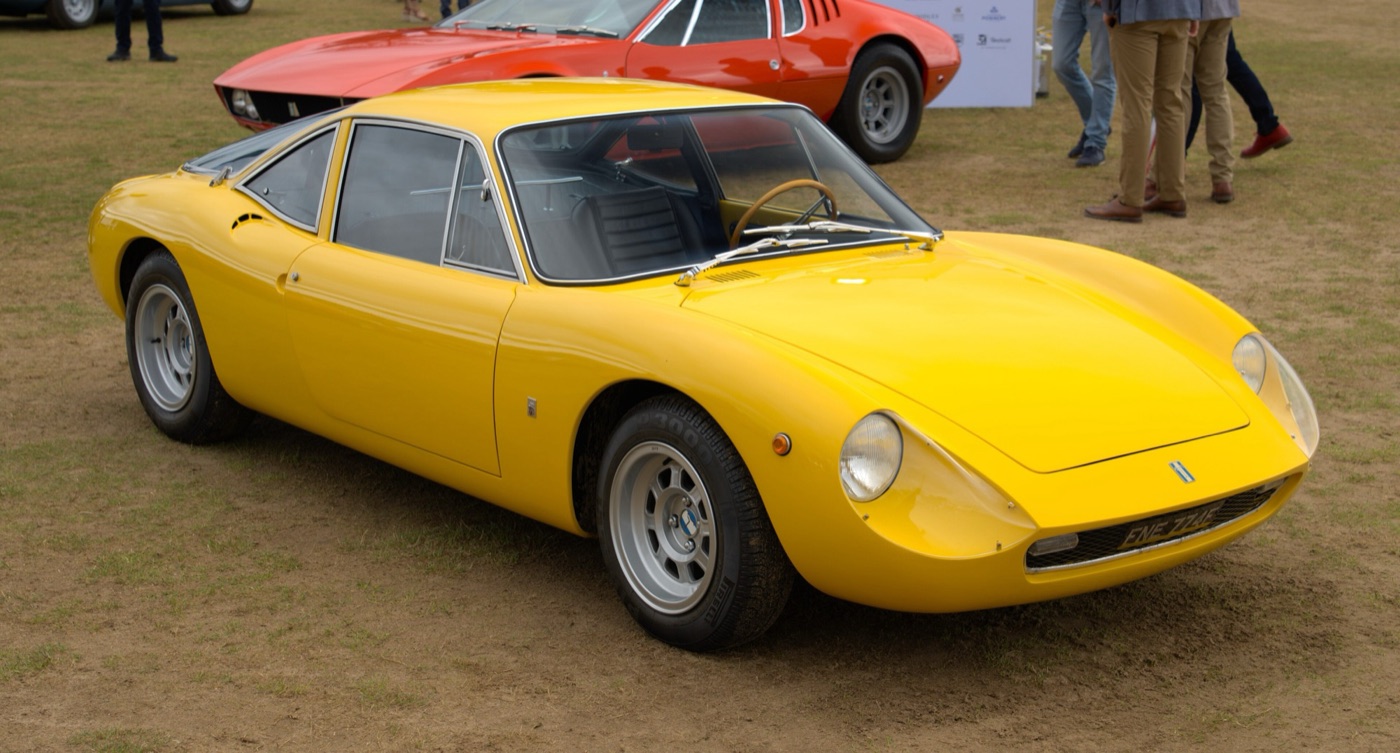
The Vallelunga was De Tomaso’s first road car: a small mid-engined coupé on a steel backbone chassis, first shown as an open car at the 1963 Turin show. The factory’s Vallelunga page says the first three bodies were aluminium, built by Fissore, before the contract went to Ghia in Turin, which made them in glassfibre. The engine was the 1.5-litre four from the Ford Cortina, with 104hp and tuning to 135hp, and the gearbox a Volkswagen unit converted to five speeds by De Tomaso.
Production was slow. De Tomaso never built the 50 cars in a year that the FIA needed to homologate it as a production car, and the factory counts 56 in all, the same figure as the Independent. One was shown at the Museum of Modern Art in New York.
The P70 and the Mangusta
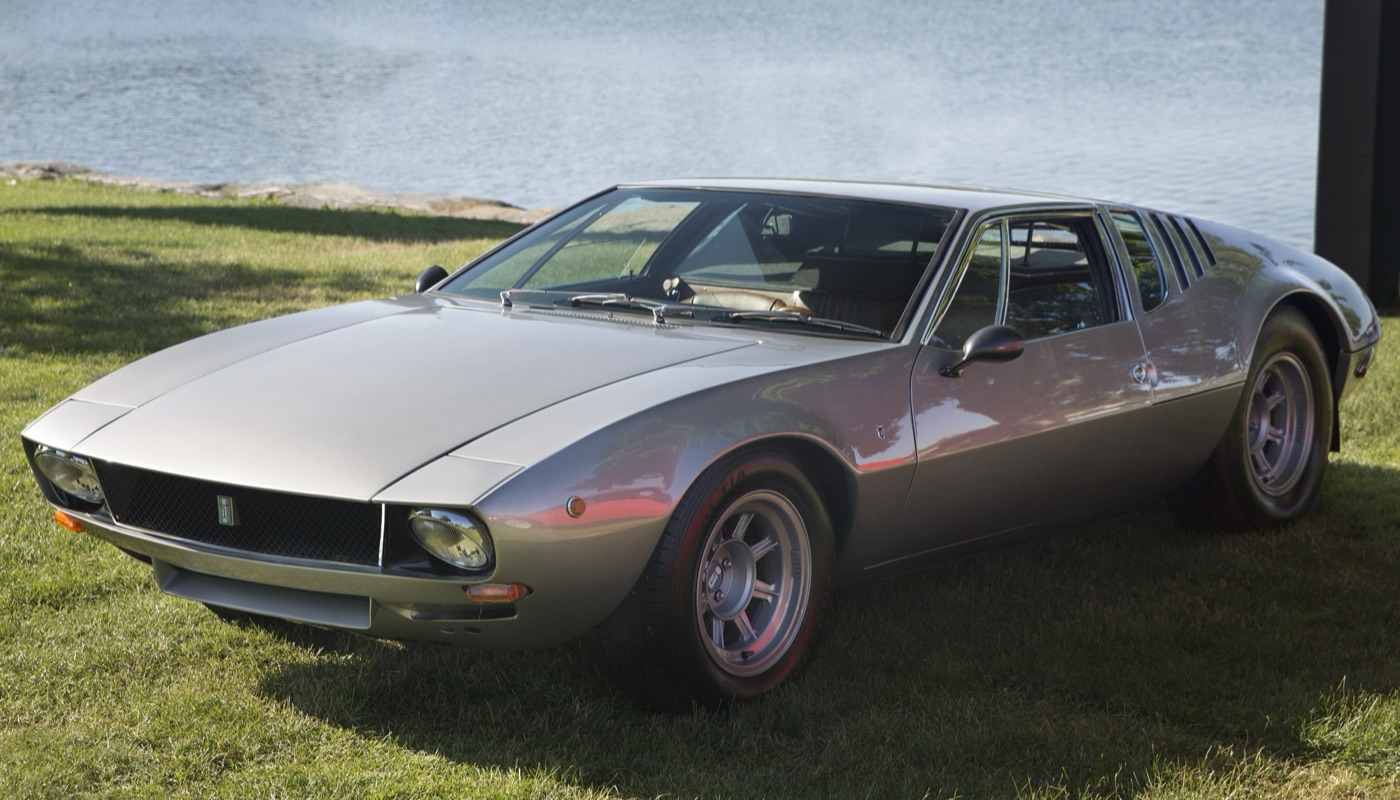
The Mangusta of 1966 was the first De Tomaso built in real numbers and the first with an American V8: a 4.7-litre Ford V8 engine in a backbone chassis, under a coupé body styled by Giorgetto Giugiaro at Ghia. It grew out of a racing car, the P70.
Carroll Shelby and the P70
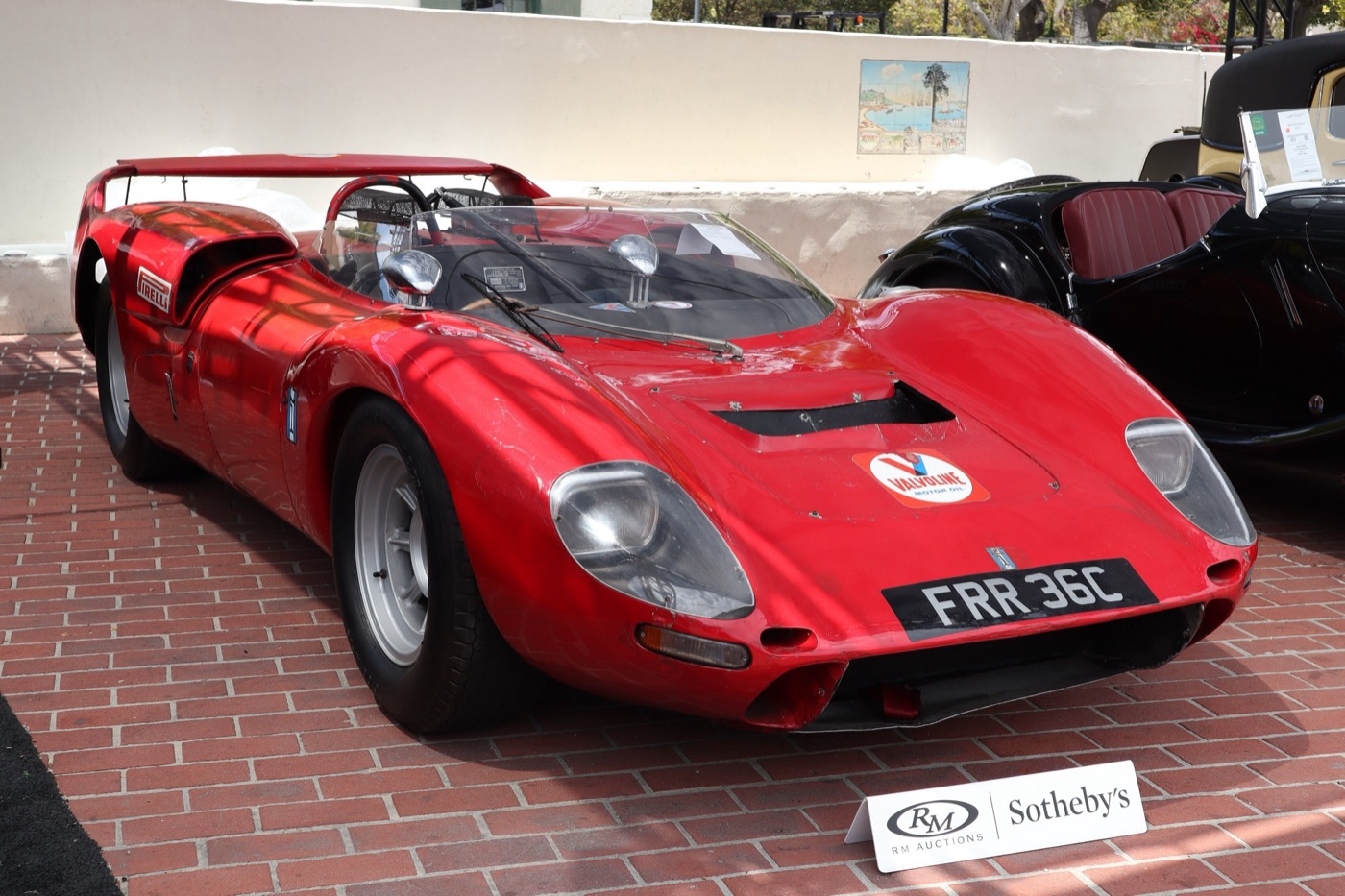
At the end of 1964 Carroll Shelby agreed to fund a De Tomaso sports-racing car with a big V8 and a body designed by Peter Brock. Road & Track’s 2019 account says De Tomaso fell behind with the engines and took offence when Shelby sent Brock to Modena to check the work, and Shelby pulled out to concentrate on the Ford GT40. Evo explains the name: P for prototype, 70 for the 7-litre V8 it was meant to have. The single finished car was shown as the Ghia De Tomaso Sport 5000 at the 1965 Turin show. Its chassis became the basis of the Mangusta.
Mangusta
The factory’s Mangusta page says the car was first shown in 1966, went into production in 1967 and reached 402 cars, 250 of them sold to American buyers. The name is Italian for mongoose, chosen, the factory says, because the mongoose is the one animal the cobra fears, and the Cobra was Shelby’s car. The factory gives 4,729cc and 250km/h (155mph). One car went to the General Motors vice-president Bill Mitchell with a Chevrolet engine, and he could not drive it because the seat was too small for him.
To build the Mangusta, de Tomaso bought the coachbuilder Ghia in 1967 with money from his brother-in-law’s New Jersey electronics company, Rowan, according to the Independent, and he became Ghia’s president. The same obituary describes the customer cars as under-developed, with “a terrible driving position and frightening handling”.
De Tomaso Pantera: the Ford years
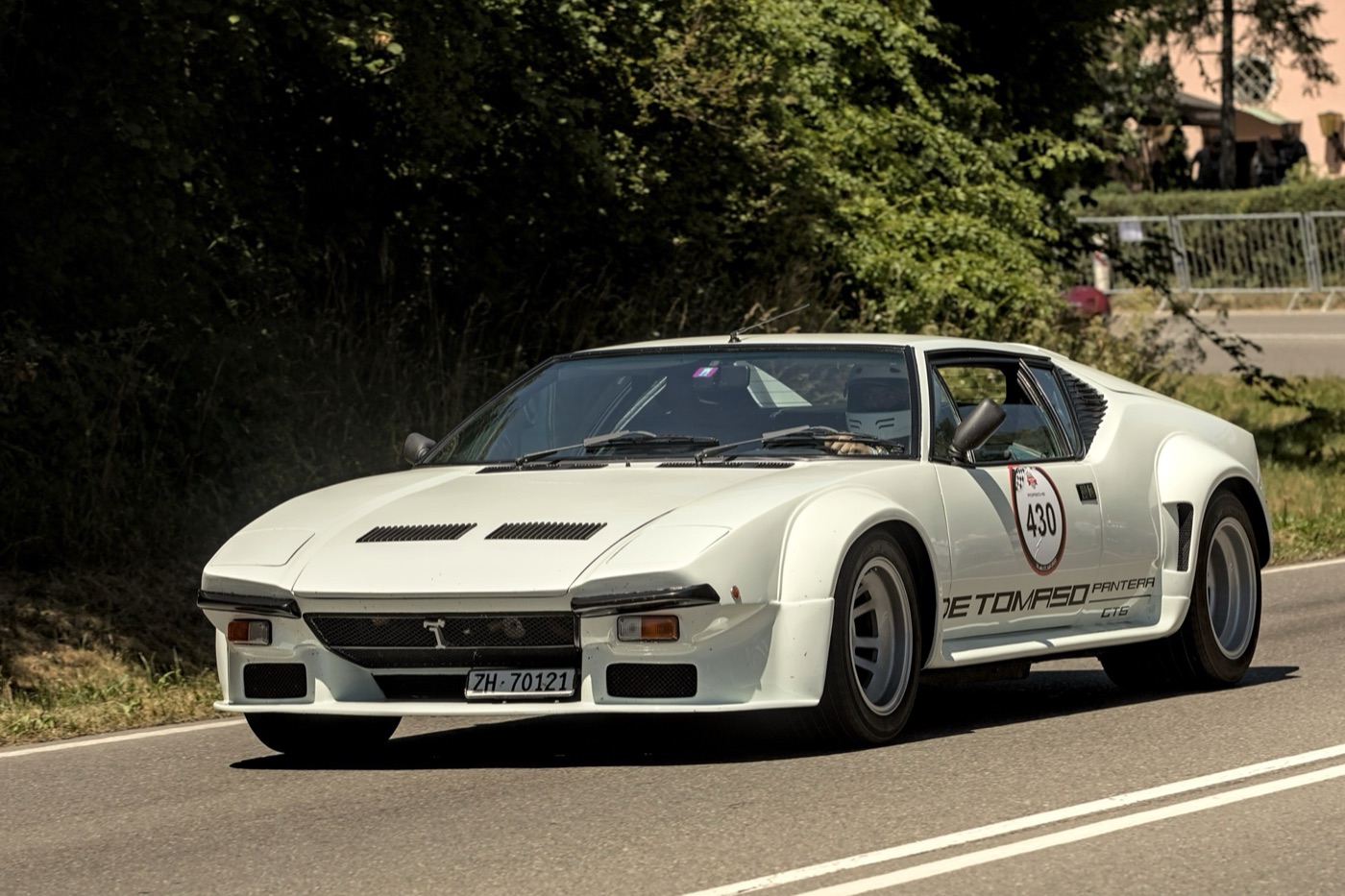
The Pantera (Italian for panther) was the Mangusta’s successor and the De Tomaso built in the largest numbers, 7,260: a unit-body coupé styled by Tom Tjaarda at Ghia, with Ford’s 5.8-litre 351 Cleveland V8 (310hp in Car and Driver’s 1971 test car) behind the cabin and a ZF five-speed transaxle. It was shown in 1970 and sold in the United States by Lincoln-Mercury dealers from 1971.
Why did Ford buy De Tomaso?
Ford wanted a mid-engined car to sell against the Chevrolet Corvette, and the factory’s 2001 history names Lee Iacocca and Henry Ford II as the people behind the deal. The Independent traces it back to Henry Ford II’s failed attempt to buy Ferrari, when Enzo Ferrari backed out at the last moment: in De Tomaso the Ford Motor Company saw another way to own an Italian sports car maker. The Independent says that by 1971 Ford had bought an 84 per cent stake in De Tomaso from Rowan, with de Tomaso keeping the rest; the De Tomaso Drivers Club gives June 1970 and 80 per cent of the Ghia, Vignale and De Tomaso shares. Ford kept Ghia when the two parted and, the Independent noted in 2003, had used the name on its own cars ever since.
Car and Driver’s road test of August 1971 priced the Pantera at about $10,000 and said Lincoln-Mercury meant to sell at least 2,500 in the first year. Its test car weighed 3,123lb with 59.1 per cent on the rear wheels, ran the quarter-mile in 14.0 seconds at 99.4mph and stopped from 80mph in 232 feet. The magazine praised the steering and complained about exhaust noise in the cabin, poor ventilation and the stitched dashboard covering, which it said looked like something from “a home-made car”.
The sources differ on when Ford stopped: Maxim says imports ended in 1975, the Independent says Ford dropped the car in 1973, and the De Tomaso Drivers Club dates the end of US exports to the 1974 model year. Of the 7,260 Panteras built, more than 5,000 were sold in North America, according to RM Sotheby’s 2019 catalogue. The Independent puts the break-up down to rust, overheating and the cost of meeting US emissions rules.
Why did Elvis Presley shoot his Pantera?
Elvis Presley fired at his yellow 1971 Pantera when it would not start. Hot Rod’s 2023 account says he drew the small revolver he carried in an ankle holster; one bullet hit the steering wheel and broke the windscreen on its way out, and another burst a tyre. He sold the car around 1976. Robert E. Petersen bought it in the late 1990s, and it is at the Petersen Automotive Museum in Los Angeles with the marked steering wheel still fitted.
The Pantera after Ford: GTS, GT5, GT5-S and Si
De Tomaso kept the right to sell the Pantera outside North America and built it in Modena, in small numbers and largely by hand, until the early 1990s. Later versions included the GTS, the luxury L (Lusso) and the wide-bodied GT5 and GT5-S; Maxim puts GT5-S production at 182 between 1985 and 1990. The last version, the 1990 Pantera Si, had new styling by Marcello Gandini and a fuel-injected 4.9-litre Ford V8; RM Sotheby’s counts 41 built, two crash-tested and one kept for the De Tomaso museum, so 38 reached customers. The factory’s 2001 figure for the whole run is 7,260 cars built between 1970 and 1991.
Deauville and Longchamp: the front-engined De Tomasos
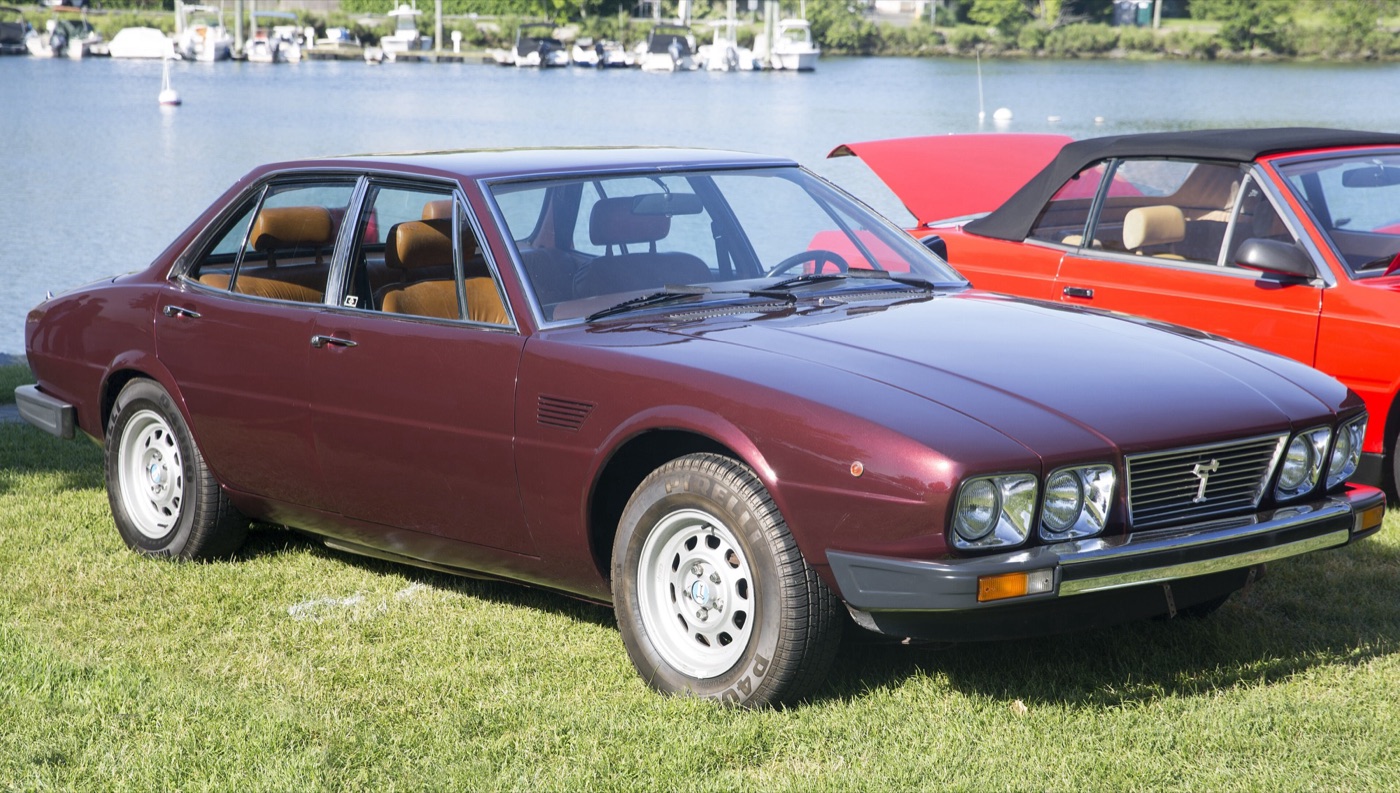
De Tomaso also built two front-engined luxury cars with the Pantera’s 5.8-litre Ford V8: the Deauville four-door saloon of 1970 and the Longchamp coupé of 1972. Both took the names of French racecourses, chosen, the factory says, for the Haskell family’s love of horse racing.
The factory’s Deauville page names the Jaguar XJ as its target and gives 300hp. When journalists came to Modena for the launch in November 1970 the car was late; de Tomaso arrived in it, saying he had left Rome two hours earlier, and showed them the motorway receipt. Ford costed a US version with a Maverick V8 and dropped it when the Pantera arrived, and 244 Deauvilles were built up to 1985, the last an estate for Isabelle Haskell, who used it to carry her dogs.
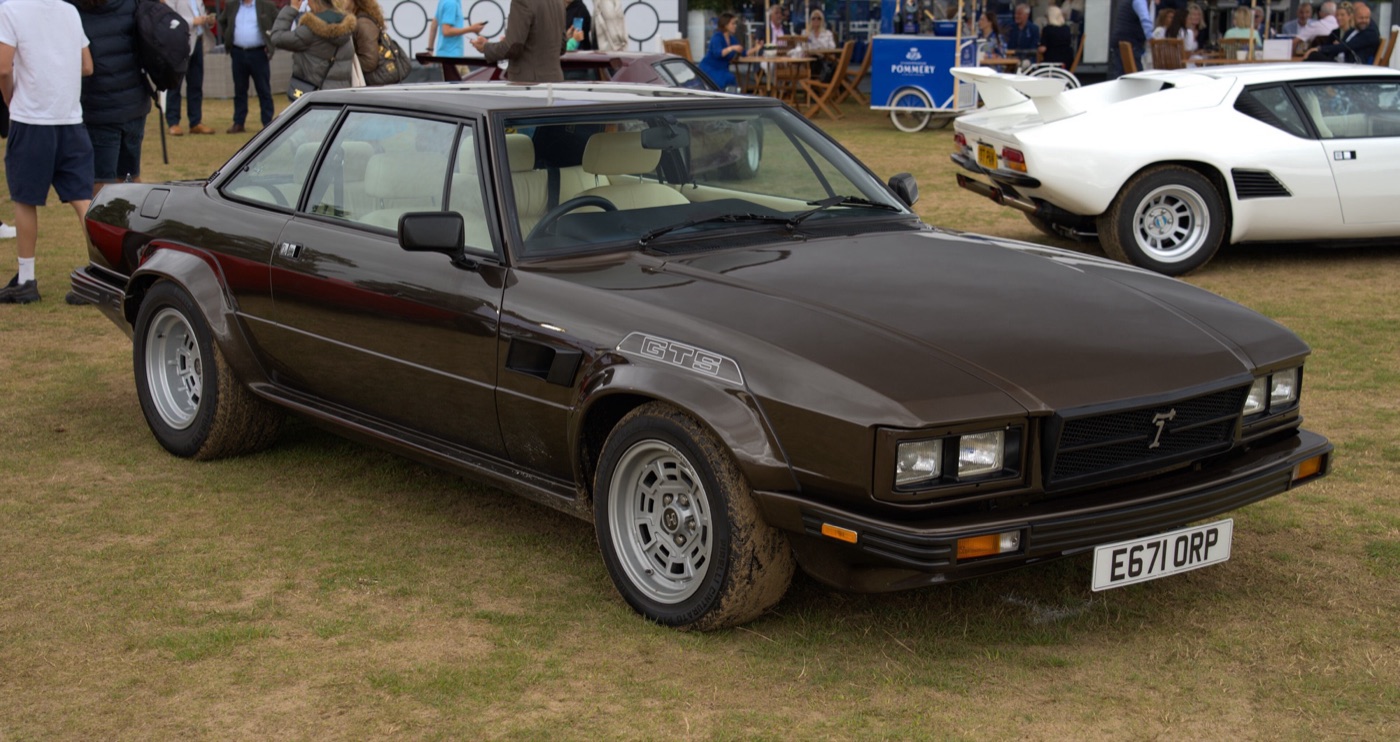
The Longchamp used the Deauville’s chassis under a two-door body. The factory’s Longchamp page gives 240km/h and counts 409 built, 395 coupés and 14 spyders, including the later GTS with wider arches. The Independent notes that Charles and Maurice Saatchi were among the British owners of these cars.
Maserati, Innocenti and the De Tomaso group
From the early 1970s Alejandro de Tomaso ran a group of failing Italian vehicle makers, often for GEPI, an Italian government agency set up to save jobs by turning round bankrupt companies. The Independent lists Benelli and Moto Guzzi motorcycles in 1972, Maserati and then British Leyland’s Italian arm, Innocenti. It dates Maserati to 1974; the current De Tomaso company and Autocar in 2019 give 1975, and both date its sale to Fiat to 1993.
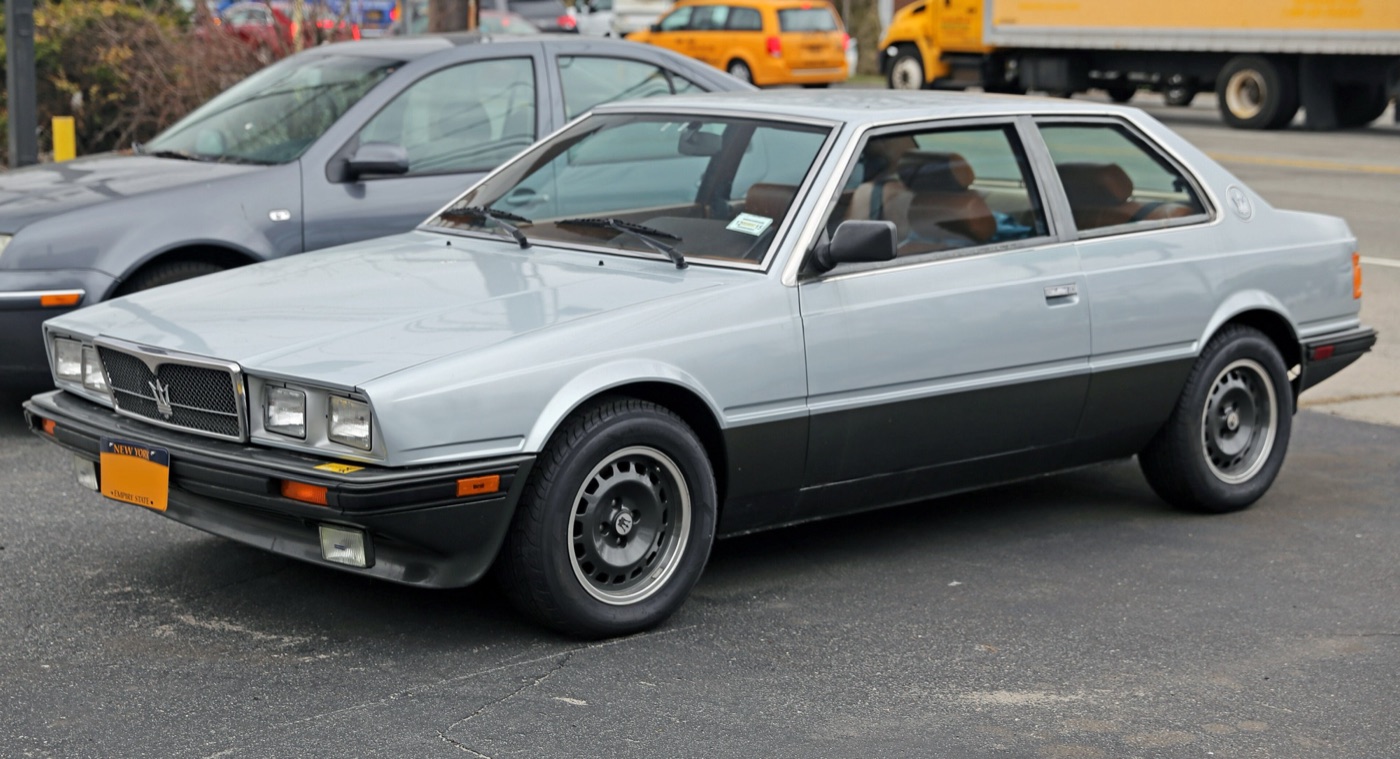
At Maserati he launched the Biturbo in 1981, a twin-turbo V6 saloon and coupé meant to sell against the BMW 3 Series. The Independent says it sold well in the United States at first and then suffered from poor build quality and the group’s shortage of capital. At Innocenti, in the early 1980s, he fitted Daihatsu three-cylinder engines to the Mini-based small cars while Fiat was campaigning against Japanese imports.
A stroke in 1993 left de Tomaso in a wheelchair and at first unable to speak. He sold Maserati to Fiat soon after, and day-to-day running of De Tomaso was handed over; by 2001 his son Santiago was signing the company’s agreements.
The Guarà and the end of the original company
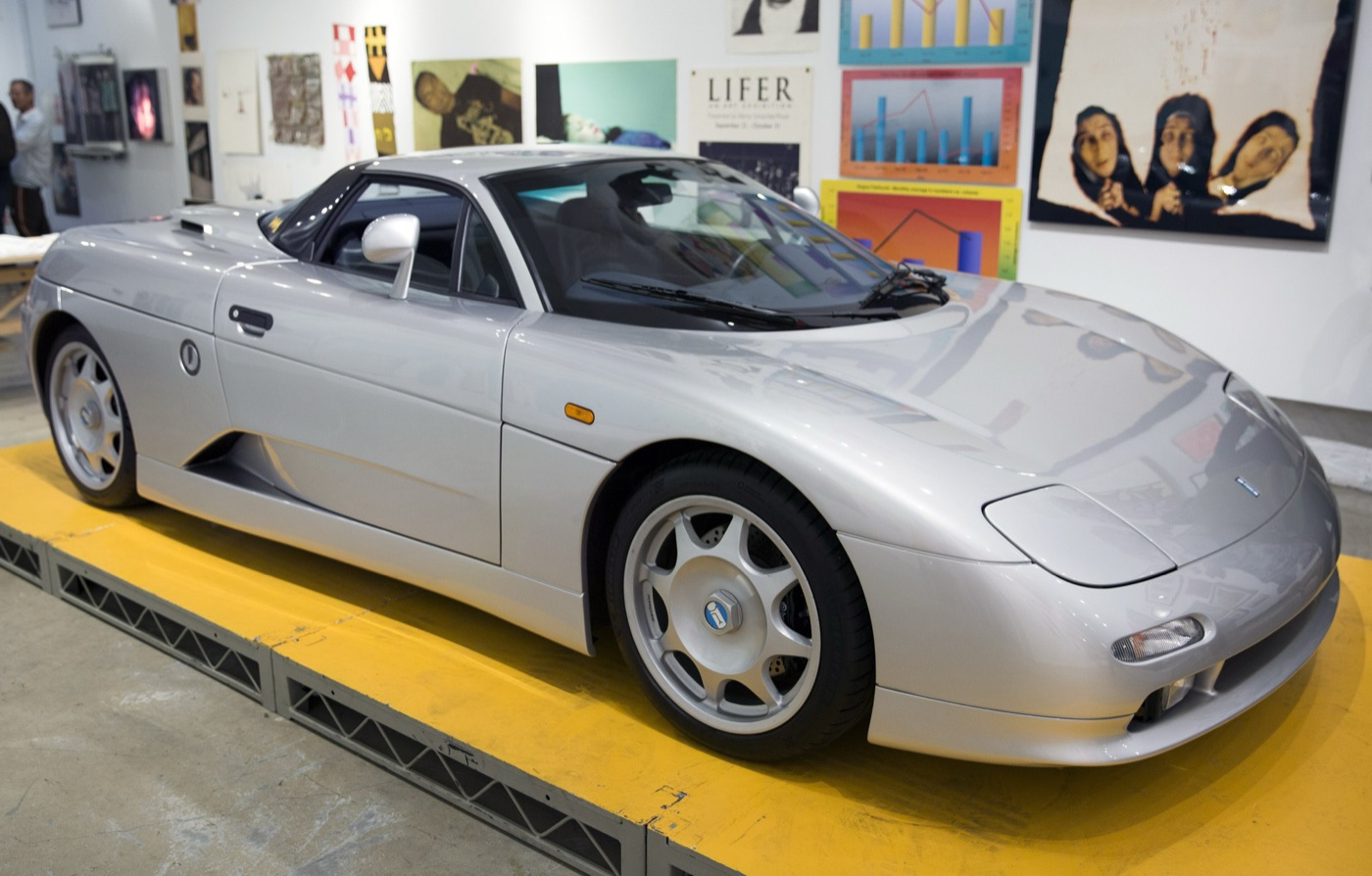
The Pantera’s successor was the Guarà, a mid-engined car built as a coupé and an open barchetta, the last new model of the original company. The factory’s website called it “an authentic De Tomaso vehicle” in 2002, when its parts catalogue was still on the site.
The Biguà and Kjell Qvale
The Biguà was a Gandini-styled convertible with a Ford engine that De Tomaso lost to its American partner after the two fell out. The Drive’s 2017 history of the car says de Tomaso developed it with the Norwegian-American importer Kjell Qvale and his son Bruce, using the 4.6-litre, 320hp V8 of the Ford SVT Mustang Cobra and a “roto-top” roof that made it a coupé, targa or convertible. After the falling-out the Qvales built it themselves in Modena from late 1999 under their own name, calling it the Mangusta after the 1960s car, and made 284 before selling the production assets to Britain’s MG Rover.
Liquidation in 2004
The last big project was a 4x4. The factory announced in 2001 that Santiago de Tomaso had signed with the Russian maker UAZ to sell a European version of its off-roader, the Simbir, with a VM diesel and an Italian gearbox and transmission, and forecast 20,000 vehicles in five years. Alejandro de Tomaso died in Modena on 21 May 2003. A year after his death, at the end of May 2004, a shareholders’ meeting put De Tomaso Modena into liquidation, Italiaspeed reported. Isabelle Haskell ratified the decision. The Simbir was then due to go into production the following year at a new factory in Calabria.
Rossignolo’s De Tomaso revival and collapse
The first revival ran from 2009 to 2012 and ended in bankruptcy, arrests and fraud convictions. Gian Mario Rossignolo, a former Fiat executive and briefly chairman of Telecom Italia, bought the De Tomaso name in 2009 (Top Gear says 2008) and founded De Tomaso Automobili SpA. Top Gear in July 2012 recalled his 2009 plan for 8,000 cars a year: 3,000 crossovers, 3,000 limousines and 2,000 two-seat sports cars. The cars were to be built in a former Pininfarina factory at Grugliasco, outside Turin, and at Livorno; SkiddMark reported an investment of €116 million over four years.
The 2011 Deauville (SLS) at Geneva
The first and only car of the revival was a four-wheel-drive crossover saloon shown at the Geneva Motor Show in March 2011. In the run-up to the show, SkiddMark reported the provisional name SLS, for “Sport Luxury Sedan”; it was shown as the Deauville. The SkiddMark report gave a length just under 5 metres, a height of about 1.65 metres, an aluminium chassis made by a patented process called UNIVIS, a 296bhp six-cylinder and a 542bhp V8 at launch, a 247bhp V6 diesel to follow, and likened it to the BMW 5 Series GT. It never went on sale.
Bankruptcy, arrest and convictions
De Tomaso Automobili filed for bankruptcy in the first half of 2012. SkiddMark reported in May 2012 that debts had passed €20 million, that the company had licensed a Chinese firm to build the Deauville in December 2011, and that a Chinese group, Hotyork, had announced a €70 million purchase of the family’s shares without paying. A BMW spokesman told Reuters that BMW had “no interest in the De Tomaso brand or in its sites”.
On 12 July 2012 Reuters reported that Italy’s tax police had arrested Rossignolo and two other men over the possible misuse of €7.5 million of public money. Investigators believed a false bank guarantee had been used to obtain funds from the Piedmont region and the European Union, money meant to retrain about 1,000 workers who had been laid off since 2010. Rossignolo was placed under house arrest.
A Turin court convicted Rossignolo and his son Gianluca on 20 February 2019, ANSA reported, with sentences of five years six months and four years ten months, for bankruptcy, fraud against the Piedmont region and the economy ministry, and embezzlement; six others were convicted with them. Gianluca Rossignolo, sentenced by then to a combined eight years one month, was arrested in Podgorica, Montenegro, on 22 May 2024, ItaliaOggi reported.
Who owns De Tomaso now?
De Tomaso, which now trades as De Tomaso Automobili, is owned by Norman Choi’s Ideal Team Ventures, the group that also owns Apollo Automobil. Autoweek reported in April 2015 that a sale to Consolidated Ideal TeamVenture, incorporated in the British Virgin Islands with an office in Hong Kong, had been presented to an Italian bankruptcy judge, for €1.05 million, after an earlier €2 million deal with L3 Holdings fell through. In September 2015 ANSA reported that the company had been bought earlier that year, for just over one million euros. Road & Track dates Choi’s purchase of the brand to 2014.
De Tomaso P72
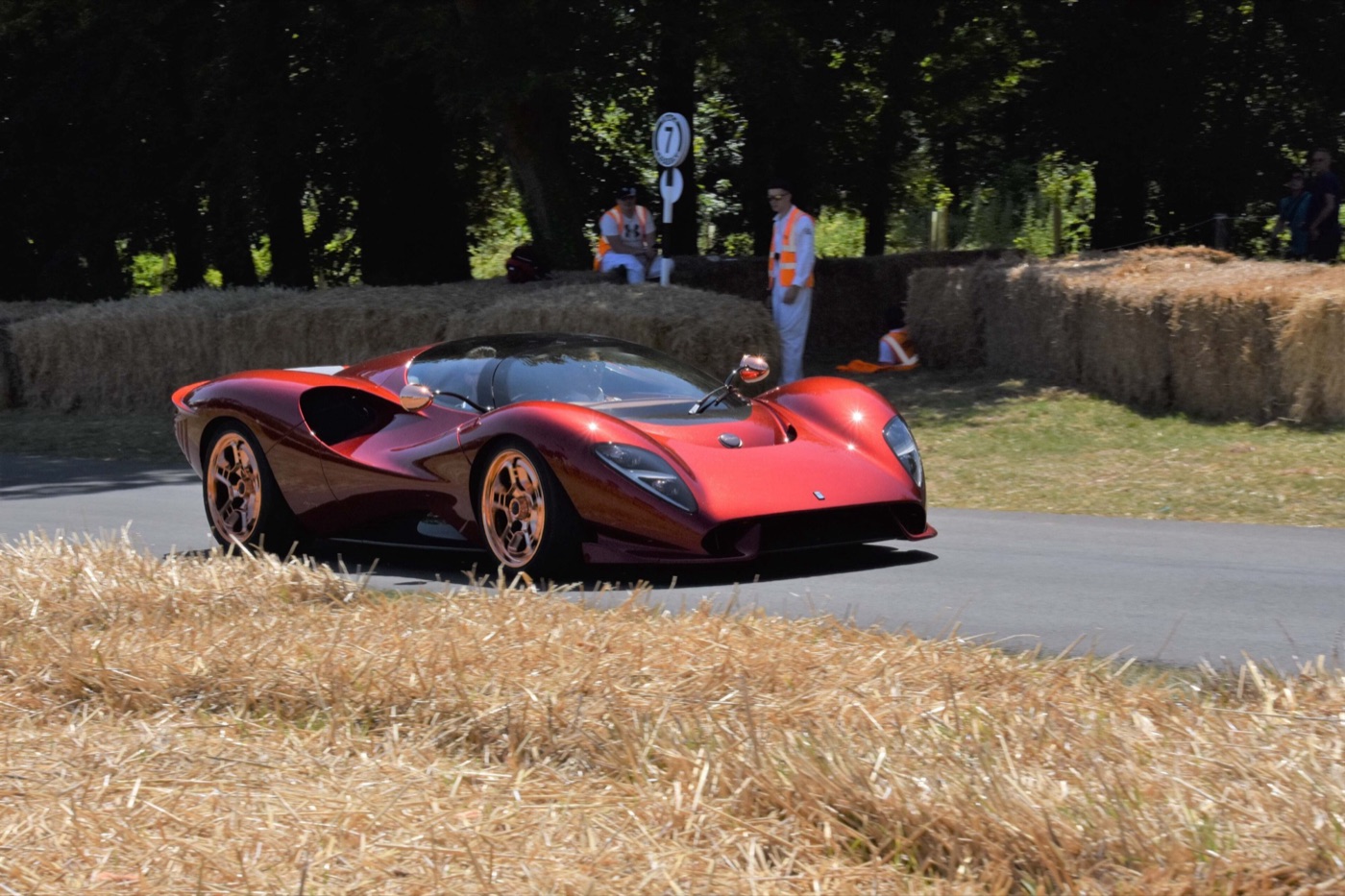
The P72 is a mid-engined two-seater with a carbon chassis, a supercharged 5.0-litre V8 and a six-speed manual gearbox, limited to 72 cars. It was shown at the Goodwood Festival of Speed in July 2019, the company’s 60th year, with a body by Jowyn Wong modelled on the 1965 P70. The 2019 car used the carbon chassis of the Apollo Intensa Emozione; Road & Track gave a starting price of $850,000 plus tax.
In October 2019 Autocar reported that the engine was a Ford V8 modified by Roush, expected to give about 700bhp and 608lb ft, and put the price at about £662,000. Evo reported in 2025 that the first production-specification car had been built, on a new all-carbon chassis designed from scratch, with 690bhp, 605lb ft and push-rod suspension with manually adjustable dampers, and quoted Choi: “The P72 was our promise to faithfully revive a historic marque.” The first customer car, a dark blue commission called Aurelian Night, was delivered in June 2026, duPont Registry reported, giving 700hp and a price from about $1.8 million before options and taxes.
De Tomaso P900
The P900 is a track-only car announced in November 2022, with 18 to be built at $3 million each. Car and Driver reported a planned 6.2-litre V12 of 900hp and 12,300rpm, a Judd V10 for buyers who would not wait, an Xtrac sequential gearbox and a dry weight of 900kg, which gives the car its name. The engine changed on the way: in May 2026 Autocar reported the final specification: a 7.0-litre V12 built with Italtecnica, with 888bhp (900 metric horsepower) at 9,500rpm and a 10,200rpm limit. Its vee is 65 degrees and a gear train drives the camshafts. Autocar said more details would follow as the first customer cars neared completion.
De Tomaso models and production numbers
The Pantera accounts for most De Tomaso cars ever built. The figures below are the makers’ own unless stated.
| Model | Shown | Engine | Built | Source |
|---|---|---|---|---|
| Vallelunga | 1963 | Ford 1.5-litre four, 104hp | 56 | Factory, 2001 |
| Mangusta | 1966 | Ford 4.7-litre V8 | 402 | Factory, 2001 |
| Pantera (all versions) | 1970 | Ford 5.8-litre V8; 4.9-litre in the Si | 7,260 | Factory, 2001 |
| Pantera GT5-S | 1985 | Ford 5.8-litre V8 | 182 | Maxim, 2026 |
| Pantera Si | 1990 | Ford 4.9-litre V8, fuel injection | 41 | RM Sotheby’s |
| Deauville | 1970 | Ford 5.8-litre V8, 300hp | 244 | Factory, 2001 |
| Longchamp | 1972 | Ford 5.8-litre V8, 300hp | 409 (395 coupés, 14 spyders) | Factory, 2001 |
| P72 | 2019 | Supercharged 5.0-litre V8, 700hp | 72 planned | duPont Registry, 2026 |
| P900 (track only) | 2022 | 7.0-litre V12, 888bhp | 18 planned | Car and Driver, 2022; Autocar, 2026 |
How much is a De Tomaso Pantera worth?
The most paid for an original Pantera is $352,000, for a low-mileage 1986 GT5-S in 2024; the car cost about $10,000 new in 1971. The most paid for a Ford-era car is $293,000, for a yellow 1972 Pantera sold by Ford’s chief executive, Jim Farley, on Bring a Trailer on 16 April 2026. Maxim reports the GT5-S record and, citing Hagerty, says the $381,150 paid in November 2025 was for a Ringbrothers rebuild that is no longer a factory car. The late Si is the rarest: RM Sotheby’s sold one at Monterey in 2019 for $240,800, the first Si offered at public auction.
De Tomaso Pantera problems and known faults
The faults recorded from new are overheating, rust and wiring. Hot Rod lists overheating, occasional vapour lock and “spotty electrical wiring” on early cars, and the Independent adds a tendency to rust. Car and Driver’s 1971 test found the engine bay hard to reach from the front, because the bulkhead blocks access to the ignition timing and accessory belts.
Questions
Is De Tomaso still in business?
Yes. The name belongs to De Tomaso Automobili, owned by Norman Choi’s Ideal Team Ventures since it bought the name out of bankruptcy in 2015. It delivered its first customer P72 in June 2026 and is developing the track-only P900.
How many De Tomaso Panteras were made?
The factory counted 7,260 Panteras built between 1970 and 1991, more than all other De Tomaso models together. More than 5,000 of them were sold in North America through Ford’s Lincoln-Mercury dealers.
Was De Tomaso owned by Ford?
Partly. Ford took a majority stake in 1970–71 (84 per cent, according to the Independent) to sell the Pantera in the United States, and the two parted in the mid-1970s: Maxim dates the end of Ford’s imports to 1975, the Independent says Ford dropped the car in 1973. Ford kept the Ghia design studio and its name.
Who designed the De Tomaso Pantera?
Tom Tjaarda, an American designer at Ghia, styled the Pantera. Marcello Gandini restyled the last version, the Pantera Si of 1990.
How much is a De Tomaso P72?
Road & Track gave a starting price of $850,000 plus tax when the car was shown in 2019. By the first delivery in June 2026, duPont Registry put it at about $1.8 million before options and taxes.
Where was De Tomaso based?
The original company was in Modena, Italy, from its founding in 1959 until its liquidation in 2004. The 2009 revival planned to build cars at Grugliasco near Turin and at Livorno.
When did Alejandro de Tomaso die?
He died in Modena on 21 May 2003, aged 74, ten years after a stroke that left him in a wheelchair.
Sources
- The Independent, “Alejandro de Tomaso” (obituary), 24 May 2003: his life, the Vallelunga count, Ghia and Rowan, Ford’s 84 per cent, Pantera faults, Maserati, Innocenti, the Biturbo, his stroke.
- De Tomaso Modena, factory website (detomaso.it), model pages for the Vallelunga, Mangusta, Pantera, Deauville and Longchamp, archived 2001: production numbers, engines, the Mangusta name, the Deauville launch.
- De Tomaso Modena, “The History: The Brand” and “The Company”, archived 2001–02: the badge, the Guarà, the New Pantera plan.
- De Tomaso Modena, “The Competitions: ’60 Cars” and “Formula 1”, archived 2001–02: the racing cars, the 1970 Formula One season, Courage’s accident.
- De Tomaso Modena, “UAZ invades Europe with new Simbir”, archived February 2001: the UAZ agreement.
- The Drive, “The Qvale Mangusta Is Weirdly Wonderful”, 18 November 2017: the Biguà and the Qvale Mangusta.
- Formula1.com, 1970 race results: the 1970 results table.
- Road & Track, “The De Tomaso P72 is a gorgeous new supercar”, 4 July 2019: the P70 story, Choi’s 2014 purchase, P72 chassis, designer and price.
- Car and Driver, DeTomaso Pantera road test, August 1971: price, sales target, weight, performance, faults.
- RM Sotheby’s, Monterey 2019, lot 1990 De Tomaso Pantera Si: Si numbers, North American sales, the $240,800 result.
- Hot Rod, Matt Stone, “What It’s Like to Drive Elvis Presley’s 1971 DeTomaso Pantera”, 22 March 2023: the Presley car, early Pantera faults.
- Autocar, P72 engine report, 29 October 2019: the Roush V8, price, Maserati 1975–93.
- Italiaspeed, De Tomaso liquidation report, 1 June 2004: the liquidation decision and the Simbir.
- Top Gear, “De Tomaso goes bankrupt. Again.”, 9 July 2012: Rossignolo’s 8,000-car plan.
- SkiddMark, “Geneva Watch: De Tomaso SLS”, February 2011, and “The De Tomaso dream is over”, May 2012: the SLS specification and investment, the 2012 debts, Hotyork and BMW’s comment to Reuters.
- Reuters, “Italian carmaker De Tomaso chairman arrested”, 12 July 2012: the arrests and the public funds.
- ANSA, “Rossignolo and son convicted in De Tomaso bankruptcy”, 20 February 2019: the convictions and sentences.
- ItaliaOggi, Gianluca Rossignolo arrested, 22 May 2024: the Montenegro arrest and combined sentence.
- ANSA, “Ex-De Tomaso owner Rossignolo sent to trial for fraud”, 28 September 2015: the completed sale to Ideal Team Ventures.
- Autoweek, Jay Ramey, De Tomaso sale report, April 2015: the sale to Consolidated Ideal TeamVenture.
- Evo, “We never thought the day would come: the De Tomaso P72 is ready for production”, 2025: production P72 specification, Choi’s quote.
- duPont Registry, “De Tomaso Delivers Its First Customer P72”, 4 June 2026: the first delivery, power and price.
- Car and Driver, Caleb Miller, P900 report, 30 November 2022: the P900 plan.
- Autocar, “How new 10,200rpm De Tomaso V12 makes 888bhp”, 11 May 2026: the final P900 engine.
- Bring a Trailer, 1972 DeTomaso Pantera, sold 16 April 2026: the $293,000 result.
- Maxim, Pantera record report citing Hagerty, 20 April 2026: the GT5-S record and production, the restomod sale.