Ferdinand Alexander Porsche: the 911, the 904 and Porsche Design
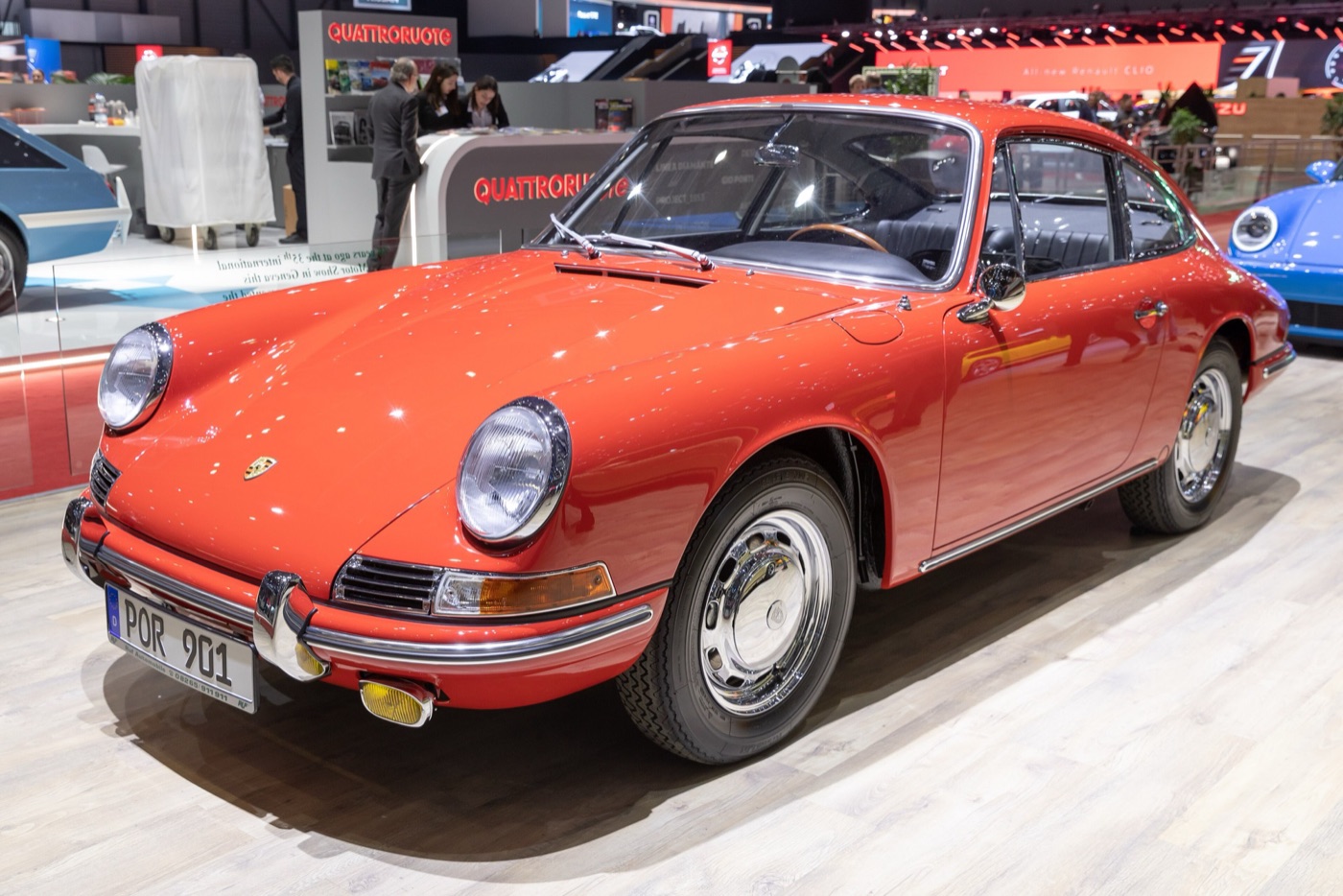
Ferdinand Alexander Porsche (1935–2012), known as F.A. Porsche to his colleagues and "Butzi" in the family, was the designer who drew the shape of the original Porsche 911, the 904 Carrera GTS and the 804 Formula One car, and in 1972 founded Porsche Design. He was the eldest son of Ferry Porsche and the grandson of the company's founder, Ferdinand Porsche, and he sat on Porsche's supervisory board for most of his life, chairing it from 1990 to 1993.
He was 27 when the 901, as the 911 was first called, was shown at the Frankfurt motor show in September 1963. He left the company's day-to-day work in 1972, when the family agreed that none of its members would hold a management post, and spent the next three decades designing watches, sunglasses, pens, kitchen appliances and trams from a studio in Zell am See, Austria. He died in Salzburg on 5 April 2012, aged 76.
Early life, Zell am See and the Ulm School of Design
Ferdinand Alexander Porsche was born in Stuttgart on 11 December 1935, the eldest of the four sons of Dorothea and Ferry Porsche, according to Porsche Design's history of its founder. His childhood was spent around cars: he passed hours in the Stuttgart design office and workshops of his grandfather Ferdinand, who was then engineering the Volkswagen Beetle. In 1943, with Stuttgart being bombed, the family and the company moved to Austria, and he went to school in Zell am See while his father began work on the car that became the Porsche 356.
He described those years to the Australian journalist Peter Robinson in an interview at Porsche Design in April 1997: "We left all our toys behind. In Stuttgart we could afford anything we wanted: now we had nothing. We were left to our own devices and our imaginations. There was a glider field in the town, so we made cardboard gliders that really did glide."
The family returned to Stuttgart in 1950. He finished school at the Waldorf school there, where, he told Robinson, he learned basic craftsmanship in metal, wood and stone, and he served an apprenticeship at Bosch as a machine engineer. He then enrolled at the Ulm School of Design (Hochschule für Gestaltung Ulm), which he left after his first semester, according to Porsche's 2013 history of the 911's design; Robinson puts his time there at six months in 1957.
Joining Porsche: the 356 successor and the Type 754 T7
Ferdinand Alexander Porsche joined the design office of the family firm, then Porsche KG, in 1957 (Porsche) or 1958 (Porsche Design and his own account). The small body design department was run by Erwin Komenda, who had worked on the Beetle and the 356. Years later his father said that "Butzi soon showed a remarkable talent for styling." His first job was building 1:5 scale wooden models for a Stuttgart wind tunnel. "The creativity was in the models and from these we did the drawings," he told Robinson. "It was the opposite of the normal process, in which the drawings come before the models."
By the late 1950s the 356 was near the end of its development. Porsche's history of the 754 and 901 says Ferry Porsche had rejected proposals from engineers and outside designers as "not a Porsche", and that in 1959 his son produced a model of a coupé that for the first time came close to what he wanted. Robinson dates the first 1:7.5 plasticine model to 9 October 1959 and the full-size model to 28 December 1959.
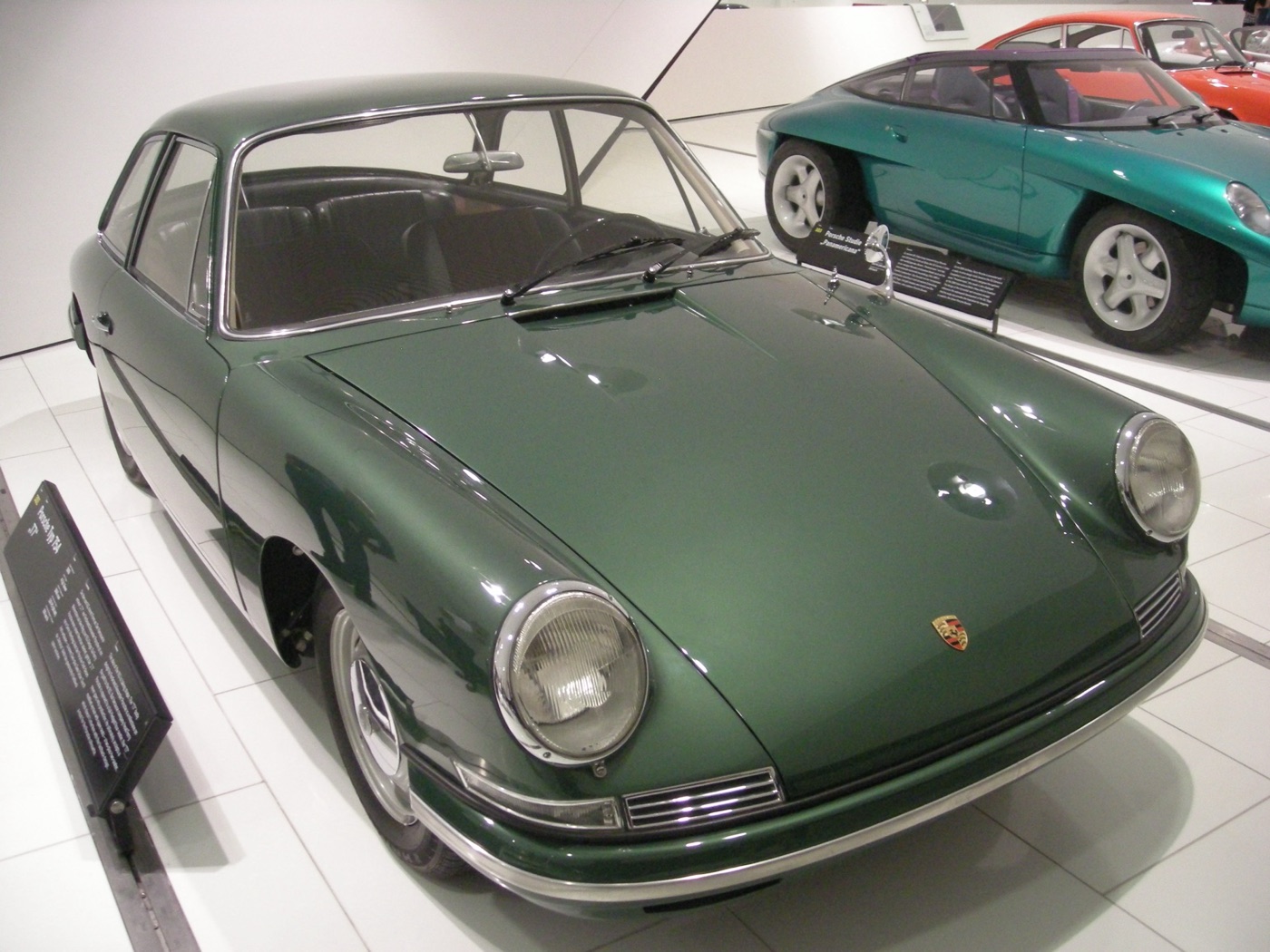
That design became the Type 754 T7 prototype of 1960, a four-seater on a 2.40-metre wheelbase. It already had the flat bonnet between raised front wings, the inclined headlamps and the shape of the 911's windscreen pillars. Ferry Porsche wanted a fastback instead, so the four-seater was dropped and the wheelbase cut to 2.20 metres. Ferdinand Alexander Porsche became head of the new design department in 1961, or in 1962 by Porsche's 2012 statement and the Le Mans organisers' profile on his 75th birthday.
Who designed the Porsche 911?
Porsche credits the 911's shape to Ferdinand Alexander Porsche: "The silhouette, which is legendary to this day, is owed to Ferdinand Alexander Porsche," its 2013 history says, adding that the 901 was the fourth car he designed. Ferry Porsche wrote in his autobiography that the shape "was entirely his idea", Motor Sport's obituary of June 2012 records. Komenda's heirs have disputed that in court (below).
The 901 at Frankfurt in 1963
Work on the fastback coupé with a 2+2 seating arrangement, type number 901, began in 1962, and the first prototype was driven out of the Zuffenhausen gates on 9 November 1962. The car was shown at the Frankfurt motor show (IAA) on 12 September 1963 as a pre-series car, with a new 1,991cc air-cooled flat six of 130hp. Series production began on 14 September 1964. "Right from the start the specification was that the car had to be instantly recognisable as a Porsche from its silhouette," he said, as quoted by CNN in April 2012.
In 1997 he gave Robinson his reasons for the car's long life: "It is my father's idea that a car should not be ostentatious, nor too aggressive; the shape should be harmonious yet also have presence. The 911 has balance; it is also small. There is a modesty about the car that makes it notable." Porsche's 2012 statement said his form lived on in the seventh generation, then new; SkiddMark's guide to the 911 generations follows each one from the 901 to the 992.
Why the 901 was renamed the 911
Early in October 1964, after the car appeared at the Paris motor show, Peugeot objected that it held the rights in France to three-digit model names with a zero in the middle. The sales department proposed replacing the 0 with a 1, which saved reprinting brochures and manuals, and Ferry Porsche ordered the change on 22 October 1964. Chassis 300 057, a red coupé built that day, is now in the Porsche Museum.
The Komenda authorship case
Erwin Komenda's daughter, Ingrid Steineck, sued Porsche for a share of up to five million euros in the earnings of a 911 series built decades after her father's death in 1966, claiming he was a co-author of the 911's design. The Stuttgart Higher Regional Court (OLG) rejected the claim. On 7 April 2022 the Federal Court of Justice (BGH) set that judgment aside on a procedural point, because the OLG had not considered a witness the family had named late, and sent the case back to Stuttgart (case I ZR 222/20), as the dpa-AFX agency reported. The courts confirmed that Komenda was the author of the 356's body; the OLG had found no 356 design elements in the 911, and the BGH did not fault that finding. Porsche said it expected the judgment in its favour to stand; the family welcomed a fresh examination of who designed the 911, holding that Komenda's original design was developed continuously through every model from 1948 to 1980. The dispute was still open when Porsche's flotation prospectus listed it as a risk in September 2022.
The Porsche 904 Carrera GTS
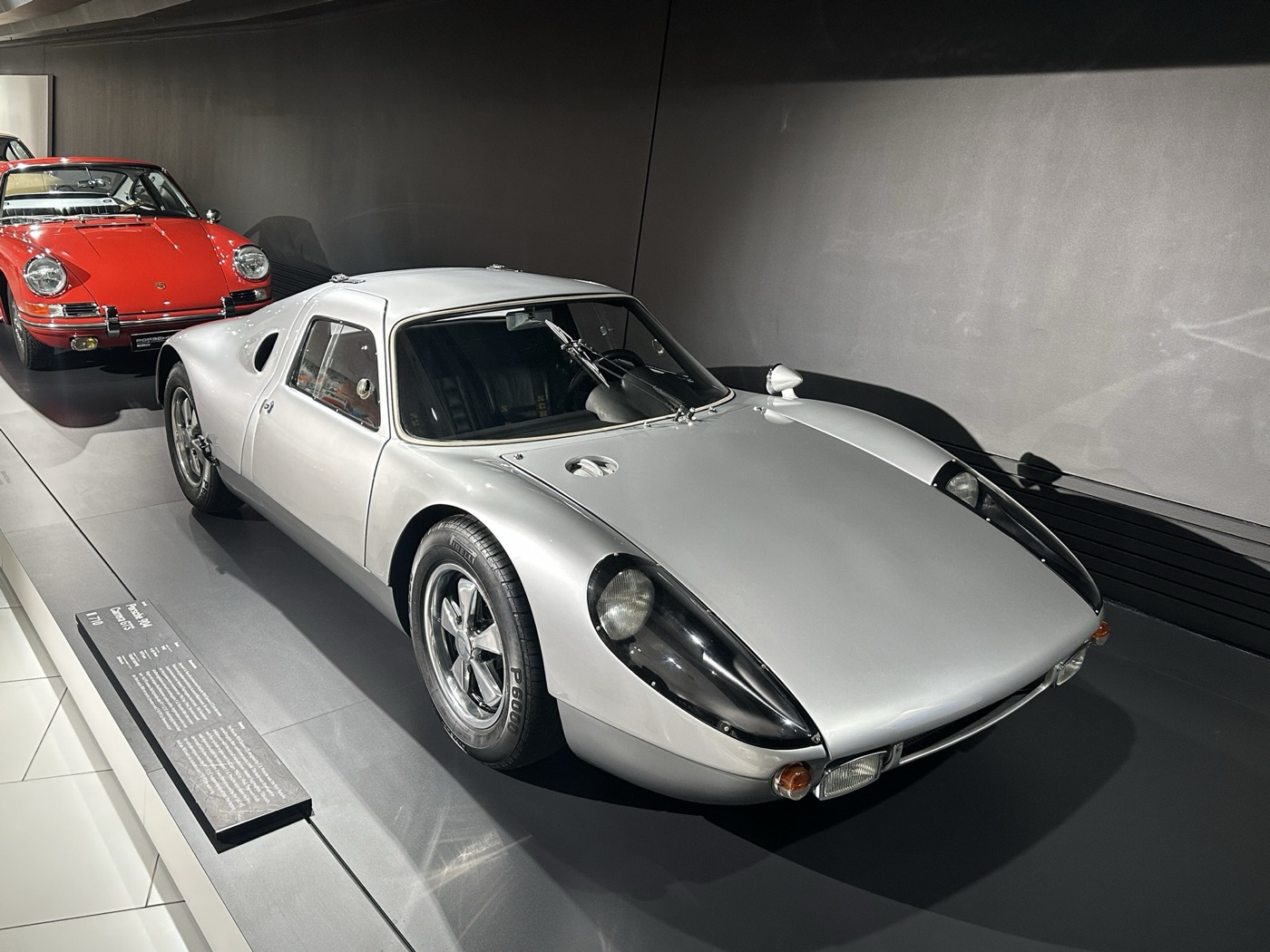
Ferdinand Alexander Porsche called the 904 Carrera GTS of 1963–65 his masterpiece, Porsche says. Motor Sport's obituary calls it his favourite, and in 1997 Robinson found it the most prominent of the model cars in his office.
It was the first Porsche with a glass-fibre reinforced plastic body, made with the aircraft maker Heinkel Flugzeugbau, and it had a frontal area of 1.4 square metres, according to the Porsche Museum's press kit. Hans Tomala ran the project, and the body sat on a simple steel box-frame chassis. Time was so short that the engineers left his original design unaltered: Robinson says the design team had four months, while Mike Cotton's history of the 904 for Motor Sport gives six months for the whole development.
How many 904s were made
The figures differ. Porsche gives 106 cars with four-cylinder engines, plus works cars with 210hp six-cylinder engines and three with eight-cylinder engines. Motor Sport records 104 cars sold with the four-cylinder quad-cam engine, built to meet the 100-car rule for GT homologation, and 16 kept by the factory: ten with six-cylinder and six with eight-cylinder engines. The road car cost DM 27,900, about £2,800 at the time, weighed 650kg and had 155bhp; the GTS racer had 180bhp.
The 904 in racing
In April 1964 Colin Davis and Antonio Pucci won the Targa Florio outright in a 904, with Herbert Linge and Gianni Balzarini second in another; Edgar Barth and Umberto Maglioli won the prototype class in an eight-cylinder car. All five 904s entered at Le Mans in 1964 finished, the best seventh overall. In 1965 Eugen Böhringer finished second overall on the Monte Carlo Rally in a 904.
The Porsche 804 Formula One car
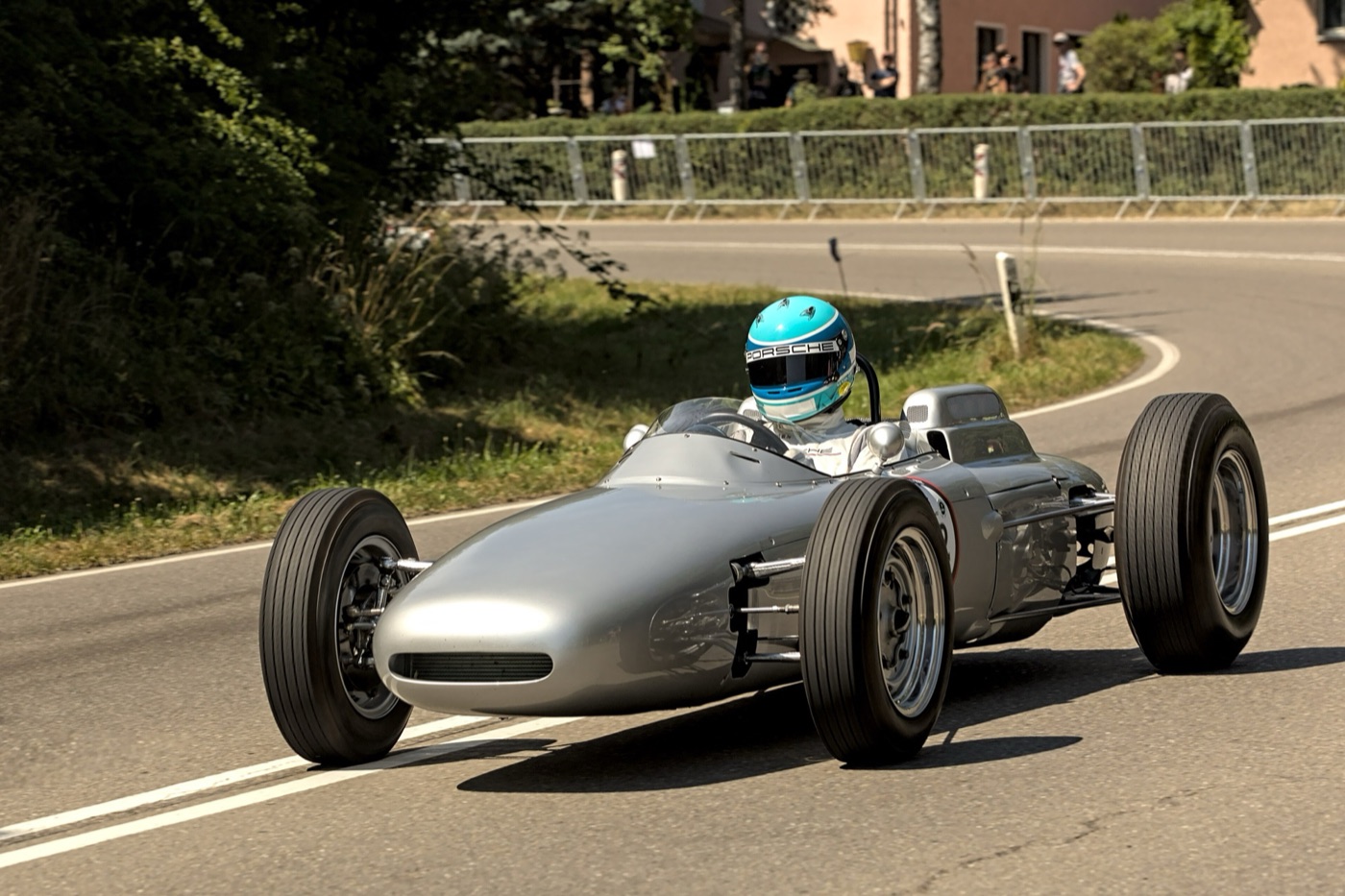
The 804 was one of the racing cars he designed in the 1960s: Porsche Design's history lists the Formula One car of 1962 among "his" cars, and the company's 2012 statement named it with the 904 as his best-known designs. The 804 had an air-cooled 1.5-litre eight-cylinder engine. Dan Gurney drove one to win the French Grand Prix at Rouen-les-Essarts on 8 July 1962, which Porsche's 2019 history of the race calls its first and so far last Grand Prix win at a world championship round. A week later Gurney won the non-championship race at the Solitude circuit near Stuttgart, with his team-mate Jo Bonnier second, the company's 2018 tribute to Gurney records. Porsche ended its Formula One programme at the end of 1962.
What did Butzi Porsche design?
His car designs all date from his time in the Porsche design office, from 1957 or 1958 to 1972. Four are credited to him by Porsche, Porsche Design and Motor Sport.
| Year | Car | What it was | What became of it |
|---|---|---|---|
| 1959–60 | Type 754 T7 | Four-seat prototype for a 356 successor, 2.40m wheelbase | Dropped for a 2+2 fastback; shown in the Porsche Museum |
| 1962 | 804 | 1.5-litre eight-cylinder Formula One car | Won the 1962 French Grand Prix (Gurney) |
| 1963 | 901 (911 from October 1964) | 2+2 fastback coupé, 2.0-litre flat six, 130hp | Shown at Frankfurt in September 1963; in production since September 1964 |
| 1963–65 | 904 Carrera GTS | Mid-engined GT racer with a glass-fibre body | Won the 1964 Targa Florio; 106 or 104 four-cylinder cars built |
Sources: Porsche newsroom histories of the 754, 901 and 904; Porsche Design; Motor Sport.
Why did Ferdinand Alexander Porsche leave Porsche?
Ferdinand Alexander Porsche left because the family decided that no Porsche or Piëch would run the company. When Porsche KG became a joint-stock company, Porsche AG, in 1971–72, all family members stood down from its front-line business operations. He kept his seat on the supervisory board but had to give up his post as head designer, Porsche Design's history says. Robinson's account gives the reason: Ferry Porsche and his sister Louise Piëch wanted to stop the feuds growing between their children.
"Would he still like to be designing Porsches? 'Yes,' he said, his voice tinged with regret. 'But I respect the wishes of the family not to operate in the business,'" Robinson wrote. In about 1987 a large Japanese carmaker asked him to design a sports car, and he refused: "I am too close to Porsche."
Ferdinand Alexander Porsche and Porsche Design
Ferdinand Alexander Porsche founded Porsche Design, first called the Porsche Design Studio, in Stuttgart in 1972 with his brother Hans-Peter, and in 1974 moved the design studio to Zell am See, near the family's Schüttgut estate, according to Porsche's tribute on his 90th birthday in December 2025. Porsche Design says that "farm, family, mountains" were what he needed to work, that he valued a small team, and that he had no interest in growing the firm to take more outside work.
The Chronograph I
The studio's first product was the Chronograph I of 1972, which began as a gift for long-serving Porsche employees; Porsche committed to buying 20 a year. Porsche calls it the world's first completely black wristwatch: a matt black case and bracelet, white indices and a red seconds hand, inspired by the 911's cockpit. "The watch must be readable at all times, from any angle and in any light," he told his team.
Sunglasses, pipes and pens
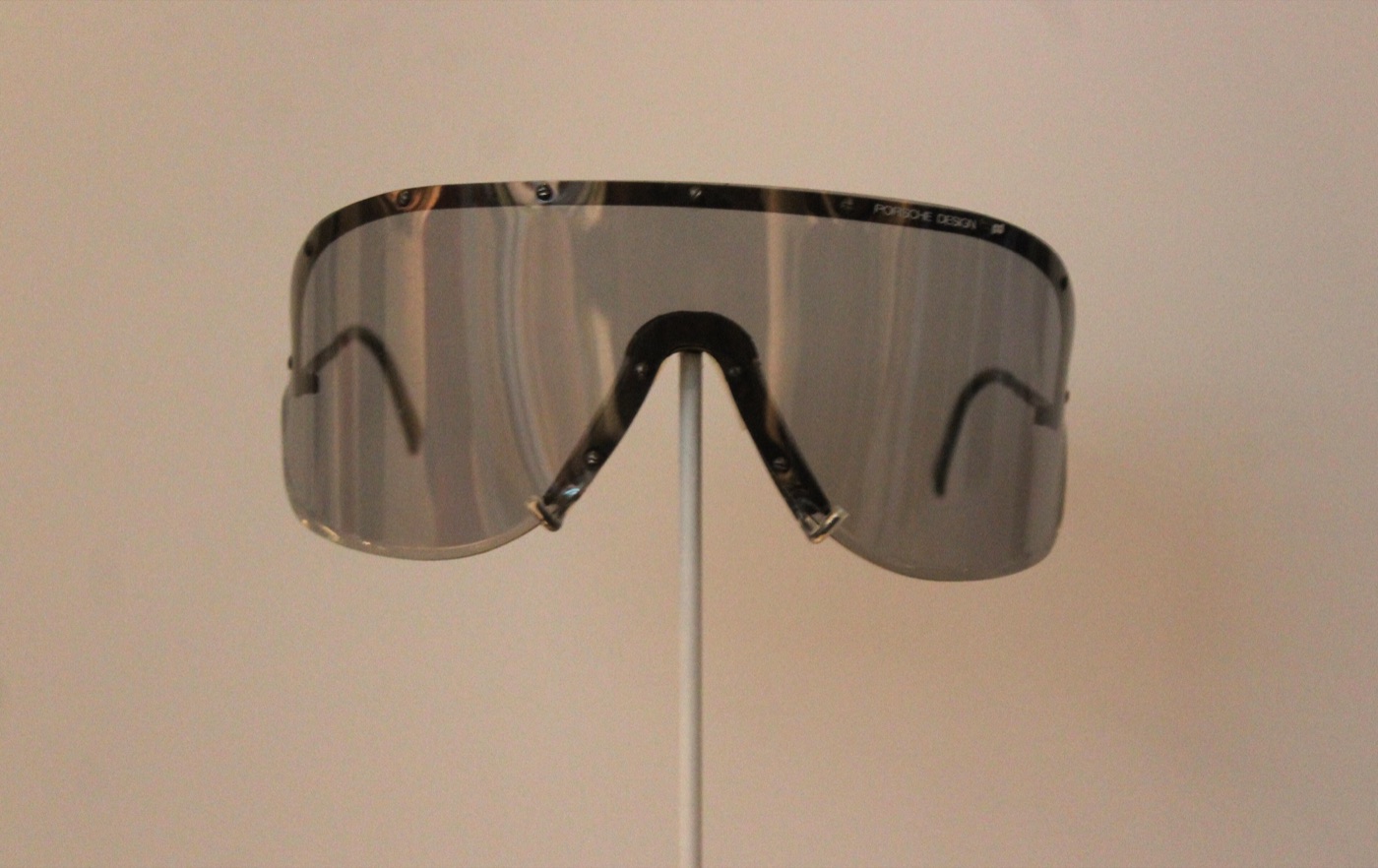
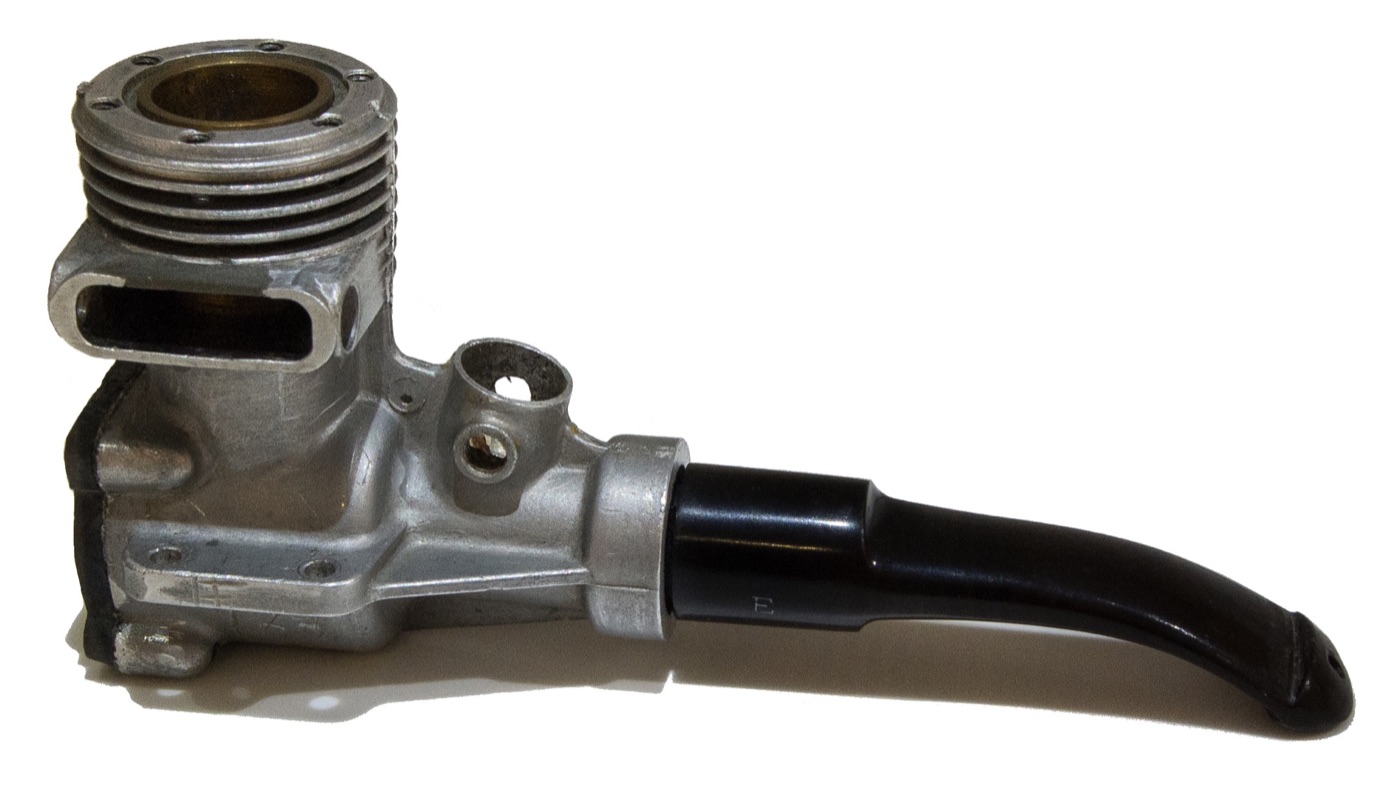
The P'8478 sunglasses of 1978 were the first with interchangeable lenses. Porsche says it expected to sell 40,000 and sold millions. The Sport Shield (P'8479) that followed was worn by Yoko Ono. In 1980 the studio made a titanium chronograph, at a time when titanium was known mainly from motorsport and aerospace; the TecFlex ballpoint pen had a woven stainless-steel body. The Porsche Museum's 2022 exhibition for the brand's 50th anniversary also showed the P3613 tobacco pipe and the P9521 mobile phone, with his own 993 Speedster on the balcony.
Product designs for other companies
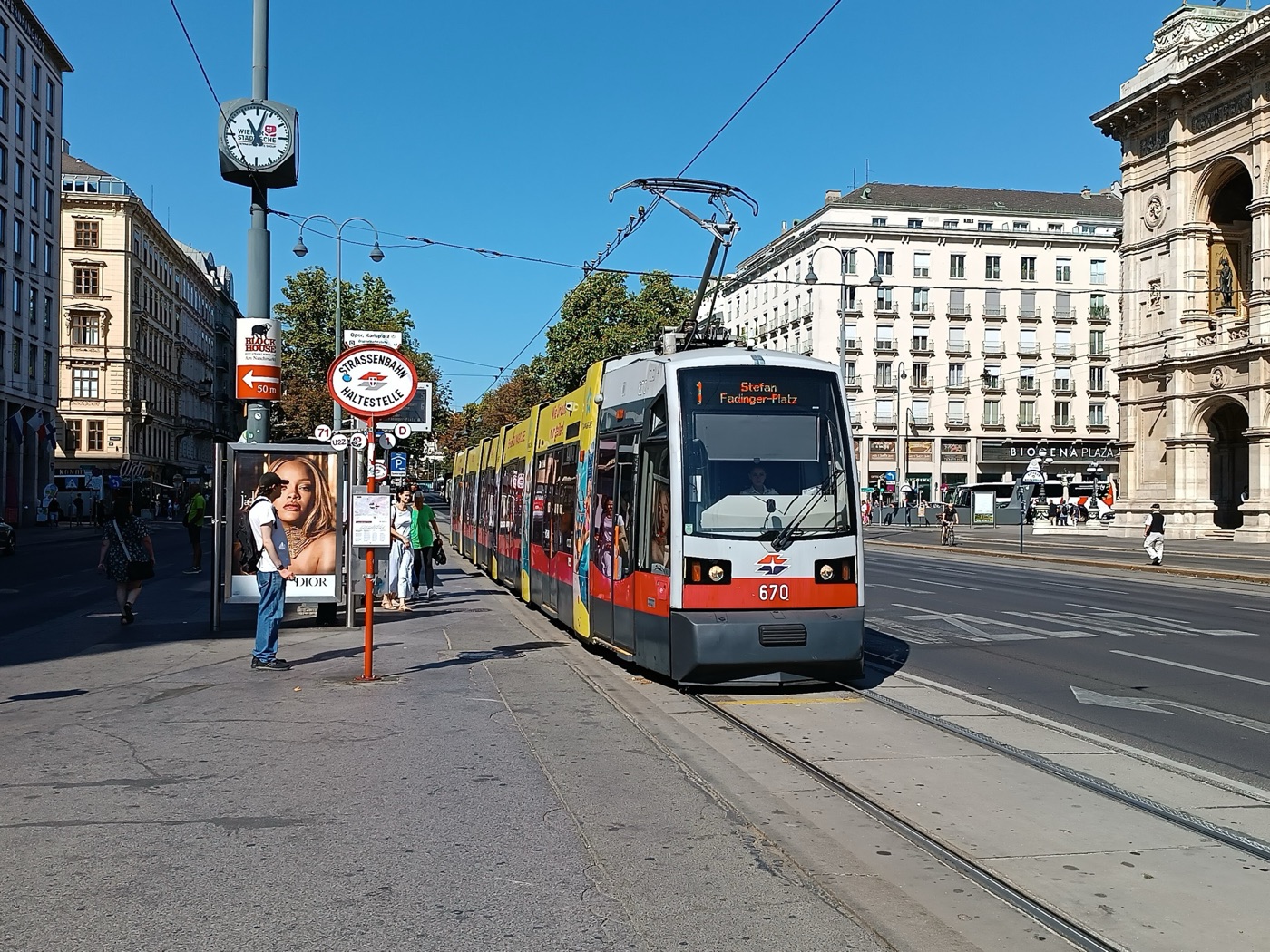
Alongside its own watches, spectacles and writing instruments, the studio designed industrial products, household appliances and consumer goods for other clients under the mark "Design by F.A. Porsche", the company's 2012 statement says. Porsche Design names the breakfast series for Bosch and Siemens Home Appliances, which sold well despite costing more to make. In 1991, with Siemens Transportation Systems, the studio designed the ULF (ultra low floor) tram for Vienna, with a boarding height of 11cm along the whole train, the studio's own account of the project says; trams for Oslo and Bangkok followed.
Who owns Porsche Design now?
In 2003 Porsche AG and Porsche Design Management of Salzburg combined their accessories and lifestyle businesses in the Porsche Lifestyle Group, which has been wholly owned by Porsche AG since the first half of 2017, according to Porsche Design's company profile. Its design office still works under the name Studio F.A. Porsche in Zell am See, with offices in Berlin, Ludwigsburg, Los Angeles and Shanghai as of 2022.
Chairman of Porsche's supervisory board
Ferdinand Alexander Porsche stayed on Porsche AG's supervisory board after 1972 and chaired it from 1990 to 1993, through a difficult period at the start of the decade; Porsche credits him with a major part in the company's economic turnaround, according to Porsche Ibérica's 2019 profile of him (in Spanish). In 2005 he gave up his seat to his son Ferdinand Oliver and became honorary chairman of the supervisory board. Motor Sport's obituary gives a different account: that he left the board in 1993, when the arrival of Wendelin Wiedeking moved the balance of power to the Piëch side of the family. Motor Sport and Robinson date his retirement to 2005, Motor Sport giving ill health as the reason; Porsche Ibérica says he gave up day-to-day work in 2004, a year after transferring almost two thirds of his holding in the company to the newly formed Porsche Design Group.
Ferdinand Alexander Porsche on design, in his own words
"Design must be functional, and functionality must be translated into visual aesthetics, without gimmicks that have to be explained," was the credo Porsche quoted in its statement on his death, together with "Good design should be honest." On the studio's work he said, "If you rethink the function of something, the form sometimes emerges almost by itself," and "Our creations should be lifelong companions, not subject to fleeting trends."
He applied the same test to the cars that followed his. Asked by Robinson in 1997 about the new Boxster, he said: "I like the shape, but there is too much James Dean Spider about the car generally. I find the form of the rear lights unacceptable. Form used to follow function: form is too dominant today." He still kept a drawing board in his office: "It's a source of mirth to those who work with computers, but I need it for ideas and inspiration."
Honours and tributes
The Comité International de Promotion et de Prestige honoured him for the design of the 911; Porsche's statement on his death in April 2012 gives the year as 1968. The iF Industrie Forum Design Hannover named him its prizewinner of the year in 1992, and in 1999 the President of Austria gave him the title of professor, Porsche Ibérica's profile records. In 2022, for Porsche Design's 50th anniversary, Porsche Classic restored a 1972 911 S 2.4 Targa in the black of the Chronograph I, and the limited 911 Edition 50Y Porsche Design of 750 cars carried a reproduction of his signature on its engine grille badge.
Family, death and burial
Ferdinand Alexander Porsche had three sons, the company's 2025 tribute says; Ferdinand Oliver succeeded him on the supervisory board. The same tribute records that he favoured checked jackets and green Porsches. His cousin Ferdinand Piëch, Ferry Porsche's nephew, took over from Tomala in racing development after the 904.
He died in Salzburg on Thursday 5 April 2012, aged 76, as CNN reported the next day from the company's announcement. Matthias Müller, then Porsche's chief executive, said in Porsche's statement of 5 April 2012 that "as the creator of the Porsche 911, he established a design culture in our company that has shaped our sports cars to this very day." He was buried in the family's private chapel at the Schüttgut estate in Zell am See, with an official memorial service in Stuttgart later, according to Porsche Ibérica's profile and CNN.
Questions
When did Ferdinand Alexander Porsche die?
He died in Salzburg, Austria, on Thursday 5 April 2012, aged 76, and was buried at the family estate of Schüttgut in Zell am See.
Was Ferdinand Alexander Porsche the son of Ferdinand Porsche?
No. He was the grandson of Ferdinand Porsche, the company's founder, and the eldest son of Ferry Porsche, who built the first Porsche sports cars. Ferdinand Piëch was his cousin.
How old was Butzi Porsche when he designed the 911?
He made his first model of a 356 successor in October 1959, two months before his 24th birthday, and was 27 when the 901 was shown at Frankfurt in September 1963.
Did Ferdinand Alexander Porsche design the Porsche 356?
No. The 356 body is the work of Erwin Komenda, Porsche's head of body design, as German courts have confirmed. F.A. Porsche joined the company in 1957 or 1958 and designed its successor.
What was F.A. Porsche's favourite car?
He named the 904 Carrera GTS of 1964 as his favourite of his own designs, and Porsche says he described it as his masterpiece. He owned a 993 Speedster and liked green Porsches.
Who are Ferdinand Alexander Porsche's children?
He had three sons. Ferdinand Oliver Porsche took over his seat on Porsche's supervisory board in 2005.
Is Porsche Design still owned by the Porsche family?
Porsche Design is part of the Porsche Lifestyle Group, which has been wholly owned by Porsche AG since 2017. Its design office, Studio F.A. Porsche, is still in Zell am See.
Sources
- Porsche Newsroom, "Ferdinand Alexander Porsche: Visionary and Originator", 11 December 2025: joining Porsche in 1957, head of design in 1961, Porsche Design founded with Hans-Peter, the Chronograph I, P'8478 and Sport Shield, quotations, three sons.
- Porsche Lifestyle Pressroom, "Heritage: Professor Ferdinand Alexander Porsche": birth, childhood, the 804 and 904, leaving in 1972, the 20-watch order, Zell am See, the Bosch and Siemens breakfast series.
- Porsche Lifestyle Pressroom, "Divisions": the Porsche Lifestyle Group of 2003 and its ownership since 2017; Studio F.A. Porsche.
- Porsche Newsroom, "Porsche 911: construction sketch", 2013: the 911's silhouette credited to him, Ulm, the 901 as his fourth car, the Peugeot objection.
- Porsche Newsroom, "From the 754 to the 911 via the 901": the 1959 model, the 754 of 1960, wheelbases, 901 dates and specification, the change of name on 22 October 1964.
- Porsche Museum press kit, "Porsche 904 Carrera GTS": glass-fibre body with Heinkel, frontal area, 106 four-cylinder cars, the Targa Florio class win.
- Mike Cotton, Motor Sport, "Porsche 904: how a four-cylinder stopgap became a Targa Florio winner", November 1995 (republished online 6 October 2026): production figures, price, weight, power, racing results.
- Porsche Newsroom, "A forgotten circuit", 2019: the 1962 French Grand Prix win.
- Porsche Newsroom, "Porsche trauert um Dan Gurney", January 2018 (in German): the 804's eight-cylinder engine and the Solitude win.
- Peter Robinson, "Butzi Porsche: father of the 911", Motor Heritage (interview of 17 April 1997): childhood, Bosch apprenticeship, Ulm, first models, T7 dates, the 904 timetable, his views on the 911 and Boxster, the Japanese offer.
- Motor Sport, "Ferdinand Porsche", June 2012: Ferry Porsche's autobiography on the 911, the 904 as his favourite, leaving the board in 1993, retirement in 2005.
- CNN, "Porsche 911 designer dies", 6 April 2012: date and place of death, age 27 at the 1963 show, his quotation on the silhouette, burial.
- Porsche Ibérica Newsroom, profile on his 84th birthday, 11 December 2019 (in Spanish): supervisory board 1990–93 and 2005, honours of 1992 and 1999, death and burial at Schüttgut.
- Porsche Newsroom, "Porsche Design celebrates its 50th anniversary", 18 January 2022: the 1972 Targa, the 911 Edition 50Y, the museum exhibition, the 904 as his masterpiece, the studio's offices.
- Studio F.A. Porsche, "ULF tram Vienna": the 1991 design with Siemens and the 11cm boarding height.
- dpa-AFX via Der Aktionär, Federal Court of Justice ruling on the 911 design, 7 April 2022 (in German): the Komenda heirs' claim and the BGH decision.
- The Drive, "Porsche IPO docs reveal it's still fighting lawsuit over who designed the 911", 21 September 2022: the prospectus entry.
- 24 Hours of Le Mans, "Ferdinand Alexander Porsche celebrates his 75th birthday", 12 December 2010: joining the design department in 1958, head of design in 1962, Porsche Design and "Design by F.A. Porsche".
- Porsche AG, statement on the death of Ferdinand Alexander Porsche, April 2012 (Porsche Nederland newsroom, 10 April 2012): the 1968, 1992 and 1999 honours, the board years, the burial; Matthias Müller's words as SkiddMark printed the statement in April 2012.