Ferrari FF: the first four-wheel-drive Ferrari, its specs and values
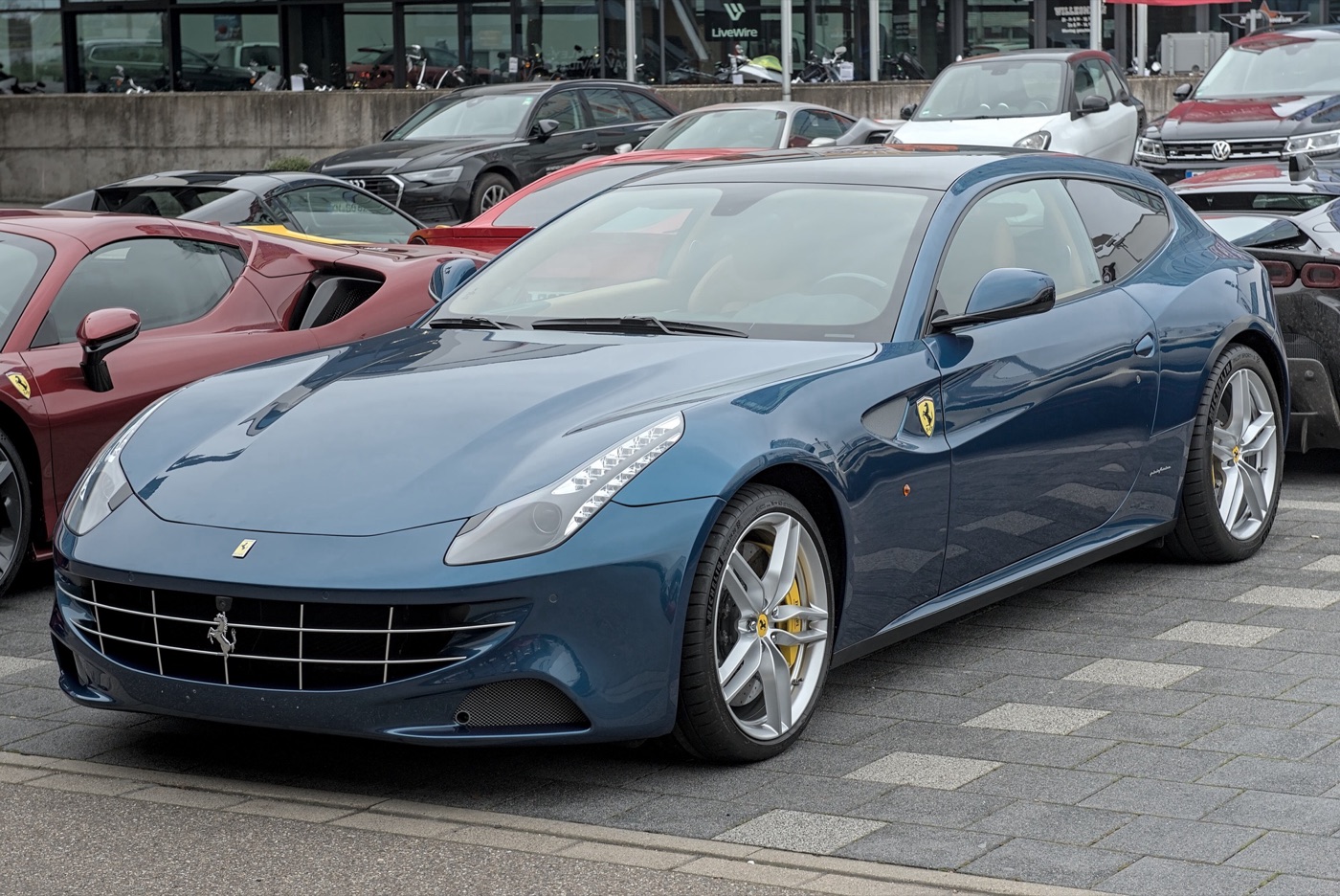
The Ferrari FF is a four-seat, four-wheel-drive grand tourer (GT) with a 6.3-litre V12, built at Maranello from 2011 to 2016 as the replacement for the 612 Scaglietti. It was the first production Ferrari with four-wheel drive and the first with a shooting brake body and a tailgate; the name stands for Ferrari Four, for its four seats and four driven wheels. Ferrari made 2,291 before the GTC4Lusso took over in 2016.
People look it up for how its 4RM four-wheel drive works (a second gearbox on the front of the engine, and no centre differential), for its 660cv and 208mph, and for what one costs now: the auction median is about £100,000, and the record, set in Paris in January 2026, is £347,710.
History of the Ferrari FF
Ferrari revealed the FF in January 2011 with three photographs and a website, ferrarifour.com, and showed the car itself at the Geneva motor show that March. A SkiddMark report on the day of the reveal recorded the figures as issued: 651bhp at 8,000rpm, 0–62mph in 3.7 seconds, a 450-litre boot and the first four-wheel drive in the company's history, with the photographs taken by Giovanni Gastel.
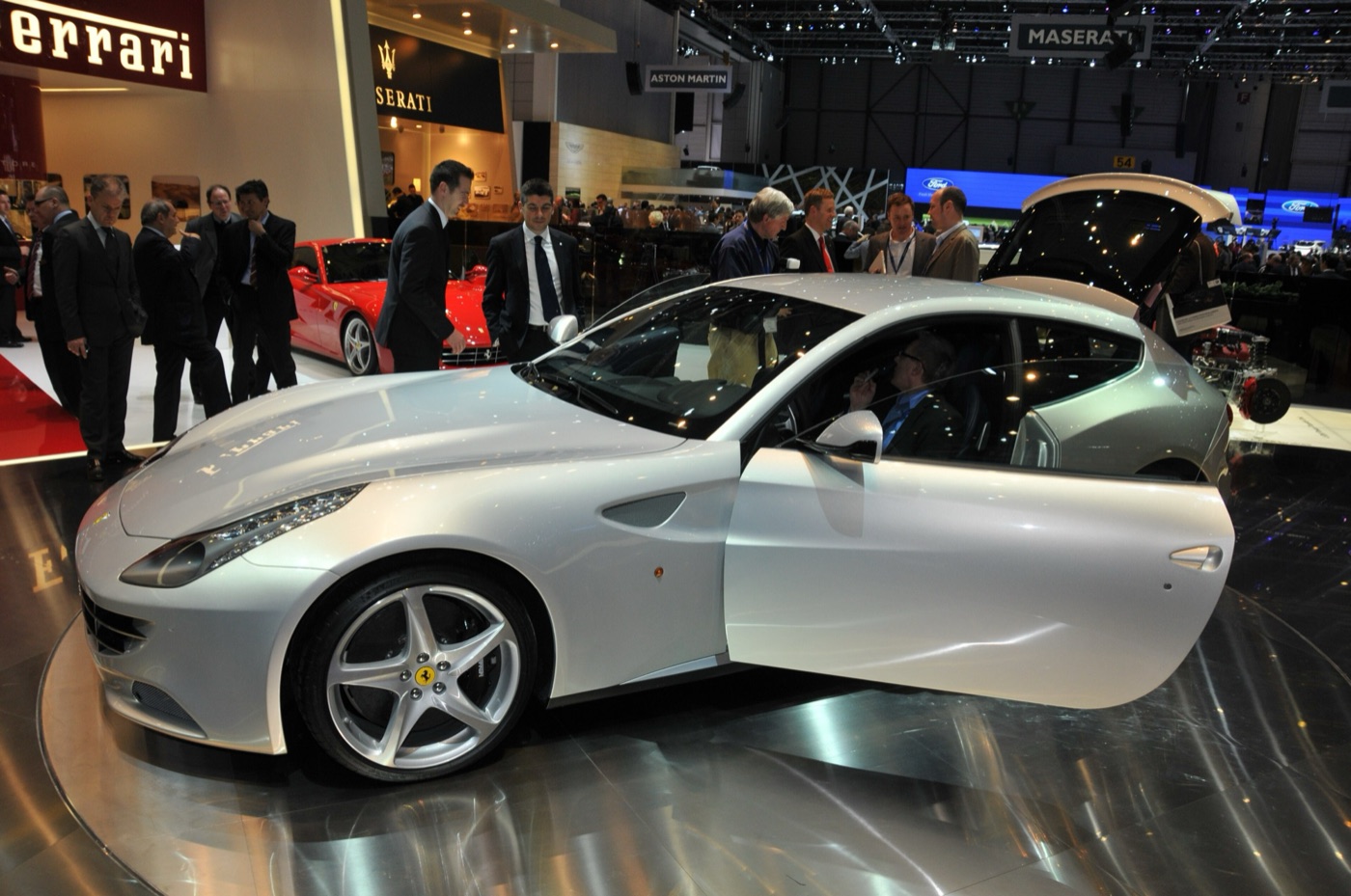
Replacing the 612 Scaglietti
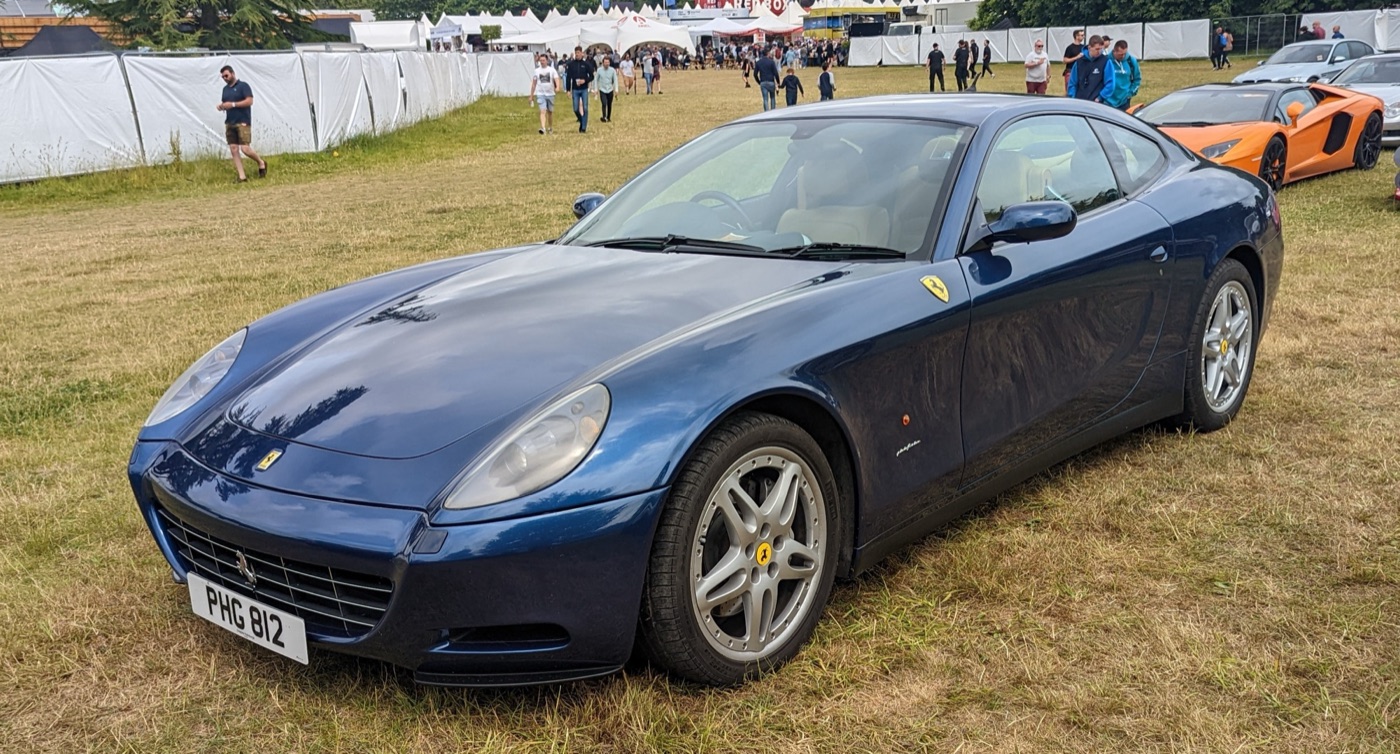
The FF took the place of the 612 Scaglietti at the top of Ferrari's range. The 612 had a 540bhp V12 (5.7 litres, the New Zealand Herald adds), returned 13.8mpg and emitted 470g/km of CO2, according to CAR magazine's report of February 2011; the FF's official figures were 18.3mpg and 360g/km. Both cars are about 4.9 metres long, but the FF stands 1,379mm tall against the 612's 1,344mm.
Ferrari's earlier four-wheel-drive work: the 408 4RM
The FF was not Ferrari's first attempt at four-wheel drive. Ferrari's own account of the FF and 4RM, published for the car's tenth anniversary in January 2021, describes two 408 4RM concept cars built between 1987 and 1989 with a 4.0-litre V8 and a hydraulic four-wheel-drive system that Ferrari patented. In 1991 Piero Ferrari, the vice chairman, said four-wheel drive did not yet suit the company because "it increases car weight by some 200kg". Twenty years later Ferrari claimed the FF's 4RM weighed half as much as a conventional four-wheel-drive system.
Launch, price and the first year sold out
Ferrari said it would limit production to 800 FFs a year, and the first year's allocation sold within two months of private previews that began in mid-January 2011, according to a New Zealand Herald report of March 2011. Production was due to reach 70 cars a month by June 2011, and anyone ordering that spring was told to expect a car in the second half of 2012. In the UK the FF was priced at £227,026 when evo drove it in April 2011; in the US it listed at about $300,000.
Updates: glass roof, Siri and Apple CarPlay
Through its five years Ferrari added equipment to the FF. A panoramic glass roof became an option (Parkers lists it at £10,000). At the 2013 Geneva show Ferrari showed an FF whose infotainment could be worked through Apple's Siri, with two iPad minis in the backs of the front headrests, AutoGuide reported. A year later, at Geneva in March 2014, the FF was one of the first cars shown with Apple CarPlay, and in September 2014 the first CarPlay FF was delivered to a customer in Italy, which an AFP report of 10 September 2014 described as the first car with integrated CarPlay on the road.
Why is it called the Ferrari FF?
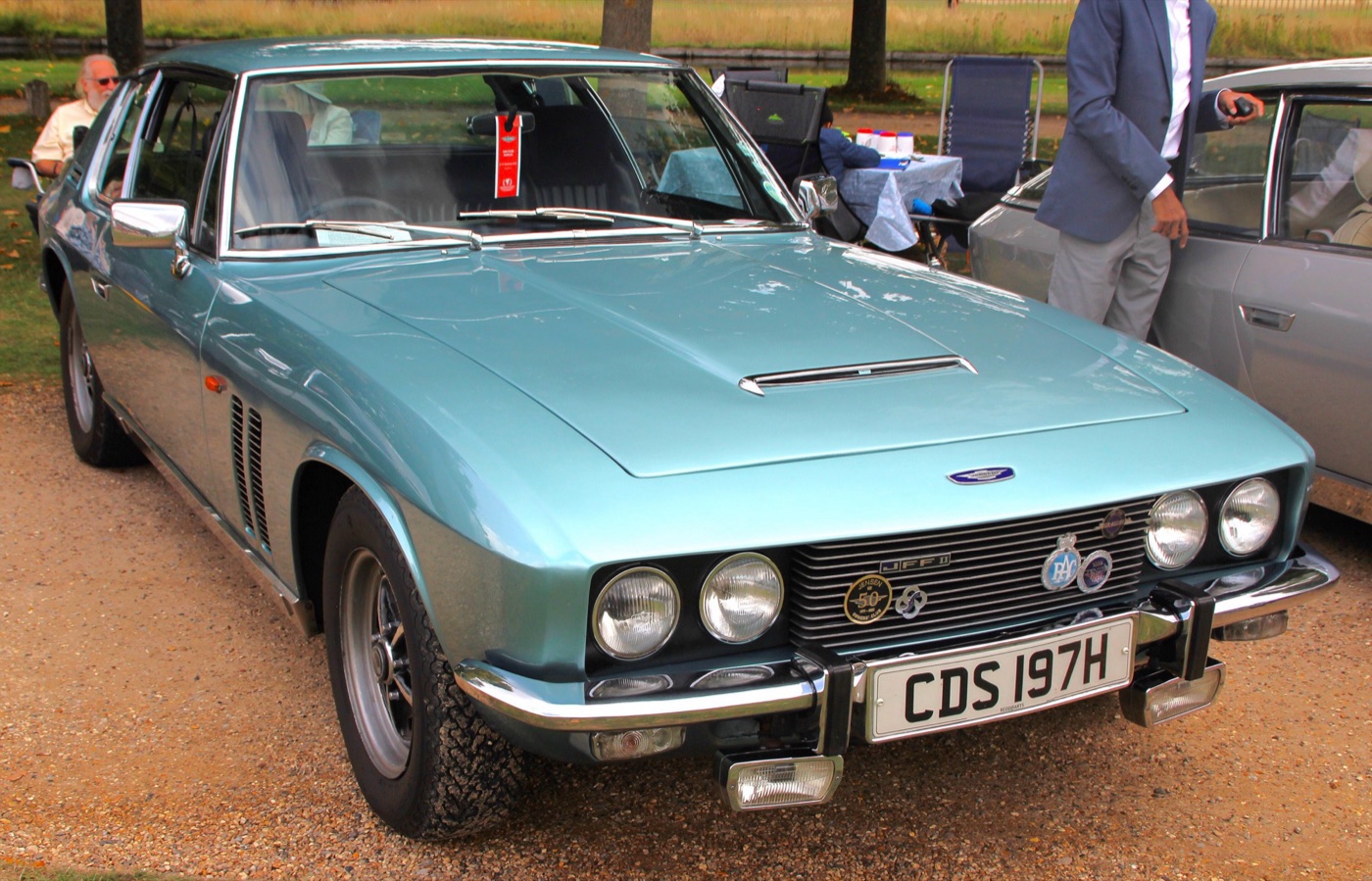
FF stands for Ferrari Four: four seats and four-wheel drive. Ferrari uses the phrase in its own material on the car, and the January 2011 SkiddMark report pointed out that Jensen had used the letters first, on a four-wheel-drive car with a hatchback: the Jensen FF, launched in 1966 alongside the Interceptor, according to Classic & Sports Car's buyer's guide; on the Jensen the letters meant Ferguson Formula.
The Jensen's system came from Tony Rolt and Freddie Dixon, with Harry Ferguson's firm financing it from the 1950s, and it split torque 37% front and 63% rear through a planetary centre differential, according to the Jensen Museum's account of the Ferguson system. The Jensen Interceptor's four-wheel-drive sister also had Dunlop Maxaret anti-lock brakes, and the Jensen Museum's production records count 320 of them: 195 Mark I, 110 Mark II and 15 Mark III. The FF has no centre differential at all.
How does the Ferrari FF's four-wheel drive work?
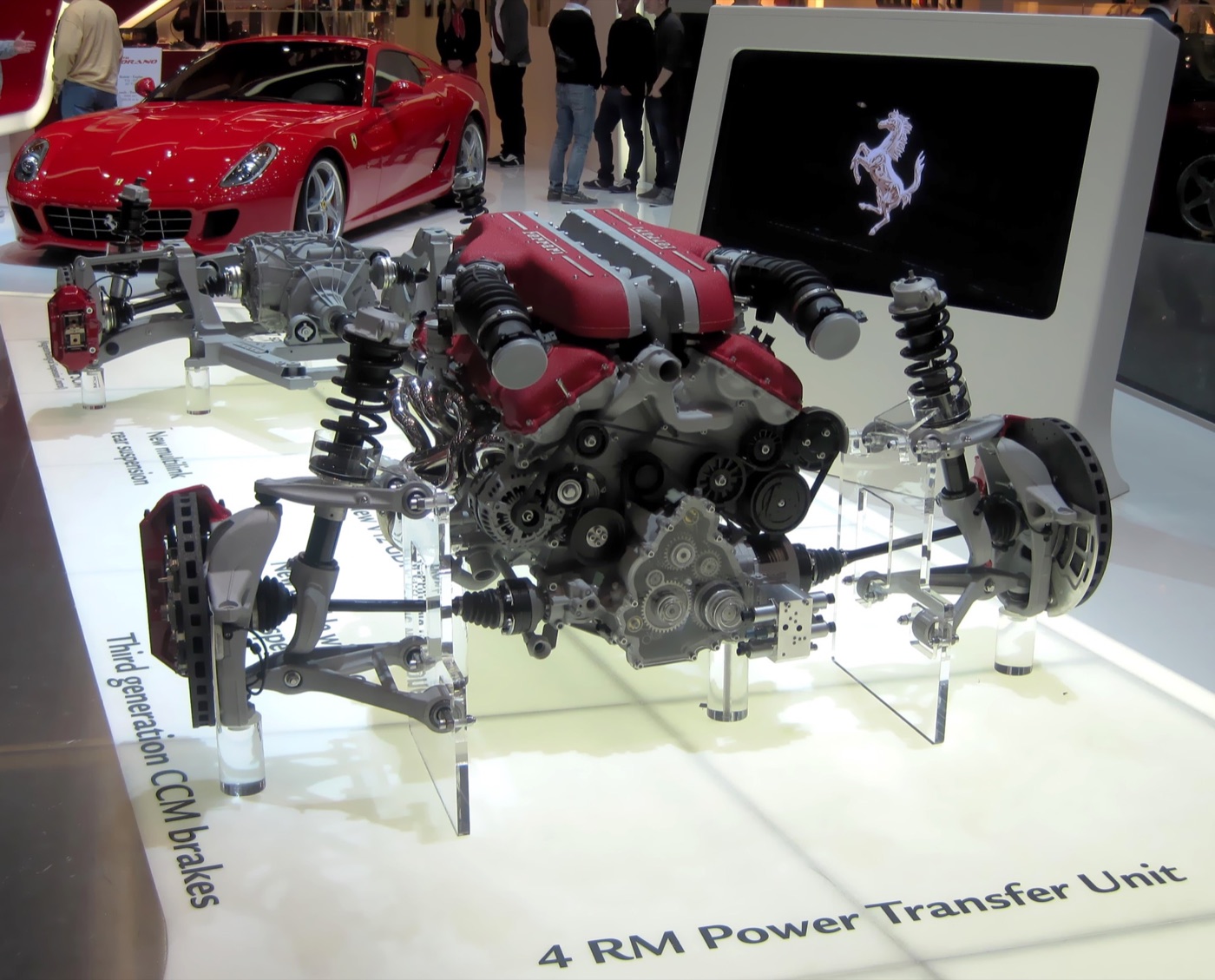
The FF's four-wheel drive system leaves it rear-wheel drive most of the time, and sends drive to the front wheels only when the rear tyres cannot put down the torque the driver asks for. Ferrari calls the system 4RM, from quattro ruote motrici, Italian for four driving wheels. It has no centre differential and no propshaft to the front: the front and rear axles are driven by two separate systems that never connect mechanically.
The power transfer unit
The rear wheels are driven in the usual way, through a propshaft from the back of the engine to a seven-speed twin-clutch gearbox in the rear axle (a transaxle) with Ferrari's E-Diff built into its casing. The front wheels are driven by the power transfer unit (PTU), a small gearbox bolted to the front of the engine above the front axle that takes its drive straight off the crankshaft. The PTU is barely 170mm long, by the FF's technical sheet. It has two forward gears and a reverse, and two carbon-fibre wet multi-plate clutches, one for each front wheel.
Neither of the PTU's two ratios matches the main gearbox exactly, so the clutches slip to make up the difference in speed between front and rear. The same clutches do the work of a front differential and can send more torque to one front wheel than the other. The claimed saving is 50% in weight over a conventional four-wheel-drive layout. Andrea Binotti, the FF's chief engineer, put the system at about 45kg in the New Zealand Herald's March 2011 report; Autocar gives the same figure.
When are the front wheels driven?
Only in the first four gears. Above fourth, the 295/35 rear tyres can take everything the V12 gives, PistonHeads' buying guide explains, and the front axle is idle. Sources differ on how much torque reaches the front: PistonHeads and Hagerty say up to a fifth (20%), while the New Zealand Herald report gave up to 47% in the first four gears. The control software, called 4RM Control, shares a processor with the E-Diff and F1-Trac traction control and estimates the grip at each wheel; in the snow setting of the manettino, the switch on the steering wheel, it is calibrated for ice. On a dry road the FF feels rear-driven through fast corners, and the front axle cuts in when the car is about to oversteer in slower bends, Autocar's review notes.
The FF on snow and ice
Ferrari showed off 4RM on snow from the start. In January 2012 Fernando Alonso and Felipe Massa raced two FFs side by side down the ski course at Madonna di Campiglio in the Dolomites and finished in a dead heat, Complete Car recorded.
A few weeks later Ferrari filmed Markku Alen, the 1978 world rally champion, driving an FF on the 14km Forest track at Arjeplog in northern Sweden, about 100km south of the Arctic Circle, at temperatures between -15°C and -30°C, as World Rally Blog reported in February 2012. A SkiddMark report on the film noted that the car was on standard Pirelli Sotto Zero winter tyres, not studs, and that Ferrari said an FF on those tyres could make a full-throttle standing start on a 20% (1 in 5) snowy incline without wheelspin. Alen had been a consultant to Ferrari during the FF's development, and in CAR's April 2012 issue Chris Chilton described being told by him to keep his foot down on the same tracks at -12°C; Alen had put an FF waist-deep in snow there the week before.
Design and engineering
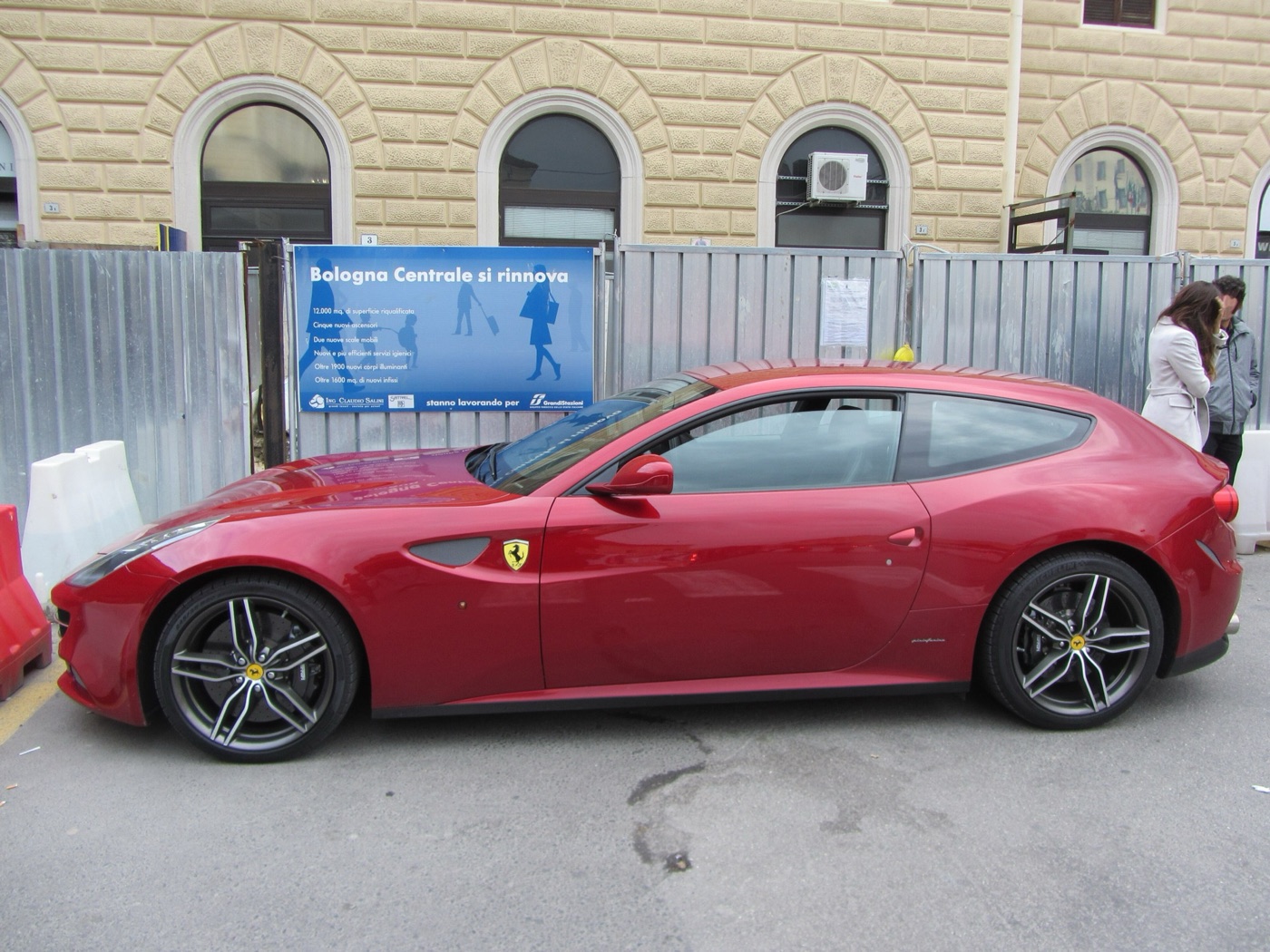
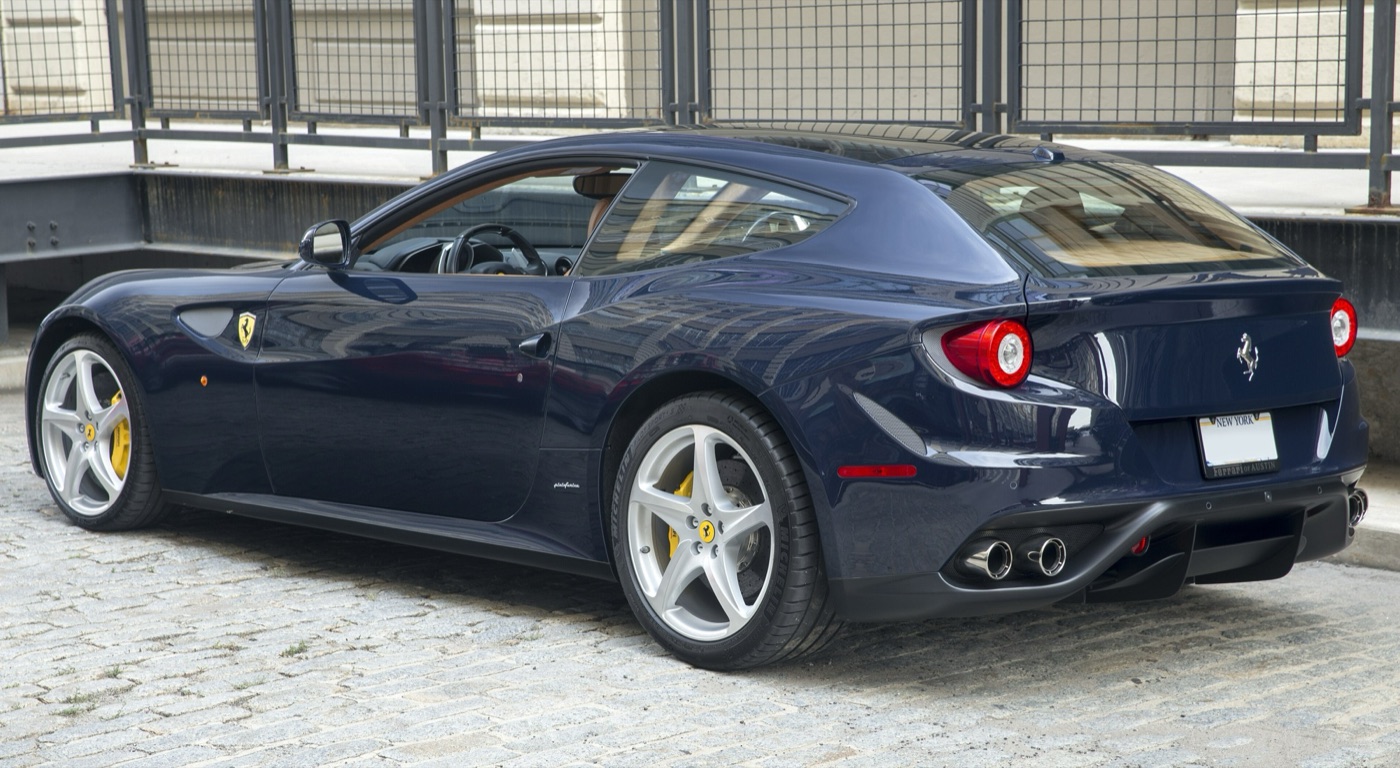
The FF's body is a three-door shooting brake styled by Pininfarina, on an aluminium chassis with the V12 mounted behind the front axle and the gearbox at the back. The New Zealand Herald's March 2011 report adds that Italdesign Giugiaro drew the interior and did some of the body engineering.
Shooting brake body by Pininfarina
A long bonnet, a roof that runs flat to a near-vertical tailgate, and twin round tail lights give the FF its shape. CAR described the result in February 2011 as California flanks with a taller version of the 458 Italia's nose, and a hatchback tail with quad exhausts. Hagerty's Andrew Newton wrote in 2024 that it "wasn't going to win any beauty contests". Aerodynamics shaped the tail: Ferrari quotes a drag coefficient of 0.329, a three-channel rear diffuser with an aerofoil in the middle channel, and vents beside the tail lights that cut pressure in the wheel arches.
Chassis, suspension and brakes
The chassis is mostly an aluminium space frame of extrusions and hollow castings, said to be 10% lighter than the previous generation's and 6% stiffer in torsion. The suspension is by double wishbones at the front and a multi-link layout at the rear, with SCM3 magnetorheological dampers, the system's third generation, adjusting every millisecond. The FF was the first Ferrari with third-generation Brembo carbon-ceramic brakes, whose pads were claimed to last seven to eight times longer than before. Weight distribution is 47% front and 53% rear.
Interior, seats and boot space
The FF has four separate seats, and Ferrari says the back ones take adults up to 185cm (6ft 1in) tall. The boot holds 450 litres with the seats up and 800 litres with both folded, and the centre of the rear backrest folds on its own for skis or a golf bag. Options included a passenger-side display showing speed, revs and gear, a rear-seat entertainment system with screens in the front headrests, and a 1,280-watt, 16-channel stereo in place of the standard 640-watt one.
Ferrari FF specs and performance
The FF has a 6,262cc V12 of 660cv (651bhp) and 683Nm, a seven-speed twin-clutch gearbox, a top speed of 335km/h (208mph) and 0–100km/h in 3.7 seconds. These are the maker's figures for the European car.
| Item | Figure |
|---|---|
| Engine | 65° V12, 6,262cc, direct injection, bore 94mm, stroke 75.2mm, compression 12.3:1 |
| Power | 660cv (486kW, 651bhp) at 8,000rpm |
| Torque | 683Nm (504lb ft) at 6,000rpm; more than 500Nm from 1,000 to 8,000rpm |
| Gearbox | Seven-speed F1 twin-clutch transaxle, plus the two-speed 4RM power transfer unit |
| Length, width, height | 4,907mm, 1,953mm, 1,379mm |
| Wheelbase | 2,990mm |
| Dry weight / kerb weight | 1,790kg / 1,880kg |
| Weight distribution | 47% front, 53% rear |
| Tyres | 245/35 ZR20 front, 295/35 ZR20 rear |
| Brakes | Carbon-ceramic: 398mm front, 360mm rear |
| Top speed | 335km/h (208mph) |
| 0–100km/h (62mph) | 3.7sec |
| 0–200km/h (124mph) | 11.0sec |
| Fuel tank | 91 litres |
| Fuel consumption and CO2 (ECE+EUDC, with HELE) | 15.4 l/100km (18.3mpg), 360g/km |
| Boot | 450 litres, 800 litres with the rear seats folded |
How fast is a Ferrari FF?
The FF's top speed is 335km/h (208mph); the January 2011 figures gave 209mph. When it went on sale it was the fastest four-seat car in the world, a claim PistonHeads accepted on the strength of the 3.7-second 0–62mph time and the top speed. Autocar found that from rest to 124mph it matched the lighter 599 GTB's 11.0 seconds, which it put down to the twin-clutch gearbox and the extra traction.
How much horsepower does a Ferrari FF have?
660cv, which is 651bhp or 486kW, at 8,000rpm. CAR noted in 2011 that this was 10bhp short of the 599 GTO. The GTC4Lusso that replaced the FF has 690cv from the same engine.
The V12 engine and gearbox
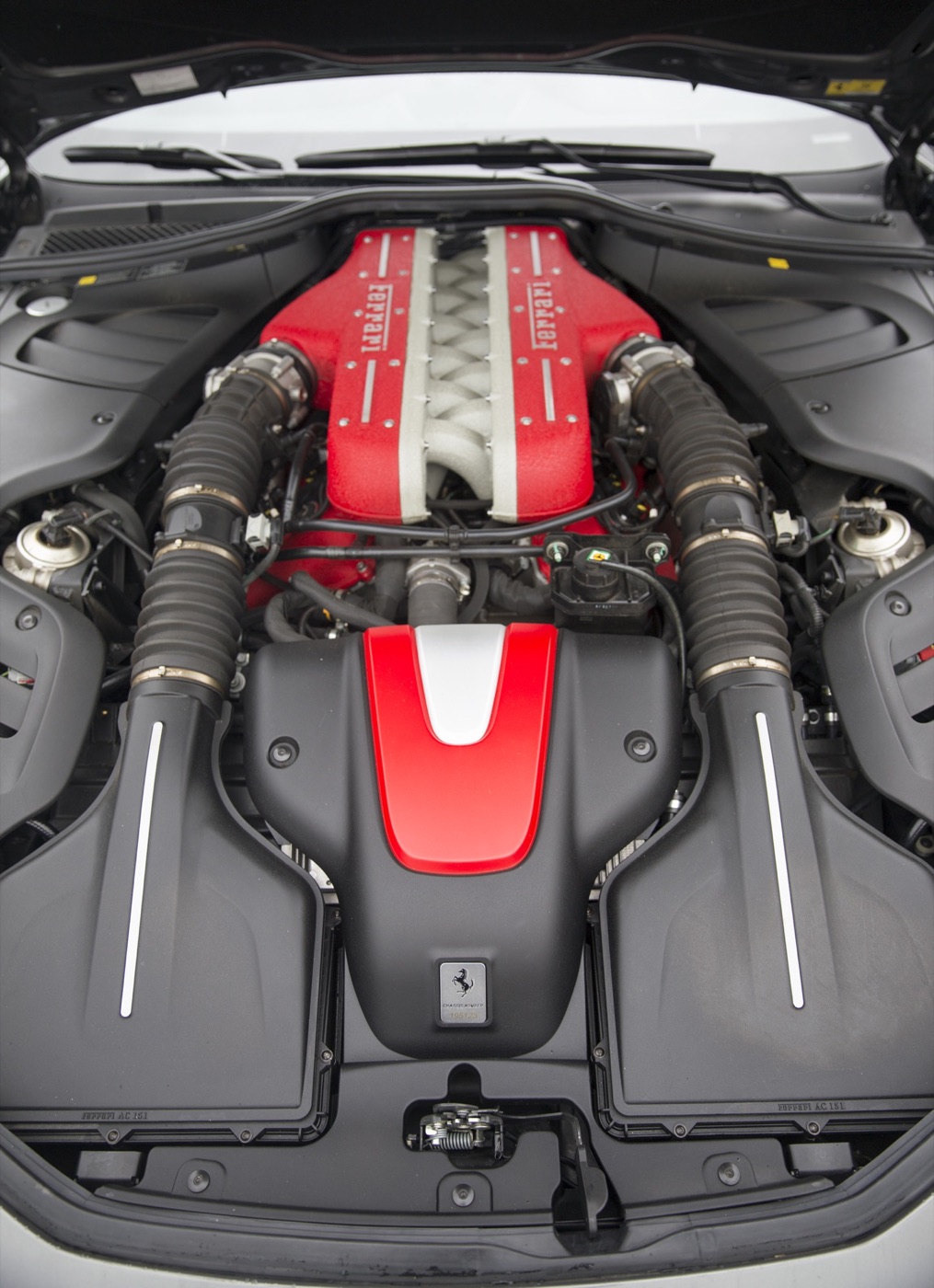
The engine is a V12 of Ferrari's F140 series, Hagerty notes, and Autocar describes it as a direct-injection descendant of the Enzo's V12 with 80% of its peak torque available from 1,750rpm. Ferrari quotes 200-bar direct injection and a 12.3:1 compression ratio; the HELE (High Emotions, Low Emissions) package adds stop-start that restarts the engine in 230 milliseconds, and Ferrari says it cut CO2 by 25% against its earlier V12s. The FF was the first Ferrari to pair a V12 with a twin-clutch gearbox, the company's anniversary article says. PistonHeads identifies the gearbox as a Getrag seven-speed unit, a development of the 458 Italia's, Auto Express adds; there is no manual.
Special editions and one-offs
Ferrari built no official series variants of the FF, but it made a ten-car edition for a department store, personalised cars through its Tailor Made programme, and one coupé one-off.
Neiman Marcus edition
Neiman Marcus offered ten FFs in its 2011 Christmas Book at $395,000 each, in a Grigio Caldo grey paint, with a numbered plaque, a matching luggage set and a place at Ferrari's winter driving school in Aspen, Colorado; reservations opened at noon on 27 October 2011 and delivery was due in spring 2012, TrueCar's report of the catalogue records. All ten sold in 50 minutes, at a $95,000 premium over the list price, Autoblog reported.
Tailor Made: Ian Poulter's tartan FF
The golfer Ian Poulter's FF was the first Tailor Made Ferrari delivered in the US. He saw it on the line at Maranello in July 2012, according to Ferrari's press release of 12 July 2012, and Ferrari's chief executive, Amedeo Felisa, handed it over at Pebble Beach in August 2012 at an evening for more than 300 clients, a SkiddMark report of the delivery recorded. The car has Sabbia triple-layer paint, black Poltrona Frau leather, and Poulter's own registered tartan on the doors, seats, armrest, centre console and roof lining, the first tartan in a Ferrari; New Atlas adds red trim on the dashboard and instruments and a boot lined in carbon fibre.
Ferrari SP FFX
On 28 January 2014 Ferrari confirmed to Autocar that a one-off built by its Special Projects department for a private client was official. The SP FFX is believed to keep the FF's V12 and four-wheel drive under a coupé body in place of the shooting brake tail; Ferrari registered the name in October 2013, and its patent drawings had been taken at first for the next California. No further pictures or details were to be released unless the owner chose to.
How many Ferrari FFs were made?
2,291 Ferrari FFs were made between 2011 and 2016, the figure Autocar, PistonHeads and Hagerty all give. Ferrari had said at launch that it would build no more than 800 FFs a year.
How many Ferrari FFs are in the UK?
236 FFs were on the UK register in the second quarter of 2026, 185 of them licensed and 51 declared off the road (SORN), according to the Department for Transport's table VEH0120. The number licensed has fallen since its peak of 226 in mid-2017, while the number laid up has grown.
| Quarter | Licensed | SORN | Total |
|---|---|---|---|
| 2014 Q4 | 176 | 2 | 178 |
| 2015 Q4 | 216 | 3 | 219 |
| 2016 Q4 | 220 | 12 | 232 |
| 2017 Q4 | 219 | 13 | 232 |
| 2018 Q4 | 215 | 16 | 231 |
| 2019 Q4 | 215 | 18 | 233 |
| 2020 Q4 | 193 | 30 | 223 |
| 2021 Q4 | 198 | 32 | 230 |
| 2022 Q4 | 200 | 29 | 229 |
| 2023 Q4 | 198 | 37 | 235 |
| 2024 Q4 | 174 | 61 | 235 |
| 2025 Q4 | 180 | 55 | 235 |
| 2026 Q2 | 185 | 51 | 236 |
Ferrari FF price: new and used values
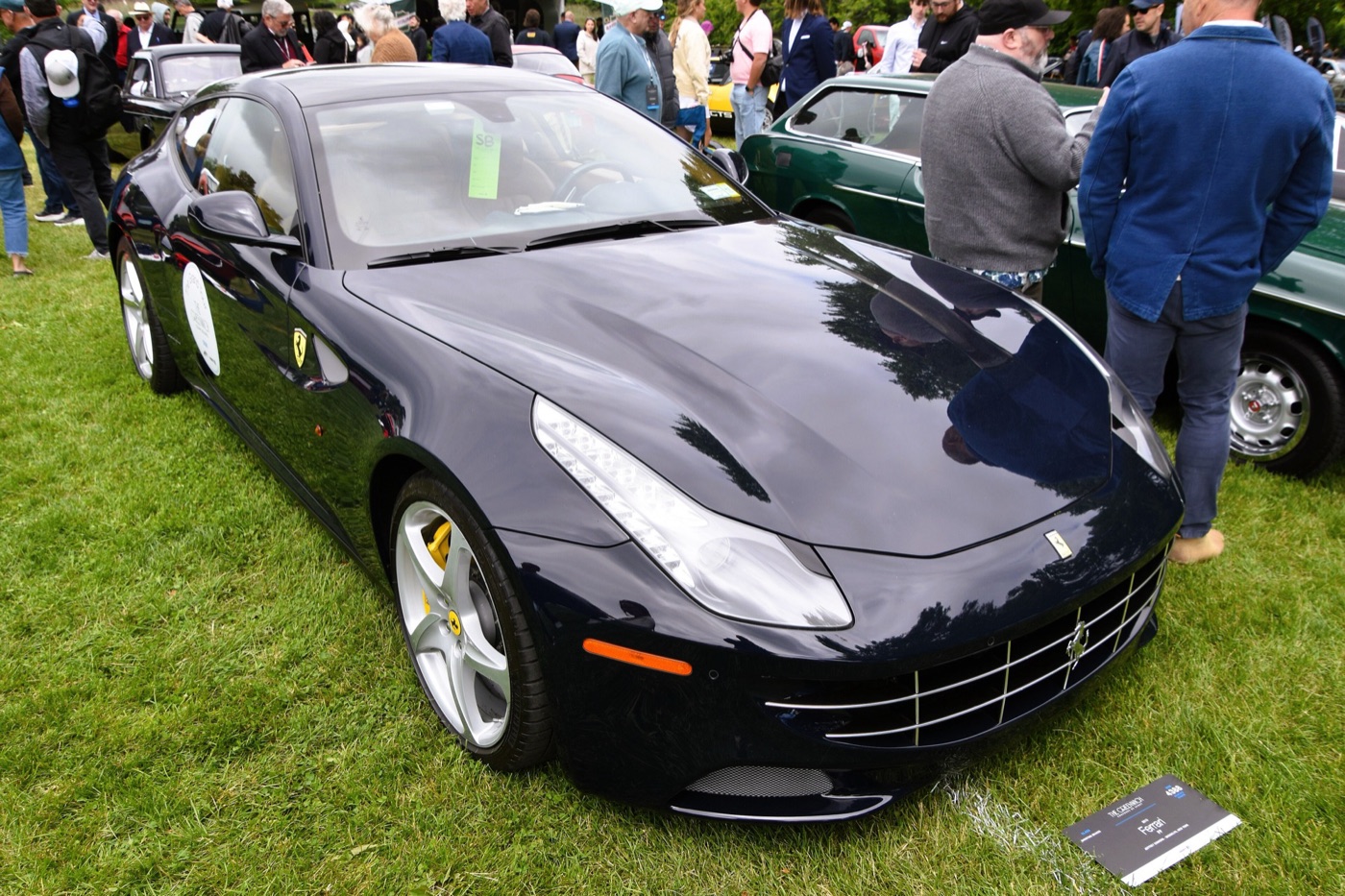
An FF cost about £227,000 new in the UK before options. Auction prices now average about £100,000, and the best cars have made more than three times that.
Price new
The list price was £227,026 in April 2011, and few cars left the factory without extras. PistonHeads says the UK demonstrator carried about £50,000 of options, taking it to about £280,000, and Parkers lists Rosso 2007 F1 paint at more than £19,000. In the US, the car that set the auction record in 2024 had $193,785 of options on its window sticker, for a total of $496,235, Hagerty reported.
What a Ferrari FF is worth today
The Classic Valuer counts 156 FFs offered at auction and 128 sold (82%), with a median price of £100,069, as read on 28 October 2026. Its record is £347,710, paid at RM Sotheby's Paris sale on 28 January 2026, and the lowest £46,704, at a Collecting Cars sale in the United Arab Emirates in April 2025.
The US market turned in January 2024, when an FF with 90 miles and a red interior sold for $324,000 at RM Sotheby's in Arizona against a $150,000–$200,000 estimate. Hagerty called it the first FF to make more than $300,000 at auction, said most clean cars were making between about $100,000 and $150,000, and gave Hagerty Price Guide values of $150,000 in excellent condition to $182,000 in concours condition; it had put the FF on its Bull Market list for 2024. In the UK, PistonHeads put a high-mileage FF at a little over £80,000 and a low-mileage final-year car at about £135,000 in June 2021.
Buying and owning a Ferrari FF
The V12 itself is strong, and the costly faults are in the drivetrain: the power transfer unit, the twin-clutch gearbox and, on cars that have stood, the battery and electrics.
Ferrari FF reliability and known faults
The PTU can fail when fluid gets into it, usually through a leaking seal between it and the crankcase. A new unit costs about £30,000; specialists rebuild them for about £8,000, PistonHeads says, or about £10,000 by Autocar's figure. Some early twin-clutch gearboxes hesitated at low speed or were slow to engage first after reverse, through leaking seals or faulty sensors; a rebuild costs about £5,000. Autocar adds the radiator's plastic tank, which can leak after about 100,000 miles, a weeping oil pan, manettino switch failures, tyre-pressure sensor faults, and centre-console buttons whose coating turns sticky.
A battery left more than a week or so can go flat and throw odd fault messages, as on many supercars, PistonHeads says, and both guides advise a trickle charger. The carbon-ceramic brake discs are expensive to replace (a dealer set of discs and pads can reach £20,000), and the traction control can wear the rear discs faster than the front. PistonHeads also reports failures of the lift system fitted to some cars, which owners have mended with a new seal.
Ferrari FF recalls
In the US, FFs were part of Ferrari's passenger airbag inflator recalls of 2018 and 2019, a 2015 driver airbag recall of 2015 cars, and a 2022 recall for a brake-fluid reservoir cap that may not vent, which can let fluid leak and reduce braking (NHTSA campaign 22V-536), according to the US National Highway Traffic Safety Administration, covering FFs of the 2012 to 2016 model years. The passenger airbag recalls replace inflators that can rupture after long exposure to heat and humidity; the 2015 recall corrects a driver airbag module that may deploy out of position. Auto Express noted in 2012 that a small number of FFs had been recalled in China over the oil lubrication system.
Running costs
New FFs came with Ferrari's seven-year Genuine Maintenance package, which covers labour, parts, oil and brake fluid at the yearly service and stays with the car; cars built in the last years of production were still covered when PistonHeads wrote its guide in 2021. Ferrari's New Power warranty can extend cover to the 15th year for cars under 90,000km that pass an inspection, and PistonHeads suggests budgeting £5,000 a year for it. Road tax is £790 a year on GOV.UK's table for cars registered from 2001 to 2017, since 360g/km puts the FF in band M. Real fuel consumption is about 12mpg against the official 18.3mpg, by PistonHeads' reckoning, and PistonHeads puts a set of Pirelli tyres at about £1,000.
Ferrari FF vs GTC4Lusso
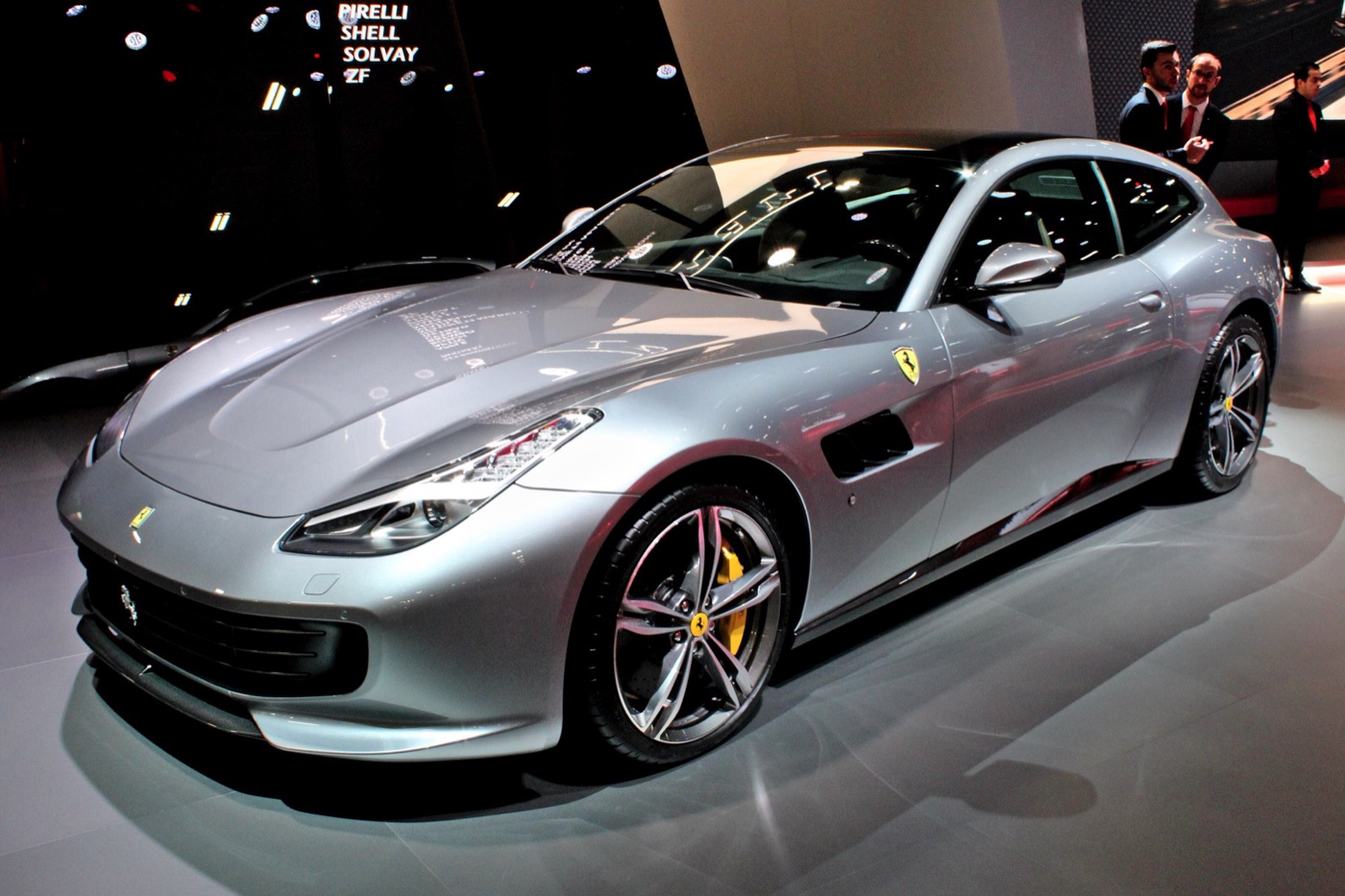
The GTC4Lusso, shown at Geneva in March 2016, is an updated FF with the same body shape, a 690cv version of the V12 and rear-wheel steering. Top Gear's launch report gives the 0–62mph time as 3.4 seconds against the FF's 3.7, with the same 208mph top speed, and notes a new 10-inch touchscreen, a new grille and quad rear lights, the first on a Ferrari since the 612. Ferrari's GTC4Lusso page lists 697Nm at 5,750rpm and a 13.5:1 compression ratio.
The four-wheel drive became 4RM Evo, able to send 90% of the available torque to the outside wheel, and combined with rear steering it became 4RM-S. A GTC4Lusso T followed with a 610hp twin-turbo V8, 50kg lighter; the V12 car stayed on sale until 2020, PistonHeads says. The DfT counted 238 V12 GTC4Lussos and 98 GTC4Lusso Ts on the UK register in the second quarter of 2026.
Ferrari FF rivals
When it was new, the FF's nearest rivals were the four-door Aston Martin Rapide and Porsche Panamera Turbo and the Bentley Continental GT coupé. Auto Express named the Panamera Turbo and the Rapide; evo's Henry Catchpole found more room in the back than in the Rapide and judged the FF much faster and more agile than the Continental GT, though much dearer. The Aston is 5,019mm long against the FF's 4,907mm, by CAR's figures. Ferrari's product marketing director, Marco Valentini, said in 2011 that the FF "creates a segment of its own because no other competitors match the model for roominess and all-round versatility".
Reception and awards
Reviewers praised the four-wheel drive and the room, and found fault with the low-speed manners of the gearbox and the ride on British roads. Top Gear magazine made the FF its Estate Car of the Year in 2011, calling it "the most un-Ferrari Ferrari of modern times, perhaps, but also a stroke of genius, a reinvention of the grand-tourer concept", as Fleet News reported on 30 November 2011.
In evo in April 2011, Henry Catchpole wrote that the traction was "phenomenal" and that big power slides were "definitely off the menu" on a dry road, because the front wheels took up drive just as the tail began to slide; drivers who wanted the edge of a 458 or 599 would be disappointed. Autocar found the twin-clutch gearbox shuffling between first and second in traffic, and the ride, even in Comfort, short of what rough British roads needed. PistonHeads summed up its 2021 guide by saying that a car scoring on both practicality and performance would struggle to beat the FF's total.
Questions
Does the Ferrari FF have a manual gearbox?
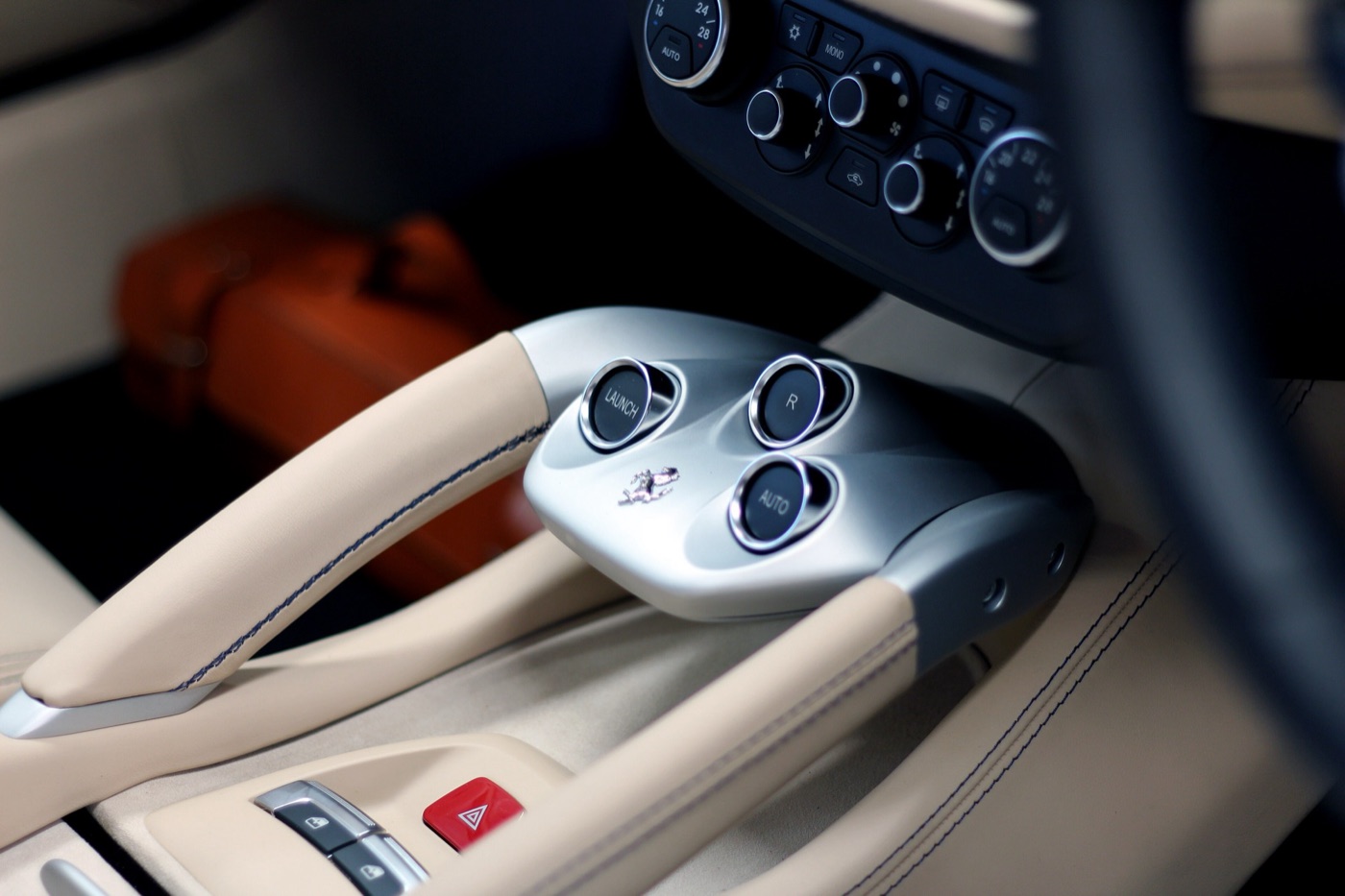
No. Every FF has the seven-speed twin-clutch F1 gearbox, changed with paddles on the steering column or left in automatic mode with the Auto button on the centre console.
Can adults sit in the back of a Ferrari FF?
Yes. Ferrari says the rear seats take passengers up to 185cm (6ft 1in) tall, and PistonHeads found room for adults of normal size, though Auto Express thought them better suited to children on trips of more than an hour.
What fuel economy does a Ferrari FF do?
The official combined figure is 18.3mpg (15.4 l/100km) with the HELE stop-start system. PistonHeads puts real-world use at about 12mpg, and in single figures when driven hard.
Is the Ferrari FF an estate car?
It is a three-door shooting brake: a coupé with a long roof and a tailgate. Top Gear magazine still named it Estate Car of the Year in 2011.
How much is road tax on a Ferrari FF?
£790 a year in the UK on GOV.UK's current table. Every FF emits 360g/km of CO2, which puts it in band M for cars registered from 2001 to 2017.
Is the Ferrari FF going up in value?
Hagerty put the FF on its Bull Market list for 2024, the year one sold for a record $324,000 in Arizona. The Classic Valuer's UK record, £347,710, was set in Paris in January 2026, against a median of £100,069.
Sources
- Ferrari, "Ferrari FF (2011)", model page and technical sheet on ferrari.com, read 28 October 2026: 4RM and PTU description, engine, chassis, brakes, cabin and every figure in the specification table (not linked, as it competes for this page's term).
- Ferrari, "10 years of the Ferrari FF and 4RM", Ferrari Magazine, 5 January 2021: the 408 4RM concepts, Piero Ferrari's 1991 remark, the first V12 with a twin-clutch gearbox, 4RM Evo and 4RM-S.
- Ferrari, "Ferrari GTC4Lusso", model page, read 28 October 2026: GTC4Lusso power, torque and performance.
- Ferrari S.p.A., "Ferrari welcomes Ian Poulter: attention to detail in every aspect", press release via PR Newswire, 12 July 2012: Poulter's visit to Maranello.
- CAR magazine, "Ferrari FF (2011) at 2011 Geneva motor show", 4 February 2011: 612 Scaglietti figures, dimensions, comparison with the 599 GTO and Aston Martin Rapide, styling.
- CAR magazine, "Ferrari FF on ice: off piste with Markku Alen", Chris Chilton, 19 March 2012: Alen as development consultant, Arjeplog drive.
- New Zealand Herald, "Ferrari FF flies off production line", 22 March 2011: the 800-a-year limit, the 612's 5.7 litres, first year sold out, 70 a month, Andrea Binotti on the 45kg system, front torque share, Italdesign's part, Marco Valentini's remark.
- evo, "Ferrari FF review", Henry Catchpole, 11 April 2011: UK price of £227,026, driving impressions, rivals (not linked, as it competes for this page's term).
- Autocar, "Ferrari FF (2011–2016)" review and used buying guide, read 28 October 2026: production of 2,291, how 4RM drives, 0–124mph against the 599 GTB, known faults and repair costs (not linked, as it competes for this page's term).
- Autocar, "One-off Ferrari SP FFX unveiled", 28 January 2014: the SP FFX.
- PistonHeads, "Ferrari FF: PH used buying guide", Tony Middlehurst, 13 June 2021: 4RM's limits, PTU and gearbox faults and costs, warranties, servicing, real fuel use, tyres, prices in 2021 (not linked, as it competes for this page's term).
- Parkers, "Ferrari FF Coupe (2011–2016) review", 6 June 2019: option prices (not linked, as it competes for this page's term).
- Auto Express, "Ferrari FF" review, 14 June 2012: rivals, gearbox, the Chinese lubrication recall (not linked, as it competes for this page's term).
- Hagerty, "Was $324K the Ferrari FF's breakout sale?", Andrew Newton, 27 January 2024: production, US price, the Arizona record, price guide values, front torque share, the F140 engine series.
- The Classic Valuer, "Ferrari FF buyer's guide", read 28 October 2026: auction median, record and lowest prices, sell-through rate.
- Department for Transport, table VEH0120, 2026 Q2 release, counted on 28 October 2026: UK licensed and SORN FFs and GTC4Lussos.
- GOV.UK, vehicle tax rates for cars registered on or after 1 March 2001, read 28 October 2026: band M rate.
- US National Highway Traffic Safety Administration, recalls for the Ferrari FF, model years 2012 to 2016 (campaigns 15V-433, 18V-040, 18V-381, 19V-006, 22V-536), read through NHTSA's recalls API on 28 October 2026.
- Top Gear, "Bye bye FF, hello Ferrari GTC4Lusso", 1 March 2016: GTC4Lusso changes and performance.
- Fleet News, "Ferrari receives two awards from Top Gear Magazine", 30 November 2011 (archived copy): Estate Car of the Year and Top Gear's citation.
- AutoGuide, "Ferrari FF now features Apple's Siri and iPad minis", March 2013.
- Malay Mail (AFP), "Ferrari first to link with new iPhone with Apple CarPlay", 10 September 2014.
- TrueCar, "2012 Ferrari FF makes the 2011 Neiman Marcus Christmas Book", October 2011, and Autoblog, "Neiman Marcus moves ten special edition Ferrari FFs in just 50 minutes", Noah Joseph, 10 November 2011.
- New Atlas, "Golfer Ian Poulter takes delivery of tartan-trimmed Tailor Made Ferrari FF", 3 September 2012.
- Complete Car, "Markku Alen drifts the Ferrari FF on snow", 3 February 2012: also the Alonso and Massa slalom.
- World Rally Blog, "Video: Markku Alen and Ferrari FF racing through the snow", 3 February 2012: Ferrari's account of the Arjeplog test.
- The Jensen Museum, "Ferguson four-wheel-drive system explained" and "Jensen production figures and dates", read 28 October 2026: the Ferguson Formula, its torque split, and Jensen FF production of 320.
- Classic & Sports Car, "Buyer's guide: Jensen Interceptor and FF": the FF launched alongside the Interceptor.
- SkiddMark: Ferrari unveils its first ever 4WD model, the FF (January 2011); Markku Alen takes Ferrari's FF on a snow-covered forest stage (February 2012); Ferrari delivers a uniquely personalised FF to golfer Ian Poulter (August 2012).