Gilles Villeneuve: Ferrari career, the 312 T4 and Zolder 1982
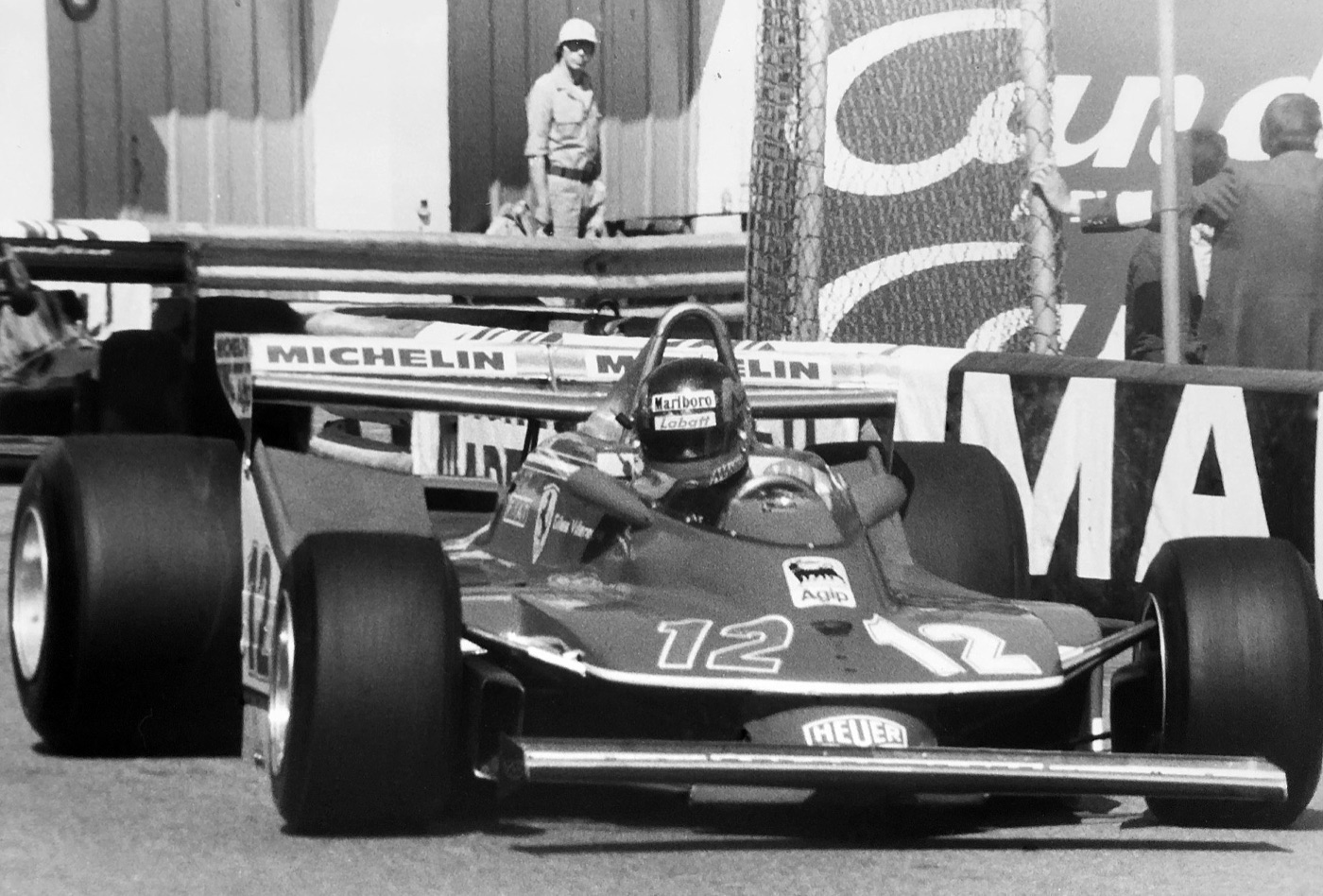
Gilles Villeneuve was a Canadian racing driver who started 67 Formula One Grands Prix between 1977 and 1982, one for McLaren and the rest for Ferrari, and won six of them. He finished second in the 1979 World Championship in the Ferrari 312 T4, four points behind his team-mate Jody Scheckter, according to Formula 1’s official 1979 standings. He was killed in final qualifying for the Belgian Grand Prix at Zolder on 8 May 1982, at the age of 32, when his Ferrari hit the back of Jochen Mass’s March and was launched into the air.
Montreal’s Grand Prix circuit has carried his name since 1982. His son Jacques won the World Championship with Williams in 1997, and on 8 May 2012, 30 years to the day after the crash, Jacques drove his father’s 312 T4 at Ferrari’s Fiorano test track, an outing SkiddMark reported in April 2012.
Early life, snowmobiles and Formula Atlantic
Villeneuve’s racing career skipped Formula 3 and Formula 2: he went from snowmobiles to Formula Ford in 1973 and to Formula Atlantic in 1974, and won the Canadian and American Formula Atlantic titles in 1976.
Born in Quebec in 1950
He was born on 18 January 1950. StatsF1’s driver record gives his full name as Gilles Joseph Henri Villeneuve and his birthplace as Saint-Jean-sur-Richelieu, Quebec; Canada Post’s notes for its 1997 Villeneuve stamps give Chambly, and say the family moved to Berthierville, on the north shore of the St Lawrence between Montreal and Trois-Rivières, when he was eight.
Snowmobile world champion
He started racing on his father’s Motor-Ski at Berthierville. In 1974 he won the World Championship in an Alouette, and he went on to build the first twin-track snowmobile to appear in oval racing and the independent front suspension Skiroules that changed snowmobile racing in the late 1970s, as the Snowmobile Hall of Fame records. Canada Post’s stamp notes say he won titles at Eagle River, Wisconsin, and that his snowmobile prize money paid for his start in Formula Ford.
Formula Ford and Formula Atlantic
After the Jim Russell racing school at Mont-Tremblant he won the Quebec Formula Ford championship in 1973, taking seven wins from ten races in a car several years old (StatsF1), and was named rookie of the year. He broke a leg in his first Formula Atlantic season in 1974, won his first Atlantic race at Gimli in the rain in 1975, and in 1976 won nine of the ten races in Ecurie Canada’s March 76B. He took a second Atlantic title in 1977 in a March 77B.
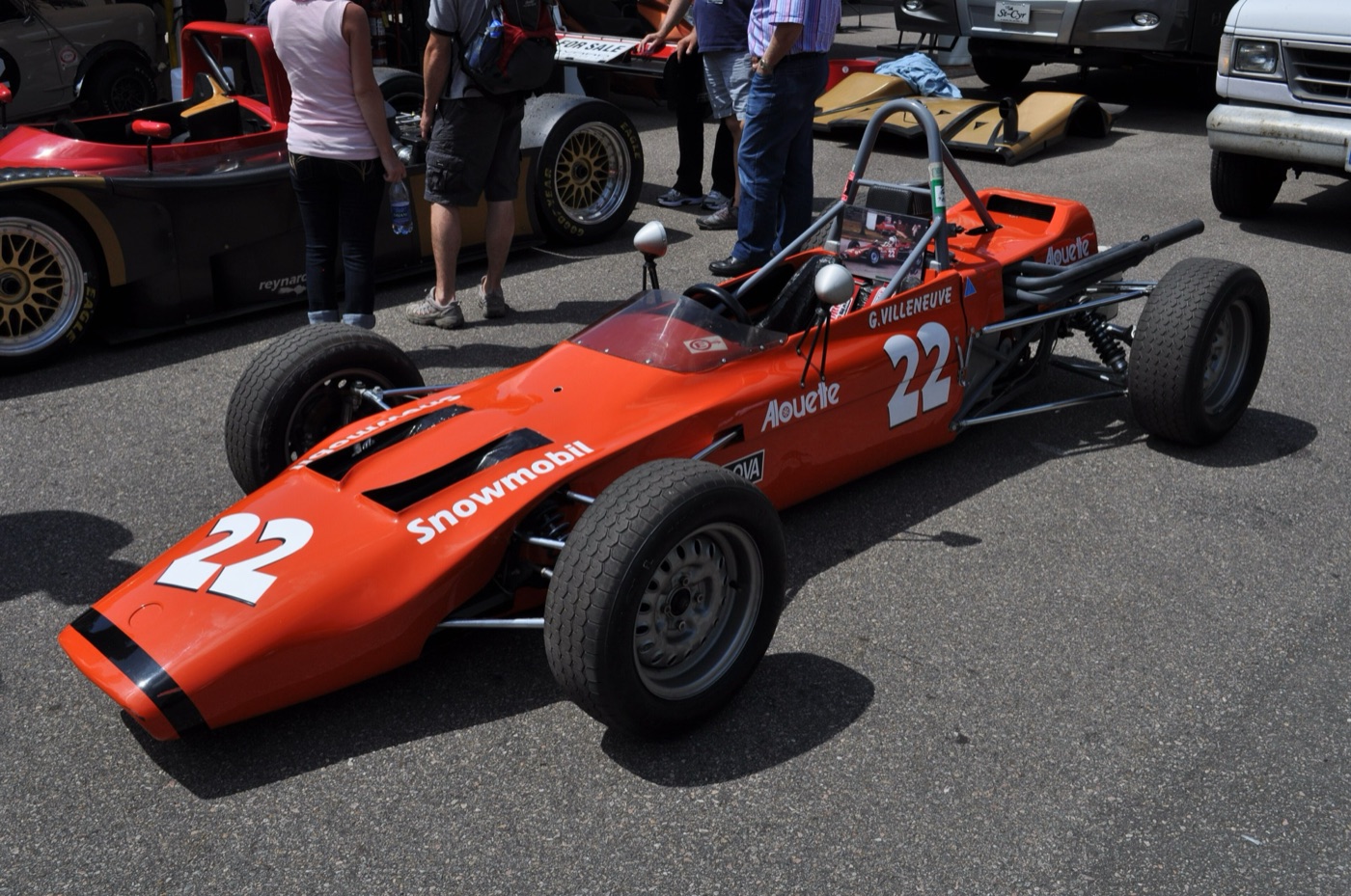
The car is a Magnum, from the Quebec firm Magnum Cars. SkiddMark reported in October 2013, citing the company’s spokesperson, that it had been making racing parts since 1968, that its founder was Jean-Pierre St-Jacques and that Gilles Villeneuve had driven its cars.
Trois-Rivières 1976 and James Hunt
In September 1976 the Trois-Rivières street race invited Formula One drivers to race the Atlantic regulars, and Villeneuve beat them, James Hunt among them (StatsF1). Hunt told his McLaren team manager, Teddy Mayer, that Villeneuve was worth a look, Adam Cooper wrote for Motorsport.com in 2021.
F1 debut with McLaren at the 1977 British Grand Prix
McLaren entered Villeneuve in a third car, a year-old M23, at the British Grand Prix at Silverstone in July 1977. He qualified ninth, ahead of the team’s regular driver Jochen Mass in a newer M26, set the fifth-fastest lap in the race and finished 11th after an unplanned pit stop for a faulty water temperature gauge (StatsF1). Formula 1’s results list him 11th, two laps down.
Denis Jenkinson watched him at the Wednesday pre-qualifying session and wrote in Motor Sport: “He was confident, quick and remarkably cool. His name is Gilles Villeneuve (which could be translated into George Newton) and though he had a number of spins, they were not clue-less ones.” McLaren did not keep him for 1978 and signed Patrick Tambay.
Joining Ferrari at the end of 1977
Ferrari signed Villeneuve for the last two races of 1977 to replace Niki Lauda, who had already won that year’s title and left the team early. At the Canadian Grand Prix at Mosport Park he qualified 17th in a car set up for Lauda and was out with a broken transmission (StatsF1); Formula 1’s results classify him 12th.
The Fuji crash, 1977
At the Japanese Grand Prix at Fuji, Japan, on 23 October 1977 he started near the back of the grid. Going into his sixth lap he “left his braking too late at the end of the start/finish straight” and ran into the back of Ronnie Peterson’s six-wheeled Tyrrell, according to Motor Sport’s December 1977 report. The Ferrari somersaulted over a guard rail into onlookers standing in a prohibited area; Villeneuve was unhurt, and the report says a marshal and a photographer were killed. Matt Bishop, writing for Motor Sport later, says the brake pedal went to the floor and that the car struck a marshal and eight spectators.
Gilles Villeneuve’s Ferrari career, 1978 to 1981
In four full seasons with Ferrari Villeneuve won one race in 1978, three in 1979 and two in 1981, drove four different cars and finished the 1979 championship second.
1978: the 312 T3 and a first win in Montreal
Ferrari used the 312 T3 on Michelin radial tyres in 1978, with Carlos Reutemann as his team-mate. At Long Beach he led for 38 laps from the front row before he hit the back of Clay Regazzoni’s Shadow while trying to pass it, and the Italian press asked whether he should keep the seat (StatsF1). He scored his first points with fourth in Belgium and his first podium with third in the wet in Austria. At Monza he crossed the line second, but he and Mario Andretti were each given a one-minute penalty for jumping the start.
The last race of the year was the first Canadian Grand Prix on the new circuit on the Île Notre-Dame in Montreal, on 8 October. Villeneuve qualified third. Jean-Pierre Jarier led in the Lotus 79 until an oil leak onto the rear brakes made him stop at the end of lap 49, and Villeneuve led the last 21 laps to win his home Grand Prix, Alan Henry reported in Motor Sport, November 1978. Prime Minister Pierre Trudeau had waved the field away on the parade lap. He finished the season ninth with 17 points.
1979: the 312 T4 and second in the championship
Jody Scheckter joined from Wolf for 1979. Ferrari raced the 312 T3 in the first two rounds, then brought out the 312 T4, its ground-effect car, at Kyalami, and it won its first two races (Ferrari’s history of the 312 T4). Villeneuve won both: South Africa on 3 March and the United States Grand Prix West at Long Beach on 8 April, where he took his first pole position, set fastest lap and led every lap, and went top of the championship (StatsF1).
Dijon 1979: the duel with René Arnoux
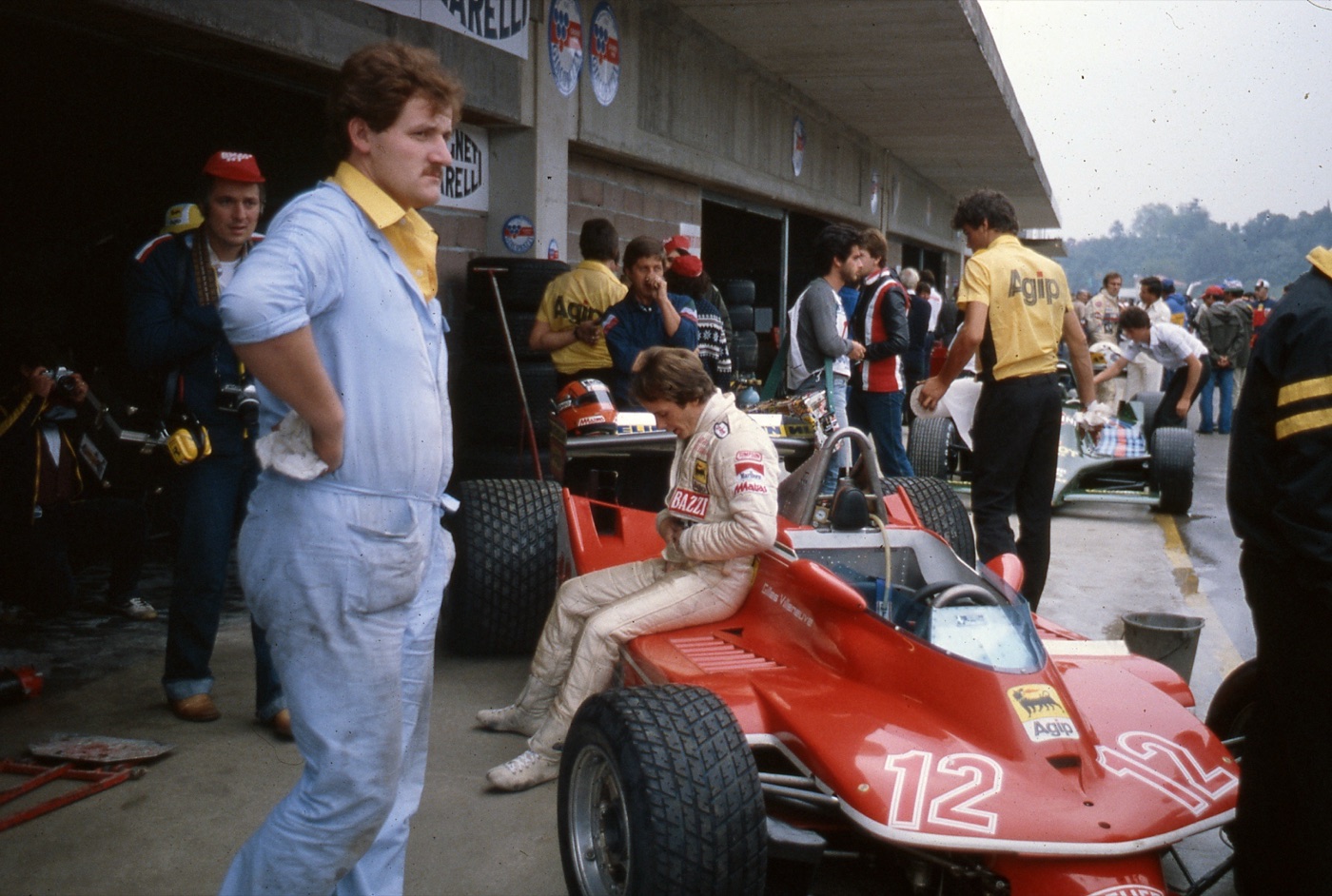
At the French Grand Prix at Dijon-Prenois on 1 July he led the first half of the race from the second row, until his early pace wore out his tyres and brakes and Jean-Pierre Jabouille’s Renault passed him to win. In the last laps Arnoux’s Renault caught him for second. Denis Jenkinson’s report in Motor Sport, August 1979, describes it: “Side by side they started the last lap, side by side they went into the first corner… rubbing their tyres against each other as they dived into the twisty back leg.” The Ferrari got the verdict by an official quarter of a second, and both drivers said afterwards it had been good fun.
Zandvoort 1979: back to the pits on three wheels
Leading the Dutch Grand Prix in August, he had his left rear tyre burst. He drove a full lap on three wheels back to his pit, tearing off the suspension on the way, and retired (StatsF1).
Monza 1979 and the title
At Monza Villeneuve stayed behind Scheckter, as Ferrari asked, and finished second; the result gave Ferrari the constructors’ title and Scheckter the drivers’ title. Villeneuve was then second in Canada and won the United States Grand Prix at Watkins Glen on 7 October. Formula 1’s standings give Scheckter 51 points and Villeneuve 47 after dropped scores; Villeneuve scored 53 in all.
1980: the 312 T5
The 312 T5 was a development of the T4 that the other teams’ ground-effect cars had overtaken: the flat-12 engine was too wide for the airflow under the car (StatsF1). Villeneuve retired from the first four races, crashed heavily at the Italian Grand Prix at Imola when a tyre failed, and scored six points, with fifth places at Monaco and in Canada his best. Scheckter scored two points and retired from racing at the end of the year.
1981: the 126 CK turbo, Monaco and the Spanish Grand Prix
For 1981 Ferrari replaced the flat-12 with a turbocharged 1.5-litre V6 in the 126 CK (often written 126CK), and Didier Pironi joined from Ligier. The engine had power and bad turbo lag, and the chassis lacked stiffness and downforce. Villeneuve took pole at Imola and finished seventh after a wrong tyre choice, then won at Monaco on 31 May from second on the grid, after first Nelson Piquet’s Brabham and then Alan Jones’s Williams lost the lead (StatsF1).
Three weeks later at Jarama he started seventh in car number 27, was third into the first corner and took the lead on lap 14 when Jones slid off. For the rest of the 80 laps Jacques Laffite, John Watson, Carlos Reutemann and Elio de Angelis sat behind him, unable to pass. “For the final ten laps Villeneuve gave as fine a display of self-control as you could wish to see,” Jenkinson wrote in Motor Sport, August 1981. He won by two tenths of a second from Laffite. Later that year he finished third in the wet in Canada with his front wing folded up after a spin, and he was seventh in the championship with 25 points.
Ferrari 312 T4 specification
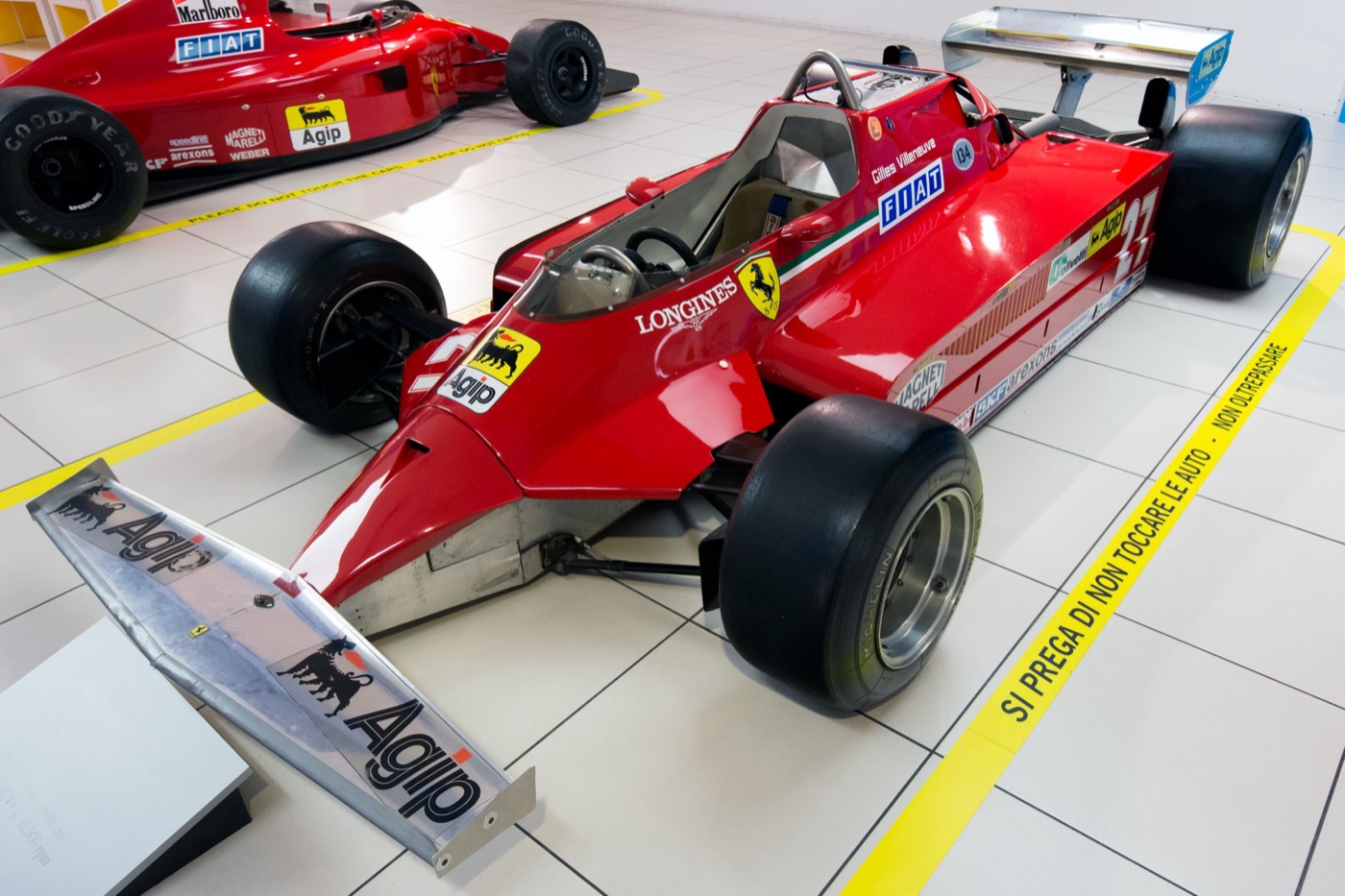
The 312 T4 had Ferrari’s 3-litre flat-12 and a five-speed gearbox, and Ferrari widened its flanks to house the air intakes for the radiators and engine, because the wide flat-12 was at odds with the car’s aerodynamics. Inboard rear brakes cut unsprung weight.
| Item | Figure |
|---|---|
| Engine | Rear, longitudinal flat-12, 2,991.8 cc, bore and stroke 80 × 49.6 mm |
| Valves | Twin overhead camshafts per bank, four valves per cylinder |
| Compression ratio | 11.5:1 |
| Fuel system | Lucas indirect injection, dry-sump lubrication |
| Maximum power | 379 kW (515 hp) at 12,300 rpm |
| Gearbox | Five-speed and reverse, multi-plate clutch |
| Chassis | Monocoque, tubular steel with aluminium panels |
| Suspension | Twin wishbones front and rear, inboard springs, anti-roll bars |
| Weight | 590 kg with liquids |
| Fuel tank | 190 litres |
| Tyres | 23/59 × 13 in front, 38/68 × 13 in rear |
| 1979 wins | Six: three for Villeneuve, three for Scheckter |
Source: Ferrari’s 312 T4 page.
Imola 1982: Pironi and the team orders
At the San Marino Grand Prix on 25 April 1982 Pironi passed Villeneuve on the last lap and won, after Ferrari had shown both drivers a “SLOW” sign, and Villeneuve believed his team-mate had broken an order to hold position.
Ferrari had a new car for 1982, the 126 C2, designed by Harvey Postlethwaite, with an aluminium honeycomb chassis. Villeneuve retired in South Africa with turbo failure, led 29 laps in Brazil before spinning off while defending against Piquet, and was disqualified from third at Long Beach for an asymmetric double rear wing (StatsF1). Most of the British teams boycotted Imola over the FISA–FOCA dispute, and 14 cars took part. In qualifying Villeneuve was third, “the obvious idol of the huge crowd”, Jenkinson wrote.
When Arnoux’s Renault engine blew on lap 44 the two Ferraris were first and second. Both cars were marginal on fuel, Cooper writes, and to Villeneuve the pit board’s order to slow meant that the two should hold station. Jenkinson’s report in Motor Sport, June 1982, says Villeneuve cut his pace from 1 min 35 sec laps to 1 min 37 sec, and Pironi promptly lapped in 1 min 35 sec and took the lead. They swapped places several times; Villeneuve led as they started the last lap, and Pironi passed him into the Tosa hairpin and won “by a few feet”. Villeneuve was “almost speechless afterwards”.
He refused to celebrate on the podium and swore never to speak to Pironi again, Cooper wrote. Scheckter, who flew to Modena with him in his helicopter after Imola, told Cooper: “He trusted Pironi. It would have affected him badly for quite a while.”
How did Gilles Villeneuve die?
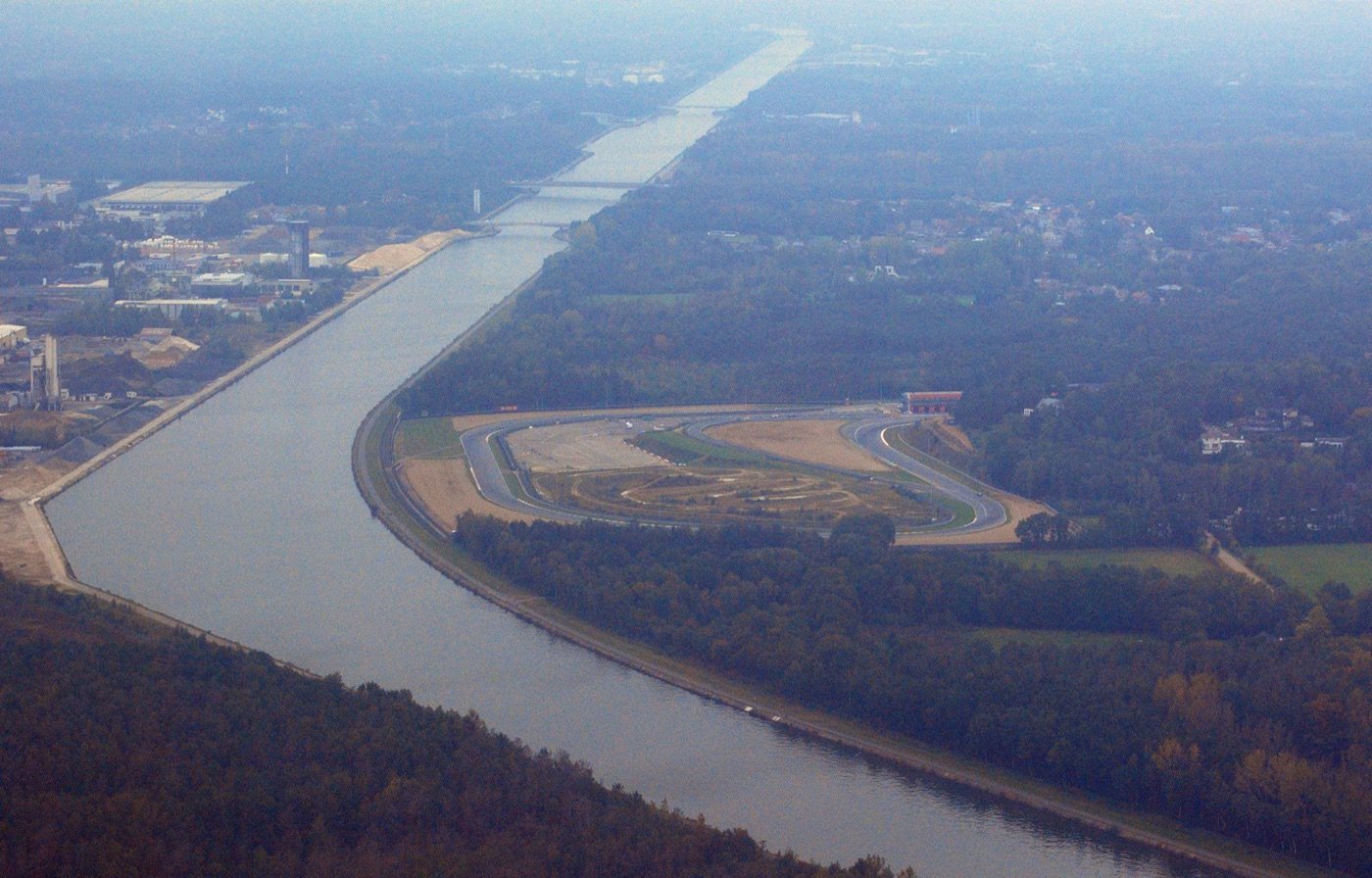
Villeneuve died of a broken neck after a collision in which his Ferrari 126 C2 struck the back of Jochen Mass’s March in the last minutes of final qualifying for the Belgian Grand Prix at Zolder on Saturday 8 May 1982, and was launched into the air.
Final qualifying at Zolder
On the Friday he had been fifth fastest, 1.2 seconds and ten places ahead of Pironi. On Saturday Pironi was faster than him by a tenth of a second, and Villeneuve was on his second and last set of qualifying tyres, which were already past their best; the team signalled him to come in at the end of the lap (Cooper, Motorsport.com).
With eight minutes of the session left, he came up behind Mass, who was coasting back to the pits. Mass moved right to let him by; Villeneuve had already committed to passing on the right. Jenkinson’s report in Motor Sport, June 1982, says the Ferrari’s left front tyre clipped the March’s right rear tyre and the car somersaulted and crashed nose first into the ground at upwards of 140 mph, its front breaking off completely. Villeneuve was thrown out, still in the Ferrari’s seat belts, which were attached to a piece torn from the chassis, and landed in the catch fencing on the outside of the corner without his helmet (Cooper). John Watson and Derek Warwick stopped to help him, Matt Bishop writes in Motor Sport’s history of Zolder.
Hospital in Leuven
He was flown by helicopter to hospital in Louvain (Leuven) and put on life support, and his death was announced that evening (Motor Sport, June 1982). His wife Joann travelled from Monaco to give permission for the machines to be switched off, Cooper writes. Ferrari withdrew Pironi’s car and went home, and the race ran with the grid closed up. Grandprix.com records that the impact broke his neck and that he had started 67 Grands Prix and won six.
Gilles Villeneuve’s F1 results
Villeneuve entered 68 World Championship Grands Prix and started 67, with six wins, 13 podiums, two pole positions, eight fastest laps and 534 laps led (StatsF1). He scored 107 points, 101 of them counted under the dropped-score rules of the time, and was disqualified twice, at Las Vegas in 1981 for starting from the wrong grid position and at Long Beach in 1982.
| Season | Team and car | Starts | Wins | Podiums | Points | Position |
|---|---|---|---|---|---|---|
| 1977 | McLaren M23; Ferrari 312 T2 | 3 | 0 | 0 | 0 | Not classified |
| 1978 | Ferrari 312 T3 | 16 | 1 | 2 | 17 | 9th |
| 1979 | Ferrari 312 T3, 312 T4 | 15 | 3 | 7 | 47 (53 scored) | 2nd |
| 1980 | Ferrari 312 T5 | 14 | 0 | 0 | 6 | Equal 10th on points (14th, StatsF1) |
| 1981 | Ferrari 126 CK | 15 | 2 | 3 | 25 | 7th |
| 1982 | Ferrari 126 C2 | 4 | 0 | 1 | 6 | Equal 15th on points |
Sources: Formula 1’s official results for 1978–82 (race by race and final standings); StatsF1 for 1977 and the cars. Formula 1’s table ranks drivers on equal points together; for 1980 StatsF1 separates them on their best finishes and puts him 14th.
How many races did Gilles Villeneuve win?
Six World Championship Grands Prix, all for Ferrari.
| Date | Grand Prix | Circuit | Car |
|---|---|---|---|
| 8 October 1978 | Canada | Île Notre-Dame, Montreal | 312 T3 |
| 3 March 1979 | South Africa | Kyalami | 312 T4 |
| 8 April 1979 | United States West | Long Beach | 312 T4 |
| 7 October 1979 | United States | Watkins Glen | 312 T4 |
| 31 May 1981 | Monaco | Monte Carlo | 126 CK |
| 21 June 1981 | Spain | Jarama | 126 CK |
Sources: Formula 1’s results for 1978, 1979 and 1981; Ferrari and StatsF1 for the cars.
Gilles Villeneuve’s driving style
Motor Sport described Villeneuve at Jarama in 1981 “throwing the Ferrari about with abandon”, and his team-mate Jody Scheckter thought the wild image was partly an act.
“I don’t think he did things that put him into uncalculated dangers. I think he was a responsible guy,” Scheckter told Adam Cooper. “He always had this image of being a crazy guy, and he wasn’t really. The only time he was crazy was when he wanted to be.” On a drive from Monaco with Villeneuve at the wheel, Scheckter said, he drove perfectly until just outside Modena, when the wheels started spinning. Scheckter added that Villeneuve “thought winning laps was important”, more than the points that win titles: “The press people loved it when he put on qualifying tyres and went quickest.”
Grandprix.com’s 2007 anniversary piece credited him with “extraordinary natural speed” and said that in 1979 he often sat behind Scheckter when he could probably have passed him. After he led half the 1978 race at Long Beach, Jenkinson wrote in Motor Sport: “He’ll learn and he’ll win.” Alan Henry quoted the line in his report of the Montreal win that October.
Family: Joann, Jacques and Mélanie
Villeneuve and his wife Joann had two children, Jacques and Mélanie. At European races he usually stayed in his motorhome with the family, who lived in Monaco; at Zolder, for once, they had stayed at home, Cooper writes.
Jacques Villeneuve raced in Formula One from 1996 and won the World Championship with Williams in 1997 (grandprix.com). He never drove for Ferrari in Formula One, as SkiddMark noted in 2012. Speaking to Motor Sport’s Damien Smith at Fiorano in May 2012, he said: “I wouldn’t have had a career had he been alive because he would have controlled it. I wouldn’t have been allowed to be myself.”
Gilles Villeneuve’s cars today
Ferrari has run his 1979 312 T4 at Fiorano for the 30th and 40th anniversaries of his death, a 1981 126 CK in his number 27 is at the Museo Ferrari, Nick Mason’s collection has included his 1978 312 T3, and his Magnum Formula Ford was shown at Mont-Tremblant in 2010.
Jacques Villeneuve and the 312 T4 at Fiorano, 2012
SkiddMark reported in April 2012 that Ferrari would put Jacques Villeneuve in his father’s 312 T4 at Fiorano on Tuesday 8 May, the 30th anniversary of Gilles’s death. Ferrari’s statement, quoted in that report, said his memory was “still vivid and alive in the minds of many at Maranello” and that it was reuniting the Villeneuve name with the car “at the venue where it all began”. SkiddMark’s writer listed the three deaths he would always remember: Jim Clark at Hockenheim on 7 April 1968, Gilles Villeneuve at Zolder on 8 May 1982 and Ayrton Senna at Imola on 1 May 1994, and planned to visit Zolder that year. He called Gilles Ferrari’s “most likeable and talented driver”, still popular with Ferrari fans too young to have watched him race. At the time Jacques was racing in the Andros Trophy ice series for Skoda, the report said.
On the day, Luca di Montezemolo, Fernando Alonso, Felipe Massa, Mauro Forghieri, Enzo Ferrari’s secretary Brenda Vernor, Gilles’s old mechanics, Joann and Mélanie watched, Damien Smith wrote in Motor Sport. Jacques made a couple of short runs and stopped once out on the circuit because of the engine’s low oil pressure. “I was actually sitting in his seat and his belts. Nothing had been touched,” he said. Evo’s report of the day lists his mechanics, Joann and Mélanie among those there.
It was not his first drive in one of his father’s cars. SkiddMark’s 2012 report says he drove the 312 T4 at the 2004 Goodwood Festival of Speed; Classic & Sports Car says the Goodwood car was Gilles’s 1978 312 T3.
Charles Leclerc and the 312 T4, 2022
For the 40th anniversary in 2022 Ferrari put Charles Leclerc in the same 312 T4 at Fiorano, with René Arnoux there to advise him, Formula 1 reported.
Nick Mason’s 312 T3
Pink Floyd’s drummer Nick Mason included Villeneuve’s 1978 Ferrari 312 T3 in his book Passion for Speed. Asked by SkiddMark in October 2010 whether he had met Gilles, Mason said: “No I didn’t but I’ve met Jacques a few times.”
Memorials to Gilles Villeneuve
Villeneuve has a circuit named after him in Montreal, a corner at Zolder, a road and a bust at Fiorano, a museum in Berthierville and a Canadian stamp.
Circuit Gilles-Villeneuve, Montreal
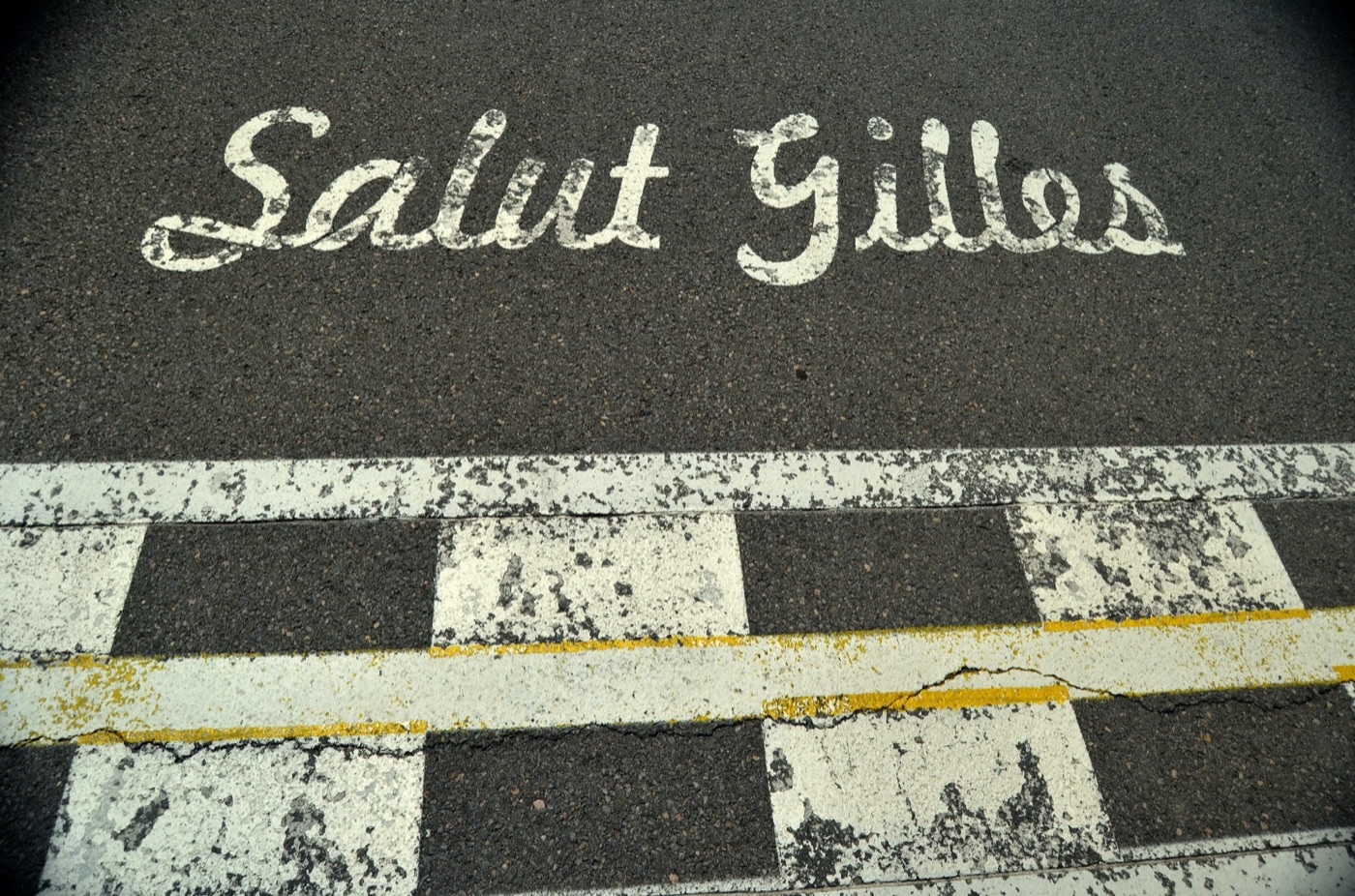
The circuit on the Île Notre-Dame, built in a few months for his 1978 win, took the name Circuit Gilles-Villeneuve in 1982, after his death, according to the Canadian Grand Prix organisers. In 2012 “Salut Gilles” was painted beside the start and finish line.
Zolder
Turn 7, the fast right-hander where he crashed, has been a chicane since 1986 and carries his name (Bishop, Motor Sport). A memorial to him stands on a grass mound by the pit entry; it was put up in 2002 to replace a display of his helmet in a glass case, Autosport reported on a visit.
Fiorano and Imola
Fiorano’s council named the road from the entrance of the Ferrari test track after him, and local enthusiasts put up a bust of him near the entrance in 1983, according to the Fiorano Modenese tourist office. At Imola a corner is named after him, and a Canadian flag is painted on the third grid slot, AutoGuide reported in 2012.
The Gilles Villeneuve Museum, Berthierville
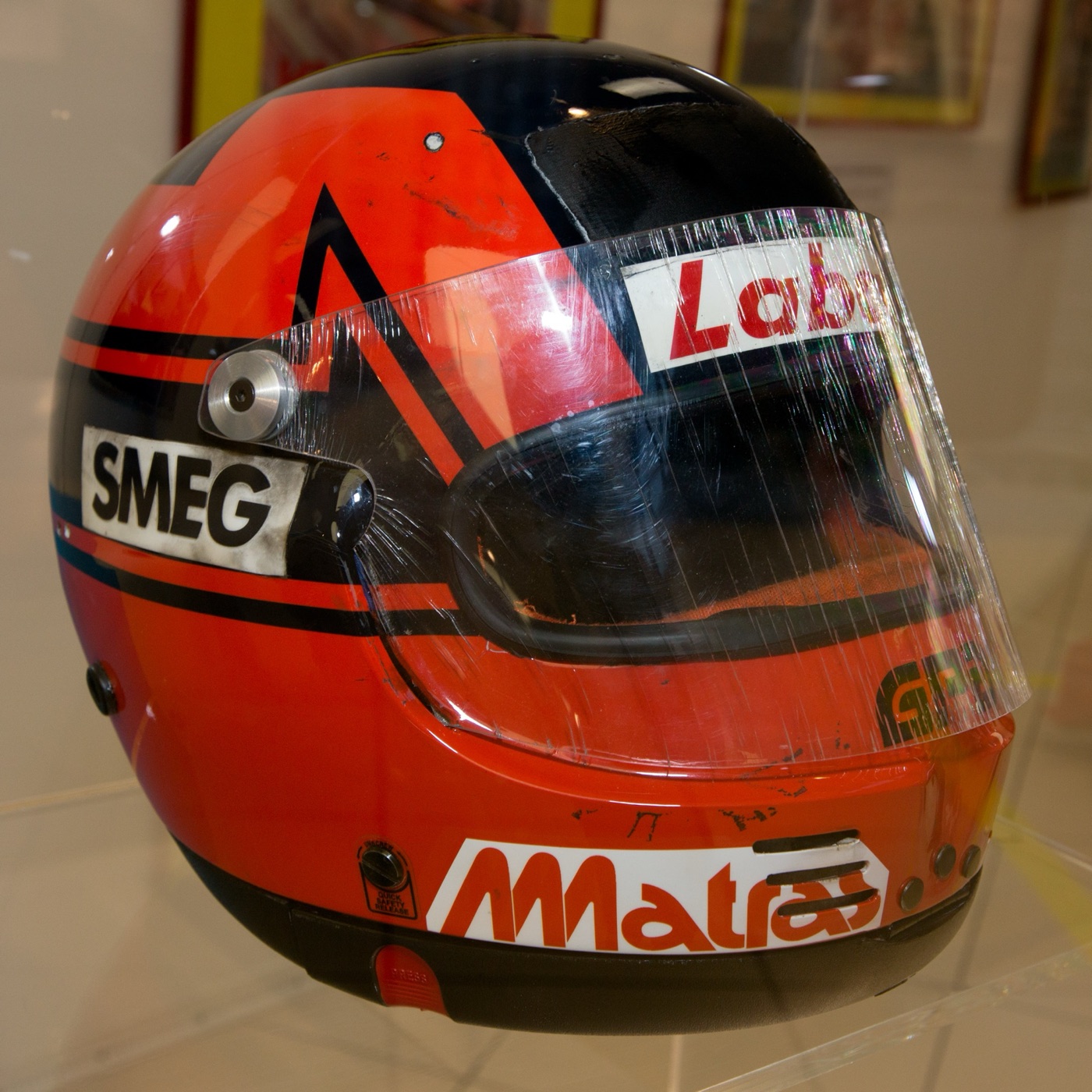
The museum at 960 avenue Gilles-Villeneuve in Berthierville has shown his trophies, cars and memorabilia since 1988, the Société des musées du Québec records. In February 2025 Joann, Jacques and Mélanie Villeneuve began legal action to recover his memorabilia from it, and the museum announced it would close temporarily, The Canadian Press reported. Mélanie Villeneuve said the theft of a bronze statue of her father from outside the museum in late 2024 was the “point of no return”.
The 1997 Canadian stamps
Canada Post issued two Villeneuve stamps on 12 June 1997: a 45-cent stamp showing the 312 T4 and a 90-cent stamp showing him in his helmet with the T3 behind, with the first day cover cancelled in Montreal, as Canada Post’s issue notes record.
Questions
How old was Gilles Villeneuve when he died?
He was 32. Born on 18 January 1950, he died on the evening of 8 May 1982 in hospital in Leuven, after his crash in qualifying at Zolder.
Was Gilles Villeneuve ever world champion?
No. His best season was 1979, when he finished second to his Ferrari team-mate Jody Scheckter, 47 points to 51 after dropped scores.
What number did Gilles Villeneuve race with?
40 in the McLaren at the 1977 British Grand Prix, 21 in his first two races for Ferrari in 1977, 12 in 1978 and 1979, 2 in 1980 and 27 in 1981 and 1982, according to Formula 1’s race results.
Is Jacques Villeneuve the son of Gilles Villeneuve?
Yes. Jacques is Gilles and Joann Villeneuve’s son. He raced in Formula One from 1996 and won the Formula One World Championship with Williams in 1997.
Which teams did Gilles Villeneuve drive for in Formula One?
Two: McLaren, for one race, the 1977 British Grand Prix, and Ferrari for every other race from the 1977 Canadian Grand Prix to his death.
Why is the Montreal circuit called Circuit Gilles-Villeneuve?
Villeneuve won the first Grand Prix held there, in October 1978, and the circuit took his name in 1982 after his death at Zolder.
Sources
- Formula 1, official results: drivers’ standings and Villeneuve’s race results, 1978–1982: every season figure, race date and championship position; 1977 British GP result.
- StatsF1, “Gilles Villeneuve” driver record: birth, career totals (68 entries, 67 starts, 107 points, laps led), junior career, season-by-season detail and the 1980 ranking.
- Ferrari, “312 T4” history and technical page: the specification table, the car’s debut and its 1979 wins.
- Motor Sport, Denis Jenkinson, Belgian Grand Prix report, June 1982: the Zolder crash, hospital and Ferrari’s withdrawal.
- Motor Sport, Denis Jenkinson, San Marino Grand Prix report, June 1982: the Imola finish and lap times.
- Motor Sport, Denis Jenkinson, Spanish Grand Prix report, August 1981: Jarama 1981 and the quote.
- Motor Sport, Denis Jenkinson, French Grand Prix report, August 1979: the Dijon duel with Arnoux.
- Motor Sport, Alan Henry, Canadian Grand Prix report, November 1978: the first win in Montreal.
- Motor Sport, Japanese Grand Prix report, December 1977: the Fuji crash and deaths.
- Motor Sport, Denis Jenkinson on 1977 British GP pre-qualifying, reprinted August 2026: the 1977 quote.
- Motor Sport, Matt Bishop on the 1977 Japanese Grand Prix: the second account of the Fuji crash.
- Motor Sport, Matt Bishop, “F1 at Zolder”: Turn 7, the chicane since 1986, Watson and Warwick.
- Motor Sport, Damien Smith, “Villeneuve: I’m super-proud of my father”, July 2012: the Fiorano drive of 8 May 2012 and Jacques’s quotes.
- Motorsport.com, Adam Cooper, “The inside story of Villeneuve’s final F1 weekend”, May 2021: Trois-Rivières and Hunt, Imola aftermath, Scheckter’s quotes, the Zolder qualifying sequence.
- Grandprix.com, “Twenty-five years ago today”, 8 May 2007: the broken neck, starts and wins, Jacques’s 1997 title.
- Evo, “Ferrari honours Gilles Villeneuve”, May 2012: the 2012 Fiorano event.
- Classic & Sports Car, “Jacques Villeneuve to drive Gilles’ Ferrari”, April 2012: the 2004 Goodwood car.
- Formula 1, Charles Leclerc drives the 312 T4 at Fiorano, May 2022: the 2022 run.
- Snowmobile Hall of Fame, Gilles Villeneuve: the 1974 world title and his snowmobile designs.
- Canada Post issue notes for the 1997 Gilles Villeneuve stamps, via Canadian Postage Stamps: birthplace, Berthierville, Eagle River, rookie title, the stamps.
- Grand Prix du Canada, “The Circuit”: the circuit’s construction and the 1982 renaming.
- Autosport, “Paddock life: Hockenheim edition”: the Zolder memorial of 2002.
- Fiorano Modenese tourist office, “Monument to Gilles Villeneuve”: the road and the 1983 bust.
- AutoGuide, Fiorano tribute report, April 2012: the Imola corner and grid flag.
- Société des musées du Québec, Gilles Villeneuve Museum: the museum’s address and opening year.
- The Canadian Press, “Gilles Villeneuve museum to shut temporarily amid lawsuit by late driver’s family”, February 2025: the lawsuit, closure and statue theft.
SkiddMark’s own reports: “Jacques Villeneuve joins Ferrari to mark the 30th anniversary of his father’s death” (April 2012); the interview with Nick Mason on Passion for Speed (October 2010); and the report on Magnum Cars (October 2013).
This article was written in October 2026 to replace SkiddMark’s report “Jacques Villeneuve joins Ferrari to mark the 30th anniversary of his father’s death” of April 2012, whose facts it keeps.