Gordon Murray: the Brabham and McLaren designer and his cars
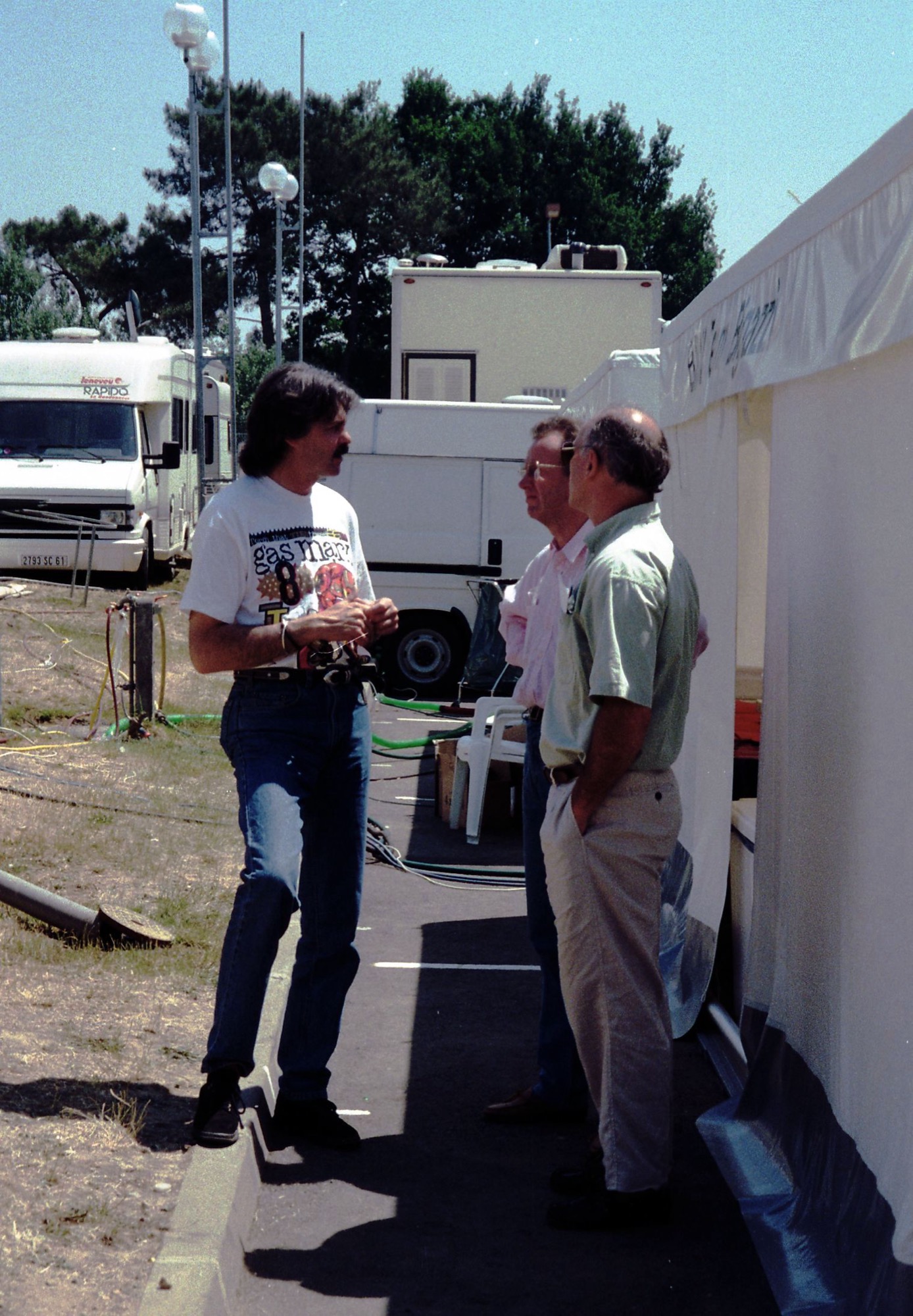
Gordon Murray is the South African-born engineer who designed Nelson Piquet's championship-winning Brabhams of 1981 and 1983, ran McLaren's Formula 1 design office in the Senna and Prost years, and then designed the McLaren F1 road car. Born in Durban, South Africa, on 18 June 1946, he now builds his own V12 supercars, the T.50 and T.33, at Gordon Murray Automotive in Surrey, where he is chairman and chief designer.
His Brabhams won 22 world championship Grands Prix between 1974 and 1985, and McLaren won 28 more in his three seasons as its technical director, 1987 to 1989, with both world titles in 1988 and 1989. Every car he has drawn since his first, a home-built racer of 1967, carries a T number; the T.50 of 2020 was his fiftieth.
Early life in Durban and the IGM-Ford T.1
Gordon Murray grew up in Durban, South Africa, where his father was a motor mechanic who built and prepared racing cars for local drivers, according to the engineer Peter Wright's profile of him. Companies House records his birth as June 1946. He took a five-year mechanical engineering sandwich course at Natal Technical College, which also earned him enough to build and race his own car.
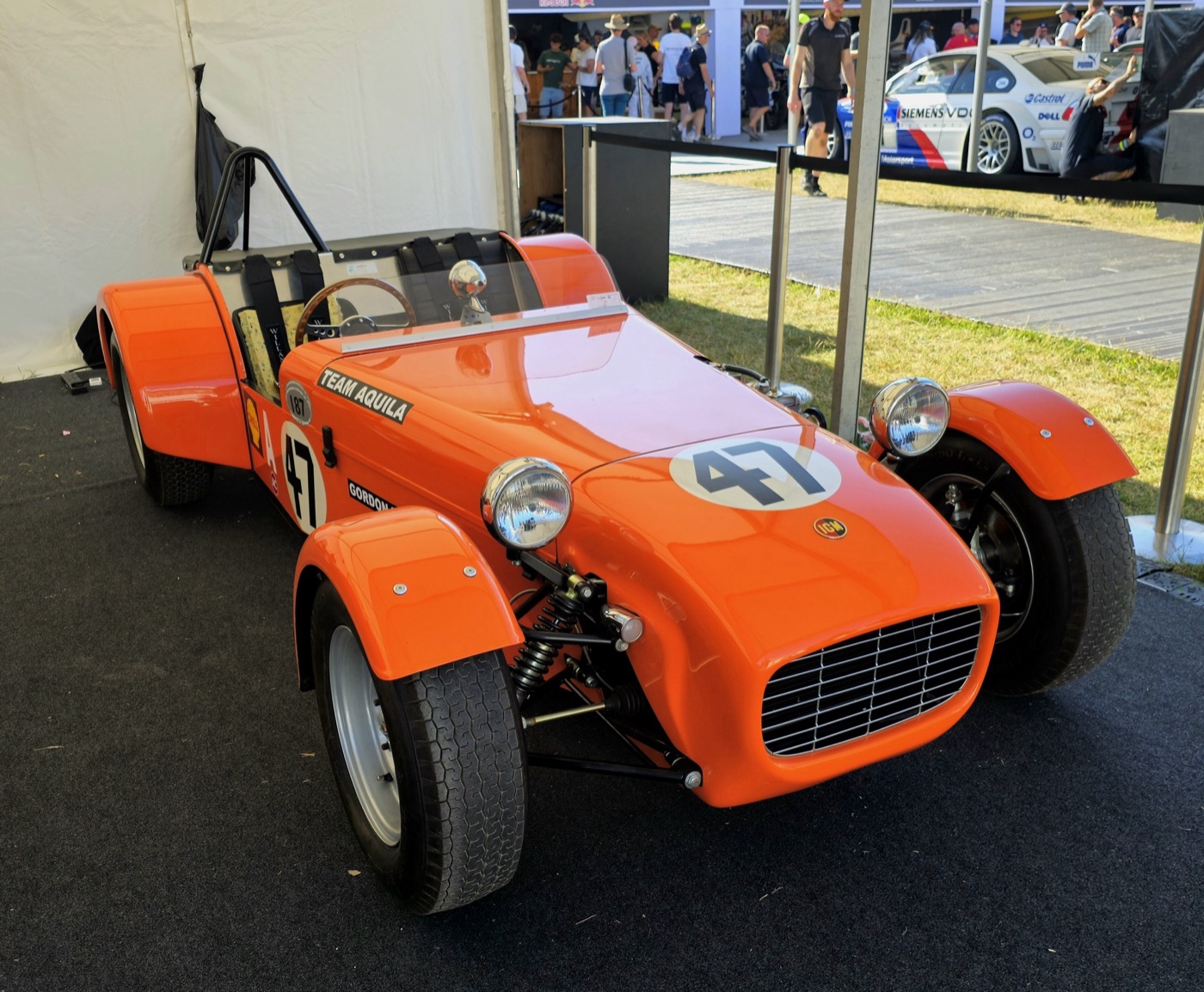
His first racing car was the IGM-Ford, later numbered T.1: a Lotus Seven lookalike that he built himself and raced in 1967 and 1968. He described it to Motor Sport: "The IGM looked like it did because I used a Lotus 7 nose and wings; it was cheaper than making new moulds. The frame was a lot lighter, more triangulated and stiffer than a 7's." He bored a 105E Anglia engine to 1,073cc, made his own pistons, camshafts and manifolds, and revved the standard cast crankshaft to 8,500rpm for two seasons. The car made about 90bhp and weighed about 400kg.
He won his class at the Roy Hesketh circuit and at the Polly Shortts and Burman Drive hillclimbs. He also crashed it often: Motor Sport's 1981 profile records "one massive accident at the Pietermaritzburg track". The car changed hands several times after he left South Africa and has not been seen since about 1975. Murray told Motor Sport he still had the hand-made steering wheel and "a large proportion of the original drawings".
Gordon Murray at Brabham
Murray arrived in England in December 1969 hoping to work for Lotus, which was laying people off, and joined Brabham's drawing office in 1970. "Music and motor racing, the loves of my life, that's what brought me here," he told Motor Sport in 2021. He knocked on Brabham's door unannounced and Ron Tauranac took him for the candidate he was expecting: "As I was leaving a much older guy turned up for the job interview." Before that, a 2005 Motor Sport report says, he had worked for Hawker Siddeley.
Bernie Ecclestone bought Brabham at the end of 1971. Murray became assistant to the chief designer, Ralph Bellamy, and took over as chief designer when Bellamy left for Lotus in 1972. In the same months he designed a Cosworth-engined Le Mans car for Alain de Cadenet on a freelance basis. Wright's profile quotes him on the workload of 8am to 4am days: "I fell over. Total collapse." From 1972 until David North joined him in 1978, Murray was the only designer in Brabham's drawing office, and the one designer he looked up to, Wright says, was Colin Chapman.
The Brabham BT42 and BT44
The BT42 of 1973 had a triangular monocoque, and Murray told Motor Sport in 1981 that its shape split the air above and below the car: "Even with flat bottoms to the monocoque, we were developing a degree of ground effect way back in 1975." The BT44 of 1974 brought rising-rate pullrod suspension, which he called "an innovation on the BT44" in 2021. Carlos Reutemann won the South African, Austrian and United States Grands Prix with it in 1974, and in 1975 the BT44B won in Brazil (Carlos Pace) and Germany (Reutemann). Brabham finished second in the 1975 constructors' championship, according to Formula 1's official results.
For 1976 Ecclestone signed for Alfa Romeo's flat-12 engine. The BT45 that carried it won nothing in two seasons, and Brabham fell to ninth in 1976.
The Brabham BT46B fan car: banned or withdrawn?
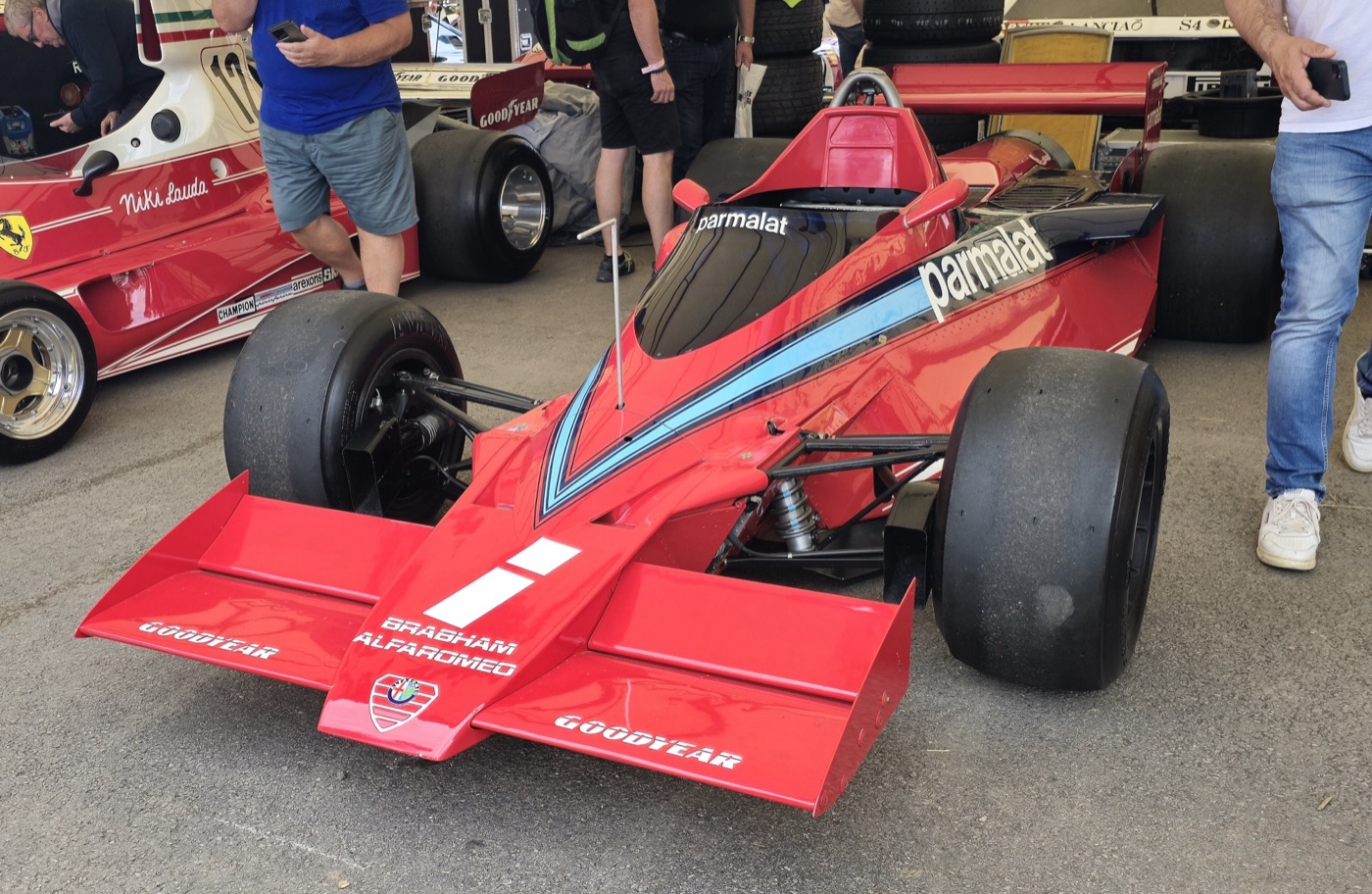
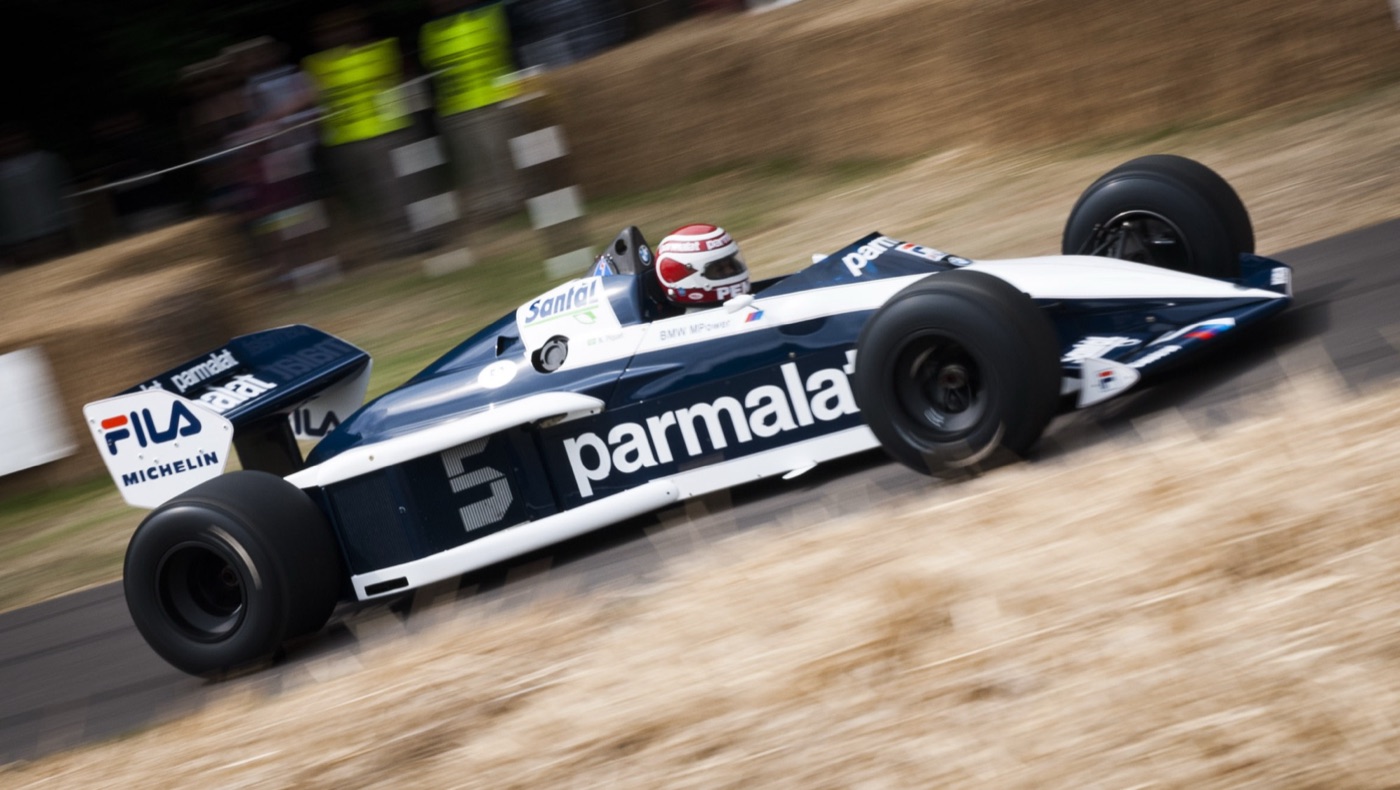
The BT46B of 1978 had a large fan at the back, driven from the gearbox, which drew air through a radiator and out from under the car. Murray told Motor Sport in 2021 that it was "desperation actually, absolute desperation": the wide Alfa Romeo engine left no room for the venturi tunnels of Lotus's ground-effect 79. The rules banned movable aerodynamic devices, so the fan's primary job had to be cooling. When the FIA measured the airflow, he said, "60% of the air was for cooling and 40% for downforce".
Niki Lauda won the Swedish Grand Prix with it on 17 June 1978, its only race, by 34 seconds from Riccardo Patrese. What happened next is told two ways. Motor Sport's account of the race says the result stood and Brabham "voluntarily withdrew the BT46B", at a time when Ecclestone had just become chief executive of the Formula One Constructors' Association and needed his rivals' support. Other accounts, Goodwood's among them, say the car was banned. Lauda won again at Monza in September, and Brabham finished third in the 1978 constructors' championship.
The Brabham BT49 and BT52: two world titles for Piquet
Alfa Romeo built a V12 for the BT48 of 1979 in four months, but the engines varied by as much as 600rpm from one to the next, Murray told Motor Sport in 1981. Brabham went back to the Cosworth DFV, and in six weeks a BT48 was cut about to take the V8; that car became the BT49. Nelson Piquet won three races with it in 1980 and three more in 1981, and took the 1981 drivers' title by one point from Reutemann, 50 to 49.
The BT50 of 1982 carried BMW's turbo engine, and Piquet won in Canada with it. The BT52 won four races in 1983, three of them for Piquet, who took his second championship. Murray picked the BT44 as his favourite car, "closely followed by the BT49 and BT52", in Wright's profile. He is also credited there with bringing tyre warmers and planned refuelling stops to Formula 1.
The BT55 and leaving Brabham
The BT55 of 1986 was very low, with BMW's engine tilted over on its side. Murray told Motor Sport in 2021 that "the concept was dynamite" but that neither he nor BMW's Paul Rosche could make the oil scavenging work. Brabham scored two points all year. "In my last year at Brabham we'd lost Elio de Angelis. I'd never lost a driver before," Murray said; at the end of 1986 he left.
Gordon Murray at McLaren in Formula 1
Murray joined McLaren as technical director at the end of 1986, replacing John Barnard, who had gone to Ferrari. He agreed to three years at most and, Wright says, insisted that Ron Dennis throw him out at the end of them. "After I'd done my three years in the team, he was keen for me to do the road car," Murray told Motor Sport in 2021, and by the end of 1989 he had moved to the new road-car company. The 1987 car was already designed; with Neil Oatley he then planned four cars in 18 months for the TAG-Porsche turbo, the Honda turbo and the change to normally aspirated engines in 1989. He bought three autoclaves and set up a composites department.
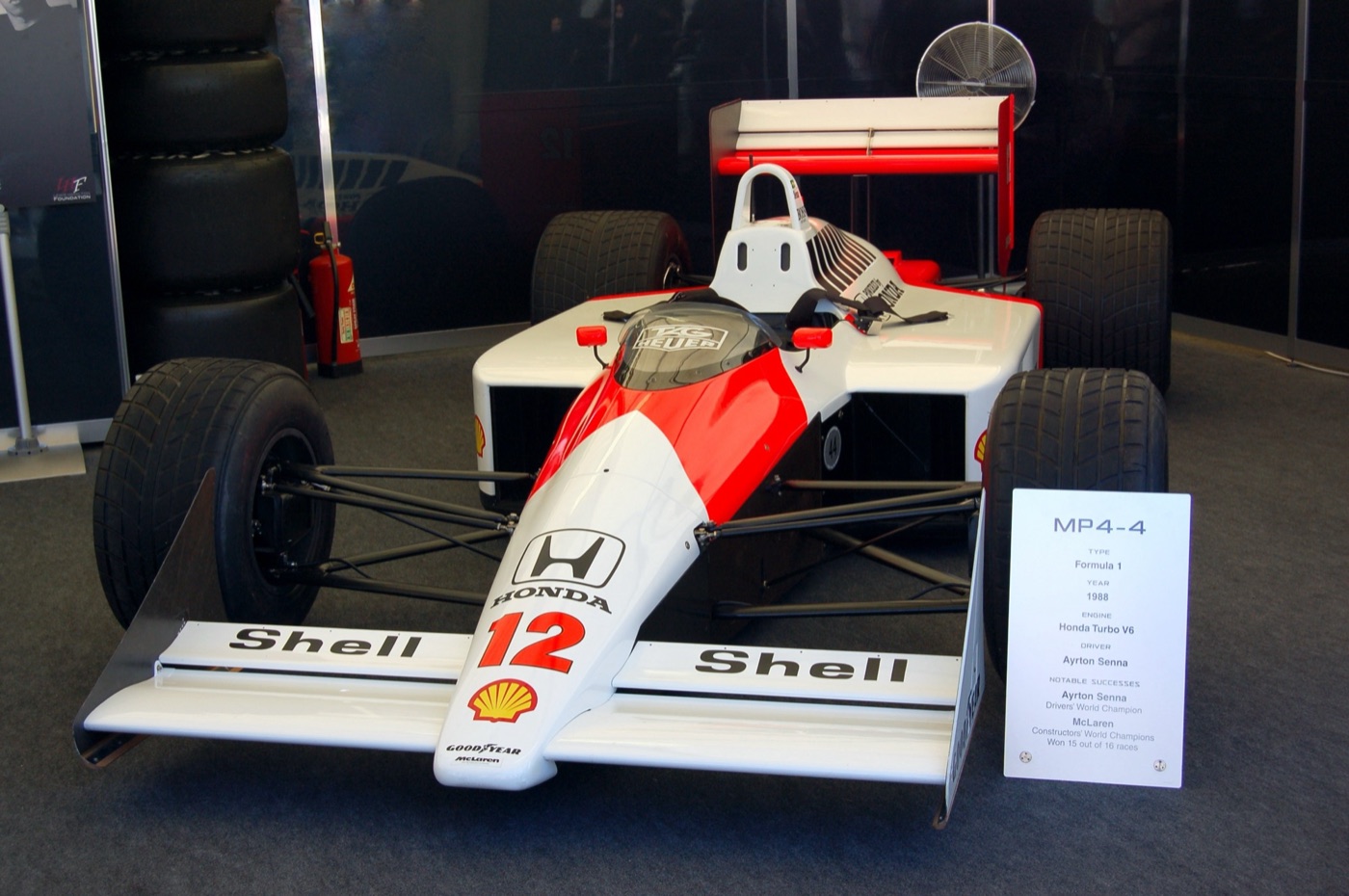
McLaren won 15 of the 16 Grands Prix of 1988 with the Honda-engined MP4/4 and scored 199 constructors' points. Ayrton Senna won the drivers' title in 1988 and Alain Prost in 1989, both in McLaren-Hondas. Senna won again in 1990 with the MP4/5B, a development of the 1989 car, after Murray had left the team; Gordon Murray Automotive's biography counts that title among his, dating his Formula 1 years to 1990.
Did Gordon Murray design the McLaren MP4/4?
Credit for the MP4/4 is disputed. Steve Nichols is often named as its designer. Murray rejected that in 2021: "The MP4/4 was not designed by Steve Nichols, I can promise you that. I put him in charge of the monocoque and the front end while Dave North and I did the rear end, the aerodynamics, and a radical new dry-sump three-shaft gearbox working with Pete Weismann." He said the car drew on the low-line ideas of the Brabham BT55, and that its reliability came from new post-race meetings, life limits on parts and a separate test team in Japan. Wright wrote that the McLarens of that period "are not instantly recognisable as Gordon Murray cars".
Grand Prix wins and titles by season
Murray's teams won 50 world championship Grands Prix while he ran their design offices: 22 at Brabham and 28 at McLaren in 1987, 1988 and 1989, the figure Gordon Murray Automotive's biography gives. The 1987 McLaren MP4/3 was designed before he arrived. The table counts every championship race won by Brabham in his years as chief designer and by McLaren in his three seasons as technical director, with 1990 shown apart.
| Season | Team and Murray car | Wins | Constructors' position | Titles and winners |
|---|---|---|---|---|
| 1973 | Brabham BT42 | 0 | 4th | None |
| 1974 | Brabham BT44 | 3 | 5th | Reutemann (3) |
| 1975 | Brabham BT44B | 2 | 2nd | Pace, Reutemann |
| 1976 | Brabham BT45 (Alfa Romeo) | 0 | 9th | None |
| 1977 | Brabham BT45B | 0 | 5th | None |
| 1978 | Brabham BT46, BT46B | 2 | 3rd | Lauda (2) |
| 1979 | Brabham BT48, BT49 | 0 | 8th | None |
| 1980 | Brabham BT49 | 3 | 3rd | Piquet (3) |
| 1981 | Brabham BT49C | 3 | 2nd | Piquet (3); Piquet drivers' champion |
| 1982 | Brabham BT50, BT49D | 2 | 7th (BMW), 9th (Ford) | Patrese, Piquet |
| 1983 | Brabham BT52, BT52B | 4 | 3rd | Piquet (3), Patrese; Piquet drivers' champion |
| 1984 | Brabham BT53 | 2 | 4th | Piquet (2) |
| 1985 | Brabham BT54 | 1 | 5th | Piquet |
| 1986 | Brabham BT55 | 0 | 9th | None |
| 1987 | McLaren MP4/3 (designed before Murray arrived) | 3 | 2nd | Prost (3) |
| 1988 | McLaren MP4/4 | 15 | 1st | Senna drivers' champion |
| 1989 | McLaren MP4/5 | 10 | 1st | Prost drivers' champion |
| 1990 | McLaren MP4/5B (Murray at McLaren Cars; not in his total) | 6 | 1st | Senna drivers' champion |
In 1982 Brabham entered BMW-engined and Ford-engined cars, which the results list as two constructors.
McLaren Cars and the McLaren F1 road car
The McLaren F1 began in the departure lounge at Milan's Linate airport after the 1988 Italian Grand Prix, the one race McLaren lost that year. Andrew Frankel wrote in Motor Sport in August 1997 that "Ron Dennis and Gordon Murray hatched an idea to build a road car" there. Murray and Creighton Brown "walked into an empty building at the end of 1989 and started the road car company from scratch", he said in 2005. Murray told Wright that he still saw every drawing, "over 7000 on the McLaren F1", and that the road car was done with eight people.
The F1 was shown in Monte Carlo during the Monaco Grand Prix weekend of May 1992, at £535,000, Motor Sport reported in July 1992. It seats the driver in the middle with a passenger either side and behind, and has a 627bhp BMW V12, RM Sotheby's notes. McLaren's heritage page gives 106 cars made.
The F1 GTR's Le Mans win
The F1 was designed as a road car only; owners asked for a racing version. The F1 GTR won the 24 Hours of Le Mans at its first attempt on 18 June 1995, Murray's 49th birthday, with F1 GTRs also third, fourth and fifth, according to the racingsportscars.com results. Murray had not been back to Le Mans since de Cadenet's car in 1972, and told Wright that winning there and the GT championship "gave me a real buzz, better than the last couple of World Championships". McLaren built five F1 LM road cars to mark the win.
The Light Car Company Rocket
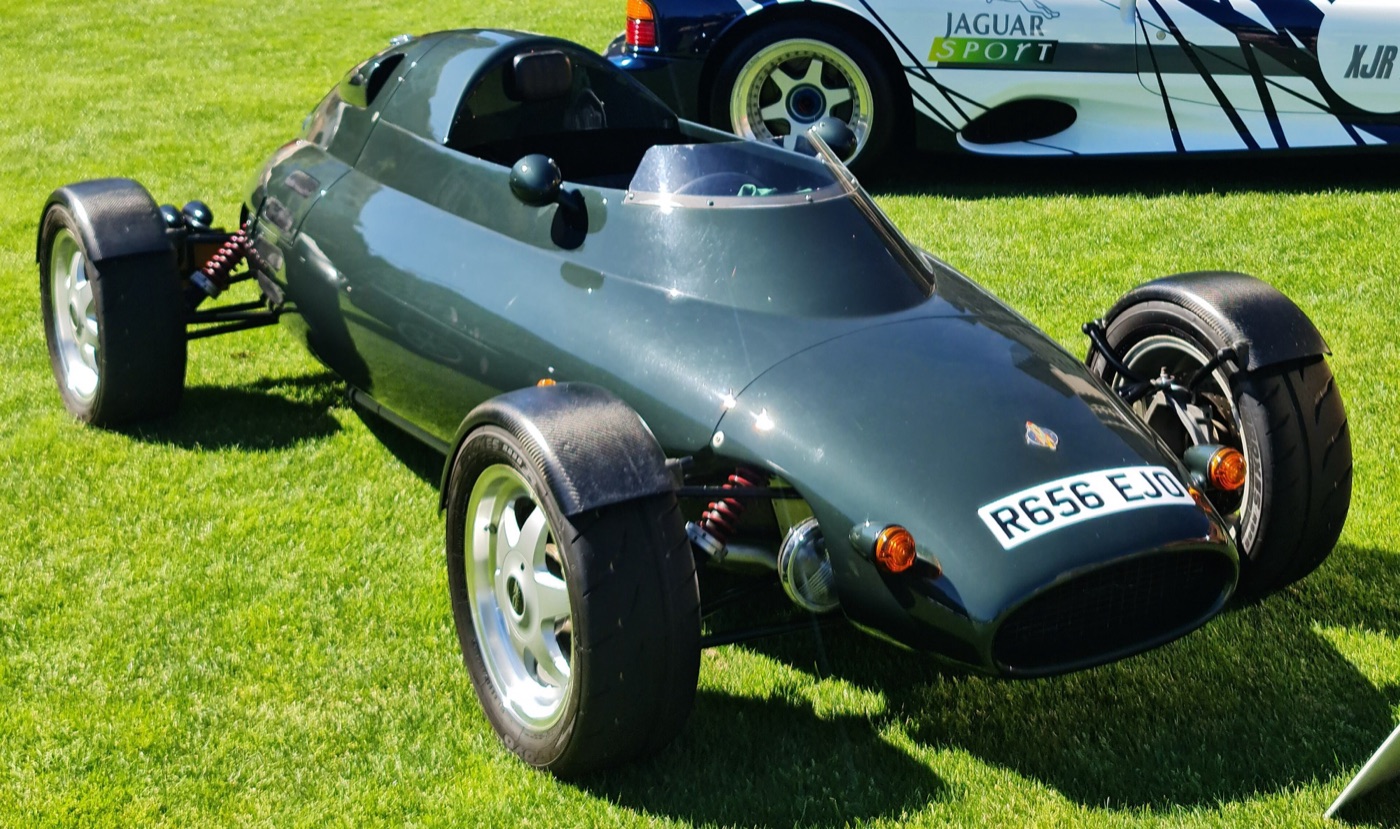
Alongside the F1, Murray drew the Rocket for the former racing driver Chris Craft's Light Car Company: a "competition car with number plates", in the magazine's words, with a space frame, a Yamaha FZR1000 motorcycle engine and a weight of 390kg, Motor Sport noted in 2015. Craft's line was: "The F1 gives you most of Gordon's singular vision, the Rocket gives you all of it." At the first Goodwood Festival of Speed in 1993 a Rocket parked outside the stables turned out to belong to George Harrison, Goodwood's 2025 press release recalls; the same year Murray's McLaren F1 set the second-fastest time on the hill.
Mercedes-Benz SLR McLaren and leaving McLaren
McLaren Cars went on to engineer and build the Mercedes-Benz SLR McLaren, which Gordon Murray Automotive's biography calls the culmination of its programmes. Murray split from the McLaren Group early in 2005, ending what he called an 18-year association, to concentrate on a city car he had been working on privately for 11 years. "I had tried to interest Mercedes in racing the SLR but nothing came of it," he told Motor Sport.
Gordon Murray Design: city cars and iStream
Murray founded Gordon Murray Design in 2007, a design and engineering company with its own prototyping and development shops, to build that city car, the T.25, with a new way of making cars that he called iStream. In iStream a simple tubular steel frame is bonded to composite panels to make the safety cell, and the outer panels are pre-painted and bolted on, so the factory needs no press shop or paint shop. New Atlas reported in 2010 that an iStream plant would be a fifth of the size of a conventional one, and that the process won Autocar's 2008 Idea of the Year award.
T.25 city car
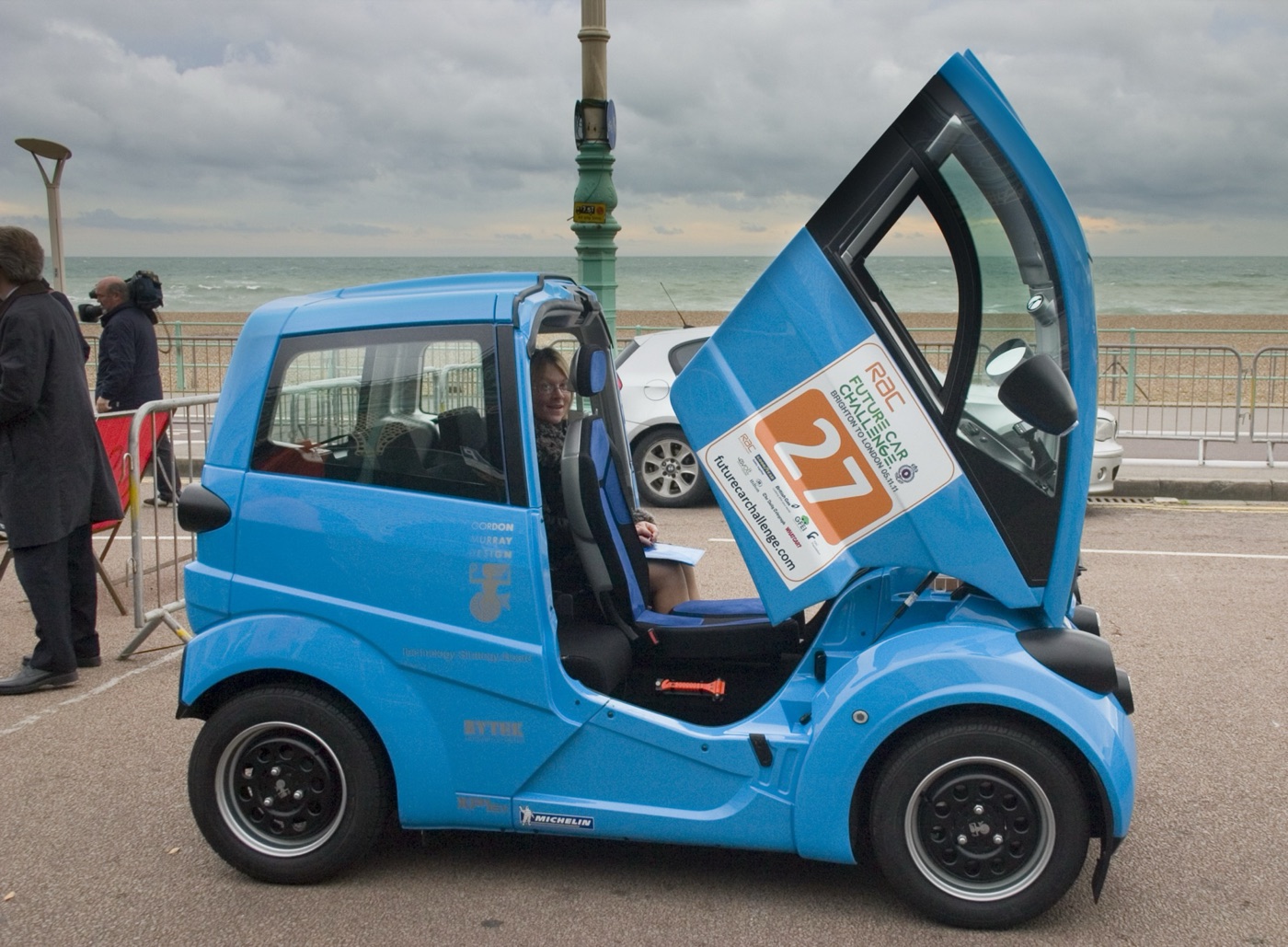
The petrol T.25 was first shown in public at the Smith School's World Forum on Enterprise and the Environment in Oxford in late June 2010. Autocar's report of 2 July 2010 gives it a weight of about 575kg, a length of 2.4m, a 51bhp 660cc three-cylinder engine, a top speed limited to 90mph, 0-62mph in 16.2sec, 74mpg and 86g/km of CO2. It seats three, with the driver in the middle as in the McLaren F1, and the whole front of the car swings up to let them in. Three T.25s fit in one parallel parking space, Autocar says.
T.27 electric city car
The T.27 is the electric version, with a Zytek powertrain: a 25kW motor and a 12kWh lithium-ion battery, according to New Atlas. Murray launched it at the Royal Automobile Club in Pall Mall, London, at the end of June 2011, after 17 months from a clean sheet to a running prototype. A 2011 SkiddMark report recorded his claim that it was the most efficient electric car then made: the Smart EV used 29% more energy per kilometre, the Mitsubishi i-MiEV 36% and the Mini E 86%. Its 0-62mph time was just under 15 seconds and its top speed 66mph.
The T.27 was a £9 million project, half of it paid by the government-backed Technology Strategy Board, and Murray was said to be in talks with three manufacturers. "Lightweight is the most powerful tool we have in our armoury in the fight against emissions and fuel consumption," he said at the launch.
The two cars won the RAC Future Car Challenge, a Brighton-to-London run for the lowest energy use, in its first two years: the T.25 in 2010 with 96mpg, and the T.27 overall in 2011, Green Motor reported. Murray told the site his office had reached the T.34, a 13-seat minibus, and that he was talking to a group of three British companies about building the T.27.
Toray Teewave AR.1
In September 2011 Gordon Murray Design showed the Teewave AR.1, an electric two-seat sports car designed, tooled and built in nine months for the carbon-fibre maker Toray. A SkiddMark report of that month gives it a carbon monocoque, a weight of 850kg including a 240kg battery, 63bhp (47kW) and 180Nm, 0-62mph in 11.4sec, 92mph and a range of 116 miles on the NEDC cycle. Murray said the car "once again proves that performance through light weight is the most efficient and environmentally friendly way to achieve power to weight targets."
Yamaha Motiv, TVR and the OX truck
No T.25 or T.27 reached production. Yamaha was the first large maker to take up iStream: its Motiv two-seat city car, shown at the Tokyo Motor Show in November 2013, was engineered for the process over 15 months, Autocar reported, and Yamaha's show page credits the frame to Gordon Murray Design. In January 2016 Autocar reported that the new TVR would be built on iStream, with carbon-fibre panels on a launch edition.
The OX, launched in 2016 for Sir Torquil Norman's Global Vehicle Trust, is a flat-pack truck for rural roads in developing countries that can be shipped in parts and assembled locally. In 2018 Shell paid for a re-engineered prototype to be built by Gordon Murray Design and taken to India, Automotive World published.
Gordon Murray Automotive: T.50 and T.33
Gordon Murray Automotive (GMA), founded in 2017, builds Murray's own supercars in Surrey: the three-seat T.50 and its track version, the two-seat T.33 coupé and Spider, and, since 2025, a handful of Special Vehicles. All have naturally aspirated Cosworth V12s of between 3.9 and 4.3 litres.
T.50
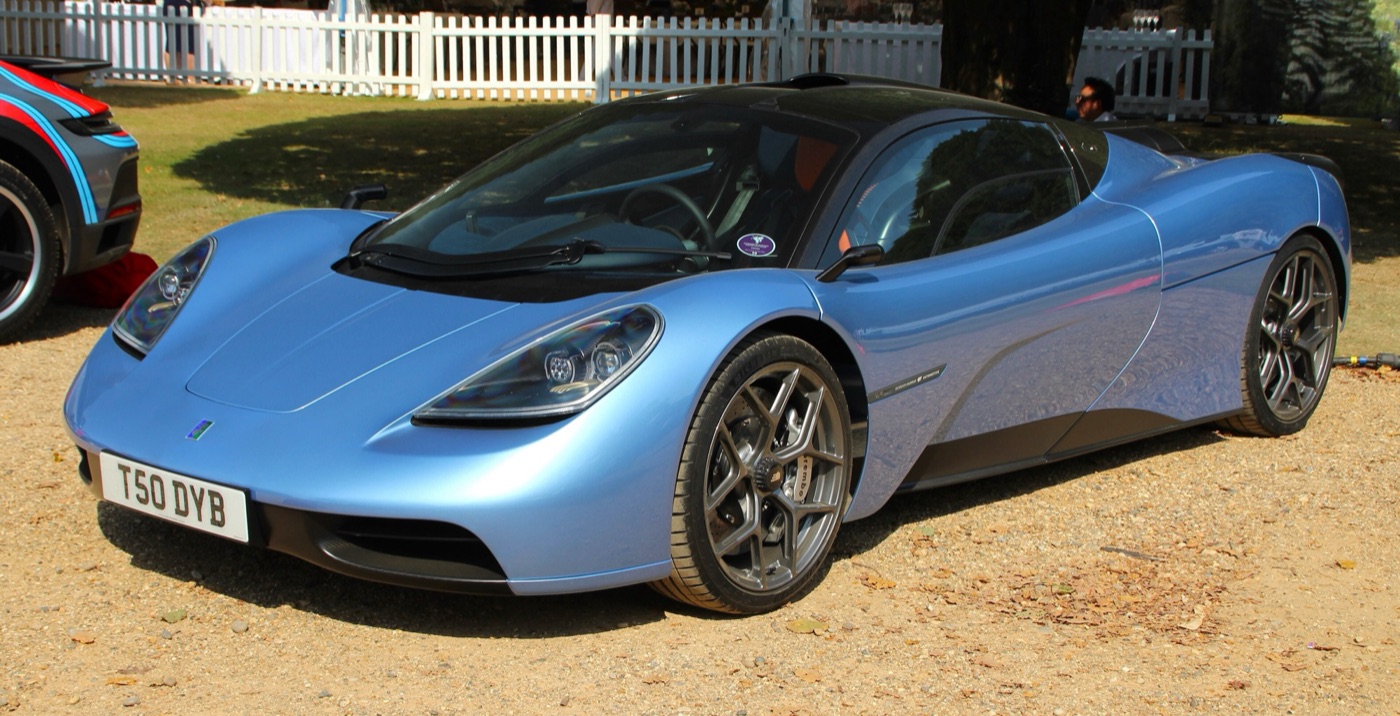
The T.50 was announced in 2019 as the McLaren F1's successor and Murray's fiftieth design. Goodwood's report of the announcement gives the target as 980kg dry, a 400mm fan under the tail taken from the BT46B, a central driving seat and an Xtrac six-speed manual gearbox. "I have absolutely no interest in chasing records for top speed or acceleration," Murray said. It was revealed in 2020 and shown to the public at Goodwood's Members' Meeting in 2021.
Gordon Murray Automotive's T.50 page gives two sets of figures for its 3,994cc Cosworth V12: the text says 663PS at 11,500rpm and 467Nm at 9,000rpm, and the specification table 650PS at 11,500rpm and 479Nm at 8,000rpm. The same page gives a 12,100rpm limit, an engine weight of 178kg and a total weight of 997kg. The fan and active spoilers give, the maker says, 50% more downforce or 12.5% less drag. GMA is building 100 at £2.36 million each before taxes, all sold, with production starting at its works at Dunsfold in Surrey in March 2023, TimesLIVE reported.
T.50s Niki Lauda
The T.50s Niki Lauda is the track version, named after the only man to win a race in the Brabham fan car. Its V12 makes 772PS, it weighs under 900kg, and its fan, running at 7,000rpm, helps it to up to 1,200kg of downforce, according to the maker. Twenty-five are being built, each named after one of Murray's Grand Prix wins.
T.33 and T.33 Spider
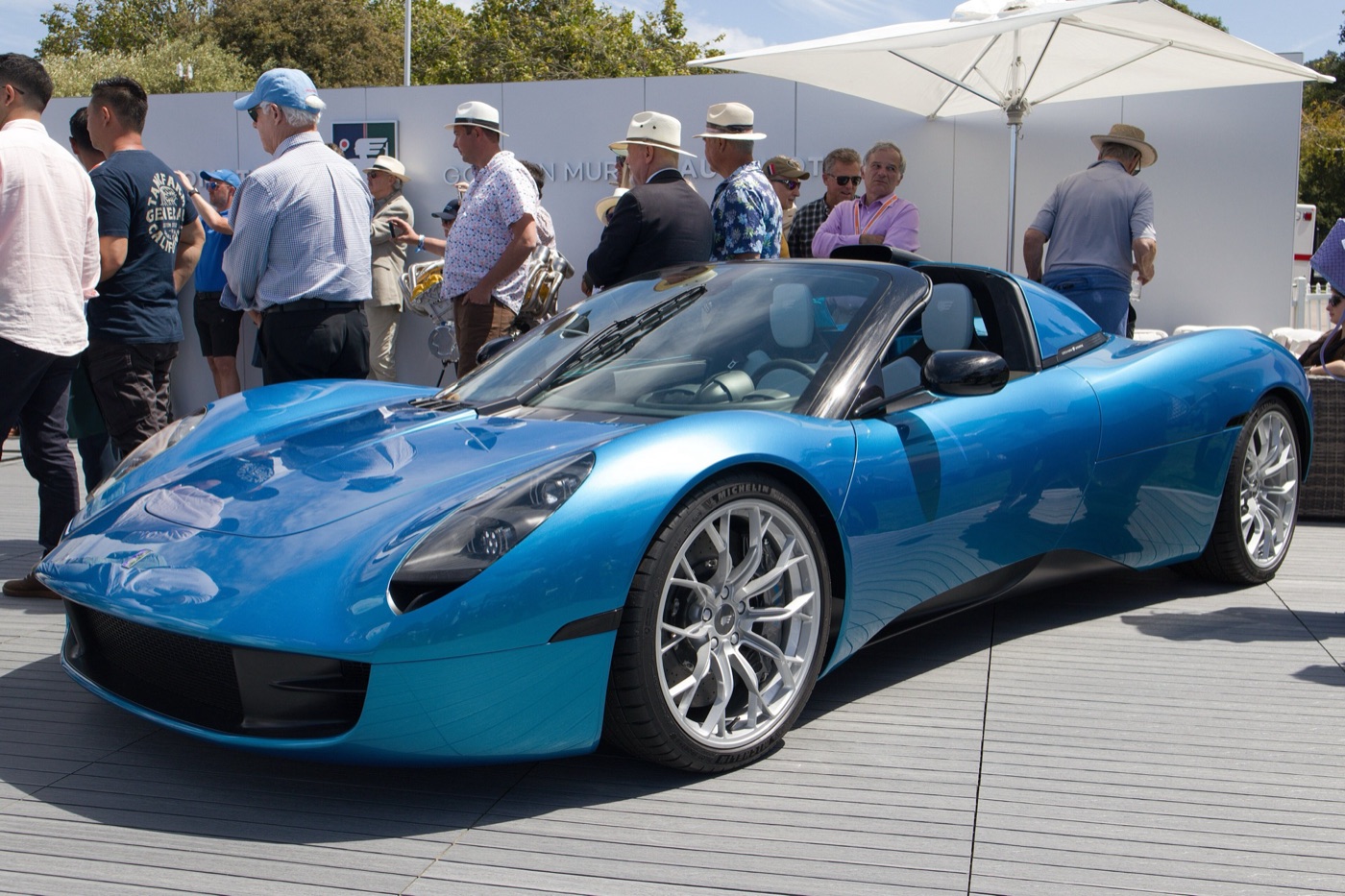
The T.33, revealed on 27 January 2022, is a conventional two-seater with a softer, 1960s-inspired body and no fan. Andrew Frankel wrote in Motor Sport that it costs £1.37 million before local taxes, that it is built to US federal rules so it can be sold there, and that Murray promised "100 production T.33 coupes and not one more regardless of demand". The maker gives 617PS at 10,250rpm and a dry weight of 1,090kg. The T.33 Spider, first shown in 2023 and also limited to 100, has two removable roof panels and weighs 1,108kg dry.
Gordon Murray Special Vehicles: S1 LM, Le Mans GTR and S1
The Special Vehicles division made its first car to a collector's commission: the S1 LM, shown at The Quail in August 2025 for the 30th anniversary of the 1995 Le Mans win. Five are being built, as McLaren built five F1 LMs, with a 4.3-litre V12 of 720PS and a dry weight of 957kg. The Le Mans GTR, a longtail shown at the same event, is limited to 24. The S1, a touring version of the S1 LM with a 4.2-litre V12 of up to 690PS, was revealed at The Quail on 14 August 2026 and is limited to 64, the company announced.
| Model | Shown | Engine | Power | Weight | Number built | Price new |
|---|---|---|---|---|---|---|
| T.50 | 2020 | 3.9-litre V12 | 663PS (text) or 650PS (specification table) | 997kg total | 100 | £2.36m before taxes |
| T.50s Niki Lauda | 2021 | 3.9-litre V12 | 772PS | under 900kg | 25 | Not published |
| T.33 | 2022 | 3.9-litre V12 | 617PS | 1,090kg dry | 100 | £1.37m before taxes |
| T.33 Spider | 2023 | 3.9-litre V12 | 617PS | 1,108kg dry | 100 | Not published |
| S1 LM | 2025 | 4.3-litre V12 | 720PS | 957kg dry | 5 | Not published |
| Le Mans GTR | 2025 | 4.0-litre V12 | Not published | 986kg dry | 24 | Not published |
| S1 | 2026 | 4.2-litre V12 | 690PS | under 997kg | 64 | Not published |
What Gordon Murray cars sell for
The first S1 LM sold at RM Sotheby's Las Vegas auction in November 2025 for $20.63 million, to be delivered once built, and Gordon Murray Automotive called it the highest price ever paid at auction for a new car outside charity sales. The first T.50 offered at auction, a 2025 car with 217km, sold for $5,630,000 at RM Sotheby's Abu Dhabi sale on 5 December 2025, RM Sotheby's reported. A McLaren F1 sold at the same sale for $25,317,500.
Honours and Gordon Murray today
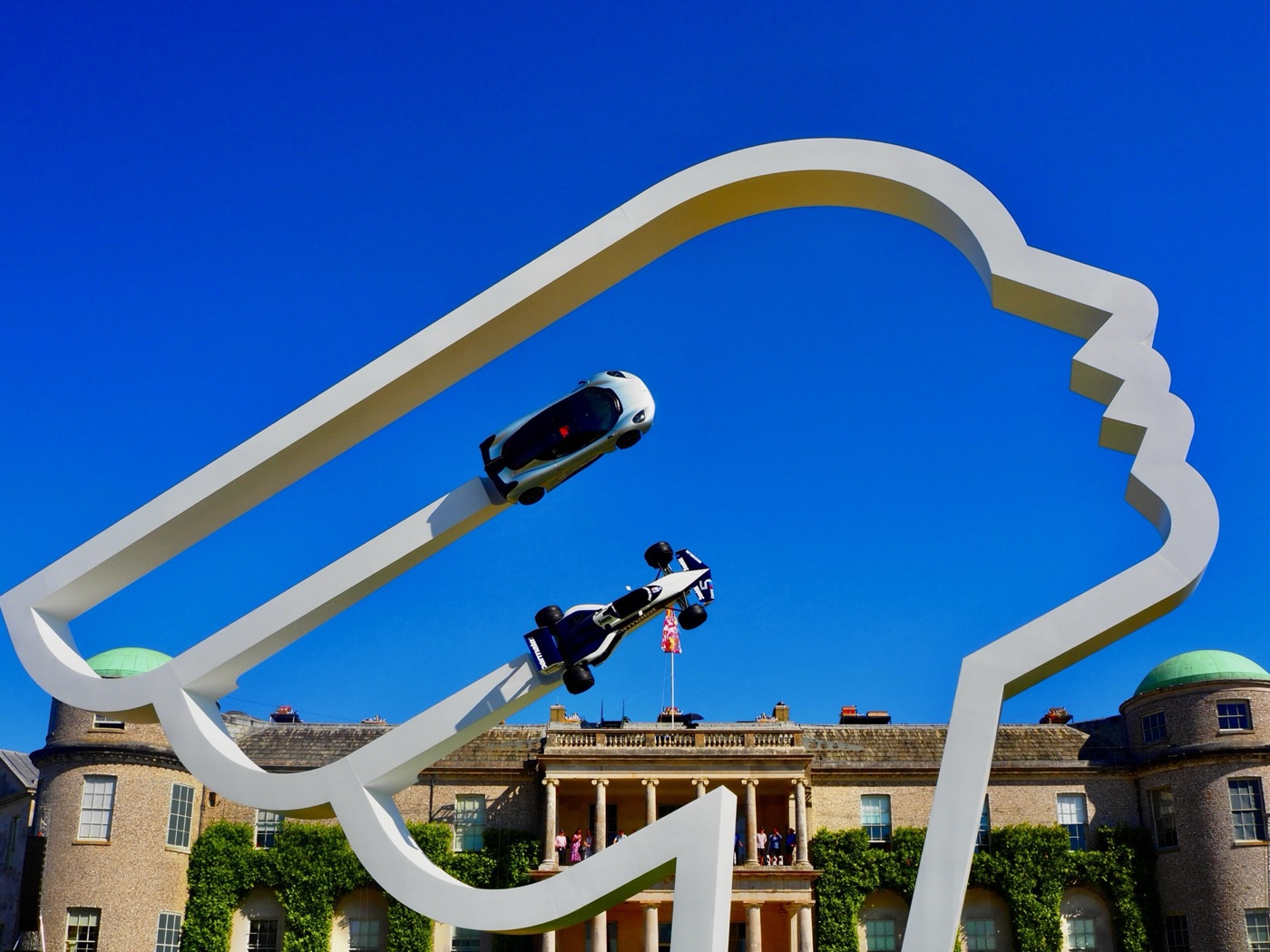
Murray was made a CBE for services to motoring in the 2019 New Year Honours, Motoring Research reported; his company calls him Professor Gordon Murray. In July 2025 the Goodwood Festival of Speed made his 60 years of design its central feature, with a sculpture by Gerry Judah and a daily display of cars from his whole career.
In December 2025 Halo Cars Group put $120 million into Gordon Murray Automotive. The company's announcement says Murray stays as chairman and chief designer, with the finance director, Darren Jukes, as interim chief executive. "This is not an investment in scale, but in further scarcity," Halo's managing partners said.
Questions
How old is Gordon Murray?
Gordon Murray was born in Durban, South Africa, on 18 June 1946, so he is 80 as of October 2026.
Where is Gordon Murray from?
He was born and grew up in Durban, South Africa, studied at Natal Technical College and moved to England in December 1969. His company is based in Surrey.
What do Gordon Murray's T numbers mean?
Murray numbers every car he designs. The T.1 was his first, the IGM-Ford racer of 1967, and the T.50 supercar announced in 2019 was his fiftieth design. The T.25 and T.27 city cars and the T.33 supercar carry numbers from the same list.
Did Gordon Murray design the Mercedes-Benz SLR McLaren?
The SLR was engineered and built by McLaren Cars, the company Murray ran from 1989 until he left the McLaren Group in early 2005. Gordon Murray Automotive's biography of him calls it the culmination of McLaren Cars' programmes.
How many Gordon Murray T.50s are there?
Gordon Murray Automotive is building 100 T.50 road cars and 25 T.50s Niki Lauda track cars. All were sold before production began in 2023.
Who owns Gordon Murray Automotive?
Gordon Murray founded it in 2017 and is its chairman and chief designer. In December 2025 Halo Cars Group made a $120 million investment in the company, and its managing partners Tarik Ouass and JR Rahn joined the board.
Is Gordon Murray still designing cars?
Yes. Gordon Murray Special Vehicles revealed the S1, a V12 touring car limited to 64, at The Quail in California on 14 August 2026, with Murray presenting it.
Sources
- Formula 1, official results 1973–1990 (race winners, team standings and drivers' standings by season, read October 2026): the season table, the 1978 Swedish Grand Prix result and the McLaren win totals.
- Motor Sport, "Murray's first car: the IGM-Ford": the T.1's engine, weight, results and fate.
- Motor Sport, "Gordon Murray", September 1981: joining Brabham, the BT42 to BT50, the Alfa Romeo years.
- Motor Sport, "Gordon Murray: the Motor Sport interview", September 2021: arriving in England, the BT46B, the BT55, McLaren and the MP4/4.
- Peter Wright, "Technical: Gordon Murray", grandprix.com: his father, college, the de Cadenet car, McLaren contract, favourite cars, innovations.
- Motor Sport, "1978 Swedish GP: Brabham fan car wins its one and only race": the BT46B's withdrawal.
- Motor Sport, "Murray and McLaren part", March 2005: Hawker Siddeley, McLaren Cars' start, leaving McLaren, the SLR.
- Motor Sport, Andrew Frankel, August 1997: the Linate airport idea.
- Motor Sport, July 1992: the McLaren F1 launch in Monte Carlo and its price.
- McLaren Automotive, "McLaren F1" heritage page, archived November 2025: 106 cars made.
- racingsportscars.com, Le Mans 24 Hours 1995 results: the F1 GTR finishes.
- RM Sotheby's, Gordon Murray Special Vehicles S1 LM, Las Vegas 2025: the S1 LM and the McLaren F1's 627bhp.
- Motor Sport, "Classified spotlight: Light Car Company Rocket", October 2015: the Rocket.
- New Atlas, "Gordon Murray's city cars finally revealed in full", July 2010: the T.27's powertrain, iStream and its 2008 award.
- Autocar, "Murray T25: first official pics", 2 July 2010: the T.25's specification.
- SkiddMark, "Gordon Murray reveals the world's most efficient electric car", 30 June 2011, and "This is the new Gordon Murray designed electric sportscar", 21 September 2011: the T.27 launch, its energy claims and funding; the Teewave AR.1.
- Green Motor, "Gordon Murray's T27 wins 2011 Future Car Challenge", November 2011: the 2010 and 2011 results and the T.34.
- Autocar, "Yamaha reveals Gordon Murray city car", 20 November 2013, and Yamaha Motor, MOTIV, Tokyo Motor Show 2013: the Motiv.
- Autocar, 21 January 2016: TVR and iStream Carbon.
- Automotive World, Shell and the Global Vehicle Trust OX, 11 April 2018: the OX.
- Goodwood Road & Racing, "The T.50 is Gordon Murray's McLaren F1 successor", 2019: the T.50 announcement.
- Gordon Murray Automotive, model pages for the T.50, T.50s, T.33, T.33 Spider, S1 LM, Le Mans GTR and S1, read October 2026: specifications and production numbers.
- Gordon Murray Automotive, press release, 10 August 2026: Murray's biography, the S1 LM and the Le Mans GTR.
- Gordon Murray Automotive, "Gordon Murray reveals the S1", 14 August 2026: the S1.
- Gordon Murray Automotive, Halo Cars Group investment, 17 December 2025: the investment and the S1 LM auction price.
- TimesLIVE, "Gordon Murray Automotive T.50 enters production", 16 March 2023: the T.50's price and factory.
- Motor Sport, Andrew Frankel, "Gordon Murray Automotive reveals the T.33", 27 January 2022: the T.33's price and production.
- RM Sotheby's, Abu Dhabi results, 8 December 2025: the T.50 and McLaren F1 sale prices.
- Motoring Research, "McLaren F1 designer awarded CBE in 2019 New Year's honours", 29 December 2018: the CBE.
- Goodwood, Festival of Speed 2025 central feature press release: Goodwood in 1993 and 2025, the GMA public debuts.
- Companies House, officer records: born June 1946.