Group B rally: the cars, the champions, the crashes and the ban
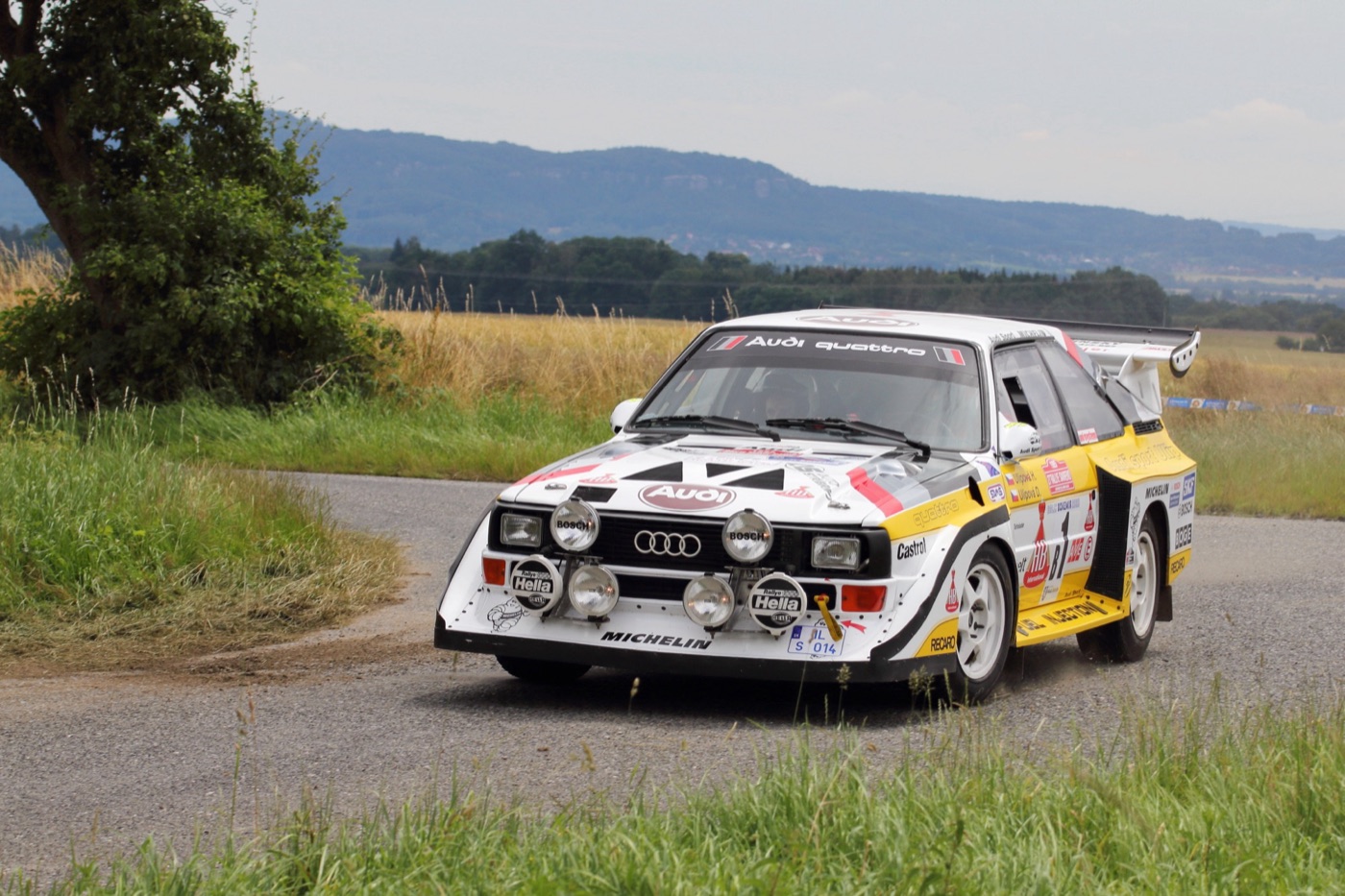
Group B was the class of rules the FIA introduced in 1982 for “series-production grand touring cars”, and from 1982 to 1986 it was the top class of the World Rally Championship. A maker needed to build only 200 identical road cars in 12 months to have one approved, so car makers built specials for it, among them the Audi Sport quattro S1, the Peugeot 205 Turbo 16 and the Lancia Delta S4, all with turbocharged engines and four-wheel drive. After three spectators died in Portugal in March 1986 and Henri Toivonen and Sergio Cresto died in Corsica on 2 May 1986, the sport’s governing body (FISA) ended the class, and from 1987 the world championship was for Group A cars.
Group B cars still rally in historic events and demonstrations. Their FIA homologation forms, approval dates and evolutions are still on record in the FIA Historic Database.
What was Group B rallying?
Group B was one of three groups in the FIA’s Appendix J for 1982, the rule book for production-based competition cars: Group N for large-scale series production touring cars, Group A for large-scale production cars and Group B for “series-production grand touring cars”, according to the FIA’s Appendix J for 1982 (article 251). Groups A and N needed at least 5,000 identical cars built in 12 consecutive months. Group B needed 200 (article 256), and cars could be rallied or raced. The category also covered circuit and road GT cars: Ferrari’s 288 GTO was approved in Group B in June 1985 (form B-273), the Porsche 911 Carrera in June 1986 (B-282) and the Ferrari F40 in December 1989 (B-293), according to the FIA Historic Database.
The new regulations replaced the numbered Groups 1 to 6, with “relatively few technical restrictions” in Group B, as Simon Arron put it in Motor Sport. Writing in Motor Sport in October 2000, John Davenport explained the attraction for car makers: build 200 versions of a special car, and it could have four-wheel drive and turbocharging even if the maker’s road cars had neither.
How many cars did Group B homologation need?
The 1982 rules ask for “at least 200 identical units (minimum 2 seats)” built in 12 consecutive months. Rally cars already approved in Groups 2, 3 and 4, with approval valid beyond 31 December 1981, were moved into Group B automatically by the FISA secretariat. In a 1998 Motor Sport feature on Henri Toivonen, Davenport recorded the argument behind the number: the Germans wanted 2,000 cars, the French and British 200 and the Italians 20. The figure settled late in 1981 was 200, with 20 identical cars needed for an “evolution”.
Once 200 cars had been built, a maker could have an evolution of the type (ET) or a sporting evolution (ES) approved on 20 more, as the 1986 Appendix J defines them, and the competition car could then use every part on it. Davenport’s 2000 article calls it “simple maths”: makers usually produced their first evolution at the same time as the standard car.
Group B weight and engine size
Group B cars had a minimum weight that rose with engine size. A turbocharged or supercharged engine counted as 1.4 times its real capacity (Appendix J 1982, general prescriptions for Groups N, A and B, article 3.1), so Peugeot’s 1,775 cc turbo engine in the 205 T16 counted as 2,485 cc and put the car in the 2,500 cc class, according to Richard Heseltine in Motor Sport in December 2016.
| Engine capacity (cc) | Minimum weight (kg) |
|---|---|
| Up to 1,000 | 580 |
| 1,300 | 675 |
| 1,600 | 750 |
| 2,000 | 820 |
| 2,500 | 890 |
| 3,000 | 960 |
| 4,000 | 1,100 |
| 5,000 | 1,235 |
| Over 5,000 | 1,300 |
How Group B began and how it grew
In 1982 the old groups could still compete, and makers could transfer their Group 4 cars into Group B; FISA’s executive then voted unanimously for five years of Group B stability from 1 January 1983 (Davenport, 2000). The first world champions of the period won in cars from the old rules: Walter Röhrl took the 1982 drivers’ title in an Opel Ascona 400 and Audi took the makes’ title with the four-wheel-drive quattro, first homologated in January 1981 on the Group 4 form 671 that the FIA records now list under Group B.
Lancia’s Rally, known as the 037, was approved as a Group B car in April 1982 and won the 1983 makes’ title with rear-wheel drive and a supercharged engine. Peugeot’s 205 Turbo 16 followed in April 1984, mid-engined and four-wheel drive, and gave Ari Vatanen its first world championship win on the 1984 1000 Lakes. Audi answered with the Sport quattro and its 1985 E2 evolution; Lancia replaced the 037 with the Delta S4 late in 1985. Lancia’s 037 engine gave about 250bhp in 1982; its successor in the Delta S4, with a turbocharger added, was rated at “the best part of 500bhp, or perhaps slightly more”, Arron wrote in Motor Sport’s Group B retrospective. Juwra.com’s summary of 1986 says the development of the cars reached its peak that year, when “technology and performance begun to rival even that of Formula 1”.
The Group B rally cars
The table lists the Group B cars that finished in the top ten of a World Rally Championship round between 1982 and 1986, with the number of each car’s FIA homologation form, the months it was valid and its evolutions, as the FIA Historic Database records them. The finishes and wins come from juwra.com’s result compilations for each season, 1982 to 1986.
| Car | FIA form | Approved from | Approval ended | Driven wheels | Evolutions approved | WRC wins |
|---|---|---|---|---|---|---|
| Renault 5 Turbo, 5 Turbo 2, 5 Turbo (1,436 cc) and 5 Maxi Turbo | B-205; B-234; B-267 | Feb 1982; Jan 1983; Dec 1984 | Jan 1988; Jan 1992; Jan 1990 | Rear | Jan 1983 (two); Mar 1985 | 3 |
| Porsche 911 SC (SC RS from 1984) | B-207 | Mar 1982 | Jan 1990 | Rear | Mar 1982; Jan 1984 | 0 |
| Lancia Rally (037) | B-210 | Apr 1982 | Jan 1991 | Rear | Aug 1982; Jan 1984 | 6 |
| Opel Ascona 400 | B-221 | Oct 1982 | Jan 1988 | Rear | Nov 1982 | 3 |
| Peugeot 504 Pick Up | B-228 | Dec 1982 | Jan 1990 | Rear | Apr 1984 | 0 |
| Audi quattro A1 | B-229 | Jan 1983 | Jan 1989 | Four | Jan 1983 | 2 |
| Mitsubishi Lancer 2000 Turbo | B-230 | Jan 1983 | Jan 1989 | Rear | None | 0 |
| Talbot Samba Rallye | B-232 | Jan 1983 | Jan 1989 | Front | Jan 1983; Jan 1984 | 0 |
| Nissan 240RS | B-233 | Jan 1983 | Jan 1990 | Rear | Mar 1985 | 0 |
| Opel Manta 400 | B-237 | Mar 1983 | Jan 1990 | Rear | May 1983 | 0 |
| Toyota Celica Twincam Turbo (TA64) | B-239 | Mar 1983 | Jan 1989 | Rear | Aug 1983 | 6 |
| Audi quattro A2 | B-243 | May 1983 | Jan 1990 | Four | May 1983 | 9 |
| Mazda RX-7 | B-255 | Feb 1984 | Jan 1989 | Rear | May 1984 | 0 |
| Peugeot 205 Turbo 16 | B-262 | Apr 1984 | Jan 1991 | Four | Apr 1984; May 1985 (E2) | 16 |
| Audi Sport quattro (S1, S1 E2) | B-264 | May 1984 | Jan 1991 | Four | May 1984; Jul 1985 (sporting) | 2 |
| Lancia Delta S4 | B-276 | Nov 1985 | Jan 1992 | Four | Nov 1985 (sporting) | 4 |
| MG Metro 6R4 | B-277 | Nov 1985 | Jan 1991 | Four | Nov 1985 (sporting) | 0 |
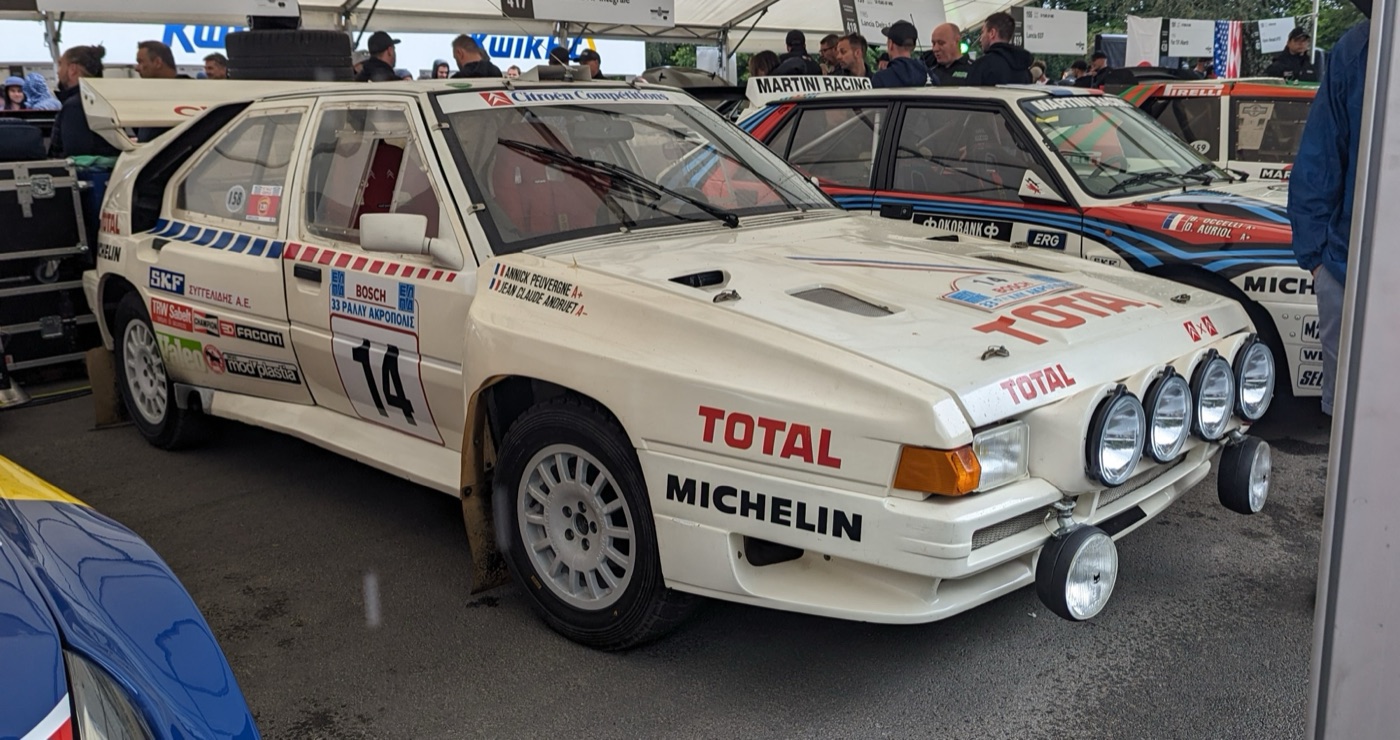
| Citroën BX 4TC | B-279 | Jan 1986 | Jan 1991 | Four | Jan 1986 | 0 |
| Ford RS200 | B-280 | Feb 1986 | Jan 1992 | Four | Dec 1986 (sporting) | 0 |
Under that rule the Ascona 400’s win on the 1982 Monte Carlo Rally counts, although it ran on Opel’s Group 4 form 666 until its Group B form of October 1982. The original quattro’s seven wins of 1982, on Audi’s form 671 of January 1981, are not in the table. Two more 1982 rounds went to cars of other groups: the Safari to Shekhar Mehta’s Nissan Violet and New Zealand to Björn Waldegård’s Toyota Celica (juwra.com, 1982).
Audi quattro, Sport quattro and S1 E2
Audi ran the quattro in three Group B forms: the A1 (form B-229, January 1983), the A2 (B-243, May 1983) and the short-wheelbase Sport quattro (B-264, May 1984). Hannu Mikkola won the 1983 drivers’ title and Stig Blomqvist the 1984 title in quattros.
The Sport quattro had a shorter wheelbase than the A2, and its 2,133 cc 20-valve engine gave up to 440bhp (Heseltine). Its sporting evolution, the S1 E2, approved in July 1985, had a recirculating-air turbo system to cut lag and produced up to 590bhp depending on boost. Audi’s MediaCenter gives the rally car it first used in 1985 as 350 kW (476 PS) and 1,090 kg. Röhrl won the 1985 Sanremo Rally in the S1, Audi’s only world championship win that year, Audi withdrew from rallying after the Portuguese Rally of March 1986, and the E2 started only six world championship rounds (Heseltine).
Lancia Rally 037
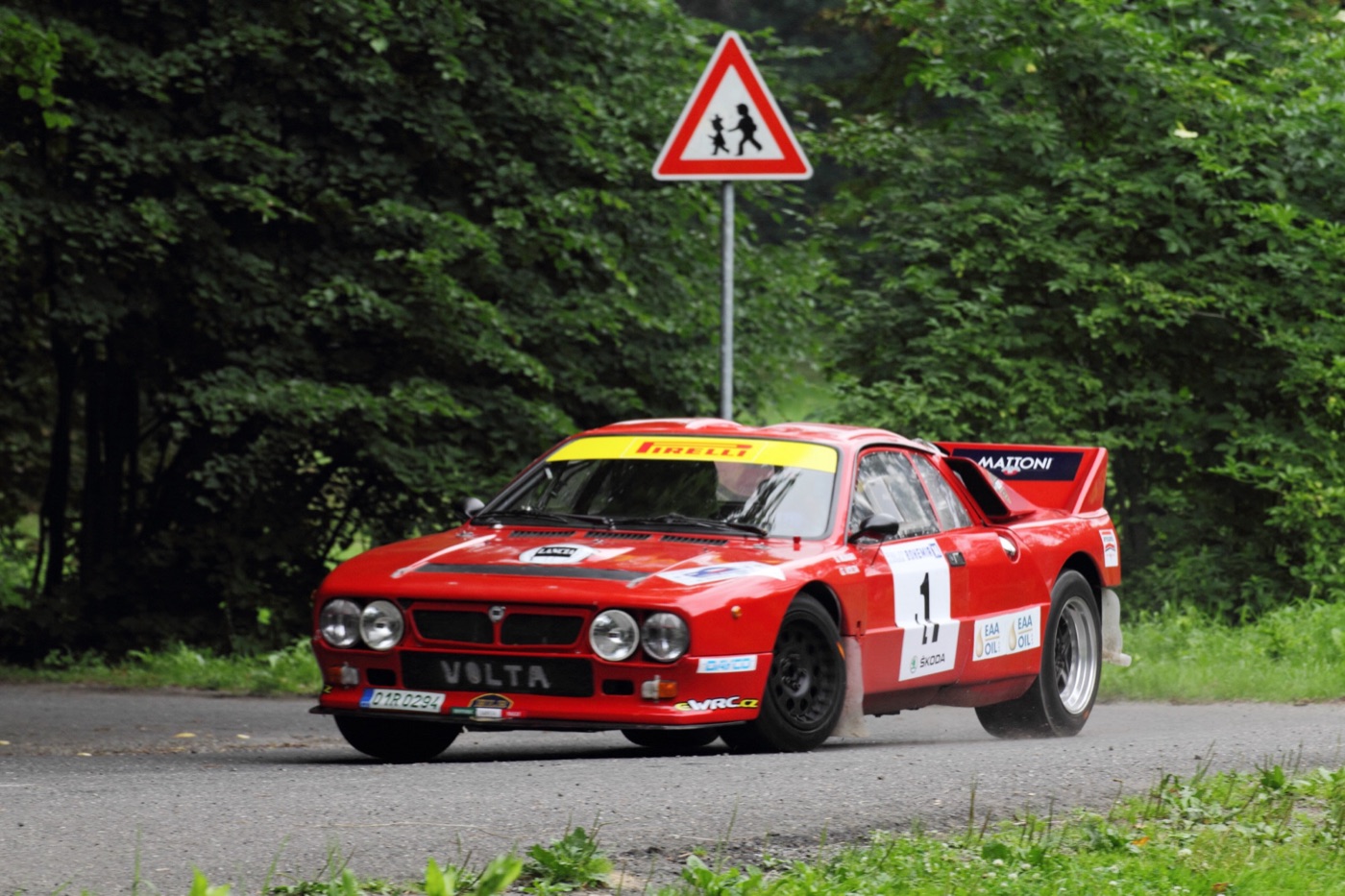
The Lancia 037 (form B-210) was a Beta Montecarlo-based, mid-engined coupé with a supercharged four-cylinder engine and rear-wheel drive. It won six world championship rounds, among them the 1983 Monte Carlo Rally with the German Walter Röhrl and the all-tarmac Tour de Corse in 1983 and 1984 with Markku Alén, and gave Lancia the 1983 makes’ title by two points over Audi. Its 1984 evolution was approved in January 1984.
Peugeot 205 Turbo 16
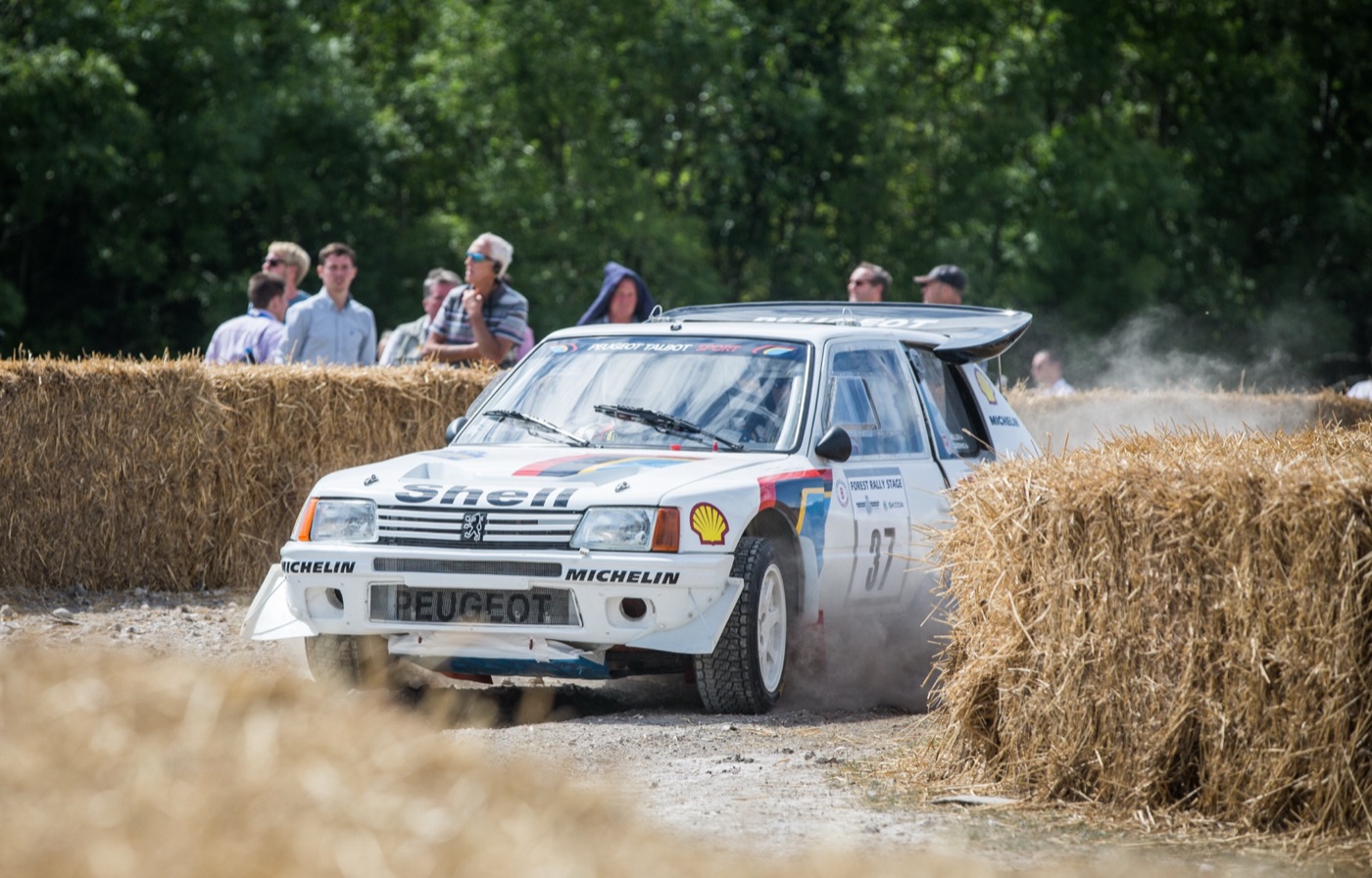
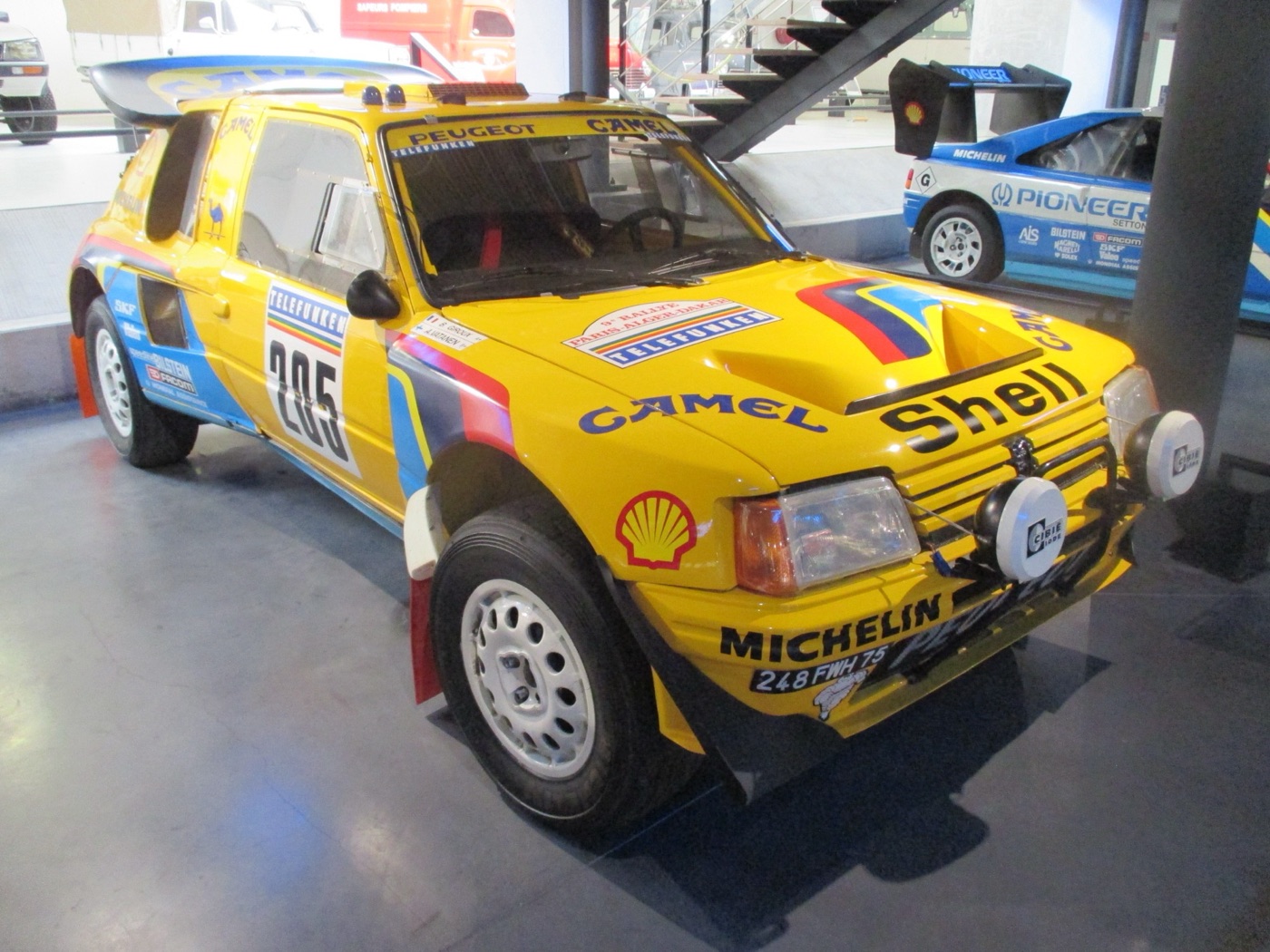
Heseltine calls the Peugeot 205 T16 one of the boldest rally projects of all. Peugeot Talbot Sport, run by Jean Todt, built the 205 Turbo 16 around a transverse, mid-mounted 1,775 cc turbo engine developed from an XU diesel block, with four-wheel drive. Heuliez built the 200 road cars needed for the production run (Heseltine), and the FIA approved the car on form B-262 in April 1984. The Peugeot 205 T16 won 16 world championship rounds, more than any other Group B car, and both drivers’ titles of 1985 and 1986. Its E2 evolution was approved in May 1985.
Lancia Delta S4
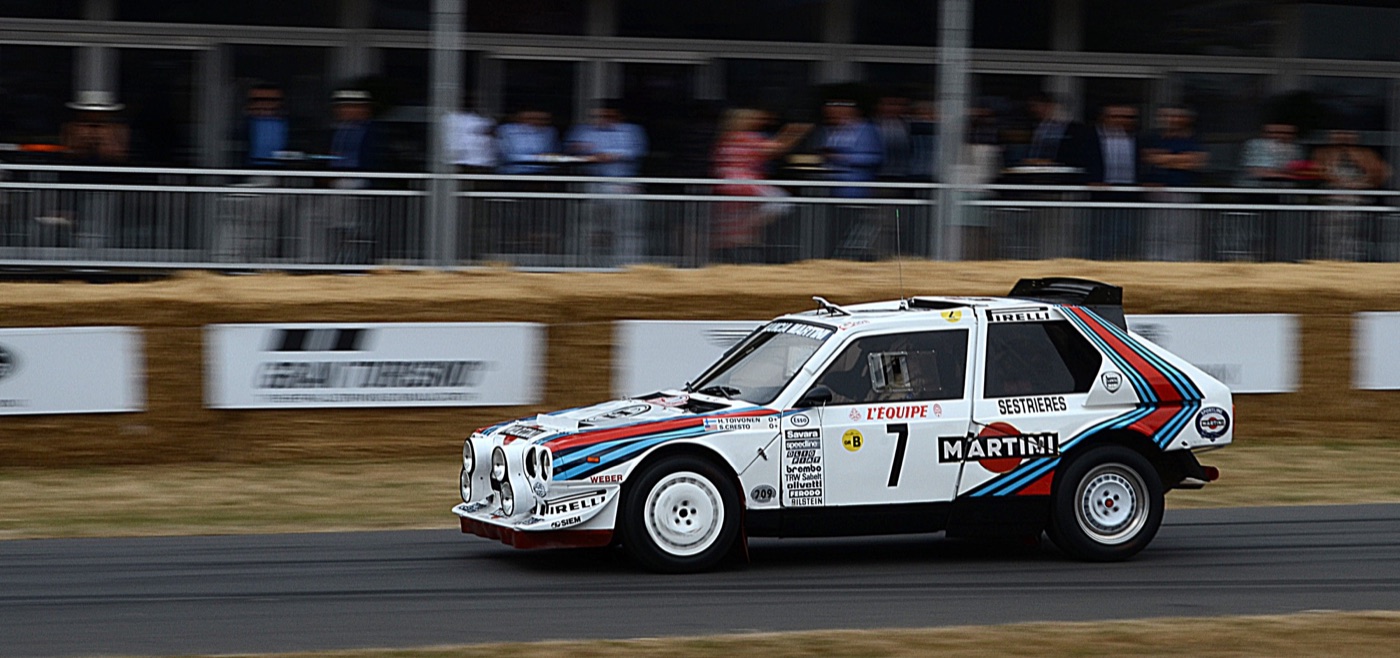
The Delta S4 (form B-276, November 1985) looked like a Delta hatchback but had a mid-mounted 1,759 cc engine with both a turbocharger and a supercharger, and four-wheel drive. In Lancia’s name, S stood for supercharged and 4 for four-wheel drive, according to Stellantis Heritage. Lancia first claimed up to 480bhp, and 620bhp was available for the 1986 Swedish Rally (Heseltine). Toivonen and Neil Wilson won on its world championship debut, the RAC Rally of November 1985 (Stellantis Heritage), and Toivonen won the 1986 Monte Carlo Rally in it, 20 years after his father had won in Monte Carlo. Lancia built the Delta S4 road car, the Stradale, for homologation; Heseltine writes that as few as 65 were made, short of the 200 required.
MG Metro 6R4
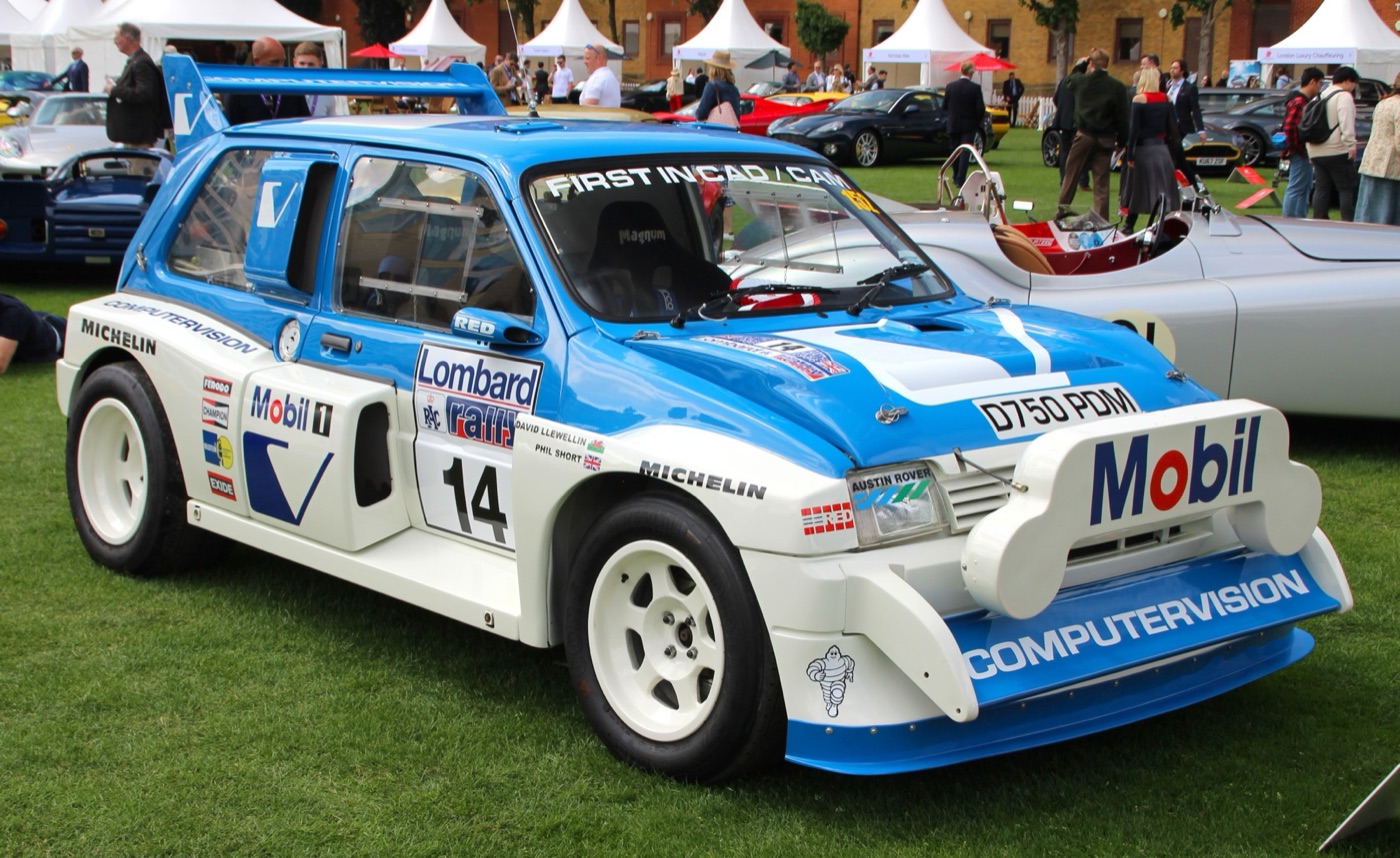
Austin Rover’s MG Metro 6R4 (form B-277, November 1985) had a V6 engine of 2,991 cc and four-wheel drive. Tony Pond finished third with it on its world championship debut, the 1985 RAC Rally. The MG never finished in the top three of a world championship round again, and in Corsica that May both works cars retired, Pond’s with a shredded camshaft drive belt, according to Gerry Phillips’s Motor Sport report of June 1986.
Ford RS200
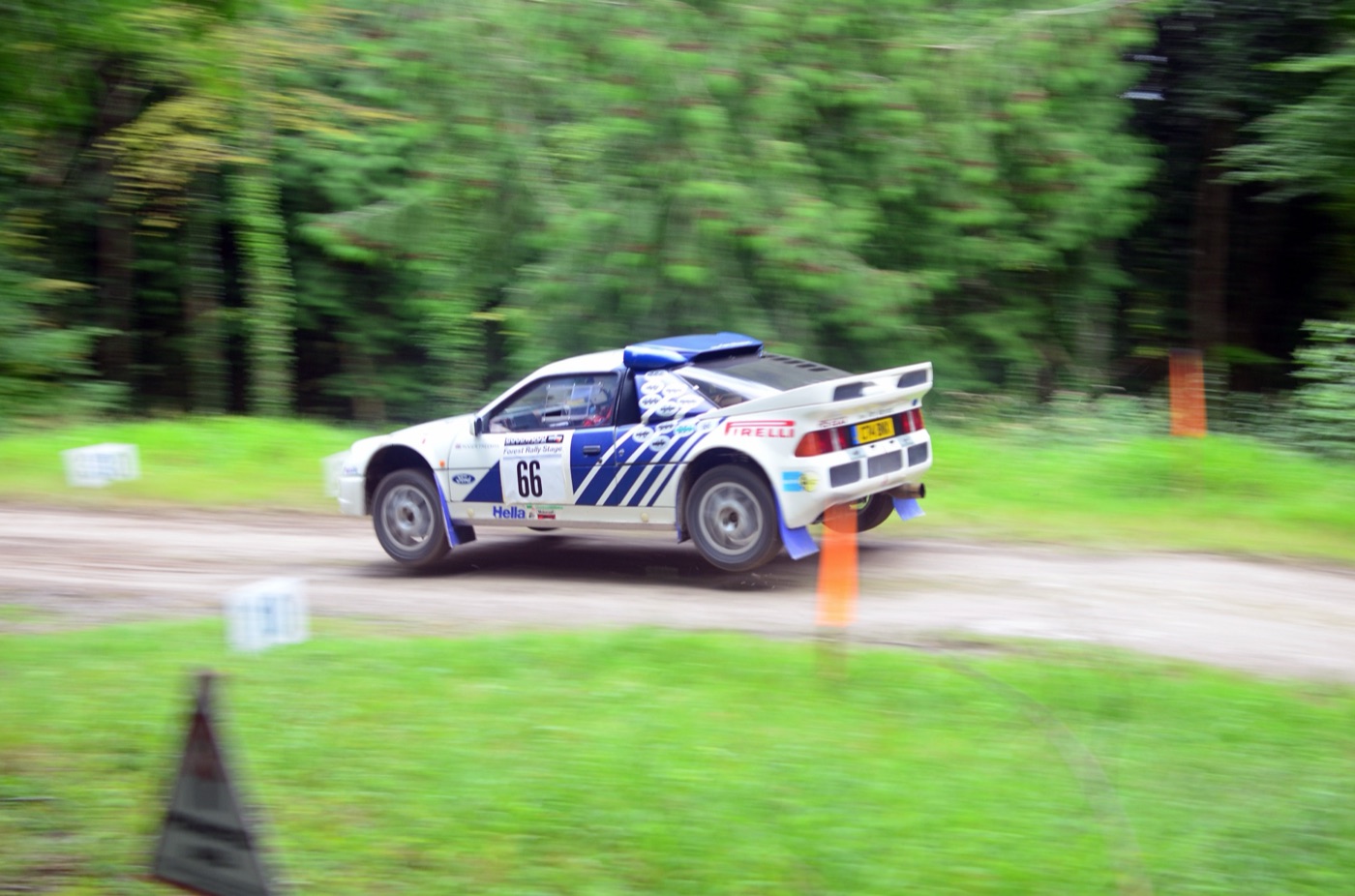
Ford dropped the rear-drive Escort RS1700T and had Tony Southgate design a four-wheel-drive car from scratch: the RS200, with a mid-mounted 1.8-litre Cosworth BDT turbo engine and double-wishbone suspension with twin dampers at each wheel (Heseltine). It was approved only in February 1986, and finished third on its world championship debut, the snow-covered Swedish Rally of February 1986, with Karl Grundel. The FIA record dates its sporting evolution December 1986, after the last Group B world championship round.
Toyota Celica Twin-Cam Turbo
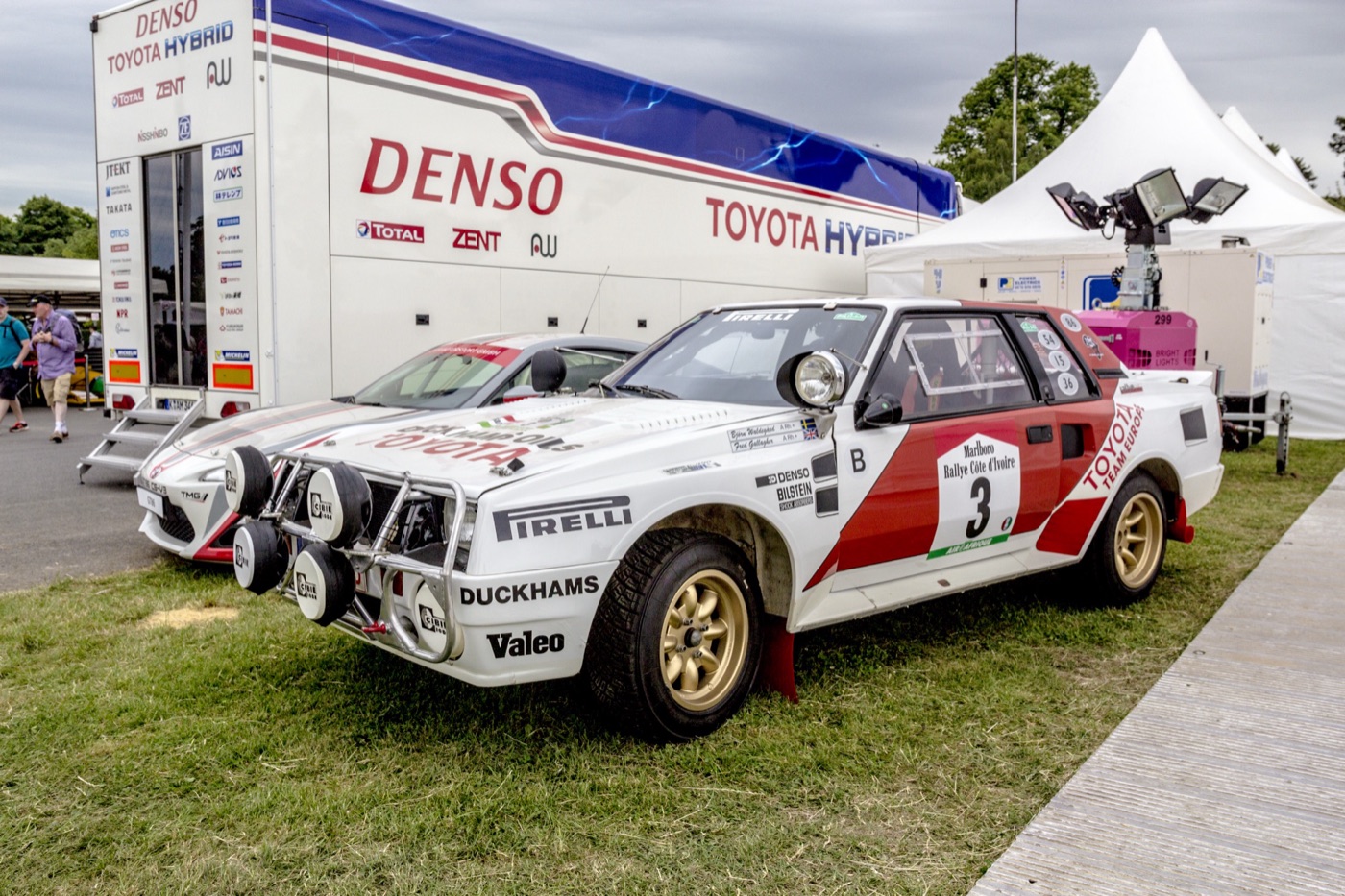
The rear-drive Celica Twincam Turbo (form B-239, March 1983) was Toyota’s Group B car. The Celica won six world championship rounds, all in Africa: the Ivory Coast Rally in 1983, 1985 and 1986 and the Safari in 1984, 1985 and 1986, four of them with Björn Waldegård.
Opel Ascona 400 and Manta 400
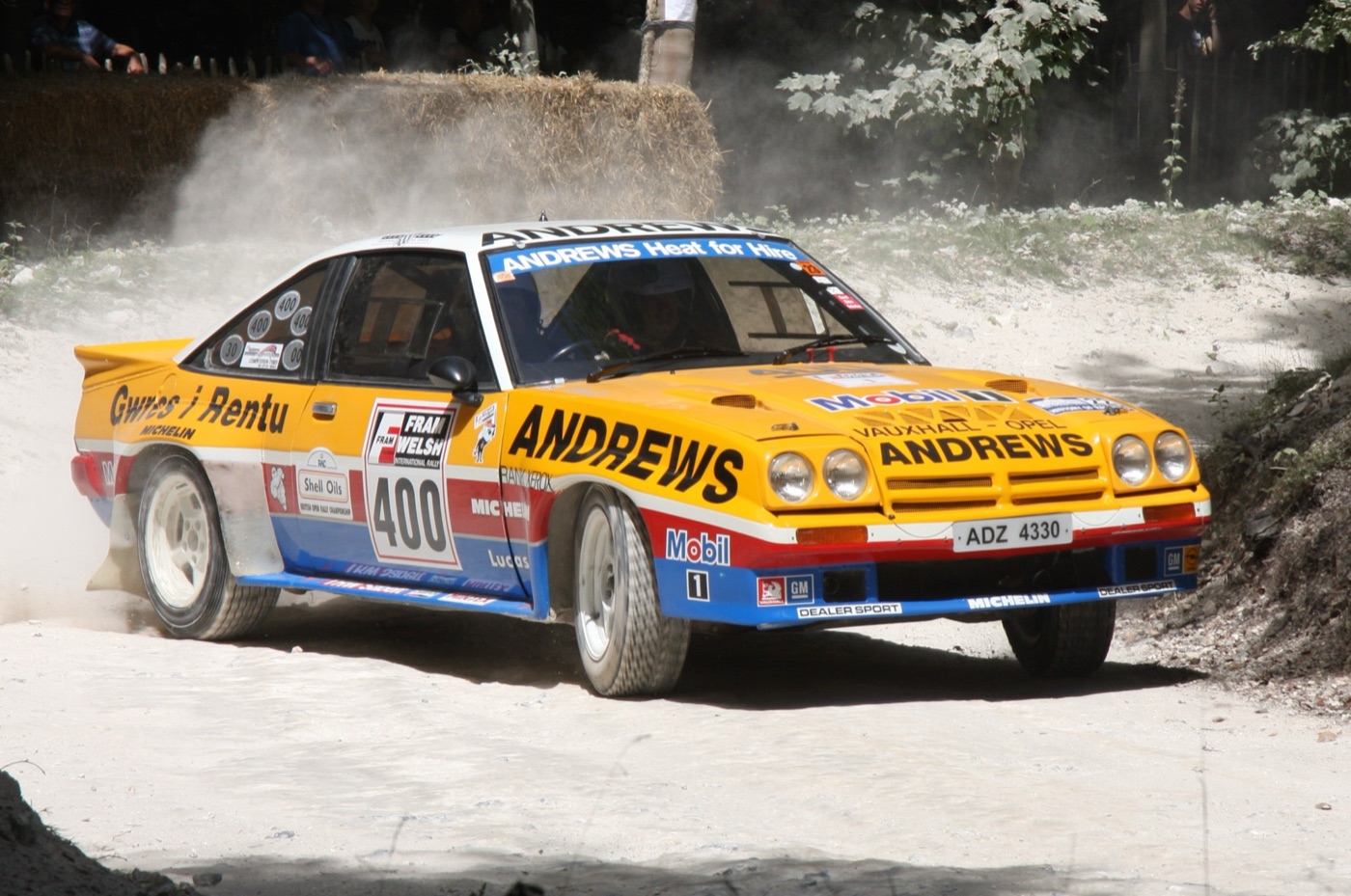
Opel’s rear-drive 400s shared a 2.4-litre engine. The Ascona 400 won three rounds, two of them for Röhrl in his 1982 title year, and Vatanen won the 1983 Safari in one. The Manta 400 (form B-237, March 1983) never won a round but finished in the top ten 22 times; Jimmy McRae was third on the 1983 RAC Rally in one and Rauno Aaltonen second on the 1984 Safari.
Citroën BX 4TC and the other Group B cars
Citroën’s four-wheel-drive BX 4TC (form B-279, January 1986) finished in the top ten of a world championship round once. Renault’s rear-drive 5 Turbo won the 1982 Tour de Corse with Jean Ragnotti, the 1985 Tour de Corse as the Renault 5 Maxi Turbo, again with Ragnotti, and the 1986 Portuguese Rally with Joaquim Moutinho after the works teams had withdrawn. Nissan’s 240RS was second in New Zealand in 1983 with Timo Salonen, and the Porsche 911 SC RS was third in Corsica in 1985 with Bernard Béguin.
How fast were Group B rally cars?
The most powerful Group B cars of 1985 and 1986 had about 450bhp to 600bhp: Davenport gives the Delta S4 of the 1985 RAC Rally 450bhp, and Heseltine the Sport quattro S1 E2 up to 590bhp. Audi gives the Sport quattro S1 as 0 to 100 km/h in 3.1 seconds (Audi MediaCenter), and Heseltine writes that a works Delta S4 could reach 60mph from rest in under 2.5 seconds on gravel. Ford’s RS200 had more than 400bhp in 1986, and for its planned 1987 evolution, co-designer John Wheeler was talking about 600bhp, Ford’s motor sport boss Stuart Turner told Arron.
Roland Gumpert, whom Arron calls the father of Audi’s quattro, put Audi’s output at Pikes Peak in the mid-1980s at about 700bhp, against claims of 1,000bhp, and said its power was at first all “between 5000 and 7500rpm”. Kankkunen, testing for Peugeot in 1986, said the cars “were moving towards 700bhp and were very light”. He later drove a Delta S4 back to back with a Ford Fiesta WRC: “Physically the Lancia was 10 times harder, with double the power, a slower gearbox and worse brakes.”
Group B rally champions and results
Group B produced five drivers’ champions: Röhrl, Mikkola, Blomqvist, Salonen and Kankkunen. Their rivals included Markku Alén, Ari Vatanen, Michèle Mouton, Henri Toivonen, Jean Ragnotti, Miki Biasion and Björn Waldegård (Arron). “You had the best drivers in the world and the standard was very high – anybody from the top 20 could win,” Kankkunen told Arron. Audi won two makes’ titles, Lancia one and Peugeot two. The points below are the final standings from juwra.com’s championship tables.
| Season | Drivers’ champion (car) | Points | Runner-up, points | Makes’ champion, points | Makes’ runner-up, points |
|---|---|---|---|---|---|
| 1982 | Walter Röhrl (Opel Ascona 400) | 109 | Michèle Mouton (Audi), 97 | Audi, 116 | Opel, 104 |
| 1983 | Hannu Mikkola (Audi quattro) | 125 | Walter Röhrl (Lancia), 102 | Lancia, 118 | Audi, 116 |
| 1984 | Stig Blomqvist (Audi quattro) | 125 | Hannu Mikkola (Audi), 104 | Audi, 120 | Lancia, 108 |
| 1985 | Timo Salonen (Peugeot 205 T16) | 127 | Stig Blomqvist (Audi), 75 | Peugeot, 142 | Audi, 126 |
| 1986 | Juha Kankkunen (Peugeot 205 T16 E2) | 118 | Markku Alén (Lancia), 104 | Peugeot, 137 | Lancia, 122 |
Michèle Mouton
Michèle Mouton finished second in the 1982 drivers’ championship with 97 points to Röhrl’s 109, after winning the Portuguese, Acropolis and Brazilian rallies for Audi (juwra.com). She won the Pikes Peak hill climb in the United States in an Audi in 1985 (Heseltine).
Markku Alén’s eleven days as champion
Alén won the last round of 1986, the Olympus Rally in the United States, and Lancia announced him as champion. Peugeot had been excluded from the Sanremo Rally of 13 to 17 October because scrutineers judged that flanges under the 205s were aerodynamic “skirts”; Peugeot said they protected the fuel tanks from stones, and Lancia’s team director Cesare Fiorio had pointed them out to officials, according to Motor Sport’s rally review of December 1986. After the RAC Rally, Alén led the series by one point, his lead made possible only by the Sanremo exclusions. On 18 December, eleven days after the Olympus Rally, the FISA executive found no proof that Peugeot had broken the rules, struck the Sanremo Rally from the championship and so made Kankkunen champion, as Phillips reported in Motor Sport in February 1987. The organisers were fined US$20,000. Davenport, in a 2001 Motor Sport profile of Alén, put it in one line: Alén “was champion for 11 days in 1986”.
Group B rally crashes and deaths
Between May 1985 and May 1986, crashes of Group B cars on international rallies killed Attilio Bettega, three spectators in Portugal, Henri Toivonen and Sergio Cresto, and Michel Wyder. Juwra.com’s 1985 season summary calls Bettega’s death “the first top-line rally drive casualty” and records that Vatanen was seriously injured in a crash in Argentina a few months later.
Attilio Bettega, Tour de Corse, 2 May 1985
Bettega, an Italian works Lancia driver, died on 2 May 1985 when his 037 hit trees beside the route of the Tour de Corse; his co-driver Maurizio Perissinot was unhurt (Arron). An 037 built for Bettega that he never drove is kept in Turin, unregistered and unrallied, Anthony Peacock reported in Motor Sport in December 2022.
The Portuguese Rally crowd crash, 5 March 1986
On the first stage of the 1986 Portuguese Rally, which began on 5 March, the Portuguese champion Joaquim Santos lost control of his Ford RS200 and went into the crowd, killing three spectators and injuring more than 30 (Arron). Gerry Phillips had been to every Portuguese Rally since it became international, and blamed the organisers’ lack of crowd control. In his April 1986 report he described the stage: the road was “crammed with a solid mass of excited, uncontrolled, almost hysterical humanity until seconds before a car arrived”. Phillips had long wondered how the event could go on “without any form of crowd control whatsoever and escape a major disaster”. The works teams of Peugeot, Lancia, Audi, Ford, Austin Rover and Volkswagen withdrew, and 39 cars went no further.
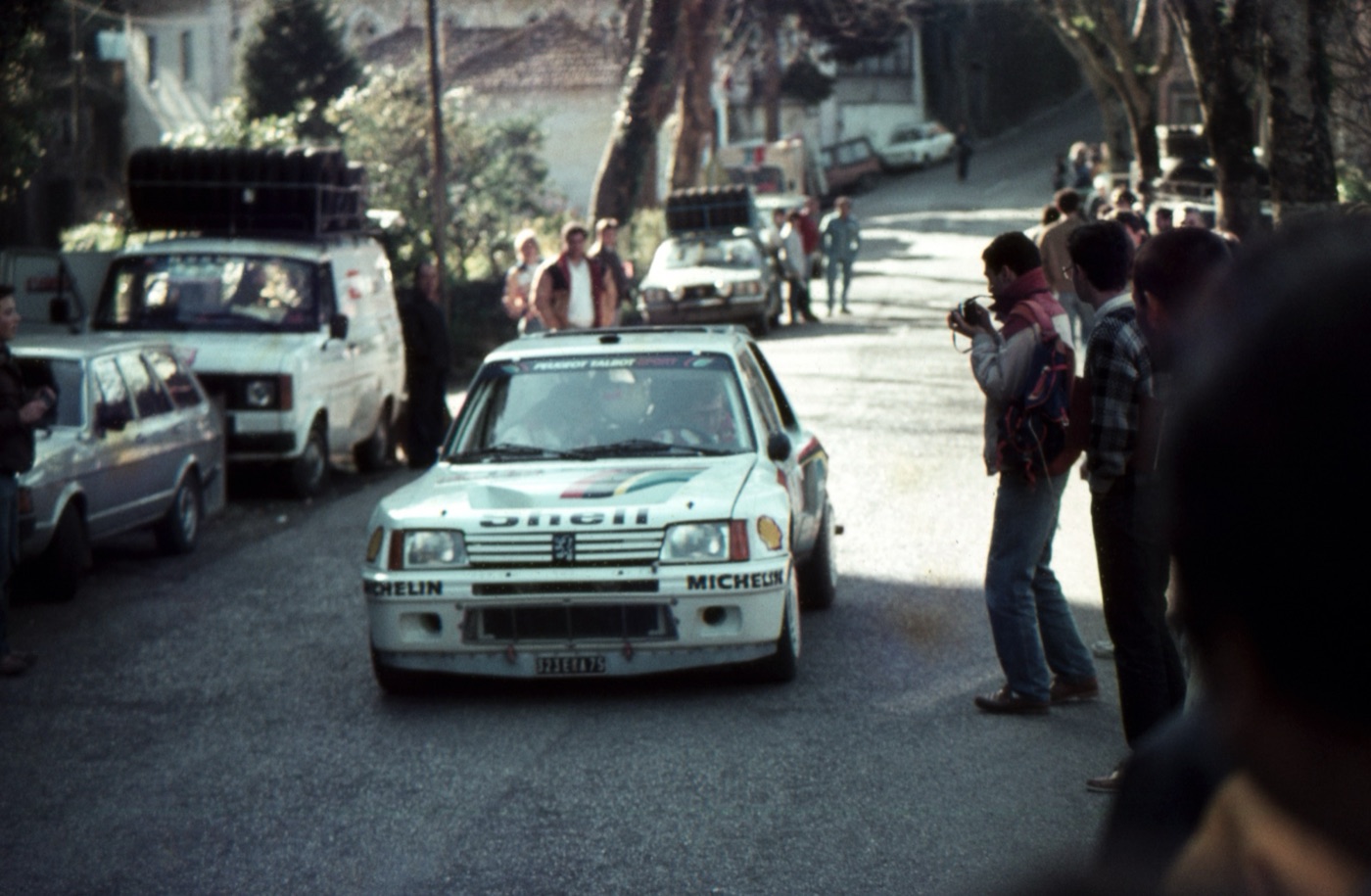
The drivers gave four reasons in a joint statement, which Arron quotes; the third was that “the accident was caused by the driver having to try to avoid spectators that were in the road. It was not due to the type of car or its speed.” Gumpert said the same of the crowds: “There were crowd problems in Italy and Greece, too, but you didn’t get that in Sweden or other countries, where the authorities did a better job of keeping people back.”
Henri Toivonen and Sergio Cresto, Tour de Corse, 2 May 1986
Toivonen led the 1986 Tour de Corse by two and three-quarter minutes when, on the afternoon of 2 May, his Delta S4 left the road on a left-hand bend, hit trees about four yards below the road and caught fire a minute or so later with Toivonen and Cresto still inside (Phillips, June 1986). Phillips wrote that what happened “will probably never be known, for the car was totally destroyed in the blaze”. Bruno Saby passed the spot before the fire started, saw the smoke a corner or two later and went back; other crews arrived, and none of them could help. Lancia withdrew, and Saby won for Peugeot. Gumpert told Arron that one cause, to his mind, was the fuel tank’s position “just below the driver’s seat”, which he called “a stupid piece of design”.
Marc Surer and Michel Wyder, Rallye Hessen, 1986
On the evening of 31 May 1986, on the Rallye Hessen’s 15th special stage near Schotten in Germany (Motorsport Memorial), the Arrows Formula 1 driver Marc Surer slid wide on a 140mph corner and his Ford RS200 hit a tree and broke in half. Fire swept the wreckage and killed his trapped co-driver, Michel Wyder. Surer rolled clear of his burning seat with serious burns and 12 broken bones, was in a coma for three weeks and left hospital six months later, according to a 2003 Motor Sport profile of Surer.
Why was Group B banned?
FISA banned Group B from world championship rallying from 1987 on safety grounds, after the deaths in Portugal and Corsica. On the last day of the 1986 Tour de Corse, FISA president Jean-Marie Balestre called a special meeting of FISA’s executive, and the rules it drew up were sent to the other members to vote on by telex (Phillips, June 1986). The rules included an immediate stop to new evolutions of Group B and Group A cars, a ban on “skirts”, limits on the length of special stages and automatic fire extinguishers. From January 1987 the planned Group S was cancelled, Group B cars were to have a power limit and a new world championship was to be for Group A cars only.
Davenport (1998) wrote that Balestre called a press conference almost at once, announced that Group B cars would be banned from the end of the year, and that Peugeot announced it was suing FISA for the cost of cancelling Group B; it lost (Davenport, 2000). “Until the accident in Portugal, I don’t think it occurred to us that the sport might be getting out of hand,” Turner told Arron. Gumpert disagreed with the decision: “The idea of switching to Group A seemed boring to me.”
What was Group S?
Group S was the class planned to follow Group B, and its cancellation came with the ban. Balestre launched it at a June meeting of FISA’s manufacturers’ commission, and by September the proposal was for 1.2-litre forced-induction or 2.4-litre normally aspirated engines, with nearly everything else free; Arron gives its proposed limit as 300bhp. It was cancelled in Corsica in May 1986 (Davenport, 2000; Phillips, June 1986).
What replaced Group B?
Group A, with its 5,000-car minimum, became the top class of the World Rally Championship from 1987. Alén said of the change: “I could drive that car with one hand and the other arm hanging from the window – it had literally half the horsepower” (Peacock).
What happened to the Group B cars after the ban?
The cars kept racing where the rules still let them. Group B approvals ran on for years: the Delta S4’s and the RS200’s forms were valid until 1 January 1992 (FIA Historic Database). Turner told Arron that what he remembered most about the RS200 came after the ban, “when Martin Schanche and others used the RS200 to such good effect in rallycross”.
Peugeot left world championship rallying and turned to the Paris–Dakar, Phillips reported in his March 1988 review, where a special 205 won in 1987 and Todt said it brought Peugeot more publicity than all its world championship wins put together. Vatanen won that 1987 Dakar; in 1988 his Peugeot was stolen from outside his hotel in Bamako while he led, and Kankkunen won instead, according to Jeremy Hart’s 1998 history of the Dakar.
Where can you see Group B rally cars today?
Group B cars run at historic rally festivals and are shown in makers’ collections. The largest gathering is Germany’s ADAC Eifel Rallye Festival around Daun. For July 2026 the organisers confirmed 16 Group B cars to run together, several of them normally kept in museums, among them the Nissan 240RS, Opel Manta 400, Porsche 911 SC RS, Lancia 037 and Delta S4, three versions of the Audi quattro, two Peugeot 205s and the Citroën BX 4TC, with 20 more Group B cars on the stages, Octane reported. The festival’s own site says the 14th festival, from 23 to 25 July 2026, drew tens of thousands of fans and brought all the big Group B cars to Daun, and gives the next one as 22 to 24 July 2027.
In Turin, the Heritage HUB of Stellantis shows one of the original 1985 Delta S4 rally cars in its Rally Era area (Stellantis Heritage). Its Lancia exhibition includes the 037, according to Stellantis Heritage’s report from the hub.
Is Group B rallying coming back?
Group B cars compete again only in historic rallies and run in demonstrations; no world championship class has used the rules since 1986. A SkiddMark report of April 2012 recorded that Michelin would sponsor a Group B rally run by the Rallying with Group B Preservation Trust over the bank holiday weekend of 25 and 26 August 2012. It was to use roads in Cheshire and North Staffordshire, with special stages in the grounds of castles and stately homes and service at the Oulton Park circuit, and to run as a National B event under the MSA’s rules, with a display class that drove the stages without the clock. Members had already reserved more than 60 places, ahead of the regulations and entries opening.
Steve Dolby, Michelin’s product marketing manager, said then: “Michelin has a strong commitment to motorsport, demonstrated by the fact that we are at the top of today’s World Rally Championship and we were also there during the glory days of Group B on such iconic cars as the Audi Quattro and Peugeot 205 T16.”
Deposits had been paid for six Metro 6R4s, three RS200s, three Peugeot 205 T16s, two Lancia 037s, a Delta S4, an A2 and an S1 quattro, among others, according to the event’s website in August 2012. The rally did not run on those dates. The organisers announced on 12 July 2012 that it had been rescheduled after the “loss of key venues at short notice”, which meant it could not meet the terms of its MSA permit, and offered a smaller Group B class added to another team’s rally instead, as their notice explains.
Questions
When did Group B rallying start and end?
Group B rules came into force in 1982, and Group B cars could win world championship rallies until the end of 1986. FISA decided on the ban in May 1986 and the World Rally Championship was for Group A cars from 1987.
Which car won the most Group B rallies?
The Peugeot 205 Turbo 16 won 16 World Rally Championship rounds between 1984 and 1986, and its drivers won the 1985 and 1986 titles (juwra.com).
Who was the last Group B world champion?
Juha Kankkunen of Finland, in a Peugeot 205 Turbo 16 E2, in 1986. He became champion on 18 December 1986, when FISA struck the Sanremo Rally from the championship.
How many Group B cars had to be built?
200 identical cars with at least two seats in 12 consecutive months, and 20 more for each evolution that a maker wanted approved.
Was Group B only for rallying?
No. Group B was the FIA’s class for series-production grand touring cars and covered racing too; many road cars such as the Porsche 911 and Ferrari 308 GTB held Group B forms.
Who drove in Group B?
The leading drivers included Walter Röhrl, Hannu Mikkola, Stig Blomqvist, Michèle Mouton, Ari Vatanen, Timo Salonen, Juha Kankkunen, Markku Alén, Henri Toivonen, Björn Waldegård and Miki Biasion.
Did the 2012 Michelin Rallye Groupe B take place?
Not as planned. In July 2012 its organisers postponed the 25 and 26 August rally after losing venues at short notice and offered a smaller Group B class on another team’s rally instead.
Sources
- FIA, Appendix J to the International Sporting Code, 1982 (FIA Historic Database): the groups, the 200-car rule, transfers from Groups 2 to 4, the 1.4 turbo factor and the Group B weights.
- FIA, Appendix J, 1986 (FIA Historic Database): definitions of evolutions of the type (ET) and sporting evolutions (ES); the 200-car rule in 1986.
- FIA Historic Database, Group B homologation records (one record per car, linked in the table): form numbers, approval dates, driven wheels and evolution extensions.
- juwra.com, championship standings and result compilations, seasons 1982 to 1986, and calendars for 1985 and 1986: titles, points, wins, top-ten finishes and event dates.
- Motor Sport, “King B: Henri Toivonen”, September 1998: how the 200-car and 20-car figures were agreed; Balestre’s press conference; Peugeot’s suit.
- Motor Sport, “One-man banned”, October 2000: the 1982 transfer, five years’ stability from 1983, the evolution rule, Group S.
- Motor Sport, “Power without compromise”, December 2016: power figures; Bettega; Portugal 1986 and the drivers’ statement; Corsica 1986; quotes from Gumpert, Turner and Kankkunen.
- Motor Sport, “How to make a monster”, December 2016: the 205 T16, RS200, Sport quattro S1 E2 and Delta S4.
- Motor Sport, “Lancia 037 & Delta S4: Group B monsters”, December 2022: the Bettega 037 in Turin; Alén on Group A.
- Motor Sport, “Disastrous Portuguese Rally”, April 1986: the crowd crash and the withdrawals.
- Motor Sport, “Tragedy repeated in Corsica”, June 1986: the Toivonen and Cresto crash and FISA’s meeting.
- Motor Sport, “Rally review”, December 1986: the Sanremo exclusion of Peugeot.
- Motor Sport, “Worthy victor”, February 1987: FISA’s decision of 18 December 1986 and the 1986 title.
- Motor Sport, “Champion in all but name”, July 2001: Alén’s 11 days as champion.
- Motor Sport, “Rally review: Paris–Dakar Rally”, March 1988: Peugeot’s move to the Dakar and the 1988 theft.
- Motor Sport, “Two decades of the Dakar”, April 1998: the 1987 and 1988 Dakar winners.
- Stellantis Heritage, “Lancia is back on the rally stage after 40 years”, 30 July 2025: the S4 name, its first win and the car at the Heritage HUB.
- Stellantis Heritage, “Lancia. The rallying legend”: the Lancia exhibition at the Heritage HUB.
- Audi MediaCenter, “40 years, 40 figures, 40 images”: the Sport quattro S1’s power, weight and acceleration.
- Motor Sport, “Marc of respect”, November 2003: the Rallye Hessen crash of 1986.
- Motorsport Memorial, Michel Wyder: the date and stage of the Rallye Hessen crash.
- Octane, “2026 ADAC Eifel Rallye Festival reunites icons of Group B”: the Group B cars at the 2026 festival.
- ADAC Eifel Rallye Festival, official site: the 2027 dates.
- Rallying with Group B, Michelin Rallye Groupe B spectators page, August 2012 (Internet Archive): the cars entered for the 2012 rally.
- Rallying with Group B, “Rallye Groupe B change of venue and date”, 2012 (Internet Archive): the postponement of the 2012 rally.
- SkiddMark, “Group B Rallying is back!”, April 2012: the Michelin Rallye Groupe B plans and Steve Dolby’s words.