Jaguar E-Type: history, specs, production numbers and values
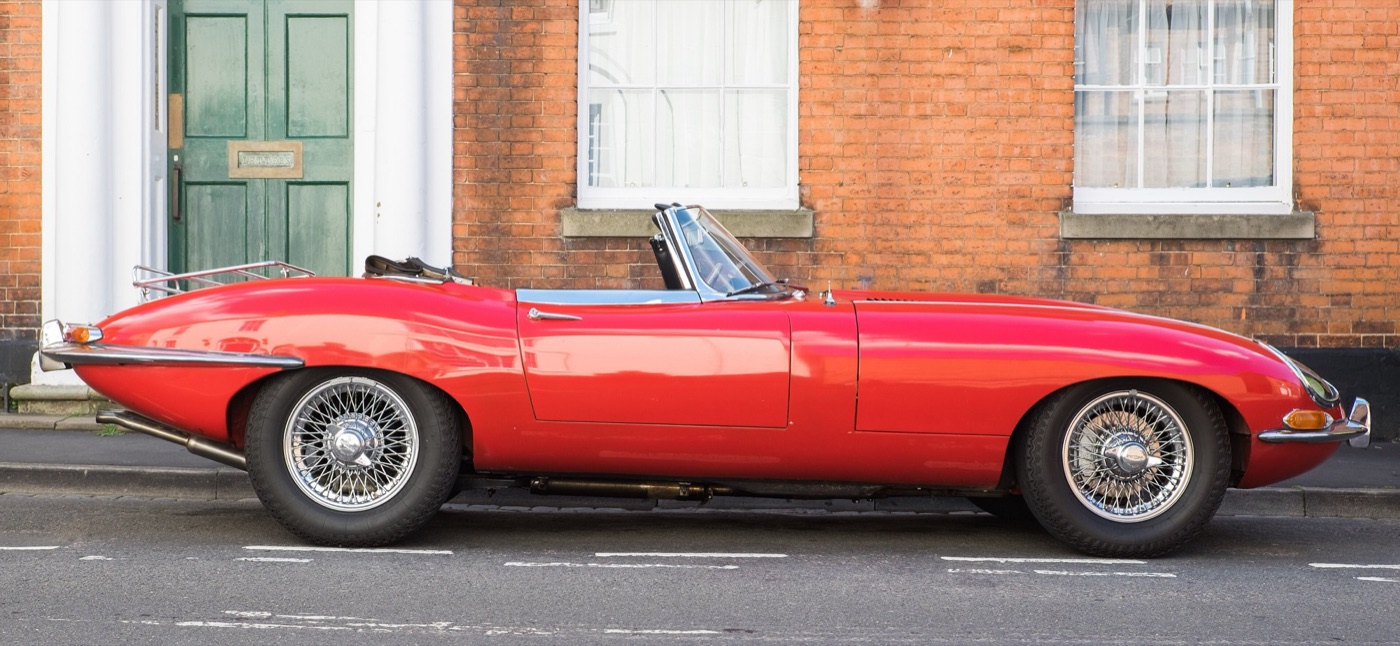
The Jaguar E-Type is a British sports car. Jaguar unveiled it at the Geneva Motor Show in March 1961 and built it in Coventry until June 1974: about 72,500 cars in three series, with a 3.8-litre or 4.2-litre straight six and, from 1971, a 5.3-litre V12. At launch it cost £2,097 15s 10d as an open car, and Motor Sport worked out that it cost "only about a third of the price of a G.T. Maserati or Ferrari of something like equivalent performance". In auctions of 2025 and 2026, Series 1 3.8 roadsters sold for up to $324,000 (one with a replacement 4.2 engine made $64,400), and later cars for between about £33,000 and $112,000.
In North America it was sold as the XK-E.
History of the Jaguar E-Type
The E-Type grew out of Jaguar's Le Mans cars. Bill Boddy's launch report in Motor Sport of April 1961 said the project "started some four years ago and to some degree carried on where the XKSS project, which the fire at the factory undermined, left off", and that the design team worked "under W. M. Heynes", Jaguar's chief engineer.
From the D-type to E1A and E2A
Two prototypes came first. According to the Jaguar Daimler Heritage Trust's 2021 E-Type Evolution exhibition, E1A, built in 1957, "looks like a three quarter sized E-Type", with Bob Knight's new independent rear suspension; Lyons, Heynes and Dewis drove it, and it was scrapped in 1959. The closest ancestor was the second, E2A, a racing car. Motor Sport's May 1975 history of the car describes the prototype Briggs Cunningham ran for Jaguar at Le Mans in 1960, with a 3-litre all-aluminium engine, for Walter Hansgen and Dan Gurney. It set fastest practice lap at 124.11mph but retired. What made it the E-Type's "immediate ancestor", the magazine said, was its rear end: independently coil-sprung wheels and inboard disc brakes in place of the D-type's live axle. With a 3.8-litre engine it then won first time out at Bridgehampton in the United States.
Geneva, March 1961
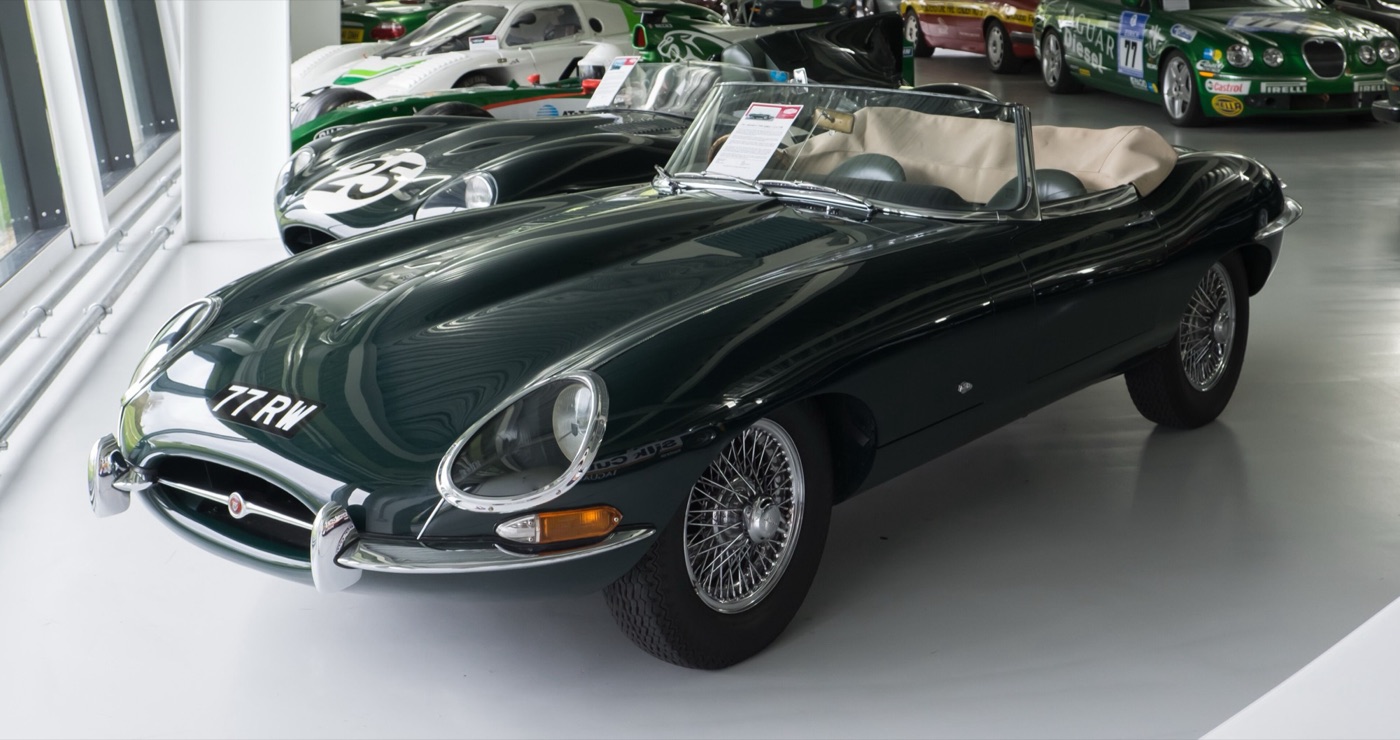
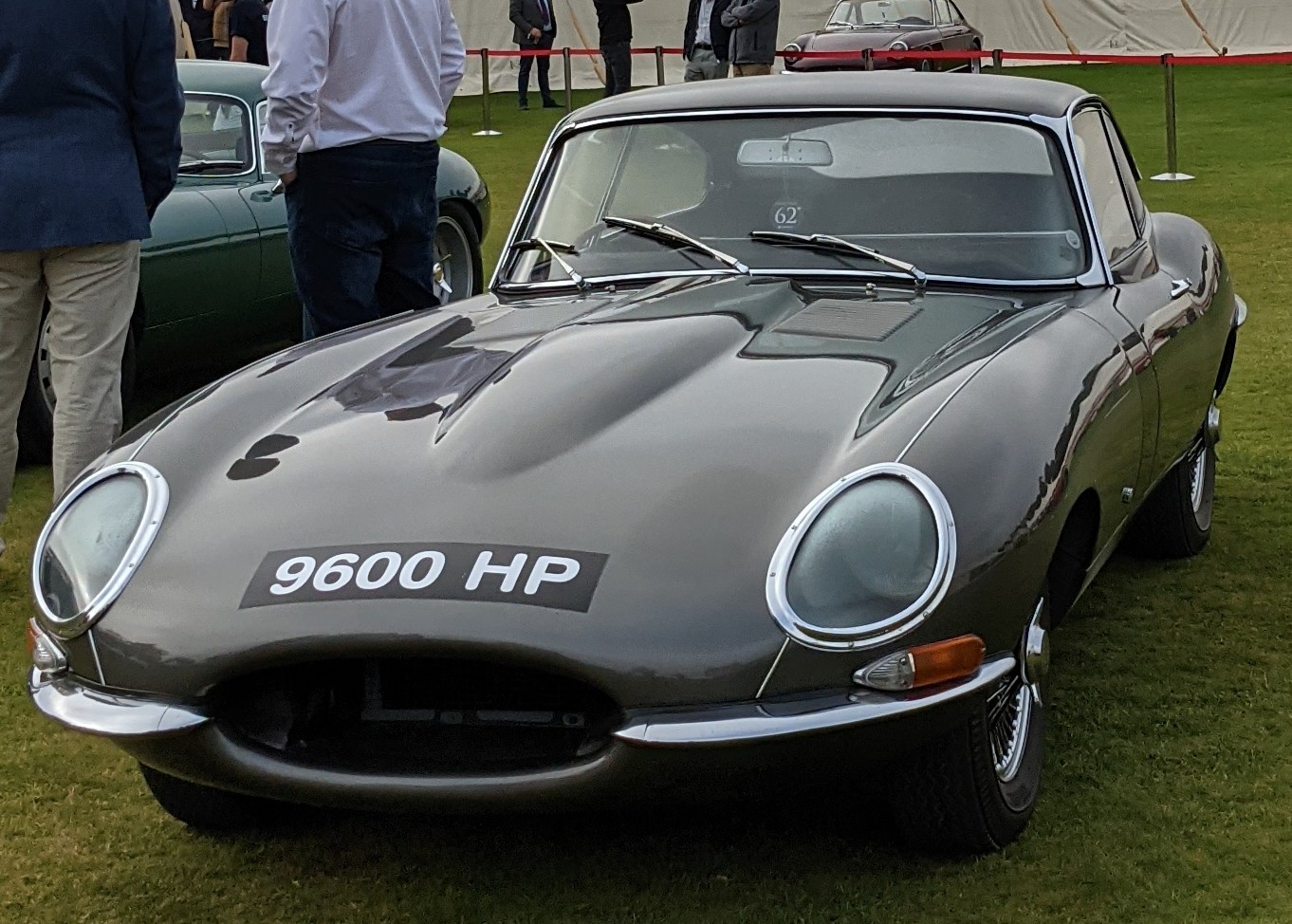
Jaguar showed the car to the press at the restaurant in the Parc des Eaux-Vives in Geneva on 15 March 1961; Motor Sport gave 16 March as the day of the unveiling at the show. Jaguar's own account, issued for the 50th anniversary in January 2011, says demand for demonstration runs up a nearby hill was so great that Sir William Lyons told chief test driver Norman Dewis to drive a second car through the night from Coventry. Goodwood's buyer's guide adds that the first car had itself been driven through the night by Jaguar's PR manager Bob Berry, arriving minutes before Lyons unveiled it. The two cars were the coupé 9600 HP and the roadster 77 RW, the models for Jaguar Classic's 60th-anniversary pairs of 2021.
A month later the E-Type won its first race, at Oulton Park.
Series 1, 2 and 3
The car changed in four main steps. The 4.2-litre engine and an all-synchromesh gearbox came in late 1964; the longer 2+2 coupé followed in 1965, according to the Jaguar Daimler Heritage Trust's page on the last car, though Motor Sport reported its first showing at Geneva in March 1966; the Series 2 arrived in 1968; and the Series 3 with the V12 engine came in April 1971.
The last E-Type, June 1974
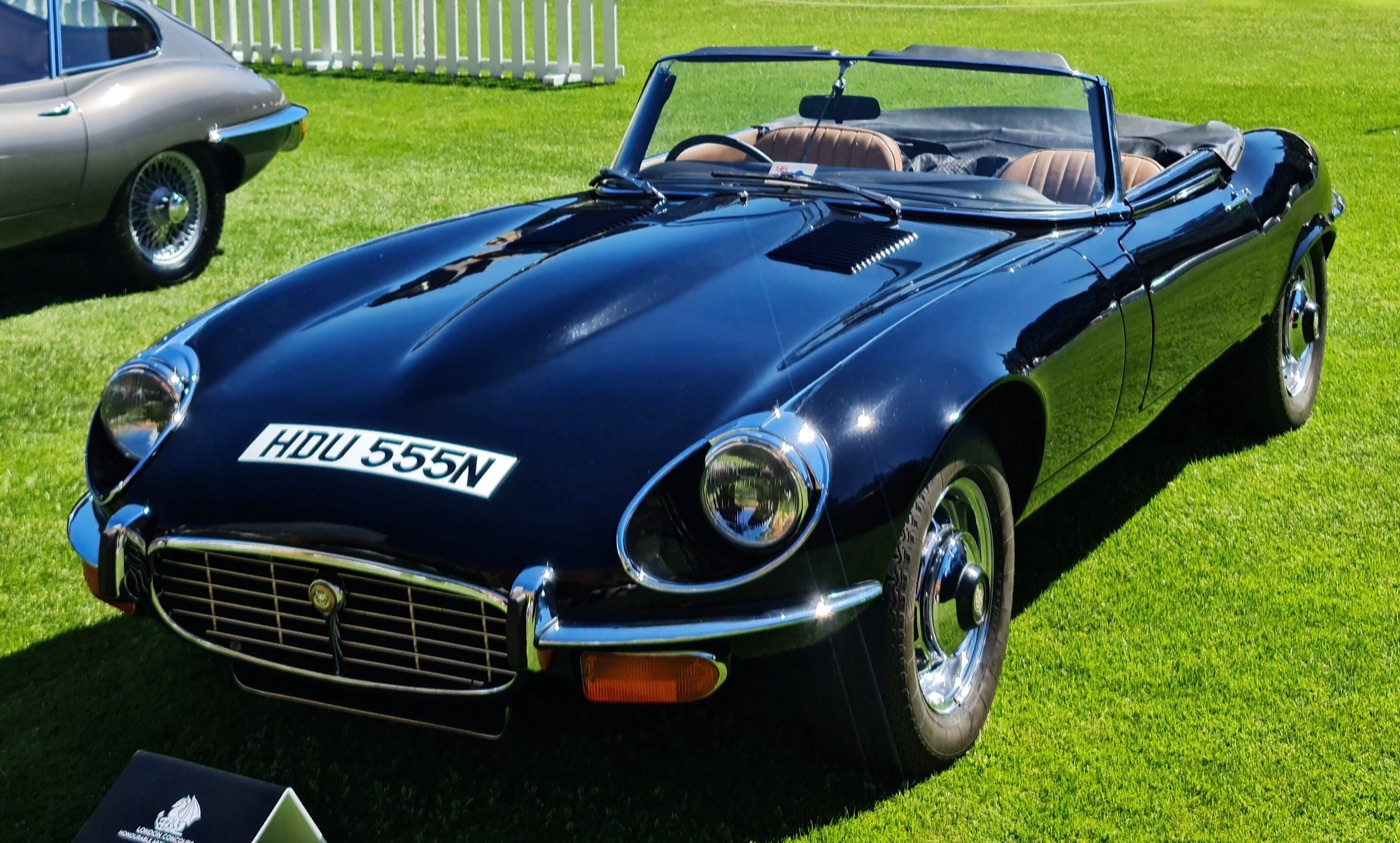
The last E-Type, a black V12 roadster, was built on 12 June 1974 and registered HDU 555N on 5 February 1975. Jaguar kept it, and passed it to the heritage trust in September 1983. It was the last of a run of 50 roadsters with a dashboard plaque bearing a facsimile of Lyons's signature: 49 were black, and the second-last car was green, built for a private collector.
Who designed the Jaguar E-Type?
Malcolm Sayer did the styling of the bodywork and William Heynes's engineering department built the car; the Museum of Modern Art in New York, which holds a 1963 roadster, credits both of them and Sir William Lyons, the company's founder. Motor Sport called Sayer, who died in 1970, "the brilliant designer and aerodynamicist who was responsible for the classic shapes of the C-type, the D-type, the Cunningham car, the E-type and the racing XJ 13". Boddy wrote in 1961 that a tenth-scale model of the body "was exhaustively tested in various wind tunnels".
Monocoque and front frame
The E-Type has no separate chassis. Boddy described a "body monocoque almost entirely of 20 g. sheet steel", with front and rear subframes of square-section Reynolds steel tubing bolted to it; the front one carries the engine and front suspension. The front suspension, by torsion bars, was "very closely related to that devised for the D-type". The 1961 dry weights were 22cwt for the open car and 22½cwt for the coupé; the heritage trust says the structure weighed 225kg less than the XK150's.
Independent rear suspension and disc brakes
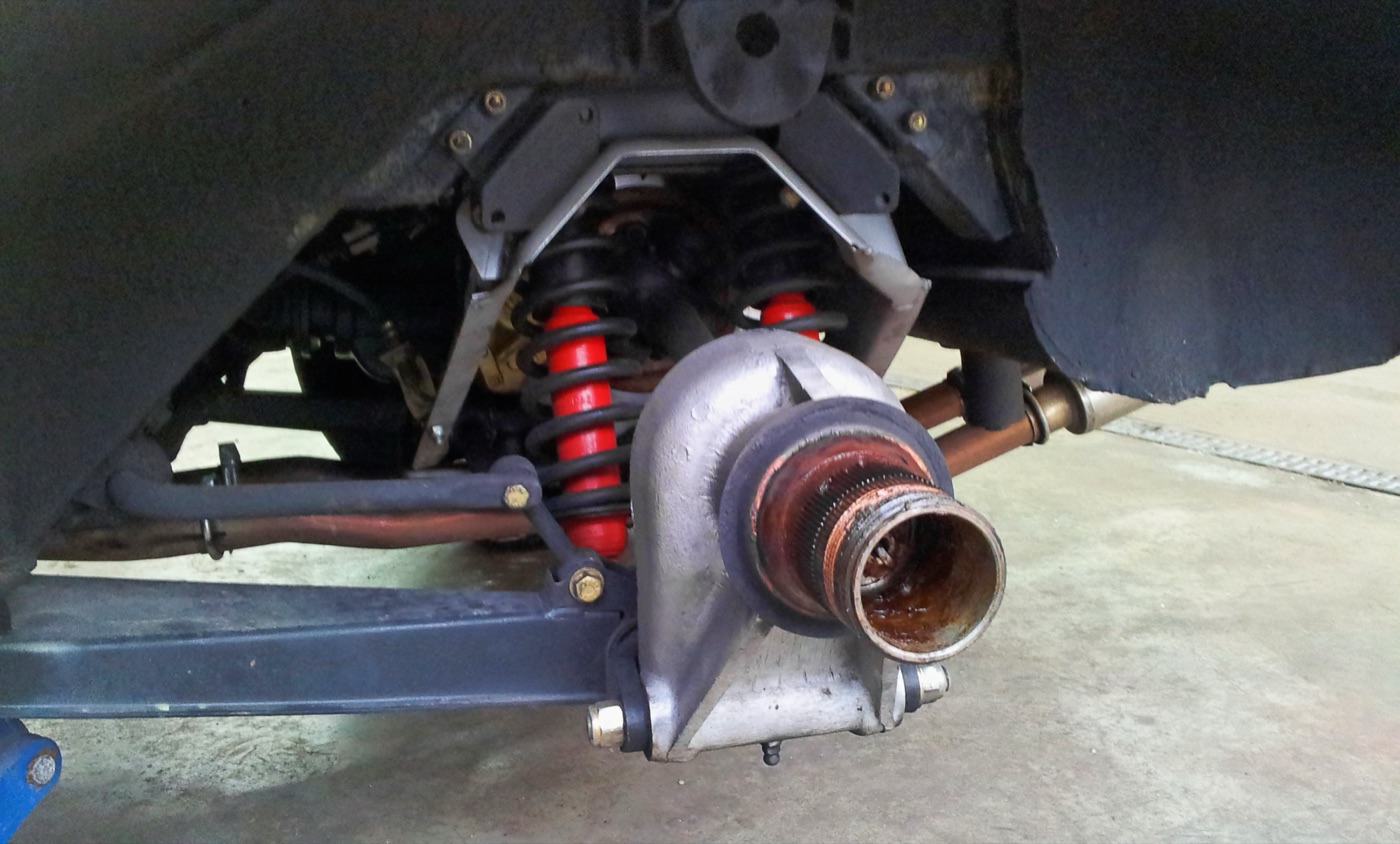
At the back each wheel has a pair of coil-spring dampers, mounted with the differential in a subframe that bolts to the body. The Dunlop disc brakes were 11 inches at the front and 10 inches at the back, where they sit inboard beside the differential. Motor Sport noted in 1975 that the same rear suspension went on to "all Jaguars introduced subsequent to the Mk. 2 and Mk. IX".
The XK six and the V12
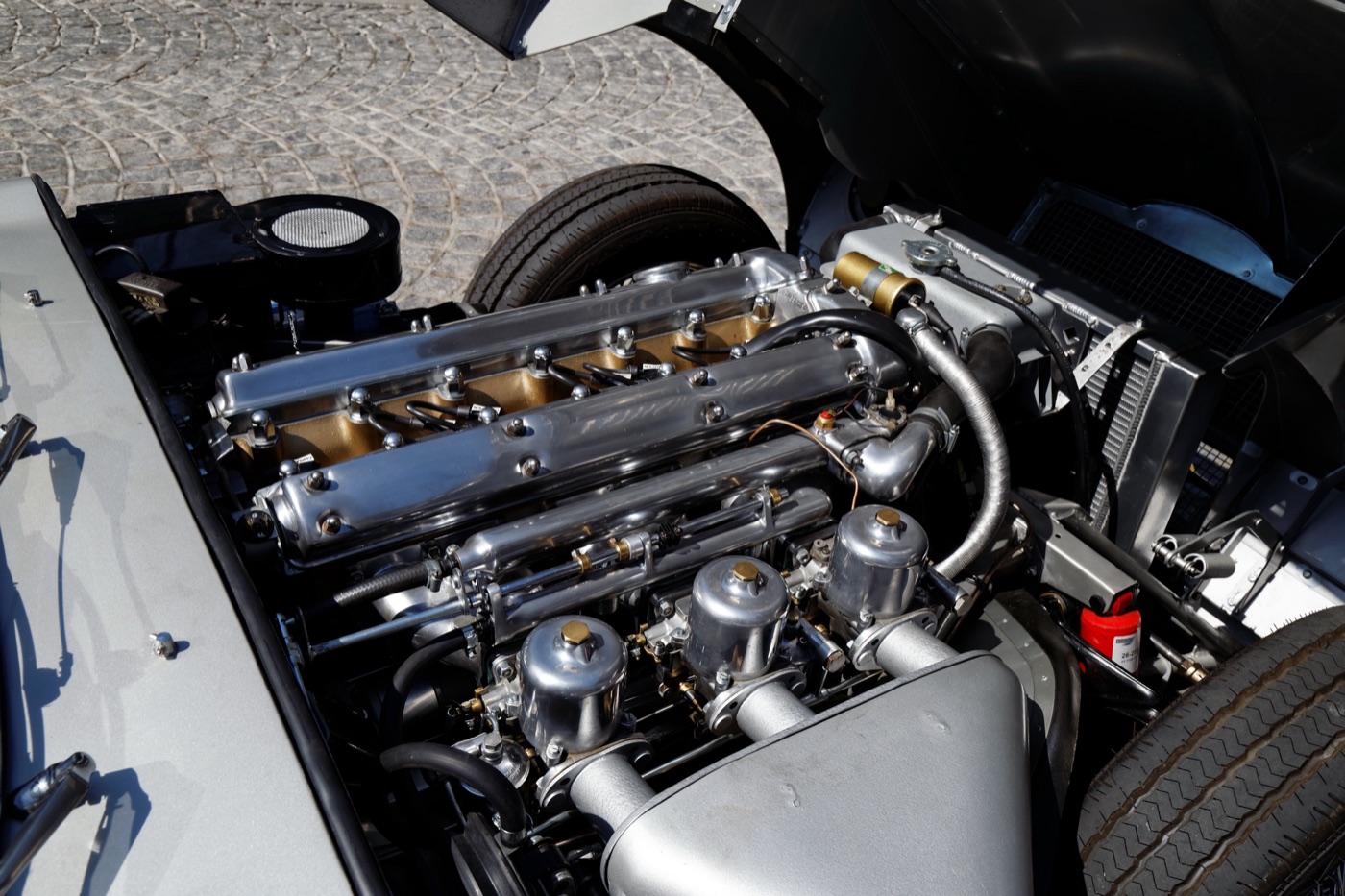
The first engine was the twin-cam XK six in the 3.8-litre, three-carburettor form of the XK150S, quoted at 265bhp at 5,500rpm and 260lb ft at 4,000rpm. Jaguar quoted 265bhp gross for every six-cylinder E-Type, 3.8 or 4.2, a figure Motor Sport later called "suspect". The V12 of 1971 was a new 5,343cc engine with a single overhead camshaft per bank and four Zenith carburettors (type 175CDSE): Motor Sport's April 1971 description gives 272bhp DIN at 5,850rpm, or 314bhp gross at 6,200rpm. Jaguar later quoted 266bhp DIN, the figure Motor Sport gave in 1975 and the heritage trust gives today.
Jaguar E-Type specifications
The table gives one car from each stage of production, with the figures from the period sources named underneath. Power is as Jaguar quoted it, gross for the sixes and DIN for the V12, so the columns do not compare like for like.
| Series 1 3.8 (1961) | Series 1 4.2 (1965) | Series 3 V12 (1971) | |
|---|---|---|---|
| Engine | 3.8-litre twin-cam straight six, three SU carburettors | 4,235cc (92.07 x 106mm) twin-cam straight six | 5,343cc (90 x 70mm) V12, one camshaft per bank |
| Power | 265bhp gross at 5,500rpm | 265bhp gross at 5,400rpm | 272bhp DIN at 5,850rpm (314bhp gross) at launch; later quoted as 266bhp DIN |
| Torque | 260lb ft at 4,000rpm | more than the 3.8 (no figure in the test) | 304lb ft DIN at 3,800rpm (349lb ft gross at 3,600rpm) |
| Gearbox | four-speed, no synchromesh on first | four-speed all-synchromesh | four-speed manual or Borg-Warner automatic |
| Wheelbase | 8ft 0in (2,438mm) | 8ft 0in (2,438mm) | 8ft 9in (2,667mm) |
| Weight | 22cwt open, 22½cwt coupé (dry) | 1 ton 2cwt 2qr (coupé, dry) | "well over 30 cwt" (coupé, Motor Sport 1975) |
| 0–60mph | 6.9sec (The Autocar, pre-production car) | 7.3sec (Motor Sport test) | 6.4sec (manual open car) |
| Top speed | 150.4mph (The Autocar, pre-production car) | 143mph (an owner's car, by rev counter) | 146mph (manual open car) |
| UK price with tax | £2,097 15s 10d open, £2,196 19s 2d coupé | £1,992 17s 11d (test car) | £3,123 open two-seater |
Sources: Motor Sport, April 1961 (3.8 engine, weights, prices) and May 1975 (The Autocar figures, V12 weight); Motor Sport's 4.2 road test, January 1965; Denis Jenkinson's 4.2 coupé, Motor Sport, April 1967; Motor Sport, April 1971 (V12 engine); Jaguar Daimler Heritage Trust (V12 performance and price).
How fast is a Jaguar E-Type?
A standard car falls short of the famous 150mph, which came from press cars. The Autocar timed a pre-production car at a mean 150.4mph, on Dunlop R5 racing tyres, an option at first, which Motor Sport later said "gave slightly more favourable overall gearing". In his April 1971 drive of the V12, Denis Jenkinson called it "a very dubious 150 m.p.h., a figure that no private-owner I have met has ever approached", and said his own first 4.2 coupé had "an honest maximum of 143 m.p.h.". Goodwood's guide puts it the same way: "that mythical 150mph top speed is likely out of reach without a few tweaks (as Jaguar did for press cars back in the day)".
Jaguar E-Type series and body styles
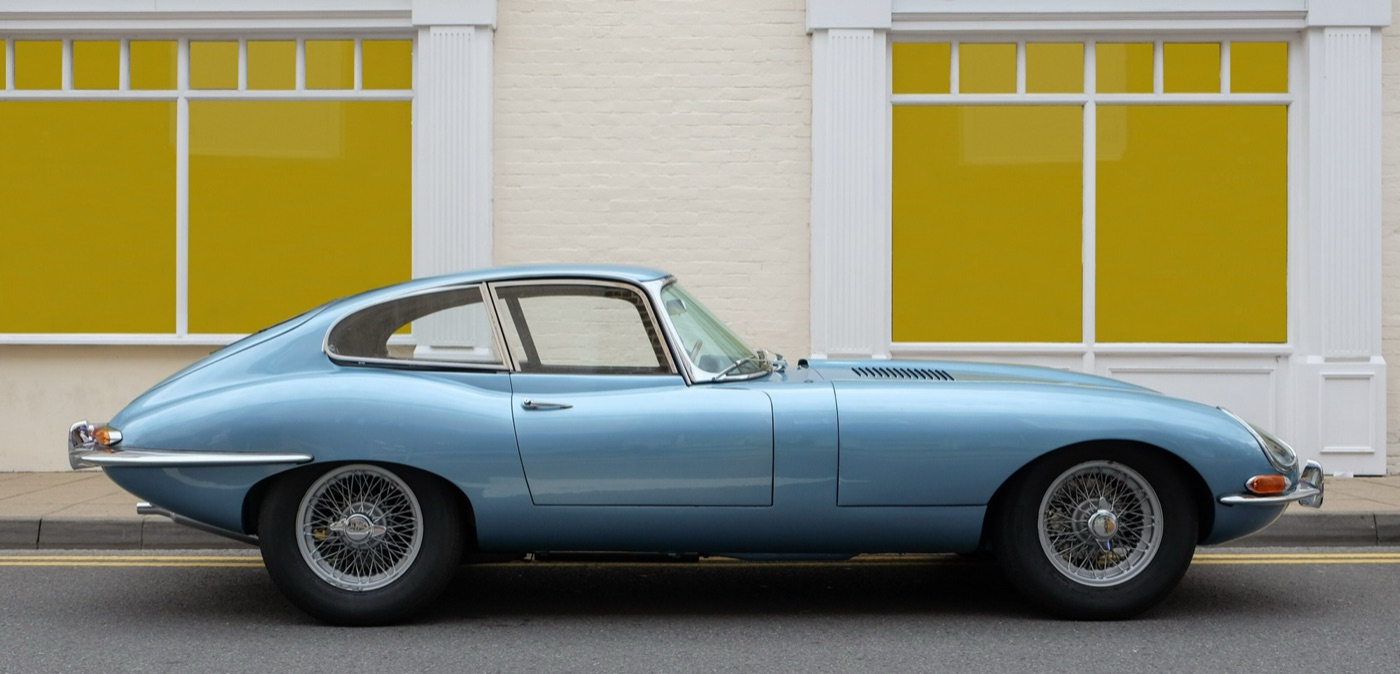
There are three series and three bodies: the open two-seater or OTS (the roadster, often called the convertible), the fixed-head coupé or FHC and, from 1966, the longer 2+2 coupé. The Series 3 was built only on the long wheelbase.
Series 1 3.8 (1961–64)
The first cars had faired-in headlights, small rear lights above the bumper, which is in two pieces at the back and the older four-speed manual transmission, which Motor Sport called "abysmal" in 1975. Goodwood's guide says the earliest Series 1 cars are known as "flat floor" models and have external latches on the bonnet; later cars have recessed footwells that give more legroom. The 3.8 also had poor seats, weak dynamo electrics and doubtful brakes, by Motor Sport's account.
Series 1 4.2 (1964–68)
The 4.2 kept the looks and the quoted power and gained torque, an all-synchromesh gearbox, better seats and more sound deadening. Boddy's January 1965 test called it "very near perfection". The added weight cost some speed: "only the 3.8s were capable of 150 m.p.h.", Motor Sport wrote in 1975.
The 2+2 coupé (1966 on)
The 2+2 was 9 inches longer in the wheelbase, all of it in the cabin, with a higher roof and doors 8½ inches longer, and it could have a Borg-Warner automatic transmission. Jenkinson found the rear seat bearable for short trips ("25 miles was too much") and suggested "Porsche or Mercedes-Benz-type extractor slots" in the roof to clear the cabin heat. Motor Sport's April 1966 report gave its British prices as £2,245 8s 9d with the manual gearbox and £2,385 12s 1d with the automatic, and blamed strikes in Coventry for its late arrival.
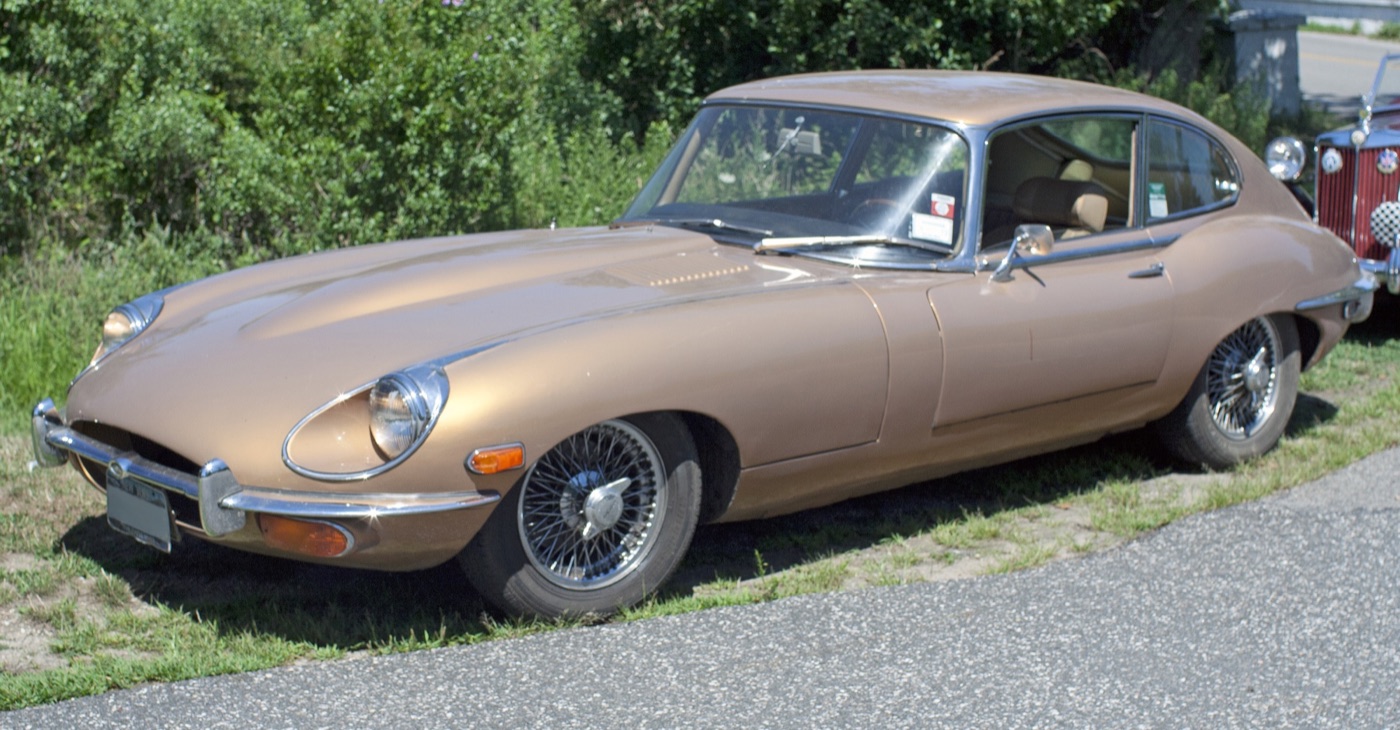
Series 1½ and Series 2 (1967–71)
From 1967 the headlight covers went, and the cars of 1967–68 are often called Series 1½. Goodwood's guide says they have open headlamps, rocker switches in place of toggles and "a less powerful twin-carb fuelling". The Series 2 followed in 1968, with larger bumpers and the rear lights moved, as Bonhams' 2025 listing of a 1970 2+2 describes it; Jaguar's figures give 18,841 built.
Series 3 V12 (1971–74)
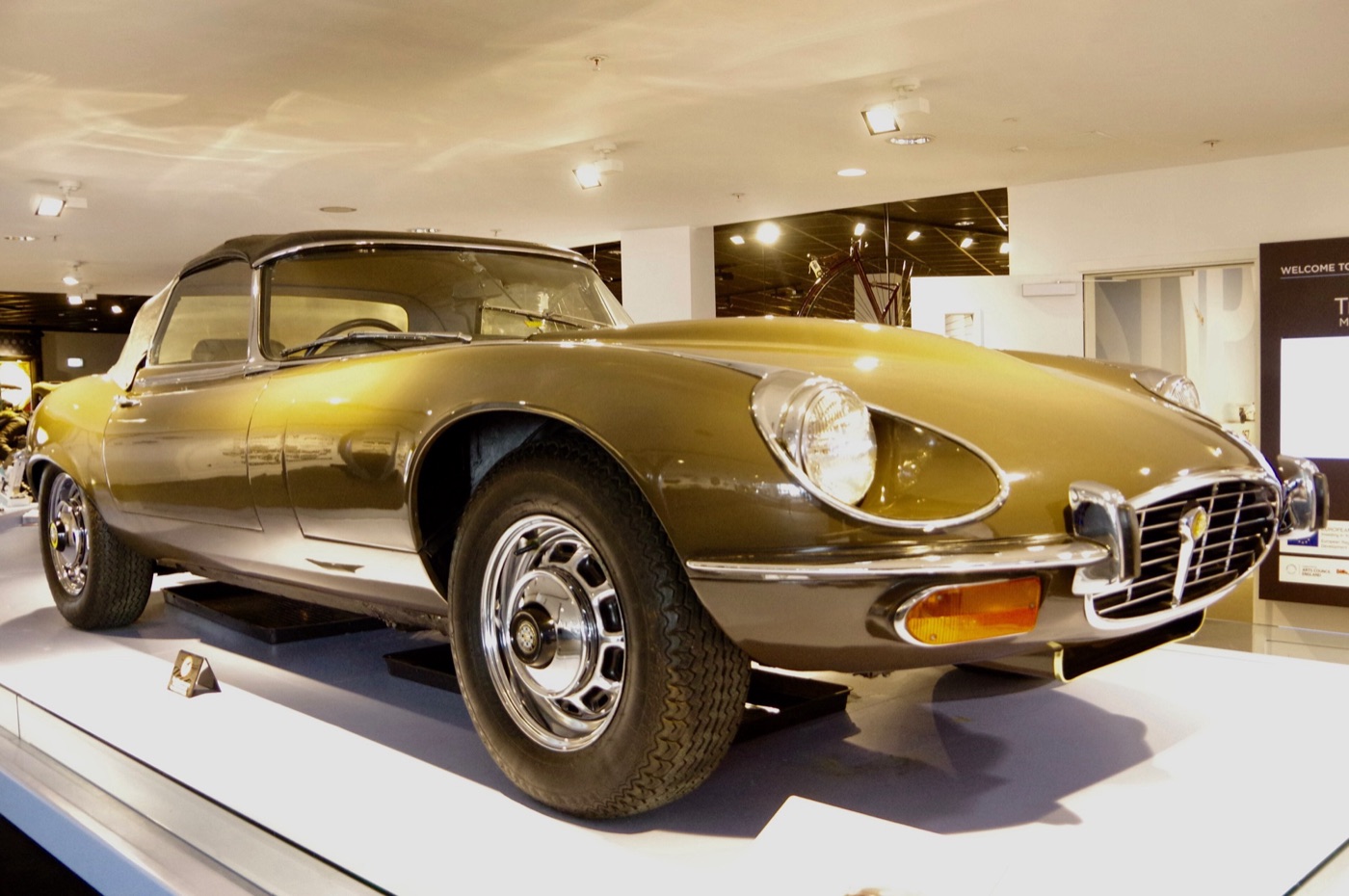
The Series 3 came as an open two-seater and a 2+2, both on the 8ft 9in wheelbase, with the V12. Jenkinson's April 1971 report lists the other changes: power steering as standard, ventilated front discs, wheel arches flared for a wider track and Dunlop low-profile tyres, an 18-gallon tank, pressed-steel wheels as standard (wire wheels cost extra) and a new grille, a "decorative bird-cage" he disliked. The heritage trust says most were automatics, and the 1974 roadster RM Sotheby's sold in 2021 left the factory with air conditioning; RM's catalogue says demand from US-market buyers for more room and refinements such as air conditioning drove the update. Jenkinson thought it the wrong car: in 1971 he wrote that he had been "expecting an 'F'-type Jaguar, not a third series 'E'-type".
The Lightweight E-Type (1963–64)
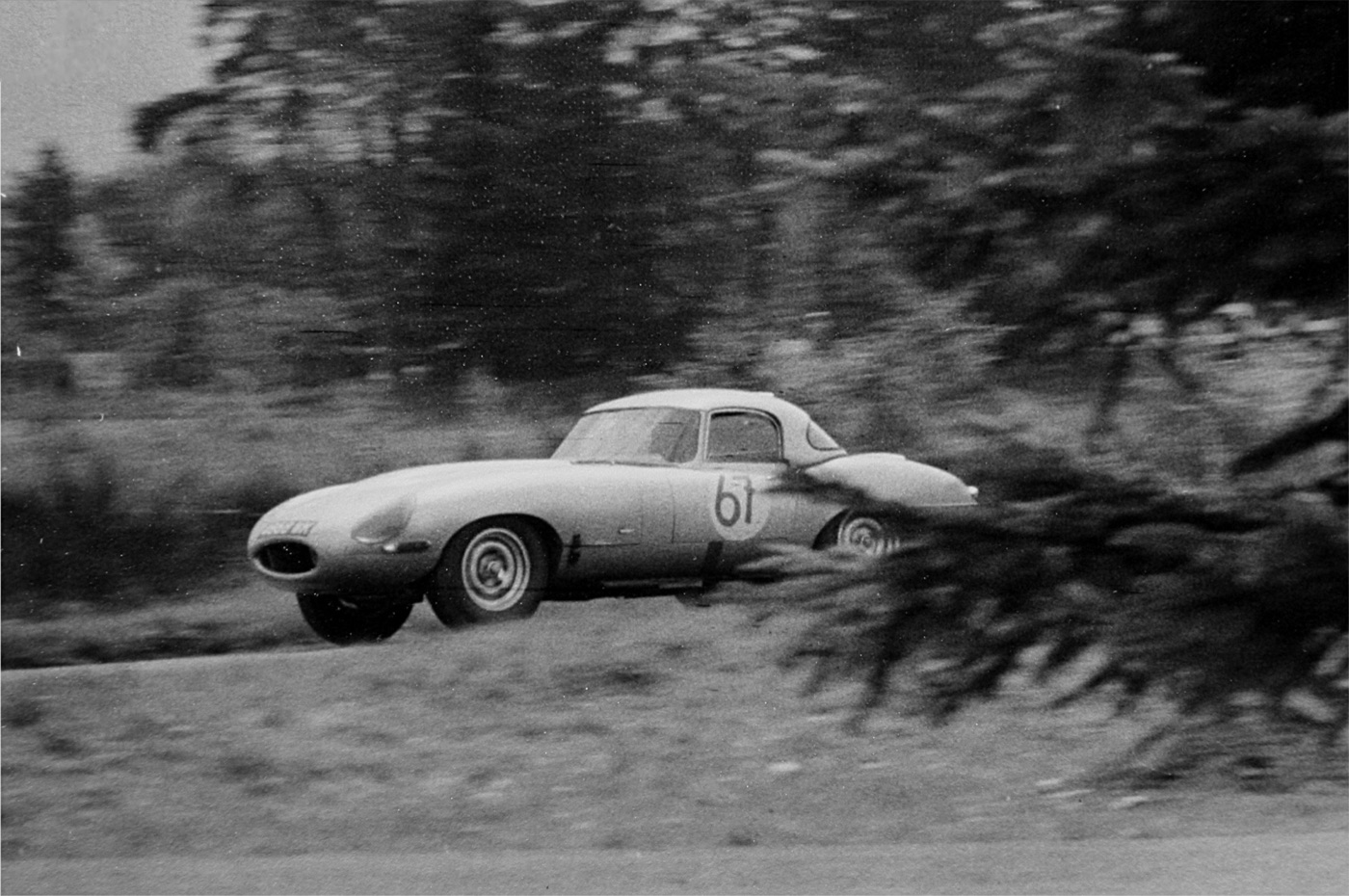
The Lightweight was Jaguar's E-Type racing car: an open car with an aluminium hardtop and an aluminium body (monocoque and panels), and an aluminium-block 3.8 with a wide-angle head and Lucas fuel injection. Jaguar's May 2014 announcement says the project began in February 1963 to build 18 "Special GT" cars, that 12 were built, the last in 1964, and that each was about 114kg (250lb) lighter than a standard E-Type. "Some 300 b.h.p. was the norm," Motor Sport wrote in 1975.
How many Jaguar E-Types were made?
About 72,500. Jaguar's own figures, printed by Motor Sport in May 1975, give 72,584, of which 85% were exported; the series figures in the same article add up to 72,522, and the magazine noted that "discrepancies in the totals above result from Jaguar's quoted figures, not our mathematics".
| Series | Years | Built |
|---|---|---|
| Series 1 3.8 | 1961 to late 1964 | 15,481 |
| Series 1 4.2 (including the 2+2 and Series 1½) | 1964 to late 1968 | 22,908 |
| Series 2 4.2 | 1968 to 1971 | 18,841 |
| Series 3 V12 | 1971 to 1974 | 15,292 |
| Total quoted by Jaguar | 1961 to 1974 | 72,584 |
Source: Motor Sport, May 1975, p. 29, quoting Jaguar.
Where did E-Types go?
Most went to America. Of Jaguar's 72,584, 49,032 went to the United States, 2,439 to Canada and 8,793 to other export markets, leaving 12,320 for Britain. In America the car was sold as the XK-E: a 1961 Jaguar advertisement in the collection of The Henry Ford museum is headed "This is the New Jaguar XK-E!". Only one Series 3 was built with the six-cylinder engine, Motor Sport recorded, though one had been announced alongside the V12.
The E-Type in racing
The E-Type, raced by private teams with some of the best British drivers of the day, won on its debut at Oulton Park in 1961 and took its class at Le Mans in 1962, but lost the big international GT races to Ferrari's 250 GTO. Jaguar had stopped racing officially in 1956, and helped those teams from the factory.
First win: Oulton Park, April 1961
On 15 April 1961, a month after Geneva, Graham Hill won the GT race at Oulton Park in Equipe Endeavour's E-Type, 5.6 seconds ahead of Innes Ireland's Aston Martin DB4 GT, with Roy Salvadori third in John Coombs's E-Type and two Ferrari 250 GT SWBs behind, according to the race results on racingsportscars. Motor Sport wrote in 1975 that television carried the win to "a captive audience".
24 Hours of Le Mans, 1962
At the 24 Hours of Le Mans, Briggs Cunningham and Roy Salvadori finished fourth in 1962, with Peter Sargent and Peter Lumsden fifth in another E-Type: first and second in the GT class over 3 litres, behind a works Ferrari prototype and two Ferrari 250 GTOs. Motor Sport's race report says the Lumsden/Sargent car "began to suffer gearbox trouble and dropped back to fifth".
The Lightweights, 1963–64
Against the 250 GTO the steel cars were too slow, and Jaguar built the Lightweights. The most powerful was Peter Lindner and Peter Nöcker's car, which Motor Sport said gave 344bhp gross, "possibly the highest power output ever achieved from the XK engine", at Le Mans in 1964.
Group 44 and the V12, 1974–75
In 1974 Jaguar's American importer had about 6,000 unsold E-Types, Andrew Frankel wrote in Motor Sport in March 2015, and backed two cars in SCCA national racing: Bob Tullius's Group 44 in the east and Huffaker Engineering in the west. In 1974 a Corvette beat them at the run-off "by less than a second"; in 1975 Tullius won it and the national title.
Historic racing today
An E-Type has won the RAC TT Celebration at the Goodwood Revival 13 times since the race began in 1998, more than any other car, on Goodwood's list of winners. The 2025 race went to Tom Ingram and Richard Kent in the coupé 'Cut 7', and the 2026 race to a Lightweight low-drag coupé.
Jaguar E-Type prices and values
Prices depend on series, body and condition more than on anything else. In 2025 and 2026 auctions, Series 1 3.8 roadsters sold for between $162,400 and $324,000 with their original type of engine, and for $64,400 with a replacement 4.2; Series 1 3.8 coupés made £80,500 and, converted to right-hand drive, £50,600; Series 1½ and Series 2 cars and 2+2s sold for between £32,791 and £57,500 in Britain; a Series 3 V12 roadster made $112,000. The early flat-floor cars sell for the most.
What did an E-Type cost new?
The open car cost £1,480 before purchase tax and £2,097 15s 10d with it in 1961; the coupé £2,196 19s 2d; a hardtop £76 10s. By the end the V12 cost £3,743 with the manual gearbox, Motor Sport recorded in 1975, noting that the price of the 1961 coupé would by then buy "a Ford Escort Ghia 1600".
What is a Jaguar E-Type worth today?
Hagerty's 2025 Bull Market list, published in December 2024, valued a 1961–64 Series 1 3.8 coupé at $182,800 in excellent (#2) condition, $260,000 in concours condition and $60,300 as a usable driver (#4). In Britain, Hagerty UK's March 2021 analysis put a Series 1 roadster in excellent condition at £121,500, the coupé about 25% less, and the 1961 flat-floor roadster at an average £147,500. Its table shows a peak of £189,000 in March 2016, after which, Hagerty wrote, "the market as a whole has corrected".
| Series and body | Car | Sale and date | Price |
|---|---|---|---|
| Series 1 3.8 roadster | 1961, flat floor, outside bonnet latches | RM Sotheby's, Monterey, August 2025 | $324,000 |
| Series 1 3.8 roadster | 1961, flat floor, chassis 850202 | RM Sotheby's, London, 2024 | £140,000 |
| Series 1 3.8 roadster | 1964, restored in the 2000s | RM Sotheby's, Arizona, January 2026 | $162,400 |
| Series 1 3.8 roadster | 1964, original 3.8 block replaced by a 4.2 (head retained) | RM Sotheby's, Arizona, January 2025 | $64,400 |
| Series 1 3.8 coupé | 1962, right-hand drive, restored 2013 | RM Sotheby's, Woodcote Park, July 2026 | £80,500 |
| Series 1 3.8 coupé | 1962, converted from left- to right-hand drive | Bonhams, Goodwood Revival, 13 September 2025 | £50,600 |
| Series 1 4.2 2+2 | 1968, automatic | Bonhams online, 31 July 2025 | £32,791 |
| Series 1½ 4.2 roadster | 1968, left-hand drive | RM Sotheby's, London, 2025 | £57,500 |
| Series 2 4.2 roadster | 1970 | RM Sotheby's, Arizona, 2024 | $145,600 |
| Series 2 4.2 roadster | 1969 | RM Sotheby's, Monterey, 2024 | $78,400 |
| Series 2 4.2 2+2 | 1970, heavily modified: triple Weber carburettors, 210bhp on a dyno | Bonhams online, 25 June 2025 | £39,566 |
| Series 3 V12 roadster | 1974, Commemorative (one of the last 50) | Bonhams, Goodwood Members' Meeting, 14 April 2024 | £120,750 |
| Series 3 V12 roadster | 1974, manual | RM Sotheby's, Miami, 2025 | $112,000 |
Sources: the auction houses' own lot pages, read 28 October 2026. Bonhams' prices include the buyer's premium. No Series 3 2+2 sale from 2024–26 was found on these houses' pages.
Used prices fell fast at first. Hagerty UK found a dealer asking £2,200 for a six-week-old roadster in December 1961, and a used E-Type advertised at £695 in 1967; a white car with 42,000 miles was advertised for £2,000 in Motor Sport in May 1976.
Buying and owning a Jaguar E-Type
Structural rust is the fault to check first (more in the Jaguar E-Type buying guide): Goodwood's guide warns that the cost of curing corrosion hidden in the monocoque "can quickly spiral". It names the floor pans, sills, rear arches and the front frames that carry the engine ("engine cradles"), and says any restoration should be "properly done and documented by a known specialist".
Known faults
The XK engine lasts if it is maintained. Goodwood lists the checks: emulsified oil under the filler cap or contaminated coolant (head gasket), rattling timing chains, and smoke or hesitation once warm. Jenkinson's 4.2 coupé ran 40,000 miles with routine oil, plug and filter changes and the top timing chain adjusted twice, he wrote in Motor Sport in April 1967. The early gearbox has no synchromesh on first, and Goodwood calls its shift "famously fussy". The rear brakes sit inboard, beside the differential, in the rear suspension subframe.
Fuel consumption and running costs
Jenkinson recorded 16mpg driven flat out, 18mpg pressing on and 20 to 22mpg driven gently. Jaguar supports the car with parts, up to new engine blocks, and with archive records of a car's original build date, colour and options, Goodwood's guide says.
Which E-Type should you buy?
Goodwood notes that earlier cars had lower bucket seats. Its guide says a 4.2 coupé "strikes a good balance" as a usable all-rounder, calls the regular 3.8 "something of a sweet spot", and says the flat-floor cars bring "little return on the considerable extra investment beyond bragging rights" for most buyers. Modifications "up to and including five-speed transmissions" and full restomod builds "are not unusual".
On the road, Goodwood found the rack-and-pinion steering "fantastically responsive" and the ride quality "a real stand-out feature", though the seating position "can feel oddly high".
Is Jaguar still making the E-Type?
Not as a new model. Jaguar Classic has sold restored original cars since 2017. In May 2014 Jaguar said it would build the "missing" six Lightweights to the original specification, using "the six remaining chassis numbers which were originally allocated in 1963".
E-Type Reborn and the E-Type 60 Collection
Jaguar Classic announced E-Type Reborn on 31 March 2017: an initial batch of 10 restored Series 1 cars sold from its Classic Works at Ryton-on-Dunsmore, the first a 1965 4.2 coupé that had gone to California in May 1965 and been stored in 1983 at 78,000 miles. For the 60th anniversary, Jaguar Classic revealed the E-Type 60 Collection in March 2021: six matched pairs of restored 3.8s, a Flat Out Grey coupé after 9600 HP and a Drop Everything Green roadster after 77 RW, each with a five-speed gearbox, electronic ignition, and an alloy radiator with an electric cooling fan. In October 2024 it built two Series 1 "Commemorative" cars for one client in Southeast Asia, to mark 50 years since the end of production.
The electric E-Type Zero
Jaguar showed the E-Type Zero in September 2017: a 1968 Series 1½ roadster with a 220kW electric motor and a 40kWh battery pack of "the same dimensions, and similar weight" as the XK engine, in the same place. Jaguar claimed 0–62mph in 5.5sec, "about one second quicker than a Series 1 E-type", and a range of 270km (about 170 miles).
Jaguar E-Type rivals
In 1961 the E-Type's rivals for speed cost two or three times as much. Boddy set it against "a G.T. Maserati or Ferrari of something like equivalent performance", at about three times the price, and the Aston Martin DB4 GT at more than twice; the heritage trust calls the E-Type "far more attainable than an Aston Martin (at twice the price) or a Ferrari (at three times the price)". On the track at Oulton Park in April 1961, Hill's E-Type beat a DB4 GT and two Ferrari 250 GT SWBs. From 1962 the Ferrari 250 GTO beat it on the circuits, and Jaguar built the Lightweight in 1963.
Reception and reputation
The press praised it from the first drive. Boddy ended his 1961 report: "The E-type is a staggering motor car on all counts". Motor Sport quoted The Autocar's verdict, "a break-through in design of high-performance vehicles for sale to the public", and summed up 1961: "The Press eulogised about it, customers queued for it".
In the Museum of Modern Art
A 1963 roadster has been in the Museum of Modern Art in New York since 9 April 1996, a gift from Jaguar Cars, catalogued as "E-Type Roadster, designed 1961 (this example 1963)", object 113.1996, in MoMA's Architecture and Design collection.
Did Enzo Ferrari call it the most beautiful car?
Jaguar says he did. Its 2017 E-Type Zero release opens with the car "acclaimed by Enzo Ferrari as 'the most beautiful car in the world'", and SkiddMark's January 2011 report of the 50th anniversary carried the same line. Neither gives where or when he said it.
Owners and anniversaries
Jaguar's 2011 release lists George Best, Brigitte Bardot, Tony Curtis and Steve McQueen among E-Type owners. For the 50th anniversary Jaguar planned events at the 2011 Geneva show, Goodwood's Festival of Speed and Revival, Pebble Beach and the Nürburgring Oldtimer Grand Prix, and quoted its design director Ian Callum: "It is impossible to overstate the impact the E-Type had when it was unveiled in 1961." For the 50th year since the end of production Jaguar gathered 50 E-Types at the London Concours in June 2024. In a Hagerty UK poll of classic car owners for St George's Day 2020, the E-Type was voted their favourite British-built car.
Questions
Where was the Jaguar E-Type built?
At Jaguar's Browns Lane factory at Allesley, Coventry, from 1961 to June 1974. Motor Sport's 1965 road test gives the makers as "Jaguar Cars Ltd., Browns Lane, Coventry", and its 1975 history says the last car came off "Jaguar's Allesley production line".
What is a flat-floor E-Type?
One of the earliest Series 1 cars, built before Jaguar added recessed footwells. Goodwood's buyer's guide says they can be told by the external latches at the lower rear edges of the bonnet; Hagerty UK found them valued about 25% above later Series 1 roadsters in 2021.
What is a Jaguar XK-E?
The same car: XK-E was the E-Type's name in North America. A 1961 Jaguar advertisement in The Henry Ford's collection is headed "This is the New Jaguar XK-E!".
What engine does a Jaguar E-Type have?
The Series 1 and 2 have Jaguar's twin-cam XK straight six, 3.8 litres until 1964 and 4.2 litres after, quoted at 265bhp gross. The Series 3 of 1971–74 has a 5,343cc V12 with one camshaft per bank, quoted at 272bhp DIN at launch and later at 266bhp DIN.
How many Lightweight E-Types were built?
Twelve, in 1963–64, of the 18 Jaguar planned, according to Jaguar's 2014 announcement and Motor Sport in 1975.
Is a Jaguar E-Type a good investment?
Values have fallen as well as risen: Hagerty UK's guide figure for a Series 1 roadster rose from £71,600 in 2012 to £189,000 in 2016, then fell to £121,500 by 2021. Goodwood's buyer's guide says good cars "will always be in demand", though "the opportunity to make a significant return has probably long-since passed".
Sources
- Motor Sport, W. B. (Bill Boddy), "The New 3.8-Litre Jaguar E-Type G.T.", April 1961, p. 35: launch date, design team, construction, engine, weights, prices, the price comparison with Ferrari, Maserati and Aston Martin.
- Motor Sport, C. R., "Jaguar E-type: the end of production and end of an era", May 1975, p. 29: production by series and market, The Autocar's test figures, the Cunningham car, Sayer, the Lightweights, the last 50 cars, final prices.
- Motor Sport, W. B., "The 4.2-Litre Jaguar E-type", January 1965, p. 23: 4.2 data and performance.
- Motor Sport, W. B. and D. S. J., "The Jaguar E-type 2+2", April 1966, p. 18: 2+2 dimensions, launch and prices.
- Motor Sport, D. S. J. (Denis Jenkinson), "Two years with the Jaguar E-type", April 1967, p. 22: top speed, fuel use and maintenance of a 4.2 coupé.
- Motor Sport, W. B., "The new Jaguar V12", April 1971, p. 61: V12 engine data.
- Motor Sport, D. S. J., "Driving the V12 Jaguar", April 1971, p. 64: the 150mph claim, his 4.2's maximum, the F-type remark.
- Motor Sport, "Le Mans 24-Hour Race", August 1962: the E-Types' race.
- Motor Sport, Andrew Frankel, "Unsung heroes: the V12 Jaguars that kept its racing heritage alive", March 2015, p. 58: Group 44 and Huffaker, 1974–75.
- Racing Sports Cars, results of the Oulton Park GT race, 15 April 1961 and the Le Mans 24 Hours, 24 June 1962.
- Goodwood Road & Racing, "Previous winners of the RAC TT Celebration", September 2026: winners 1998–2026.
- Jaguar Daimler Heritage Trust, "1974 Jaguar E-type Series 3 V12 Open Two Seater": the last car, the final 50, series dates, V12 performance and price.
- Jaguar, "Jaguar Celebrates 50 Years of Iconic E-type", January 2011: the Geneva launch, the overnight drive, owners, anniversary events and quotes. SkiddMark reported the same release in January 2011.
- Jaguar, "The Lightweight E-type is Reborn", May 2014: the 1963 project, 12 built, weight saving, the six new cars.
- Jaguar Classic, "Jaguar Classic to launch E-type Reborn at Techno-Classica Essen show", 31 March 2017.
- Jaguar Land Rover Classic, "Jaguar E-type Zero", September 2017: specification, performance and the Enzo Ferrari line.
- Jaguar Classic, "Jaguar Classic reveals E-type 60 Collection", March 2021.
- Jaguar Classic, "Jaguar Classic E-type Commemorative: jewel and machine", 23 October 2024.
- Jaguar, London Concours 2024 release, June 2024: 50 E-Types shown.
- Museum of Modern Art, "E-Type Roadster", object 113.1996 (collection data, read 28 October 2026).
- The Henry Ford, 1961 Jaguar advertisement, "This is the New Jaguar XK-E!": the North American name.
- Goodwood Classic Solutions, "Jaguar E-Type (Series 1)" buyer's guide, 2023: identification, faults, top speed, which to buy.
- Hagerty, "2025 Bull Market List", 9 December 2024: Series 1 3.8 values.
- Hagerty UK, John Mayhead, "Hagerty market analysis: Jaguar E-Type Series 1", 15 March 2021: values 1961–2021 and the members' poll.
- RM Sotheby's lot pages: London 2024, lot 359; London 2023; Monterey 2024; Arizona 2024; Monterey 2021.