The Jaguar F-Type: history, versions, specs and values
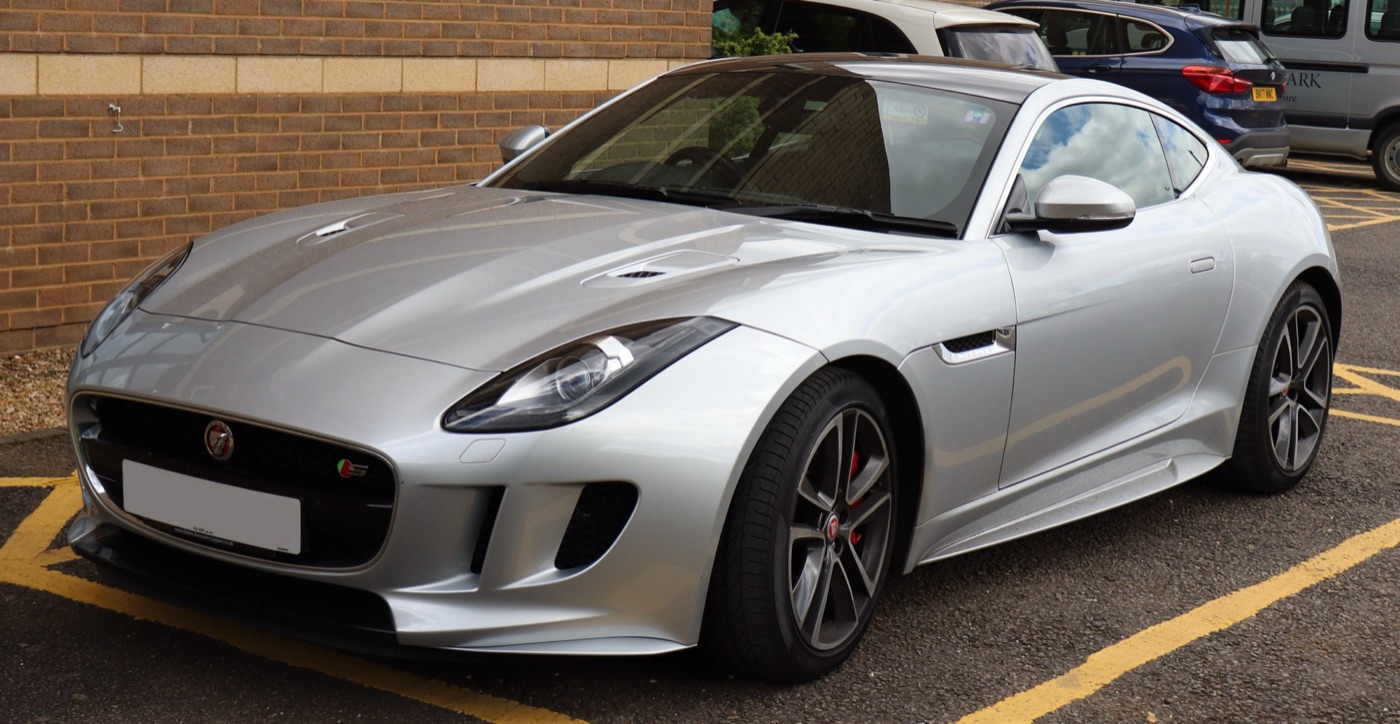
The Jaguar F-Type is the two-seat sports car that Jaguar built at its Castle Bromwich plant in Birmingham from 2013 to June 2024, first as a convertible and from spring 2014 as a coupe. It was Jaguar's first two-seat sports car since the E-Type, and it ended Jaguar's run of petrol sports cars: 87,731 were made, with engines from a 300PS four-cylinder to a 575PS supercharged V8 that took the SVR coupe to 200mph.
Jaguar planned to sell the last new F-Types in early 2025 and is now an electric-only brand, so the car is bought used, and prices vary widely. On 28 October 2026 PistonHeads carried 149 F-Type adverts; the 139 SkiddMark read had a median asking price of £34,495. In auction results gathered by The Classic Valuer since 2020, the median coupe sold for £33,329 and the median convertible for £30,917, while the Project 7 roadster, limited to 250 cars, has a median of £130,413 (figures read on 28 October 2026).
History of the Jaguar F-Type
The F-Type grew out of the C-X16 concept of September 2011, was confirmed for production in April 2012, was revealed in Paris that September and reached British showrooms in April 2013. The coupe followed in 2014, a facelift in December 2019, and the last car left the line in June 2024.
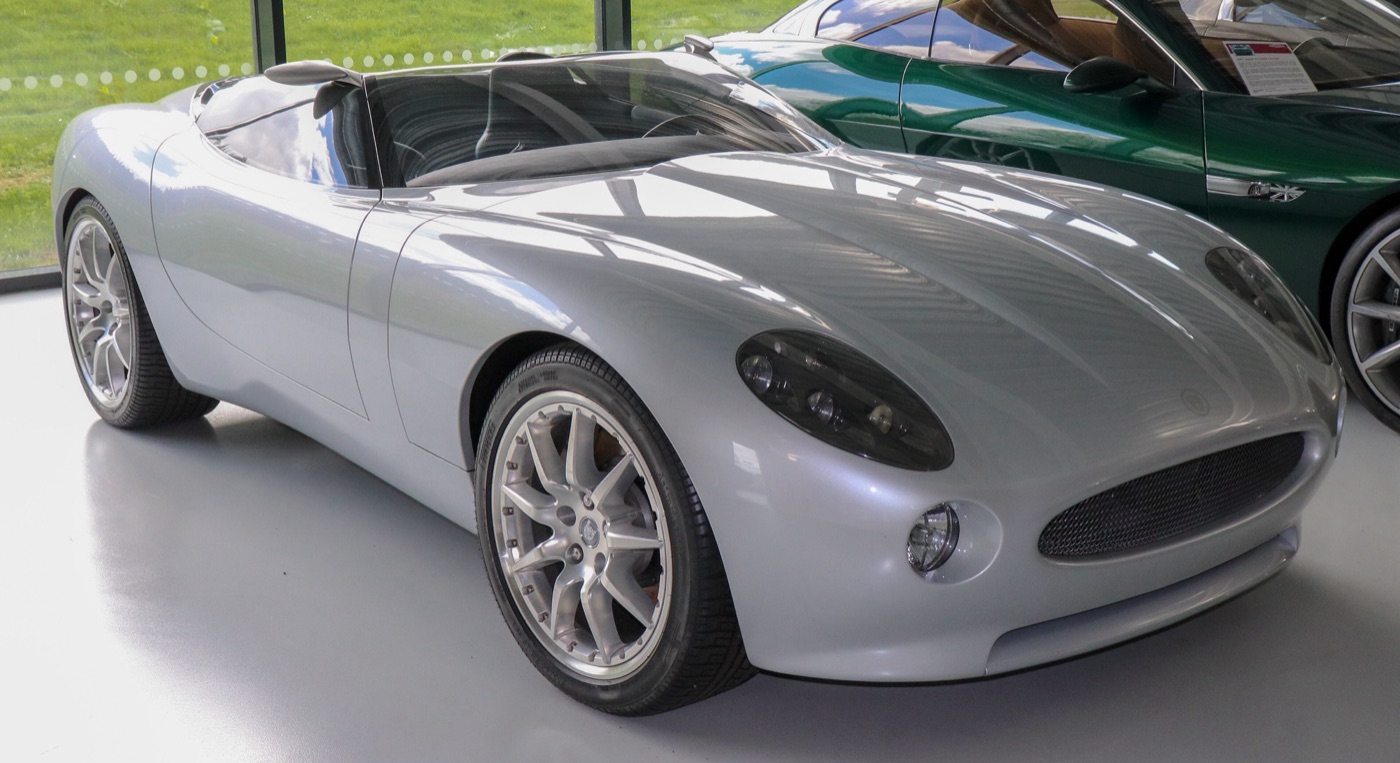
The C-X16 concept, 2011
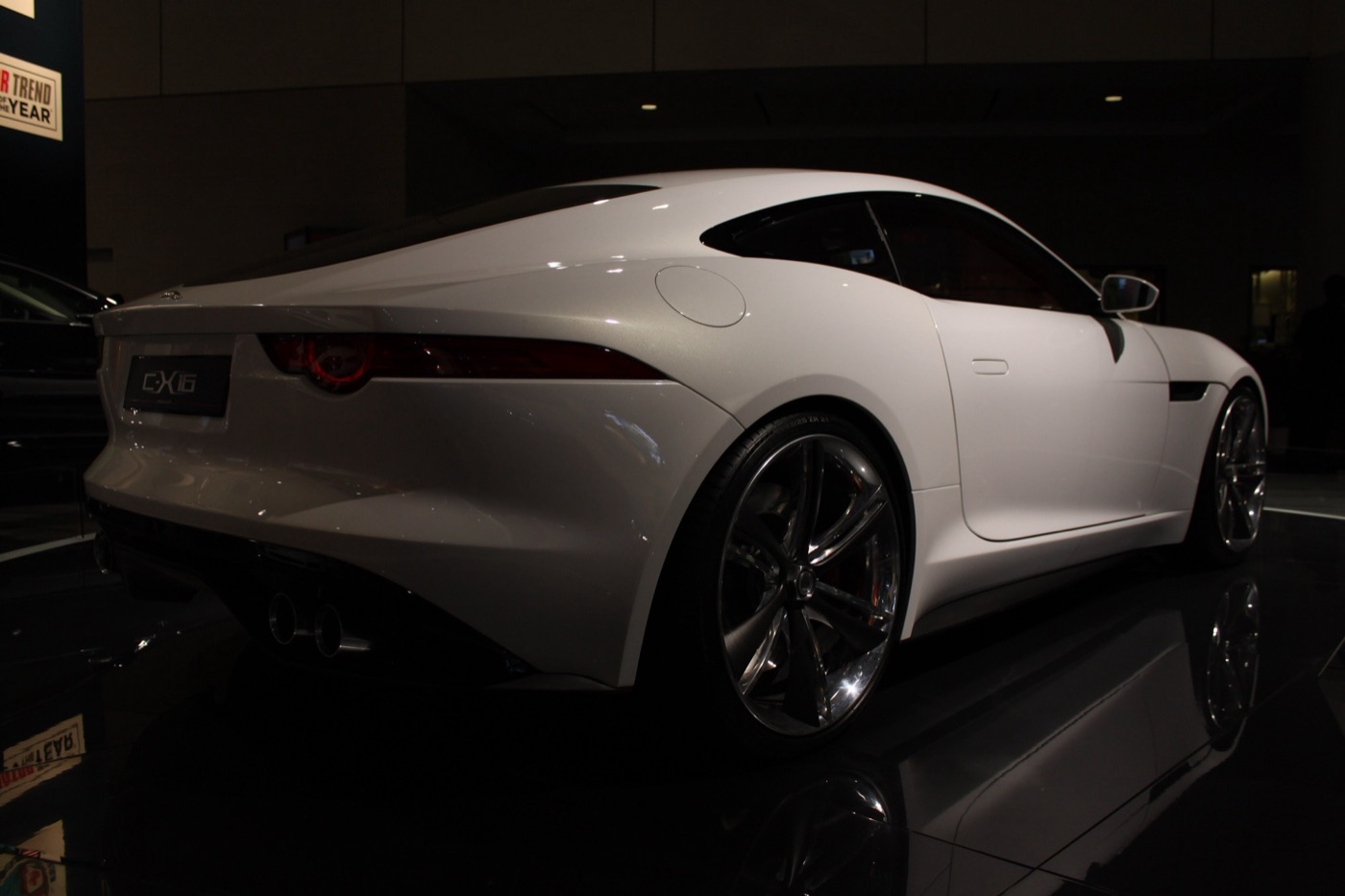
Jaguar released full details of the C-X16 on 7 September 2011 and called it a "production concept". Jaguar's release described a rear-wheel-drive two-seater with a supercharged 3.0-litre V6 of 380PS and 450Nm, and a hybrid system: a motor in the eight-speed gearbox, fed by a 1.6kWh battery behind the seats, added 95PS and 235Nm when the driver pressed a "Push to Pass" button on the steering wheel. Jaguar quoted 0-62mph in 4.4 seconds, 186mph, 165g/km of CO2 and up to 50mph on electric power alone. At 4,445mm long it was, by Jaguar's count, the smallest Jaguar since the XK120, which was built until 1954.
Before the reveal Jaguar issued teaser pictures of the car under covers, taken while filming in the Graian Alps. A SkiddMark report that September traced the roads to Lago Agnel in the Gran Paradiso area of Piedmont, about 50km south of Chamonix, and recorded rumours of two supercharged V6s of 275bhp and 350bhp in an aluminium platform. It quoted Ian Callum, Jaguar's director of design, saying the C-X16 had "the potential to do these things while retaining the ability to surprise, to excite and invigorate".
The car made its public debut on 12 September 2011 at the Palais Thurn und Taxis in Frankfurt, after a convoy of 50 heritage Jaguars, and went on the Frankfurt show stand from 15 September. In November 2011 it appeared at the Los Angeles show in a new colour, Neutron White, with Adrian Hallmark, Jaguar's global brand director, saying the company wanted "to gauge the reaction" in North America.
Production confirmed and the Paris reveal, 2012
At the New York show on 4 April 2012 Hallmark said the reaction to the C-X16 had been "so positive that we've accelerated our development", and that the production car would be called the F-Type. Jaguar's announcement said it would launch as a strict two-seat convertible, that engineering prototypes were leaving Castle Bromwich, where the cars would be built, and that it would go on sale in mid-2013. The engines Jaguar announced that September had no hybrid system.
The F-Type was shown to invited guests at the Musée Rodin in Paris on the evening of 26 September 2012, where Lana Del Rey sang "Burning Desire", written for the car and used in a short film, Desire, made with Ridley Scott Associates and starring Damian Lewis. Jaguar's release from that night called it "the first two-seater sports car from Jaguar since the iconic E-type was launched more than 50 years ago". The public saw it at the Paris show, in three versions: F-Type, F-Type S and F-Type V8 S.
The coupe, 2013
The F-Type Coupe was revealed at speed at Raleigh Studios in Playa Vista, California, on the eve of the November 2013 Los Angeles show, led by a surprise model, the 550PS F-Type R Coupe. Jaguar's account of the event gave the R 0-60mph in 4.0 seconds and a limited 186mph, with the V6 coupes at 340PS and 380PS, and put the coupe on sale from spring 2014.
The facelift, 2019
Jaguar showed a facelifted F-Type on 2 December 2019 with a new clamshell bonnet, front bumper and slightly enlarged grille, super-slim pixel LED headlights, new rear lights and a 12.3-inch digital instrument display. The facelift release added a 450PS V8, raised the F-Type R to 575PS with new springs, dampers, anti-roll bars and rear knuckles, and priced the car from £54,060 in the UK. Julian Thomson, Jaguar's design director, said the company's "rich heritage has inspired the team to create something truly extraordinary".
When did Jaguar stop making the F-Type?
Production ended at Castle Bromwich in June 2024. Jaguar had announced in October 2022 that the 2024 model year would be the F-Type's last, and on 13 June 2024 Jaguar's release on the final car said 87,731 had been produced and that new cars would stay on sale until early 2025. The last one, a 5.0-litre V8 convertible in Giola Green with a black roof and Tan Windsor leather, went to the Jaguar Daimler Heritage Trust at Gaydon. Its successor in Jaguar's range is no sports car: the four-door electric Type 01 GT, unveiled in New York on 7 October 2026 and due to go into production at Solihull in 2027.
Is the F-Type the E-Type's successor?
Jaguar presented it as one: no two-seat Jaguar sports car came between the E-Type, which ended in 1974, and the F-Type, and the company tied the two together at the start and end of the F-Type's life. When the first 59 UK demonstrators left the Ricoh Arena in Coventry on 18 April 2013, the convoy was led by the last E-Type built, a repeat of the 1961 handover of 60 E-Types at Browns Lane, as Jaguar's April 2013 release records.
The last F-Type was specified like that same car, the 5.3-litre V12 Series III convertible of 1974 registered HDU 555N, and joined it in the Heritage Trust collection "50 years to the day" after the last E-Type left the line, in Jaguar's words. The Trust's records give 72,528 E-Types against 87,731 F-Types. Two of the F-Type's special editions looked back to the E-Type: the Heritage 60 Edition in Sherwood Green from the E-Type's palette, and the ZP Edition in Oulton Blue or Crystal Grey, recalling the E-Types that won races in 1961.
Design and engineering
The F-Type has a riveted and bonded aluminium body structure, double-wishbone suspension at both ends and its engine at the front driving the rear wheels or all four. Jaguar called the structure the fourth generation of its aluminium architecture, with rigidity gains of more than 30 per cent in places over any earlier Jaguar application, according to its Paris press kit of September 2012. At the car's reveal Jaguar said more than half its content came from recycled metal, and that riveting and bonding gave off up to 80 per cent less CO2 than welding a comparable steel structure.
Body and aerodynamics
Callum's team drew two "heartlines", one running from the front wing into the door and a second swelling out into the rear haunch. The door handles sit flush until needed, and a rear spoiler rises at speed to cut lift by up to 120kg. The rear lamps carry a horizontal line through a roundel, which Jaguar's 2017 release described as a feature inherited from the E-Type. Evo's 2024 buyer's guide finds the F-Type's looks have worn well, saying that "the allure of the F-Type's svelte styling hasn't dimmed" and that the car "still looks fresh and classy even after its 2020 nip and tuck"; it thinks the F-Type "perhaps looks best as a coupe and without the bodykit of the larger-engined examples".
Interior and practicality
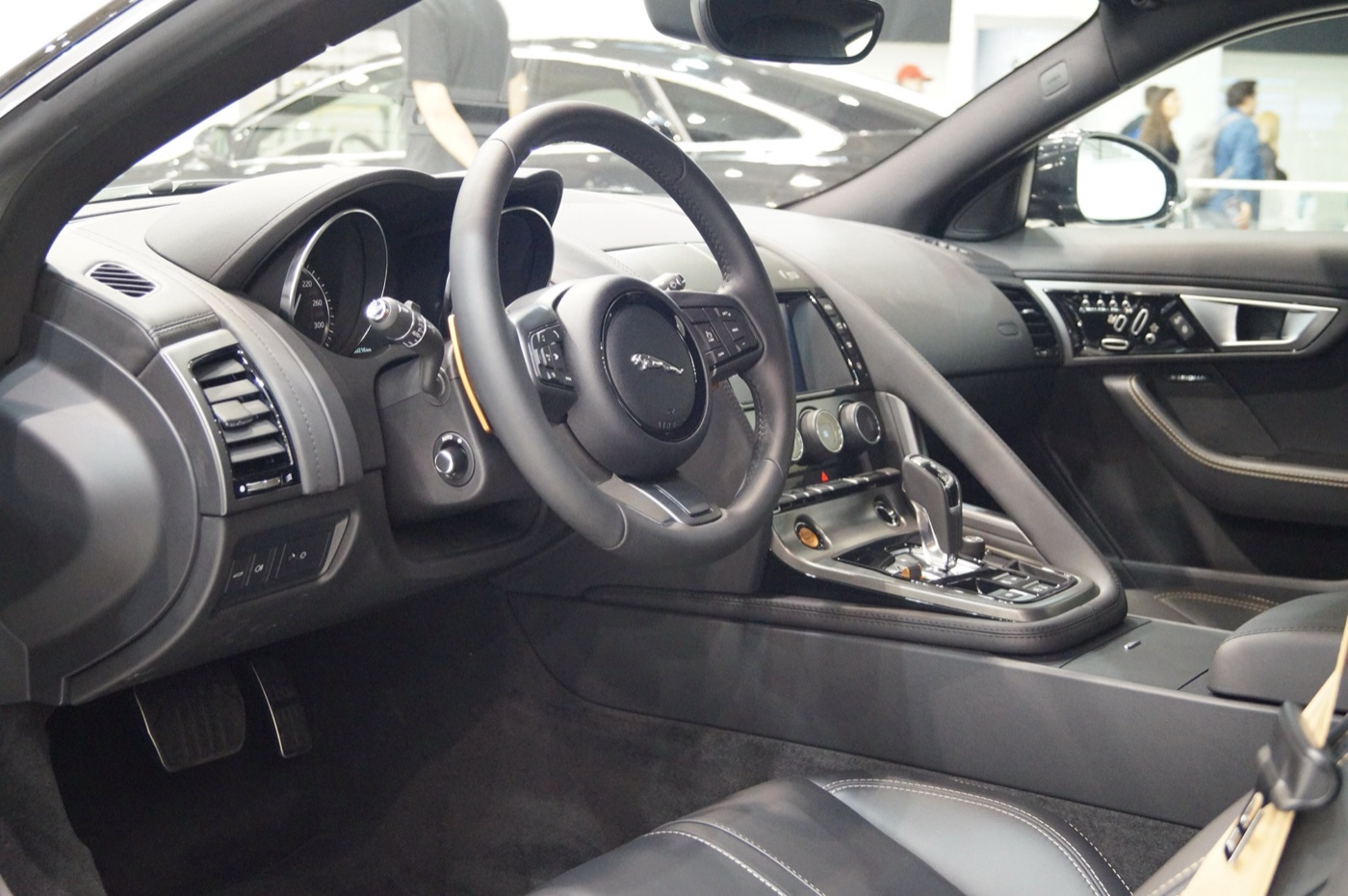
The cabin is laid out for the driver, and Jaguar called it "one plus one": a grab handle sweeps down the passenger side of the centre console and the two sides are trimmed in different materials. The gear selector is a joystick-shaped SportShift lever, and the centre air vents rise out of the dashboard only when the driver or the climate system calls for them. Touch Pro infotainment became standard in 2017, and the 2019 facelift added a 12.3-inch digital instrument display and a Smartphone Pack with Apple CarPlay and Android Auto as standard.
The F-Type is a strict two-seater with a small boot, larger in the coupe. Jaguar's UK specification and price guide of March 2013 gives the convertible 196 litres (VDA) with the tyre repair kit and 148 litres with the optional space-saver spare; Jaguar's November 2013 coupe release gave the coupe "up to 407 litres" (an up-to figure on a basis it did not state), enough for two sets of golf clubs. Evo advises soft bags for the narrow, shallow space. Evo finds there is room enough for most drivers, though the tallest may find legroom tight.
Engines and transmissions
Every F-Type runs on petrol, with a supercharged or turbocharged engine: a 3.0-litre V6, a 5.0-litre V8 and, from 2017, a 2.0-litre Ingenium four-cylinder. All drove through an eight-speed Quickshift automatic transmission, except the V6 cars offered from 2015 with a six-speed manual made by ZF. An active exhaust with valves that open above 3,000rpm was standard on the S models. By 2022 the four-cylinder and V8 engines came from JLR's Engine Manufacturing Centre in Wolverhampton. The F-Type's exhaust note is held in collections including the British Library, according to Jaguar's 2023 release.
Jaguar F-Type specs and performance
The F-Type's engine range ran from 300PS to 575PS, and the fastest version, the SVR coupe, reached 200mph. The V6 engine came in a 340PS, 380PS or 400PS tune and the V8 engine in 450PS to 575PS; torque ran from 295lb ft in the four-cylinder P300 to 700Nm in the SVR and the facelifted R, and acceleration from rest to 60mph took between 3.5 and 5.6 seconds.
| Version | Introduced | Engine | Power, torque | 0-60mph | Top speed | Driven wheels |
|---|---|---|---|---|---|---|
| F-Type | 2013 | 3.0 V6 supercharged | 340PS | 5.1sec | 161mph | Rear |
| F-Type S | 2013 | 3.0 V6 supercharged | 380PS | 4.8sec | 171mph | Rear; all four optional from 2015 |
| F-Type V8 S (convertible) | 2013 | 5.0 V8 supercharged | 495PS, 625Nm | 4.2sec | 186mph | Rear |
| F-Type R | 2013 (coupe), 2014 (convertible) | 5.0 V8 supercharged | 550PS, 680Nm | 4.0sec | 186mph | Rear; all four from 2015 |
| F-Type Project 7 | 2014 | 5.0 V8 supercharged | 575PS, 680Nm | 3.8sec | 186mph | Rear |
| F-Type SVR | 2016 | 5.0 V8 supercharged | 575PS, 700Nm | 3.5sec | 200mph (convertible 195mph) | All four |
| F-Type 2.0 (P300) | 2017 | 2.0 four-cylinder turbo | 300PS, 295lb ft | 5.4sec (5.6sec in 2022) | 155mph | Rear |
| F-Type P450 | 2019 | 5.0 V8 supercharged | 450PS, 580Nm | 4.4sec | 177mph | Rear or all four |
| F-Type R P575 | 2019 | 5.0 V8 supercharged | 575PS, 700Nm | 3.5sec | 186mph | All four |
Sources: Jaguar's releases of September 2012 (V6, V8 S), November 2013 (R), June 2014 (Project 7), February 2016 (SVR), April 2017 (2.0, quoted at 296hp and 295lb ft for the US) and October 2022 (2.0, P450, R P575). Years are those of the announcement.
How fast is the Jaguar F-Type?
The quickest F-Types, the SVR and the facelifted R, reach 60mph in 3.5 seconds; the SVR coupe is the fastest at 200mph, which Jaguar called its fastest and most powerful series-production road car when the SVR went on sale in 2016. The slowest, the P300 with the 2.0-litre four-cylinder, takes 5.4 seconds for the sprint to 60mph and is limited to 155mph.
Weight and size
The F-Type has a 2,622mm wheelbase, the same figure Jaguar gave for the C-X16. The four-cylinder car is 52kg lighter than the 340PS V6 and was the lightest F-Type when it arrived; the Project 7 weighed 1,585kg, 80kg less than the V8 S Convertible. The SVR saved 25kg against the F-Type R AWD, and up to 50kg with its carbon-ceramic brakes, carbon roof and carbon-fibre pack, according to Jaguar's SVR release of February 2016.
What is the Jaguar F-Type like to drive?
Quick in every form, and as much a GT as a sports car: evo's buyer's guide finds the F-Type "perhaps not quite as good to drive" as its contemporaries but "a great blend of sports car engagement with a relaxed GT ability". In its view the V6 models rev more eagerly and feel more engaging than the four-cylinder, and the V8 models are "ballistically quick".
Rear-wheel or all-wheel drive?
On the road the rear-drive cars are lighter and sweeter and feel nimbler, in evo's judgement, with lighter steering, but more prone to oversteer, which the mechanical limited-slip differential keeps well controlled. The all-wheel-drive cars are far more sure-footed in bad weather but less lively in corners, and the V8 versions can still be pushed into oversteer.
Ride and handling
The suspension "can get a little lively on pockmarked surfaces", evo writes, and cars with the adaptive dampers ride with more comfort. It rates the SVR's ride the best of the range, thanks to its revised damper rates, with "an entertaining manner on more demanding roads"; Jaguar had developed the SVR to keep its "day-to-day usability". The facelifted R gained an uprated chassis with new springs, dampers, anti-roll bars and stiffer rear knuckles. Configurable Dynamics, optional on the S models from 2013 and standard on the 400 Sport, lets the driver choose separate settings for the throttle, gearbox, steering and dampers.
Jaguar F-Type versions and special editions
The F-Type was sold as a convertible and a coupe with V6, V8 and four-cylinder engines, in rear- and all-wheel drive, and Jaguar's 2017 range alone ran to 24 versions in the US.
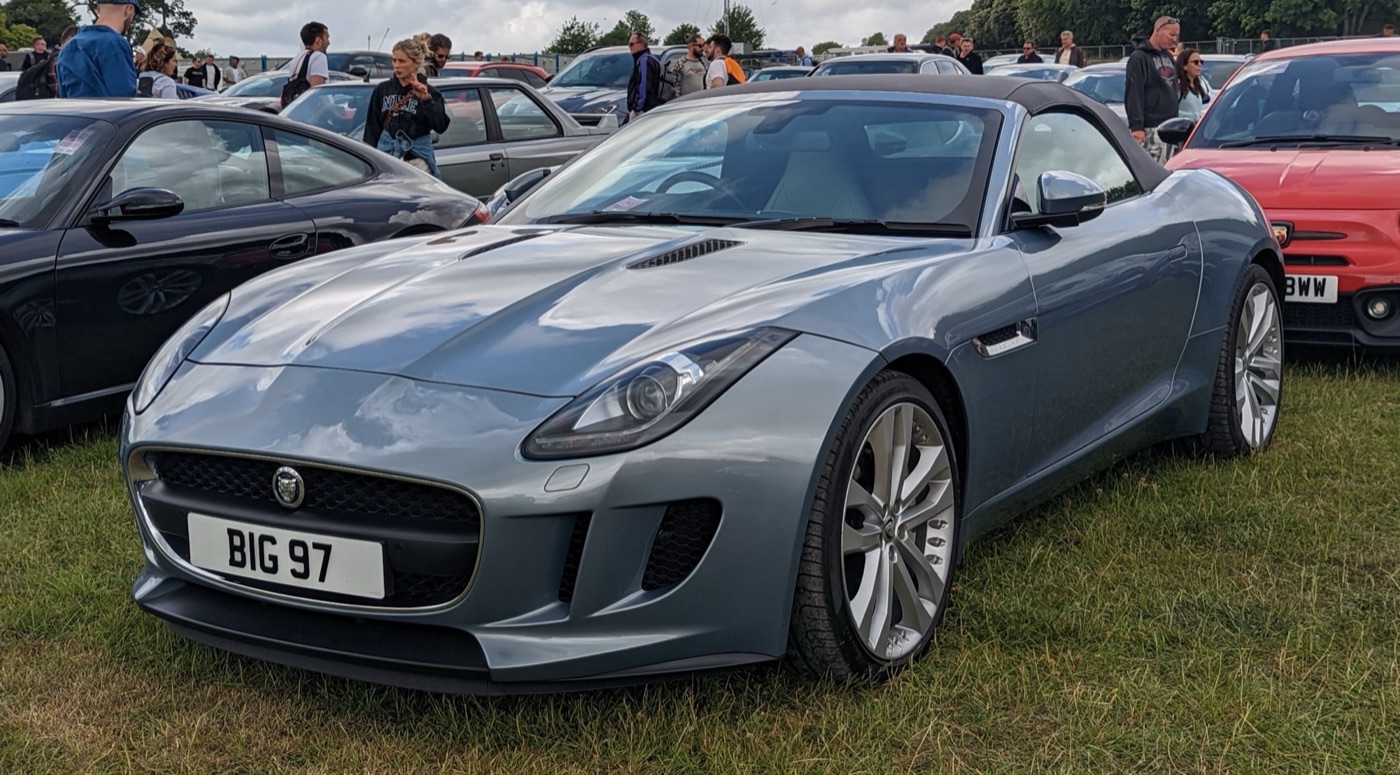
Convertible launch range, 2013
The first cars were the 340PS F-Type, the 380PS F-Type S and the 495PS F-Type V8 S, all convertibles with the eight-speed automatic. Both S models had a limited-slip differential, mechanical on the V6 and electronic on the V8.
Coupe and F-Type R, 2014
The coupe line-up opened with the F-Type, the F-Type S and the 550PS F-Type R. Jaguar called the coupe "the most dynamically capable, performance-focused, production Jaguar ever" when it was shown at the Los Angeles and Tokyo shows on 20 November 2013.
All-wheel drive and a manual gearbox, 2015
For the 2016 model year Jaguar added a six-speed manual for the rear-drive V6 cars, all-wheel drive for the S and R, and a 550PS R Convertible. Jaguar's Los Angeles release of November 2014 said the manual transmission was "matched exclusively" to the rear-drive V6s.
F-Type SVR, 2016
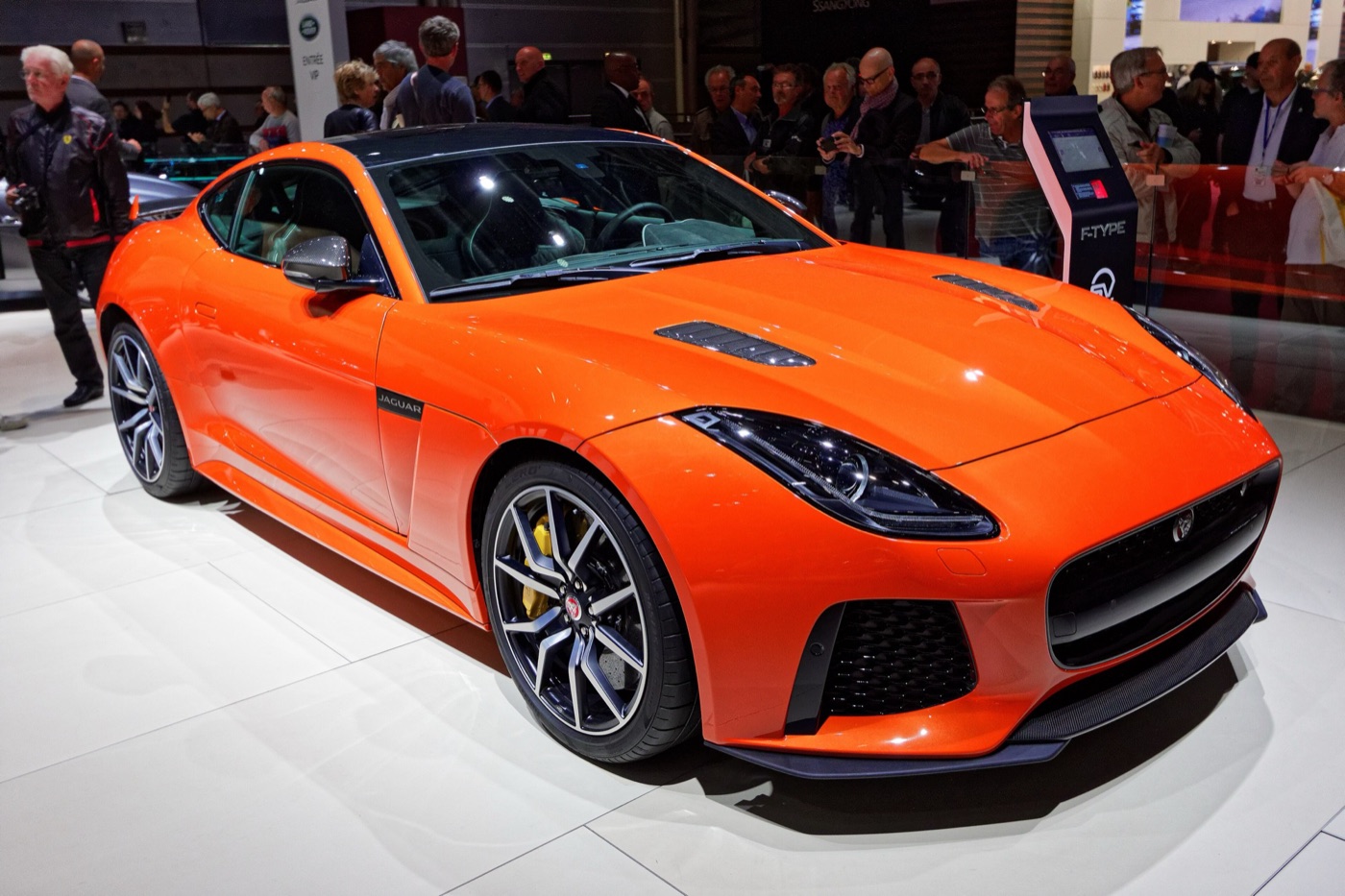
The SVR was the first series-production Jaguar developed by Special Vehicle Operations (SVO), with a 575PS version of the V8, a titanium and Inconel exhaust that saved 16kg, a carbon-fibre active rear wing and all-wheel drive. Orders opened on 17 February 2016 at £110,000 for the coupe and £115,485 for the convertible, with deliveries from that summer. No SVR appeared in the facelifted range, in which the F-Type R took the 575PS output.
Four-cylinder, R-Dynamic and 400 Sport, 2017
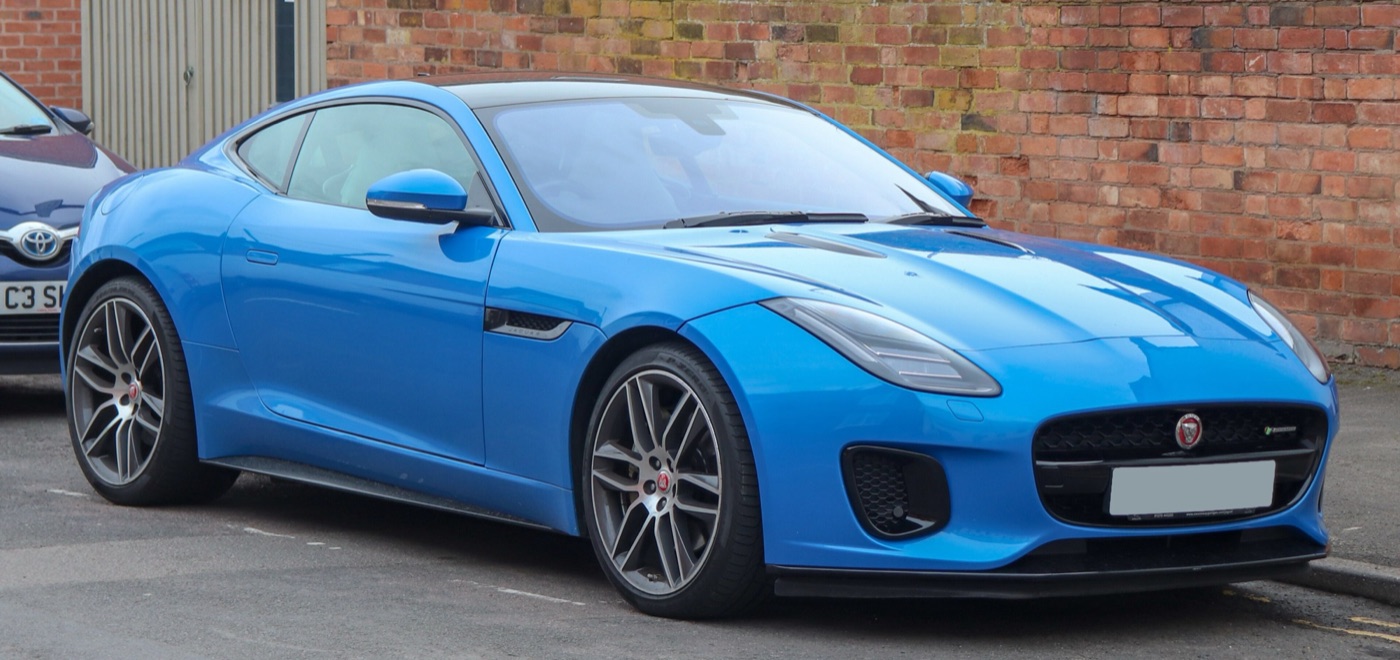
In April 2017 Jaguar added the 2.0-litre turbocharged four-cylinder, its first in the F-Type, with full LED headlamps, new bumpers, lighter magnesium-framed seats and the Touch Pro infotainment system across the range. Jaguar's release introduced an R-Dynamic trim for the 380PS V6 and a 400 Sport edition for that model year only, with a 400PS V6, 380mm front and 376mm rear brakes and yellow and grey badges.
Facelift: P300, P450 and R P575, 2019
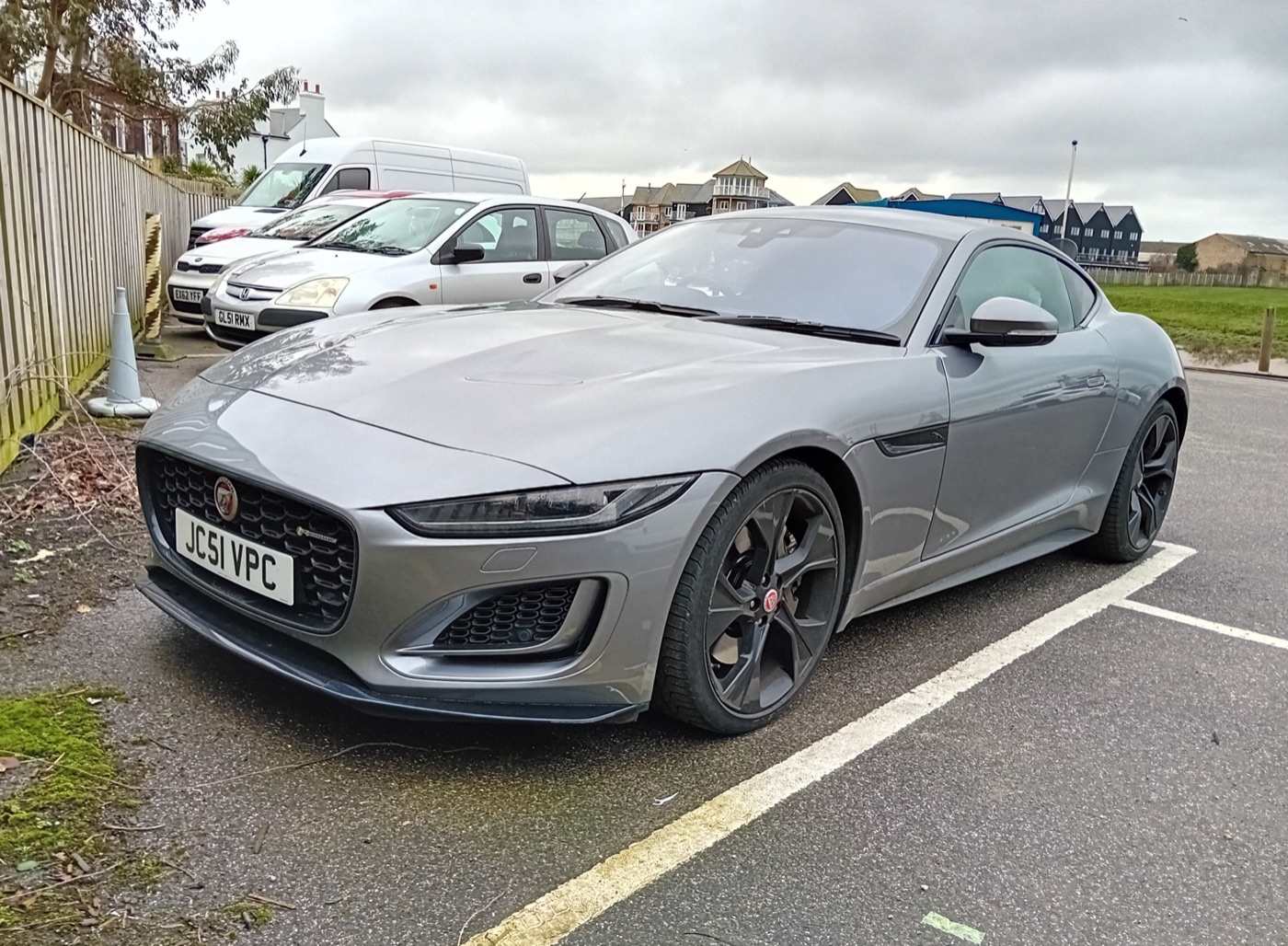
After the December 2019 facelift the UK range had the 300PS four-cylinder, the new 450PS V8 with rear or all-wheel drive, and the all-wheel-drive 575PS R; the V6 left the UK range, and evo judged the facelift's tech "a big improvement over what went before but still not quite up to best-in-class standards". A First Edition launched the facelift with a black contrast roof and 20-inch alloy wheels, and the P450 offered a choice of rear or all-wheel drive.
F-Type 75 and R 75, 2022
For the final model year Jaguar simplified the line-up and added the F-Type 75 (450PS V8, or the four-cylinder in some markets) and F-Type R 75 (575PS) to mark 75 years of Jaguar sports cars since the XK120 of 1948. Jaguar's release of 11 October 2022 listed Giola Green paint, badges showing the F-Type's outline on the front wings, 20-inch wheels on every car and deliveries from January 2023.
Limited editions
Jaguar built three numbered limited editions of the F-Type, each tied to an earlier Jaguar sports car.
Project 7, 2014
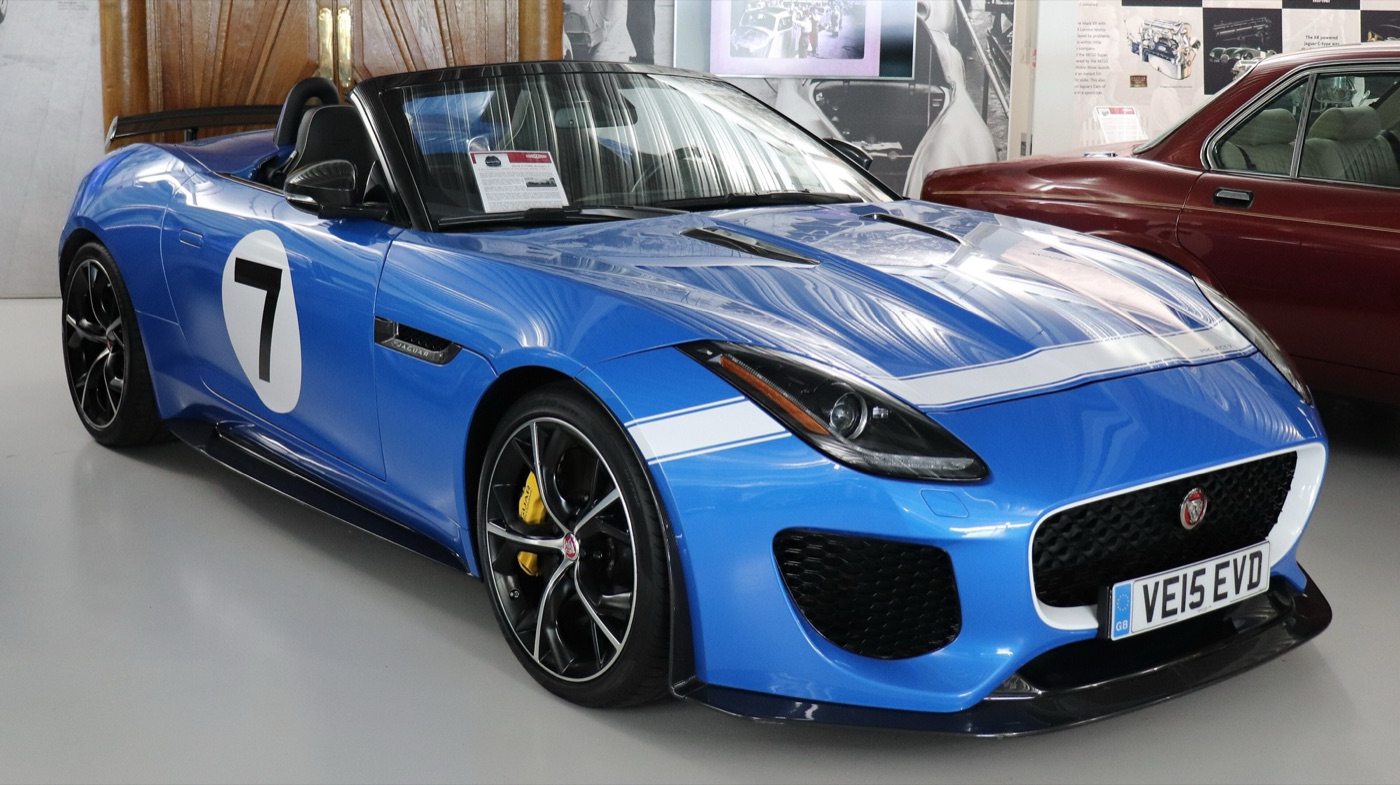
The Project 7 was a roadster with a fairing behind the driver's head modelled on the D-Type, which won Le Mans three times; the name counts Jaguar's seven outright Le Mans wins. Jaguar's release of 24 June 2014 confirmed a run of up to 250 cars, hand-built by Special Operations, with 575PS, carbon-ceramic brakes, a shorter windscreen, carbon-fibre aerodynamic parts and a stowable roof, and deliveries from mid-2015. Autocar reported in June 2014 that dealers would sell them at £135,000 each. It had first appeared as a single-seat concept at the 2013 Goodwood Festival of Speed.
Heritage 60 Edition, 2020
Jaguar marked the E-Type's 60th anniversary with 60 F-Type R cars for sale worldwide outside China, finished by SV Bespoke in Sherwood Green, a colour Jaguar had not offered since the 1960s, with Caraway and Ebony leather. It cost from £122,500, according to the release of 9 December 2020.
ZP Edition, 2024
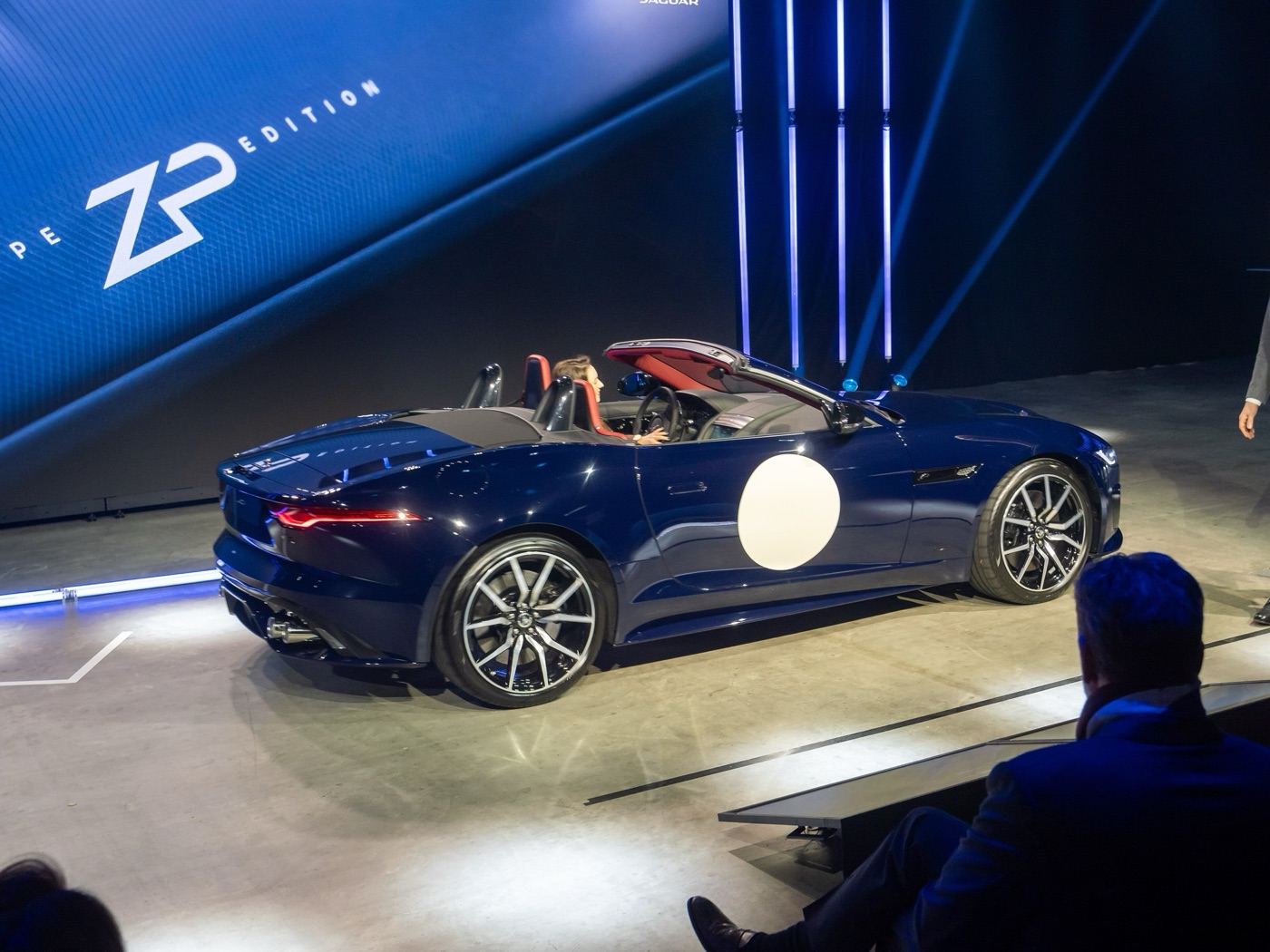
The ZP Edition was the last: 150 cars with the 575PS V8, built in 2024 and painted Oulton Blue or Crystal Grey in memory of the "Project ZP" E-Types that won races soon after the E-Type's launch in 1961, with hand-painted roundels on the doors and a "One of 150" plaque. Jaguar's release of 11 October 2023 called them the last internal-combustion sports cars designed by Jaguar.
The F-Type in motor racing
Two F-Type SVR GT4 racing cars, built by Jaguar's SVO, raced in the GT4 class of the British GT Championship in 2018 and 2019 for Invictus Games Racing. The team was paid for by James Holder, a co-founder of the clothing brand Superdry, to give wounded, injured and sick veterans of the British armed forces a seat in national racing, as Dailysportscar reported in January 2018.
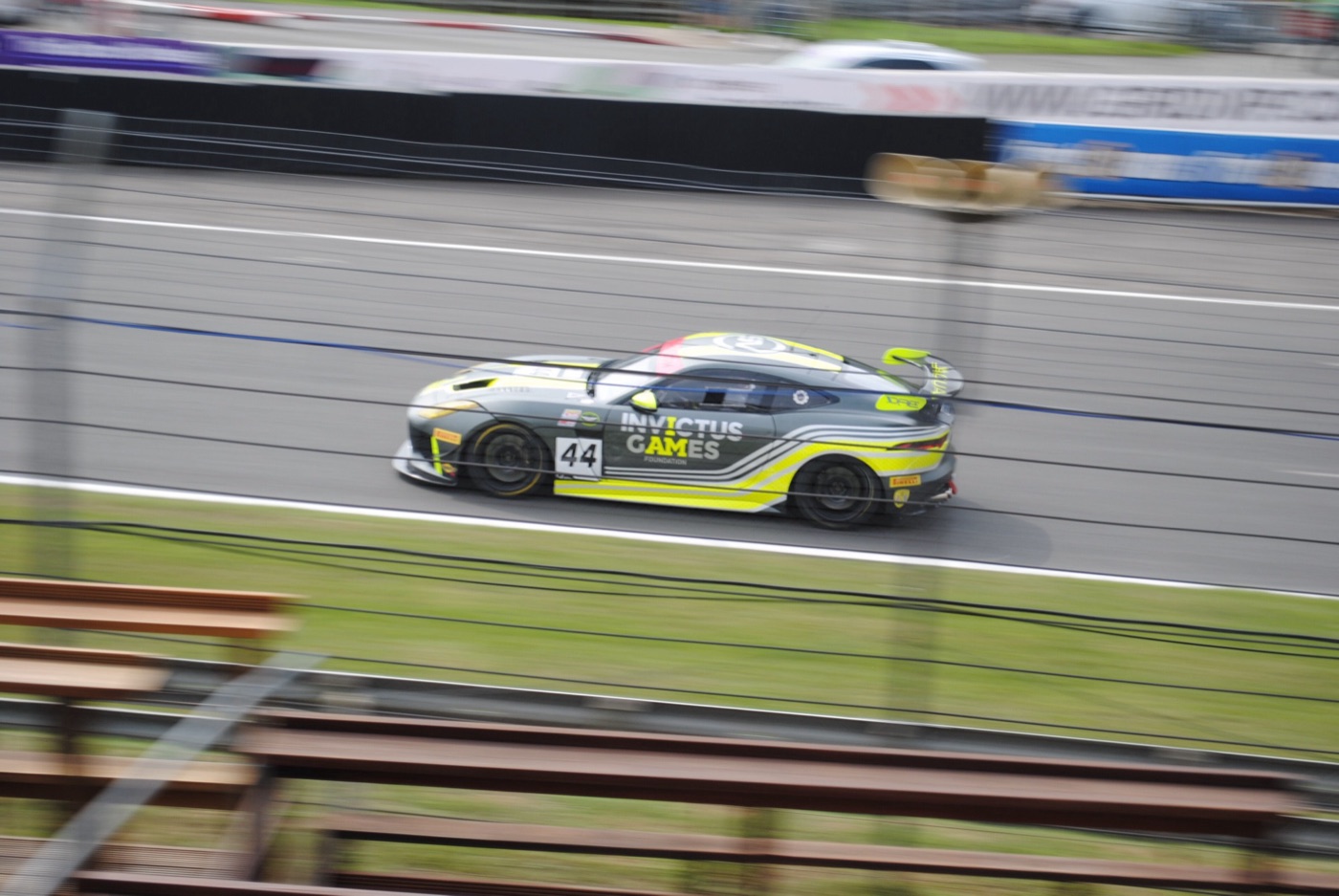
Both cars raced in 2018; in 2019 one raced and the other was used for testing. They were offered together, with spares, at Silverstone Auctions' Race Retro sale on 21 and 22 February 2020 with an estimate of £200,000 to £250,000 for the pair.
How many Jaguar F-Types were made?
Jaguar made 87,731 F-Types between 2013 and June 2024, all at Castle Bromwich.
| Car | Number | Source |
|---|---|---|
| All F-Types, 2013 to June 2024 | 87,731 | Jaguar, 13 June 2024 |
| F-Type Project 7 | up to 250 | Jaguar, 24 June 2014 |
| F-Type ZP Edition | 150 | Jaguar, 11 October 2023 |
| F-Type Heritage 60 Edition | 60 (worldwide, outside China) | Jaguar, 9 December 2020 |
| First UK demonstrators handed to dealers, April 2013 | 59 | Jaguar, 19 April 2013 |
| For comparison: all E-Types, 1961–1974 | 72,528 | Jaguar Daimler Heritage Trust records, quoted by Jaguar, 13 June 2024 |
Jaguar's June 2024 release said both the last coupe and the last convertible were going to the Heritage Trust, alongside the last XE, XF and XF Sportbrake.
Jaguar F-Type prices and values
A used F-Type now costs a fraction of its price new: the median coupe at auction since 2020 is about £33,000, while the cheapest convertible cost £58,520 in 2013. Only the Project 7 sells for close to its price new.
What did the F-Type cost new?
| Version | Date | UK price new | Source |
|---|---|---|---|
| F-Type V6 convertible (340PS) | April 2013 | £58,520 | Jaguar |
| F-Type S convertible (380PS) | April 2013 | £67,520 | Jaguar |
| F-Type V8 S convertible (495PS) | April 2013 | £79,985 | Jaguar |
| F-Type Project 7 | June 2014 | £135,000 | Autocar |
| F-Type SVR coupe | February 2016 | £110,000 | Jaguar |
| F-Type SVR convertible | February 2016 | £115,485 | Jaguar |
| Facelifted F-Type (cheapest) | December 2019 | £54,060 | Jaguar |
| F-Type Heritage 60 Edition | December 2020 | £122,500 | Jaguar |
| F-Type four-cylinder (cheapest, final year) | 2024 | £67,355 | CAR, July 2025 |
| F-Type R 75 | 2024 | £107,155 | CAR, July 2025 |
What is a Jaguar F-Type worth today?
Ordinary coupes and convertibles have sold at auction for between about £11,000 and £100,000 since 2020, with medians a little over £30,000; SVRs fetch about £55,000 and the Project 7 about £130,000. The Classic Valuer collects auction results from the UK, the US and elsewhere and converts them to sterling.
| Version | Lowest | Median | Highest |
|---|---|---|---|
| F-Type coupe (excluding SVR and Project 7) | £16,581 | £33,329 | £99,585 |
| F-Type convertible (excluding SVR and Project 7) | £11,088 | £30,917 | £69,339 |
| F-Type SVR coupe | £33,501 | £55,018 | £72,338 |
| F-Type SVR convertible | £41,418 | £54,242 | £62,422 |
| F-Type Project 7 | £97,890 | £130,413 | £179,219 |
Recent sales on The Classic Valuer's lists include a 2015 V6 coupe sold through Collecting Cars in the UK for £19,832 on 11 October 2026 and a 2024 R 75 convertible sold through Bring a Trailer in the US for the equivalent of £64,206 on 14 October 2026. Of 23 Project 7s it records as sold, the dearest made £179,219 in Australia in November 2023 and the most recent £144,137 in the US in September 2026. On the used market, evo's buyer's guide finds about two coupes for sale for every convertible, the V6 the most plentiful and the 2.0-litre four-cylinder the rarest. It rates the earliest V6 models the best value, followed by the early V8s, and notes heavy early depreciation, made worse by dealer discounts on new cars, which slows after two or three years, and finds manual cars rare.
Which used Jaguar F-Type should you buy?
For most buyers a V6 is the one to have: evo's buyer's guide calls the V6 cars "perhaps the sweet spot", characterful and quicker than the four-cylinder, and the only F-Types offered with a manual gearbox. The four-cylinder costs least to run, and the V8s are for buyers who want the most performance and the loudest exhaust and will pay more to run them.
Asking prices by engine
SkiddMark read every F-Type advert on PistonHeads on 28 October 2026: 141 of the 149 listed could be read, and a Lister conversion and a 1970 E-Type listed as an F-Type were left out, leaving 139. The four-cylinder cars have the lowest median asking price as well as the lowest running costs, and facelifted cars ask about £16,000 more than earlier ones.
| Cars advertised | Number | Lowest | Median | Highest | Median mileage |
|---|---|---|---|---|---|
| All F-Types | 139 | £15,795 | £34,495 | £157,450 | 30,406 |
| Four-cylinder (P300) | 27 | £23,495 | £29,500 | £45,850 | 30,505 |
| V6 | 57 | £15,795 | £32,500 | £46,000 | 32,500 |
| V8 (excluding the Project 7) | 54 | £22,450 | £43,677 | £129,979 | 27,500 |
| Project 7 | 1 | £157,450 | £157,450 | £157,450 | 373 |
| Built 2013–2019 | 93 | £15,795 | £29,948 | £157,450 | 36,362 |
| Built 2020–2024 (facelift) | 46 | £26,995 | £45,925 | £129,979 | 20,580 |
Engine is taken from each advert's title, or from the engine size on the advert page where the title gives none (four cars). The dearest cars were a 2015 Project 7 with 373 miles at £157,450 and a ZP Edition at £129,979. None of the advert titles mentioned a manual gearbox, which evo calls "a pretty rare option on the used market".
Which options to look for
Look for cars with the adaptive suspension, which ride better; evo also rates the higher-end Meridian audio systems worth the extra over the standard six-speaker set-up. CAR's July 2025 review noted delivery-mileage R 75s still in the classifieds, registered before the GSR2 safety rules took effect, and put used four-cylinder cars from about £25,000 and R 75s from £65,000 at that time.
What to check
Besides the faults and recalls below, Auto Express's buyer's guide warns that the automatic gearbox, described as sealed for life, needs a fluid change every 70,000 miles, that the bracing under the car can corrode (dealers replaced parts under warranty), and that the optional carbon-ceramic brakes are very costly to replace.
Is the Jaguar F-Type reliable?
The F-Type has a list of known faults, mostly electrical, and 16 entries in the UK government's recall file. Bob Harper's buyer's guide for evo, November 2024, says "the F-Type isn't unreliable per se" but advises an aftermarket warranty or a dealer warranty.
Known faults
The faults the guide lists are the rising centre air vents sticking, the pop-out door handles failing, the infotainment freezing or crashing, squeaks and rattles from interior trim reported by some owners, and window trims on early cars that trapped road grit and scratched the glass. At the back, the differential oil seals are a weak point that can lead to early differential wear, and the exhaust flaps can seize, often on cars little used.
Recalls
Owners can check a car's outstanding recalls with its registration number on GOV.UK's recall checker; the DVSA file behind it gives the build dates each recall covers.
| Launched | Reference | Fault | Cars built | Vehicles |
|---|---|---|---|---|
| October 2014 | R/2014/145 | Alternator positive cable may come loose: risk of fire | 18 Aug–2 Oct 2014 | 2,612 |
| June 2016 | R/2016/099 | Faulty crank position sensor may cut the engine | 1 Jun–31 Oct 2012 | 1,932 |
| December 2016 | R/2017/004 | Seat belt pretensioner may not deploy | 16 Feb–16 Dec 2016 | 4,735 |
| March 2018 | R/2018/035 | Fuel rail end caps may leak | 1 Sep 2016–17 Aug 2017 | 4,464 |
| January 2019 | R/2019/014 | Crankshaft pulley bolt may fracture | 12 Oct–11 Dec 2018 | 29 |
| March 2019 | R/2019/048 | CO2 emissions above the required level: software update | 9 Nov 2016–5 Jul 2018 | 4,874 |
| August 2022 | R/2022/223 | Damaged front seat belt pretensioner tube | 13 Jan–15 Mar 2022 | 493 |
| December 2025 | R/2025/488 | Security guidance letter about thefts, no repair | 31 Aug 2012–13 May 2024 | 8,560 |
MPG and running costs
Official fuel economy is 39.2mpg for the four-cylinder P300, 33.6mpg for automatic V6s, 28.8mpg for manual V6s and the mid-20s for V8s. Road tax depends on when the car was first registered. GOV.UK's rate tables put an F-Type registered from 1 April 2017 at the standard £200 a year plus a £440 supplement for cars that cost more than £40,000 new, paid for five years from the second time the car is taxed, so a 2017 car has finished paying it. Cars registered before April 2017 pay by CO2 band: £445 a year for a launch V6 at 209 or 213g/km (band K) and £790 for the 259g/km V8 S (band M). Tyres cost about £200 a corner on 19-inch wheels. Servicing should cost about the same as for rival premium makes, by evo's reckoning, and Jaguar offered service plans on cars up to ten years old.
Jaguar F-Type rivals
The F-Type's rivals were the Porsche 911, 718 Cayman and Boxster and BMW's sports coupes. The used guide sets the cheaper F-Types against the Alpine A110, Porsche 718 Cayman and Boxster, BMW M4 and Toyota Supra, and the stronger V6 and V8 cars against the Porsche 911, Mercedes-AMG C63 S and Audi RS5, and finds that "dynamically the Jaguar isn't quite up there with the Porsches". In Germany's Golden Steering Wheel award of 2013, readers placed the F-Type ahead of the Porsche Cayman and the BMW 4 Series Coupe in the coupe and cabriolet category.
Reviews, reception and awards
The F-Type was named 2013 World Car Design of the Year at the New York show, selected ahead of 42 rivals by the 66 jurors, and by December 2019 Jaguar counted 178 awards for it. Others included Autoweek's best in show at Paris in 2012, Auto Motor und Sport's Autonis award, and the Golden Steering Wheel, voted by readers of Auto Bild and Bild am Sonntag, as Jaguar's November 2013 release lists.
Top Gear's road test of July 2013, by Ollie Marriage, took all three convertibles from Edinburgh into the Highlands, and the review's headline called the F-Type an "exceptional sports car"; Marriage found it "a striking car from whatever angle you view it". The testers complained that, with the optional space-saver spare fitted, anything bigger than "a Tupperware container" had to ride in the passenger footwell, that the touchscreen was slow to respond, and that a passenger in an F-Type "will feel slightly excluded", cut off from the buttons and knobs. On the 400-mile drive north the V8 S averaged 25.5mpg and the two V6s 26.5mpg and 27.1mpg. They preferred the white V6 S to the V8 S, whose quad tailpipes and rear camera they found fussy.
CAR magazine's review of the R 75, updated in July 2025 after production ended, rated it four out of five and called the F-Type "a near-perfect sports car–GT blend" with a "typically responsive" ZF gearbox and proper buttons and dials, but found that the interior "lacks the drama of the exterior". It gave the end-of-run list prices as £107,155 for the R 75 and £67,355 for the four-cylinder.
Questions
Is the Jaguar F-Type a two-seater?
Yes. Every F-Type, coupe or convertible, has two seats; Jaguar called the cabin layout "one plus one", with a grab handle dividing the passenger side.
Can you get a Jaguar F-Type with a manual gearbox?
Yes, but only the rear-wheel-drive 340PS and 380PS V6 cars, which could have a six-speed ZF manual from the 2016 model year. Every other F-Type has the eight-speed Quickshift automatic.
Where was the Jaguar F-Type built?
At Jaguar's Castle Bromwich plant in Birmingham, from 2013 to June 2024. It was designed and engineered in Coventry, and by 2022 its four-cylinder and V8 engines came from JLR's Engine Manufacturing Centre in Wolverhampton.
Who designed the Jaguar F-Type?
Jaguar's design team under Ian Callum, its director of design, who also led the C-X16 concept of 2011. Julian Thomson was Jaguar's design director when the facelift was shown in December 2019.
Is the Jaguar F-Type four-wheel drive?
Some are. All-wheel drive arrived for the S and R in 2015, was standard on the SVR and the 575PS R from 2019, and was optional on the 450PS V8; the four-cylinder was rear-wheel drive only.
What replaced the Jaguar F-Type?
No sports car. Jaguar's next model is the Type 01, an electric four-door GT unveiled in New York on 7 October 2026, with production at Solihull from 2027 and orders expected to open in early 2027.
What does the R mean on a Jaguar F-Type?
R marks the most powerful regular version: the Jaguar F-Type R had a 550PS supercharged V8 from 2013 and 575PS from the 2019 facelift. R-Dynamic, from 2017, is a trim with 20-inch wheels and gloss-black details, first offered with the 380PS V6.
Sources
- Jaguar, "Jaguar C-X16 Concept, Full Press Release and Images", 7 September 2011: C-X16 engine, hybrid system, performance and size.
- Jaguar, "Jaguar Opens Frankfurt Motor Show With The C-X16 Concept Car", 12 September 2011: public debut and show dates.
- Jaguar, "Jaguar C-X16 makes North American debut at the Los Angeles Auto Show", 16 November 2011: Neutron White, Hallmark quote.
- SkiddMark, "Jaguar sends out a message with the C-X16", September 2011: teaser filming location, rumoured V6 outputs, Callum quote.
- Jaguar, "Jaguar Announces the F-TYPE", 4 April 2012: production confirmed, Castle Bromwich, on sale mid-2013.
- Jaguar, "Jaguar F-TYPE Revealed to a VIP Audience", 26 September 2012: Musée Rodin reveal, Lana Del Rey, Desire film, recycled aluminium.
- Jaguar, "Jaguar F-TYPE Unveiled in Paris", 26 September 2012: launch range, performance, structure, design and cabin.
- Jaguar, "Jaguar F-Type In Dealerships Today Following Spectacular Handover Event In Coventry", 19 April 2013: UK handover, UK prices, World Car Design of the Year.
- Top Gear, Ollie Marriage, "Jaguar F-Type Convertible review", 24 July 2013: road test verdict and criticisms.
- Jaguar, "Jaguar F-TYPE Wins 'Golden Steering Wheel' Title", 13 November 2013: awards and rivals in the vote.
- Jaguar, "All-New Jaguar F-TYPE R Coupe Revealed at High-Speed", 20 November 2013: coupe range and R performance.
- Jaguar, "F-TYPE Coupe Makes Global Motor Show Debuts in Los Angeles and Tokyo", 20 November 2013: coupe description.
- Jaguar, "Jaguar to Build F-TYPE Project 7", 24 June 2014: Project 7 numbers, specification and weight.
- Autocar, Steve Cropley, "Jaguar F-type Project 7 revealed", 26 June 2014: Project 7 price.
- Jaguar, "Jaguar To Showcase Its Latest Lineup At The Los Angeles Auto Show", 19 November 2014: manual gearbox, all-wheel drive, R Convertible.
- Jaguar, "Order Book Opens for the New Jaguar F-TYPE SVR", 17 February 2016: SVR prices, performance, weight.
- Jaguar, "Jaguar Unveils 2018 F-TYPE Line-up with All-New Four-Cylinder Engine Option", 12 April 2017: four-cylinder, R-Dynamic, 400 Sport.
- Dailysportscar, Stephen Kilbey, "Invictus Games Racing To Run Jaguar GT4s In British GT", 11 January 2018, and "Invictus Jaguar GT4s Up For Auction", 11 February 2020: the GT4 cars.
- Jaguar, "The New Jaguar F-TYPE", 2 December 2019: facelift, UK price, award count.
- Jaguar, "New Jaguar F-TYPE Heritage 60 Edition", 9 December 2020: Heritage 60 numbers and price.
- Jaguar, "F-TYPE Marks 75 Years of Jaguar Sports Cars and its Final Model Year Update", 11 October 2022: final range, P450 and P575 performance, engine plant.
- Jaguar, "Jaguar's Last Petrol Sports Car: F-TYPE ZP Edition Takes the Chequered Flag", 11 October 2023: ZP Edition, British Library.
- Jaguar, "Jaguar Marks Sports Car Anniversary with Final F-Type", 13 June 2024: production total, final car, E-Type total.
- Evo, Bob Harper, "Used Jaguar F-Type (2013 - 2024) review and buyer's guide", 8 November 2024: known faults, running costs, rivals, depreciation.
- DVSA, vehicle recalls file, downloaded 28 October 2026: F-Type recalls.
- The Classic Valuer, auction results for the F-Type coupe, convertible, SVR coupe, SVR convertible and Project 7, read 28 October 2026: values.
- Jaguar, F-TYPE Specification and Price Guide (UK), March 2013, pages 4–5: boot volumes, launch CO2.
- GOV.UK, Vehicle tax rate tables and rates for cars registered from 1 March 2001, read 28 October 2026: road tax.
- JLR, "JLR unveils new Jaguar Type 01", 7 October 2026, and Jaguar, "Jaguar Type 01: a new era begins", 7 October 2026: the successor, production and orders.
- GOV.UK, Check if a vehicle has been recalled, read 28 October 2026: recall check by registration number.
- PistonHeads, used Jaguar F-Type adverts, read 28 October 2026 (SkiddMark count of 139 adverts): asking prices.
- CAR magazine, "Jaguar F-Type R 75 review", updated 20 July 2025: rating, end-of-run list prices, used prices.
- Auto Express, used Jaguar F-Type buyer's guide, read 28 October 2026: gearbox fluid, corrosion, brakes.