John Surtees: world champion on two wheels and four
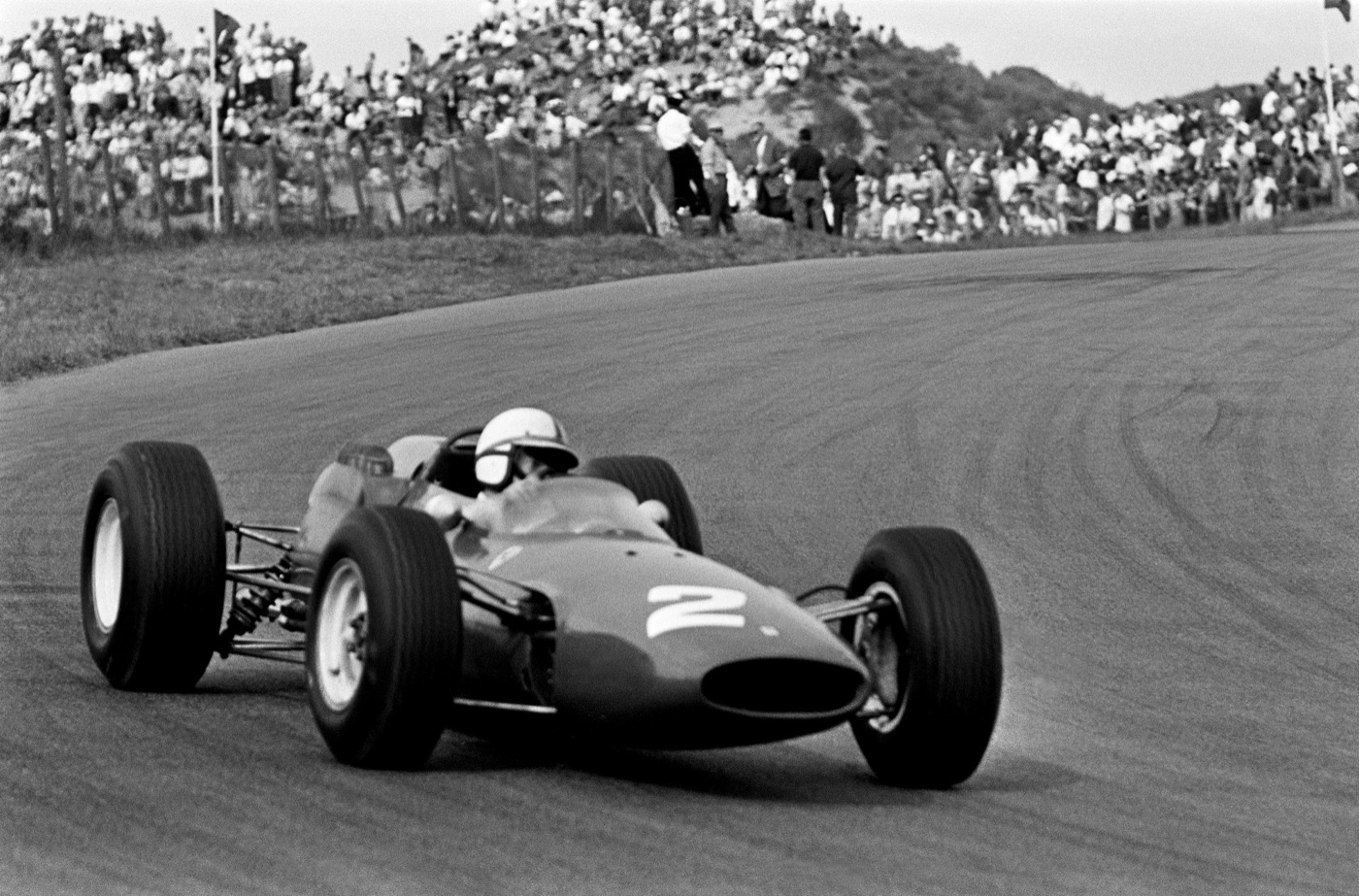
John Surtees (1934–2017) is the only person to have won world championships on two wheels and four: seven motorcycle titles for MV Agusta between 1956 and 1960, then the 1964 Formula One World Championship for Ferrari. MotoGP’s official record credits him with 38 Grand Prix wins on motorcycles, and Formula 1’s obituary gives six Grand Prix wins in a car career of 12 years. He later built and ran his own Formula One team, Surtees, from 1970 to 1978, and he died in London on 10 March 2017, aged 83.
Early life: Jack Surtees, Vincent and the sidecar
John Surtees was born on 11 February 1934 at Tatsfield in Surrey (StatsF1’s driver record), the son of Jack Surtees, a motorcycle dealer and sidecar racer. SkiddMark’s 2014 interview places Jack’s business in Forest Hill, selling and servicing Vincents; Simon Taylor’s “Lunch with John Surtees” in Motor Sport, October 2015 (pp. 68–76) puts the shop in Croydon and says Jack raced a 600cc Norton combination on grass with John’s mother Dorothy in the sidecar.
A sidecar win at 14, taken away
At 14 John stood in as passenger on his father’s 1,000cc Vincent at the Trent Park speed trials near Cockfosters, when Jack’s usual passenger failed to turn up. They won, and the result was struck out when the organisers found out his age. “But when it got out that I was under-age we were disqualified,” he told Motor Sport.
Apprentice at Vincent and the first win at Aberdare
He took an engineering apprenticeship at the Vincent factory in Stevenage. “I’d travel back and forth every day to the Vincent factory at Stevenage, and then work on my bikes all night,” he said in 2015. His first road race was on a pre-war 250cc Triumph at Brands Hatch in 1950, aged 16; he fell off in the rain while leading. A 500cc Vincent Grey Flash that he and his father built up from parts gave him his first win, at Aberdare Park in South Wales, in only his second race on tarmac by SkiddMark’s account. Surtees told Motor Sport it was the race that shaped him: “The bike and I became one. We spoke to each other, we were exchanging messages through the seat of my pants.”
Thruxton 1951: chasing Geoff Duke
In August 1951, aged 17, Surtees took on Geoff Duke at Thruxton in Hampshire over the Bank Holiday weekend. SkiddMark’s interview records that it was very wet (Motor Cycle called the conditions “vile”) and that Duke, on his way to that year’s 350cc and 500cc world titles, won both feature races on his Norton with the teenager’s Vincent chasing him hard each time. At the prize-giving Duke said the young rider had made him ride very fast indeed. MotoGP’s biography of Surtees describes the same meeting as an ACU International at which the 17-year-old apprentice “gave the great Geoff Duke a run for his money”.
Motorcycle career: Norton and MV Agusta
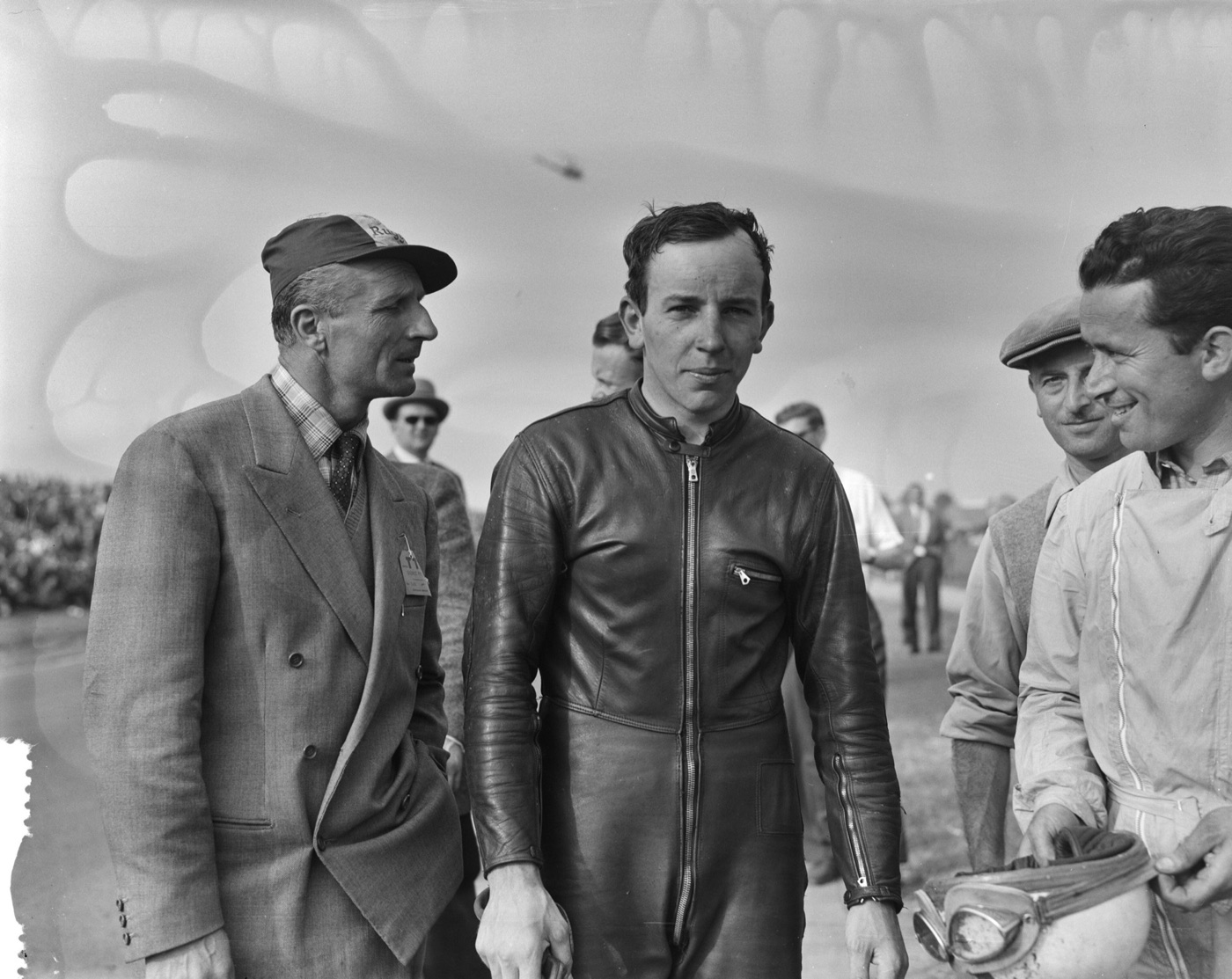
Surtees won all seven of his motorcycle world titles on MV Agusta four-cylinder machines between 1956 and 1960, after starting on Vincents and Nortons. By 1955 he was the biggest name in British racing: Motor Sport counts 86 races and 70 wins between April and October that year, two of them over Duke’s works Gilera at Silverstone and Brands Hatch on the same weekend.
Why he left Norton for MV Agusta
Surtees wanted to win the world championship on a British bike, but Norton cut back its racing and Triumph turned him down. “That sort of negative attitude was typical of the complacency in much of British industry at the time,” he told Motor Sport. MV Agusta, which had lost Les Graham at the Isle of Man and Ray Amm at Imola, flew him to Monza and Modena for a test late in 1955, and he signed.
The 1956 title and the 1957 setback
He won the 500cc World Championship in his first season for MV, at the age of 22; MV Agusta’s 1959 letter to him, quoted below, calls it “the first ever achieved by this company”. MotoGP’s biography notes that Duke was serving a six-month ban from the FIM that season for backing a riders’ strike. In 1957 the Gileras were faster and Surtees finished third.
Three doubles: 1958, 1959 and 1960
Surtees then won the 350cc and 500cc titles in each of the next three seasons. MotoGP’s statistics record that he won every 350cc and 500cc round he started in 1958 and 1959 (25 races out of 25), and seven of ten in 1960.
Isle of Man TT wins
Surtees won six Isle of Man TTs. The first was the 1956 Senior, which was also his first world championship race for MV; he took the bikes to the island himself, by train to Liverpool in the guard’s van and then on the ferry. Motor Sport records five more TT wins over the next four seasons and an Isle of Man lap record of more than 104mph. MotoGP’s biography says he was the first rider to win the Senior TT three years in succession, in 1958, 1959 and 1960.
MV Agusta’s gift: a BMW 507
MV Agusta paid towards a BMW 507 for him after the 1956 title. A letter from the company dated 10 February 1959, quoted by BBC News in July 2018, confirms that on 12 January 1957 it gave him DM 27,115 “for you to buy a BMW type 507 Touring Sports car which was intended as a gift to you in appreciation of your winning the Motorcycle World Championship in 1956”. He kept the car until he died. Bonhams sold it at the 2018 Goodwood Festival of Speed for £3,809,500.
John Surtees’s motorcycle results by season
Surtees started 49 world championship motorcycle races and won 38 of them, with 45 podium finishes, according to MotoGP’s official statistics. Points are those counted towards the championship under the rules of the day, as MotoGP records them.
| Season | Class | Make | Starts | Wins | Points | Position |
|---|---|---|---|---|---|---|
| 1952 | 500cc | Norton | 1 | 0 | 1 | 18th |
| 1955 | 250cc | NSU | 1 | 1 | 8 | 7th |
| 1955 | 350cc | Norton | 3 | 0 | 11 | 6th |
| 1956 | 350cc | MV Agusta | 2 | 1 | 14 | 4th |
| 1956 | 500cc | MV Agusta | 3 | 3 | 24 | Champion |
| 1957 | 350cc | MV Agusta | 1 | 0 | 3 | 10th |
| 1957 | 500cc | MV Agusta | 3 | 1 | 17 | 3rd |
| 1958 | 350cc | MV Agusta | 6 | 6 | 32 | Champion |
| 1958 | 500cc | MV Agusta | 6 | 6 | 32 | Champion |
| 1959 | 350cc | MV Agusta | 6 | 6 | 32 | Champion |
| 1959 | 500cc | MV Agusta | 7 | 7 | 32 | Champion |
| 1960 | 350cc | MV Agusta | 4 | 2 | 22 | Champion |
| 1960 | 500cc | MV Agusta | 6 | 5 | 32 | Champion |
Moving to cars: Lotus, Cooper and Lola
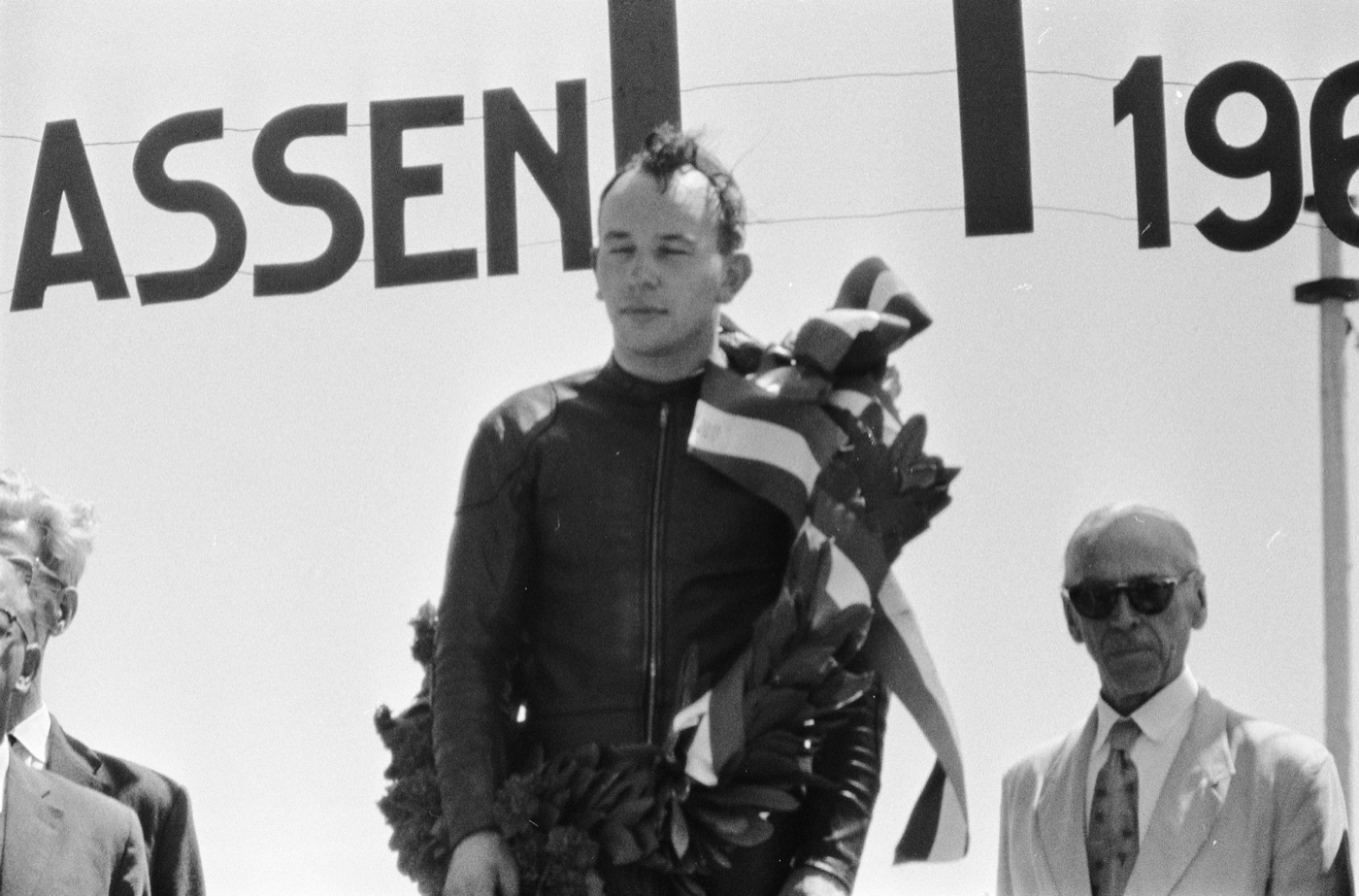
Surtees moved to car racing in 1960 while still riding for MV, after Count Domenico Agusta stopped him racing other makers’ bikes on free weekends. “Nothing in my contract said I couldn’t race cars on my free weekends,” he told Motor Sport.
Lotus, 1960
Team Lotus gave him a works Lotus 18 for Grands Prix that did not clash with his motorcycle races. He retired at Monaco with gearbox trouble, then finished second to Jack Brabham at the British Grand Prix at Silverstone, 49.6 seconds behind, in only his second World Championship race (Formula 1’s 1960 British Grand Prix result). At Oporto he led the Portuguese Grand Prix by half a minute until fuel leaking over his legs made his foot slip off the brake pedal and he hit the straw bales. Colin Chapman offered him the number one seat for 1961 and asked him to choose a team-mate; he chose Jim Clark, Innes Ireland objected, and Surtees walked away. “I was probably too sensitive; I should have stood my ground,” he said in 2015.
Yeoman Credit Cooper, 1961, and Bowmaker Lola, 1962
In 1961 he drove Reg Parnell’s Yeoman Credit Cooper T53 and won the non-championship Easter Monday race at Goodwood. He turned down a first offer from Ferrari for 1962, and instead persuaded Eric Broadley to build a Formula One Lola; Parnell ran two Lola Mk4s for him and Roy Salvadori under Bowmaker sponsorship. He finished fourth in the 1962 World Championship with 19 points.
Ferrari and the 1964 world championship
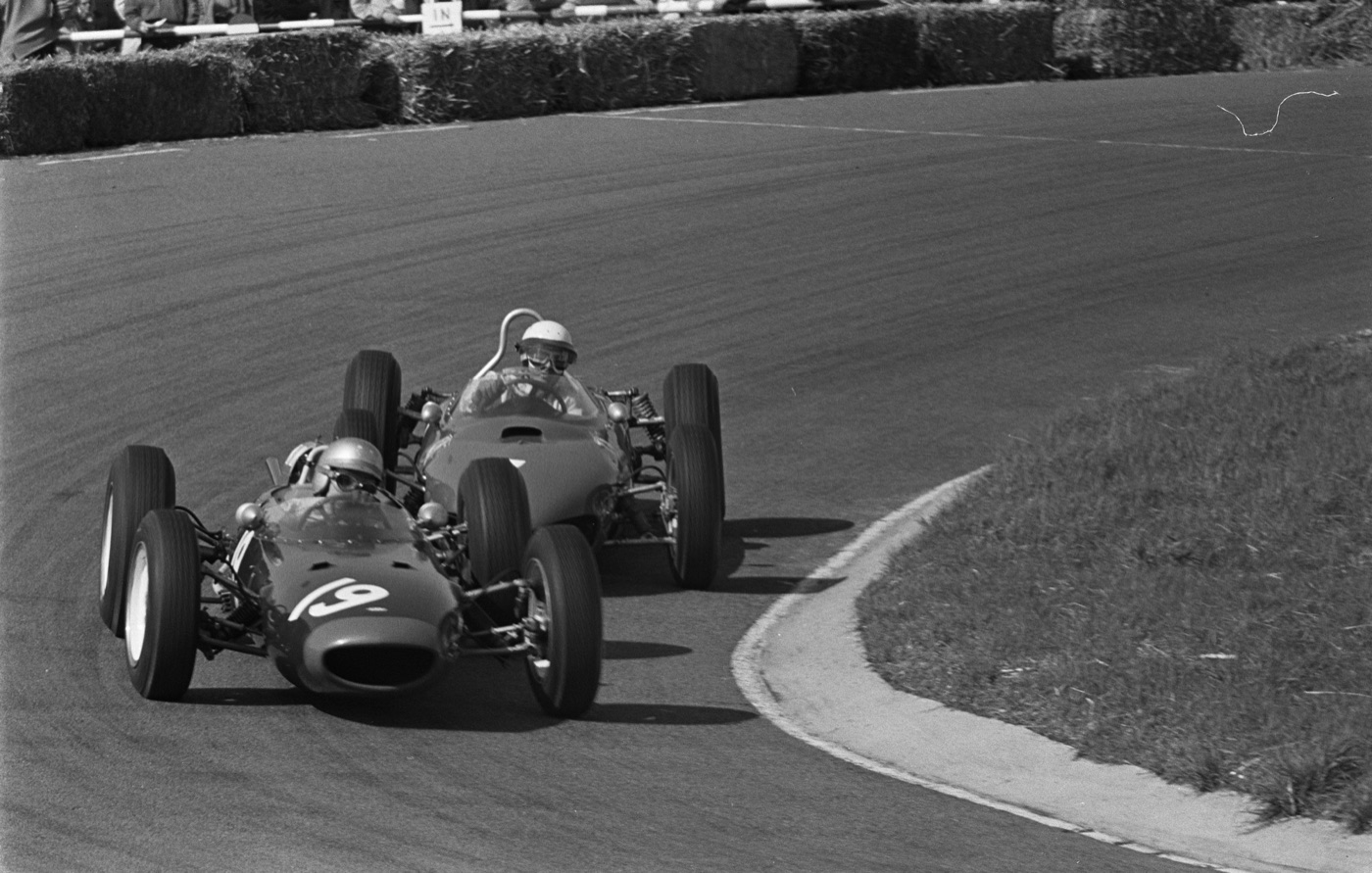
Surtees drove for Ferrari from 1963 to the middle of 1966, won the 1964 World Championship for the team by one point, and won four of his six Grands Prix in its cars.
1963: first Grand Prix win at the Nürburgring
His first race for Ferrari was the 1963 Sebring 12 Hours, which he won with Lodovico Scarfiotti after team manager Eugenio Dragoni gave their car to Nino Vaccarella and Willy Mairesse and protested the result; Surtees said the lap chart kept by his wife Pat agreed with the official one. In the V6 Ferrari 156 he won the German Grand Prix at the Nürburgring on 4 August 1963, beating Clark, and he won the Nürburgring 1000km with Mairesse in a 250P.
How John Surtees won the 1964 title in Mexico
Surtees won the 1964 championship at the last round in Mexico City on 25 October by finishing second, which gave him 40 points to Graham Hill’s 39 (Formula 1’s 1964 standings). Hill arrived with 39 points but would have had to drop three if he scored again; Surtees had 34 and Clark 30. Grandprix.com’s race report records that Surtees and Bandini started from the second row in blue and white Ferraris. Surtees was 13th after the first lap with a misfire. Lorenzo Bandini, his team-mate, hit Hill’s BRM at the hairpin on lap 31. Clark led until his Lotus’s engine seized on the last lap, and Bandini let Surtees through to second behind Dan Gurney (Formula 1’s 1964 Mexican Grand Prix result). Motor Sport’s report of December 1964 noted that “half the crowd and Mexican officials were still trying to understand why there was more fuss being made of the second man than the first”.
His wins that year were the German Grand Prix on 2 August and the Italian Grand Prix at Monza on 6 September, both in the V8 Ferrari 158.
The Mosport accident, 1965
In September 1965 a front upright broke on a Lola T70 he was trying in practice at Mosport, Canada, and the car went off and rolled. He had spinal injuries, a split pelvis and ruptured kidneys. “I was four inches shorter on one side than the other,” he said in 2015; his surgeon and a registrar pulled the difference down to about half an inch. He was in hospital until the New Year and had to be lifted into the new 3-litre Ferrari with an engine hoist for its first test at Modena.
1966: Spa, Le Mans and leaving Ferrari
Back racing in 1966, he won the Monza 1000km with Mike Parkes in the Ferrari P3, then the Belgian Grand Prix at Spa on 12 June in the rain. At Le Mans a few days later Dragoni chose Scarfiotti, a relative of the Fiat chairman Gianni Agnelli, to start the race in Surtees’s car. Surtees drove to Maranello and told Enzo Ferrari he had joined to win races and not to play politics. “That was our divorce,” he said.
Cooper, Can-Am, Honda and BRM
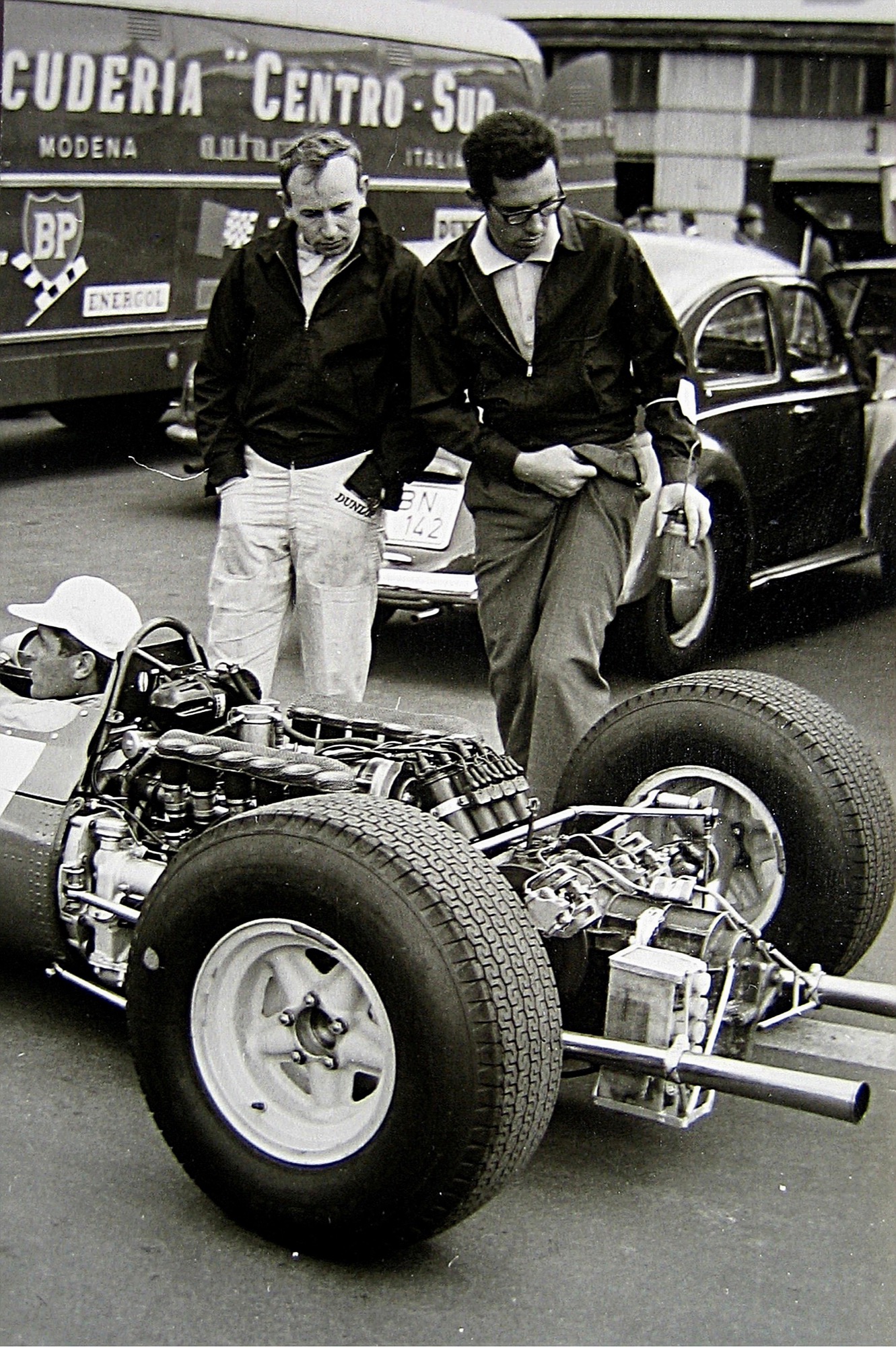
Between the middle of 1966 and 1969 Surtees drove for Cooper, Honda and BRM in Formula One, won two more Grands Prix and took the first Can-Am title.
Cooper-Maserati and Mexico 1966
Roy Salvadori signed him for Cooper-Maserati straight after he left Ferrari, and he did not miss a Grand Prix. He was second at the Nürburgring, third at Watkins Glen, and won the Mexican Grand Prix on 23 October from pole position. He finished second in the 1966 World Championship with 28 points, behind Jack Brabham.
Can-Am champion in 1966
Alongside Formula One he ran his own Lola T70 as Team Surtees in the first Can-Am season, with one mechanic, Malcolm Malone. He won three of the six rounds and the title, ahead of Mark Donohue and Bruce McLaren. Motor Sport puts his prize money at about $70,000, “more than if he’d won every Grand Prix that season”.
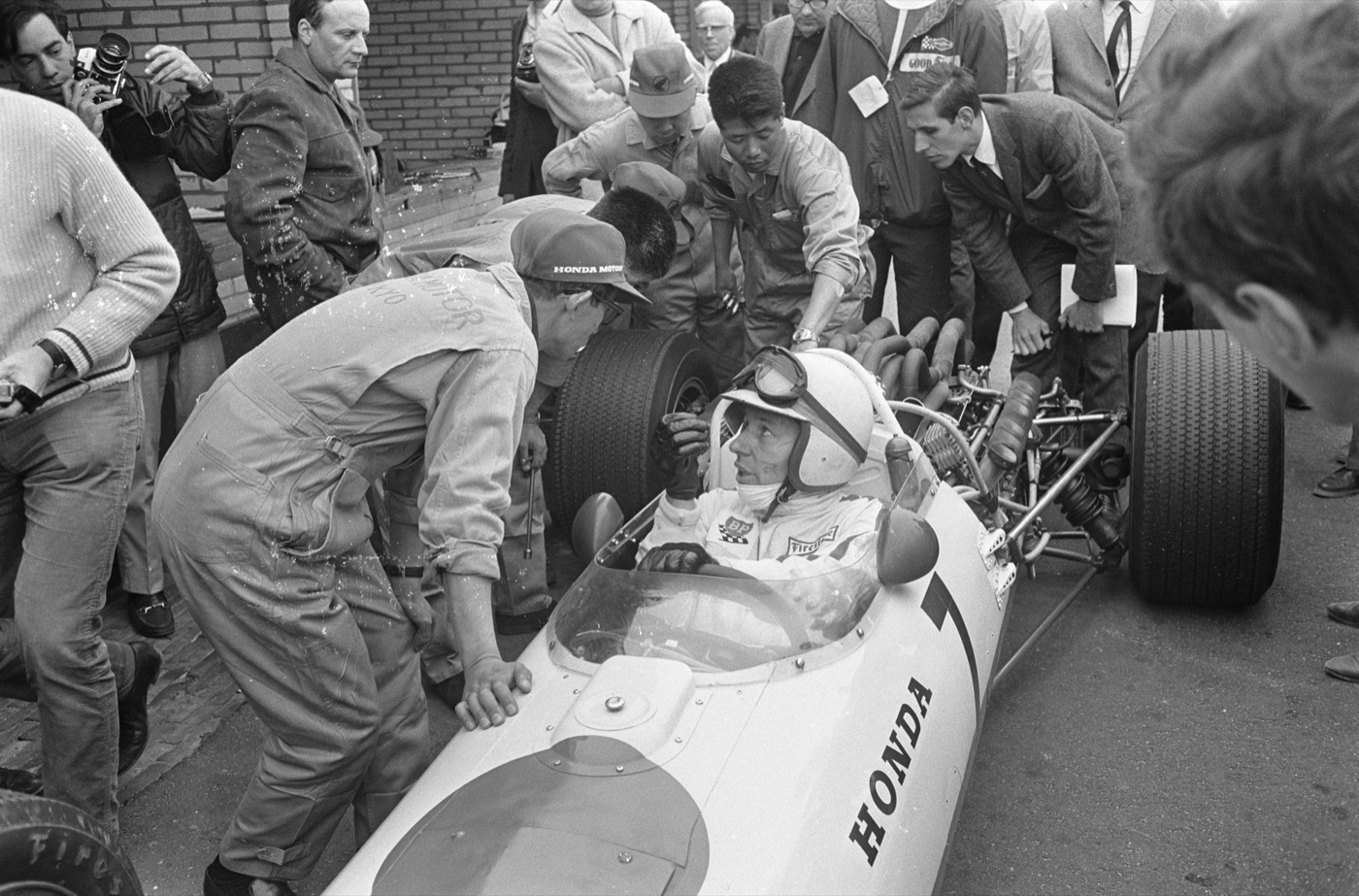
Honda and the 1967 Italian Grand Prix
Honda’s Yoshio Nakamura asked him to join after the 1966 Mexican race, saying the company would stop racing otherwise. The RA273 was heavy, so mid-season Surtees suggested a lighter car built round a Lola Indianapolis monocoque; the RA300 was finished a week before the Italian Grand Prix, and he won at Monza on 10 September 1967, beating Brabham by about a fifth of a second. He was fourth in the 1967 championship. In 1968 he was second at Rouen and third at Watkins Glen. Honda withdrew at the end of the year, after Jo Schlesser was killed at Rouen in its air-cooled V8 car, which Surtees had refused to race.
BRM, 1969
He joined BRM for 1969 and was 11th in the championship, with third place at Watkins Glen his best result. He blamed the team’s politics under Louis Stanley. He also left Jim Hall’s Chaparral Can-Am team after three races in the 2H. Lying in hospital with viral pneumonia that autumn, he decided “I was not going to be dependent on other people any more”.
John Surtees’s Formula One results by season
Surtees started 111 World Championship Grands Prix between Monaco 1960 and Monza 1972, with six wins, eight pole positions, 11 fastest laps and 24 podium finishes, according to StatsF1.
| Season | Car | Wins | Points | Position |
|---|---|---|---|---|
| 1960 | Lotus-Climax | 0 | 6 | 12th |
| 1961 | Cooper-Climax | 0 | 4 | 11th |
| 1962 | Lola-Climax | 0 | 19 | 4th |
| 1963 | Ferrari | 1 (Germany) | 22 | 4th |
| 1964 | Ferrari | 2 (Germany, Italy) | 40 | Champion |
| 1965 | Ferrari | 0 | 17 | 5th |
| 1966 | Ferrari, Cooper-Maserati | 2 (Belgium, Mexico) | 28 | 2nd |
| 1967 | Honda | 1 (Italy) | 20 | 4th |
| 1968 | Honda | 0 | 12 | 7th |
| 1969 | BRM | 0 | 6 | 11th |
| 1970 | McLaren-Ford, Surtees-Ford | 0 | 3 | 17th |
| 1971 | Surtees-Ford | 0 | 3 | 18th |
| 1972 | Surtees-Ford | 0 | 0 | Not classified |
StatsF1’s tables place him 14th in 1960, 12th in 1961, 8th in 1968, 18th in 1970 and 19th in 1971.
Surtees Racing Organisation: the team and its cars
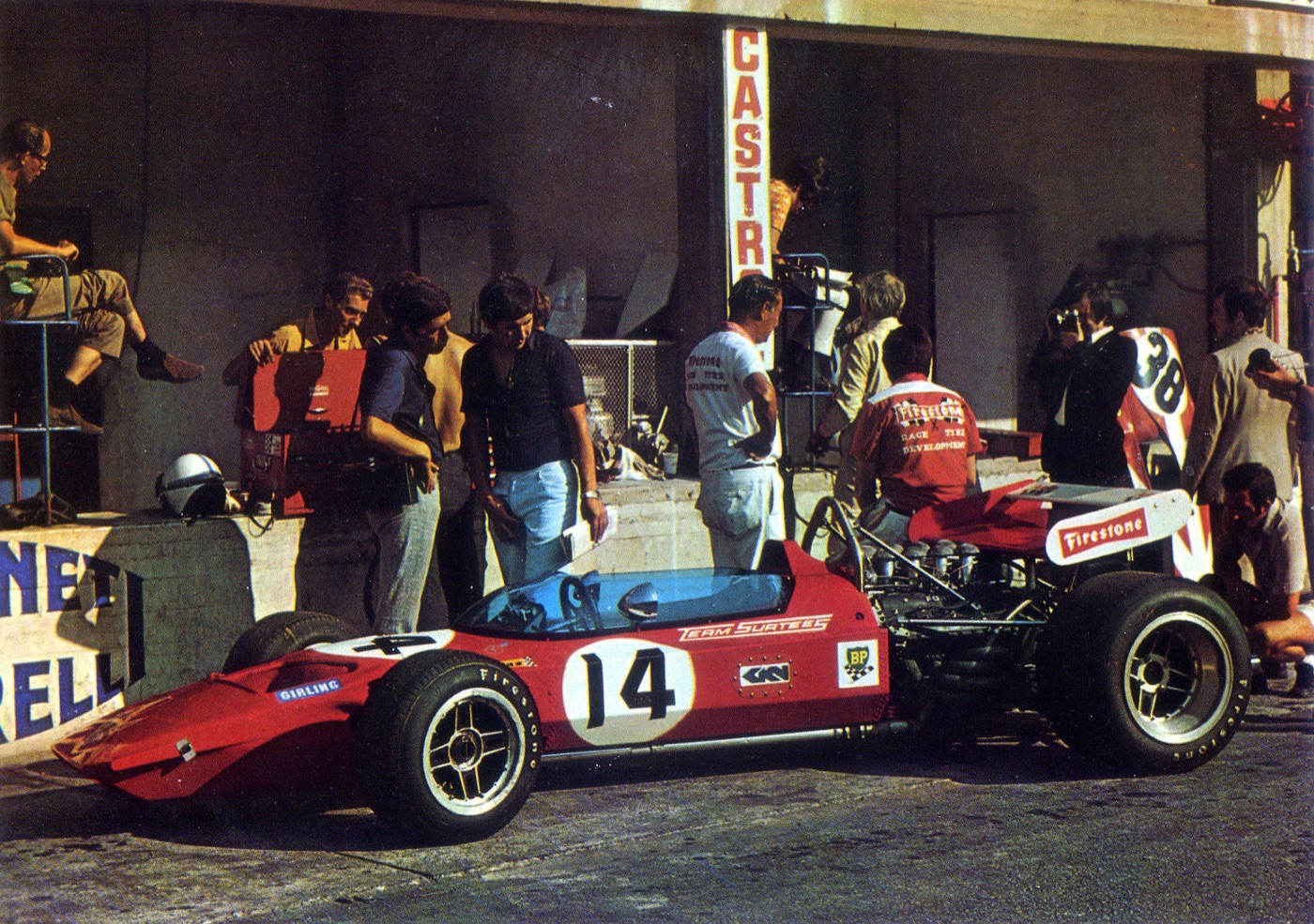
Team Surtees built and raced its own cars in Formula 5000, Formula 2 and Formula One from 1969 to 1979, from a works at Edenbridge in Kent, and Surtees says it built about 100 chassis.
From Formula 5000 to the TS7
The TS5 Formula 5000 car, adapted from a Len Terry design, took Trevor Taylor to second in the 1969 European series. The first Surtees Formula One car, the TS7, was ready in mid-1970, and Surtees scored the marque’s first championship points with it in Canada. In 1971 he won the non-championship Oulton Park Gold Cup.
Hailwood, Pace and the 1972 Formula 2 title
Mike Hailwood, another motorcycle world champion, finished second for Surtees in the 1972 Italian Grand Prix, 14.5 seconds behind Emerson Fittipaldi (Formula 1’s 1972 Italian Grand Prix result), and won that year’s European Formula 2 Championship in a Matchbox-sponsored Surtees. In the same Monza race John Surtees made his last Grand Prix start and retired after 20 laps. Carlos Pace was third for the team in Austria in 1973 and set fastest laps at the Nürburgring and the Österreichring.
Durex sponsorship and the end of the team
A sponsorship deal with Bang & Olufsen’s Belgian arm collapsed in 1974 after Surtees refused to run the son of the man who ran B&O Benelux, and the court case that followed drained the team. In 1976 the London Rubber Company sponsored the TS19 under its Durex brand; Alan Jones finished second in it at the Race of Champions, the BBC withdrew its television coverage over the sponsor, and Durex advertised the car as “The small family car”. Vittorio Brambilla drove in 1977 and 1978, with René Arnoux after Brambilla was hurt at Monza. Surtees then sold his FOCA membership to Frank Williams. The team’s last race was an Aurora series round at Silverstone in October 1979, won by Gordon Smiley in a TS20.
Life after racing: Henry, the foundation and honours
After the team closed, Surtees restored motorcycles, did a demonstration lap of the TT course on an MV, showed Mercedes-Benz museum cars around the world, and from 2009 put most of his time into the Henry Surtees Foundation. He married Jane, a nurse he had met in hospital in 1978, and they had two daughters, Edwina and Leonora, and in 1991 a son, Henry.
Henry Surtees
Henry Surtees started karting at eight, moved to Ginetta Juniors and then Formula BMW UK with Carlin, and in 2009, aged 18, raced in the new FIA Formula Two Championship. On 18 July 2009 he scored his first F2 podium at Brands Hatch (Motor Sport obituary, September 2009). The next day, Racecar.com reported, a wheel from Jack Clarke’s crashed car struck his helmet between Westfield Bend and Sheene Curve, and he died that day. Earlier that month Henry had driven his father’s Surtees TS10 Formula 2 car at the Goodwood Festival of Speed.
The Henry Surtees Foundation and Buckmore Park
Instead of flowers at Henry’s funeral, Surtees asked for donations to Headway, the head injuries charity. “Nearly £35,000 was given, and I thought, I’m going to continue with this. So the Henry Surtees Foundation came into being,” he said in 2015. The foundation has funded air ambulances, a blood transfusion service, medical training and rehabilitation chairs, and training for young people in motor industry jobs. Surtees took over Buckmore Park kart circuit in Kent, where Henry had first seen kart racing.
Honours
Surtees was appointed MBE in 1959, the year he was also BBC Sports Personality of the Year, according to the Auto-Cycle Union’s obituary. Top Gear reported in January 2016 that he was made OBE in 2008 and CBE in the 2016 New Year Honours for services to motorsport. “It is recognition, as far as I am concerned, not only for myself but for the world of two and four wheeled sport and the teams I have worked with,” he said.
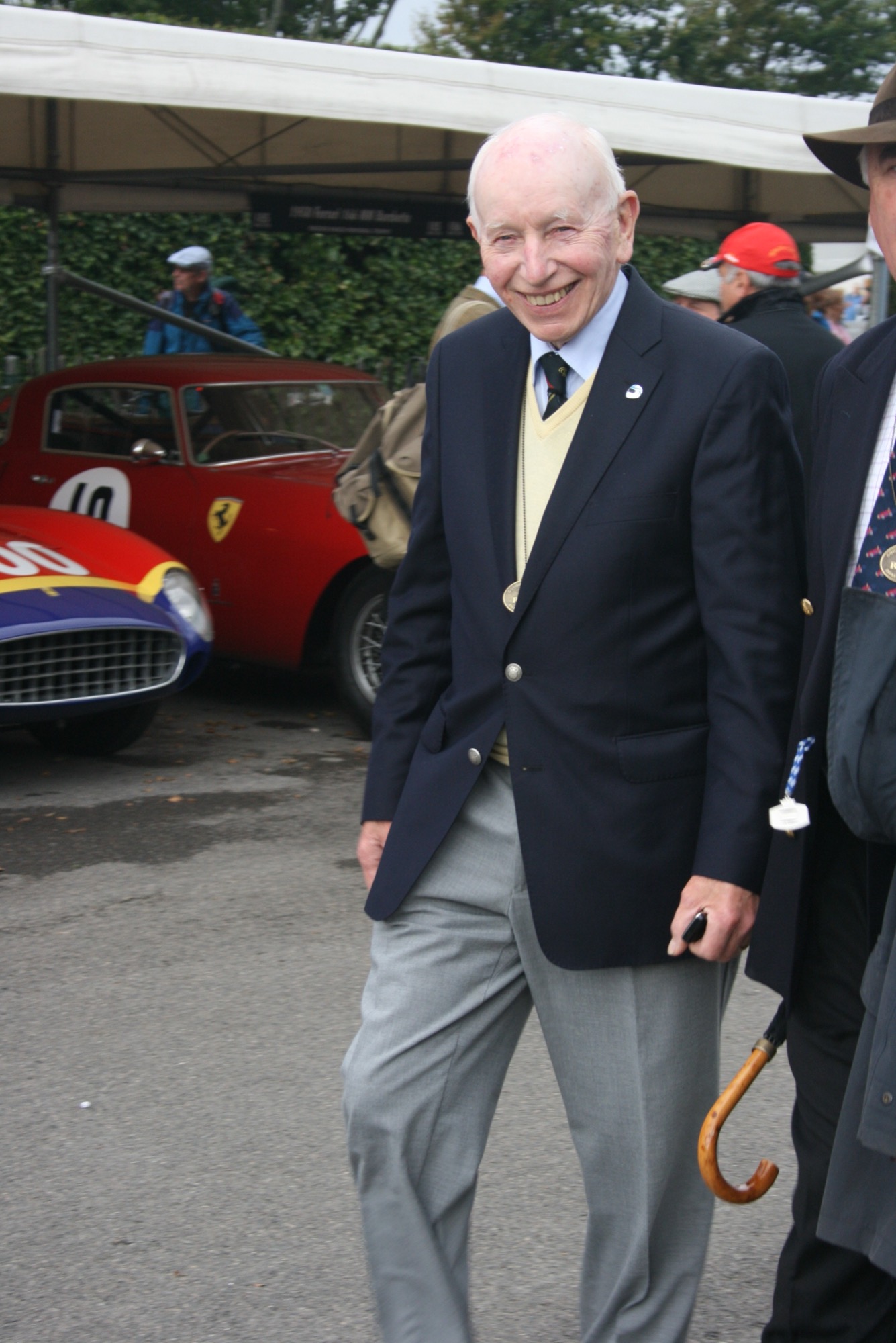
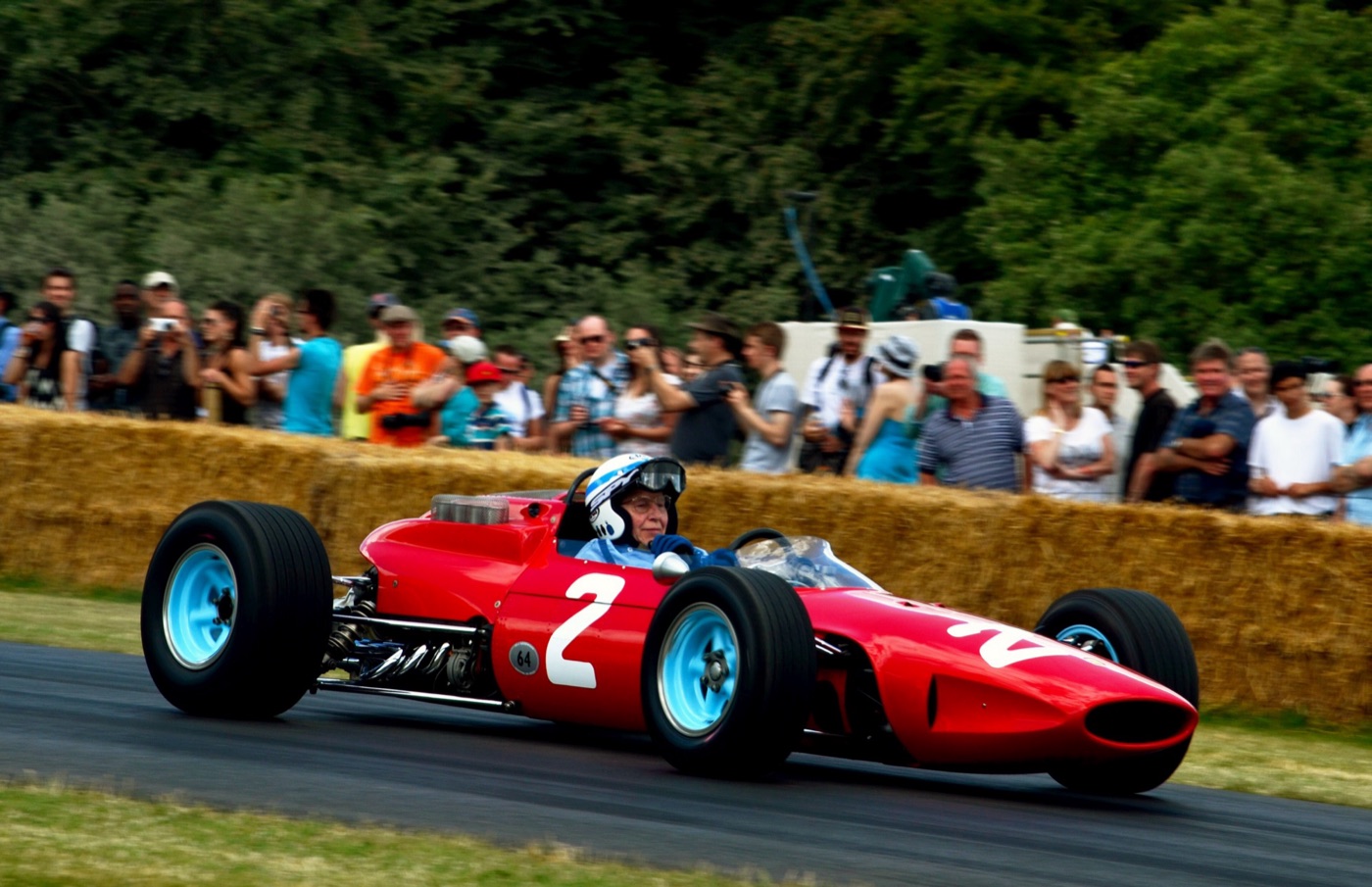
He kept driving his old cars in public into his eighties. SkiddMark reported in June 2013 that he would drive the Honda RA300, his 1967 Italian Grand Prix winner, at that year’s Goodwood Festival of Speed.
How did John Surtees die?
John Surtees died on the afternoon of Friday 10 March 2017, aged 83, after a short period in intensive care at St George’s Hospital in London, where he had been admitted in February with an existing respiratory condition, according to Formula 1 and the Auto-Cycle Union. His family said: “We deeply mourn the loss of such an incredible, kind and loving man as well as celebrate his amazing life.” He was survived by his wife Jane and their daughters Leonora and Edwina.
His funeral was held at Worth Abbey in Sussex later that month. Reuters reported Nigel Mansell calling him “a gentle, massive giant”, and Red Bull’s Christian Horner saying Surtees used to ring or email him with observations after Grands Prix that Sebastian Vettel had won.
Has anyone else won world titles on two and four wheels?
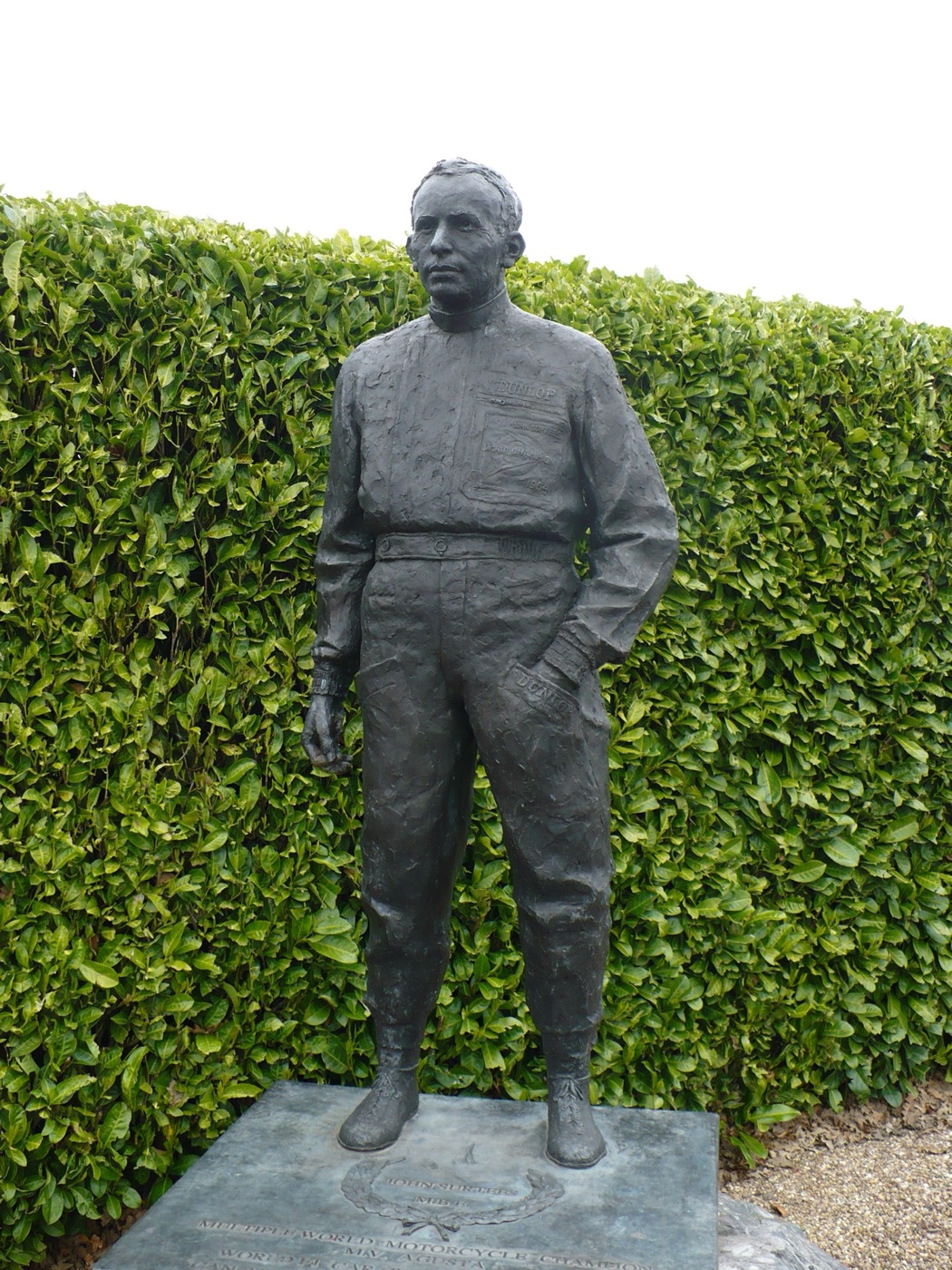
No one else has won both the motorcycle World Championship and the Formula One World Championship. Simon Taylor’s Motor Sport lunch lists the near misses: Geoff Duke moved to cars without the same success, and Tazio Nuvolari won the European 350cc motorcycle title for Bianchi in 1925 before his car racing career, in a period before the Formula One World Championship existed. MotoGP’s biography of Surtees says the double “has not been repeated to this day”.
What Surtees said about driving and Ferrari
At Snetterton in about 2007, watching a young driver in a Ginetta take the Russell chicane, Surtees heard the man beside him remark that the driver was creating too much oversteer, and replied: “He has to.” SkiddMark printed the exchange in February 2014.
Writing in October 2014, as Sebastian Vettel prepared to leave Red Bull for Ferrari, SkiddMark quoted Surtees on when to join Maranello: “The best time to join an Italian team is not when they’re winning, but when they’re down, but they need to understand that they’re down and they need to understand that you’re there to lead and deliver change.”
Questions
How many world championships did John Surtees win?
Eight: seven motorcycle world titles for MV Agusta (500cc in 1956, 1958, 1959 and 1960; 350cc in 1958, 1959 and 1960) and the 1964 Formula One World Championship with Ferrari. He also won the first Can-Am championship in 1966.
How old was John Surtees when he died?
He was 83. Born on 11 February 1934, he died at St George’s Hospital in London on 10 March 2017.
How many Grands Prix did John Surtees win?
Six in Formula One (Germany 1963 and 1964, Italy 1964 and 1967, Belgium and Mexico 1966) and 38 world championship motorcycle Grands Prix, according to Formula 1 and MotoGP’s records.
What happened to John Surtees’s son Henry?
Henry Surtees, 18, was killed at Brands Hatch on 19 July 2009 when a wheel from another car hit his helmet during a Formula Two race. His father set up the Henry Surtees Foundation in his memory.
Who did John Surtees beat to the 1964 title?
Graham Hill, by one point (40 to 39), with Jim Clark third. Hill was delayed by a collision with Surtees’s team-mate Lorenzo Bandini in Mexico, and Clark’s engine failed on the last lap.
What was John Surtees’s nickname?
Two Italian ones. Ferrari’s magazine calls him the “Son of the Wind” (figlio del vento), and Motor Sport wrote in 2009 that Italians called him “Il Grande John”.
Did John Surtees race at Le Mans?
Yes, for Ferrari. In 1963 he and Willy Mairesse led into the 19th hour before their 250P caught fire, and in 1966 he left Ferrari at Le Mans after the team manager chose another driver to start in his car.
Sources
- MotoGP, John Surtees rider profile and official statistics: birth date and place, Thruxton 1951, Duke’s 1956 ban, the Senior TT hat-trick, 38 wins, 45 podiums, 49 starts and the season table.
- Simon Taylor, “Lunch with John Surtees”, Motor Sport, October 2015, pp. 68–76: Surtees’s own account of his family, Vincent, MV Agusta, the TTs, Lotus, Lola, Ferrari, Mosport, Le Mans 1966, Cooper, Can-Am, Honda, BRM, Team Surtees, Henry and the foundation; Nuvolari and Duke.
- Formula 1, “John Surtees CBE, 1934–2017”, 10 March 2017: his death, the family statement, six wins, 12 seasons.
- Formula 1, official drivers’ standings, 1960–1972 (one page per season) and race results for the 1960 British, 1964 Mexican and 1972 Italian Grands Prix: positions, points and wins in the table.
- StatsF1, John Surtees: full name, birthplace, 111 starts, poles, fastest laps, podiums, first and last Grands Prix.
- Grandprix.com, “Mexican GP, 1964”: the points before the race, the blue and white Ferraris, the race and result.
- Motor Sport, 1964 Mexican Grand Prix report, December 1964: lap 31, the last lap and the crowd’s reaction.
- Motor Sport, obituary of Henry Surtees, September 2009: Henry’s career, the Brands Hatch podium and his death.
- BBC News, John Surtees’s BMW 507 sold, July 2018: MV Agusta’s 1959 letter and the £3,809,500 sale.
- Auto-Cycle Union, “John Surtees CBE, 1934–2017”, March 2017: St George’s Hospital, MBE and Sports Personality of the Year 1959, Buckmore Park.
- Top Gear, CBE in the New Year Honours, January 2016: OBE 2008, CBE 2016 and his quote.
- Ferrari, “Surtees, an ace on two and four wheels”, 9 October 2019: the “Son of the Wind” nickname.
- Motor Sport, “From MV Agusta to Ferrari”, 2009: “Il Grande John”.
- Reuters via SBS News, “Mansell joins tributes at Surtees funeral”, 29 March 2017: Worth Abbey, Mansell and Horner.
- Racecar.com, “Henry Surtees dies after F2 race crash”, July 2009: Jack Clarke’s wheel, Westfield Bend and Sheene Curve.
- SkiddMark: “Exclusive interview with John Surtees: The Marques and the Champion” (February 2014); “Auf Wiedersehen Vettel: reflections on a past champion” (October 2014), with Surtees’s comments on Ferrari; and the Goodwood Festival of Speed driver list (June 2013).