Karun Chandhok: F1 driver, Le Mans racer and Sky Sports analyst
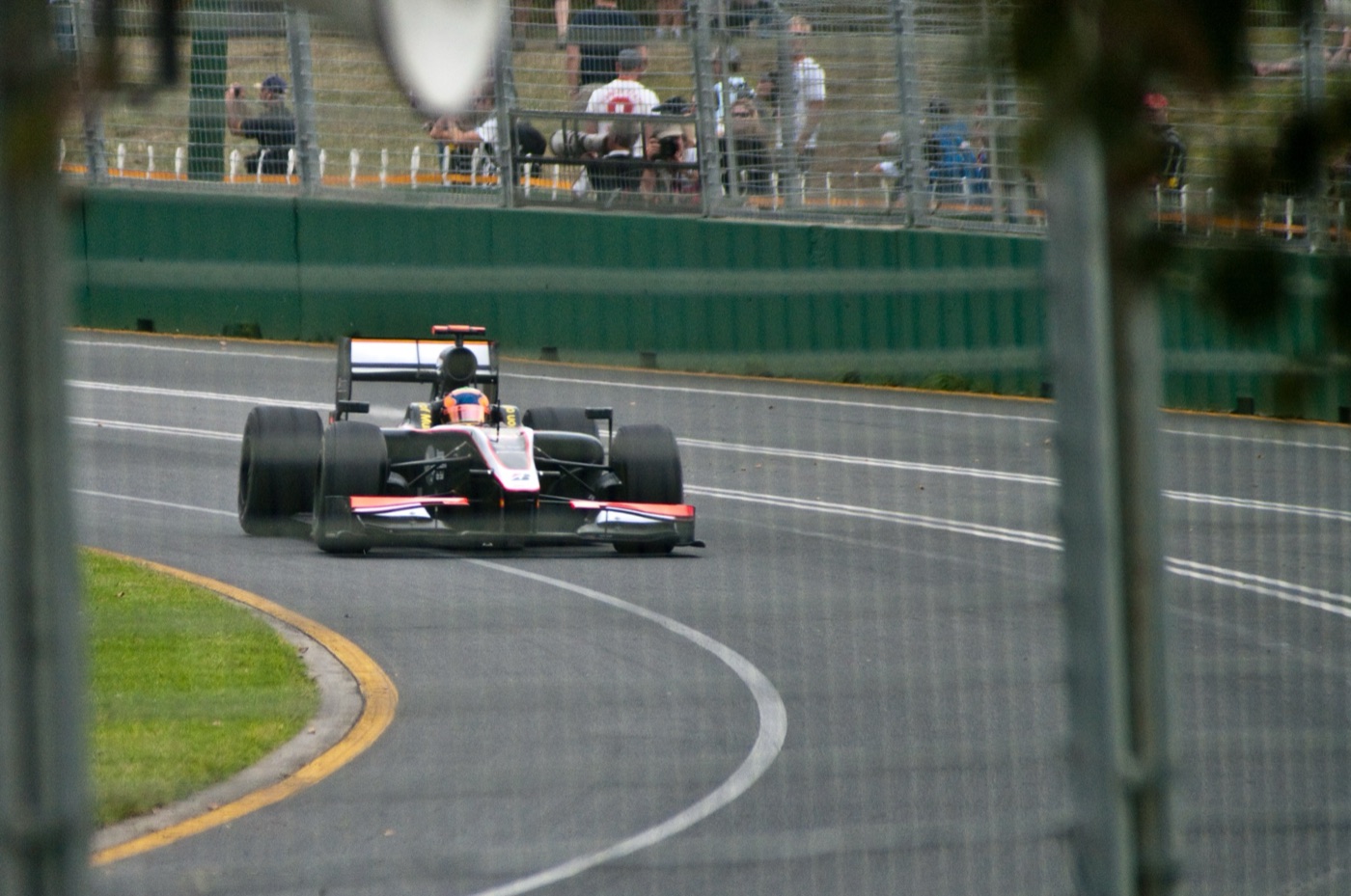
Karun Chandhok, born in Chennai on 19 January 1984, is an Indian racing driver and broadcaster who started 11 Formula One Grands Prix for HRT and Team Lotus in 2010 and 2011, the second Indian after Narain Karthikeyan to race in the world championship. He went on to finish sixth overall at the 2012 Le Mans 24 Hours, raced for Mahindra in the first season of Formula E, and is now a Sky Sports F1 analyst and a Motor Sport columnist who has demonstrated Williams’s historic Formula One cars since 2016.
Asked by SkiddMark at the Autosport International show in Birmingham in January 2020 whether he would rather have raced a Maserati 250F or a Cooper T51, he said neither, and picked a 1967 Lola Indianapolis car, the only one of the three with seat belts.
Early life and a racing family
Chandhok grew up in Chennai (then Madras), born into a motor racing family in which his father, grandfather and grandmother all raced, according to his biography for the FIA. His father, Vicky Chandhok, was president of the Federation of Motor Sports Clubs of India (FMSCI), and was re-elected to the post in January 2012, as CarTrade reported. In October 2011 SkiddMark’s report on the first Indian Grand Prix named him, with Vijay Mallya of Force India, as one of the two men who had lobbied for years to bring Formula One to India.
Formula Maruti and Formula Asia titles
He won the Indian Formula Maruti championship in 2000, aged 16, and the Formula Asia championship (Formula 2000 Asia) in 2001 with eight wins from 14 races, as StatsF1’s driver record sets out. The Asian title earned him a Formula 3 test in the UK with Carlin Motorsport.
Junior career: Formula 3 to GP2
Chandhok moved to Britain in 2002 and spent the next eight seasons in junior single-seaters, winning one more title (Formula V6 Asia in 2006) and two GP2 races. Motorsport UK later described him as “a multiple race winner and podium finisher in GP2” and a test driver for Red Bull Racing in 2007 and 2008. “I moved to England from India nearly twenty years ago because the belief at the time was that if you wanted to get to Formula 1, you had to come and race in the UK,” he said in Motorsport UK’s announcement of 16 June 2021.
British Formula 3 and A1 Grand Prix
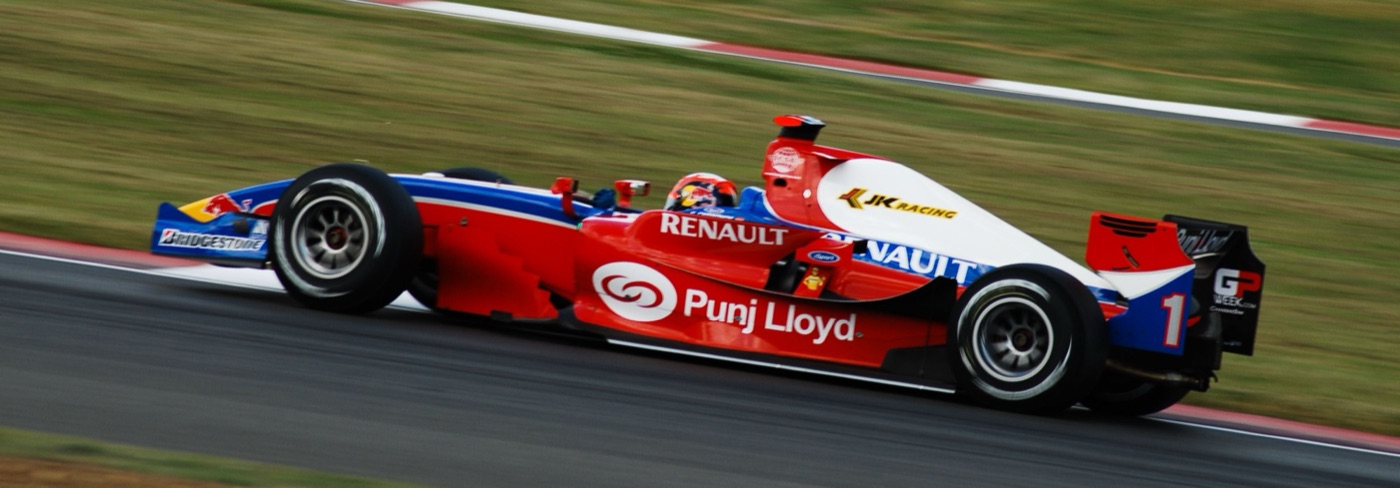
He raced in the National class of British Formula 3 with T-Sport in 2002 and 2003, finishing sixth and then third with seven wins, and moved up to the main class in 2004, where he was 16th according to StatsF1 (other season tables give 14th, with 37 points). In 2005 he raced in Formula Renault 3.5 with RC Motorsport without scoring a point, and drove three rounds for A1 Team India in the new A1 Grand Prix series before Armaan Ebrahim took over the car.
Formula V6 Asia champion
Back in Asia in 2006, driving for E-Rain, he won seven of the 12 races and the first Formula V6 Asia by Renault title (StatsF1). That took him to GP2, the category below Formula One.
GP2 wins at Spa and Hockenheim
In his first GP2 season, 2007 with the Italian Durango team, Chandhok took pole position in Turkey and won the sprint race at Spa-Francorchamps, which made him the first Indian to win a GP2 race, as Crash.net reported on 19 December 2007. The same report confirmed his move to iSport International, the reigning champion team, for 2008, his place on the Red Bull Junior Team, and his first Formula One test, with Red Bull Racing that November.
At iSport his team-mate was Bruno Senna. Chandhok won the Hockenheim sprint race on 20 July 2008, re-passing Lucas di Grassi on the third lap after losing the lead at the first corner, in Crash.net’s race report, and finished the season tenth with three podiums, while Senna was runner-up. A third season, with Ocean Racing Technology in 2009, brought one podium, at Silverstone, and 18th place in the standings (StatsF1).
Formula One career with HRT and Team Lotus
Chandhok’s Formula One career ran to 11 Grands Prix: ten for HRT in the first half of 2010 and one for Team Lotus at the 2011 German Grand Prix. He scored no points; his best finish was 14th, in Australia and at Monaco in 2010, and his best grid position 20th (StatsF1).
HRT in 2010: a debut without a test
The new Spanish team, the Hispania Racing team (HRT), until then called Campos Meta, confirmed Chandhok alongside Senna on 4 March 2010, ten days before the season opener in Bahrain. “It will be great for the sport to have an Indian driver on the grid for the first Indian Grand Prix,” the team principal, Colin Kolles, said in Al Jazeera’s report of the signing. The Dallara-built HRT F110, with a Cosworth V8, had missed all of February’s testing. Bernie Ecclestone, who ran Formula One, had backed Chandhok for months. “Bernie has always been a superb pillar of support to me and my family,” Chandhok said after the signing, in autoevolution’s report.
In Bahrain his car was not ready for any of the practice sessions, and a hydraulic failure stopped it again on Saturday morning. Chandhok drove it for the first time in qualifying, 1.664 seconds slower than Senna. “The session had already started when the floor was being bolted on,” he said, as Crash.net reported on 13 March 2010. “I can’t remember anyone in the history of F1 who has gone straight into qualifying on their debut, without even having done a shakedown of the car.”
Both HRTs started from the pit lane, and Chandhok spun off on his first flying lap. “I just caught a bump,” he told Adam Cooper’s F1 Blog afterwards. “I found a bump that I didn’t know existed because I’d not driven the new part of the circuit more than four timed laps in qualy.”
Two weeks later in Australia, at Albert Park in Melbourne, he finished 14th, five laps down, while Senna retired, which gave HRT its first finish (Formula 1’s official result). He beat Senna in Malaysia, 15th to 16th, and was classified 14th at Monaco after a collision with Jarno Trulli’s Lotus. After the British Grand Prix in July HRT replaced him with Sakon Yamamoto, who brought money to the team, as GrandPrix.com noted in July 2011.
Team Lotus reserve and the 2011 German Grand Prix
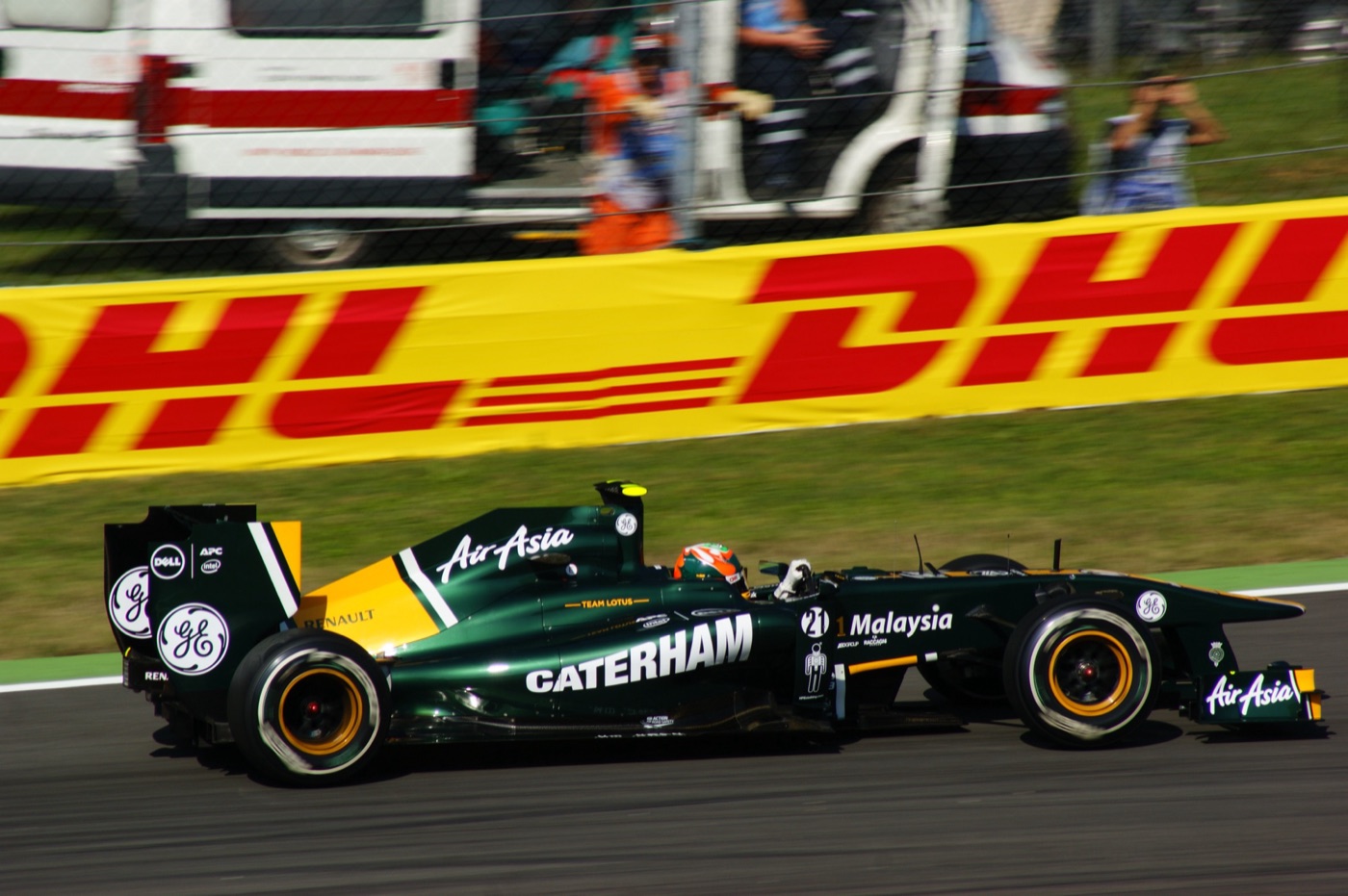
For 2011 Chandhok joined Team Lotus as its reserve driver and drove the T128 in Friday practice at the Australian, Turkish, European and British Grands Prix, nine Friday sessions in all that season (StatsF1). On 21 July 2011 the team announced he would replace Trulli for one race, the German Grand Prix at the Nürburgring, according to Autosport’s report. Trulli had struggled all season with the car’s power steering, and the team’s chief technical officer, Mike Gascoyne, told GrandPrix.com it would compare Chandhok’s feedback with Trulli’s and Heikki Kovalainen’s.
Chandhok finished 20th, four laps behind the winner, with Kovalainen 16th, in the official classification of what proved to be his last Grand Prix.
Why he missed the first Indian Grand Prix
GrandPrix.com reported in July 2011 that a good German weekend could earn him another race at the first Indian Grand Prix that October. It did not happen: Team Lotus did not run him, and India’s driver in the race was Narain Karthikeyan, who finished 17th for HRT (official result). Chandhok spent the week before the race promoting it: SkiddMark reported that he gave more than 50 one-to-one interviews to Indian media in the build-up.
Le Mans and sports car racing
From 2012 Chandhok turned to endurance racing in sports cars. He started the Le Mans 24 Hours five times between 2012 and 2017, finishing three times in the top six of his class, and his best result was sixth overall on his debut.
Sixth overall with JRM in 2012
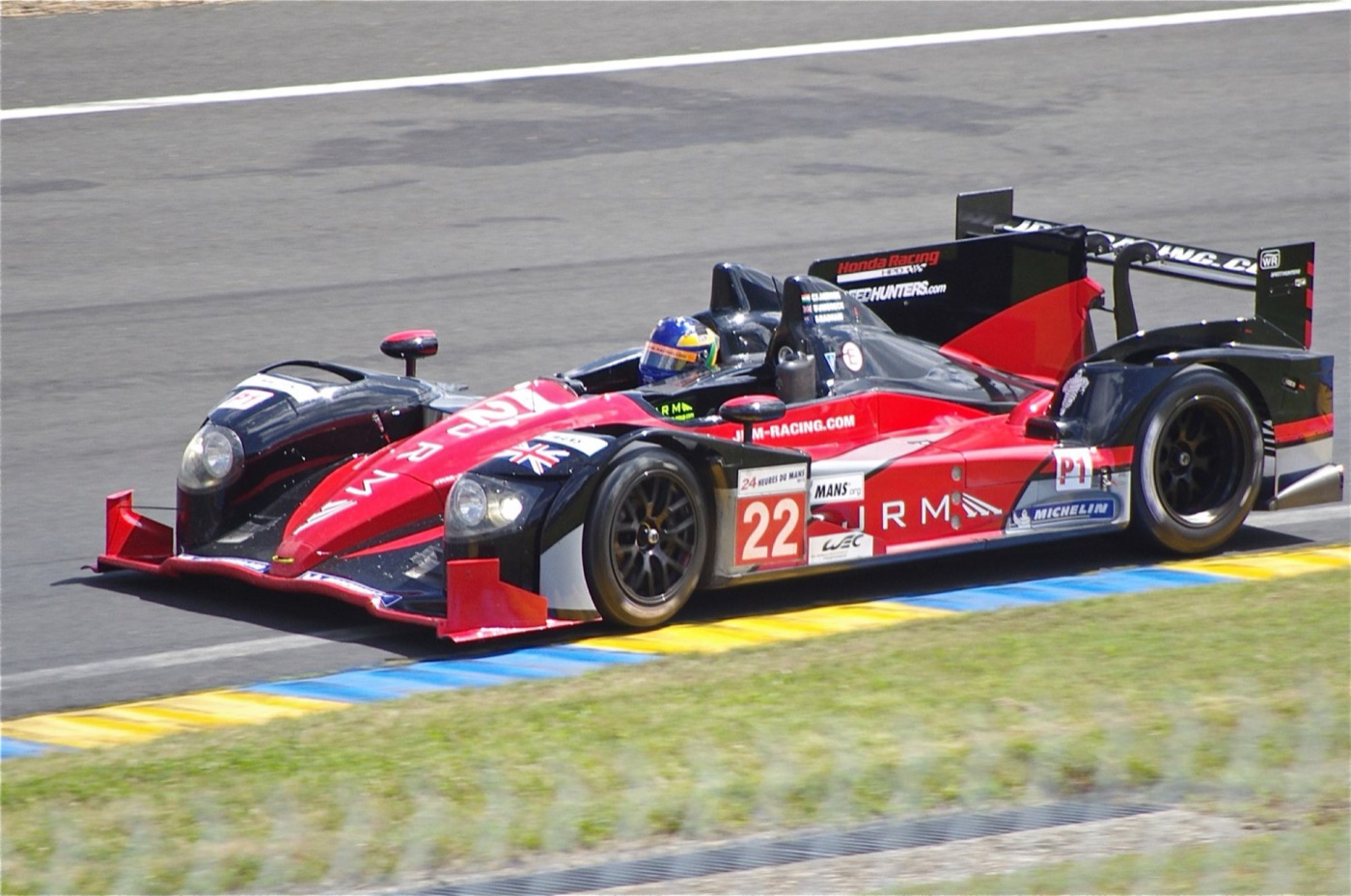
Chandhok joined the British team JRM Racing for the first season of the World Endurance Championship, sharing a Honda-engined HPD ARX-03a LMP1 car with David Brabham, the 2009 Le Mans winner, and Peter Dumbreck. SkiddMark’s preview that June listed the car among Michelin’s customers for the race. The Automobile Club de l’Ouest’s report records that the number 22 car finished sixth overall and second of the privateers after 357 laps, and calls Chandhok “the first-ever Indian to compete in the race”.
His first stint was four runs of fuel back to back. A clutch problem at a stop on lap 169 dropped the car from eighth to 12th. “I ended up doing the graveyard shift from 2 – 5am, which was very special and exhausting in equal measure,” he said after the race. He told Motor Sport in its September 2012 issue that the last hour of that shift was “probably my hardest ever in a race car because at 5am you’ve been up for 22 hours and you’ve done three grand prix distances”. He set the fastest race lap of the three JRM drivers, the magazine noted.
Across the 2012 season the JRM car’s best results were fifth at Fuji and Shanghai, in Racing Sports Cars’ results archive. SkiddMark’s report on the Six Hours of Silverstone that August pictured him at a London Eye photocall with Allan McNish, Anthony Davidson, Darren Turner and Martin and Alex Brundle.
Murphy Prototypes, GT racing and Tockwith Motorsports
In 2013 he raced a Mercedes-Benz SLS AMG for Seyffarth Motorsport in the FIA GT Series, with a best of fourth at Zandvoort, and moved to LMP2 at Le Mans with Murphy Prototypes. He drove its Oreca 03 Nissan there three times: 12th overall and sixth in class with Brendon Hartley and Mark Patterson in 2013, a retirement after 73 laps in 2014, and 13th overall and fifth in class in 2015 (Racing Sports Cars).
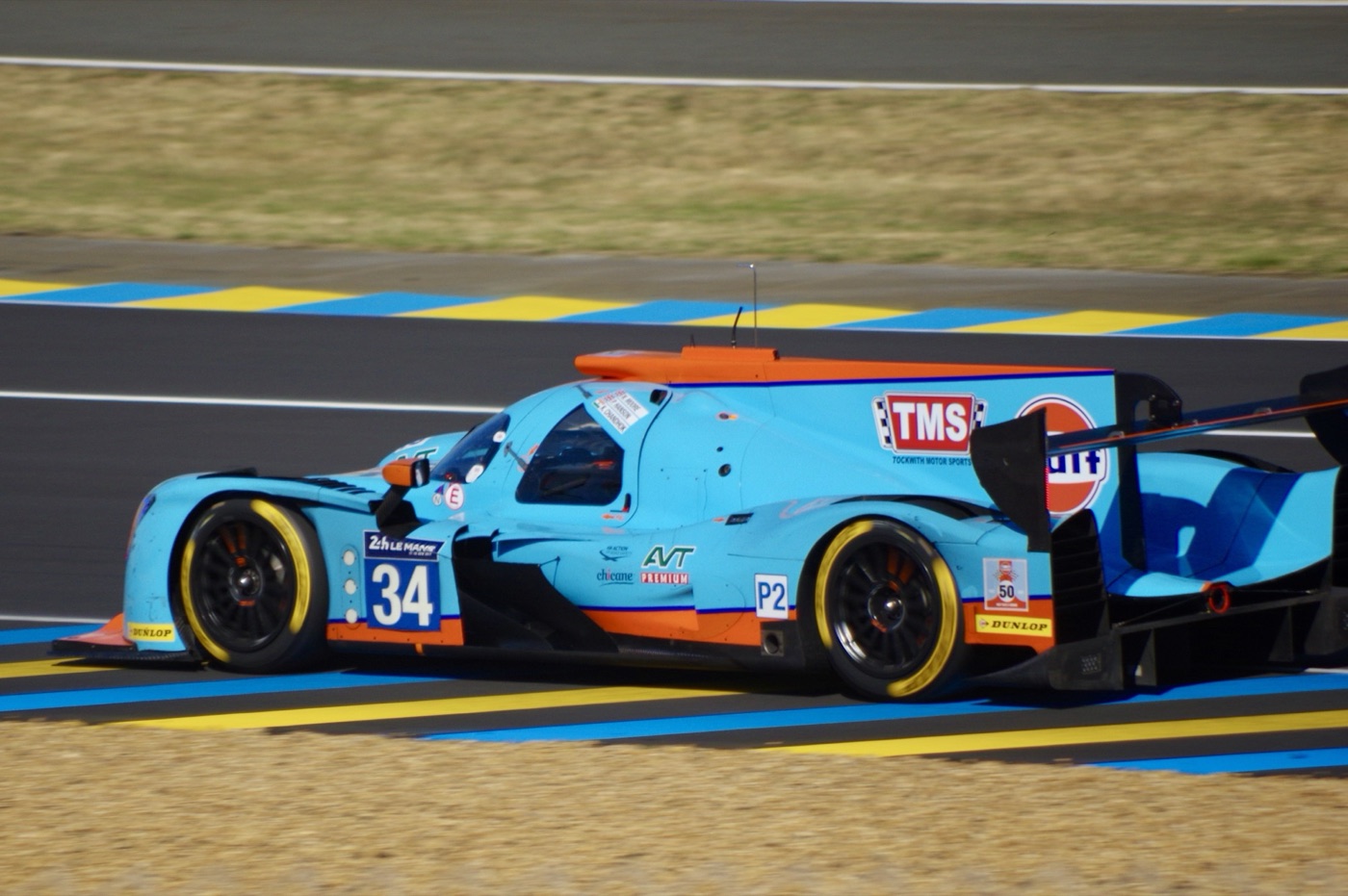
His last Le Mans so far was in 2017, in Tockwith Motorsports’ Ligier JS P217 Gibson with Phil Hanson and Nigel Moore: 11th overall and ninth in LMP2.
Formula E with Mahindra Racing
Chandhok raced for Mahindra Racing in the first Formula E season, 2014–15, with Bruno Senna again his team-mate. He had negotiated Mahindra’s entry into the championship himself, according to Motorsport UK. Mahindra was one of the ten founding teams and the only Indian one, in Mahindra’s own description.
In the first Formula E race, the Beijing ePrix in September 2014, he finished fifth in the number 5 car, 23.952 seconds behind Lucas di Grassi, in the FIA’s revised final classification. He scored again in the second race, at Putrajaya (StatsF1). For 2015–16 Mahindra kept Senna, who had finished tenth in the championship, and signed Nick Heidfeld, “with Karun Chandhok making way in the team’s line-up”, as Autosport reported in August 2015.
Karun Chandhok’s results
Across 2000–2017 he won three junior titles and two GP2 races, started 11 Grands Prix and five Le Mans 24 Hours.
Career by season
| Season | Series | Team | Result |
|---|---|---|---|
| 2000 | Formula Maruti (India) | Champion | |
| 2001 | Formula 2000 Asia | Champion, 8 wins in 14 races | |
| 2002 | British F3, National class | T-Sport | 6th |
| 2003 | British F3, National class | T-Sport | 3rd, 7 wins |
| 2004 | British F3 | T-Sport | 16th (StatsF1; other tables give 14th) |
| 2005 | Formula Renault 3.5 | RC Motorsport | No points |
| 2005–06 | A1 Grand Prix | A1 Team India | 3 rounds |
| 2006 | Formula V6 Asia by Renault | E-Rain | Champion, 7 wins in 12 races |
| 2007 | GP2 | Durango | 15th, 1 win (Spa) |
| 2008 | GP2 | iSport International | 10th, 1 win (Hockenheim) |
| 2009 | GP2 | Ocean Racing Technology | 18th |
| 2010 | Formula One | HRT | 10 starts, no points |
| 2011 | Formula One | Team Lotus | 1 start, no points |
| 2012 | FIA World Endurance Championship | JRM | Best 5th (Fuji, Shanghai); 6th at Le Mans |
| 2013 | FIA GT Series | Seyffarth Motorsport; Vita4one (Navarra) | Best 4th (Zandvoort) |
| 2014–15 | Formula E | Mahindra Racing | Best 5th (Beijing) |
Sources: StatsF1, Racing Sports Cars and the FIA, as cited above.
Formula One race by race
| Race | Team and car | Grid | Result |
|---|---|---|---|
| 2010 Bahrain | HRT F110 Cosworth | 24 | Retired, accident (lap 2) |
| 2010 Australia | HRT F110 Cosworth | 24 | 14th, 5 laps down |
| 2010 Malaysia | HRT F110 Cosworth | 22 | 15th, 3 laps down |
| 2010 China | HRT F110 Cosworth | 24 | 17th, 4 laps down |
| 2010 Spain | HRT F110 Cosworth | 24 | Retired, suspension |
| 2010 Monaco | HRT F110 Cosworth | 23 | 14th (classified), collision |
| 2010 Turkey | HRT F110 Cosworth | 24 | 20th (classified), fuel pump |
| 2010 Canada | HRT F110 Cosworth | 24 | 18th, 4 laps down |
| 2010 Europe (Valencia) | HRT F110 Cosworth | 23 | 18th, 2 laps down |
| 2010 Britain | HRT F110 Cosworth | 23 | 19th, 2 laps down |
| 2011 Germany | Team Lotus T128 Renault | 20 | 20th, 4 laps down |
Sources: Formula 1’s official race results and StatsF1’s list of his Grands Prix (grid positions and causes of retirement).
24 Hours of Le Mans
| Year | Team and car | Co-drivers | Laps | Overall | Class |
|---|---|---|---|---|---|
| 2012 | JRM, HPD ARX-03a Honda | David Brabham, Peter Dumbreck | 357 | 6th | 6th LMP1 |
| 2013 | Murphy Prototypes, Oreca 03 Nissan | Brendon Hartley, Mark Patterson | 319 | 12th | 6th LMP2 |
| 2014 | Murphy Prototypes, Oreca 03R Nissan | Nathanaël Berthon, Rodolfo González | 73 | Retired | Retired |
| 2015 | Murphy Prototypes, Oreca 03R Nissan | Nathanaël Berthon, Mark Patterson | 347 | 13th | 5th LMP2 |
| 2017 | Tockwith Motorsports, Ligier JS P217 Gibson | Phil Hanson, Nigel Moore | 351 | 11th | 9th LMP2 |
Source: Racing Sports Cars’ race results for 2012, 2013, 2014, 2015 and 2017.
Broadcasting: BBC, Channel 4 and Sky Sports F1
Chandhok began work as a commentator on motorsport while he was still racing, for British broadcasters (BBC Radio 5 Live, Sky Sports and Channel 4) and for Star Sports on TV in Asia, and Sky Sports has used him as an analyst in two spells, 2012–14 and from 2019. By the time of his FIA biography he had been a main Formula One commentator for Star Sports in Asia and for BBC Radio 5 Live in the UK, and had joined Sky Sports F1 and beIN Sports in Qatar.
Channel 4 pit lane reporter
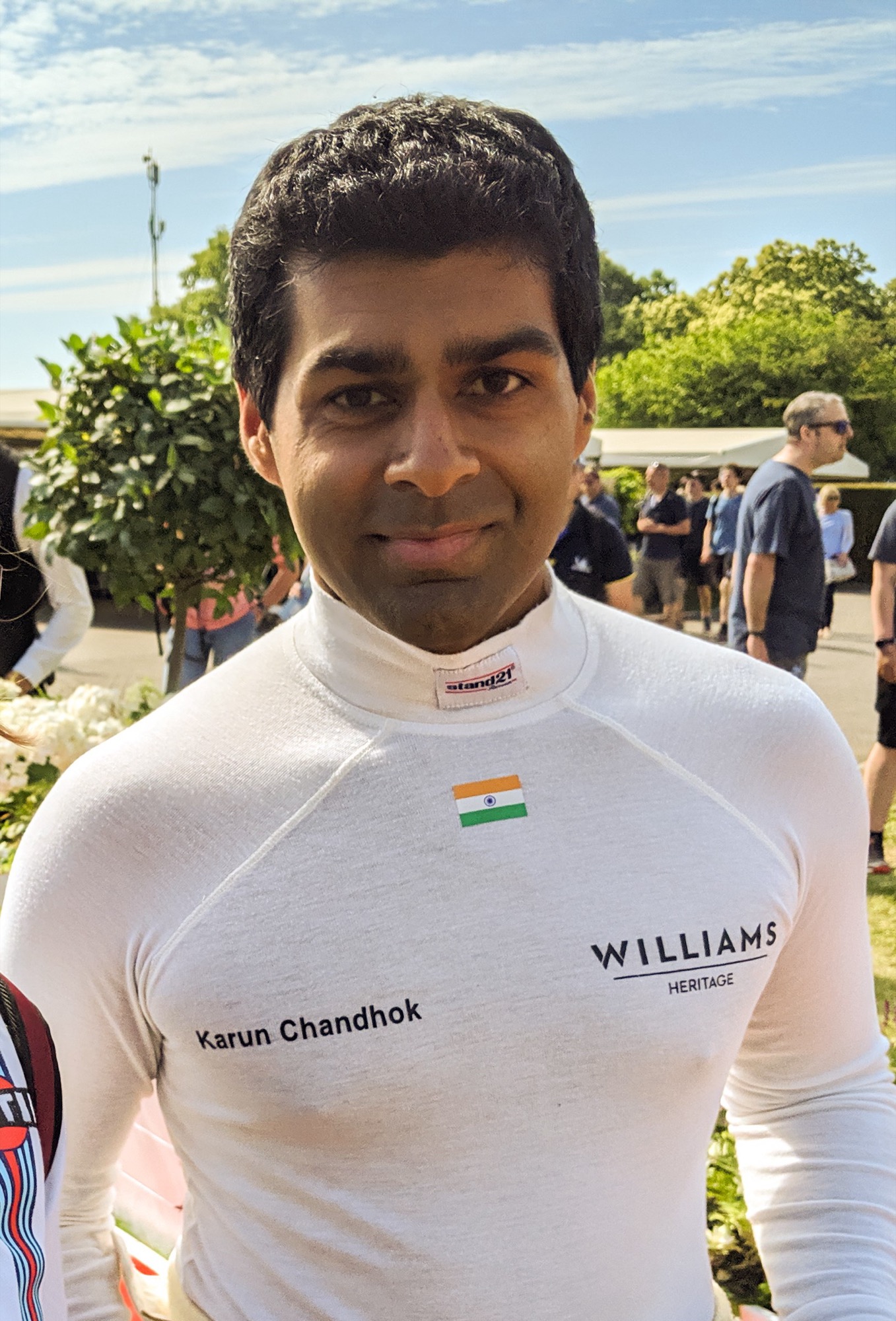
His first spell at Sky, from 2012 to 2014, was a supplementary role in which he analysed races on the SkyPad. From 2016 to 2018 he was Channel 4’s regular reporter in the pit lane at every race weekend, “a considerable step up”, as Motorsport Broadcasting put it in December 2018.
Is Karun Chandhok still on Sky Sports?
Yes. Sky announced his return on 13 December 2018, for a 2019 season in which its coverage showed every session live and exclusively, apart from the British Grand Prix. “I believe that I’ve been able to develop and offer viewers a unique perspective of someone with a technical, strategic and historical knowledge of the sport combined with the experience of 18 years of driving racing cars,” he said in Sky Sports’ announcement, which also noted that he had recently become a father. Sky’s plans for the 2026 season list him among its nine experts and analysts, working on the SkyPad with Anthony Davidson.
Writing: Motor Sport and Drive to Victory
He writes a Formula One column for Motor Sport magazine, with a driver insight after each Grand Prix going back to 2017 and pieces on the 2026 cars and their drivers. His first book, Drive to Victory: Incredible True Stories from the Fastest Sport in the World, a Formula One book for readers from nine years old featuring drivers from Lewis Hamilton and Max Verstappen to Lella Lombardi, was published by Hachette on 13 February 2025 at £9.99 (Hachette’s listing, ISBN 9781526367051).
Williams Heritage driver
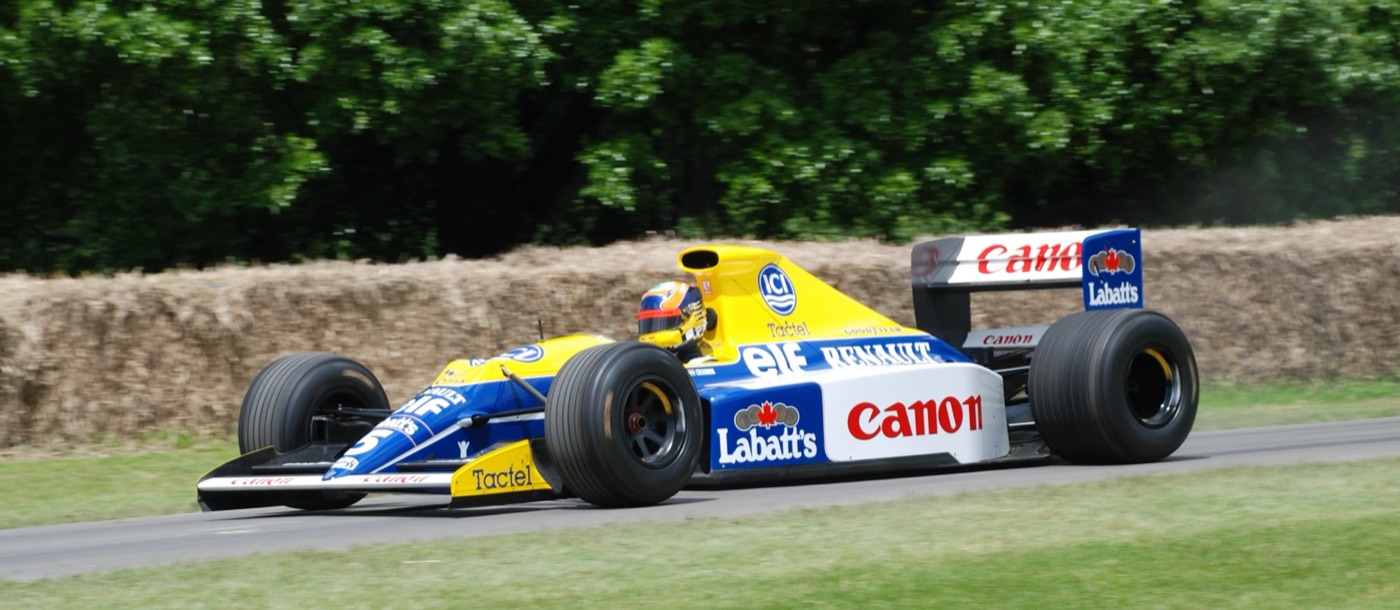
Williams named Chandhok the driver for its Heritage division in June 2016, to test and demonstrate the team’s historic Formula One cars, which date back to its first season in 1977. His first runs, announced by Formula1.com on 20 June 2016, were up the Goodwood hill that week in a 1983 FW08C and a 1990 FW13B. “He has a real passion for motorsport history and is a font of knowledge when it comes to Formula One,” said Jonathan Williams, the division’s director.
At the 2025 Goodwood Festival of Speed he drove the 1986 Williams Honda FW11, restored by Honda Racing Corporation and Williams Heritage, on the hill (Honda’s Goodwood video page).
Why he chose the Lola at Autosport International
Chandhok visited the Autosport International show at Birmingham’s NEC in January 2020, Autosport’s 70th anniversary year. The show, which opened on Thursday 9 January (Historic Racing News), had a display of cars from “70 Years of Autosport”, one or more from each decade.
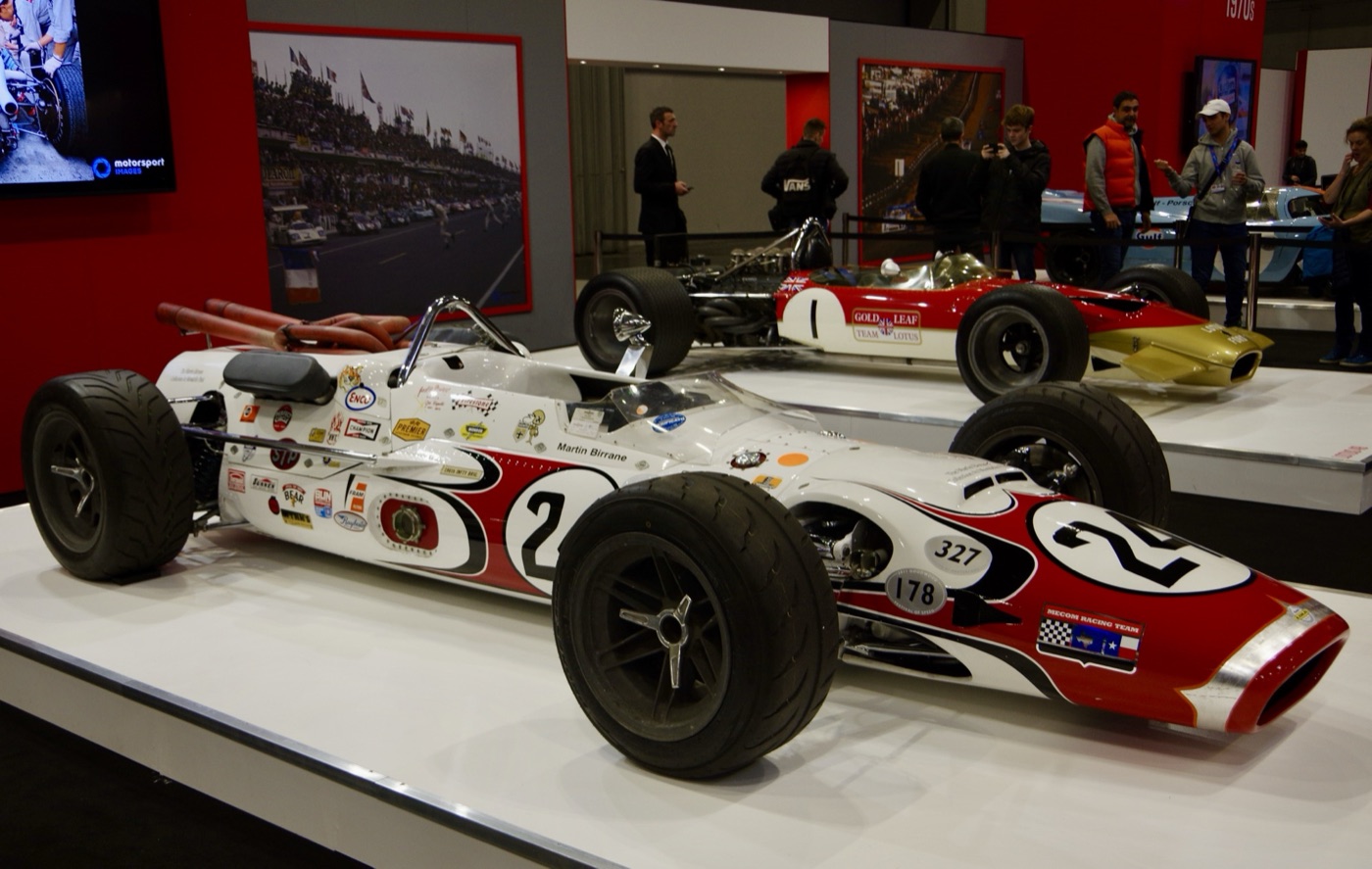
The 1967 Lola T90 MkII
On the stand was a Lola Indianapolis car from the late Martin Birrane’s collection at Mondello Park, which a 2020 SkiddMark report described as the 1967 update of the car Jackie Stewart drove at Indianapolis in 1966. In the 1966 race Stewart, a rookie, led 40 laps and dropped out with low oil pressure after 190 of the 200, while his team-mate Graham Hill won in another Lola, in the Indianapolis Motor Speedway’s results. According to the same report, Lola first called it the T92, but American officials thought it so close to the T90 that it became the T90 MkII. In 1967 Stewart’s Lola, number 24 for the Mecom team, stopped with engine failure after 168 laps (IMS results for 1967).
“I might be crazy, but I’m not stupid”
Standing by a 1954 Maserati 250F and a Cooper T51 on the same display, Chandhok was asked by SkiddMark which of the two he would have preferred to race.
“Neither. If I could choose from all the cars on this display, I’d love to take a drive in the Lola – it’s beautiful.”
Asked why, he told SkiddMark: “It’s the only one of these three that had seatbelts fitted: I want to race, I don’t want to die.” Then he added: “I might be crazy, but I’m not stupid.”
FIA, Motorsport UK and charity work
In 2013 Chandhok became a member of the first FIA Drivers’ Commission, set up to represent the views of drivers worldwide, and has been a driver representative on the FIA Single Seater Commission. In June 2021 Motorsport UK appointed him to its board of directors, at 37 its youngest ever board member; he also sits on its Equality, Diversity and Inclusion Committee. The FIA biography lists two annual charity events that raise money for the education of underprivileged children in India: Karun’s Karting Carnival in the UK each summer, and the KC500, a 500-kilometre cycle ride in south India.
Questions
How old is Karun Chandhok?
He was born on 19 January 1984 in Chennai, so he is 42 as of October 2026.
How many F1 races did Karun Chandhok do?
Eleven: ten for HRT in 2010 and one for Team Lotus at the 2011 German Grand Prix. He scored no points, and his best finish was 14th, in Australia and at Monaco in 2010.
Who was the first Indian Formula One driver?
Narain Karthikeyan, who raced for Jordan in 2005. Chandhok was the second, at the 2010 Bahrain Grand Prix.
Who is Karun Chandhok’s father?
Vicky Chandhok, who headed India’s Federation of Motor Sport Clubs and lobbied for years to bring a Grand Prix to India, which held its first in October 2011.
Where does Karun Chandhok live?
In England. He moved there from India in 2002 to race in British Formula 3, and Motorsport UK described the UK as his home for two decades when it appointed him to its board in 2021.
Did Karun Chandhok win a race?
Yes, in the junior categories: titles in Formula Maruti (2000), Formula 2000 Asia (2001) and Formula V6 Asia (2006), and GP2 sprint races at Spa in 2007 and Hockenheim in 2008. He never won in Formula One, Formula E or at Le Mans.
Has Karun Chandhok written a book?
Yes. Drive to Victory: Incredible True Stories from the Fastest Sport in the World, a Formula One book for children from nine, was published by Hachette in February 2025.
Sources
- StatsF1, “Karun Chandhok” and “Grands Prix started”: date and place of birth, junior titles and positions, grid positions and retirements.
- FIA, “Karun Chandhok, Member of the FIA Drivers Commission”: racing family, early titles, broadcasting, Drivers’ Commission, charity events.
- CarTrade, “Vicky Chandhok re-elected as FMSCI President”, January 2012.
- autoevolution, “Chandhok thanks Ecclestone for F1 support”, March 2010.
- Crash.net, “Chandhok for champions”, 19 December 2007: first Indian GP2 winner, iSport signing, Red Bull test and junior programme.
- Crash.net, Hockenheim GP2 sprint race report, 20 July 2008: second GP2 win.
- Al Jazeera, “Chandhok secures F1 drive”, 4 March 2010: the HRT signing.
- Crash.net, “Chandhok: Chaotic and a throw-together job, but we’re in!”, 13 March 2010: Bahrain qualifying.
- Adam Cooper’s F1 Blog, “Chandhok: My first weekend is Melbourne”, 23 March 2010: the Bahrain race.
- Formula 1, official race results: 2010 Australian Grand Prix, 2011 German Grand Prix, 2011 Indian Grand Prix and the other 2010 races.
- Autosport, “Chandhok replaces Trulli for German GP”, 21 July 2011: Lotus reserve role and practice outings.
- GrandPrix.com, “Chandhok gets German GP chance, replacing Trulli”, 21 July 2011: Gascoyne’s comparison, Yamamoto, the Indian Grand Prix.
- Automobile Club de l’Ouest, “Top 6 finish for JRM on Le Mans debut”, June 2012: the 2012 race and quotes.
- Motor Sport, “Le Mans: a mental marathon”, September 2012: interview after the race.
- Racing Sports Cars, “All results of Karun Chandhok” and the Le Mans results pages linked under the table: sports car results 2012–2017.
- FIA, Formula E Beijing ePrix final classification (revised), September 2014.
- Mahindra, press release, January 2018: Mahindra as a founding Formula E team.
- Autosport, “Heidfeld gets Mahindra Formula E seat”, August 2015.
- Sky Sports, “Karun Chandhok returns to Sky Sports F1 team in 2019”, 13 December 2018.
- Motorsport Broadcasting, “Karun Chandhok joins Sky’s F1 team for 2019 season”, 13 December 2018: the Sky and Channel 4 roles.
- Sky Group, “Sky Sports unveils plans for 2026 Formula 1 coverage”, 2026 season preview.
- Motor Sport, Karun Chandhok’s author page: his columns.
- Hachette, Drive to Victory: publication details.
- Formula1.com, “Williams sign Chandhok as official Heritage driver”, 20 June 2016.
- Honda, “Karun Chandhok and Williams Honda FW11”, Goodwood 2025.
- Motorsport UK, “Karun Chandhok joins Motorsport UK Board”, 16 June 2021: board role, Mahindra’s Formula E entry, his move to England.
- Indianapolis Motor Speedway, race results for 1966 and 1967: Jackie Stewart’s Lola.
- Historic Racing News, “Gallery: Historic Highlights at Autosport International”, January 2020: the show and its 70 Years of Autosport display.
- SkiddMark’s own reports: “Reflection: Formula 1 says ‘Namaste India’” (October 2011), the preview of Michelin and Audi at the 2012 Le Mans 24 Hours (13 June 2012), the Six Hours of Silverstone report (4 September 2012) and “Racer’s Perspective: Karun Chandhok” (6 March 2020): the Autosport International quotes and the Lola’s history.