Lamborghini Aventador: every version, specs, numbers and values
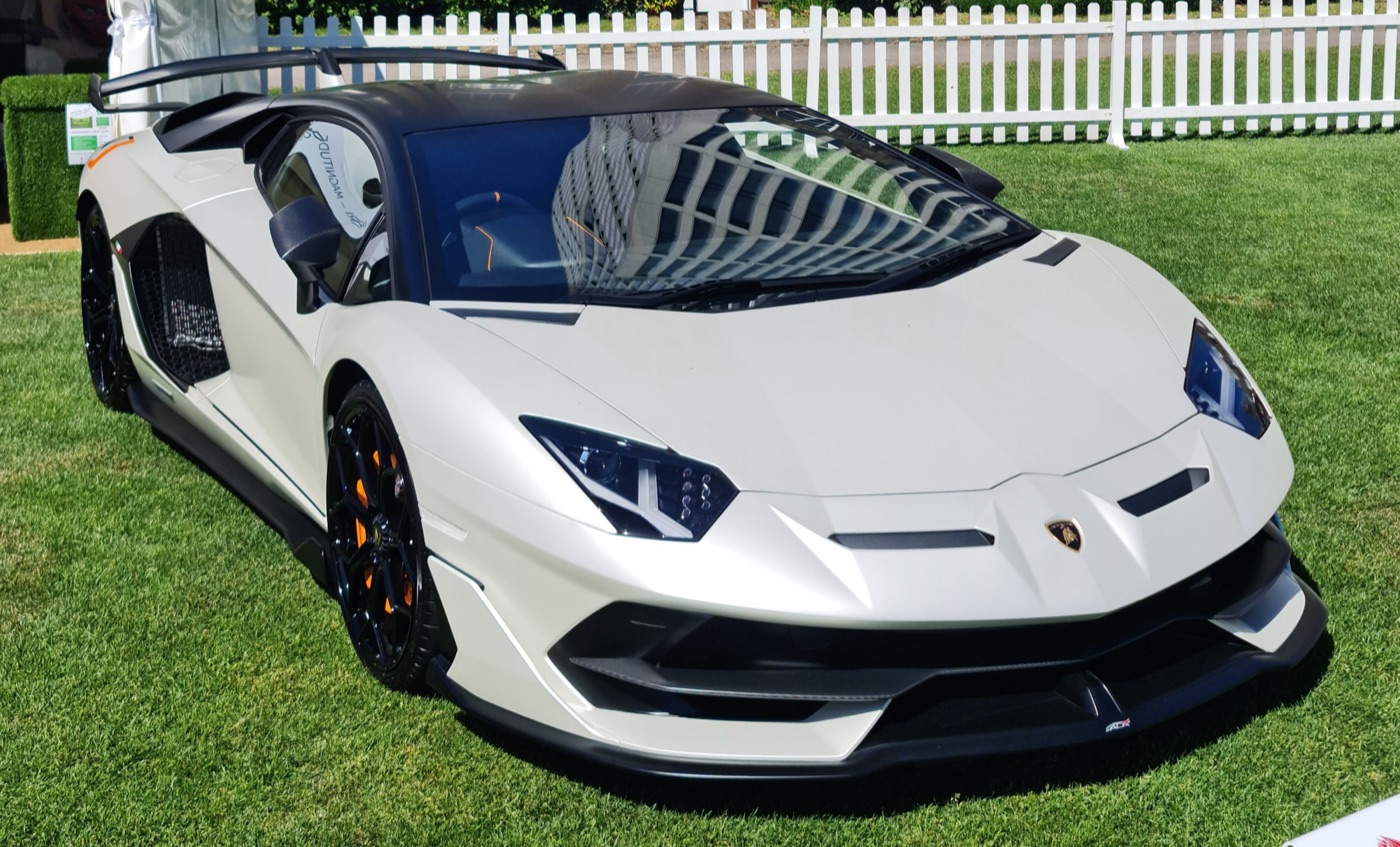
The Lamborghini Aventador is the mid-engined V12 supercar that Automobili Lamborghini built at Sant'Agata Bolognese from 2011 to 2022, as the successor to the Murciélago. Across its versions (eight models, by CAR's count) the naturally aspirated 6.5-litre V12 went from 700 CV (690bhp) in the first LP 700-4 to 780 CV (769bhp) in the last, the Ultimae, and Lamborghini sold 11,465 of them, more than all its earlier V12 cars put together.
People look it up for the numbers (217mph, 0-62mph in 2.9 seconds from launch), for the differences between the LP 700-4, SV, S, SVJ and Ultimae, and for what one costs now: on 27 October 2026 the lowest asking price for an Aventador on PistonHeads was £209,990. SkiddMark reported the car from the leaked order guide of December 2010 to the Veneno Roadster of 2013.
History and development of the Aventador
The Aventador was developed to replace the Murciélago, then nearly a decade old, and was launched at the Geneva Motor Show at the start of March 2011. Lamborghini showed the carbon-fibre structure first, at a technical day with its parent company Audi in February 2011, and the finished car the evening before the show opened, at the Volkswagen Group's pre-show party.
The LB834 project and the carbon tub
SkiddMark's report of the February 2011 technical day recorded the figures Lamborghini gave for the new structure: the monocoque (passenger cell and cockpit) was a single carbon-fibre component weighing 147.5kg, the whole body-in-white weighed 229.5kg, and the static torsional stiffness was 35,000Nm per degree. Lamborghini had built a new 5,400 square-metre plant at Sant'Agata for the monocoque and body, and planned to triple its use of carbon-fibre materials from 100 tonnes in 2009 to 300 tonnes by 2013. Stephan Winkelmann, then president and chief executive, said the average weight of Lamborghini's cars had risen by about 500kg since the 1980s, and that "this means that weight must be reduced... The magic words are carbon fibre."
The design was by Filippo Perini, Lamborghini's head of design since 2004; Perini took the Aventador from sketchpad to show floor in six weeks, according to a 2013 interview with Cool Hunting. Before the launch, a dealer ordering guide leaked in December 2010; SkiddMark worked out from it that the new car was 90kg lighter than the Murciélago LP 640 it replaced, came within 10kg of the stripped-out LP 670-4 SuperVeloce, and had a wheelbase 35mm longer, at 2,700mm.
The Geneva launch in 2011
The car took its name from a fighting bull, following Lamborghini's habit since the Miura. Aventador was a bull that fought in October 1993 at the Saragossa arena and earned the Trofeo de la Peña La Madroñera for its courage, as Lamborghini's launch material put it. The UK price at launch was £201,900 before taxes (€255,000, or $379,700 in the US), which SkiddMark noted was "not that much more than a Ferrari 458 Italia or McLaren MP4-12C".
Within a month the first year's production was sold. "Interest in the Aventador has been unprecedented and we have orders for far more than one year," Winkelmann said in March 2011, and when the car made its Asian debut at Auto Shanghai that April he said the worldwide order book was "already eighteen months ahead of production". The first customers took delivery in the second half of 2011.
The launch colours
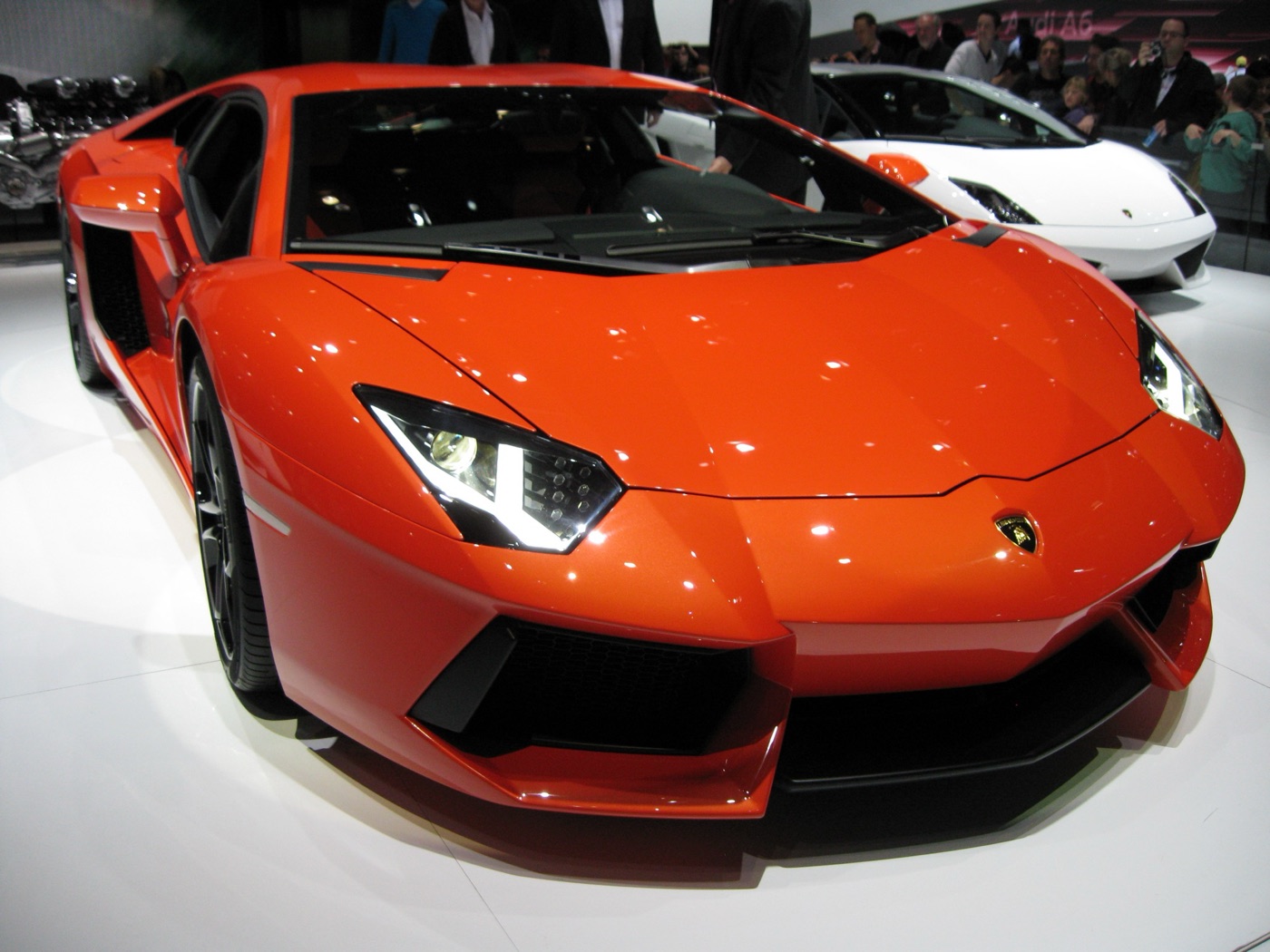
Lamborghini offered 13 paint colours at launch, in pastel, metallic, pearlescent or matt finishes, among them two new shades, Grigio Estoque and Arancio Argos. Three matt colours came through the Ad Personam personalisation programme: Nero Nemesis, Bianco Canopus and Marrone Apus. Lamborghini brought three cars to Geneva in 2011, in pearlescent white, Arancio Argos and Grigio Estoque, and offered two-tone interiors in "Sportivo" and "Elegante" versions.
When the online configurator went live in March 2011, SkiddMark's Steve Davies chose two: Grigio Antares metallic with Terra Antiope and Nero Ade leather "for the daily drive", and Giallo Orion pearl with Giallo Taurus and Nero Ade Alcantara "for the weekend". The Roadster added a pale metallic blue, Azzurro Thetis, in 2012, chosen to recall the 1968 Miura Roadster. The Ultimae came in 18 standard colours with more than 300 through Ad Personam, and Lamborghini said 85 per cent of Aventador buyers used Ad Personam, putting more than 200 unique colours and trims on the road.
The end of production
The last version, the LP 780-4 Ultimae, was shown in July 2021. In February 2022 the car carrier Felicity Ace caught fire in the Atlantic and later sank with 85 Lamborghinis on board, 15 of them Ultimaes for US buyers, and Lamborghini restarted production to rebuild them, Motor1 reported. The very last Aventador, an Ultimae Roadster in Azzurro Flake for a Swiss customer, left the line in July 2022, Lamborghini told Car and Driver. Its colour, silver wheels and white leather copied the one-off Miura P400 Roadster of the 1968 Brussels show. CAR, reporting the end of production on 26 September 2022, gave September as the month the final car was built. "The Lamborghini Aventador was a game-changer at its launch, and the flagship Lamborghini model for 11 years of production," Winkelmann said in Lamborghini's farewell release.
Design and engineering
The Aventador is a two-seat coupé or roadster with a carbon-fibre monocoque, a longitudinal V12 engine mounted behind the cabin, a seven-speed automated single-clutch transmission and all-wheel drive. It has scissor doors that open upwards, as on the Countach of 1974.
Carbon-fibre monocoque chassis and body
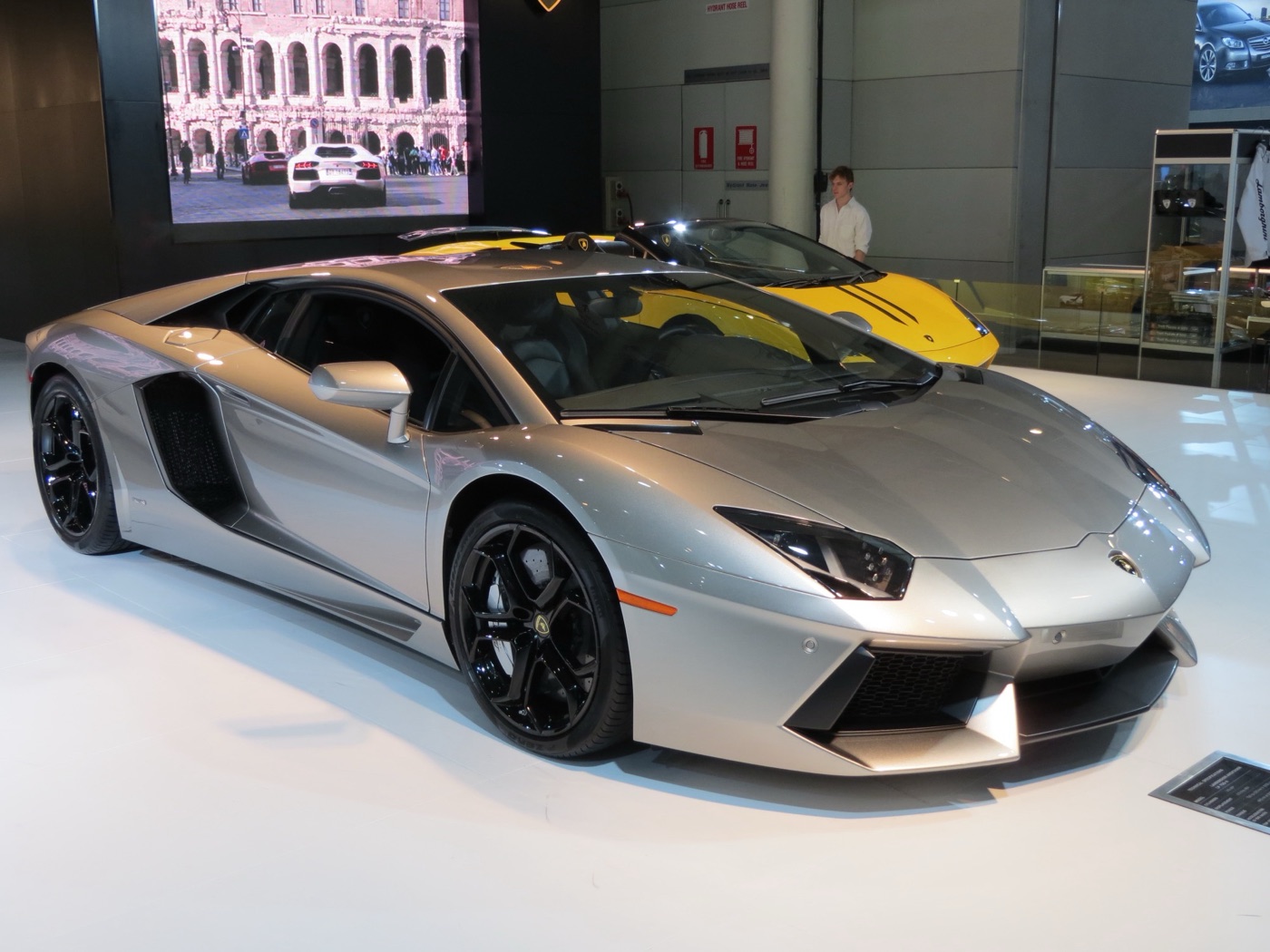
Lamborghini's technical specification for the LP 700-4 describes a carbon-fibre monocoque with aluminium front and rear frames. The engine bonnet, movable rear spoiler and side air intakes are carbon fibre, the front bonnet, front wings and doors are aluminium, and the rear wings and sills are SMC composite. The spoiler moves to one of three positions depending on speed and the drive mode, and electronically controlled side intakes open as the engine needs cooling air.
The L539 V12 engine
The engine was all new, a 60-degree V12 of 6,498cc developed in-house, with a bore and stroke of 95mm by 76.4mm, a compression ratio of 11.8:1, variable valve timing and dry-sump lubrication. In the LP 700-4 it made 700 CV (515kW, 690bhp) at 8,250rpm and 690Nm (509lb ft) at 5,500rpm. Lamborghini gave its weight as 235kg. Lamborghini later added a cylinder deactivation system, which shuts one bank of cylinders below 135km/h and which Lamborghini says cut combined consumption by 7 per cent, and a stop-start system that stores its energy in a supercapacitor.
ISR transmission and all-wheel drive
The gearbox is Lamborghini's seven-speed ISR (Independent Shifting Rods), an automated manual with a single clutch, which Lamborghini said shifted in 50 milliseconds and was lighter than a dual-clutch unit and smaller than a conventional manual. There was no manual option: "there's no clutch pedal offered in this car," Car and Driver noted in 2011. The electronically controlled all-wheel drive uses a fourth-generation Haldex coupling, which can send up to 60 per cent of the torque to the front axle, with a self-locking rear differential.
Push-rod suspension, steering and aerodynamics
The suspension uses aluminium double wishbones with horizontal, push-rod-operated spring and damper units, an idea Lamborghini took from Formula 1. Later versions added magneto-rheological dampers (from the SV), four-wheel steering (from the S; Lamborghini calls it the first on a Lamborghini production car, though the 40-car Centenario, shown in March 2016, already had rear-wheel steering) and, on the SVJ, the ALA active aerodynamics system. The drive modes were Strada, Sport and Corsa, with an individual Ego mode added on the S, according to Lamborghini's "10 innovations in 10 years".
Interior
Inside, the LP 700-4 had a TFT screen in place of conventional dials, as SkiddMark's launch report described. Car and Driver found the controls and gauges "pulled in closer to the driver than before", the start button under a red flip-up cover on the sloping centre console, and much of the switchgear (the MMI navigation, stereo and climate controls) shared with the Audi A6 behind a hexagonal motif. The S Roadster could have details covered in Carbon Skin, and the Ultimae had Alcantara laser-cut with a Y motif and a carbon-fibre plate carrying the car's number in the series.
Lamborghini Aventador specs and performance
Every Aventador used the same 6.5-litre V12 and four-wheel drive; power rose from 700 CV to 780 CV across the versions, and the figures below are Lamborghini's own, from its specification pages for each model.
| Version | Shown | Power | Torque | 0-100km/h | Top speed | Dry weight | Built |
|---|---|---|---|---|---|---|---|
| LP 700-4 coupé | March 2011 | 700 CV (690bhp) | 690Nm | 2.9sec | 350km/h (217mph) | 1,575kg | not limited |
| LP 700-4 Roadster | November 2012 | 700 CV (690bhp) | 690Nm | 3.0sec | 350km/h (217mph) | 1,625kg | not limited |
| LP 750-4 SV coupé | March 2015 | 750 CV (740bhp) | 690Nm | 2.8sec | over 350km/h | 1,525kg | 600 |
| LP 750-4 SV Roadster | August 2015 | 750 CV (740bhp) | 690Nm | 2.9sec | over 350km/h | 1,575kg | 500 planned |
| S coupé | December 2016 | 740 CV (730bhp) | 690Nm | 2.9sec | 350km/h (217mph) | 1,575kg | not limited |
| S Roadster | 2017 | 740 CV (730bhp) | 690Nm | 3.0sec | 350km/h (217mph) | 1,625kg | not limited |
| SVJ coupé | August 2018 | 770 CV (759bhp) | 720Nm | 2.8sec | 351km/h (218mph) | 1,525kg | 900 |
| SVJ Roadster | 2019 | 770 CV (759bhp) | 720Nm | 2.9sec | 351km/h (218mph) | 1,575kg | 800 |
| LP 780-4 Ultimae coupé | July 2021 | 780 CV (769bhp) | 720Nm | 2.8sec | 355km/h (221mph) | 1,550kg | 350 |
Sources: Lamborghini's specification pages and releases for each version; the SV Roadster's 500 is CAR's August 2015 report. The Ultimae Roadster was 50kg heavier than the coupé and took 2.9sec to 100km/h, according to CAR.
How fast is the Lamborghini Aventador?
Every Aventador was quoted at 350km/h (217mph) or more, up to 355km/h (221mph) for the Ultimae. The S coupé took 2.9sec to 100km/h, 8.8sec to 200km/h and 24.2sec to 300km/h, and it stopped from 100km/h in 30 metres. When Car and Driver tested an LP 700-4 at Vairano in 2011, it ran the quarter-mile in 10.9sec at 133mph and called it "the fastest stock Lamborghini we've ever tested".
How much horsepower does an Aventador have?
Between 690bhp and 769bhp. Lamborghini rates its engines in CV (metric horsepower), so the LP 700-4's 700 CV is 690bhp, the 50° Anniversario's 720 CV is 710bhp and the Ultimae's 780 CV is 769bhp.
Nürburgring lap times
The SV lapped the Nürburgring Nordschleife in 6min 59.73sec in 2015, during development testing of Pirelli's P Zero Corsa tyres, Driven reported. In July 2018 a camouflaged SVJ driven by Lamborghini test driver Marco Mapelli lapped the 20.6km circuit in 6min 44.97sec, which Lamborghini announced as the lap record for production cars a month before the car's unveiling.
Dimensions and fuel consumption
The LP 700-4 is 4,780mm long, 2,030mm wide (2,265mm with its mirrors) and 1,136mm high, on a 2,700mm wheelbase, with 43 per cent of its weight on the front wheels. It ran on 255/35 ZR19 front and 335/30 ZR20 rear Pirelli tyres, with carbon-ceramic brake discs of 400mm at the front and 380mm at the rear. The fuel tank holds 90 litres, and Lamborghini's combined figure was 16.0 litres per 100km (17.7mpg), or 24.7 litres per 100km (11.4mpg) in town, with CO2 emissions of 370g/km; SkiddMark's reading of the leaked order guide put the gain over the Murciélago at about 20 per cent. The final Ultimae Roadster was rated at 18.0 litres per 100km and 442g/km under the later WLTP test.
Aventador versions from LP 700-4 to Ultimae
The standard car came in five versions, the LP 700-4, SV, S, SVJ and Ultimae, each as a coupé and a roadster, as Lamborghini's production record release of 2020 and CAR's farewell report of 2022 record. The SV, SVJ and Ultimae were limited runs; the LP 700-4 and S were not.
Aventador LP 700-4 and Roadster
The LP 700-4 coupé ran from 2011 until the S replaced it. The LP 700-4 Roadster was announced in November 2012 with a two-piece carbon-fibre roof, each panel weighing less than 6kg, that stows in the front luggage compartment. It weighed 50kg more than the coupé at 1,625kg, had a redesigned rear pillar with hexagonal windows over the engine, a powered rear window and a wind deflector, and cost €300,000 before taxes, €45,000 more than the coupé. In January 2013 Lamborghini ended the Roadster's US media launch by closing the south runway at Miami International Airport and running five Roadsters flat out on it.
Aventador SV (SuperVeloce)
The LP 750-4 SuperVeloce, shown at Geneva in March 2015, added magneto-rheological dampers and Lamborghini Dynamic Steering, and saved 50kg with carbon-fibre door panels and bucket seats. Lamborghini said at Shanghai in April 2015 that it would build 600 coupés, AutoGuide reported; in the US the SV cost $493,069 with gas-guzzler tax and delivery, against $400,995 for the standard Aventador. The SV Roadster followed at Pebble Beach in August 2015, priced at £350,000 on the road in the UK, about £28,000 more than the coupé, with 500 planned, according to CAR.
Aventador S
The Aventador S, revealed in December 2016, replaced the LP 700-4 with four-wheel steering, retuned active suspension and the new Ego drive mode. Its rear wheels steer against the fronts at low speed, shortening the wheelbase in effect, and with them at high speed. Lamborghini said the reshaped nose gave 130 per cent more front downforce than the first Aventador, and Pirelli developed P Zero tyres for it. The S Roadster followed in 2017.
Aventador SVJ
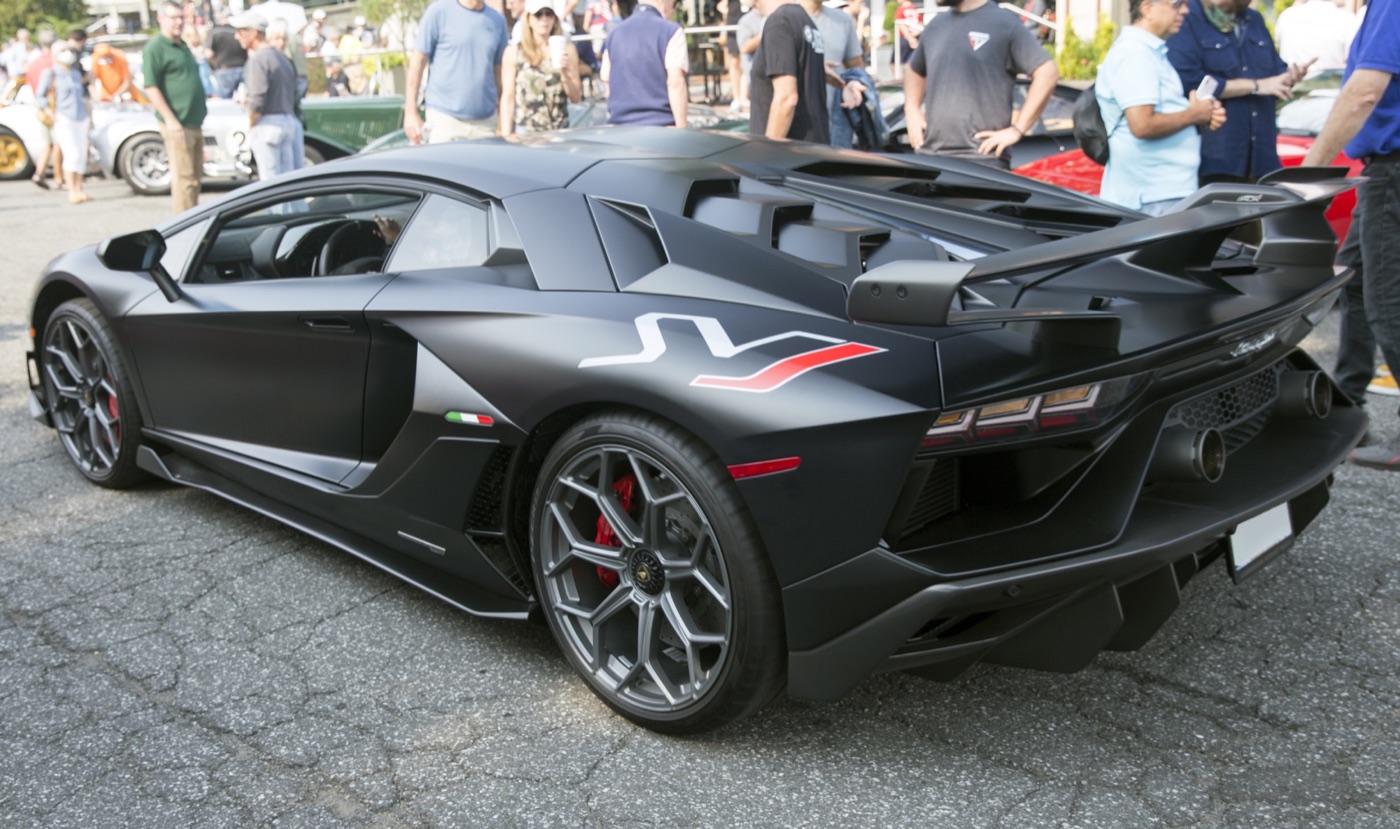
The SVJ (SuperVeloce Jota) was unveiled at The Quail during Monterey Car Week in August 2018, in Verde Alceo, as Lamborghini's unveiling release records. It had a weight-to-power ratio of 1.98kg per CV, an omega-shaped rear wing and the ALA 2.0 active aerodynamics, whose flaps in the front splitter and engine cover switch between high downforce and low drag in under 500 milliseconds. Lamborghini built 900 coupés and 800 roadsters. "The Aventador SVJ takes the Jota suffix, following the Lamborghini tradition for denoting a car's track-focused talent," said Stefano Domenicali, then Lamborghini's chairman and chief executive, in Lamborghini's Nürburgring release of July 2018.
Aventador LP 780-4 Ultimae
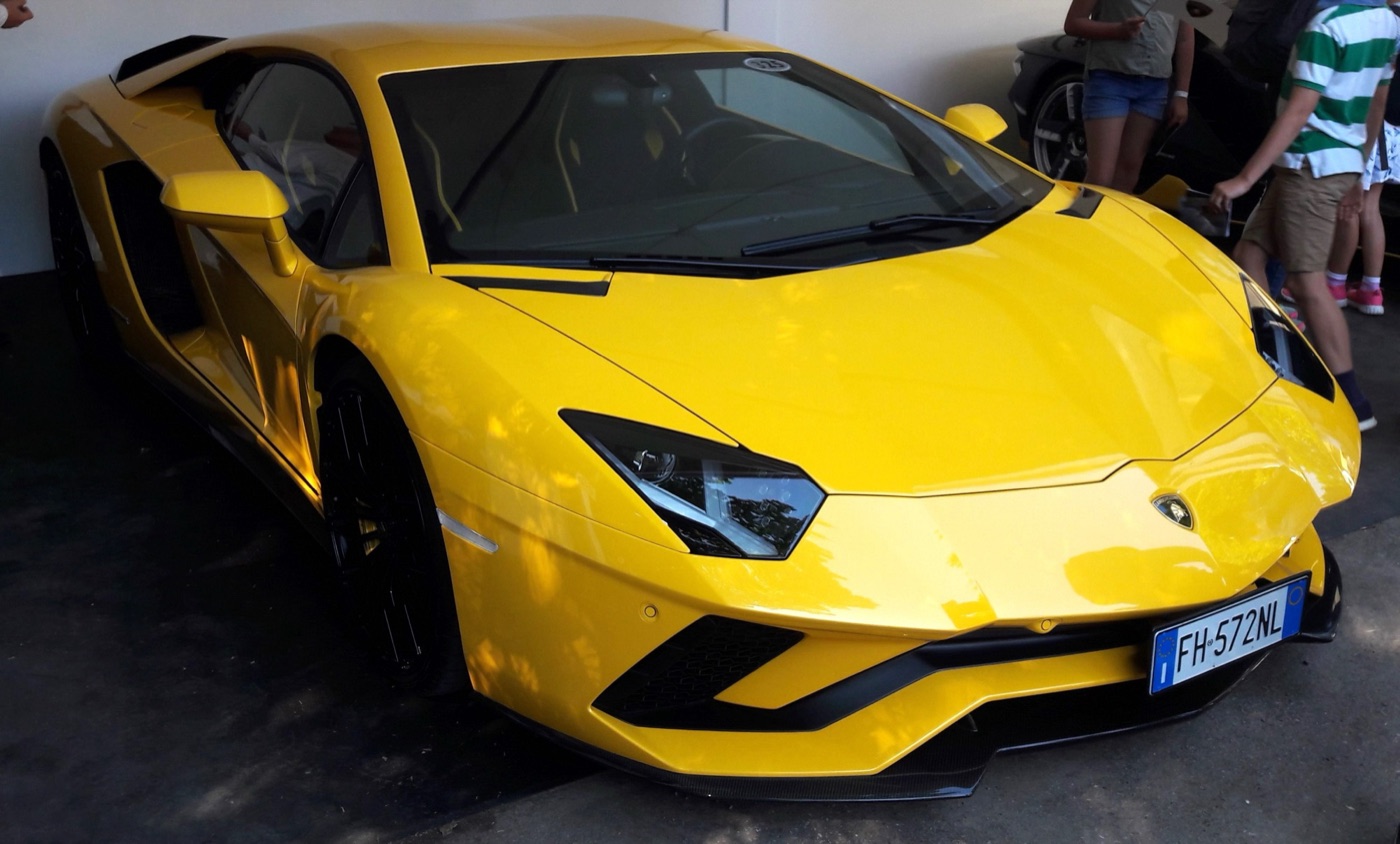
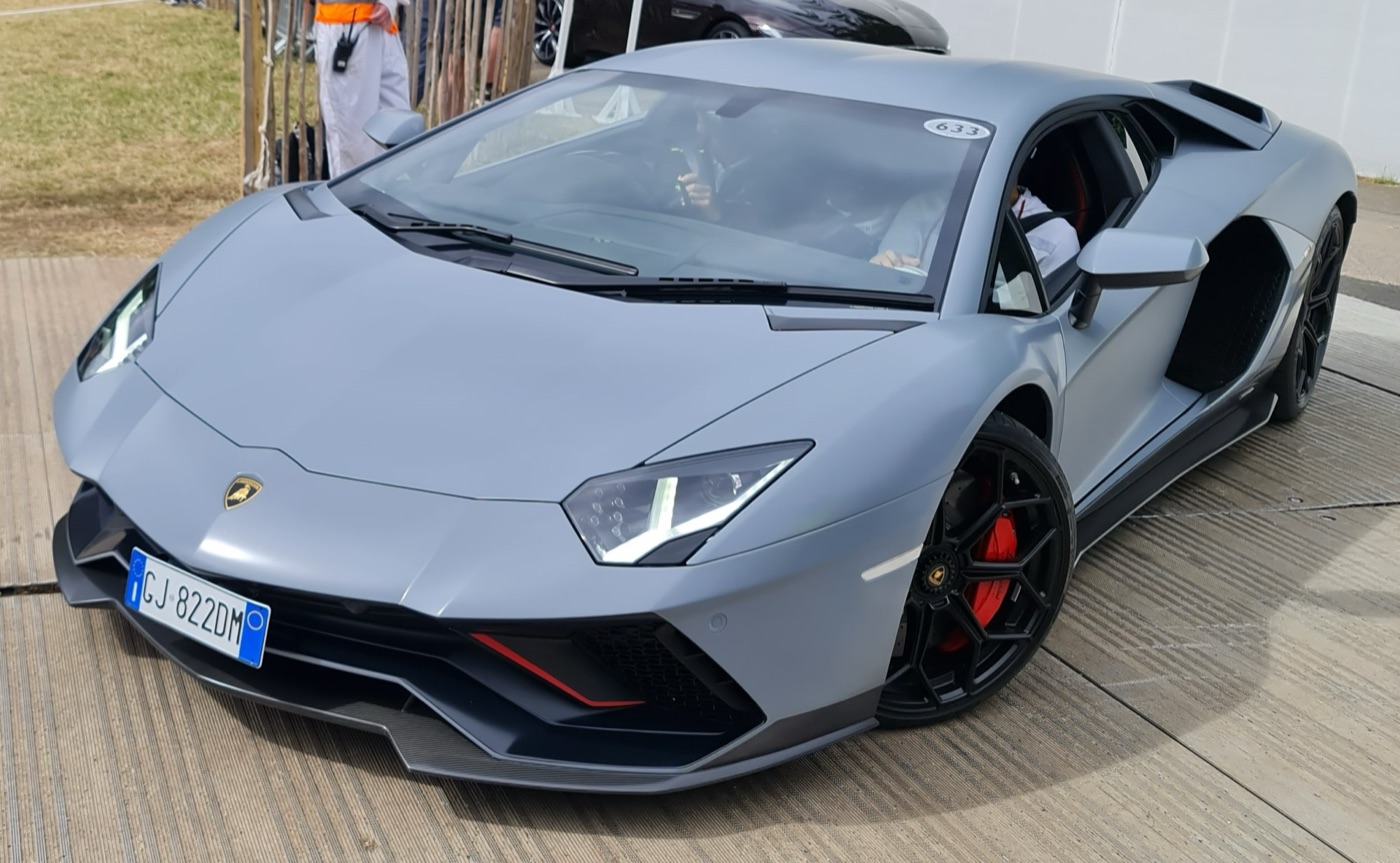
The Ultimae combined the SVJ's engine, tuned to 780 CV, with the less extreme bodywork of the S, and was shown at the Goodwood Festival of Speed on 8–11 July 2021. The coupé reached 200km/h in 8.7sec, and Lamborghini built 350 coupés and 250 roadsters. "The Aventador LP 780-4 denotes the last, purest and eternal naturally aspirated Lamborghini V12," Winkelmann said at its launch; its livery, contrasting black parts with the body colour, came from Centro Stile Lamborghini. CAR put its UK price in the high-£300,000s.
Special editions and cars built on the Aventador
Lamborghini made special editions of the Aventador itself, from the one-off J to the ten-car Xago, and limited cars built around its V12, among them the Veneno, Centenario, Sián FKP 37 and Countach LPI 800-4, the track-only Essenza SCV12 and the SC18 Alston and SC20 one-offs.
Aventador J
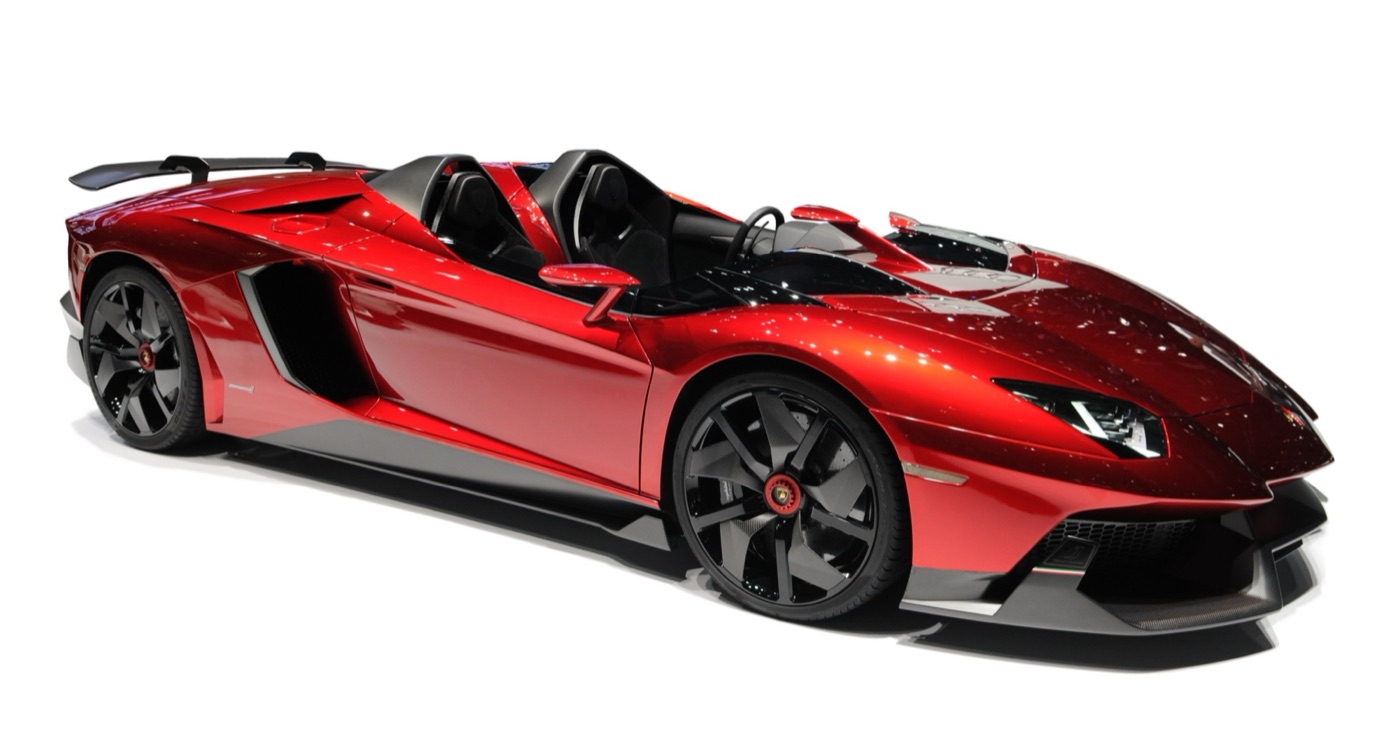
The Aventador J, shown at Geneva in March 2012, was a one-off open concept car with no roof, no conventional windscreen and no air conditioning or navigation, built on a largely new monocoque with two rollover bars behind the seats. SkiddMark's report from the show explains the name: J for the FIA's Appendix J racing rules, as on the 1970 Miura Jota. Its cockpit was trimmed in Carbonskin, a soft woven carbon fibre, and Lamborghini said it would go to one customer after the show. The J was type-approved for road use.
LP 720-4 50° Anniversario
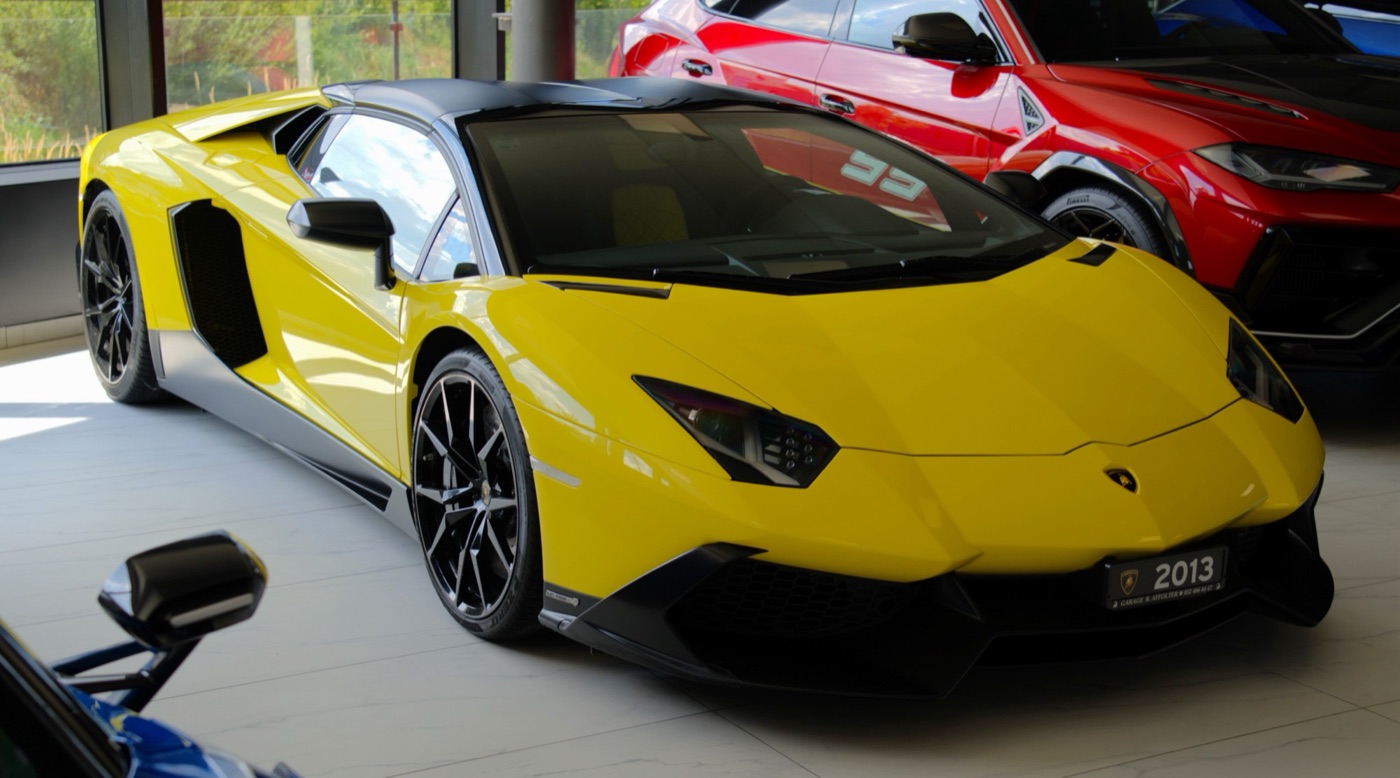
For Lamborghini's 50th year, the LP 720-4 50° Anniversario was shown at Auto Shanghai in April 2013 as a numbered edition of 100. A recalibrated engine gave 720 CV, 20 more than the standard car, though the 0-100km/h time (2.9sec) and top speed (350km/h) were unchanged, according to Lamborghini's release as reported by Auto-Medienportal. It had larger front intakes and splitter, a new rear diffuser and a paint called Giallo Maggio (May yellow) for the founding of the company in May 1963. SkiddMark's report of the leaked pictures ran on 18 April 2013, ahead of the show.
Pirelli Edition, Miura Homage, SVJ 63 and Xago
The Pirelli Edition, on sale by 2015 as a coupé or roadster, marked Lamborghini's partnership with the tyre maker with a thin red line along the roof, bonnet and mirrors. The Miura Homage of 2016, 50 coupés for the Miura's 50th anniversary, had its upper body in one of the Miura's 18 original colours over gold or matt silver. The SVJ 63, 63 coupés for the founding year 1963, was shown with the SVJ in 2018, and an SVJ 63 Roadster of 63 cars followed. The SVJ Roadster Xago Edition of 2020, ten cars, was reserved for buyers who configured their car through Lamborghini's new virtual Ad Personam studio.
Veneno, Centenario, Sián FKP 37 and Countach LPI 800-4
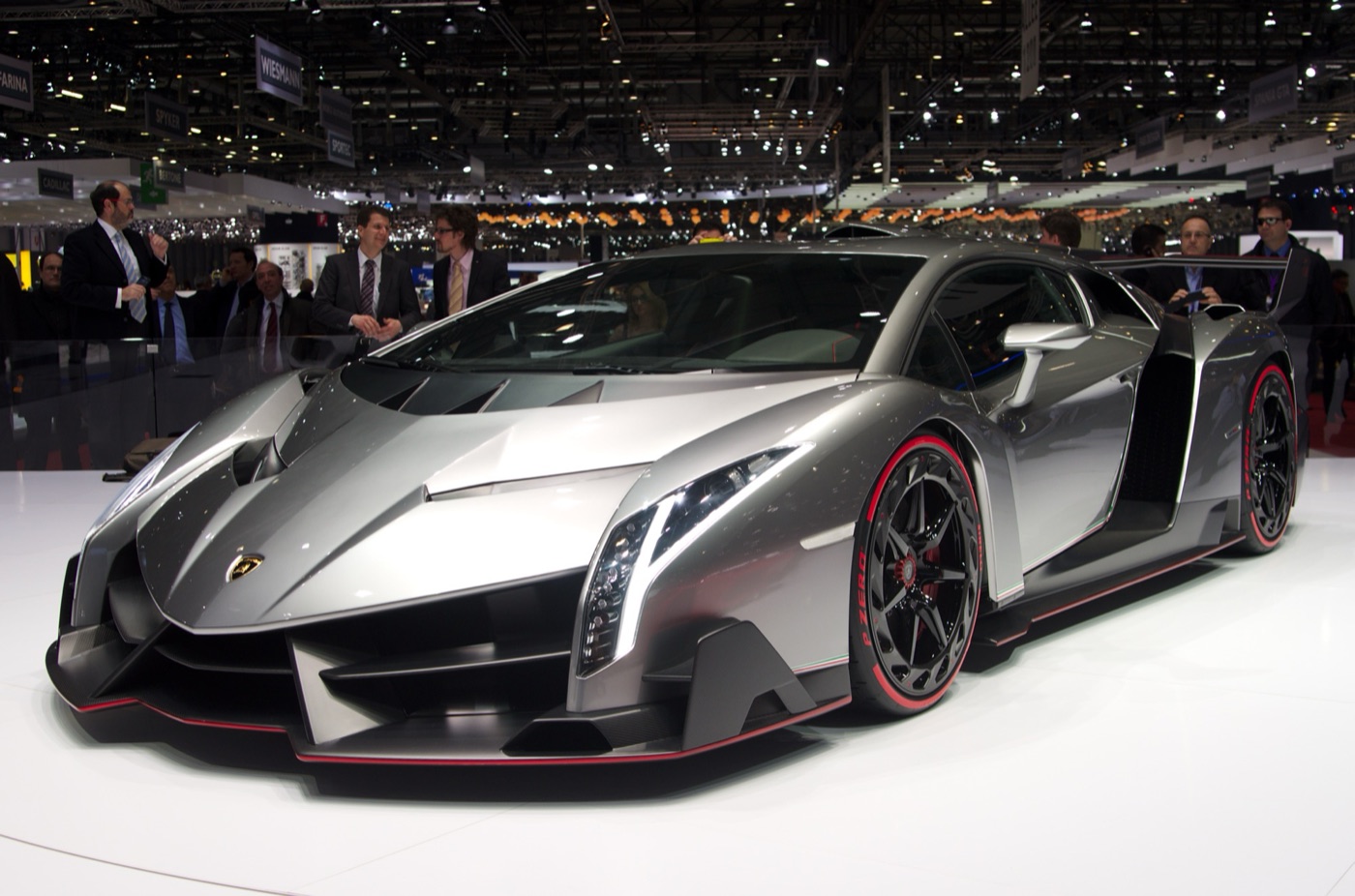
The Veneno, shown at Geneva in March 2013, had a 740bhp version of the V12; SkiddMark reported that three coupés would go to customers at £2.6 million each plus taxes, and in October 2013 that nine Veneno Roadsters would follow at €3.3 million each before tax. The Centenario of 2016, for what would have been Ferruccio Lamborghini's 100th birthday, had 770 CV and cost €1.75 million, and all 20 coupés and 20 roadsters were sold before its debut; it was the first Lamborghini with rear-wheel steering, according to Lamborghini's history of its few-off cars.
The Sián FKP 37 of 2019, Lamborghini's first hybrid, added a 48-volt, 34 CV electric motor in the gearbox, powered by supercapacitors, to a 785 CV V12, for 819 CV in all; 63 were built. The Countach LPI 800-4 of 2021 used the same system with a 780 CV V12, 814 CV combined, and was limited to 112 cars.
Essenza SCV12, SC18 Alston and SC20
Lamborghini's motorsport department, Squadra Corse, built three more cars around the Aventador's 6,498cc V12. The SC18 Alston was a one-off for one customer, type-approved for the road, with 770 CV, 720Nm and the seven-speed ISR gearbox (the SVJ's figures) and a three-way adjustable carbon-fibre wing, according to Lamborghini's release. The Essenza SCV12, announced on 29 July 2020, is a track-only car of 40 with more than 830 CV, an X-trac six-speed sequential gearbox and rear-wheel drive in place of the ISR and four-wheel drive, and a weight-to-power ratio of 1.66kg per CV, Lamborghini says. The SC20 of December 2020 was an open one-off track car with 770 CV and the ISR gearbox, styled after the Aventador J and Veneno Roadster among others, according to its release.
How many Lamborghini Aventadors were made?
Lamborghini built 11,465 Aventadors from 2011 to 2022, CAR reported when production ended, more than all of Lamborghini's earlier V12 models put together. The 1,000th car was built in 2012, one year and three months after production began, where the Murciélago took two years and five months to reach 1,000, AutoGuide reported; it was an LP 700-4 in Arancio Argos for a Bavarian architect who already owned a Diablo.
Lamborghini delivered 922 Aventadors in 2012, SkiddMark reported from the company's figures in March 2013, against 1,161 Gallardos, with a waiting list of more than 15 months. The 10,000th Aventador, an SVJ Roadster in Grigio Acheso with Rosso Mimir livery, was built in 2020; by then, Lamborghini said in "Four things you should know", all its previous V12 models together had just passed 7,000. The limited SV, SVJ and Ultimae runs add up to at least 3,400 cars, so fewer than 8,000 Aventadors are LP 700-4 and S models.
How much does a Lamborghini Aventador cost?
New, an Aventador LP 700-4 cost £201,900 before taxes in 2011, and the last cars, the Ultimae, cost in the high-£300,000s; SkiddMark put the coupé and Roadster at between £240,000 and £290,000 with VAT in March 2013.
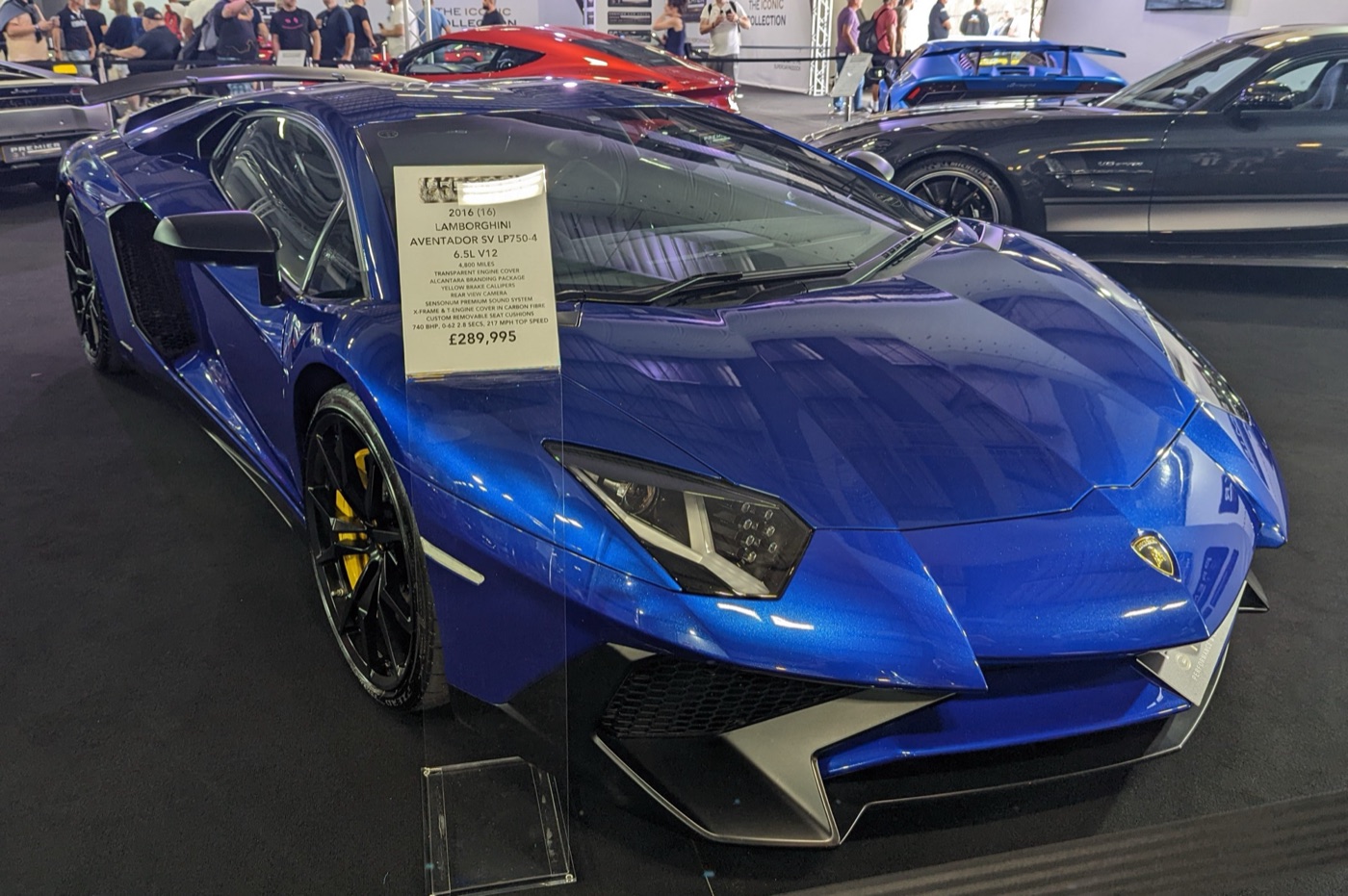
On 27 October 2026 PistonHeads listed 18 Aventadors for sale. LP 700-4 coupés were advertised at £209,990 (a 2014 car with 34,000 miles), £239,995 (2012, 11,500 miles) and £255,000 (2015, 11,950 miles, private sale), a 2015 LP 700-4 Roadster at £298,995 and a 2017 S coupé with 19,241 miles at £249,990. The limited cars asked far more: a 2014 50° Anniversario at £499,995, SV coupés from £499,995 to £599,995, SV Roadsters from £529,995 to £899,995 and a 2019 SVJ at £699,995. These are dealers' and sellers' asking prices, not sale prices.
At auction, the last Aventador coupé ever built, an Ultimae, sold with a linked one-of-one NFT for $1,603,125 in RM Sotheby's online sale of April 2022, RM Sotheby's results show, before the car had been built; it was to be completed in September 2022.
Is the Aventador reliable? Recalls and known faults
The US safety regulator NHTSA lists four recalls for the Aventador, and the main complaint from road testers was the ISR gearbox at low speed.
Safety recalls
The NHTSA recall records for the Aventador (model year 2012 and model year 2015 between them list all four) are these. 12V-561 (2012): cars built from 15 July 2011 to 20 April 2012 had headlights that aimed horizontally but not vertically. 17V-073 (February 2017): on 2012–2017 cars with a full tank, petrol could reach the hot exhaust, a fire risk, cured by an upgraded evaporative emissions system. 18V-391 (2018): 2012–2018 cars could stall when the driver lifted off below 2,000rpm during an automatic downshift; new engine software fixed it. 18V-461 (2018): the bolts centring the brake discs on 2015–2016 SVs could loosen, risking a wheel coming off, and were replaced with thread-locked bolts.
The ISR gearbox
Car and Driver's 2011 test found the single-clutch gearbox "definitely prompt" but dated next to the dual-clutch Ferrari 458, with torque gaps between shifts around town that made passengers bob in their seats, and a clutch that at low speed "bounces between slip and grip like a nervous first-time stick shifter". In launch-control mode, it wrote, "the clutch shows no mercy". Lamborghini kept the ISR to the end; the Ultimae's gearbox was still a seven-speed single-clutch unit.
Aventador rivals, predecessor and successor
The Aventador's rivals when new were Ferrari's V12 flagship, the F12berlinetta from 2012, and the Pagani Huayra; it replaced the Murciélago and was replaced by the Revuelto.
Murciélago, the car it replaced
Lamborghini credited the Murciélago LP 640 with 0-62mph in 3.4sec and 340km/h (211mph), and the LP 670-4 SuperVeloce with 3.2sec and 342km/h, as SkiddMark noted in December 2010; the Aventador LP 700-4 did 2.9sec and 350km/h.
Ferrari F12berlinetta and Pagani Huayra
The Ferrari F12berlinetta, shown at Geneva in March 2012 alongside the Aventador J, had a 6,262cc V12 of 729bhp, did 0-62mph in 3.2sec and weighed 1,525kg, 50kg less than the carbon-tubbed Aventador, as SkiddMark reported from the show; it cost about €320,000. The Pagani Huayra had a 6.0-litre twin-turbo AMG V12 of 720bhp and 1,000Nm and cost about €1 million, which in March 2011 SkiddMark called three times the Aventador's price for similar performance.
What replaced the Lamborghini Aventador?
The Revuelto, unveiled in 2023 ahead of Lamborghini's 60th anniversary, replaced the Aventador. It is a hybrid with a new V12 and three electric motors, 1,015 CV in all, and a dual-clutch gearbox, according to Lamborghini's Revuelto page, so the Aventador Ultimae was the last Lamborghini with a V12 and no electric help, as Lamborghini said when the final car was built.
Reception and reviews
Car and Driver headlined its first full test "The Best Lamborghini Ever", praising the engine and steering and faulting the gearbox.
That test, by Aaron Robinson in December 2011, also found the steering "more reactive", and the luggage space "hilariously small": "Pack only a credit card and buy clothes at your destination." The 8,500rpm V12, he wrote, was a reminder "of why the major Italian boutiques eschew turbos".
In November 2011 Lamborghini ran a print campaign for the car, "The Truth Hurts", by the Hamburg agency Philipp und Keuntje with illustrations by Herr Müller, each built on a reviewer's line. James May of Top Gear supplied "The acceleration is apocalyptic. It can deliver pure delirium on demand," and Ulrich Safferling of Auto-Illustrierte "If you slam on the brakes at 100km/h, you come to a halt in just 30 meters." SkiddMark's verdict at the time was that the ads read as if Lamborghini were "compensating for the increased refinement and civility which has inevitably touched its most powerful of supercars".
An Aventador LP 700-4 with the number plate "Gotham 649 8227" appeared in the 2012 film The Dark Knight Rises, Lamborghini records. When production ended, CAR's Colin Overland wrote that "nothing made quite the same statement as Lambo's OTT supercar."
Questions
What does Aventador mean?
Aventador was the name of a Spanish fighting bull that fought at the Saragossa arena in October 1993 and won the Trofeo de la Peña La Madroñera for its courage. Lamborghini has named its cars after fighting bulls since the Miura.
Is the Lamborghini Aventador four-wheel drive?
Yes. Every Aventador drives all four wheels through a Haldex coupling that can send up to 60 per cent of the torque to the front axle, with a self-locking rear differential.
Does the Aventador have a manual gearbox?
No. Every Aventador has the seven-speed ISR automated gearbox with a single clutch and paddle shifters; no manual was offered.
What does SVJ stand for on the Aventador?
SuperVeloce Jota. SV (superveloce, "super-fast") marks Lamborghini's faster versions, and Jota is the suffix it gives cars with a track focus, after the 1970 Miura Jota.
Was the Lamborghini Aventador in Batman?
Yes. An Aventador LP 700-4 with the number plate "Gotham 649 8227" appeared in The Dark Knight Rises in 2012.
How big is the Aventador's fuel tank?
The tank holds 90 litres. At Lamborghini's combined figure for the LP 700-4, 16.0 litres per 100km, that is about 560km (350 miles) between fills.
Is the Lamborghini Aventador still made?
No. Production ended in 2022 after 11,465 cars, the last an Ultimae Roadster for a Swiss customer. The Revuelto hybrid replaced it in 2023.
Sources
- Automobili Lamborghini, Aventador LP 700-4 technical specifications and Roadster specifications (archived May 2013): construction, engine, dimensions, tyres, brakes, weights, consumption.
- Automobili Lamborghini, specification pages for the SV and SV Roadster (2015), S coupé (December 2016), S Roadster (2017), SVJ coupé (2018), SVJ Roadster (2019), Ultimae (2021), Miura Homage and Pirelli Edition (2016): figures in the table and versions section.
- Automobili Lamborghini news: SVJ Nürburgring record and SVJ unveiled at Monterey (2018); SVJ 63 Roadster (2019); Xago Edition (July 2020); Aventador No. 10,000 (2020); 10 innovations in 10 years (2021); Four things you should know; Ultimae launch (July 2021); final Aventador pays tribute to Miura and End of an era (26 September 2022); Centenario, Sián FKP 37, Countach LPI 800-4 and few-offs history (2025); Revuelto.
- Automobili Lamborghini, Countach history page: scissor doors on a production car in 1974.
- Automobili Lamborghini news: SC18 Alston, Essenza SCV12 (29 July 2020) and SC20 (16 December 2020): the Squadra Corse cars.
- Auto-Medienportal, Lamborghini Aventador LP 720-4 50° Anniversario, April 2013: edition size, power, paint.
- US National Highway Traffic Safety Administration, recall records for the Lamborghini Aventador, model year 2012 (12V-561, 17V-073, 18V-391) and model year 2015 (17V-073, 18V-391, 18V-461), read 27 October 2026.
- Aaron Robinson, "The Best Lamborghini Ever", Car and Driver, December 2011: test figures and quotes; Car and Driver, "Lamborghini Finally Delivered the Final Aventador", October 2022: the last car.
- Colin Overland, "Farewell Lamborghini Aventador: 2011-2022", CAR, 26 September 2022: total built, Ultimae roadster figures and price; CAR, Aventador SV Roadster, August 2015: UK prices, SV and SV Roadster numbers.
- Motor1, "Lamborghini Aventador production restarting, 15 cars will be made", March 2022, and "Lamborghini Aventador production ends... again", September 2022: Felicity Ace, Ad Personam share.
- AutoGuide, 1,000th Aventador (July 2012), SV limited to 600 (April 2015) and SV US price (March 2015).
- Driven, "Lamborghini laps under seven minutes at Nurburgring", May 2015: the SV's 6min 59.73sec.
- Cool Hunting, interview with Filippo Perini, September 2013: the designer.
- RM Sotheby's, Lamborghini 1:1 NFT and the last Aventador coupé ever produced, April 2022: the $1,603,125 sale.
- PistonHeads, used Lamborghini Aventador listings, read 27 October 2026: UK asking prices.
- SkiddMark's own reports, 2010–2013, mostly by Steve Davies: the leaked order guide (December 2010); the Audi technical day, the Geneva launch, the launch colours, the sell-out and the Shanghai debut (February to April 2011); AdWatch: The Truth Hurts (November 2011); Lamborghini Aventador J, the modern day Jota and the Ferrari F12berlinetta and Pagani Huayra reports (March 2012); the Roadster launch and Miami runway run (November 2012 and January 2013); Lamborghini's 2012 sales (13 March 2013); the 50 Anniversario Edition (18 April 2013); and the Veneno Roadster (22 October 2013).
This article was written in October 2026 to replace SkiddMark's original report of March 2011, "Geneva Watch: Lamborghini Aventador LP700-4 colours, spoilt for choice", whose launch colours it keeps in full; Lamborghini's figures were checked against its own pages and UK asking prices against PistonHeads on 27 October 2026.