Lamborghini history: every model from the 350 GT to the Temerario
Lamborghini is the Italian maker of super sports cars and SUVs, founded by a tractor manufacturer at Sant’Agata Bolognese, near Bologna, on 7 May 1963. Its history runs from the 350 GT of 1964 through the Miura, Countach, Diablo, Murciélago, Gallardo, Aventador and Huracán to the hybrid Revuelto, Temerario and Urus SE, and through five owners before Audi bought the company in 1998. In 1987 it built about 450 cars a year; in 2025 it delivered 10,747, its record.
Who founded Lamborghini, and why?
Automobili Lamborghini was founded in 1963 by Ferruccio Lamborghini, a farmer’s son who had made his money building tractors, to build, in the company’s words, “the best gran turismo cars in the world”. Lamborghini’s account for his 105th birthday records that he was born on 28 April 1916 at Renazzo, a hamlet of Cento in the province of Ferrara, worked as a boy in a Bologna workshop, and spent the Second World War maintaining military vehicles on Rhodes. In 1946 he opened a machine shop in Cento and began building cheap tractors from the parts of old military vehicles. He died in 1993.
The first, the Carioca, was shown on 3 February 1948, the feast of Cento’s patron saint, Saint Biagio, according to the Ferruccio Lamborghini Museum. By 1951 he needed a bigger site, bought a 10,000-square-metre field that had once been a racetrack, and founded Trattori Lamborghini. Lamborghini’s own company history adds a heating and cooling systems business in the 1950s, and a garage full of sports cars.
The Ferrari story
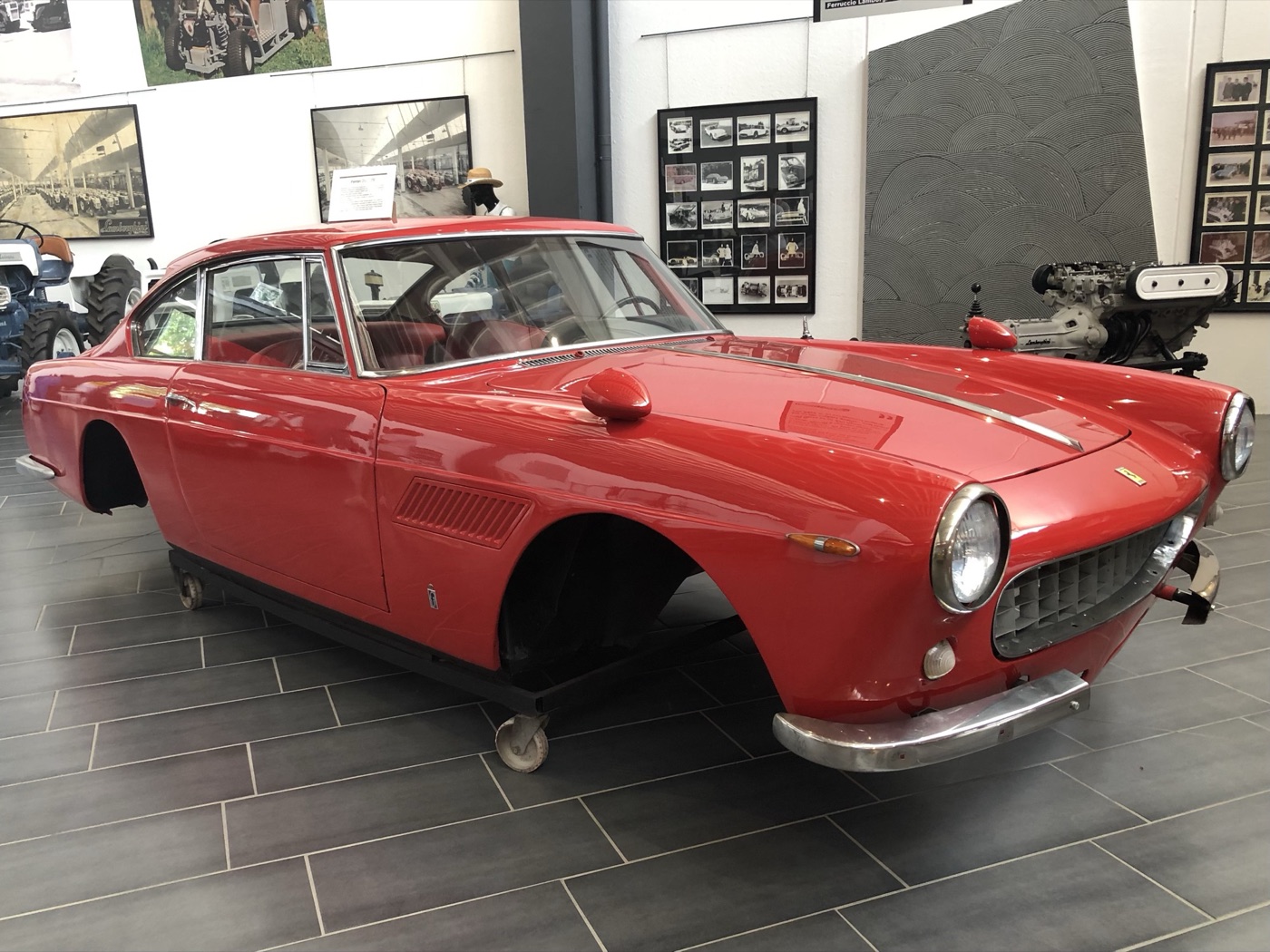
The story usually told is that the founder drove to Maranello to complain about his Ferrari, was left waiting outside Enzo Ferrari’s office, and went home to build a better car. Motor Sport, in its 2016 profile of Giotto Bizzarrini, tells it with the words “if the story can be believed”. SkiddMark’s 2012 version had him first modifying a Ferrari 250 GT to outperform the factory’s own cars, then hiring Bizzarrini, one of the engineers behind the Ferrari 250 GTO, to design his engine.
Bizzarrini’s V12 and the 350 GTV
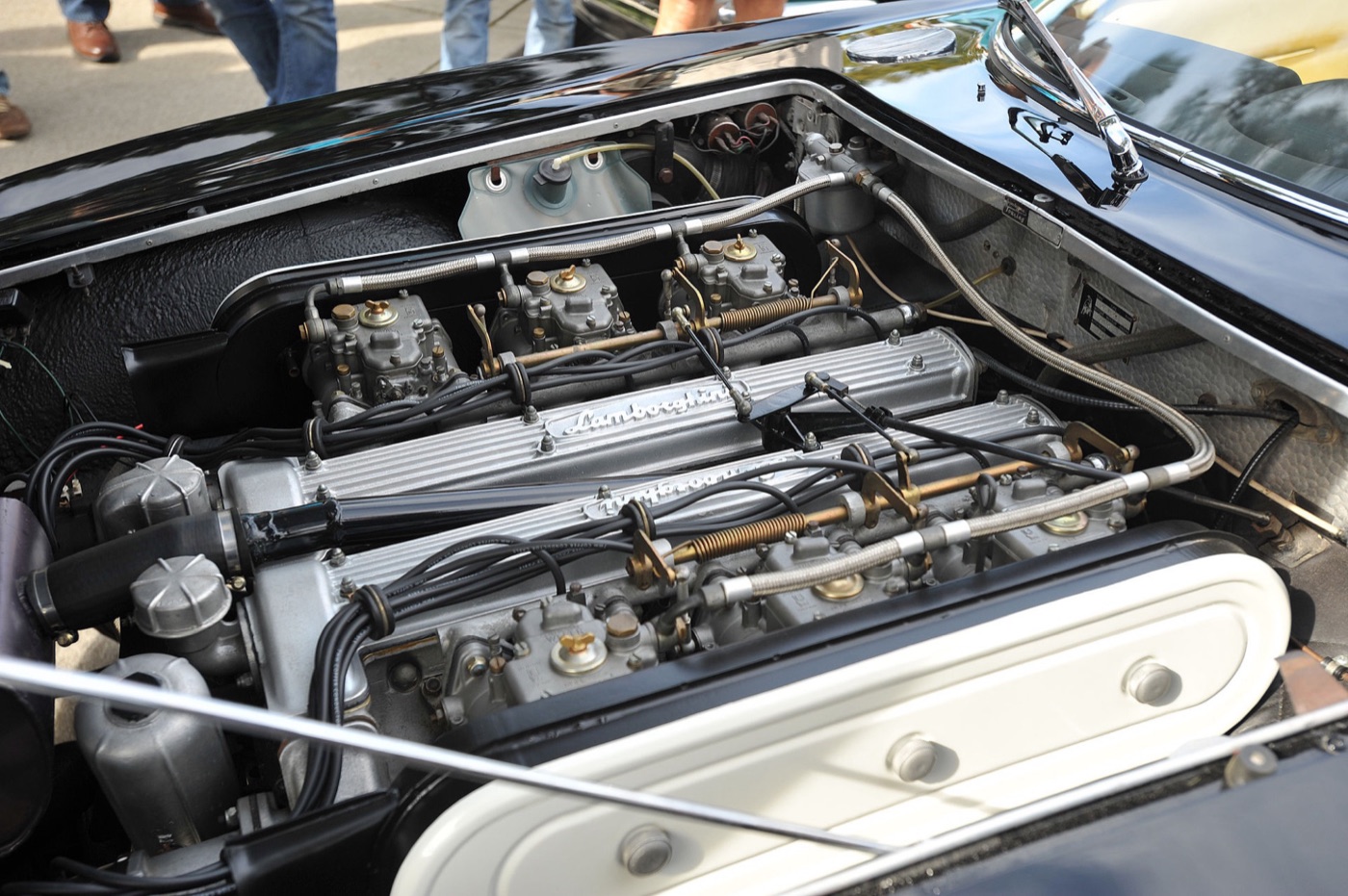
Bizzarrini, who had left Ferrari in the “Palace Revolt” before the 250 GTO was launched, designed a 3.5-litre, 60-degree V12 engine with twin overhead camshafts per bank and six carburettors. Lamborghini’s 350 GT history says he drew it for racing, at almost 100 CV per litre, and that Paolo Stanzani’s engineers retuned it for the road. Motor Sport’s view is that the engine’s line ran unbroken to the Murciélago, “almost doubling in size by 2010 with no single part surviving from first to last”.
The first car, the 350 GTV prototype, was styled by Franco Scaglione and, by Lamborghini’s timeline, shown at the Turin Motor Show in October 1963. The factory’s foundation stone at Sant’Agata had been laid that May.
First cars: 350 GT, 400 GT and the Miura
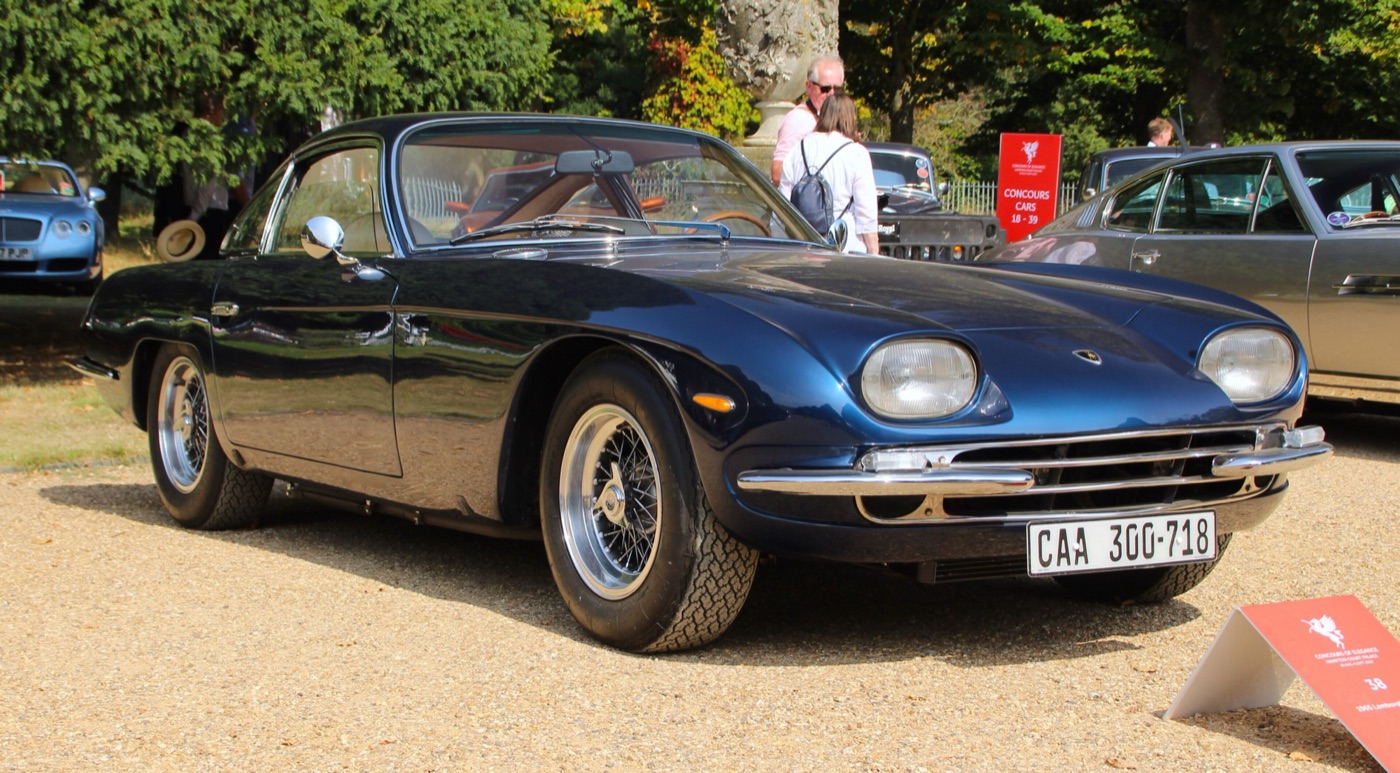
Lamborghini’s first production car was the 350 GT, a front-engined gran turismo shown at the Geneva Motor Show in March 1964, and its first mid-engined car was the Miura of 1966. Between them came a run of front-engined V12 grand tourers; from the 400 GT on, the United States was one of the main markets.
350 GT
Carrozzeria Touring of Milan built the 350 GT’s Superleggera bodywork, aluminium panels on a light metal frame, around a 2+1 cabin with one seat in the back. The car had a ZF five-speed gearbox, independent suspension on every wheel and disc brakes all round; the V12 gave 270 CV. Lamborghini’s history page counts 150 coupés and two Touring spiders. SkiddMark, reporting on the 1964 car Lamborghini took to Techno Classica in Essen in 2014, gave 120 sold by the end of 1966 and a top speed of 155 mph.
400 GT, Islero, Espada and Jarama
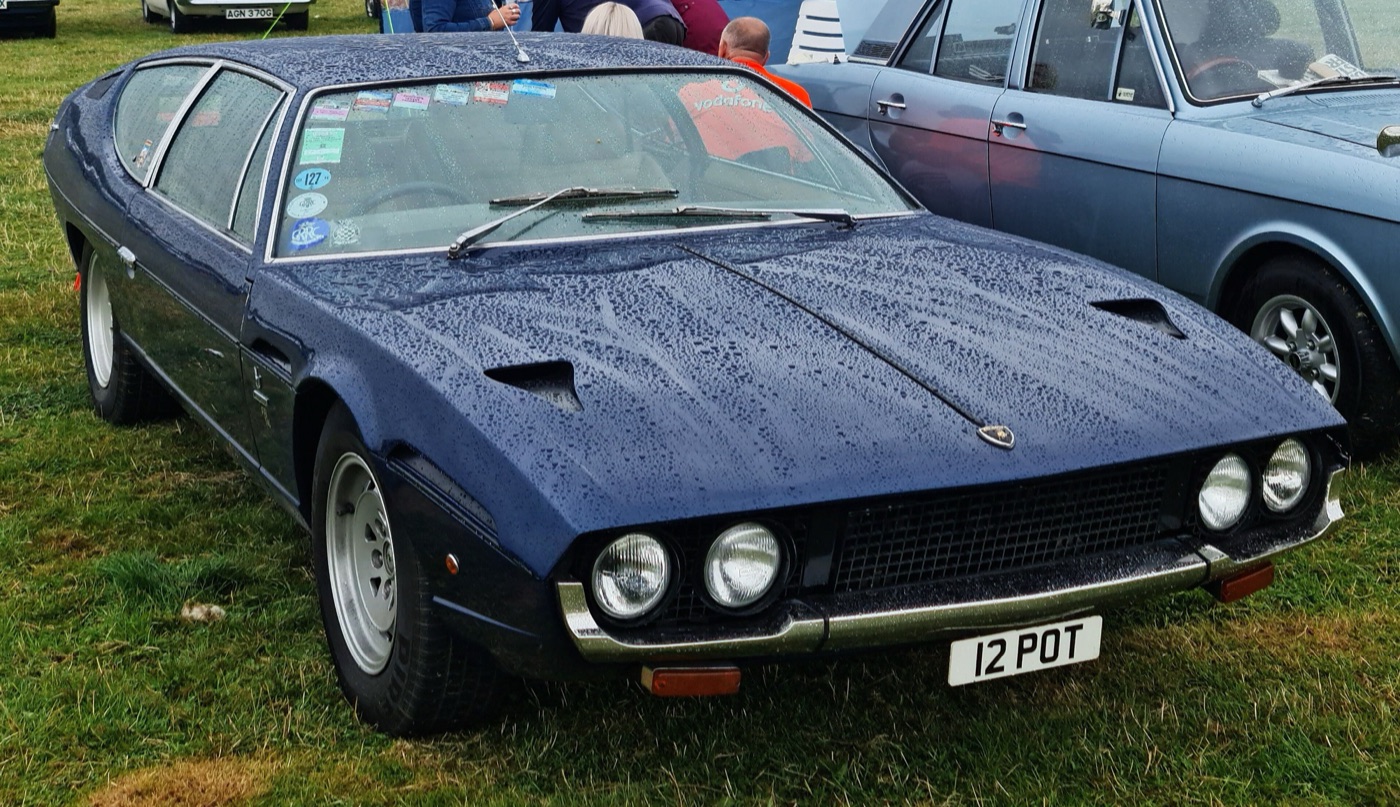
The 400 GT of 1966 took the engine to 3,929 cc and 320 CV, raised the roof for the rear passengers of its 2+2 cabin, and had a steel body; 250 were built by 1968. When Touring went bankrupt, the Islero of March 1968 had its panels made by Bertone and its final assembly done by Carrozzeria Marazzi: 155 Isleros and 70 Islero S. The Espada, Bertone’s four-seater shown at Geneva in 1968 and based on the glass-doored Marzal concept car, was Lamborghini’s best seller for a decade, with 1,217 built in three series to 1978. The Jarama of 1970 was the last front-engined 2+2 V12, 177 GTs and 150 GTSs; the founder drove a Jarama GTS on Ferrara plates for years.
Miura
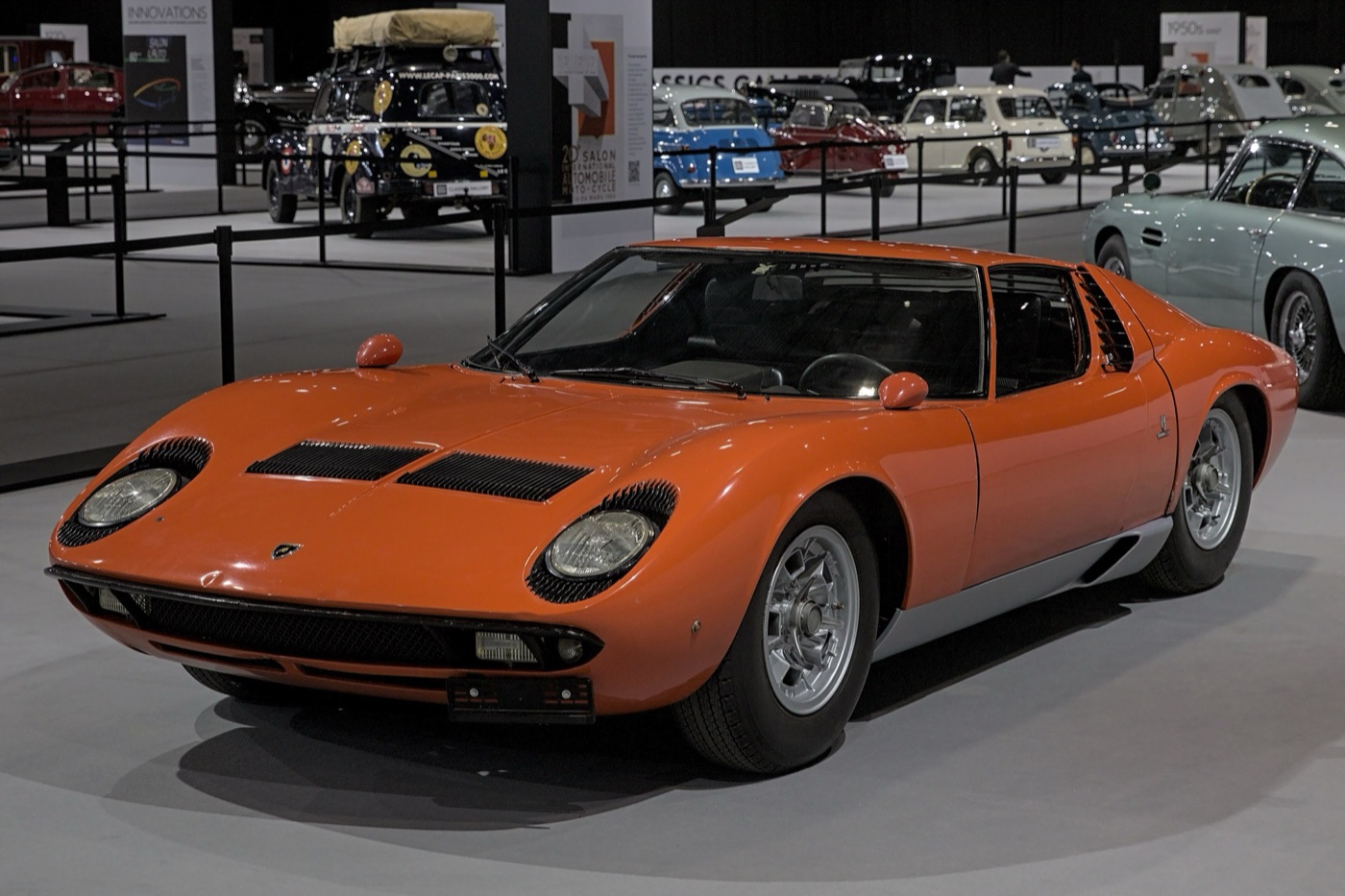
The Miura put the V12, now 4.0 litres, across the car behind the cabin. Lamborghini’s Miura history says the car, shown at Geneva in March 1966 with a Bertone body only 110 cm high, drew so many orders that Ferruccio and Nuccio Bertone were both surprised, and that the press first called it a “supercar”. The Miura’s name is that of a breed of Spanish fighting bull. Giampaolo Dallara was the company’s first technical director; in 1968 Paolo Stanzani succeeded Dallara as technical director and production director.
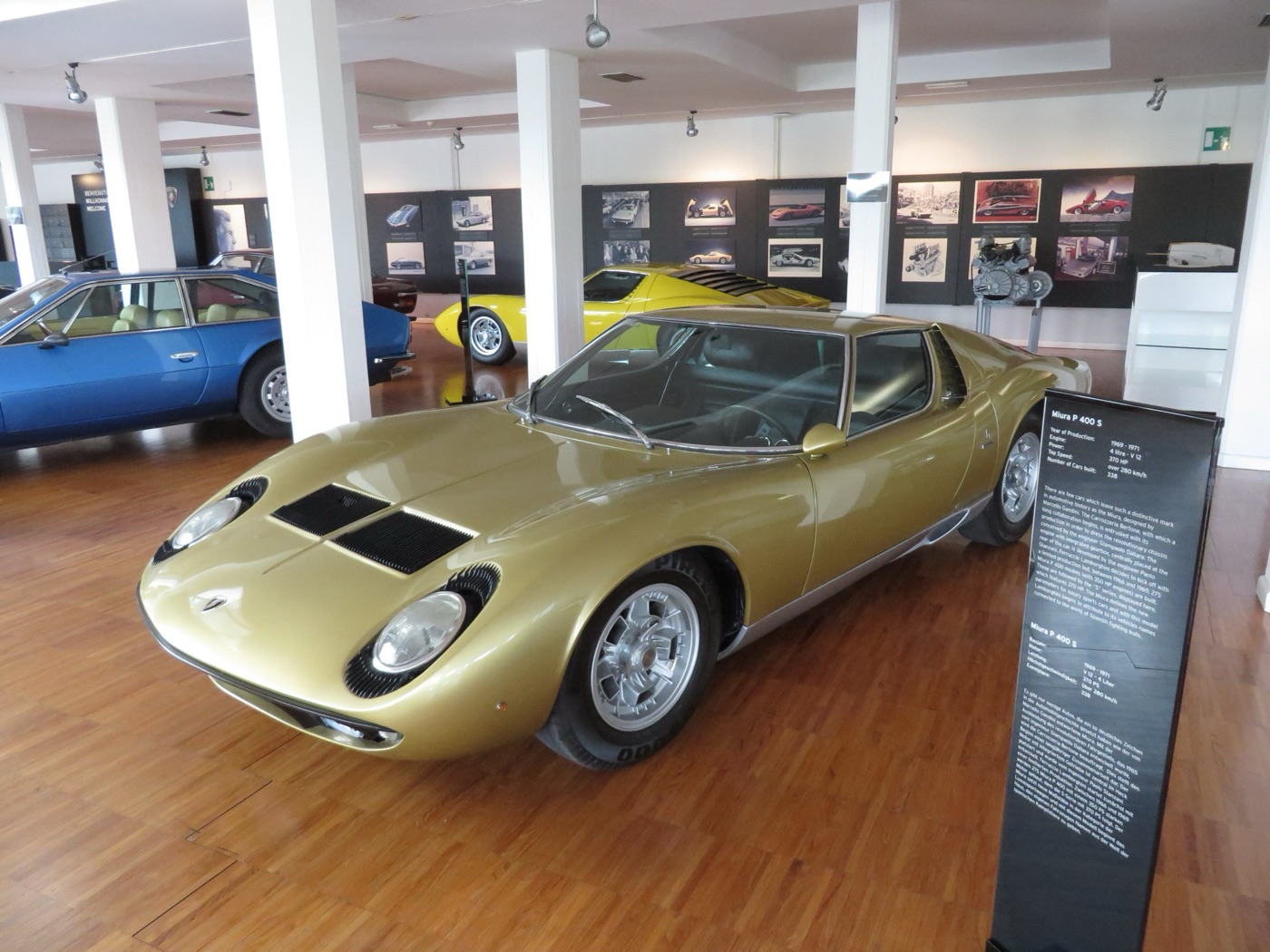
The factory built 265 P400s from 1966 to 1968, 338 P400 S from 1969 to 1971 and 150 SVs from 1971 to 1973, plus four SVJs and a single Bertone roadster: 753 standard cars by Lamborghini’s figures. A Miura is wrecked in the opening of The Italian Job (1969).
Countach, Urraco and the founder’s exit
In the 1970s Lamborghini replaced the Miura with the wedge-shaped Countach, added a cheaper V8 line, and lost its founder, who sold a controlling share in 1972 and retired in 1974. SkiddMark’s 2012 summary had the marque “nearly brought to its knees, first by a world financial crisis and then an oil crisis”.
Countach
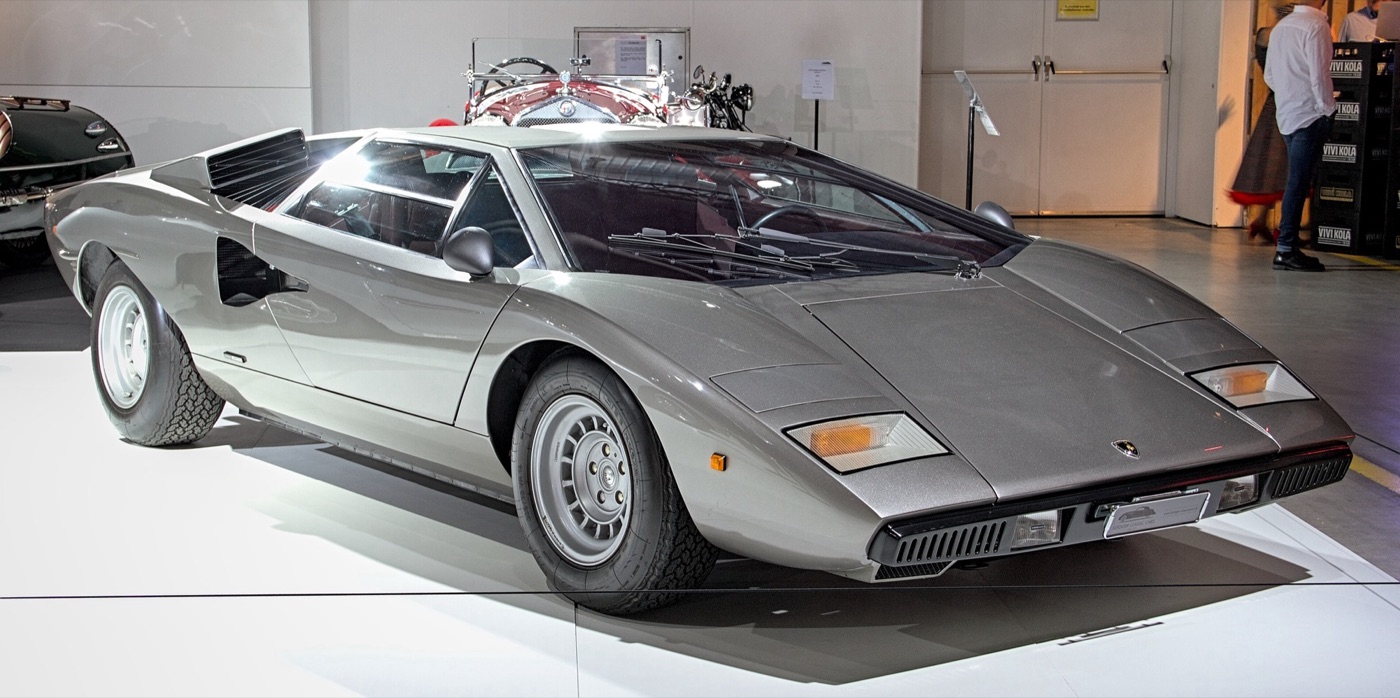
The yellow Countach LP 500 prototype was unveiled at the Geneva show at 10 o’clock on the morning of 11 March 1971, on Bertone’s stand. Lamborghini’s 50th-anniversary account of the LP 500 gives its project code as LP112, LP for longitudinale posteriore, the engine mounted lengthways behind the cabin. Paolo Stanzani, by then general manager and technical director, did the engineering, and Marcello Gandini, Bertone’s design director, drew the body and its scissor doors. The prototype’s 4,971 cc engine was never fitted to a customer car; after test driver Bob Wallace’s road testing on a 4.0-litre engine, the prototype was crash-tested for homologation early in 1974 and scrapped.
The production LP 400 followed in 1974 with a 4.0-litre, 375 CV V12 engine. The Countach history page lists the LP 400 S of 1978 with wider Pirelli tyres, the 4.8-litre 5000 S of 1982, the 5.2-litre, four-valve 5000 Quattrovalvole of 1985 with 455 CV, and the 25th Anniversary of 1988. In 16 years Lamborghini built 1,999 Countaches. The name comes from an exclamation of amazement in Piedmontese dialect.
Urraco and Silhouette: the first V8 Lamborghinis
Ferruccio wanted a smaller car built in larger numbers to make the company more stable. The Urraco, a 4.25-metre 2+2 by Bertone, was shown in November 1970 with a new 2.5-litre V8 engine mounted across the car behind the seats; Stanzani later called it the design he was proudest of. Lamborghini built 275 P250s and 246 P250 S, 71 two-litre P200s for the Italian tax rules and 203 three-litre P300s, the last in 1979. The Silhouette of 1976, a targa on the Urraco P300 chassis with five-hole “Bravo” wheels from the 1974 Bravo prototype, was the company’s first open production car; 52 were built, 12 of them with right-hand drive. Lamborghini’s Silhouette history recalls that one drove from Sant’Agata to England with a Countach and an Urraco for Mel Nichols’s “Convoy”, in the February 1977 issue of CAR.
The founder sells Lamborghini
In 1972 the founder sold 51 per cent of his shares in the car company to Georges-Henri Rossetti; in 1974 he retired to private life, and Rossetti and René Leimer took over its management, according to Lamborghini’s own timeline. The New York Times (1987) puts the sale down to financial problems in his other businesses, and says he retired that year “to produce wine at his country estate”.
Bankruptcy, the Mimran brothers and Chrysler
Lamborghini went bankrupt at the end of the 1970s, was rescued by the Mimran family of Geneva (the Mimran brothers, who took over in May 1981, SkiddMark’s 2014 report says), and was sold by them to Chrysler on 24 April 1987. SkiddMark’s 2014 report dated the bankruptcy to 1978; The New York Times report of the Chrysler sale says the company “went bankrupt in 1980 and then came under the control of the Mimran family”, and Lamborghini’s timeline dates the Mimran purchase to 1981.
Jalpa and LM002
Under the Mimrans the company launched the Jalpa at Geneva in 1981: general manager Giulio Alfieri’s evolution of the Silhouette, with the V8 stretched to 3.5 litres for low-speed torque. Lamborghini built 420 in two series to 1988, and Sylvester Stallone drove one in Rocky IV. The last Jalpa off the line, shown by Lamborghini at Techno Classica in Essen in March 2014, carries the founder’s signature on the glovebox, SkiddMark reported. It was the last V8 Lamborghini until the Urus.
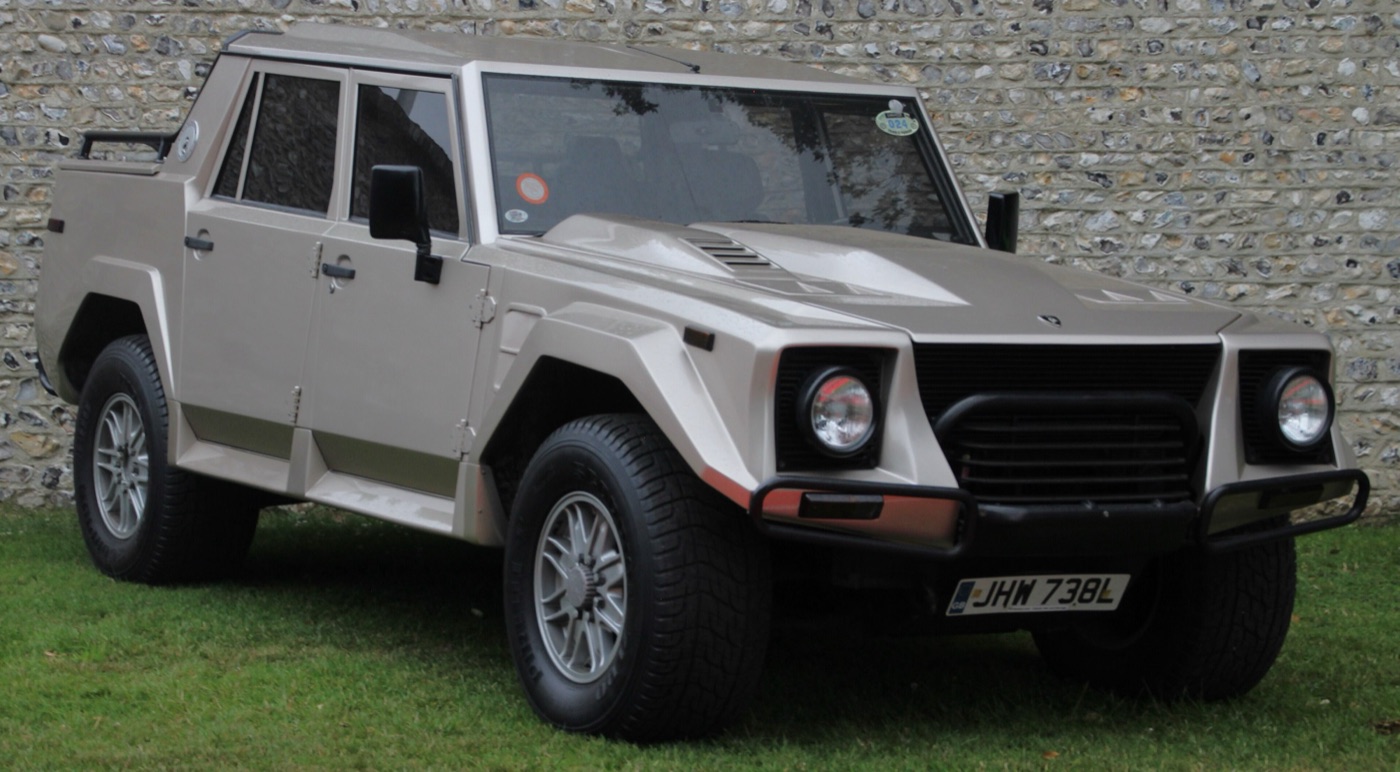
The LM002 began as the Cheetah, a military vehicle project, and reached customers in 1986 with the 5.2-litre Countach Quattrovalvole V12, selectable four-wheel drive, three locking differentials and Pirelli Scorpion tyres made for sand. Its flat panels were meant to be easy to replace. Lamborghini built “300 + 1” between 1986 and 1993.
Chrysler and the Diablo
Chrysler, led by its chief executive Lee Iacocca, bought Nuova Automobili F. Lamborghini in April 1987 to sit beside Maserati, already a Chrysler affiliate. The New York Times reported production of about 450 cars a year, a Countach price of $127,000, and an early Italian estimate of the price paid: $25 million. It wrote that “the low-slung, aggressive styling of its cars and their eye-popping performance” had made the charging bull familiar to enthusiasts worldwide.
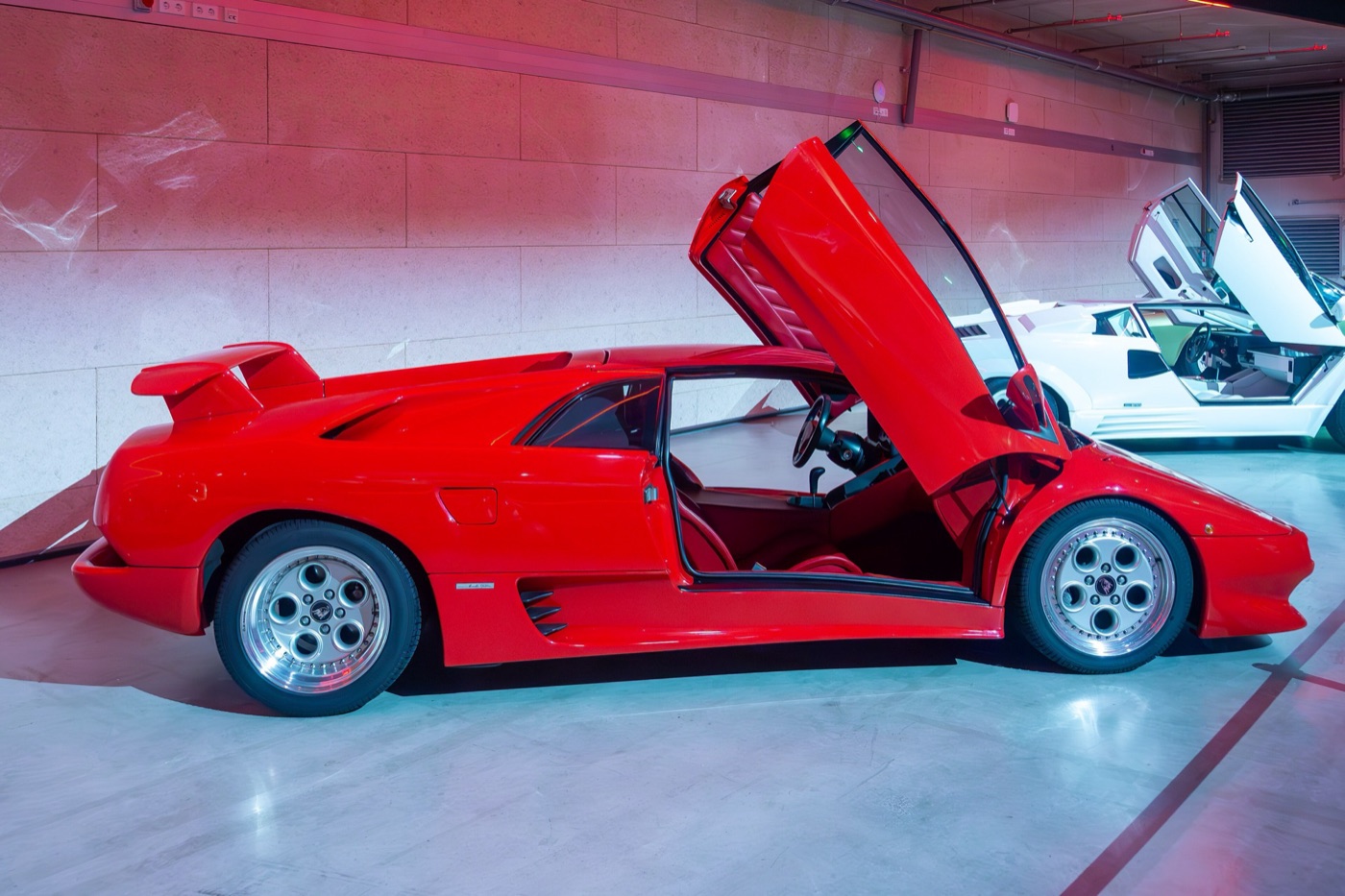
The Diablo, whose development Chrysler’s management completed, was unveiled on 21 January 1990 and replaced the Countach with a 5.7-litre, fuel-injected V12 of 492 CV; Lamborghini calls it the fastest car in the world at the time. The VT of 1993 was the first four-wheel-drive Lamborghini super sports car, sending up to 28 per cent of the torque to the front axle. Luc Donckerwolke’s design team restyled it in 1998, the GT of 1999 reached 575 CV from 6.0 litres, and 2,903 Diablos had been built when production ended in 2001.
Megatech
Chrysler sold Lamborghini in February 1994 to Megatech, a Bermuda company owned by Hutomo “Tommy” Mandala Putra, the youngest son of Indonesia’s President Suharto, and the Malaysian group Mycom Setdco; Lamborghini’s timeline calls the sale a strategic internal decision by Chrysler, and Megatech an Indonesian investment fund. The International Herald Tribune’s report put the price at between $35 million and $45 million. Lamborghini’s general manager, Gianfranco Venturelli, told the paper: “We’re a small company that produces a small number of high-performance cars. Making cars in mass production is a different culture.”
The Audi years: Murciélago, Gallardo, Aventador and Huracán
Audi, the German premium brand of the Volkswagen Group, bought Lamborghini in 1998, and in 25 years of Audi ownership annual deliveries went from a few hundred to more than 10,000. The first car of the new owner was the third series of the Diablo, with a 6.0-litre engine. Audi also gave the company a second model line, its own design studio, Centro Stile, and, with the Urus, a third. The factory history says Centro Stile was announced in 2003 and began work in 2005; Lamborghini’s Diablo and logo pages date it to 1998.
Murciélago
The Murciélago of 2001 was named after a fighting bull spared in the ring, and was the first Lamborghini designed entirely in house, by Luc Donckerwolke’s team. It had a 6.2-litre, 580 CV V12 with the gearbox ahead of it, and four-wheel drive as standard. Lamborghini built 4,099 by 2010. SkiddMark noted in November 2010 that the end of the Murciélago also ended the Bizzarrini-derived V12, after more than 40 years.
Gallardo
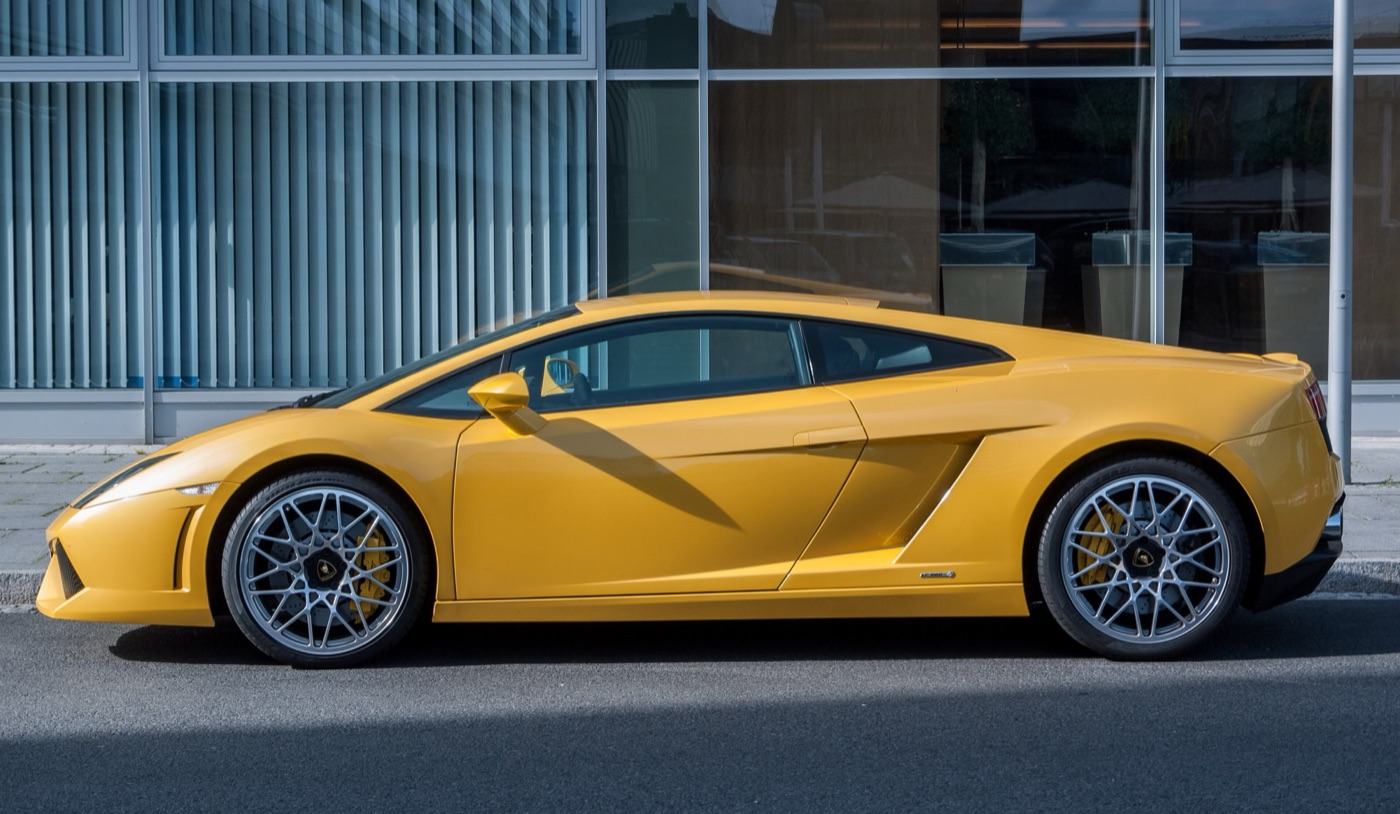
The Gallardo of 2003 was the “baby Lambo” first imagined by the founder in the early 1970s and revived as the L140 project in 1987. Lamborghini’s 20th-anniversary account describes a 5.0-litre, 90-degree V10 engine, an all-aluminium chassis and a shape that began as Giorgetto Giugiaro’s Calà design for Italdesign. In ten years it sold 14,022, in 45 countries.
SkiddMark reported the last car, in November 2013: a Gallardo LP 570-4 Spyder Performante in Rosso Mars, the end of 32 versions. The Gallardo accounted for nearly half of the 30,000 Lamborghinis built since 1963; before it, the factory had built about 250 cars a year, and in the decade after its launch more than 2,000.
Aventador
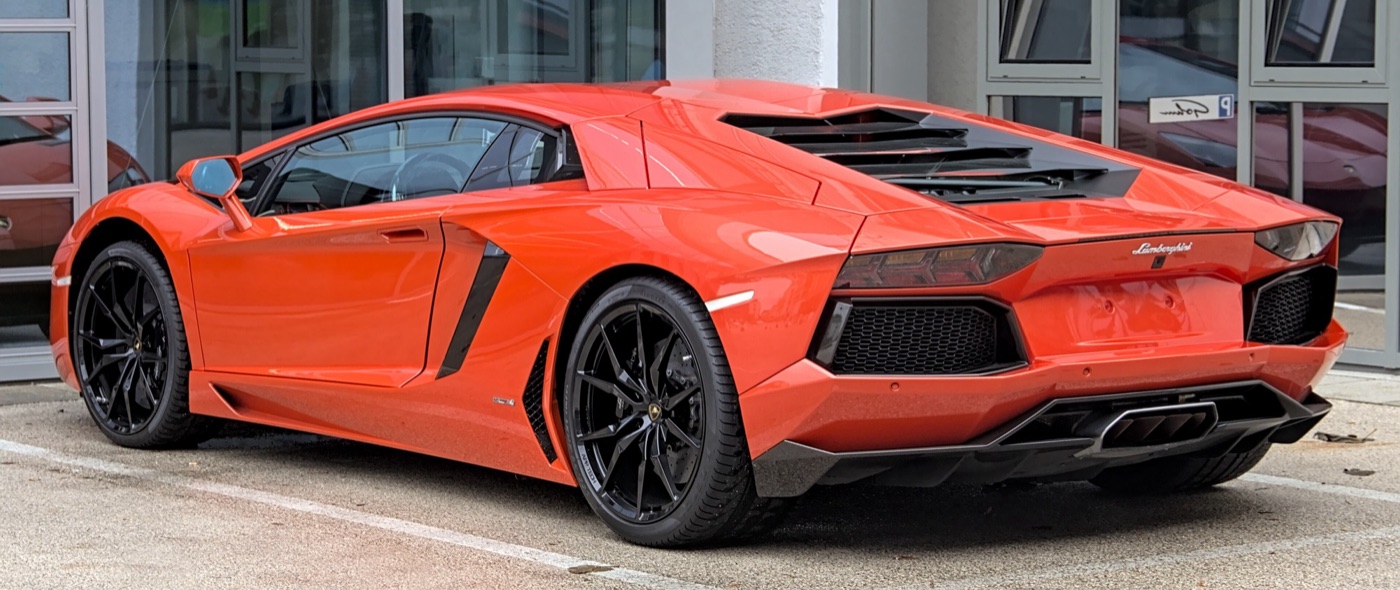
The Aventador LP 700-4 of 2011 had a carbon-fibre monocoque made at Sant’Agata and a new 6.5-litre V12 of 700 CV designed from scratch. SkiddMark reported in November 2010 that the engine would drive through a seven-speed ISR (Independent Shifting Rod) transmission weighing 79 kg, and in March 2011 that the first year’s production, at £220,000 a car, sold out within a month of the Geneva launch.
Production ran until 2022. CAR magazine’s farewell report counts 11,465 Aventadors in eight models, more than all of Lamborghini’s earlier V12 cars put together; the last was an LP 780-4 Ultimae Roadster in a light blue Ad Personam colour, sold to a Swiss buyer. Lamborghini’s own announcement called it the last purely naturally aspirated V12 to be built at Sant’Agata.
Huracán
The Huracán LP 610-4 replaced the Gallardo in 2014 with a 5.2-litre V10 of 610 CV, a seven-speed dual-clutch gearbox and a chassis of carbon fibre and aluminium. SkiddMark’s December 2013 launch report traced the name to a fighting bull of the Conte de la Patilla breed that fought in Alicante in August 1879. The Huracán passed the Gallardo’s 14,022 in five years, and number 20,000, an STO in Grigio Acheso for a buyer in Monaco, came after eight. Lamborghini’s January 2025 results release said the last Huracáns would be delivered during 2025.
Few-offs and limited editions
Lamborghini calls its short runs “few-offs”, a series that began with the Reventón at the 2007 Frankfurt show. Its 2025 history of them gives the figures in the table below. SkiddMark covered the carbon-fibre Sesto Elemento in September 2010, when Lamborghini quoted 999 kg, 562 bhp and 0 to 62 mph in 2.5 seconds, and the Veneno Roadster in October 2013, nine cars at €3.3 million each before tax. The Centenario of 2016 marked 100 years since the founder’s birth.
| Model | Shown | Engine | Units built |
|---|---|---|---|
| Reventón | 2007 | V12 | 20 coupés, 15 roadsters |
| Sesto Elemento | 2010 | V10 | 20 |
| Veneno | 2013 | V12, 740 bhp | 3 coupés for customers, 9 roadsters |
| Centenario | 2016 | V12, 770 CV | 20 coupés, 20 roadsters |
| Sián FKP 37 | 2019 | V12 hybrid with supercapacitor, 819 CV | 63 coupés, 19 roadsters |
| Countach LPI 800-4 | 2021 | V12 hybrid, 814 CV | 112 |
| Fenomeno | 2025 | V12 hybrid, 1,080 CV | 29 |
The 50th anniversary and the Grande Giro
Lamborghini marked its 50th year with the Grande Giro, its 50th-anniversary grand tour: a five-day drive of about 350 cars from Milan to Sant’Agata from 7 to 11 May 2013, which SkiddMark followed from the announcement to the first day on the road. Chief executive Stephan Winkelmann announced the plans at Pebble Beach in August 2012, with a 50th-anniversary badge and the slogan “100 years of innovation in half the time”. Owners and dealers could register from 20 September 2012, and Lamborghini said it would put 10 per cent of entry and sponsorship fees into a fund to rebuild social and cultural centres in the earthquake-hit area of Emilia.
SkiddMark had itself been asked, the year before, to contribute to a project for the anniversary. “Anyone who’s ever been to Sant’Agata Bolognese will know how strongly the region connects with Ferruccio Lamborghini,” SkiddMark wrote in May 2013. “The Lamborghini factory at Via Modena is surrounded by farm land.”
The cars and the route
On the evening of 7 May 2013 the cars gathered in parc fermé in Piazza Castello, Milan. SkiddMark’s count from the organisers: 320 entrants and about 30 courtesy cars for press and guests, from 29 countries, with 71 cars from the UK, the largest group, ahead of Italy; Germany and Switzerland had more than 30 each, the USA 21 and China 17. The youngest driver, from Kuwait, was 22; the oldest was 75. The convoy was expected to stretch about 4.5 km and its cars to carry 190,000 bhp between them.
The historic cars were three 350 GTs, five 400 GTs, 17 Miuras, eight Espadas, two Jaramas, six Urracos, 15 Countaches, one LM002, 21 Diablos and 36 Murciélagos. The Gallardo, then the best-selling Lamborghini, was the most numerous, with 123 cars.
The first day, 8 May, covered almost 170 miles through the Aveto regional park and the Trebbia valley, with lunch at the monastery of Saint Columbanus in Bobbio, and ended in Piazza Marconi at Forte dei Marmi. On 9 May the convoy drove 140 miles to Rome by way of the 4th Wing air force base at Grosseto. On 10 May it ran through Orvieto, Arezzo and San Giustino Valdarno to Bologna and a reception at Palazzo Re Enzo; the historic cars took part in a Concorso d’Eleganza in Piazza Maggiore the next morning, before the drive to Sant’Agata for the gala dinner at the factory.
Anniversary cars
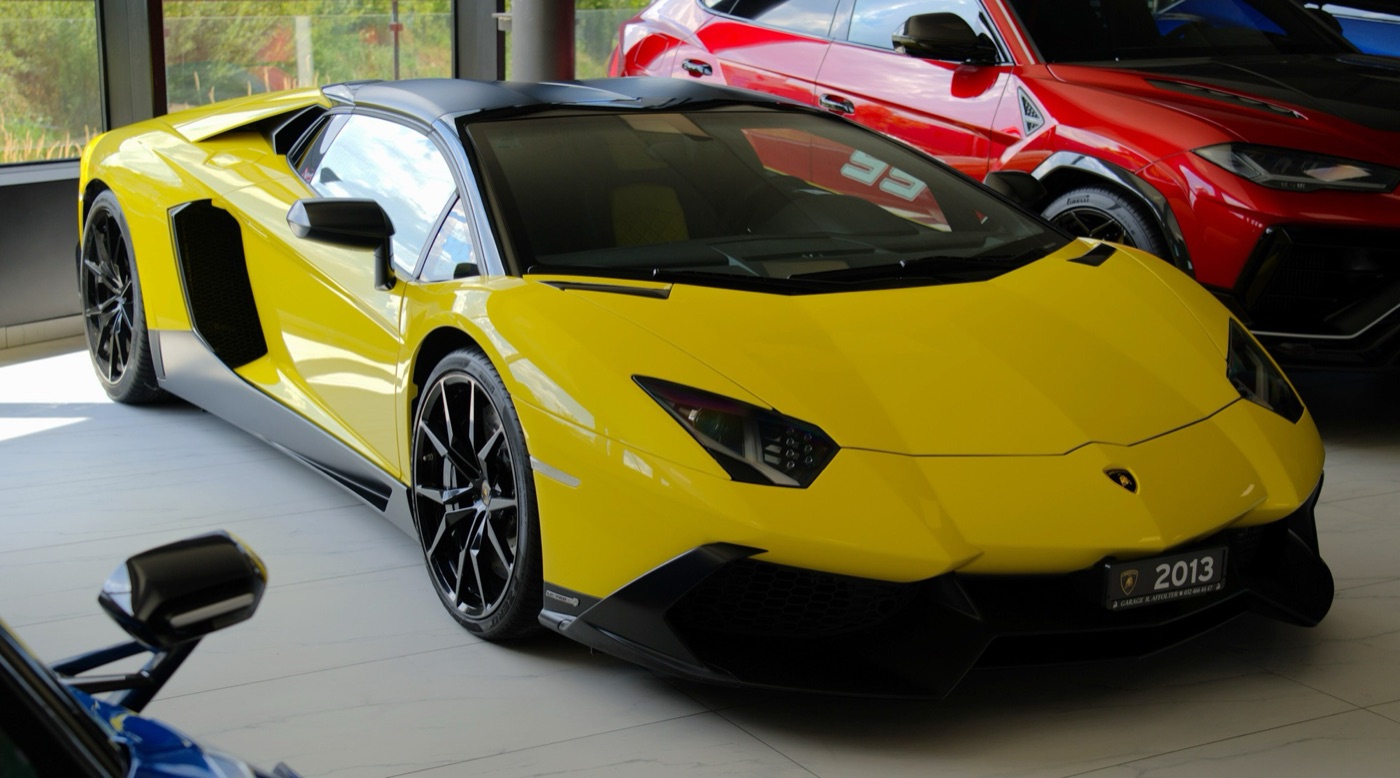
The Aventador LP 720-4 50° Anniversario, shown at Shanghai in April 2013, had 720 PS, a carbon-fibre body kit and Giallo Maggio paint, in a run of 100, SkiddMark reported. The Veneno, a 740 bhp car on the Aventador, was Lamborghini’s Geneva tribute to the anniversary, “a track car built for the road” in its maker’s words: three were sold to customers, at £2.6 million each plus taxes, SkiddMark reported. At the gala dinner on 11 May Lamborghini unveiled the Egoista, a one-off single-seater by Walter de Silva, the Volkswagen Group’s head of design, who called it “a gift from Lamborghini to Lamborghini, resplendent in its solitude”. SkiddMark’s verdict was that there was “something hugely embarrassing” about it.
Urus and the hybrid Lamborghinis
The Urus, Lamborghini’s second SUV after the LM002, accounted for six in ten Lamborghinis delivered in 2023, and Lamborghini now describes its range as entirely hybrid. The hybrids began with the limited Sián in 2019 and reached the main range with the Revuelto in 2023.
Urus
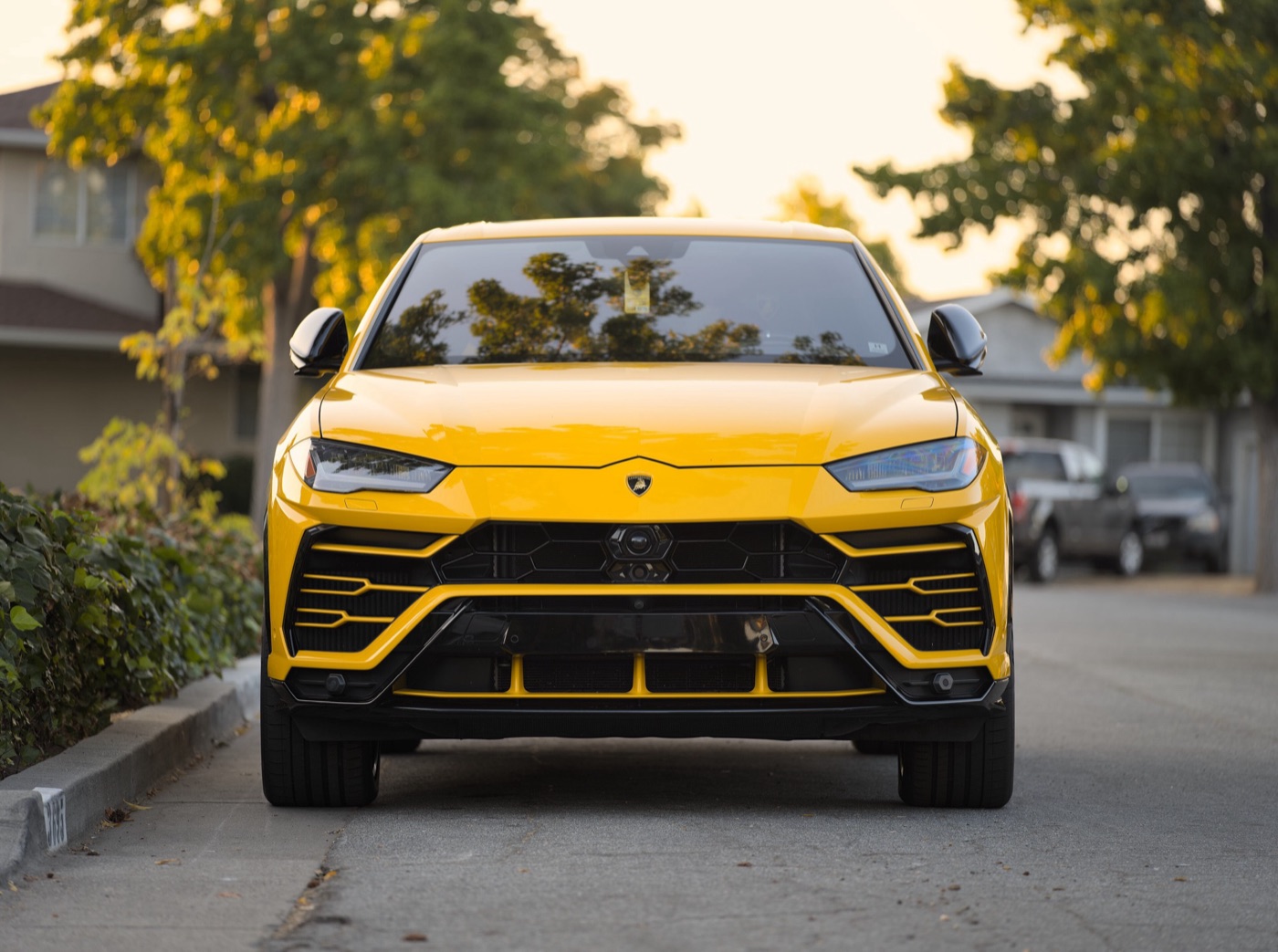
The Urus was shown as a concept at the Beijing motor show in April 2012, when SkiddMark reported Lamborghini’s forecast of up to 3,000 a year; in March 2013 it was still waiting for Volkswagen’s supervisory board to approve it. The production Urus of 2018 has a 4.0-litre twin-turbo V8 of 650 CV. The factory expansion for it doubled the Sant’Agata site from 80,000 to 160,000 square metres, with its own assembly line and, from 2019, its own paint shop. Lamborghini had built 10,000 by 2020, two years after its introduction, and 20,000 in four years. In 2023 the Urus made up 6,087 of Lamborghini’s 10,112 deliveries.
Revuelto, Temerario and Urus SE
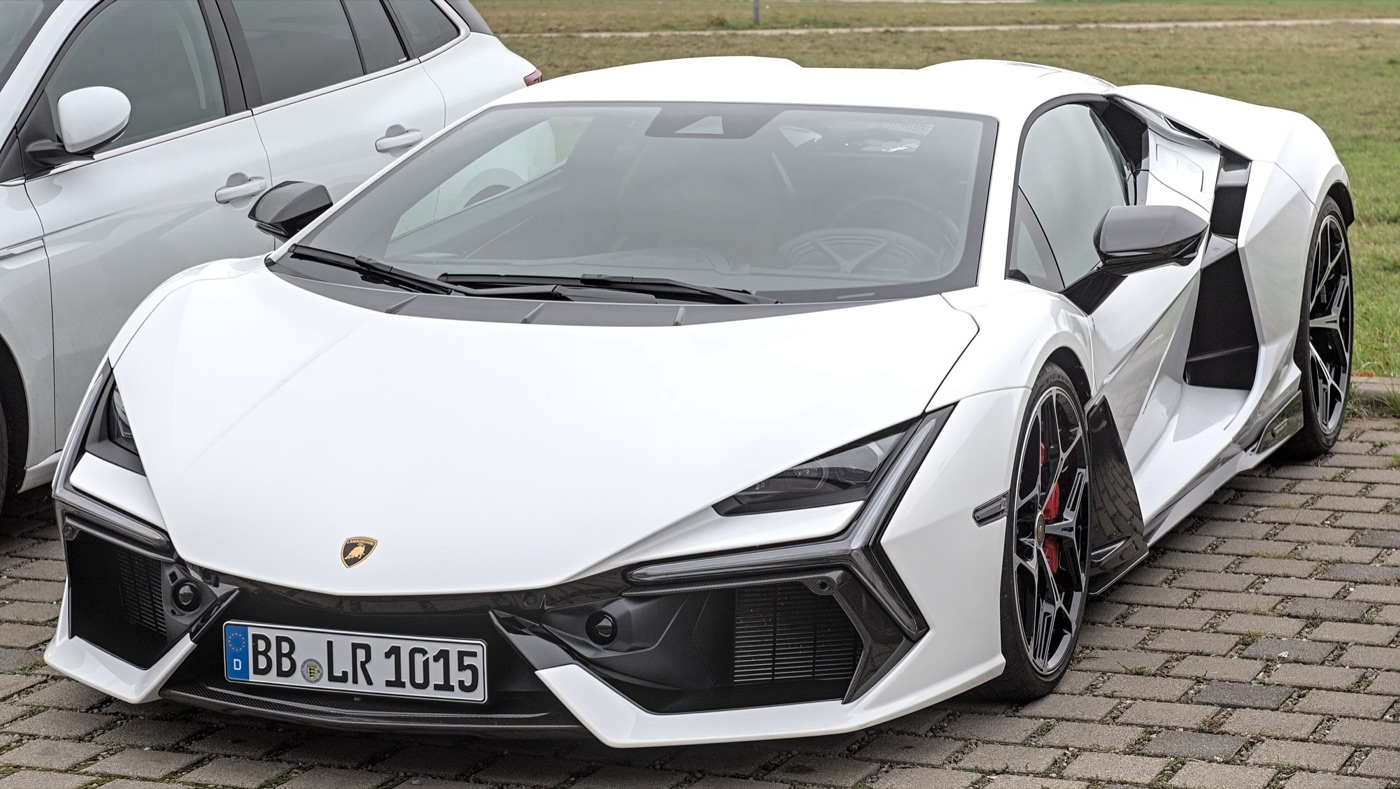
Lamborghini’s 2021 plan, “Direzione Cor Tauri”, set out to electrify the whole range in 2023 and 2024. The Revuelto, unveiled in March 2023, has a new 6.5-litre V12, three electric motors and a dual-clutch gearbox, a combined power of 1,015 CV, and reaches 100 km/h in 2.5 seconds; in 2024 it was the brand’s best seller. The Urus SE followed in 2024 as a plug-in hybrid. The Temerario, the Huracán’s successor, was unveiled at Monterey in August 2024 with a twin-turbo V8 of 3,995 cc displacement and three electric motors, 920 CV and 343 km/h; customer deliveries began in January 2026, with orders covering about 12 months. In August 2023 Lamborghini showed the Lanzador, a concept car for a fourth, fully electric model line.
Every Lamborghini production model
Lamborghini has built 19 series-production model lines since 1964, from the 350 GT to the Temerario.
| Model | Built | Engine | Units made |
|---|---|---|---|
| 350 GT | 1964–66 | 3.5-litre V12, front | 150 coupés, 2 spiders (SkiddMark, 2014: 120 by end of 1966) |
| 400 GT | 1966–68 | 3.9-litre V12, front | 250 |
| Miura | 1966–73 | 4.0-litre V12, mid, transverse | 753 (265 P400, 338 S, 150 SV), plus 4 SVJ and 1 roadster |
| Espada | 1968–78 | 4.0-litre V12, front | 1,217 |
| Islero | 1968–70 | 4.0-litre V12, front | 225 (155 Islero, 70 Islero S) |
| Jarama | 1970–78 | 4.0-litre V12, front | 327 (177 GT, 150 GTS) |
| Urraco | 1971–79 | 2.0, 2.5 or 3.0-litre V8, mid | 795 |
| Countach | 1974–90 | 4.0 to 5.2-litre V12, mid | 1,999 |
| Silhouette | 1976–79 | 3.0-litre V8, mid | 52 |
| Jalpa | 1981–88 | 3.5-litre V8, mid | 420 |
| LM002 | 1986–93 | 5.2-litre V12, front | 301 |
| Diablo | 1990–2001 | 5.7 or 6.0-litre V12, mid | 2,903 |
| Murciélago | 2001–10 | 6.2 or 6.5-litre V12, mid | 4,099 |
| Gallardo | 2003–13 | 5.0 or 5.2-litre V10, mid | 14,022 |
| Aventador | 2011–22 | 6.5-litre V12, mid | 11,465 |
| Huracán | From 2014; last deliveries scheduled for 2025 | 5.2-litre V10, mid | More than 20,000 (number 20,000 built in 2022) |
| Urus | 2018 on | 4.0-litre twin-turbo V8, front; plug-in hybrid as Urus SE | 20,000 in its first four years |
| Revuelto | 2023 on | 6.5-litre V12 hybrid, mid | In production |
| Temerario | 2024 on | 4.0-litre twin-turbo V8 hybrid, mid | In production |
The Urraco was shown in November 1970; Lamborghini’s timeline dates its arrival in the range to 1973.
Who owns Lamborghini?
Lamborghini is owned by Audi AG, part of the Volkswagen Group, which bought it in 1998; Automobili Lamborghini S.p.A. has Audi as its sole shareholder.
| Owner | Years | Notes |
|---|---|---|
| Ferruccio Lamborghini | 1963–1974 | Sold 51% in 1972; retired in 1974 |
| Georges-Henri Rossetti (with René Leimer as manager from 1974) | 1972–late 1970s | Bankrupt by 1980; SkiddMark (2014) dates the bankruptcy to 1978 |
| Mimran family of Geneva | 1980/81–1987 | Took control during receivership |
| Chrysler Corporation | 1987–1994 | Early Italian estimate of the price: $25 million |
| Megatech (Tommy Suharto and Mycom Setdco) | 1994–1998 | Price estimated at $35–45 million |
| Audi AG (Volkswagen Group) | 1998 to date | Sole shareholder |
How many cars does Lamborghini make a year?
Lamborghini delivered 10,747 vehicles in 2025, its record and its third year in a row above 10,000; its sales had already more than doubled between 2012 and 2018, from 2,083 cars to 5,750. Its January 2026 release splits them into 4,650 for Europe, the Middle East and Africa, 3,347 for the Americas and 2,750 for Asia Pacific. In 2023 the United States took 3,000 cars and the United Kingdom 801, the fourth-largest market; in 2018 the order had been the United States (1,595), the United Kingdom (636) and Japan (559).
| Year | Cars | Notes |
|---|---|---|
| Before 2003 | About 250 a year | SkiddMark, 2013 |
| 1987 | About 450 a year | At the Chrysler sale |
| 2012 | 2,083 | 922 Aventadors, 1,161 Gallardos; turnover €469 million |
| 2017 | 3,815 | |
| 2018 | 5,750 | First 1,761 Urus delivered from July |
| 2023 | 10,112 | 6,087 Urus, 3,962 Huracán, 63 V12 cars |
| 2024 | 10,687 | Revuelto the best seller |
| 2025 | 10,747 | Record |
Lamborghini in motorsport
Lamborghini has raced powerboats, supplied Formula One engines, run its own one-make series since 2009 and won its class at the Daytona 24 Hours three years running with the Huracán GT3. Lamborghini’s motorsport history starts in 1967, when the founder had Riva fit a Super Aquarama boat with two 350 GT engines. From its official debut in powerboat racing in 1984 until 2007, Lamborghini won ten world titles.
Formula One engines
From 1989 to 1993 Lamborghini Engineering, a separate company a few kilometres from Sant’Agata run by the engineer Mauro Forghieri, built a naturally aspirated V12 for Formula One. It went to Larrousse, Lotus, Minardi, Ligier and the Modena Team, the only team for which Lamborghini built the whole car.
Super Trofeo and GT3
The Super Trofeo, a one-make series for Gallardos, began in Europe in 2009 and spread to Asia in 2012 and North America in 2013. SkiddMark previewed the 2010 season-opener at Hockenheim on 24 and 25 April, a support race for the DTM, for cars with 562 bhp and all-wheel drive, which made it the only all-wheel-drive one-make series. At Spa that July the Evo journalists Roger Green and John Barker shared Lamborghini’s number 2 car, with a best finish of sixth.
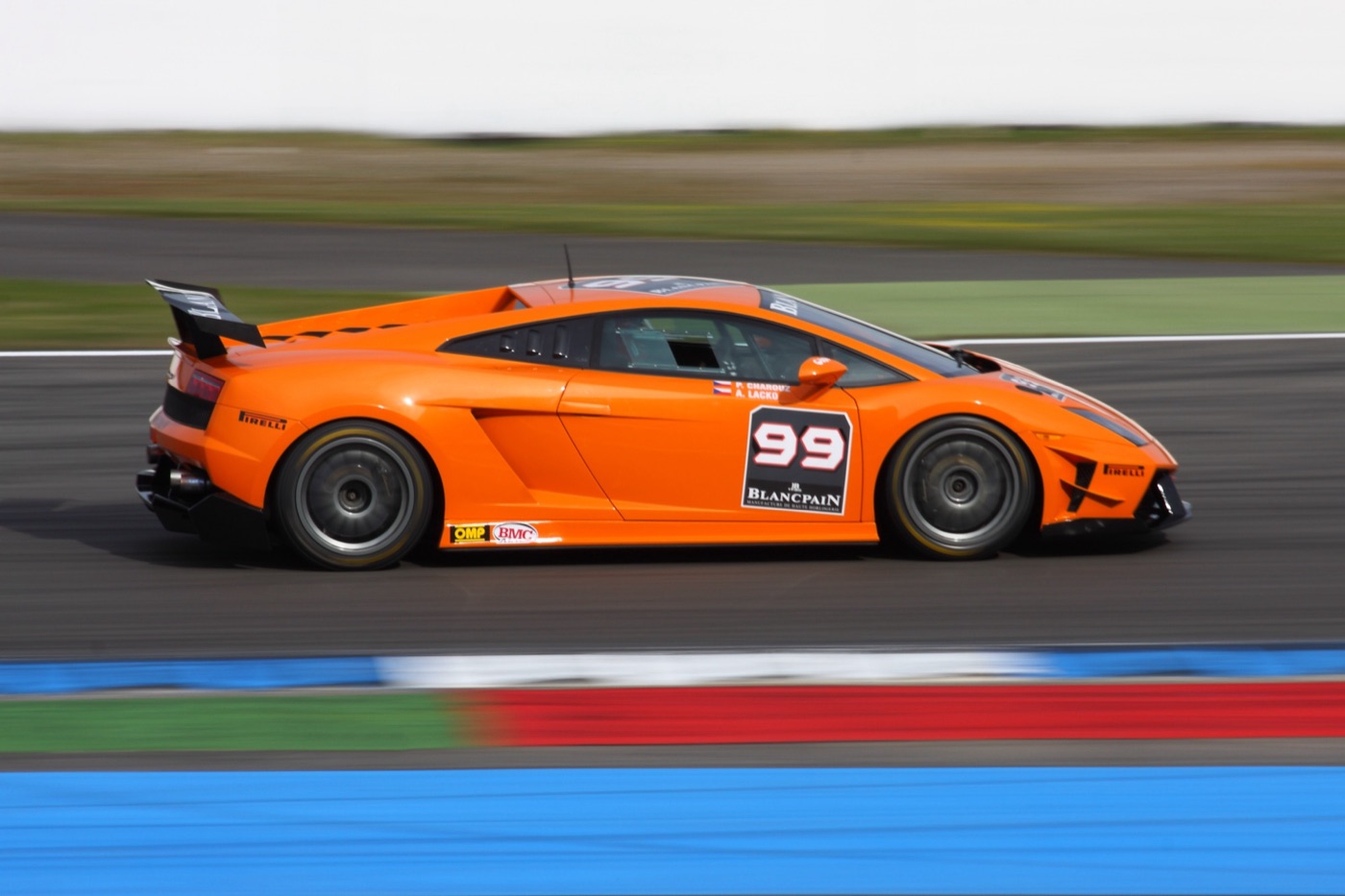
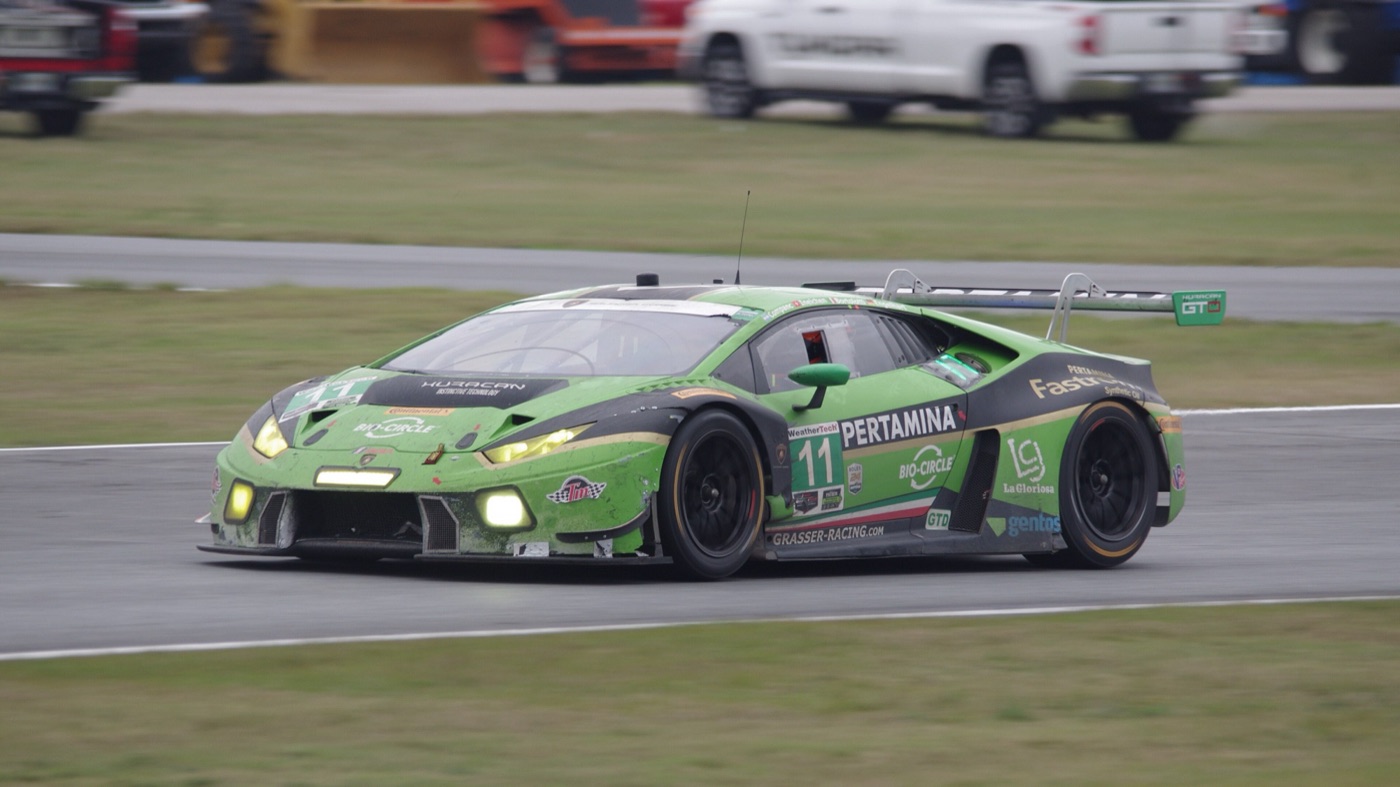
Lamborghini Squadra Corse, the racing department, was set up in 2013. Its Huracán GT3 won its first race, the opening round of the 2015 Blancpain GT series, with the Grasser Racing Team; it then won its class at the Daytona 24 Hours in three successive years from 2018 and the Sebring 12 Hours in 2018 and 2019. The Temerario GT3, shown at the Goodwood Festival of Speed in July 2025, is the first race car designed, developed and built entirely by Squadra Corse.
The SC63 hypercar
The SC63, Lamborghini’s LMDh prototype, raced in 2024 in the FIA World Endurance Championship, as a single car run with Iron Lynx for Mirko Bortolotti, Edoardo Mortara and Daniil Kvyat, and in IMSA’s endurance rounds. When the WEC required two cars per Hypercar maker for 2025, Lamborghini withdrew from the series, Motorsport.com reported on 22 November 2024. On 4 August 2025 it put the IMSA programme on hold for 2026, citing budget and technical demands “beyond original projections”, according to Sportscar365.
Why is Lamborghini’s logo a bull?
The bull in Lamborghini’s badge stands for the founder’s star sign, Taurus, and many of the cars, the Miura, Murciélago and Huracán among them, are named after fighting bulls or their breeds. Lamborghini’s timeline says the Jalpa of 1981 brought back bull names after the Countach and the Silhouette.
Lamborghini’s history of the badge describes a red shield with a white bull on the first prototype in 1963, a four-colour badge with a gold bull on light blue for the first production cars, and the gold bull on black of 1964, used on the Miura and Countach. The Diablo got a blue and silver badge in January 1990, Lamborghini’s designers restored gold on black after Audi’s purchase in 1998, and a flatter design with a thin gold frame was introduced in 2024.
Where are Lamborghinis made?
Lamborghini builds its cars at its headquarters at Via Modena 12, Sant’Agata Bolognese, in the province of Bologna in northern Italy, on the site where the foundation stone was laid in 1963. The whole plant was certified carbon-neutral in 2015, according to Lamborghini’s 60th-anniversary history of the factory.
The Automobili Lamborghini Museum at the factory is open daily except listed closing days, as of October 2026, from 9.30am to 6pm between October and April and to 7pm from May to September, and tours of the production lines start there. When Google Street View mapped the museum in 2013, SkiddMark described a 1,500-square-metre building on two floors, with the 350 GT, 400 GT, Miura S, LM002, Urraco and Silhouette downstairs and concept cars, prototypes, racing cars and marine engines upstairs. The Ferruccio Lamborghini Museum, at Funo di Argelato, holds the founder’s own Ferrari 250 GTE.
Questions
What was the first Lamborghini car?
The first was the 350 GTV prototype, styled by Franco Scaglione and shown at the Turin Motor Show in October 1963. The first production car was the 350 GT, launched at the Geneva Motor Show in March 1964 with a 3.5-litre V12 designed by Giotto Bizzarrini.
Did Lamborghini make tractors before cars?
Yes. Ferruccio Lamborghini showed his first tractor, the Carioca, built from surplus military parts, on 3 February 1948, and founded Trattori Lamborghini in 1951, twelve years before the car company.
Is Lamborghini owned by Ferrari?
No. Lamborghini and Ferrari have never shared an owner. Lamborghini has belonged to Audi, and so to the Volkswagen Group, since 1998.
What does LP mean in Lamborghini model names?
LP stands for longitudinale posteriore: the engine is mounted lengthways behind the cabin, as in the Countach LP 400 or Aventador LP 700-4. On the Miura, P400 meant a rear-mounted (posteriore) 4.0-litre engine.
Who designed the Lamborghini Countach?
Marcello Gandini, design director at Carrozzeria Bertone, drew the Countach and its scissor doors; Paolo Stanzani, Lamborghini’s technical director, engineered it.
Does Lamborghini still make V12 cars?
Yes, as hybrids. The Revuelto of 2023 has a 6.5-litre V12 and three electric motors, 1,015 CV in all, and the 29 Fenomenos of 2025 have a hybrid V12 with a total output of 1,080 CV. The Aventador, which ended in 2022, was the last V12 Lamborghini without electric assistance.
How many Lamborghini Miuras were made?
Lamborghini counts 753 standard Miuras: 265 P400, 338 P400 S and 150 SV, built from 1966 to 1973. Four SVJs and a single Bertone roadster were made as well.
What is the best-selling Lamborghini?
The Urus reached 20,000 cars in its first four years, faster than any other Lamborghini, and made up 6,087 of the 10,112 cars delivered in 2023. The Huracán, with more than 20,000 built from 2014, and the Gallardo, with 14,022, were the best-selling sports cars.
Sources
- Automobili Lamborghini, model history pages, read October 2026: 350 GT, 400 GT, Islero, Espada, Jarama, Miura, Countach, Urraco, Silhouette, Jalpa, LM002, Diablo, Murciélago and Gallardo: launch dates, engines, designers and production by series.
- Automobili Lamborghini, “Milestones” timeline and “Company history”, lamborghini.com, read October 2026: foundation on 7 May 1963, the 350 GTV at Turin, the 1972 sale and the 1974 change of management, the Mimran, Chrysler, Megatech and Audi purchases, Urraco and Murciélago dates.
- Automobili Lamborghini, “Lamborghini celebrates the 105th birthday of founder Ferruccio”, 28 April 2021: Ferruccio’s birth, war service, tractor business, the bull badge and his death in 1993.
- Ferruccio Lamborghini Museum, “Ferruccio Lamborghini 105° birth date anniversary: Corrado Martelli”, 5 May 2021: the Carioca tractor of 3 February 1948 and Trattori Lamborghini in 1951.
- Motor Sport, “Power without glory”, March 2016: Giotto Bizzarrini, the Maranello story and the V12’s lineage.
- Automobili Lamborghini, “Lamborghini Countach LP500 turns 50: the story of a legend”, 2021: the LP 500’s debut, LP112 code, Stanzani and Gandini, 1,999 Countaches.
- The New York Times, “Lamborghini goes to Chrysler”, 24 April 1987: the Chrysler purchase, the bankruptcy and the Mimrans, output of about 450 cars a year, the Countach’s price.
- International Herald Tribune (nytimes.com), report on the sale of Lamborghini to Megatech, 9 February 1994: Megatech’s owners, the estimated price and Gianfranco Venturelli’s comment.
- Automobili Lamborghini, “Lamborghini V12 history: Diablo”: four-wheel drive and 2,903 Diablos.
- Automobili Lamborghini, “Celebrating the Lamborghini Gallardo”, 2023: the L140 project, the V10 and 14,022 Gallardos in 45 countries.
- CAR magazine, “Farewell Lamborghini Aventador: 2011–2022”, 2022: 11,465 Aventadors in eight models and the last car; and Automobili Lamborghini, “End of an era with the last Lamborghini Aventador”, 2022.
- Automobili Lamborghini, “Huracán surpasses Gallardo: new production record”, 2019, and “Huracán number 20,000 marks milestone”, 2022.
- Automobili Lamborghini, “Lamborghini few-offs: a tradition of exclusivity for the future”, 26 June 2025, and “Sixty years of unique Lamborghinis”, August 2023: few-off production numbers and the Lanzador; Countach LPI 800-4 model page: 112 cars.
- Automobili Lamborghini, “Lamborghini celebrates the 10,000th Urus”, 2020, and “Lamborghini Urus scores new production record”, 2022: Urus production and the factory’s expansion.
- Automobili Lamborghini, Revuelto and Temerario model pages, read October 2026: engines, power and performance.
- Automobili Lamborghini annual results: 2018 (5,750), 2023 (10,112), 2024 (10,687, published January 2025, with the Huracán’s last deliveries) and 2025 (10,747, published 20 January 2026): deliveries by year, region and model, Temerario deliveries, Fenomeno.
- Automobili Lamborghini, “Accomplishments in motorsport”: powerboats, Formula One engines, Super Trofeo, Squadra Corse and GT3 results; Motorsport.com, “Lamborghini withdraws from WEC Hypercar and LMGT3”, 22 November 2024; Sportscar365, “Lamborghini pauses SC63 program for 2026”, 4 August 2025.
- Automobili Lamborghini, “History of the logo”, “60 years of history, 60 years of the Lamborghini factory” (2023), “Lamborghini’s innovators from the past” and the museum page (opening hours read October 2026).
- SkiddMark: “Lamborghini’s ‘gentlemen’ drivers return to battle”, April 2010; “Lamborghini’s Super Trofeo series provides close competition”, August 2010; Steve Davies, “Lamborghini Sesto Elemento: a study in carbon fibre”, September 2010; Steve Davies, “Lamborghini’s new V12 continues the legend”, November 2010; “Lamborghini Aventador LP700-4 sells out fast”, March 2011; Steve Davies, “Urus joins Lamborghini’s stable of fighting bulls”, 22 April 2012; “Lamborghini gears up for its 50th Anniversary celebrations in 2013”, 20 August 2012; Steve Davies, “Lamborghini shows it’s bullish about the future”, 13 March 2013; “Lamborghini celebrates with its Aventador LP720-4 50 Anniversario Edition”, 18 April 2013; “Lamborghini’s 50th Anniversary celebrations begin with the ‘Grande Giro’”, 2 May 2013; “Picture gallery: Lamborghini’s 50° Anniversario Grande Giro begins”, 8 May 2013; “Day 1: Lamborghini’s 50th Anniversary Grand Tour”, 9 May 2013; “Lamborghini reveals a gift to itself: the Egoista”, 13 May 2013; Steve Davies, “Now you can visit the Lamborghini Museum on Google Maps”, 9 October 2013; “Lamborghini reveals the £3.3 million Veneno Roadster”, 22 October 2013; Steve Davies, “The Lamborghini Gallardo is no more”, 26 November 2013; “Lamborghini Huracán LP 610-4 picks up where the Gallardo left off”, 20 December 2013; “The Jalpa and 350 GT remind us why we love Lamborghini”, 27 March 2014.
This article was written in October 2026 to replace SkiddMark’s original “Lamborghini gears up for its 50th Anniversary celebrations in 2013” of 20 August 2012, keeping its announcement of the Grande Giro and SkiddMark’s reports from the anniversary, and checking every other figure against Lamborghini’s own records and contemporary reports.