Lancia Stratos: history, rally wins, values and the New Stratos
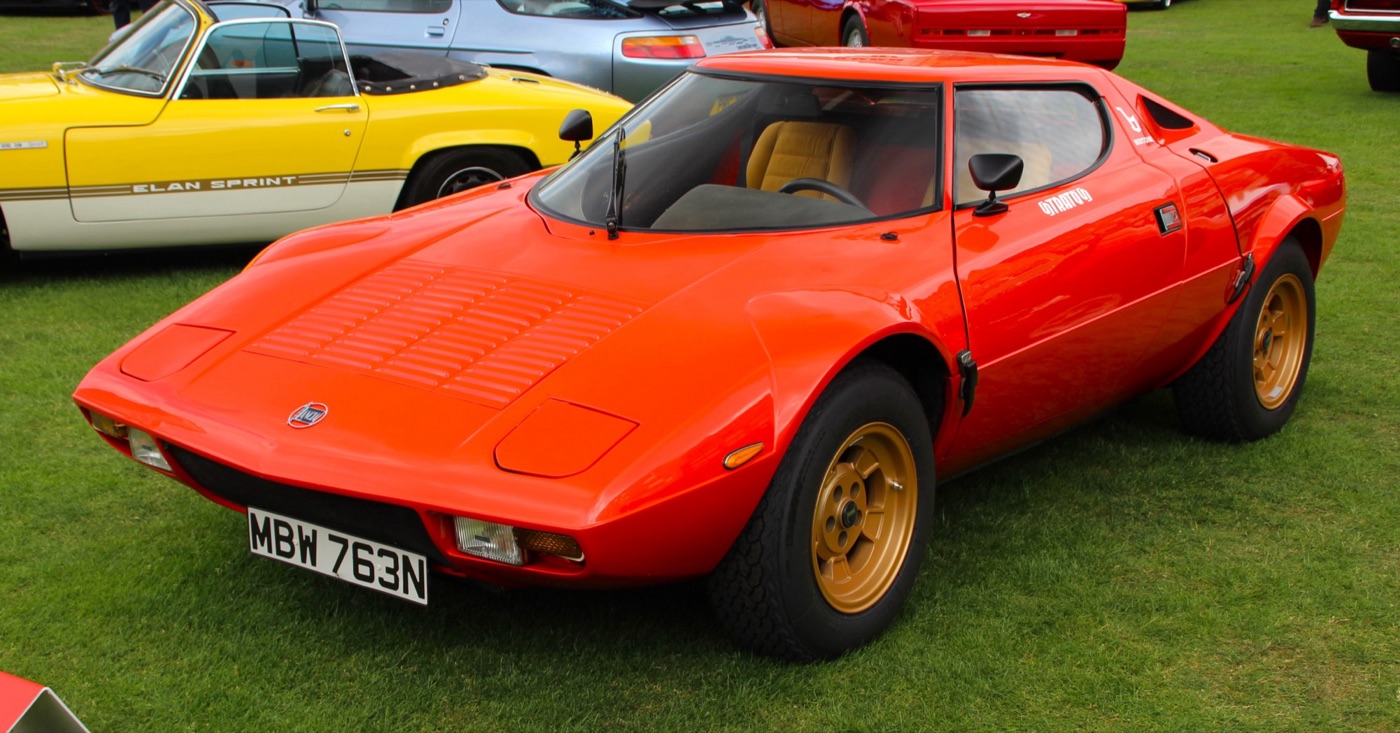
The Lancia Stratos is the mid-engined coupé that Lancia built to win rallies, with a Ferrari Dino 2.4-litre V6 behind the seats and a wedge-shaped body drawn by Marcello Gandini at Bertone. It won the World Rally Championship for makes in 1974, 1975 and 1976 and 17 world championship rallies between 1974 and 1981, and about 492 were built so that the rally car could be approved for Group 4. Road cars sold at auction between 2024 and 2026 for €590,000 to €815,000, the last a record for the model set in Paris in January 2026.
The name came back in 2010 as the New Stratos, a one-off built by Pininfarina on a shortened Ferrari 430 Scuderia for the German industrialist Michael Stoschek, and from 2018 as a series of 25 cars from Manifattura Automobili Torino in Turin.
How the Lancia Stratos was born
The Lancia Stratos began as a replacement for the Fulvia HF, Lancia’s front-wheel-drive rally coupé. According to Stellantis Heritage, which looks after Lancia’s history, the racing director Cesare Fiorio had been thinking about a new rear-engined rally car when Bertone showed the Stratos Zero in Turin in 1970, and he persuaded Lancia’s new general manager, Pier Ugo Gobbato, to pay for it.
The Stratos Zero concept
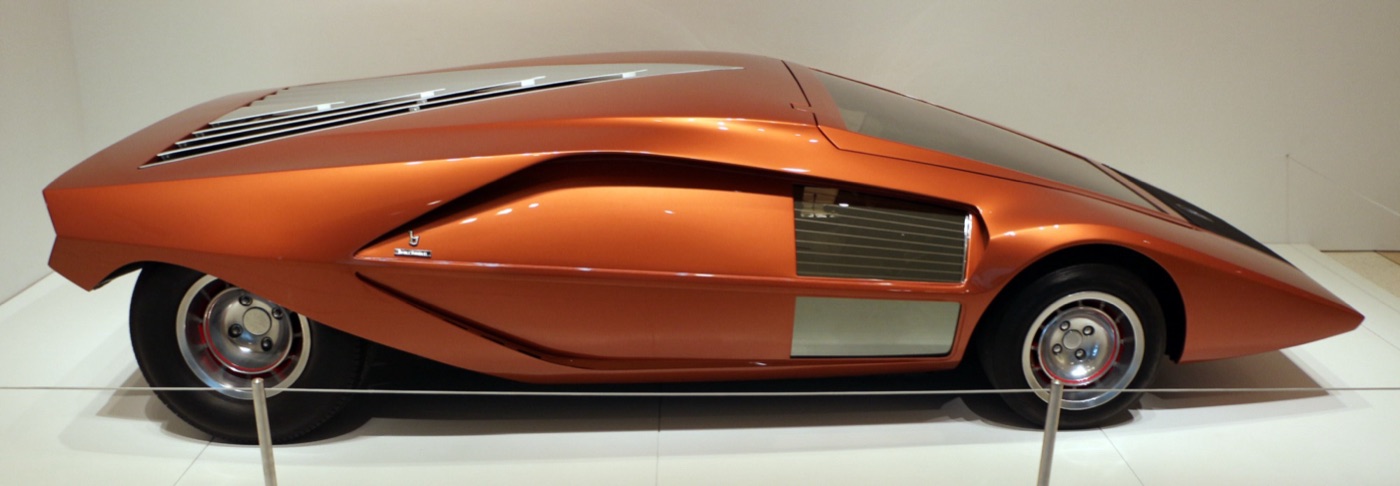
The Zero was a show car, designed by Marcello Gandini at Bertone and shown at the Turin Motor Show in 1970. It used the 1.6-litre engine of the Fulvia HF and had no doors: the driver climbed in through the windscreen, which opened forward. RM Auctions sold it from the Bertone collection at Villa d’Este on 21 May 2011 for about €762,000, against an estimate of €1 million to €1.8 million, Classic & Sports Car reported. It was one of six Bertone concept cars sold that day on the order of the Italian government.
The Stratos HF prototype
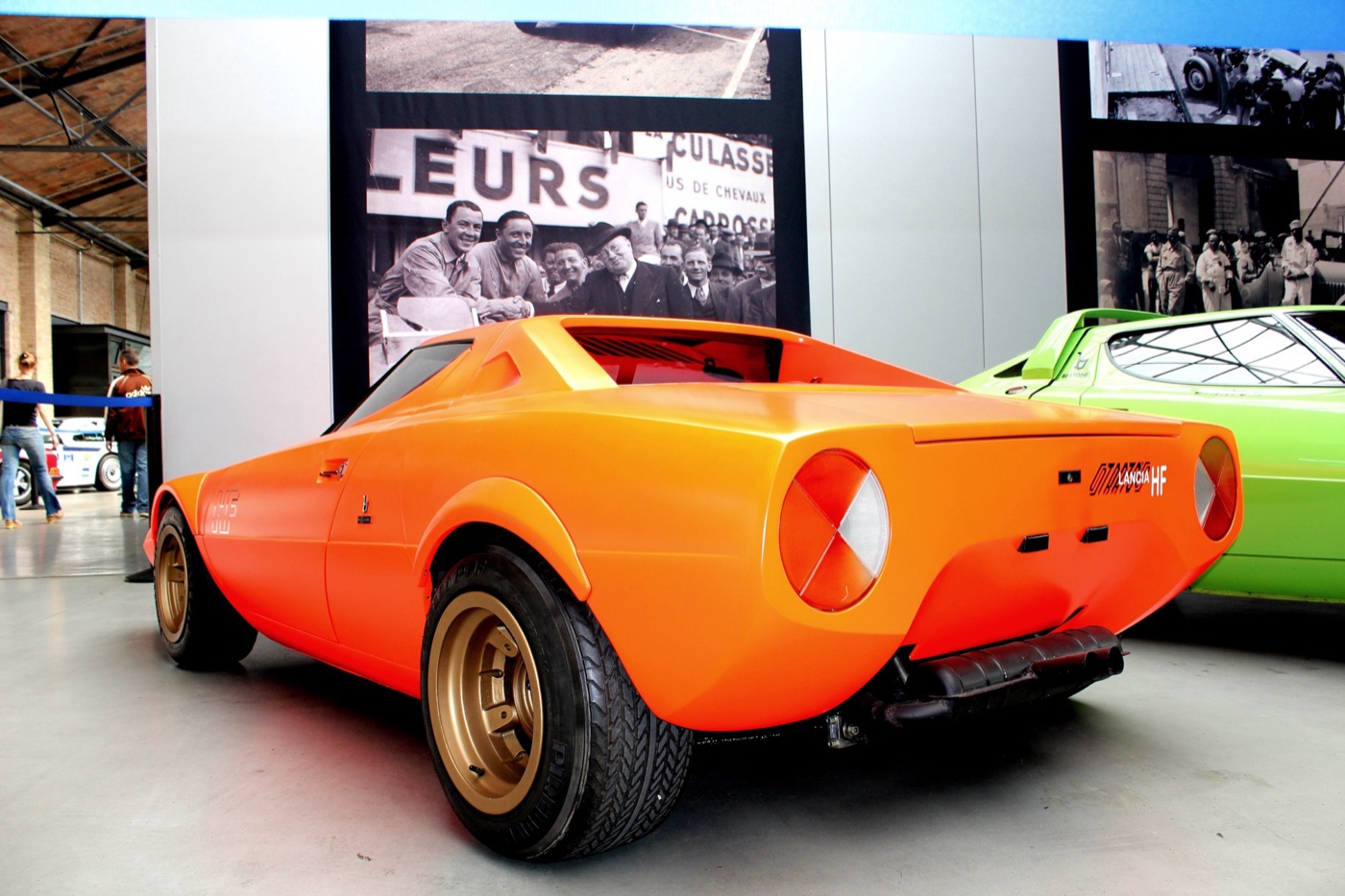
The car that became the rally Stratos was shown on Bertone’s stand at the Turin Motor Show in November 1971, as a non-running prototype, according to RM Sotheby’s catalogue for its London sale of 2016. It kept the Zero’s 2,180 mm wheelbase, according to RM’s 2024 Monaco catalogue, and had a wraparound windscreen. Nuccio Bertone said it fitted the driver and co-driver “tightly, like an overall for a single athlete” (Stellantis Heritage). RM gives “High Fidelity” as the meaning of HF, a badge Lancia had used on the Fulvia.
Why the Lancia Stratos has a Ferrari engine
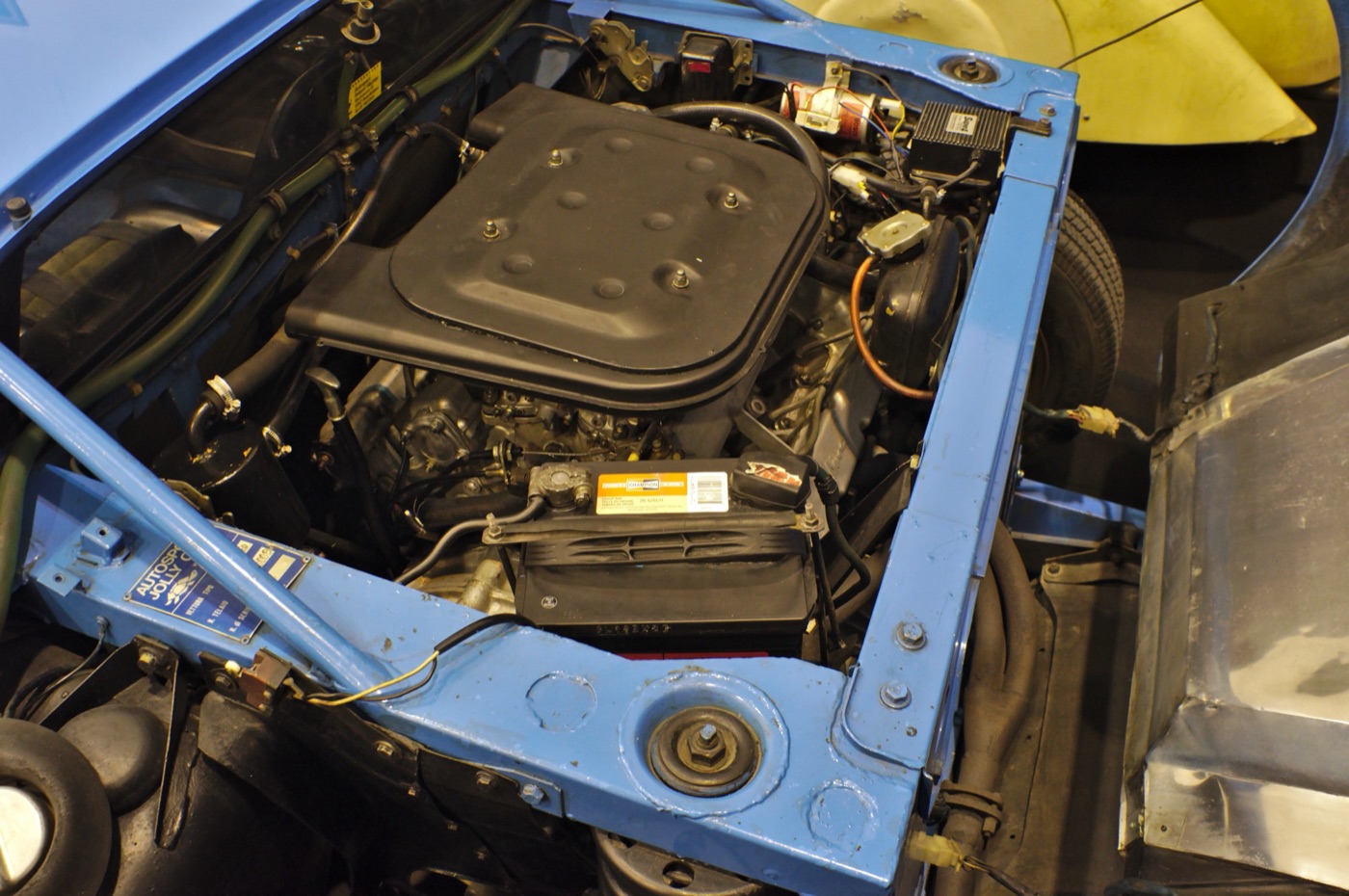
Lancia tried several Fiat group engines first, among them the flat four of the Flavia and the V6 of the Fiat 130, before choosing the 65-degree V6 of the Ferrari Dino 246 (Stellantis Heritage). Before the car was built, Lancia’s competition department borrowed two Dinos with that engine and Sandro Munari timed them on the Col de Turini straight after the 1971 Monte Carlo Rally; the times were close to those on the event, as Munari told Motor Sport in March 2004. Fiorio and Gobbato then had to persuade Enzo Ferrari to supply engines in the numbers the rules required. RM’s 2022 St Moritz catalogue puts the delivery at 500 engines, which came after production of the Dino 246 GT ended.
Lancia Stratos design and engineering
The Lancia Stratos is built around a central steel monocoque made by Bertone, with a sheet steel front structure, a rear subframe of square steel tubes, and glass fibre doors and front and rear “clamshells”, RM Sotheby’s 2016 London catalogue records. The engine sits across the car behind the cabin, driving the rear wheels through a five-speed gearbox. Front suspension is by double wishbones and the rear by MacPherson struts (Stellantis Heritage); the first cars had wishbones at the rear too, and the change followed a rear suspension failure on the Stratos’s first rally, the 1972 Tour de Corse, according to RM Sotheby’s 2016 London catalogue.
Each clamshell opens in one piece with its wings, so mechanics reach the engine and suspension quickly, and each door has a pocket big enough for a crash helmet. The road car stands 1.08 metres high, according to the New Stratos project’s own site.
Parts from the Fiat group
Much of the car came from other Fiat group models. A Motor Sport road test of a Stradale in May 1996 lists the steering rack, handbrake, body latches and door handles of the Fiat X1/9, the front uprights of the Fiat 132, the fog lamps of the Fiat Dino, and instruments, switches and headlamps from the Fiat 124. The round rear lamps were also used on the Ford GT40 and the Fiat 850 coupé, and the cast alloy wheels were made by Campagnolo.
Lancia Stratos specifications and performance
The road car, known as the Stradale, has the Dino’s 2,418 cc V6 engine with 12 valves and three Weber carburettors, producing 190 bhp at 7,000 rpm and 159 lb ft at 4,500 rpm, according to Motor Sport’s 1996 test. Rally cars ran 12-valve and then 24-valve heads.
| Stradale (road) | Group 4 (rally) | |
|---|---|---|
| Engine | Ferrari Dino 65° V6, 2,418 cc, 12 valves, three Weber carburettors | The same engine with 12 or 24 valves |
| Power | 190 bhp at 7,000 rpm | 280 hp at 8,000 rpm (12 valves); 320 hp at 8,500 rpm (24 valves) |
| Gearbox | Five-speed manual | Ratios homologated as an extension in October 1975 |
| Wheelbase | 2,180 mm | 2,180 mm |
| 0–60 mph | 7.3 seconds | – |
| Top speed | 145 mph (Motor Sport); more than 140 mph (RM) | 185 to 220 km/h, depending on gearing |
Sources: Motor Sport, May 1996 (road car engine, 0–60 mph, 145 mph); RM Sotheby’s Monaco 2012 catalogue (gearbox, wheelbase, more than 140 mph); Stellantis Heritage (Group 4); the FIA Historic Database (gearbox extension). Stellantis gives the Group 4 car’s weight as 980 kg, and the New Stratos project weighed its 1974 Group 4 car at 940 kg.
How fast is a Lancia Stratos?
A Stradale reaches 145 mph and 60 mph in 7.3 seconds, Motor Sport found in 1996; more than 140 mph, according to RM Sotheby’s catalogue for its Monaco sale of 2012, which also calls the road car “surprisingly usable”, with excellent forward visibility. Rally figures vary with the source: Munari told Motor Sport in 2004 that the 24-valve engine took the works cars “from maybe 260–270bhp to 330”, while Motor Sport in May 2026 gives 280 bhp for Munari’s 24-valve car on the 1976 Tour de Corse against 255 bhp for Bernard Darniche’s 12-valve car. Walter Röhrl, then a works Fiat driver, drove Markku Alén’s practice Stratos over a Sanremo stage on the open road after retiring his Fiat 131 Abarth, and said he was quicker in it than he had been in the Fiat on the rally (Motor Sport, 2004).
Stradale and rally cars
Accounts of the split differ. RM’s 2012 Monaco catalogue says most of the 492 were built as rally cars and the Stradale in smaller numbers, while Gooding Christie’s 2026 Paris catalogue says “approximately half” were delivered as road-legal Stradales. RM’s 2012 catalogue also notes that “so many of the few original Stradale cars have been modified over the years to become either competition cars or copies of competition cars” that an unmodified road car is a rare find. The works team itself used 26 rally cars over the years, according to Stellantis Heritage.
How many Lancia Stratos were made?
About 492 Lancia Stratos were completed, the figure RM Sotheby’s calls the consensus, but the records disagree. The homologation requirements for Group 4 were 500 cars built within 24 months. Lancia’s homologation papers gave 1 July 1972 as the start of production and promised 500 cars by 31 July 1974; Bertone’s records show two bodies finished by the end of 1973, 183 in 1974 and 502 body shells in all by the end of 1975, according to RM’s 2016 London catalogue. RM’s 2024 Monaco catalogue, citing the Dutch author Weernink, says 147 cars were complete when approval came, and that between 491 and 498 were built by 1975, depending on the source. The FIA Historic Database dates the approval, form 640 in Group 4, to 2 October 1974; Lancia’s heritage department says FIA delegates counted the cars, parked in several places, on 1 October.
The cars did not all sell quickly. Motor Sport’s 1996 test says unsold Stradales “slumbered in rows for several years”, that some were given to top Lancia dealers, that the car was still listed in 1978 at its original price, and that a roof collapse destroyed several dozen. Motor Sport’s test also records one claim of 530 cars and a consensus of about 490. Chassis 001527, completed by Bertone in June 1974, was bought new in March 1986 from Campidoglio Motori, a Lancia dealer in Rome that had used it as a demonstrator, according to RM’s 2018 Monterey catalogue.
Where were the Stratos built?
Bertone built and painted the bodies at its Grugliasco works near Turin and sent them to Lancia for final assembly, according to RM’s 2016 and 2018 catalogues. Bertone’s records for chassis 001544 show its body, number 214, finished on 25 June 1974 and the car completed by Lancia on 1 July 1974.
The Lancia Stratos in rallying
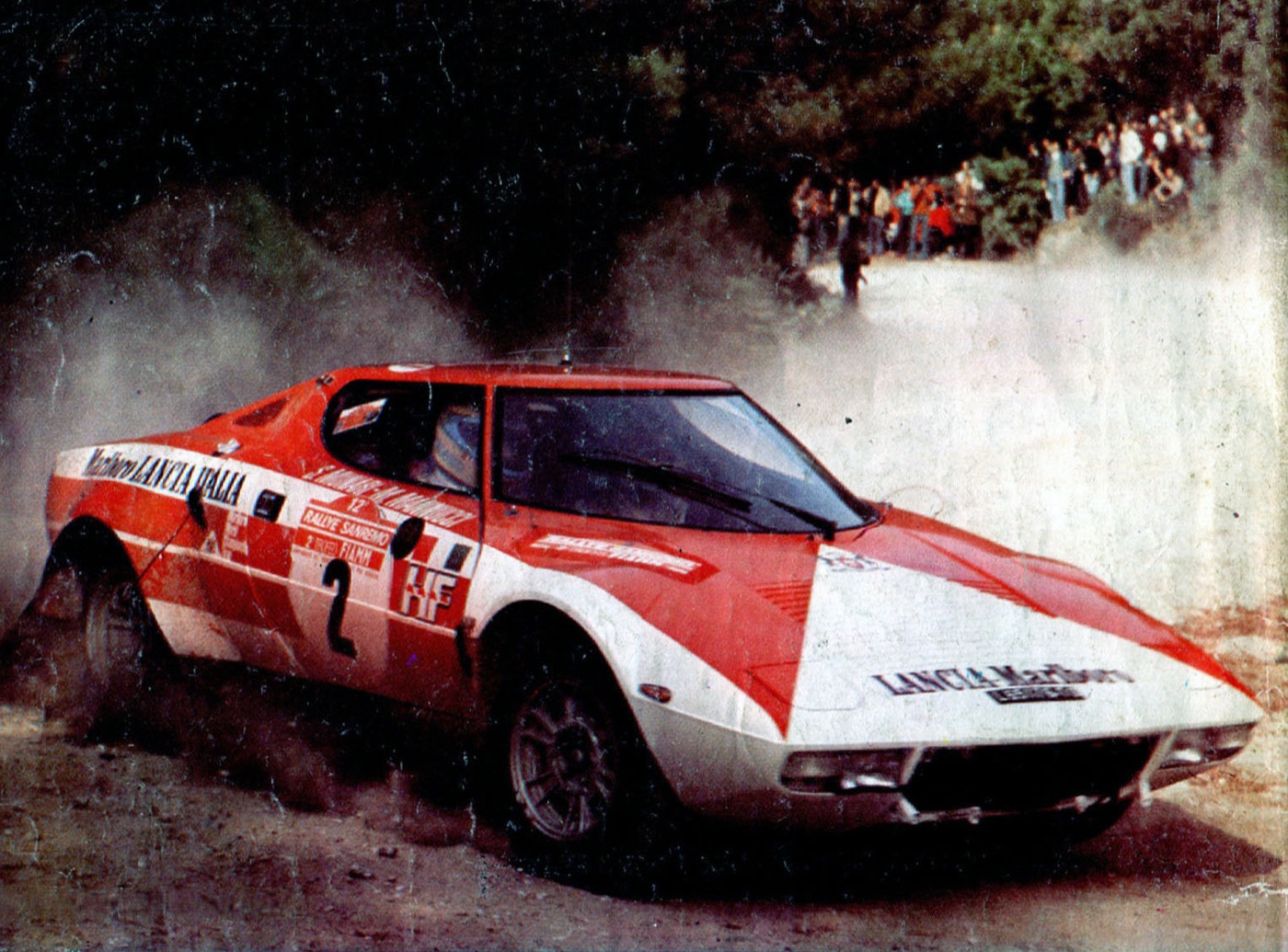
The Lancia Stratos won the World Rally Championship for makes in its first three seasons, 1974 to 1976, and Sandro Munari won the first FIA Cup for Drivers with it in 1977. It started rallies as a Group 5 prototype in 1972, two years before it was approved for Group 4.
First outings and first wins
Munari retired from the Stratos’s first rally, the 1972 Tour de Corse, with a rear suspension problem, according to RM’s 2016 catalogue. He told Motor Sport in 2004 that the cause, found with the engineer Giampaolo Dallara, was the rear upright flexing under load on racing tyres. The first win came on the Firestone Rally in Spain in April 1973, with Munari and Mannucci (Stellantis Heritage), and the Stratos won the Tour de France Automobile in September 1973. On the Targa Florio in May 1973 Munari and Jean-Claude Andruet finished second in a Stratos, six minutes behind a Porsche 911 Carrera RSR, according to the Racing Sports Cars results archive.
Three world championship titles
Lancia won the makes’ title three times running, by wide margins, according to the season tables at juwra.com, a database of world championship results: 94 points to Fiat’s 69 in 1974, 96 to Fiat’s 61 in 1975 and 112 to Opel’s 57 in 1976. There was no drivers’ championship until 1977, when the FIA ran a Cup for Drivers and Munari won it. Fiat took the 1977 makes’ title with the 131 Abarth.
| Year | Rally | Driver |
|---|---|---|
| 1974 | Sanremo | Sandro Munari |
| 1974 | Rideau Lakes, Canada | Sandro Munari |
| 1974 | Tour de Corse | Jean-Claude Andruet |
| 1975 | Monte Carlo | Sandro Munari |
| 1975 | Sweden | Björn Waldegård |
| 1975 | Sanremo | Björn Waldegård |
| 1975 | Tour de Corse | Bernard Darniche |
| 1976 | Monte Carlo | Sandro Munari |
| 1976 | Portugal | Sandro Munari |
| 1976 | Sanremo | Björn Waldegård |
| 1976 | Tour de Corse | Sandro Munari |
| 1977 | Monte Carlo | Sandro Munari |
| 1978 | Sanremo | Markku Alén |
| 1979 | Monte Carlo | Bernard Darniche |
| 1979 | Sanremo | Antonio Fassina |
| 1979 | Tour de Corse | Bernard Darniche |
| 1981 | Tour de Corse | Bernard Darniche |
Source: juwra.com result compilations, 1974 to 1981 (world championship rounds only).
Targa Florio and the Tour de France Automobile
The Stratos won the Tour de France Automobile, an event that mixed rally stages, hill climbs and circuit races, five times. Munari and Mannucci won it in 1973, the Racing Sports Cars archive records, and Darniche won it in 1975, 1977, 1979 and 1980 in Group 4 cars, according to LanciaStratos.com. On the Targa Florio, a road race over eight laps of the 72 km Piccolo Circuito delle Madonie in Sicily, Gérard Larrousse and Amilcare Ballestrieri won outright on 9 June 1974, and a privately entered Stratos of Scuderia Ateneo was fourth.
Monte Carlo, Sweden and the Safari
Munari won the Monte Carlo Rally three years running, 1975 to 1977, the last time from Andruet’s Fiat 131 Abarth. Waldegård won the Swedish Rally on snow in 1975. Munari’s regrets were the Safari and the RAC Rally, he told Motor Sport in 2004: he was second and Waldegård third on the 1975 Safari, after Munari drove 30 km on a rim near the end, and he was third on the 1974 RAC Rally, told by Fiorio to drive for points. Munari did 36 international rallies in a Stratos and won 14.
Liveries: Marlboro, Alitalia and Pirelli
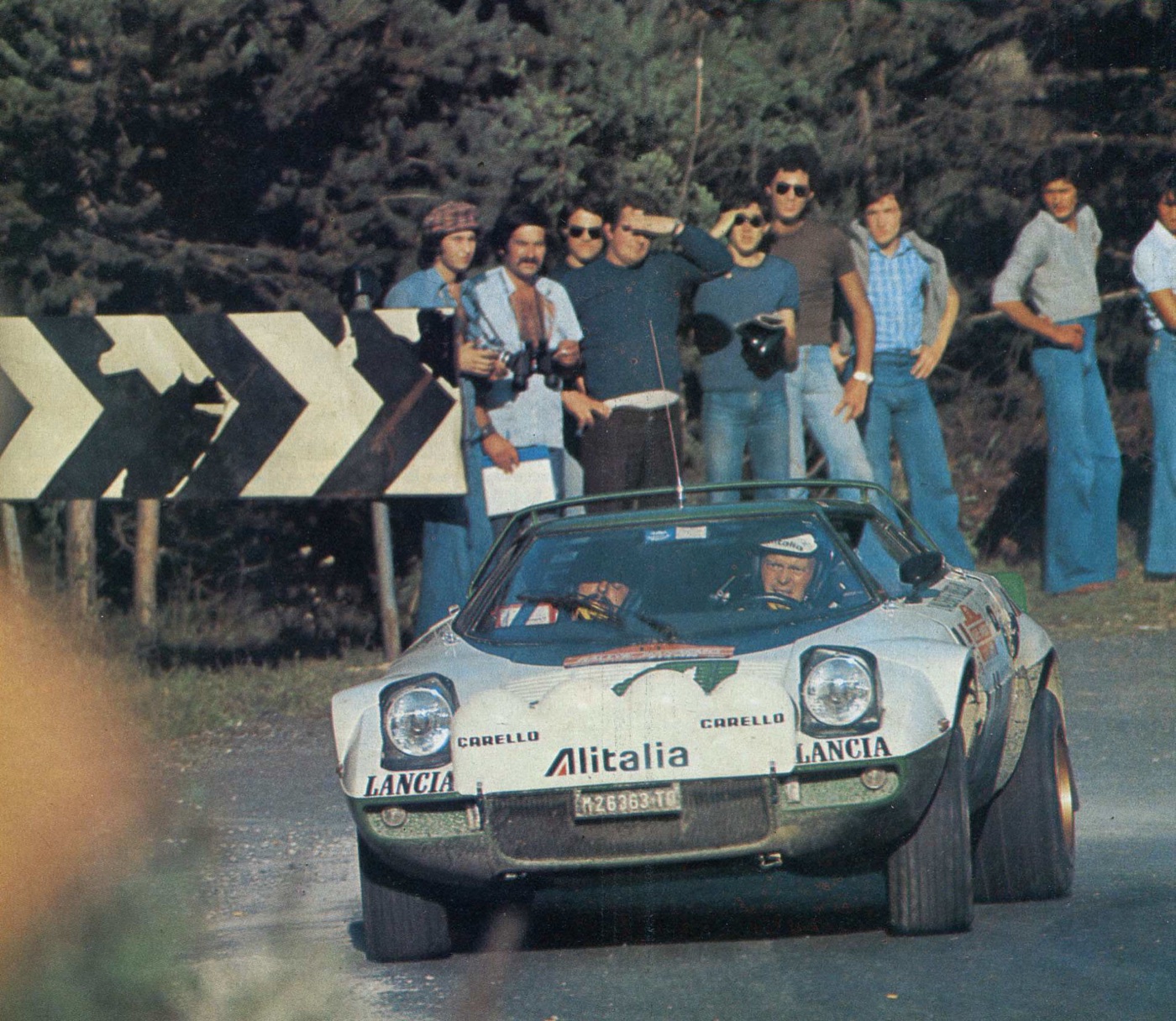
The works cars wore Marlboro red and white at first, then the white and green of Alitalia from 1975, and from 1977 a new Alitalia scheme in the colours of the Italian flag (Stellantis Heritage). In 1978 the Fiat 131 Abarth contested the world title and the Stratos the European Championship; in rallies that counted for both, the Stratos wore black, red and white Pirelli colours, and Alén won the 1978 Sanremo in one. Stellantis Heritage keeps two works Stratos, one in Alitalia and one in Pirelli livery, at its Heritage HUB in Turin.
Why the works Lancia Stratos was retired
The Fiat group, which owned Lancia, put its rally effort behind the Fiat 131 Abarth, a car that looked like the saloons Fiat sold. The changeover was gradual: the two brands’ teams were run from 1978 by one body, ASA, under Daniele Audetto (Stellantis Heritage). A rule made for 1976, with two years’ grace, limited every car to two valves per cylinder from 1978, juwra.com records, so the works cars went back to 12-valve heads.
Privateers and the last wins
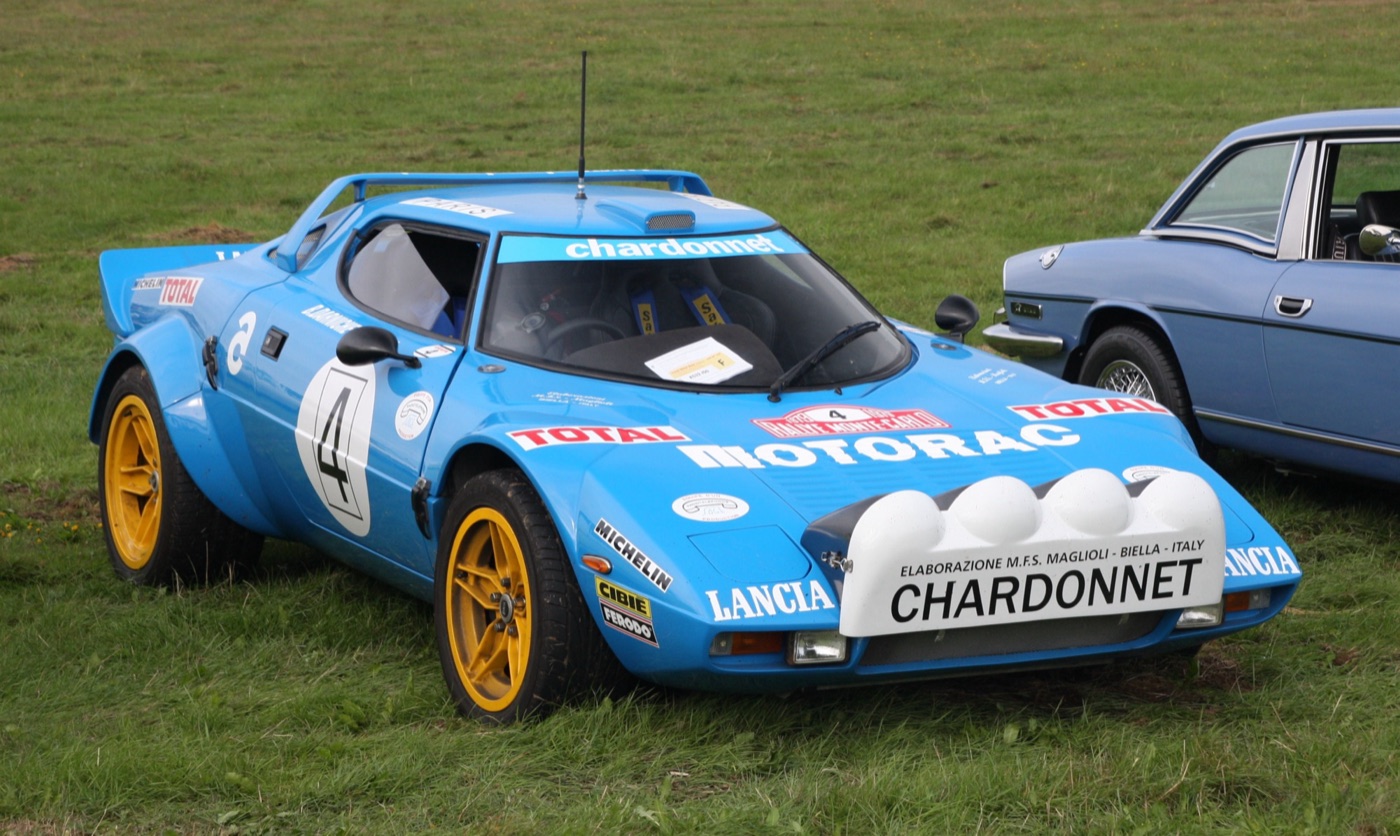
Bernard Darniche drove for the French team Chardonnet, in the blue of the French Lancia dealers, and won the 1979 Monte Carlo Rally, the 1979 Tour de Corse and the 1981 Tour de Corse, the Stratos’s last world championship win, as a privateer. The New Stratos project credits him with 41 Stratos wins. Stellantis Heritage records the Stratos’s last win as the Monza Rally of 28 November 1982, where Stratos took the first three places, although the FIA database ends its Group 4 approval on 1 January 1982.
Lancia’s next rally car, the Rally 037, was approved by the FIA as a Group B car in April 1982.
What was the Lancia Stratos like to drive?
“To drive a Stratos is not at all difficult, but to drive it fast, you have to be aggressive,” Waldegård told Motor Sport in 2004. He said it was the first rally car he had that could be properly adjusted, ride height and anti-roll bars included, even during an event, work he did with the development engineer Mike Parkes. Too tall for the seat, he also called it “a bit of a nightmare to live in”. Röhrl, who drove a Stratos in the 1979 German championship, found its short wheelbase hard work on fast snow roads, and turned down the chance to buy that car for £6,000 when the season ended; five years later, he said, it was worth £100,000.
What is a Lancia Stratos worth?
A Lancia Stratos road car sold at auction in 2024, 2025 or 2026 for between €590,000 and €815,000. The €815,000, a world record for the model, was paid for an unrestored car with 2,000 km at Gooding Christie’s Paris sale on 29 January 2026, as Sports Car Market recorded ($975,881 with premium); Gooding Christie’s results release of 4 February 2026 confirmed the record. In Britain, a Stratos carrying the 1975 chassis number 001951, rebuilt to Group 4 specification around a new body shell made by Marchesi of Modena in 2017–18, sold for £298,125 at Iconic Auctioneers’ NEC sale on 9 November 2024. Hagerty’s US price guide put a 1976 Stratos in good (number 3) condition at $563,000 in August 2026 and a 1974–75 car at about $743,000, Motorious reported.
| Sale | Car | Result |
|---|---|---|
| RM Sotheby’s, Monaco, 2012 | 1976 Stradale | Sold, €299,600 |
| RM Sotheby’s, London, 2016 | Stradale, chassis 001544, completed 1974 | Sold, £308,000 |
| RM Sotheby’s, Monterey, 2018 | 1974 Stradale, chassis 001527, 6,440 km | Not sold; estimate $600,000–675,000 |
| RM Sotheby’s, Amelia Island, 2020 | 1975 Stradale, chassis 001976 | Not sold; estimate $500,000–600,000 |
| RM Sotheby’s, St Moritz, 2022 | 1975 Stradale, chassis 1666 | Not sold; estimate CHF 600,000–700,000 |
| RM Sotheby’s, Monaco, 2024 | 1975 Stradale, chassis 001832 | Sold, €590,000 |
| Iconic Auctioneers, NEC Birmingham, 9 November 2024 | Chassis 001951 (1975), rebuilt to Group 4 specification on a new Marchesi body shell of 2017–18 | Sold, £298,125 |
| Broad Arrow, Amelia Island, 8 March 2025 | 1975 Stradale, chassis 001948 | Sold, $692,500 |
| Gooding Christie’s, Paris, 29 January 2026 | 1975 Stradale, chassis 001932, 2,000 km, one owner for more than 45 years | Sold, €815,000 (about $975,000) |
| Broad Arrow, Zoute, 2025 | 1976 Group 4 specification | Sold, €625,000 |
| Broad Arrow, Zoute, 2026 | 1976 Stradale, chassis 001715 | Sold, €625,000 |
Sources: RM Sotheby’s lot pages; Conceptcarz’s record for the 2025 Amelia Island car; Broad Arrow’s lot pages for Zoute 2025 and Zoute 2026; Motorious for chassis 001715; Iconic Auctioneers; Gooding Christie’s results as published by Racecar (lot 37, chassis 001932).
The Monaco result of 2024 was almost twice that of 2012, and the Paris record of 2026 was €225,000 higher again. Low mileage, matching numbers and a car never converted for rallying are what the catalogues sell on: RM’s 2018 Monterey car had covered 6,440 km from new, and its 2016 London car had “never been raced nor had any accidents”.
Owning a Lancia Stratos
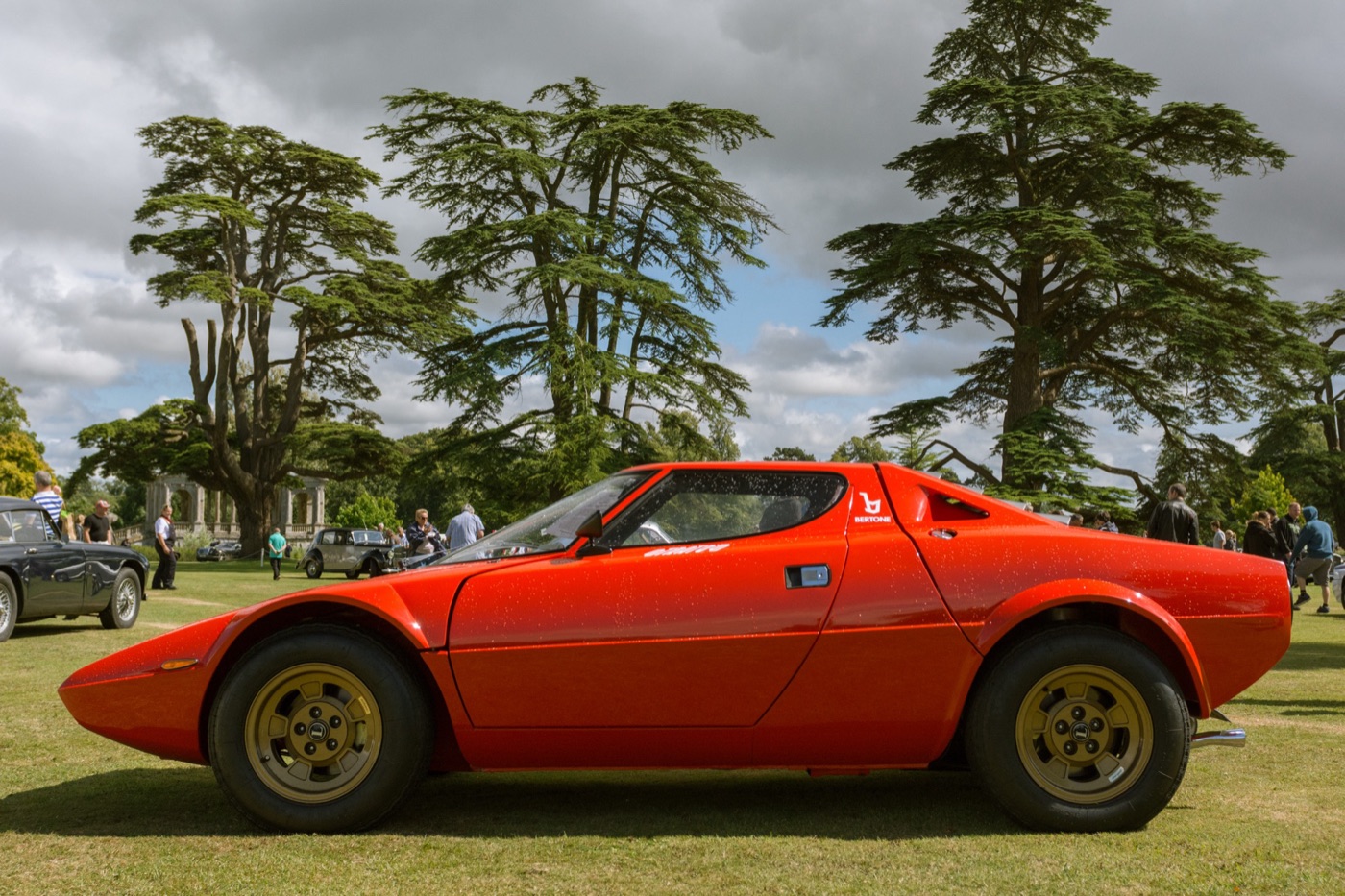
The first check on any Lancia Stratos is its identity, because so many road cars were turned into rally cars and so many replicas exist. The auction catalogues match the Bertone body number, stamped on the shell and the panels, to the chassis and engine numbers and to Bertone’s and Lancia’s production records. The 2024 Monaco car carried “397” body tags on its glass fibre panels and door hinges, and Lancia Classiche, the maker’s heritage department, had confirmed its original chassis and engine numbers in 2020 (RM Sotheby’s, Monaco 2024). Stellantis Heritage issues certificates of origin and certificates of authenticity for Lancias.
Motor Sport’s 1996 test called the Stratos’s reputation for poor build quality “usually exaggerated”, since the car was built to survive the Safari Rally, though it repeats the old joke that a replica is the Stratos whose body panels fit. Its test car’s tachometer did not work, its engine lid did not fit, and its tester, over six feet tall, had no headroom. The same test found the engine tractable at low revs, the clutch and gearbox easy, and the steering “kart-like”. The Alcantara seat bolsters wear quickly: RM’s 2016 and 2018 cars had both had theirs recovered or replaced.
Lancia Stratos replicas and kit cars
LB Specialist Cars of Newark-on-Trent, formerly Lister Bell Automotive, builds the STR replica, a new car with a tubular spaceframe and glass fibre body, according to the company. It had sold about 150 STR kits by 2022, Hagerty reported that year, in a story on an American owner who used a 3.0-litre Alfa Romeo 164 V6 of about 230 hp and spent about $100,000 on his car. Hagerty’s article also said LB had stopped selling STR kits for the time being, citing the pandemic and Brexit.
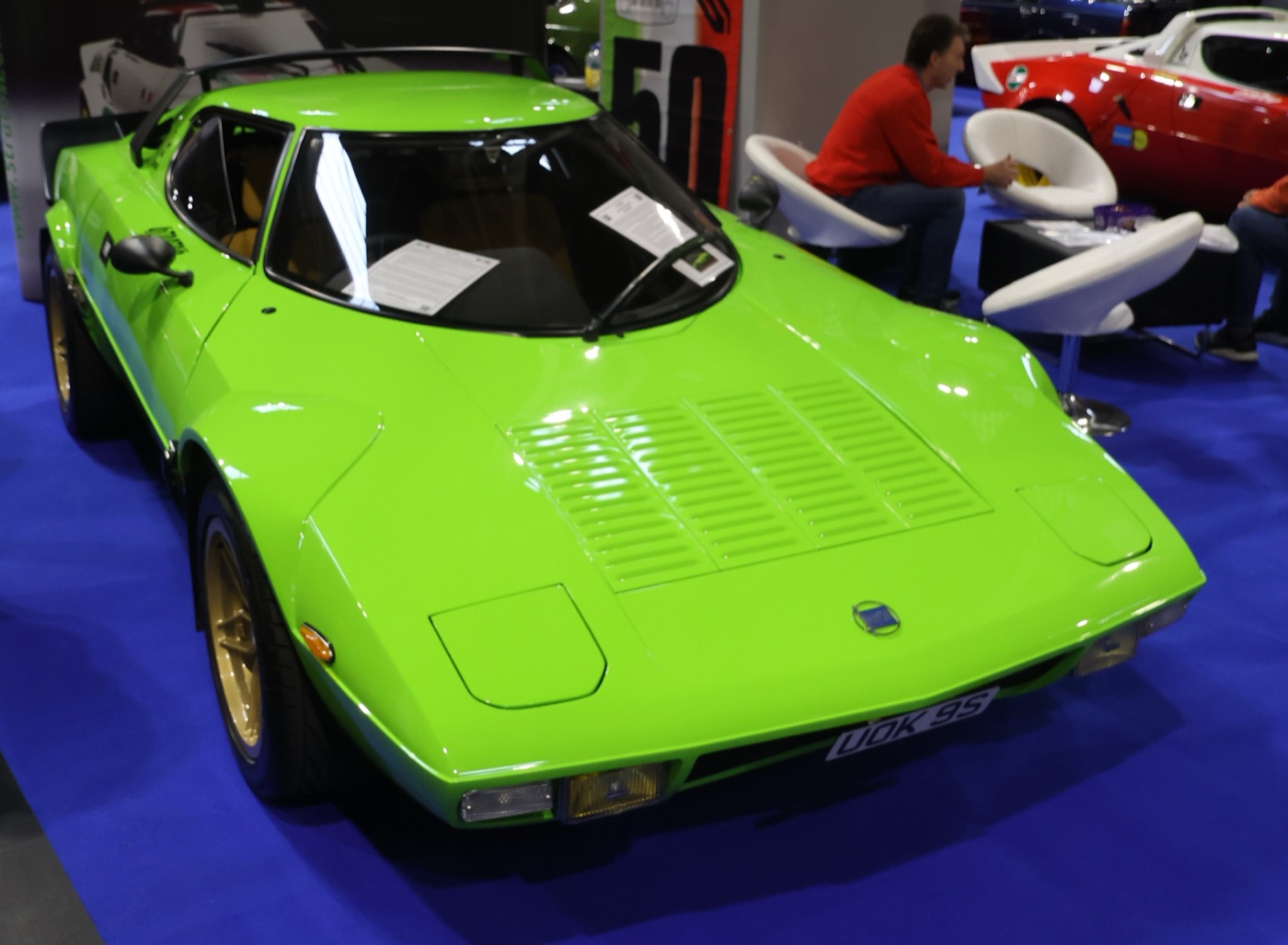
The New Stratos
The New Stratos is a modern Lancia Stratos built on a Ferrari 430 Scuderia: first a one-off for Michael Stoschek, chairman of the shareholders’ meeting of the German parts maker Brose, built by Pininfarina between 2008 and 2010, then a run of 25 cars from Manifattura Automobili Torino (MAT).
The Fenomenon Stratos concept
The idea came from Chris Hrabalek, a designer and Stratos collector, whose Fenomenon Stratos concept was shown at the 2005 Geneva Motor Show. Stoschek was among the ten investors who bought into the concept and the Stratos brand, but the car never went further, evo reported in 2010.
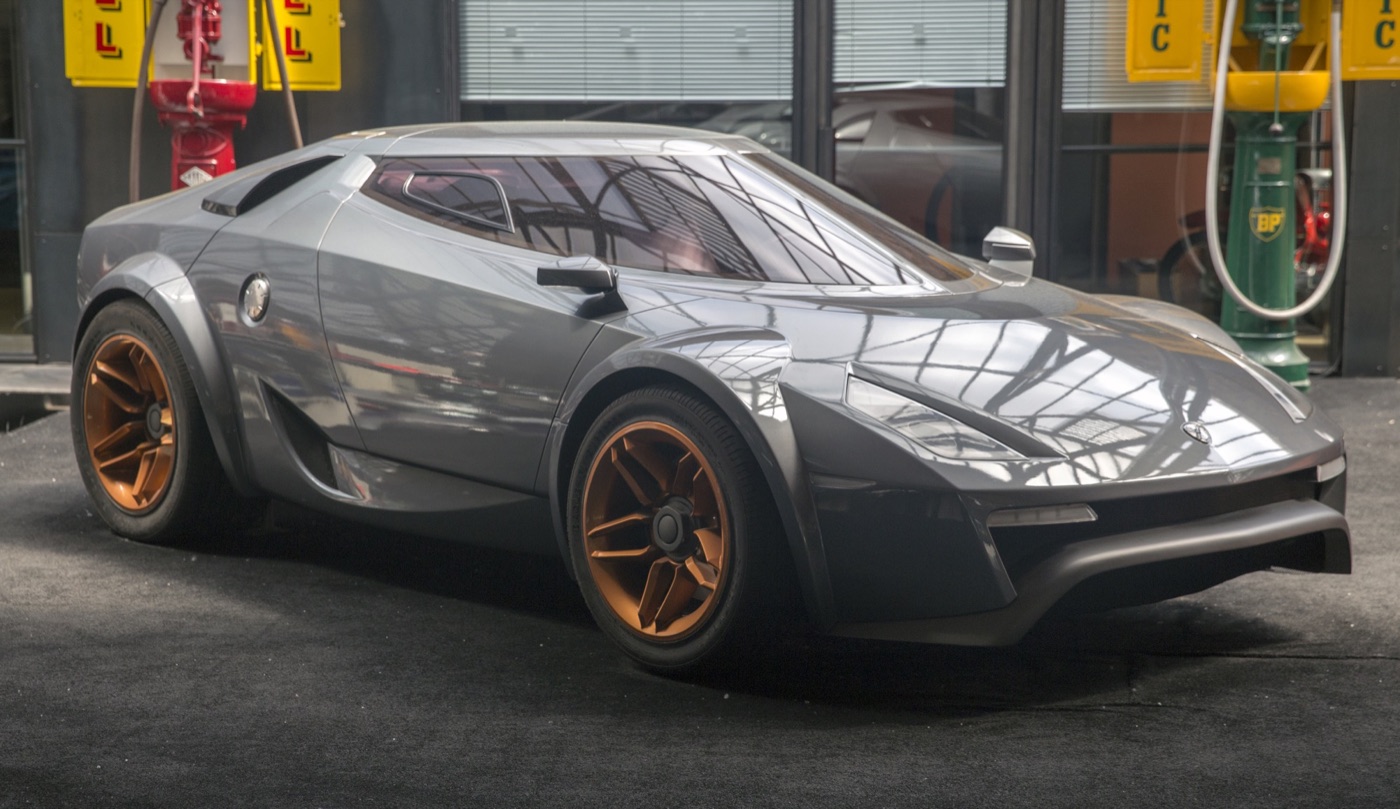
Michael Stoschek’s Pininfarina one-off
Stoschek, who won the Carrera Panamericana three times and a 2006 FIA European rally title in a 1971 Porsche 911, and who rallies a Group 4 Stratos in Marlboro colours, commissioned Pininfarina in September 2008 with his son Maximilian (new-stratos.com). Pininfarina cut 200 mm out of the Scuderia’s aluminium chassis, welded in a roll cage of 40 mm steel tubing to FIA standards, and clothed it in a carbon fibre body 330 mm shorter than the Ferrari’s. Luca Borgogno was Pininfarina’s main designer on the car (evo, 2010).
A 2010 SkiddMark report gave the car’s weight as 1,240 kg, 108 kg less than the Scuderia, with the Ferrari’s 503 bhp, or 413 bhp per ton against 197 for the original Stratos. Later figures differ: the project’s site gives 1,247 kg and 540 hp at 8,200 rpm, and evo, which drove it at the launch, was told 523 bhp and 1,270 kg, 80 kg less than the Scuderia.
Testing and the Paul Ricard launch
The car was developed at Fiat’s Balocco proving ground, where the former Formula 1 driver Tiago Monteiro worked on the chassis with ZF Sachs engineers, and its last wind tunnel test was at Pininfarina in Turin on 13 September 2010 (new-stratos.com). Stoschek collected it at Pininfarina on 8 November 2010 with 3,000 test kilometres on it, according to the project’s account of the handover, and PistonHeads reported the delivery on 16 November. Journalists drove it at the Circuit Paul Ricard on 29 and 30 November 2010. Bernard Darniche drove it there, and evo’s John Barker wrote that it felt, like the original, “challenging in exactly the same way”.
How much did the New Stratos cost?
Evo heard that the one-off cost about £3 million to make, and at the launch Stoschek said a run of 25 might cost about half a million pounds each, including the donor car. In July 2011 Ferrari refused to let Pininfarina or any of its other suppliers build the series, and Stoschek said copies could be built “only via companies that are not dependent on Ferrari”, Jalopnik reported. Hagerty wrote in 2022 that MAT charged “$600,000+” for its cars, not counting the donor Ferrari.
The MAT New Stratos limited series
Paolo Garella, who had run special projects at Pininfarina and managed the one-off, founded MAT in Turin and in February 2018 announced a limited series of 25 New Stratos, with the Stoscheks’ agreement (new-stratos.com). The car was shown at the 2018 Geneva Motor Show. MAT gives 397 kW (540 hp) at 8,200 rpm, a six-speed sequential gearbox in its specification (its own summary says “manual transmission”) and two aluminium fuel tanks holding 90 litres, and says cars have gone to buyers from the US to Australia.
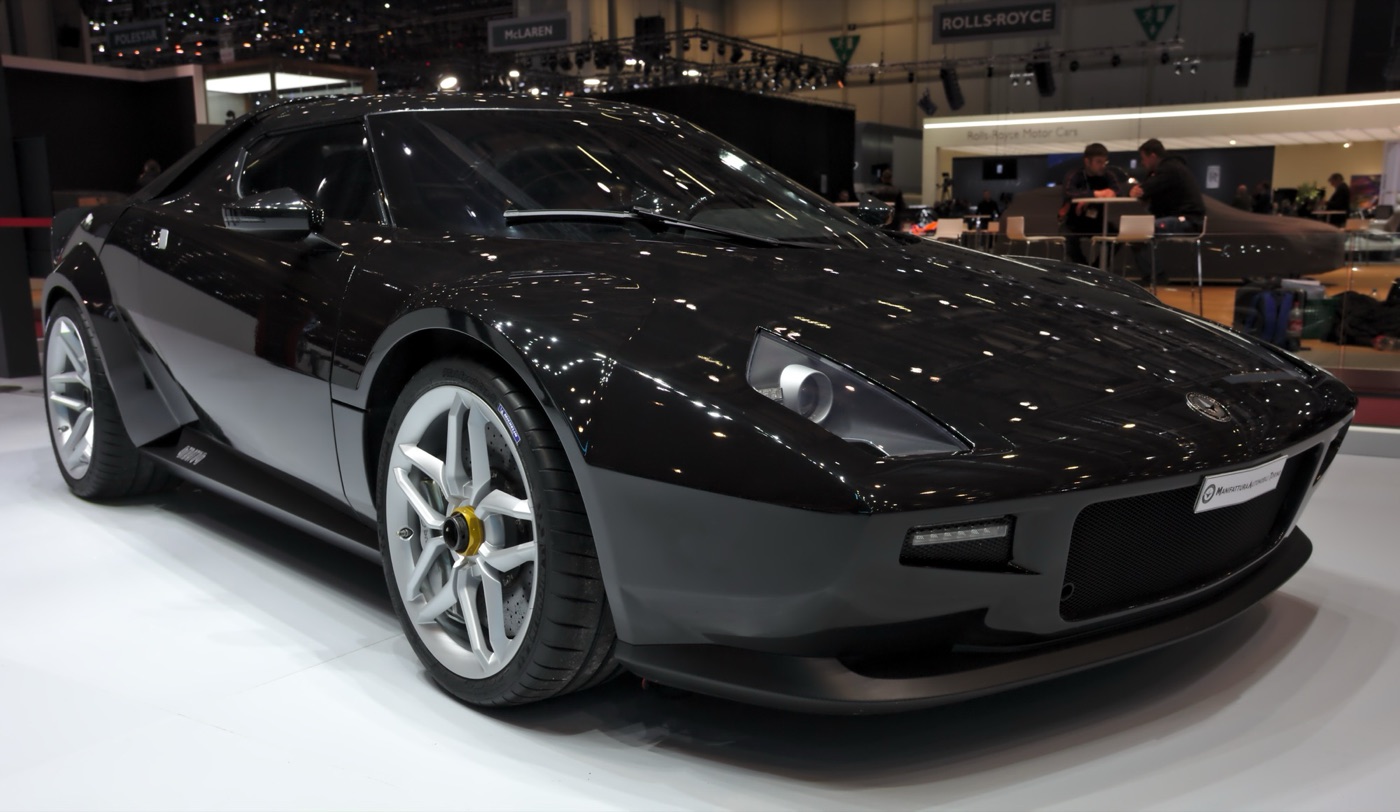
Questions
Does Lancia still make the Stratos?
No. Bertone and Lancia built about 492 cars between 1972 and 1975. The New Stratos built since 2018 is made by Manifattura Automobili Torino on Ferrari 430 Scuderia running gear, in a series of 25.
What engine does a Lancia Stratos have?
The Ferrari Dino 65-degree V6 of 2,418 cc, mounted across the car behind the seats. Road cars have 12 valves and about 190 bhp; works rally cars later used 24-valve heads.
What does HF stand for on the Lancia Stratos?
High Fidelity, according to RM Sotheby’s catalogues. Lancia used the HF badge on its sporting models and rally cars, the Fulvia HF among them.
Who designed the Lancia Stratos?
Marcello Gandini at Bertone drew the body. Lancia’s racing director Cesare Fiorio drove the project, with Giampaolo Dallara and Mike Parkes on the engineering.
Was the Lancia Stratos a Group B car?
No. It received Group 4 homologation on 2 October 1974. Lancia’s first Group B rally car was the Rally 037, approved in April 1982.
What replaced the Lancia Stratos in rallying?
The Fiat 131 Abarth took over the Fiat group’s world championship effort and won the makes’ title in 1977. Lancia’s own next rally car was the 037.
Who drove the Lancia Stratos?
Works drivers included Sandro Munari, Björn Waldegård, Jean-Claude Andruet, Raffaele Pinto and Markku Alén; Bernard Darniche won with the French privateer team Chardonnet, and Walter Röhrl drove one in the 1979 German championship.
How many New Stratos were built?
One by Pininfarina for Michael Stoschek, handed over in November 2010, and a limited series of 25 announced by Manifattura Automobili Torino in February 2018.
Sources
- Stellantis Heritage, “Lancia Stratos HF: born only to win”: development, engine choice, homologation, liveries, works cars, the Group 4 specification and the last win.
- FIA Historic Database, Lancia Stratos HF, form 640, Group 4: approval and end dates and the ten extensions.
- FIA Historic Database, Lancia Rally, form 210, Group B: the 037’s approval date.
- juwra.com, season standings and result compilations, 1974 to 1981: world championship wins and makes’ points.
- juwra.com, “Season 1977”: the FIA Cup for Drivers.
- juwra.com, “Season 1976: rule changes”: the two-valves-per-cylinder limit from 1978.
- Motor Sport, “Quantum yump”, March 2004: Munari, Waldegård, Röhrl and Lampinen on driving the Stratos.
- Motor Sport, “Turin crowd pleaser”, May 1996: road test, Fiat group parts, engine figures and production disputes.
- Motor Sport, “Munari’s greatest rallies”, May 2026: engine outputs on the 1976 Tour de Corse.
- Racing Sports Cars, Tour de France Automobile 1973: the 1973 winners.
- Racing Sports Cars, Targa Florio 1973 results and 1974 results.
- RM Sotheby’s, London 2016, lot 120: construction, production records and the 2016 price.
- RM Sotheby’s, Monaco 2012, lot 332: specification, top speed and the 2012 price.
- RM Sotheby’s, Monterey 2018, lot 238: homologation timetable and chassis 001527.
- RM Sotheby’s, Amelia Island 2020, lot 133: estimate, not sold.
- RM Sotheby’s, St Moritz 2022, lot 105: the 500 Ferrari engines; estimate, not sold.
- RM Sotheby’s, Monaco 2024, lot 236: wheelbase, production estimates, Lancia Classiche certification and the 2024 price.
- Conceptcarz, 1975 Lancia Stratos HF, chassis 001948: the 2025 Amelia Island price.
- Broad Arrow, Zoute 2025, lot 117 and Zoute 2026, lot 168: sold prices.
- Motorious, 26 August 2026: chassis 001715, Hagerty’s price guide and the $975,066 that Hagerty records for the Gooding sale.
- Sports Car Market, profile of chassis 001932, 18 March 2026: the Paris sale date, lot and dollar price.
- LanciaStratos.com, “Tour Auto Optic 2000: 6 Stratos at the start”: the 1973 Tour de France Automobile and Darniche’s four wins.
- Gooding Christie’s Paris results, via Racecar, 4 February 2026 and the lot announcement, 10 January 2026: the €815,000 record and chassis 001932.
- Iconic Auctioneers, NEC, 9 November 2024, lot 220: the £298,125 sale.
- Classic & Sports Car, RM Villa d’Este report, May 2011: the Stratos Zero sale.
- LB Specialist Cars and Hagerty Media, 11 August 2022: the STR replica and MAT’s price.
- New Stratos project site: the one-off’s history, engineering, handover, launch, specification and the MAT series.
- evo, “New Lancia Stratos supercar review”, 2010: the Fenomenon, the build, the drive and the cost.
- PistonHeads, “Pininfarina finishes unique New Stratos”, 16 November 2010: the handover.
- Jalopnik, “Ferrari blocks production of new Lancia Stratos”, 12 July 2011.
- Manifattura Automobili Torino, New Stratos: the limited series and its specification.
- SkiddMark, “One man’s dream: a new Stratos”, August 2010, “New Stratos gets a workout by ex-Formula 1 driver Tiago Monteiro”, October 2010, and “New Stratos: the handover”, November 2010: the 2010 weight and power figures and the testing timeline.