Lotus 72: Colin Chapman’s wedge-shaped Formula One car
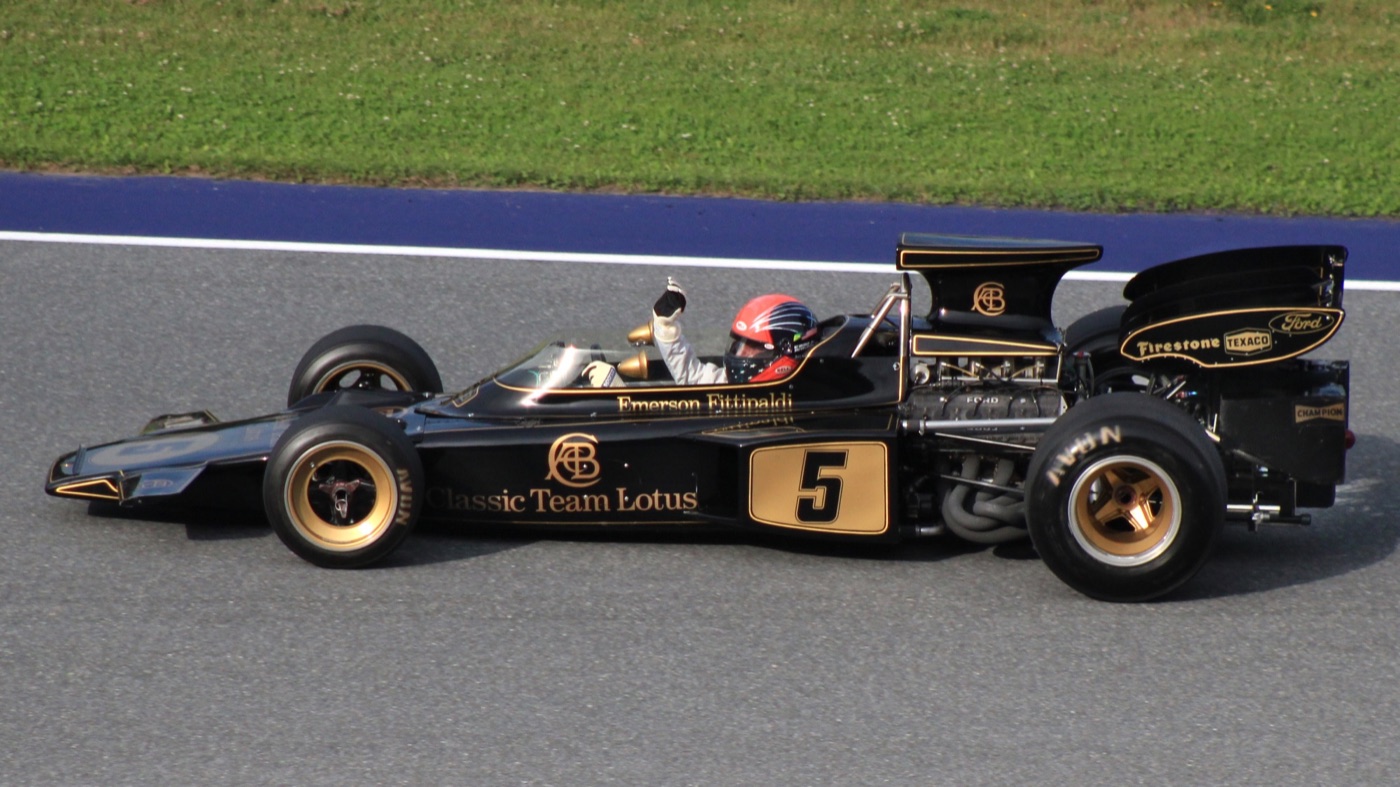
The Lotus 72 is the wedge-shaped Formula One car that Colin Chapman and Maurice Philippe designed for Team Lotus in 1970. It raced in six seasons, from the Spanish Grand Prix of April 1970 to the United States Grand Prix of October 1975, and won 20 World Championship Grands Prix, the drivers’ titles of Jochen Rindt (1970) and Emerson Fittipaldi (1972) and the constructors’ titles of 1970, 1972 and 1973, according to Formula 1’s official results. Rindt won his title after he was killed in practice at Monza, and he is still the only posthumous world champion.
It is the car that moved the radiators from the nose to the sides of the cockpit, and from 1972 it raced in the black and gold of John Player Special.
Who designed the Lotus 72, and why
Colin Chapman and his chief designer, Maurice Philippe (Motor Sport spelled it Phillipe in 1970 and Phillippe in 1997), designed the Lotus 72 to replace the Lotus 49 of 1967. Denis Jenkinson’s notes on the cars at Jarama in Motor Sport (May 1970) called it the result of knowledge gained from the 49, the Indianapolis cars and the four-wheel-drive Lotus 63, “along with a lot of radical new thinking”. Writing in Motor Sport in May 1997, Alan Henry dated Chapman’s first plans for the 72 to the failure of the 63, one of the crop of four-wheel-drive Formula One cars of 1969 that came to nothing.
Classic Team Lotus, the Hethel workshop run by Clive Chapman, names the people behind it in its 50th-anniversary history of the car (2020): Philippe as chief designer working with Chapman, Martin Waide, John Baldwin and Geoff Aldridge as the principal draughtsmen, and Gordon Huckle, Keith Leighton and Eddie Dennis as chief mechanics.
Unveiled at Hethel
Chapman showed the car to the press at Hethel on Monday 6 April 1970, in the hangar that usually housed his Gold Leaf-liveried Navajo aeroplane, on what Classic Team Lotus describes as a cold, wet and windy day. Rindt drove a few fast laps of the test track in the rain. Thirteen days later Lotus took two cars to the Spanish Grand Prix at Jarama, in the red, white and gold of Gold Leaf Team Lotus, for Rindt and John Miles.
The Lotus 72 season by season
The Lotus 72 won races in four of its six seasons: 1970, 1972, 1973 and 1974. It won no World Championship race in 1971 or 1975.
Rindt’s four wins in a row
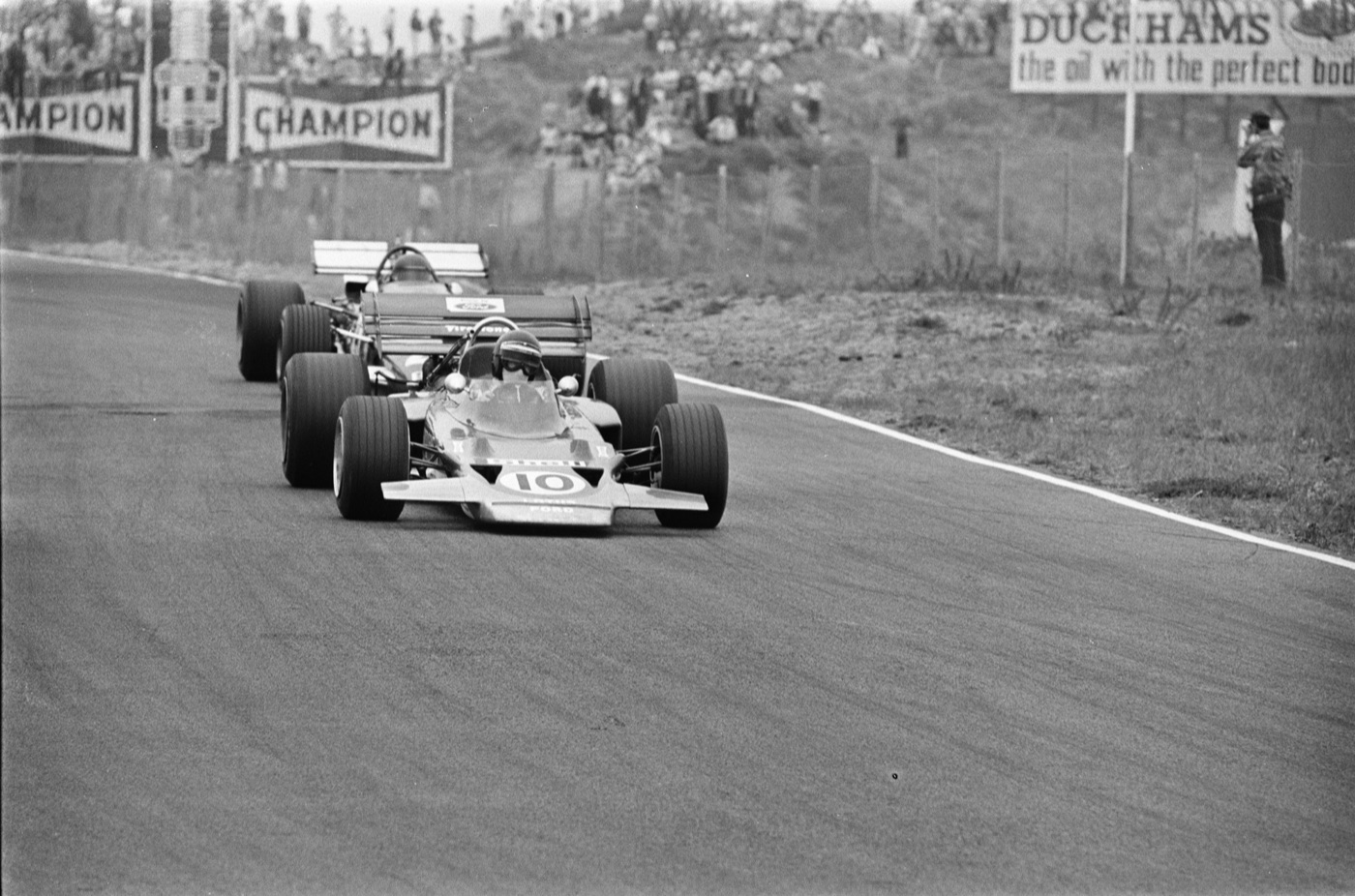
After the 72’s first race, at Jarama on 19 April 1970, Lotus went back to the Lotus 49C, in which Rindt won at Monaco on 10 May with what Henry called “a stupendous last-corner win”. The reworked 72 came back at the Dutch Grand Prix at Zandvoort on 21 June and won. It was a joyless win: Piers Courage, a close friend of Rindt and his wife Nina, was killed in the same race in Frank Williams’ De Tomaso, and Henry wrote that photographs of the rostrum show Rindt “scarcely acknowledging victory”.
Rindt then won the French Grand Prix at Clermont-Ferrand on 5 July, the British at Brands Hatch on 18 July and the German at Hockenheim on 2 August. He retired in Austria and went to Monza leading the championship.
How Jochen Rindt died at Monza
Jochen Rindt was killed in Saturday practice for the Italian Grand Prix at Monza on 5 September 1970, when his Lotus 72 went into the guard rail under braking for the South Curve, the Parabolica. Henry wrote that, at Chapman’s insistence, Rindt was running without nose wings or a rear wing, to match the straight-line speed of the Ferrari flat-12s; his team-mate Miles, told to do the same, had reported that the car felt “horrifyingly unstable” that way. Motor Sport’s report of the race (October 1970) recorded that Denny Hulme, close behind, “had seen the Lotus swerve about under the heavy braking from 190mph and then turn sharp left into the guard rail”, and that the wreck was brought in by a breakdown lorry and impounded in the paddock. Team Lotus and Rob Walker’s team withdrew their cars from the meeting.
Henry wrote that Rindt suffered neck injuries when he “submarined” into the cockpit, and recorded that it took seven years of investigation before it was decided that a front brake-shaft failure had caused the loss of control, while the badly secured barrier was cited as the cause of his death. In 1972, Motor Sport’s 2022 profile of the surviving cars records, Lotus entered Fittipaldi at Monza under the name World Wide Racing because of the legal pressure still “rumbling in the wake of Rindt’s death”.
Rindt, Formula 1’s only posthumous world champion
With three races left Rindt had 45 points. Jacky Ickx (Ferrari) won two of them, in Canada and Mexico, and could have caught him only by winning all three. Lotus missed the Canadian race, and at Watkins Glen on 4 October 1970 the Brazilian Emerson Fittipaldi, in only his fourth Grand Prix, won the United States Grand Prix in 72/5, with Reine Wisell third in 72/3. Pedro Rodríguez had led in his BRM from lap 82 to lap 100, then rolled into the pit lane for fuel with eight laps left, and Fittipaldi took his first Grand Prix win. Motor Sport’s report (November 1970) said the result ended Ickx’s chances and that the title “now goes to the late Jochen Rindt”. He won it by five points, 45 to 40, and Lotus took the constructors’ title from Ferrari, 59 points to 52.
A season without a win
The 72 won no World Championship race in 1971, and Lotus finished fifth among the constructors. Henry put it down partly to Fittipaldi’s mid-season road accident; Motor Sport’s 2022 profile adds that after early retirements he scored thirds in France and Britain and a second in Austria in 72/5.
Black and gold, and Fittipaldi’s title
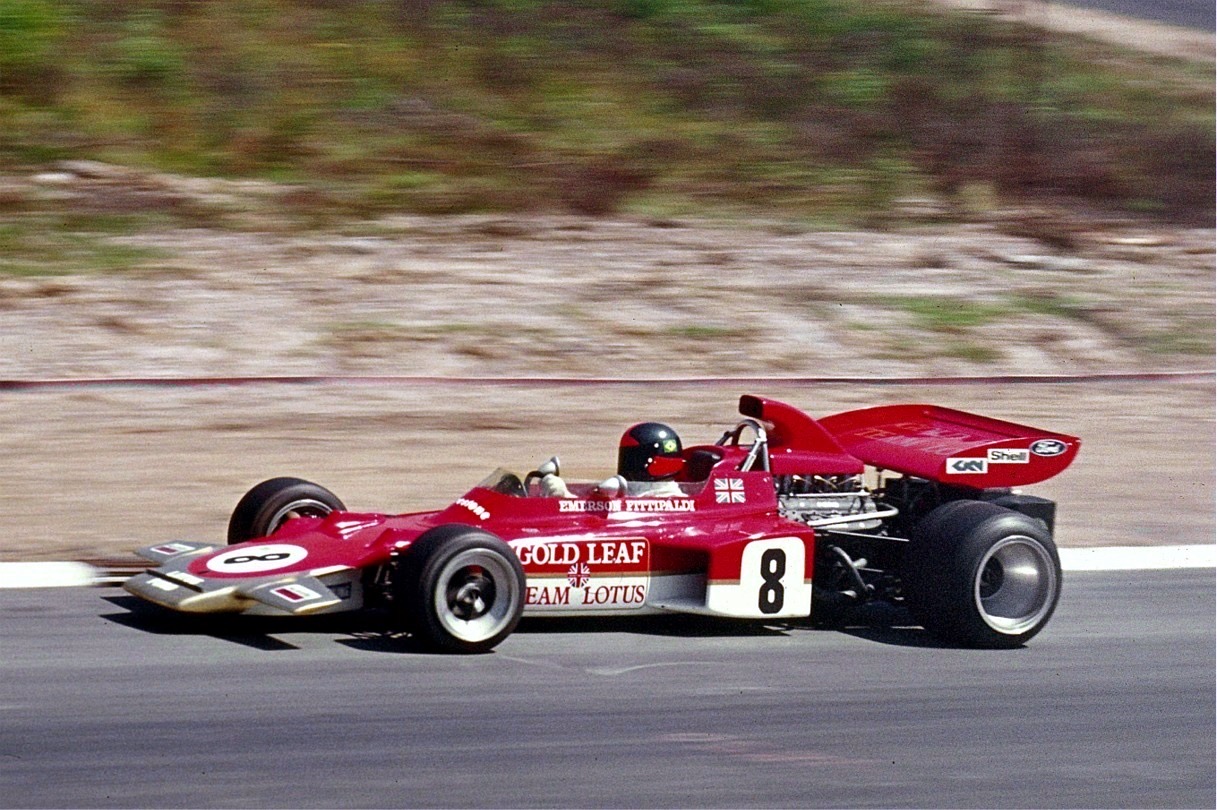
In 1972 the 72 won five Grands Prix and gave Fittipaldi the drivers’ title, aged 25 and the youngest champion the sport had then had. He won in Spain, Belgium, Britain, Austria and Italy. On the way to Monza the Lotus transporter crashed and damaged 72/7, so he clinched both titles in 72/5, entered as World Wide Racing, Motor Sport’s 2022 profile records. Lotus beat Tyrrell to the constructors’ championship by 61 points to 51.
Fittipaldi and Peterson as team-mates
For 1973 Chapman signed Ronnie Peterson, the Swede who had been runner-up in the 1971 championship for March, as Fittipaldi’s team-mate. Fittipaldi won three of the first four races, in Argentina, Brazil and Spain; the Spanish win, at Montjuïc Park despite a puncture, was the 50th Grand Prix win for a Lotus. Peterson won his first Grand Prix in France and then three of the last four, in Austria, Italy and the United States. With seven wins between them Lotus took the constructors’ title with 92 points to Tyrrell’s 82, but Jackie Stewart won the drivers’ title for Tyrrell with 71 points to Fittipaldi’s 55 and Peterson’s 52. Henry wrote that dividing the wins helped Stewart to the crown; Fittipaldi, second to Peterson at Monza, left for McLaren and won the 1974 title there.
The Lotus 76 fails and the 72 carries on
Chapman asked Ralph Bellamy for the 72’s successor, the Lotus 76, which Henry wrote was to be a Lotus 72 “but 100 pounds lighter”. It ended up heavier than the 72, broke often and wore out its tyres. Peterson went back to the 72 and won three more Grands Prix in 72/8: Monaco, France and Italy. The Italian Grand Prix of 8 September 1974 was the 72’s 20th and last World Championship win. In 1975 Lotus had no new car, scored nine points all year and finished seventh among the constructors. Peterson finished fifth in the 72’s last race, at Watkins Glen on 5 October 1975, after losing fourth to James Hunt’s Hesketh on the last lap with a flat-spotted tyre.
How many races did the Lotus 72 win?
The Lotus 72 won 20 World Championship Grands Prix between June 1970 and September 1974: four victories for Rindt, nine for Fittipaldi and seven for Peterson. It also won non-championship Formula One races. Classic Team Lotus gives a total of 22 Grand Prix wins, without saying which races it counts.
All 20 World Championship wins
| No. | Date | Grand Prix | Driver | Chassis |
|---|---|---|---|---|
| 1 | 21 June 1970 | Dutch | Jochen Rindt | 72C |
| 2 | 5 July 1970 | French | Jochen Rindt | 72C |
| 3 | 18 July 1970 | British | Jochen Rindt | 72C |
| 4 | 2 August 1970 | German | Jochen Rindt | 72C |
| 5 | 4 October 1970 | United States | Emerson Fittipaldi | 72/5 |
| 6 | 1 May 1972 | Spanish | Emerson Fittipaldi | 72/7 |
| 7 | 4 June 1972 | Belgian | Emerson Fittipaldi | 72/7 |
| 8 | 15 July 1972 | British | Emerson Fittipaldi | 72/7 |
| 9 | 13 August 1972 | Austrian | Emerson Fittipaldi | 72/5 |
| 10 | 10 September 1972 | Italian | Emerson Fittipaldi | 72/5 |
| 11 | 28 January 1973 | Argentine | Emerson Fittipaldi | 72/7 |
| 12 | 11 February 1973 | Brazilian | Emerson Fittipaldi | 72/7 |
| 13 | 29 April 1973 | Spanish | Emerson Fittipaldi | 72/5 |
| 14 | 1 July 1973 | French | Ronnie Peterson | 72/6 |
| 15 | 19 August 1973 | Austrian | Ronnie Peterson | 72/6 |
| 16 | 9 September 1973 | Italian | Ronnie Peterson | 72/6 |
| 17 | 7 October 1973 | United States | Ronnie Peterson | 72/6 |
| 18 | 26 May 1974 | Monaco | Ronnie Peterson | 72/8 |
| 19 | 7 July 1974 | French | Ronnie Peterson | 72/8 |
| 20 | 8 September 1974 | Italian | Ronnie Peterson | 72/8 |
Sources: dates and winners from Formula 1’s official results for each season; chassis numbers from Motor Sport, October 2022. For Rindt’s 1970 wins the table gives the specification (72C), not the chassis number.
Championships and points by season
| Season | 72 wins | Constructors’ position (points) | Best Lotus driver |
|---|---|---|---|
| 1970 | 5 | 1st (59) | Jochen Rindt, champion (45) |
| 1971 | 0 | 5th (21) | Emerson Fittipaldi, 6th (16) |
| 1972 | 5 | 1st (61) | Emerson Fittipaldi, champion (61) |
| 1973 | 7 | 1st (92) | Emerson Fittipaldi, 2nd (55) |
| 1974 | 3 | 4th (42) | Ronnie Peterson, 5th (35) |
| 1975 | 0 | 7th (9) | Ronnie Peterson, 12th (6) |
Source: Formula 1’s official race, constructors’ and drivers’ results for 1970 to 1975. The constructors’ points are those of the Lotus-Ford entry, which in 1970 include Rindt’s Monaco win in the 49C.
Non-championship wins
Motor Sport’s 2022 profile lists the non-championship races the surviving cars won: Fittipaldi won the 1972 International Trophy at Silverstone from pole position in 72/7, and a race at Vallelunga and the Rothmans 50,000 Formule Libre race at Brands Hatch (with a £50,000 prize) in 72/5, both in 1972; Ickx won the wet 1974 Race of Champions at Brands Hatch in 72E/5.
Design and engineering of the Lotus 72
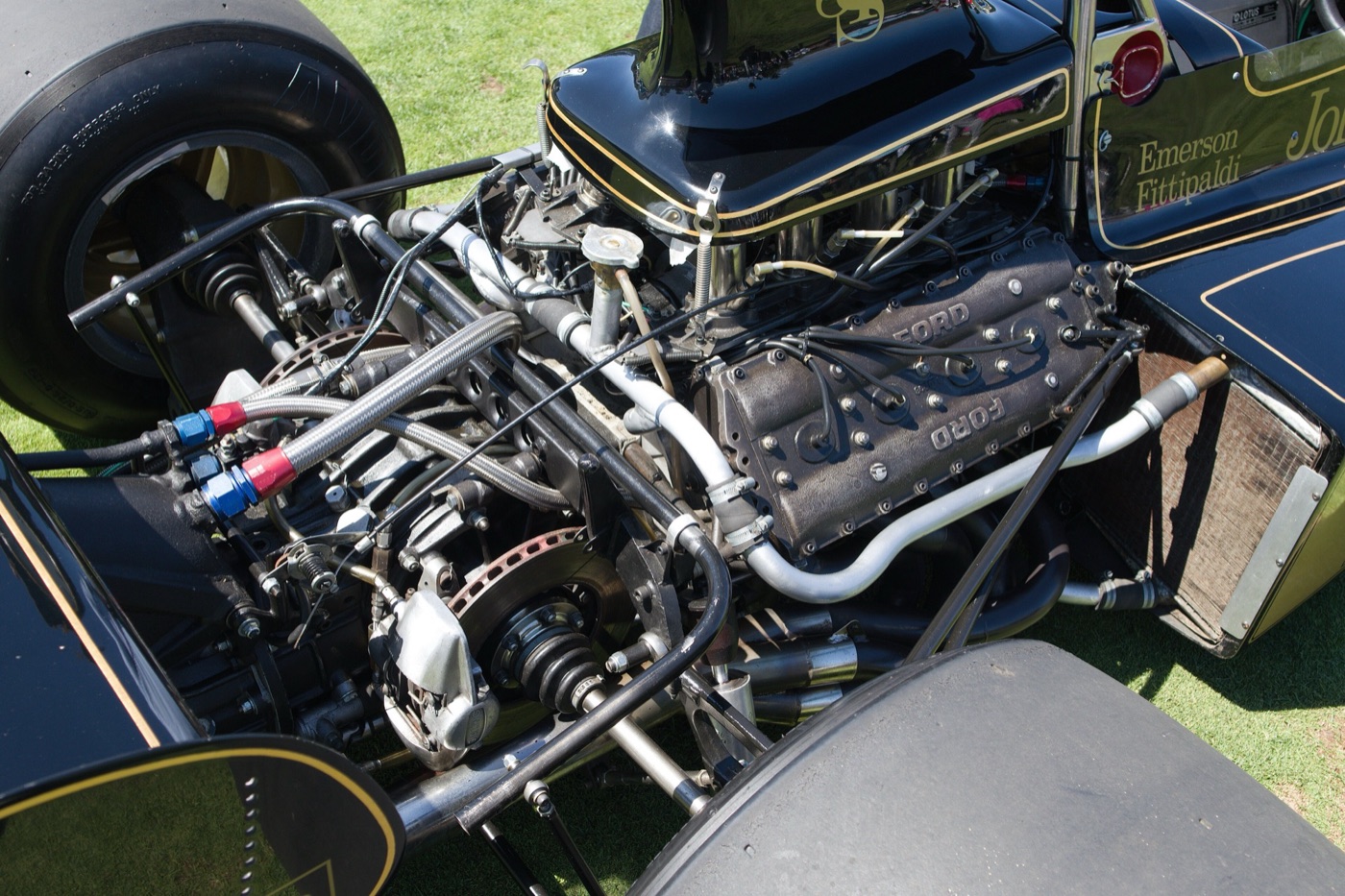
The Lotus 72 had an aluminium monocoque cockpit with the Cosworth V8 and a Hewland gearbox bolted to the back of it, and in Jenkinson’s words of 1970, “there the similarity to any other GP car ends”.
Why the Lotus 72 had a wedge shape
Grand Prix cars of the day normally carried their water radiator in the nose. The 72 had two, one each side of the cockpit’s rear bulkhead, in ducts fed by the air flowing along the cockpit sides, with 6-inch-long pipes from the front of the engine. That took away yards of piping and water, and let the nose become what Jenkinson called “an accentuated chisel shape, as on the Indianapolis turbine Lotus cars”. He also noted that the driver no longer sat in a stream of hot air from the radiator, which Jenkinson noted suited Rindt, who suffered badly from cockpit heat. Henry, in 1997, wrote that “the wedge profile guaranteed aerodynamic efficiency”, and Jenkinson that the body shape followed “certain aerodynamic theories of increasing cross-sectional area towards the centre of the length”. The radiators sat in two big glassfibre ducts that, as Ultimatecarpage’s history of the car puts it, “would later be known as sidepods”.
The triple-bladed rear wing
The 72 also had what Jenkinson called another Lotus innovation, a triple-bladed rear aerofoil. The lower blade was fixed to the car and the upper two were adjustable, and they passed their downforce (“downthrust”, in his word) to the lower blade through magnesium side-plates. The battery, fire extinguisher and brake and clutch fluid reservoirs were hidden in the nose, which had no opening in its leading edge.
Torsion bars, anti-dive and anti-squat
Coil springs were replaced by compound torsion bars: a solid bar inside a thin-walled tube, splined together at one end, which halved the length a single bar would need and fed all the loads into the car at one point. The suspension geometry was designed for anti-dive under braking and anti-squat under acceleration, to keep the car flat and its camber angles constant as the fuel load burned off. Henry wrote that the torsion bars gave rising-rate springing.
Inboard brakes front and rear
“Taking a leaf from the 4-w-d Lotus, all four brakes are mounted inboard, to save great lumps of unsprung weight,” Jenkinson wrote. The front discs worked through shafts to the wheels. In testing in Spain the front brakes overheated and melted the Tufnol distance pieces between the discs and the shafts’ inner universal joints; heavier ventilated discs in place of the light solid ones, and metal distance pieces, cured it. The layout still gave the 72 its early trouble: in practice at Jarama, Henry recorded, a front brake failure left Rindt braking on three wheels and spinning, and he walked back to tell Chapman he wasn’t “ever going to get into that bloody car again”.
Built around Firestone tyres
Henry wrote that the car was developed with Firestone, and that its low unsprung weight and pitch-free ride were meant to let it use the softest rubber compound available. Motor Sport’s 2022 profile of the surviving cars put the car’s handling troubles in 1975 down to the Goodyear tyres it then ran, when it had been designed around Firestones six seasons earlier.
Lotus 72 specification
The Lotus 72 used the 3-litre Ford Cosworth DFV V8 that Lotus had first raced in the 49 in 1967 (Motor Sport recorded 409 bhp at its first race), a Hewland gearbox, and an aluminium monocoque.
| Part | Lotus 72 |
|---|---|
| Designers | Colin Chapman and Maurice Philippe |
| Chassis | Aluminium monocoque cockpit section; engine and gearbox form the rear of the car |
| Engine | Ford Cosworth DFV, 3-litre V8, mounted behind the driver |
| Power | About 440 bhp at 10,000 rpm |
| Weight | 530 kg, the minimum then allowed |
| Gearbox | Hewland FG, five-speed |
| Cooling | Two water radiators, one each side of the cockpit |
| Front suspension | Double wishbones; compound torsion bars; anti-dive geometry |
| Rear suspension | Upper wishbone, single forward radius rod, wide-based lower wishbones; compound torsion bars; anti-squat geometry |
| Brakes | All four mounted inboard |
| Tyres | Firestone (1970–72); Goodyear (1973–75) |
| First race | Spanish Grand Prix, Jarama, 19 April 1970 |
| Last race | United States Grand Prix, Watkins Glen, 5 October 1975 |
Sources: Motor Sport, May 1970, July 1967 and October 2022 (power); Alan Henry in Motor Sport, May 1997; weight and gearbox from Lotus Cars’ heritage page on the Type 72.
Lotus 72 versions: 72C, 72D and 72E
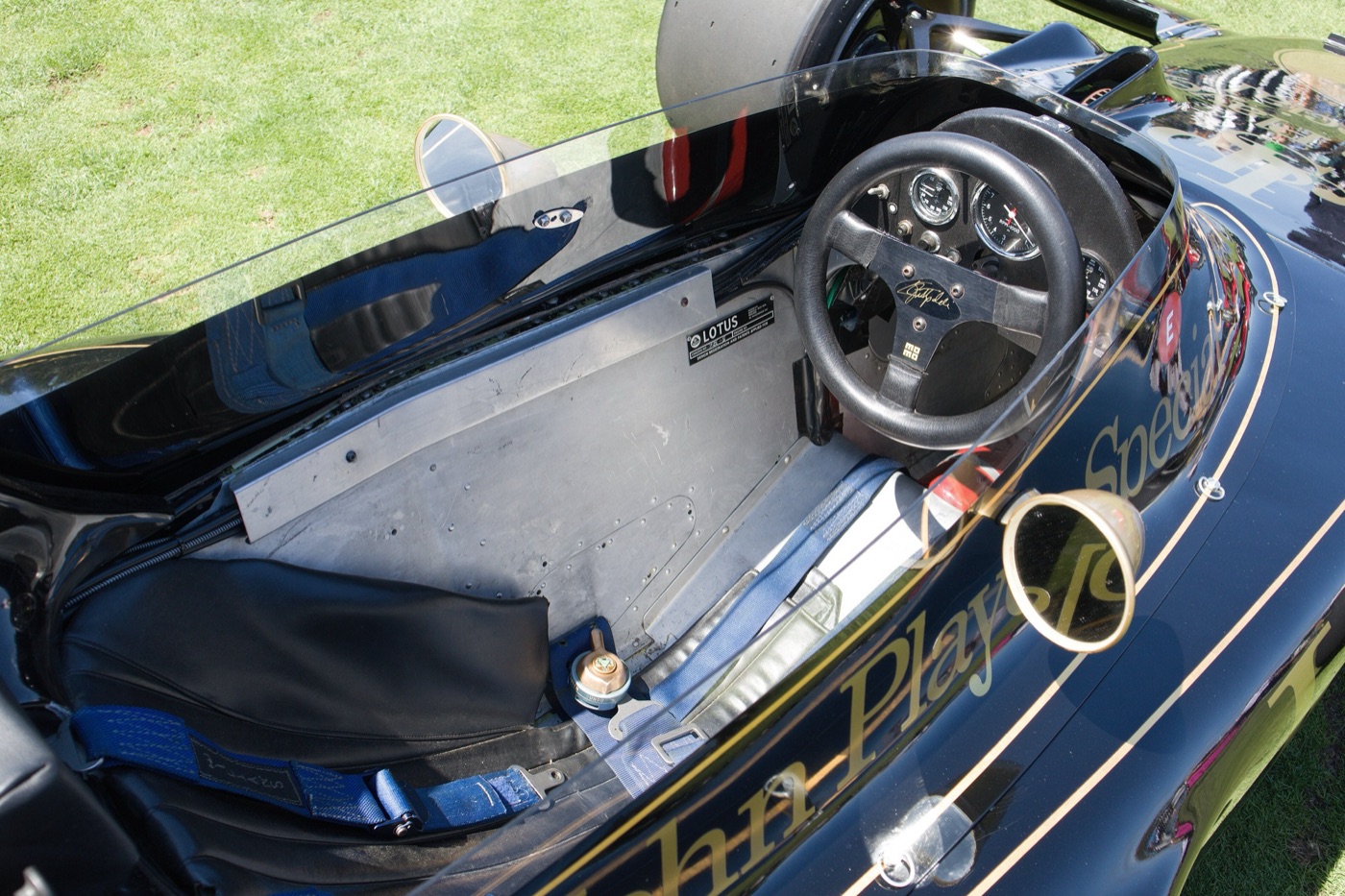
Lotus kept changing the 72 for six seasons and gave each main update a letter: the C of 1970, the D of 1971 and the E of 1973, with further changes to the suspension in 1975.
Lotus 72C
After Jarama the cars went back to Hethel and the suspension was reworked: by Zandvoort in June, Henry wrote, the anti-squat had been reduced and Rindt said the car had a “better feel”. By the summer of 1970 the cars ran to what Lotus called C specification: Motor Sport’s 2022 profile records 72/3 as built to C spec, and Rob Walker’s 72/4 as upgraded to 72C from the prototype 72/1.
Lotus 72D
The D specification arrived during 1971. Motor Sport’s 2022 profile records Fittipaldi driving the “updated 72D/5” to fifth at Monaco in 1971. Fittipaldi won the 1972 title in D-specification cars.
Lotus 72E
New rules in 1973 made deformable structures compulsory. The E specification carried them, and Motor Sport’s profile describes 72/6 being updated to 72E over the winter of 1972–73 “with deformable structures around the tub”.
Coil springs and cables in the last season
In the car’s last season, Lotus tried coil springs at the rear in place of the torsion bars, and on 72/9 a cable-operated torsion bar linkage, which Motor Sport says did not work. The coil-sprung rear suspension was on 72/8 when Jim Crawford raced it at Silverstone and Monza. Henry wrote that Lotus’s experiments with the wheelbase and suspension that year “reflected a team in disarray”.
Who drove the Lotus 72?
Classic Team Lotus names Jochen Rindt, John Miles, Reine Wisell, Dave Walker, Ronnie Peterson and Jacky Ickx as the car’s principal drivers; Emerson Fittipaldi, whom that list leaves out, raced it in four seasons, from 1970 to 1973, more than any other driver.
Works drivers in the car’s last year
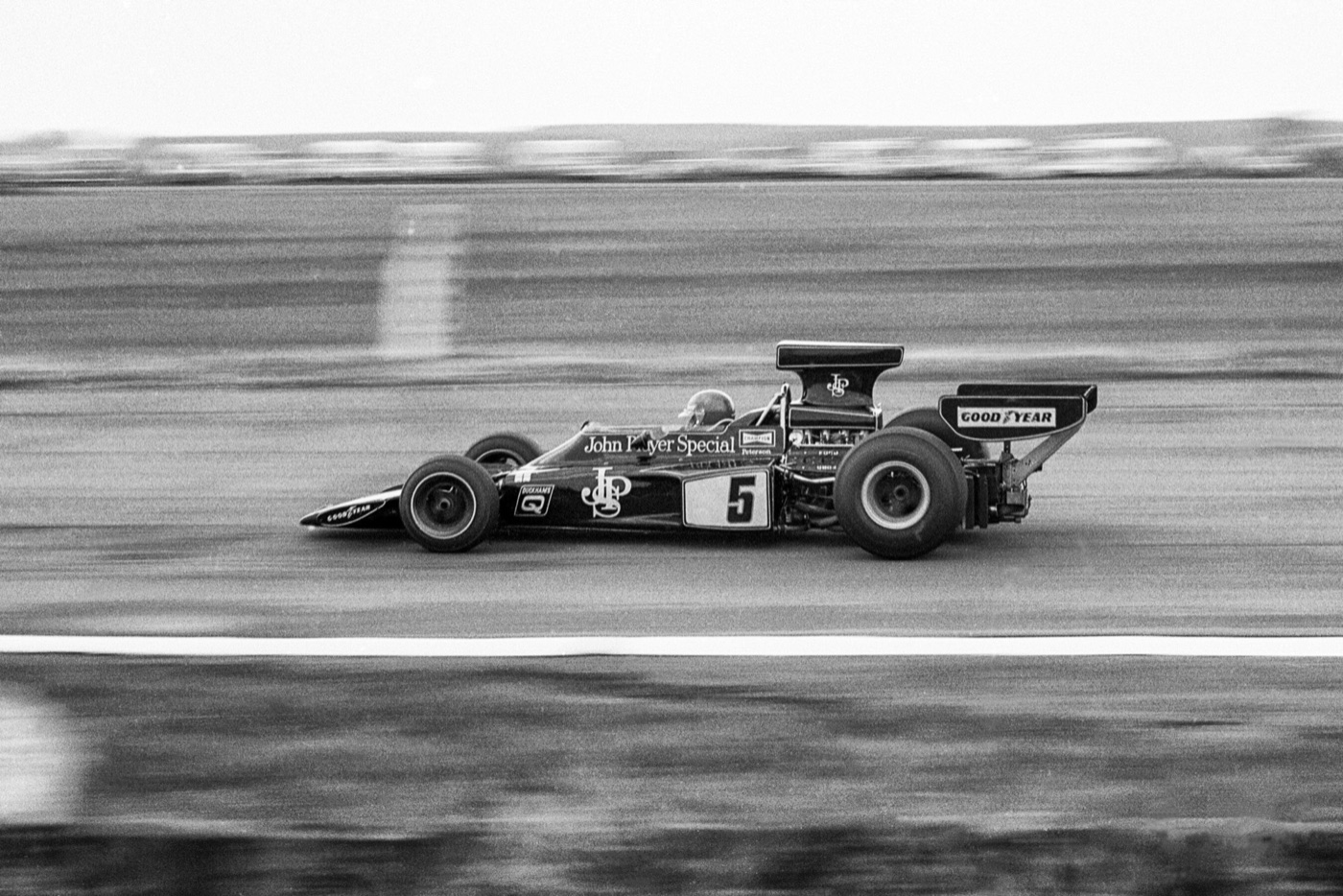
In 1975 Lotus used the 72 to try British drivers. Jim Crawford made his only Grand Prix starts in 72/8 at Silverstone and Monza, John Watson drove it at the Nürburgring, and Brian Henton made his Formula One debut in 72E/5 at the British Grand Prix, hitting the Silverstone sleepers in the downpour that stopped the race. Ickx left the team in mid-season by mutual consent.
Private entries: Rob Walker, Dave Charlton and Team Gunston
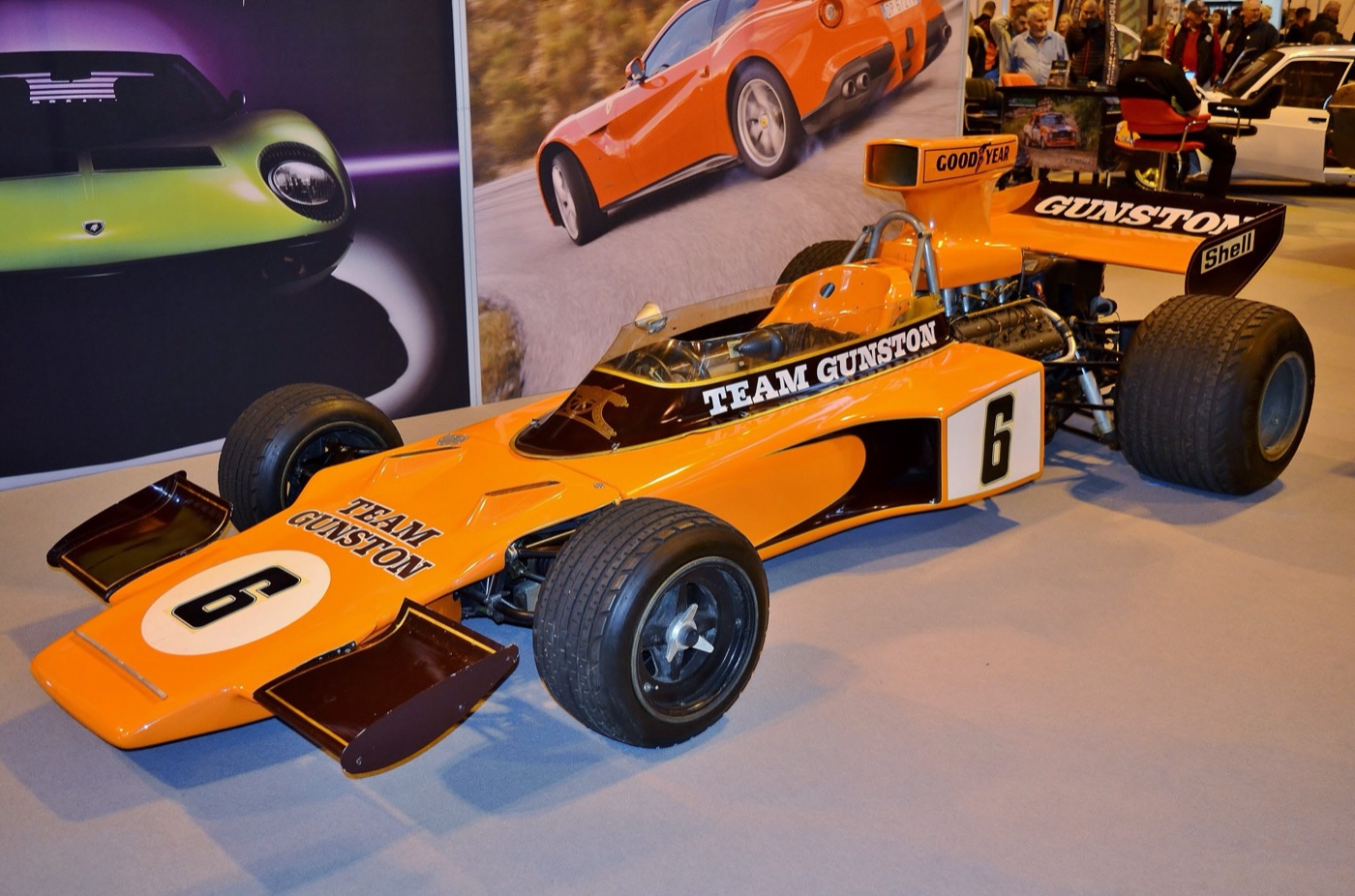
Lotus sold or lent 72s to other teams. Graham Hill drove Rob Walker’s 72/4 in Canada, the United States and Mexico at the end of 1970. In 1971 Dave Charlton raced 72/3 as a third works car at the British Grand Prix and then took it home to South Africa, where he raced it in the national series with Lucky Strike backing. Team Gunston bought 72/6 and 72/7 from Team Lotus: Ian Scheckter finished second in the 1974 South African national championship in 72/6, and Paddy Driver (1974) and Guy Tunmer (1975) each made their only World Championship start in 72/7 at Kyalami.
How many Lotus 72s were built?
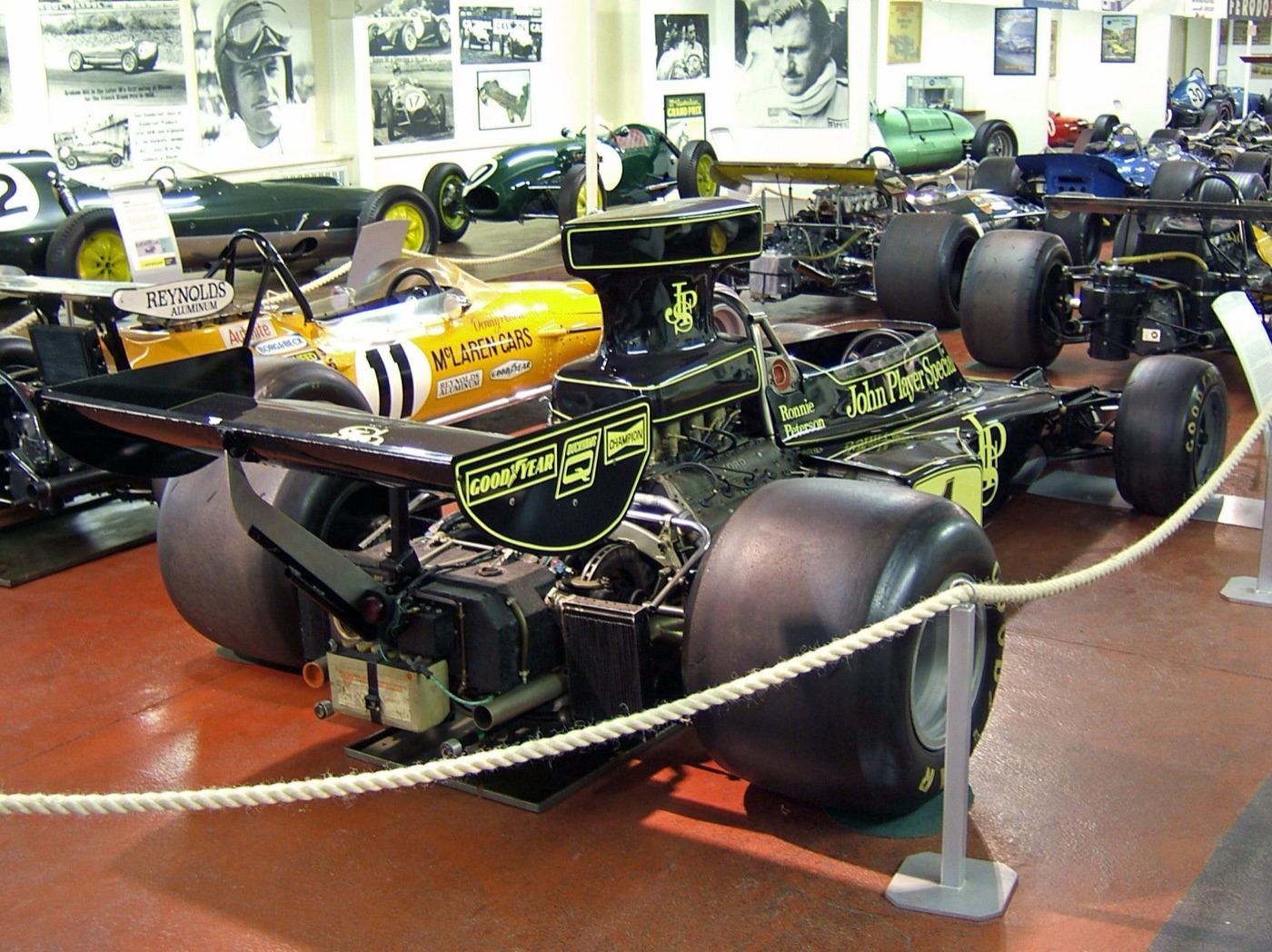
Team Lotus built ten Lotus 72 monocoques, Classic Team Lotus says, and eight survive. The cars carried nine chassis numbers, 72/1 to 72/9, which is why some histories count nine. Motor Sport’s 2022 profile explains that 72/4 was a rebuild of the prototype 72/1 with little of the original monocoque left, and that after a wheel failure in practice at Zandvoort in 1973 sent Fittipaldi into the barriers in 72/5, Lotus built a new monocoque and reused the number. 72/2 was written off in practice for the 1970 Italian Grand Prix, the session in which Rindt was killed, according to OldRacingCars.com’s car-by-car list. The original 72/5 was restored in 2014. Motor Sport reported that all eight survivors were to be gathered together for the first time at Hethel on 15 October 2022.
Where the eight surviving cars are
| Chassis | Main drivers | Notes and owner (2022) |
|---|---|---|
| 72/3 | John Miles, Reine Wisell, Dave Charlton | Third at Watkins Glen 1970 (Wisell); raced in South Africa; bought by a British collector in 1976 |
| 72/4 | Graham Hill | Rob Walker’s private car, rebuilt from 72/1; owned by Richard Mille |
| 72/5 | Emerson Fittipaldi | Four World Championship wins; written off at Zandvoort in 1973, restored in 2014 |
| 72E/5 | Jacky Ickx, Brian Henton | The 1973 replacement monocoque; 1974 Race of Champions winner; raced by John Inglessis |
| 72/6 | Reine Wisell, Dave Walker, Ronnie Peterson, Ian Scheckter | Four wins for Peterson in 1973; owned by Katsu Kubota |
| 72/7 | Emerson Fittipaldi, Paddy Driver, Guy Tunmer | Five World Championship wins; acquired by the Chapman family in 2019 |
| 72/8 | Ronnie Peterson, Jim Crawford, John Watson | Three wins in 1974; long in the Donington Grand Prix Collection; owned by Bill Pohlad |
| 72/9 | Ronnie Peterson | The 1975 “lightweight” car and the 72’s last race; owned by the Chapman family |
Source: Motor Sport, October 2022.
How much is a Lotus 72 worth?
The only public sale price for a Lotus 72 is £286,000. Motor Sport reported in October 2007 that the ex-John Miles and Graham Hill car, 72/4, “sold well at H&H’s Kempton Park sale for £286,000”, and that the European collector who bought it meant to return it to the tracks. Motor Sport’s 2022 profile has Austrian collector Joe Willenpart acquiring 72/4 in 2007; it later passed to Richard Mille. The other survivors have changed hands privately: 72/6, for example, went from David McLaughlin to Alistair Morrison in 2004, then to Patrick van Heurck and Katsu Kubota, and the Chapman family bought 72/7 in 2019.
Gold Leaf and John Player Special colours
The Lotus 72 raced in two liveries: the red, white and gold Gold Leaf livery in 1970 and 1971, and the black and gold John Player Special livery from 1972 to 1975, when the team was John Player Team Lotus. Motor Sport’s Grand Prix Scene of February 1972 reported the change: “Gold Leaf Team Lotus is no more, and in its place is the John Player Team Lotus, and the red, white and gold Lotus 72 cars have now become the black and gold John Player Specials in the eyes of the business world, but to you and me a Lotus 72 is a Lotus 72.” Fittipaldi’s win in Spain on 1 May 1972 was the first World Championship win for the black and gold cars.
The Exige S Type 72 and other tributes
Lotus named two road cars after the 72: an Elise Type 72 in 2002, PistonHeads reported in December 2009, and the Lotus Exige S Type 72, announced that month.
The Exige S Type 72 was timed for the return of the Lotus name to Formula One in 2010, with a new Malaysian team that, PistonHeads noted, was not the Hethel company itself (a later team, the former Renault squad at Enstone, raced as Lotus F1 Team from 2012 to 2015). A SkiddMark report of December 2009 recorded that the car was painted black with gold lettering by the same sign writer who had painted the Team Lotus cars, that it weighed 935 kg, reached 60 mph in 4.5 seconds and 145 mph, and that each car carried a plate commemorating one of the 72’s 20 wins. Twenty were for the UK, at £36,945 on the road, 20 for mainland Europe and a limited run for Japan and other markets. The Sport Pack came as standard, and an optional Performance Pack raised the power from 218 bhp to nearly 240 bhp, according to PistonHeads.
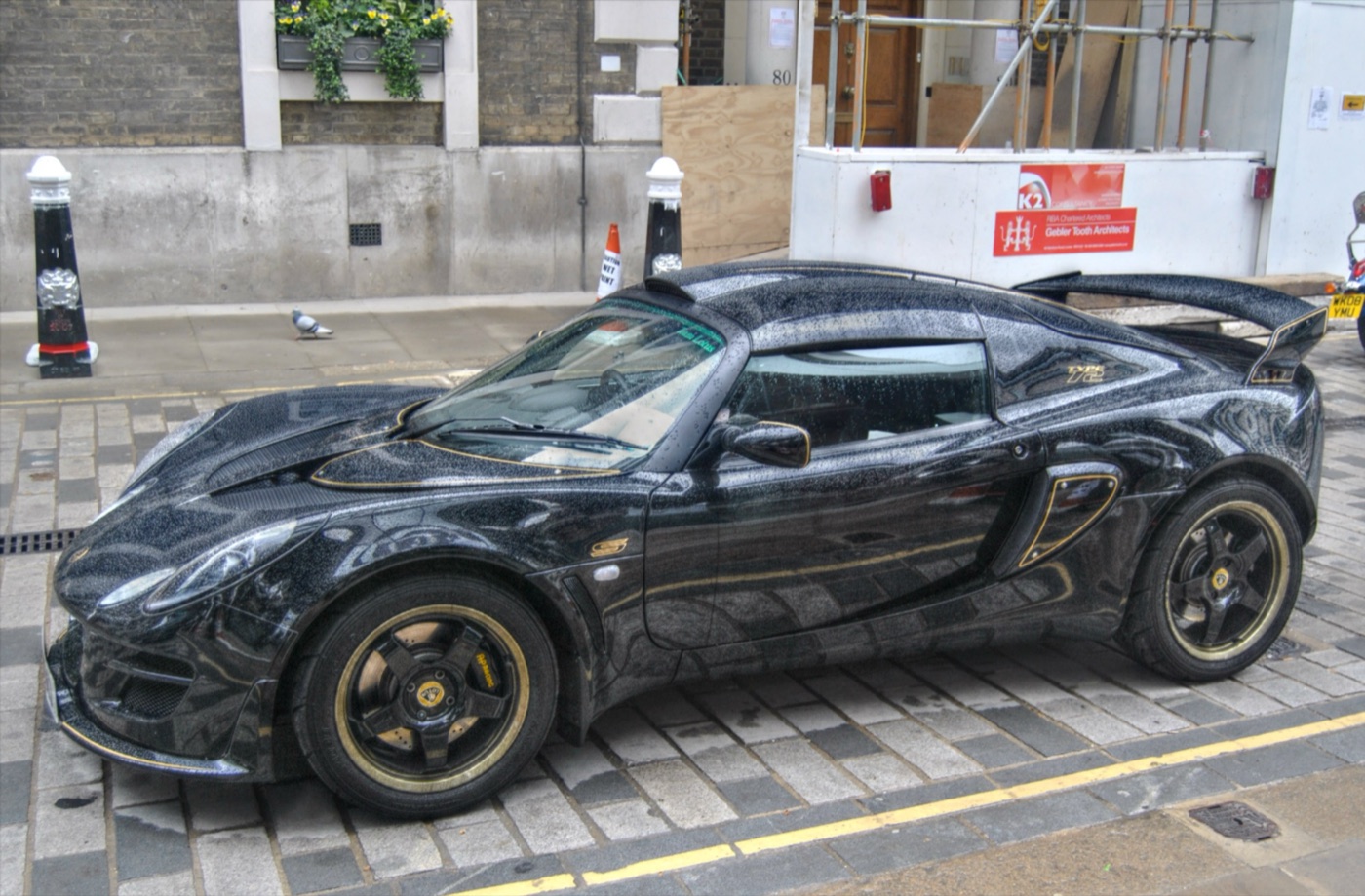
Clive Chapman, director of Classic Team Lotus, said at the launch, as SkiddMark reported, that the 72 “was a revolutionary design that pioneered the use of side mounted radiators to achieve its distinctive ‘wedge’ profile”, and that “by minimising un-sprung weight and using a torsion bar, rising rate suspension, tyre performance was excellent”.
What drivers and writers have said about the Lotus 72
Fittipaldi has called it the best car he raced: “There’s no question about it, the Lotus 72 was the best F1 car I ever drove,” Classic Team Lotus quotes him. Rindt distrusted it from the start. Henry wrote that Rindt began by regarding the car as a death trap, and quoted Jackie Stewart, his close friend: “He told me, ‘I can’t get on with this car it’s going to break’. But he just had to drive it because it was so fast.” Chapman’s complaint about Rindt, made to Denis Jenkinson at Clermont-Ferrand in 1970, was: “He has lightning reflexes, is bloody quick, but keeps telling me how to design my cars.”
Henry made the case in 1997 that it was “the most enduring F1 car of all time”: Maserati’s 250F raced for seven years, but for its last three in private hands, while the 72 was Lotus’s front-line car in its first race and its last. Autosport named the 72 the greatest Formula One car in March 2019, Classic Team Lotus records.
Questions
Why was the Lotus 72 wedge-shaped?
Moving the water radiators from the nose to the sides of the cockpit freed the front of the car, so the nose became what Motor Sport called in 1970 “an accentuated chisel shape, as on the Indianapolis turbine Lotus cars”. The radiators sat in ducts fed by the air flowing along the cockpit sides.
What engine did the Lotus 72 use?
The 3-litre Ford Cosworth DFV V8, the engine Lotus had first raced in the Lotus 49 in 1967. It was bolted to the back of the monocoque with a Hewland gearbox behind it.
Who won the World Championship in a Lotus 72?
Jochen Rindt in 1970, after his death at Monza, and Emerson Fittipaldi in 1972. Team Lotus won the constructors’ championship with the 72 in 1970, 1972 and 1973.
Why was the Lotus 72 black and gold?
From 1972 Team Lotus raced as John Player Team Lotus, and the cars were painted black and gold as “John Player Specials”. In 1970 and 1971 they had raced in the red, white and gold of Gold Leaf.
What was meant to replace the Lotus 72?
The Lotus 76 of 1974, which Chapman wanted to be a 72 “but 100 pounds lighter”. It came out heavier and unreliable, so Ronnie Peterson went back to the 72 and won three more Grands Prix in it that year.
How fast was the Lotus 72?
Motor Sport’s report of the 1970 Italian Grand Prix records Denny Hulme seeing Rindt’s wingless 72 under heavy braking from 190 mph for the South Curve. Alan Henry wrote that Chapman ran it without wings to match the straight-line speed of the Ferrari flat-12s.
Can you still see a Lotus 72 race?
Yes. Eight of the cars survive, and several run in historic events: John Inglessis races 72E/5, and 72/6 has stayed in competition with its owners since David McLaughlin raced it in JPS colours from 1982.
Sources
- Formula 1, official race, constructors’ and drivers’ results, 1970 to 1975 (each season’s pages): dates, winners, points and positions.
- Denis Jenkinson, “Notes on the cars at Jarama”, Motor Sport, May 1970, p30: the design, radiators, torsion bars, inboard brakes, designers.
- “41st Italian Grand Prix”, Motor Sport, October 1970, p32: Rindt’s accident in practice, Hulme’s account, the wreck impounded.
- “12th United States Grand Prix”, Motor Sport, November 1970, p36: Fittipaldi’s win and the title settled for Rindt.
- “Grand Prix Scene”, Motor Sport, February 1972, p17: Gold Leaf gives way to John Player Special.
- Alan Henry, “Lotus 72: the most successful GP car ever?”, Motor Sport, May 1997, p20: development, Jarama, Rindt’s death and the inquiry, the 76, quotes from Stewart and Chapman.
- “Special brew: the Lotus 72”, Motor Sport, October 2022, p72: the history and owners of the eight surviving chassis, and the DFV’s power of about 440 bhp at 10,000 rpm.
- “The Lotus 49”, Motor Sport, July 1967, p26: the 3-litre Cosworth DFV V8 and its 409 bhp at the 1967 Dutch Grand Prix.
- Motor Sport, auction news, October 2007, p25: the £286,000 sale of 72/4 at H&H, Kempton Park.
- OldRacingCars.com, “Lotus 72”, car-by-car list: 72/1 rebuilt as 72/4; 72/2 written off at the 1970 Italian Grand Prix.
- Lotus Cars, “Type 72” heritage page: weight of 530 kg and the Hewland FG five-speed gearbox.
- Classic Team Lotus, “Lotus 72 50th birthday”, 2020: the Hethel launch on 6 April 1970, the team, ten chassis and eight survivors, 22 wins, Fittipaldi’s quote, the Autosport vote.
- PistonHeads, “Lotus Exige S Type 72”, December 2009: the Exige S Type 72, the 2002 Elise Type 72, packs and UK price.
- SkiddMark, “Lotus celebrates its return to F1 with the Exige S Type 72”, December 2009: the Exige S Type 72’s figures, edition sizes and Clive Chapman’s comments.