Lotus Elise: every series, specs, values and buying guide
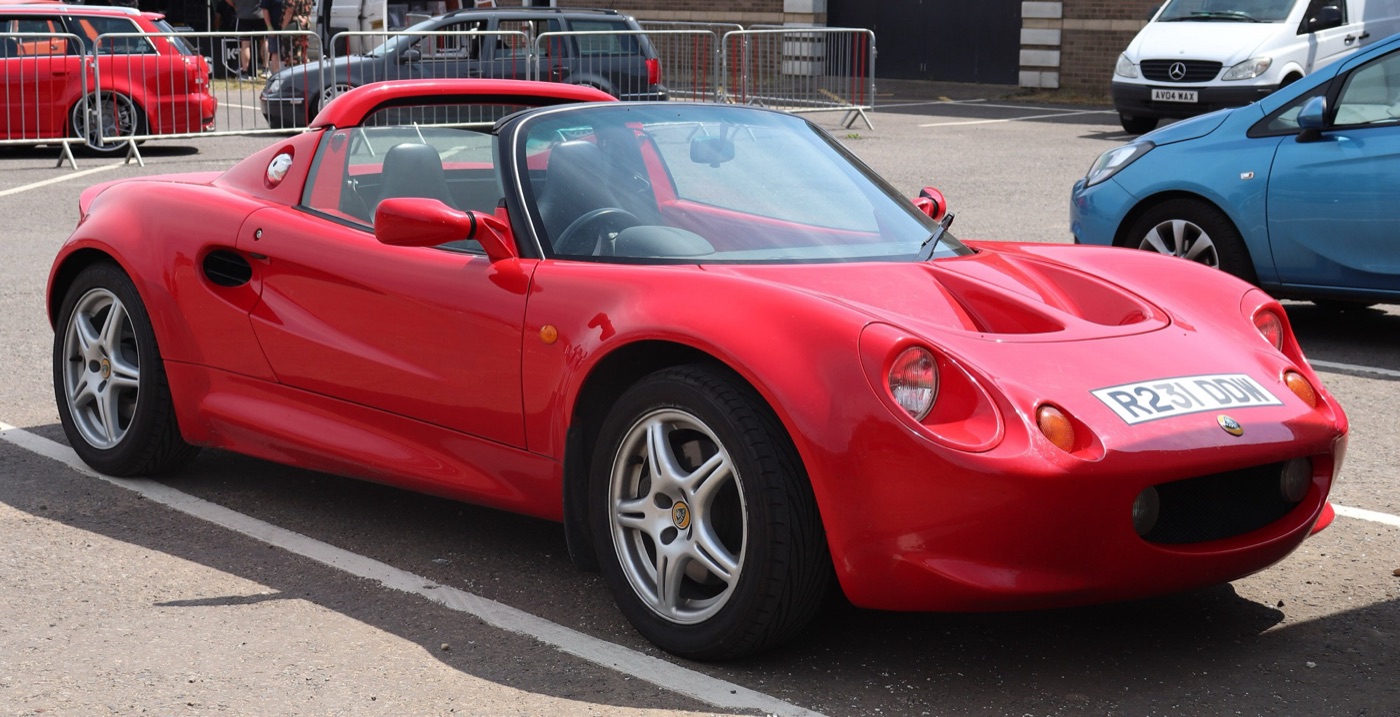
The Lotus Elise is the small, mid-engined two-seat British sports car that Lotus built at Hethel in Norfolk from 1996 to 2021, on a chassis of extruded aluminium sections glued together with epoxy. Over a 25-year production run Lotus made 35,124 of them in three series, from the 118bhp Rover-engined original that weighed about 725kg to the supercharged Toyota-engined Elise Sport 240 Final Edition and Elise Cup 250 Final Edition of 2021. Its chassis also carried the Exige, the Vauxhall VX220 and the first Tesla Roadster, all built at Hethel.
Lotus Elise history and development
Lotus designed the Lotus Elise under Romano Artioli, the Italian businessman who bought the company from General Motors in 1993 while he was also reviving Bugatti. Artioli paid £30 million for Lotus, according to evo's used Elise S1 review, and gave Hethel the freedom to design an all-new small sports car. Who owned Lotus before and after him is on our page on the owners of Lotus Cars.
Romano Artioli, Hethel and the Frankfurt launch
The first prototype ran at Hethel in December 1994. "It was freezing and the engine sprang a water leak after half a lap, but it was a magical moment," Lotus's chief engineer Richard Rackham told PistonHeads for its 2020 Elise S2 buying guide. Rackham engineered the car and Julian Thomson, then head of design, styled it. The project was costed on the idea that about 3,000 cars would be sold over four years; Lotus sold that many in the first 18 months, PistonHeads recorded.
The Elise made its public debut at the Frankfurt motor show in September 1995, and the first customer car was delivered in August 1996, according to the timeline in Classic & Sports Car's Elise S1 buyer's guide (Malcolm McKay, April 2020). It was the first affordable sports car Lotus had made since the Seven Series 4 went out of production in 1973, and it cost half as much as the Elan S2 before it. The timing looked poor: Mark Hughes, driving it for Motor Sport in October 1996 (page 36), described "a company in financial peril, its continued existence the subject of heated speculation".
Why is it called the Elise?
The car is named after Elisa Artioli, Romano Artioli's granddaughter. She was two and a half when she emerged from under the covers at the Frankfurt unveiling in September 1995, Hagerty UK reported in February 2022. The car's Lotus type number is 111, which is where the 111S and 111R badges come from; PistonHeads' S3 guide says the car was to have been called the 111 until the chairman chose his granddaughter's name instead.
The Series 2 and General Motors
The Series 2 replaced the original because the Series 1 could not meet the European crash regulations coming in for 2000. Lotus needed money for a new car, and General Motors paid for it in exchange for a sports car of its own, the Vauxhall VX220 and Opel Speedster, evo's S2 buying guide (Peter Tomalin, January 2021) explains. The second-generation Lotus Elise arrived in November 2000 (says Auto Express's used Elise review) on a revised version of the same chassis, with a new body, lower sills that made it easier to get in, Bilstein dampers, a better-trimmed cabin and, evo says, refinement "a notch higher". It was the first Lotus designed on computer, PistonHeads noted.
The S2 and the VX220 were built on a new assembly line installed at Hethel in 2000; until then the Elise had been put together in a small hall alongside the Esprit, Lotus's end-of-production release of 22 December 2021 records. Lotus built 7,200 VX220s and Speedsters there between 2000 and 2005.
Toyota engines and the American Elise
From 2004 the Elise used Toyota engines, and the reason was the US market. In its petition to the US National Highway Traffic Safety Administration, Lotus said it had spent about $27 million in a year preparing the Elise for the US, about $5 million of it "to obtain a suitable engine supplier capable of complying with U.S. emissions standards", the Federal Register notice of 5 February 2004 records. The car had been designed with clamshell body panels and no conventional bumpers, so NHTSA granted Lotus a temporary exemption (No. EX 03-4) from the US bumper standard and part of the headlamp standard, running until 1 January 2007. The notice also gives Lotus's operating losses at the time: £43.2 million in 2000, £18.1 million in 2001 and £2.4 million in 2002.
The first Toyota-engined car was the 189bhp 111R, with a six-speed gearbox and, for the first time on an Elise, servo-assisted brakes with ABS. Rover went out of business a year after the switch, PistonHeads pointed out. The K-series was dropped altogether in 2006, when a 134bhp Toyota 1.8 replaced it in the entry-level Elise S.
The Series 3 facelift
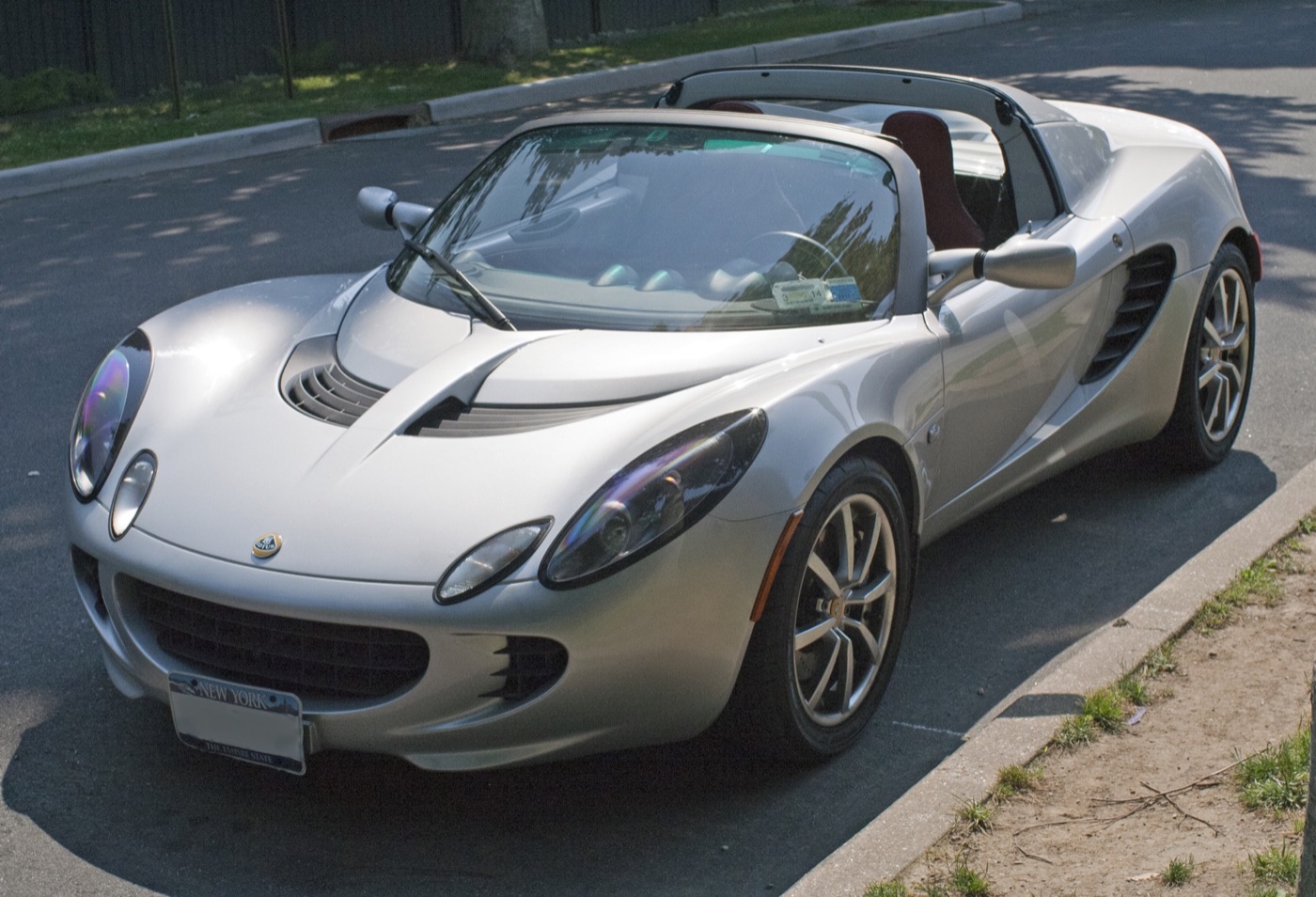
Lotus revealed a facelifted Elise for the 2011 model year in February 2010, shown at the Geneva motor show the following month and on sale in Britain from April. Owners and the trade call it the Series 3, though it is a facelift of the S2 on the same chassis. It had a new front bumper, splitter and clamshell, larger headlamps with LED daytime running lights for the first time, and a new rear bumper and engine cover. The changes cut aerodynamic drag by 4 per cent, Autocar's Geneva preview reported.
Under the skin, the entry-level car became the first Elise with a 1.6-litre engine: Toyota's 1ZR with Valvematic and dual VVT-i, giving 134bhp and 118lb ft. Its emissions of carbon dioxide fell 13 per cent to 155g/km, while the 1.8-litre Elise R and the 217bhp supercharged SC were rated at 196g/km and 199g/km. A new six-speed close-ratio gearbox went into every version, and the options list gained two designs of lightweight forged wheel and cruise control. A SkiddMark report of February 2010 gave the same figures, with the Elise R at 189bhp (Autocar said 192bhp) and cruise control offered as part of the Touring pack. CAR magazine expected prices of about £26,550 for the 1.6, £29,950 for the R and £32,950 for the SC.
When did Lotus stop making the Elise?
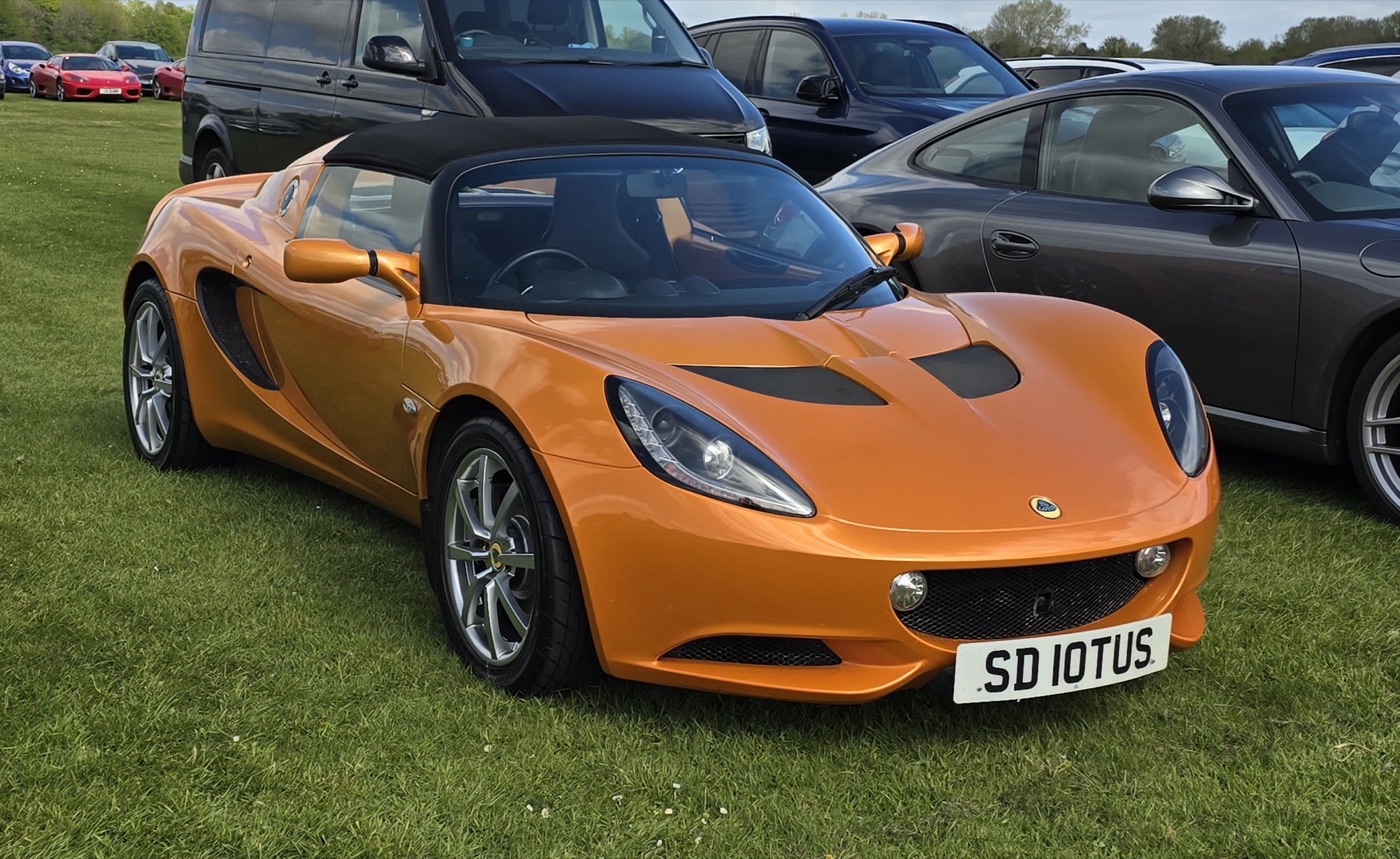
Lotus stopped making the Elise in December 2021. It announced on 25 January 2021 that the Elise, Exige and Evora had entered their last year of production, and on 22 December 2021 it photographed the last of each at Hethel. The last Elise built, a yellow Sport 240 Final Edition and number 35,124, went into Lotus's heritage collection, and the Emira took over at Hethel. The last Elise sold to a customer went to Elisa Artioli herself: a Sport 240 Final Edition in Championship Gold, handed over in February 2022, Hagerty reported. She has owned a silver 1997 Series 1 since she was four.
Design and engineering
The Elise is a fibreglass body on a separate chassis of extruded aluminium sections bonded with epoxy adhesive, with the engine mounted transversely behind the seats and driving the rear wheels. Richard Rackham, the car's vehicle architect and by 2021 Lotus's head of vehicle concepts, said in Lotus's December 2021 release that until its new electric car architecture came along, the Elise chassis had been his proudest moment.
The bonded aluminium chassis
Aluminium is awkward to weld and needs thicker sections at the joints, so Lotus glued its chassis instead, developing the bonding technology with Hydro Aluminium, which had been working on adhesives; the Elise was its first use in a car, evo says. The extrusions are anodised and the joints riveted as well as bonded. The bare chassis weighed 67kg by evo's count and 68kg without the body and roll bar by Classic & Sports Car's, and C&SC put its stiffness on a par with a steel saloon body. PistonHeads gives a claimed torsional rigidity of 11,000Nm per degree, the same figure Mazda claimed for the Mazda MX-5 ND nearly 20 years later. The rear subframe is steel, and so are the bobbins bonded into holes in the aluminium as suspension mounts. Every new Lotus since has used a form of the same chassis, evo notes.
Body and styling
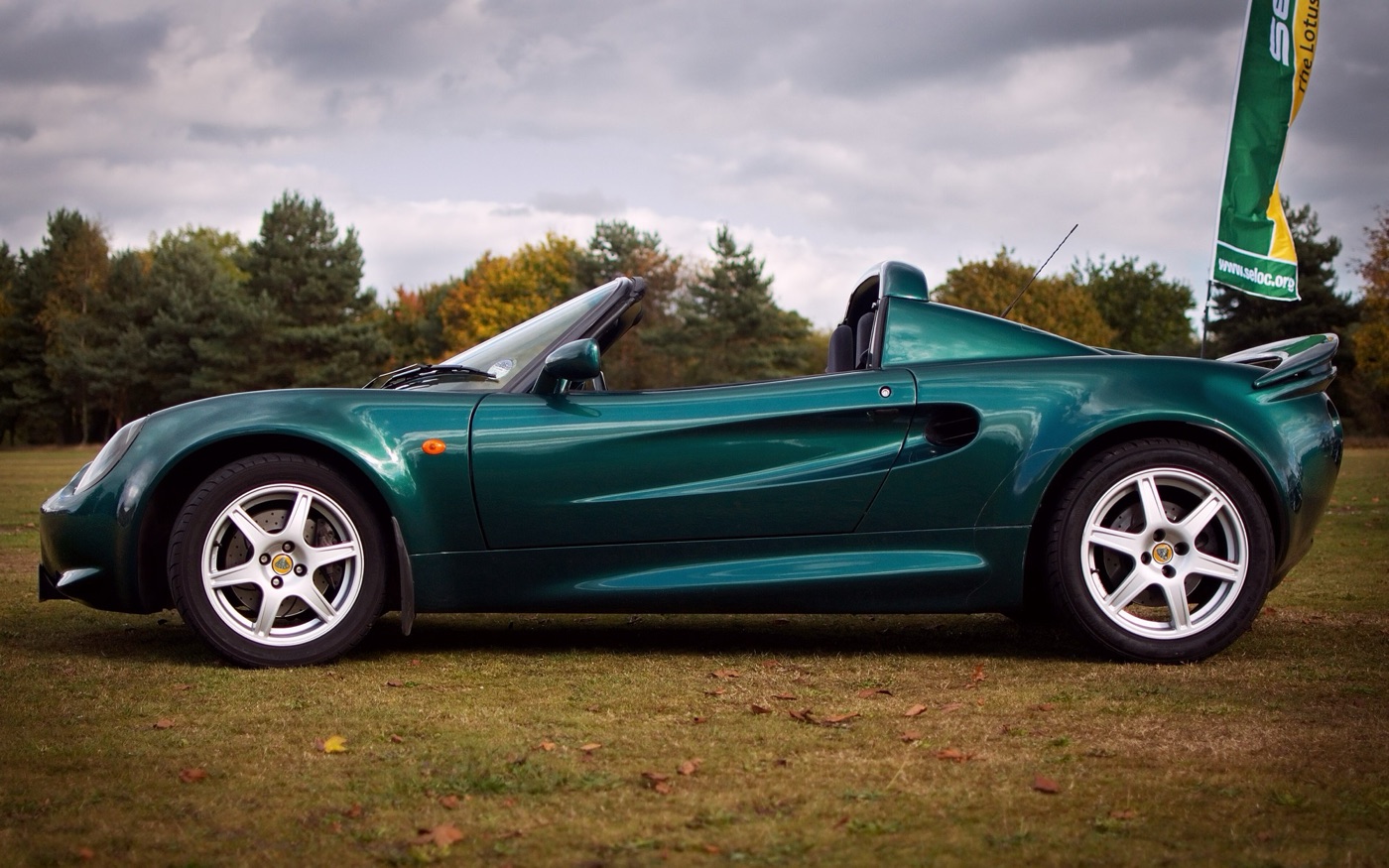
Julian Thomson, who later became head of design at Jaguar, drew the original body, and evo says he took his inspiration from his own Ferrari 246 Dino. The front and rear are each a single fibreglass clamshell. The S1 had no exterior door handles, only a small plastic ridge under the overhang, and a multi-piece fabric roof that Motor Sport found "fiddly to erect". The second generation brought a sharper body and a simpler roll-up soft top without the original's long tails.
Engines: K-series, Toyota and supercharged
The first Elise used the 1,796cc K-series four that Rover built for the MGF, an all-aluminium twin-cam with 16 valves, with a power output of 118bhp. Lotus used the standard version because Rover needed all its VVC engines, with variable valve control, for the MGF, Motor Sport explained in 1996. The VVC engine arrived in the 1999 111S with 143bhp. From 2004 Lotus used Toyota's 1.8-litre ZZ engines: the 2ZZ-GE with variable valve lift in the 189bhp 111R, and the 1ZZ in the 134bhp Elise S. The SC of 2008 added a Roots-type supercharger (a Magnuson M45, PistonHeads says), and the 1.8-litre Elise S of 2012 had a supercharger too. Unlike the K-series, which has a cambelt, the Toyota engines use a timing chain.
Suspension, steering and brakes
The suspension is by double wishbones all round on extruded aluminium uprights, and the steering is unassisted; Motor Sport singled out its "fabulous feel and feedback" in 1996. Early S1s had brake discs of a metal matrix composite of aluminium and silicon carbide (30 per cent silicon carbide, evo says), a first for a road car according to Motor Sport, and expected to last up to 100,000 miles. When Lanxide, the American company that made them, went out of business, later S1s and every S2 went back to conventional iron discs, PistonHeads records. More than 60 per cent of the S1's weight sits over the rear wheels.
Interior and practicality
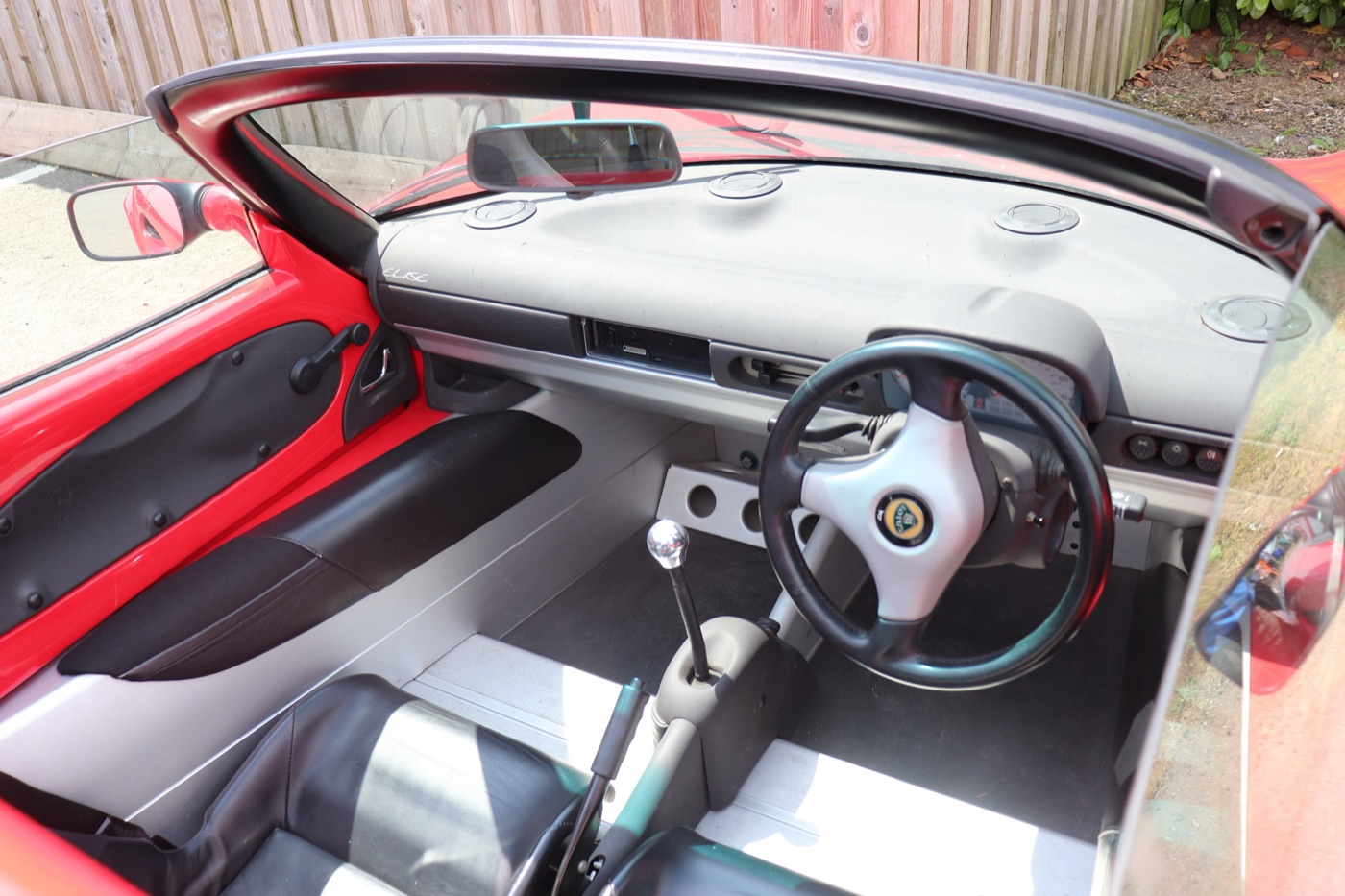
The S1 cabin is bare aluminium: no carpet, a small Nardi steering wheel, extruded aluminium pedals and dashboard, wind-up windows and only the driver's seat adjustable. Motor Sport noted "a simple heater but no radio". On the S2 a Touring package added leather seats, electric windows, full carpet and extra soundproofing for about 7kg. The boot behind the engine takes a couple of soft bags. Getting in means swinging over a wide sill, which is how the seats get damaged, C&SC notes.
Lotus Elise specs and performance
Lotus Elise power outputs run from 118bhp to 250bhp, and performance ranges from 0–60mph in about 6 seconds for the 118bhp original to 4.1 seconds for the 240bhp Sport 240 Final Edition. Kerb weight rose from about 725kg to more than 900kg as the car gained airbags, ABS and comfort equipment. PistonHeads found that no two sources give the same Elise weights, so the table names a source for every row.
| Version | Launched | Engine | Power | 0–60mph | Weight | Source |
|---|---|---|---|---|---|---|
| Elise 1.8 (S1) | 1996 | K-series 1.8 | 118bhp | 5.9s (0–62mph) | 725–755kg | evo; C&SC |
| Sport 190 (S1) | 1997 | K-series 1.8, tuned | 187bhp | 4.4s | n/a | C&SC |
| 111S (S1) | 1999 | K-series 1.8 VVC | 143bhp | 5.4s (0–62mph) | n/a | evo |
| Elise 1.8 (S2) | 2000 | K-series 1.8 | 120bhp | 5.6s | n/a | evo |
| 111S (S2) | 2002 | K-series 1.8 VVC | 156bhp | 5.1s | n/a | evo |
| 111R, later Elise R | 2004 | Toyota 2ZZ-GE 1.8 | 189bhp | 4.9s | n/a | evo |
| Elise S | 2006 | Toyota 1ZZ 1.8 | 134bhp | 5.8s | 860kg | PistonHeads |
| Elise SC | 2008 | Toyota 1.8, supercharged | 217bhp | 4.4s | n/a | evo |
| Elise 1.6 (S3) | 2010 | Toyota 1ZR 1.6 | 134bhp | 6.0s | 876kg | evo, 2010 |
| Elise S (S3) | 2012 | Toyota 1.8, supercharged | 217bhp | 4.2s | n/a | evo |
| Cup 250 | 2016 | Toyota 1.8, supercharged | 243bhp | n/a | n/a | PistonHeads |
| Cup 260 | 2017 | Toyota 1.8, supercharged | 250bhp | n/a | n/a | PistonHeads |
| Sport 240 Final Edition | 2021 | Toyota 1.8, supercharged | 240bhp | 4.1s | 922kg (898kg with options) | Lotus |
| Cup 250 Final Edition | 2021 | Toyota 1.8, supercharged | as Cup 250 | n/a | 931kg (with carbon options) | Lotus |
Sources: evo used S1 review (2025), S2 buying guide (2021) and "New Lotus Elise" (16 February 2010); Classic & Sports Car, April 2020; PistonHeads S2 (2020) and S3 (2021) guides; Lotus Final Edition release, 8 February 2021. "n/a" means none of these sources gives a figure.
How fast is a Lotus Elise?
The original 118bhp Elise reached 124mph (PistonHeads), and so did the 1.6-litre S3 by evo's 2010 figures; the 2006 Elise S managed 127mph. The S1 Sport 190 of 1997 reached 145mph, according to Classic & Sports Car. The fastest are the Lotus Elise Cup cars: Lotus gave the Elise Cup 250 Final Edition a top speed of 154mph, and PistonHeads notes that the more powerful Cup 260 was slightly slower at the top end than the Cup 250 because its larger rear wing made more drag (it gave 180kg of downforce at 151mph).
How much does a Lotus Elise weigh?
A Lotus Elise has a kerb weight of between 690kg and a little over 930kg, depending on the version and the source. Motor Sport gave the 1996 car a kerb weight of 690kg, evo 731kg and Classic & Sports Car 725–755kg. Comfort and safety equipment took the Toyota-engined Elise S of 2006 to nearer 860kg, PistonHeads says. Lotus quoted 922kg for the Elise Sport 240 Final Edition (898kg with all the carbon fibre options, a lithium-ion battery and a polycarbonate rear window) and 931kg for the Cup 250 Final Edition with its optional carbon parts.
Lotus Elise models and special editions
Lotus sold dozens of Elise versions over 25 years, most of them variations on four themes: more power, less weight, more comfort or a racing livery. The main ones, series by series:
Series 1 Elise models
The standard car was joined in October 1997 by the Sport 190 track package (187bhp, £33,000 new) and in March 1998 by the Sport 135, a silver car with a tuned engine, close-ratio gearbox and sports suspension. Classic & Sports Car gives 100 Sport 135s; evo counts 50 in the first run and 35 more in 1999. The 111S of March 1999 had the 143bhp VVC engine, a close-ratio gearbox, headlamp covers, wider rear wheels and leather, and 1,489 were built. The Sport 160 of February 2000 had 160bhp on its first 50 cars and 150bhp on later ones, which had to pass whole vehicle type approval (evo); 337 were made (C&SC). Liveried editions included a 50th Anniversary car (50 built), the Type 49 in Gold Leaf colours and the Type 79 in black and gold.
Lotus 340R and Exige
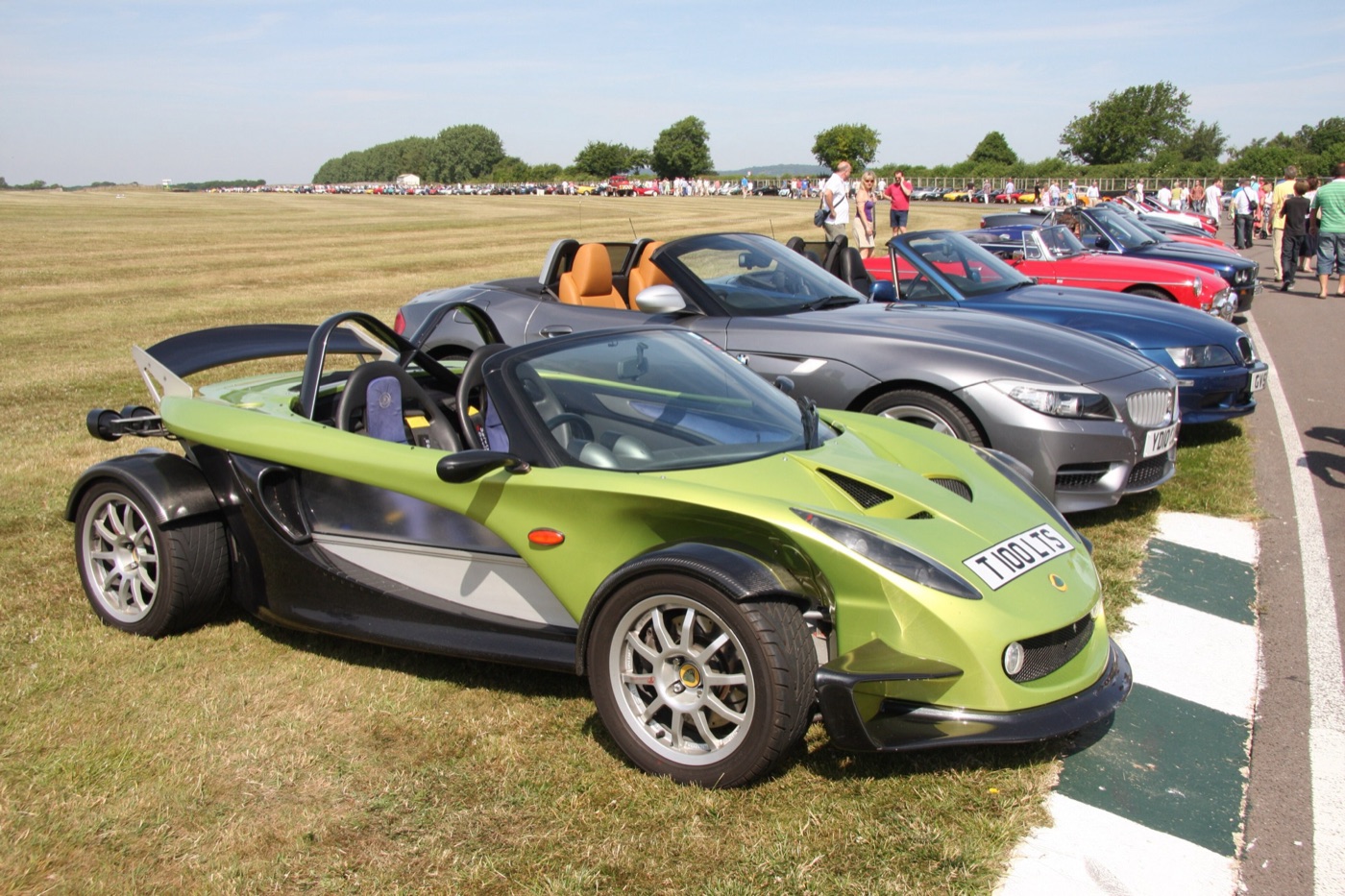
Two cars grew directly out of the S1. The 340R of 2000 was a doorless, roofless Elise with 177bhp (190bhp in some), limited to 340 cars. The Exige, also of 2000, was a hardtop coupé with the 340R's engine and a body derived from the Sport Elise race car; 583 of the first series were built, C&SC records. The Exige stayed in production as long as the Elise: its last car, number 10,497, was built in December 2021.
Series 2 Elise models
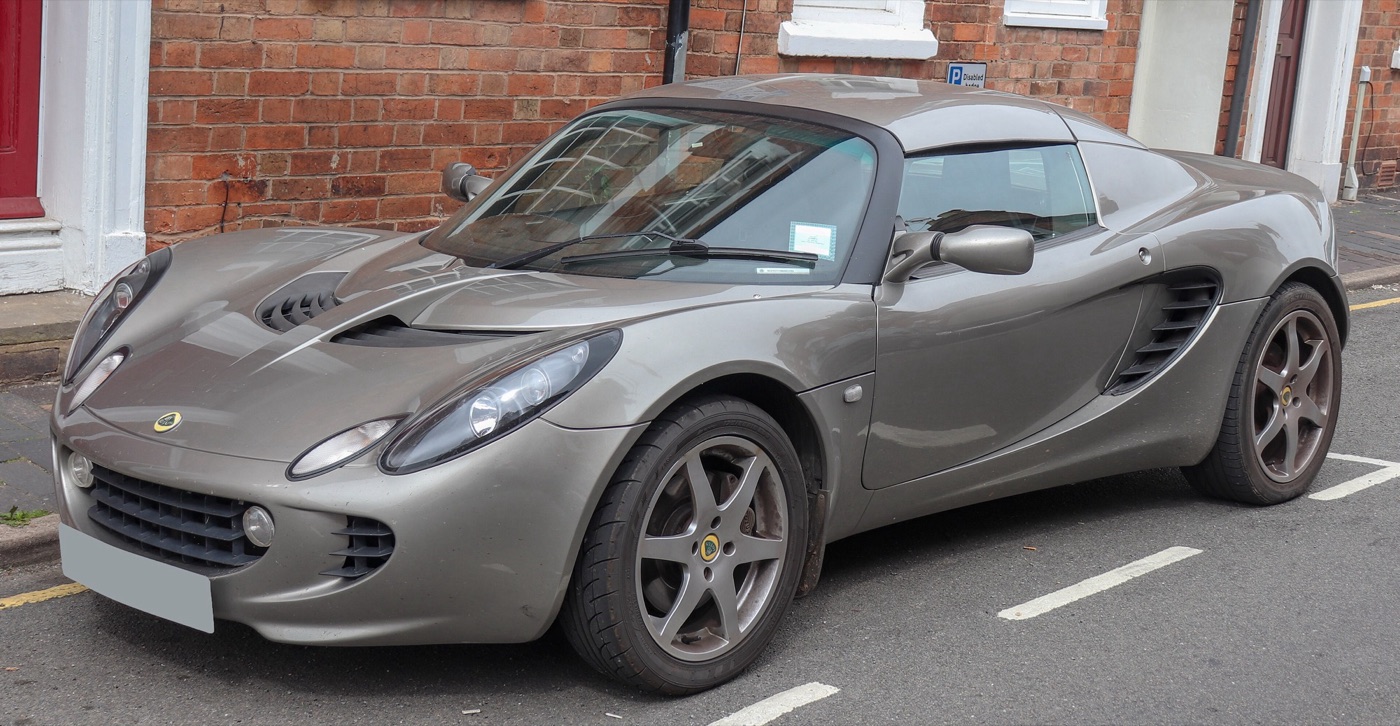
The S2 started with the 120bhp K-series car. The Sport 135 and Sport 190 came back in early 2002, the 156bhp 111S with the VVC engine in June 2002, and a harder-riding 135R in May 2003, according to evo and Auto Express. Then came the Toyota cars: the 189bhp 111R in 2004 (renamed R in 2006), the 134bhp Elise S in July 2006 and the 217bhp supercharged SC in June 2008. Lotus offered Touring, Sport and Super Sport packs; the 2006 update brought ProBax seats, LED tail-lamps and options of a limited-slip differential and traction control. Heritage editions on the 111S included the Type 25, in Lotus green with yellow stripes, and the Type 23.
Series 3 Elise models
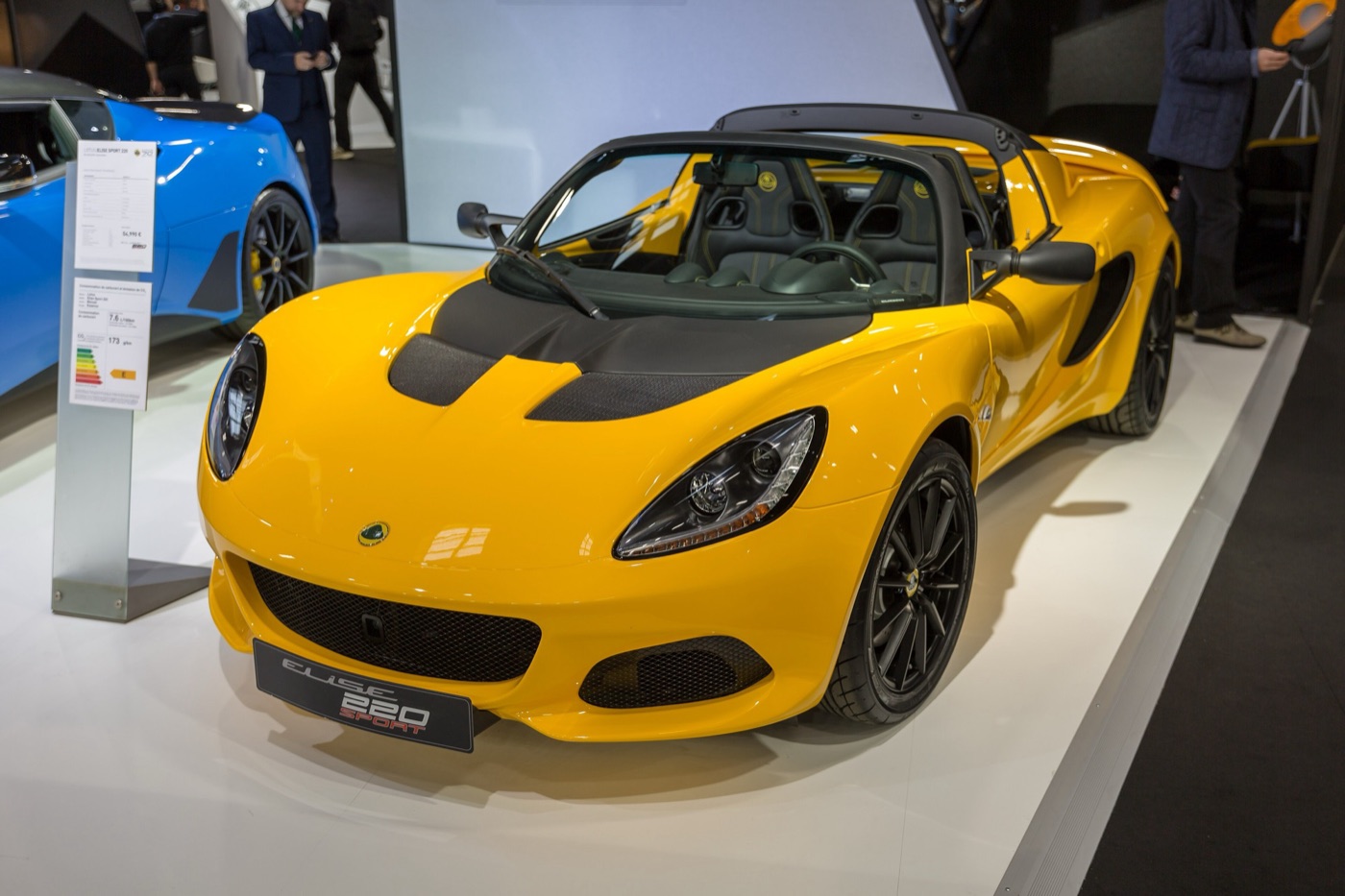
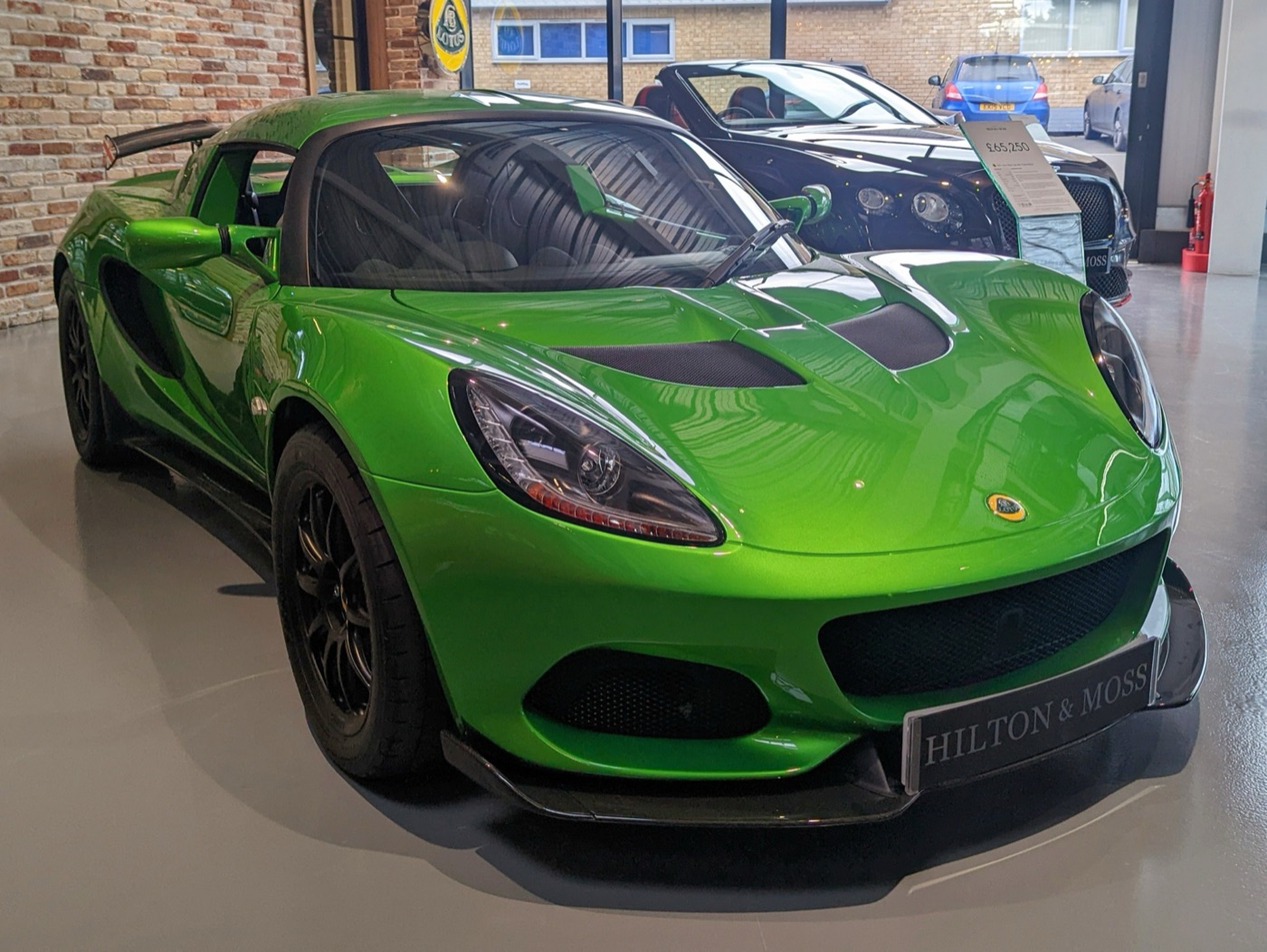
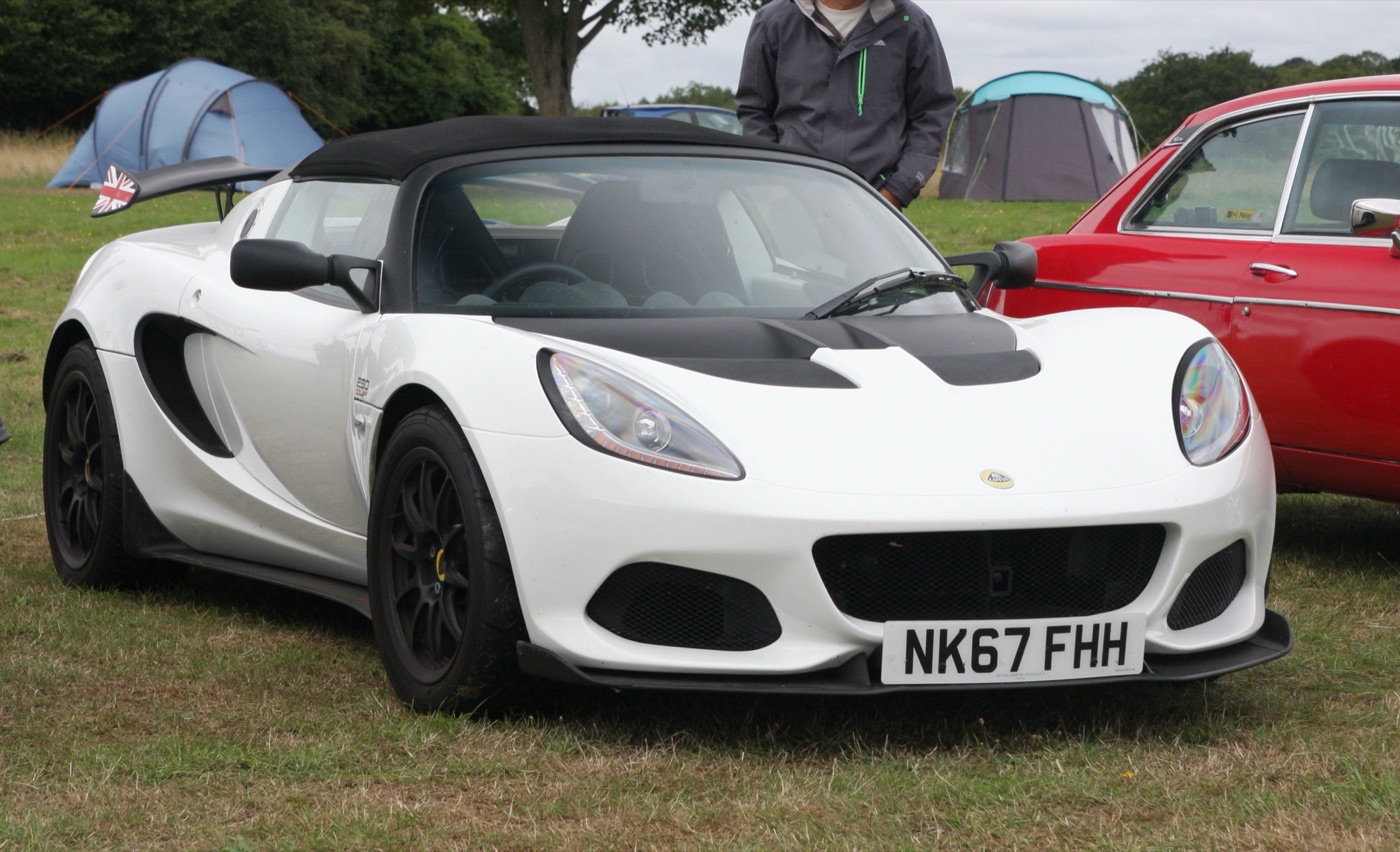
The facelifted range of 2010 had the 1.6 at the bottom and the R and SC above. In January 2012 a new Elise S with a supercharged 217bhp 1.8 arrived (Auto Express). In 2016 the Sport and Sport 220 replaced the Elise and Elise S, 10kg lighter and with lightweight sports seats; the 2017 Sprint models saved up to 40kg more with a lithium-ion battery, a polycarbonate rear window, forged wheels and carbon panels, PistonHeads reported. The Cup 250 (243bhp, about £48,000) was launched at the 2016 Geneva show and the Cup 260 (250bhp, about £60,000) in October 2017, both with a roll-over bar to stiffen the structure. The 1.6 was dropped in 2018, leaving the Sport 220 as the cheapest Elise, with Sprint, Cup and Club Racer models above it.
In May 2020 Lotus added four Classic Heritage Editions of the Sport 220, in the colours of the Type 72D, Type 49B, Type 81 and Type 18, 100 cars in all at £46,250 each. The last two versions were the Final Editions announced on 8 February 2021: the Sport 240 (240bhp, 23bhp more than the Sport 220, £45,500) and the Cup 250 (£50,900), both with a new TFT digital instrument panel and a flat-bottomed steering wheel.
Cars built on the Elise
Lotus calls the Elise's chassis its small car platform. Besides the Elise and Exige, Lotus built the Vauxhall VX220 and Opel Speedster (7,200 cars, 2000–2005) and the Tesla Roadster (2,515 cars, 2007–2012) on it at Hethel, along with the 340R, Europa, 2-Eleven and 3-Eleven, 56,618 cars in all, according to Lotus's 2021 release. The Evora used a larger chassis built the same way; it has its own page.
Lotus Elise in racing
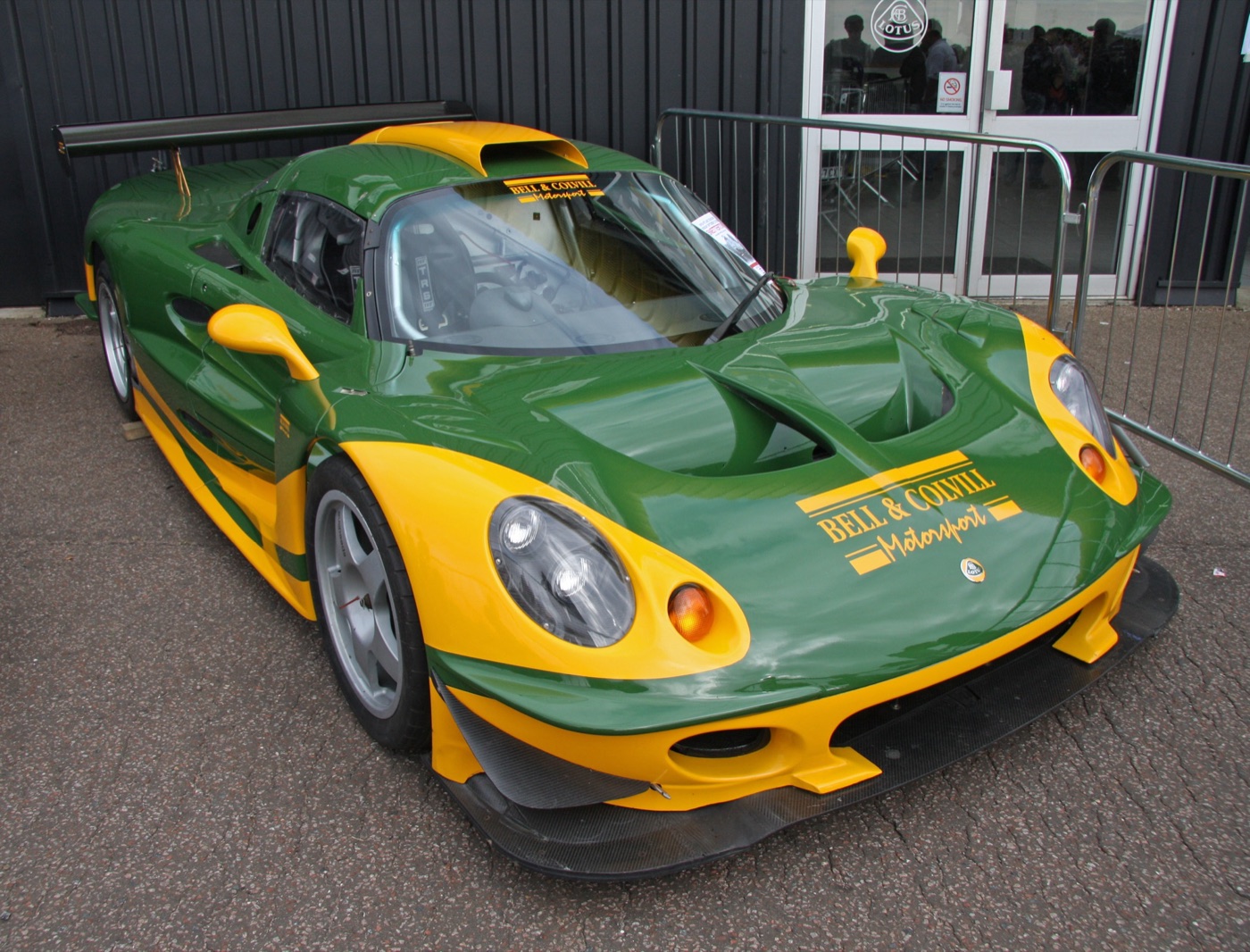
The Elise raced from its first years in one-make series, and a GT1 racing car carried its name in 1997. Lotus built a hardtop Sport Elise with a cut-off Kamm tail in 1999 for a one-make series (C&SC), and its motorsport division ran the Autobytel Lotus Elise Championship, whose black livery Lotus brought back as a colour for the 2021 Final Editions.
The Elise GT1 of 1997 had the Elise's look but was a separate car built for the GT1 class of sports car racing. Only one reached the start of the 1997 Le Mans 24 Hours, driven by Jan Lammers, Mike Hezemans and Alexander Grau, and it retired after 121 laps. The race results kept by Racing Sports Cars record the cause as an oil leak; DailySportsCar's look back at the 1997 race says the oil pump failed, and gives eighth place at Spa as the car's best result of the year.
How many Lotus Elises were made?
Lotus made 35,124 Elises between 1996 and December 2021, its end-of-production release says. With the Exige (10,497) and the Evora (6,117) that makes 51,738 cars in 26 years, almost half of everything Lotus had built in its 73 years.
| What | Number | Source |
|---|---|---|
| All Elises, 1996–2021 | 35,124 | Lotus, December 2021 |
| Series 1, 1996–2001 | 10,619 | Classic & Sports Car |
| S1 assembled by Proton in Malaysia, 1997–2000 | about 150 | Classic & Sports Car |
| Series 1 111S | 1,489 | Classic & Sports Car |
| Series 1 Sport 160 | 337 | Classic & Sports Car |
| Lotus 340R | 340 | Classic & Sports Car |
| Classic Heritage Editions, 2020 | 100 | Lotus, May 2020 |
| Small car platform in total (Elise, Exige, VX220, Tesla Roadster and others) | 56,618 | Lotus, December 2021 |
How many Lotus Elises are left in the UK?
At the end of June 2026 there were 4,507 Lotus Elises licensed for the road in the UK and 2,934 more declared off the road (SORN), 7,441 in all, by our count of the Department for Transport's vehicle licensing data (table VEH0120, cars only). Ten years earlier, in mid-2016, the figures were 5,730 licensed and 1,543 SORN. The table splits them by version: 224 licensed Sport 220s, 53 Sport 240s, 15 Type 23s and 9 Type 25s, for example.
Lotus Elise prices, new and today
A new Elise cost £18,950 in 1996 and £50,900 for the last Cup 250 Final Edition in 2021, and a used one costs from about £15,000. Most buyers in 1996 added leather, metallic paint and other options, taking the price over £20,000, PistonHeads' 2025 S1 guide notes.
| Version | Year | Price new | Source |
|---|---|---|---|
| Elise 1.8 (S1) | 1996 | £18,950 | PistonHeads |
| Sport 190 | 1997 | £33,000 | PistonHeads |
| Elise 1.8i and 111S | 1999 | £22,650 and £26,590 | Classic & Sports Car |
| Elise 1.6 (S3) | 2010 | £27,500 | PistonHeads |
| Elise Sport (1.6) | 2018 | £32,300 | PistonHeads |
| Cup 250 and Cup 260 | 2016 and 2017 | about £48,000 and £60,000 | PistonHeads |
| Classic Heritage Edition | 2020 | £46,250 | Lotus |
| Sport 240 and Cup 250 Final Editions | 2021 | £45,500 and £50,900 | Lotus |
How much is a Lotus Elise worth now?
An unmodified S1 with more than 50,000 miles costs about £15,000 and a low-mileage one upwards of £21,000, evo said in August 2025; a 111S starts at about £18,000 and a Sport 160 at £24,000. PistonHeads, in mid-2025, found high-mileage S1s from £15,000 in private sales and the cheapest S2s from about £14,000. Values have risen: in 2020 PistonHeads noted that a Series 1 had cost under £10,000 four years earlier. Its 2021 S3 guide found used S3s hard to find under £30,000, and little difference in price between a 134bhp 1.6 and a 217bhp supercharged car. Classic & Sports Car's 2020 guide put a show-condition S1 1.8i at £22,000, a 111S at £27,500 and a Sport 160 at £45,000. The rare S1 Sport 190 cost about double an ordinary S1 in 2021, PistonHeads found.
Owning a Lotus Elise: reliability and known faults
A well-maintained Elise is reliable and cheap to run; the expensive problems are accident damage and corrosion in the aluminium chassis, and on Rover-engined cars the K-series head gasket.
Is the Lotus Elise reliable?
Yes, when it has been serviced: Classic & Sports Car called the S1's reliability "exceptional given basic maintenance", and one owner it interviewed covered 40,000 miles in two and a half years in a 1996 car. The Toyota engines are less likely to give trouble than the Rover, Auto Express says, and 22 of the 25 Elise owners who reviewed the car for its sister title Carbuyer gave it five stars.
Chassis corrosion and accident damage
The chassis is the first thing to check. Where the steel suspension bobbins are bonded into the aluminium, chipped paint lets salty water start galvanic corrosion, and the aluminium around the insert can turn to powder, PistonHeads explains. The bonded aluminium cannot be welded, and after a heavy wheel impact most specialists advise fitting a replacement chassis (evo). Complete new body and chassis units are no longer available because Lotus lost the jigs, Classic & Sports Car reported. On a lift, one corner of the frame sitting as little as 2mm higher or lower than the others points to an accident. Rear toe links on early cars have failed on track; upgraded ones are sold by specialists.
K-series head gasket and engine checks
On Rover-engined cars look for emulsion in the oil or coolant, coolant loss and erratic temperatures, which can mean a failed head gasket or inlet manifold gasket (C&SC). Most will have had a multi-layer steel gasket fitted by now, and evo recommends a gentle warm-up. The K-series cambelt is due every four or five years, at 36,000 to 50,000 miles depending on the guide. Cars with the supercharger can wear their gearbox synchromesh, heard as a crunch on the change from second to third.
Body, roof and interior
Cracks in the one-piece clamshells mean expensive repairs: evo quoted about £1,600 for a front and £2,000 for a rear clamshell on an S1. Paint can blister where moisture is trapped, roofs leak, and rubber mats glued to the S1's floor can trap water and pit the aluminium beneath. Seats and sill trim wear from climbing in and out.
Lotus Elise recalls
Auto Express counted seven recalls by 2020. The largest, in November 2014, covered 1,258 Elises built between May 2007 and November 2011 whose oil cooler pipes could come loose, oiling the tyres or causing a fire. In February 2020, 762 cars built between May 2012 and June 2019 were recalled for possible fuel leaks.
Servicing and running costs
S2 and S3 cars are serviced every 9,000 miles or 12 months, whatever the engine. Auto Express gave £280 for the cheapest A service and about £750 for the most expensive; brake fluid is due every two years and coolant every four. The 1.6-litre S3 is rated at 45mpg, with emissions of 149g/km (PistonHeads), and Lotus reckoned a light foot could cover 500 miles on a tank.
Lotus Elise rivals
When it was new, the Elise's nearest rival was the Renault Sport Spider, over 200kg heavier according to Motor Sport, and later the Toyota MR2 Roadster, which Classic & Sports Car called cheaper and better equipped but heavy. The Vauxhall VX220 shared its chassis and factory. Of the other small sports cars built for the driver, the Caterham Seven is lighter still but cruder, and Auto Express suggested the Alfa Romeo 4C and the Alpine A110 as newer alternatives, from £35,000 and £42,000 in 2020.
Lotus Elise vs Porsche Boxster
The Porsche Boxster was launched within months of the Elise in 1996, and by 2012 the two cost almost the same: the supercharged Elise S listed at £36,200, less than £1,400 below a 2.7-litre Boxster, evo's group test found. The Porsche weighed 1,310kg and claimed 0–62mph in 5.8sec and 164mph; the Elise S claimed 0–60mph in 4.2sec and emitted 175g/km of carbon dioxide to the Boxster's 192g/km. Richard Meaden called them two completely different driving experiences and concluded that "if you're after an adrenalin pump, the Elise S stands head and shoulders above the Porsche", while the Boxster was far easier to live with; which suits depends on your driving style, he wrote. He also credited the Elise with "bringing magical dynamics to the mainstream".
Lotus Elise reviews: what the press said
The press welcomed the Lotus Elise from the first road tests, and evo still calls the S1 "a truly stunning driver's car". Motor Sport's Mark Hughes in 1996: "When you look at the Elise, don't think smaller, sharper MGF... Think instead modern Lotus 7 and you'll be getting closer." Autocar called it "the most technologically daring Lotus road car since the original Elite", as quoted by Classic & Sports Car. In January 2001 evo wrote of the S2 that "the advances made here feel like the product of a decade's technical development". evo rates the S1 a five-star "evo icon".
What is a Lotus Elise like to drive?
The steering is what testers praise first. The S1's lightness let Lotus fit suspension that was both responsive and comfortable, PistonHeads says, and Motor Sport found "fabulous feel and feedback" in the unassisted steering, handling with a balance of "mild oversteer" and enough traction to pull the car out of a slide, and a ride that was fine above about 40mph but firm and harsh below it. evo's S1 review found the opposite on the ride, calling it "remarkably supple" and the original Elise's "outstanding, defining dynamic characteristic", and warned that in the wet the light steering gives little sense of the front tyres sliding. PistonHeads reckoned that Lotus put more understeer into the S2's geometry, because an S1 could go from road to hedge very quickly. A quicker steering rack from Titan, the original supplier, is now a common change, and evo says it suits the car's natural agility better than the standard one.
Awards: the Autocar "Icon of Icons"
In 2019 Autocar's readers named the Elise their Readers' Champion, the "Icon of Icons", from 17 cars still in production under their original names, with more than a quarter of the votes, Lotus announced. Accepting it, Richard Rackham said the Elise "pioneered the use of extruded and bonded aluminium technology which is now so ubiquitous in global small volume vehicle manufacture".
Questions
What is the difference between the Lotus Elise S1, S2 and S3?
The S1 (1996 to 2001) is the original, with a Rover K-series engine and a curvier body. The S2 (from late 2000) has a revised chassis and new body to meet crash rules, and Toyota engines from 2004. The S3 is the 2010 facelift of the S2, with larger headlamps and a 1.6 or supercharged 1.8 Toyota engine.
What engine is in a Lotus Elise?
Rover's 1.8-litre K-series four from 1996 to 2006, then Toyota four-cylinders: the 1.8-litre 1ZZ and 2ZZ-GE, a supercharged 1.8 from 2008, and a 1.6 in the cheapest cars from 2010 to 2018.
Who designed the Lotus Elise?
Julian Thomson, then Lotus's head of design, styled it, and Richard Rackham, the chief engineer, engineered the bonded aluminium chassis.
Where was the Lotus Elise built?
At Lotus's factory at Hethel, near Norwich in Norfolk. Proton also assembled about 150 Series 1 cars from kits in Malaysia between 1997 and 2000.
Does the Lotus Elise have power steering?
No. The steering is unassisted, which is much of the reason testers praised its feel from the first drives in 1996.
Was the Lotus Elise sold in America?
Yes, from 2004, with a Toyota engine. US regulators gave Lotus a temporary exemption from the bumper standard and part of the headlamp standard until 1 January 2007, because the car had been designed without conventional bumpers.
What replaced the Lotus Elise?
The Lotus Emira, built at Hethel from 2022, took over from the Elise, Exige and Evora when their production ended in December 2021.
Sources
- Lotus Cars, "Production ends for Lotus Elise, Exige and Evora", press release, 22 December 2021 (archived copy): 35,124 Elises, the last car, assembly halls, small car platform totals, Rackham's words.
- Lotus Cars, "Elise, Exige and Evora embark on final year of production", 25 January 2021: the end of production announced.
- Lotus Cars, "Saving the best 'til last: the Lotus Elise and Exige Final Edition cars", 8 February 2021: Final Edition power, weights, top speed, prices and colours.
- Lotus Cars, "Iconic Lotus race car liveries inspire all-new Classic Heritage Editions of the Elise", 6 May 2020: liveries, 100 cars, £46,250.
- Lotus Cars, "Lotus Elise is crowned Icon of Icons at Autocar Awards 2019", July 2019: the readers' award.
- National Highway Traffic Safety Administration, "Group Lotus Plc.; Grant of Application for a Temporary Exemption", Federal Register vol. 69 no. 24, 5 February 2004, pp. 5658–5660: the US exemption, Lotus's losses and its US engine spending.
- Department for Transport, vehicle licensing statistics, table VEH0120, data to June 2026: Elises licensed and SORN in the UK.
- Mark Hughes, "Great Expectations", Motor Sport, October 1996, p. 36: first drive, 690kg, chassis, brakes, rivals, quotes.
- Malcolm McKay, "Buyer's guide: Lotus Elise S1", Classic & Sports Car, 3 April 2020: timeline, production numbers, specification, faults, 2020 values, rivals.
- Yousuf Ashraf and John Barker, "Used Lotus Elise S1 review", evo, updated 19 August 2025: Artioli, chassis, brakes, faults, versions, 2025 values.
- Peter Tomalin, "Lotus Elise S2 buying guide", evo, 6 January 2021: S2 history, versions and performance, the 2001 test quote.
- evo, "New Lotus Elise", 16 February 2010: the 2010 1.6's figures.
- Autocar, "Geneva motor show 2010: Lotus Elise", February 2010: facelift details, drag, emissions, gearbox.
- CAR magazine, "Lotus Elise (2010): a new face for evergreen roadster", 16 February 2010: the 1ZR engine and expected prices.
- SkiddMark, "Lotus reveals facelifted Elise range", February 2010: facelift figures and the Touring pack.
- PistonHeads, "Lotus Elise S1: PH used buying guide", 6 July 2025: 1996 price, rigidity, top speed, 2025 values.
- PistonHeads, "Lotus Elise S2: PH used buying guide", 27 July 2020: Rackham's prototype, sales target, versions, brakes, faults.
- PistonHeads, "Lotus Elise S3: PH used buying guide", 3 October 2021: the name, S3 range, prices new, Cup cars, running costs.
- Auto Express, "Used Lotus Elise review", 14 July 2020: model dates, recalls, servicing costs, owner ratings, rivals.
- Antony Ingram, "Last one out the door: Elisa Artioli and the final Lotus Elise", Hagerty UK, 28 February 2022: the name and the last customer car.
- Richard Meaden, "Porsche Boxster vs Lotus Elise S", evo, 4 February 2013: prices, weights, performance and verdict.
- John Brooks and Marcus Potts, "Le Mans 24 Hours, 1997", DailySportsCar, 3 June 2022: the Elise GT1's retirement and best result of 1997.
- Racing Sports Cars, Le Mans 24 Hours, 15 June 1997, results: the Elise GT1 entry.