Lotus Esprit: history, every version, specs, values and the new Esprit
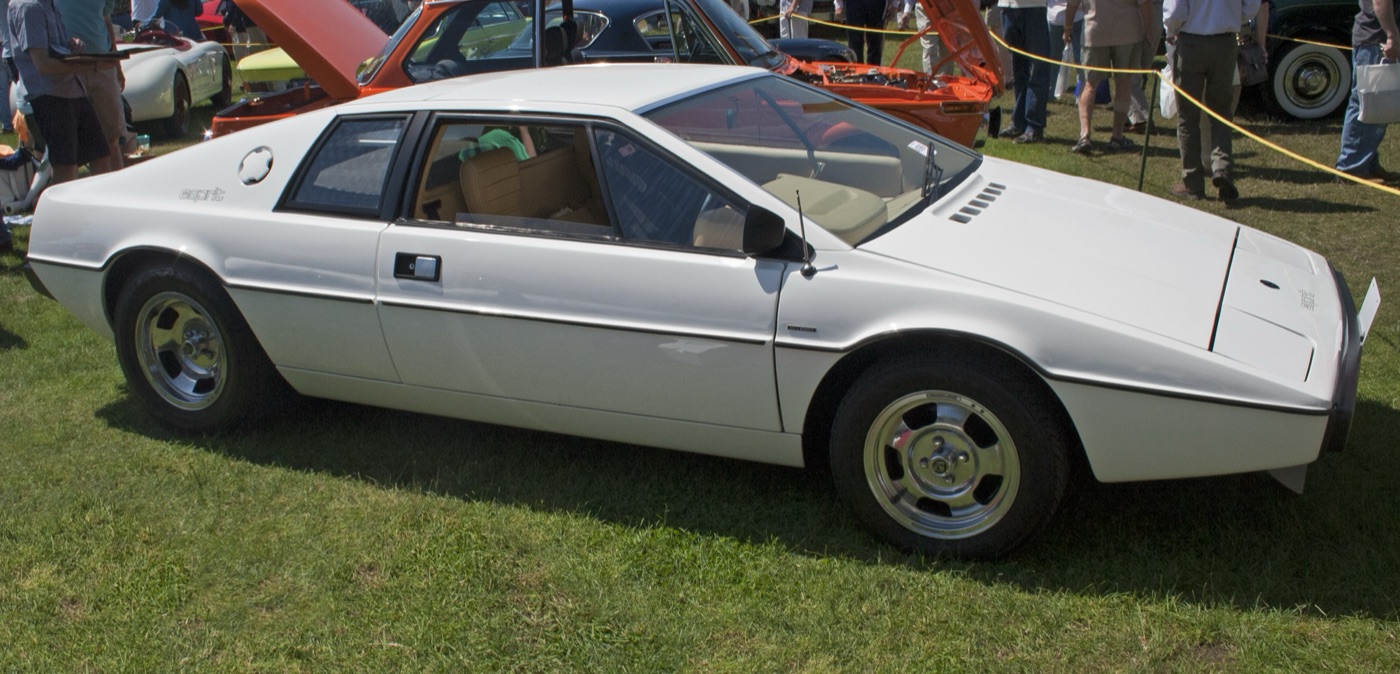
The Lotus Esprit is the mid-engined, wedge-shaped sports car that Lotus built at Hethel in Norfolk from 1976 to February 2004, the longest-running model in the company's history. Giorgetto Giugiaro drew the original, Peter Stevens and then Julian Thomson reshaped it, and its power grew from a 160bhp two-litre four to a 350bhp twin-turbo V8 of Lotus's own design. A factory production sheet counts 10,675 Esprits; one of them became a submarine in the 1977 James Bond film The Spy Who Loved Me.
Lotus Esprit history, from 1972 concept to 2004
The Esprit began as a Giugiaro show car in 1972, went on sale in 1976 and stayed in production for 28 years through four body styles and three engines. Lotus called the project M70. It was the mid-engined car that completed a new range alongside the four-seat Elite and the Eclat coupé, and Lotus's second mid-engined road car after the Europa of 1966–75, Autocar noted in 1983. For the company behind it, see Lotus Cars.
Who designed the Lotus Esprit?
Giorgetto Giugiaro of Ital Design designed the Esprit. At the Turin motor show in November 1972 his studio showed a silver mid-engined concept, built with Lotus on a much-modified Europa Twin-Cam chassis, and Lotus's own history of the car says the final design "was remarkably close to Ital Design's original concept". Colin Chapman and his engineering director Tony Rudd then developed it on a new steel backbone chassis around the Elite's 907 engine. Motor Sport reported in April 2021, visiting Ketteringham Hall with Clive Chapman, that the early design work was done in its chapel, at the Team Lotus base, not at the Hethel factory.
Three later designers changed the shape. Peter Stevens restyled the car for October 1987 (project code X180), Julian Thomson drew the S4 of 1993, and Russell Carr gave it round tail lamps and new wheels in 2002.
The 1975 launch and the Lotus Esprit S1
Chapman revealed the production Esprit on the Ital Design stand at the Paris motor show in October 1975 at £5,844; Motor Sport's 1979 road test dates the Series 1's debut to Earls Court in October 1975. Motor Sport's November 1975 report called it "the most exciting, attractive, series production British sports car to appear since the E-type in 1961", and gave Lotus's claims of 138mph and 0–60mph in 6.8 seconds. Giugiaro had cut the screen rake by three degrees for US roll-over rules and replaced the concept's opening rear end with a smaller lid.
Production started in 1976. Lotus gives 864 Series 1 cars (Type 79) from 1976 to 1977; Autocar's 1983 buying guide gives 718. The S1 had Wolfrace alloy wheels and a bib-type front spoiler, and Motor Sport later reported that it "was said to understeer too much" and was noisy.
Series 2 and S2.2, 1978 to 1981
The S2 arrived in August 1978 with a wrap-around front spoiler under the nose, new rear lamps with fog lights, 14-inch Speedline alloy wheels, air intakes behind the rear side windows and a larger radiator. It cost £11,754 when Motor Sport road-tested a yellow S2 in March 1979, by which time the Esprit was outselling the Elite and Eclat. The S2.2 of 1980 kept the S2 body but used the 2,174cc engine and a galvanised chassis; Autocar counted 1,060 S2s and 88 S2.2s by the end of 1982.
The Turbo Esprit, 1980
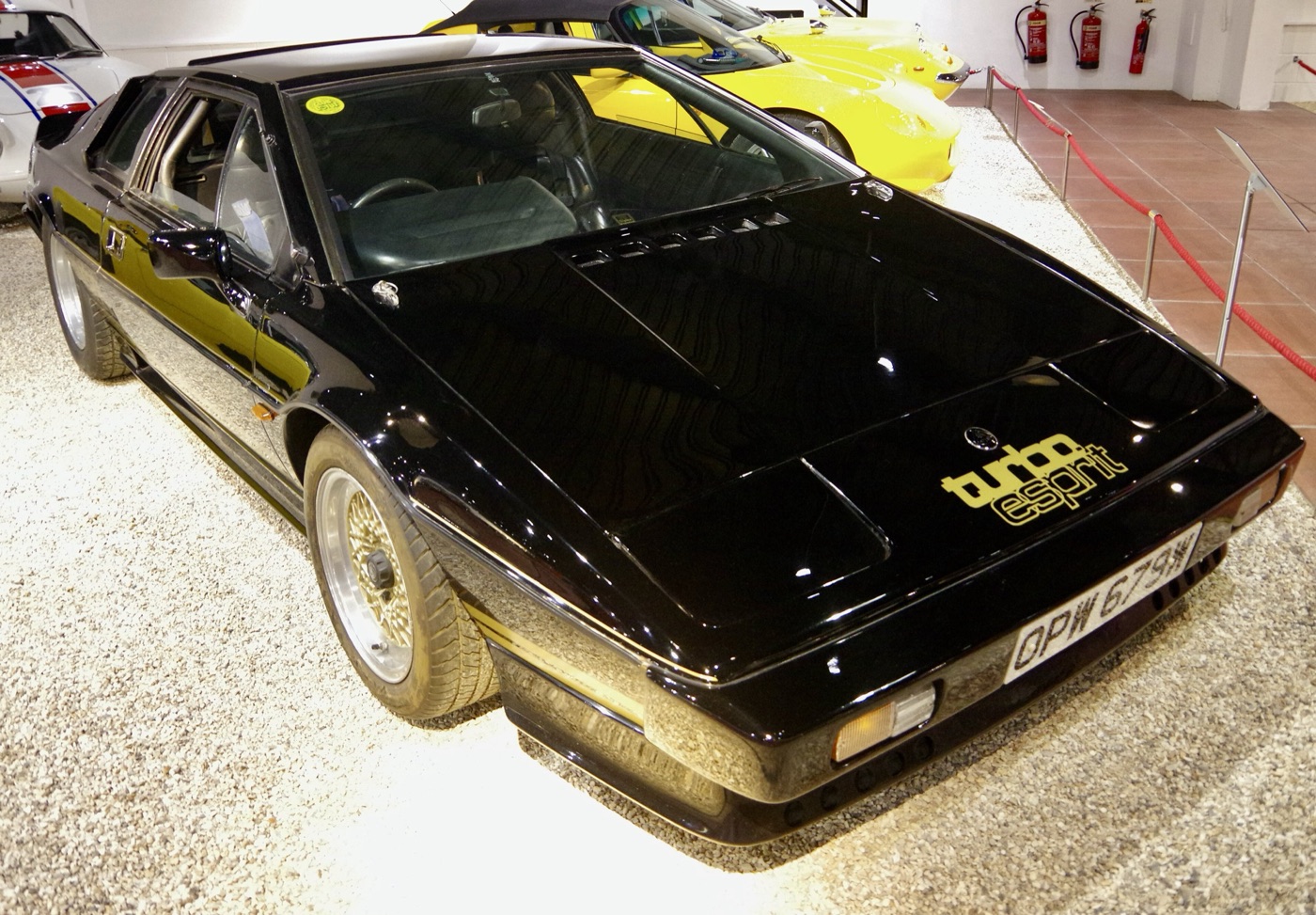
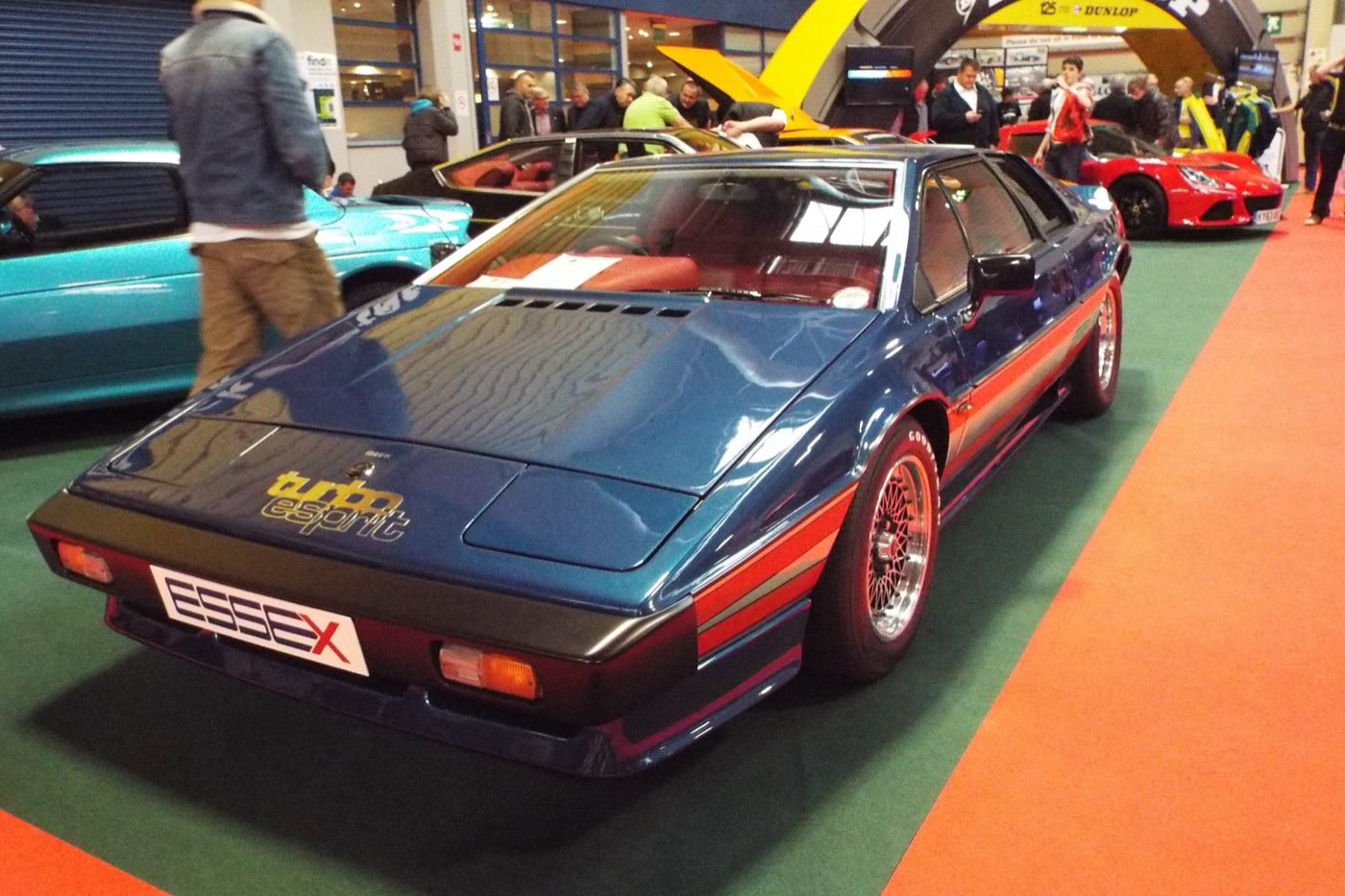
The Turbo Esprit was unveiled at a party given by Essex Petroleum, Team Lotus's sponsor, in the Royal Albert Hall in London early in 1980. Its 2,174cc engine had a Garrett T3 turbocharger, dry-sump lubrication and 210bhp (DIN) at 6,250rpm, and Lotus quoted 0–60mph in 5.55 seconds and 152mph, Motor Sport reported in March 1980. The backbone chassis was new and zinc galvanised, with a five-year guarantee, and Giugiaro reworked the bodywork with deep bumpers, skirts with NACA ducts and a louvred engine cover. The first cars wore Essex's blue, red and chrome: Motor Sport said 100 would be built that way, while Lotus today gives 45.
Chapman's own company car was a 1981 Turbo Esprit with lowered suspension, modified brakes and a prototype power-steering system. Margaret Thatcher drove it at Norwich Airport on 5 August 1981, and Motor Sport's 2021 report says it was one of about 143 Turbos with dry-sump lubrication; it is now back in Lotus's ownership. The Series 3 and the wet-sump Turbo followed in 1981, and higher-compression HC engines in 1986.
The Peter Stevens Esprit (X180), 1987
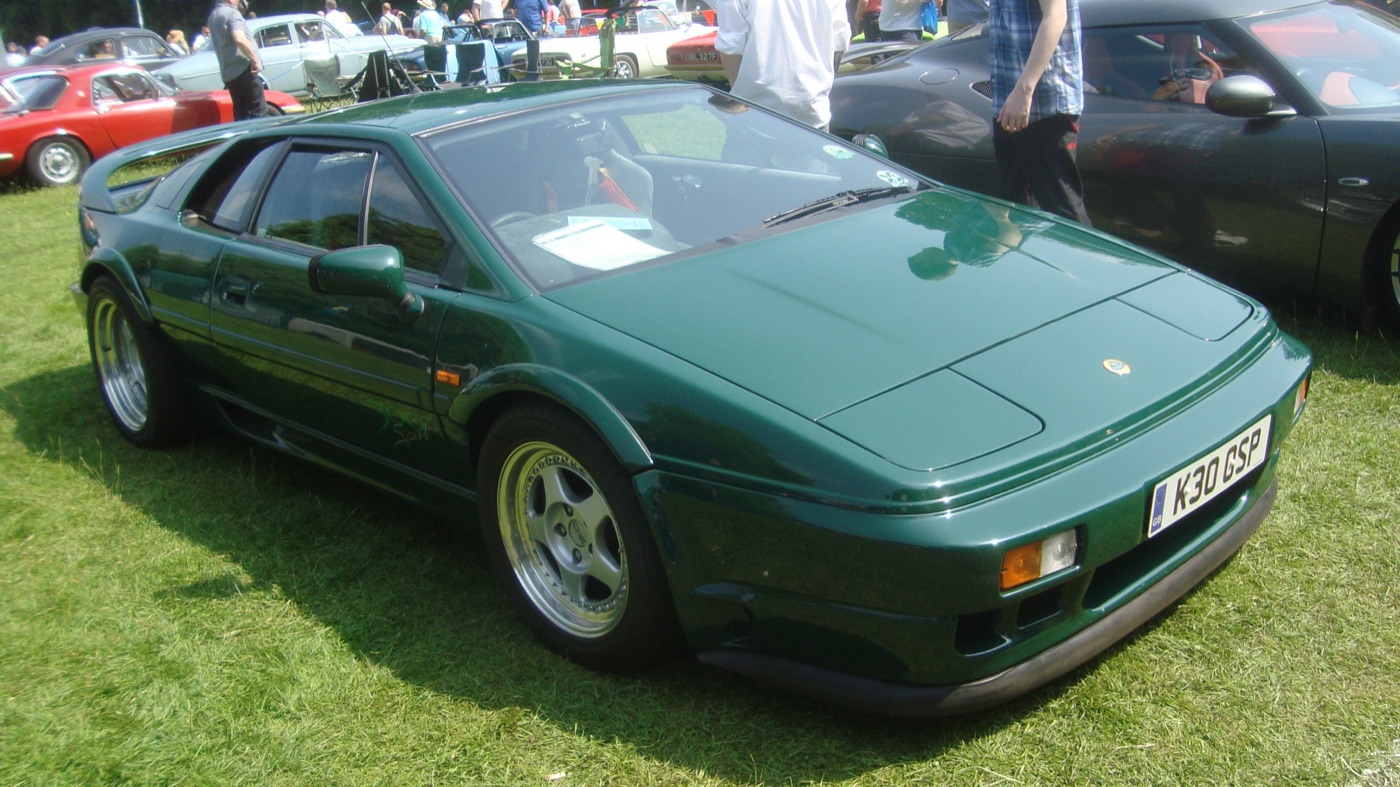
Peter Stevens's restyle went on sale in October 1987 with softer lines, a stiffer body, a new interior with better trim and instruments, and a Renault 25 five-speed gearbox in place of the Citroën unit. Motor Sport's January 1988 report priced it at £28,900 as a 215bhp Turbo and £22,950 as the 172bhp non-turbo. In May 1989 the Turbo SE added fuel injection and a charge cooler for 264bhp at 6,500rpm, and Lotus claimed 0–60mph in 4.7 seconds. Lotus made 64 Sport 300s between 1992 and 1995, with a stiffened chassis, AP Racing brakes and a hybrid turbocharger.
The S4, S4S and GT3, 1993 to 1998
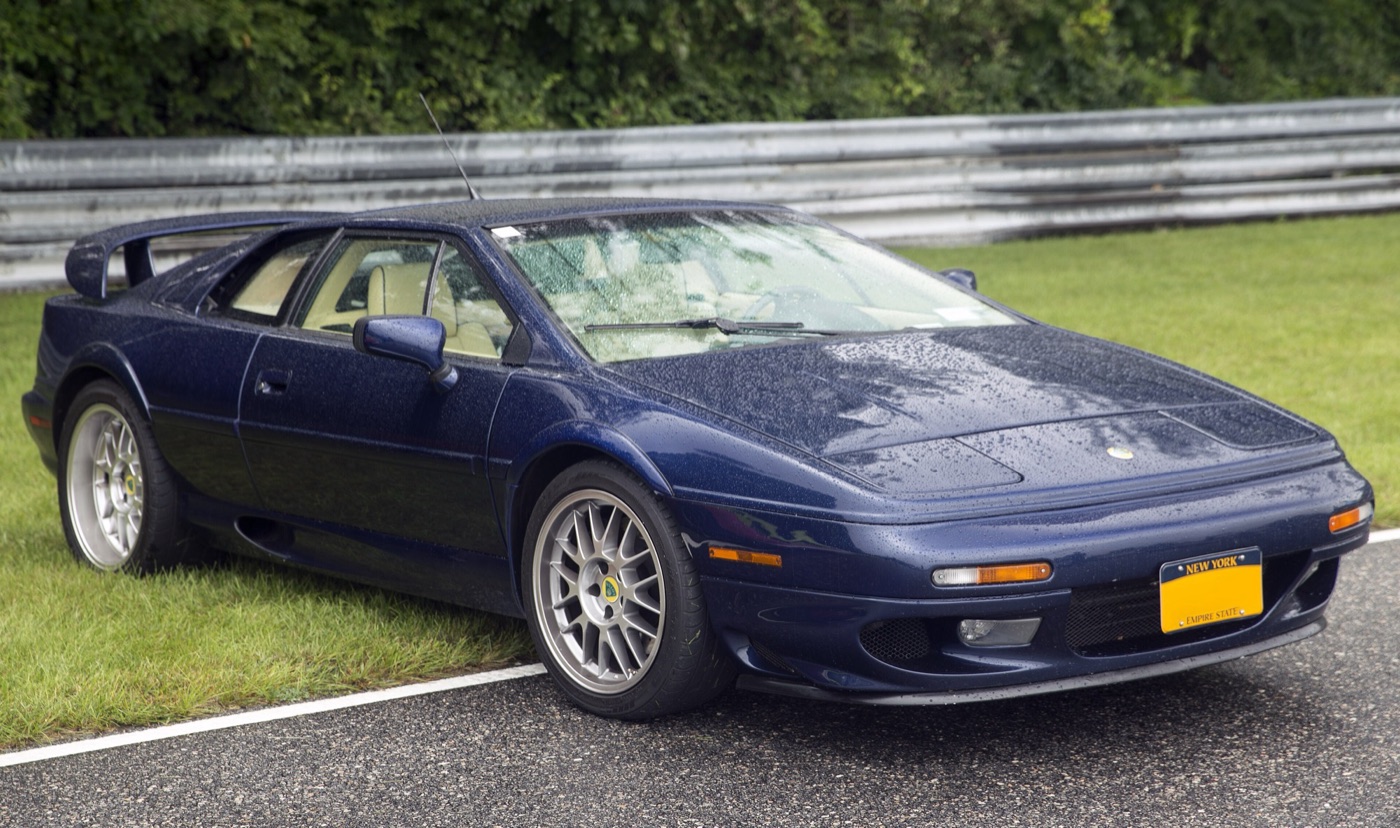
Julian Thomson tidied the shape into the S4 of 1993, with a new rear wing, bumpers, side scoops and an interior using Vauxhall parts. The S4 was the first Esprit with power steering. The S4S of 1995 had 300bhp, and the GT3 of 1996 used a 240bhp two-litre turbo engine in a stripped-out car without the rear wing; Lotus built it alongside the V8 until 1998.
The Esprit V8, 1996 to 2004
The Esprit V8 made its debut at the Geneva motor show in 1996 with Lotus's own Type 918 engine, a 3.5-litre twin-turbo V8 of 350bhp. It was offered as the V8, the luxury V8 SE and the lighter V8 GT, with the Sport 350 of 1999 at the top. The 2002 update brought round tail lamps and new wheels, and the last 82 cars were "Final Editions". The final Esprit passed from production to sales at Hethel on 20 February 2004.
Design and engineering
Every Esprit has a folded steel backbone chassis with a glassfibre body, an engine mounted lengthways behind the seats and a five-speed transmission driving the rear wheels. Lotus made most of the car itself: in 1979 the bought-in parts were the gearbox, some General Motors front suspension parts, brakes, clutch, electrics, carburettors, instruments, springs, dampers, driveshafts, wheels and tyres, according to Motor Sport.
Chassis and body
The glassfibre body was moulded in two halves, with the paint laid into the moulds, and the halves were joined along the waistline. The doors had extruded aluminium side-impact beams, and the bulkhead behind the seats was marine plywood, a lesson Chapman took from boat building, Motor Sport reported in 1975. The rear suspension of the first cars used the fixed-length driveshafts as upper links. The Turbo's chassis of 1980 was galvanised, with a new spaceframe for the engine, and from 1987 the body was made by Lotus's Vacuum Assisted Resin Injection process with Kevlar reinforcement, according to Classic & Sports Car's 2019 buyer's guide. Autocar noted in 1983 that the DeLorean DMC-12, which Lotus helped develop, has the same kind of steel backbone chassis.
What engine is in a Lotus Esprit?
Four-cylinder Esprits use Lotus's own 900-series twin-cam, 16-valve engine, canted over at 45 degrees: the 1,973cc Type 907 in the S1 and S2, the 2,174cc version from 1980 (the Type 910 when turbocharged), and a two-litre turbo in the GT3. The V8 cars use the Type 918, a 3,506cc 32-valve V8 with two Garrett turbochargers, which weighs 220kg with all its ancillaries and has red crackle-finish cam covers, according to Lotus. The evo buying guide to the V8 says the engine's research and development alone cost £5.5 million, against £4 million for the whole Elise.
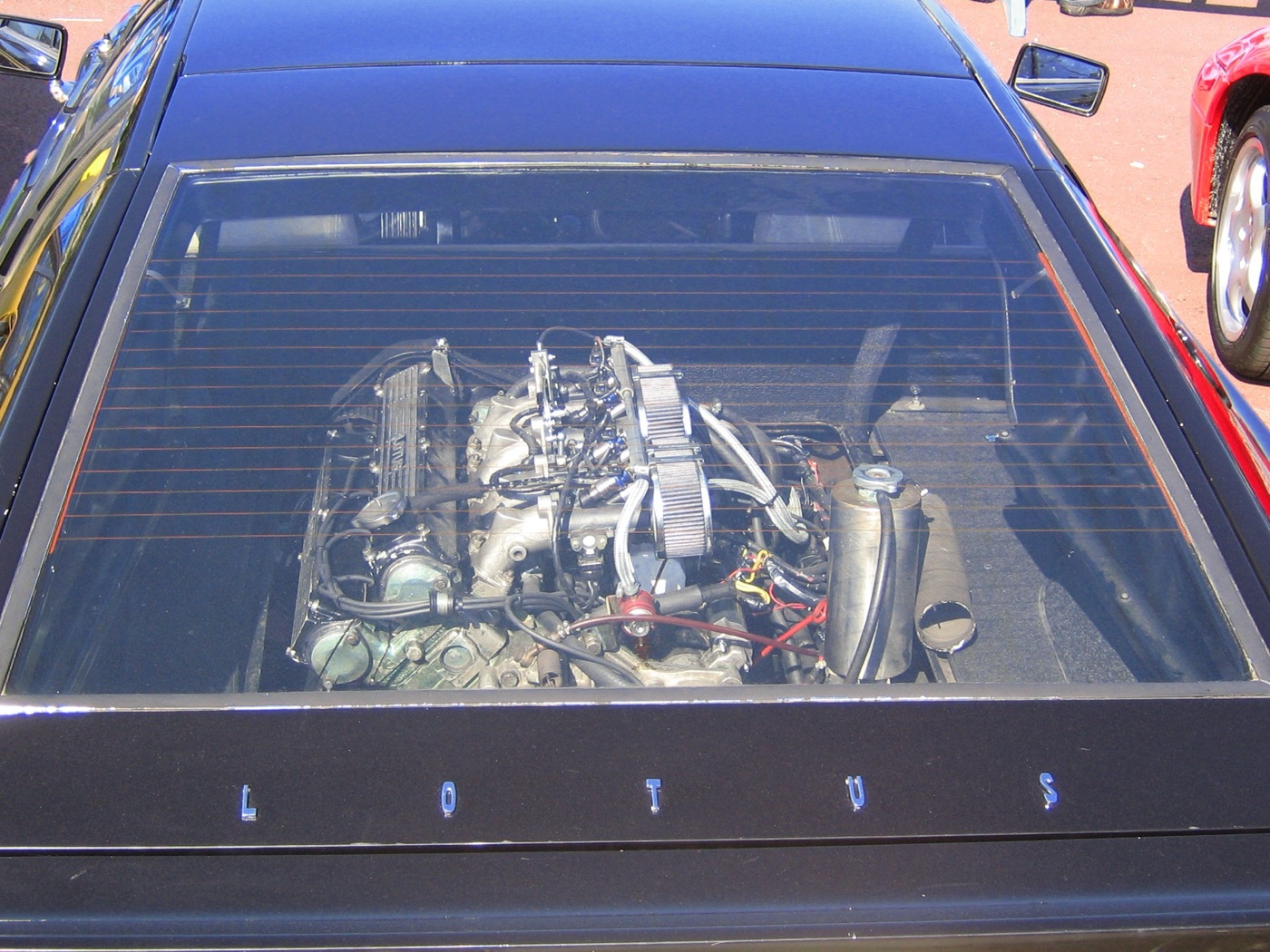
Gearboxes and borrowed parts
Esprits from 1976 to 1987 used the Citroën SM five-speed gearbox, as fitted to the Maserati Merak, with a Lotus bell housing. The Renault 25 gearbox (also in the Alpine GTA) came with the 1987 car and needed outboard rear brakes. Lotus raided other makers' parts bins: Motor Sport noted Morris Marina door handles and column switches on the 1979 S2, and the S4 took Vauxhall parts.
Lotus Esprit specs and performance
A Lotus Esprit has between 160bhp (S1 and S2) and 350bhp (V8), and the fastest versions reach 175mph with 0–60mph in about four seconds. Figures in the table are the maker's claims unless marked.
| Version | Years | Engine | Power | 0–60mph | Top speed | Weight |
|---|---|---|---|---|---|---|
| S1 | 1976–1977 | 1,973cc 907 four | 160bhp | 6.8sec | 138mph | 1,006kg |
| S2 | 1978–1981 | 1,973cc 907 four | 160bhp | 6.8sec | 138mph | n/a |
| Turbo Esprit | 1980–1987 | 2,174cc 910 turbo four | 210bhp | 5.55sec | 152mph | 1,203kg |
| Esprit (non-turbo) | 1987–1989 | 2,174cc four | 172bhp | n/a | 138mph | n/a |
| Turbo SE | 1989–1992 | 2,174cc injected turbo four | 264bhp | 4.7sec | 163mph | 1,336kg* |
| S4S | 1995–1996 | 2,174cc turbo four | 300bhp | n/a | n/a | n/a |
| GT3 | 1996–1998 | 2.0-litre turbo four | 240bhp | n/a | n/a | n/a |
| V8 | 1996–2004 | 3,506cc 918 twin-turbo V8 | 350bhp | 4.2sec | 175mph | 1,379kg |
Sources: Lotus (S1, Turbo Esprit, V8 power and weights), Motor Sport 1975, 1979, 1980, 1988 and 1989, Classic & Sports Car 2019 (S4S, GT3, Turbo SE top speed), evo (V8 0–60mph). *Lotus's weight for all 1987–1996 Turbos. Classic & Sports Car gives the non-turbo Stevens car's production as 1987–1989 in its build figures and as ending in 1990 in its timeline. Motor Sport's 1989 report put the first series at 150bhp and "some seven seconds" to 60mph.
How fast is a Lotus Esprit?
The Esprit V8 reaches 175mph, the figure Lotus gave at its 1996 launch. The four-cylinder Turbo SE was the first Lotus to pass 160mph: Motor Sport rode in one at about 160mph on the Millbrook bowl in 1989, and Lotus gave 163mph at 7,056rpm. An S1 does 138mph on Lotus's figures. In 1980 Lotus told Motor Sport that the Turbo pulled 1.04g and 113mph round an 820ft-radius curve, against 0.86g and 103mph for the S2.
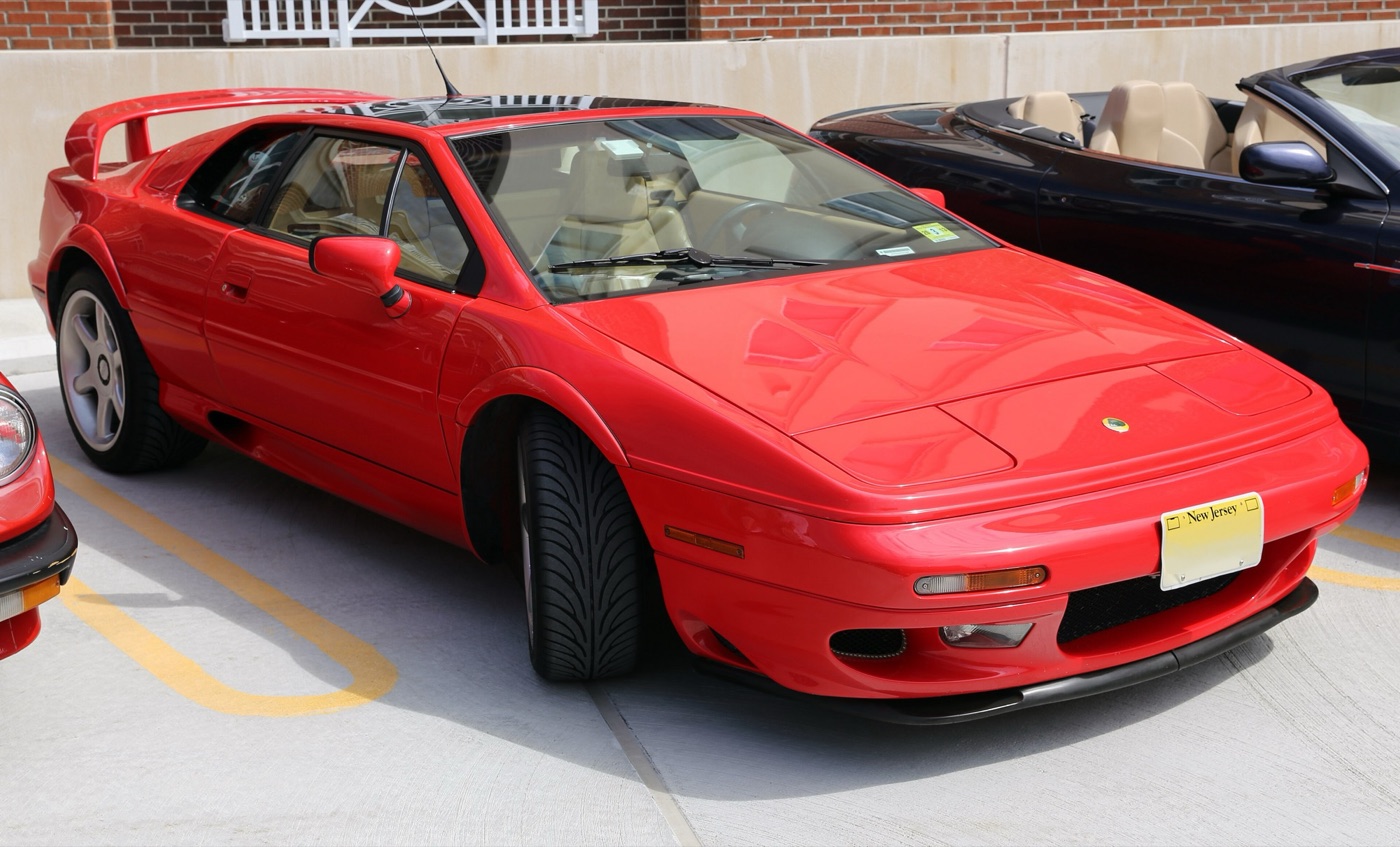
Lotus Esprit versions and special editions
Besides the main series, Lotus sold limited editions tied to Team Lotus sponsors and to racing, from the 1978 World Champion S2 to the Final Edition V8 of 2002 to 2004.
World Champion S2 and the Essex Turbo
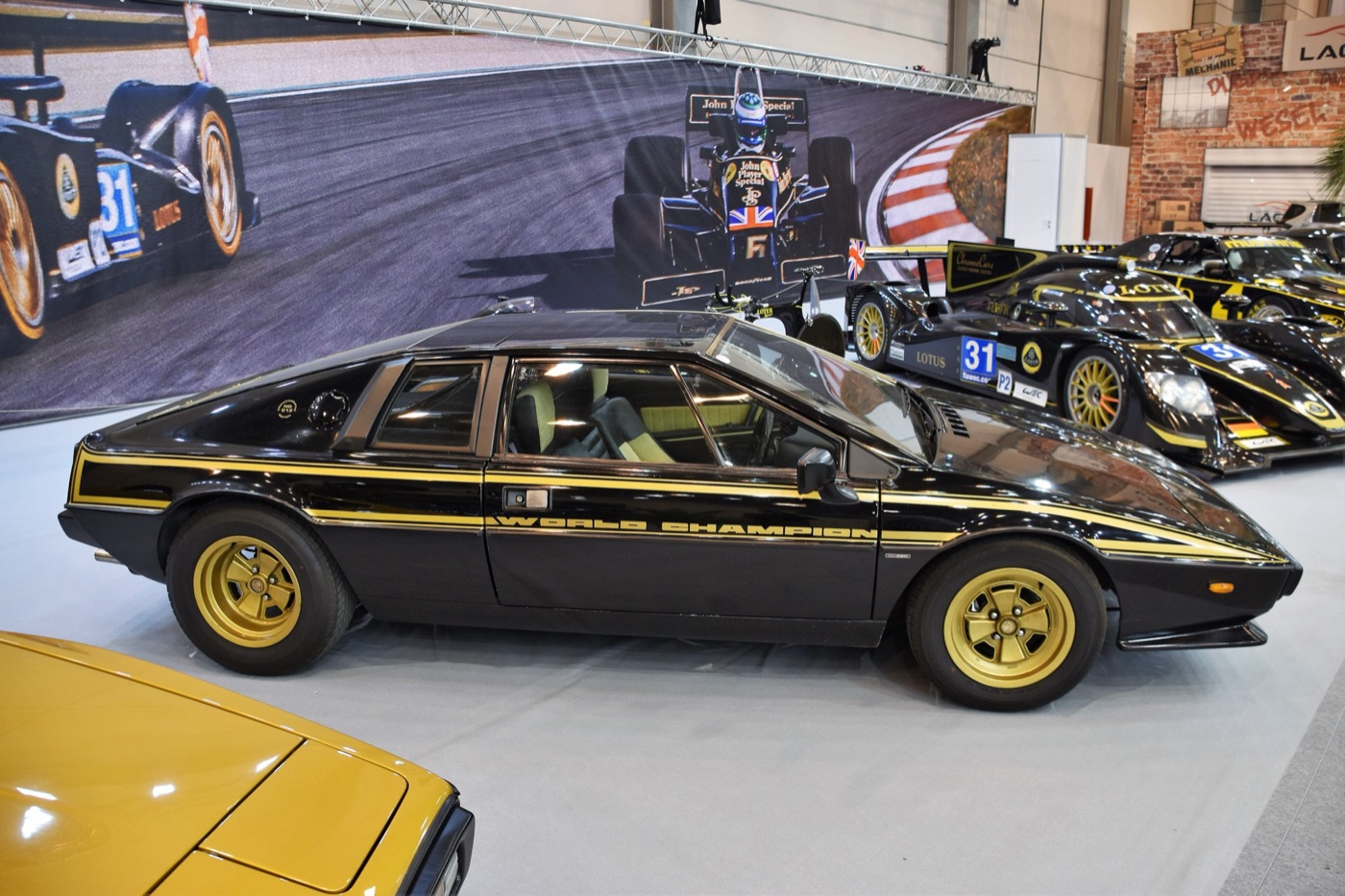
At the NEC motor show in October 1978 Lotus announced 200 "World Champion" S2s in black and gold to mark the Formula One titles won by Mario Andretti, Ronnie Peterson and Team Lotus with the Type 79 (see Lotus in Formula One). The Essex Turbo of 1980 wore the colours of Essex Petroleum and had air conditioning as standard.
X180R and Sport 300
The X180R was a road-going homologation car for Lotus's American racing programme: 20 were built, according to the Lotus X180R Registry. Europe got the Sport 300 instead, with 302bhp, a stiffer chassis and a wider rear track; Classic & Sports Car valued it at more than double a standard Esprit in 2019.
GT3, Sport 350 and Final Edition
Lotus calls the GT3 "a true Drivers' car": lighter, cheaper and without the rear wing. The Sport 350 of 1999 had AP Racing brakes and shed 80kg from the standard V8; evo gives 50 built at about £65,000 each, Classic & Sports Car 54. The last 82 cars, built at Hethel between 2002 and 2004, were Final Editions.
The Lotus Esprit in James Bond films and on screen
The Esprit appeared in two James Bond films with Roger Moore: The Spy Who Loved Me (1977), in which a white S1 turns into a submarine, and For Your Eyes Only (1981). For the other Bond cars, see James Bond cars.
How the Esprit got the part
Lotus's PR manager Don McLaughlan parked a pre-production Esprit outside the offices of the producer Albert R. Broccoli, knowing a new Bond film was about to start, according to a 2013 report in The Daily Telegraph, reprinted by Lotus Marques. Broccoli took the car, and Lotus supplied two production cars and six more body shells for the film.
Was the Lotus Esprit submarine real?
Yes. One sealed body shell was converted into a working submersible by Perry Oceanographics, a marine engineering firm in Florida, at a cost of more than $100,000; it was nicknamed "Wet Nellie" after "Little Nellie", the autogyro in You Only Live Twice. It had a platform seat in place of the cabin, fins in the wheel arches for a turning circle of about 20ft and ballast tanks, and was piloted by Don Griffin, a retired US Navy SEAL, in scuba gear. Roger Moore never drove it.
After a promotional tour it went into a storage unit on Long Island, New York. When the lease ran out it was sold unseen in a "blind" storage auction in 1989 for less than $100 to a local man who had never seen a Bond film. In September 2013 it was sold at RM Auctions in London; Elon Musk paid $989,000, NBC News reported, and told NBC that he "was disappointed to learn that it can't actually transform".
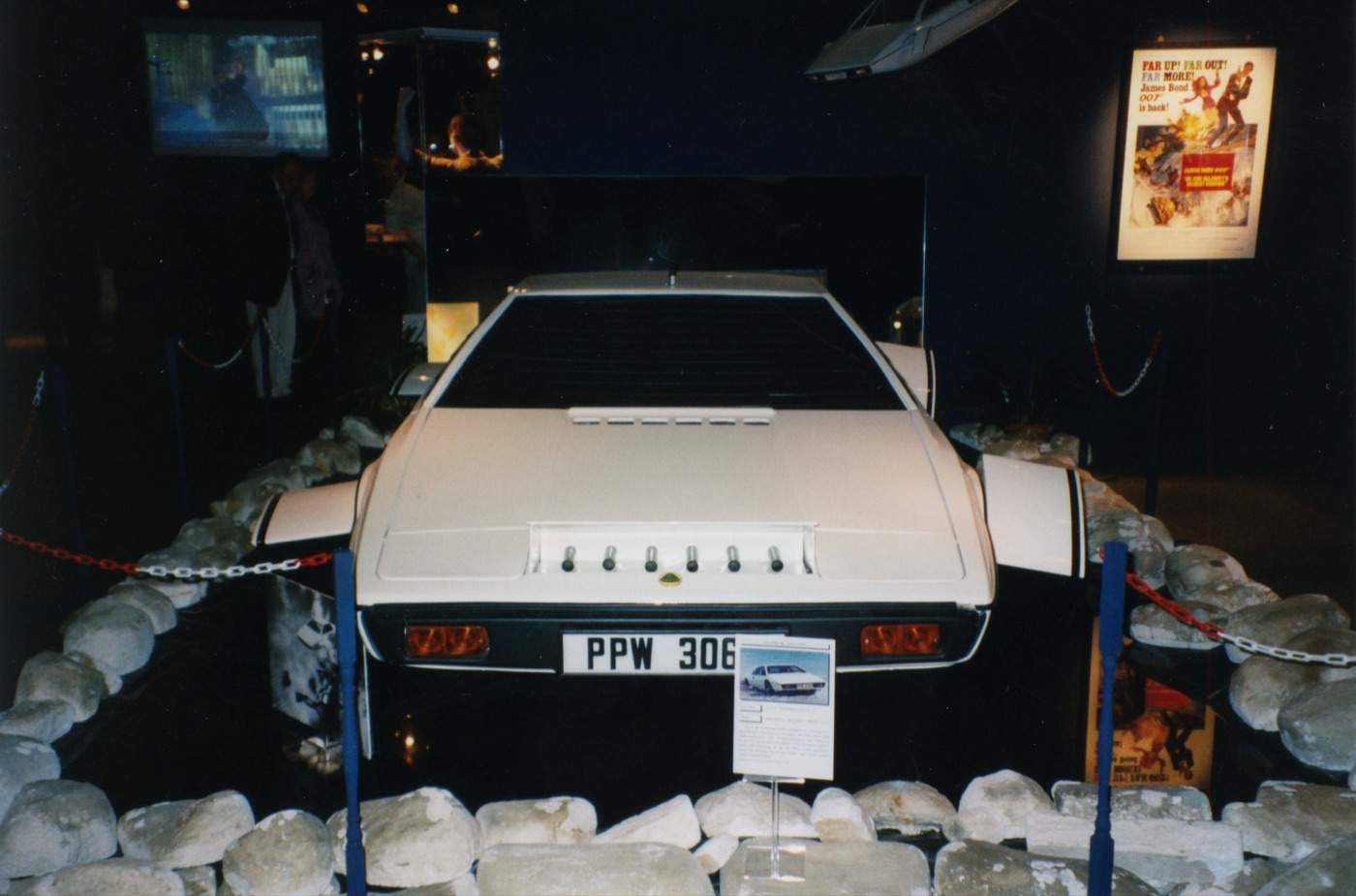
For Your Eyes Only, Pretty Woman and Basic Instinct
For Your Eyes Only used two Esprits, one white and one bronze with a ski rack, in the Italian mountains, according to Lotus. In the 1990s the Esprit appeared in Pretty Woman, with Richard Gere and Julia Roberts, and in Basic Instinct, with Sharon Stone, a 2010 SkiddMark report recorded. When Lotus showed a new Esprit in 2010, its chief executive Dany Bahar said that people thought of "Bond, Pretty Woman, Basic Instinct" when they heard the name, in Lotus's 2010 press release.
The Lotus Esprit in racing
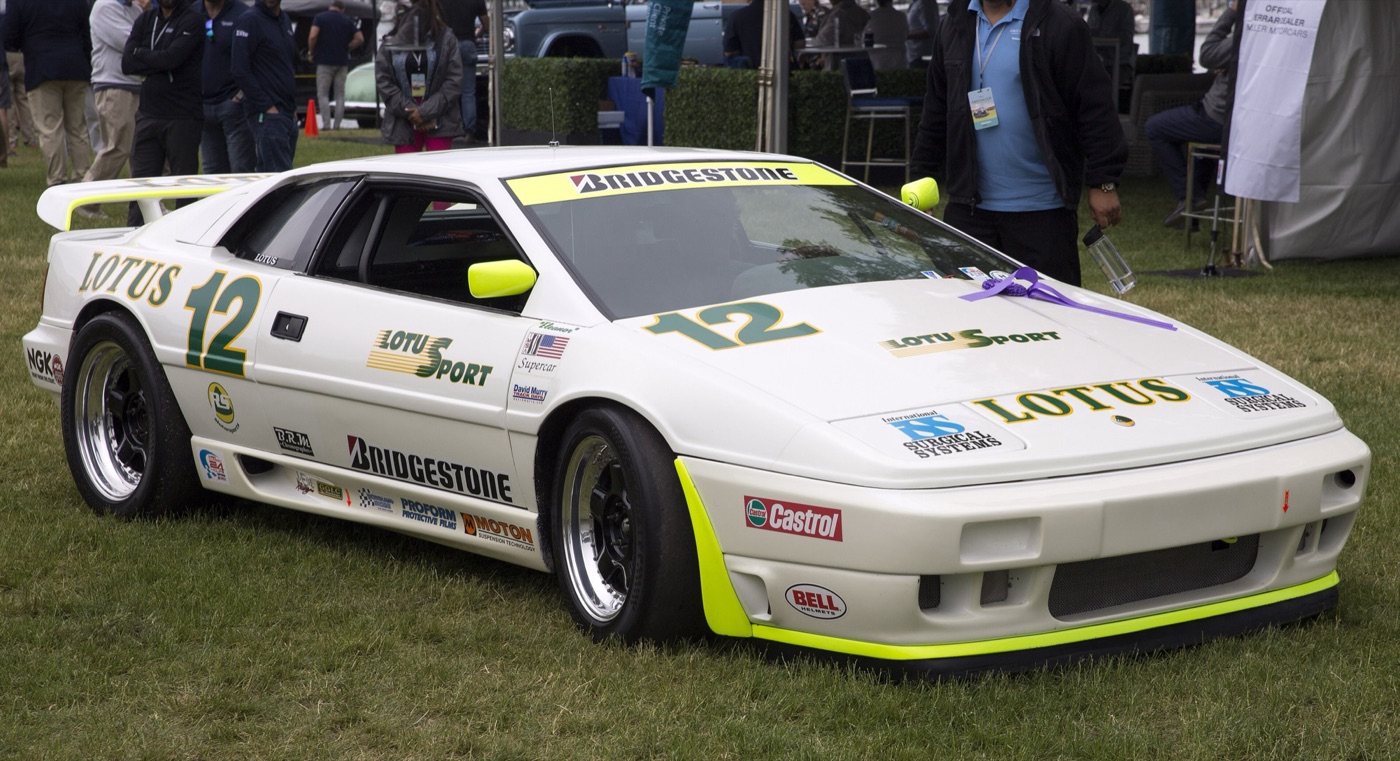
The Esprit raced mainly in America and in GT racing in the 1990s; its biggest title was Doc Bundy's IMSA Bridgestone Supercar drivers' championship of 1992 in an X180R.
SCCA and IMSA in America, 1990 to 1995
The Esprit raced in the SCCA Escort World Challenge from 1990 and in IMSA's Bridgestone Supercar Championship from 1991. Across both series the X180Rs won 15 of 57 races, took 16 pole positions and finished runner-up in the manufacturers' standings four times, according to the X180R Registry, which also notes that Lotus did not take the 1992 manufacturers' title, as is often said. Paul Newman drove for the LotuSport team, and Lotus says he was on the driving team in 1991 and 1992. IMSA raised the car's minimum weight each year as it got faster.
Le Mans, British GT and the Esprit GT1
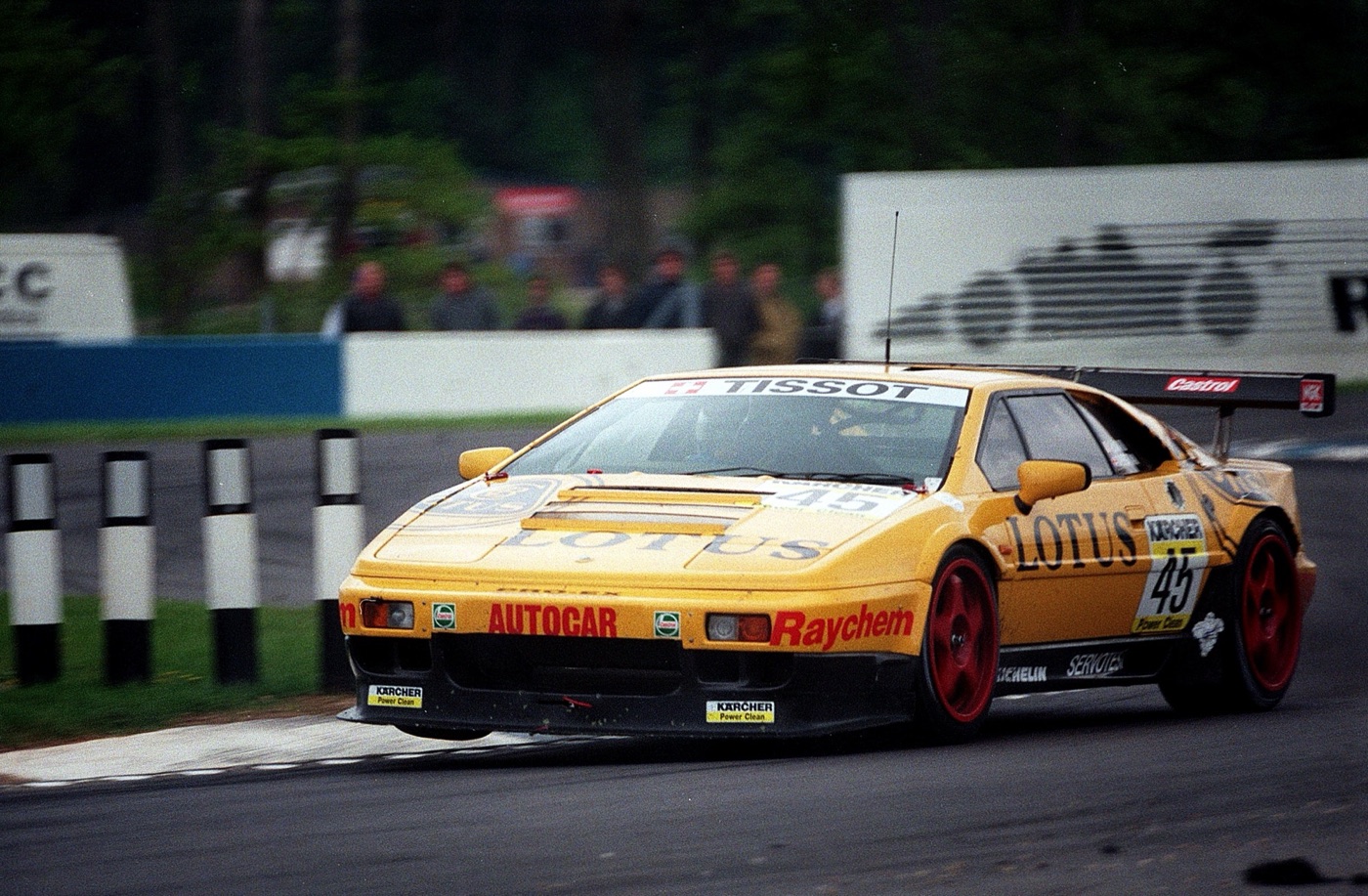
Two Sport 300s ran at Le Mans in 1993 for Lotus Sport and Chamberlain Engineering, and two more in 1994; none of the four finished, according to Racing Sports Cars' results for the Sport 300. In the British GT Championship Thorkild Thyrring won at Silverstone in March and May 1994 and at Donington in April, and Lotus records class wins in 1993 and 1994. In 1995 Alex Zanardi and Alex Portman finished fourth in the Silverstone 4 Hours. Lotus built the Type 114 Esprit GT1 in 1996 with a racing version of the V8 giving more than 560bhp.
How many Lotus Esprits were made?
Lotus built 10,675 Esprits between 1976 and February 2004, according to the factory's own production spreadsheet published by Lotus Esprit World. The best year was 1988, with 1,058 cars. Figures by version differ from source to source, so the table gives each source's own.
| Version | Years | Built | Source |
|---|---|---|---|
| S1 | 1976–1977 | 864 (718) | Lotus (Autocar 1983) |
| S2 | 1978–1981 | 1,060 | Autocar 1983 |
| S2.2 | 1980–1981 | 88 | Autocar 1983 |
| Turbo Esprit | 1980–1987 | 3,155 | Lotus |
| Esprit (non-turbo) | 1987–1989 | 268 | Classic & Sports Car |
| Turbo | 1987–1992 | 1,207 | Classic & Sports Car |
| Turbo SE | 1989–1992 | 1,546, plus 62 high-wing SEs | Classic & Sports Car |
| Sport 300 | 1992–1995 | 64 | Lotus |
| S4 | 1993–1996 | 622 | Classic & Sports Car |
| S4S | 1995–1996 | 332 | Classic & Sports Car |
| GT3 | 1996–1998 | 196 | Classic & Sports Car |
| V8, all versions | 1996–2004 | about 1,613 | Lotus |
| Final Edition V8 | 2002–2004 | 82 | Lotus |
| All Esprits | 1976–2004 | 10,675 | Factory spreadsheet |
Lotus's 3,155 for 1980–1987 appears to include the non-turbo S3: the factory sheet gives about 2,230 turbos and 890 non-turbos for those years, and Motor Sport counted 2,097 turbos. For the V8, evo gives "just short of 1500" and Classic & Sports Car 1,291.
How many Lotus Esprits are left in the UK?
In the second quarter of 2026, 2,043 Lotus Esprits were on the DVLA's records: 905 licensed for the road and 1,138 declared off the road (SORN), according to the Department for Transport's table VEH0120. Five years earlier, at the end of 2021, the figures were 694 licensed and 1,327 SORN. The largest groups are cars recorded simply as Esprit (726) and Esprit Turbo (639); 164 are recorded as V8 Turbos and 77 as V8 GTs.
Lotus Esprit prices new and values today
An Esprit cost £5,844 when it was announced in 1975 and about £60,000 as a V8 in 1996. In October 2026 UK dealers were asking between £19,995 and £99,850.
| Version | Year | Price new | Source |
|---|---|---|---|
| S1, announced | 1975 | £5,844 | Motor Sport |
| S2 | 1979 | £11,754 | Motor Sport |
| Turbo Esprit | 1980 | about £20,000 | Motor Sport |
| Esprit non-turbo / Turbo (Stevens) | 1987 | £22,950 / £28,900 | Motor Sport |
| Turbo SE | 1989 | £42,500 | Motor Sport |
| V8 | 1996 | about £60,000 | evo |
| V8 GT | 1998 | about £10,000 less than the V8 | evo |
| Sport 350 | 1999 | about £65,000 | evo |
How much is a Lotus Esprit worth?
On 28 October 2026 Autotrader listed nine Esprits for sale in the UK, at £19,995, £20,000, £29,995, £47,500 (two), £49,950, £52,000, £54,995 and £99,850. These are asking prices, not sale prices. Classic & Sports Car's 2019 guide to the 1987–2004 cars ran from £14,000 for an average non-turbo X180 to £30,000 for an average Sport 350, with show cars at £22,000 to £44,000. In 2008 evo found V8s from about £14,000.
Encor, a company in Essex, is building 50 carbon-bodied restomods called the Series 1 on Esprit V8 donor cars, at £430,000 before taxes, options and the donor, Auto Express reported; its reworked V8 gives about 400bhp.
Owning a Lotus Esprit: reliability and known faults
A well-kept four-cylinder Esprit is "very reliable", Classic & Sports Car says, but a neglected one is expensive to put right: the commonest faults are in the cooling system, the turbochargers, the cambelt and, on V8s, heat damage to the engine.
Early cars, 1976 to 1982
Autocar's July 1983 used-car guide found that the bodies did not rot, though glassfibre could craze round door handles and filler caps and bonded screens could leak. The engine needed its tappets adjusting every 10,000 miles and a new cam belt every 25,000 miles; look for oil leaks from the head joints, a cracked exhaust manifold and signs of a failed head gasket. Dampers rarely lasted beyond 30,000 miles, rear universal joints needed greasing every 5,000 miles on pre-S3 cars, and brake pipes on early examples corroded. The galvanised frames from 1980 were expected to last.
Stevens and S4 cars
Classic & Sports Car's guide to the 1987–2004 cars calls for cambelt changes every three years or 36,000 miles on four-cylinder engines. Radiators rot, fans seize and even oil coolers split, and turbos run very hot and wear out early unless the engine is warmed up and cooled down with care. The Renault gearbox suffers if abused, losing first and second synchromesh first. Cars left unused over winter develop electrical faults from damp in the contacts.
PistonHeads' 2018 buying guide to the Turbo adds more checks. The engine needs fresh oil every 6,000 miles and Lotus's own oil filter, whose non-return valve stops the big-end bearings starving. Exhaust manifolds crack, and a new one costs £545 plus a day and a half's labour. Overheating usually means a failed fan or a blocked radiator, either of which can blow the head gasket. On chargecooled cars the cooler's electric pump wears with age (Classic & Sports Car). Pop-up headlamps that will not rise usually have water in their motors, electric windows fail at the switch or the motor, and a new clutch costs £170 but takes 11 hours to fit.
V8 cars
The V8 needs a new cambelt every two years or 24,000 miles, and its faults run from heat damage to failed cylinder-liner seals and blown pistons. If the two wastegate actuators corrode and fail, the engine can overboost, and Classic & Sports Car put an engine rebuild at £10,000–15,000. The clutch lasts about 20,000 miles. Geoff Davidson of Esprit Engineering told the magazine: "Preserve that engine at all costs. Parts are getting scarce."
Lotus Esprit rivals
When it was new the Esprit was priced against the Porsche 911 and the Ferrari 308; in the 1990s it competed with the Honda NSX and Alpine A610.
| Car | Year | UK price new | Source |
|---|---|---|---|
| Lotus Esprit S2 | 1979 | £11,754 | Motor Sport |
| TVR Taimar Turbo | 1979 | £10,844 | Motor Sport |
| Porsche 911 SC | 1979 | £14,549 | Motor Sport |
| Alpine A610 | 1992 | £37,980 | Classic & Sports Car |
| Honda NSX | 1992 | £55,500 | Classic & Sports Car |
In 1975 Motor Sport named the Lancia Beta Monte Carlo and the AC 3000 as the closest comparisons below Porsche and Ferrari. Its 1979 test set the Esprit against the Porsche 911, the Maserati Khamsin and the Ferrari 308 GTB. Classic & Sports Car found the A610 smoother and quieter but "slightly less involving", and the NSX dearer new than an Esprit.
Lotus Esprit reviews: what the press said
Road testers praised the Esprit's handling from the start and criticised its noise and finish for most of its life.
Clive Richardson of Motor Sport drove an S2 through the snow of January 1979 and wrote that it had "the best balanced, most forgiving handling of any mid-engined car in current production", but found the engine "frenzied and furious behind one's ear". Driving the prototype Turbo at Hethel in 1980, he wrote that it "sets new World standards in production turbocharging and road car handling", with power so progressive that "you would be unaware that it was turbocharged".
The Stevens-era cars drew mixed notices. Gordon Cruickshank, testing a Turbo HC for Motor Sport in August 1987, found "superb handling and an over-hard ride", called it "a hard, noisy car, which sacrifices some comfort for sheer speed", and noted "no view over the shoulder". Jeremy Walton called the 1989 Turbo SE "a world-class car" despite "the crude manner of door, bonnet and rear engine cover detailing". evo's 2008 guide found the V8's steering "as precise, delicate and detailed as you'd expect from a Lotus" but its flat-plane-crank engine "sonically disappointing".
A new Lotus Esprit: the 2010 concept and the Type 135
Lotus has tried twice to bring the Esprit back: a V8 supercar shown in 2010 and cancelled in 2014, and a hybrid V8 announced in May 2026 for 2028 as the Type 135, which Lotus has not yet officially named Esprit.
The 2010 Paris concept and Sharon Stone
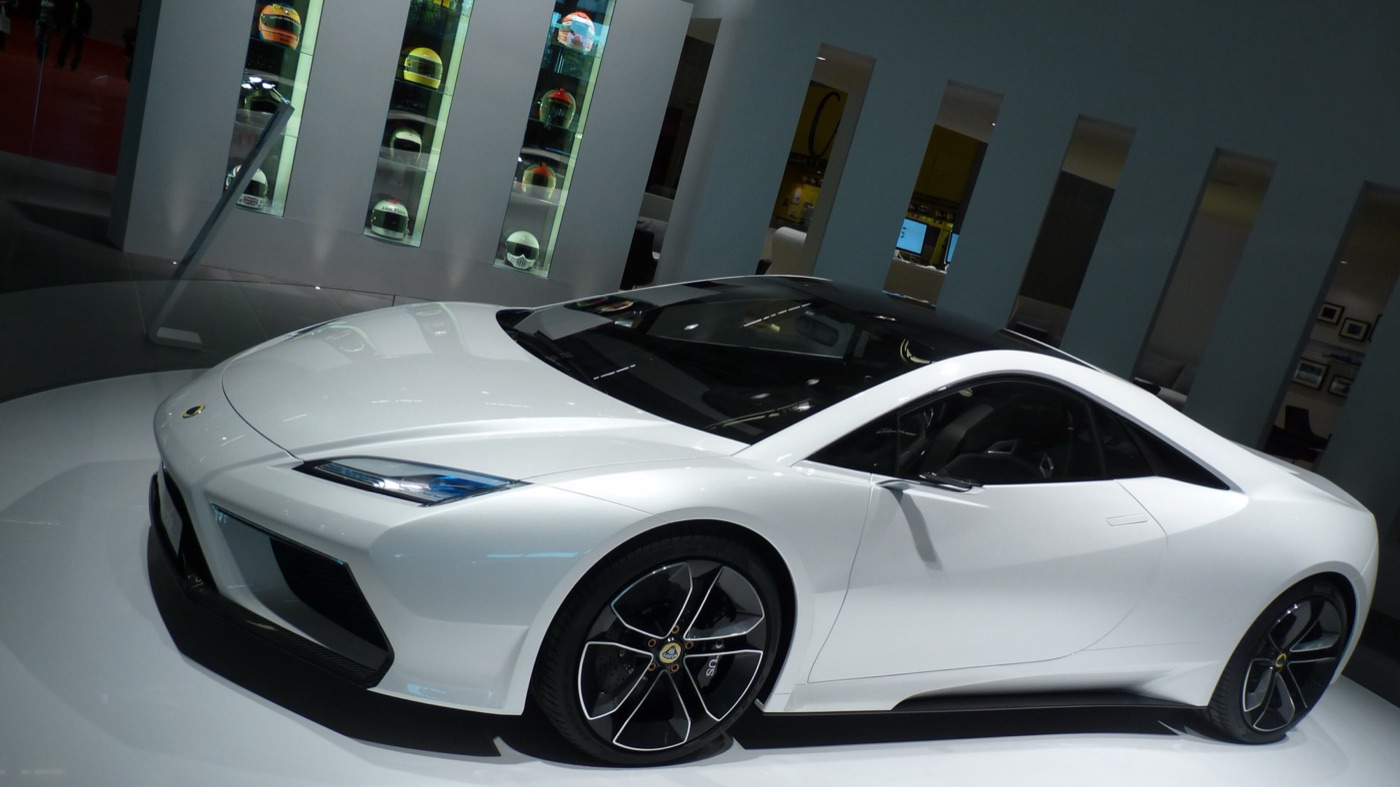
Lotus showed a new Esprit at the Paris motor show on 30 September 2010, one of five new models in chief executive Dany Bahar's plan to move Lotus into Aston Martin, Ferrari and Porsche territory. The plan was to take Lotus from about 2,700 cars a year under £40,000 to 6,000–7,000 cars at £80,000 to £120,000, Autocar reported. AutoGuide's report of the launch, quoting Lotus, gave the car a 5.0-litre V8 of 620PS, 0–60mph in an estimated 3.5 seconds, 205mph and an optional KERS energy-recovery system. Donato Coco, Lotus's head of design, led the design, the Golden Gate Lotus Club reported.
At the Los Angeles auto show on 17 November 2010, Bahar introduced the Esprit as a 2013 model and Sharon Stone pulled the cover off it, the Golden Gate Lotus Club reported. Stone told the audience, as SkiddMark reported that month: "When I sat in the Esprit, it reminded me of when we were filming Basic Instinct… driving through the hills in San Francisco, it was great." Bahar told the same audience: "What people see here today is a snapshot of the not too distant future for Lotus."
Why was the new Esprit cancelled?
After the Paris show Bahar told Lotus's engineers to replace the bought-in Lexus V8 with an engine of their own, which he claimed gave 570bhp with KERS and was 80kg lighter and 40 per cent smaller, evo reported in 2021. It ran on a dyno and was tested in a modified Ferrari 458, but the only test car was written off in an accident. Lotus's owner DRB-Hicom dismissed Bahar on 7 June 2012, Autocar reported, and the other Paris cars were dropped. When AutoGuide reported in October 2012 that the Esprit was cancelled, Lotus told it the report was a rumour.
In September 2014 Lotus's new chief executive, Jean-Marc Gales, told Auto Express that the Bahar-era cars would not be launched: "If you're asking whether we're going to pick them up and launch these cars, the answer is no," as quoted by GTspirit. Gales said Lotus "cannot and should not develop our own engine". evo's source says the 2010 show car still sits at Hethel.
Is Lotus bringing back the Esprit?
Lotus has confirmed a hybrid V8 supercar, the Type 135, for production in Europe from 2028, but it has not used the name Esprit. The car was announced in May 2026 in Lotus's Focus 2030 plan with more than 1,000 metric horsepower. A file name on one of Lotus's teaser images read "Esprit_Teaser", and Lotus told CAR magazine that the name was an "internal project name". evo reported the car as the new Esprit and expects a carbon-fibre tub and a price near £200,000.
Lotus chief executive Qingfeng Feng told Auto Express that the V8 is being developed by Horse Powertrain, the engine company owned by Geely and Renault, and scaled up from its 3.0-litre twin-turbo V6, and that "all-wheel drive could be a great solution". Auto Express does not expect it to be a plug-in hybrid. It would be the first V8 Lotus road car since the Esprit V8 ended in 2004, autoevolution noted. Lotus's range in 2026 is the Emira sports car and the electric Eletre, Emeya and Evija.
Questions
Where was the Lotus Esprit built?
Every Esprit was built at the Lotus factory at Hethel, near Norwich in Norfolk, from 1976 to February 2004.
When did Lotus stop making the Esprit?
The last Esprit passed from production to sales at Hethel on 20 February 2004, after 28 years. The last 82 cars were V8 Final Editions.
Did the Lotus Esprit have a V8?
Yes. From 1996 Lotus fitted its own Type 918 engine, a 3.5-litre twin-turbo V8 of 350bhp, and the V8 was the only Esprit on sale from 1998 to 2004.
Who drove the Lotus Esprit in James Bond films?
Roger Moore, as James Bond, drove a white Esprit S1 in The Spy Who Loved Me (1977) and white and bronze Esprits in For Your Eyes Only (1981).
Who bought the James Bond submarine Lotus Esprit?
Elon Musk bought Wet Nellie, the working submarine from The Spy Who Loved Me, for $989,000 at RM Auctions in London in September 2013.
What gearbox does a Lotus Esprit have?
Esprits up to 1987 use a Citroën SM five-speed gearbox with a Lotus bell housing; from the 1987 Peter Stevens car Lotus used the Renault 25 five-speed gearbox.
What type number is the Lotus Esprit?
Lotus gives the Series 1 as Type 79, the same number as the 1978 Formula One car, and the Turbo Esprit and later cars, V8s included, as Type 82.
Was a Lotus Esprit in Pretty Woman?
Yes. An Esprit appeared in Pretty Woman with Richard Gere and Julia Roberts, and Lotus named the film alongside Bond and Basic Instinct when it showed a new Esprit in 2010.
Sources
- Lotus Cars, "Lotus Esprit", The Lotus Story, read October 2026: concept, debut, Bond films, Turbo, Stevens, V8, special editions, statistics by series.
- Motor Sport, "The Lotus Esprit and Eclat", November 1975, p. 74: Paris launch, price, claims, body and safety cell.
- Clive Richardson, "The Lotus Esprit S2: fast, fun and frenzied", Motor Sport, March 1979, p. 71: S2 changes, price, rivals, components, test verdict.
- R.G.S., "The Lotus Esprit Turbo", Motor Sport, March 1980, p. 46: Turbo launch, engine, chassis, Lotus's performance figures, price.
- Clive Richardson, "The Lotus Esprit Turbo", Motor Sport, June 1980, p. 112: prototype drive, cornering figures, quotes.
- Gordon Cruickshank, "Cross-Channel cruiser", Motor Sport, August 1987, p. 50: Turbo HC road test.
- Jeremy Walton, "Industry insight: Lotus cars", Motor Sport, January 1988, p. 29: Stevens Esprit, Renault gearbox, 2,097 turbos, prices.
- Jeremy Walton, "A new high", Motor Sport, June 1989, p. 73: Turbo SE specification, price and verdict; first-series figures.
- Andrew Frankel, "Driving Colin Chapman's Lotus Esprit", Motor Sport, April 2021, p. 114: Ketteringham Hall, Chapman's Turbo, Thatcher.
- Autocar, "Buying secondhand: Lotus Esprit", July 1983, reprinted by Lotus Esprit World: production to 1982, faults of 1976–82 cars.
- Malcolm McKay, "Buyer's guide: Lotus Esprit 1987-2004", Classic & Sports Car, 18 January 2019: production by version, history, faults, prices, rivals.
- Alisdair Suttie, "Lotus Esprit Turbo: PH Used Buying Guide", PistonHeads, 19 July 2018: oil, filter, exhaust manifold, overheating, headlamp and window faults, clutch cost.
- evo, "Lotus Esprit V8 (2008) buying guide": V8 cost, prices new, performance, Sport 350, V8 production.
- Lotus Esprit World, "Esprit Production Figures", from the factory spreadsheet: 10,675 total, yearly figures, end of production.
- Leo Wilkinson, "Inside James Bond's Lotus supersub", The Daily Telegraph, 12 August 2013, reprinted by Lotus Marques: film cars, Wet Nellie, storage auction.
- Paul A. Eisenstein, "Elon Musk buys 007's underwater car, and wants to make it work", NBC News, October 2013: buyer, price, Musk's comment.
- Lotus X180R Registry, "Lotus Esprit X180R racing history": SCCA and IMSA record, Bundy's title, homologation cars.
- Racing Sports Cars, "All results of Lotus Esprit Sport 300": Le Mans 1993 and 1994, British GT 1993–94, BPR 1995.
- Department for Transport, table VEH0120, licensed and SORN vehicles by make and model, 2026 Q2 release: Esprits on UK records.
- Autotrader, used Lotus Esprit listings, read 28 October 2026: asking prices.
- Ellis Hyde, "The Lotus Esprit is back! Encor reveals wedge-shaped restomod", Auto Express, 2025: Encor Series 1.
- Lotus press release, "Lotus Esprit concept", 2010, as reproduced by conceptcarz: Bahar's statement.
- Steve Cropley, "Paris motor show 2010: Lotus stuns Paris with six new models", Autocar, September 2010: the Bahar plan.
- AutoGuide, "Lotus Esprit heralds the future of Lotus cars", 30 September 2010: concept specification and Lotus's release.
- Golden Gate Lotus Club, "2010 Los Angeles Auto Show": Sharon Stone's unveiling.
- SkiddMark, "Lotus reunites with Sharon Stone", November 2010: Sharon Stone's and Dany Bahar's comments in Los Angeles.
- evo, "Lotus Esprit: dead on arrival", August 2021: the in-house V8, cancellation, show car at Hethel.
- Autocar, "Bahar dismissed as Group Lotus boss", 7 June 2012.
- AutoGuide, "Lotus Esprit axed", October 2012, with Lotus's denial.
- GTspirit, "Modern-day Lotus Esprit ruled out", 27 September 2014: Gales's comments to Auto Express.
- CAR, "New Esprit? Lotus confirms new hybrid V8 supercar as part of Focus 2030 plan", 12 May 2026.
- evo, "The Lotus Esprit is officially making a return, and it has a V8", 12 May 2026.
- Auto Express, "Lotus Esprit comeback in new detail", Auto Express, 2026: Feng on the Type 135's engine and drive.
- Alex Oagana, "2029 Lotus Esprit: the flying wedge returns with a 1000-horsepower hybrid V8", autoevolution, 25 June 2026: Horse Powertrain V8, last V8 Lotus.