Lotus Exige: Series 1 to 3, versions, specs and values
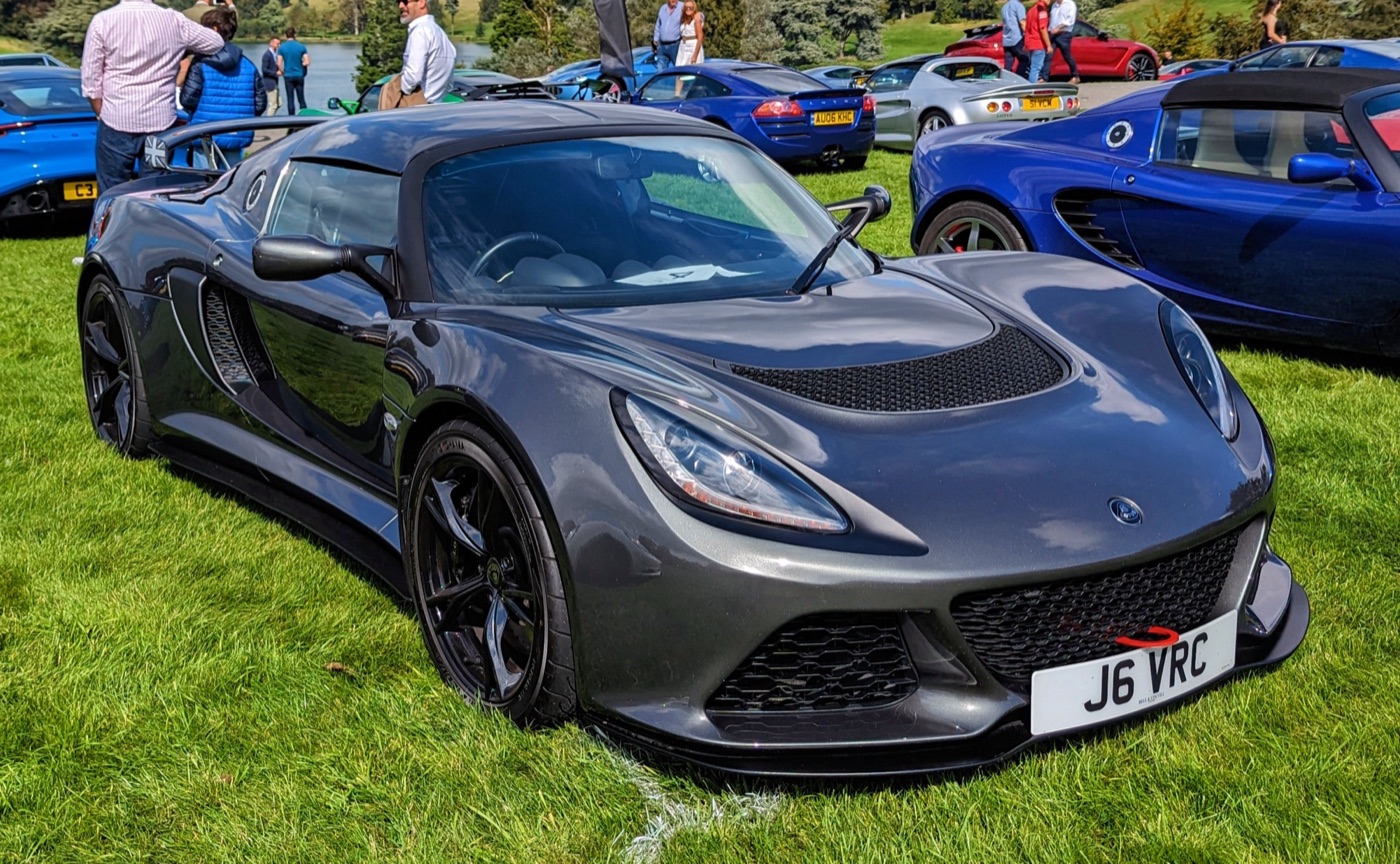
The Lotus Exige is the fixed-roof, track-bred sister of the Lotus Elise: a British mid-engined sports car that Lotus Cars built at Hethel in Norfolk from 2000 to 2021, and the last of the 10,497 made left the line on 22 December 2021. There were three series: a 780kg coupé with a Rover engine in 2000, a Toyota-engined car from 2004, and from 2012 a larger car with a supercharged 3.5-litre Toyota V6 that ended as the 430bhp Cup 430. People look it up for its specifications, for the long list of versions and limited editions, and because used prices have hardly moved for a decade.
Lotus Exige history and development
The Exige grew out of the Lotus Sport Elise built for the Autobytel Lotus Championship, a one-make series that ran with the British Touring Car Championship in 2000 and 2001, according to Lotus's heritage page. Lotus unveiled the road car at Brands Hatch in April 2000, at the series' first round, and credits the design to a team led by Russell Carr; its 2021 release called the Exige "the epitome of the 'race car for the road'". Lotus belonged to Proton when the Exige was launched, passed with Proton to DRB-Hicom in 2012, and was part of Geely Automotive when production ended, Lotus's 2021 release says (the full history is on our page on the owners of Lotus).
What does Exige mean?
Lotus says the name comes from the French verb exiger, "to demand". PistonHeads' Series 1 buying guide said in 2024: "You didn't buy an Exige for an easy life."
Three generations in 21 years
The first Exige was on sale for about a year. After a gap of two years Lotus brought the name back at the Geneva Motor Show in 2004 on the Series 2 Elise, now with Toyota engines, and that car ran until 2011, when Toyota was ending production of its 1.8-litre 2ZZ engine. The Series 3, shown at the Frankfurt Motor Show in September 2011, was a new car on a longer, wider chassis with the Evora's supercharged V6. From then on the Elise kept four cylinders and the Exige, with its V6 engine, became the bigger model of the Elise and Exige family, with the Lotus Evora above it as the 2+2.
Why did Lotus stop making the Exige?
Lotus announced on 25 January 2021 that the Elise, Exige and Evora had entered their last year of production, and that more than £100m would go into new manufacturing facilities at Hethel for a new series of sports cars. The assembly lines installed in 2000 were dismantled after the last cars were built, its release of 22 December 2021 said, and full production of the Exige's replacement, the Lotus Emira, was to start the following spring. Autocar reported in 2021 that the Emira would have power steering, which no Exige had, and a limited-slip differential, which Lotus had kept off the Elise and Exige road cars.
Lotus Exige Series 1 (2000 to 2001)
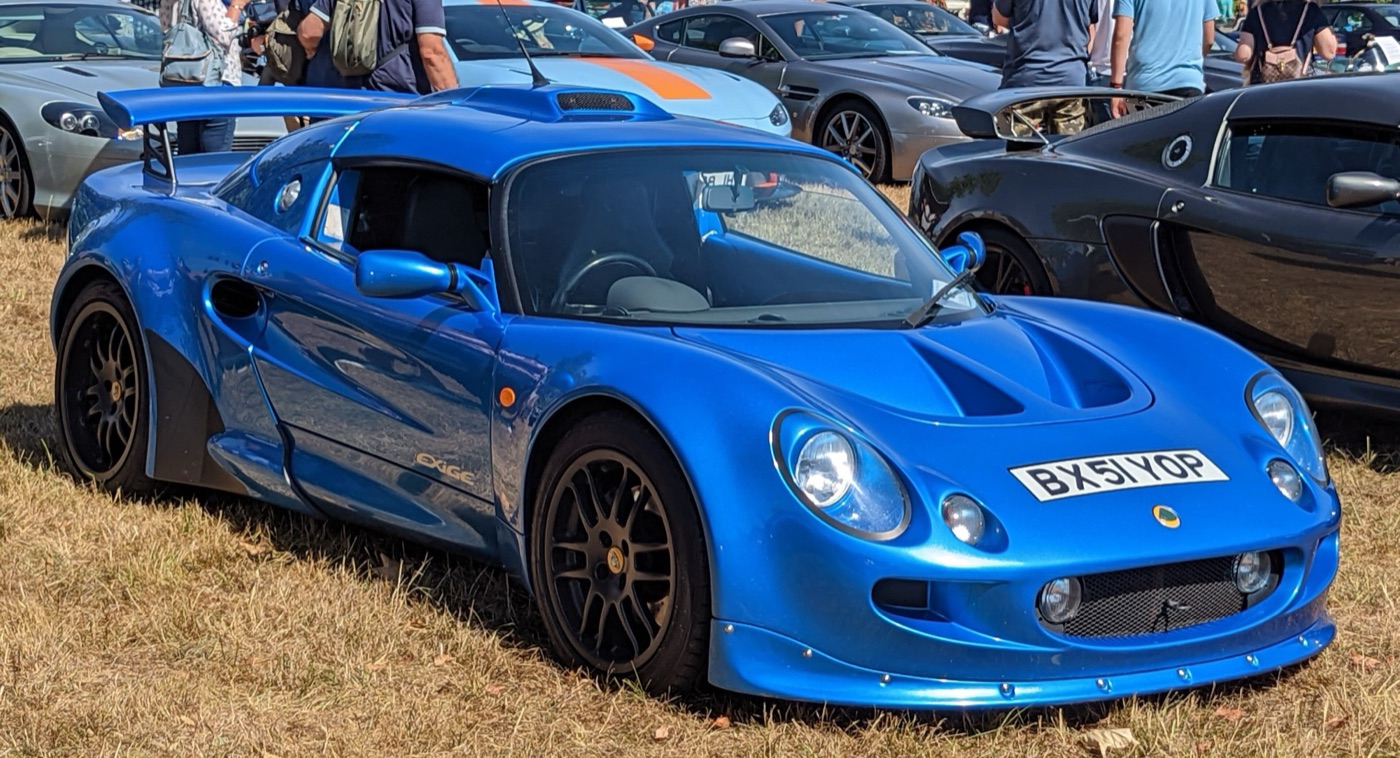
The Series 1 was a Series 1 Elise with a fixed roof, a Kamm-tailed fastback, wider bodywork, a front splitter and a fixed rear wing. Under it Lotus fitted adjustable Koni dampers, thicker anti-roll bars and Yokohama track tyres, and the Rover K-series engine gained individual throttle bodies; the whole car weighed 780kg, 49kg more than the Elise, Autocar recorded in its 2021 road test of the last Exige. There was no power steering, no brake servo and no ABS.
Engine and performance
The engine was the VHPD (Very High Performance Derivative) version of the MGF's 1.8-litre K-series. It made 177bhp at 7,800rpm and 127lb ft at 6,750rpm, and a £900 factory decat kit took it to 190bhp, PistonHeads' guide records, against 118bhp in the first Elise of 1996. Air conditioning joined the options with Alcantara seats and 340R seat belts, and became standard from October 2000.
How many Series 1 Exiges were made?
Lotus's heritage page gives 601, built from 2000 to 2002; PistonHeads says just over 600, of which fewer than 250 were registered in the UK by 2001. The price in 2000 was £32,995, PistonHeads noted in an April 2020 story about chassis 0001, the Chrome Orange press car that appeared in Autocar and evo, which was then for sale at Lotus Silverstone with 17,000 miles at £45,000. By 2024 the magazine counted fewer than 100 unaltered Series 1 cars still running on UK roads, and noted that the car had become old enough for import to the US under its 25-year rule.
Lotus Exige Series 2 (2004 to 2011)
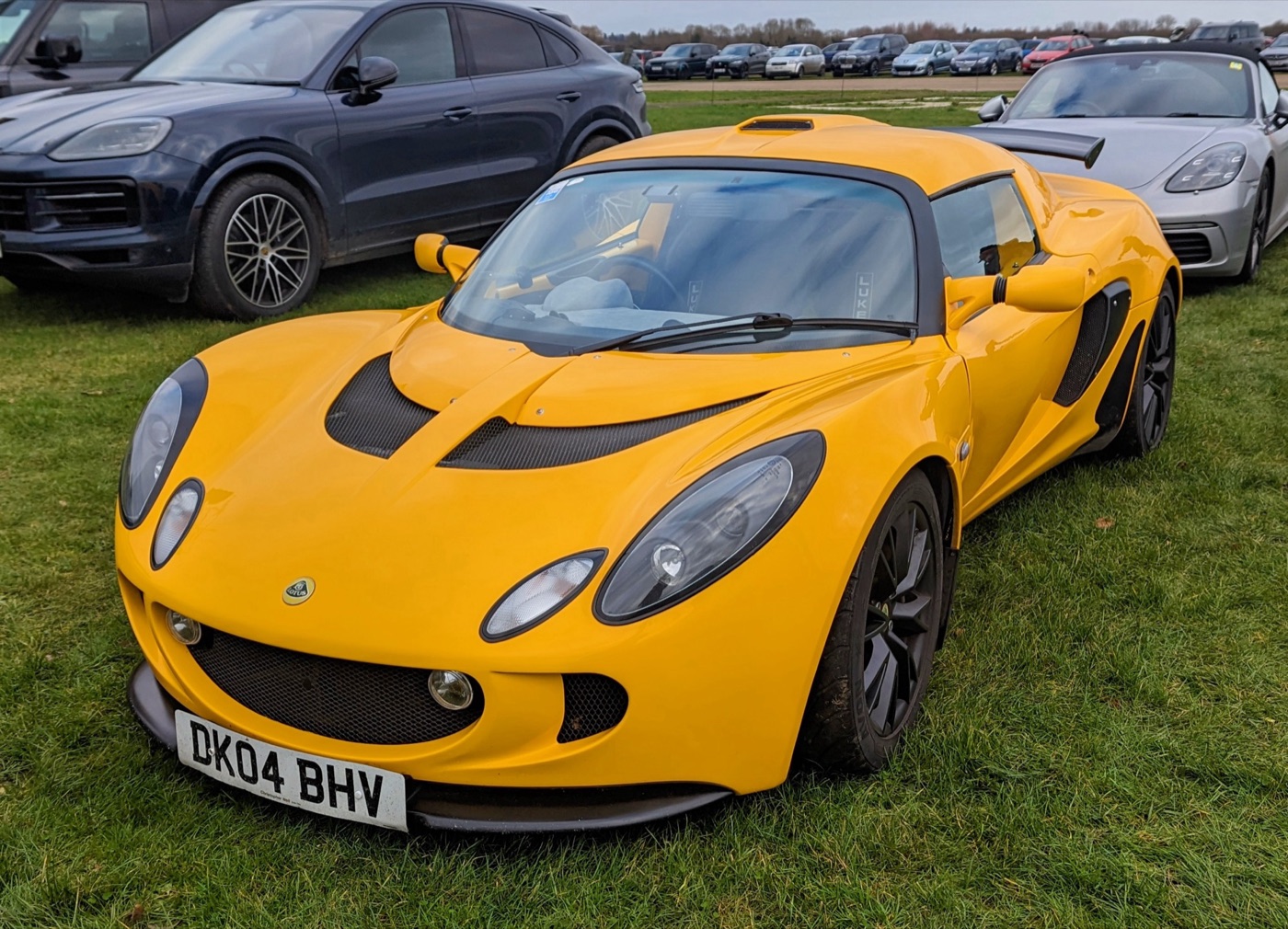
The Series 2 Exige, unveiled at the Geneva show in 2004, put a fixed roof with an air scoop, a front splitter and a rear wing on the Series 2 Elise, and used the Toyota and Yamaha 2ZZ-GE 1.8-litre four-cylinder with variable valve timing and lift. In standard form it made 189bhp, nearly as much as the tuned Series 1, evo's Series 2 buying guide said. evo's Richard Meaden bought one in October 2004 for £34,095, after a June 2004 group test against the Noble M400, Porsche's 911 GT3 RS and Ferrari's 360 Challenge Stradale. Lotus Sport fitted his car with a Stage 2 exhaust and a £2,500 Öhlins two-way adjustable suspension kit.
Exige 240R and the supercharged Exige S
Early in 2005 Lotus built 50 Exige 240Rs, with a Roots-type supercharger and intercooler that took power to 243bhp, plus harder suspension and brakes. The production Exige S followed late in 2005 (Lotus dates its announcement to the Geneva show of 2006) with 218bhp, 0-60mph in 4.1 seconds and 0-100mph in 10.0. In evo's January 2008 test an Exige S with the £3,000 Performance Pack cost £37,550; the pack raised power to 240bhp, the same as the 240R, with 308mm discs, four-piston AP Racing calipers, launch control and the 2-Eleven's variable-slip traction control, adjustable from 1 to 9 per cent on a dial by the steering column. Lotus claimed 0-60mph in 4.0 seconds for it.
Exige Cup 255 and Cup 260
Lotus sold a run of Cup models (Cup, Cup 240, Cup 255, Cup 260), alongside British GT and Club Racer editions. The 2009 Cup 260 had 257bhp, carbonfibre panels, forged wheels and a lighter flywheel and battery, and weighed 890kg; it cost £45,995 plus £950 to register it for the road and was eligible for the new Lotus Cup Europe, evo reported in March 2009.
Series 2 special editions
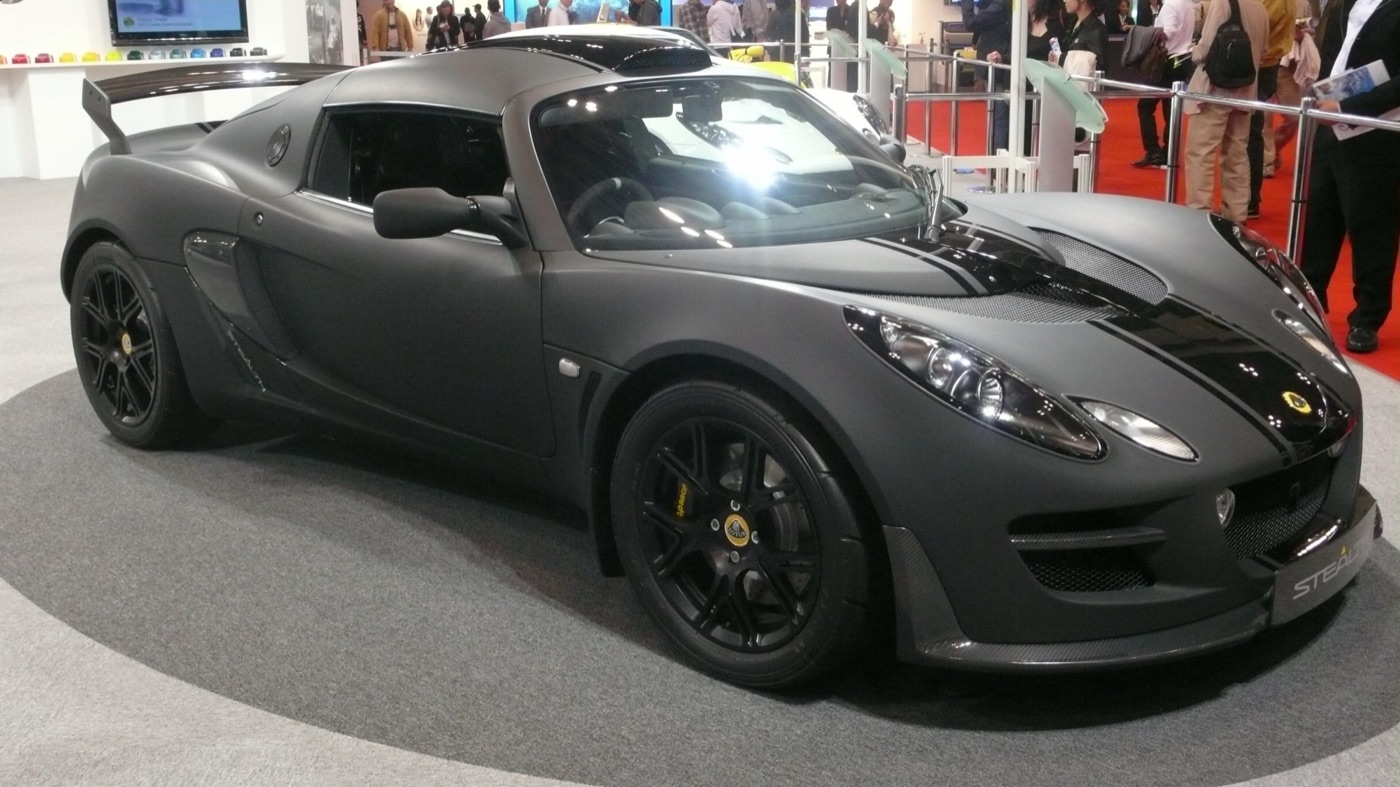
The Exige Scura of October 2009 was a matt black Exige S with 260PS and a carbonfibre cabin, limited to 35 cars and sold in Japan as the Exige Stealth. A SkiddMark report of the launch gave its UK price as a little over £45,000. The Exige S Type 72 of December 2009 wore the black and gold of the Type 72 Formula One car, painted by the sign writer who had lettered the Team Lotus cars. A SkiddMark report of December 2009 said Lotus planned 20 for the UK and 20 for mainland Europe, plus a run for Japan and other markets, each with a plate for one of the Type 72's 20 Grand Prix wins; it gave a weight of 935kg, 0-60mph in 4.5 seconds and a UK price from £36,945, with a limited-slip differential among the options. In September 2010 came the RGB edition, a farewell to the Lotus engineer and test driver Roger Becker.
North American production stopped in August 2011, Autoblog reported in June 2011, because the US exemption that let the cars run without "smart" airbags expired that year and Toyota was ending production of the 2ZZ engine.
Lotus Exige Series 3 V6 (2012 to 2021)
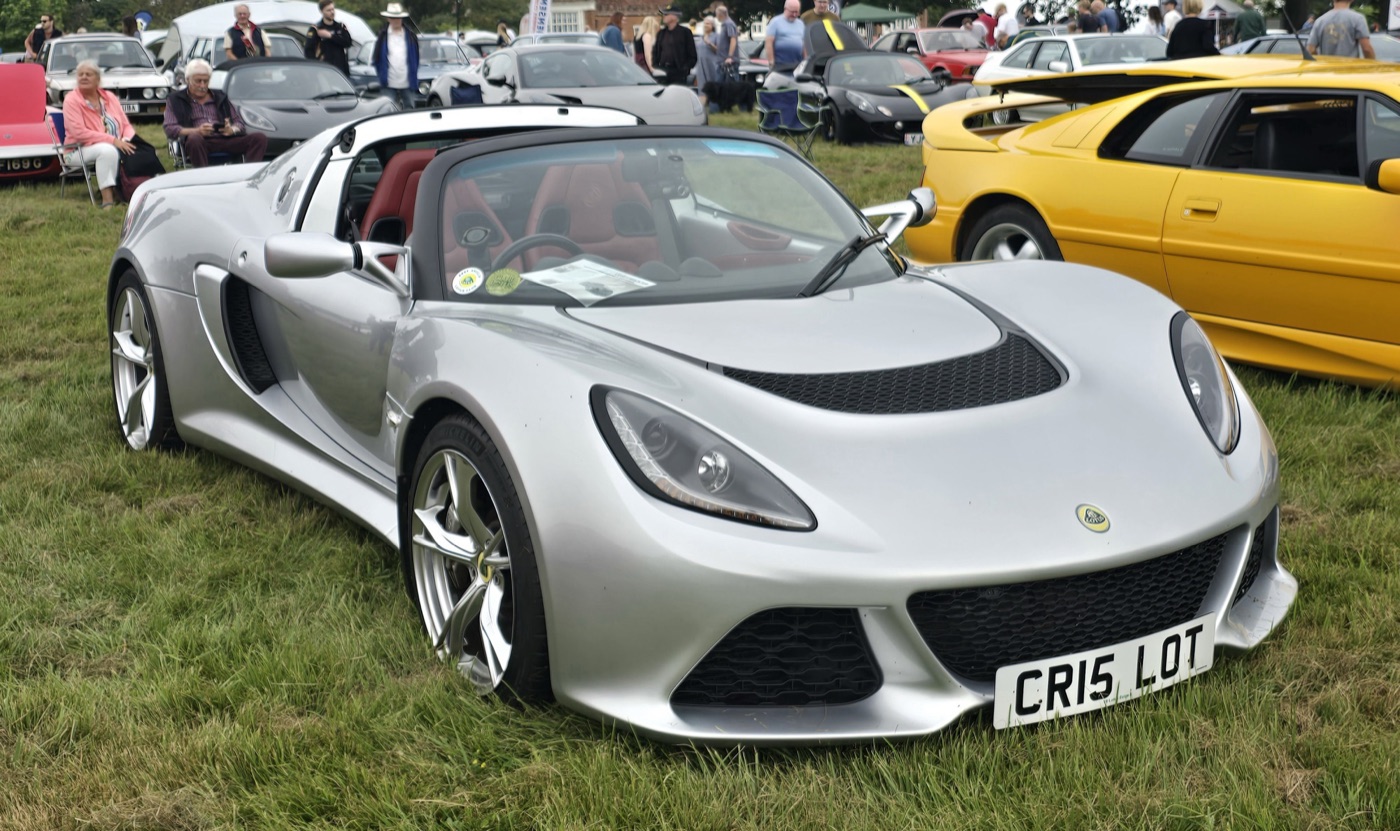
The third-generation Exige S, shown at Frankfurt in September 2011, used the Evora S's supercharged 3.5-litre Toyota 2GR V6 with 345bhp at 7,000rpm and 295lb ft of torque at 4,500rpm, against 220bhp for the old four-cylinder S. evo's Frankfurt report noted a glass rear screen in place of the roof scoop and a predicted price of about £56,000.
Lotus Exige S and Exige S Roadster
The first production Exige S left the Hethel line in late July 2012, a SkiddMark report of 1 August recorded, after chief executive Dany Bahar had been dismissed and with chief operating officer Aslam Farikullah promising to announce new models only when they could be delivered. It cost £52,900. The car was about 70mm longer in the wheelbase and almost 300mm longer overall than the four-cylinder Exige, and at about 1,170kg wet it had the power-to-weight ratio of a contemporary Porsche 911 Turbo, PistonHeads' Series 3 buying guide said in 2020. Dynamic Performance Management gave Touring and Sport modes, and the £2,000 Race Pack added a Race mode with launch control, stiffer suspension and Pirelli P Zero Trofeo tyres.
The Exige S Roadster was first shown in March 2012 and went into production in summer 2013. It cost the same £52,900, weighed 10kg less at 1,166kg and lost the coupé's splitter and wing, which cut its top speed from 170mph to 145mph, evo reported in May 2013. In January 2015, evo reported, a six-speed automatic arrived for £1,667 more, with 240-millisecond shifts and a 162mph top speed.
Exige V6 Cup and V6 Cup R
The V6 Cup was the track version of the Exige S, launched at the Lotus Festival at Brands Hatch in August 2012. A SkiddMark report of 17 August 2012 gave its kerb weight as 1,080kg, 96kg less than a leather-trimmed Exige S, with the same 345bhp and 0-62mph in 3.8 seconds against the Exige S's 4.0. It came as a track-day car at £62,995 or a competition car from £74,995, against £52,900 for the Exige S, with Pirelli P Zero Trofeo tyres, a splitter, diffuser and wing, adjustable suspension, a roll cage, four- or six-point harnesses, isolator switches, an FIA fire extinguisher and HANS-compliant seats. It was built for the Lotus Cup series in the UK, Europe, Eastern Europe, Italy and Japan and for the Lotus Ladies Cup in Hungary, and a US version was shown at the same festival.
The V6 Cup and a lighter, more powerful Cup R were shown at the Autosport International show in January 2013; the Cup R had 366hp and weighed 2,292lb (1,040kg), Autoblog reported. PistonHeads lists two-way adjustable Nitron dampers, two-piece floating discs and a baffled sump on the Cup, an X-Trac gearbox and a full FIA cage on the Cup R, and says the two were the only Series 3 Exiges sold in the US.
Exige Sport 350
The Sport 350 of December 2015 replaced the Exige S. Lotus took 51kg out of it, through a louvred engine cover in place of the glass, a lighter battery, engine mounts, pipework and sound insulation, for 1,125kg; it kept 345bhp, reached 60mph in 3.7 seconds and lapped Hethel in 1min 29.8sec, CAR reported. It cost £55,900, and its gear linkage was exposed in the centre console. According to evo, the Sport 350 Roadster of March 2016 weighed 1,085kg and cost the same.
Exige Sport 380 and Cup 380
The Sport 380 of November 2016 raised the power output to 375bhp by evo's figure (370bhp in The Week's launch report), with 0-60mph in 3.5 seconds and a top speed of 178mph; The Week gave its price as £67,500, £11,000 more than the Sport 350. The Cup 380 of April 2017 was limited to 60 cars at £83,000, with carbonfibre roof, splitter, access panel, diffuser, side pods, tailgate and wing, 200kg of downforce at its 175mph top speed and a lightest weight of 1,057kg, evo reported.
Lotus Exige Cup 430
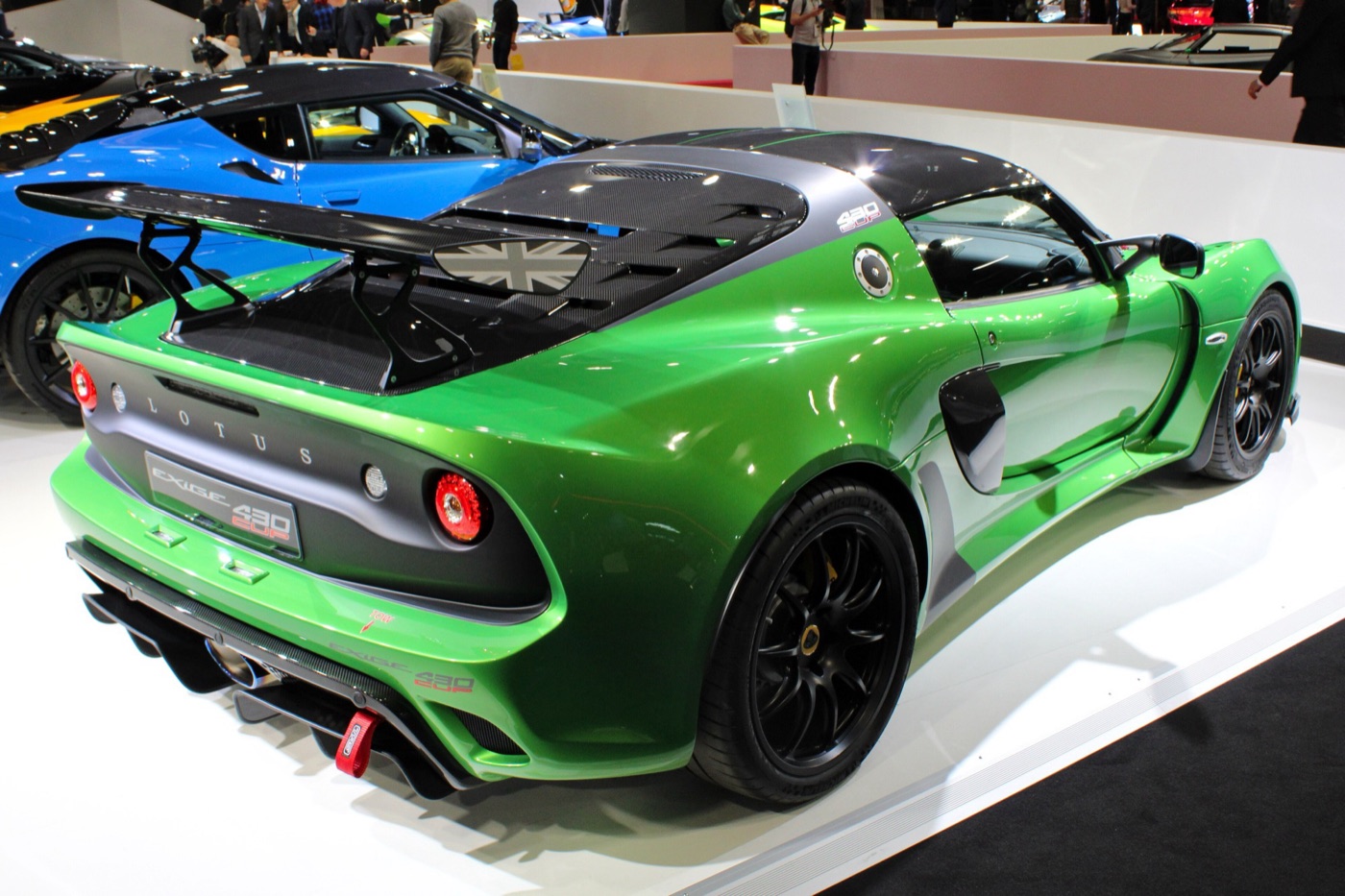
The Cup 430 of November 2017 took the 430bhp engine of the Evora GT430, with an Edelbrock supercharger and a charge cooler, and was the most powerful Exige. Unlike the Cup 380 it was not a limited edition; it made 220kg of downforce and lapped Hethel in 1min 24.8sec, 1.2 seconds quicker than the 3-Eleven road car and the fastest time yet for a Lotus production car, Autocar's news report said. In April 2018 Lotus announced 25 Cup 430 Type 25s, in white or green with yellow or green details after the Lotus 25 Formula One car, at £110,000 each.
Lotus Exige Sport 410
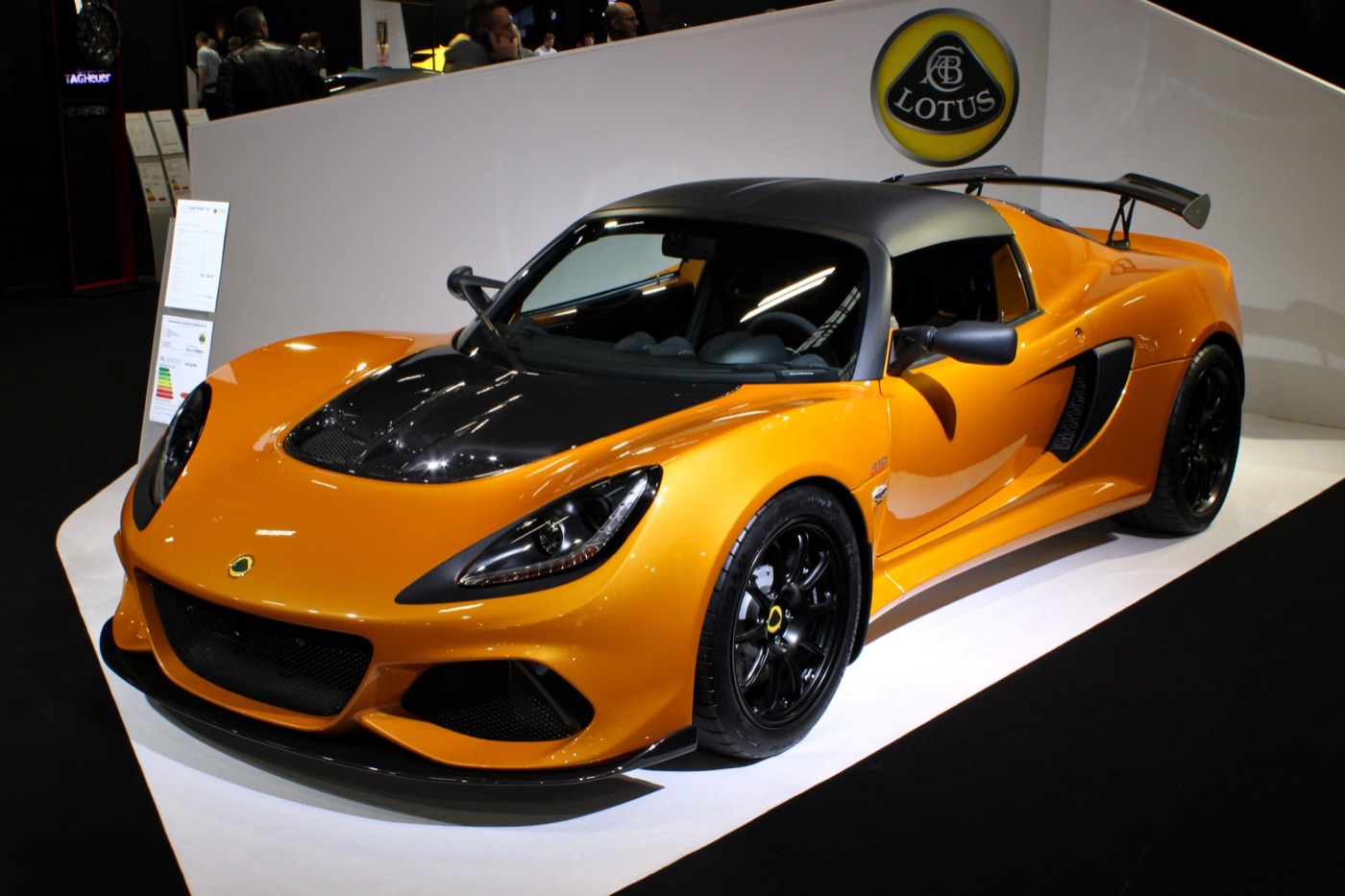
The Sport 410 of May 2018 used the Cup 430's engine, detuned to 410bhp and 310lb ft, with the Cup's Nitron three-way adjustable dampers and Eibach anti-roll bars set for the road, and a new front end that Lotus said would spread across the range. It was sold as a coupé or Roadster, made 150kg of downforce, and with every lightweight option was the lightest V6 Exige, evo's first drive said. In June 2020 Lotus marked the Exige's 20th birthday with a Sport 410 20th Anniversary at £79,900, offered in three Series 1 colours (Chrome Orange, Laser Blue and Calypso Red) or three others.
Final Edition: Sport 390, Sport 420 and Cup 430
On 8 February 2021 Lotus announced three Final Edition Exiges, all with the Edelbrock supercharger and charge cooler, a TFT digital dashboard and a flat-bottomed steering wheel. The Sport 390 replaced the Sport 350, the Sport 420 replaced the Sport 410 and the Cup 430 stayed at the top. The new colours included Metallic White, from the V6 Exige's unveiling in 2011, and Metallic Orange, from the first press car of 2000.
Other Series 3 limited editions
The LF1 of June 2014 was an Exige S with the Race Pack as standard in black and gold, limited to 81 cars, each carrying a numbered plate for one of Lotus's 81 Formula One wins from 1960 to 2013, evo reported. The Exige 350 Special Edition of October 2016, for Lotus's 50 years at Hethel, was limited to 50 cars at £61,900 and weighed 1,099kg, 26kg less than the Sport 350, according to evo.
Lotus Exige specs and performance
Every Exige is mid-engined and rear-wheel drive on a chassis of extruded aluminium sections bonded together, with composite body panels, double wishbones at each corner and unassisted steering. The Series 3 road cars had no mechanical limited-slip differential, so traction is managed by the brakes; the 2009 Cup 260 had a torque-biasing differential as standard, evo found, and the Series 2 Exige S Type 72 offered a limited-slip differential as an option.
| Version | Launched | Engine | Power | Weight | 0-60mph | Top speed | UK price new |
|---|---|---|---|---|---|---|---|
| Series 1 | 2000 | 1.8 Rover K-series | 177bhp (190bhp option) | 780kg | not quoted | not quoted | £32,995 |
| Series 2 | 2004 | 1.8 Toyota 2ZZ-GE | 189bhp | under 900kg | not quoted | not quoted | £34,095 |
| Exige S (Series 2) | 2005 | 1.8 Toyota, supercharged | 218bhp | not quoted | 4.1sec | not quoted | £37,550 with Performance Pack (2008) |
| Cup 260 | 2009 | 1.8 Toyota, supercharged | 257bhp | 890kg | not quoted | not quoted | £45,995 |
| Exige S V6 | 2012 | 3.5 Toyota V6, supercharged | 345bhp | 1,176kg | 3.8sec | 170mph | £52,900 |
| Exige S Roadster | 2013 | 3.5 V6, supercharged | 345bhp | 1,166kg | 3.8sec | 145mph | £52,900 |
| Sport 350 | 2015 | 3.5 V6, supercharged | 345bhp | 1,125kg | 3.7sec | 170mph | £55,900 |
| Sport 380 | 2016 | 3.5 V6, supercharged | 375bhp | 1,110kg | 3.5sec | 178mph | £67,500 |
| Cup 380 | 2017 | 3.5 V6, supercharged | 375bhp | 1,057kg (lightest) | not quoted | 175mph | £83,000 |
| Cup 430 | 2017 | 3.5 V6, supercharged and charge-cooled | 430bhp | 1,056kg (dry) | 3.2sec | 180mph | £99,800 |
| Sport 410 | 2018 | 3.5 V6, supercharged and charge-cooled | 410bhp | 1,054kg (dry) | 3.3sec | 180mph | £79,900 |
| Sport 390 Final Edition | 2021 | 3.5 V6, supercharged and charge-cooled | 397bhp | 1,138kg | 3.7sec | 172mph | £64,000 |
| Sport 420 Final Edition | 2021 | 3.5 V6, supercharged and charge-cooled | 420bhp | 1,110kg | 3.3sec | 180mph | £79,900 |
| Cup 430 Final Edition | 2021 | 3.5 V6, supercharged and charge-cooled | 430bhp | 1,110kg | 3.2sec | 174mph | £100,600 |
Sources: Autocar and PistonHeads (Series 1), evo (Series 2, Exige S, Cup 260, Exige S V6, Roadster, Cup 380, Sport 410), CAR (Sport 350), The Week and evo (Sport 380), Autocar and CAR (Cup 430), Lotus's Final Edition release (2021 cars). The Series 2 price is evo's own car of October 2004.
How fast is a Lotus Exige?
The fastest road Exiges, the Sport 410 and Sport 420, reach 180mph, and the Cup 430 has the quickest acceleration, 0-60mph in 3.2 seconds; the first V6 Roadster, the Exige S Roadster, was limited to 145mph because it lacks the coupé's wing. Autocar's road test of a Sport 390 Final Edition at MIRA in 2021 ran slower than Lotus's claims: it recorded 0-60mph in 4.0 seconds against the claimed 3.7, with a full tank, and 0-100mph in 9.4 seconds; for something "to trouble not just specialised sports cars but also bona fide supercars", it pointed readers to the Cup 430. The car stopped from 70mph in 42.2m and weighed 1,218kg on Autocar's scales, 80kg more than Lotus's claim.
What engine does the Lotus Exige have?
The Series 1 has the Rover K-series 1.8, the Series 2 Toyota's 2ZZ-GE 1.8 with or without a supercharger, and the Series 3 Toyota's 3,456cc 2GR V6 with a supercharger. Early V6 cars used an Eaton supercharger; the Cup 430 brought an Edelbrock unit with a charge cooler, an extra front radiator and an oil cooler, and the Sport 410 used a detuned version of that engine with the flattest torque curve of the three Exiges then on sale, according to evo's Series 3 buying guide. Every Series 3 had a six-speed Toyota manual as standard, with an optional automatic from 2015; Autocar noted that the Final Editions were manual only.
Lotus Exige handling and ride
The Series 3 road cars have unassisted steering and no limited-slip differential. On the road the Sport 390 Final Edition had plenty of front-end grip even on ordinary Michelin Pilot Sport 4 tyres and showed gentle understeer at the limit in low- and high-speed corners, which a lift of the throttle corrected, and it rarely overheated its tyres or brakes on track, Autocar found in 2021. For the Sport 350, Lotus changed the camber, toe and bump steer, moved the steering rack and widened the rear wheels to 10 inches, which cured the earlier V6 car's nervousness on poor surfaces and gave a more compliant ride, evo's Series 3 guide says. The Cup and later Sport models swapped Bilstein dampers for Nitron springs and dampers adjustable for compression and rebound, with adjustable Eibach anti-roll bars, and the Cup 380 had 43 per cent more downforce than the Sport 380 and 20mm wider tyres.
Does the Exige have power steering?
No Exige has power steering. Autocar wrote in 2021 that the Sport 390's weight was already at the limit of what Lotus thought possible with an unassisted rack, and that the Emira would need electro-hydraulic assistance.
How many Lotus Exiges were made?
Lotus built 10,497 Exiges from 2000 to 2021, according to its December 2021 release, which named the last one: a Cup 430 Final Edition in Heritage Racing Green, number 10,497, kept for the company's heritage collection. The same release gave 35,124 for the Elise and 6,117 for the Evora. Lotus has not published a breakdown by series or year; Lotus puts the Series 1 at 601, which leaves about 9,900 Series 2 and Series 3 cars.
Limited editions and their numbers
| Edition | Year | Based on | Number | Source |
|---|---|---|---|---|
| 240R | 2005 | Series 2, supercharged | 50 | evo |
| Scura (Stealth in Japan) | 2009 | Series 2 Exige S | 35 | SkiddMark |
| Exige S Type 72 | 2009 | Series 2 Exige S | 20 UK, 20 Europe, more elsewhere | SkiddMark |
| LF1 | 2014 | Series 3 Exige S | 81 | evo |
| 350 Special Edition | 2016 | Sport 350 | 50 | evo |
| Cup 380 | 2017 | Sport 380 | 60 | evo |
| Cup 430 Type 25 | 2018 | Cup 430 | 25 | evo |
How many Lotus Exiges are left in the UK?
At the end of June 2026 the DVLA held 1,730 Lotus Exiges: 1,238 licensed and 492 declared off the road (SORN), according to the Department for Transport's vehicle licensing table VEH0120. At the end of 2021 the total was 1,689. The largest model entries are the Sport 350 (184 licensed), the Exige S (117, Series 2 and Series 3 together) and the Sport 410 (110).
Lotus Exige in motorsport
The Exige began as the road version of a one-make racer, and Exiges went on to race in Lotus's Cup series, British GT, rallying and endurance races. Gavan Kershaw, later Lotus's director of vehicle attributes, won the British GT3 championship in a race version, Lotus said in 2021, and in 2020 said he had "competed and won races in every version of the Exige, from the Series 1 to the Series 3". The Cup 260 was eligible for Lotus Cup Europe in 2009, and the V6 Cup was built in 2012 for the Lotus Cup series in the UK, Europe, Italy and Japan.
Exige R-GT rally car
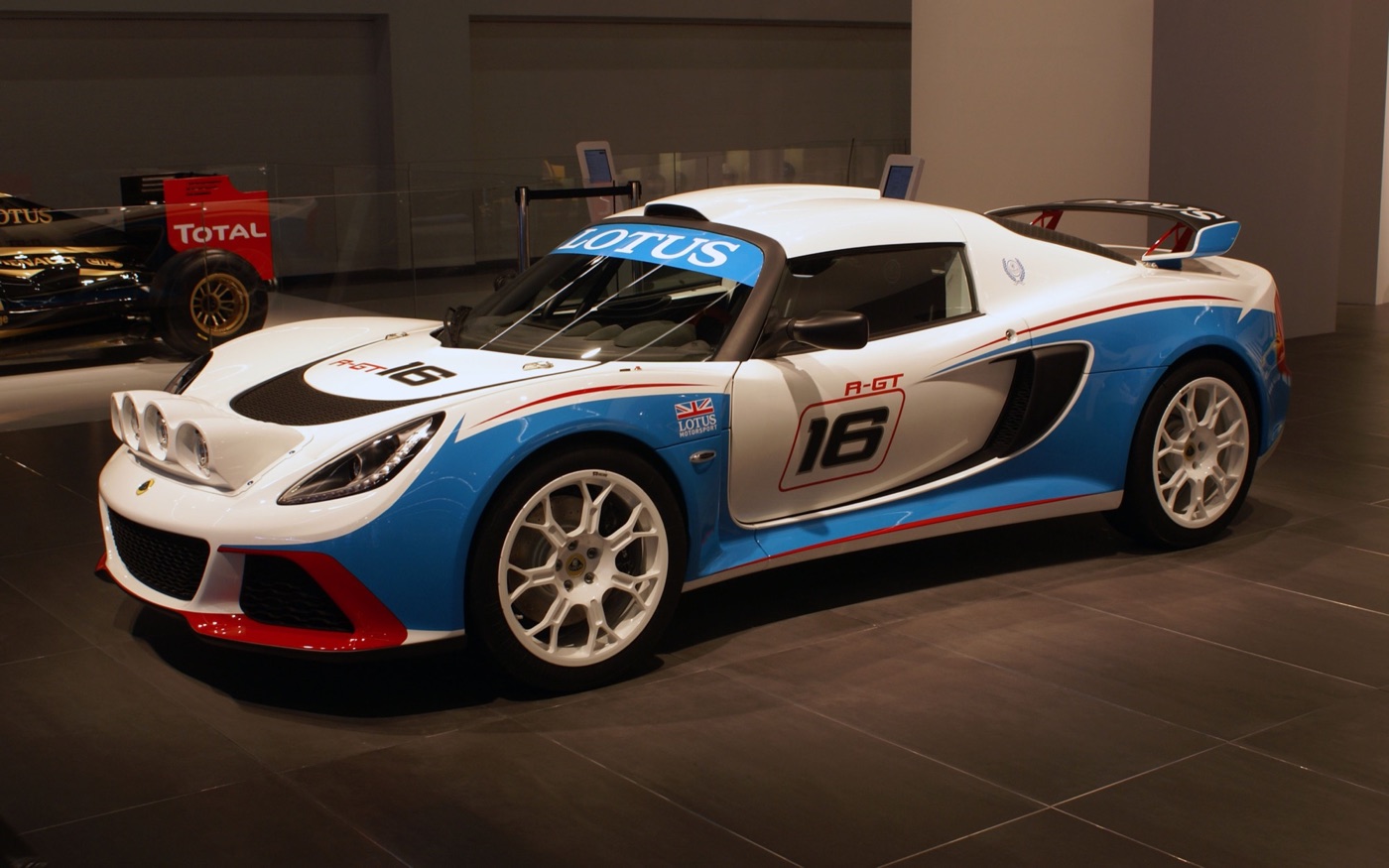
Lotus showed the Exige R-GT at Frankfurt in 2011 for the FIA's new GT class on asphalt rallies: a 34mm air restrictor held the V6 to about 300bhp and ballast brought it to the 1,200kg minimum, evo reported. A SkiddMark report of March 2012 said ten would be built that year, seven for the works team and European drivers. It was the first car homologated under the FIA's R-GT rules, and made its debut in July 2012 at Rally Madeira, round seven of the European Rally Championship, with Bernardo Sousa and co-driver Corrado Mancini, the Midlands Lotus Owners Club reported. Sousa went out on the third stage after electronic problems, the SELOC club site reported.
Endurance racing
The No. 54 Donut King Lotus Exige Cup R won Class C at the Bathurst 12 Hour in February 2014, MotorNews reported, in a race won overall by a Ferrari 458 GT3.
Lotus Exige prices and values today
Exige prices have hardly moved for years, and the Series 1 now sells for more than it cost new. evo's Series 3 guide says the early V6 Exige S, coupé or Roadster, has sold for £35,000 to £40,000 for almost ten years, and that a Sport 350 or Cup starts at £45,000 and runs past £60,000, as do the 380, 410, 420 and 430 models. PistonHeads in 2020 put a five-year-old Exige S with under 10,000 miles at about £45,000.
Series 1 and Series 2 values
Series 1 cars that once sold for under £20,000 had reached £43,000 to £45,000 by 2020, and in December 2024 PistonHeads found an 8,000-mile car that had spent 20 years in storage advertised at £75,000. evo's Series 2 guide puts a well-used standard Series 2 in good condition at about £30,000, with an Exige S about £4,000 more.
Lotus Exige interior, equipment and safety
The Exige's cabin is small and plain, with the aluminium tub on show, and it changed little from the Series 2 to the end of the Series 3; evo's guide notes its old Vauxhall switchgear. On the V6 cars the cloth seats were standard. The Premium Pack, a popular option according to PistonHeads, added leather sports seats and leather on the steering wheel, doors, sills and dash; the Premium Pack Sport offered SuedeTex trim, and the Convenience Pack a USB port, cruise control and a cup holder. Air conditioning was an option, the audio system had four speakers, and Cup cars were stripped further, with more of the aluminium structure exposed and, on early ones, no radio. The Final Editions added a TFT digital instrument display with upshift lights.
Safety equipment
The Series 1 had no ABS and no brake servo; the Toyota-engined cars have both, PistonHeads says. The Series 3 has driver and passenger airbags and ABS with stability control, Auto Express notes, and nothing beyond that; the Sport 410's airbag could even be deleted to save 2.5kg, evo reported. The steering column does not adjust and the seat has little travel.
Can you daily drive a Lotus Exige?
It can be done, but the cabin is hard to get into and the car is loud: Autocar measured 78dBA at 70mph in the Sport 390, 7dBA more than an Alpine A110. Anyone over 6ft should try one with a helmet on before buying a car for track use, Autocar said, and Auto Express gives the boot as 98 litres.
Buying a used Lotus Exige: reliability and known faults
The Toyota-engined cars have a good name for reliability and the Series 1's Rover engine has known faults, and on all three the chassis needs as much checking as the engine. The bonded aluminium tub's suspension mountings can be damaged in a crash, and evo's Series 2 guide says most specialists then recommend finding a replacement chassis from a salvage car.
Series 1 faults
The K-series is known for head gasket failure, though cars that have survived will usually have had the fixes, PistonHeads says; check for emulsion in the coolant. Radiator end caps, expansion tank caps, clutch slave cylinders and fuel pumps fail, and the steel rear subframe and uprights corrode where they meet aluminium. A new chassis cost over £10,000 plus about 120 hours of labour, and the Series 1 should be serviced every 6,000 miles or six months, with a cambelt every four years.
Series 2 faults
The Toyota engine is "pretty much bulletproof if serviced regularly and driven gently from cold", evo says, but the car is sensitive to its set-up: many cheaper cars need new suspension bushes and dampers, and Nitron coilovers cost about £1,800 a set.
Series 3 faults and costs
The V6 has a timing chain and no common faults, and the supercharger is trouble-free; the cooling fan bearings could fail, but most were replaced under warranty, PistonHeads and evo say. A clutch costs about £600 in parts and nearer £2,000 fitted, and an engine download shows how many launch-control starts a car has done. The brake pedal switch is a known weak point, an ABS unit costs over £1,000 plus fitting, dampers about £700 each, and the inside edges of the tyres wear first, so check the alignment. The P Zero Trofeo tyres fitted with the Race Pack are no longer road legal.
Upgrades and modified cars
Many Exiges have been modified, from Lotus Sport and Lotus Motorsport catalogue parts to tuners' kits, so evo's Series 2 guide advises checking exactly what a car has and where it came from. For the V6, PistonHeads listed in 2020 a Hangar111 induction kit and ECU reflash worth about 15hp for about £1,300 fitted (before VAT), a 37hp first stage with manifolds, sports catalyst and remap for under £3,000, and a Komo-Tec chargecooler kit giving 458hp for £8,500.
Lotus Exige running costs
Series 3 servicing is every 9,000 miles or yearly; PistonHeads put a minor service at about £500 and a major at £800 in 2020. The official combined fuel consumption is 28mpg (27.7mpg for the Sport 390), and the tank holds 40 litres by PistonHeads' figure or 43 by Auto Express's, so range is under 250 miles and a track day can empty it in 50.
Lotus Exige rivals: Porsche Cayman, Alpine A110 and BMW M2
Autocar's 2021 test placed the Exige between Porsche's 718 Cayman GT4, which costs more, and the Alpine A110, with the BMW M2 CS as another choice; all three are easier to live with than the Exige. evo's guide says the V6 Exige matched Porsche's Cayman and later even the 911 "on power and performance, if not refinement". Auto Express compared the Series 3 with the Porsche 718 Cayman and the Audi TT RS, and evo set the £79,900 Sport 410 against a Porsche 911 or Cayman GTS. Inside Lotus's own range the Lotus Elise was the lighter, cheaper roadster with a four-cylinder engine and the Evora was the bigger 2+2.
Lotus Exige reviews: what the press said
evo named the Series 3 Exige S joint winner of its 2012 Car of the Year with the Pagani Huayra. Richard Meaden, who had owned a Series 2, called it in evo's buying guide "a little shrunk-down, condensed, distilled supercar". Of the Sport 410, evo editor Stuart Gallagher wrote that it "punches so far above its weight you can't believe Lotus charges so little for it", and he listed its road noise and the wind noise at the top of the B-pillar against it.
Autocar ended its 2021 road test calling the Sport 390 Final Edition a "fitting finale for the Exige that beguiles on road and thrills on track"; its complaint was the gearshift when driven hard and the ergonomics, which it said "make a Pagani look like a Previa". Top Gear called the Exige "a car that's as happy on the track as it is on the road", while Auto Express listed its price, plain cabin, small boot and awkward entry against it.
Questions
What is the difference between the Lotus Exige and the Elise?
The Exige has a fixed roof, more aerodynamic parts and harder suspension. The Series 1 and Series 2 Exiges shared the Elise's four-cylinder engines; from 2012 the Exige had a supercharged 3.5-litre V6 while the Elise kept a four-cylinder.
What replaced the Lotus Exige?
The Lotus Emira, built at Hethel in a new factory, replaced the Exige, Elise and Evora. Lotus said in December 2021 that full Emira production would begin the following spring.
Which Lotus Exige is the best?
evo called the 2018 Sport 410 the pick of the range, mixing the Cup 430's performance with the Sport 350's road manners. evo named the first V6 Exige S joint Car of the Year in 2012.
Is a Lotus Exige a good investment?
Values have held well: evo says early V6 Exige S models have sold for £35,000 to £40,000 for almost ten years, and Series 1 cars have risen from under £20,000 to £45,000 and more.
Was the Lotus Exige sold in the US?
The Series 2 was sold in North America until August 2011. Of the V6 cars, only the track-focused V6 Cup and Cup R went to the US, according to PistonHeads.
Sources
- Lotus Cars, "Production ends for Lotus Elise, Exige and Evora", 22 December 2021 (archived): 10,497 Exiges built, the last car, Kershaw's British GT3 title.
- Lotus Cars, "Elise, Exige and Evora embark on final year of production", 25 January 2021 (archived): end of production and the new factory.
- Lotus Cars, "Saving the best 'til last: the Lotus Elise and Exige Final Edition cars", 8 February 2021 (archived): Sport 390, Sport 420 and Cup 430 Final Edition specifications and UK prices.
- Lotus Cars, "Twenty years young", 23 June 2020 (archived): Sport 410 20th Anniversary, price and colours, Kershaw's comment.
- Lotus Cars, Exige heritage page, lotuscars.com (read October 2026): the Autobytel Lotus Championship, the 2000 launch, Russell Carr, the name.
- Department for Transport, vehicle licensing statistics table VEH0120, 2026 Q2 edition: licensed and SORN Lotus Exiges, 2021 and 2026.
- PistonHeads, "Lotus Exige S1: PH used buying guide", 8 December 2024: Series 1 engine, numbers, faults and values.
- PistonHeads, "The very first Lotus Exige spotted", 29 April 2020: chassis 0001 and the 2000 price.
- PistonHeads, "Lotus Exige (S3): PH used buying guide", 26 October 2020: Series 3 engineering, faults, costs and values.
- evo, "Lotus Exige S2 buying guide", March 2013: Series 2 launch, 240R, Exige S and editions.
- evo, "Lotus Exige (S2, 2004–2011)": Richard Meaden's long-term car, faults and values.
- evo, Lotus Exige S Performance Pack test, January 2008: price, Performance Pack and traction control.
- evo, Lotus Exige Cup 260 test, March 2009: weight, price and Lotus Cup Europe.
- evo, Frankfurt motor show report, 12 September 2011: Exige S V6 and Exige R-GT.
- evo, "Lotus Exige S Roadster specs and price", May 2013: Roadster price, weight and top speed.
- evo, "Lotus announces Exige S Automatic", January 2015: automatic gearbox.
- evo, "Lotus Exige LF1 special edition launched", June 2014: LF1 details.
- evo, "Lotus Exige Sport 350 Roadster", March 2016: Sport 350 Roadster.
- evo, "Lotus Exige 350 Special Edition revealed", October 2016: 350 Special Edition.
- evo, "Lotus Exige Cup 380", April 2017: Cup 380 run, weight, downforce and price.
- evo, "Limited-edition Lotus Exige Cup 430 Type 25 revealed", April 2018: Type 25 run and price.
- evo, Lotus Exige Sport 410 first drive, 2018: Sport 410 specification and verdict.
- evo, "Lotus Exige V6 (S3, 2011–2021) review and buying guide": engines, chassis, Car of the Year 2012, values and faults.
- CAR, "New Exige Sport 350", 10 December 2015: Sport 350 weight, price and Hethel lap.
- Autocar, "Lotus Exige Cup 430 is most extreme Exige yet", 9 November 2017: Cup 430 price, power and Hethel lap.
- Autocar, Lotus Exige Sport 390 Final Edition road test, 2021 (autocar.co.uk/car-review/lotus/exige): Series 1 weight, measured performance, noise, rivals and verdict.
- The Week, "Lotus Exige Sport 380: all the details", 23 November 2016: Sport 380 performance.
- Autoblog, "Lotus ending production of NA-spec Elise/Exige in August", 7 June 2011: end of the four-cylinder Exige in North America.
- Autoblog, "Lotus announces race-ready Exige V6 Cup and Cup R", 11 January 2013: Cup R power and weight.
- Midlands Lotus Owners Club, "Lotus Exige R-GT gains FIA homologation", July 2012: homologation and the Madeira crew.
- SELOC, "Sousa and Exige R-GT crash out of Madeira debut", July 2012: the R-GT's first rally.
- MotorNews, "Ferrari wins epic Bathurst 12 Hour thriller", February 2014: Exige Cup R class win.
- SkiddMark reports, 2009 to 2013: Exige Scura (October 2009), Exige S Type 72 (December 2009), Frankfurt 2011, Exige R-GT (March 2012), Exige S Roadster (7 March 2012 and 30 April 2013), first production Exige S (1 August 2012) and Exige V6 Cup (17 August 2012).
- Top Gear, Lotus Exige review (topgear.com/car-reviews/lotus/exige) and Auto Express, Lotus Exige review (autoexpress.co.uk/lotus/exige), read October 2026: verdicts, rivals, boot and tank figures.