Mazda RX-7: history, specs, values and the wait for a successor
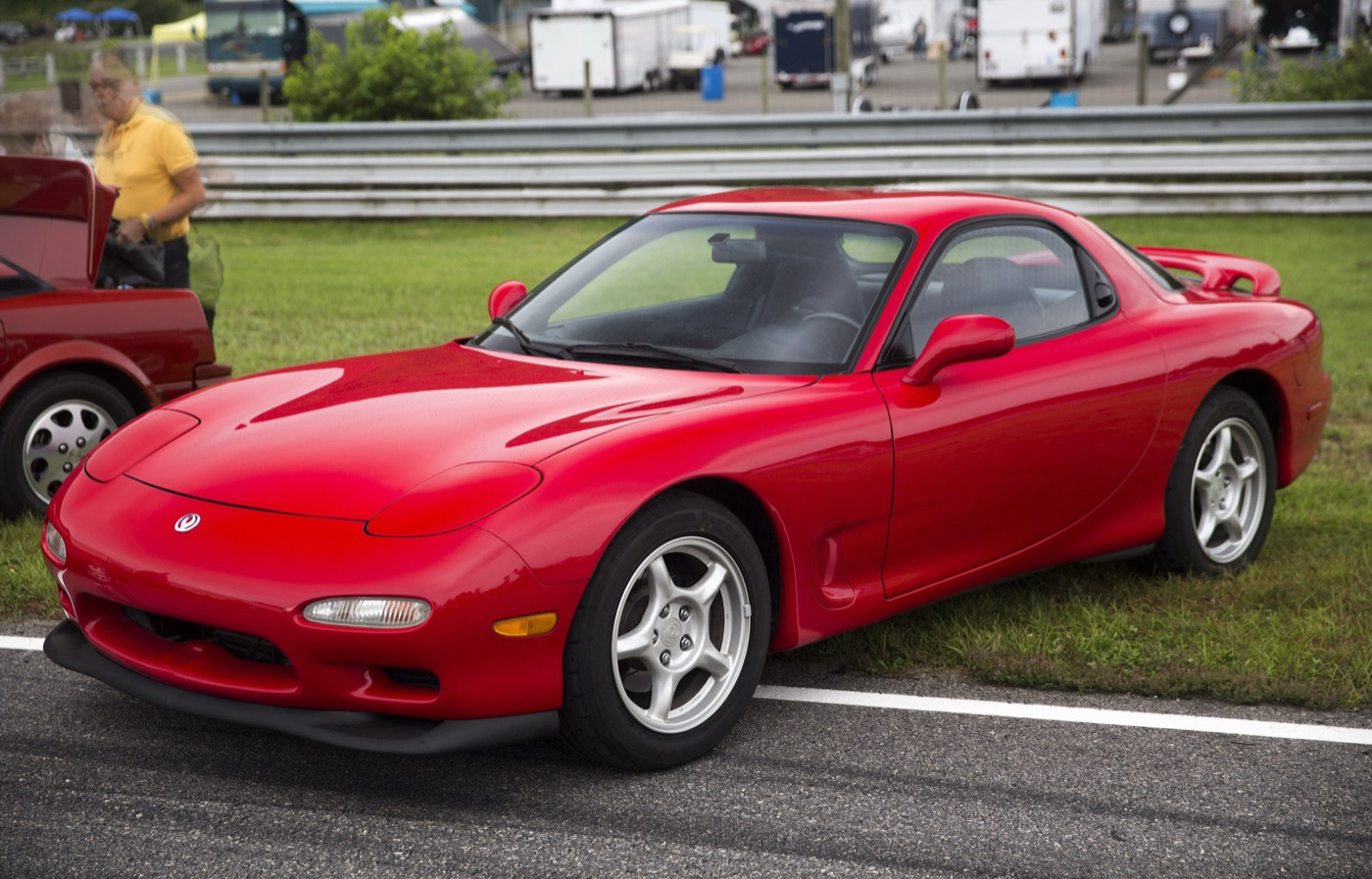
The Mazda RX-7 is the rotary-engined sports car Mazda built in Hiroshima from 1978 to 2002, in three generations known by their chassis codes: the first generation (SA22C, later FB), the FC and the FD. Mazda made 811,634 RX-7s, far more than any other rotary-engined model, and the last of them, the twin-turbo FD, had 237bhp from 1.3 litres in British form and 280PS in its final Japanese versions.
People look the RX-7 up for its engine, for what one costs now (about £9,000 to £15,000 for a good first-generation car, more than £20,000 for an original FD), for the apex seals that decide whether a cheap one is a bargain or a rebuild, and for news of a successor. Mazda ended production of its replacement, the Mazda RX-8, in 2012, and has shown three rotary-engined concept cars since without promising a production sports car.
Mazda RX-7 history and development
The RX-7 was Mazda's answer to the fuel crisis that nearly killed its rotary engine: a small, light coupé built around the engine's strengths. Mazda had signed its technical agreement with NSU and Felix Wankel in July 1961 and sold its first rotary car, the Cosmo Sport, in May 1967, according to Mazda's company history.
Why Mazda kept the rotary engine
Mazda had fitted rotary engines to most of its models until the 1973–74 oil crisis, according to Mazda UK's 2020 history of the car. After it, American buyers turned against thirsty rotary Mazdas, and the engine "all but finished" the company, Motor Sport wrote in its September 1979 road test. Kenichi Yamamoto, Mazda's head of research and development, kept working on it and claimed a 40 per cent improvement in fuel economy. His team gave the 12A engine better apex seals and better lubrication, and designed the RX-7 around it, the same history says.
First generation (SA22C and FB), 1978 to 1985
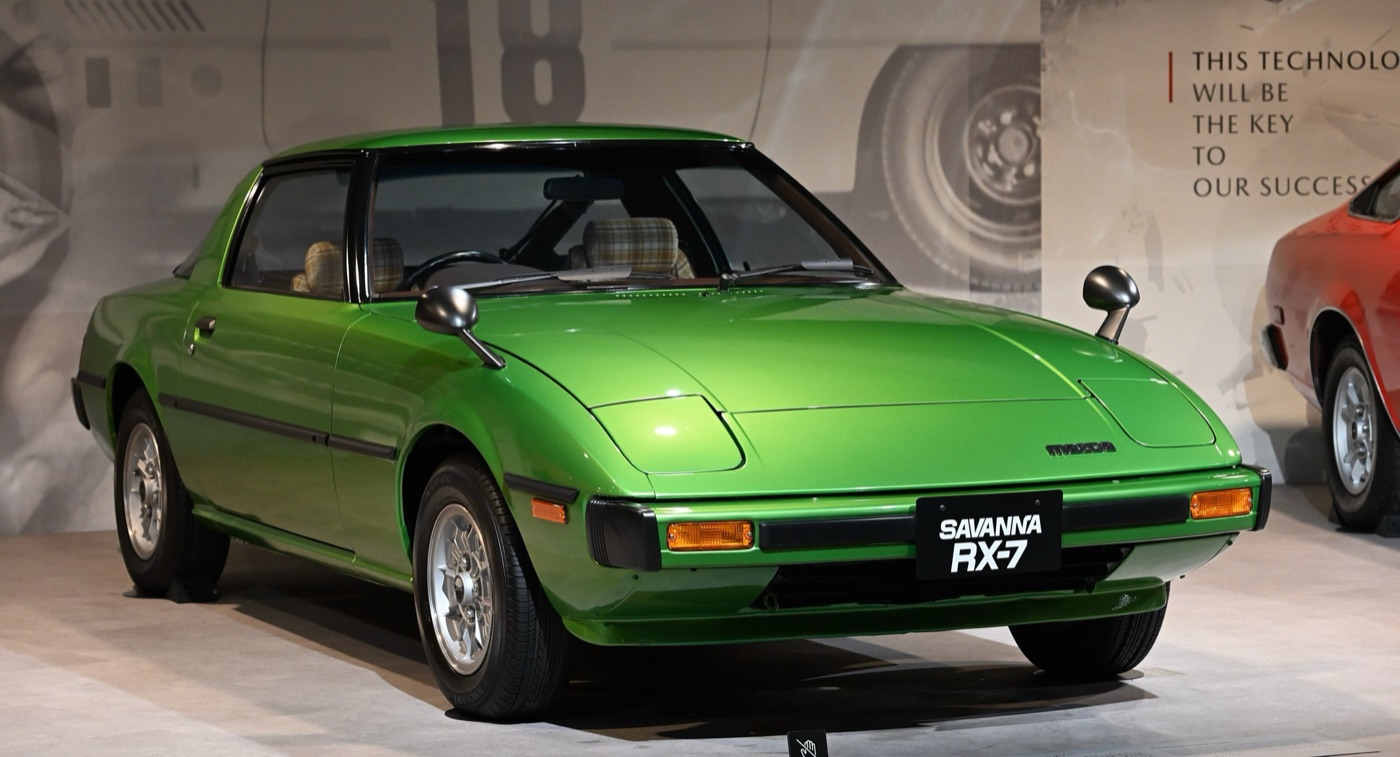
Mazda launched the Savanna RX-7 in Japan in March 1978 with a 130hp 12A twin-rotor engine mounted behind the front axle in what Mazda calls a front-midship layout, pop-up headlights (it was the only Japanese car to have them at the time) and four seats, at prices from 1,230,000 yen. The car sold in America from May 1978 and took "the North American sports car market by storm": by June and July 1979 it was outselling the Datsun 280ZX and the Porsche 924 at 5,000 a month, and it went on sale in Britain on 1 September 1979 at £8,549, Motor Sport reported. Autocar's road test of November 1979 called the car "the Wankel's lonely champion" and recorded more than 90,000 sold in the 17 months before the British launch and an American price of $7,195.
The chassis was simple. Motor Sport's test car had MacPherson strut front suspension, a live rear axle on four trailing links and a Watt linkage, recirculating-ball steering, ventilated disc brakes at the front and drums at the back. Hagerty's 2023 buying guide says UK cars came with disc brakes all round and a five-speed gearbox, where some other markets had rear drums and four gears. In 1983 Japanese buyers got a turbocharged 12A with 165PS, Mazda's history records, and North American cars later had a fuel-injected 13B. By December 1985 Mazda had built 500,000 RX-7s.
Second generation (FC), 1985 to 1992
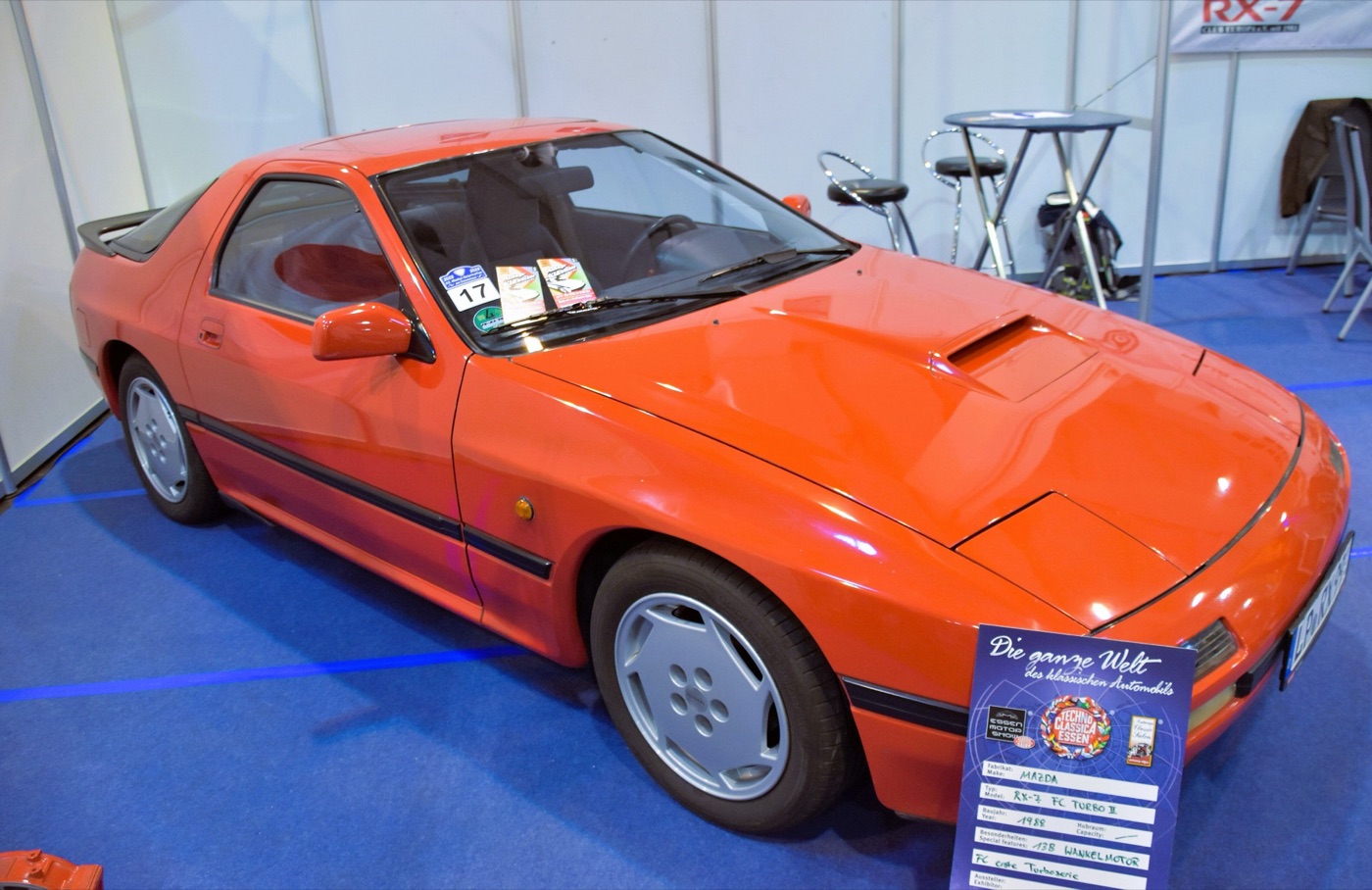
The FC arrived in October 1985, longer and more upmarket than the first car, and aimed at Porsche. Mazda's history of the second and third generations says the team wanted "a sports car for a liberated adult", with a 13B engine, an air-cooled twin-scroll turbocharger and an independent rear suspension whose design passed West German patent examination; Mazda UK names it the Dynamic Tracking Suspension System. In Japan the turbocharged FC had 185hp. European cars started with a 150PS engine without a turbo, and 180PS and then 200PS turbo versions followed, Mazda UK says; the fastest reached 240km/h. Mazda added the Savanna RX-7 Cabriolet in August 1987.
Third generation (FD), 1991 to 2002
The FD went on sale in Japan in December 1991 as the ɛ̃fini RX-7, named after one of Mazda's five Japanese sales channels. Mazda set out to make it lighter: under a programme called Plan Zero, engineers posted their weight-saving ideas on a notice board and took more than 100kg out of the body, and the 255PS car achieved a weight-to-power ratio of 4.9kg per PS. Its double wishbone suspension is made entirely of aluminium, and a Power-Plant Frame ties the engine and transmission to the limited-slip differential, Top Speed explains. It won the first RJC New Car of the Year award in 1991. Motor Sport's 1993 test said 120 people worked on the car and that its styling owed much to Mazda's studio in California; Motor Sport later named Yoichi Sato and Wu-huang Chin as its designers.
Britain and North America lost the FD in the mid-1990s, but Japanese production went on. The car was renamed Mazda RX-7 in October 1997, gained a 280PS engine in December 1998, and ended with the Spirit R in August 2002.
How the RX-7's rotary engine works
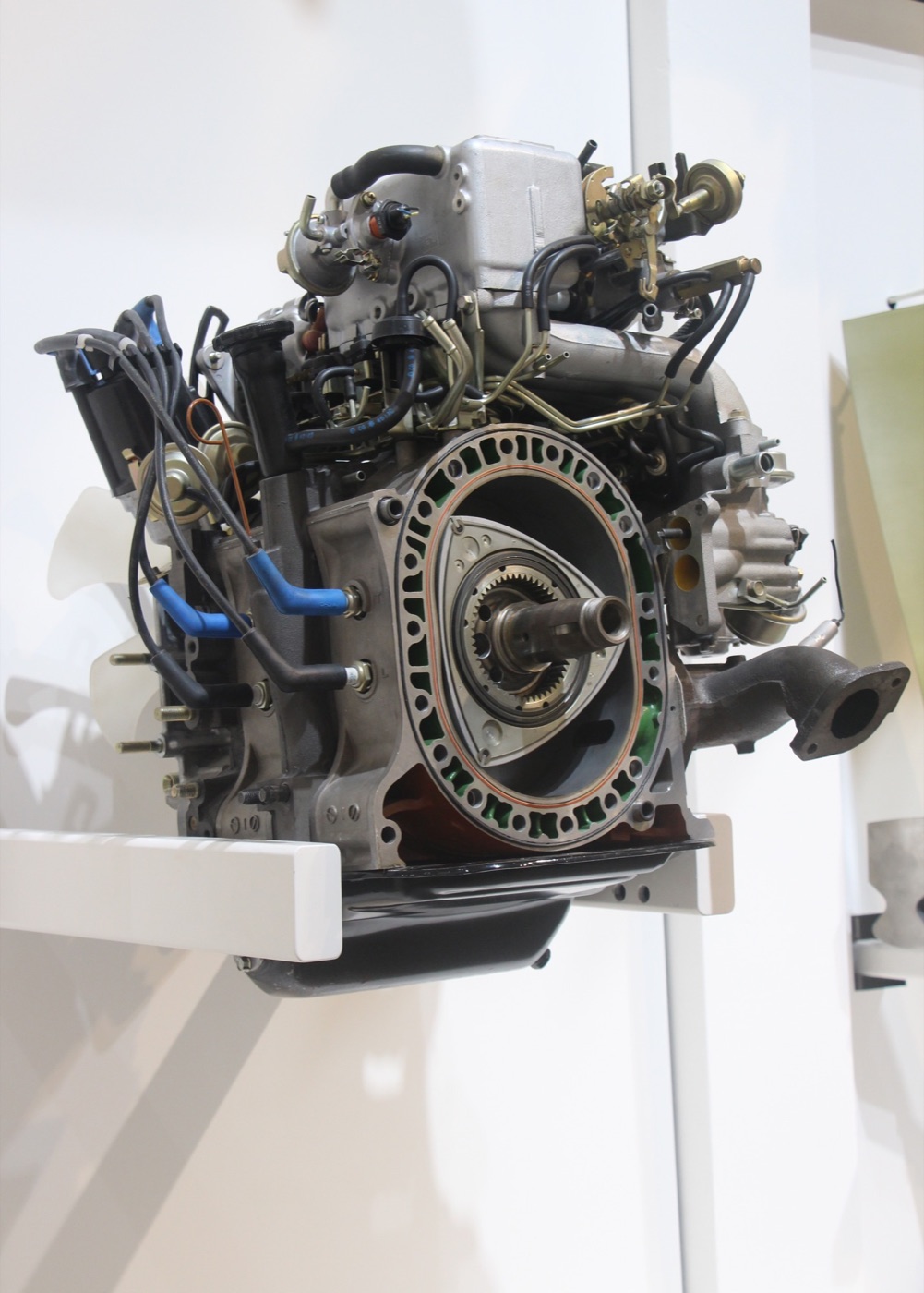
A Wankel rotary engine has three-sided rotors turning inside their housings where a conventional engine has pistons, and with no camshaft it has "very few moving parts", Motor Sport noted in 1979. Each tip of a rotor carries an apex seal, which does the job a piston ring does in a conventional engine, Hagerty's guide explains. Oil is metered into the combustion chambers to lubricate the seals, so every rotary burns oil by design: Motor Sport's 1979 test car used about three-quarters of a litre every 600 miles.
Mazda set the engine "front mid-engine", behind the line of the front wheels, for a 51/49 weight split on the first car. The rotary engine is small and light, and it revs smoothly: Motor Sport called the 12A "turbine smooth all the way from the 1,000 r.p.m. tickover speed to the 7,000 r.p.m. red-line", with a buzzer to warn the driver at 6,800rpm and only a small step in the throttle's progression as the carburettor's secondary chokes opened.
12A and 13B engines
The first RX-7's 12A has two rotor chambers of 573cc each, which FISA, the sport's governing body, rated at 2,292cc by its multiplication formula; in British form it gave 105bhp DIN at 6,000rpm and, by Autocar's figures, 106lb ft of torque at 4,000rpm. The 13B has two chambers of 654cc (1,308cc), and Mazda used it in every FC and FD.
Sequential twin turbos on the FD
The FD's 13B-REW has two Hitachi HT12 turbochargers of the same size. One does the work at low revs; the second is fed a growing share of the exhaust and adds full boost once the first reaches 140,000rpm, Motor Sport's March 1993 road test explained. Counted on its real capacity, the British car's 237bhp worked out at 181.2bhp per litre, and Mazda had raised the compression and added cooling: more coolant to the hottest parts of the housings and twin oil coolers. Motor Sport later called sequential turbocharging Mazda's answer to turbo lag, "the Wankel's weakness". Motor Sport's test cars stuttered as the second turbo came in, and a 2017 PistonHeads buying guide says a healthy car should give "a very slight step in power" at 4,500rpm.
Mazda RX-7 specs and performance
Every RX-7 is a front-engined, rear-wheel-drive coupé with a twin-rotor engine; what changed between generations was power output, weight and price. The table compares the British or European cars as the magazines tested them.
| Generation | Engine | Power | 0–60mph | Top speed | Fuel used on test |
|---|---|---|---|---|---|
| First (SA22C/FB), 1979 test | 12A, 2 × 573cc | 105bhp | about 9 sec (Motor Sport); 10.1 sec (Autocar) | 121mph (Motor Sport); 113mph (Autocar) | 18.6mpg (Motor Sport); 18.2mpg (Autocar) |
| Second (FC), European turbo | 13B turbo, 2 × 654cc | 180PS, later 200PS | 0–100km/h about 6 sec | 240km/h | not published |
| Third (FD), 1993 test | 13B-REW sequential twin turbo, 1,308cc | 237bhp | just over 6 sec | 155mph | 16.66mpg |
Sources: Motor Sport, September 1979 and March 1993; Autocar, November 1979; Mazda UK (FC).
How fast is a Mazda RX-7?
A UK-specification FD does 155mph, the speed Motor Sport reached "stretching stably" in 1993, and gets to 60mph in a little over six seconds, with a 7,000rpm redline and what the magazine called "extra terrestrial smoothness". Japanese FDs had more power: 255PS at launch and 280PS from December 1998. The first RX-7 was quicker than its 105bhp suggests: Motor Sport found it "substantially quicker" than a Triumph TR7 of the same power, and wrote that "Mazda horses must be pretty strong ones".
Weight and balance
Mazda aimed for a kerb weight of 1,250kg for the FD, Motor Sport reported, and the European version sold in Britain, with air conditioning, leather and an airbag, weighed more than the lighter versions sold in Japan and America. Mazda gives the FD a 50:50 weight distribution; Motor Sport quoted 48 per cent front and 52 per cent rear for the car it tested. Evo's 2026 review of the first generation gives that car 1,099kg, against 1,272kg for a Datsun 280ZX. With its wide track and low centre of gravity, the first RX-7 "looks as though it ought to handle well and doesn't disappoint", Motor Sport found in 1979, and it responded well to quick changes of direction between opposing corners.
RX-7 special editions and variants
The last three limited edition models, the Type RZ, Type R Bathurst and Spirit R, were sold only in Japan between October 2000 and March 2002.
RX-7 Cabriolet
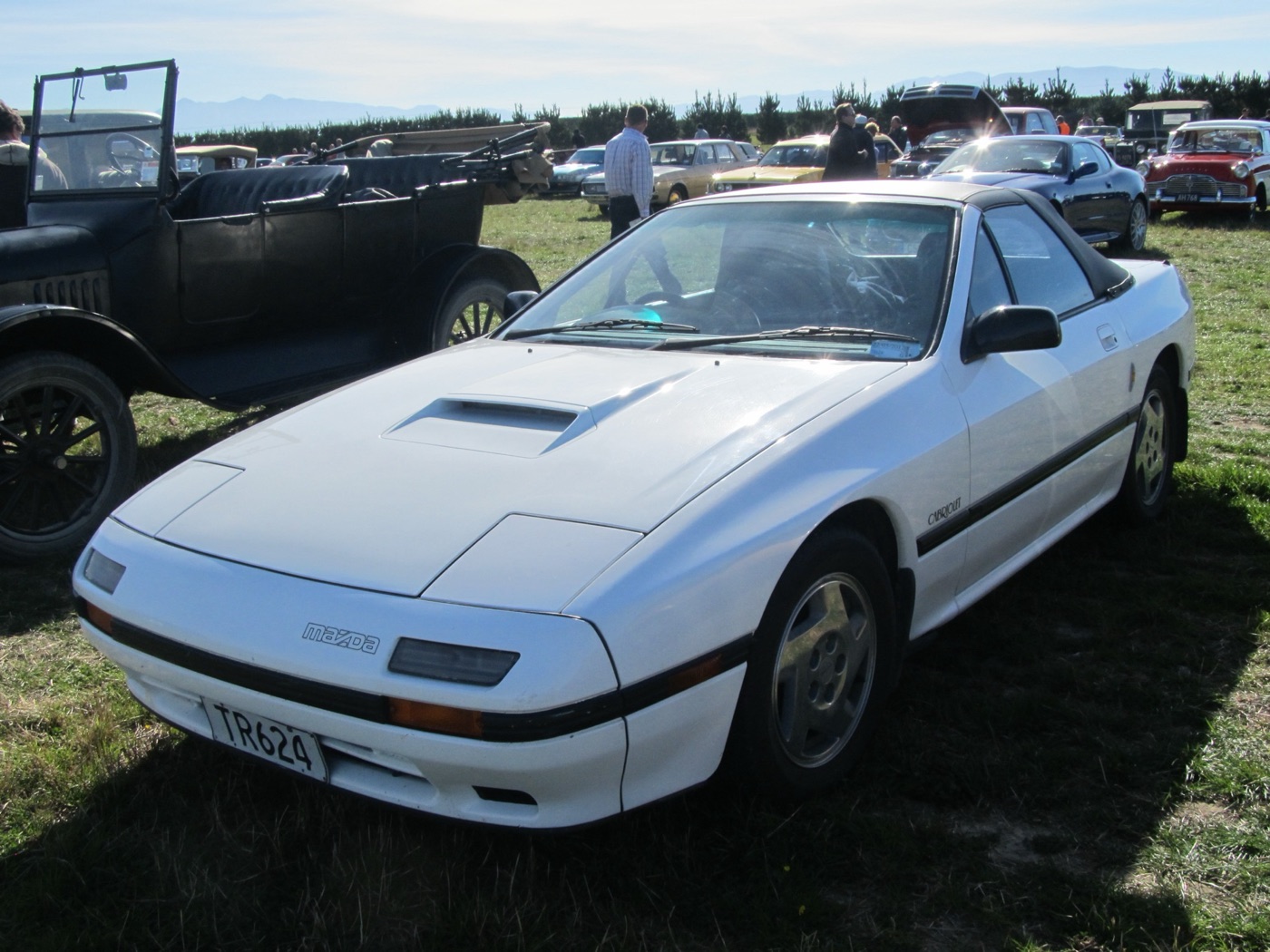
The Cabriolet of August 1987 was a two-seater with a "three way top" that opened and closed under power, Mazda's history says. Britain had it too: Motor Sport ran one as a staff car, and in 1993 its tester Steven Tee wrote that the new FD was not worth "another £9000 over what we paid for the convertible".
Elford turbo cars in Britain
UK cars gained a 115bhp 12A in 1981, Hagerty says, and Vic Elford's turbo conversion raised it to 165bhp; the cars have front and rear spoilers and side skirts. Hagerty reckons about 500 were converted and about 20 survive.
Type RZ, Type R Bathurst and Spirit R
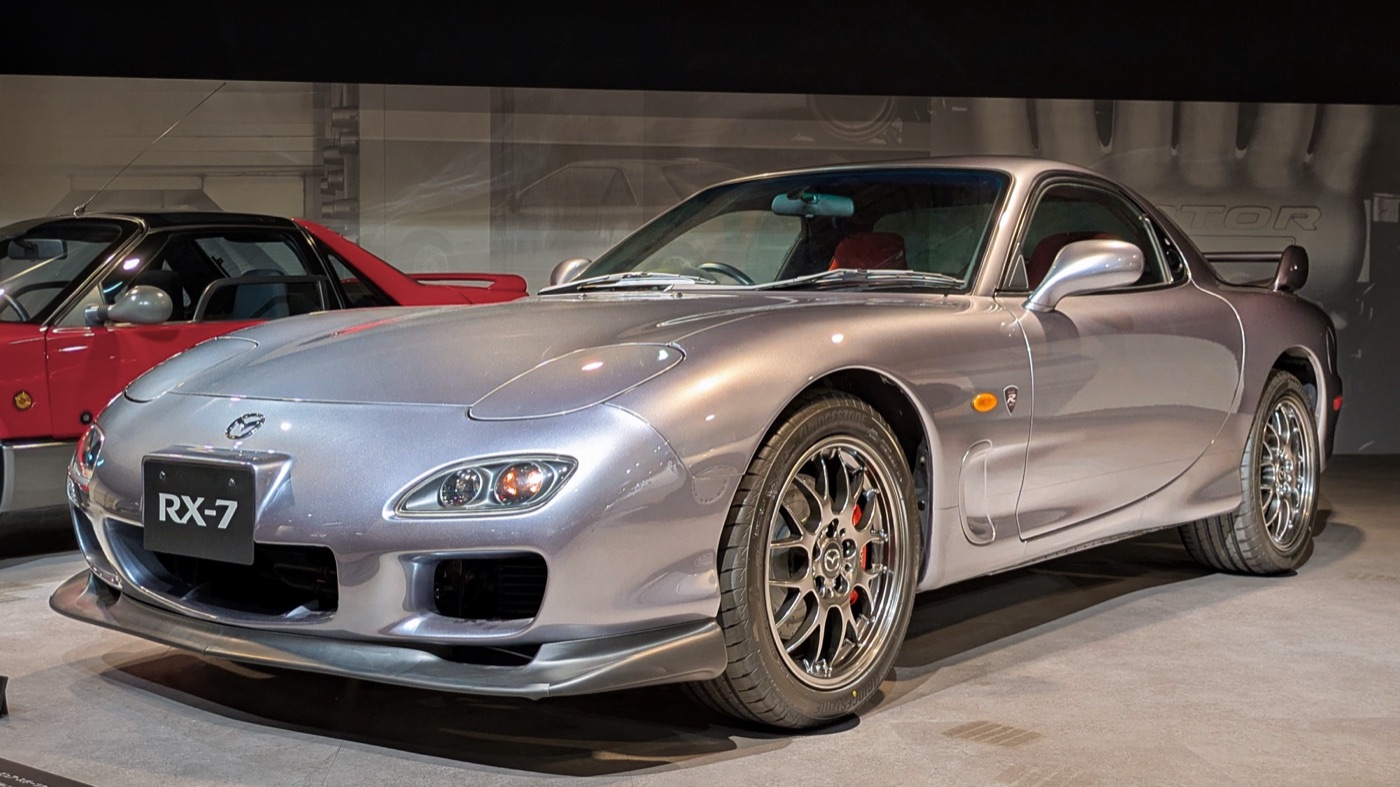
Mazda's October 2000 release announced the Type RZ: 175 cars in snow white pearl mica with Recaro seats, Bilstein dampers and BBS wheels, about 10kg lighter than the Type RS. The Type R Bathurst followed in December 2001. The Spirit R, announced on 25 March 2002, was the last: 1,500 units for the Japanese market only, in three versions. All three had BBS wheels, red brake calipers and a Nardi leather steering wheel. The Type A was a two-seater with a five-speed manual transmission, red Recaro seats and drilled ventilated disc brakes; the Type B had four seats and the manual box; the Type C had four seats and an automatic with 255PS. The Type A and Type B cost 3,998,000 yen before tax.
Australia's RX-7 SP
Mazda built the RX-7 SP for Australia in 1995 to qualify the FD for racing there, with a new intercooler, exhaust and engine computer. Top Speed counts 35.
Mazda RX-7 in motorsport
The RX-7's success in competition came on both sides of the Atlantic: it won the British Saloon Car Championship twice, the Spa 24 Hours once and more IMSA races in America than any other model, according to Mazda UK's 40th-anniversary release of June 2018.
British Saloon Car Championship, 1980 and 1981
The RX-7 was raced as a saloon in Britain because its interior met the FIA's saloon car dimensions, "much to the chagrin" of rival teams, Motor Sport wrote in 1979, when Tom Walkinshaw's Pentax-sponsored car led the series. Win Percy won the title in an RX-7 in 1980 and again in 1981. "I won the title in 1980 and team owner Tom Walkinshaw said: 'Let's go for it and try to win races outright next year.' We duly did, beating the Rovers and Capris," Percy told Mazda UK in 2018.
Spa 24 Hours, 1981
In July 1981 the RX-7 of Tom Walkinshaw and Pierre Dieudonné, car No. 40, won the Spa 24 Hours, the first overall win there for a Japanese car, Mazda's 1980s history records. "The RX-7 didn't have the image of something like a Porsche. But winning at Spa gave it the prestige," Dieudonné said.
IMSA in America
The RX-7 won the GTU class of the Daytona 24 Hours in 1979 and took its 100th IMSA win in September 1990. Mazda's history of the third generation calls the 100 victories "unprecedented".
Bathurst 12 Hour production race
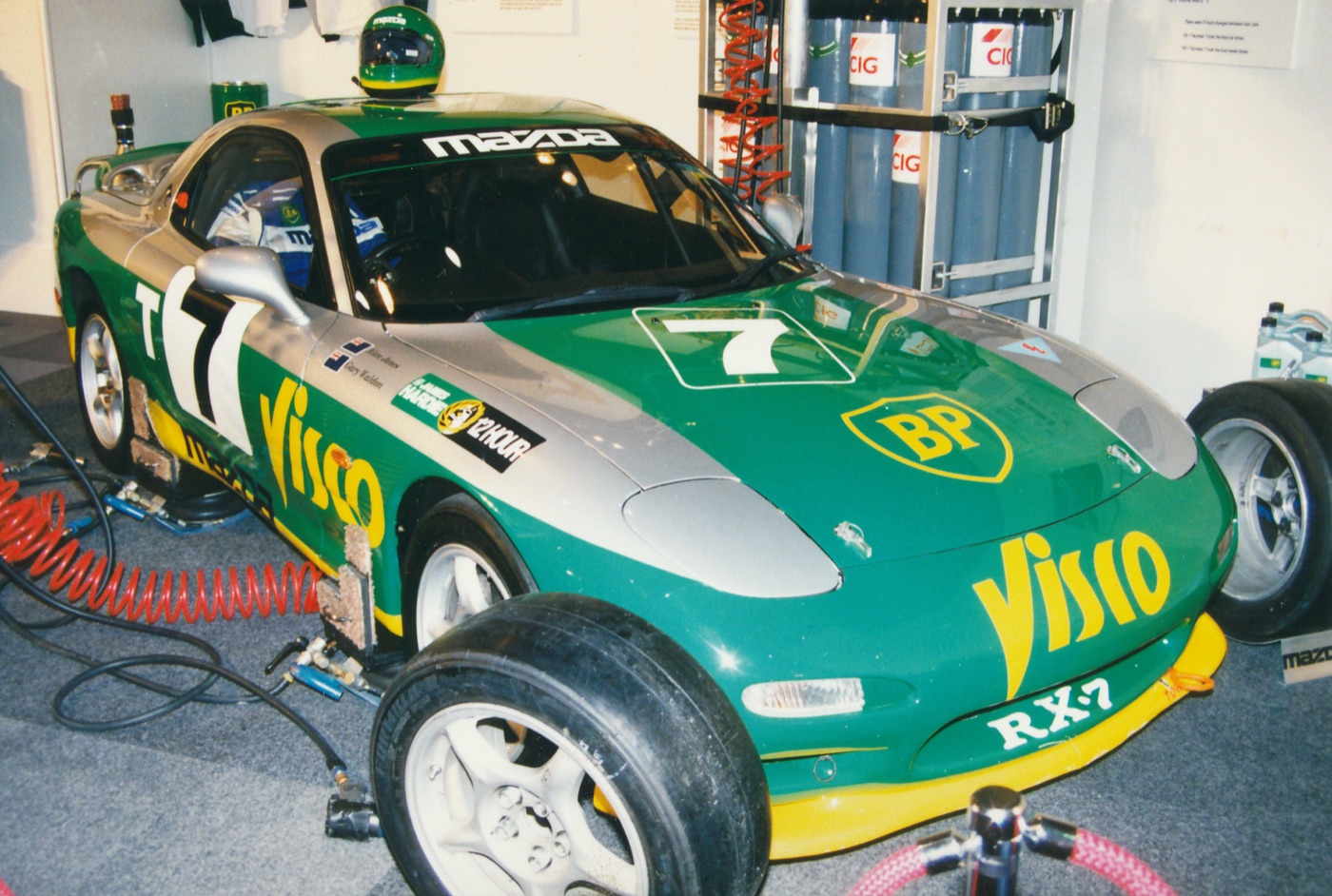
The RX-7 won the James Hardie 12 Hour production race at Bathurst, Australia, three years running, according to Mazda's 1990s history: in 1992; in 1993, when Alan Jones and Garry Walden won in car No. 7 ahead of Charlie O'Brien and Gregg Hansford; and in 1994, when Hansford, Neil Crompton and Allan Grice won for BP Mazda Motorsport.
Group B rallying and Le Mans
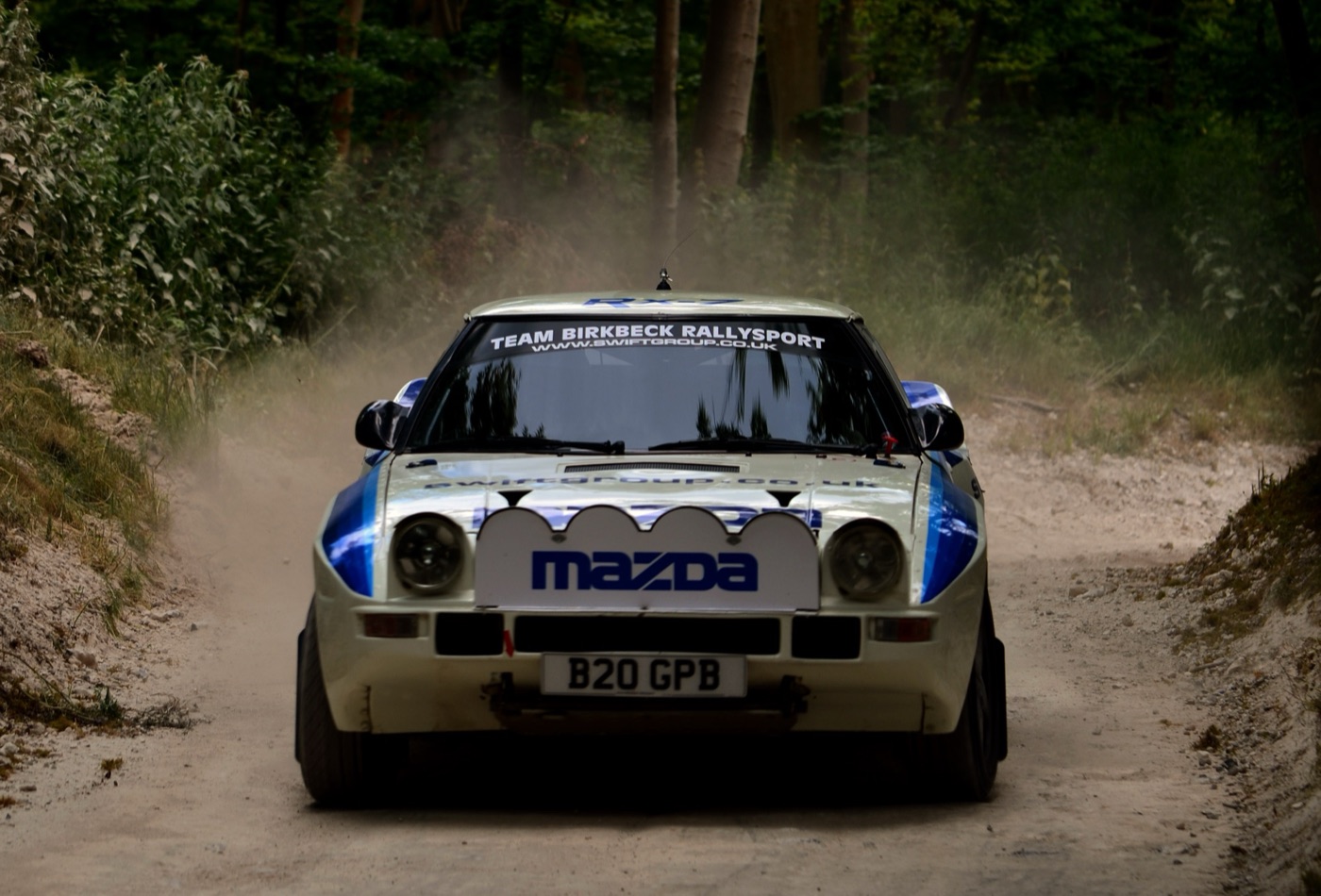
The RX-7 also took part in Group B rallying and raced at Le Mans, Mazda UK says. Mazda's overall win at Le Mans came in 1991 with the four-rotor 787B, a prototype, on its 13th attempt; Mazda says its engineers used that experience to give the FD's engine 50PS more than its predecessor's.
How many Mazda RX-7s were made?
Mazda built 811,634 RX-7s in a production run from 1978 to 2002, more than half of them first-generation cars.
| Generation | Years | Built | Source |
|---|---|---|---|
| First (SA22C/FB) | 1978–1985 | more than 470,000 (Mazda); 471,018 by subtraction (Mazda's total less Top Speed's FC and FD) | Mazda UK; Top Speed |
| Second (FC) | 1985–1992 | 272,027 | Top Speed |
| Third (FD) | 1991–2002 | 68,589 | Top Speed |
| All three | 1978–2002 | 811,634 | Mazda UK |
Mazda gives "more than 470,000" for the first generation. Its total of 811,634, less Top Speed's 272,027 FCs and 68,589 FDs, leaves 471,018. Hagerty's 2023 guide puts first-generation sales at 570,500, more than Mazda's own figure. Mazda's history records the 500,000th RX-7 in December 1985 and the millionth Savanna (the RX-3 and RX-7 together) in July 1990.
The RX-7 in Britain: prices and sales when new
The RX-7 cost much more in the UK than in America, and it sold in small numbers there. The first car's £8,549 in 1979 compared with $7,195 in the United States, which Autocar worked out at £3,564.
The FD was priced against Porsche. At its launch in June 1992 Mazda predicted £34,000, and Motor Sport's test car cost £32,536 in 1993, against £33,547 for a Porsche 968 and £28,750 for the 968 Club Sport. A 2017 PistonHeads buying guide says Mazda cut the price to £26,000 and dropped the car from its British range by 1996, and that only 164 were reportedly sold through dealers. Mazda UK gives 1996 as the end of official British sales. PistonHeads adds that there are "many more imports" from Japan, and Motor Sport counted about 500 RX-7s on British roads in 2020.
What is a Mazda RX-7 worth today?
A good first-generation RX-7 costs about £9,000 to £15,000 in Britain, and an original FD £20,000 or more; the rarest Japanese editions cost far more.
First-generation values
The first generation is now the hardest RX-7 to find in good condition in the UK, Hagerty says. Its 2023 guide prices a running UK car that needs work from about £7,000, a car you could use without worrying at £9,000 to £12,000, a very clean car at £15,000 and the best at about £22,000; tidy turbocharged imports from Japan sit at the top. Evo's 2026 review gives similar figures: from £8,000 for cars that need tidying, £10,000 for nicer ones, £16,000 for decent cars and "well north of £20,000" for concours cars with tiny mileages.
FD values
In 2017 PistonHeads put an immaculate British FD at £20,000 or more and a good import at half that, and said buyers had come to prefer original cars to modified ones. A 1996 FD imported in 2004, with an unmodified interior and 45,861 miles, sold at Iconic Auctioneers on 9 November 2025 for £23,625 against an estimate of £20,000 to £25,000, according to The Classic Valuer. Across all the RX-7 auction sales it has recorded since 2020, its median is £21,614 and its highest £122,753. Motor Sport wrote in 2021 that a Type R Bathurst or another rare special can cost "real Porsche money".
Is the Mazda RX-7 reliable? Ownership and faults
An RX-7 can be reliable if it gets the maintenance a rotary needs: PistonHeads says a 13B-REW looked after by an attentive owner will "easily cover more than 100,000 miles", and that its reputation comes from cars neglected when they were cheap.
Apex seals and compression tests
Worn apex seals mean low compression, so the guides all ask for a compression test. Hagerty wants at least 75psi on a first-generation car and puts a full engine rebuild at a specialist at about £3,500; PistonHeads wants 7 to 8 bar on an FD and quotes about £3,000. Steam from the exhaust on start-up points to failing coolant seals, PistonHeads adds. Evo's first-generation review recommends a burst of revs before switching off, to clear unburnt fuel from the chambers.
Oil, fuel and starting
Hagerty, evo and PistonHeads all advise an oil change every 3,000 miles. PistonHeads calls a quarter of a litre of oil every 1,000 miles normal for an FD, advises checking the level at every fill-up, and expects about 20mpg on a motorway and as little as 8mpg in town or driven hard. An FD moved a few yards and switched off can flood; the cure is to take out and dry the spark plugs, not to keep cranking.
Rust, turbos and gearboxes
First-generation cars rust in the wheelarches, inner wings, sills, floors, door bottoms, windscreen surround, boot floor and suspension mounts, and new panels are scarce, Hagerty says. On the FD, heat under the bonnet kills the solenoids that switch the turbos and the rubber pipes around them, and PistonHeads says a poor change from fourth to fifth gear is common.
RX-7 rivals and reception
Mazda aimed each RX-7 at Porsche: Autocar saw the first car as a rival to the 924, Mazda wanted the FC "to surpass Porsche", and Motor Sport tested the FD against the 968.
Rivals when new
Autocar's 1979 test named the Porsche 924, BMW 323i, Lotus Eclat 523, Ford Capri 3000S and Triumph TR7 as the first car's rivals. Motor Sport found its performance close to that of the 3-litre Capri S, and preferred its predictable handling to the 924's on the same test track. Hagerty UK calls the FD a match for the Honda NSX and Nissan Skyline ("could hold its own with NSXs and Nissan Skylines"), but Motor Sport tested it against the Porsche 968 in 1993 and concluded that the "'ordinary' £33,547 968 is a better sporting all-rounder".
What the magazines said
Motor Sport's 1979 tester ended: "Cleverly engineered and well finished the RX-7 is very easy to live with; I enjoyed it immensely." Autocar found the same car thirstier than its rivals and slower to 60mph. In 1993 Motor Sport found the FD's grip on dry roads "astonishing" and up to the standard of a Lotus Esprit, and praised its "excellent brakes", but said that in the wet "the RX-7 feels distinctly edgy". Car and Driver put the RX-7 on its Ten Best list five times, and the car "established Mazda as a sports car brand", Mazda UK says.
Films and games
Games such as Need for Speed and Gran Turismo and The Fast and the Furious films gave the FD "a cult following on the tuner scene", Motor Sport wrote in 2021. Tuning is still popular: PistonHeads lists an aftermarket engine computer and a larger single turbo as the usual first steps.
The RX-8 and the wait for a new RX-7
The RX-8 replaced the RX-7 in 2003, and nothing has replaced the RX-8 since its production ended in June 2012.
Why was the RX-7 discontinued?
Emissions rules ended it. Mazda says production stopped in 2002 "with the introduction of stricter emissions regulations", and the last cars were built in August 2002, as its Spirit R release planned. The RX-7 had already left North America after the 1995 model year, Top Speed records, and most of Europe by 1996, for the same reason, according to Mazda UK.
The RX-8, 2003 to 2012
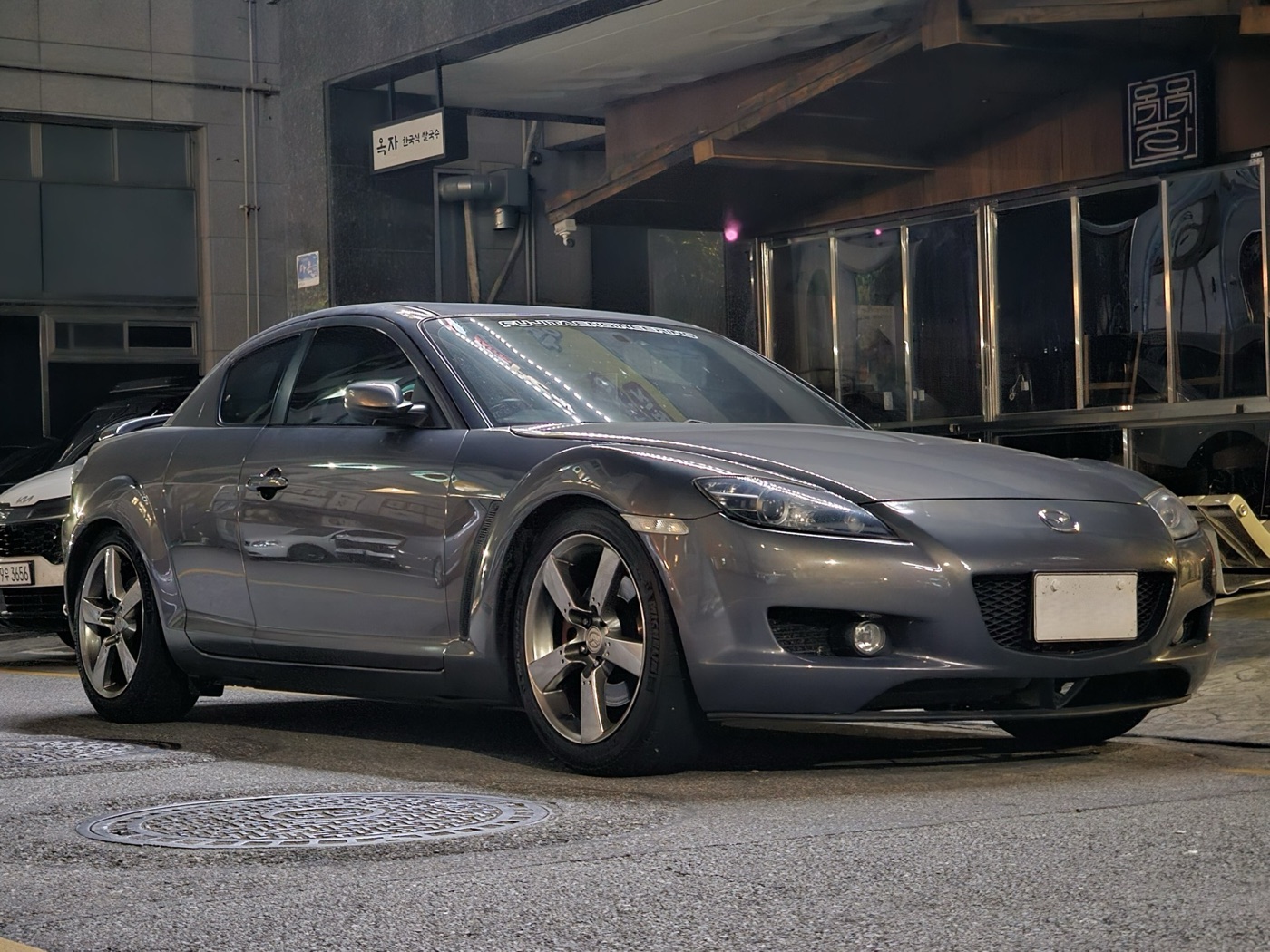
The Mazda RX-8 was a four-door, four-seat sports car with a new rotary engine, the RENESIS, which won International Engine of the Year in 2003, according to Mazda's 2000–2004 history; production began in February 2003. In October 2011 Mazda announced the RX-8 Spirit R, named after the last RX-7, and said production would end in June 2012. Orders led Mazda to double the run from 1,000 to 2,000, and by the end of March 2012 it had built 192,094 RX-8s, its April 2012 release says. "Although RX-8 production is ending, the rotary engine will always represent the spirit of Mazda," said Takashi Yamanouchi, Mazda's chief executive.
The 2009 reports of a new RX-7
In December 2009 a SkiddMark report described the RX-8 as slow-selling and passed on reports from Japan that Mazda would revive the RX-7 name for its replacement, to take on the coming Toyota and Subaru FT-86 and Hyundai's Genesis Coupe. The car was to use the RENESIS 16X, a 1.6-litre twin-rotor engine (800cc per rotor) shown in the Taiki concept at the 2007 Tokyo show and rumoured to make nearly 350bhp, against the RX-8's 227bhp; the report suggested an output nearer 250bhp, and Edmunds Inside Line expected the car as early as 2011.
RX-Vision, Iconic SP and Vision X-Coupe
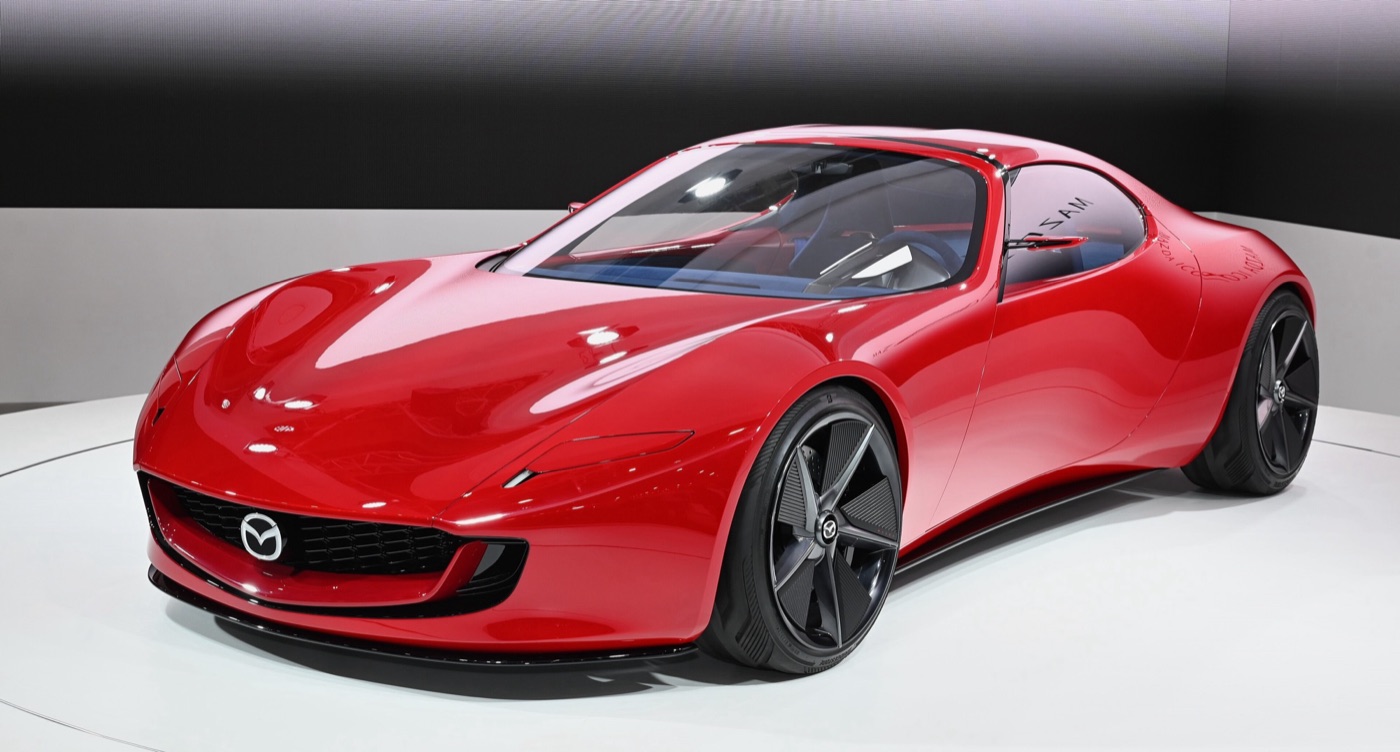
Mazda showed the RX-Vision at the Tokyo Motor Show in October 2015, a front-engined, rear-drive coupé with a next-generation SKYACTIV-R rotary engine that represented "a dream the company one day hopes to make into reality", its 2015–2019 history says. In October 2023 came the Iconic SP, with a twin-rotor engine working as a generator for two electric motors, 365bhp and a weight of 1,450kg; at 4,180mm long, 1,850mm wide and 1,150mm tall it is close to the size of an FD, Auto Express reported. The rotary returned to production the following month as the range extender of the MX-30 R-EV, and Mazda's rotary production passed two million cars in October 2023, according to Mazda's 2020–2024 history.
The Vision X-Coupe, shown in Tokyo in October 2025, is a four-door plug-in hybrid with a turbocharged two-rotor engine that drives the wheels, 503bhp and a claimed 100 miles on electric power. Mazda's chief technical officer, Ryuichi Umeshita, told Autocar on 29 October 2025 that a rotary driving the wheels needs clean emissions "from low RPM to high RPM", which would take "two to three years" of development, and that Mazda would "not necessarily" build the car "as it is".
Will there be a new RX-7?
Mazda has not announced one. Its European product planning supervisor, Moritz Oswald, told Auto Express (in an article updated in February 2026) that the MX-5 is Mazda's halo car, but asked whether there could be something next to it or above it, said "Yes." Christian Schultze, deputy general manager of R&D at Mazda Europe, gave the obstacle: "If I say I want to sell something for $100,000, I can make a credible sports car. But if I say I want to make something for normal people like me and you and everyone, this is a real challenge."
Questions
What do FB, FC and FD mean on a Mazda RX-7?
They are Mazda's chassis codes for the three generations: SA22C and FB for the first car (1978 to 1985), FC for the second (1985 to 1992) and FD for the third (1991 to 2002), whose Japanese code was FD3S.
How much horsepower does a Mazda RX-7 have?
From 105bhp for the first British cars of 1979 to 237bhp for the British FD, and 280PS for Japanese FDs built from December 1998 to August 2002.
What engine is in the Mazda RX-7?
A twin-rotor Wankel engine: the 12A of 2 × 573cc in the first generation, and the 13B of 2 × 654cc in the FC and FD. The FD's 13B-REW has two sequential Hitachi turbochargers.
Is the Mazda RX-7 a four-seater?
The first RX-7 was a 2+2 in Europe and Japan and a two-seater in America, Motor Sport reported in 1979. The British FD was a two-seater, while some Japanese FDs, such as the Spirit R Type B and Type C, had four seats.
How long does an RX-7 rotary engine last?
With oil changes every 3,000 miles and regular checks, a 13B-REW will "easily cover more than 100,000 miles", PistonHeads says. A worn engine needs a rebuild, which PistonHeads put at about £3,000 at a specialist in 2017.
When did Mazda stop selling the RX-7 in the UK?
In 1996, according to Mazda UK. Japanese production carried on until August 2002, and many of the FDs in Britain now are imports from Japan.
Sources
- Mazda Motor Corporation, company history, 1920–1979, 1980–1989, 1990–1999, 2000–2004, 2015–2019 and 2020–2024, read 28 October 2026: launch dates, engines, production milestones, race wins, RX-8, concepts.
- Mazda Motor Corporation, "The Savanna RX-7 Part 2 (2nd and 3rd generation models)", Great Cars of Mazda: the FC's aims, Plan Zero, the FD's award, the end of production.
- Mazda Motor Corporation news releases: RX-7 Type RZ, 18 October 2000; RX-7 Spirit R, 25 March 2002; RX-8 Spirit R, 7 October 2011; RX-8 Spirit R production extended, 26 April 2012.
- Mazda UK, "The Mazda RX-7: celebrating an icon at 40", 18 June 2018: total production, racing record, Percy and Dieudonné quotes, end of UK sales; and "100 years of Mazda: the Mazda RX-7", Inside Mazda, 6 April 2020: Yamamoto, FC engines and performance.
- C. R., "The Mazda RX-7", Motor Sport, September 1979, p. 93: UK launch, price, specification, test figures.
- "Road test: Mazda RX-7", Motor Sport, March 1993, p. 50: FD price, turbos, test figures, comparison with the Porsche 968.
- "Fast and curious", Motor Sport, May 2021, p. 147: designers, UK numbers, films and games, values.
- Autocar, "Throwback Thursday: Mazda RX-7 road test, 24 November 1979": sales before the UK launch, prices, test figures, rivals; and the Vision X-Coupe report, 29 October 2025.
- Hagerty UK, "Buying guide: Mazda RX-7 (FB) 1978–1985", 15 February 2023: values, faults, Elford turbo cars.
- Evo, "Mazda RX-7 (SA/FB, 1978-1985) review", 26 March 2026: weight, values, maintenance.
- PistonHeads, "Mazda RX-7: PH buying guide" and its powertrain section, 16 October 2017: UK prices and sales, values, engine checks and costs.
- Hagerty UK, "Our Classics: 1994 Mazda RX-7", 31 January 2023: the FD against its Japanese rivals.
- Top Speed, "2001 Mazda RX7": production by generation, RX-7 SP.
- The Classic Valuer, 1996 Mazda RX-7 FD, Iconic Auctioneers, 9 November 2025, read 28 October 2026: sale price and RX-7 auction figures since 2020.
- Auto Express, "New Mazda RX-7 successor could happen", updated 8 February 2026: Iconic SP figures, Oswald and Schultze quotes.
- SkiddMark, "New Mazda RX-7 may replace slow selling RX-8", December 2009: the 2009 reports of a revived RX-7 and the RENESIS 16X; and "Mazda marks the end of RX-8 production with the Japanese-only SPIRIT R", October 2011.