McLaren P1: the hybrid hypercar's history, specification and values
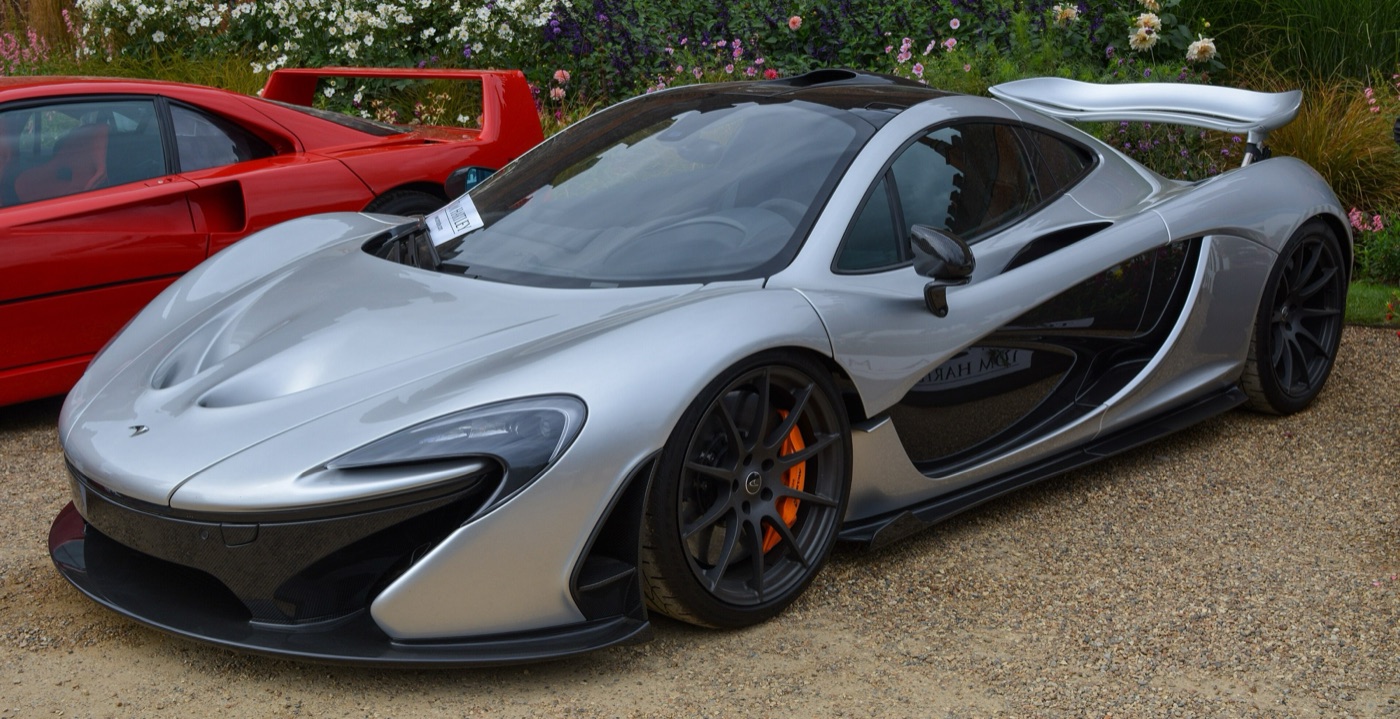
The McLaren P1 is the petrol-electric hybrid hypercar that the British maker McLaren Automotive built by hand in Woking from 2013 to 2015. A 3.8-litre twin-turbo V8 and an electric motor give it 916PS (903bhp), it reaches 300km/h (186mph) in 16.5 seconds on McLaren's figures, and only 375 were made, each priced from £866,000 in the UK.
People look it up as the successor to the McLaren F1, as one of the "holy trinity" of hybrid hypercars with the Porsche 918 Spyder and the Ferrari LaFerrari, and for what the cars now fetch: the best have sold at auction for more than $2 million. SkiddMark followed the car from the first teaser pictures in 2012 to a three-car test of its own at Silverstone, Bruntingthorpe and Santa Pod in 2015, where the P1 set the fastest lap and the best time to 186mph.
History and development of the McLaren P1
McLaren showed the P1 as a design study at the Paris Motor Show in September 2012, put the production car on its stand at the Geneva Motor Show in March 2013 and finished the first customer car in September 2013. Its brief, repeated in McLaren's releases, was "to be the best driver's car in the world on road and track".
The P12 teasers and the Paris design study
The project was known as P12 when McLaren began releasing camouflaged pictures in September 2012. SkiddMark's report of 13 September quoted Ian Gorsuch, McLaren's Asia Pacific director, saying "it is going to be extreme in technology: how it delivers power and how it handles." On 18 September the car had a name, and executive chairman Ron Dennis said the goal for the P1 was to redefine the performance bar that the F1 had raised 20 years earlier. Managing director Antony Sheriff gave the aim as "not necessarily to be the fastest in absolute top speed but to be the quickest and most rewarding series production road car on a circuit."
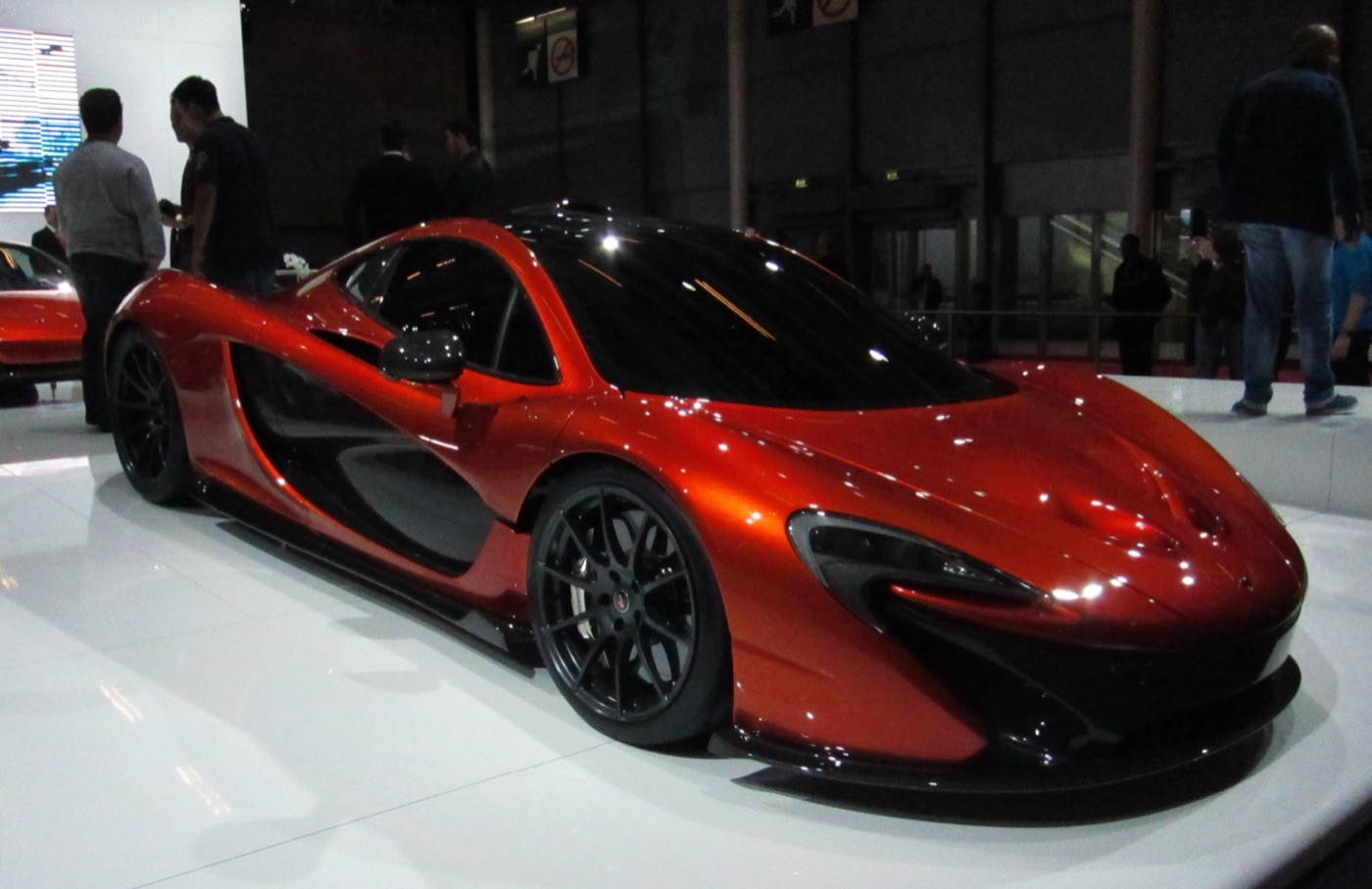
McLaren's press conference in Paris was on 27 September 2012. Its 2013 press pack says that potential customers were then asked for their views and asked for the styling to be left alone, so the production car differs from the Paris car in one visible detail: the LTR ducts ahead of each front wheel, added for cooling and downforce.
Geneva and the production car
The full technical specification came in February 2013 and the production car was unveiled at Geneva in March. The price was £866,000, reported from the show by GoAuto and by SkiddMark in its February 2013 comparison with the F1, which worked out that the F1's 1994 price of £540,000 would have been about £1,033,000 in 2012 money once the Retail Price Index was applied.
McLaren's programme director was Paul Mackenzie, the chief design engineer Dan Parry-Williams and the design director Frank Stephenson. "We believe the McLaren P1 is the most exciting, capable, technologically advanced and most dynamically accomplished supercar ever made," Mackenzie said in the press pack. "It may not be the fastest car in the world in absolute top speed, but that was never our goal. Rather, we believe it is the fastest ever production car on a racing circuit."
Prototypes and testing
McLaren's tenth-anniversary release of March 2023 says the development cars covered more than 620,000km (385,250 miles) of testing. The London dealer Tom Hartley Jnr, which sold the prototype XP05, records that 14 experimental prototypes (the XP cars) were built, that many XP cars were used for crash tests, that XP05 was used for gearbox and Bosch fuel-injection development and later shown as the P1 GTR show car at Geneva and New York, and that the survivors were stripped back to the carbon tub and rebuilt to production specification before McLaren sold them.
Why it is called P1
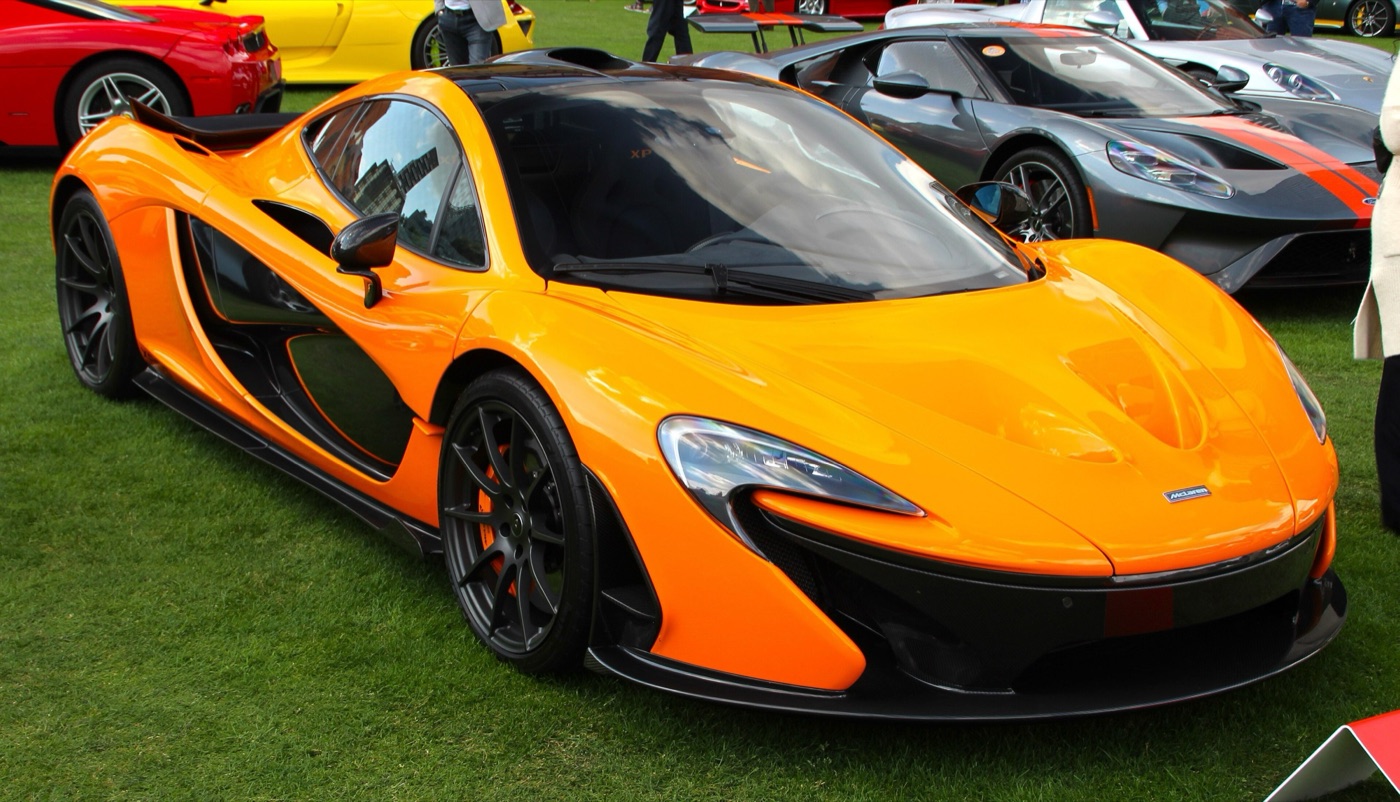
The name comes from racing, where P1 means first place on the grid, and from McLaren's own past: the F1 was known inside the company as Project 1, or P1, while it was being developed. At the 2013 launch McLaren counted 182 Grand Prix wins and 155 pole positions.
Design and engineering of the P1
The P1 is built round a carbon fibre tub with an integral roof, carries a rear-mounted hybrid powertrain and has active aerodynamics and hydraulic suspension that change the car's shape and ride height on the move. McLaren's research director Dick Glover listed the Formula 1 carry-over in the press pack: the aerodynamics, the carbon tub and body, active suspension and Brake Steer (both banned in Formula 1), turbocharging, a low crankshaft and dry-sump lubrication.
The MonoCage and the body
The tub, which McLaren calls the MonoCage, weighs 90kg and includes the roof, the roof snorkel that feeds the engine, the air intake ducts and a sealed compartment for the battery. It was developed from the MonoCell of the 12C. The seven body panels (front and rear clamshells, bonnet, doors and bumpers) are also carbon fibre, and McLaren left out floor carpet and sound deadening to save weight. The windscreen is 3.2mm thick, 3.5kg lighter than the 12C's 4.2mm screen, the Inconel exhaust weighs 17kg and the forged wheels weigh 7.94kg at the front (19in) and 9.72kg at the rear (20in).
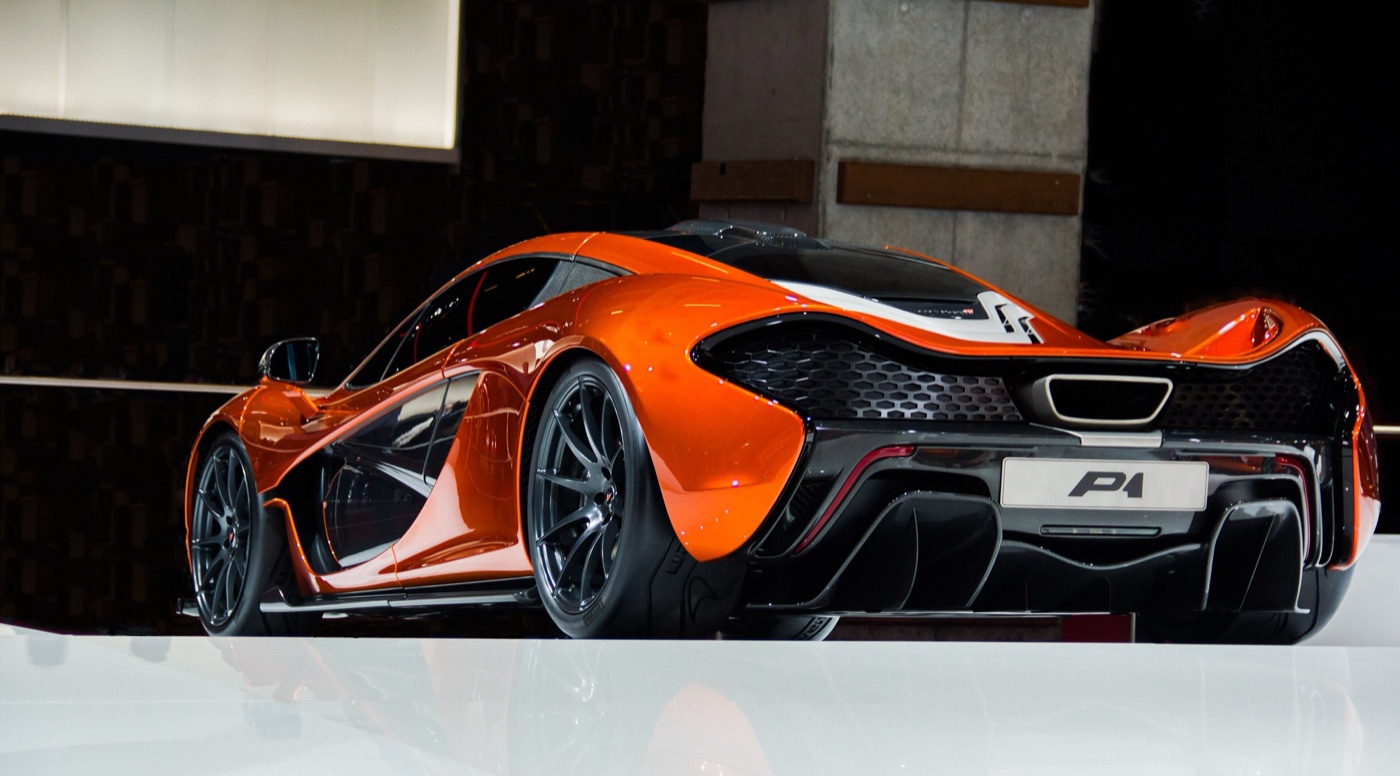
McLaren quotes a dry weight of 1,395kg and a DIN weight, with fluids, of 1,490kg. In the press pack Frank Stephenson said the shape should look "as though we stuck a tube inside and sucked all the air out", and that he wanted it to look like a Le Mans racer, with a low body, a long rear deck and open mesh at the back to show the mechanicals and help cooling, above "the most aggressive rear diffuser ever seen on a road car".
The IPAS hybrid powertrain
The engine is the M838TQ, a 3.8-litre twin-turbo V8 engine developed from the 12C's M838T with a new block casting that carries the electric motor, new turbochargers running 2.4 bar of boost (2.2 bar in the 12C), a flat-plane crankshaft and dry-sump lubrication. On its own it makes 737PS (727bhp) and 720Nm from 4,000rpm. The electric motor, developed by McLaren Electronics, weighs 26kg and makes 179PS (176bhp) and 130Nm, geared to an effective 260Nm. Together they give 916PS (903bhp) and 900Nm, and all of it goes to the rear wheels through a seven-speed dual-clutch gearbox uprated from the 12C's.
McLaren called the system IPAS, for Instant Power Assist System. The motor's job is mainly what engineers call torque fill: it covers the gap while the turbos spool up, which let McLaren fit bigger turbochargers, and it pulls the engine's revs down during upshifts to speed the gearchange. "It helps give extra torque anytime, anywhere, and comes in instantly," chief test driver Chris Goodwin said in the press pack. A Boost button on the console and an IPAS button on the steering wheel release the motor's full output on demand, and McLaren set no time limit on its use. The hybrid system works in all four driving modes: Normal, Sport, Track and Race.
Battery, charging and electric range
The battery weighs 96kg, has 324 cells in six modules and sits low in the MonoCage behind the cabin. Its capacity is 4.7kWh. McLaren chose power over storage: the battery delivers its energy quickly for acceleration, and in E-mode it gives an electric-only range of 11km (6.8 miles) on the NEDC cycle, according to McLaren's release of 21 October 2013. The P1 does not recover energy under braking (McLaren wanted a consistent pedal); it charges from the engine when the driver lifts off, from the V8 in about 10 minutes when the Charge button is pressed, or from a plug-in charger in about two hours.
Active aerodynamics and Race mode
The rear wing rises 120mm on the road and 300mm in Race mode, and its angle changes by up to 29 degrees; McLaren says its endplates and the junction of its two elements are the same as on the 2008 MP4-23, Lewis Hamilton's championship car. In Race mode the RaceActive Chassis Control lowers the ride height by 50mm, the hydraulic spring rates rise by 300 per cent and the P1 makes 600kg of downforce at 257km/h, after which the wings shed load so the suspension does not have to carry more at top speed. DRS, operated from the steering wheel, flattens the wing to cut drag, and a lift system raises the nose and tail by 30mm for ramps at up to 60km/h.
Brakes and tyres
The carbon-ceramic brake discs were developed with Akebono, McLaren's Formula 1 brake supplier, and are coated in silicon carbide. The tyres are Pirelli P Zero Corsas developed for the car, with construction closer to a racing tyre to carry the downforce in Race mode. Pirelli's P Zero Trofeo R was an option, and it was on the car SkiddMark tested in 2015.
McLaren P1 specification and performance
The P1 is a mid-engined, rear-wheel-drive two-seater with 916PS (903bhp) and 900Nm, a 0–100km/h time of 2.8 seconds and a top speed electronically limited to 350km/h (217mph).
| Item | McLaren P1 |
|---|---|
| Engine | M838TQ 3.8-litre twin-turbo V8, 737PS (727bhp), 720Nm |
| Electric motor | 179PS (176bhp), 130Nm (260Nm effective) |
| Combined output | 916PS (903bhp), 900Nm |
| Gearbox and drive | Seven-speed dual-clutch, rear-wheel drive |
| Battery | 96kg, 324 cells, 4.7kWh |
| Weight | 1,395kg dry; 1,490kg DIN |
| 0–100km/h (62mph) | 2.8sec |
| 0–200km/h (124mph) | 6.8sec |
| 0–300km/h (186mph) | 16.5sec |
| Standing quarter mile | 9.8sec at 245km/h (152mph) |
| Top speed | 350km/h (217mph), electronically limited |
| Braking, 100–0km/h | 30.2m (2.9sec) |
| Braking, 300–0km/h | 246m (6.2sec) |
| Downforce | 600kg at 257km/h in Race mode |
| Fuel and CO2 (EU combined) | 34.0mpg (8.3l/100km), 194g/km |
| Electric range (NEDC) | 11km (6.8 miles) |
How fast is the McLaren P1?
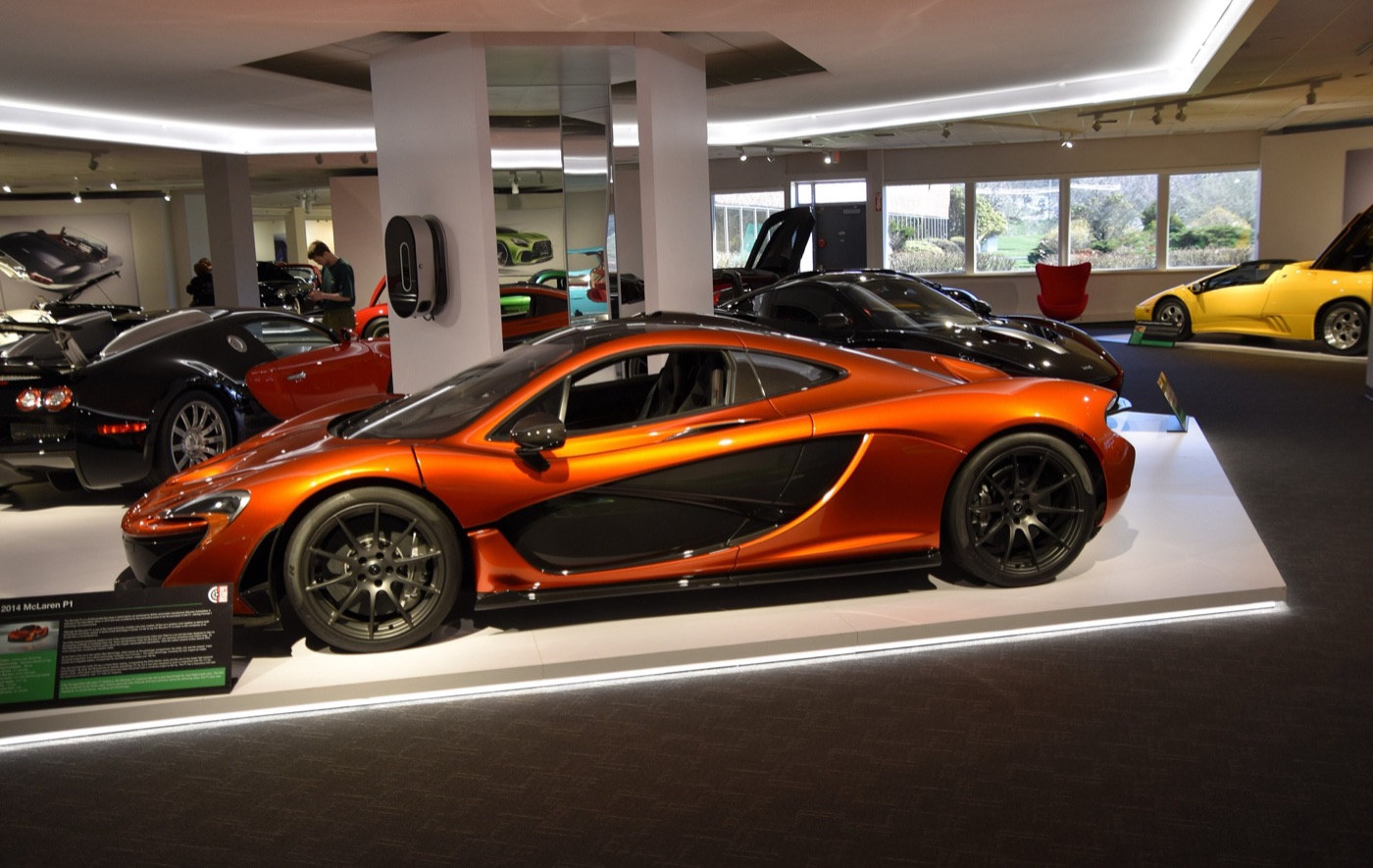
McLaren's own times are 2.8 seconds to 100km/h, 6.8 seconds to 200km/h and 16.5 seconds to 300km/h, which it said was 5.5 seconds quicker than the McLaren F1 (its 2013 press pack gives the F1 as 3.2, 9.4 and 22 seconds). Autocar's road test measured 0–60mph in 2.8 seconds, 0–100mph in 5.2 seconds and a standing quarter mile in 10.2 seconds at 147.5mph. SkiddMark's own timing gear, at Bruntingthorpe in 2015, recorded 0–60mph in 3.22 seconds, 0–100mph in 5.93 seconds and 0–186mph in 20.11 seconds (table below).
Did the P1 lap the Nürburgring in under seven minutes?
McLaren says it did, but it never published the time. Autocar reported on 6 December 2013 that McLaren had confirmed a lap of the 12.9-mile Nordschleife at an average of more than 111mph, driven by Chris Goodwin, which works out at under 6min 59.2sec; the Porsche 918 Spyder had lapped in 6min 57sec in September. McLaren's explanation, as SkiddMark reported it in 2016, was that its target of under seven minutes had been met and that publishing the exact time would encourage dangerous attempts to beat it.
How many McLaren P1s were made?
McLaren built 375 production P1s between September 2013 and December 2015, all at the McLaren Production Centre in Woking. On top of those came the 14 experimental prototypes, 58 track-only P1 GTRs and the road-legal conversions described below.
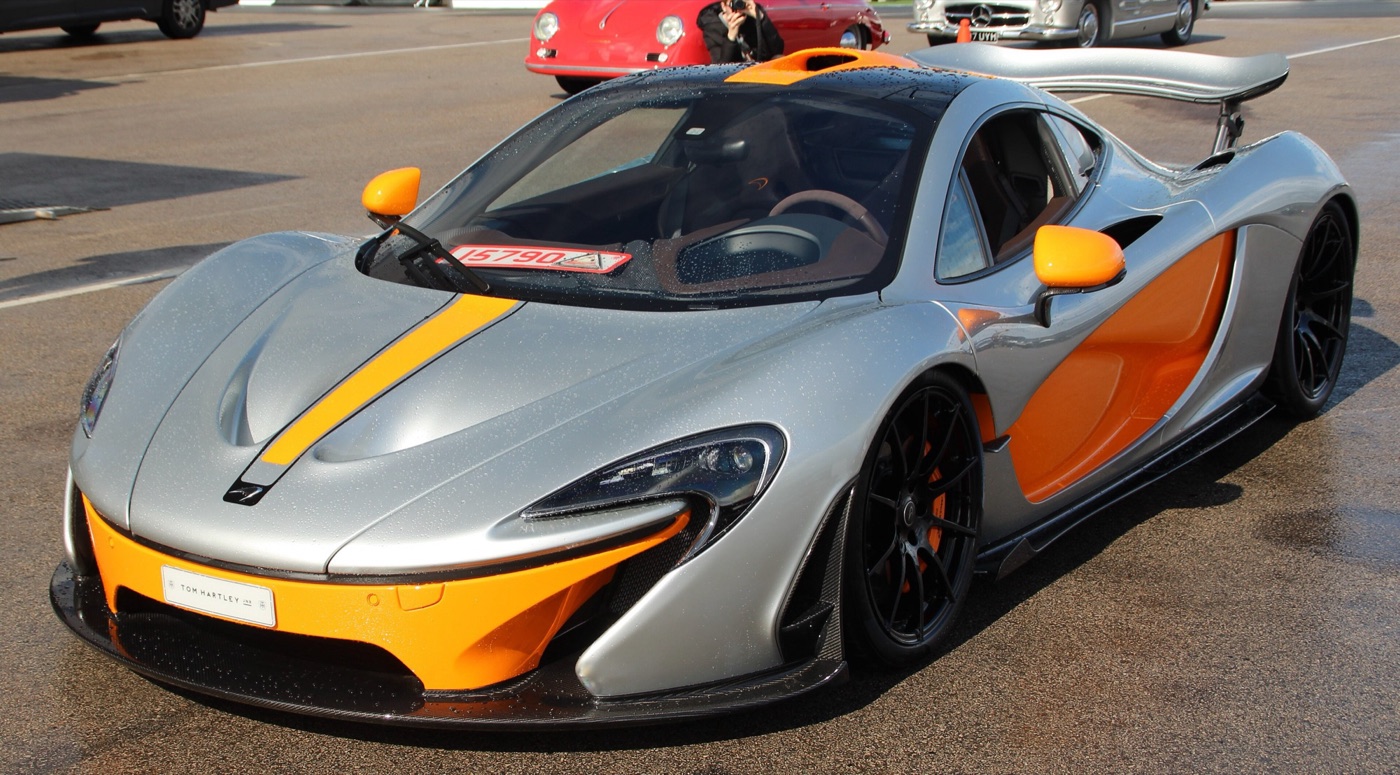
The build figures are in McLaren's October 2013 release: 82 technicians, a four-stage assembly process and 17 days of work per car, with each set of body panels hand-painted together over three days in a separate paint shop at the McLaren Technology Centre, a full-day shakedown at a proving ground and a "monsoon test" of 16,000 litres of water. The 2013 release said the first car, in Volcano Yellow with visible carbon fibre, came off the line at the end of September 2013 and went to a UK owner; the 2023 release describes the first car as Ice Silver. Every P1 was left-hand drive, as GoAuto noted in March 2013 and Autocar's road test confirmed.
All 375 were sold by November 2013, before many had been built. Autocar reported on 13 November 2013 that the last European cars had gone, that 12 cars had been completed, and that about 75 per cent of buyers had ordered personalisation from McLaren Special Operations (MSO), which pushed the average price above £1 million. The 375th car was finished in December 2015 in a pearlescent orange that later became McLaren's Volcano Orange, after nearly three years and 300,000 build hours, according to GoAuto's report of 11 December 2015.
P1 variants and special editions
The two variants are the track-only P1 GTR of 2015, of which 58 were built, and the P1 LM, a road-legal version of the GTR built by Lanzante in Hampshire. MSO also built individual cars to order, among them the Gulf-inspired and carbon-bodied P1s sold at auction in 2024 and 2023.
McLaren P1 GTR
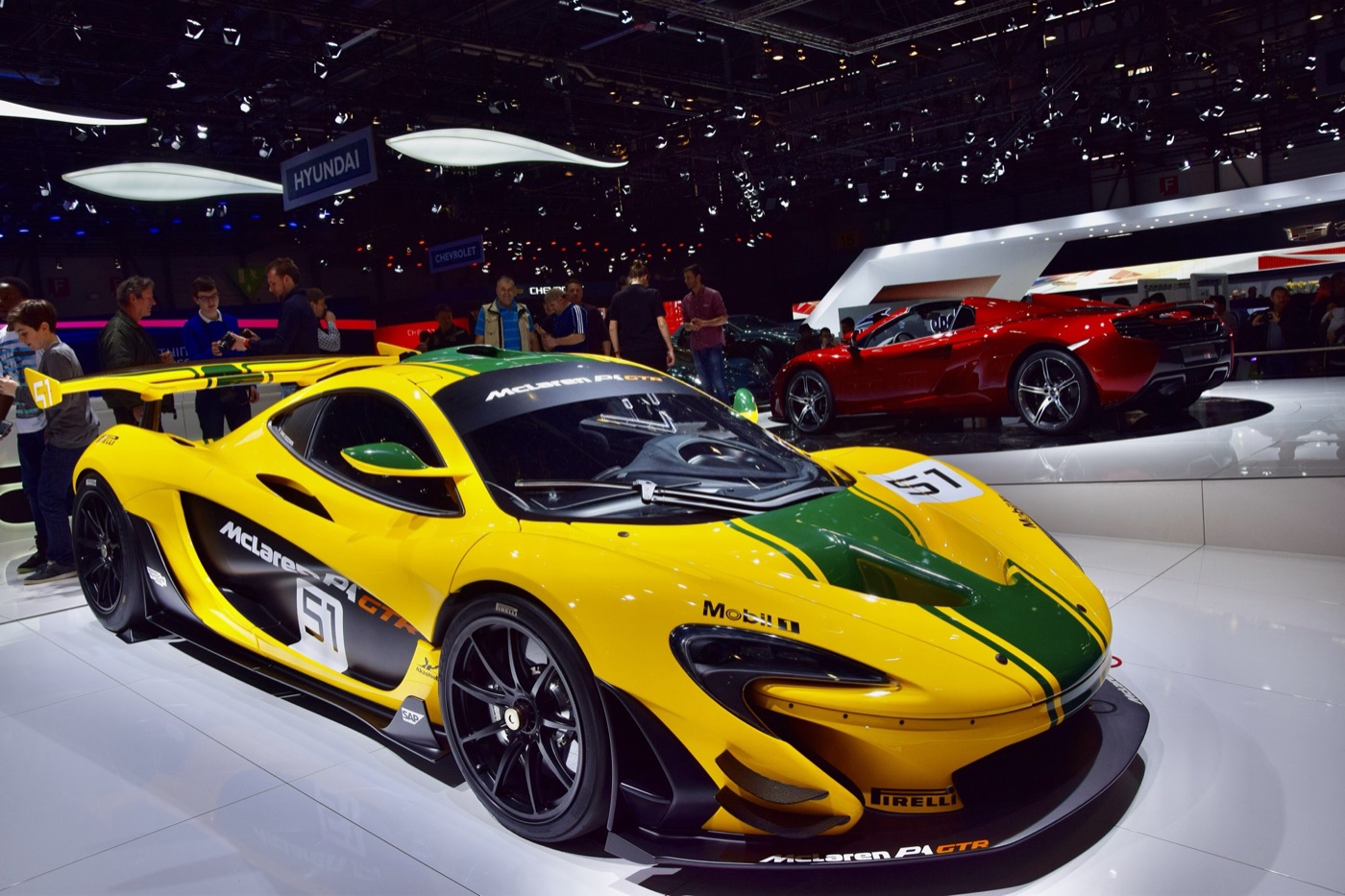
McLaren unveiled the production P1 GTR at the 2015 Geneva show, 20 years after the F1 GTR won the 24 Hours of Le Mans, and offered build slots only to P1 owners. RM Sotheby's catalogue for car 014, sold in London in November 2025, gives the main changes: 1,000PS (986bhp), a titanium and Inconel exhaust, fixed racing suspension in place of the road car's hydraulic system, slick Pirelli tyres, a fixed full-width wing giving 10 per cent more downforce, mirrors moved to the A-pillars and a single seat, for a saving of just under 50kg. It lapped Losail in Qatar seven seconds faster than the P1. Its original invoice, with options, was £2.376 million.
McLaren P1 LM
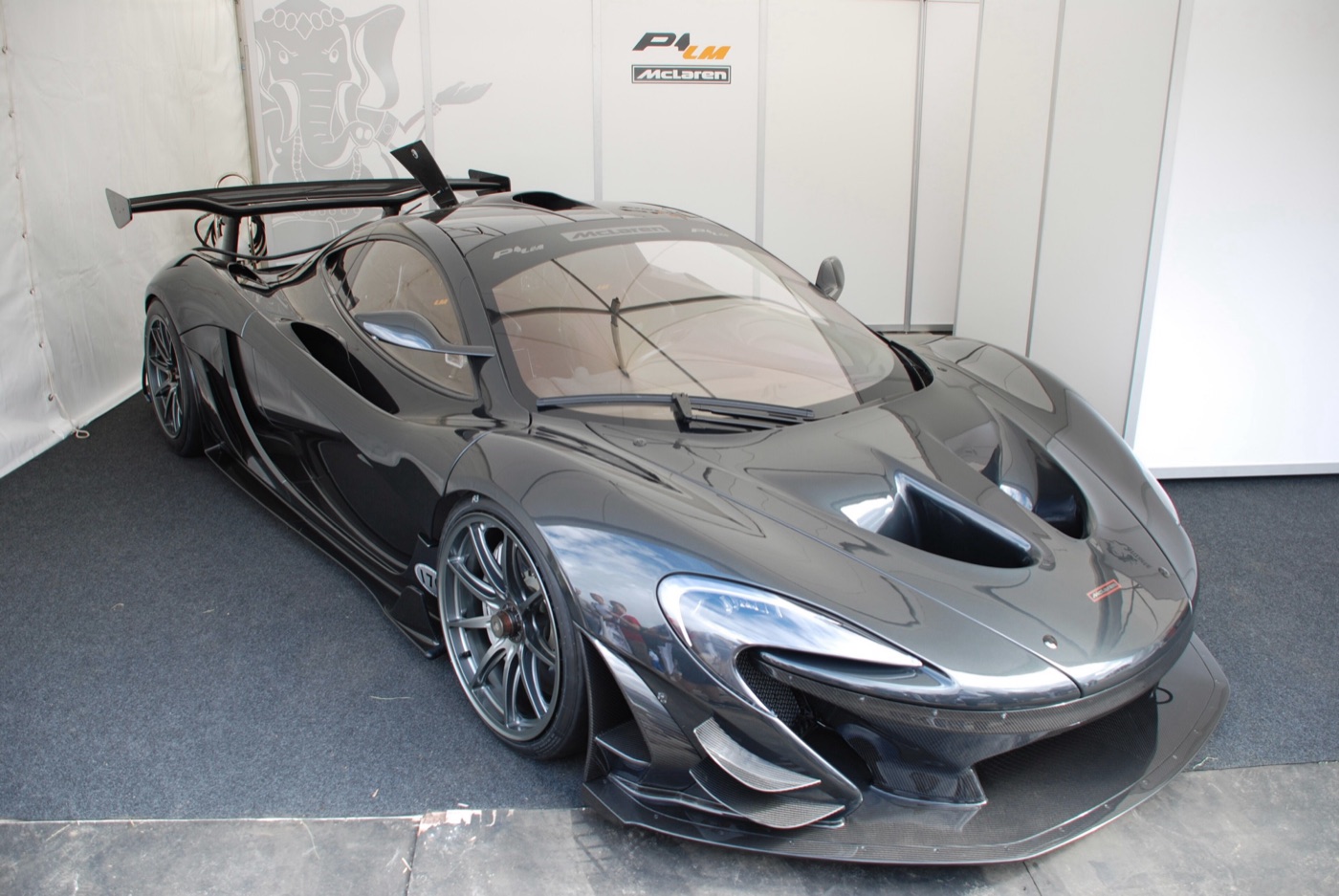
The P1 LM is Lanzante's road-registered conversion of the P1 GTR, a project Lanzante devised itself. It built a prototype and five customer cars, four orange and one grey, and the cars are about 60kg lighter than the GTR, Motor.es reported on 27 May 2017, when it announced that the prototype had lapped the Nordschleife in 6min 43.22sec, the fastest time then recorded by a road-registered car, and it was driven back to Britain on the road afterwards. Autorevue put the margin over the Lamborghini Huracán Performante's March 2017 lap at almost nine seconds.
The holy trinity: P1 vs Porsche 918 Spyder vs LaFerrari
The "holy trinity" is the name given to the three hybrid hypercars launched in 2013: the McLaren P1, the Porsche 918 Spyder and the Ferrari LaFerrari. In 2015 SkiddMark tested all three back to back with timing gear, Mat Jackson driving every car at Silverstone and each car using launch control on the straight-line runs, and published the results on 26 January 2016.
Three ways to build a hybrid hypercar
Each maker took a different route. The P1 has a turbocharged V8 and one electric motor driving the rear wheels. The 918 has a 4.6-litre naturally aspirated V8 and two electric motors, one per axle, so it is four-wheel drive. The LaFerrari has a 6.3-litre V12 and a single electric motor, and no electric-only mode. Porsche built 918 of its car, as its release of 19 June 2015 records.
| Car | Engine | Electric motors | Combined output | Driven wheels |
|---|---|---|---|---|
| McLaren P1 | 3.8-litre twin-turbo V8, 727bhp | One, 176bhp | 903bhp (916PS) | Rear |
| Porsche 918 Spyder | 4.6-litre V8, 599bhp, 9,150rpm | Two, 285bhp together | 875bhp (887PS), 944lb ft | All four |
| LaFerrari | 6.3-litre V12, 800CV at 9,000rpm | One, 163CV | 963CV | Rear |
SkiddMark's Steve Davies explained the shared idea, torque fill, in the 2016 report: "In the P1, it's used to offset any turbo lag and allow larger turbos to be fitted, while in the Ferrari and Porsche it adds torque at lower revs enabling the combustion engine to be optimised for more top-end power."
SkiddMark's test: Silverstone, Bruntingthorpe and Santa Pod
The cars belonged to the collector Paul Bailey, who owned all three, and a second 918 came from David Kibbler for the straight-line runs. Each car was serviced first, and SkiddMark asked each maker how to set its car up. The Silverstone driver was Mat Jackson, a BTCC race winner and, until 18 months earlier, a development driver for McLaren Automotive. "For me to own all three is just phenomenal," Bailey told SkiddMark. His cars had raised £46,000 for charity by then.
Silverstone National circuit
On 18 September 2015, on the 1.64-mile National circuit, drying after overnight rain, Jackson ran the P1 in Race mode on optional Pirelli Trofeo R tyres and set 58.25 seconds, reaching 160mph on the pit straight. The LaFerrari, on Pirelli Corsas with the manettino in "CT off", lapped in 58.58 seconds, though Jackson thought it had been faster: "Whereas the P1 corners flat, the LaFerrari has a more pointy front-end and refuses to understeer through the fast corners." The 918, on the Michelin Pilot Sport Cup 2s it used for its Nürburgring record and in Hot Lap mode, was about two tenths slower than the P1, so three tenths covered all three. "Woodcote was easy-flat" in the Porsche, Jackson said, "whereas in the other two your bum is twitching a little bit." A week later he set a BTCC lap record of 58.078 seconds there in his Motorbase Ford Focus.
Bruntingthorpe and Santa Pod
On 16 October 2015, at Bruntingthorpe proving ground, SkiddMark took the best sector times from seven runs on a two-mile straight with a 2 per cent incline, each car on launch control and automatic shifts so that the different drivers did not affect the times. After asking McLaren's PR manager Dave Eden for advice, the team ran the P1 with its rear wing fully retracted. The 918 led to 100mph; the P1 was ahead by 150mph and reached 186mph almost two seconds before the LaFerrari and nearly three before the 918. After a few runs the P1 began changing up as early as 4,000rpm, had to be retired and restarted after a call to the factory, and never matched its best run again. At Santa Pod that afternoon, on a cold (7°C), damp strip, the 918's four-wheel drive gave it the quarter mile.
| Test | McLaren P1 | Porsche 918 | LaFerrari |
|---|---|---|---|
| Silverstone National, best lap | 58.25 | About 0.2 slower than the P1 | 58.58 |
| Bruntingthorpe 0–60mph | 3.22 | 2.85 | 3.68 |
| Bruntingthorpe 0–100mph | 5.93 | 5.52 | 6.48 |
| Bruntingthorpe 0–150mph | 11.21 | 11.25 | 12.12 |
| Bruntingthorpe 0–186mph | 20.11 | 22.95 | 21.99 |
| Bruntingthorpe quarter mile | 10.64 at 146.05 | 10.32 at 143.48 | 11.03 at 141.75 |
| Bruntingthorpe standing half mile | 16.20 at 174.83 | 15.97 at 171.32 | 16.71 at 171.77 |
| Santa Pod quarter mile | 10.90 at 145.16 | 10.65 at 142.46 | 11.21 at 142.47 |
The makers' claims for 0–186mph were 15.0 seconds for the LaFerrari, 16.5 for the P1 and 20.9 for the 918 (19.9 with the Weissach Package). The LaFerrari's Bruntingthorpe figures, 3.68 seconds to 60mph and 11.03 seconds for the quarter mile, are the ones the Korean Wikipedia's list of the fastest-accelerating production cars cites as the car's times on neutral ground.
The verdict
SkiddMark did not name an overall winner. The P1 was fastest to 186mph and round Silverstone, though there on the stickiest tyres; the 918 won both drag-strip distances and was the easiest to drive flat out; the LaFerrari "was the one which most of us would have chosen to drive home in." In January 2016 SkiddMark wrote that it was the first to test all three in this way, together with SupercarDriver.
How much is a McLaren P1 worth?
A McLaren P1 is worth more than it cost new. The list price was £866,000 in the UK in 2013, and the two recent public sales of standard cars below, both with MSO options, made $2.1 million and $2.4 million.
| Date | Sale | Car | Price |
|---|---|---|---|
| 4 March 2023 | Broad Arrow, Amelia Island | 2015 P1, carbon body | $2,425,000 (a record for the model at the time) |
| June 2024 | RM Sotheby's, Toronto | 2015 P1, chassis 108, Gulf-inspired MSO specification, 1,913 miles | $2,095,000 |
| 3 November 2025 | RM Sotheby's, London | 2015 P1 GTR, car 014 of 58, 6,698km | £1,310,000 |
The Amelia Island car came from Broad Arrow's results of 6 March 2023, and the Toronto car from RM Sotheby's lot page, which gives its window-sticker price as $1,284,423 with just over $100,000 of MSO equipment. The P1 GTR result is in RM Sotheby's London results; that car had cost £2.376 million new.
Owning a McLaren P1
The big cost of owning a P1 today is the hybrid battery, whose cells date from about 2010; a car left standing can flatten it, and a replacement costs six figures.
The hybrid battery
McLaren announced a factory "Gen II" replacement battery in 2022, 46kg lighter than the original, at $156,700, Carscoops reported in August 2026, with long waiting times. In the same month Autocar reported that V Engineering, a McLaren specialist in Berkshire, would fit a 12.4kWh pack, against the original 4.7kWh, that is 23kg lighter, with installations from spring 2027 and no price announced. An RM Sotheby's Dubai catalogue records a one-owner 2014 car with 7,205km that had stood for years had a flat battery and could not run, and Lanzante quoted about £170,000 for a replacement without seeing the car.
Recalls
In the US, McLaren recalled 122 P1s of the 2014 and 2015 model years, built between 1 March 2013 and 31 October 2015, because a secondary bonnet latch might not re-engage, so the bonnet could open on the move. McLaren told NHTSA that dealers would fit a redesigned latch free of charge, with the recall expected to begin in January 2016, according to the NHTSA recall acknowledgement 15V-836.
Living with it
The interior has no carpet and little sound deadening. Autocar's testers found the fixed carbon seats, 10.5kg each, comfortable, but noted the loud idle ("there are cars that drive at 50mph with less interior volume than a stationary P1"), the tyre and engine roar that drowned the stereo at a cruise and the lack of DAB radio. The steering has 2.4 turns lock to lock.
Reception of the McLaren P1
The motoring press rated the P1 among the best cars it had driven, praising the way it combined 903bhp with adjustable, forgiving handling on a circuit and a supple ride on the road. Autocar's road test said McLaren had made "a car that costs £866,000 and produces 903bhp yet is as joyful and faithful to throw around a circuit as a two-stroke kart", and that the car was "astoundingly reassuring at its limit".
Top Gear's verdict was "Terrifying, brilliant, devastatingly quick. There's nothing like the P1." For evo, Richard Meaden first drove it on the circuit in Abu Dhabi and wrote that "its breadth of ability is truly freakish, the fusion of petrol and electric propulsion totally seamless"; Jethro Bovingdon, driving one in the Alps, said he could not "think of another supercar that feels quite so untamed." The review sums up Race mode as "explosive power, black-out brakes, neck-straining grip". Writing in Car and Driver in August 2014, Mike Duff picked out the P1's "ability to corral a 727-hp twin-turbo V-8, a 177-hp electric motor fed by a lithium-ion battery pack, and a mass of power electronics into a cohesive whole."
The P1 heads McLaren's Ultimate Series, a name evo says McLaren gave its top line in 2015. The Senna, Speedtail and Elva have joined it since, and evo calls the W1 the P1's direct successor.
Questions
Is the McLaren P1 street legal?
Yes. All 375 production P1s were road cars. The track-only P1 GTR was not road legal, but Lanzante converted some for the road, among them the P1 LM.
Is the McLaren P1 four-wheel drive?
No. The V8 and the electric motor both drive the rear wheels through a seven-speed dual-clutch gearbox. Of the holy trinity, only the Porsche 918 Spyder is four-wheel drive.
What engine does the McLaren P1 have?
A 3.8-litre twin-turbo V8 called the M838TQ, a development of the 12C engine, making 737PS (727bhp). With the 179PS electric motor the total is 916PS (903bhp) and 900Nm.
Who designed the McLaren P1?
Frank Stephenson was McLaren's design director, Dan Parry-Williams the chief design engineer and Paul Mackenzie the programme director.
Can the McLaren P1 run on electric power alone?
Yes, in E-mode, for 11km (6.8 miles) on the NEDC cycle by McLaren's figure. The battery charges from the engine or from a plug-in charger in about two hours.
Is the McLaren P1 faster than the McLaren F1?
It accelerates harder: McLaren says the P1 reaches 300km/h 5.5 seconds sooner. The F1 has the higher top speed, because the P1 is limited to 350km/h (217mph).
Was the McLaren P1 right-hand drive?
No. Every P1 was built with the steering wheel on the left, including the cars sold in the UK.
Sources
- McLaren Automotive, "Performance figures for the McLaren P1 confirmed as the first customer car is delivered", 21 October 2013: acceleration, braking, top speed, fuel use, electric range, first car, build process.
- McLaren Automotive, P1 press pack, 2013, reproduced in full by PistonHeads: powertrain, battery, aerodynamics, suspension, weights of components, quotes from Mackenzie, Parry-Williams, Stephenson, Glover and Goodwin, the name.
- McLaren Automotive, "McLaren P1: celebrating 10 years of the pioneering hybrid hypercar", March 2023 (published by McLaren Scottsdale): dry and DIN weights, testing distance, first and last cars.
- GoAuto, "Geneva show: McLaren P1 blasts to 300km/h in 17s", March 2013, and "McLaren completes final P1", 11 December 2015: UK price, left-hand drive, the last car.
- Autocar, "McLaren P1 sold out", 13 November 2013; "McLaren P1 confirms sub-seven-minute Nurburgring lap", 6 December 2013; "British firm updates McLaren P1 with new lightweight battery", 11 August 2026; and the Autocar road test of the P1: sales, MSO share, Nürburgring, battery, measured performance and verdict.
- Tom Hartley Jnr, 2013 McLaren P1 XP sale listing: the 14 experimental prototypes and XP05's history.
- RM Sotheby's, lot pages for the 2015 P1 GTR, London 2025, the 2015 P1, Toronto 2024 and the 2014 P1, Dubai, and its London 2025 results, 3 November 2025: P1 GTR specification and price, sale prices, battery quote.
- Broad Arrow Auctions, Amelia auction results, 6 March 2023: the $2,425,000 sale.
- Motor.es, "El McLaren P1 LM de Lanzante rompe el récord de Nürburgring", 27 May 2017, and Autorevue, "Der McLaren P1 LM ist der neue King am Nürburgring", 2017: P1 LM numbers, weight and lap time.
- Porsche AG, press release 61/15, 19 June 2015, and CAR, "Porsche 918 Spyder sets Nürburgring lap record", September 2013: 918 production, outputs and the 6min 57sec lap.
- Ferrari, LaFerrari model page: engine and combined outputs.
- US National Highway Traffic Safety Administration, recall acknowledgement 15V-836, 4 January 2016: bonnet latch recall.
- Carscoops, "McLaren wants $156,700 to fix the P1's battery", 11 August 2026: the Gen II battery.
- Reviews quoted: Top Gear, McLaren P1 review; evo, McLaren P1 (2013–2015) review, February 2026 update, with Richard Meaden and Jethro Bovingdon; Mike Duff in Car and Driver, August 2014, as quoted by RM Sotheby's.
- SkiddMark's own reports: McLaren's P12 supercar looks set to eclipse the iconic F1 (13 September 2012); The king is dead, long live the McLaren P1 (18 September 2012); McLaren P1: 903bhp plus 664lb ft equals outrageous acceleration (20 February 2013); McLaren P1: all the stats (26 February 2013); and Steve Davies, "Judgement Day for the Holy Trinity: McLaren P1 vs Porsche 918 Spyder vs LaFerrari" (26 January 2016), with its VBOX results.
This article was written in October 2026 to replace SkiddMark's original report of 26 January 2016, "Judgement Day for the Holy Trinity: McLaren P1 vs Porsche 918 Spyder vs LaFerrari", whose test results it keeps in full; McLaren's figures were checked against its own releases and auction values on 27 October 2026.