Mercedes 300 SLR: Moss's Mille Miglia car and the Uhlenhaut Coupé
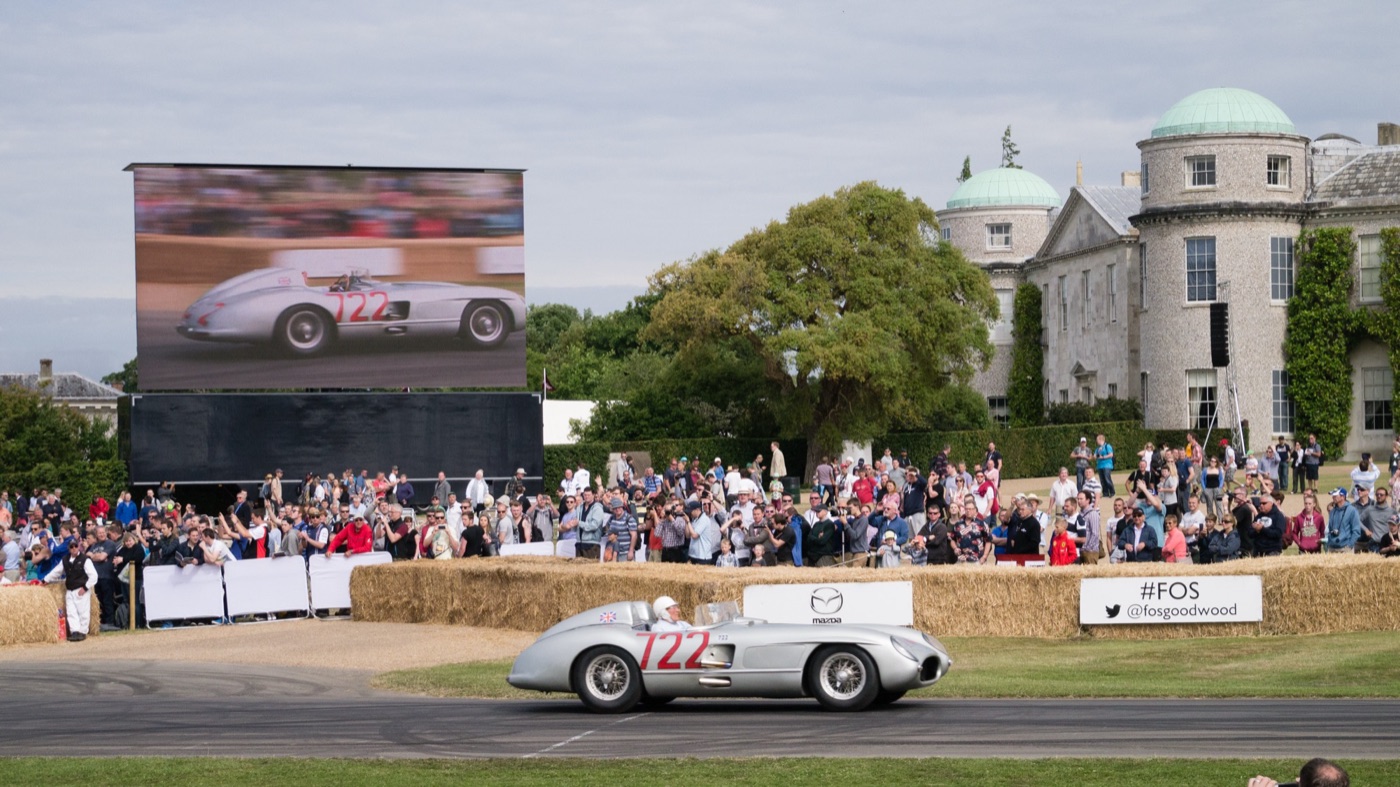
The Mercedes 300 SLR is the sports-racing car, coded W 196 S inside Daimler-Benz, that won the 1955 World Sports Car Championship. It took Stirling Moss and Denis Jenkinson to their record win in the Mille Miglia, and one of the three 300 SLRs at Le Mans that June was the car in motor racing's deadliest accident. Nine were built; two were closed gull-wing coupés that never raced, and in May 2022 one of those "Uhlenhaut Coupés" sold for €135 million, a record price for a car.
History of the Mercedes 300 SLR
Daimler-Benz began work on the 300 SLR in the autumn of 1953, alongside its new W 196 R Formula One car, to enter the Sports Car World Championship, according to the Mercedes-Benz Classic archive's history of the car. It raced for one season, 1955, and Daimler-Benz announced the end of its racing programme on 22 October that year.
From the W 196 Grand Prix car
The two cars shared their engineering, which is why they shared the internal series number W 196; the sports car took the suffix S for Sport. It had the Grand Prix car's chassis and running gear with a wheelbase 20 mm longer, a two-seat body with lights, and a 3-litre version of the straight-eight engine in place of the Formula One car's 2.5 litres. Rudolf Uhlenhaut, head of the testing department, led the work on both; RM Sotheby's lot notes for the 2022 sale call the 300 SLR "Uhlenhaut's 300 SLR".
What does SLR stand for?
The name was picked for publicity, to recall the 300 SL racing car that won Le Mans in 1952. A Daimler-Benz press release of 16 January 1954, quoted in the company archive, explained it: "S = super, L = light" carried over from the 300 SL, and "the addition of the letter R (racing) indicates that the further development was based on racing cars". Later accounts often expand it as Sport Leicht Rennen (sport, light, racing), a form the release does not use.
Coupé first, open car second
The body designers at Sindelfingen drew the 300 SLR first as a gull-wing coupé, in November 1953; the open version followed in June 1954, the archive's page on the Uhlenhaut Coupé records. The car had been meant to start in the 1954 Mille Miglia and at Le Mans, but in the spring of 1954 the racing department put it aside to finish the Formula One car. By the time it was ready, most of the drivers that racing manager Alfred Neubauer asked wanted an open car, mainly because of the noise inside the coupé. The 300 SLR made its first public appearance in test runs at Monza during the Italian Grand Prix in September 1954 and raced from May 1955 as an open two-seater.
Design and engineering
The 300 SLR is a front-engined two-seater on a tubular space frame of about 60 kg, with a fuel-injected straight-eight mounted at the front, a five-speed gearbox at the back and a body in Elektron magnesium alloy. Almost all of it came from the W 196 R, with changes for long road races and pump fuel.
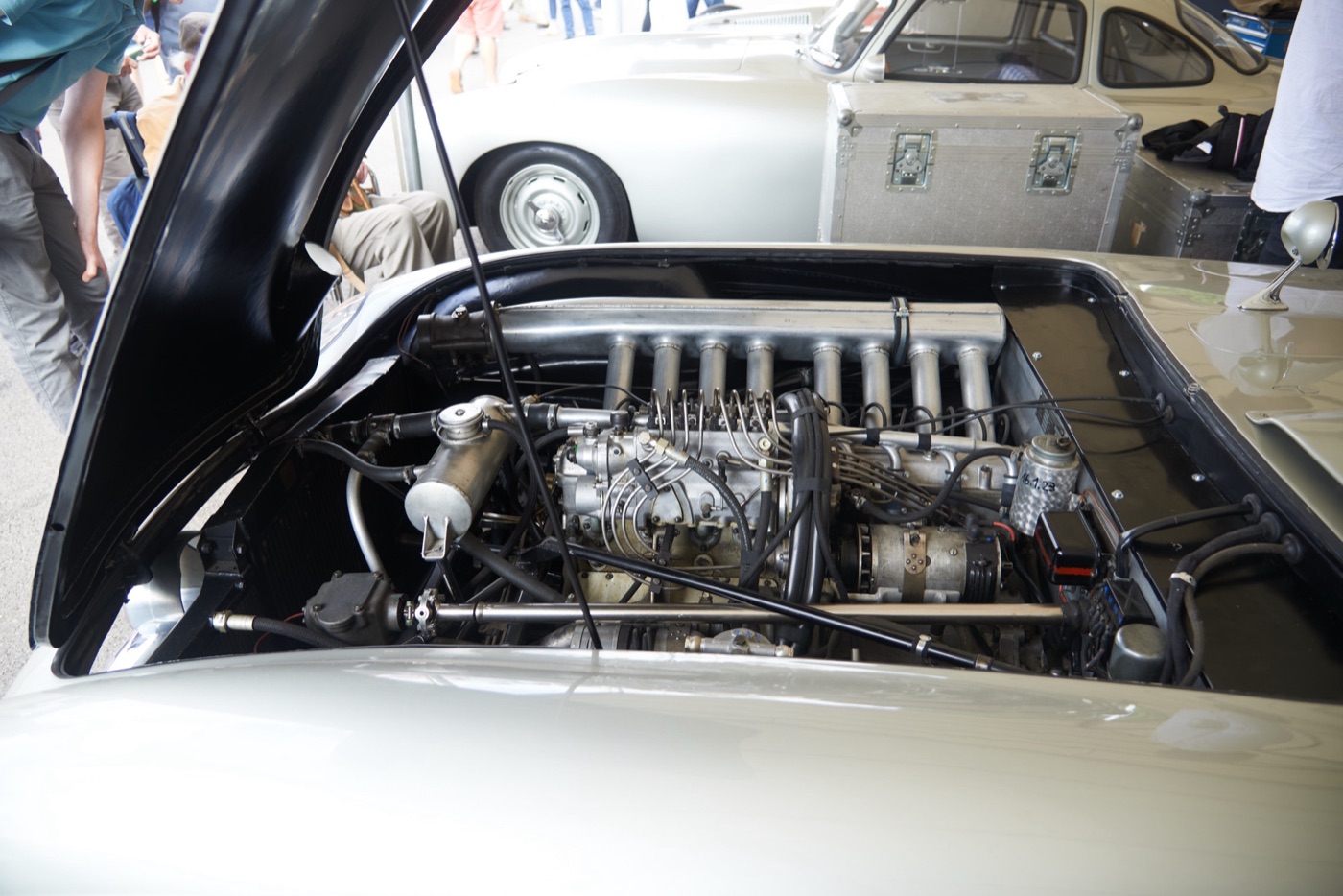
The M 196 S straight-eight
The engine is two four-cylinder blocks with the drive taken from the middle of the crankshaft, laid over at 53 degrees to the right to lower the bonnet line. Bore and stroke are both 78 mm, for 2,982cc. The desmodromic valve gear closes each valve mechanically (with no valve springs); two overhead camshafts per block are driven by gears; and a Bosch eight-plunger injection pump feeds fuel directly into the cylinders, according to the archive's technical data. The Grand Prix engine had steel cylinders and ran on a methanol-based racing fuel; the sports car's blocks are silumin (an aluminium-silicon alloy) with chrome-plated aluminium liners, and it ran on ordinary premium petrol because the championship rules required commercial fuel.
Chassis, brakes and the air brake
Front suspension is by double wishbones with torsion-bar springs, and the rear by a single-joint swing axle with longitudinal torsion-bar springs. The duplex drum brakes sit inboard, the front pair in the engine bay, (350 mm drums at the front, 275 mm at the rear) to keep unsprung weight down. For Le Mans the team added a full-width flap behind the driver's head that two hydraulic rams raised into the airstream; Jenkinson's report for Motor Sport in July 1955 says the drivers found in practice that they could take some bends using the air brake alone. The flap was used again at the Swedish Grand Prix that August.
What Moss said about driving it
Moss was not taken with the car at first sight. "It looked very big indeed for just a 3-litre sportscar," he told Doug Nye for Motor Sport in May 2005. "Only the brakes were, frankly, awful," he said, but "overall the SLR was an enormously fast car with inferior brakes" and "it just felt utterly bullet-proof." The gearbox was the hardest part: the gate copied the Grand Prix car's, and Moss sometimes went from second straight across to fifth, so the racing department made a lock for the gear lever before the Mille Miglia, Jenkinson wrote.
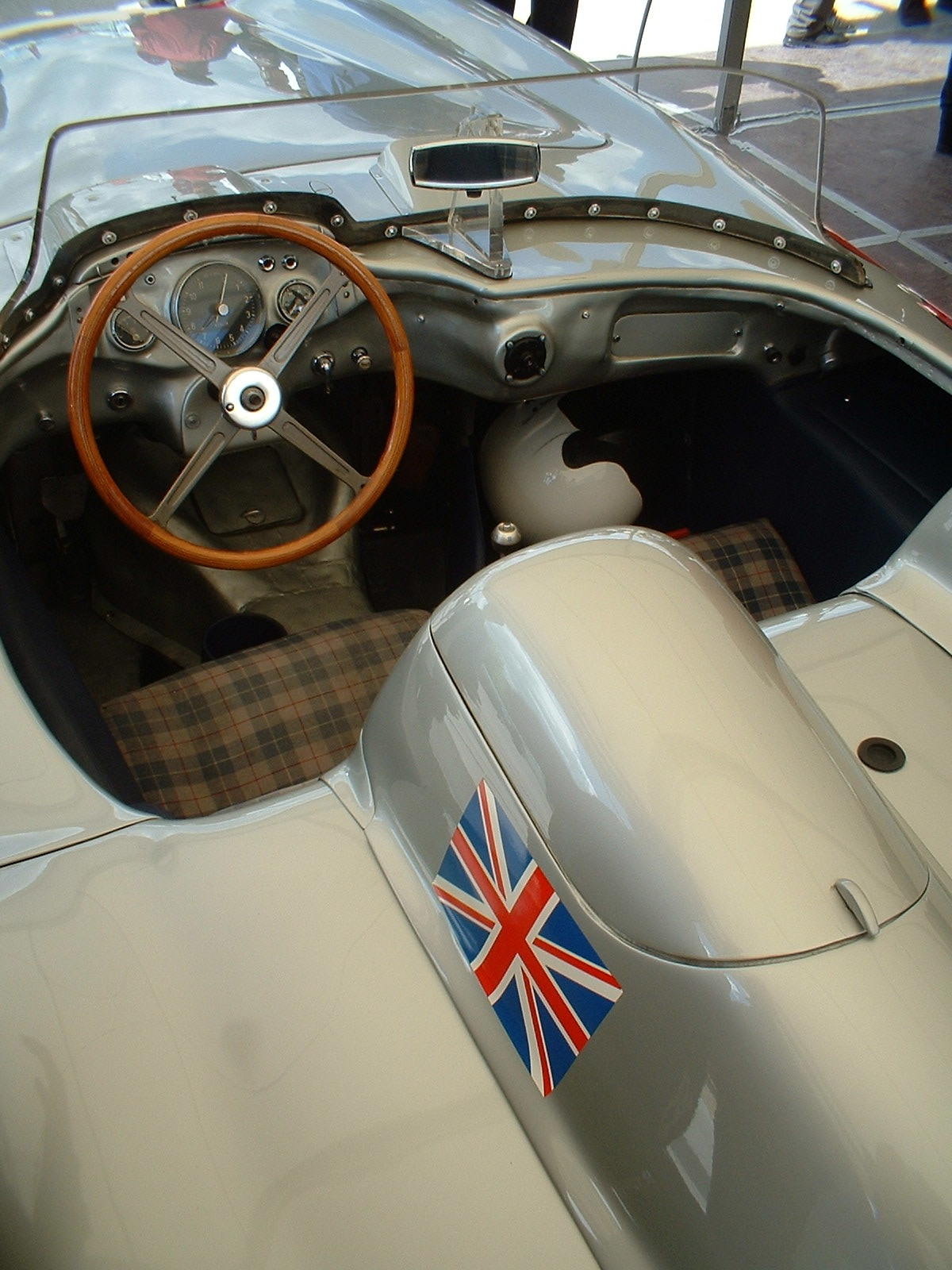
Mercedes 300 SLR specifications
The open 300 SLR weighs 901 kg ready to race and its rated top speed is over 300 km/h (186 mph); the Uhlenhaut Coupé weighs 1,117 kg and is rated at 284 km/h (176 mph). The engine, gearbox and brakes are the same in both.
| Item | 300 SLR roadster | 300 SLR Uhlenhaut Coupé |
|---|---|---|
| Engine | M 196 S straight-eight, 2,982cc, direct injection | M 196 S straight-eight, 2,982cc, direct injection |
| Maximum output | 310 hp at 7,400 rpm | 310 hp at 7,400 rpm |
| Sustained (rated) output | 276 hp at 7,000 rpm | 276 hp at 7,000 rpm |
| Torque | 31.7 mkg (311 Nm) at 5,950 rpm | 31.7 mkg (311 Nm) at 5,950 rpm |
| Gearbox | Five-speed, in unit with the differential behind the rear axle | Five-speed, in unit with the differential behind the rear axle |
| Fuel tank | 265 litres | 155 litres |
| Wheelbase | 2,370 mm | 2,370 mm |
| Length / width / height | 4,300 / 1,740 / 1,100 mm | 4,350 / 1,750 / 1,210 mm |
| Weight | 901 kg | 1,117 kg |
| Top speed | Over 300 km/h | 284 km/h |
Source: Mercedes-Benz Classic archive technical data for the 300 SLR (W 196 S) and the 300 SLR Uhlenhaut Coupé. The same archive's history gives 306 hp at 7,500 rpm for the racing engine. RM Sotheby's gives the coupé's factory weight as 998 kg.
How fast is the Mercedes 300 SLR?
In racing trim the roadster ran at about 170 mph (274 km/h), 7,500 rpm in fifth, on the straights to Verona during the 1955 Mille Miglia, Jenkinson wrote in his Motor Sport report of June 1955. The coupé was timed by the Swiss weekly Automobil Revue in September 1956 at 284 km/h, and once at 290 km/h (180 mph), on a closed stretch of the Munich to Eching autobahn at four in the morning.
The 300 SLR in racing
The 300 SLR won five of the six races it started in 1955 and took the World Sports Car Championship for Mercedes-Benz by two points from Ferrari. The sixth race was Le Mans, where the team withdrew its two remaining cars in the night while they ran first and third.
| Date | Race | Championship round | 300 SLR results |
|---|---|---|---|
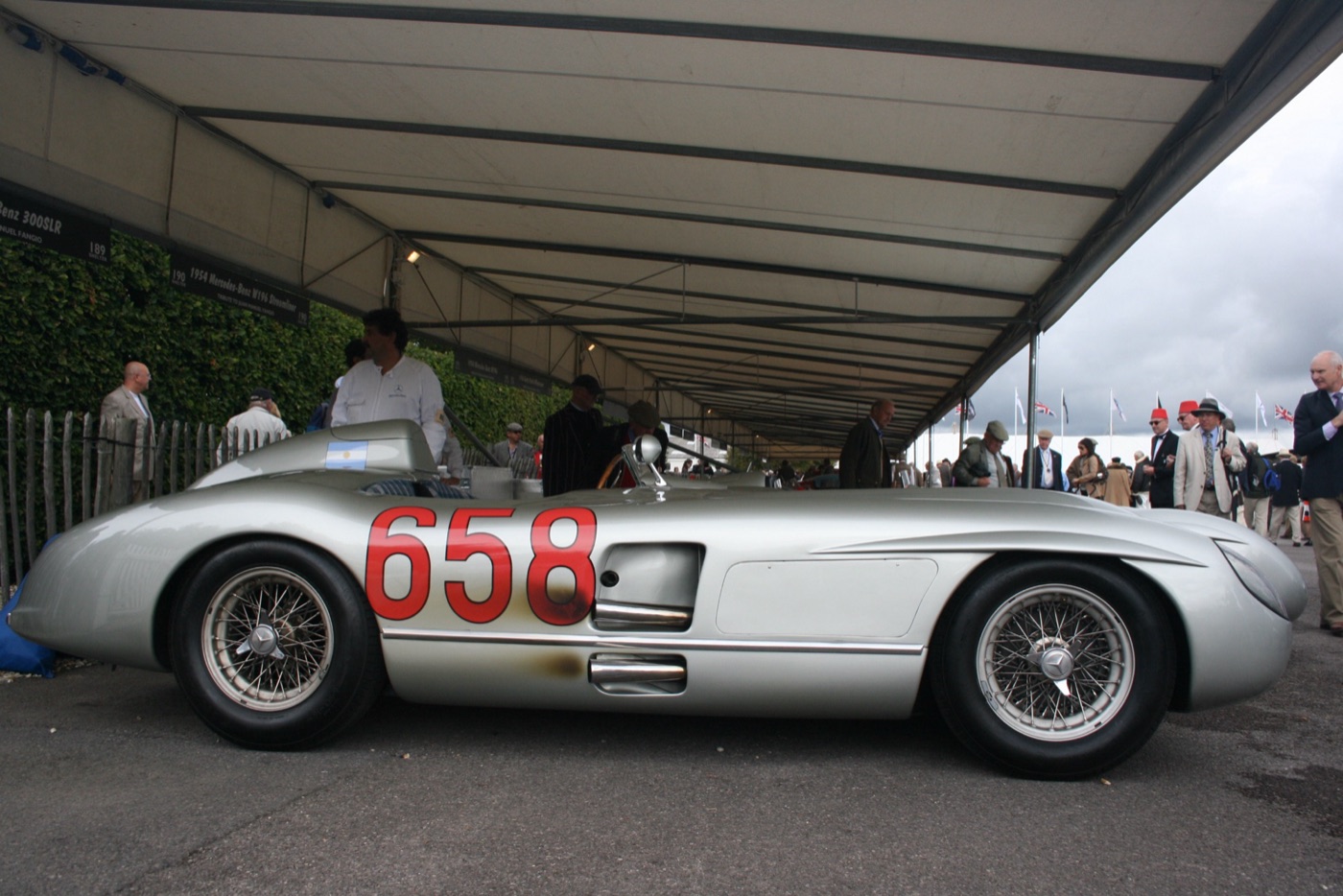
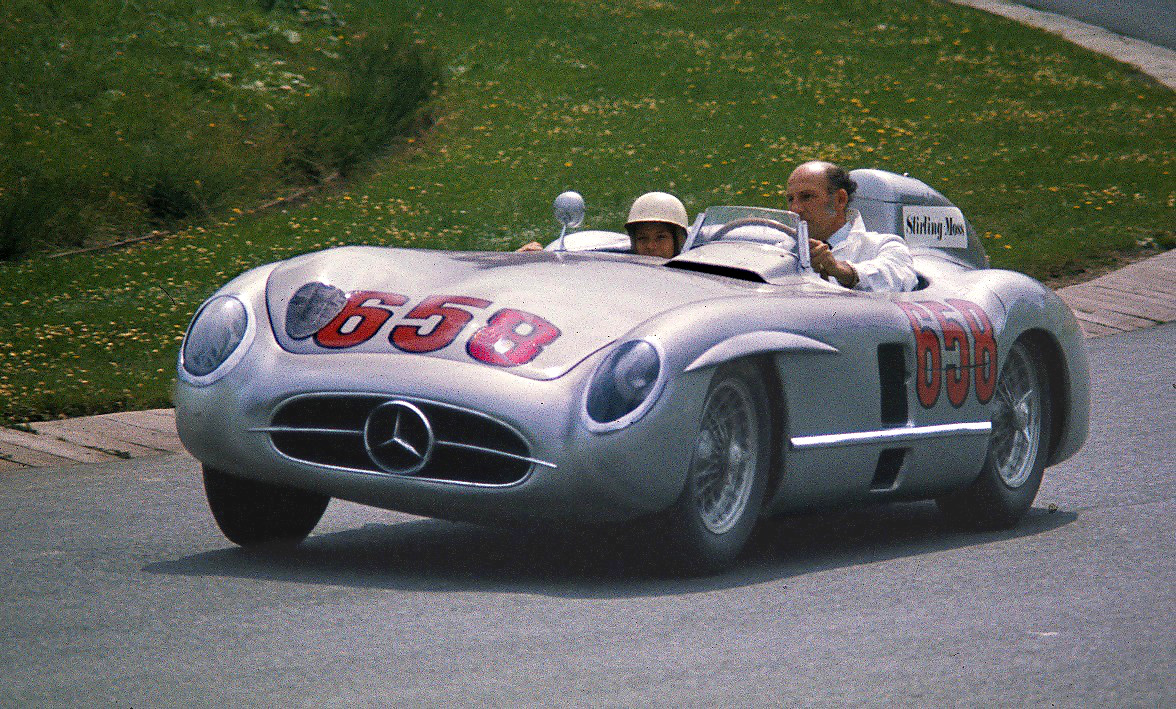
| 1 May | Mille Miglia, Brescia | Yes | 1st Moss/Jenkinson (No. 722), 2nd Fangio (No. 658); Kling and Herrmann/Eger out after accidents |
| 29 May | Eifelrennen, Nürburgring | No | 1st Fangio, 2nd Moss, 4th Kling |
| 11–12 June | Le Mans 24 Hours | Yes | Levegh/Fitch crashed; Fangio/Moss (1st) and Kling/Simon (3rd) withdrawn |
| 7 August | Swedish Grand Prix, Kristianstad | No | 1st Fangio, 2nd Moss |
| 17 September | RAC Tourist Trophy, Dundrod | Yes | 1st Moss/Fitch, 2nd Fangio/Kling, 3rd von Trips/Simon |
| 16 October | Targa Florio, Sicily | Yes | 1st Moss/Collins, 2nd Fangio/Kling, 4th Titterington/Fitch |
Sources: Racing Sports Cars results for each race; Motor Sport, October 1955, for the Tourist Trophy; Mercedes-Benz Classic archive for the championship.
The 1955 Mille Miglia: Moss and Jenkinson in car 722
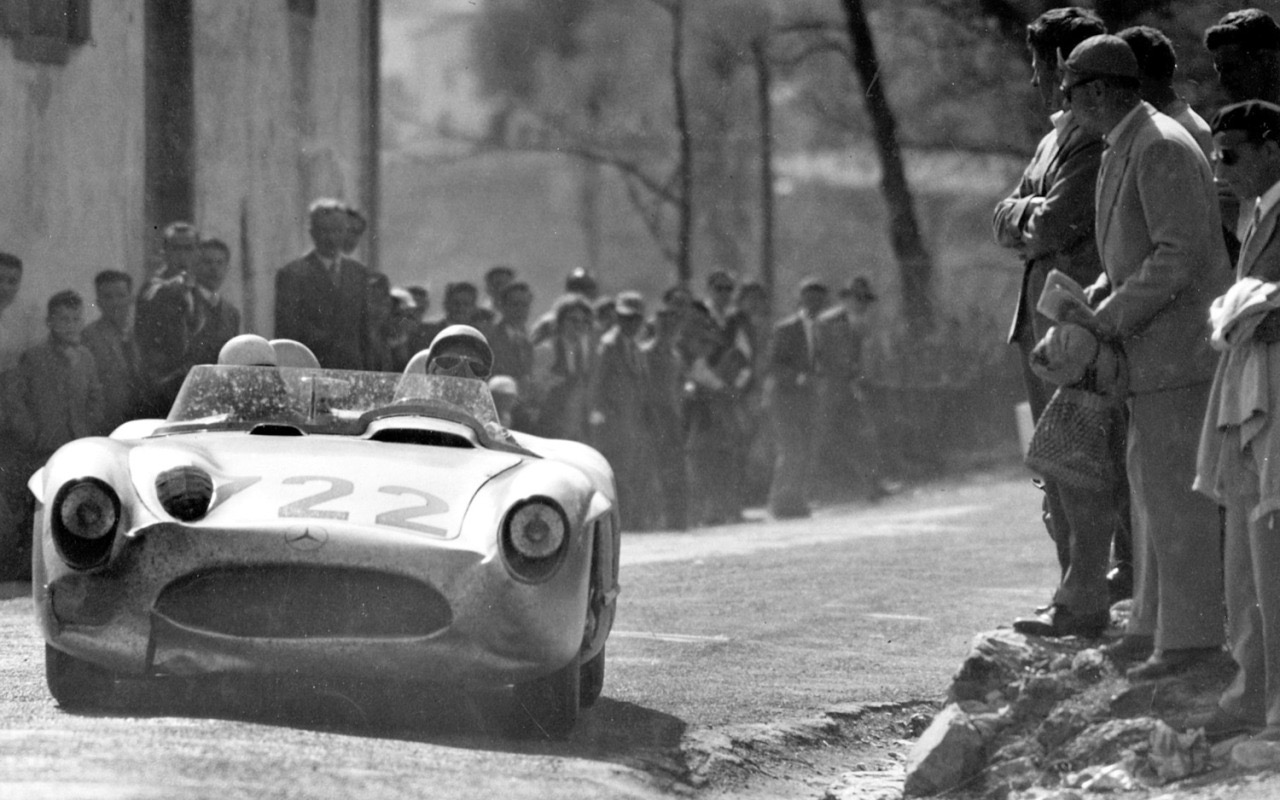
Moss and Jenkinson won the 1,597 km Mille Miglia on 1 May 1955 in 10 hours 7 minutes 48 seconds, an average of 157.651 km/h (about 98 mph), according to the Racing Sports Cars results. Juan Manuel Fangio, who drove the 1,000 miles alone, was second in car 658, 31 minutes 45 seconds behind. The number was their start time: they left the ramp at 7.22 a.m., Mercedes-Benz Classic noted in 2015. Moss was 25 and Jenkinson, Motor Sport's correspondent, was 34. The Mercedes-Benz archive says no one has bettered the average for the race.
The pace notes on a roller
Jenkinson's June 1955 report describes how they did it. Over three practice visits in a 220A saloon, 300 SL coupés and a 300 SLR, he wrote 17 pages of notes on every corner, brow and level crossing on the route. In the race he wound the notes through a roller-map device and passed them on by hand signal, since they could not hear each other in the car; Moss trusted the system enough to hold 170 mph over blind brows. Mercedes-Benz had pits stocked with spares, tyres, food and drink at Ravenna, Pescara, Rome, Florence and Bologna. Moss's own wish was to cover Florence to Bologna, over the Futa and Raticosa passes, in under an hour.
The other three 300 SLRs
Karl Kling crashed his 300 SLR, number 701, after about five hours, and Hans Herrmann's car, number 704 with Hermann Eger, also went out in an accident, the results show. A Ferrari 118 LM driven by Umberto Maglioli finished third, ahead of Francesco Giardini's 2-litre Maserati.
The Eifelrennen and the Swedish Grand Prix
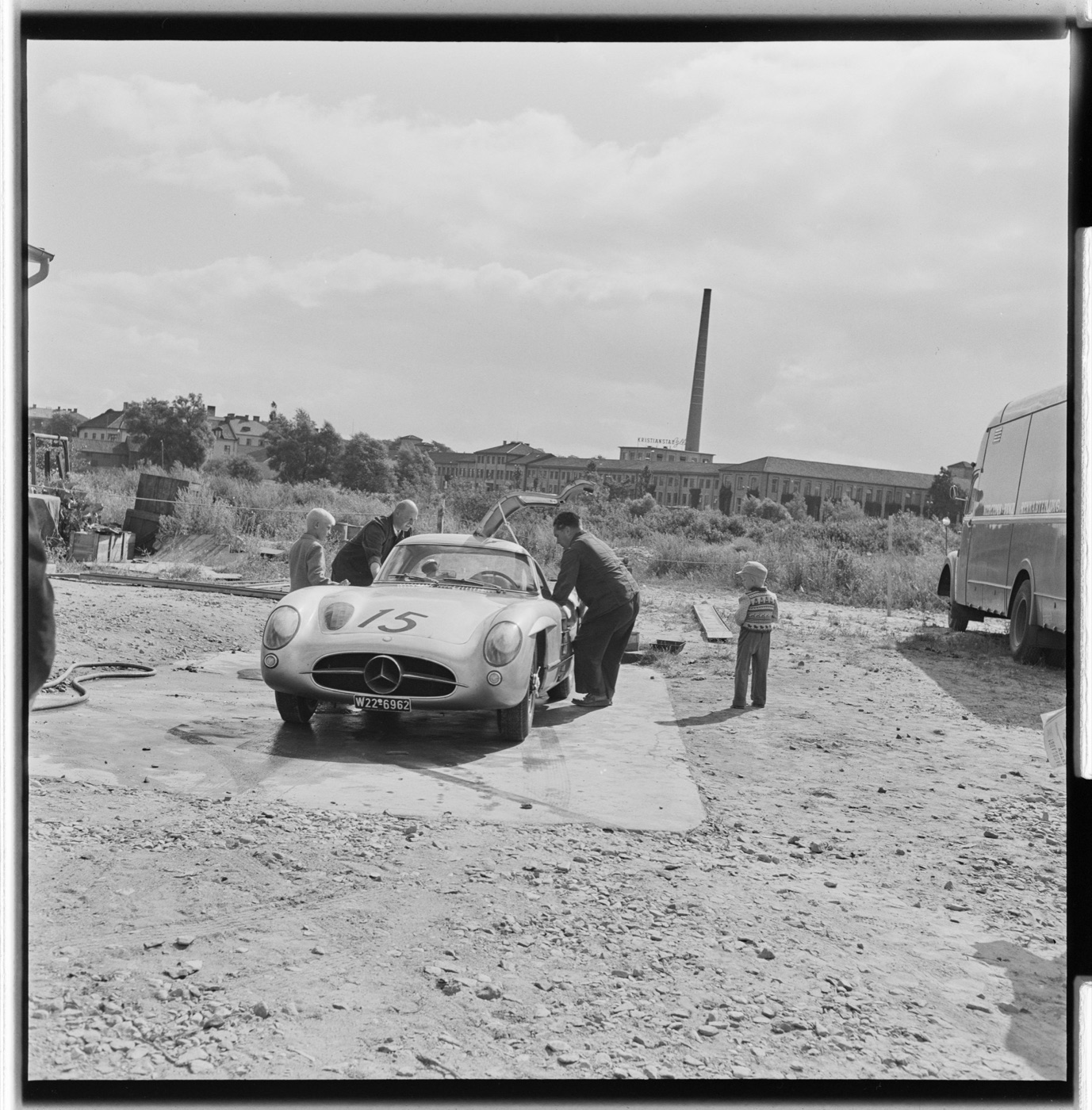
Fangio won the non-championship Eifelrennen at the Nürburgring on 29 May by a tenth of a second from Moss, with Kling fourth, according to the Eifelrennen results. At the Swedish Grand Prix, also outside the championship, at Kristianstad on 7 August Fangio again beat Moss by less than a second, with Eugenio Castellotti's Ferrari third (the Swedish Grand Prix results). Uhlenhaut drove one of the new coupés in practice there.
The Tourist Trophy at Dundrod
Mercedes-Benz took the first three places in the RAC Tourist Trophy in Northern Ireland on 17 September, with Moss and John Fitch first, Fangio and Kling second, and Wolfgang von Trips and André Simon third. Motor Sport's October 1955 report describes Moss's rear tyre bursting at 130 mph; the mechanics took more than two minutes to fit new wheels and tear away the torn bodywork. Mike Hawthorn and Desmond Titterington's Jaguar D-type then led until Moss, back at the wheel in heavy rain, passed it on lap 56. Three drivers were killed in other cars during the race: Jim Mayers and William Smith in a multiple crash on the second lap, and Richard Mainwaring later in the day.
The Targa Florio and the world championship
The Targa Florio on 16 October decided the title. Moss and Peter Collins won the 13 laps of the Madonie circuit in 9 hours 43 minutes, with Fangio and Kling second and Desmond Titterington and Fitch fourth (the Targa Florio results). Mercedes-Benz needed the win, with Ferrari no better than third, to take the title. The board had already decided on 11 October to stop sports car racing and kept the decision from the team in Sicily, the company archive says.
The 300 SLR at Le Mans in 1955
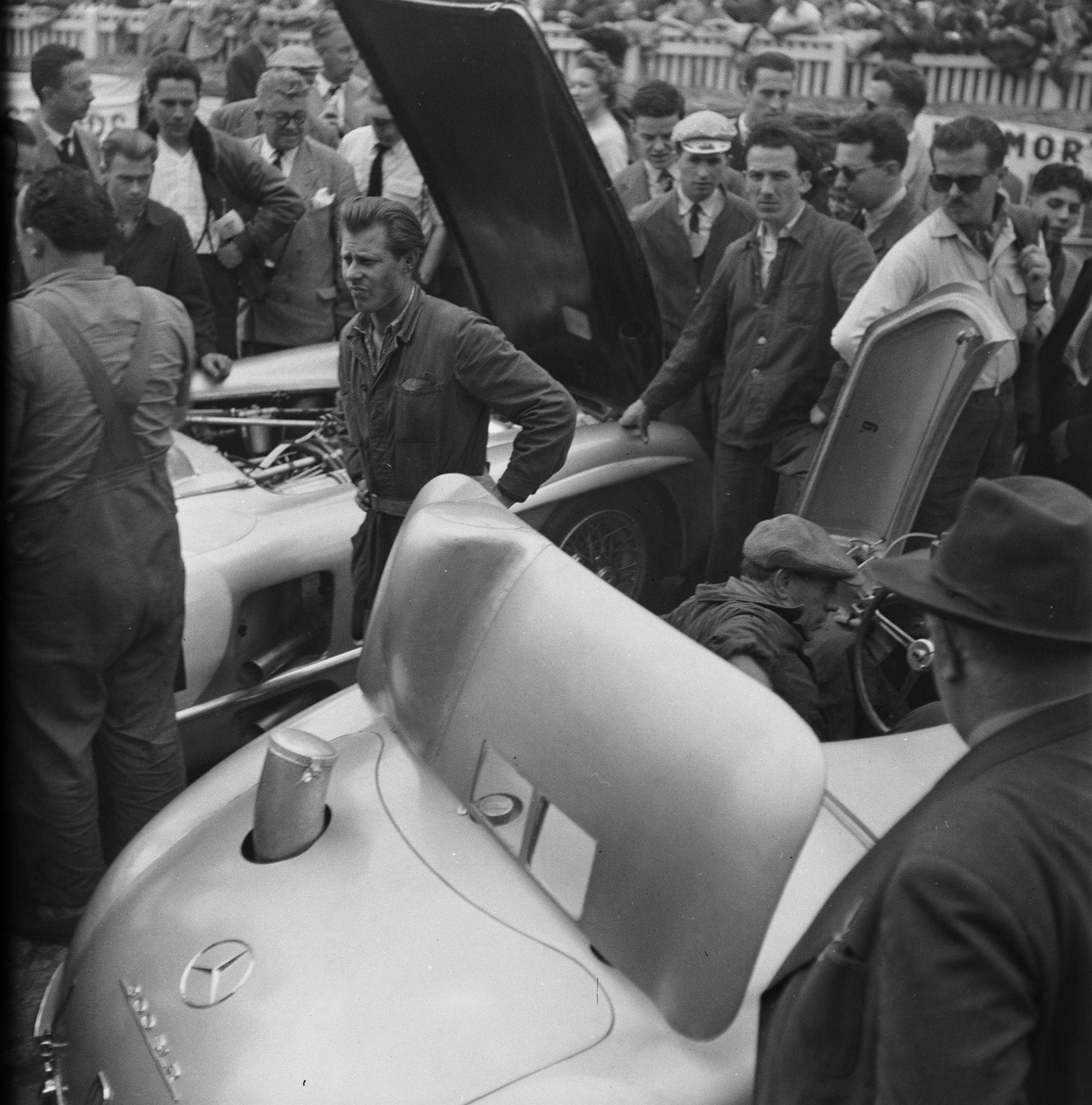
On 11 June 1955, just under two and a half hours into the Le Mans 24 Hours, Pierre Levegh's 300 SLR hit the back of Lance Macklin's Austin-Healey on the pit straight, was thrown into the spectator enclosure, broke apart and caught fire. Levegh and more than 80 spectators were killed: the Mercedes-Benz archive's account gives Levegh and 83 spectators, and Motor Sport's 2026 account at least 82 dead and more than 120 injured. Motor Sport calls it the deadliest accident in the history of motor sport.
What happened
Mercedes-Benz had three cars: Fangio and Moss, Kling and Simon, and Fitch with Levegh, the Frenchman who had driven the 1952 race alone and led until mechanical failure in the 23rd hour. Hawthorn's Jaguar D-type and Fangio had been fighting for the lead since the start. Hawthorn had just lapped Levegh and Macklin, Jenkinson wrote in 1955, and then braked to make his pit stop; Macklin swerved out to avoid him, into the path of Levegh's Mercedes, which was closing at racing speed with Fangio behind it. Levegh raised a hand to warn Fangio, who got through, Motor Sport's account says. The car's Elektron body burned fiercely, and water from the fire crews made it worse.
The organisers kept the race going, reasoning that a crowd leaving all at once would block the roads for the ambulances. Fitch, the team's American driver, urged Mercedes-Benz to withdraw: with the war only a decade past, a German team racing on while French spectators lay dead was, he argued, a moral and a political problem. The directors in Stuttgart agreed around midnight: shortly before, Motor Sport says; shortly after, by the Mercedes-Benz archive. The two remaining cars came in at 1.40 a.m. by the archive's record and about 1.45 a.m. by Motor Sport's, when Fangio and Moss led by two laps; Jenkinson's 1955 report gives the time as just after 2 a.m. Hawthorn and Ivor Bueb won for Jaguar.
Who was to blame
The French government inquiry, led by the magistrate Zadock Kahn, concluded that no one was to blame and that the cars had run too close to the crowd, Grandprix.com reported on the 50th anniversary. It examined the wreckage, questioned drivers and team staff, and tested the fuel left in the Mercedes' injection system, which press rumours said had held an explosive additive; it found none. It accepted Hawthorn's statement that he had signalled and left enough time for the cars behind to react, Motor Sport's 2026 account records. The same account calls the circuit "a relic of a different era": the pits on the main straight had changed little since the first race in 1923, when the fastest cars rarely passed 60 mph, and the barriers had not kept pace with cars now doing more than 150 mph on the Mulsanne Straight. Before the 1956 race the circuit was shortened, the pit lane reconfigured and the barriers improved. The Mercedes-Benz archive gives the company's view: that Hawthorn's manoeuvre caused the crash and that it was not Levegh's fault. Macklin never accepted Hawthorn's account and sued him for libel over his 1958 autobiography; the case was unresolved when Hawthorn died in a road accident in January 1959. France, Germany, Switzerland and Spain banned motor racing after the disaster, and Switzerland's ban on circuit racing lasted until 2022.
Did Le Mans end Mercedes-Benz's racing?
Daimler-Benz announced its withdrawal from motorsport on 22 October 1955, at the celebration of its two world titles. The company archive notes that the departure is "repeatedly associated in public" with Le Mans. It says its files show a different reason: the board had decided in spring 1955 to leave Formula One and on 11 October to leave sports car racing, so that the racing department's engineers could work on production cars.
The Uhlenhaut Coupé
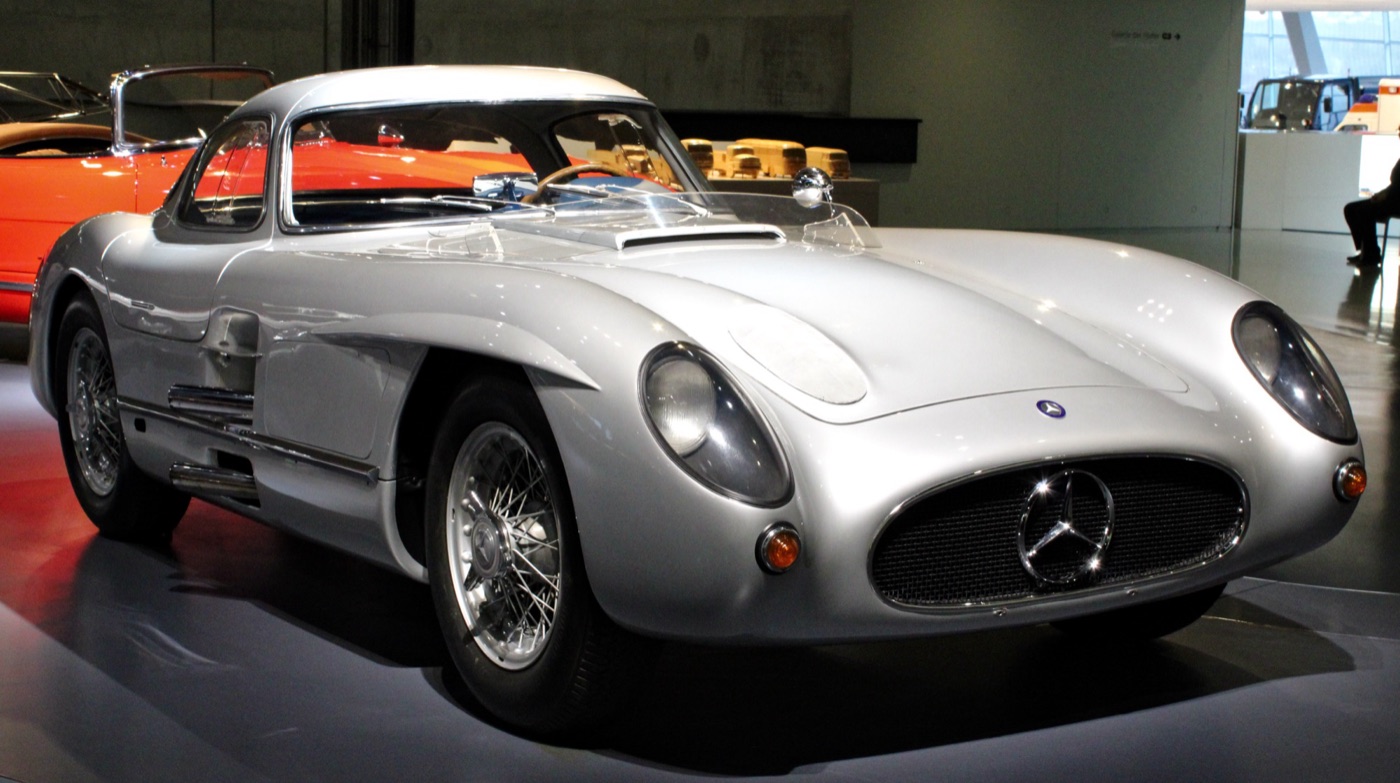
The Uhlenhaut Coupé is the closed, gull-wing version of the 300 SLR, two of which were built and neither of which raced. The name comes from Rudolf Uhlenhaut, who used one as his company car; enthusiasts have used it since the late 1980s, according to the Mercedes-Benz archive.
Why the coupé was built
Daimler-Benz revived the coupé design in the summer of 1955 for the Carrera Panamericana in Mexico, due at the end of November, and for the 1956 season, so that drivers in long races could choose between the open and closed versions. The first public sight of one was Uhlenhaut driving it in practice for the Swedish Grand Prix in August 1955. The coupés' only other running in 1955 was in practice and test drives at Monza, the Tourist Trophy and the Targa Florio. Motor Sport's Tourist Trophy report says the coupé at Dundrod was the works hack, driven from Stuttgart by von Trips to get used to the 300 SLR. Jenkinson wrote in 1968 that he and Moss had planned to wear full harnesses in the coupé in Mexico, "as there was no easy way out of the gull-wing coupé", Motor Sport recorded in 2005.
The sources differ on when the second coupé was finished. The Mercedes-Benz archive says both were completed in the summer of 1955; RM Sotheby's lot description says construction of chassis 196.110-00008/55, the one it sold, began in December 1955, and that it was ready to drive on 29 June 1956 after an Eberspächer silencer was fitted.
Inside the coupé: doors and cockpit
Beneath its skin the coupé is clearly a racing car, RM Sotheby's lot description says. Its occupants fold themselves in through the gull-wing doors, and most drivers take off the quick-release steering wheel to fit. The driver straddles a large drivetrain tunnel, with pedals on either side of it, and the accelerator pedal is covered in leather so a foot does not slip. Heating is a hinged flap in the bulkhead that lets engine heat into the cockpit. The fuel tank fills the boot, with two spare wheels on top of it.
Uhlenhaut's company car
The first coupé to be finished covered more than 10,000 km, mostly with Uhlenhaut at the wheel on journeys across Europe. The two side exhausts, which come out through gills halfway along each flank, were almost unsilenced; for the road a large silencer was hung on the right-hand side. RM Sotheby's repeats two stories about him and the car: that he drove the roughly 230 km between Stuttgart and Munich in under an hour when late for a meeting, and that the noise left him hard of hearing in later life.
The Automobil Revue road test
In July 1956 the Swiss magazine Automobil Revue, led by its editor Robert Braunschweig, drove a coupé 3,500 km through Switzerland, Germany and Italy, with acceleration and braking tests at Monza. The car had 12,000 km on its odometer when they took it over. Their report of 12 December 1956, quoted by Mercedes-Benz, described "a car in which 200 km/h on a motorway with little traffic is a slow pace", that used less fuel at 160 km/h than some saloons at lower speeds, and that ran "without the slightest breakdown". At 290 km/h, they wrote, it drove "dead straight, without batting an eye".
Who was Rudolf Uhlenhaut?
Uhlenhaut was born in London in 1906, where his German father ran Deutsche Bank's London branch, and the family moved to Bremen when he was eight, according to Motor Sport's 2025 profile. He joined Mercedes-Benz in 1931 and moved to the racing department in 1936; the Mercedes-Benz archive describes him as a master at driving the Silver Arrows at racing speed. He found that the 1936 Grand Prix car's chassis flexed and its ride was too stiff, and fixed both in the W125, which won the 1937 European Championship, Motor Sport's profile says. RM Sotheby's calls him the coupé's "creator and chief engineer"; after 1955 he became head of passenger car development.
How many Mercedes 300 SLRs were made?
Nine 300 SLRs were built and eight survive, according to Mercedes-Benz Classic's press release for the 2015 Goodwood Festival of Speed (reprinted in full by GTspirit). They were seven roadsters (chassis 1 to 6 and 10) and two coupés (7 and 8); the release says recent research shows there was never a chassis 9.
| Chassis | Type | Notes |
|---|---|---|
| 1, 2, 3 and 6 | Open racing car | 1955 team cars; one of chassis 3 and 6 did not survive |
| 4 | Open racing car | Moss and Jenkinson's Mille Miglia winner, number 722, kept in original condition |
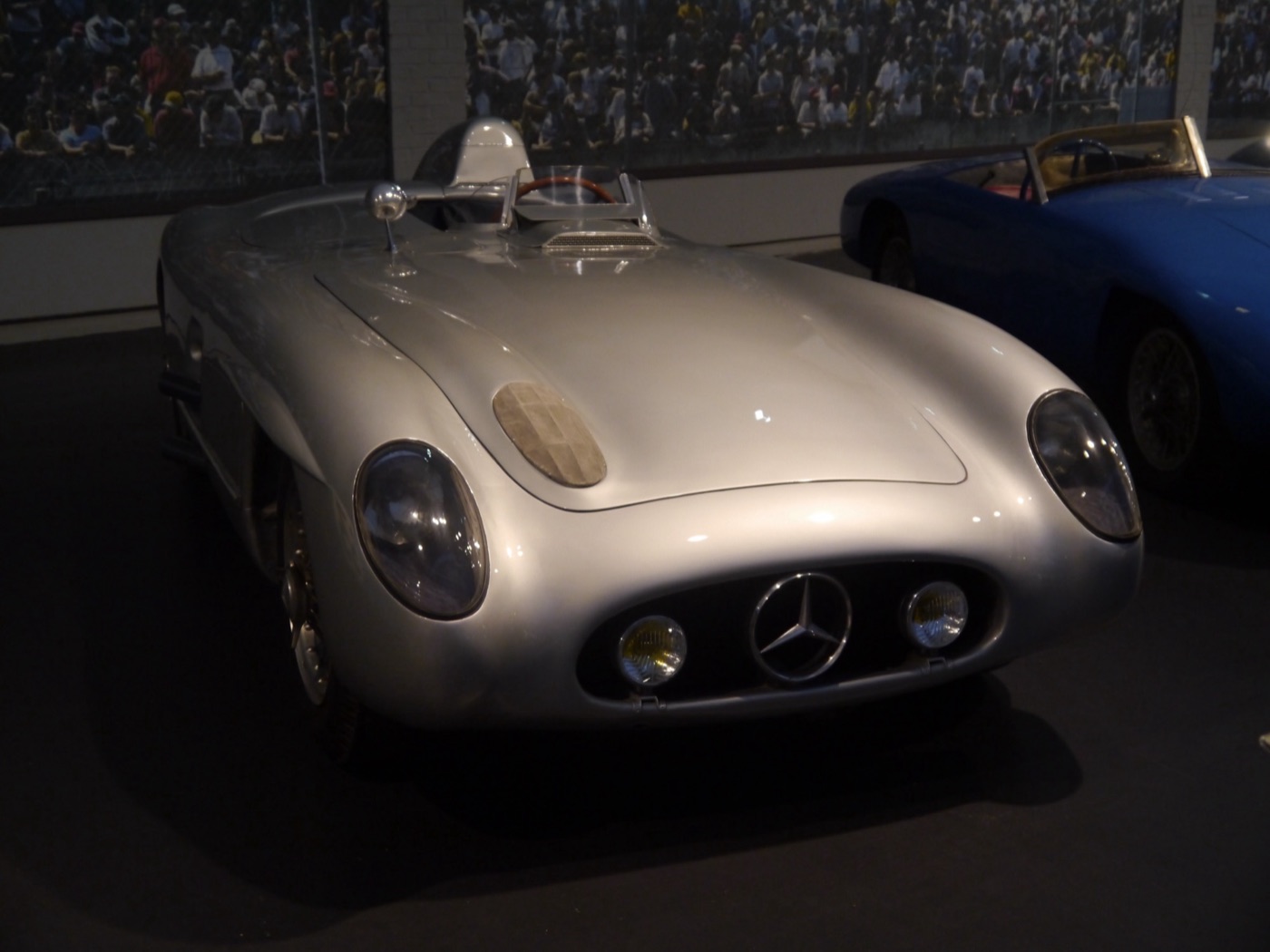
| 5 | Open racing car | Cité de l'Automobile (Collection Schlumpf), Mulhouse, France |
| 7 | Coupé | Mercedes-Benz Museum, Stuttgart |
| 8 | Coupé | Sold to a private collector in May 2022 |
| 10 | Open car for 1956 | Built as a one-off, never raced |
Sources: Mercedes-Benz Classic, June 2015; RM Sotheby's lot description for chassis 8 and press release of 19 May 2022.
The 1956 car had a variable-length intake manifold, front brake drums moved out to the wheels and lighter parts throughout, which took about 83 kg off the weight of the Targa Florio cars, the archive says. In 2015 Mercedes-Benz Classic held six of the eight survivors.
The €135 million sale of the Uhlenhaut Coupé
RM Sotheby's sold coupé chassis 8 for €135,000,000 at a private auction in the Mercedes-Benz Museum in Stuttgart on 5 May 2022, and announced the sale on 19 May. The price, about $143 million (CNBC, 19 May 2022), made it "the most valuable car ever sold", RM Sotheby's said.
Who bought the 300 SLR Uhlenhaut Coupé?
The buyer is a private collector who has not been named. CNBC reported that the British dealer and adviser Simon Kidston made the winning bid for a client after lobbying the Mercedes-Benz board for 18 months to sell. RM Sotheby's press release says the bidding opened above the price of the most expensive car sold at auction before it, a 1962 Ferrari 250 GTO that RM sold in 2018, and that the final price beat the old record by more than €90 million. The buyer agreed that the car will be shown in public on special occasions, and Mercedes-Benz keeps the other coupé in its museum.
Where the money went
Mercedes-Benz used the proceeds to set up the Mercedes-Benz Fund, which pays for scholarships in environmental science and decarbonisation for young people. "We are proud that we can contribute with our historical collection to this initiative," Marcus Breitschwerdt, head of Mercedes-Benz Heritage, said in the release.
Why is the Uhlenhaut Coupé so expensive?
It is one of two, the company had owned it since it was built, and RM's lot description notes that no other 300 SLR is in private hands. It made demonstration runs around Europe for guests including the Duke of Kent and Lord Brabazon, was used by Mercedes-Benz in the United States from 1961 to 1963, and was restored by the historic racing car specialist Tony Merrick between January and July 1986. It then ran at the Oldtimer Grand Prix at the Nürburgring in August 1986, was shown at Geneva in 1988, at the 1999 German Grand Prix and at Pebble Beach in 2001, and appeared in the brochure for the Mercedes-Benz SLR McLaren in 2003. From the mid-1960s, RM says, Mercedes-Benz, its owner since 1955, had shown it at numerous events.
Rivals of the 300 SLR in 1955
Ferrari was the 300 SLR's championship rival, and Jaguar its fastest opponent on the day. Ferrari led the title until the Targa Florio, with more races started than Mercedes-Benz; its 118 LM was third in the Mille Miglia, a 750 Monza third at the Eifelrennen, a 121 LM third in Sweden and Castellotti and Manzon's 857 Sport third in the Targa Florio. Jaguar's D-type had disc brakes, where the 300 SLR had inboard drum brakes, and the Hawthorn and Titterington D-type led at Dundrod until Moss passed it in the rain. Maserati's 300S and Aston Martin's DB3S also raced the 300 SLR; Collins's DB3S was second at Le Mans after the Mercedes withdrew, and Jean Behra's Maserati was fourth in Sweden.
Where to see a Mercedes 300 SLR
The Mercedes-Benz Museum in Stuttgart shows the company's Uhlenhaut Coupé, and the Cité de l'Automobile in Mulhouse has chassis 5. In 2015 Mercedes-Benz Classic brought seven of the eight survivors to the Goodwood Festival of Speed for the 60th anniversary of the Mille Miglia win, and its release said Moss would be reunited there with chassis 4 and Hans Herrmann would drive again. Two years earlier the coupé was shown at the 2013 Festival of Speed press day, with Jochen Mass named to drive it at the event that summer, a March 2013 SkiddMark report recorded.
Questions
Did the 300 SLR Uhlenhaut Coupé ever race?
No. The two coupés ran only in practice and tests in 1955, at the Swedish Grand Prix, Monza, the Tourist Trophy and the Targa Florio, before Daimler-Benz stopped racing that October.
Is the 300 SLR the same car as the 300 SL Gullwing?
No. The 300 SL Gullwing was a production sports car; the 300 SLR is a racing car built on the W 196 Formula One car's chassis and engine. Mercedes-Benz chose the name to recall the 300 SL racing car of 1952, its archive says.
Why was Moss's Mille Miglia car numbered 722?
It was their start time: Moss and Jenkinson left the ramp in Brescia at 7.22 a.m. on 1 May 1955, Mercedes-Benz Classic noted in 2015.
Who drove the 300 SLR in 1955?
Stirling Moss, Juan Manuel Fangio, Karl Kling, Hans Herrmann, Pierre Levegh, John Fitch, André Simon, Wolfgang von Trips, Peter Collins and Desmond Titterington, with Denis Jenkinson beside Moss in the Mille Miglia.
Where is the 722 Mille Miglia car now?
It is chassis 4, which Mercedes-Benz Classic keeps in original condition; Moss was reunited with it at the Goodwood Festival of Speed in 2015, 60 years after the win.
Is the Mercedes SLR McLaren related to the 300 SLR?
It takes its name from it. Mercedes-Benz launched the SLR McLaren road car in 2003 and used the Uhlenhaut Coupé in its brochure, RM Sotheby's notes.
Sources
- Mercedes-Benz Classic archive, "Mercedes-Benz 300 SLR (W 196 S), 1955" and its technical data, read 28 October 2026: development, the 1954 press release on the name, engine, chassis, air brake, results, the championship, the board's decisions and the 1956 car.
- Mercedes-Benz Classic archive, "Mercedes-Benz 300 SLR 'Uhlenhaut-Coupé', 1955" and its technical data, read 28 October 2026: the coupé's design dates, practice outings, Uhlenhaut's use, the Automobil Revue test of 1956 and the coupé's figures.
- Mercedes-Benz Classic archive, "Le Mans 24 hour race" (1955), read 28 October 2026: the company's account of the accident, the death toll and the withdrawal.
- Mercedes-Benz Classic, press release for the 2015 Goodwood Festival of Speed, reprinted by GTspirit, 23 June 2015: nine built, eight surviving, chassis numbers, the 722 start time.
- RM Sotheby's, lot description, 1955 Mercedes-Benz 300 SLR Uhlenhaut Coupé, chassis 196.110-00008/55, May 2022: construction dates, weight, the car's history and the Uhlenhaut stories.
- RM Sotheby's, press release on the sale, 19 May 2022: price, date, place, the Mercedes-Benz Fund, public display, the previous record.
- CNBC, Robert Frank, "A 1955 Mercedes just nabbed $143 million at auction", 19 May 2022: the dollar price and Simon Kidston's bid.
- Motor Sport, Denis Jenkinson, "With Moss in the Mille Miglia", June 1955: practice, the notes, the race, speeds and the gear-lever lock.
- Motor Sport, Denis Jenkinson, "The Best Becomes the Worst", July 1955: the air brake and the withdrawal at Le Mans.
- Motor Sport, "The 1955 Ulster Tourist Trophy", October 1955: pairings, the coupé at Dundrod, Moss's tyre failure, the race and the fatal accidents.
- Motor Sport, Doug Nye, "1000 Miglia: it was never just another race", May 2005: Moss on the 300 SLR, Jenkinson on the coupé harness.
- Motor Sport, "The genius of Mercedes designer Rudolf Uhlenhaut", November 2025: Uhlenhaut's early life and career.
- Motor Sport, Pablo Elizalde, "The day racing lost its innocence: the 1955 Le Mans tragedy", 11 June 2026: the accident, casualties, the withdrawal, the inquiry and the bans.
- Grandprix.com, "Let us not forget", 11 June 2005: the French government inquiry under the magistrate Zadock Kahn and its verdict.
- Racing Sports Cars, results of the 1955 Mille Miglia, Eifelrennen, Le Mans 24 Hours, Swedish Grand Prix and Targa Florio, read 28 October 2026: positions, times and average speeds.
- SkiddMark, "Mercedes-Benz 300 SLR 'Uhlenhaut Coupé' joins the spectacle at Goodwood", 22 March 2013: the coupé at the 2013 Festival of Speed with Jochen Mass.