MINI Countryman R60: history, specs, rallying and buying guide
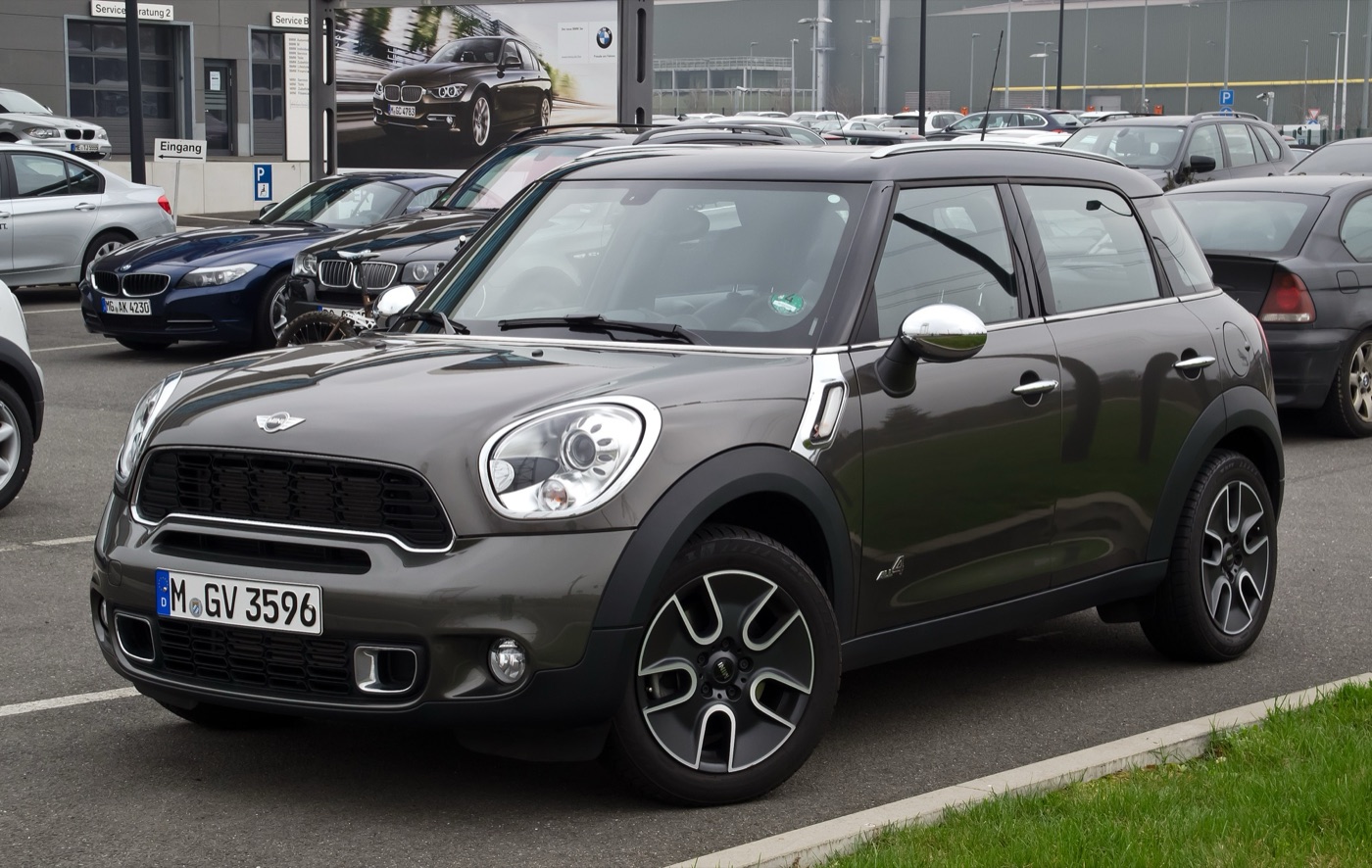
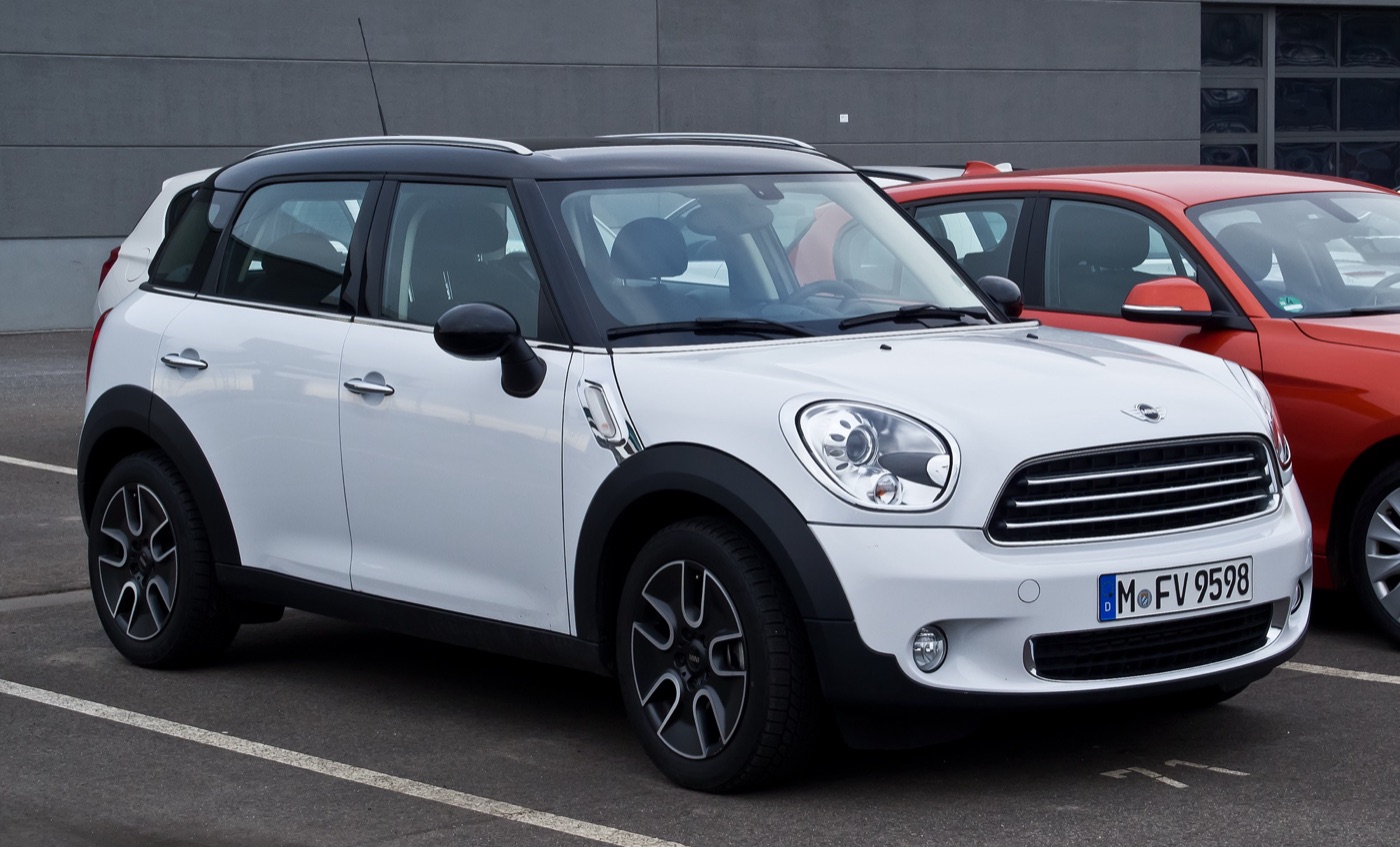
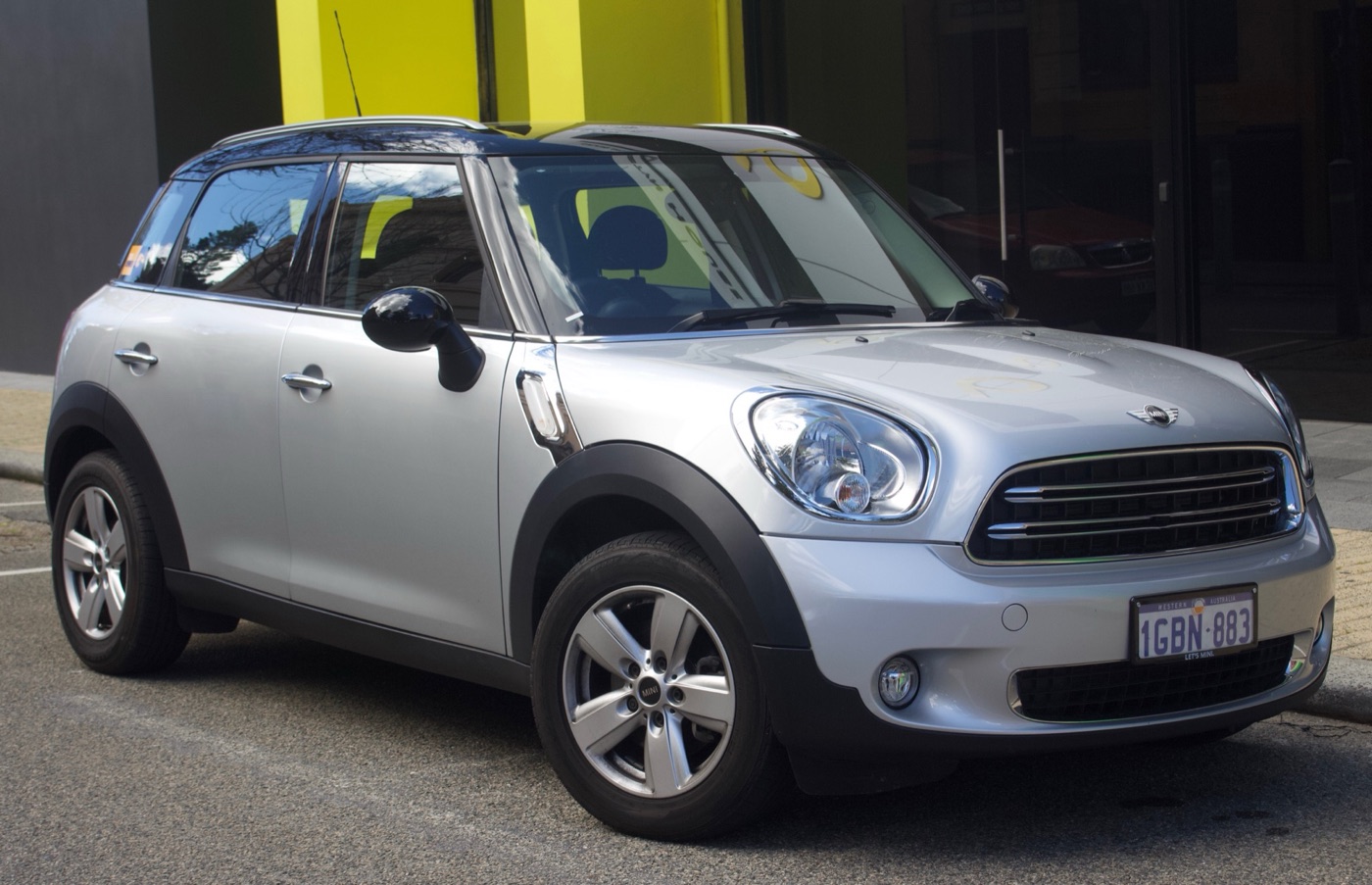
The MINI Countryman R60 is the first-generation, or Mk1, Countryman: the first SUV sold under the MINI marque, and the first MINI with four doors, a tailgate and optional four-wheel drive. BMW showed it at the Geneva motor show in March 2010, Magna Steyr built it under contract in Graz, Austria, and UK sales ran from September 2010 until the larger F60 replaced it early in 2017. BMW delivered 480,429 between 2011 and 2015 alone, so used R60s are plentiful: in October 2026, 204 of them were advertised on PistonHeads at a median £5,782.
History of the MINI Countryman R60
The R60 grew out of a concept car shown in 2008 and went on sale two years later. It was the brand's fourth model after the hatch, the Clubman and the Convertible, aimed at buyers "requiring extra space and flexibility for their family or leisure time activities", according to BMW's media information for the 2010 Geneva show.
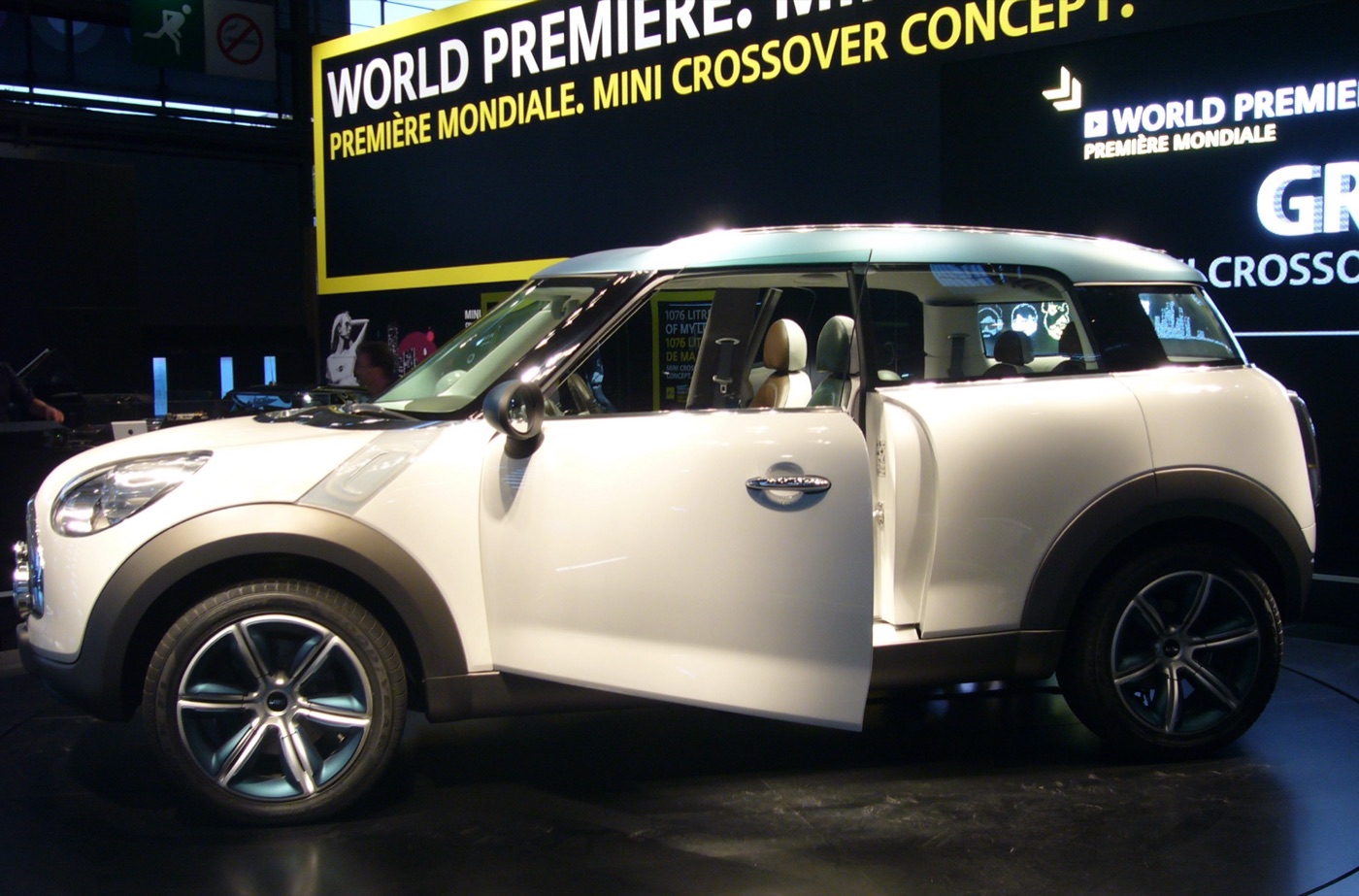
The MINI Crossover Concept, 2008
The shape was first seen as the MINI Crossover Concept at the Paris motor show in October 2008. MINI UK's press release of September 2008 called it a design study for a fourth model, with "four doors, four drive wheels, four single seats" and a length of four metres. The concept had a sliding rear door on the driver's side and a "Centre Rail" (BMW later spelt it Center Rail) running between the seats. The Center Rail went into the production car.
Geneva 2010 and the UK launch
The production car made its debut at the 80th Geneva motor show, 4 to 14 March 2010. BMW described it as the brand's first model longer than four metres and the first with four doors and a large tailgate. In February 2010 Autocar published the UK prices: £16,000 for the One, £17,510 on the road for the Cooper, £20,810 for the Cooper S, £17,000 for the One D and £18,810 for the Cooper D, with ALL4 four-wheel drive adding £1,065 to the Cooper D and £1,220 to the Cooper S. UK cars went on sale in September 2010.
Built in Graz by Magna Steyr
The Countryman was built by Magna Steyr, BMW's "production and development partner", in Graz; the RAC's used-car review notes that, unlike the other modern MINIs, it was never built in Britain. The 250,000th car left the Graz line on 12 March 2013, two and a half years after sales began, BMW announced. By then Graz was also building the Paceman, the three-door model derived from the Countryman.
The US launch and the classic Mini on the roof
In the United States the Countryman's launch advertising quoted MINI's own past. In 2002 the agency Crispin Porter + Bogusky had relaunched the brand there with a stunt called "The SUV backlash officially starts now": a MINI strapped to the roof of a Ford Excursion and driven around 22 American cities, parking beside children's coin-operated rides with a sign reading "Rides $16,850", as a January 2011 SkiddMark report recorded. In January 2011 the agency Butler, Shine, Stern & Partners repeated the stunt in reverse, with an original 1960s Mini on the roof of a new Countryman. Its explanation: "with the launch of the all-new, four-wheel drive Countryman, MINI isn't so mini anymore, so we simply couldn't resist mounting a classic Mini on top of the Countryman, to show just how much we've grown." The copy on the Countryman's flank read "Holds everything you need for a fun weekend."
The crossover divided MINI's American fans. MotoringFile, the American MINI enthusiasts' site, wrote in February 2011 that the car had caused "no small amount of controversy" among its readers and that for a brand that had arrived "under the mantra of 'The SUV backlash starts now', producing a crossover seems to some like a betrayal". Its own writer disagreed, pointing out that where the 2002 hatch had fitted snugly on the Excursion's roof, the classic Mini overhung the Countryman's.
The 2014 facelift
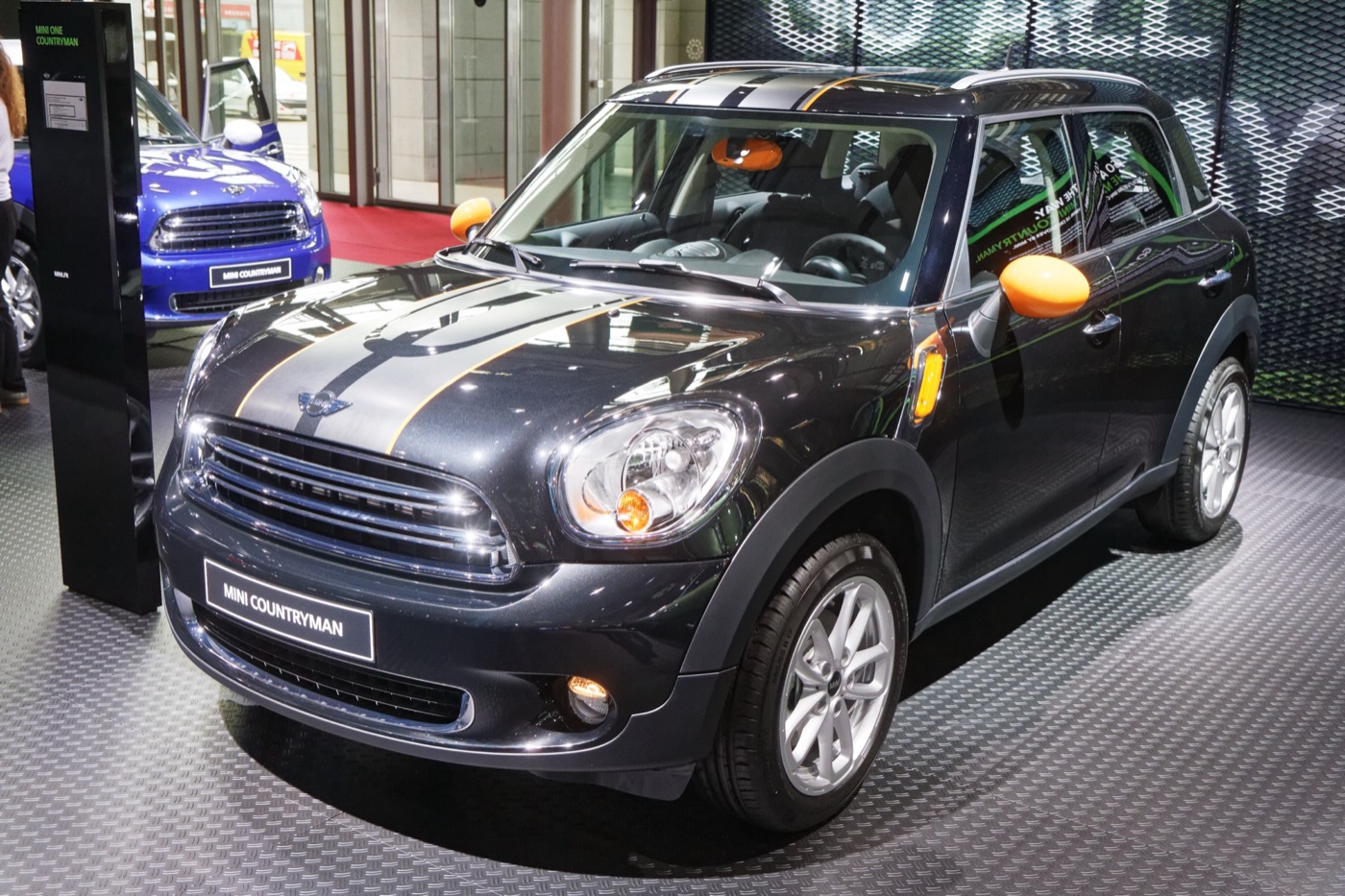
BMW revised the R60 for the 2014 New York motor show, and its press folder for the updated car put the market launch of every version in July 2014. All engines now met the EU6 emissions standard, the Cooper S gained 5 kW to 140 kW (190 hp), the grille had a new design, cars with ALL4 got black underbody guards front, rear and along the sills, and the dials turned dark grey. LED fog lights with an LED daytime-running ring became an option. The same document said the Countryman had sold more than 350,000 cars worldwide.
When did the R60 end?
The R60 was sold until its successor arrived: the F60, some 20 centimetres longer, reached its first UK customers in February 2017, according to MINI UK's media information of October 2016. Every R60 came from Graz; the F60 is built at VDL Nedcar in Born, the Netherlands, which BMW's 2016 annual report added to its list of Countryman plants. In 2016, BMW's last full year of R60 sales, it recorded 68,301 Countrymans and Pacemen together.
Design and engineering
The R60 is a five-door hatchback on raised suspension, which BMW said combined a MINI's handling with the space of a four-door and "the supreme traction of a Sports Activity Vehicle". It is 4,097 mm long, 1,789 mm wide and 1,561 mm tall on a 2,595 mm wheelbase. Autocar measured it against the MINI hatch of the day: 398 mm longer, 316 mm wider and 170 mm taller, with 190 litres more boot space.
Body and styling
BMW's 2010 press kit lists the details that mark it out from other MINIs: an upright hexagonal grille, headlights set into the bonnet and stretched into the wings, a "Powerdome" bulge on the bonnet, a roof rail as standard and a chrome band running all the way round the car at the waistline. The diagonal trim strip between the front wing and the door, which holds the side indicator, was a reworking of the body seam on the classic Mini. Pressing the centre of the MINI badge on the tailgate opens it; BMW said this was the first time the rear badge had a function.
Interior and the Center Rail
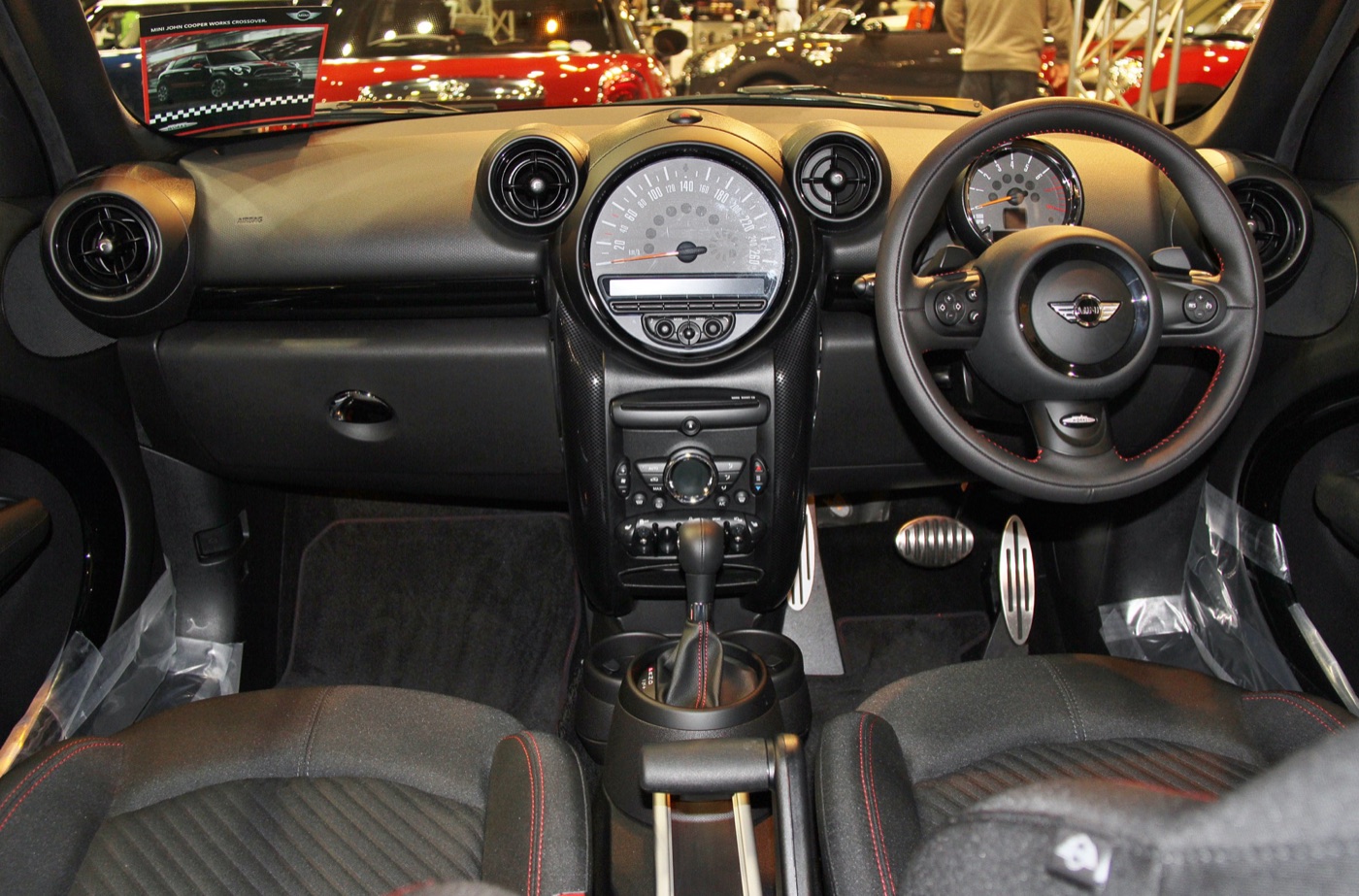
The cabin keeps the hatch's big central speedometer and toggle switches. In place of a centre console, a rail called the Center Rail ran from the dashboard to the back seats, and clip-on cup holders, a glasses case, armrests and phone holders slid along it. At launch the standard rear seat was a pair of single seats that each slid 130 mm; a three-seat bench with a 40:20:40 split backrest cost nothing extra, and UK cars came with the bench as standard. Boot space ranged from 350 litres to 1,170 litres with the rear seats folded, which BMW said was enough for two mountain bikes with their front wheels off.
Standard equipment and options
UK cars came with air conditioning, a DAB radio, rear parking sensors, an alarm, stability control, six airbags and a tyre puncture warning as standard, Autocar reported in 2010. BMW's launch list of extras included xenon headlights that turned with the steering, a panoramic glass roof, a heated windscreen, a towbar, sports suspension 10 mm lower, 18- and 19-inch wheels, navigation and the full range of John Cooper Works parts. The 2014 options list also named comfort access, a Harman Kardon hi-fi and MINI Connected, which linked a smartphone's apps to the central screen.
Four-wheel drive: ALL4
ALL4 was the first four-wheel-drive system on a MINI. It uses an electromagnetic centre differential that splits torque between the axles: up to 50 per cent goes to the rear in normal driving, and up to 100 per cent on ice or snow, with its control electronics built into the stability-control unit so it reacts in under a tenth of a second. At launch it was offered on the Cooper S and Cooper D; by 2013 BMW also listed it for the Cooper SD and as standard on the John Cooper Works, and the 2014 range added it to the Cooper.
Suspension and safety
The front suspension is MacPherson struts with forged track control arms, the rear a multi-link axle designed to take front or four-wheel drive. Every car had six airbags and stability control. In its 2010 test of a right-hand-drive 1.6 diesel, Euro NCAP gave the Countryman five stars, scoring 84 per cent for adult occupants, 83 per cent for children, 63 per cent for pedestrians and 71 per cent for safety assist. In the US, BMW said the car was an Insurance Institute for Highway Safety Top Safety Pick in 2011, 2012 and 2013.
Engines and specifications
Every R60 has a four-cylinder engine driving through a six-speed gearbox, manual as standard with a six-speed automatic as an option on most versions. The petrol engines are all 1.6 litres; the diesels are a 1.6 and a 2.0.
| Model | Engine | Power | Torque | 0–100 km/h | Top speed |
|---|---|---|---|---|---|
| One (2010) | 1,598 cc petrol | 72 kW / 98 hp | 153 Nm | 12.7 s | 175 km/h (109 mph) |
| Cooper (2010) | 1,598 cc petrol | 90 kW / 122 hp | 160 Nm | 10.5 s | 190 km/h (118 mph) |
| Cooper S (2010) | 1,598 cc turbo petrol | 135 kW / 184 hp | 240 Nm (260 Nm overboost) | 7.6 s | 215 km/h (133 mph) |
| Cooper S (2014) | 1,598 cc turbo petrol | 140 kW / 190 hp | 240 Nm (260 Nm overboost) | 7.5 s | 218 km/h |
| John Cooper Works ALL4 (2012) | 1,598 cc turbo petrol | 160 kW / 218 hp | 280 Nm (300 Nm overboost) | 7.0 s | 225 km/h (140 mph) |
| One D (2010) | 1,598 cc diesel | 66 kW / 90 hp | 215 Nm | 13.2 s | 170 km/h (105 mph) |
| Cooper D (2010) | 1,598 cc diesel (1,995 cc with automatic from 2011) | 82 kW / 112 hp | 270 Nm | 10.9 s | 180 km/h (112 mph) |
| Cooper SD (2011) | 1,995 cc diesel | 105 kW / 143 hp | 305 Nm | 9.3 s | 198 km/h (123 mph) |
Sources: BMW media information, March 2010 (provisional figures), February 2011, March 2012 and July 2014.
Petrol engines
All the petrol engines have fully variable valve lift based on BMW's Valvetronic system. The Cooper S added a twin-scroll turbocharger and direct injection; BMW said the Countryman Cooper S was the first MINI to combine all three. Its 240 Nm arrives at 1,600 rpm and an overboost function lifts it briefly to 260 Nm. The John Cooper Works engine of 2012 kept the 1.6 litres and raised output to 218 hp.
Diesel engines
At launch both diesels were 1.6-litre common-rail units with variable-geometry turbochargers, the One D at 90 hp and the Cooper D at 112 hp. In February 2011 BMW announced the Cooper SD, a 2.0-litre diesel of 143 hp for spring 2011, and said that from spring 2011 Cooper D models with the new six-speed automatic would also use the 2.0-litre engine, tuned to match the 1.6's output and torque. The Cooper D was the economy pick: BMW quoted 64.2 mpg and 116 g/km at launch, and 111 g/km after the 2014 update.
Fuel consumption
On the EU combined cycle BMW quoted 47.9 mpg for the One, 46.3 mpg for the Cooper and 44.8 mpg for the Cooper S at launch, against 65.7 mpg for the One D and 64.2 mpg for the Cooper D. The Cooper SD was rated at 4.6 litres/100 km (61 mpg) with front-wheel drive and 4.9 litres/100 km (58 mpg) with ALL4, and the John Cooper Works at 39.2 mpg as a manual. Four-wheel drive costs fuel: the 2010 figures for the Cooper S were 6.3 litres/100 km with front-wheel drive and 6.7 litres/100 km with ALL4.
How fast is the MINI Countryman R60?
The fastest R60 is the John Cooper Works: BMW quoted 0–100 km/h in 7.0 seconds and 225 km/h (140 mph) at its 2012 launch, improved to 6.9 seconds and 228 km/h in the 2014 press folder. The slowest is the One D at 13.2 seconds and 170 km/h. A Cooper S with ALL4 takes 7.8 seconds, 0.2 seconds longer than the front-wheel-drive car.
Variants and the Paceman
The range grew from five versions in 2010 to eleven in BMW's 2014 list: One, Cooper, Cooper ALL4, Cooper S, Cooper S ALL4, John Cooper Works, One D, Cooper D, Cooper D ALL4, Cooper SD and Cooper SD ALL4. The R60 also had a three-door sister, the Paceman.
John Cooper Works Countryman
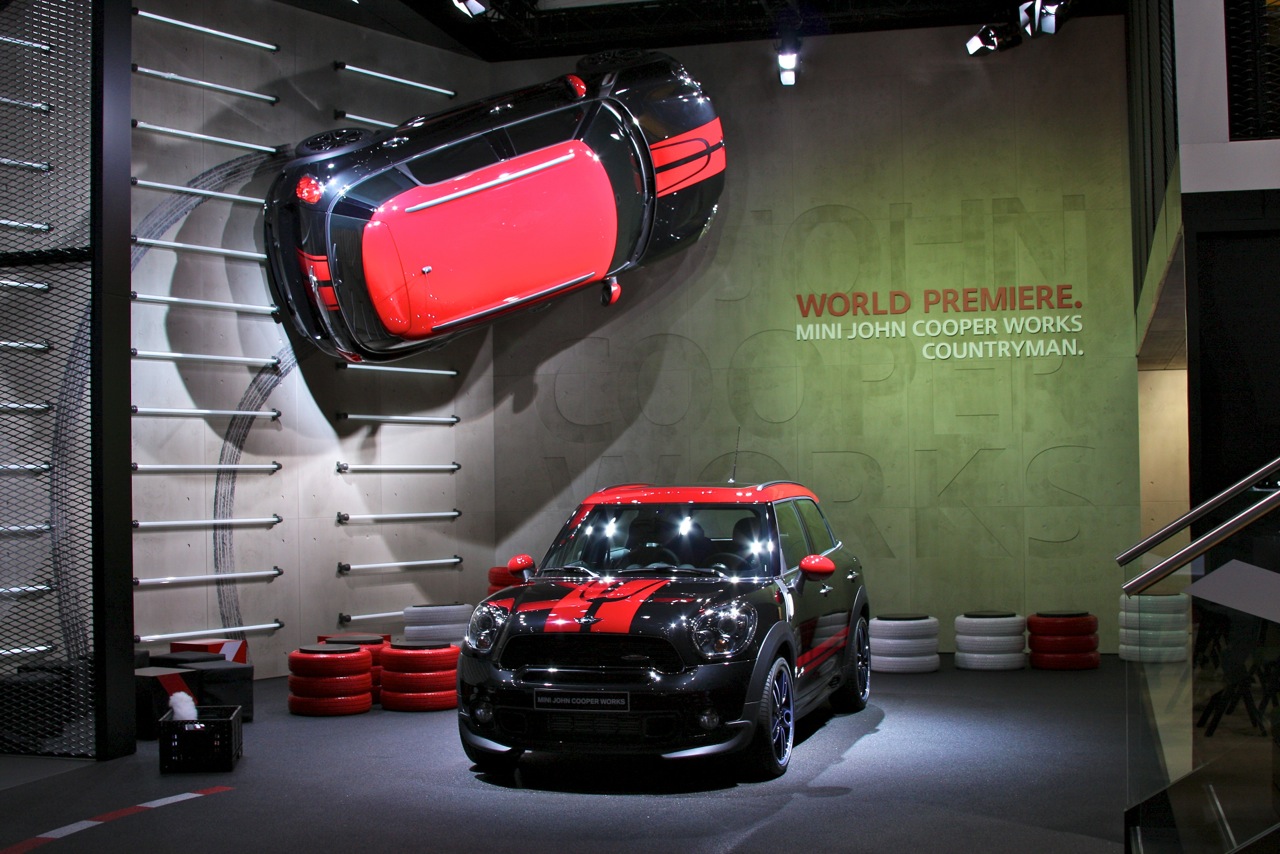
The John Cooper Works Countryman had its world premiere at the Geneva show in March 2012 and went on sale that autumn. MINI's Geneva 2012 media information called it the sixth John Cooper Works model and the first with ALL4, which it had as standard, and the first John Cooper Works car offered with an automatic gearbox. It came with an aerodynamic kit, lowered sports suspension, a sports exhaust, 18-inch wheels and sports seats, with a red roof and mirror caps as an option.
MINI Paceman (R61)
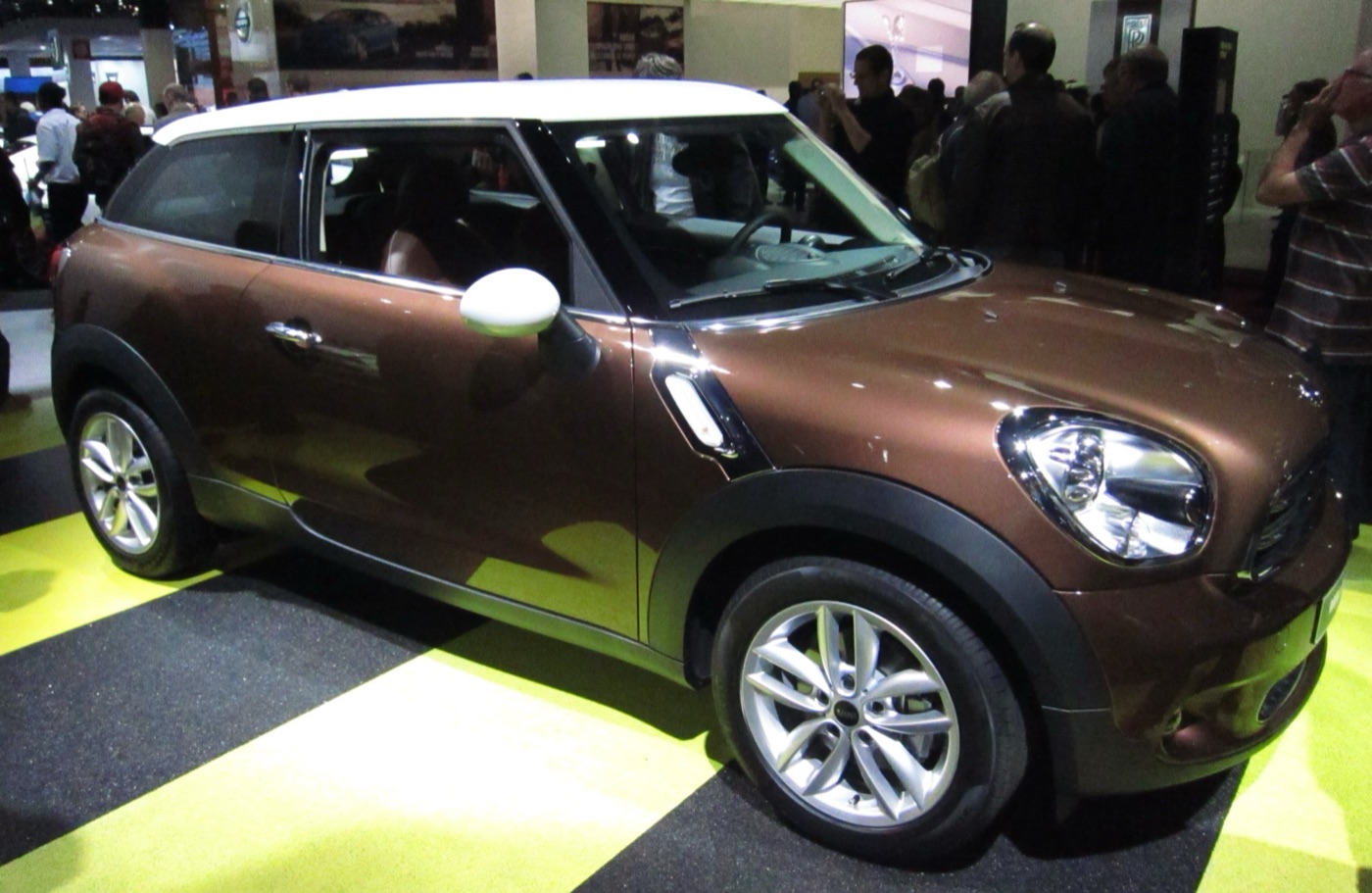
The Paceman is a three-door coupé version of the Countryman, built alongside it in Graz and on sale from March 2013. A March 2013 SkiddMark comparison of the two found the Paceman's boot 20 litres smaller (330 against 350 litres, or 1,080 against 1,170 with the seats folded) and its starting price £910 higher, at £18,970 for a Cooper. BMW's annual reports record 14,687 Paceman sales in 2013, 15,567 in 2014 and 8,247 in 2015.
The Countryman in motorsport
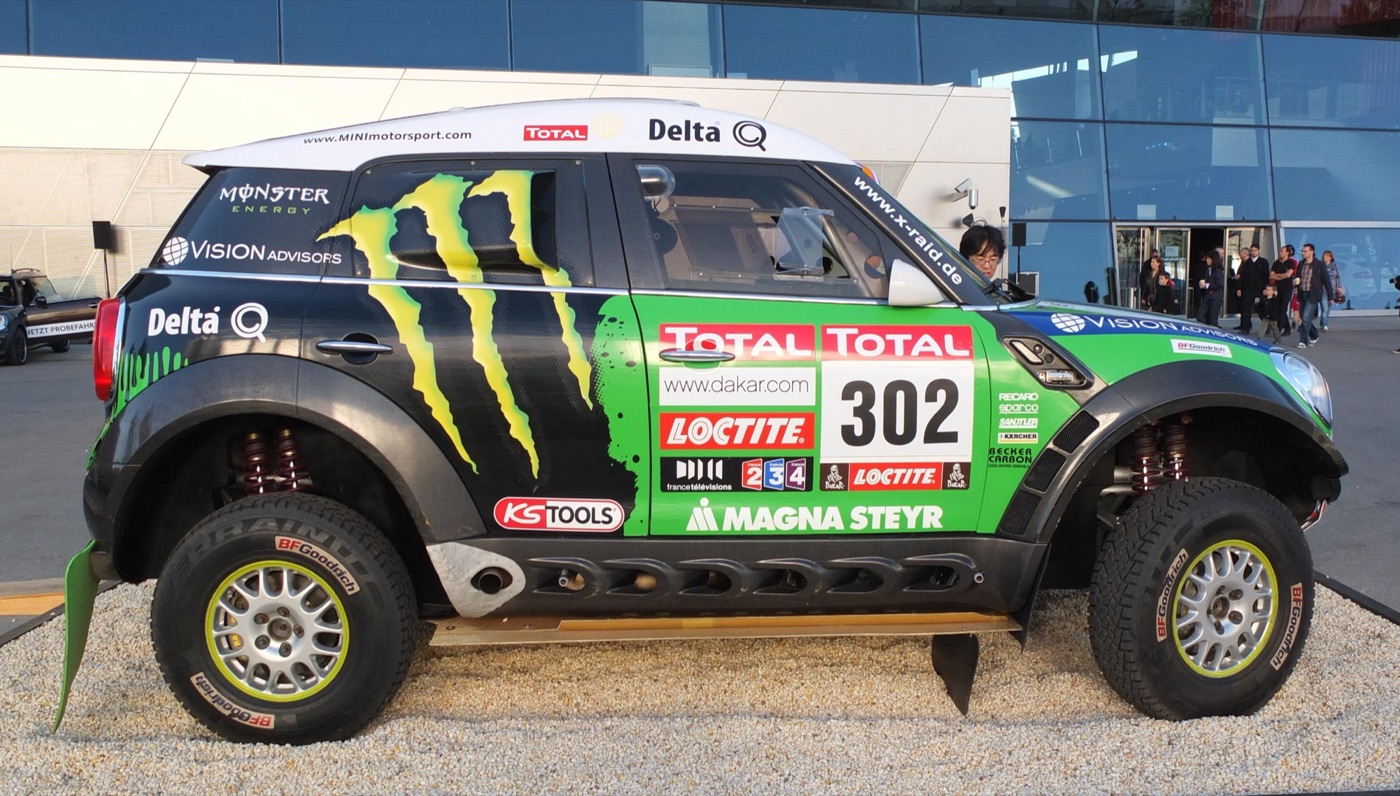
Two competition cars took the Countryman's shape: a World Rally Car that MINI's head of brand management, Wolfgang Armbrecht, said took the brand "back to its rally roots", and a Dakar raid car that won four years running.
The MINI John Cooper Works WRC
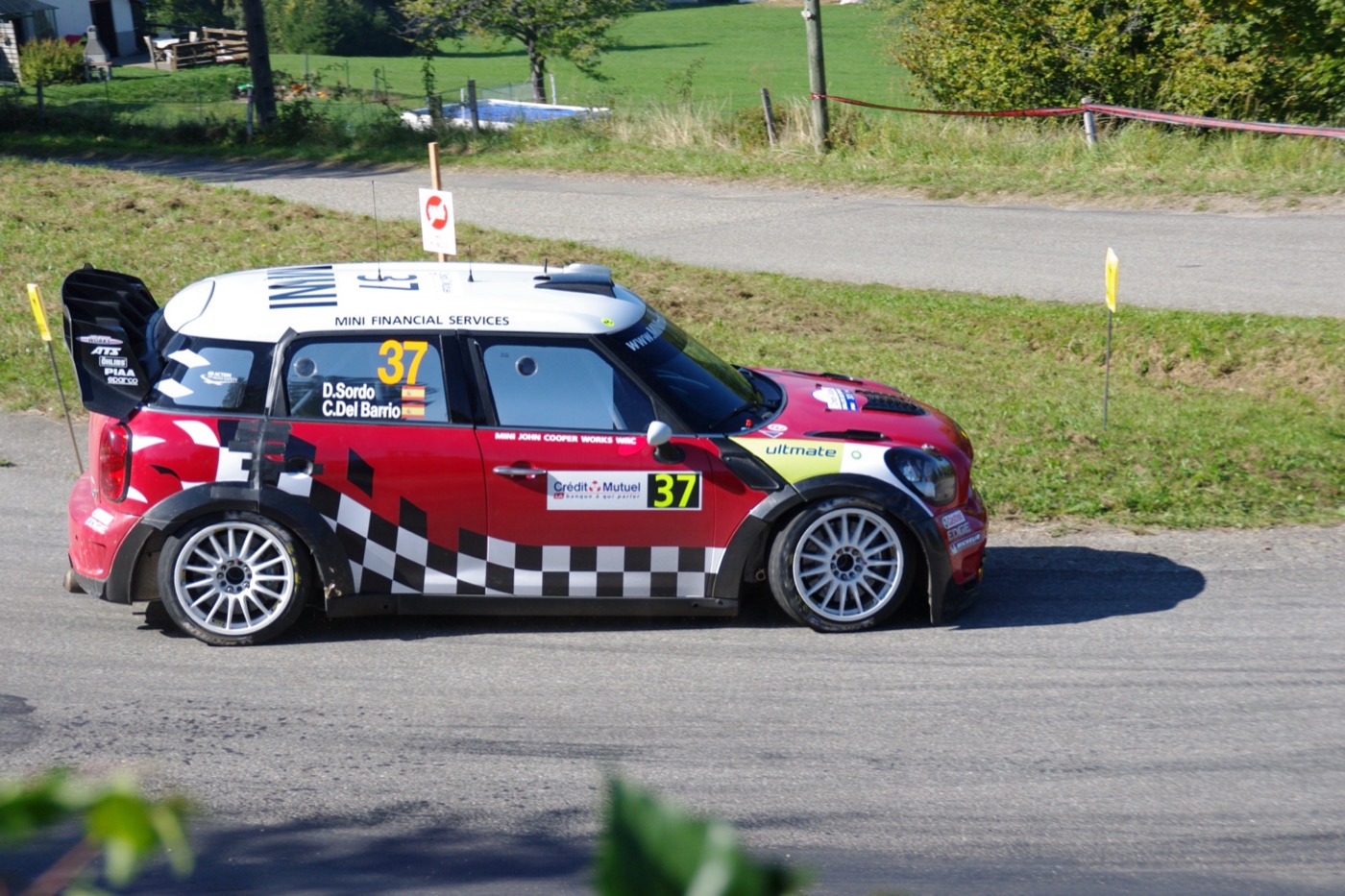
Prodrive built MINI's World Rally Car on the Countryman. The first test car finished its shakedown at Prodrive's proving ground in Warwickshire in September 2010, with an interim body, SkiddMark reported at the time. Both the WRC car and its Super 2000 sister used a 1.6-litre turbocharged engine based on the production unit and prepared by BMW Motorsport. The car was launched at the Oxford plant in April 2011 and made its debut on Rally d'Italia Sardegna, 5 to 8 May 2011, with Dani Sordo and Kris Meeke driving.
Its best result of 2011 came on its fourth event, the Rallye de France in Alsace. Sordo led after the first day and finished second, 6.3 seconds behind Sébastien Ogier's Citroën, according to the MINI WRC Team's release, reproduced by MotoringFile. The team's technical director, Dave Wilcock, called second place "an absolutely stunning result".
Dakar Rally: the MINI ALL4 Racing
The MINI ALL4 Racing, built by Sven Quandt's X-raid team and "based on the MINI John Cooper Works Countryman" in BMW's words, first ran on the Dakar in 2011 and won it the next four years.
| Year | Driver / co-driver | Notes |
|---|---|---|
| 2012 | Stéphane Peterhansel / Jean-Paul Cottret | The ALL4 Racing's second Dakar |
| 2013 | Stéphane Peterhansel / Jean-Paul Cottret | Finish in Santiago, Chile; 38h 32m 39s; Peterhansel's 11th Dakar win |
| 2014 | Nani Roma / Michel Périn | Rosario to Valparaíso, 9,374 km; MINI 1-2-3; 11 of 13 stages; all 11 MINIs finished |
| 2015 | Nasser Al-Attiyah / Mathieu Baumel | Argentina, Chile and Bolivia; 11 of 13 stages; four MINIs in the top five |
Sources: BMW press release, 18 January 2014; BMW press release, January 2015; MINI's 2013 statement, via Motorsport.com.
Roma had already won the Dakar on a motorcycle in 2004, and 2014 was his first win in a car. "The MINI ALL4 Racing is a brilliant car and was extremely reliable and quick throughout the whole rally," he said at the finish.
How many MINI Countryman R60s were made?
BMW has not published a final build total for the R60, but its sales figures add up to 480,429 Countrymans delivered from 2011 to 2015. The milestones BMW announced were the 250,000th car built in March 2013 and more than 350,000 sold by July 2014.
| Year | Countryman | Change | Share of MINI sales |
|---|---|---|---|
| 2011 | 89,036 | first full year | 31.2% |
| 2012 | 102,271 | +14.9% | 33.9% |
| 2013 | 101,897 | −0.4% | 33.4% |
| 2014 | 106,995 | +5.0% | 35.4% |
| 2015 | 80,230 | −25.0% | 23.7% |
| 2016 | 68,301 (Countryman and Paceman together) | −22.8% | 19.0% |
Sources: BMW Group sales release, 9 January 2012 (2011); BMW Group annual reports 2013, 2014, 2015 and 2016. The 2011 share is worked out from BMW's total of 285,060 MINIs that year.
In 2012 the Countryman was a third of all MINI sales. In the US it was MINI's second-best-selling model, behind only the hatch, with more than 62,000 sold there by April 2014, MINI USA said.
Reliability, common problems and recalls
The R60's known weak points are timing-chain wear on high-mileage engines, clutch wear on early ALL4 cars and a list of trim faults, and the DVSA lists two UK recalls. Owners interviewed for the RAC's buyers' survey were, in its words, "pretty satisfied". In Auto Express's Driver Power owner survey of 2015, the car's last appearance, the Countryman ranked 113th of 200 cars overall and 97th for reliability.
Timing chain rattle
The R60's engines drive their camshafts by chain, not belt, and the RAC prices a replacement chain among the Cooper D's service parts. What Car?'s used review says petrol Countrymans "have been known to suffer with stretching timing chains if they're run low on oil", so check the level often. The loud cold-start "death rattle" of a slack chain is mostly a fault of the earlier N14 engine in the 2007 to 2009 Cooper S hatch; Lohen, a UK MINI specialist, says it was resolved with the N18 engine of later Cooper S and John Cooper Works models, but it still sells chain kits for the N18. Its advice for a rattle is an oil and filter change with BMW's latest tensioner first, then a new chain and guides if the noise stays, because a chain that runs slack for long enough stretches.
Clutches, trim and wheels
The RAC's used-car review reports heavy clutch wear on ALL4 models, less so on post-2012 cars, which had a more durable clutch. It also lists dashboard creaks, a buzz from the doors, chrome-effect trim peeling along the waistline, surface rust on the water pump and wheel nuts, corrosion on the optional two-tone alloy wheels, and reading lights that switch themselves on after the car is locked.
UK recalls
The DVSA recalls register lists two recalls for the R60. R/2013/077, launched in August 2013, covered 19,168 Countryman and Paceman cars built from 1 August 2010 to 18 March 2013: moisture could get into the connector that powers the electric power steering and, in rare cases, overheat it and start a fire, so dealers fitted a wiring harness with better seals. R/2026/284, launched on 27 July 2026, covers 16,682 Countrymans built from 14 July 2010 to 27 June 2014, plus 1,728 Pacemen, and installs a hardware and software package for the emission control system of R60 and R61 cars whose diesel engine the recall codes N47T. A car's recall status can be checked on GOV.UK with its registration number.
Buying a used MINI Countryman R60
R60s are plentiful on the UK used market and most are cheap: in October 2026 more than a third of the cars on PistonHeads were under £5,000, and the dearest were late John Cooper Works and Cooper S ALL4 automatics.
What does an R60 cost today?
We counted the R60s on PistonHeads on 28 October 2026: 204 cars registered from 2010 to 2016 whose adverts named the Countryman, leaving out one 190 ps Cooper SD whose output is the F60's. Asking prices ran from £988 for a 121,000-mile 2011 Cooper D ALL4 to £15,000 for a 36,000-mile 2016 John Cooper Works, with a median of £5,782 and a median mileage of 75,000.
| Listed as | Cars | Price range | Median price | Median mileage |
|---|---|---|---|---|
| Countryman (mostly One and One D) | 38 | £1,999–£8,490 | £4,885 | 76,034 |
| Countryman Cooper (Cooper and Cooper D) | 80 | £988–£9,499 | £5,250 | 77,388 |
| Cooper SD (listed under Countryman Cooper) | 29 | £2,500–£8,495 | £5,495 | 88,875 |
| Countryman Cooper S | 48 | £2,750–£12,349 | £6,850 | 62,266 |
| Countryman John Cooper Works | 9 | £5,995–£15,000 | £8,499 | 72,000 |
| All, registered 2010–2013 | 91 | £988–£9,990 | £4,500 | 82,897 |
| All, registered 2014–2016 | 113 | £1,999–£15,000 | £6,497 | 70,000 |
Source: PistonHeads used MINI Countryman listings under its four Countryman model headings, by year of registration.
Which R60 to buy
For low running costs a manual Cooper D is the pick: it sits in VED band C (111 to 120 g/km), which costs £35 a year under the GOV.UK rates for cars registered from 2001 to March 2017. A launch-spec Cooper S at 146 g/km is in band F at £225 and a manual John Cooper Works at 172 g/km in band H at £325; the 2.0-litre automatic Cooper D is rated at 148 g/km in BMW's 2014 folder, band F. Post-2014 cars have lower CO2 figures and can fall a band lower; the V5C gives the figure that counts. ALL4 adds 65 kg to a Cooper S in BMW's 2010 data and costs economy, and evo reckoned at launch that about 15 per cent of buyers would choose it, yet 99 of the 204 PistonHeads adverts we counted named ALL4 or 4x4.
The RAC's parts guide for a 2012 Cooper D puts a timing chain at £28 to £55 for the part alone (up to £217 for a premium brand), brake discs at £40 to £110 and pads at £30 to £65, before labour.
Reviews: handling, ride and rivals
The RAC rated the R60 among the best-handling cars in its class; evo found it blunter than the Cooper S hatch.
Handling and ride
evo's first drive of the £22,030 Cooper S ALL4 called it "a less frisky Mini Cooper S", with steering that was well weighted but "not as pointy as before", and noted that the Countryman's 250 kg over the hatch ate the new engine's extra power. Its car rode "pretty sweetly" on 17-inch wheels, and evo warned that bigger wheels could make rough roads "an uncomfortable bind".
A March 2013 SkiddMark drive of the Countryman and Paceman back to back found "little if any difference between them dynamically", criticised the "overly-stiff front suspension" that cost traction on anything but smooth roads, and advised buyers of two-wheel-drive cars to leave off the optional sports suspension. The RAC's review calls the R60 "one of the best driver's choices in this segment" and says its ride is far better than an ordinary MINI's, though not as good as some rivals', while noting that it is nearly 300 kg heavier than a three-door MINI.
Rivals
evo said MINI saw the Countryman as a rival to the Ford Focus, Nissan Qashqai and Volkswagen Golf, with more character than all three but less practicality; evo's own choice was the Skoda Yeti, "a bit more fun to drive than the Mini". The RAC pitches it against "Qashqai-class" SUVs. For the Paceman, MINI named the Nissan Juke and the Range Rover Evoque as rivals, SkiddMark reported in 2013, while SkiddMark itself judged the Paceman against rivals from Renault and Volkswagen.
Questions
Is the MINI Countryman R60 an SUV?
Yes. It is a compact SUV, which BMW called a crossover: a five-door MINI with extra ground clearance, a raised seating position and optional ALL4 four-wheel drive. It was the first SUV MINI made.
Is the MINI Countryman R60 four-wheel drive?
Only some are. ALL4 four-wheel drive was an option on the Cooper S and Cooper D from launch, later on the Cooper SD and, from 2014, the Cooper; the John Cooper Works had it as standard. The One, One D and most Coopers are front-wheel drive.
What is the difference between the R60 and F60 MINI Countryman?
The R60 is the first-generation Countryman, sold from 2010; the F60 is the second generation, about 20 centimetres longer, which reached UK customers in February 2017.
Where was the MINI Countryman R60 built?
Magna Steyr built it under contract for BMW in Graz, Austria, where the 250,000th car was finished in March 2013.
How big is the boot on a MINI Countryman R60?
BMW quotes 350 litres with the rear seats in place and 1,170 litres with them folded. Moving the rear seat backs to their upright cargo position raises the seats-up figure to about 440 litres.
Does the MINI Countryman R60 have a timing belt or a timing chain?
A chain. There is no cambelt to change at a set interval, but a chain that rattles on a cold start needs a new tensioner and possibly a new chain and guides.
How much is road tax on a MINI Countryman R60?
It depends on the car's CO2 figure. A manual Cooper D at 111 to 120 g/km is in band C at £35 a year; a 2010 Cooper S at 146 g/km is in band F at £225; a manual John Cooper Works at 172 g/km is in band H at £325.
Is the MINI Paceman a Countryman?
The Paceman (R61) is a three-door coupé built on the Countryman, on sale from March 2013 and built alongside it in Graz. Its boot is 20 litres smaller, at 330 litres.
How many seats does a MINI Countryman R60 have?
Four or five. At launch BMW fitted two sliding single rear seats as standard with a three-seat bench at no extra cost; UK cars had the bench as standard.
Sources
- BMW Group, "MINI at the 80th Geneva Motor Show 2010", media information, March 2010: launch specifications, dimensions, ALL4, Center Rail, design.
- BMW Group, "MINI in 2011: More power, more sportiness, more individuality", 2 February 2011: Cooper SD and the 2.0-litre automatic Cooper D.
- BMW Group, "MINI at the 82nd International Geneva Motor Show 2012", media information, March 2012: John Cooper Works Countryman.
- BMW Group, "The 250,000th MINI Countryman leaves the factory", 12 March 2013: Graz production, engine line-up in 2013.
- BMW Group, "The new MINI Countryman", press folder, July 2014: the 2014 facelift, specifications, sales.
- MINI USA, "MINI USA unveils 2015 MINI Countryman", 15 April 2014: US sales, IIHS awards.
- MINI UK, "The new MINI Countryman", media information, October 2016: the F60 successor.
- MINI UK, MINI Crossover Concept press release, September 2008, reproduced by MotoringFile: the concept.
- BMW Group, "BMW Group posts highest sales ever in 2011", 9 January 2012: 2011 deliveries.
- BMW Group, annual reports 2013 (p. 31), 2014 (pp. 30–31), 2015 (p. 31) and 2016 (sales by model; production sites): deliveries 2012–2016.
- Euro NCAP, MINI Countryman 1.6 diesel datasheet, 2010: crash-test scores.
- Autocar, "Mini Countryman from £16k", February 2010: UK prices and dimensions.
- SkiddMark, "MINI Countryman re-enacts SUV stunt", January 2011: the 2002 and 2011 US stunts.
- MotoringFile, "MINI Re-enacts SUV Stunt", 4 February 2011: reaction among owners.
- SkiddMark, "MINI Countryman WRC completes its shakedown at Prodrive", September 2010, "MINI unveils the John Cooper Works S2000 rally car", March 2011 and "Exposed: MINI John Cooper Works WRC", April 2011: the WRC programme.
- MotoringFile, "MINI Takes 2nd Place at Rally of France", 2 October 2011, with the MINI WRC Team's release: Rallye de France result.
- BMW Group, "Joan 'Nani' Roma wins the 2014 Dakar Rally", 18 January 2014 and "MINI celebrates its fourth consecutive overall win at the Dakar Rally", January 2015; Motorsport.com, "Dakar Rally 2013: MINI congratulates the victory", January 2013: Dakar results.
- SkiddMark, "In Pictures: MINI Paceman versus Countryman", 20 March 2013: Paceman comparison, prices.
- DVSA, vehicle recalls file, downloaded 28 October 2026: recalls R/2013/077 and R/2026/284.
- RAC, "MINI Countryman (2010–2016) used car review": known faults, parts prices.
- evo, "Mini Countryman Cooper S ALL4 (2010–2017) review": first-drive verdict.
- PistonHeads, used MINI Countryman listings, registrations 2010–2016, counted 28 October 2026: asking prices.
- GOV.UK, "Vehicle tax rates: cars registered between 1 March 2001 and 31 March 2017", read 28 October 2026: tax bands.