Morgan 3 Wheeler: every Morgan three-wheeler from 1909 to today
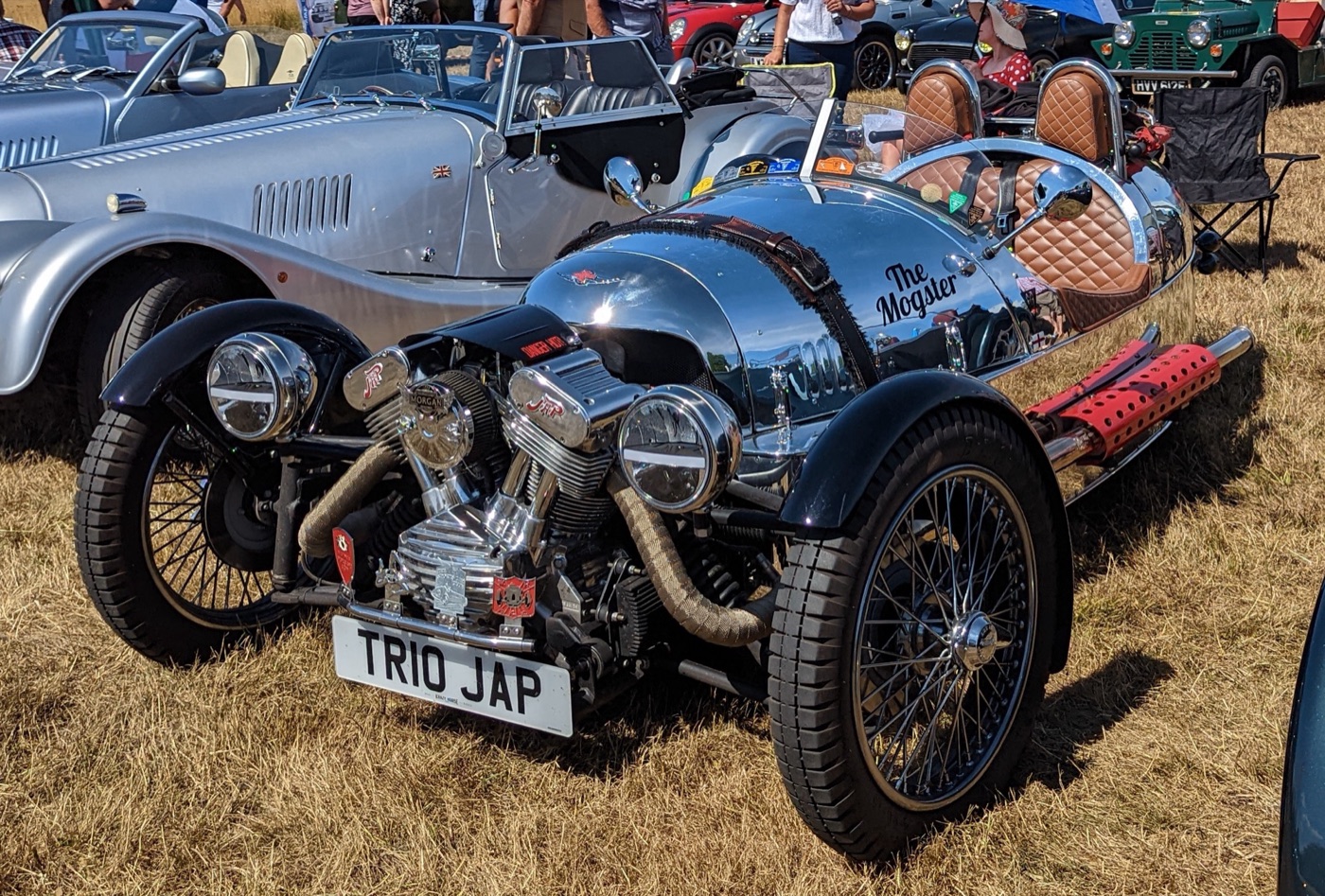
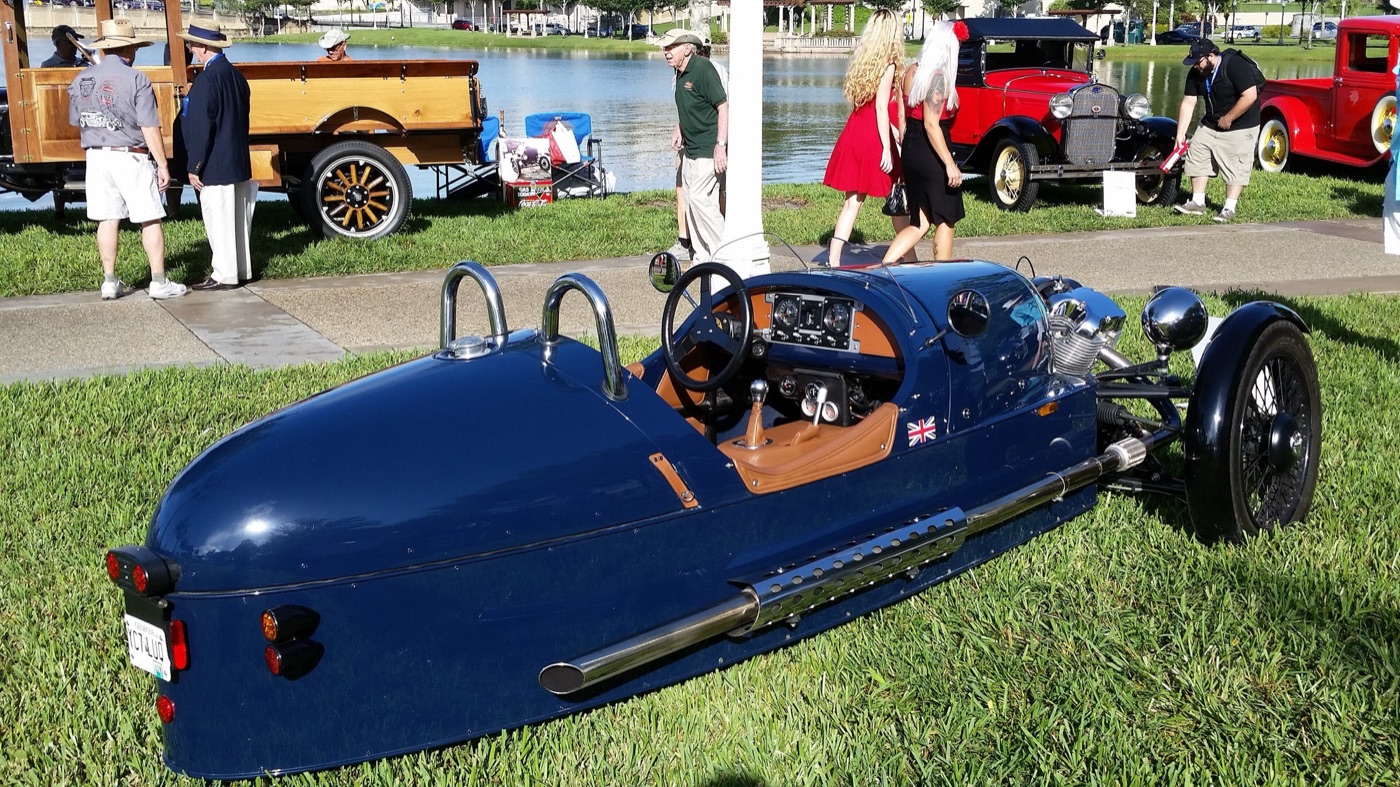
Morgan 3 Wheeler production ran from 2011 to 2021 at Malvern Link, Worcestershire, where the Morgan Motor Company built the three-wheeled sports car with an American S&S V-twin engine. The name also covers the original three-wheelers Morgan made from 1910 until the early 1950s with vee-twin and then Ford engines. Morgan built more than 2,500 of the modern car, and its successor, the Ford-engined Super 3, has been on sale since February 2022.
All of them have two wheels at the front, one driven wheel at the back and very little weight. Before the Second World War the vee-twin cars had HFS Morgan’s sliding-pillar front suspension and a tubular frame. One was first to finish the 1913 Amiens cyclecar race, Gwenda Stewart’s was timed at 113.52 mph at Montlhéry in 1930, and in 1921 a three-wheeler paid £4 a year in road tax when a car paid up to £1 per horsepower.
Morgan 3 Wheeler history from 1909 to 1952
Henry Frederick Stanley Morgan, a vicar’s son who had trained as a draughtsman at the Great Western Railway works in Swindon, finished his first three-wheeler in 1909, according to Motor Sport’s history of the car, published in three parts in 1965 from HFS Morgan’s own cutting-books. He had opened a garage at Malvern Link in 1906, and most of the machining for the car was done in the workshops of Malvern College.
The runabout and the first Morgan Motor Company
The 1909 car was a single-seater with a 7 hp Peugeot V-twin intended for a motorcycle, tiller steering, two forward speeds and no reverse. His father, the Rev. Prebendary H. George Morgan, paid for machine tools and an extension to the garage, and manufacture began in 1910. Morgan showed single-seaters with 4 hp single-cylinder and 8 hp V-twin JAP engines at Olympia that year and took about 30 orders. John Black, later Sir John Black of Standard, drew the patent drawings for the front suspension.
Buyers wanted two seats. A two-seater with wheel steering ran in the 1911 ACU Six Days Trial, and by the 1912 Olympia show the two-seater had an air-cooled 8 hp JAP V-twin of 85 x 85 mm, weighed 3 cwt and cost 85 guineas. The private company, The Morgan Motor Co., was formed in time for the cyclecar boom of 1912, with the Rev. Morgan as chairman and his son as managing director.
The two-speeders: Grand Prix, Aero and Super Sports
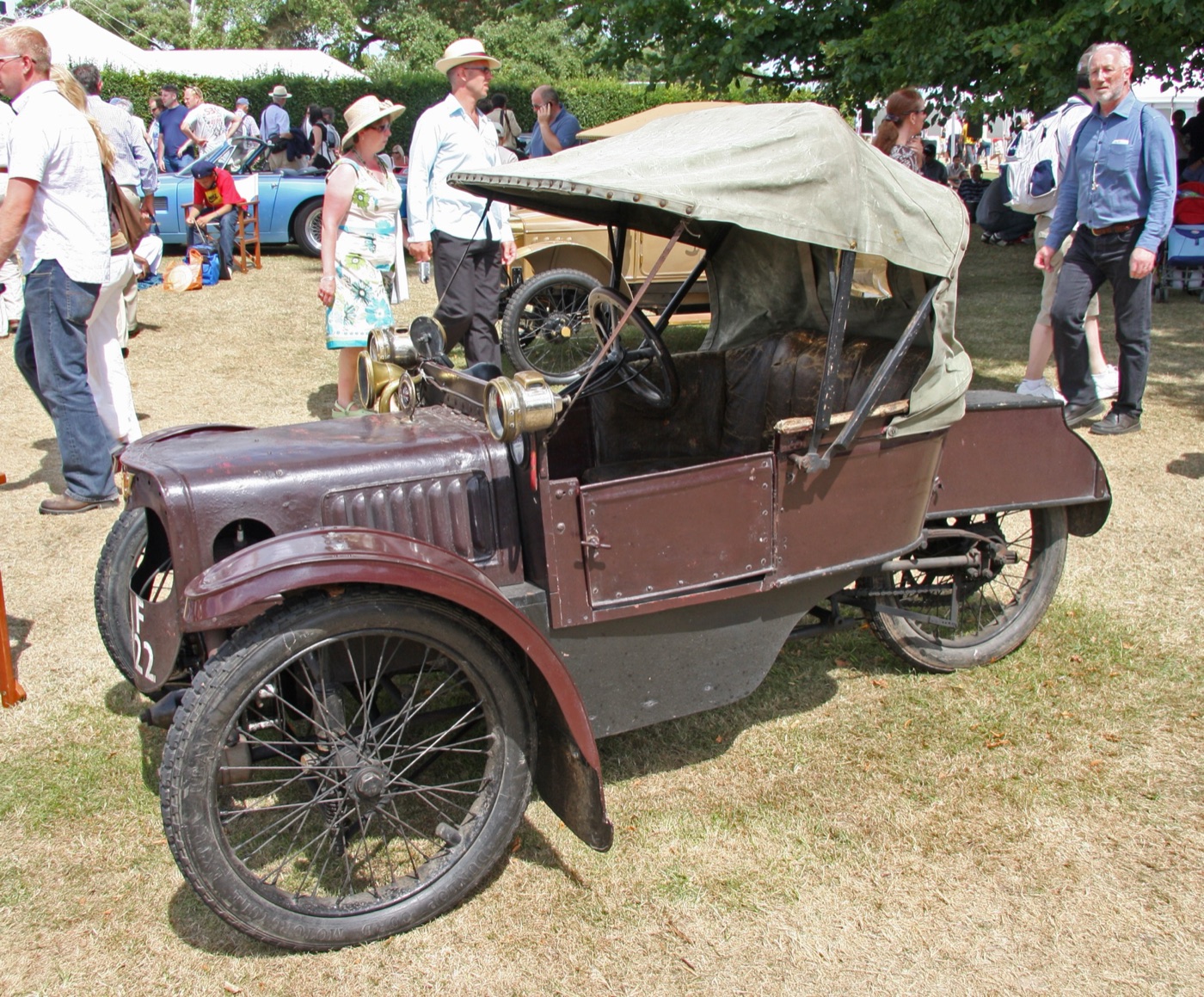
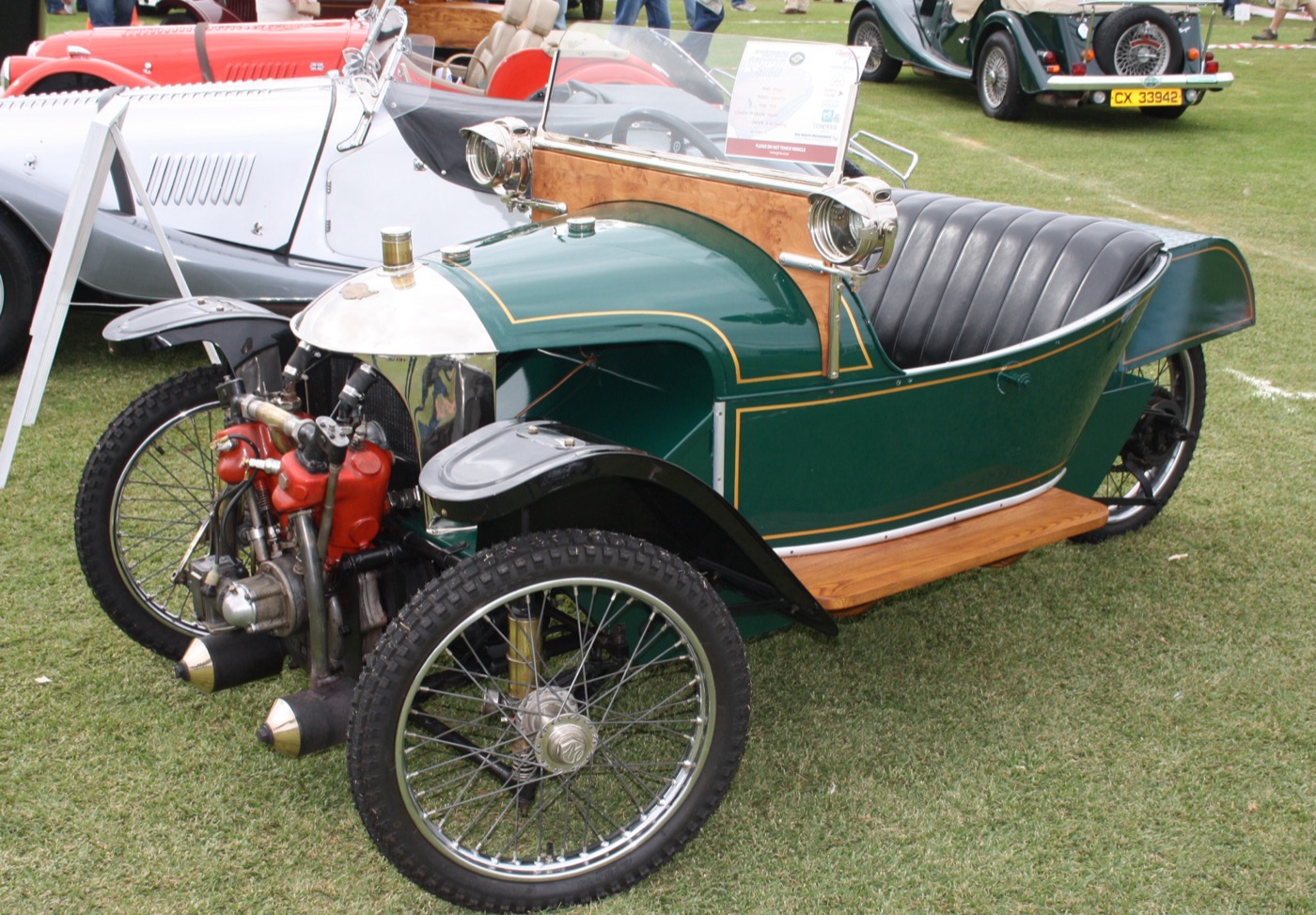
The Morgan Three Wheeler Club dates the two-speed models from 1909 to 1932. The Grand Prix, named after the 1913 Amiens race, ran from 1913 to 1926 and was the first Morgan with the domed nickel-silver radiator; the De Luxe was sold until 1931, the Sporting until 1921, and the cheap Standard or Popular from the end of the First World War until 1929. The Family and Family Aero had two child seats behind the driver, and the Aero, built to special order from 1917 to 1921, became a catalogue model after that.
Production rose quickly after 1918. A new works of 38,400 sq ft opened on Pickersleigh Road on 16 October 1919, aiming at 40 to 50 cars a week; some 20 a week were being built in 1920 despite a shortage of engines, 30 a week by that year’s Olympia show, and “close on 129 machines per month” in 1921, according to a press cutting Motor Sport quoted. The Austin Seven of 1923 then undercut the case for a cyclecar: an Austin Chummy cost £165, and Morgans were priced from £128 to £163.
Morgan answered with front brakes, offered from March 1923 at £6, and with faster sports models. The wide-track Super Sports of 1928 had a rounded tail and cycle-type front wings; for 1929 it had a water-cooled 1,096 cc JAP and a 4 to 1 top gear good for 80 mph, and cost £150. By the end of 1929 the Standard and Family cost £87 10s, the Aero £110 and the Super Sports £145.
Three speeds, reverse and the Ford-engined F-type
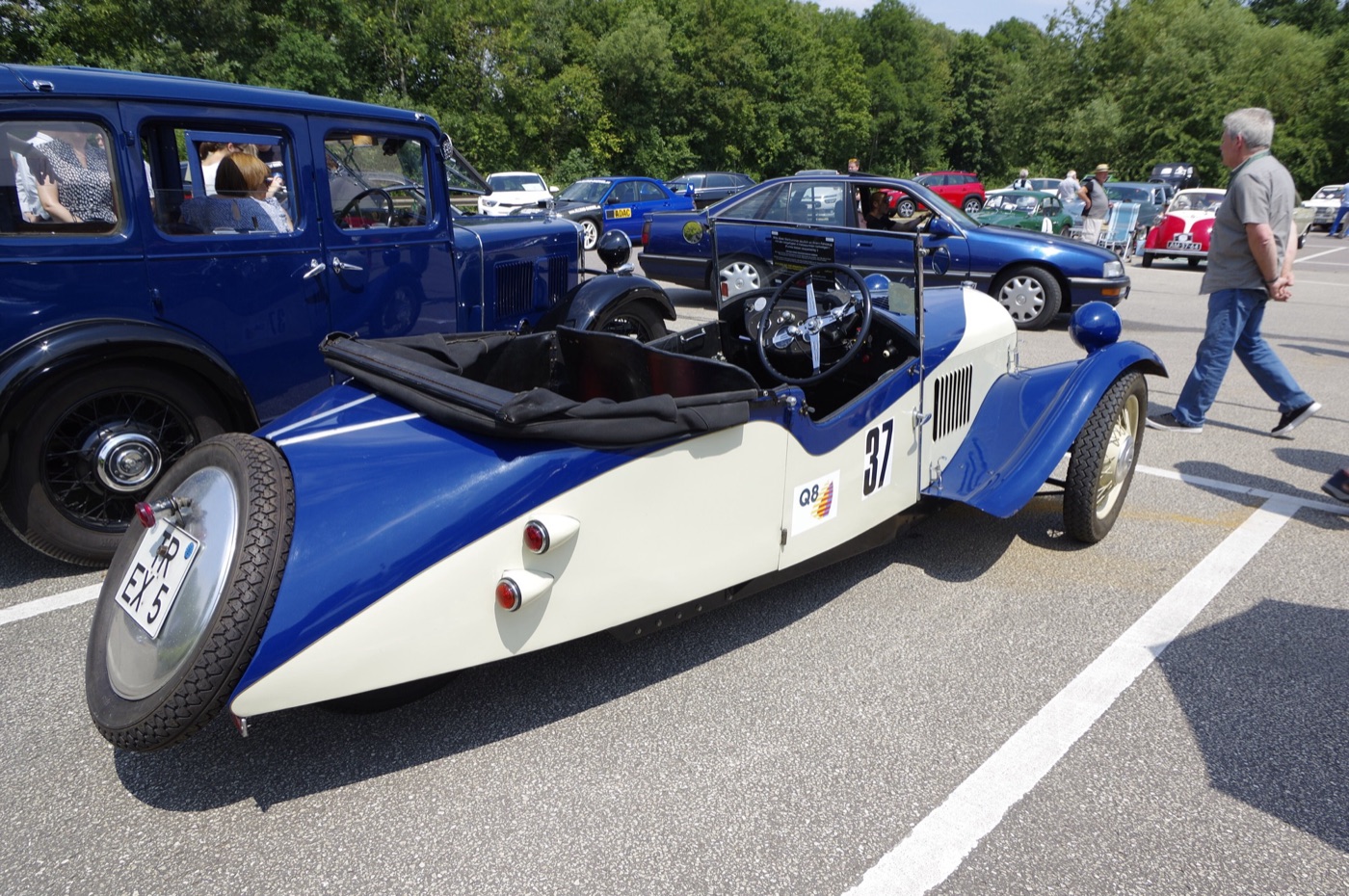
Motor Sport gives 1930 as the two-speeder’s last year: in 1931, by its account (1932 by the club’s), Morgan introduced a three-speed gearbox with reverse and a single-chain final drive, and by 1933 the two-speed cars had gone from the list except the £80 Family. The club’s three-speeder history says the gearbox was designed with Burman & Co, and that detachable wheels arrived over 1932 and 1933, with the spare carried on the tail. Matchless engines replaced JAPs from 1933.
The F-type came next. Its club history records that the side-valve Ford four would not fit ahead of the front cross-tubes like a V-twin, so Morgan redesigned the chassis in riveted Z-section pressings. The four-seat F4 had the 933 cc 8 hp Ford and could reach 60 mph on the flat; the two-seat F2, with the option of the 10 hp 1,172 cc Ford, joined it in 1936; and the F Super of 1938 sat 2 in lower with swept wings and a fold-flat windscreen.
The first four-wheeled Morgan, the 4/4, arrived in 1936. Vee-twin models stopped for the UK in 1939, although six Super Sports went to Australia in 1952, and the Ford-engined cars ended in 1952 by the club’s account; Motor Sport gave 1950 in 1965, and Morgan’s November 2010 announcement of the new car gave 1953.
The 2011 Morgan 3 Wheeler revival
Morgan announced a new 3 Wheeler in autumn 2010, showed it at the Geneva Motor Show in March 2011 and started customer production at the end of September 2011, at about one car a day according to Motor Sport’s drive of the prototype in its October 2011 issue.
The Liberty Ace and Project 101
The idea came from Seattle. Pete Larsen of Liberty Motors began building the ACE cyclecar in the 2000s, a Morgan-style three-wheeler with a Harley-Davidson twin cam engine, a TIG-welded tube frame and shaft drive, weighing 950 lb, as The Kneeslider reported in November 2006. Goodwood’s 2022 history of three-wheelers says Morgan acquired the rights to the ACE from Larsen. Inside the factory the programme was called Project 101, the name later given to the last edition of the car.
Morgan’s Jayne Jones confirmed the launch in October 2010 and expected a price “under £30,000”, SkiddMark reported. Morgan’s announcement that November, as SkiddMark carried it, promised a Harley-Davidson “Screaming Eagle” 1,800 cc engine, a Mazda five-speed gearbox, under 500 kg, 115 mph and 0–60 mph in 4.5 seconds, and quoted Stirling Moss, who owned a three-wheeler: “My Morgan was a great babe magnet.”
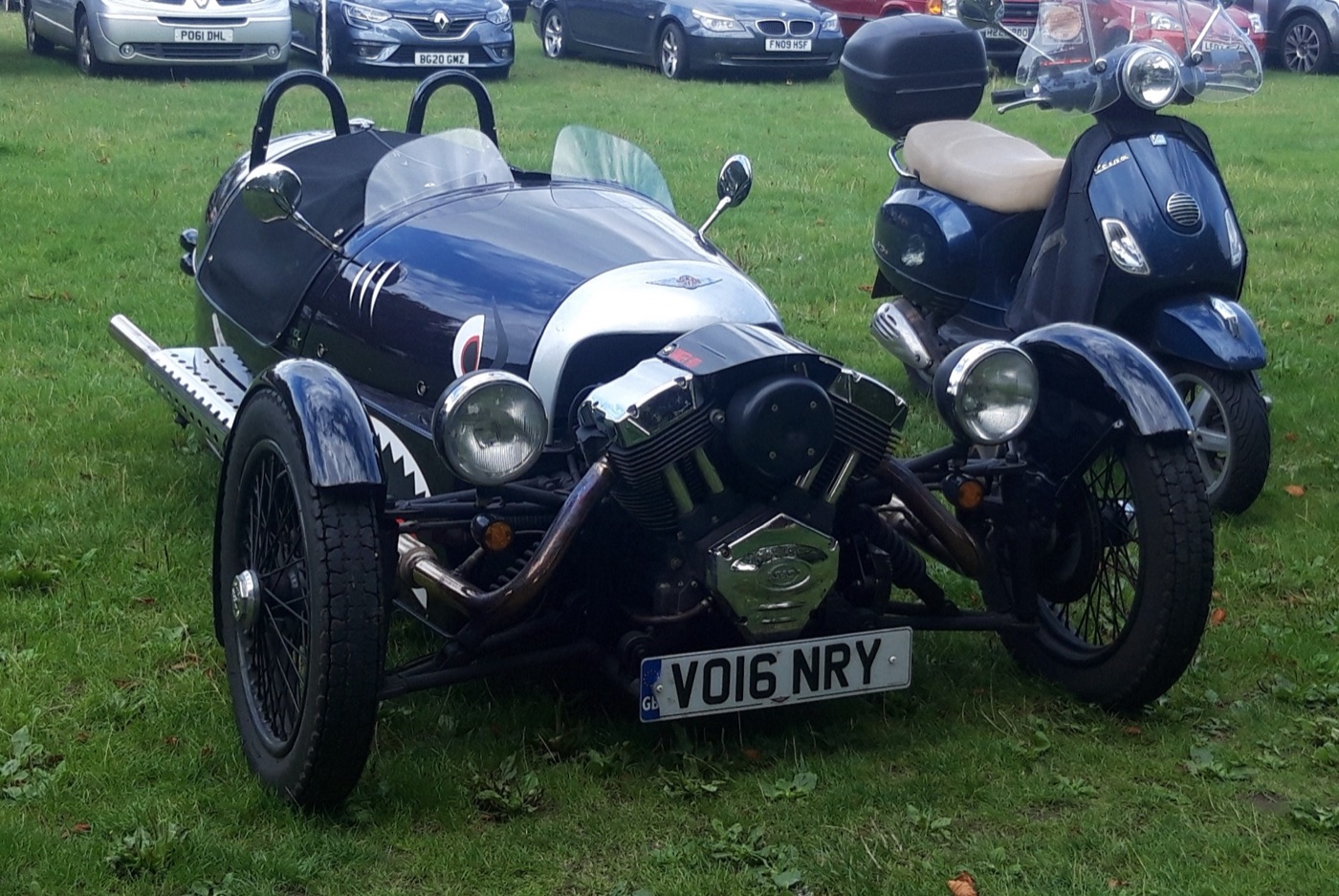
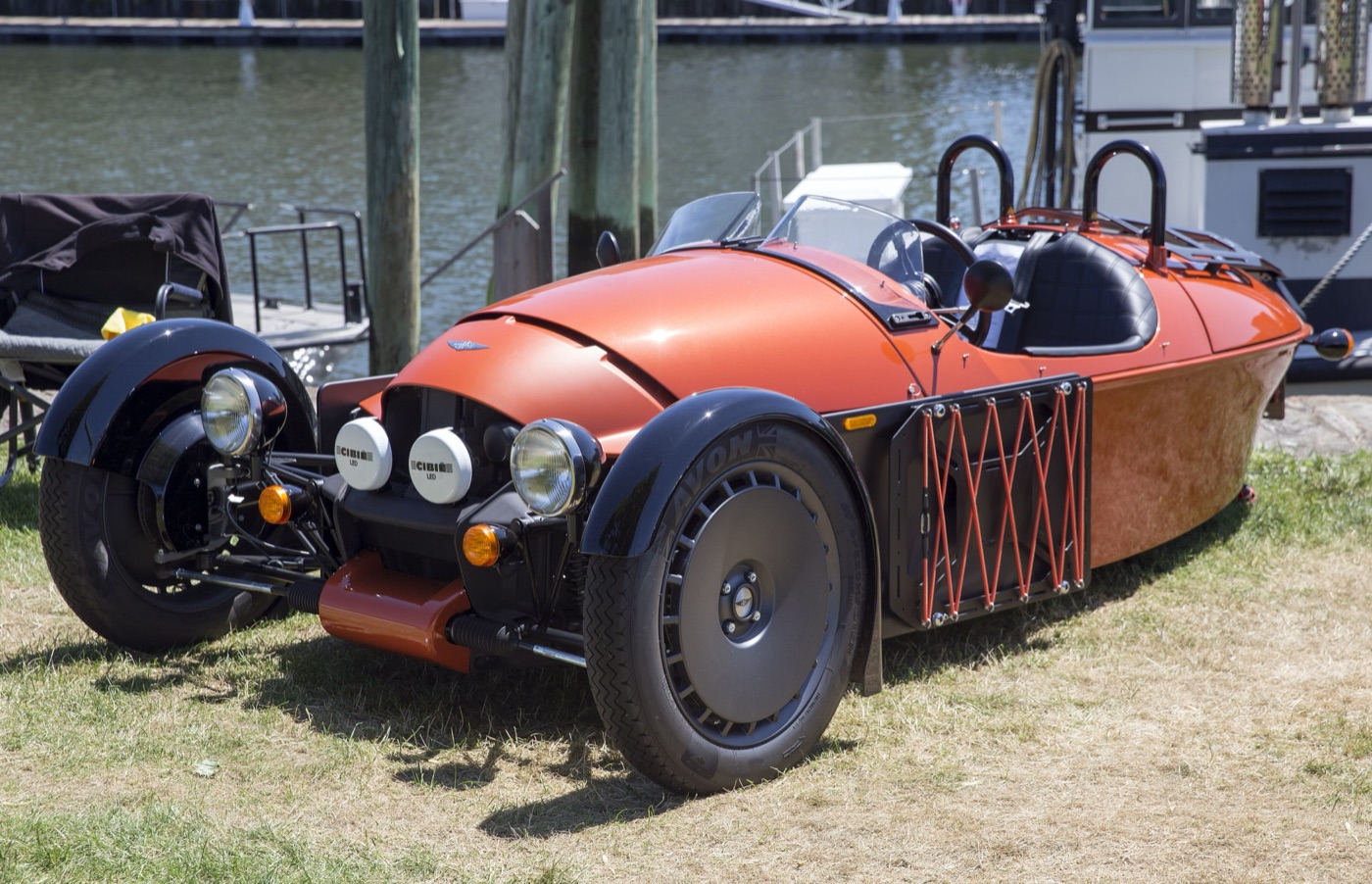
The Geneva car had an S&S engine instead, and Morgan’s Geneva material in February 2011 put the price at £25,000 before tax, with options including a polished engine and decal packs of RAF and US military roundels, racing numbers and a shark’s mouth for the nose.
From Euro 3 to Euro 4
Early owners reported bump-steer at speed, and Morgan changed the chassis for 2014 to cut steering reaction and add torsional stiffness, improved the centre drive unit, bevel box and cooling, and extended the warranty to 30,000 miles or 30 months, PistonHeads’ 2021 buying guide records. Euro 4 rules from January 2017 left unsold Euro 3 cars needing individual approval in the UK. The Euro 4 car arrived by mid-2017 with new camshafts, a quieter intake, a new ECU and extra catalytic converters; this version was heavier, rode about 50 mm higher and made 68 hp instead of 82 hp, and cold starting became a problem on some cars.
Why Morgan 3 Wheeler production ended in 2021
Type approval for the S&S engine expired in 2021, so Morgan ended the car with 33 examples of the P101 edition, evo reported in November 2020. Morgan’s announcement of the P101, as SlashGear and TFLcar carried it, quoted chairman Steve Morris: “Once the 33 examples have been created, the opportunity for an exciting new chapter for three-wheeled Morgan vehicles begins.” Morgan says production finished in summer 2021.
Design and engineering
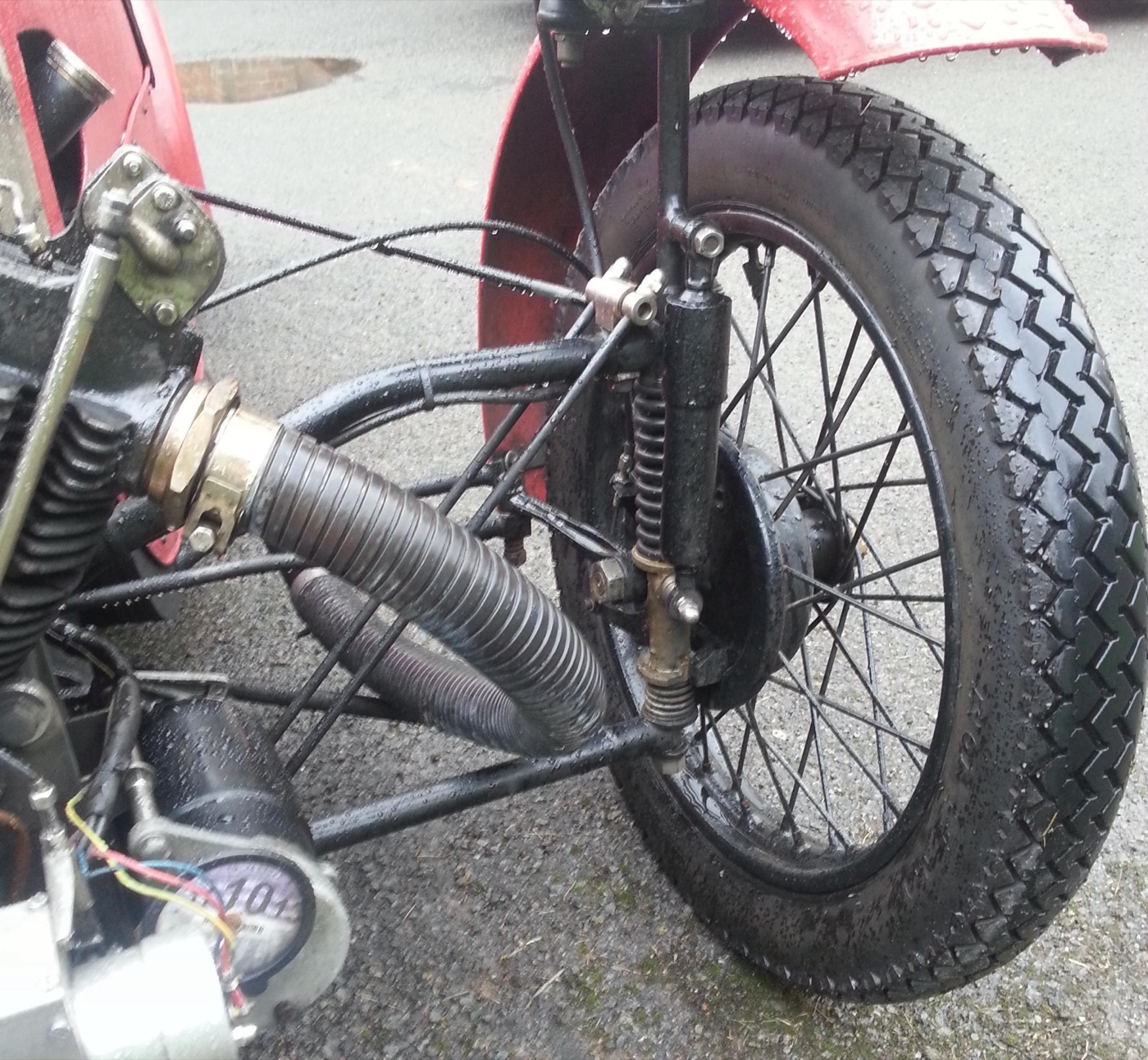
Every vee-twin Morgan from 1909 to the last of 1952 used a tubular backbone chassis with the propeller shaft running inside the central tube to a bevel box, and independent front suspension by sliding pillars and coil springs, which Morgan patented and which its four-wheelers still used in 1965, Motor Sport noted that year. Motor Sport called it pioneering: Lancia adopted sliding pillars for the Lambda after the First World War.
Engines: JAP, MAG, Anzani, Blackburne, Matchless and Ford
Morgan never made its own engines. The early two-speeders used vee-twins from 680 cc to 1,000 cc, and the club lists JAP, the Swiss MAG, British Anzani and Blackburne as the main suppliers, air-cooled or water-cooled, side-valve or overhead-valve. JAP supplied the most and won the most races, Blackburne had a good run from 1922 to 1927, and British Anzani “had a disastrous start with Morgans in 1922”. Matchless 990 cc twins took over from 1933, and the F-types used Ford’s 933 cc and 1,172 cc side-valve fours.
The S&S V-twin, Mazda gearbox and belt drive of the 2011 car
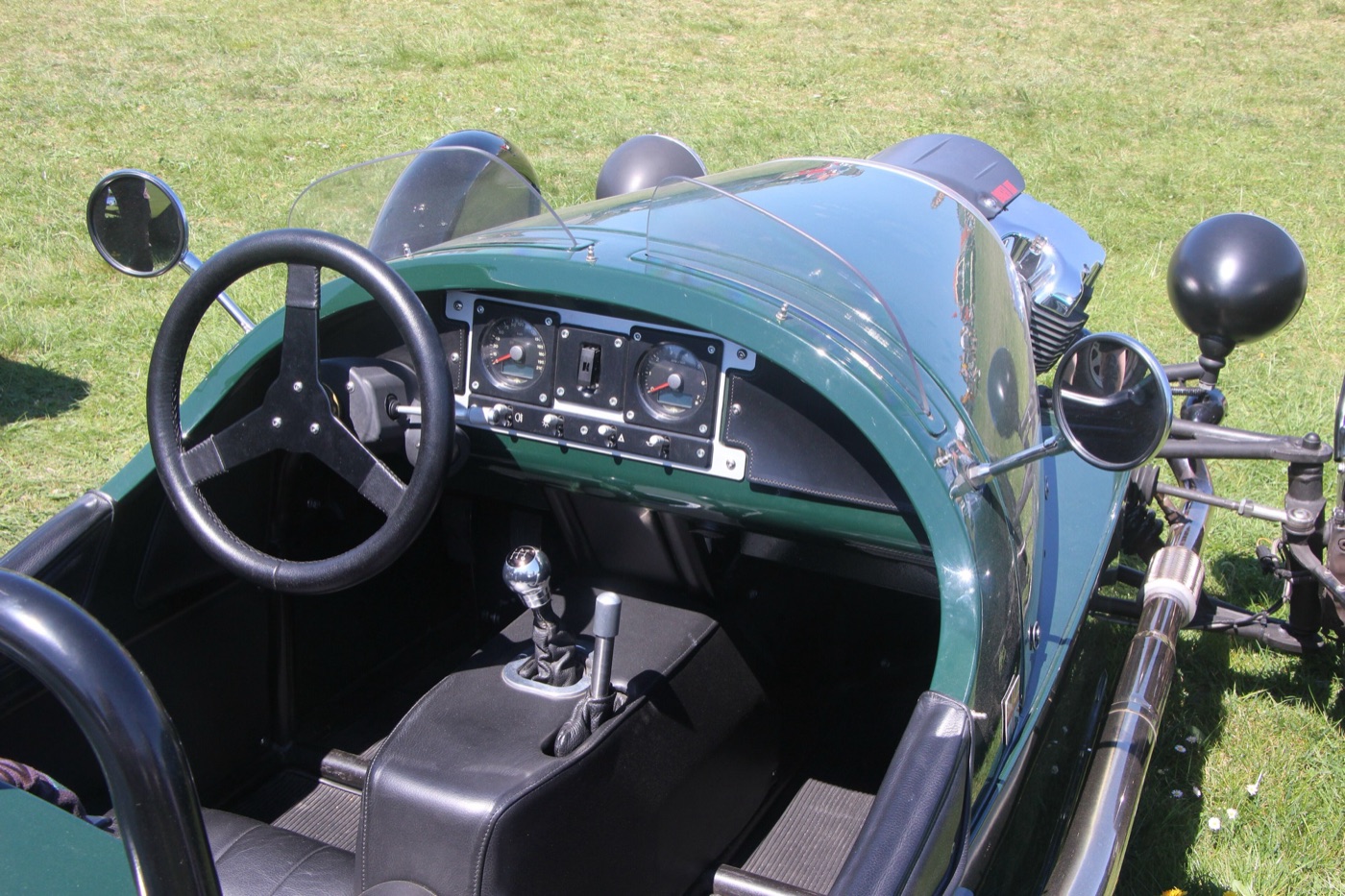
The 2011 car hung a fuel-injected S&S “X-Wedge” V-twin across the nose. It is a 56-degree, dry-sumped, air and oil-cooled pushrod engine, and its capacity is quoted as 1,982 cc by Motor Sport, 1,983 cc by PistonHeads and 1,998 cc by Morgan. The five-speed transmission came from the third-generation Mazda MX-5; a bevel box turned the drive through 90 degrees to a toothed belt and the single rear wheel. The chassis was tubular steel with some ash, double wishbones at the front, a trailing arm at the back and Spax dampers, and the body was superformed aluminium. Inside, PistonHeads found analogue VDO instruments in a dash that could be engine-turned, an optional wood-rimmed steering wheel, toggle switches and a starter button under a ‘bomb release’ cover; a heated seat option warmed the cushions only. Morgan sold the car as ‘no frills all thrills’ motoring.
Morgan 3 Wheeler specs and performance
The 2011–2021 Morgan 3 Wheeler reaches 62 mph in 6.0 seconds and 115 mph; the Super 3 reaches 130 mph. The figures below are the makers’ or contemporary ones. PistonHeads found the 2011 car’s handling “highly entertaining” on its narrow vintage-section front tyres, with poor steering lock and a lack of outright grip.
| Model | Engine | Gears | Power | Weight | Speed | Price new |
|---|---|---|---|---|---|---|
| Two-seater, 1912 | JAP V-twin, 964 cc, air-cooled | 2, no reverse | 8 hp (rated) | 3 cwt | not quoted | 85 guineas |
| Super Sports, 1929 models | JAP V-twin, 1,096 cc, water-cooled | 2, no reverse | not quoted | not quoted | 80 mph | £150 |
| F4, 1933 on | Ford side-valve four, 933 cc | 3 and reverse | 8 hp (rated) | not quoted | 60 mph | not quoted |
| F Super, 1938 on | Ford side-valve four, 1,172 cc | 3 and reverse | 10 hp (rated) | not quoted | 65 mph cruising | not quoted |
| 3 Wheeler, 2011 (Euro 3) | S&S V-twin, about 2.0 litres | 5 and reverse | 82 bhp at 5,250 rpm; 140 Nm | 525 kg dry | 115 mph; 0–62 mph 6.0 s | £25,000 plus tax |
| 3 Wheeler, 2017 (Euro 4) | S&S V-twin, about 2.0 litres | 5 and reverse | 68 hp at 5,200 rpm; 95 lb ft | reputedly 60 kg more | 0–62 mph about 7 s | £40,886 (110 edition, 2018) |
| Super 3, 2022 | Ford 1.5-litre three-cylinder | 5 and reverse | 118 bhp; 150 Nm | 635 kg dry | 130 mph; 0–62 mph 7.0 s | from £39,995 |
How fast is a Morgan 3 Wheeler?
The 2011–2021 car’s top speed is 115 mph and it reaches 62 mph in 6.0 seconds in Morgan’s Euro 3 figures, against the 4.5 seconds Morgan estimated in 2010. Its official combined fuel consumption was about 30 mpg, and CO2 215 g/km. The fastest Morgan three-wheeler on record is a racing car: Gwenda Stewart’s Super Sports, timed at 113.52 mph at Montlhéry in 1930.
Morgan 3 Wheeler variants and special editions
The 2011–2021 car began as a single model, the Sport at £32,500, and Morgan added a series of editions, recorded by PistonHeads in 2021.
- Superdry, with matt silver paint, orange-striped tyres and a leather jacket for the owner, at £35,360.
- Gulf, 100 cars from the end of 2012, at £34,995.
- Brooklands (2014), 50 cars in green with black leather and fishtail exhausts.
- A one-off 1000th Edition (2014) in colours taken from the 1909 runabout, with the names of 180 staff in its pinstripes, kept by the factory, a January 2014 report said.
- 110th Anniversary, announced in October 2018 for Morgan’s 110th year in 2019, with quilted seats and a mohair tonneau, at £40,886.
- P101 (2020–21), 33 cars, single-seat with a resin tonneau over the passenger side, aero-disc wheels, Hella spot lamps and one of four graphic packs (Belly Tank, Dazzleship, Aviator or Race Car), from £45,000.
The electric Morgan EV3
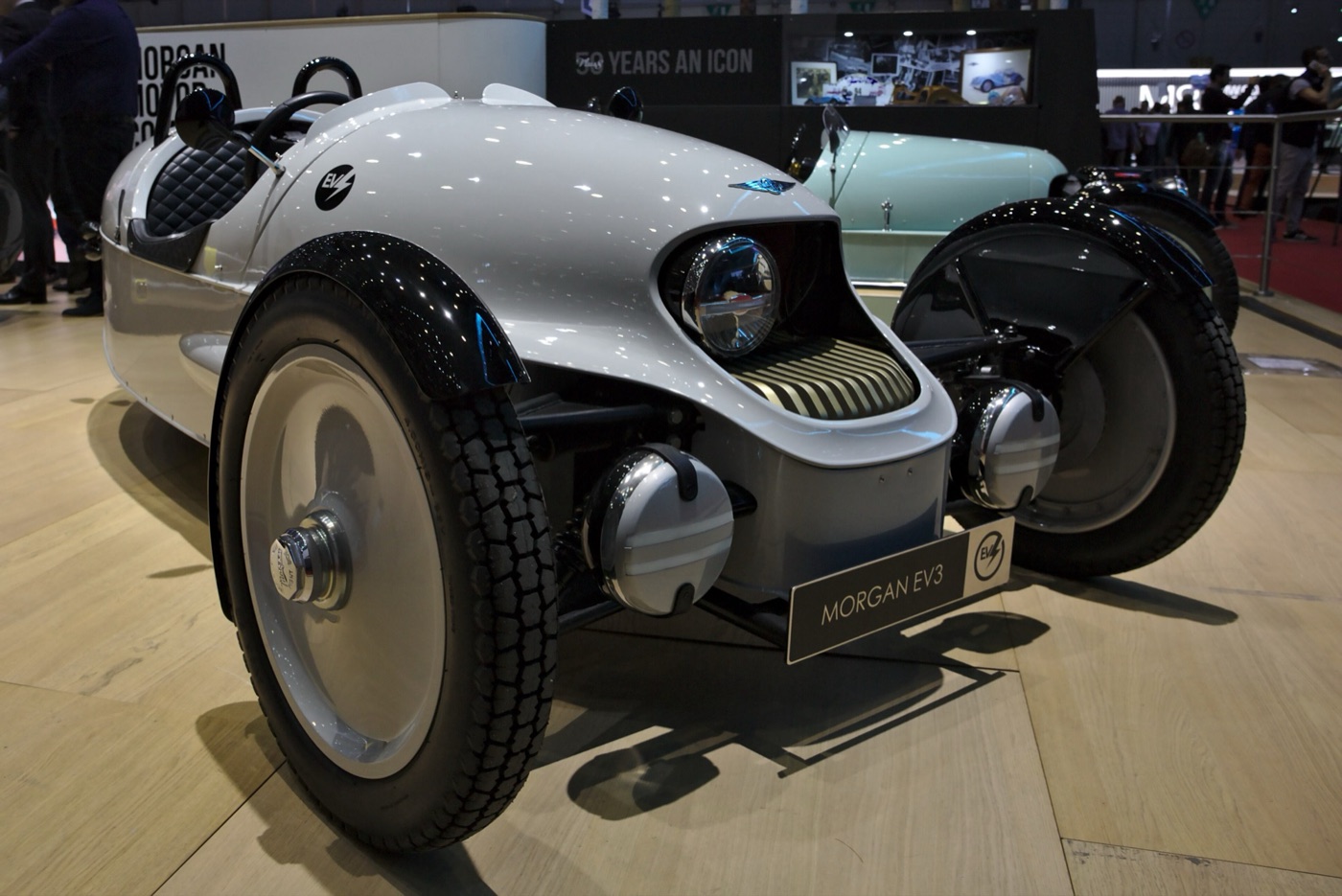
Morgan showed an electric version, the EV3, at Geneva in 2016 with a 62 hp motor, a 20 kWh battery and a claimed 150-mile range. A revised car developed with Frazer-Nash from late 2017 had 56 hp and 21 kWh. In October 2018 Steve Morris told Autocar the project was shelved because Frazer-Nash was “no longer able to fulfill the project within the terms of the contract”, Jalopnik reported.
The Morgan Super 3, the 3 Wheeler’s successor
The Super 3 replaced the Morgan 3 Wheeler on 24 February 2022. It has Morgan’s first monocoque, of superformed aluminium, and a non-turbo 1.5-litre Ford three-cylinder ahead of the cockpit driving the rear wheel through a Mazda five-speed gearbox, a bevel box and a belt, evo’s road test explains. Morgan’s specification gives 118 bhp, 635 kg dry, 0–62 mph in 7.0 seconds, 130 mph, 40 mpg and a UK price from £39,995. The seat does not adjust; the steering column and pedal box move instead, and evo counted more than 200 options.
The car reached the United States in July 2023 as the first Morgan exported there since the 3 Wheeler, with headlamps mounted inside the body’s width for federal rules. In July 2024 Morgan added Super 3 Origins, nine themed specifications of nine cars each from £47,995. The former England cricketer Andrew Flintoff was seriously injured in December 2022 when a Super 3 he was driving for Top Gear overturned at Dunsfold Aerodrome, ESPN reported.
Morgan three-wheelers in competition
Morgan sold its three-wheelers on their competition results from the start, and HFS Morgan drove in trials himself: in late 1912 he covered 59 miles 1,120 yards in an hour at Brooklands, a cyclecar record, in reply to a GWK’s 56 mph.
The 1913 Cyclecar Grand Prix at Amiens
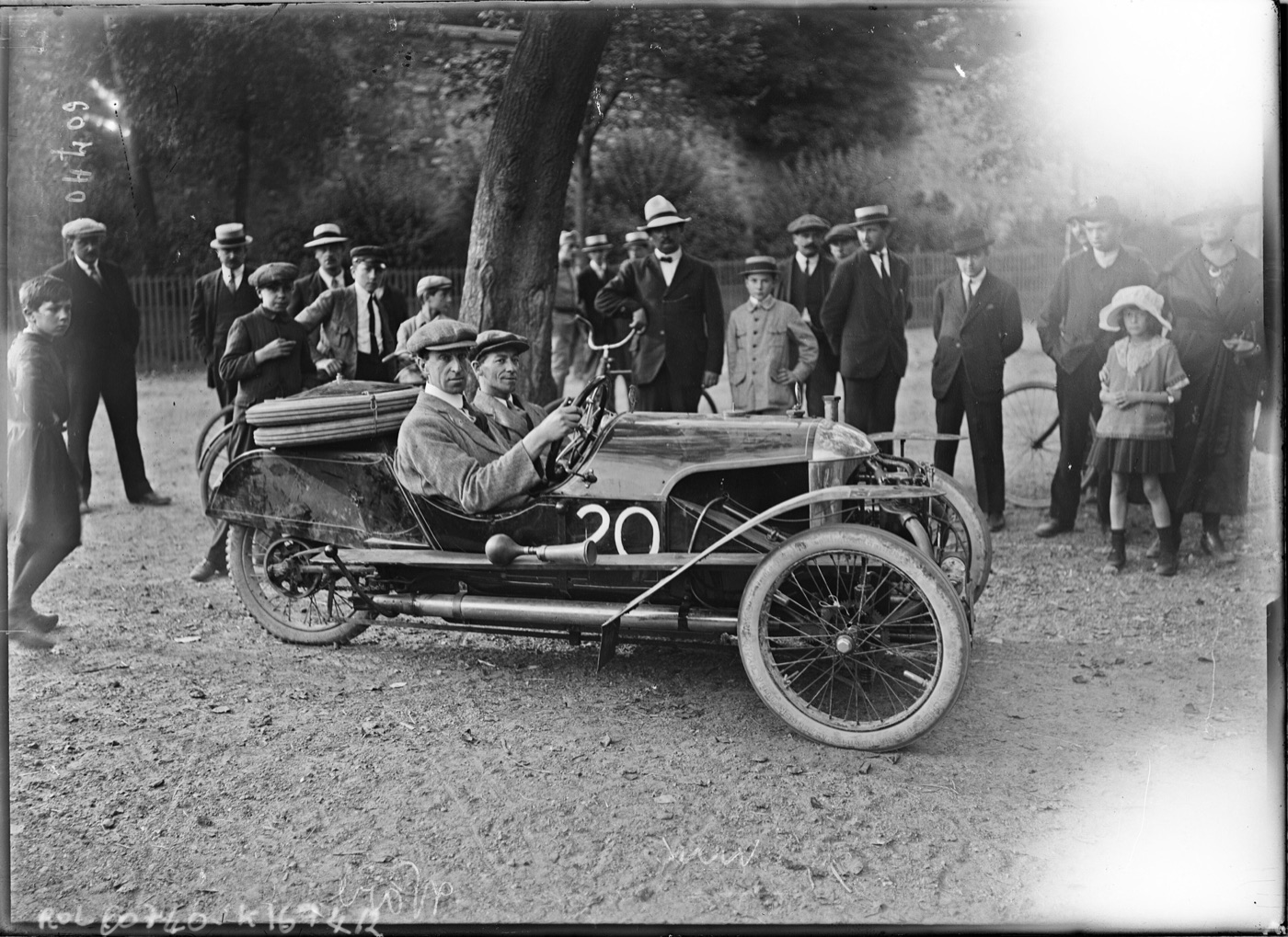
W. G. McMinnies of The Cyclecar magazine, with Frank Thomas as passenger, was first to complete the 163 miles of the 1913 Cyclecar Grand Prix at Amiens, averaging 41.9 mph despite a puncture and a broken truss-rod. Motor Sport recorded in 1965 that the officials then classed the Morgan as a sidecar and gave first place to a Bédélia; the Morgan Three Wheeler Club counts the race as McMinnies’s win. The other two Morgans retired, HFS Morgan’s with a broken piston and Rex Mundy’s with a broken front wheel.
Brooklands, the 1924 ban and the first 100 mph
In the 1924 JCC 200-mile race at Brooklands, E. B. Ware’s Morgan-JAP hit the fencing opposite the pits on lap 35 and overturned, badly injuring Ware and his mechanic Allchin. Motor Sport’s 1996 account says a rear tyre rubbing on the tail lost its tread, caught in a chain and locked the wheel. The Junior Car Club then banned three-wheelers from its races; the New Cyclecar Club let them back in August 1928, when Clive Lones won its Cyclecar Grand Prix at 54.1 mph, and the RAC lifted its ban on three-wheelers racing with cars in the 1970s, according to the Morgan Three Wheeler Club.
Three-wheelers could still attack records at Brooklands. In July 1925 Harold Beart, the Croydon Morgan agent, took the five-kilometre record at fractionally over 100 mph in his 1,096 cc Blackburne-engined car, the first time a three-wheeler had been timed at that speed; in August he took the flying kilometre at 103.37 mph, and in September the hour at 91.48 mph, Motor Sport’s July 1965 part records.
Gwenda Stewart’s Montlhéry records
Gwenda Stewart drove a 998 cc Super Sports-JAP prepared by Douglas Hawkes at Montlhéry in 1929 and raised the three-wheeler hour record to 101.5 mph, the first time a three-wheeler had covered more than 100 miles in an hour; she broke 71 records with the Morgan that year. In 1930 she was timed at 113.52 mph, “the highest speed officially achieved by a vintage-type 3-wheeler”, Motor Sport’s August 1965 part says.
Morgan three-wheelers in competition since 1945
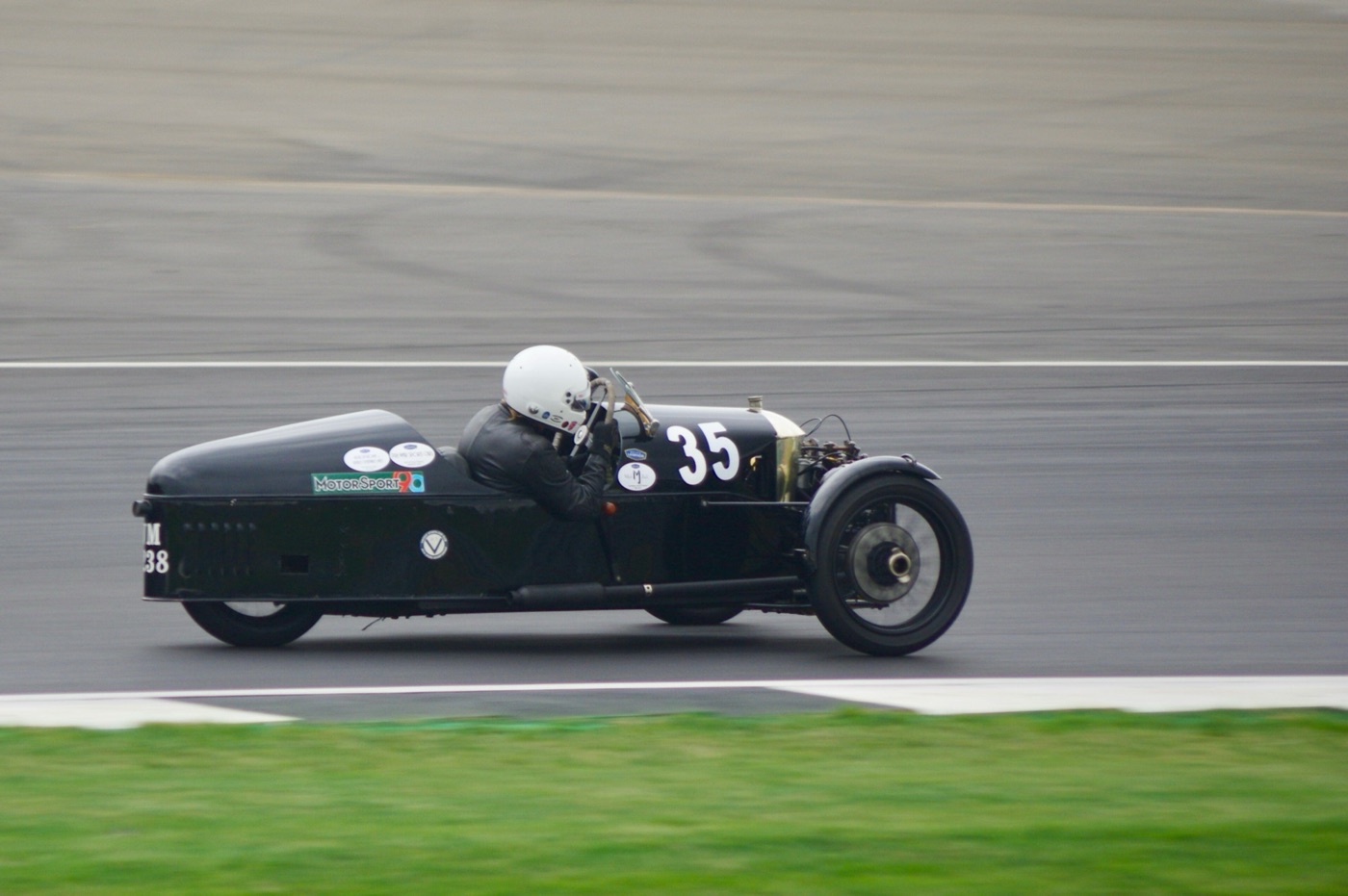
The Morgan Three Wheeler Club grew from a letter in Motor Cycling in May 1944 and held its first general meeting at Malvern in September 1945. In 1951 Cyril Hale finished within 0.1 seconds of a Jaguar XK120 at a Chester sprint. The club still runs a championship, and its sprints once drew more than 100 three-wheelers.
How many Morgan 3 Wheelers were made?
Morgan built more than 2,500 of the 2011–2021 3 Wheeler, the company said when it announced the P101 in November 2020, as SlashGear and TFLcar reported it. For the original cars Morgan has published no exact total; its November 2010 announcement put production from 1909 to 1953 at around 30,000, with many more built under licence in France by Darmont.
| Date | Figure |
|---|---|
| 1910 Olympia show | About 30 orders |
| 1919 | New works opened, aiming at 40–50 cars a week |
| 1920 | About 20 a week, then 30 a week by the autumn |
| 1921 | “Close on 129 machines per month” |
| 1909–1953 | Around 30,000 (Morgan’s 2010 estimate) |
| September 2011 | New 3 Wheeler production begins at about one a day |
| Early 2014 | About 1,000 new 3 Wheelers built |
| November 2020 | More than 2,500 built; 33 P101s to follow |
Morgan 3 Wheeler prices and values today
An early (2012 or 2013) Morgan 3 Wheeler sold for £18,500 to £21,000 in five UK auction sales between June 2025 and July 2026, and US auction prices for the same car have a median of $41,500, in OUTLAW 8’s listings data. Those five UK auction results sit well below the £32,000 PistonHeads gave in 2021 as the floor for cars for sale (“prices rarely drop below £32,000”). A Super 3 sold for £36,000 at a UK auction in May 2025.
| Car | Sales | Median | Lowest | Highest |
|---|---|---|---|---|
| Vee-twin models, 1930–1938 (one a French Darmont) | 6 | $37,875 | $9,520 | $56,000 |
| F-type, 1939–1947 | 3 | $17,000 | $10,450 | $26,789 |
| 3 Wheeler, 2012–2021 | 36 | $41,500 | $27,750 | $81,000 |
| Super 3, 2023 | 5 | $43,250 | $37,500 | $45,753 |
In the US the Superdry and Gulf cars sold above the $41,500 median: two Superdry cars made $49,750 and $49,999 and a Gulf $46,001; the three 110th Anniversary cars made $36,250 to $70,000. In the UK the same data has a 1933 JAP Super Sports at £28,550 (October 2025), a 1927 Aero at £17,500 (November 2025), a 1935 Super Sports at £14,500 (June 2026) and a 1951 F Super at £8,500 (June 2026).
Owning a Morgan 3 Wheeler
The 2011–2021 car’s S&S engine gives little serious trouble and its Mazda gearbox has a fine reliability record, but early cars had drivetrain faults that most have since had fixed, PistonHeads’ 2021 buying guide reports; post-2014 cars are the safer buy.
Known faults on the 2011–2021 car
PistonHeads lists these, among others:
- Early female Torx pinion-pulley bolts that could come loose and break the front engine cover; look for proof of a change to a male bolt.
- Failure of the rubber cush drive between engine and gearbox on pre-2014 cars, now usually replaced by the Centa type, which also wears.
- Aluminium rear sprockets on some pre-2015 cars that wore quickly (steel is better), and a drive belt that jumps teeth, with a banging under acceleration, unless kept tight.
- Noise from the bevel box, for which Morgan’s retro-fit NVH kit was only a partial cure.
- Bump-steer on early cars, eased by Morgan’s Steering Comfort Kit.
- Cracked fishtail exhausts on the 2014 Brooklands edition, failed voltage regulators, and a Land Rover Discovery fuel pump that wears out.
- Bubbling paint at the base of the side panels and near the roll hoops, and rust on the powder-coated front wings and the tubular chassis.
Servicing, tax and running costs
Morgan dealers advertised 3 Wheeler servicing at £377 plus VAT for an interval service and £545 plus VAT for a full service in 2021. S&S recommends oil and filter changes at 50, 500 and 2,500 miles and every 2,500 miles after that, a timing-belt check at 10,000 miles and replacement at 30,000. PistonHeads’ 2021 figures show the car taxed at car rates. On GOV.UK’s current tables (read 28 October 2026) a car first registered from April 2017 pays the standard rate of £200 a year, plus £440 a year for five years if its list price was over £40,000, as the 110th Anniversary’s £40,886 was.
Do you need a motorbike licence to drive a Morgan 3 Wheeler?
No, not in the UK if you are over 21. The vehicle counts as a motor tricycle, and a category B car licence covers motor tricycles with a power output above 15 kW from that age, GOV.UK’s licence categories state. In the United States it was sold as a motorcycle: a 2016 NHTSA notice calls the roughly 150 model-year 2012 and 2013 cars it covers “three-wheeled motorcycles”.
Rivals of the Morgan 3 Wheeler
Before the war the Morgan raced and sold against four-wheeled cyclecars and light cars: the GN, Bédélia, Salmson, Amilcar and the Austin Seven from 1923. Three-wheeled rivals included the Coventry-Victor of 1926, with a flat twin, at £110 or £115, and the front-drive BSA, which was competing against Morgans in trials by 1930.
The 2011 car had fewer rivals. Goodwood’s 2022 survey named Triking of Norfolk and Campagna of Canada as the other, much smaller, makers of three-wheelers still on sale. Evo’s Super 3 test warned buyers that anyone “expecting some kind of three-wheeled Caterham rival” would be “massively disappointed”.
What reviewers said about the Morgan 3 Wheeler
The three-wheeler had critics from the start. In 1923 “Omega” of The Auto wrote that he would rather have a Rover 8 “than the finest 3-wheeler Mr. Morgan’s Company could produce”, and HFS Morgan and his father answered him in print. Motor Sport’s editor dedicated his 1965 history to “one of the most sporting economy cars of all time”.
Of the 2011 car, Motor Sport found that the S&S engine “majors on torque rather than power” and that the Morgan approach to a press drive was “a gust of fresh air strong enough to knock you off your feet”. PistonHeads called it “probably the most eccentric new car launched in the last decade” in 2021. Evo described the Super 3 as “probably the most eccentrically British new car on sale”, on which “the rear’s meagre grip levels are easily overcome”.
Questions
Is the Morgan 3 Wheeler a car or a motorcycle?
For licensing the UK treats it as a motor tricycle, which a category B car licence covers from the age of 21. The US authorities classed the 2012 and 2013 cars as three-wheeled motorcycles; in 1921 a British three-wheeler paid £4 a year in tax when a car paid up to £1 per horsepower.
What engine is in the Morgan 3 Wheeler?
The 2011–2021 car has an American S&S V-twin of about 2.0 litres, with 82 bhp in Euro 3 form, and a Mazda MX-5 five-speed gearbox. The Super 3 that replaced it has a 1.5-litre Ford three-cylinder with 118 bhp.
Does the Morgan 3 Wheeler have a reverse gear?
Yes, the 2011–2021 car and the Super 3 have five speeds and reverse. The original two-speeders, built until about 1932, had no reverse; Morgan added a three-speed gearbox with reverse in 1931 (Motor Sport’s date) or 1932 (the club’s).
Is the Morgan 3 Wheeler still made?
No. Production of the V-twin 3 Wheeler finished in summer 2021 with 33 P101 editions, when type approval for its S&S engine expired. Morgan has built the Super 3 at Malvern since 2022.
Where is the Morgan 3 Wheeler built?
At Morgan’s factory on Pickersleigh Road, Malvern Link, Worcestershire, where the company opened its works in October 1919 and still builds the Super 3.
Who drove Morgan three-wheelers?
The First World War pilot Albert Ball VC drove a water-cooled MAG-engined Morgan, and Stirling Moss owned one. Racing drivers included E. B. Ware, Harold Beart, Clive Lones and Gwenda Stewart.
How much did the Morgan 3 Wheeler cost new?
Morgan quoted £25,000 before tax at Geneva in 2011 and charged £32,500 for the first Sport model. The 110th Anniversary edition cost £40,886 in 2018 and the final P101 from £45,000; the Super 3 is from £39,995.
Sources
- Motor Sport, “The vintage years of the Morgan 3-wheeler”, June 1965: HFS Morgan’s background, the 1909 car, Olympia 1910 and 1912, the 1912 hour record, Amiens 1913, the 1919 works, production rates, 1921 tax, 1923 prices and front brakes.
- Motor Sport, “The vintage years of the Morgan 3-wheeler”, July 1965: the 1924 range and Harold Beart’s 1925 records.
- Motor Sport, “The vintage years of the Morgan 3-wheeler”, August 1965: the 1928 Super Sports, 1929 prices, Gwenda Stewart’s records, three speeds from 1931, Matchless engines, the end of production.
- Motor Sport, “The trikes return”, September 1996: Ware’s 1924 crash, the JCC ban and the New Cyclecar Club meeting of 1928.
- Motor Sport, “Morgan 3 Wheeler”, October 2011, page 115: the prototype drive, the 1,982 cc S&S engine and production at about one a day.
- Morgan Three Wheeler Club: the two-speed Morgan, the three-speed Morgan, the F-type Morgan and the club’s history, read 28 October 2026: model years, engines, the end of production, the club and the 1924 ban.
- Morgan Motor Company, “3 Wheeler” past-model page, read 28 October 2026: specification of the 2011–2021 car and the end of production in summer 2021.
- Morgan Motor Company: Super 3 specification, read 28 October 2026; “Introducing Super 3, the all-new Morgan”, 24 February 2022; “Morgan returns to the United States as Super 3 arrives on US soil”, 11 July 2023; “Super 3 Origins”, 9 July 2024.
- PistonHeads, “Morgan 3-Wheeler: PH used buying guide”, Tony Middlehurst, 4 July 2021: the Liberty ACE, the S&S engine, handling, prices and editions, the 2014 and Euro 4 changes, known faults, servicing and the 2021 tax class.
- evo, “Morgan 3 Wheeler P101 to mark end of production”, November 2020: 33 cars, type approval, price.
- SlashGear and TFLcar, November 2020: Morgan’s P101 announcement, the figure of more than 2,500 built and Steve Morris’s statement.
- evo, “Morgan Super 3 2023 review”: the Super 3’s structure, engine and driving.
- Jalopnik, “Morgan’s electric 3-wheeler is not going into production anytime soon”, October 2018: the EV3 specifications and Steve Morris’s comments to Autocar.
- The Kneeslider, “ACE cycle car from Liberty Motors”, 30 November 2006: the ACE.
- Goodwood Road & Racing, “Nine three-wheelers you should know about”, March 2022: Morgan’s acquisition of the ACE rights; Triking and Campagna.
- ESPN Cricinfo, 2025: Andrew Flintoff’s December 2022 accident in a Super 3.
- GOV.UK, “Driving licence categories”, read 28 October 2026: motor tricycles on a category B licence.
- GOV.UK, “Vehicle tax rates”, read 28 October 2026: the standard rate and the expensive-car supplement.
- National Highway Traffic Safety Administration, “Morgan 3 Wheeler Limited, denial of petition for decision of inconsequential noncompliance”, Federal Register, 12 April 2016: the 2012 and 2013 cars as three-wheeled motorcycles in the US.
- Autoesque, “Morgan 3 Wheeler 1000th Edition”, January 2014: the 1,000th car.
- SkiddMark: “New Morgan 3-Wheeler due for launch in 2011”, October 2010; “Morgan Three Wheeler: Malvern goes back to its roots”, November 2010 (Morgan’s announcement, the 30,000 estimate, Darmont, Stirling Moss); “Geneva Watch: 2011 Morgan Three Wheeler, Shark Mouth”, February 2011.
- OUTLAW 8 listings data, auction results to 27 October 2026, read-only queries morgan-sold-summary.mjs and morgan-sold-gbp.mjs.