Morgan cars: the Morgan Motor Company’s history, owners and models
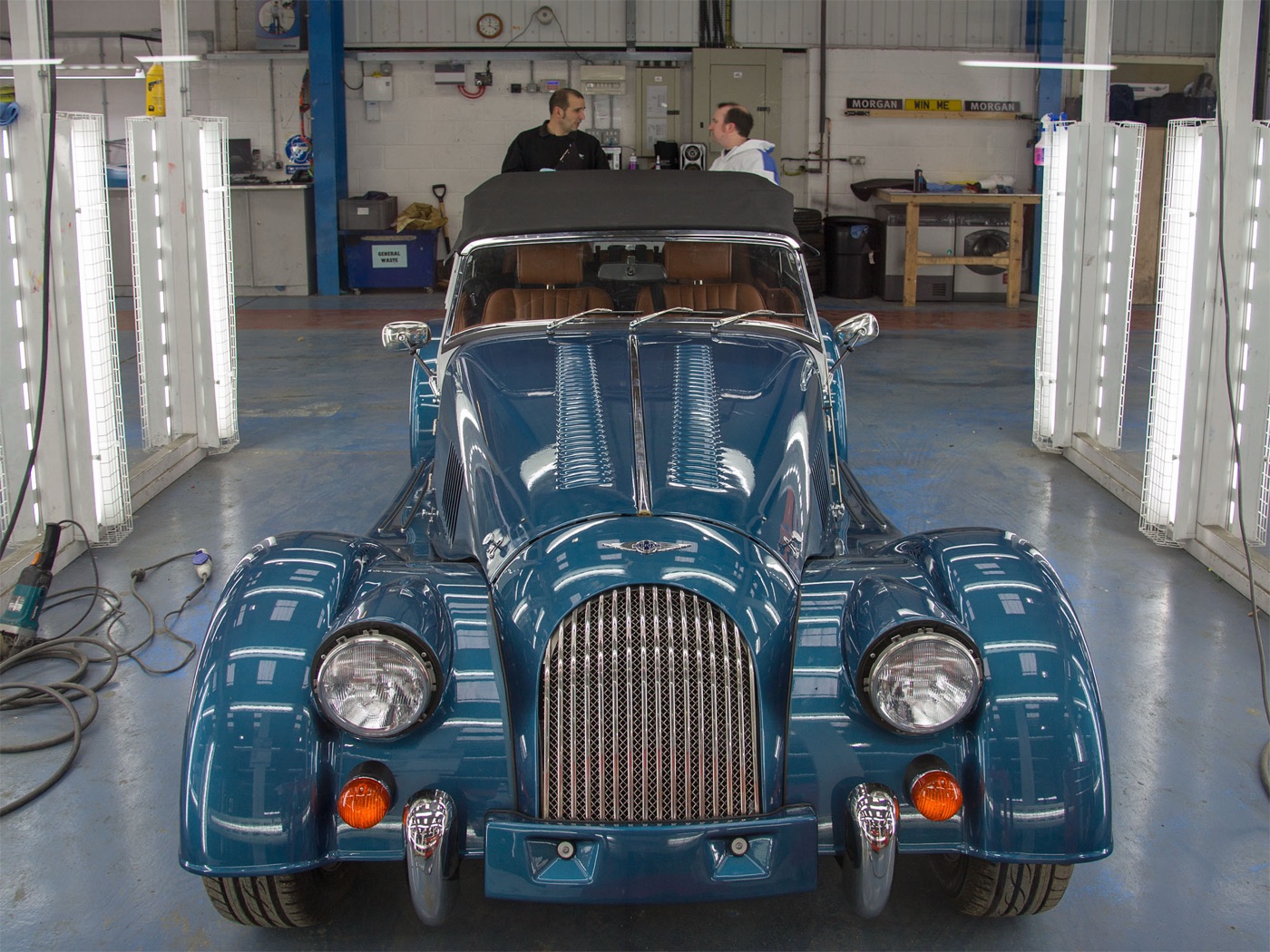
Morgan cars are hand-built British sports cars made by the Morgan Motor Company in Malvern Link, Worcestershire, where H. F. S. Morgan built his first three-wheeler in 1909 and his firm has used the same Pickersleigh Road factory since 1914. Most Morgans still have a body frame of ash wood, now over an aluminium chassis. In October 2026 the range is the Super 3 three-wheeler, the Plus Four, the Supersport and the Supersport 400, from £39,995 to £135,558 in the UK.
The company was owned by the Morgan family for 110 years. Since April 2019 the European investment group Investindustrial has held the majority, and the family a minority stake, the Morgan Motor Company’s FAQ says. In 2025 its turnover was £49.4 million and its pre-tax loss £3.8 million.
Morgan Motor Company history
The Morgan Motor Company has built cars in Malvern since 1909: three-wheelers until 1952, four-wheelers from 1936, and a steel-chassis car with an ash body frame from 1936 to 2020, under three generations of the founding family and, since 2019, a private equity owner.
H. F. S. Morgan and the 1909 runabout
HFS, as Henry Frederick Stanley Morgan (1881–1959) was known, was a clergyman’s son who trained with the Great Western Railway, left it in late 1904 and in May 1905 opened a garage in Malvern Link with his friend Leslie Bacon, selling Darracq and Wolseley cars, Grace’s Guide records. He had bought a Peugeot twin-cylinder engine for a motorcycle, then used it to power a single-seat three-wheeler built in 1909 in the Malvern College workshop with the help of its engineering master, William Stephenson-Peach. Its independent front suspension was unusual for the time.
With money from his father, HFS put the car into production next to his house in Malvern Link and showed three single-seaters at the 1910 Motor Show. There was great interest but few orders, so he built a two-seater in 1911; Grace’s Guide’s page on the Runabout instead dates the show to the 1911 Motor Exhibition at Olympia, where he decided buyers wanted two seats. Harrods in London took an agency for the two-seater. The front suspension, a sliding pillar on each side, was patented in 1910 and stayed on every traditional Morgan, John Worrall wrote in Motor Sport in January 1995. Building moved to Pickersleigh Road in 1914, the company said when it launched the Super 3, and a factory extension opened there on 16 October 1919, taking it to 50,000 sq ft (Grace’s Guide).
Three-wheelers until 1952
The two-seat three-wheelers were cyclecars, classed as motorcycles to avoid the British tax on cars, and the company made about 18,000 of them between 1919 and 1930, according to Grace’s Guide. The vee-twin cars gave way in the 1930s to the F-type with a Ford four-cylinder engine mounted inside the frame, and three-wheeler production ended in 1952. Their racing record, and the 2011 revival that ran until 2021, are on the Morgan 3 Wheeler page.
The Morgan 4/4 of 1936, the first four-wheeled Morgan
The 4-4, named for its four wheels and four cylinders, arrived in March 1936 as a two-seater with a 1,122 cc Coventry Climax engine and a Meadows gearbox; the first 50 had rear-hinged doors (Worrall, 1995). A four-seater followed in August 1937 and a drophead coupé in August 1938. The company built 713 cars with the Climax engine and 525 with the 1,267 cc Standard Special that replaced it in May 1939, and three Le Mans Replicas. The factory made aircraft refuelling parts and other Ministry work during the war. The Morgan Motor Company calls the 4/4, made from 1936 to 2018, “the longest running production vehicle in the world” on its past-models page.
Plus 4, Plus 8 and the American market
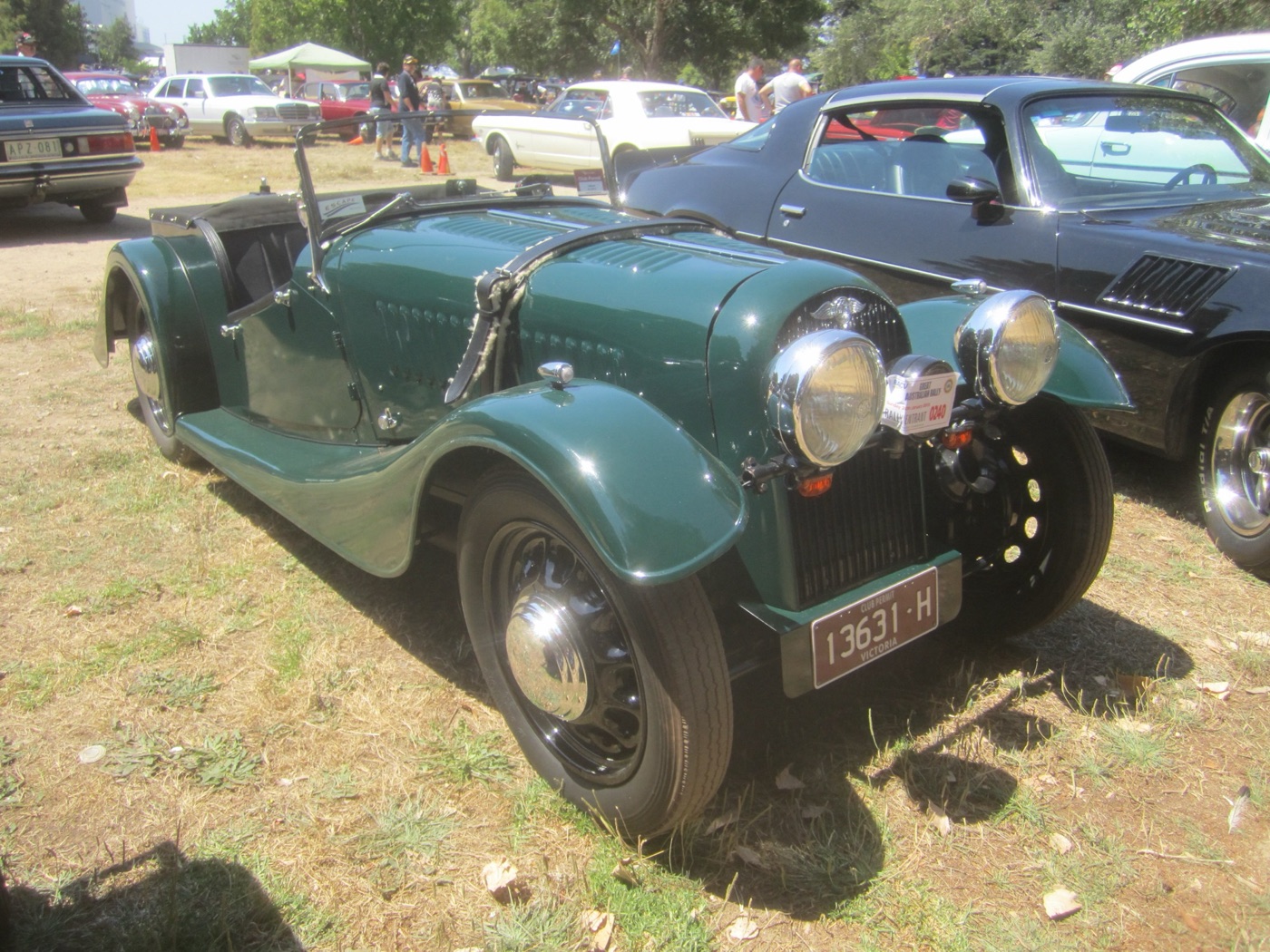
The Plus 4 put a bigger engine in the 4/4’s chassis. The Autocar revealed it on 29 September 1950, ahead of its Earls Court debut on 27 October, the Morgan Motor Company noted for the car’s 75th anniversary. It began with the 2,088 cc Standard Vanguard engine; the Triumph TR2 engine became an option in December 1953, the TR3 engine arrived in March 1956 and the TR4 in February 1961, Worrall recorded. Front disc brakes became standard on every Plus 4 in September 1960, and Lawrence-tuned Plus 4 Super Sports cars followed in 1961: 40 with TR3 engines and 63 with TR4 or TR4A engines.
The United States “probably saved the Company in the 1950s”, Bill Boddy wrote in Motor Sport in June 1975, before American emission and safety rules priced the company out of that market.
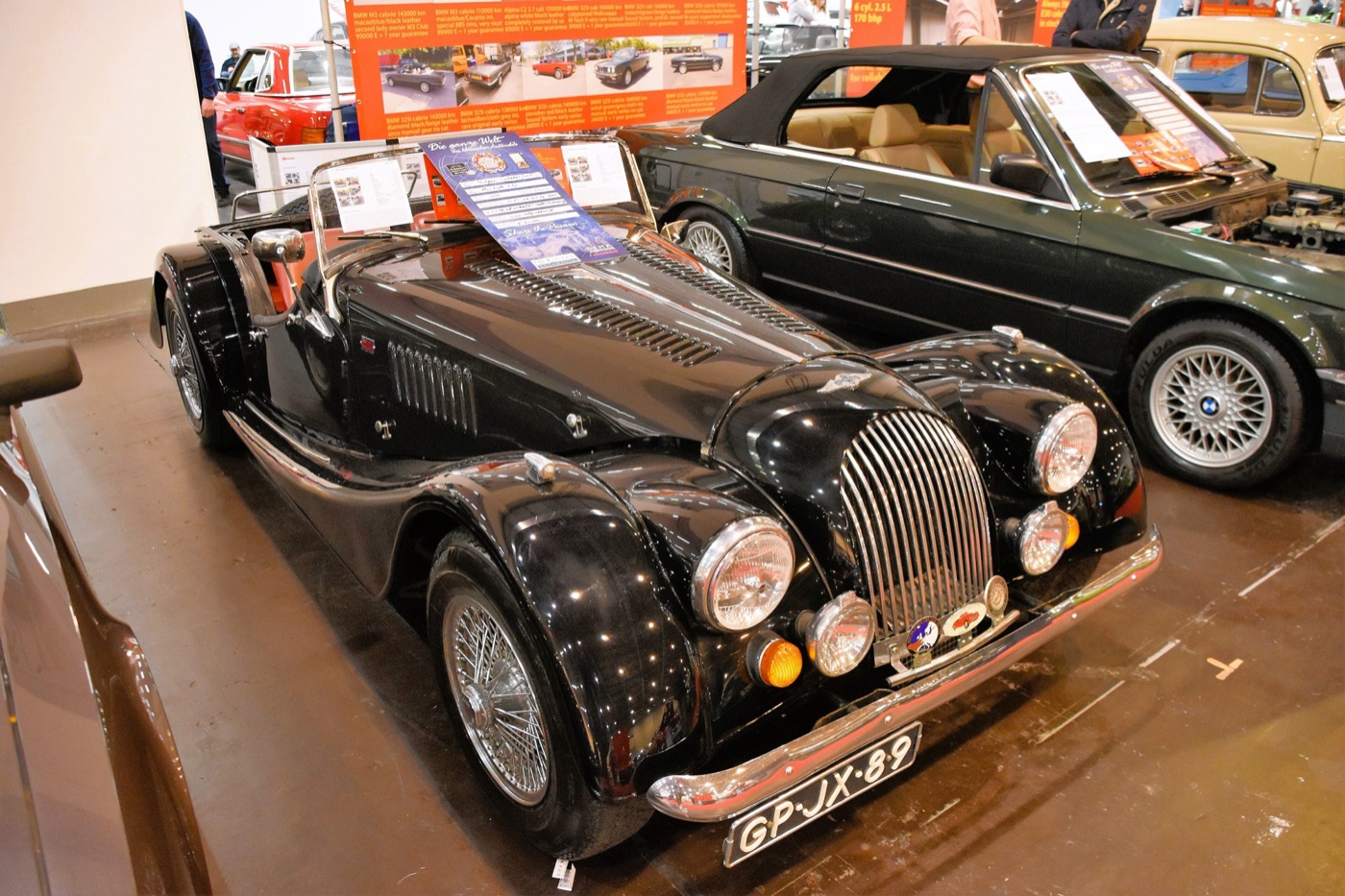
The Plus 8 made its debut at the Earls Court show in 1968 with Rover’s 3.5-litre aluminium V8 (Motor Sport, 2018). The company calls it the fastest-accelerating British production car of its day, with 0–60 mph in 6.7 seconds (the company’s Plus 8 page). Boddy’s December 1968 road test recorded 125 mph and a standing quarter-mile in 15.0 seconds, for £1,487 including purchase tax.
Peter Morgan and Troubleshooter
HFS’s son Peter took over the company in 1959, the year his father died, and ran it until he handed the reins to his own son, Charles, in 1999 (Motor Sport’s obituary, December 2003). In 1975 Boddy found about 100 to 105 people building eight to ten cars a week, three or four of them Plus 8s, with 65% exported; a Plus 8 cost £2,925. Peter Morgan told him customers had included “a King, Brigitte Bardot” and club racers; Boddy added Mick Jagger and, more recently, Peter Sellers.
The BBC’s Troubleshooter, first broadcast in March 1990, sent Sir John Harvey-Jones, the former chairman of ICI, to Malvern. The Morgan Motor Company ignored his advice to raise capacity, preferring to keep its exclusivity, and credited the programme with a rise in sales, the BBC’s history of the series records; Harvey-Jones went back to see Peter and Charles Morgan in 1999. Peter Morgan died in October 2003, just short of his 84th birthday.
Aero 8, BMW engines and the 3 Wheeler revival
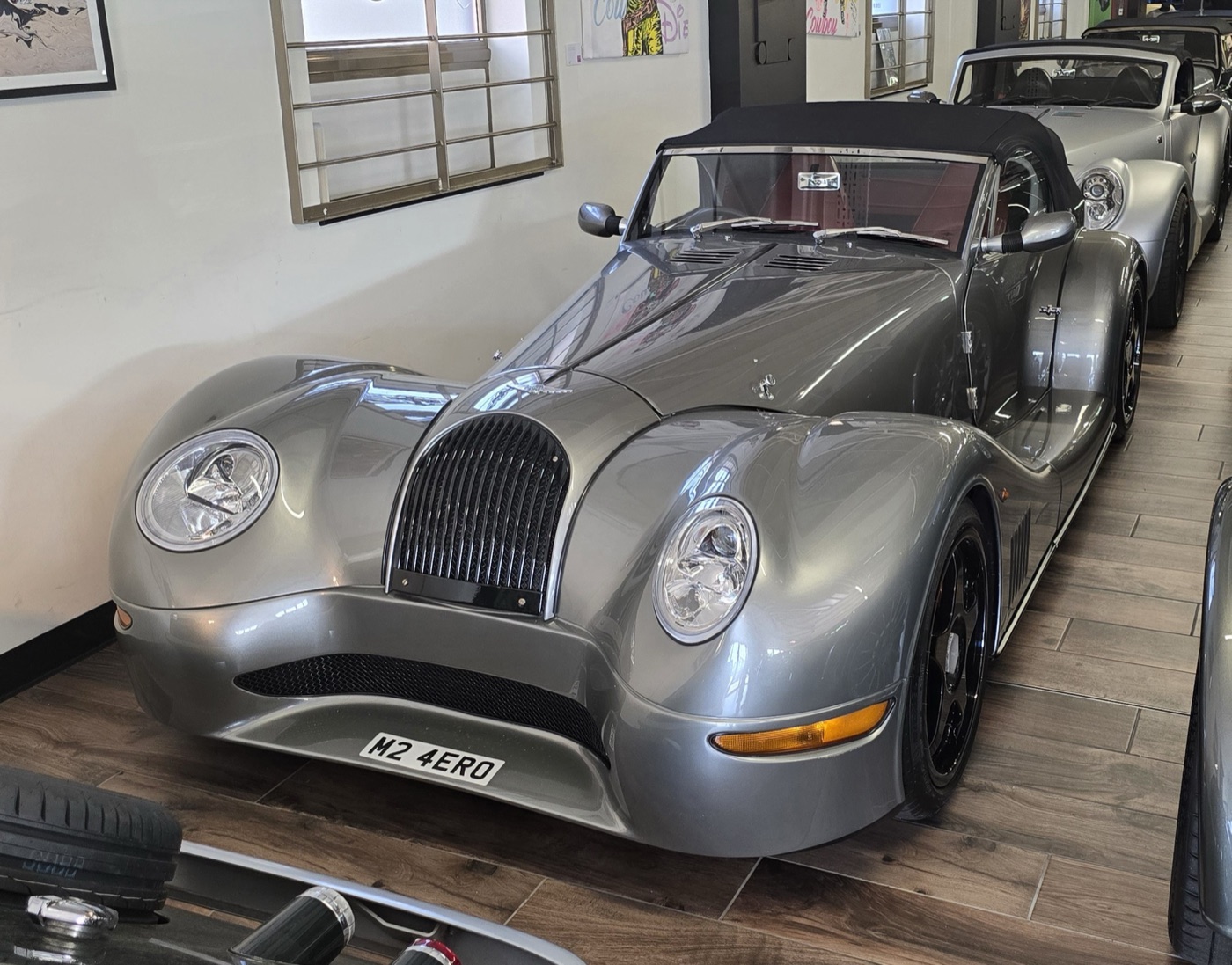
The Aero 8, shown at the Geneva motor show in 2000, was the first Morgan with an aluminium chassis and the first with a BMW engine, a 4.4-litre V8. By 2025 the Morgan Motor Company had taken almost 5,000 engines from BMW and was its longest-standing engine customer among car makers, the company said for the partnership’s 25th year. The Aero 8 led to the Morgan AeroMax coupé, the Aero SuperSports and the aluminium Plus 8 of 2012. The 3 Wheeler of 2011 brought back the three-wheeled Morgan with an American S&S V-twin.
Why did Charles Morgan leave Morgan?
The board removed him. Charles Morgan, the founder’s grandson, was replaced as managing director in March 2013 by the operations director, Steve Morris, a 2013 SkiddMark report recorded, and in mid-October 2013 Morgan Technologies Ltd, the company then trading as Morgan, said he was “no longer part of the management team or Board of Directors”. Its statement gave the reason as strengthening the structure “in response to the growth in volumes, model range and overseas markets”.
Charles Morgan replied in a statement that CAR magazine printed in full: “I have been asked to leave the Morgan Motor Company by the board. It is a sad decision that I am appealing; I remain a major shareholder in Morgan.” He said annual production had doubled during his time in charge, and that the day marked ten years since his father’s death. He tweeted a line that SkiddMark read as aimed at the new leadership: “Leadership is a privilege to better the lives of others. It is not an opportunity to satisfy personal greed.” Companies House lists him among the people with significant control of the company until 3 April 2019, the day the sale to Investindustrial completed.
The end of the steel chassis
The last steel ladder chassis Morgan was built in the first week of July 2020: a Plus 4 70th Anniversary Edition, sold to a long-time Morgan owner, PistonHeads reported on 7 July 2020. The company put the number of cars built on that chassis since 1936 at 35,000. Steve Morris, by then chief executive and chairman, said demand for steel chassis cars “is still strong”, but the aluminium CX platform launched at Geneva in 2019 had replaced it.
Who owns Morgan Motor Company?
Investindustrial, a European private equity group chaired by Andrea Bonomi, has owned the majority of the Morgan Motor Company since April 2019, and the Morgan family holds the rest. The company’s FAQ says the family “retain a minority shareholding and continue to act as stewards for the brand”.
At Companies House the holder of more than 75% of Morgan Motor Company Ltd (company 07459137) has been Sports Cars (England) Acquisitions Ltd since 3 April 2019. The 2025 accounts, filed on 19 August 2026, name Sports Cars (England) Combined S.C.A., registered in Luxembourg, as the ultimate parent, and refer to “the acquisition by InvestIndustrial in April 2019”. The register showed no change of control in its February 2026 confirmation statement. Morgan Motor Company Ltd was incorporated on 3 December 2010 as Morgan Technologies Ltd and took back the Morgan Motor Company name on 10 August 2018.
The Investindustrial deal of 2019
Investindustrial, which Motor Sport called an Italian investment company, announced its majority stake on 5 March 2019 at the Geneva motor show, where the company launched the Plus Six with a BMW engine that Toyota also used in its Supra, Motor Sport reported. The Morgan Motor Company had made revenues of £33.8 million and a net profit of £3.2 million in 2018, selling about 700 cars a year. Investindustrial then owned part of Aston Martin Lagonda and had owned Ducati before selling it to Volkswagen. Jill Price, Peter Morgan’s daughter and the longest-serving director, said the family had concluded that Investindustrial had “the pedigree and resources to secure the long-term future of Morgan”, and that the management and workforce would also take a stake.
Who runs Morgan today?
Matthew Hole is managing director of the Morgan Motor Company and Steven Armstrong its chairman. Hole joined in 2021 to lead engineering and research and development, and took over on 31 October 2024 when the chief executive, Massimo Fumarola, left for personal reasons (Morgan Motor Company, 9 October 2024). Armstrong, who was chief operating officer, president and then chairman of Ford’s European business, succeeded Lawrence Price, the founder’s great-grandson, in February 2025; Price stayed on the board (Morgan Motor Company, 12 February 2025).
| Years | Who | Role |
|---|---|---|
| 1910–1959 | H. F. S. Morgan | Founder; chairman from 1937 |
| 1959–1999 | Peter Morgan, his son | Ran the company; died in 2003 |
| 1999–2013 | Charles Morgan, his grandson | In charge from 1999; managing director until March 2013 |
| 2013–2022 | Steve Morris | Managing director, then chief executive; executive chairman from April 2022 |
| 2021–2024 | Massimo Fumarola | Chief executive |
| 2023–2025 | Lawrence Price, the founder’s great-grandson | Non-executive chairman |
| 2024 on | Matthew Hole | Managing director |
| 2025 on | Steven Armstrong | Chairman |
Morris had joined as an engineering apprentice in 1983, became operations director in 2004 and left at the end of 2022, after 40 years, the company announced; Lawrence Price credited him with “sustained growth and financial success”.
Where are Morgan cars made?
Every Morgan is built at the company’s factory on Pickersleigh Road in Malvern Link, part of the town of Malvern in Worcestershire, in red-brick buildings it has used since 1914. The company exports about 72% of its cars, the 2025 accounts say.
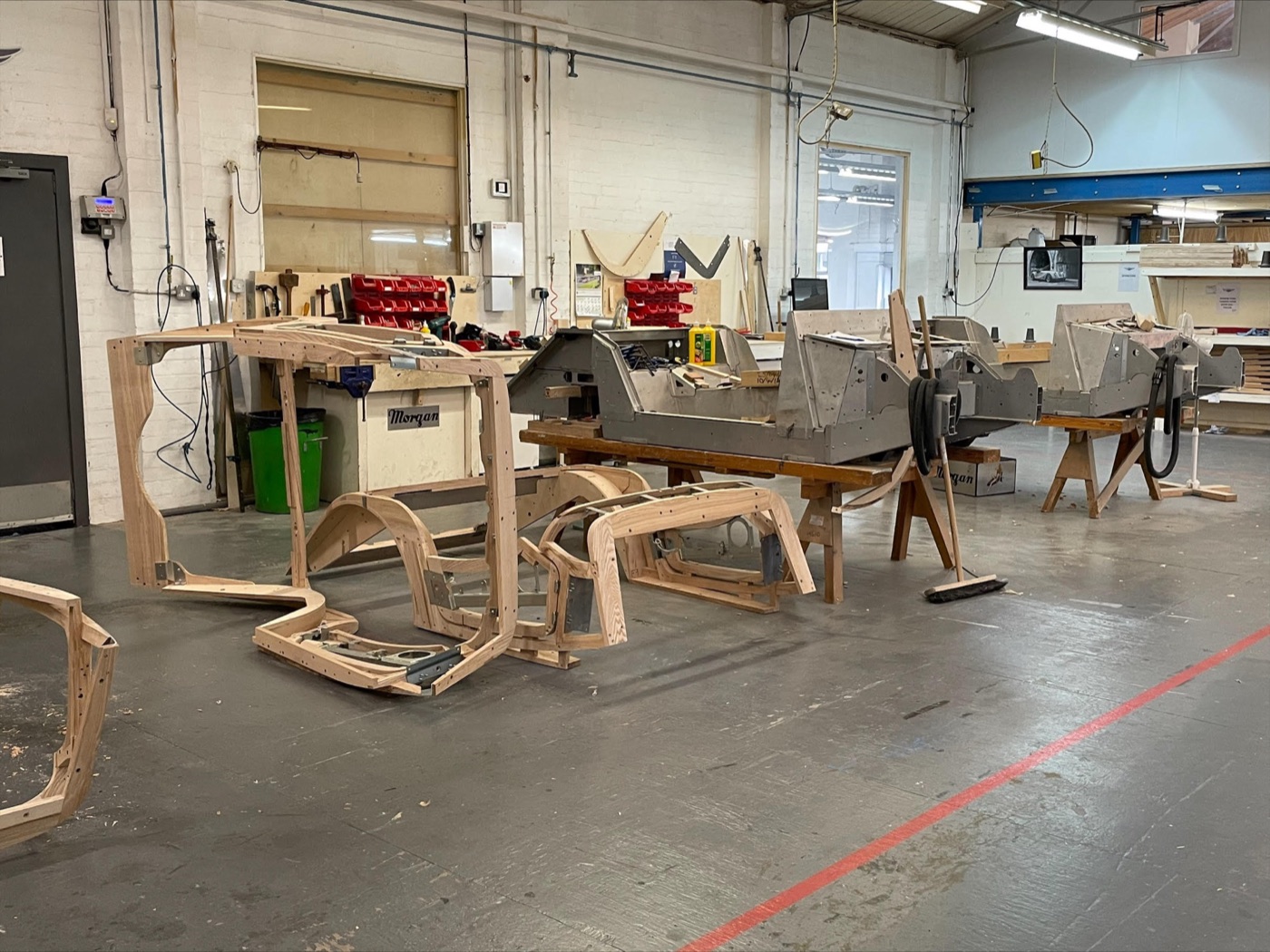
Inside the Pickersleigh Road factory
In 1975 the old factory’s seven bays were the machine shop, carpenter’s shop, tin shop, paint shop, chassis erecting shop and dispatch bay, and there was no assembly line: cars stood on trestles and were pushed from shop to shop by hand, Boddy reported. The ash came kiln-dried from Belgium, and the panels were still tacked to the frame, in the author Gregory Houston Bowden’s phrase, “chiefly with tin-tacks and a few screws”. Each finished car went out for a run of four to six miles, then a 15- to 20-mile check by the factory tester, “Ledbury Jack”.
In 2025 the Morgan Motor Company employed an average of 213 people, 147 of them in production and 23 in research and development, according to its accounts. BMW builds the current engines at its Steyr plant in Austria.
Morgan factory tours and visitors
The company hosted more than 35,000 visitors in 2025, its strategic report says, and sells factory tours, group tours and driving tours, including the Morgan Explores road trips, which add three new routes in 2026.
Are Morgan cars made of wood?
Partly. On the Plus Four and Supersport the body frame under the aluminium panels is ash wood, but the chassis is aluminium, and the company says none of its chassis has ever been wooden. The FAQ names the Plus Four and Supersport as the models with ash frames.
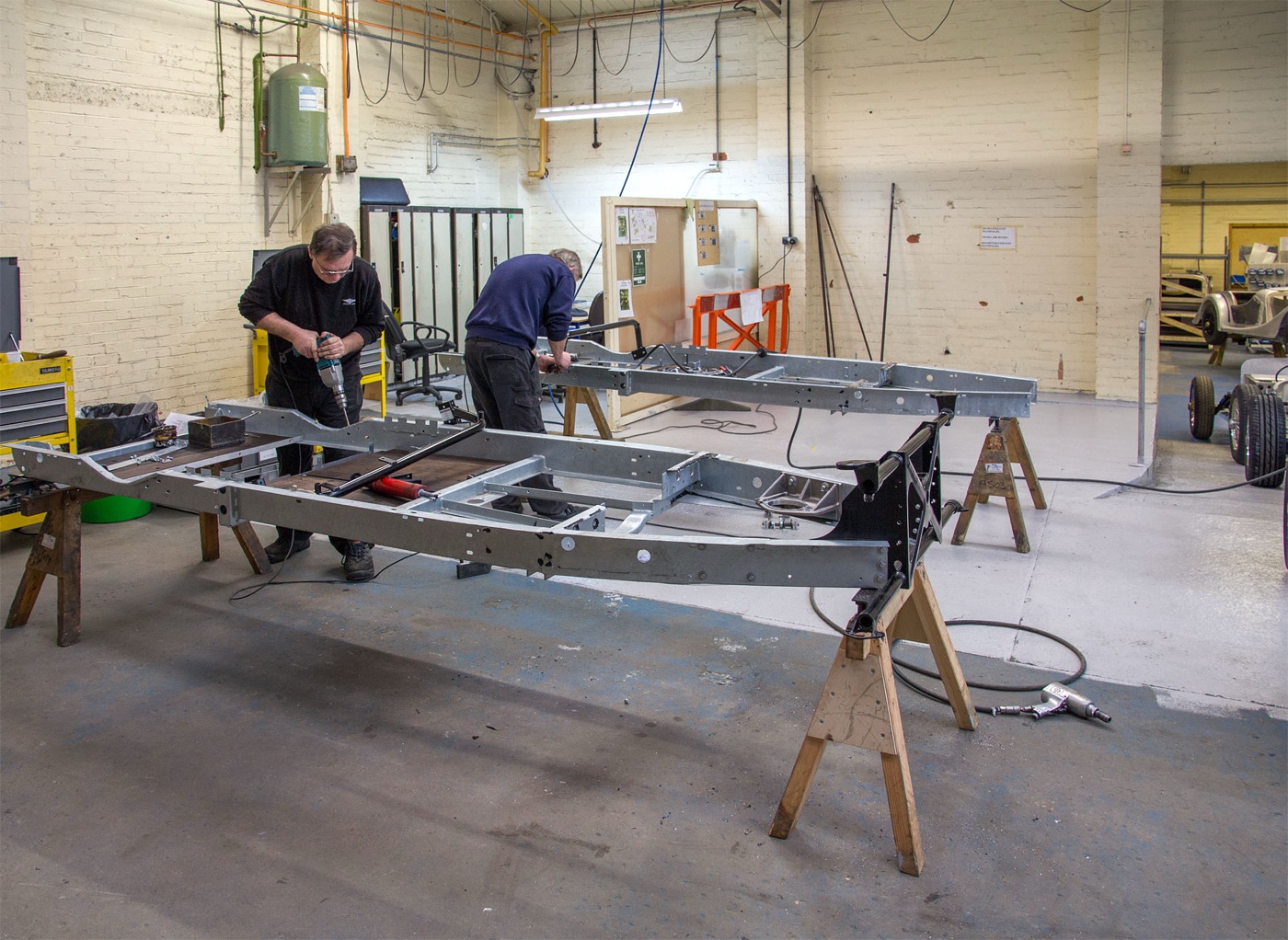
Steel ladder chassis, 1936–2020
From the 4-4 of 1936 to the last Plus 4 in 2020, every four-wheeled Morgan was coachbuilt on a steel chassis. Worrall described the construction in 1995: an ash frame mounted on a chassis with Z-section side members and tubular cross members, the front suspension on a separate steel frame, and panels of steel or aluminium. The same chassis carried the 4/4, Plus 4, Plus 4 Plus, Plus 8 and V6 Roadster, with sliding-pillar front and leaf-spring rear suspension, PistonHeads noted.
Aluminium platforms: Aero 8, CX and CXV
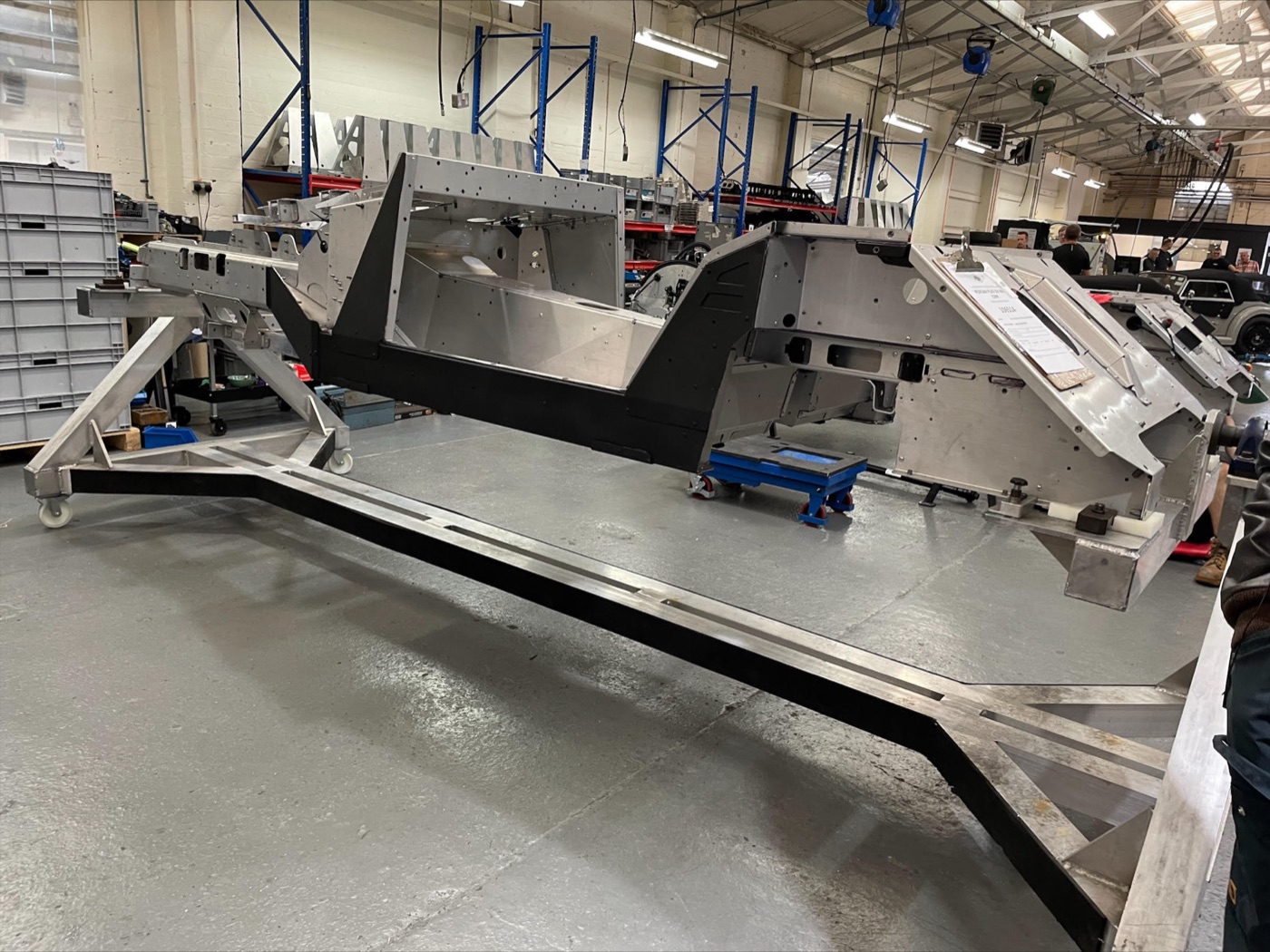
The Aero 8 of 2000 had the first aluminium chassis. Its successor, the bonded aluminium CX platform, arrived with the Plus Six in 2019 and the Plus Four in 2020, with double wishbone suspension in place of the sliding pillar. The company says it has double the torsional stiffness of its earlier aluminium chassis and weighs under 100 kg. The CXV version under the 2025 Supersport weighs 102 kg with its subframes and is 10% stiffer again, with a further 10% when the carbon hard top is fitted (Morgan Motor Company, 11 March 2025).
Every Morgan model from 1909 to today
The Morgan Motor Company has made eight families of car, with engines from makers among them J.A.P., Coventry Climax, Standard, Triumph, Ford, Fiat, Rover, S&S and BMW: the three-wheelers, the 4/4, the Plus 4 and Plus Four, the Plus 8, the Roadster, the Aero 8 and its offshoots, the Plus Six and the Supersport.
| Model | Built | Chassis | Engines |
|---|---|---|---|
| Three-wheelers (Runabout to F-type) | 1910–1952 | Steel | Vee-twins, then Ford four-cylinder |
| 4-4, later 4/4 | 1936–2018, with breaks | Steel ladder | Coventry Climax, Standard, Ford, Fiat (1981–85) |
| Plus 4 | 1950–1969, then 1985–2020 | Steel ladder | Standard Vanguard, Triumph TR2–TR4A, Fiat, Rover M16 and T16, Ford 2.0 at the end |
| Plus 8 | 1968–2004 | Steel ladder | Rover V8, 3.5 to 4.6 litres |
| V6 Roadster | From 2004, replacing the Plus 8, until the steel chassis ended in 2020 | Steel ladder | Ford V6, latterly the 3.7-litre Cyclone |
| Aero 8, AeroMax, Aero SuperSports, Plus 8 | 2000–2018 | Aluminium | BMW V8, 4.4 and 4.8 litres |
| 3 Wheeler | 2011–2021 | Steel tube | S&S V-twin |
| Plus Six | 2019–2025 | CX aluminium | BMW B58 3.0 six, turbo |
| Plus Four | 2020 on | CX aluminium | BMW B48 2.0 four, turbo |
| Super 3 | 2022 on | Aluminium | Ford 1.5 three-cylinder |
| Supersport and Supersport 400 | 2025 on | CXV aluminium | BMW B58 3.0 six, turbo |
Motor Sport called the Plus 8 50th Anniversary Edition of 2018, 50 cars with BMW’s 4.8-litre V8, the last Morgan with a naturally aspirated V8; the company built nine Plus 8 GTRs on the same engine in 2021. The last Plus Six was built in March 2025, the company’s FAQ says; the Plus Six Pinnacle, a limited edition of 30 cars from £96,995, closed its run (Morgan Motor Company, 23 October 2024).
The current Morgan range and prices
The Morgan Motor Company builds four models in October 2026: the Super 3 from £39,995, the Plus Four from £69,995, the Supersport from £102,000 and the Supersport 400 from £135,558, UK prices including VAT.
| Model | Engine | Power | 0–62 mph | Top speed | Weight | UK price from |
|---|---|---|---|---|---|---|
| Super 3 | Ford 1.5 three-cylinder | 118 bhp | 7.0 sec | 130 mph | 635 kg dry | £39,995 |
| Plus Four | BMW 2.0 four, turbo | 255 bhp | 4.8–5.2 sec | 149 mph | 1,009–1,013 kg dry | £69,995 |
| Supersport | BMW 3.0 six, turbo | 335 bhp | 3.9 sec (0–60) | 166 mph | 1,170 kg kerb | £102,000 |
| Supersport 400 | BMW 3.0 six, turbo | 402 bhp | 3.6 sec | 180 mph | 1,170 kg kerb | £135,558 |
Morgan Super 3
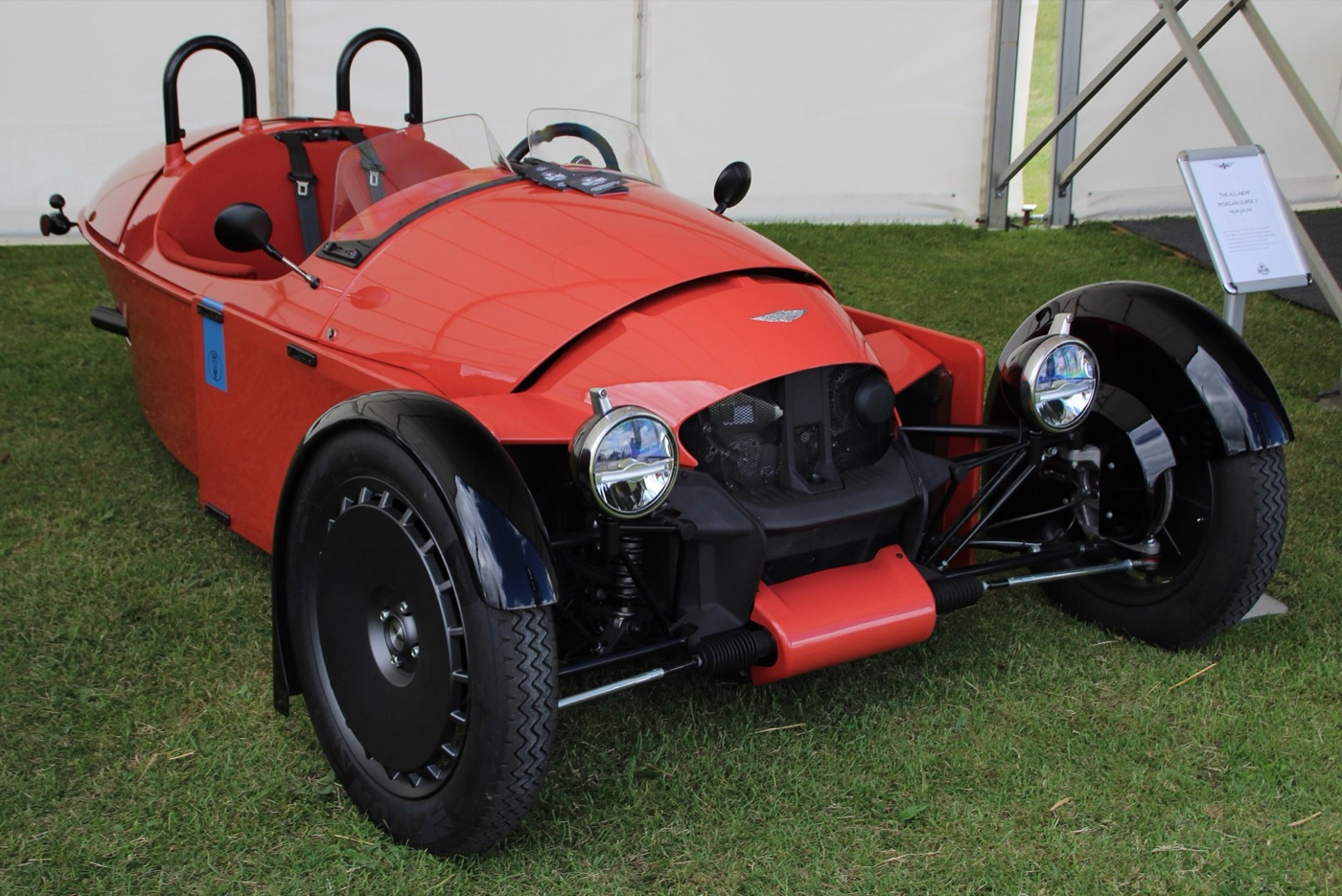
The Super 3, launched on 24 February 2022, replaced the 3 Wheeler with a Ford three-cylinder engine driving the single rear wheel, the same switch from vee-twin to Ford that the F-type made in the 1930s. It is registered as a motorised tricycle in the UK and Europe and as a motorcycle in the US, has no airbags and no power steering, and was offered with more than 200 options at launch.
Morgan Plus Four
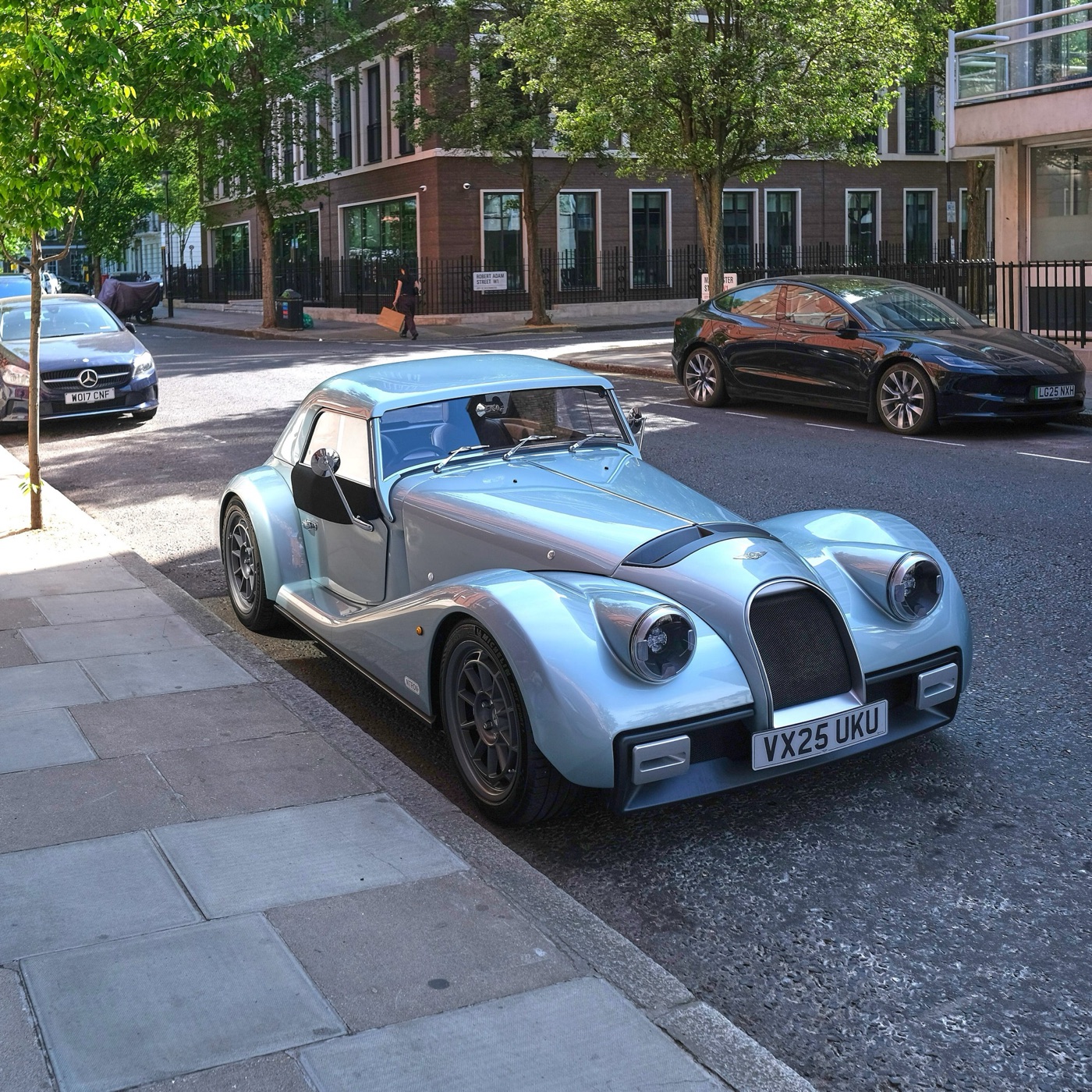
The Morgan Plus Four is the traditional-looking Morgan: separate wings, a louvred bonnet, a folding hood and an ash frame, on the CX platform with a BMW engine, a six-speed manual or eight-speed automatic gearbox, AP Racing brakes and electronic stability control. The automatic costs from £74,406. It went on sale in the United States in 2025, the first four-wheeled Morgan sold there officially since the early 2000s, under the FAST Act rule for replicas of cars sold in America more than 25 years earlier.
Morgan Supersport and Morgan Supersport 400
The Supersport, revealed on 11 March 2025, replaced the Plus Six as the flagship. Its design is new, “a contemporary study of the brand’s timeless silhouette” in Morgan’s words, and it has a carbon hard top that weighs 19.7 kg and swaps with a mohair hood, BMW’s 3.0-litre six and an eight-speed ZF automatic. The Supersport 400 of April 2026 is the first production Morgan with more than 400 bhp; the first customer cars left Malvern in July 2026 (Morgan Motor Company, 28 July 2026), and it is sold everywhere except the United States, where the Supersport has a BMW 2.0-litre four.
Midsummer and special projects
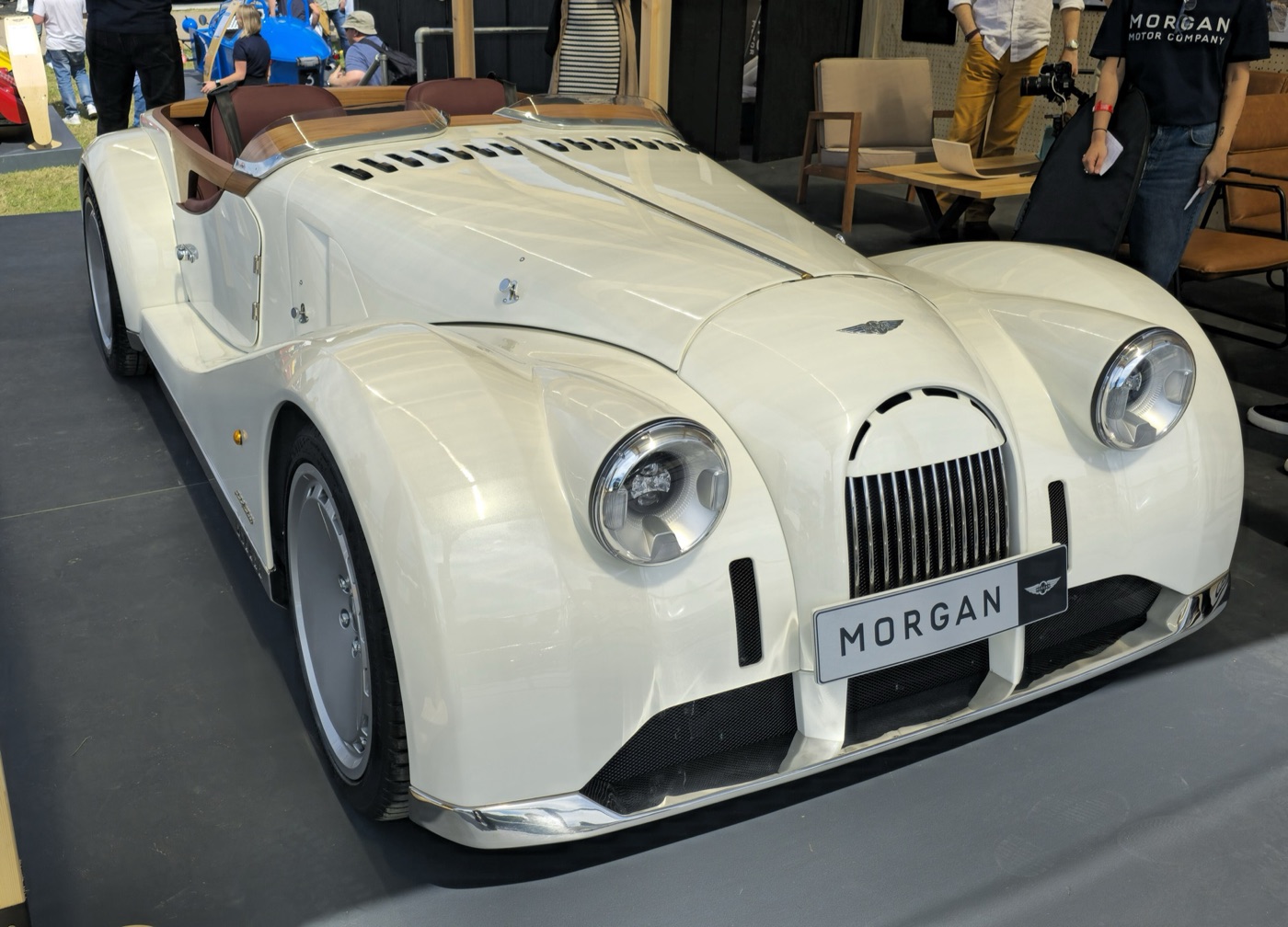
The company’s special projects programme builds small runs to order. The Midsummer, a barchetta designed with the Italian design house Pininfarina and shown in May 2024, was limited to 50 cars, all sold before it was revealed; the last was finished in March 2026. In June 2026 the company showed the Midsummer Coupé, of which it will build nine, each for one client (Morgan Motor Company, 24 June 2026).
Is Morgan making an electric car?
The Morgan Motor Company is developing one. XP-1, an electric development vehicle on the Super 3’s aluminium platform shown in November 2023, was built to teach Morgan’s engineers how to make the company’s first production electric models and is not for sale (Morgan Motor Company, 6 November 2023). Its battery, motor and inverter package is the first powertrain the company has engineered itself.
How long is the waiting list for a Morgan?
Six to 12 months is typical, the company’s FAQ says.
How many cars does Morgan make a year?
About 800 a year, Autocar reported on 25 May 2022, when the Morgan Motor Company had sold 680 cars in 2021. On 9 April 2025 Matthew Hole told Autocar that 2025 production would be about 200 cars higher than 2024’s, all of the growth from the United States. That compares with eight to ten cars a week in 1975 and about 700 a year at the 2019 sale (Motor Sport), and the company’s 2025 accounts show turnover up 39% on 2024, to £49.4 million.
Morgan Motor Company sales, profit and loss
| Item | 2024 | 2025 |
|---|---|---|
| United Kingdom | £12.1m | £13.9m |
| Europe | £16.5m | £15.5m |
| United States | £1.6m | £15.5m |
| Rest of the world | £5.3m | £4.5m |
| Total turnover | £35.5m | £49.4m |
| Loss before tax | £7.8m | £3.8m |
| Average employees | 198 | 213 |
The 2025 loss includes £1.7 million of exceptional costs, among them a £1 million provision for a regulatory matter that the directors call “isolated and non-recurring”. The company and its parent companies owed HSBC £23.6 million at the end of both years.
Morgan in the United States
The United States went from the Morgan Motor Company’s smallest market by turnover in 2024 to its largest in 2025, once the Plus Four had been approved for sale there at the end of the third quarter of 2024. US tariffs rose during 2025: the rate on Morgans went from 2.5% to 27.5% before settling at 10%, and the company paid £452,490 in support to US customers whose orders predated the rise, the accounts say.
Morgan in motorsport
Morgans have raced since the three-wheelers of 1910, when HFS built the cars’ reputation by entering them in competitions (Grace’s Guide), and their best-known result is the 2-litre GT class win at Le Mans in 1962. In the 1913 Cyclecar Grand Prix at Amiens, Gordon McMinnies’ Morgan was the first to finish the 163 miles, at 41.9 mph, but the officials ruled it a sidecar and gave first place to a Bedelia (Motor Sport, June 1965); the Grand Prix model, sold from 1913 to 1926, was added before the race (MTWC). The company runs a factory-backed series, the Morgan Challenge, open to every four-wheeled Morgan (Morgan Motorsport).
The 1962 Le Mans class win
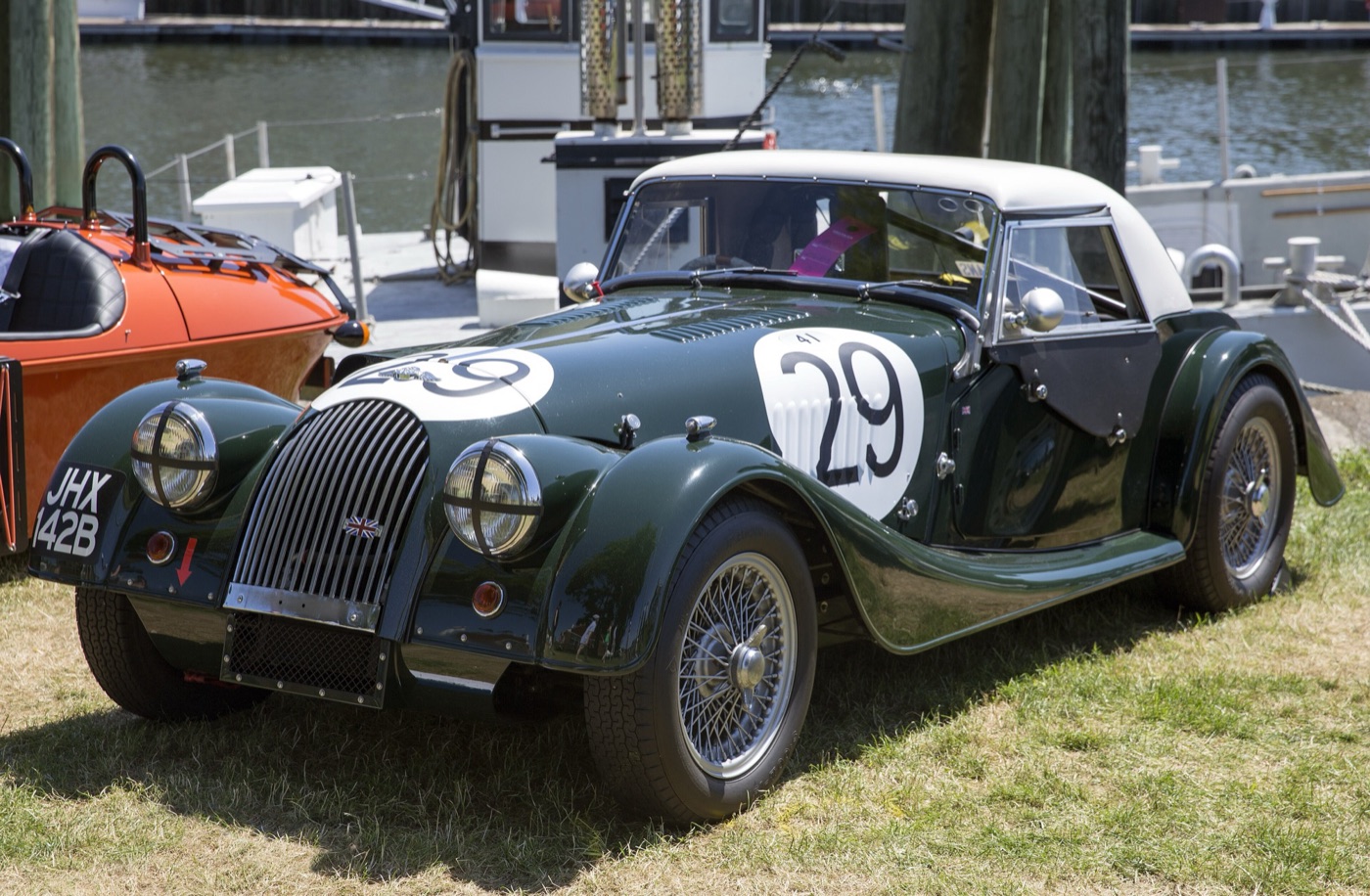
Chris Lawrence and Richard Shepherd-Barron finished 13th overall and first in the 2-litre GT class at the 1962 Le Mans 24 Hours in the Plus 4 numbered 29, covering 270 laps at 151.22 km/h (Racing Sports Cars results). The car, then registered TOK 258, won the three-hour GT race at Spa in 1963 and raced for 16 years (Motor Sport, January 2002).
Aero 8 GT cars and racing today
BMW-engined Aero 8 GT cars raced at Le Mans and in the FIA GT3 European Championship, and the company put its 2004 Aero 8 LMGT Le Mans entrant on show in its 2025 BMW anniversary display. Since 2020 the company has raced a Plus Four with the University of Wolverhampton’s School of Engineering, using it to test production parts.
How much is a used or classic Morgan worth?
At UK auctions since mid-2023 a 1980s-onwards 4/4 has typically made about £17,000 and a later steel-chassis Plus 4 about £20,000, while the few Plus Sixes sold fetched £42,500 to £72,000. The company’s FAQ claims some of the highest residual values of any car.
| Model family | Sales | Median | Lowest | Highest |
|---|---|---|---|---|
| 4/4, 1936–1979 | 16 | £11,000 | £7,150 | £20,000 |
| 4/4, 1980–2018 | 28 | £17,059 | £10,300 | £27,000 |
| Plus 4, 1985–2020 | 24 | £19,875 | £5,101 | £39,000 |
| Plus 8, 1968–2004 | 14 | £19,375 | £10,000 | £30,000 |
| V6 Roadster | 13 | £26,000 | £17,888 | £41,900 |
| Three-wheelers, all years | 13 | £20,250 | £8,500 | £42,500 |
The same data has three Plus Sixes at £42,500, £55,500 and £72,000, four Aero 8-family cars between £35,750 and £90,000 (the top price for a 2009 AeroMax), and six 1950s and 1960s Plus 4s between £10,000 and £21,000.
Morgan clubs and long-distance drives
The Morgan Three Wheeler Club was formed in 1945 and has more than 1,400 members worldwide (MTWC).
The 2013 Nordkapp Challenge
In May 2013 five standard Morgans, an Aero SuperSports, Plus 4, Roadster, Plus 8 and 3 Wheeler, left the Malvern factory on a 5,000-mile, two-week drive to Nordkapp in Norway, roofs down and on winter tyres, a 2013 SkiddMark report recorded. The trip raised money for the Marfan Trust and was inspired by Lucy Morris, the 12-year-old daughter of the operations director Steve Morris, who had been diagnosed with Marfan syndrome; Morris and his fellow director Tim Whitworth drove, with owners from Talk Morgan, and the target was at least £50,000. One of the drivers, Brian Voakes, said he had owned 11 Morgans.
Morgan’s rivals
Other small British sports car makers include Caterham, Lotus, TVR and Ginetta. Price puts the Supersport against Porsche: Andrew Frankel, in Motor Sport in August 2025, wrote that its power-to-weight ratio was slightly better than a 394 bhp Porsche Boxster GTS 4.0 and that it came at “Porsche 911 pricing”. Early in his career Frankel had compared a Plus 8 with an E30 BMW M3 convertible and given the win to the Morgan.
Morgan cars in reviews
Road testers have praised Morgans’ speed and character and criticised their chassis. Boddy called the 1968 Plus 8 “this primitive, certainly old-fashioned, car” that only “very few cars, costing more, can equal” for performance, and “a true sports car, and a very quick one at that”. Frankel wrote in 2025 that from the first turn of the Supersport’s wheels “this is not going to be a typical Morgan experience”. Every other four-wheeled Morgan he had driven had been let down by “desperately vague steering, poor body control and crashing ride quality”; the Supersport was the first he would call “a serious, quite senior driver’s car”, though its steering still lacked feel. Of its looks he wrote: “its retro styling delivered with modern surfacing, but it won’t be to everyone’s taste”. Motor Sport’s June 2025 first look put the Supersport at £85,000 before tax and “a shade over £105,000” on the road, before options such as a £3,600 stereo.
Questions
Is Morgan still a British company?
Yes. Morgan Motor Company Ltd is registered in England and builds every car in Malvern Link, Worcestershire, though its majority owner since 2019 is the European investment group Investindustrial, through a Luxembourg holding company.
Who is the boss of Morgan Motor Company?
Matthew Hole has been managing director since October 2024, and Steven Armstrong, a former chairman of Ford’s European business, has been chairman since February 2025.
What engines do Morgan cars use?
The Plus Four has a BMW 2.0-litre turbocharged four and the Supersport and Supersport 400 a BMW 3.0-litre turbocharged six; the Super 3 has a Ford 1.5-litre three-cylinder. BMW has supplied Morgan since the Aero 8 of 2000.
Do Morgans have airbags and power steering?
The Plus Four and Supersport have driver and passenger airbags and power steering as standard. The Super 3 has neither.
Can you buy a new Morgan in the United States?
Yes. The Super 3, Plus Four and Supersport are sold there; the Supersport 400 is not. US Supersports have a BMW 2.0-litre four instead of the six.
Do Morgans hold their value?
Morgan says its cars have some of the highest residual values of any car. At UK auctions since 2023 later 4/4s have fetched a median of about £17,000 and Plus Sixes £42,500 to £72,000.
Is the Morgan Super 3 a car or a motorcycle?
It is registered as a motorised tricycle in the UK and Europe and as a motorcycle in the United States.
Sources
- Morgan Motor Company, “Frequently asked questions”, read 28 October 2026: ownership, prices, waiting list, chassis and frame, Plus Six end date, power steering and airbags.
- Morgan Motor Company model pages, read 28 October 2026: Plus Four and Super 3 (prices and specifications); past models 4/4, Plus 8 and Plus 4; Morgan Motorsport (Morgan Challenge).
- Morgan Motor Company press releases: Super 3 launch, 24 February 2022 (factory since 1914, specification, options); change of chairman, 22 December 2022; XP-1, 6 November 2023; Midsummer, 16 May 2024; change of leadership, 9 October 2024; Plus Six Pinnacle, 23 October 2024; new chairman, 12 February 2025; Supersport, 11 March 2025; Plus Four at 75, 1 October 2025; 25 years with BMW, 11 December 2025 (Aero 8, CX platform, engine numbers, US approval, racing); final Midsummer, 12 March 2026; Supersport 400, 23 April 2026; Midsummer Coupé, 24 June 2026; Supersport 400 deliveries, 28 July 2026.
- Companies House, Morgan Motor Company Ltd (07459137): filing history, including the full accounts to 31 December 2025 filed 19 August 2026 (turnover by market, results, employees, controlling parties, US tariffs) and director changes of 31 October 2024; persons with significant control; previous company names. Read 28 October 2026.
- Bill Boddy, “Road Test: The 3½-litre Morgan Plus-8”, Motor Sport, December 1968, p. 16: performance, price.
- Bill Boddy, “Morgan of Malvern”, Motor Sport, June 1975, p. 56: the factory, output, staff, exports, prices, customers.
- John Worrall, “Morgan four-wheeled cars 1936–1995”, Motor Sport, January 1995, reprinted by the Morgan Motor Car Club, Dallas: 4-4 and Plus 4 dates, engines, numbers, chassis, sliding-pillar patent.
- Bill Boddy, “The vintage years of the Morgan 3-wheeler”, Motor Sport, June 1965: the 1913 Amiens race.
- “Morgan at Le Mans”, Motor Sport, January 2002: TOK 258’s career.
- “Peter Morgan”, obituary, Motor Sport, December 2003: dates of his tenure and death.
- “Morgan marks half century of Plus 8”, Motor Sport, March 2018: Plus 8 launch, 50th Anniversary Edition.
- Samarth Kanal, “Morgan sold to investment company”, Motor Sport, March 2019: the Investindustrial deal, 2018 results, quotes.
- “Hot Wheels: Morgan Supersport”, Motor Sport, June 2025: Supersport performance and price.
- Andrew Frankel, “2025 Morgan Supersport review”, Motor Sport, August 2025: verdict and comparisons.
- “Exclusive: Morgan bosses detail ambitious growth plans”, Autocar, 25 May 2022: about 800 cars a year, 680 sold in 2021.
- Charlie Martin, “Morgan: US tariffs won’t hurt sales, only growth”, Autocar, 9 April 2025: Matthew Hole on 2025 production.
- “New Supersport 400 is the most powerful Morgan sports car ever”, Motoring Research, April 2026: Supersport 400 performance and price.
- “Morgan brings its 84-year steel era to a close”, PistonHeads, 7 July 2020: the last steel chassis, 35,000 cars.
- “Charles Morgan to appeal ousting by Morgan board”, CAR, October 2013: both statements in full.
- “Troubleshooter”, History of the BBC: the 1990 programme and the 1999 return visit.
- Grace’s Guide to British Industrial History, “Henry Frederick Stanley Morgan”, “Morgan Motor Co” and “Morgan Runabout”: the founder’s early life, the first cars and shows, the 1919 extension, three-wheeler numbers.
- Le Mans 24 Hours 1962, results, Racing Sports Cars: position, laps and speed of the Lawrence and Shepherd-Barron car.
- The Morgan Three Wheeler Club, home page, read 28 October 2026: founding year and membership; “The two-speed Morgan era”: the Grand Prix model.
- SkiddMark, “Nordkapp Challenge: Five Morgans Go Adventuring”, 4 May 2013, and “Charles Morgan steps down from Morgan”, 15 October 2013: the Nordkapp drive, Charles Morgan’s replacement as managing director and his tweet.
- OUTLAW 8 listings data: Morgans sold at timed and classic auctions in pounds, 28 June 2023 to 22 October 2026, queried 28 October 2026.