Nick Mason’s car collection: the 250 GTO, Le Mans cars and Ten Tenths
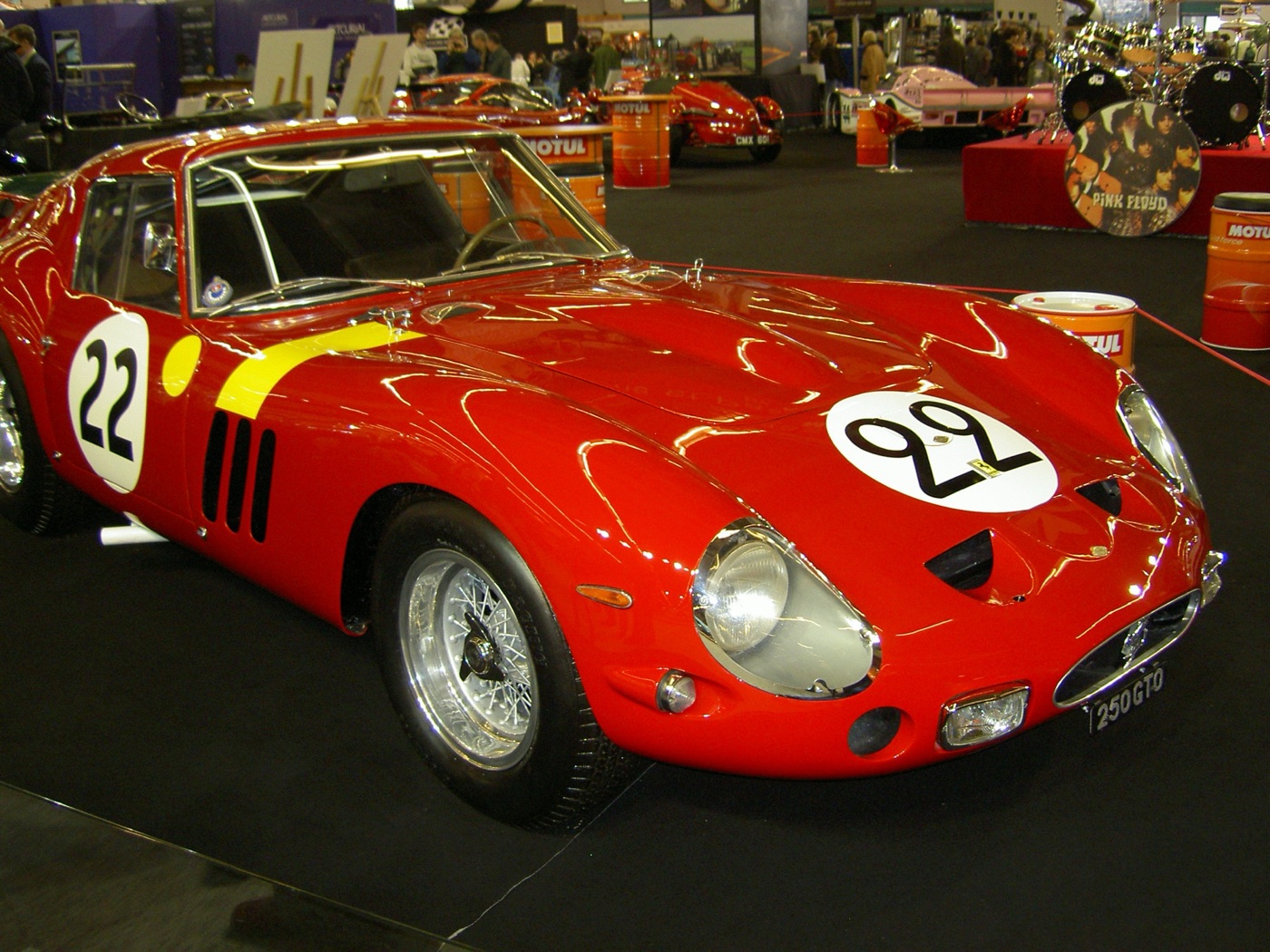
Nick Mason’s car collection is a working stable of about 40 racing and sports cars belonging to the Pink Floyd drummer, kept and run by his company, Ten Tenths. Its most famous car is a 1962 Ferrari 250 GTO, chassis 3757 GT, which Mason bought for £35,000 in 1977 and has raced, rallied and driven on the road ever since. The other cars run from a 1901 Panhard to Gilles Villeneuve’s Ferrari 312 T3 and a Porsche 962C; Mason drove five times in the 24 Hours of Le Mans between 1979 and 1984, and in the spring of 2024 he sold the McLaren F1 GTR he had kept for 25 years.
Mason does not call it a collection. “I think of it not so much as a collection as an accumulation,” he told Motor Sport in July 2006: he had found himself able to buy a car he wanted to race without having to sell another.
How many cars does Nick Mason own?
About 40: Top Gear described the collection as “40-strong” when it visited in May 2012. A Motor Sport track test in July 1982 put it at “close to 30 cars”, of which Mason said he owned “5 ½ Ferraris”, the half being a 512 BB LM shared with Pink Floyd’s manager, Steve O’Rourke. Motor Sport counted “around 30 ‘serious’ cars” again in 2006.
Far more have passed through: perhaps 300 since 1962, The Sunday Times’s Driving.co.uk estimated in a 2016 interview with him. “I regret pretty much everything I’ve ever sold,” he told SkiddMark in 2010. “Sometimes it’s been necessary though.”
| Car | Built | History before Mason | Latest report |
|---|---|---|---|
| Panhard | 1901 | Veteran car, the oldest in Into the Red | Run by Ten Tenths, 2014 (Ten Tenths) |
| Bugatti Type 35B | 1927 | Grand Prix car; Mason has had two Type 35s | Owned, 2026 (RM Sotheby’s) |
| Bentley 4½ Litre | Pre-war | Raced by his father, Bill Mason | Owned, 2022 (Octane) |
| Aston Martin Ulster, LM21 | 1935 | Last Aston Martin works team car, built for the 1935 Tourist Trophy | Owned, 2006 (Motor Sport) |
| Jaguar D-type | 1950s | Sports-racing car, bought before the GTO | Owned, 2026 (RM Sotheby’s) |
| Maserati 250F | 1957 | Grand Prix car | Owned, 2026 (RM Sotheby’s) |
| Maserati Tipo 61 “Birdcage”, 2457 | 1959 | David Causey, 1960 and 1961 Sebring 12 Hours | Owned since the 1980s; raced, 2026 (Goodwood) |
| Maserati Tipo 60 “Birdcage”, 2466 | 1959 | 2-litre sports-racing car | Owned, 2007 (Beaulieu display) |
| Ferrari 250 GTO, 3757 GT | 1962 | Ecurie Francorchamps, third at Le Mans in 1962 | Owned, 2024 (Goodwood) |
| Alfa Romeo TZ | 1964 | 11th overall at Le Mans in 1964 | Owned, 2010 (Passion for Speed) |
| Ferrari 512 S, 1026 | 1969 | Won the 1970 Sebring 12 Hours; burnt while filming Le Mans | Owned, 2019 (Porsche) |
| Ferrari 312 T3 | 1978 | Gilles Villeneuve’s first Grand Prix win, Canada 1978 | Owned, 2013 (ACO) |
| Porsche 935 | 1978 | Group 5 racer | Owned, 2010 (Passion for Speed) |
| Ferrari 512 BB LM | In the collection by 1982 | Endurance racer | Owned, 2006 (Motor Sport) |
| Porsche 962C | Raced from 1990 | Richard Lloyd Racing, 11th at Le Mans in 1990 | Owned, 2026 (RM Sotheby’s) |
| McLaren F1 GTR, 10R | 1995 | McLaren’s own 1996-specification prototype | Sold, spring 2024 (RM Sotheby’s) |
| BRM V16 | 1953 | Grand Prix car | Sold before 2006 (Motor Sport) |
| Ferrari Enzo | 2003 | Bought new | Sold, on sale at Talacrest in 2018 |
| Ferrari LaFerrari | 2013–16 (model) | Blu Pozzi paint | Shown, 2018 (The Supercar Blog) |
Sources: as named in the last column and listed in full below; years built from Mark Hales’s notes on Passion for Speed, Motor Sport, the ACO and RM Sotheby’s.
What is Nick Mason’s car collection worth?
The values on record are for single cars, led by the Ferrari 250 GTO. Mason paid £35,000 for it in 1977; Mark Hales, his co-author, put its value at £10 million at the peak of the late-1980s market, and Driving.co.uk said in 2016 that it alone was “said to be worth £30m”. Two other 1962 GTOs have sold at auction since: 3413 GT made $48,405,000 at RM Sotheby’s Monterey sale in August 2018, and 3765 LM, the works car, made $51,705,000 at RM Sotheby’s in New York in November 2023.
The McLaren F1 GTR that Mason sold in 2024 made $34,655,000 at auction in August 2026. An LM-numbered Aston Martin Ulster is worth £2–3 million, Goodwood estimated in 2019. Ben de Chair, who looks after the cars at Ten Tenths, told Goodwood in 2024 that a visitor had once assured him the GTO’s number plate alone was worth £30 million: “I don’t think it is…”
Mason calls the rise in value incidental. “Most of my collection has a racing pedigree, and I’ve raced many of the cars myself, but their increasing value is incidental,” he told Driving.co.uk. Hales put it the same way in 2010: “None of them were bought to make a few quid.”
How the collection began
It began with his father. Bill Mason was a documentary maker who made motor racing films for Shell, its History of Motor Sport series among them; he raced a Bentley 4½ Litre and took his son to race meetings, as Octane recorded in May 2022. “When I first started going to race meetings, it was the 1950s,” Mason told Motor Sport in 2006. “Rock ’n’ roll had hardly been invented.”
What was Nick Mason’s first car?
A 1930 Austin Seven Chummy, registration MT 5109, which he bought for £20 in 1962 and which managed 45mph flat out, he told Driving.co.uk. Roger Waters, a fellow student, introduced himself to Mason by asking to borrow it, Motor Sport reported in December 2010. Then came a 1934 Austin Nippy, a first Aston Martin International for £180, a Mini Cooper and Lotus Elans. His first Elan, bought second hand with his first band earnings, was registered 21 PF, he told Top Gear.
Dark Side of the Moon and the first racing cars
The money arrived with The Dark Side of the Moon in 1973. “I didn’t immediately buy a bigger house, but I did buy a car,” Mason told Motor Sport in 2010. The first racing car was the Aston Martin Ulster, “that must have been the first royalty cheque”, and the Aston restorer Derrick Edwards persuaded him to race it. “I did my first race in 1974 and within four, five years I’d got the GTO and went to Le Mans.”
The first Ferrari was a 275 GTB/4, bought because no GTO was for sale. “It had terrible problems with brakes, it had terrible problems with wetting plugs, and it was there because I couldn’t afford a GTO at the time,” he told Octane. He also bought a Jaguar D-type, because Michael Scott warned him that a GTO owner would want another car in exchange. The GTO’s owner wanted money.
Nick Mason’s Ferrari 250 GTO
Mason’s GTO is chassis 3757 GT, a 1962 car supplied new to Jacques Swaters’s Belgian team, Ecurie Francorchamps, and the car he told Motor Sport in 2006 he would keep “if all the others had to go”. Goodwood calls it the first GTO built with an integrated rear spoiler. It runs in red with a yellow stripe and the number 22, on the registration 250 GTO.
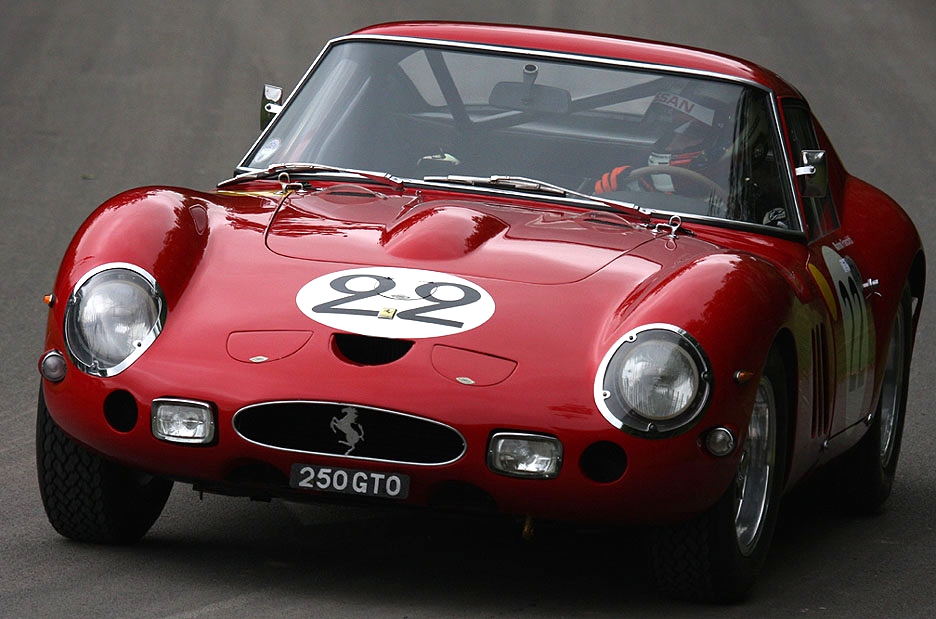
How much did Nick Mason pay for his Ferrari 250 GTO?
£35,000. “When I paid £35,000 for the 250 GTO in 1977, I felt naggingly stupid to be spending so much,” he told Driving.co.uk in 2016. Octane and Goodwood date the purchase to 1978. He bought it from Ronald Stern, by which time it already carried the registration 250 GTO; reading the logbook, Mason saw it had once been 4 HLY, and realised he had photographed Peter Clarke racing it at Goodwood in the mid-1960s.
The Ferrari 250 GTO’s racing history before Mason
3757 GT made its debut at the 1962 Le Mans 24 Hours, where Jean Blaton and Léon Dernier finished third overall (Octane) and second in class (Goodwood). It was third in that year’s Tour de France automobile. At the Spa stage it arrived with a broken wishbone that parc fermé rules barred the team from replacing, so during the practice laps its driver turned into a side road at Malmedy, where mechanics mended it out of sight, and Swaters showed the officials a lap chart with invented times, Octane recounts. Guy Hansez raced it in Belgian hillclimbs in 1963, and Goodwood records a win in the Spa 500km.
Peter Clarke brought it to the UK in 1964 and raced it from Croft to the Nürburgring 1000km and the Sebring 12 Hours until 1966, when Avalon Garage in Kent paid him £2,000 for it. Headley Gué, Peter Newens, Mason’s friend Vic Norman, and Ronald Stern and Malcolm Clarke owned it before Mason. Octane counted him in 2022 among the owners past 40 years with a GTO; Jim McNeil and Anthony Bamford had passed 50.
How Mason has used the Ferrari 250 GTO
He raced it straight away. The first outing was the Vintage Sports-Car Club’s Pomeroy Trophy: “I think I ran into a Frazer Nash on the coming-in lap,” he told Octane. When Martin Brundle drove it and asked how hard he should try, Mason pointed at the car and said he did not want it back “highly polished and looking far too new and lovely”. “I’m still perfectly happy with some battle damage,” he told Octane. Its last race at Goodwood was the wet RAC TT Celebration of 2012, where it finished second overall. It raced every year until 2014, when it was retired from racing, Goodwood reported.
It still travels. In 2022, Octane reported, it went to an exhibition at the Guggenheim Museum in Bilbao and then to a GTO rally in the United States; at the 2024 Revival it ran in the parade for John Surtees with the roll cage and intercom from a GTO rally in Pennsylvania still fitted. “It never lets you down, unless it’s something silly like a flat battery,” Ben de Chair of Ten Tenths told Goodwood of the Ferrari 250 GTO. “It was built in 1962 for endurance racing, so it’s built to last.”
“I once even took the kids to school in the Ferrari 250 GTO and that was because the other cars wouldn’t start,” Mason told SkiddMark in 2010. Asked which car he would drive if he could drive only one again, he answered: “Oh it’s always the GTO because it does everything so well … if you can race it, rally it and just use it, it has a hell of a lot of an advantage over something that’s just say a track car.” With one tank of petrol left, he would spend it on the Nürburgring Nordschleife, in the GTO. “It’s a great all-rounder and it’s given such great service,” he told Octane. “It’s part of the family.”
Pre-war cars: Panhard, Bugattis, Ulsters and the Bentley
The oldest car is a 1901 Panhard, and the pre-war cars have included Bugattis, Aston Martin Ulsters, an ERA, a Frazer Nash and his father’s Bentley. Ten Tenths’ own site in 2014 named the Panhard, the Bugatti Type 35B and the Frazer Nash among the cars it took to historic events.
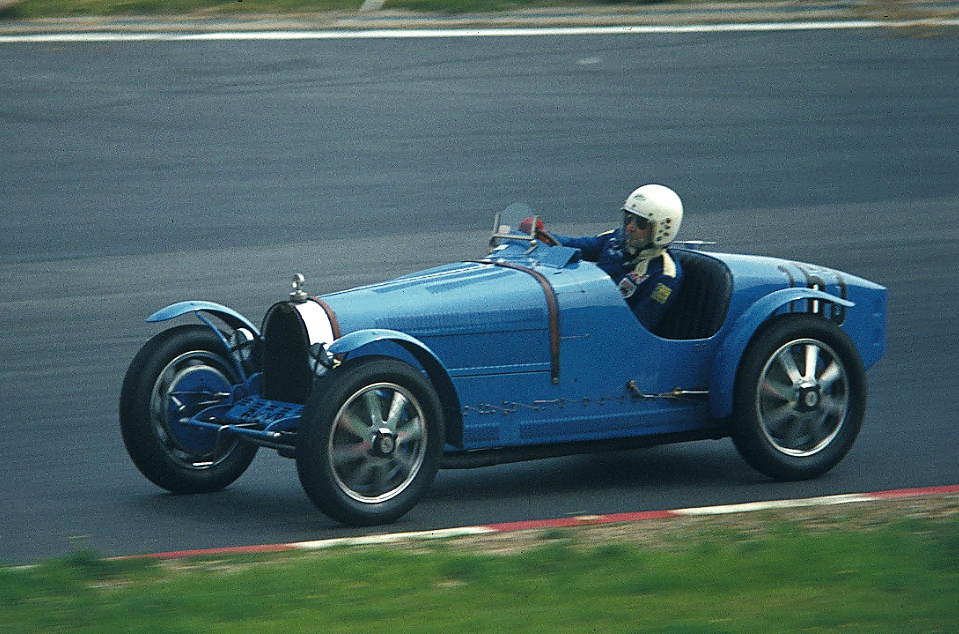
Bugatti Type 35B
Mason had two Type 35s in 2006, Motor Sport recorded, and his 1927 Type 35B is one of the 24 cars in Passion for Speed. “This is a great little thing,” he told Top Gear in 2012. “It’s faster through the corners at Silverstone than a Porsche [911] GT3.”
Aston Martin Ulsters
The Ulster that started his racing was LM21, Motor Sport said in 2006, and he had raced it ever since. LM21 was the last of the 1½-litre works team cars, built for the 1935 Tourist Trophy, according to the history of the team cars by Ecurie Bertelli, the Aston specialist that Mason, Derrick Edwards and Judy Hogg founded in 1976 as Morntane.
A second Ulster belongs to his daughter Chloe. It raced at Le Mans in 1935 with Jim Elwes and Mort Morris-Goodall and finished 12th, seventh in class; Edwards found it semi-derelict in Normandy, and he and Mason bought it in 1977 and restored it, as Goodwood recorded in August 2019. Aston Martin built 21 customer Ulsters and seven works cars with LM numbers. “I love Ferraris dearly, but actually I have as much loyalty towards the Ulster, or the Birdcage,” Mason told Octane.
Bill Mason’s Bentley 4½ Litre
His father raced the Bentley, and it is the one car Mason ranks above the GTO: asked which car he would part with last, he named the GTO “with the obvious exception of his father’s Bentley”, Octane reported.
Sports-racing cars of the 1950s and 1960s
The 1950s and 1960s sports-racing cars are a Jaguar D-type, Maserati Birdcages, a Ferrari 250 MM and an Alfa Romeo TZ, and the type Mason says he still wants is from the same era. “I never drove the GTO before I bought it, which is true of the D-type, true of the Birdcage,” he told Octane. “You know if you want it.”
The Maserati Birdcage
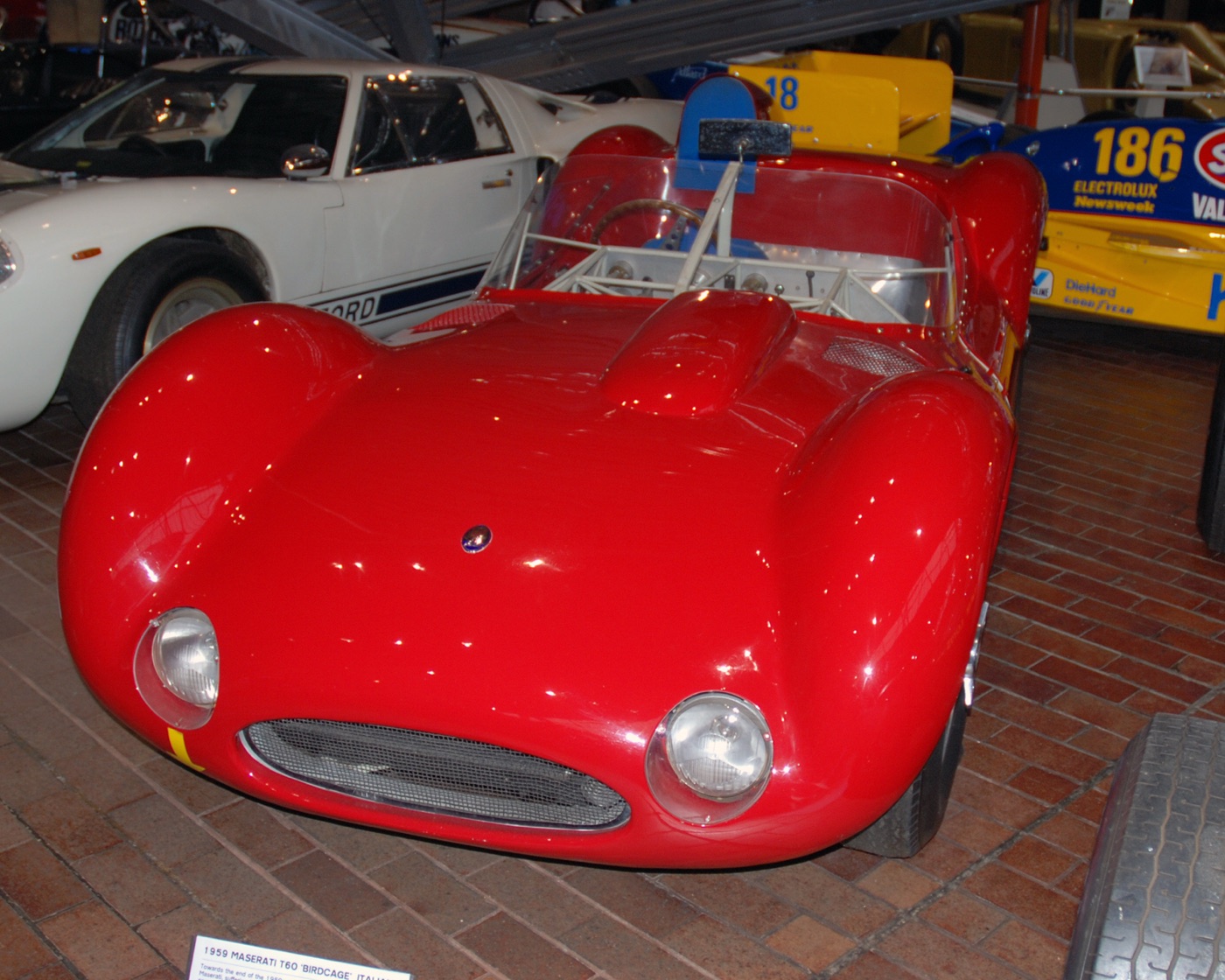
The Birdcage takes its name from a spaceframe of hundreds of small steel tubes, and Stirling Moss won its first race, at Rouen in July 1959, in a 2-litre Tipo 60, Goodwood recorded in September 2026. Mason had two Birdcages in 2006. The 3-litre Tipo 61, chassis 2457, was finished on 23 December 1959 and delivered to David F. Causey in Indiana, who raced it at the Sebring 12 Hours in 1960 and 1961; Mason has owned it since the 1980s, and Ten Tenths restored it to its Sebring specification before Marino Franchitti and Chris Harris raced it at the 2026 Goodwood Revival. Goodwood calls it the first of six Tipo 61s; a Petrolicious film of the car in 2017 called it the last of the first six Birdcages. A Birdcage is Mason’s favourite to drive: “I’ve never had a hairy moment in it. Even if you get it out of shape you can collect it,” he told Top Gear. In the 2-litre car he won the race he remembers best, the support race at the 1993 British Grand Prix, passing Frank Sytner’s D-type at the last corner of the last lap. “Frank was very firm but fair but his tyres had gone off and I just managed to squeeze past, albeit not without picking up some blue paint down the side of the car,” he told Motor Sport in 2006.
Ferrari 250 MM, Alfa Romeo TZ and the Dino
The 1953 Ferrari 250 MM berlinetta is an ex-Carrera Panamericana car, which Mason was about to take on its first road rally under his ownership when Top Gear visited in 2012: “I’m only going to Cornwall though.” The 1600cc Alfa Romeo TZ of 1964 finished 11th overall at Le Mans that year, according to Mark Hales’s notes on Passion for Speed. In 1982 Mason also had a Dino 206 racer, Motor Sport recorded.
The drum-brake car he still wants
Asked what was missing, he named the same kind of car in 2006 and again in 2010: a drum-braked sports-racer, “a 300S Maser or an Aston DB3S”, and in 2010 he added the DBR1 and the Ferrari Testa Rossa he says he should have bought. He gave SkiddMark the same answer that October: “another drum brake racing car, because it’s very good racing with those sorts of cars.”
Grand Prix cars: 250F, BRM V16, Tyrrells and the 312 T3
Gilles Villeneuve won his first Grand Prix in one of Mason’s single-seaters, the Ferrari 312 T3; the oldest of them is a 1957 Maserati 250F. The 250F and the McLaren F1 GTR were the two cars Mason said in 2006 he would add to the GTO, the Birdcage and the Ulster if he were left with a five-car garage.
Gilles Villeneuve’s Ferrari 312 T3
The 312 T3 is the car Villeneuve drove to his first Grand Prix win, at his home race in Montreal in 1978, the Automobile Club de l’Ouest (ACO) noted in 2013. Mason never met him. “I don’t think I ever went to Formula 1 races around that time as we were hard at work!” he told SkiddMark in 2010; he has met Jacques Villeneuve a few times.
The BRM V16 he sold
The 1953 BRM V16 is one of three known to exist, Mark Hales wrote, and it was the most significant car to leave the collection before 2006, Motor Sport said. Mason raced it once and it finished, “probably only because the race was shortened”, he told Motor Sport. He told Driving.co.uk it would have been cheaper to cover the total distance it had driven with Wilton carpet, and he told SkiddMark in 2010 that it was “a bit like having a Grand Prix Mercedes or Auto Union”, a car “much better operated by a factory or someone with unlimited resources. It’s a fantastic sounding car, but it’s a hell of a lot of money to spend on a nice sound.” He was glad to see the back of a 1950s Indianapolis-style car too: it “was such a horror to drive, even Fangio turned it down”.
Tyrrells, a Lotus 18 and a RAM
Motor Sport listed a Lotus 18 in 2006, and in 1982 a “Monte Carlo-winning Tyrrell”. Mason bought his Tyrrells when old Formula One cars were cheap: after a season they were sold to the British Aurora series, and when the Aurora teams had finished with them, “yes, you can have it for £7k”, Cosworth DFV engine included, he told Motor Sport in 2010. His only stake in contemporary Formula One was a loan to the RAM team, run by John Macdonald, so that it could buy Hart engines before its Skoal Bandit sponsorship arrived; a 1983 RAM painted in Ferrari colours stood in his London office.
Sports-prototypes and GT cars from 1970 on
The later endurance cars are the Ferrari 512 S and 512 BB LM, a racing Ferrari Daytona, the Porsche 935 and 962C, and until 2024 the McLaren F1 GTR. They are the cars Mason calls “Le Mans-type”, his particular soft spot, Octane wrote.
Ferrari 512 S, chassis 1026, from the film Le Mans
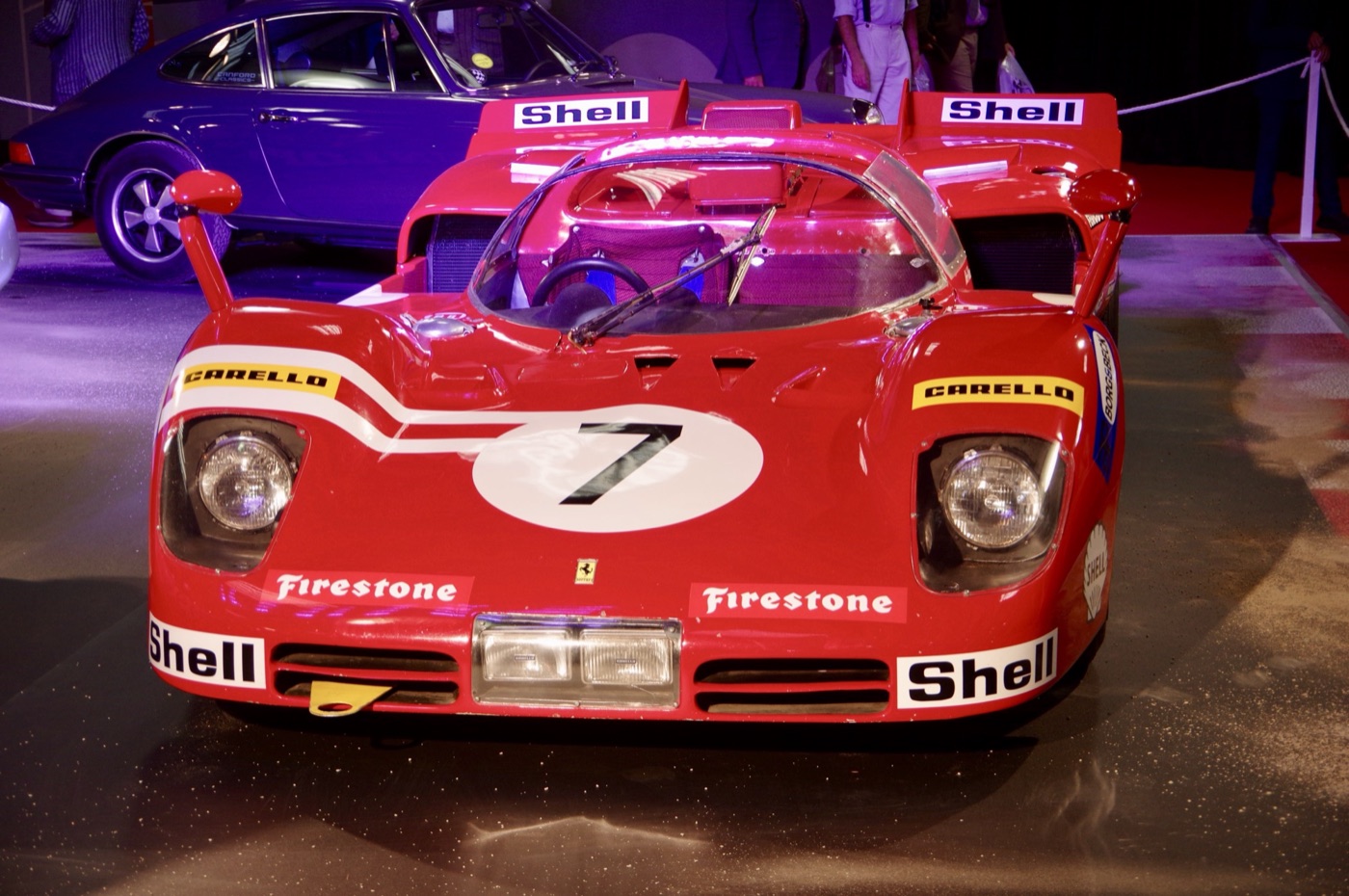
Chassis 1026 won the 1970 Sebring 12 Hours, Ferrari’s only World Championship win that year: Mario Andretti joined Ignazio Giunti and Nino Vaccarella in it after his own car’s gearbox failed, and they beat Steve McQueen and Peter Revson’s Porsche by 22 seconds, Motor Sport’s 1982 test recorded. It was then used in McQueen’s film Le Mans; with Derek Bell driving, it caught fire during filming and was “practically rebuilt around its chassis number”, says Porsche’s 2019 history of the film, which calls it “a showpiece in the collection of Pink Floyd drummer Nick Mason”.
The rebuild started at Graypaul Motors from “a basket of bits” and was finished at Vic Norman’s Rosso, with a new body; Bob Houghton told Motor Sport the V12 needed about 300 hours. Two days after Motor Sport drove it in 1982, Mason won the Atlantic Computer Ferrari Challenge at Donington in it, with a category lap record of 85mph. “They got the power right, but they hadn’t quite mastered the downforce,” he told Top Gear in 2012. “It’s had an interesting life.”
Ferrari 512 BB LM and the Daytona
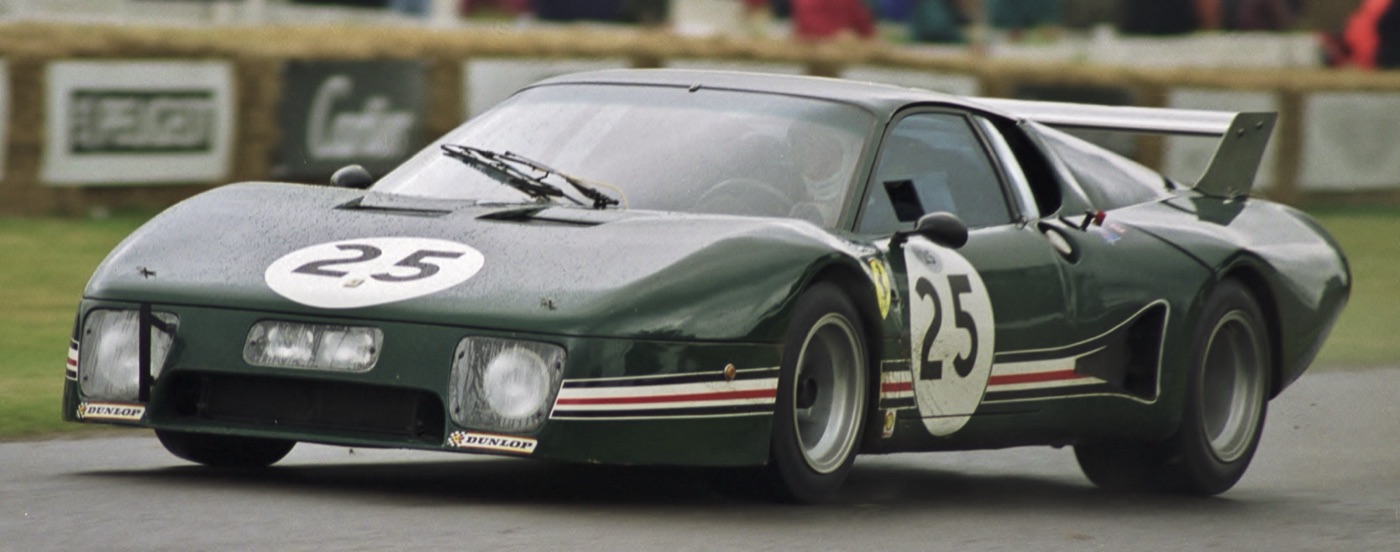
In 1982 Mason shared a 512 BB LM with Steve O’Rourke, and in 2006 he planned to race a BB LM at Le Mans that summer, Motor Sport reported. A Daytona that had belonged to Jacky Ickx had arrived “fairly recently” in 1982, and Motor Sport listed a racing Daytona in 2006.
Porsche 935 and 962C
The Porsche 935 is a 1978 car, Mark Hales wrote. The 962C first raced at Le Mans in 1990 for Richard Lloyd Racing, finishing 11th with Bruno Giacomelli, John Watson and Allan Berg, the ACO noted in 2013. A 2010 SkiddMark report said Mason had raced the 962 at Le Mans; his Le Mans Porsche was a 956, in 1984, as the ACO and Racing Sports Cars record.
McLaren F1 GTR 10R
The McLaren F1 GTR, chassis 10R, left Woking in December 1995 as the first car built to 1996 specification, and the manufacturer kept it as its own development and promotional car, according to RM Sotheby’s 2026 catalogue entry. JJ Lehto drove it in winter testing at Magny-Cours, and David Brabham drove it in pre-qualifying for the 1996 Le Mans 24 Hours, where it ranked 20th overall. Its red and yellow livery is unique to it among GTRs.
Mason bought it from McLaren, which converted it for the road; it was registered K40 MCL in 1999. In 2009 a journalist put it into a wheat field, and Dean Lanzante’s company restored it. At the 75th Goodwood Members’ Meeting in 2017 Mason left the track in it during a GT1 demonstration and hit a tyre wall, and Lanzante restored it again; it was back at the Festival of Speed in 2022. Mason sold it privately in the spring of 2024. At RM Sotheby’s Monterey sale in August 2026 it made $34,655,000, the highest price yet paid for a British car at auction, Carscoops reported.
Road cars, oddities and a three-car accident
A Trabant, a Sinclair C5 and a Model T Ford once owned by Coco the Clown were in the collection in 2016, Driving.co.uk listed, and Mason’s everyday cars over 40 years had included Golfs, BMW 5, 6 and 7 Series and a Renault 6.
Ferrari F40, Enzo and LaFerrari
Mason and his bandmate David Gilmour drove the first F40s back from Maranello, Driving.co.uk reported. On the way, he told SkiddMark in 2010, “there was the bit when the Gendarmerie pulled us over and took the licences off us, which was less exciting!” He lent his Ferrari Enzo to Jeremy Clarkson for Top Gear, and the Enzo was the newest car in Passion for Speed. It was later sold: Talacrest offered it in 2018 as a one-owner, “ex-Nick Mason” car. His Ferrari LaFerrari, painted Blu Pozzi, was shown at the London Concours in 2018, The Supercar Blog reported.
Nick Mason’s most embarrassing accident
It happened outside his north London house, which stood on a steep hill. Mason told SkiddMark in 2010 that he came home “a bit too quickly” in a metallic bronze Dino, went into the back of his own BMW, which went forward into the nanny’s Renault 5: “three cars damaged, but just one driver!”
Nick Mason’s racing career
Mason raced in World Championship and international sports-car events from 1979 to 1984, five times at Le Mans, with one later GT race in 1996, and has raced historic cars since his first race in 1974. He was recruited by Dorset Racing in 1979. “They needed a driver and they persuaded me that it would be a good idea to launch myself into Le Mans,” he told Motor Sport in 2010. “It was the first modern car I’d driven.”
Nick Mason at the 24 Hours of Le Mans
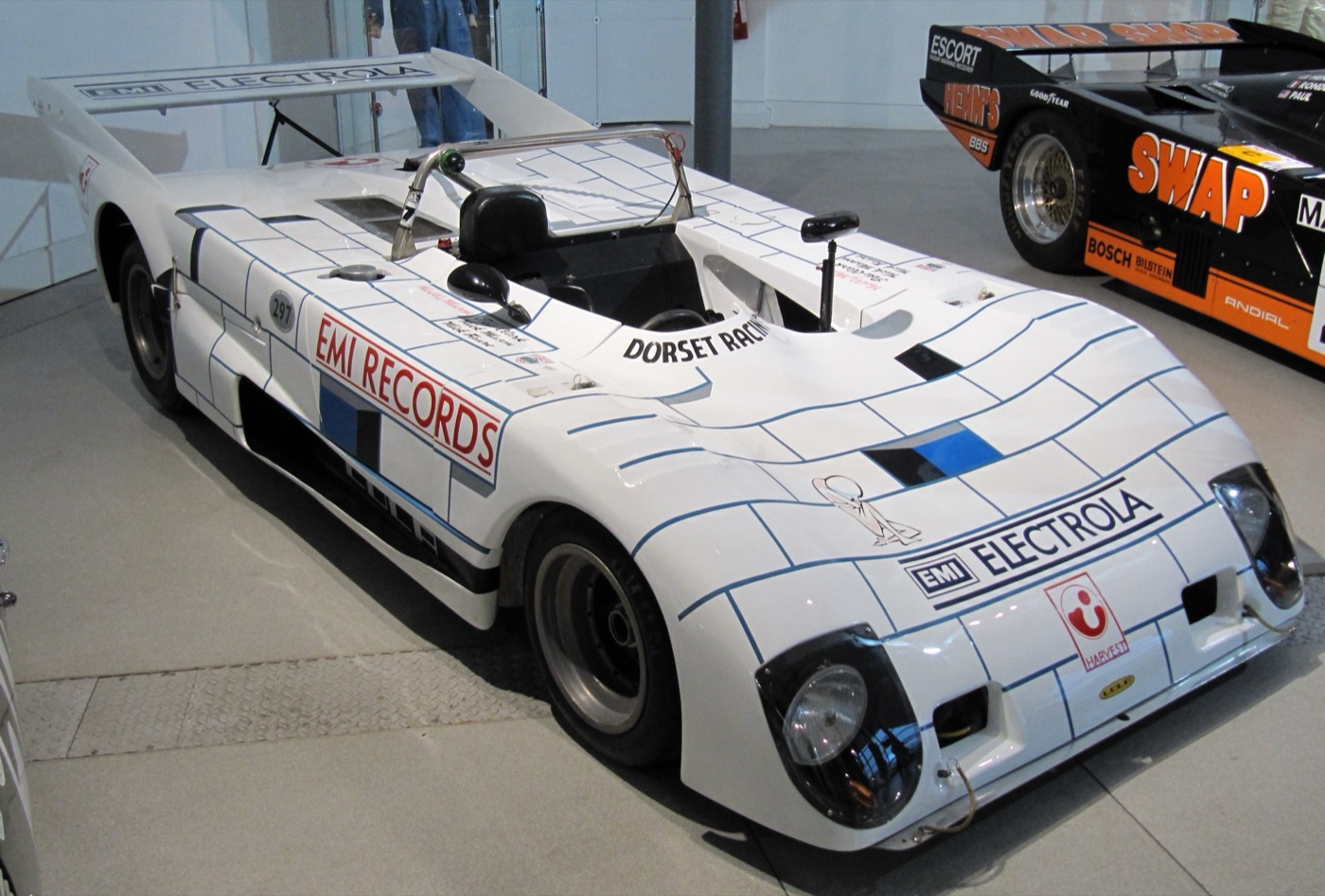
His best result was 18th overall in his first race, in 1979, at the wheel of a Lola T297 in the 2-litre sports class, according to the ACO’s record of his five starts. He shared a car with Steve O’Rourke only once, a BMW M1 in 1982.
| Year | Team | Car | Co-drivers | Result |
|---|---|---|---|---|
| 1979 | Dorset Racing Associates | Lola T297 Ford Cosworth BDG | Richard Jenvey, Brian Joscelyne, Tony Birchenhough | 18th overall, 2nd in S2.0 class |
| 1980 | Dorset Racing Associates | Lola T297 Ford Cosworth BDG | Peter Clark, Martin Birrane | 22nd overall, 3rd in S2.0 class |
| 1982 | EMKA Productions | BMW M1 Group 5 | Steve O’Rourke, Richard Down | Retired, engine |
| 1983 | Dome Racing | Dome RC82 Ford Cosworth DFL | Chris Craft, Eliseo Salazar | Retired, clutch |
| 1984 | GTi Engineering | Porsche 956 | Richard Lloyd, René Metge | Disqualified, outside assistance |
Sources: Racing Sports Cars’ archive of Mason’s races for teams, cars, co-drivers and results; class places from Motor Sport, December 2010.
1979: the Lola and The Wall
Pink Floyd were recording The Wall in the south of France that year. Mason told the ACO’s Spirit of Le Mans magazine that O’Rourke came with him to look at the circuit on the way and decided to race too, buying a drive in Ecurie Francorchamps’ Ferrari 512 BB; O’Rourke finished 12th, six places ahead of Mason, the ACO’s history of EMKA records. Of the press, Mason told Motor Sport: “Paul Newman was there so the press were not in the least bit interested in some dodgy old drummer.”
1983 and 1984: Group C
In 1983 he drove the Dome-Cosworth run by John Macdonald of RAM. In 1984 he wore Rothmans overalls: a plan to run a camera car fell through when the works Porsche team stayed away from Le Mans, so the camera went on the Canon Porsche 956 run by Richard Lloyd. “The faster you went the more it stuck,” he told Motor Sport, and the footage became the documentary Life Could Be a Dream. He did not race at Le Mans again. “Basically, we went back to work.”
Other races
Racing Sports Cars lists him in World Championship rounds at Silverstone (16th in the 1981 Six Hours with the Lola, 20th in 1982 in the M1 with O’Rourke and Jeff Allam), a Ford Capri in the 1980 RAC Tourist Trophy (19th), a Rothmans 956 at Mosport in August 1984 with Vern Schuppan, and a Porsche 993 GT2 in the 1996 British Empire Trophy at Silverstone with O’Rourke and Guy Holmes (27th). In 1991 Mason, Gilmour and O’Rourke drove the Carrera Panamericana in Mexico, the ACO records.
Historic racing and the family
Since 1984 his racing has been in historic events: he has taken the GTO to the Le Mans Classic and races his cars at the Goodwood Festival of Speed and the Goodwood Revival, the ACO noted in 2013. His wife and both daughters race too. “I find myself wanting to hang out a pit board that says ‘P1, +4sec, but do be careful’,” he told Motor Sport in 2006.
Ten Tenths, the company that runs the cars
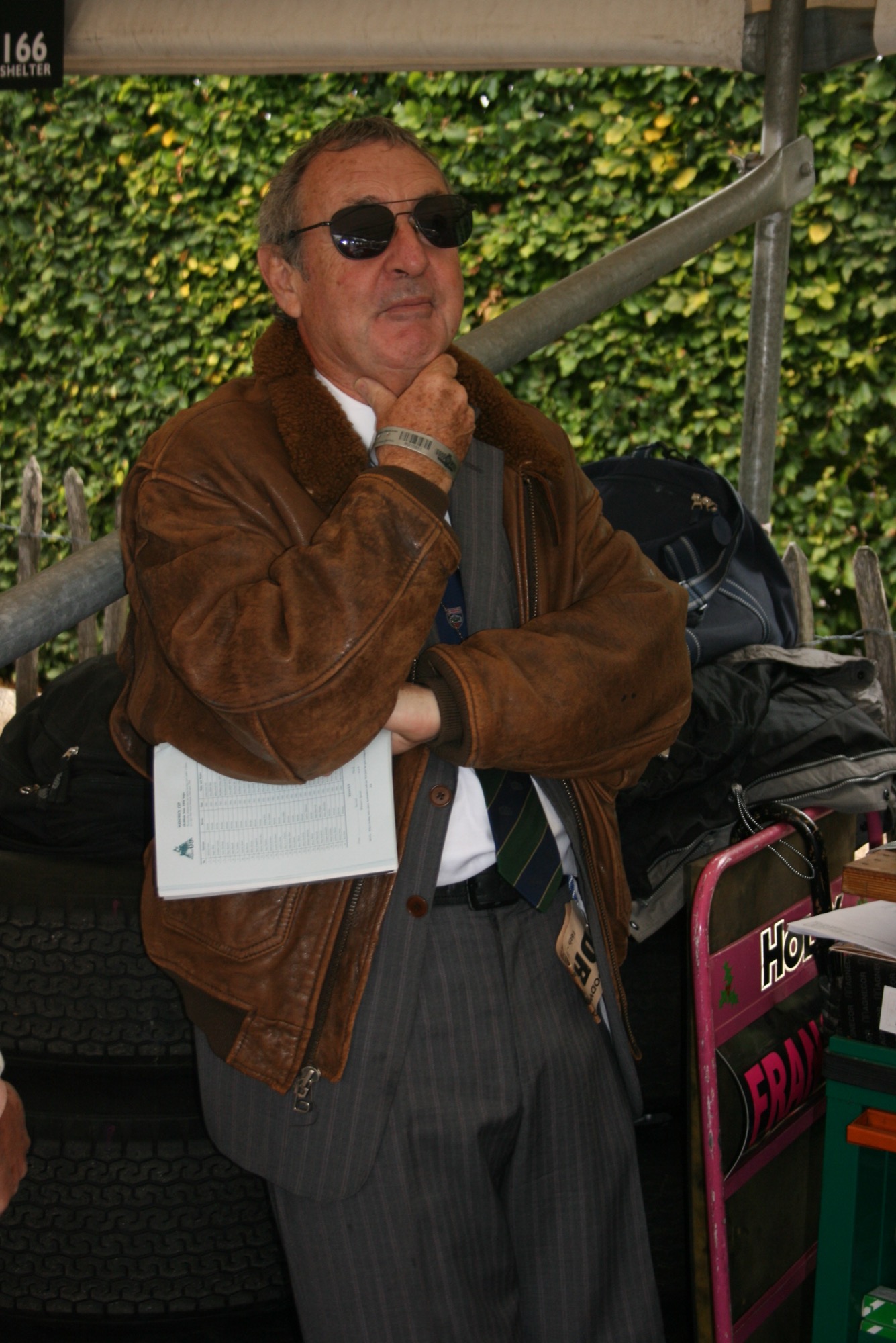
Ten Tenths is the company Mason set up to manage the cars; its original home was an upper-floor warehouse office, where Motor Sport interviewed him in 2010, and the collection had long outgrown it. The cars all work, and in 2006 all of them could be hired, usually for filming, Motor Sport reported. Its 2014 website named Mike Hallowes, Ben de Chair and Charles Knill-Jones as Mason’s team (by 2026 Goodwood named Simon Harper as its manager and Andy Maggs as workshop manager), and quoted Stirling Moss’s definition of ten tenths: “that rare, if ever, fleeting moment when a racing driver and his car are at their ultimate limit.”
De Chair had looked after the GTO for more than a decade by 2024. “We look after them all the same,” he told Goodwood. “If you start thinking about what it is and what it’s worth, that’s when you start making mistakes by being a little bit over cautious, perhaps.” Mason’s earlier businesses were Morntane, the Aston Martin firm that became Ecurie Bertelli, and Modena Engineering, of which he was a director in 1982.
Nick Mason’s books and films about his cars
Mason has written two books about the collection with the racing driver and journalist Mark Hales, in which Hales track-tests the cars and Mason tells each one’s history. Into the Red came out in 1998 with 22 cars; a second edition in 2004 added the McLaren F1 GTR.
Passion for Speed
Passion for Speed (Carlton Books, 2010, ISBN 978-1-84732-639-3) is the third edition, with a CD of the cars’ engine sounds. The book’s title promises 24 cars (Passion for Speed: Twenty-Four Classic Cars that Shaped a Century of Motor Sport), though Mark Hales’s own page counts 25. Its cover carries an endorsement from Stirling Moss, a SkiddMark preview recorded in October 2010. The two additions were the 2003 Ferrari Enzo and the 1964 Alfa Romeo TZ, which Mason told SkiddMark “particularly rounds it all up as 100 years of motor cars”.
On film and television
Life Could Be a Dream is the documentary built from the 1984 Le Mans footage. On Top Gear’s visit to the collection in May 2012, Mason explained why he would not drive in its celebrity lap: “If I was lining up for a race and someone reminded me that I was slower than a celebrity chef and a comedian it would be bad for my morale.”
Questions
Does Nick Mason still own his Ferrari 250 GTO?
Yes. Goodwood reported in 2024 that 3757 GT is still his, looked after by Ten Tenths; it was retired from racing in 2014 but still goes to rallies, parades and exhibitions.
Did Nick Mason sell his McLaren F1 GTR?
Yes. He sold chassis 10R privately in the spring of 2024 after 25 years, and RM Sotheby’s sold it on for $34,655,000 at its Monterey sale in August 2026.
Has Nick Mason crashed any of his cars?
He hit a tyre wall in the McLaren F1 GTR at the 2017 Goodwood Members’ Meeting. Years earlier he ran a Dino into his own parked BMW, which hit the nanny’s Renault 5.
Did Nick Mason race in Formula One?
No. His Formula One cars are historic ones; his only stake in the championship of the day was a loan to the RAM team in the 1980s so that it could buy Hart engines.
How many Ferrari 250 GTOs were built?
RM Sotheby’s and Goodwood give 36, built from 1962 to 1964; the ACO, which runs Le Mans, gives 39.
Does David Gilmour share Nick Mason’s interest in cars?
Yes. Gilmour and Mason drove the first Ferrari F40s home from Maranello, and in 1991 Gilmour drove the Carrera Panamericana in Mexico with Steve O’Rourke and Mason.
Which car would Nick Mason keep if he could keep only one?
The 250 GTO, he has said more than once, though Octane reported in 2022 that his father’s Bentley 4½ Litre would be the exception.
Sources
- ACO, “Nick Mason’s record at the 24 Hours of Le Mans”: five starts from 1979.
- ACO, “Nick Mason of Pink Floyd at the 24 Hours of Le Mans”, 2013: the 312 T3, the 962C’s 1990 Le Mans, the Le Mans Classic, Goodwood, film hire.
- ACO, “Nick Mason and Steve O’Rourke: taking time out from Pink Floyd at Le Mans”: 1979 results, the shared M1 in 1982.
- ACO, “EMKA, the other Pink Floyd connection at the 24 Hours of Le Mans”: how O’Rourke started racing, the 1991 Carrera Panamericana.
- Racing Sports Cars, “Complete Archive of Nick Mason”: teams, cars, co-drivers and results of his sports-car races, 1979–96.
- Motor Sport, “Ferrari 512S” track test, July 1982: chassis 1026’s history and rebuild, the Donington win, the 1982 collection.
- Motor Sport, Andrew Frankel, “Collector: Nick Mason”, July 2006: LM21, the 1993 Birdcage win, the 2006 collection, the BRM, Ten Tenths hire, his family.
- Motor Sport, Damien Smith, “Rock ’n’ Roll ’n’ Racing”, December 2010: his first cars, the Le Mans years, RAM, Passion for Speed.
- Octane, James Page, “Ferrari 250 GTO: Nick Mason’s ultimate school-run racer”, Octane 227, May 2022 (online 15 May 2024): 3757 GT’s history and owners, the 275 GTB/4 and D-type, Bill Mason.
- Goodwood, “Up close with Nick Mason’s Ferrari 250 GTO”, 2024: the GTO’s use, retirement from racing in 2014, Ben de Chair.
- Goodwood, Andrew English, “Classic first drive: 1935 Aston Martin 1.5-litre Ulster”, 7 August 2019: Chloe Mason’s Ulster, Morntane, Ulster numbers and values.
- Goodwood, “The Maserati Tipo 61 ‘Birdcage’ was a trans-Atlantic triumph”, 18 September 2026: Tipo 61 chassis 2457, Moss at Rouen, Ten Tenths’ staff.
- The Supercar Blog, “Pink Floyd drummer’s blue LaFerrari spotted at 2018 London Concours”, 2018: the LaFerrari.
- Ecurie Bertelli, “Team Cars LM11 to LM21”: LM21 as the last works team car.
- Top Gear, “Gallery: inside Nick Mason’s toybox”, 4 May 2012 (archived copy): the 40-strong count, the Birdcage, 512 S, 250 MM, Bugatti and Enzo quotes.
- RM Sotheby’s, 1996 McLaren F1 GTR, chassis 10R, Monterey 2026: 10R’s history, Mason’s ownership and sale, the result.
- RM Sotheby’s, 1962 Ferrari 250 GTO, 3413 GT, Monterey 2018: the $48,405,000 result.
- RM Sotheby’s, Ferrari 330 LM / 250 GTO, 3765 LM, New York 2023: the $51,705,000 result.
- Porsche Newsroom, history of the film Le Mans, 2019: the 512 S fire and Mason’s ownership.
- Mark Hales, “Passion for Speed”: the editions, the cars’ years, the Alfa TZ’s 1964 Le Mans, the GTO’s 1980s value.
- Ten Tenths website, 2014 (archived copy): the team and the cars it ran.
- Talacrest, “Ferrari Enzo: ex Nick Mason”, 2018 (archived copy): the Enzo’s sale.
- Driving.co.uk (The Sunday Times), “Me and My Motor: Nick Mason of Pink Floyd recalls a ‘stupid’ car investment with a £30m return”, 15 March 2016: the Austin Seven, the £35,000 price, 300 cars, the F40s, the BRM, the Trabant and C5.
- Carscoops, “A twice-crashed McLaren is now the priciest British car ever auctioned”, August 2026: the auction record.
- SkiddMark, interview with Nick Mason, 15 October 2010, and preview of Passion for Speed, October 2010: quotes on the GTO, BRM, F40, Dino, Enzo and TZ, and the Moss endorsement.
- Nick Mason and Mark Hales, Passion for Speed: Twenty-Four Classic Cars that Shaped a Century of Motor Sport, Carlton Books, 2010, ISBN 978-1-84732-639-3.