Nurburgring 24 Hours: history, winners, the track and visiting
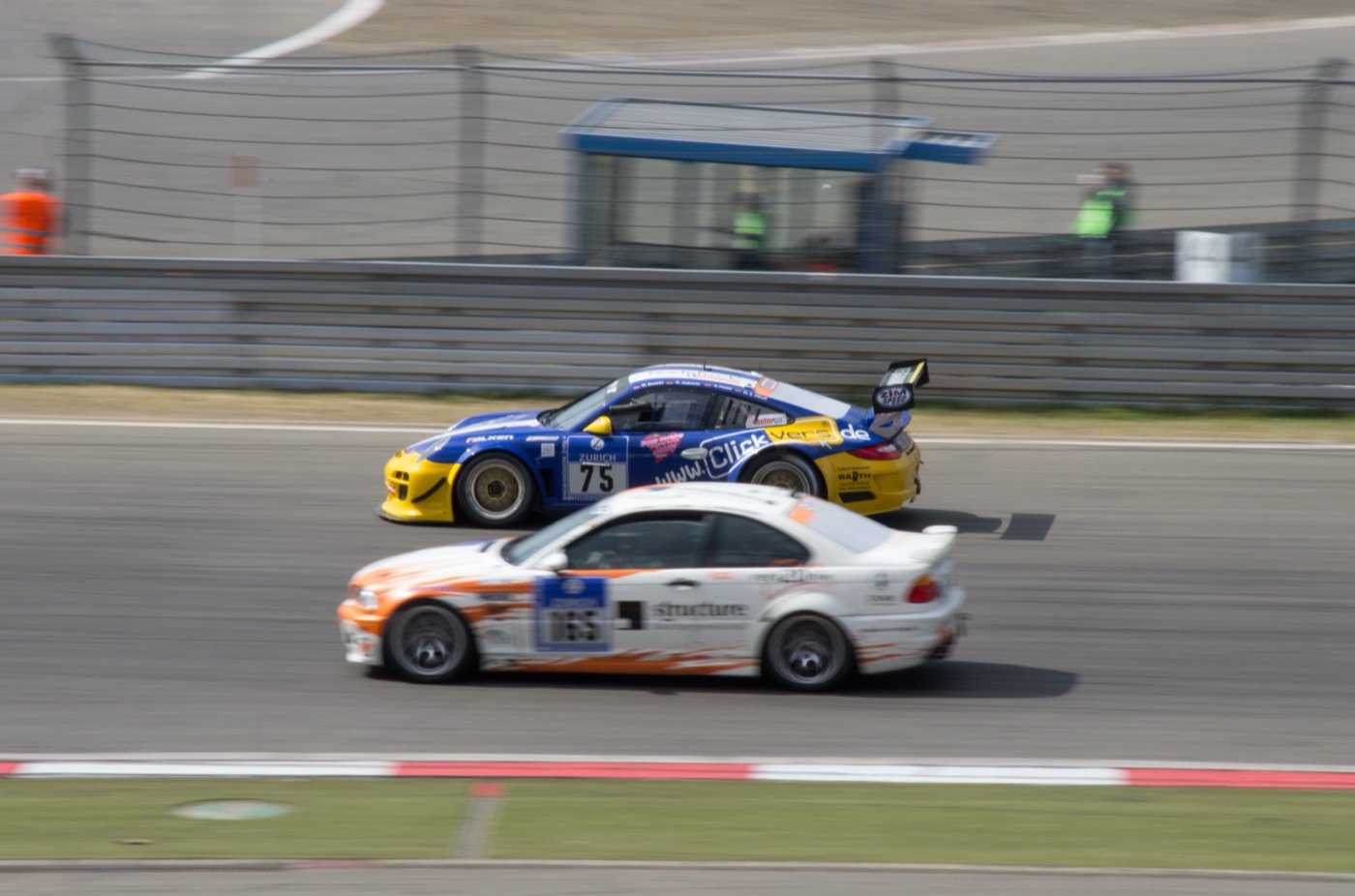
The Nurburgring 24 Hours is a 24-hour race for GT and touring cars run every spring on a 25.378 km lap that joins the Nordschleife to the Grand Prix circuit at the Nurburgring (Nürburgring in German) in the Eifel hills of western Germany. It was first held in June 1970, the 2026 race was its 54th running, and well over 100 cars race at once, from works GT3 cars to near-standard hatchbacks driven by amateur racers. People look it up for its winners, for the Nordschleife itself and for a weekend that drew 352,000 spectators in 2026.
Two journalists, Richard Meaden and Jethro Bovingdon, raced in the Nurburgring 24 Hours in 2008, and one of them, Meaden, won his class for Aston Martin in 2009.
What is the Nurburgring 24 Hours?
The Nurburgring 24 Hours is an endurance race organised by ADAC North Rhine-Westphalia, a regional club of the ADAC, Germany’s motoring organisation; its full name today is the ADAC RAVENOL 24h Nürburgring, after its title sponsor. The organisers’ own statistics for the 2024 race describe a field of 130 vehicles in 23 classes, more than 450 drivers from about three dozen countries and some 2,000 marshals and helpers. The overall winner is the car that covers the most laps in 24 hours, but every class has its own result: in 2025 Hyundai’s factory team won the TCR class for the fifth year running, Dailysportscar reported.
The fastest cars are GT3 sports cars entered or backed by BMW, Porsche, Audi, Mercedes-AMG, Ferrari, Aston Martin, Lamborghini and Ford. Behind them come GT4 cars, one-make cup cars, TCR touring cars and near-standard production saloons. In 2008 Jethro Bovingdon started from near the back of a 220-car grid in a 120bhp Fiat 500, which Richard Meaden, driving an Aston Martin in the same race, reckoned would be doing about 110mph on the straight while the serious Porsches did 190mph or more.
When is the Nurburgring 24 Hours?
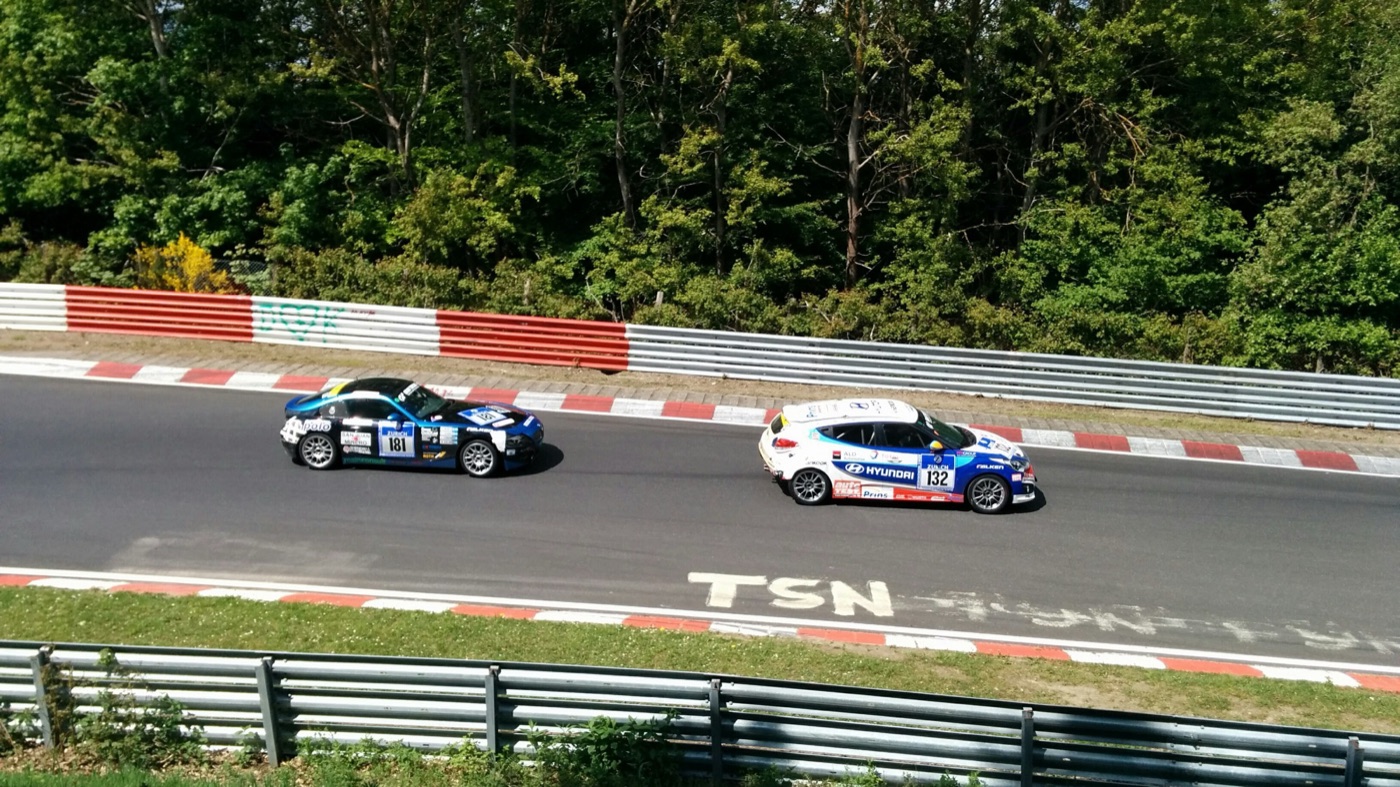
The Nurburgring 24 Hours is held in May or June. The 2026 meeting ran from Thursday 14 to Sunday 17 May, with qualifying on Thursday and Friday (the same pattern as in 2011) and the race from Saturday afternoon to Sunday afternoon, and the Nurburgring’s event calendar lists the 2027 meeting for 27 to 30 May 2027. The start time has moved between 3pm and 4pm: the 2010 race started at 15:00 CET, as BMW’s preview recorded, while the 2012 and 2023 races started at 16:00.
It has not always been a spring race. On touringcarracing.net’s race-by-race records, the first four races were held in late June (the first on 27 and 28 June 1970), the races from 1976 to 1982 in late September or early October, and the 1984 race in August. The 2020 race was run in late September, BMW’s release of 2 October 2020 shows.
History of the Nurburgring 24 Hours
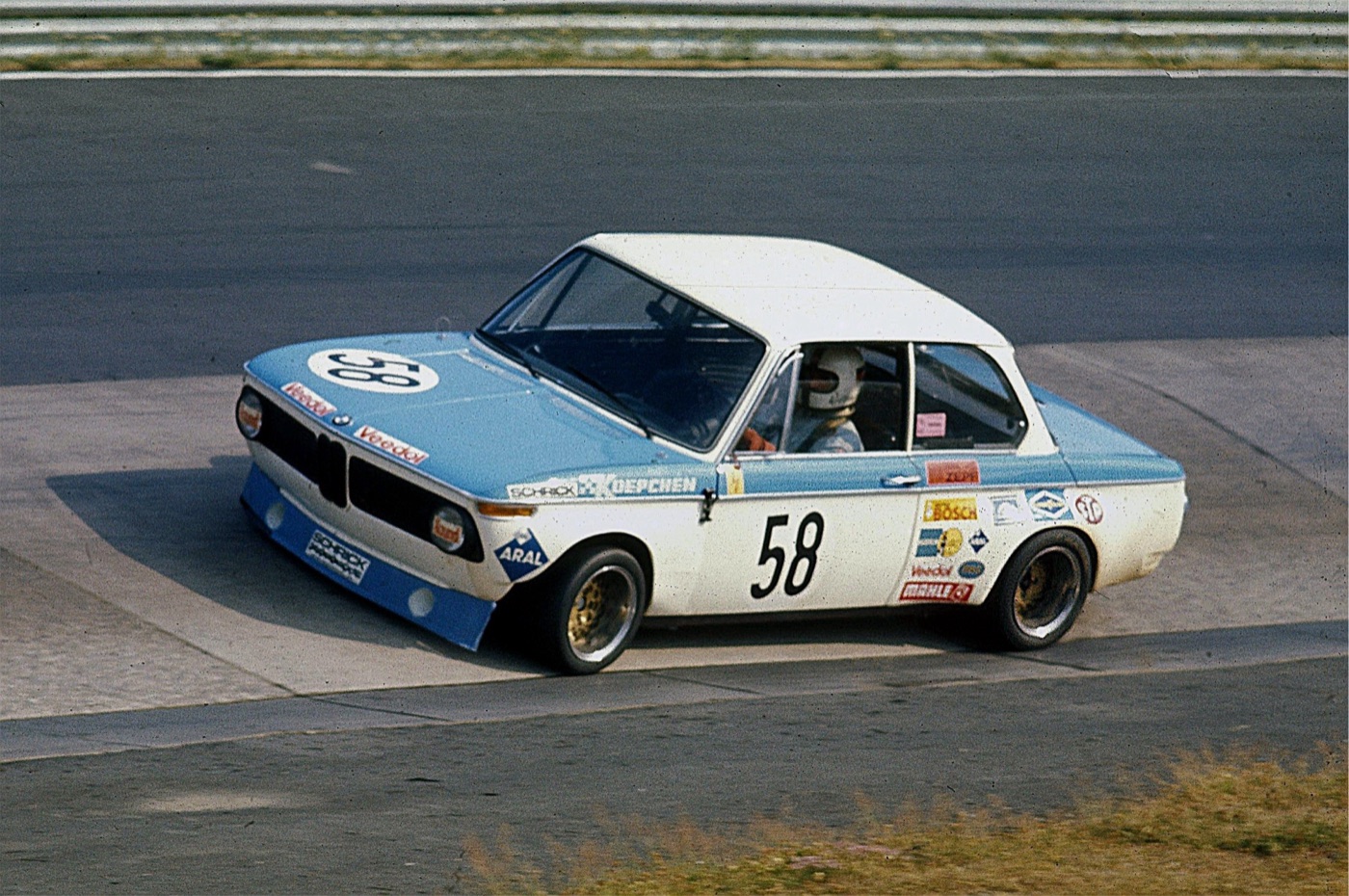
The ADAC ran its first 24-hour race at the Nurburgring on 27 and 28 June 1970, for touring cars on the 22.835 km Nordschleife. Ninety-nine cars started and 54 finished, and the Koepchen BMW 2002 TI of Hans-Joachim Stuck and Clemens Schickentanz won after covering 2,821.9 km, according to touringcarracing.net’s record of the race. Speaking in BMW’s release for the race’s 50th anniversary in 2020, Stuck said: “We were pioneers with the BMW 2002 TI. That was pure driving, without any form of driver aid.”
BMW saloons and the eight-hour break, 1970–1973
BMW won the first four races, with Koepchen in 1970 and Alpina in 1971, 1972 and 1973. The 1973 race, won by Niki Lauda and Hans-Peter Joisten in an Alpina BMW 3.0 CSL, was not 24 hours of racing: touringcarracing.net records it as two eight-hour heats with an eight-hour pause between them, an experiment made because most accidents happened in the early morning and to cut the noise for people living round the track. Lauda set the fastest lap, 8min 39.6sec. There was no race in 1974 or 1975.
Porsche, Ford and the autumn races, 1976–1982
When the Nurburgring 24 Hours returned in September 1976 it was won by a Porsche 911 Carrera driven by Fritz Müller, Herbert Hechler and Karl-Heinz Quirin, and Müller and Hechler won the next two as well. Ford then won four in a row. The 1979 and 1980 races went to Ford Escort RS 2000s, and in 1981 the Gilden-Kölsch Ford Capri of Helmut Döring, Dieter Gartmann and Fritz Müller climbed from 90th to first after five extra stops for a misfire, finishing 10.47sec ahead of Rolf Stommelen’s Opel Monza after 132 laps. The 1982 race, won by the Capri of Klaus Ludwig, Dieter Gartmann and Klaus Niedzwiedz, was the last on the traditional circuit, and there was no race in 1983. Work on a new, shorter circuit had begun on 30 November 1981, when Bernhard Vogel, prime minister of Rhineland-Palatinate, broke ground; the Südschleife was abandoned, the Nordschleife was shortened to 20.832 km and the new Grand Prix track opened on 12 May 1984, the circuit’s history records.
The Grand Prix circuit and BMW’s run, 1984–1998
The Auto Budde team won in 1984 and 1985 with a BMW 635 CSi, and by 1985 the Nurburgring 24 Hours was run on the Nordschleife and the Grand Prix circuit together. The Ford Texaco Racing Team won in 1987 with a Sierra driven by Ludwig, Niedzwiedz and Steve Soper. Then BMW won nine of the ten races from 1989 to 1998, mostly with the M3; the exception was a Porsche 911 Carrera in 1993. Sabine Reck (later Sabine Schmitz) won in 1996 and 1997 in a BMW M3 shared with Johannes Scheid, and in 1998 a BMW 320d driven by Marc Duez, Andreas Bovensiepen, Christian Menzel and Stuck became the first diesel car to win. “When BMW told me in 1998 that they wanted to win the 24-hour race with a diesel, I said ‘Are you joking?’,” Stuck said in the 2020 release. “We were not the fastest, but we had to make far fewer pit stops.”
Vipers, Manthey and the factory teams, 1999–2011
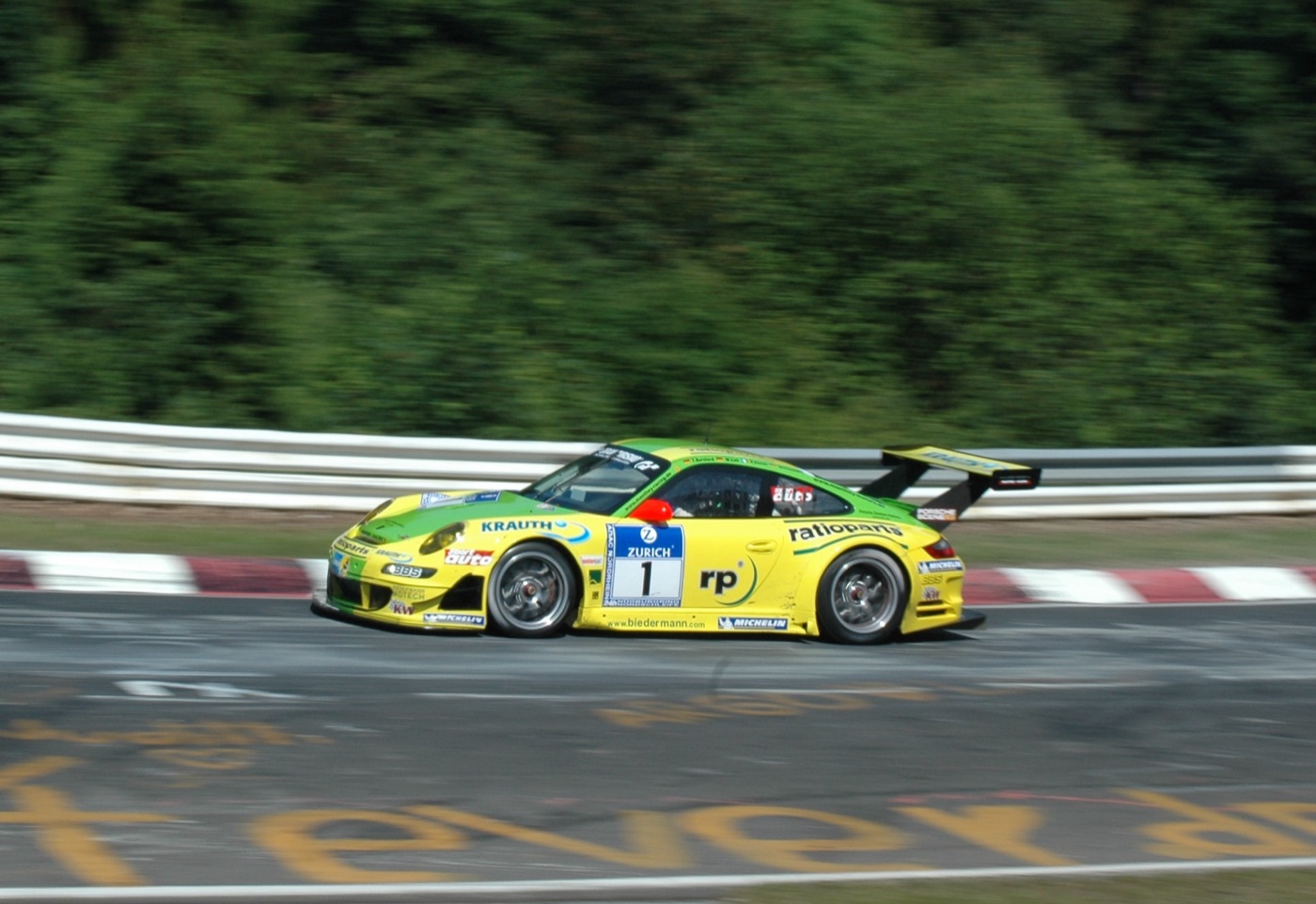
Zakspeed’s Chrysler Viper won in 1999, 2001 and 2002, with a Phoenix-run Porsche 911 GT3 R winning in 2000. Opel won its only race in 2003 with an Astra run by OPC Team Phoenix, and BMW’s works M3 GTR won in 2004 and 2005. Manthey Racing, a Porsche team from the Eifel, then won four in a row from 2006 to 2009 with Timo Bernhard and Marcel Tiemann in all four crews, and again in 2011; the Manthey squad’s seventh win came in 2021. In between, BMW won in 2010 with the M3 GT2 run by Schnitzer (see below).
The GT3 era, 2012 to today
Since 2012 the Nurburgring 24 Hours has been won by GT3 cars built to the FIA’s rules. Audi took its first victory in 2012 with Phoenix Racing’s R8 LMS, and Mercedes its first in 2013 with Black Falcon’s SLS AMG GT3. Audi won six more by 2024. BMW ended a ten-year wait in 2020, when ROWE Racing’s M6 GT3 won with Nick Catsburg and the British drivers Alexander Sims and Nick Yelloly. Ferrari’s report of the 2023 race records its first win, by Frikadelli Racing’s 296 GT3, after 162 laps, “the longest distance ever completed at the German event”. In 2025 the Porsche of Manthey Racing crossed the line first but lost the race to ROWE Racing’s BMW M4 GT3 Evo after Kévin Estre was given a 100-second penalty for causing a collision with a GT4 Aston Martin, as Dailysportscar’s race report sets out, giving BMW its record 21st win.
The 2026 race was the one Max Verstappen entered. His Verstappen Racing Mercedes-AMG led until a driveshaft failed with about three and a half hours left, and the sister car of Maro Engel, Luca Stolz, Fabian Schiller and Maxime Martin won from 25th on the grid, Mercedes-AMG’s first win in ten years, while a four-way battle decided the other podium places, according to the Nurburgring’s report of the race. Martin matched his father, Jean-Michel Martin, who won in 1992.
The circuit: Nordschleife and Grand Prix track
The Nurburgring 24 Hours uses the full Nurburgring Nordschleife and a shortened Grand Prix circuit (the GP-Strecke), a course combining the two circuits that the organisers put at 25.378 km a lap. The Nurburgring’s own figures give the Nordschleife as 20.832 km and the modern Grand Prix track as 5.148 km, so the 24-hour lap uses about 4.5 km of the Grand Prix circuit.
How long is the Nurburgring 24 Hours track?
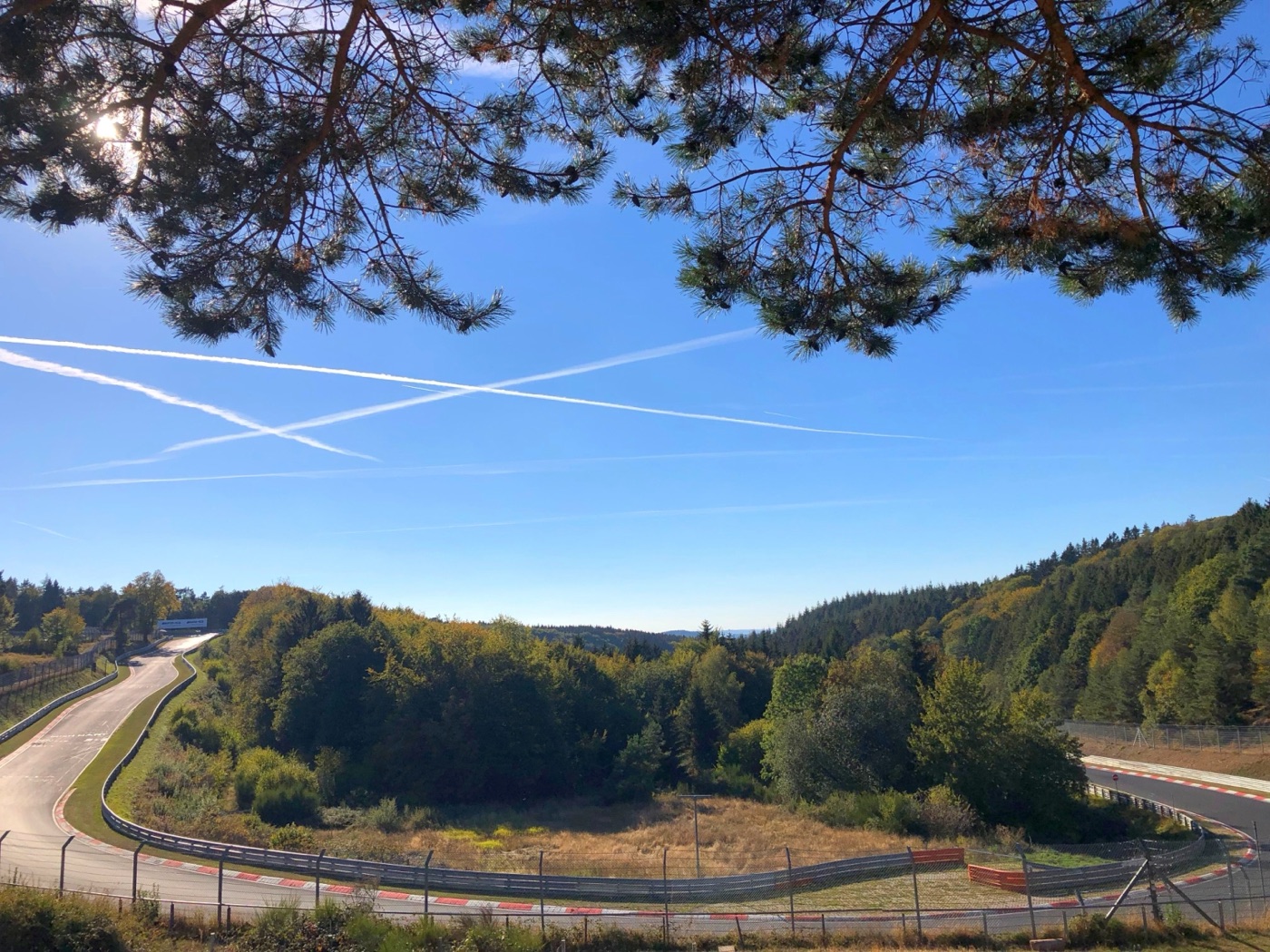
The lap length is 25.378 km, about 15.8 miles, the figure in the organisers’ 2024 statistics; the first races used the Nordschleife alone, 22.835 km. The fastest GT3 cars lap in a little over eight minutes: Raffaele Marciello took pole in 2023 with 8min 09.058sec, the organisers’ statistics show, and the fastest race lap that year was 8min 08.006sec. The record race distance is the 162 laps (about 4,111 km) covered by the winning Ferrari in 2023; the 2024 race was red-flagged for fog shortly before midnight on the Saturday.
Corners, climbs and the Karussell
The circuit’s page on the Nordschleife counts 73 corners and 300 metres of difference in height on that loop and calls it the longest permanent race track in the world, with gradients of up to 18 per cent on the climb to Hohe Acht and up to 11 per cent down through the Fuchsröhre. Meaden’s 2008 qualifying report has the uphill charge from the Karussell to Hohe Acht, where his Vantage met Bovingdon’s Fiat at a closing speed he called “pretty scary”. In 2009 he wrote that the Aston Martin V12 Vantage he shared touched 305 km/h on the Döttinger Höhe and spent much of the lap at 200–250 km/h.
Why is it called the Green Hell?
The Nordschleife’s nickname, “Green Hell”, comes from Jackie Stewart, the circuit’s own page records. The loop opened in 1927 as the “first mountain, race and test track”, and when it is not in use for racing the public can drive it on tourist days.
Eifel weather, fog and red flags
Fog and rain stop the Nurburgring 24 Hours more often than accidents do. In 2010 thick fog red-flagged the first qualifying session after three hours. In 2021 the race was stopped for more than 14 hours from Saturday evening, leaving about nine and a half hours of racing, according to Porsche’s report of the 2021 race. In 2024 race control brought out the red flag for dense fog shortly before midnight on the Saturday, and SCHERER SPORT PHX’s Audi was the winner, Audi’s release on the 2024 result records.
Format, classes and rules
The Nurburgring 24 Hours field starts in groups, with a staggered rolling start, and races for 24 hours on a track where the fastest cars lap the slowest every few laps. Incidents are handled with local yellow flags and slow zones; the organisers’ statistics note that the field is never neutralised by a safety car or a full-course yellow. Each car has two to four drivers who take turns at the wheel.
How many cars race in the Nurburgring 24 Hours?
The field has ranged from 130 cars in 2024 to a 250-car entry list in 2010; Bovingdon lined up on a 220-car grid in 2008. The 2014 field of more than 150 cars was large enough to need three starting groups, a SkiddMark preview noted, and 158 cars started in 2019. The organisers put the 2024 entry at 130.
Classes: SP9 GT3 down to production cars
The top class is SP9, for FIA GT3 cars, with separate results for professional and Pro-Am crews; SP10 is for GT4 cars. Below them are classes for cup cars (Cup 2 for the Porsche 911 GT3 Cup), TCR touring cars, near-standard production cars, alternative fuels and SP-X for experimental cars. In 2026 the SP-X class was won by BMW’s M3 Touring 24H, an estate version of the M4 GT3 that finished fifth overall, Dailysportscar reported. In 2010 Peugeot’s diesel RCZ took first and third in its diesel class and Volkswagen’s natural-gas Sciroccos finished first, second and third in theirs.
Who can drive: the DMSB Permit Nordschleife
Every driver needs the DMSB Permit Nordschleife, a licence for this circuit alone. The Nurburgring’s permit page says it is mandatory for the NLS, the Qualifiers and the 24 Hours, comes in levels A and B, and that newcomers can qualify for level B through courses held at meetings of the Nurburgring Langstrecken-Serie (NLS), the endurance series that races on the same lap through the year and was earlier called the VLN. The courses need an international D licence or higher. In 2008 newcomers had to complete a training course, which Bovingdon described: a theory session on flags, safety procedures and the pit-lane rules, a coach tour of the lap, and footage of big accidents, including a Viper weaving through slower traffic filmed from a helicopter. Drivers who have signed on and had their kit scrutineered get the “Fahrer” sticker on their helmet.
Code 60 zones, penalties and pit stops
A Code 60 zone is a stretch of track with a local speed limit of 60 km/h past an incident. Because the field is never bunched up, a lead built over several laps stays, which is why the organisers call a place near the front of the grid essential. Penalties are time added at the finish or held in the pits: in 2026 the Abt Lamborghini that crossed the line second was penalised for speeding in a Code 60 zone, 86 seconds in the circuit’s report and 84 in Dailysportscar’s (and was disqualified a month later for exceeding its power limit, Dailysportscar reported), and in 2014 Black Falcon’s Mercedes served a penalty for a pit stop shorter than the regulation minimum. The pit-lane limit is also 60 km/h; Meaden wrote that his 2009 Aston had no limiter, so the drivers kept the speedometer display to stay under it.
Does pole position matter at the Nurburgring?
Not much. In the organisers’ count of the first 51 races, the team in pole position won 11 times (the last in 2008) and the pole car retired 23 times. Since 2016 the driver who sets pole has been given the Glickenhaus Trophy; Maro Engel won it three times between 2016 and 2020. In 2026 the pole-sitting Abt Lamborghini was touched in the second corner and pitted for a new tyre before it reached the Nordschleife, rejoining 49th, the Nurburgring reported.
Nurburgring 24 Hours winners
BMW has won the Nurburgring 24 Hours more often than any other manufacturer: 21 of the 54 races, which eight manufacturers have won between them. Three drivers share the record of five wins: Timo Bernhard, Pedro Lamy and Marcel Tiemann. Manthey Racing has the most team wins, seven.
| Make | Wins | First and latest |
|---|---|---|
| BMW | 21 | 1970, 2025 |
| Porsche | 13 | 1976, 2021 |
| Audi | 7 | 2012, 2024 |
| Ford | 5 | 1979, 1987 |
| Chrysler | 3 | 1999, 2002 |
| Mercedes-Benz / Mercedes-AMG | 3 | 2013, 2026 |
| Opel | 1 | 2003 |
| Ferrari | 1 | 2023 |
Sources: ADAC statistics 1970–2023, with the 2024 (Audi), 2025 (Dailysportscar) and 2026 (Nurburgring) results added.
Who has won the Nurburgring 24 Hours the most?
Bernhard won five times in Porsches entered by Manthey (2006–2009 and 2011), Tiemann five times (2003 with Opel and 2006–2009 with Manthey) and Lamy five times (2001 and 2002 with the Zakspeed Viper, 2004, 2005 and 2010 with BMW). Four-time winners are Marc Duez, Romain Dumas, Marc Lieb, Fritz Müller and Peter Zakowski. Among drivers still racing, Christopher Mies (2015, 2017, 2024), Frank Stippler (2012, 2019, 2024) and Kelvin van der Linde (2017, 2022, 2025) have three wins each. Hans-Joachim Stuck’s three wins came 34 years apart, in 1970 and 2004, with 1998 in between.
By team, the organisers’ list to 2023 had Manthey Racing first with seven wins, Phoenix Racing second with six and BMW Schnitzer third with five. In class wins, BMW had 216 by 2023, more than twice as many as Porsche’s 93, and the driver with the most class wins was Heinz-Josef Bermes, with 16.
Overall winners by year
| Year | Car | Drivers |
|---|---|---|
| 1970 | BMW 2002 TI | Hans-Joachim Stuck, Clemens Schickentanz |
| 1971 | BMW 2002 | Ferfried Prinz von Hohenzollern, Gerold Pankl |
| 1972 | BMW 2800 CS | Helmut Kelleners, Gerold Pankl |
| 1973 | BMW 3.0 CSL | Niki Lauda, Hans-Peter Joisten |
| 1974–75 | Not held | |
| 1976 | Porsche 911 Carrera | Fritz Müller, Herbert Hechler, Karl-Heinz Quirin |
| 1977 | Porsche 911 Carrera | Fritz Müller, Herbert Hechler |
| 1978 | Porsche 911 Carrera | Fritz Müller, Herbert Hechler, Franz Gschwendtner |
| 1979 | Ford Escort RS 2000 | Herbert Kummle, Karl Mauer, Winfried Vogt |
| 1980 | Ford Escort RS 2000 | Dieter Selzer, Wolfgang Wolf, Matthias Schneider |
| 1981 | Ford Capri 3.0 S | Helmut Döring, Dieter Gartmann, Fritz Müller |
| 1982 | Ford Capri | Klaus Ludwig, Dieter Gartmann, Klaus Niedzwiedz |
| 1983 | Not held | |
| 1984 | BMW 635 CSi | Axel Felder, Franz-Josef Bröhling, Peter Oberndorfer |
| 1985 | BMW 635 CSi | Axel Felder, Jürgen Hamelmann, Robert Walterscheid-Müller |
| 1986 | BMW 325i | Markus Oestreich, Otto Rensing, Winfried Vogt |
| 1987 | Ford Sierra | Klaus Ludwig, Klaus Niedzwiedz, Steve Soper |
| 1988 | Porsche 911 Carrera RSR | Edgar Dören, Gerhard Holup, Peter Faubel |
| 1989 | BMW M3 | Emanuele Pirro, Roberto Ravaglia, Fabien Giroix |
| 1990 | BMW M3 | Altfrid Heger, Joachim Winkelhock, Frank Schmickler |
| 1991 | BMW M3 | Kris Nissen, Joachim Winkelhock, Armin Hahne |
| 1992 | BMW M3 | Johnny Cecotto, Christian Danner, Jean-Michel Martin, Marc Duez |
| 1993 | Porsche 911 Carrera | Tonico de Azevedo, Franz Konrad, Örnulf Wirdheim, Frank Katthöfer |
| 1994 | BMW M3 | Karl-Heinz Wlazik, Frank Katthöfer, Fred Rosterg |
| 1995 | BMW 320i | Roberto Ravaglia, Marc Duez, Alexander Burgstaller |
| 1996 | BMW M3 | Johannes Scheid, Sabine Reck, Hans Widmann |
| 1997 | BMW M3 | Johannes Scheid, Sabine Reck, Hans-Jürgen Tiemann, Peter Zakowski |
| 1998 | BMW 320d | Marc Duez, Andreas Bovensiepen, Christian Menzel, Hans-Joachim Stuck |
| 1999 | Chrysler Viper | Hans-Jürgen Tiemann, Peter Zakowski, Klaus Ludwig, Marc Duez |
| 2000 | Porsche 911 GT3 R | Bernd Mayländer, Michael Bartels, Uwe Alzen, Altfrid Heger |
| 2001 | Chrysler Viper | Peter Zakowski, Michael Bartels, Pedro Lamy |
| 2002 | Chrysler Viper | Peter Zakowski, Pedro Lamy, Robert Lechner |
| 2003 | Opel Astra | Manuel Reuter, Timo Scheider, Marcel Tiemann, Volker Strycek |
| 2004 | BMW M3 GTR | Pedro Lamy, Dirk Müller, Jörg Müller, Hans-Joachim Stuck |
| 2005 | BMW M3 GTR | Boris Said, Duncan Huisman, Andy Priaulx, Pedro Lamy |
| 2006 | Porsche 911 GT3 MR | Lucas Luhr, Timo Bernhard, Mike Rockenfeller, Marcel Tiemann |
| 2007 | Porsche 911 GT3 RSR | Marc Lieb, Timo Bernhard, Romain Dumas, Marcel Tiemann |
| 2008 | Porsche 911 GT3 RSR | Marc Lieb, Timo Bernhard, Romain Dumas, Marcel Tiemann |
| 2009 | Porsche 911 GT3 RSR | Marc Lieb, Timo Bernhard, Romain Dumas, Marcel Tiemann |
| 2010 | BMW M3 GT2 | Jörg Müller, Augusto Farfus, Uwe Alzen, Pedro Lamy |
| 2011 | Porsche 911 GT3 RSR | Marc Lieb, Timo Bernhard, Romain Dumas, Lucas Luhr |
| 2012 | Audi R8 LMS | Marc Basseng, Christopher Haase, Frank Stippler, Markus Winkelhock |
| 2013 | Mercedes-Benz SLS AMG GT3 | Bernd Schneider, Sean Edwards, Nicki Thiim, Jeroen Bleekemolen |
| 2014 | Audi R8 LMS | Christopher Haase, Markus Winkelhock, René Rast, Christian Mamerow |
| 2015 | Audi R8 LMS | Christopher Mies, Edward Sandström, Nico Müller, Laurens Vanthoor |
| 2016 | Mercedes-AMG GT3 | Bernd Schneider, Adam Christodoulou, Maro Engel, Manuel Metzger |
| 2017 | Audi R8 LMS | Kelvin van der Linde, Christopher Mies, Connor De Phillippi, Markus Winkelhock |
| 2018 | Porsche 911 GT3 R | Richard Lietz, Patrick Pilet, Frédéric Makowiecki, Nick Tandy |
| 2019 | Audi R8 LMS | Frédéric Vervisch, Dries Vanthoor, Pierre Kaffer, Frank Stippler |
| 2020 | BMW M6 GT3 | Nick Catsburg, Alexander Sims, Nick Yelloly |
| 2021 | Porsche 911 GT3 R | Kévin Estre, Michael Christensen, Matteo Cairoli |
| 2022 | Audi R8 LMS evo II | Kelvin van der Linde, Dries Vanthoor, Frédéric Vervisch, Robin Frijns |
| 2023 | Ferrari 296 GT3 | David Pittard, Felipe Fernández Laser, Nicky Catsburg, Earl Bamber |
| 2024 | Audi R8 LMS | Ricardo Feller, Dennis Marschall, Christopher Mies, Frank Stippler |
| 2025 | BMW M4 GT3 Evo | Augusto Farfus, Jesse Krohn, Raffaele Marciello, Kelvin van der Linde |
| 2026 | Mercedes-AMG GT3 | Maro Engel, Luca Stolz, Fabian Schiller, Maxime Martin |
Sources: touringcarracing.net (1970–1985), BMW’s list of its wins (all BMW years to 2010), Porsche’s list of its wins (Porsche years to 2018), Racing Sports Cars driver records (1987, 1999–2003, 2012, 2015, 2016), SkiddMark’s reports (2010, 2013, 2014, 2019) and the makers’ and circuit’s reports of 2017 and 2020 to 2026.
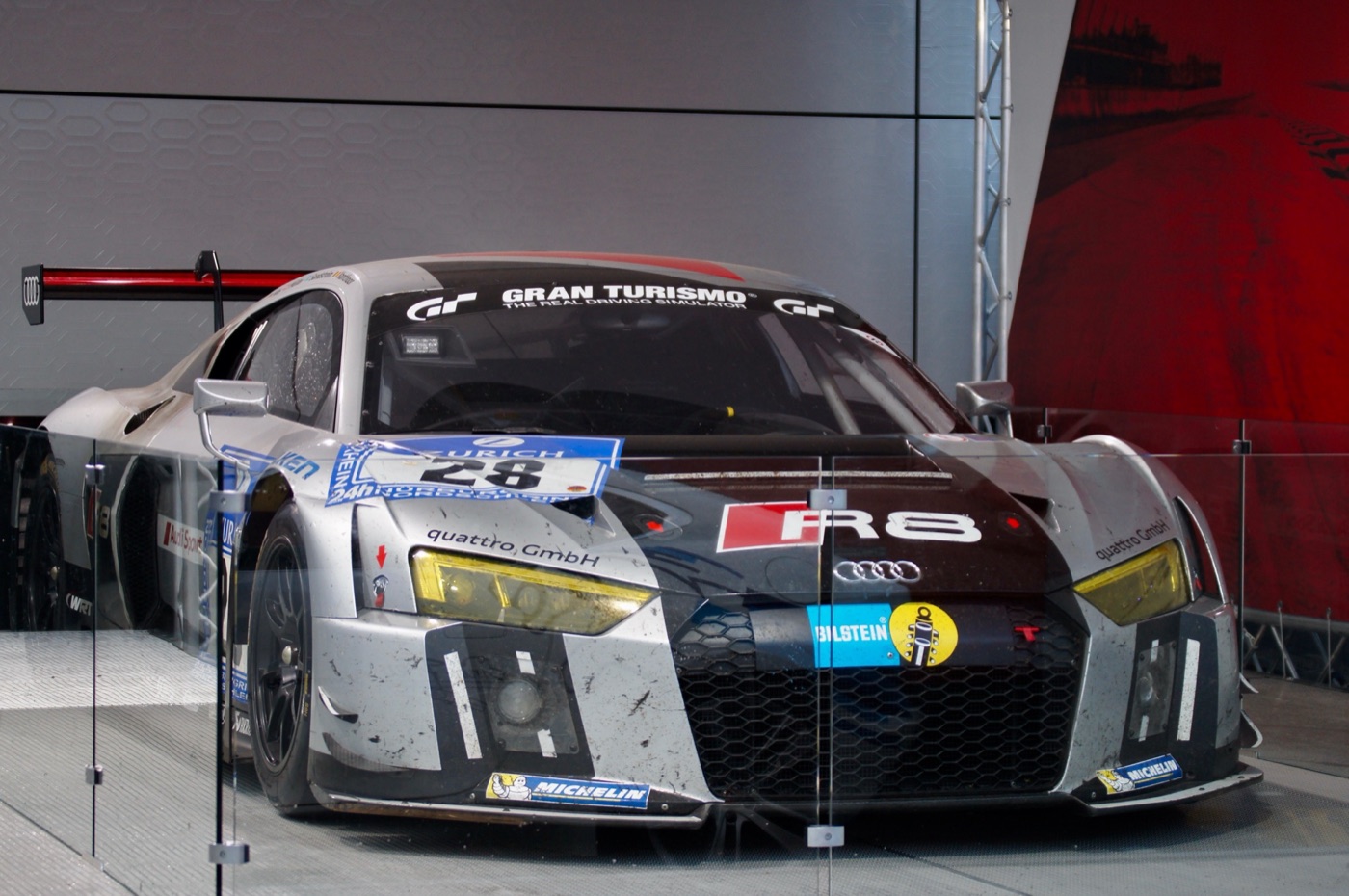
Inside the Nurburgring 24 Hours, 2008 to 2019
2008: a Fiat 500 and an Aston Martin called Kermit
In 2008 Richard Meaden drove Aston Martin’s green Vantage N24, nicknamed Kermit, with Aston’s chief executive Ulrich Bez and the test drivers Chris Porritt and Wolfgang Schuhbauer, and Jethro Bovingdon raced a Fiat 500 built from a bare shell by Engstler and entered by Marangoni. Meaden wrote that the Vantage, with the new 4.7-litre engine, lapped consistently in 9min 38sec in qualifying, 35th overall, and that Aston Martin Racing’s Robert Lechner put the DBRS9 round in 8min 46sec despite a hairy moment over the Quiddelbacher Höhe crest. Lexus had a satin-black LF-A prototype in garage 10, Volkswagen three Sciroccos with Hans-Joachim Stuck and Carlos Sainz among the drivers, and Gumpert an Apollo for Heinz-Harald Frentzen. Bovingdon drove to the race in a BMW M3 and found thousands of fans already camped by the Tuesday.
2009: driving to the fuel gauge in a V12 Vantage
In 2009 Meaden shared Aston Martin’s V12 Vantage with Bez, Porritt and Oliver Mathai and tweeted the race. The car won the SP8 class and finished 21st overall, and Meaden reported that the class trophy stood knee high. Afterwards he explained the job: the tank held 117 litres, the car used 10 to 11 litres a lap, so each stint was 11 laps; the driver radioed the fuel reading every lap between Galgenkopf and the gantry; and the crew drove on the V12’s torque, braking as little as possible and pulling fourth gear out of Ex-Mühle.
2010: practice week and the BMW M3 GT2 win
The entry list in practice week in May 2010 ran to 250 cars. BMW was back for its first 24 Hours since the E46 M3 GTR had been ruled out, with two M3 GT2s. Gazoo Racing brought a wide-bodied Lexus LFA driven by Toyota’s master test driver Hiromu Naruse, Akira Iida, Takayuki Kinoshita, Juichi Wakisaka, Armin Hahne, Jochen Krumbach and André Lotterer. Aston Martin, at its fifth race in a row, entered the four-door Rapide for Bez, Schuhbauer, Matthew Marsh and Porritt. Porsche entered Walter Röhrl, in his first N24 entry since 1993, in a near-standard 911 GT3 RS developed at Weissach, and Manthey ran the 911 GT3 R Hybrid in its first race. There were nine Audi R8s led by the Abt Sportsline team, three BMW Z4 GT3s, and a Ford Focus RS for Jari-Matti Latvala, the previous weekend’s World Rally winner.
BMW’s own preview put the make’s record at 18 wins from the first 37 races, with one-twos eight times and 122 class wins. Audi’s Marco Werner took pole with 8min 24.753sec, two seconds under the old record, after fog stopped the first session. In front of 220,000 fans, Manthey’s number 1 Porsche led the opening hours from seventh on the grid and then crashed, and the GT3 R Hybrid led until the 22nd hour before it broke down. The number 25 BMW M3 GT2 of Uwe Alzen, Jörg Müller, Augusto Farfus and Pedro Lamy won after 154 laps, a lap ahead of the Farnbacher Ferrari F430 GTC and two ahead of the Rostek Audi R8 LMS, and the Aston Rapide finished second in SP8.
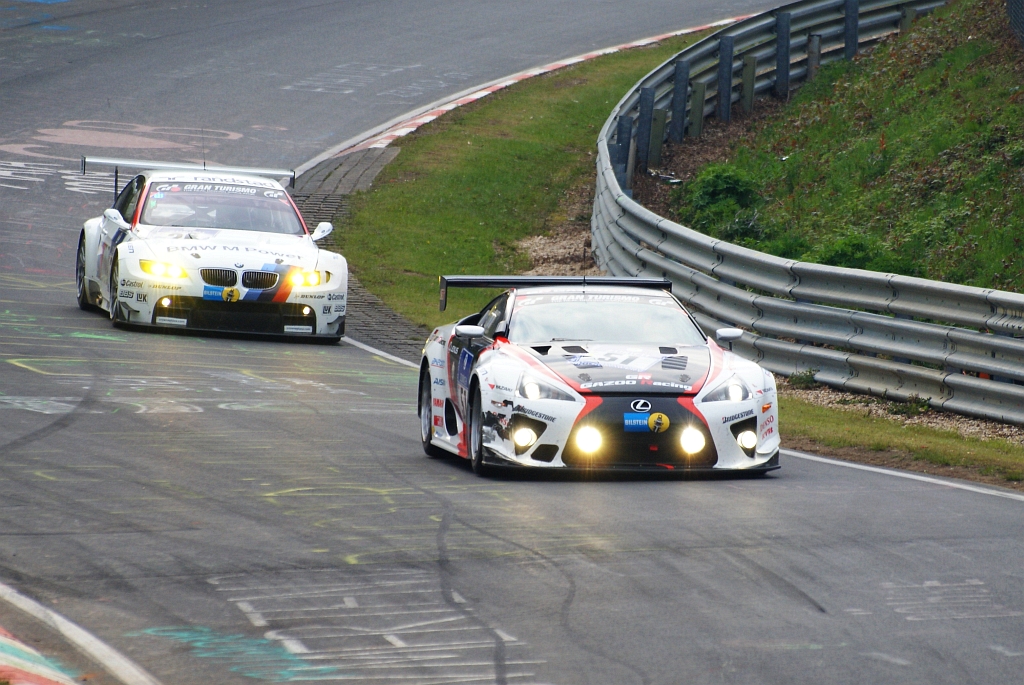
2011 to 2019: Zagatos, Bentleys, Black Falcon and the foxtail Manta
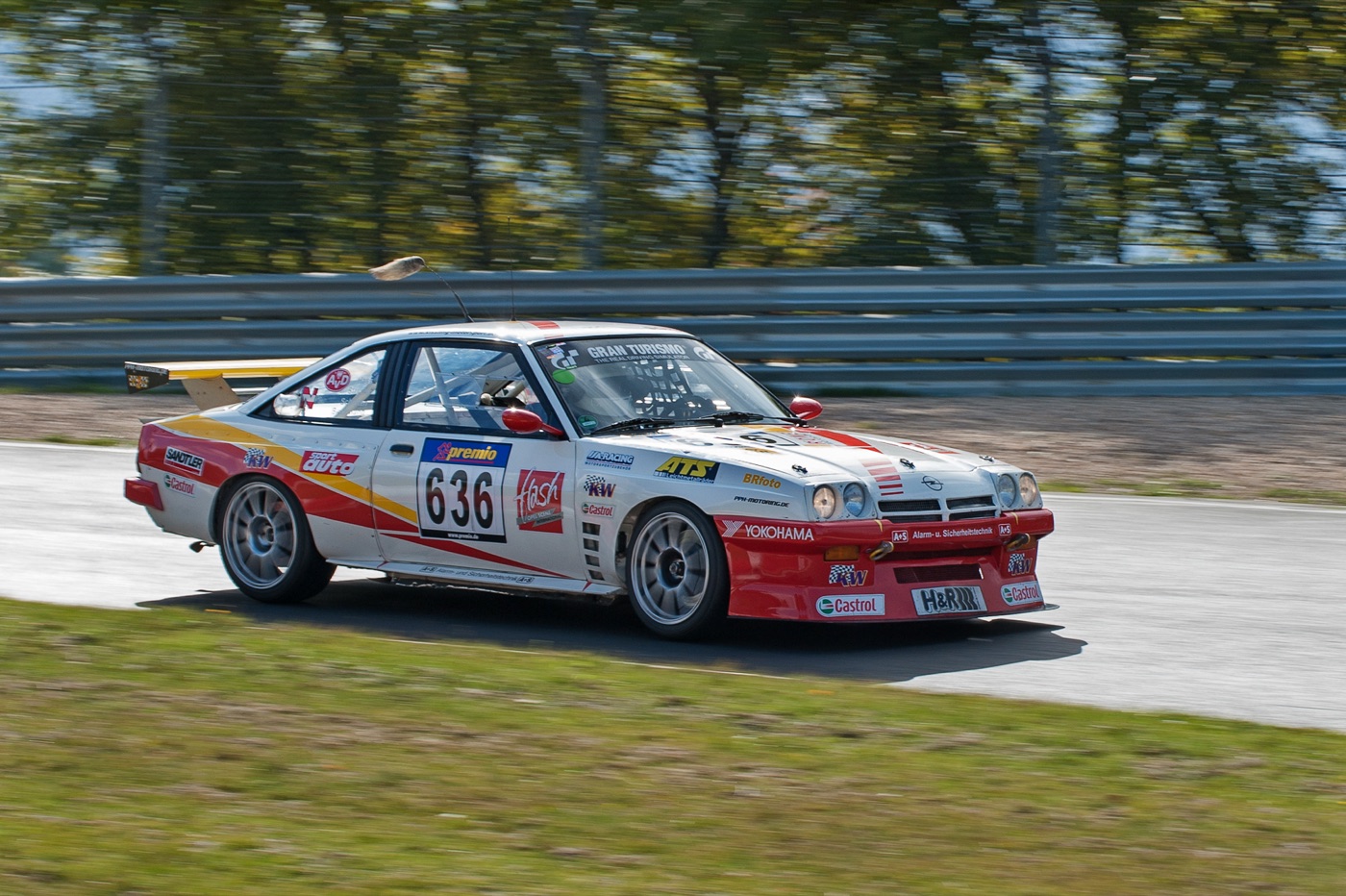
In June 2011 Aston Martin used a four-hour VLN race as a test for its two V12 Zagatos a fortnight before the 24 Hours. For the 40th race in 2012, six Bentleys led the 170 starters round on the parade lap, and Aston Martin ran two V12 Vantage GT3s in SP9 for the first time, Bez claiming a 100 per cent finishing record from 13 starts. In 2014 a SkiddMark report recorded a record race distance of 159 laps for the winning Audi of Phoenix Racing and the runner-up Black Falcon Mercedes, which had crossed the line wheel to wheel on laps 102 and 103 before a pit-stop penalty dropped the Mercedes back. In 2019 Phoenix Racing won in an Audi at an average of 165.1 km/h, with 13 BMW M240i Racing cars and the Porsche Cayman GT4 entries in the field, and the foxtail Opel Manta, which had raced every year since 1998, got a standing ovation in the pit lane.
Visiting the Nurburgring 24 Hours
A standard ticket for the Nurburgring 24 Hours cost between €35 and €74 in 2026, and gives the run of the Grand Prix grandstands, the paddock and the spectator areas round the Nordschleife. Crowds have grown: 220,000 in 2010 (SkiddMark), 230,000 in 2022 (the Nurburgring), 280,000 in 2025 (Dailysportscar) and an official spectator count of 352,000 over the four days of 2026, “more than ever before”, the circuit reported.
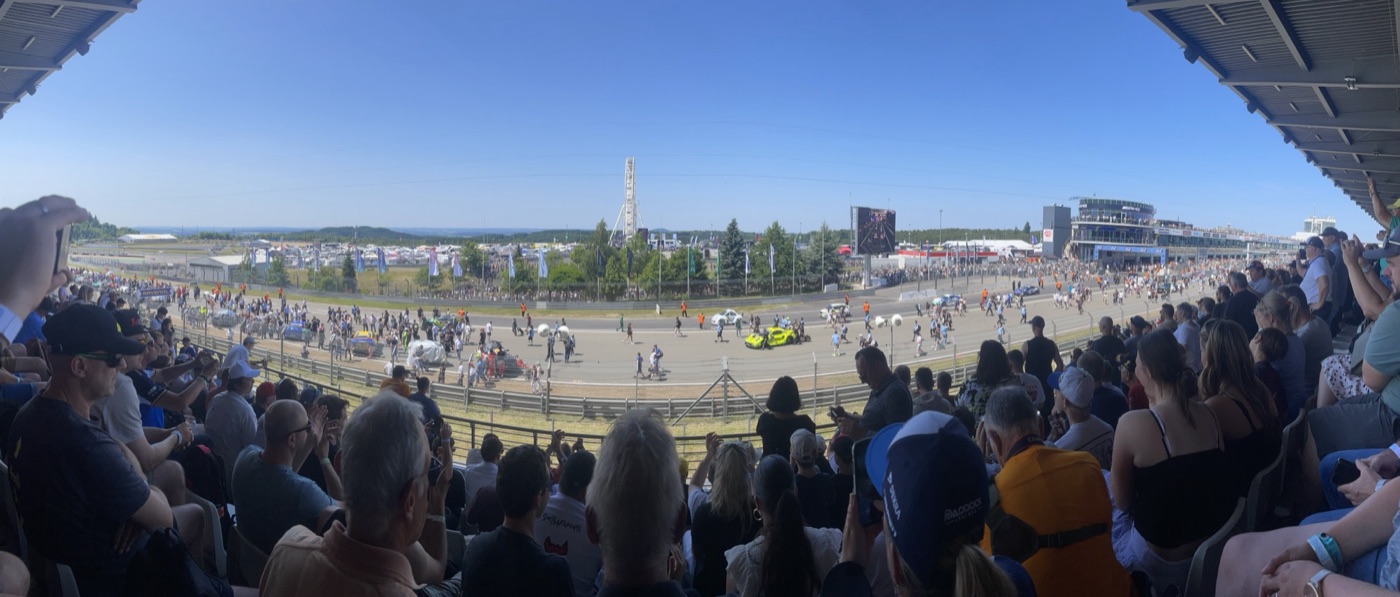
Nurburgring 24 Hours tickets
Tickets for 2026 went on sale on 17 November 2025. The circuit’s announcement for 2026 held prices at the 2025 level:
| Ticket | Valid | Standard | Reduced |
|---|---|---|---|
| Event ticket | Thursday to Sunday | €74 | €45 |
| Weekend ticket | Friday to Sunday | €69 | €42 |
| Race ticket | Saturday and Sunday | €62 | €38 |
| Day ticket | Thursday or Friday | €37 | €24 |
| Day ticket | Sunday | €35 | €21 |
Source: Nurburgring, 19 November 2025. Five euros was added from 11 May 2026 and at the box office. Children up to 12 go free; young people up to 15 and disabled visitors pay the reduced price.
Camping round the Nordschleife
The circuit opens selected car parks as temporary campsites for the 24 Hours, with details given shortly before the race, its camping page says, and a 2014 SkiddMark preview called the weekend a “Bitburger-and-barbecue-fuelled festival of racing”. For first-time visitors from abroad the circuit added a 24h Newcomer Package in 2026, at €86 a person for an event ticket plus a grandstand area at the Michael Schumacher S kept for package holders, with camping in area C6 at €100 a person, its announcement says; the temporary campsites have toilets and showers but no electric hook-ups.
Getting there from the UK
The circuit is near the village of Nürburg in the Eifel, about 700 km east of Le Mans. Bovingdon drove from a late ferry in 2008 and broke the journey with a night at Spa-Francorchamps, a short cross-country run from the Nurburgring. The circuit sells a combined ticket with the 24 Hours of Spa, which in 2025 was held the weekend after the Nurburgring race.
Questions
Who won the 2026 Nurburgring 24 Hours?
The Winward Racing Mercedes-AMG GT3, number 80, of Maro Engel, Luca Stolz, Fabian Schiller and Maxime Martin won the 54th race on 17 May 2026, from 25th on the grid. It was Mercedes-AMG’s first win since 2016 and Engel’s second.
Did Max Verstappen win the Nurburgring 24 Hours?
No. In his first 24 Hours, in 2026, Verstappen’s Mercedes-AMG led from Saturday evening until a driveshaft failure with about three and a half hours to go. The crew repaired it and ran a few final laps for the fans.
Has a woman won the Nurburgring 24 Hours?
Yes. Sabine Reck, later Sabine Schmitz, won in 1996 and 1997 in a BMW M3 with Johannes Scheid and others; she is in the ADAC’s list of two-time winners.
Has a diesel car ever won the Nurburgring 24 Hours?
Once. A BMW 320d driven by Marc Duez, Andreas Bovensiepen, Christian Menzel and Hans-Joachim Stuck won in 1998, the first overall win for a diesel at the race. Stuck said its economy meant “we had to make far fewer pit stops”.
Did Niki Lauda win the Nurburgring 24 Hours?
Yes, in 1973, with Hans-Peter Joisten in an Alpina BMW 3.0 CSL. That year the race was run as two eight-hour heats with an eight-hour break, and Lauda set the fastest lap, 8min 39.6sec.
Is there a safety car at the Nurburgring 24 Hours?
Not to neutralise the race. The ADAC’s statistics note that the field is never bunched behind a safety car or a full-course yellow; incidents are handled with local yellow flags and Code 60 zones, where cars slow to 60 km/h.
How many people go to the Nurburgring 24 Hours?
The circuit counted 352,000 spectators over the four days of 2026, more than ever before. The figure was 280,000 in 2025 and 220,000 in 2010.
When is the 2027 Nurburgring 24 Hours?
The Nurburgring lists the 2027 meeting for 27 to 30 May 2027, with the race over the Saturday and Sunday.
Sources
- ADAC Nordrhein 24h media, “ADAC RAVENOL 24h Nürburgring vom 30. Mai bis 2. Juni 2024: Statistik 1970–2023” (read in the web.archive.org copy): the 2024 entry, wins by driver, make and team, class wins, pole statistics, no safety car.
- touringcarracing.net, race pages “1970 Nurburgring 24hrs” to “1985 Nurburgring 24hrs”: dates, lap length, starters, winners and race notes 1970–1985, the 1973 heats, the races not held.
- BMW Group PressClub, “50 years of Nürburgring 24 Hours: 50 years since BMW’s first overall victory”, 2020: BMW’s 19 wins 1970–2010 with crews and cars, Stuck’s quotes.
- BMW Group, “Hans-Peter Naundorf on overall victory for BMW at the Nürburgring 24 Hours”, 2 October 2020: the 2020 win, crew and BMW’s 20th victory.
- Porsche Newsroom, “Nürburgring 24 Hours” media guide, 2019 (one of the pages ranking for this subject, so not linked): Porsche’s wins 1976–2018 with crews and cars, Jackie Stewart’s nickname.
- Porsche Newsroom, report of the 2021 race: the 2021 win, Manthey’s seventh, Porsche’s 13th, the 14-hour stoppage.
- Audi Australia magazine, “Victory at the Green Hell”, 2017: the 2017 win and crew.
- Nürburgring, “Audi wins the 24h anniversary race”, 2022: the 2022 win, crew, 230,000 spectators, Phoenix’s sixth win.
- Ferrari, “Ferrari 296 GT3 wins 24 Hours of Nürburgring”, 21 May 2023: the 2023 win, crew, 162 laps, the 4pm start, the fastest lap.
- Audi MediaCenter, “Second 24-hour race victory for an Audi customer team in the 2024 season”, 4 June 2024: the 2024 win, crew, the fog stoppage, Audi’s seven wins (read in the web.archive.org copy of 20 May 2026).
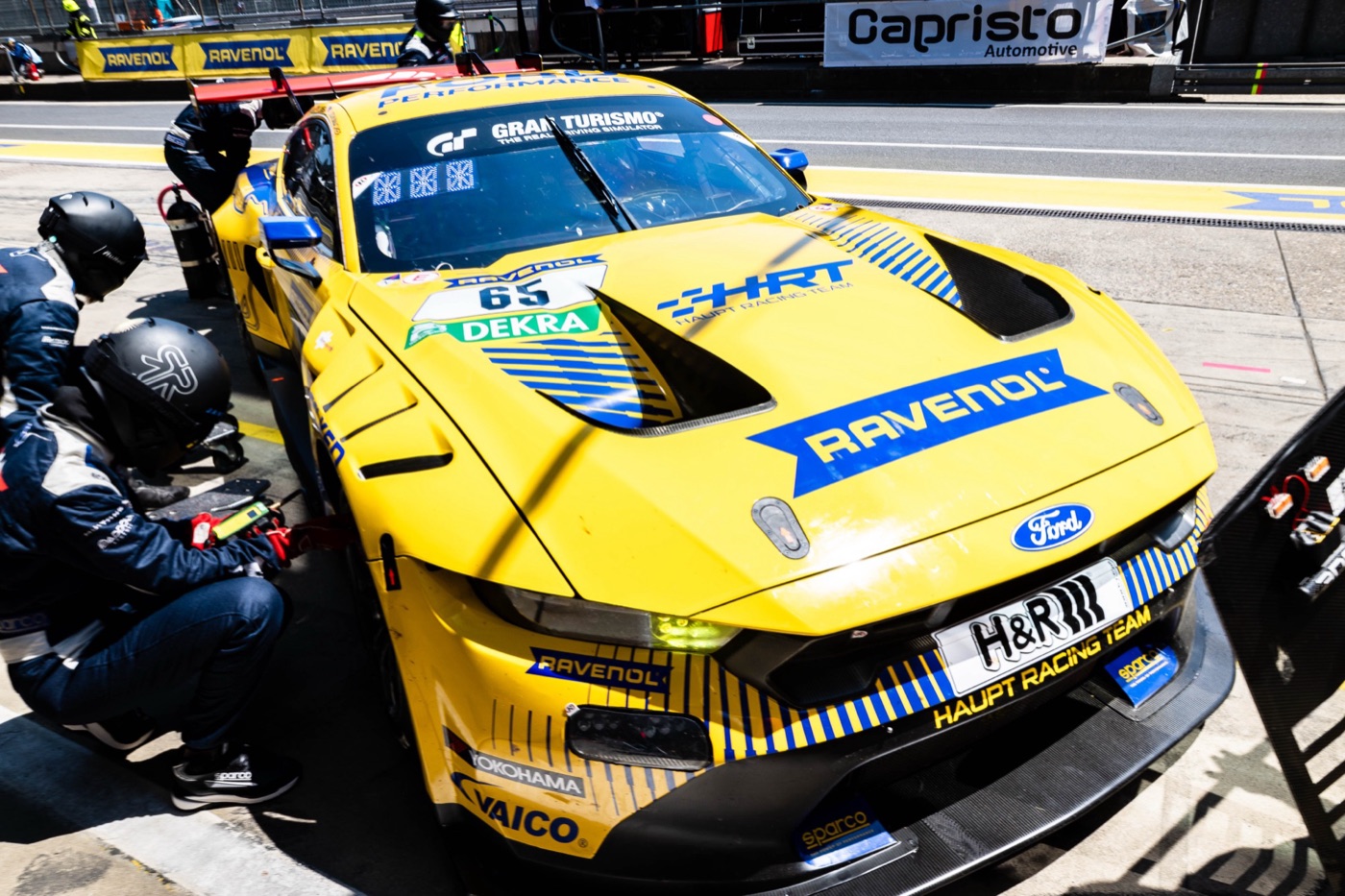
- Dailysportscar, “ROWE BMW wins N24 after time penalty for Manthey”, 22 June 2025: the 2025 result, the penalty, BMW’s 21st win, 280,000 fans, the HRT Mustang.
- Dailysportscar, “Winward Racing Team Ravenol Mercedes wins 2026 Nürburgring 24 Hours”, 17 May 2026: the 2026 race, Verstappen’s car, the BMW M3 Touring in SP-X.
- Nürburgring, “Mercedes-AMG celebrates its first victory at the 24 Hours of Nürburgring in ten years”, 17 May 2026: the 2026 result, crew, grid position, 352,000 spectators, the Code 60 penalty.
- Racing Sports Cars, driver results for Steve Soper, Peter Zakowski, Marcel Tiemann, Michael Bartels, Christopher Mies, Maro Engel and Markus Winkelhock: winning crews and cars of 1987, 1999–2003, 2012, 2015 and 2016.
- Nürburgring, “The History”: the first 24-hour race in 1970, the 1981 groundbreaking, the shortened Nordschleife and the Grand Prix track opened in 1984.
- Nürburgring, “Race tracks” and “Nordschleife”: lengths, corners, height, gradients, the 1927 opening, the Green Hell.
- Nürburgring, “DMSB Permit Nordschleife”: who needs the permit, its levels and how to get it.
- Nürburgring, “ADAC RAVENOL 24h Nürburgring” event page: the 2027 dates.
- Nürburgring, “Advance ticket sales for the 2026 Nürburgring 24-hour race have begun”, 19 November 2025, “24-Hour Newcomer Package now available”, 21 April 2026 and “Camping”: ticket prices, the Newcomer Package, camping and the Spa combination ticket.
- SkiddMark (Drivers Republic), race reports, 8–25 May 2008, and race tweets and a reply to readers, May–June 2009: the 2008 and 2009 races from the cockpit.
- SkiddMark, “Practice for the Nürburgring 24h is underway”, “BMW Motorsport gets ready for the 24-hour race of Nürburgring”, “Audi secures pole position at the Nürburgring 24-hour race” and “BMW snatches Nürburgring 24 hours victory”, May 2010: the 2010 entry, BMW’s record to 2009, qualifying and the result.
- SkiddMark, “Bentley leads the Nürburgring 24 Hours” and “Countdown to the Nürburgring 24H: Focus – Aston Martin GT3”, May 2012; “ROAD 35: Nürburgring 24 Hours”, June 2013; “Nürburgring 24 Hour Preview” and “Black Falcon defends its title at the Nurburgring”, June and July 2014; “SkiddMark’s Top Twenty of the Nürburgring 24 Hours”, June 2019.